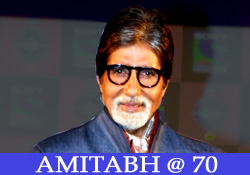
When Amitabh Bachchan was just emerging from the Bofors controversy, he was quoted to have said that in his next life, he would like to be a journalist – such was the power of the media.
Today, Amitabh Bachchan is the darling of the media. They hang on to his every word; they not just retweet his tweets, they make entire stories out of them; they gather around the Bachchan family trying to get a picture of the grandchild. The entire country seemed to participate in the naming of the child of Abhishek and Aishwarya Rai Bachchan. The family is photographed at work, at play, at airports, at temples and hospitals.
But there was a time when Amitabh had decided to ban the ‘yellow’ press and the press, in a rare show of unity, decided to ban him right back. There was a ‘katti’ period, when Amitabh would not speak to the film media and they did not carry any news about him.
What apparently happened was that Stardust had organised a charity show at which several top stars had agreed to participate. But then some of them, reportedly at the behest of Dilip Kumar, decided that they should not endorse the gossip press and decided to boycott the event. They also decided to boycott all gossip magazines.
This was a time when Bollywood was not covered by the mainstream media. Stars liked to be featured in the magazines because that was the only way of reaching the film-going public. A boycott of the film media was bound to fail. But during the Emergency in 1975, Stardust had a rough time with the censors and this was reportedly on the orders of Amitabh who was close to the Gandhi family. The cold war went on for years till the unfortunate Coolie accident in 1982 when Amitabh was seriously injured during the shooting of the Manmohan Desai film.
The whole country prayed for his recovery and even the media must have found it churlish to carry on with the ban. There was a thaw on both sides. In any case, the so-called boycott has not affected the star’s career in the least. He could also afford to be generous.
Then, in 1989, the Bofors scandal hit, and dragged Amitabh’s name into it. His films started flopping. He only had the medium of the press to get his side of the story to the public. This time the media decided to be gracious and fair and helped Amitabh clear his name. That was when the star admitted to the power of the media and made that quip about wanting to be reborn as a journalist.
Since then, he has been through problems – the failed comeback with a flop Mrityudaata, the Miss World fiasco that hit him financially – but the media has chosen never to hit out at the star when he was down. They even forgave the public relations disaster of the Abhishek-Aishwarya wedding, when the media was ignored and mistreated.
On his part, Amitabh is not just an interviewer’s delight, he is always charming, gracious and professional. His office promptly returns calls, forwards messages; he writes personal notes of appreciation if an article or review praising him appears, he also sends miffed letters of clarification if something offends him.
Times have changed; today the media is full of Bollywood trivia. Stars are worshipped, their homes staked out, their faults papered over, their achievements exaggerated. At a time when stars have more power than politicians and industrialists, the media needs the stars more than the stars need the media. Unlike many of his juniors who snap their fingers when they need the media, but shun the press between releases, Amitabh has maintained a relationship of cordiality with the media, even though he now has social media platforms to have his say (even ranting against a bad review). It could be because of past experience, it could because he is well bred, or maybe because you can’t really push away the guy who has prostrated himself at your gate to try and get an exclusive shot from the gap between the gate and the ground. If asked today, Amitabh would probably say he wants to be a superstar in his next life too… such is the power of Bollywood. He hates this term for Mumbai cinema, but here’s wishing the Badshah of Bollywood a happy 70th birthday.
Dainik Bhaskar Women of the Year Awards 2012 is an initiative to recognise woman power in India. The award in its 3rd year encourages women to build their own identity.
Dainik Bhaskar Group believes in woman empowerment and improving the status of women in the country. The group has been in the forefront of introducing innovative platforms for its readers to recognize the change makers in society. The award is an appreciation of who have achieved extraordinary success and done commendable work in their respective fields.
The initiative was promoted through Print Campaign and Out of Home media. The nominations were open in 4 categories: Social & Public Service, Arts & Culture, Business & Profession & Asli Amla Star Ki Khoj.
The awards are given at the State level and the function for Gujarat, Jharkhand and Chandigarh (including Punjab and Haryana) has been completed. Eminent personalities like Raj Bala Malik (Chandigarh City Mayor), Dolly Ahluwalia (Fashion Designer & Movie Actress) Mr C.P. Singh (Member of Legislative Assembly from Jharkhand), Meera Munda (Wife of Jharkhand Chief Minister) and Nirav Patel (MD Abaj Electronics) attended the events in the states. The winners received a trophy and certificate.
In the second phase, award for the states of Rajasthan, Madhya Pradesh, Chhattisgarh and Maharashtra will be given.
With a special focus on empowering women, be it through such awards or through various other initiatives, the Dainik Bhaskar Group continues to recognise woman power.
It was launched with much fanfare in Kolkata yesterday. But will Ei Samay from The Times of India stable be able to create enough impact in the Ananda Bazar Patrika-dominated Bengal market? We spoke to Raj Datta, Senior GM, MPG-Kolkata for his first impressions on the new daily.
Raj Datta
On the qualitative front a lot of the editorial team has moved from ABP to TOI, almost to prove a point as DNA had done to TOI, giving ABP a run for its money. So they know the market, its people and the competition, a heady combination. Editorial content being good, the case would be to develop their weekend content and other sections.
On the quantitative front, Ei Samay is offering very competitive introductory pricing. For a six-month subscription, the package is Rs 175, as also special and bumper pricing helping to increase circulation potential and get hold of those initial eyeballs. Re-subscription would remain to be seen, but undoubtedly they will garner a captive audience for the first six months, really quite a bit of time for a reader to get habituated to style and format.
02 Will a Bengali newspaper from The Times of India stable will be able to dent the market?
Historically and in numbers, ABP has been the undisputed leader in Kolkata with a sticky brand loyalty associated with them. TOI has had marketing muscle, been innovative and agile with a strong youth connect and flexibility to changing technologies and trends.
Whether Ei Samay will dent the market or not remains to be seen but certainly they will dent the method of operation of the ABP group making them more aggressive, reactive and proactive. Already there has been a review in its pricing, something they have not with other entrants and Ei Bela launched to target a younger segment in a compact newspaper format akin to a Mid-Day.
03 How was the response for the launch issues= of Ei Samay?
The first issue was out at an inaugural 72 pages, a first-timer for a newspaper anytime, anywhere. The editorial content was very good and it had some great innovations, like there was a French window on the front page which opened half way on both sides. It certainly hit you in one shot as it aimed to do. The response would have to be a wait and watch but certainly it’s something ABP will respond proactively to.
04 About Ei Samay, Times group editorial director Jaideep Bose wrote, “It will be Ei Samay’s endeavour to champion its readers’ causes in every possible way — be it to enhance their quality of life, or help rejuvenate Bengal, or create opportunities for the young, or simply provide a platform for ideas and solutions.” Do you think the product epitomises this thinking?
The recent IRS confirmed that ABP’s youth profile is poor, something which Ei Bela is positioned to counter-act to balance the absolute number rule with the problematic youth area panacea.
Traditionally, TOI has had a strong youth connect with experience in marketing initiatives and the ‘power of ideas’ involving a younger audience. It knows how to bring in the celebrity and style, talk of where the next party, poetry reading or art show is happening; or come up with editorial sections by student or experts. It knows how to create events and awards to take center stage.
05 How are advertisers responding?Â
Ei Samay’s pricing is extremely competitive and the packaging very attractive with add-on rates at just Rs.150-Rs.200 making it a value-for-money part of the advertising offering. It is essentially targeting Kolkota city over the rest of Bengal. Ei Bela by ABP is also targeted to the city and is offering competitive advertising rates as are the ABP group publications but TOI is being extremely aggressive on this front.
The corporate business should be easy for TOI to garner with most of the companies having offices in other cities too, but the real fight is in the retail business, which is huge… like saris, jewellery, etc. And there are other Kolkota publications like Bartaman and Sambad Pratidin too.
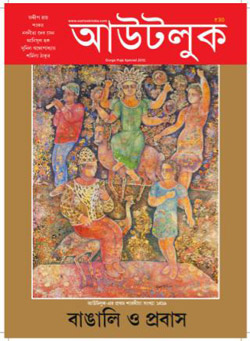
Bangali O Probas (The Expatriate Bengali), Outlook’s first Puja special in Bengali has Sandeep Ray, the filmmaker and Satyajit Ray’s son, as the Guest Editor. The cover design is a painting done by the renowned Paris-based artist, Shakti Burman. The lead essay is by one of the leading and most popular Bengali writers, Shankar, of Chowringhee fame.The focus of the issue is on the expatriate Bengali and contributors include Nabaneeta Deb Sen and Sunil Gangopadhyay, two respected figures in Bengali literature. Contributions have also come in from London, Massachusettes and Australia. Graphic novel has been done by Delhi based Bishwajyoti Ghosh.
The art review is by curator Ina Puri. There is a bit of history, a bit of nostalgia, a bit of humour, an adda session on Bengal’s politics, a humour column by Suhel Seth and column by Sharmila Tagore.There are interviews with Bipasha Basu, Diya Mirza and the director of Kahani, Sujoy Ghosh. There is a photo feature as well on Bengali actors. There are provocative reports on Bengali actresses hogging the limelight in the South, a Bengali being the first Law Minister of Pakistan and the growing matrimonial bonds between Kerala and Bengal. There is an erudite essay on Bihar based Bengali writers enriching Bengali literature and also a review of Bengali blogs. A whosesome and varied fare, in short, to stimulate the mind, draw a laugh or two and make readers think.
The anniversary issue by the Chitralekha Group had a simultaneous five-city launch in Ahmedabad, Surat, Baroda, Rajkot and Mumbai by columnist, humourist, writer and playwright Taarak Mehta, psychiatrist and sex therapist, Dr Mukul Choksi, painter, Ghulam Mohammed Sheikh, chairman of the Khadi and Village Industries Commission (KVIC), Devendra Desai and Vice Chairman of MCX-SX, Jignesh Shah, respectively.
Themed on the topic ‘Game Changers’ the issue has contributions by experts like Chandan Mitra, Sam Pitroda, Justice Markandey Katju, Kapil Dev, Gunwant Shah, Sagarika Ghosh, Salim Khan amongst others who have shared their perspective on people and incidents which have changed the conventional rules of the game and emerged as “Change Agents”.
The issue also houses the third edition of Chitralekha’s ‘Gujarati Power List’, which comprises superstars from the fields of politics, business, corporate, music, fine arts, cinema, sports, media and social service, who have gone beyond their own areas of comfort and influenced the larger society.
Moreover, the issue also carries a specially compiled music CD by Sa Re Ga Ma comprising 62 best songs of the superstars of Indian Cinema, Dev Anand, Shammi Kapoor and Rajesh Khanna.
Commenting on the occasion, Tarun Rai CEO Worldwide said, “In just one year since launch BBC Good Food has become the favorite magazine of food lovers. To celebrate Good Food Day we have got together some of India’s most talented chefs to prepare an exquisite menu at an incredible price. This is just one of the many activities taking place across cities in India as we celebrate good food and Good Food Day”.
Adding to the celebrations, select restaurants across eight cities have also partnered with the magazine on the occasion, offering discounts and set menus. Specially designed Good Food Day subscription offers are being extended to customers of all participating restaurants, at Foodhall Mumbai and Bangalore, and to those at the ITC Grand Central Mumbai event. Besides these free passes to the Good Food Day event at the ITC Grand Central,Mumbai are also being given out to some lucky magazine fans, in return for their participation in the brand’s social channel activities.
Newsweek, founded nearly eight decades ago, is moving to a digital-only product from 2013. According to editor-in-chief Tina Brown, it cost $42 million a year to manufacture, print, distribute, and manage the circulation of Newsweek.
Newsweek is in the best position to go completely digital due to their strong online presence through Daily Beast. But the news has sounded an alarm bell for print magazines all around the world. As news becomes a 24/7 affair and people prefer online access, the readership of news magazines is on decline the world over. It is no wonder then that magazines are reaffirming their presence in the online space too. With Kindle usage on the rise, e-magazines are creating waves.
Tarun Rai
Even as Indian print industry continues to see new launches, the readership is on the decline (though a minor slide), as recorded by recent IRS figures. “I am not very surprised at the decision. I believe the issue for Newsweek is the nature of the magazine it is. As a result, the relevance of a weekly ‘news digest’ has diminished. It is not a question of print or digital – it is a question of the nature of some magazines that may not be as relevant today. The same cannot be said for lifestyle and special interest magazines,” opined Tarun Rai, President of the Association of Indian Magazines and CEO, Worldwide Media.
Suggesting that print media still has a bright future, Paresh Nath, Editor and Publisher, Delhi Press said, “It is more of a failure of a publisher than the sunset of an industry. Printed books and material will continue to be relevant as they were in the last several hundred years.” Agreeing that the digital market for Newsweek may have matured earlier than the publishers expected, Pradeep Gupta, chairman and managing director of CyberMedia, said, “In the market they are operating in, digital is growing very rapidly and therefore Newsweek has moved in that direction.”
The predicament of the dawn of the digital era has been repeated often in the Indian context.
“I am happy to say that magazines are already re-inventing themselves for the digital world. Abroad as well as in India. All our magazines are available in their digital versions. We are also aggressively developing various magazines’ apps and will be launching them soon. We see an opportunity in reaching a new younger audience through our digital initiatives,” said Mr Rai.
Even while most magazines have moved towards digital and print versions simultaneously, the print version remains important for reaching the wider audience of readers and advertisers. Time magazine also has responded with their online version adaptable to any platform and any size, particularly for mobile reading. Varghese Chandy, Chief General Manager, Marketing Advertising Sales at Malayala Manorama said, “Reinventing needs to be done not only for news magazines, but every single product for its survival.”
According to Anilkumar Sathiraju, AVP & Head, DDB MudraMax – Media, South, revenue will still come from print version since revenues from digital in India are still at a nascent stage, even though digital penetration is increasing rapidly. Going forward, he predicted that revenues will still be higher from offline magazines.
Magazine have the most engaging format with the deepest touch points according to various international surveys. The growing numbers of tablets reassert the fact that this is the platform that gives the closest magazine-reading experience. Mr Chandy said, “However, monetizing the digital platform will be a greater challenge even for Newsweek.”
While the industry believes that magazines should be ready for the digital era, Mr Nath holds an interesting view: “Magazines do not need to reinvent themselves due to the digital onslaught. Digital delivery of content is like delivering content in Times Square by shouting when hundreds of voices are simultaneously trying to convey the same or similar things. When crowds assembled in Tahrir Square, Cairo, it was thought that the digital media is a powerful weapon, as sentiments were whipped up not by newspapers but by digital media. What is the end result? Muslim Brotherhood that conveys thoughts through printed material ultimately got into power. Very little original content is created on digital media. It only copies and pastes and does so millions of times over. Magazines or print versions of newspapers do not know how to overcome the shouting match where noise and not seriousness is the basic currency. When the time of reckoning comes, people will have to go to the print version, and magazines and newspapers will remain relevant. Magazines have to find out how to outgrow the noise.”
Delivery is still an issue – from readers visiting libraries in the past for content consumption, to wanting the content delivered to them. “Print brands have given up the will to fight and are trying to join the digital crowd that has weapons stolen from print itself. Yes, the world of delivery has changed, not consumption of content,” said Mr Nath.
But with readers wanting immediate access to content, 24×7, digital is only going to grow. It is time that that magazines move faster towards the digital era, according to Mr. Sathiraju.
The way forward
“In India, spend on magazines continues to grow because of an increase in literacy, increase in disposal income and lower internet penetration. Therefore, Indian publishers are embracing digital formats. Print advertising is currently 10 times the digital advertising in India. Over the next five years, the penetration of digital will increase. And that is why CyberMedia has reoriented its strategy around creating of a media mesh,” predicted Mr Gupta.
Mr Nath said that the question of digital versus print comes from the English-educated class in India. He said, “Long ago in India, content used to be created and consumed under the banyan tree. Now it is in front of a screen but the quality of this content is poor, one-way, where hundreds speak and no one listens. In India among the English educated there is a problem as this class cannot enjoy English content (is there any English Indian serials or English Indian movies or English Indian music?) whether in print or on digital media. This class keeps shouting that print is dying as it does not know how to ‘read’ in any language.”
The view might hold true but the increased consumption of magazines on digital platforms cannot be ignored.
“It’s anybody’s guess as to when the digital versions of magazines will become bigger than the printed ones. I firmly believe that the lifestyle and special-interest magazines space will continue to grow in both. It is the sunrise sector of Indian media. And both the print as well as the digital versions will grow, allowing our content to reach an even wider audience,” said Mr Rai.
As Mr Chandy concluded, “The Indian print industry needs to be ready for the future. Currently online penetration is single-digit. This is likely to change in the near future, especially in the metros.” Thus, publishers need to be platform-agnostic and essentially become content managers. Their primary task will be to reach the audience through whichever platform is relevant.
Given the worsening traffic jams in Pune, Sakal Times has initiated a unique social initiative in Pune. Called Pune Bus Day, the campaign urges the citizens of the city to use public transport (buses) on November 1. The campaign, which has been taking shape for about a month now, has seen much support from Pune Mahanagar Parivahan Mahamandal Limited (PMPML), which will be plying 3,000 buses that day, instead of the usual 1,500 on city roads. Volunteers will help the people to figure out the bus routes.
Powered by high-decibel print, electronic, outdoor and social media, the campaign will have over one lakh volunteers to help the people to figure out the bus routes on November 1. All citizens, from civic authorities to bureaucrats, activists and police personnel have been supporting the campaign.
The clarion call of ‘Be the change you wish to see in the world,’ promises to be the beginning of finding a permanent solution to Pune’s traffic problems within the next two years.
Shriram Pawar, Editor-in-Chief, Sakal Times said, “Unless you don’t connect with the ground level, nothing happens. Criticism or discussion doesn’t solve the problem. Sakal Times managed to get all political parties on the same table, and they in many ways gave the green signal to the movement and supporting it. We spoke to masses and got to know everybody wanted to help and work towards solving the traffic problem in Pune. All we did was give them a platform to come together and work as a force towards one cause.”
Labour unions to journalists to housemaids have pledged some part of their salary too, according to Mr Pawar. Different associations such   as CREDAI, MCCIA, HIA, NASSCOM, SEAP, ICAI, IMA are backing the cause and are also pledging financial support.
“We have a whole plan ready for PMPML of how to take the initiative forward for the next two years,” said Mr Pawar, adding, “We have supporters who will help man traffic with the traffic police for the whole one year. We are looking at long-term traffic solution.” The supporters of Pune Bus Day movement, initiated by Sakal Media Group can now wear a ‘Pune Bus Day’ T-shirt and support the cause.
The Dainik Bhaskar Group has announced the start of the nomination process for the India Pride Awards 2012, which will be given in New Delhi in December. The awards acknowledge and recognize contributions by Indian PSUs and the excellent work done by them in serving the nation.
This year sees the 4th edition of the India Pride Awards which began in 2009 and is the only awards ceremony in India by a non-government body that acknowledges the efforts of Indian PSUs in nation-building. IPA extended its scope in 2011. In addition to the Central and State PSUs, two new categories, Social Change Agents and Impact Creator – Civil Servants, honouring individuals, were introduced.
This year will see introduction of another category, ‘Best Media Agency – PSU’. The award will recognize the advertising agency for the most impactful PSU campaign. The awarded campaign is expected to have demonstrated in an impactful way the message on PSU competencies and its impact on the society and economy of the nation. The award is media-neutral and will consider the best work in print / electronic or any other media.
Speaking on this new category introduction in IPA 2012, Jaideep Dhagat, National Head- Government Business, Dainik Bhaskar group said, “Communication and in that extension advertising plays a vital role in reaching out to the masses; important stakeholders in the PSU eco-system. The category of communication in PSU comes with its own challenges and we believe that lot of good work is being done by advertising agencies for the PSUs. This new category will bring alive these efforts and work towards becoming a benchmark for the category.”
The last date for receiving nominations is November 10, 2012. Details about the awards and entry / nomination forms are available at www.dbindiaprideawards.com.
This year “Wital See” is the title sponsor, ICRA is the knowledge partner and CNBC Awaaz is the television partner.
It’s not unusual that national dailies (or dailies which have a large footprint in the country) have tried to make a mark in markets where there have been strong, well-entrenched regional players. The Times of India, for instance, set up successfully in Bengaluru many years back, but found the story different with Deccan Chronicle in Hyderabad. In Chennai and Kolkata earlier, it did not outwit competition entirely, but was successful in shaking up the market.
Earlier this month, the TOI group enterted the Bengali newspaper market, taking on the Ananda Bazar Patrika group in possibly the country’s most culturally aware market.
But it is not about one newspaper group spreading its tentacles and the issue we are looking in MxM Mondays today is: Do regional newspapers have it in them to face the competition and clout of national newspapers. We spoke to a cross-section of industrypersons on the issue:
(in alphabetical order of their last names)
?
Anwesh Bose, Senior Vice President, DDB MudraMax Media
Anwesh Bose
The Times of India’s success in Bangalore has a lot to do with Bangalore evolving from a sleepy and quiet retirement paradise to a bulging at the seams metropolis. With Bangalore becoming a metropolis, the swell of urban to urban migration came prominently from Delhi and Mumbai wherein Times of India was already an established brand. The resident Bangalorean is still not satisfied without his Deccan Herald and coffee. Barring this example Times of India has not been able to create a significant dent among any other regional market. The trend of emergence of regional parties (Didi, Amma, Behenji, Nitish ji, Karuna ji, Mulayam ji, Patnaik ji, Abdulla ji, etc) who are calling the shots in the country also mirror the fact that not only are regional entities more relevant than they ever were but are here to stay & dominate. India as a country was, is & will remain to be culturally diverse and local will always be more prevalent than national. To conclude, Vijay Vani is already on its way to unseat the position of Vijay Karnataka… keep watching!
Mitrajit Bhattacharya, President-Publisher, Chitralekha Group
Mitrajit Bhattacharya
I think we should not look at it from the individual brand point of view.
It is actually more from the portfolio point of view from the groups, for example, the English traditional groups like the TOI are expanding into regional markets. Similarly, regional biggies are launching in English. ABP group has launched magazines and got licences for magazines like Fortune. The larger groups are getting larger, and are consolidating by having as many products to cover all the gaps in their portfolio. It is not as simple as saying that the regional biggies are outdoing the English biggies or the English biggies are outdoing the regional biggies.
If you really look at the percentage of advertising which the English media garners vis-Ã -vis their readership, it’s totally lopsided compared to the regional media players. Now the thing is that even if the regional player has much larger readership, they still get much lesser advertising. This was the traditional format. It also happened in television. This format is changing and regional players with their smart marketing moves in the last five years have started garnering a lot more advertising than they used to get probably 5-10 years ago. That shift is happening and that shift will sharpen.
Now there is another point. It is also happening because the tier 2 and tier 3 towns are becoming more and more critical in the marketing mix of most organisations. So when tier 2 and 3 cities become more important the regional players’ share of advertising is bound to go up.
Manajit Ghoshal, MD & CEO, Midday Infomedia Ltd.
Manajit Ghoshal
I am a firm believer in the saying ‘Change is the only constant’. As much as some of our predecessors in the media would like us to believe that brand loyalty is sacrosanct (especially in newsprint reading habits), I beg to differ. Yes, newspaper reading is a habit-forming phenomenon, but like all other things, this is changing and it’s changing at an accelerating pace.
The English print readers are migrating to digital. The newly educated in vernacular languages are adding to the regional language print readership, but these readers are going to be increasingly brand neutral. The regional newspapers have an increasingly older readership profile and these newspapers need to reinvent themselves if they are to appeal to the regional youth as they once appealed to their forefathers.
Having said that, the national newspapers will have to spend huge sums of capital to break the iron grip that some of the regional newspapers have over their markets. The financial resources and the timelines required to do this is naturally an entry barrier and will give some breathing space to the regional newspapers to catch up, but not for long.
The national newspapers have clearly realized that they cannot have ‘one size fits all’ type of content and are playing this round smartly by having increasingly localized content and are challenging the hyper-local content strategy of regional newspapers by playing their own game and beating the regional newspapers through bigger and better resources.
It is up to the regional newspapers to invest in their brands and protect their turf, but the consolidation game has already started in right earnest and it might already be too late for them.
Bharat Kapadia, Chairman, Whatuwant Solutions, and Founder at ideas@bharatkapadia.com
Bharat Kapadia
We do not have any real national newspaper in India. One shouldn’t confuse regional languages with regional papers. Among English language papers, TOI has done very well but it is 5-6 editions that are significant, and it just barely features in the top 10 read newspapers. TOI had started a Gujarati newspaper which they closed down. Their Maharashtra edition is growing well now. In Western countries, for example in the USA , Wall Street Journal will have a national presence but everywhere else it will be NY Times, LA Times Chicago Tribune and so on. There was no national newspaper till the time USA Today was launched!
Speaking of the advertising trend, about 10 years ago, 70-80 percent of advertising went to English newspapers even when English newspapers had limited editions and readership. Today, this percentage stands has come down at less than 60 percent for English newspapers. Surprisingly DAVP also gives importance to English newspapers which as per their policy have to get 30 percent ads and at a premium. Hindi gets 35 percent and all the regional newspapers put together get 35 percent of their advertisements, which is ridiculous.
However, the growth of tier II and III cities, and lower penetration of English (less than 5 percent) will result in advertising buck to follow the regional newspapers. Literacy levels are also rising. When the person gets literate, the chances are it will be in his/her own regional language. Hence, you see, unlike anywhere else in the world, regional newspapers are growing in India when it comes to readership and circulation.
For me, it is definitely in favour of regional media for some time at least.
Basant Rathore, Vice President-Strategy, Brand and BD, Jagran Prakashan Ltd
Basant Rathore
To my mind, there is no one national newspaper in India. There are papers that are available in various languages addressing individual markets and audience segments within each individual market.
If we were to structure the print market, there are there are the South states, Gujarat, Maharashtra, Punjab, West Bengal, Orissa, Assam and North East. Then we have the Hindi belt comprising UP, UT, Bihar, Jharkhand, MP, Chhattisgarh, Punjab, Haryana, J&K, HP, Delhi, Rajasthan – this is by far the largest geographical belt, and the Hindi papers have the highest readership in India. Five of the Top 10 papers of India are in Hindi. The reach of any Hindi daily is 3.4 X of the next language – and this No 2 language is not English. Marathi and Malayalam dailies have a higher reach than English. So therefore, this entire segmentation of newspapers into National and Regional dailies has no basis.
Over the last few years, there has been a significant amount of marketing attention shifting to the tier 2 and tier 3 markets. As benefits of development percolate down the tiers, interest in different geographies is increasing. Marketers want to reach out to a wider market and media that reach these markets are the natural choices. Therefore, these markets will have competition across sectors.
Having said that, each newspaper has its own strengths, on the basis of which it competes. Today there are brand leaders in different languages and different geographies – all of them have a connect with their readers and their marketing strategies are something that are customized based on the individual market conditions. So when a brand which operates in a particular geography launches the brand in another market, to my mind, there is a level competitive playing field for all. Each brand would leverage its existing strength, and the reader chooses to buy the brand or brands he/she wants. So when a so-called “national newspaper” launches in a “regional stronghold” of another daily, it’s competition as usual. Eventually, the brand that strikes a better local cultural connect will win and just credentials alone aren’t enough to guarantee success.
Anita Nayyar, CEO, Havas Media, India & South Asia
Anita Nayyar
The answer is: Yes and No, It depends (on the approach and method). Newspapers as a medium form a relationship and habit patterns with readers. Also here you don’t have a new one dropping in every day as it does in your inbox, so you open it once in a way.
Culturally, India is diverse and its languages without the dialects are vast; 438 as per the Economist. IRS has consistently shown how the top five publications and dailies are not English. Tier 2 and 3 cities are new ports even for luxury brands with their old wealth and new-age entrepreneurs.
Today marketing is getting more footprint-mandated and more segmented as brands are launching many sub-brands catering to these segments to increase revenue and market share. Print traditionally is sustained by this advertising. This is a climate all publications are very aware of. Growth is coming from regional markets, making the national biggies focus on these and in the process expand their footprint. Smaller towns are becoming welcome targets for brands and their consumption is leading to market expansions which are a welcoming sign for publications to reach and target.
Hindustan Times (HT) when only in Delhi did not have the geographical reach and lost in advertising economies of scale to Times of India (TOI). Even the south-based Hindu has focused on increasing its Delhi readership as essential to command ad-rates and advertiser perception. So many major publications will use the strategy to go across and cross region; but readership will belong to those who are able forge either a relevant position or sufficient connect with the customer.
TOI in Bangalore focused on the incoming new audience at the time of the IT boom, its inherent position of youthful and buzzing rendering a profitable mix with the upcoming economic and cultural mindset. The south, however, becomes complicated with its languages and dialects. In Hyderabad, TOI has not been able to penetrate the landscape to reach number 1 while local publications, even new ones launched like Sakshi, are doing well. Even the regional biggies have multiple editions to penetrate the cities, not such an easy infrastructure to follow.
Anand Business Patrika’s Kolkata-based Telegraph has used a regional strategy in its expansion focusing on the east so it has established many roots to be severed before it is de-throned. Ei Samay in Kolkota has definitely made an impact with the shift of some of the editorial team, launch at 79 pages and TOI bundled add on packaging of Rs.150-Rs.200 making it most lucrative. But ABP too has responded in a way it has not done before, by dropping rates and being open to deals even in an approaching festive season when ad sales, down this year are expected to pick up.
Yes, Hindu is the Mount Road Maha Vishnu, but TOI is the old lady of Bori Bunder and she did ‘awaken’ the Lord to an aggressive ‘Good Morning Chennai’; but also, she learnt, has muscle and a flexible attitude. The recent Kerala TOI launch with elephants was theatrical but then TOI does know how to get heard. It also knows how to get inventive, readers can save Rs 50 per month by subscribing to TOI and Mathrubhumi, packaging English and Malyalam, a good idea for a family speaking both. Also the old lady attracts innovation – the aromatic coffee newspaper with ‘Bru’ and ‘Hide & Seek’ or the newspapers with a voice by Volkswagen.
Hence my answer, ‘Yes and No, It depends’. Either way neither national dailies nor regional biggies can afford to get complacent but will have to be aggressive, proactive and inventive to protect their territories or make the break-through, and it will be over time.
Relevance is a very important factor here. Talk to me in my language and you become more relevant. Be present in my environment and you have more retention, customise to my needs and you find a place in my life and get a share of my wallet. This is what brands need to do irrespective of whether it is a publication or any other product category.
PN Vasanti, Director, CMS India
PN Vasanti
I do not see the difference between regional and national biggies. There is no difference when it comes to tactics, strategies, and manoeuvring. It is only that regional newspapers have local advantage, which national newspapers miss. We are in competition era and in media space for next generation everybody will try to establish themselves. And survival of the fittest is going to matter. Everybody, hence, will try to launch as many products to see where they can survive and fit, and where they cannot.
There will be competition. But where there is enough market potential, one will have to enter otherwise one would not be able to survive.
Recently, Vijayavani brought out a special 208-page supplement christened Anand Lokha with its Gangavathi edition, to mark the birthday of Shri Anand Singh, Karnataka’s tourism minister and Bellary’s ‘in-charge’ minister.
The elaborate 208-page supplement, a record of sorts, consisted of 13 pages dedicated to Anand Singh’s achievements through his years in office.
Vijayavani is the newest daily in Karnataka, launched by VRL Media Ltd. under the aegis of ‘logistics baron’ Anand Sankeshwar. It is the only daily in Karnataka to print all pages in colour, across all its nine editions in a span of just six months.
With the final round of ‘Crack the Case’ just two days away, the Dainik Bhaskar Group is all set to welcome the five finalist teams.
This is the first time the group has created this opportunity for management students and the industry to provide a solution. The case study has received an overwhelming response with 340 plus registrations for the contest – across organizations such as Maxus, Rediffusion, Deloitte, Network 18 Media, O&M, IMRB, Titan, and HDFC, and from top B-schools like XLRI, IIM Bangalore and Kolkata.
The five shortlisted teams for the final round are one each from leading media agency Maxus and renowned research firm IMRB International, two from IIM Bangalore and one from XLRI.
Commenting on this venture, Sanjeev Kotnala, VP, Dainik Bhaskar Group said, “It was a difficult task to shortlist 5 from the lot, we found that a lot of entries have really made efforts to understand the business nuances of newspaper and have used secondary data beyond what was provided in the case. The final 5 made the cut after lot of debate within the Round 1 Jury. The jury placed extra focus on the logic and process of arriving at the decision than on the decision and presentation style. I do look forward to some interesting analysis and logic”.
In the final round participants will have 20 minutes to present their solution in Mumbai on October 31st, to a jury which includes Prof. Seema Gupta from IIM Bangalore
In the contest, participants are asked to suggest which new territory Dainik Bhaskar Group should address next, based on the case study by IIM Bangalore titled ‘Aspiring Growth’ focusing on the Maharashtra success of the Dainik Bhaskar group.
 By Deepa Gahlot
 But there was a time when Amitabh had decided to ban the ‘yellow’ press and the press, in a rare show of unity, decided to ban him right back. There was a ‘katti’ period, when Amitabh would not speak to the film media and they did not carry any news about him.
 By A Correspondent
 By A Correspondent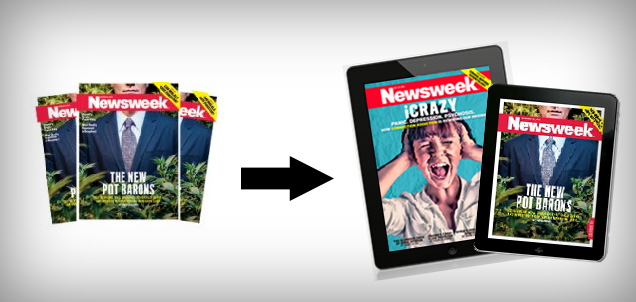

 By A Correspondent







 Recently, Vijayavani brought out a special 208-page supplement christened Anand Lokha with its Gangavathi edition, to mark the birthday of Shri Anand Singh, Karnataka’s tourism minister and Bellary’s ‘in-charge’ minister.