Category: PRINT MEDIA

  • BS elevates Shyamal Majumdar to Exec Ed

    By A Correspondent


    Business Standard has elevated Mr Shyamal Majumdar as Executive Editor. In addition to heading the newspaper’s editorial team in Mumbai, Mr Majumdar will also be responsible for the editorial administration of the Web, Magazines and Books editorial teams… he will be the editorial interface with the business departments for these operations, an internal communication said.

  • Rich list going down: Forbes India

    By Akash Raha


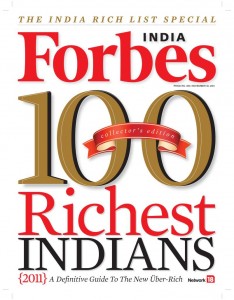
    According to the 2011 Forbes India Rich List inflation, corruption scandals and falling stock and currency prices are causing the wealth of India’s richest to diminish. According to the 2011 Forbes India Rich List, the combined wealth of India’s 100 percent richest people is down 20 percent from a year ago to US$ 241 billion. This year’s list also has 57 billionaires in all, a dozen less than last year.


    Mukesh Ambani holds the top spot for the fourth year in a row, with a net worth of $22.6 billion this year, despite seeing a drop of $4.4 billion. Steel tycoon Lakshmi Mittal remains No.2 with a net worth of $19.2 billion, down 26% from last year. Despite the recovery in steel demand, shares of his flagship, ArcelorMittal, the world’s largest steelmaker, plunged 40% due to surging costs.


    The biggest dollar loser was Mukesh’s younger brother, Anil Ambani, down $7.4 billion; he slipped out of the top 10 for the first time since his 2004 debut to No. 13 this year. His net worth is estimated at $5.9 billion, down from $13.3 billion last year.


    Third richest is Azim Premji, head of IT outsourcer Wipro, whose net worth of $13 billion is lower by 26 pecent from $17.6 billion last year. Mr Premji donated $2 billion worth of shares last December to a trust to fund his education charity.


    Naazneen Karmali, India Editor of Forbes Asia and Mumbai bureau manager of Forbes magazine, said: “This has been a turbulent year for India’s richest. Despite the economy growing at close to 8 percent, a spate of corruption scandals and rising inflation have taken a toll.”


    There are 14 new faces on the list this year. The richest debutante is Ajay Kalsi, coming in at No. 38 with a net worth of $1.39 billion. He is the founder and CEO of London-listed oil and gas outfit, Indus Gas, in which he has more than two-thirds stake.


    Father-son duo Kapil and Rahul Bhatia of travel group, InterGlobe Enterprises, make their debut at No. 51, with a net worth of $1.09 billion after their budget carrier IndiGo became India’s third-largest and most profitable airline. Making the list for the first time is also V G Siddhartha, who is ranked 84 on the list with a net worth of $595 million. He founded and runs Café Coffee Day, India’s answer to Starbucks.


    Indrajit Gupta, Editor of Forbes India, said: “Even though it’s been another tough year for the wealthiest Indian entrepreneurs on the 2011 India Rich List, the fact that there are as many as 14 new entrants is a clear pointer to the exciting and diverse business opportunities in this part of the world.”


    Among the 15 who dropped out of the top 100 altogether are Vinod Goenka and Shahid Balwa, former billionaires now in jail for their alleged involvement in a telecom corruption scandal; both deny wrongdoing. L. Madhusudan Rao of power producer, Lanco Infratech, saw his net wealth fall 78%, more than anyone else on the list.


    Only 19 of the 85 who return to the ranking are better off. One notable winner is Sun Pharmaceutical Industries’ Dilip Shanghvi at No. 11. He is the biggest dollar gainer and worth $6.7 billion, up by $1.5 billion from last year. The biggest percentage gainer is Hero Group patriarch, Brijmohan Lall Munjal, ranked No. 21 with $2.7 billion, who broke off his long-standing partnership with Honda Motor.


    This year, a minimum net worth of $370 million was needed to make the list of 100, down from $500 million last year. The full list of India’s 100 richest can be found in the October 2011 issues of Forbes Asia and Forbes India, which are available on newsstands now.

    The top 10 richest in India are:


    1) Mukesh Ambani; US$22.6 billion


    2) Lakshmi Mittal; $19.2 billion


    3) Azim Premji; $13 billion


    4) Shashi & Ravi Ruia; $10.2 billion

    5) Savitri Jindal; $9.5 billion


    6) Sunil Mittal; $8.8 billion


    7) Gautam Adani; $8.2 billion


    8) Kumar Birla; $7.7 billion


    9) Pallonji Mistry; $7.6 billion


    10) Adi Godrej; $6.8 billion


    Net worths are based on shares prices and exchange rates on October 12. Privately held companies were valued by comparing them with similar publicly traded companies. This ranking, unlike the Forbes billionaires list, has been broadened to include family fortunes.


    For more information and the complete list, visit www.forbes.com/india.

  • Mid Day hattrick for AskMe

    By A Correspondent

    AskMe was looking at promoting their positioning ‘sabka number ek’ and wanted to generate maximum attention through the promotion. Taking this brief forward, Mid Day created a package for AskMe inside which MiD DAY was wrapped. This package highlighted ‘sabka number ek’ positioning of AskMe along with focus on its features.

    This package was first delivered to Mid Day readers on October 14, 2011. Such was the impact of MiD DAY innovation for AskMe that AskMe implemented the same innovation two more times completing a hattrick for the innovation. Thus a second package was distributed to MiD DAY readers on October 16 and for those who could not grab their Mid Day AskMe package the last two times can grab the third package on October 31.

    Speaking on the innovation, Manajit Ghoshal, MD & CEO, MiD DAY Infomedia Ltd. said, “The effort with this innovation is to stand out and create buzz for our client. This is the third time we doing this innovation within this month which is a testimony to our success at creating hype and packing a punch. The prime motive of the innovation is to communicate in a simple, yet effective manner ensuring call to action. The placement of the number was also very strategic, so as to ensure maximum recall for our readers. Our focus is to adapt to each brand and clients requirement and leverage our strengths to deliver an effective communication platform.”

  • Placement fair by IAF with HT Media’s Shine.com

    By A Correspondent

    HT Media’s Shine.com partnered with the Indian Air force (IAF) to help their retired and retiring personnel find a second career in the corporate world.  On the October 15 weekend, the IAF inaugurated a two-day placement fair in New Delhi in collaboration with Shine.com.

    Mr Rajiv Verma, CEO, Hindustan Times Media Limited said, “The contribution of the IAF is invaluable and the officers’ skills are unmatched. We will provide our expertise in getting them to the corporates. We have 40,000 potential jobs at our portal Shine.com and we are willing to help the former officers to get the jobs they deserve.”

    The fair, held for ex-warriors of the IAF saw a huge turnout both from recruiters as well as those seeking jobs. Many IAF personnel retire at around the age of 40, with a productive span of nearly 15-20 years ahead of them.  Because of their long, technology-intensive training and discipline, post retirement, ex-Servicemen and women are invaluable to the corporate sector.

    “The Air Force is a technology-intensive service and the officers who retire from IAF are skilled, hardworking and have a wide range of skill sets. Since they get early retirement, it is our duty to help them in the transition from a job with the force to that in other sectors,” said Air Marshal Anil Chopra.

    The fair was inaugurated by Defence Minister MrAK Antony. “IAF offers a disciplined, well-trained and elite pool to which the industry should give priority during recruitment,” Mr Antony said during the inauguration. This is the sixth such placement fair being held for retired personnel.

    The association will stretch from assistance in resume building all the way to leveraging Shine.com’s database of employers in order to match the diverse skill sets of ex-IAF personnel with the perfect career option.

  • Newspapers’ reach greater than internet’s

    By A Correspondent

    Newspaper circulation declined in print world-wide last year but was more than made up by an increase in digital audiences, the World Association of Newspapers and News Publishers (WAN-IFRA) has said in its annual update of world press trends.

    “Circulation is like the sun. It continues to rise in the East and decline in the West,” said Christoph Riess, CEO of WAN-IFRA, who presented the annual survey Thursday at the World Newspaper Congress and World Editors Forum in Vienna, Austria.


    The survey found:

    – Media consumption patterns vary widely across the globe. Print circulation is increasing in Asia, but declining in mature markets in the West.

    – The number of titles globally is consolidating.

    – The main decline is in free dailies. “For free dailies, the hype is over,” said Mr Riess.

    – For advertisers, newspapers are more time efficient and effective than other media.

    – Newspapers reach more people than the internet. On a typical day newspapers reach 20 percent more people world-wide than the internet reaches, ever.

    – Digital advertising revenues are not compensating for the ad revenues lost to print.

    – Social media are changing the concept and process of content gathering and dissemination. But the revenue model for news companies, in the social media arena, remains hard to find.

    – The business of news publishing has become one of constant updating, of monitoring, distilling and repacking information.

    – The new digital business is not the traditional newspaper business.


    Mr Riess’s presentation focused on six key areas: the media consumption shift; economic developments; newspaper circulation and number of titles; advertising expenditure by media; newspaper revenue; and internet versus mobile.

    This represented a significant shift from past versions of the world press trends survey, which WAN-IFRA has been carrying out since 1988. Long a statistical compendium of information from more than 200 countries, the 2011 report focuses on the 69 countries that account for 90 percent of global industry value in terms of circulation and advertising revenue. “We’re concentrating on value rather than volume, focusing on key numbers in key markets,” said Mr Riess. “Our approach puts a premium on insight over numbers.” This reflects feedback from industry stakeholders, as part of the new WAN/IFRA review. But the survey will continue to monitor all countries.


    Media Consumption Shift

    When measured in minutes per day, media consumption patterns vary widely. For example, television dominates in the United States, internet accounts for one-third of media time in Austria, and digital gets just a fraction of consumption time in Russia. Time spent with newspapers is low when considering their impact and influence on society, compared with other media – and to their advertising revenues.

    “Newspapers have always had a lower percentage of the time spent by the media user, relative to the high advertising revenues that newspapers produce,” said Mr Riess. Newspapers account for 8 percent of media consumption time, but 20 percent of all advertising revenue. “We have always been extremely efficient in using the time of our readers. But now we are in a more challenging environment, because readers are more promiscuous, they have more choices, they read newspapers with less frequency. We have to do more to attract them, find new ways to garner loyalty.”

    There is no doubt that internet consumption is increasing world-wide, to the cost of broadcast more than other media, the report found. Radio consumption. in terms of minutes per day has fallen 23 percent since 2006, compared to 7 percent for newspapers, it found.


    Economic developments

    There appears to be a structural shift in advertising and newspaper revenues. Long mirroring the growth and contraction of Gross Domestic Product, both global advertising revenues and newspaper revenues appear to be decoupling from their patterns related to GDP.

    In the 20 years to 2001, advertising revenue increased more than GDP in an upturn, and fell farther than GDP in a downturn. “But this has not been true since the 2001 downturn,” said Mr Riess. “After 2001, we have had good growth in Asia, but, contrary to the previous 20 years, advertising revenues increases were not higher than GDP during a recovery. And we have a greater decoupling of newspaper advertising revenues, which don’t follow the recovery as in the past. We have a structural change in general, especially in newspapers.”


    Newspaper circulation

    Daily print newspaper circulation declined from 528 million in 2009 to 519 million in 2010, a drop of about 2 percent. But what has been lost to print has been more than made up by digital newspaper readers. Digital audiences are typically a third of print readership. So against a 2 percent decline, digital growth is significantly greater.

    In fact, when measured in terms of readership, newspapers reach 2.3 billion people every day, 20 percent more than the 1.9 billion that the internet reaches world-wide.

    But the significance of this is not the total numbers, but in changes in purchasing patterns. “We get readers, but less regularly,” Mr Riess said. “It’s the same with digital – the problem isn’t visitors, but frequency and depth.” Mr Riess said the patterns required a reconsideration of newspaper subscription models, and of finding new ways to convince readers to come back.

    Again, circulation patterns vary greatly world-wide. In the Asia Pacific region, circulations increased 7 percent from 2009 to 2010, and 16 percent over five years. Latin America also saw significant circulation increases – 2 percent last year and 4.5 percent over the past five years. But drops occurred in Europe – 2.5 percent year-on-year and 11.8 percent over five years in Western Europe and 12 percent last year and 10 percent over five years in Eastern and Central Europe. The decreases were greatest in North America, where newspapers have lost 11 percent of circulation year-on-year and 17 percent over five years.

    The number of newspaper titles worldwide increased by 200 in 2010, to 14,853, but the rate of increase is slowing due to consolidation in many markets as publishers close unprofitable titles and the number of free newspaper titles decreases worldwide. This was particularly pronounced in Eastern Europe, where freedom of expression led to the creation of numerous titles that were not sustainable economically. The number of newspaper titles declined 4 percent in Eastern Europe in 2010, and 8 percent over 5 years.

    In fact, free newspapers took a big hit in 2010 – a drop in total distribution to 24 million copies from a high of around 34 million in 2008. “The hype is over,” said Mr Riess. “In many cities, too many free titles were launched. There were newspaper wars. Now the market is maturing, and though the number of titles has declined, there are still opportunities.

    Mr Riess noted that free newspapers have a strong impact on younger audiences. “Free newspapers added energy to our industry,” he said. “They encouraged a lost younger generation to read newspapers, and this was positive.” Audience research across European cities where free newspapers are available shows that readership among 15- to 24 year-olds is 50 percent higher for free dailies than for paid-for dailies.

    Newspaper readership is highest in Iceland, where 96 percent of the population reads a daily newspaper, followed by Japan (92 percent), Norway, Sweden and Switzerland (82 percent), and Finland and Hong Kong (80 percent). Japan is the leader when it comes newspaper sales, with the average circulation of its newspapers at 461,000 – an enormous total. Austria comes second with an average of 162,000 per title.

    But bigger isn’t always better, said Mr Riess, noting the worldwide circulation average is about 17,000 per newspaper. “Newspapers are about communities, either of geography or of interest,” he said. “It is in satisfying these communities that newspapers can still flourish.”


    Advertising expenditures by media

    Television continues to be the world’s largest advertising medium, with a total ad expenditure of 180 billion US dollars in 2010. Newspapers were second with 97 billion, followed by internet (62 billion), magazines (43 billion) and radio (32 billion).

    But newspapers are lagging behind both television and internet when it comes to growth trends, and internet is outpacing both, the survey found. Internet advertising grew 22 percent year-on-year in Asia in 2010, compared with 11 percent for television and 3 percent for newspapers. In Europe, internet advertising rose 14 percent from 2009, compared with 9 percent for TV, while newspaper advertising fell 1 percent.

    In South America, internet advertising rose 31 percent year-on-year in 2010, compared with 19 percent for television and 6 percent for newspapers. In North America, internet advertising was up 13 percent and television 8 percent, while newspaper advertising fell 9 percent. Internet’s share of the advertising market has surpassed newspapers in the United States, and will reach newspaper levels in Europe and Asia very soon.


    Newspaper revenues

    Newspaper advertising revenues took a big hit in the global recession, but the decline slowed in 2010. Globally, newspaper advertising revenues declined 23 percent over five years and only 3 percent last year.

    In North America, newspaper advertising revenues were down 17 percent for the five-year period but increased 1 percent last year. In Western Europe, they were down 12 percent over five years and up 2 percent last year. Eastern Europe saw advertising revenues fall 3 percent over five years and 3 percent last year. In the Asia Pacific, newspaper advertising revenues were down 1 percent over five years but up 4 percent last year. In Latin America, the revenues declined 23 percent over five years and 3 percent last year.


    Mobile vs internet

    Which offers a better business model for newspaper companies – internet or mobile? Again, it depends on the market, said Mr Riess, and there are wide variations around the world.

    In Russia, for example, mobile penetration is 130 percent compared with 30 percent for internet, so clearly mobile offers better opportunities. The same goes for India, where 60 percent of its 1 billion population has mobile telephones. In the United States, where the penetration of both mobile and internet is high, both platforms offer opportunities.

    The internet advertising model has been well-established, but most of the revenue goes to search engines – 65 percent to Google alone.

    On the mobile platform, the paid-content model is well-established, since users accept monthly contracts, pre-paid phones and paid-for apps. But here too, new players – Apple and the mobile operators – take a large share of the revenue. “If we’re not careful in the newspaper industry, they will take away our business,” Mr Riess said.

    “But this world isn’t easy, it isn’t either internet or mobile, there will be different ways to use these channels and there will by hybrid ways – like tablets – that will use both the paid content and the advertising models. Every company has to look at its target group and readership, and this group defines how best to reach it. And this has to be reconsidered constantly.”

    WAN-IFRA, based in Paris, France, and Darmstadt, Germany, with subsidiaries in Singapore, India, Spain, France and Sweden, is the global organisation of the world’s newspapers and news publishers. It represents more than 18,000 publications, 15,000 online sites and over 3,000 companies in more than 120 countries. Its core mission is to defend and promote press freedom, quality journalism and editorial integrity and the development of prosperous businesses.

    Learn more about WAN-IFRA at http://www.wan-ifra.org or through the WAN-IFRA Magazine at http://www.wan-ifra.org/magazine.
  • Ranjona Banerji: Sena on shaky ground, polls to decide all

    By Ranjona Banerji


    Mumbai has elections on February 16 to select its municipal corporators. Since the Brihanmumbai Municipal Corporation has a bigger budget than some state governments, this is an important election. It is also a political test for the incumbent Shiv Sena-Bharatiya Janata Party and a signal for the Congress-Nationalist Congress Party alliance – which is in power in the state – about the roadblocks ahead for the next general election.


    Not surprisingly, election coverage has dominated Mumbai’s newspapers. Most seem to think that the ground is shaky for the Shiv Sena. This is, in a sense, a last bastion for the Sena – it has ruled the BMC for almost two decades. But everyday, newspapers are full of the shortcomings of the corporation and the corruption involved in most deals. Mumbai’s roads and water supply get the most attention and none of it positive.


    The general sense you get from newspapers is that this time there will be a challenge to Bal Thackeray from not just the Congress-NCP but also of course from his nephew Raj Thackeray and his breakaway party, the Maharashtra Navnirman Sena. Uddhav Thackeray – the son and the main bone of contention – does not have the requisite firepower, seems to be the overwhelming feeling. There is also a discussion on whether both the Senas will cancel each other out.


    The Times of India and The Indian Express both carry interviews with chief minister Prithviraj Chavan, who says he pushed for an alliance with the NCP this time – to avoid fracturing the vote as happened when both parties went alone in 2007.


    * * *


    All newspapers have also focused on the low voter turnout in Mumbai and have exhorted citizens to come out and vote. You could pick up any newspaper to find out all about the candidates from their bank balances to their educational qualifications. The new seat reservations have created some turmoil in parties, all of which have been faithfully recorded.


    * * *


    Interestingly, the high number of dry days – three have been decided by the Election Commission – has been cause for consternation in print. The bar and restaurant association has put in a plea reported in Wednesday’s papers to allow the sale of alcohol in the evenings of the dry days, after voting is over on Thursday. The right to drink is well-felt by most journalists, so it is easy to see why this forced abstinence should get prominence.


    * * *


    It is these little titbits which make newspaper reading so pleasant a pastime. The oddities of life rarely find room in the high-pitched breaking news landscape of TV land.


  • Hard Knocks: Did the flash mob benefit MM?

    By Anil Thakraney


    Good event idea from Mumbai Mirror, they organized a flash mob dance at Churchgate station with Tamil star Dhanush in tow. Not a very original idea, you have to say, because the event simply married the two viral sensations of the year… the Kolaveri video and the CST flash mob dance. Still, an event worth organizing for a city tabloid. Especially because of its appeal to young Mumbaikars.


    The question bothering me is the question that I am sure is bothering all brand managers: How did Mumbai Mirror as a brand gain from this event? Okay, they ran a cover story on it, but that edition will be tomorrow’s fish paper (as it happens to all akbaars), so where does it go from here? Even if the event goes viral, which is what the brand manager of the newspaper might be hoping for, how does it build the Mirror’s own brand image? What return on investment did they get on the venture?


    [youtube width=”400″ height=”200″]http://www.youtube.com/watch?v=nABTOlE8avE[/youtube]

    Here’s a link to the video and you would notice someone else has hi-jacked the party, and after many views I could not spot the Mumbai Mirror branding anywhere. In fact, I spotted translites of other brands in the background, those already present at the Churchgate station. The least the Mirror team ought to have done was to flood the station with their creatives on the big day.


    I don’t know the answers, quite frankly. What I do know is that riding the net viral bandwagon is a great idea for brand marketing. At a relatively low cost, it can get you instant access to millions of consumers. But how does one ensure the brand remains the parent of the videos? That it gets paid back for its investment? I really think these answers need to be found before brand managers start salivating over this fantastic new medium.


    ———————————————————————————–


    PS: Haha. Deadly press release from Droga5,New York. Wonder if the local media fell for it. In India, I am quite certain, something like this would have been promptly published.

    Link: http://www.droga5.com/pressrelease/

  • Y’day’s Big Story: Print wins with ‘hat ke’ ideas


    Bharat Kapadia

    By Akash Raha


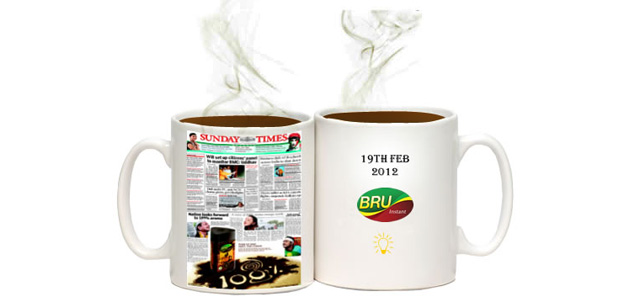
    The readers of The Sunday Times of India of February 19 woke up to a special surprise as they were served coffee with their newspapers. Well, not literally. The Mumbai, New Delhi and Bengaluru editions had a unique dimension – they broke the olfactory barrier. Each copy filled the air with the rich aroma of coffee, spreading the message for Hindustan Unilever’s flagship coffee product, Bru Gold. Veteran mediaperson Bharat Kapadia’s firm, ideas@bharatkapadia.com, unveiled its first big idea for its clients Hindustan Unilever and The Times of India group.


    “The objective was to drive home the richness of fine coffee and I knew that we could conquer this final frontier in a newspaper,” Mr Kapadia said. “The aroma of food products can create a sense of craving and can be very effective way to lead the reader to consume it.”


    In a world where it’s critical to stand out in a crowd, an idea when executed effectively can be a winner and this can be a unique consumer experience with every new fragrance. Mr Kapadia should know. Having spearheaded several ideas with the publications he has led over the years, ideas@bharatkapadia.com is a specialized ideas consulting firm in media and marketing. The fragrant newspaper concept has been tried out earlier editorially by Dainik Bhaskar and possibly some others too, but it’s the first time by a national advertiser across multiple editions.


    What experts feel on innovation

    The Times of India has been in the forefront with innovations. It’s been said and discussed in various forums that the only way the print industry can maintain its vitality is by constantly innovating and thereby evolving. That innovation is a driving factor for success is a no-brainer, yet is our print industry doing enough to innovate and create more value for the advertisers? Earlier, MxM India got in touch with leading advertising practitioners to know more about current trends and innovations that are happening in the industry.


    Pratap Bose

    When asked if the print industry is innovating enough of late, Pratap Bose, COO, Mudra Group said, “When it comes to print, there is very little innovation that you see. Whatever innovation you see, once it is done it is repeated time and time over again. Various forms of jackets – half, straight, up, down … Nothing fresh is coming out in print these days. The one category that continues to be beaten down is print. Barring one or two innovations from The Times of India group, which are of course very good, there is not much in terms of innovations that is happening.”


    When asked to compare print with other media, Mr Bose said, “Well, I consider all media as media, whether it is above the line or below the line. But essentially what you are seeing in the innovation space is largely happening in digital, out of home and promotions. To an extent video as well, if you want to include mainline media. Cinema is again, very few… So really, good innovation is not happening on either print or TV.”


    An issue of deliberation also is that whatever little innovation that we see in the market, is it happening in all print forms, across all linguistic barriers alike? Are print innovations happening in both English and language publications alike, or is the innovation limited to top English publications… only those who get top-end advertising moolah?


    Answering the question, Nandini Dias, COO, Lodestar UM said, “Print innovations often needs the publishing house to be able to carry out the difference. The leading publishing houses like the Bennett Coleman or HT Media manage to pull off innovations easily. For example the Cannes Gold that we won for Garnier this year was aided by The Times of India. The Times of India managed to print the day’s issue on recycled paper; for people who understand printing, they will appreciate the sheer thickness of the paper, the kind of paper needed the production team to alter their normal process , experiment and get it right before the 100% recycled paper issue got printed. So innovation happens with publications with a modern sophisticated printing and production unit. It has nothing to do with the language of the publication.”


    Divya Radhakrishnan

    Divya Radhakrishnan, Manging director – Helios Media Pvt Ltd, said, “There are lots of innovations happening in vernacular press as well. In fact groups like Dainik Jagran, Dainik Bhaskar have pioneered many an innovative concepts. The extent of innovation blends into ground activation and other media owned by the same group. A good example of that is Jagran activations.


    But while we talk about all the advertising riches innovation can drive, we cannot help but talk about the content aspect too. Often, innovations in print are condoned because they hamper its readability. Some innovations distracts an diverts the attention of a reader, thereby hampering with the content. However, Ms Dias said that it is not always so. Such a case only happens when an innovation makes reading content difficult. “For example the half gate fold is often disliked by a lot of readers as it makes holding the paper difficult or sometimes fonts in a colour, which make reading tough. Other than that innovations are done to enhance the product values and to bring it alive to the readers.”


    Yet, innovation remains a key factor for the print players for sustenance in the long run. Moreover, the ability to carry off good and meaningful innovation certainly brings more to the table and helps grab the advertisers’ attention.”


    Ms Radhakrishnan said, “Innovations for the sake of innovation is a no-go. The key objective for the innovation is to stand out of clutter and deliver the message appropriately. Given the time-spent on print media being on the decline, it’s very important that the message is delivered in a single-shot and therefore needs to be placed innovatively to grab reader attention. Another often repeated mistake is repeating the same idea often which by definition kills the concept of innovation. For example, jackets.”


    Nandini Dias

    Speaking on how important it is for print publications to innovate to be successful, Ms Dias said “It’s important to be able to carry out innovative options. As advertisers often come up with solutions which do not conform, publications which can help communicate their ‘hat ke’ thoughts will benefit.”


    As Steve Jobs once said, “Innovation distinguishes between a leader and a follower.” For print players, it is imperative to constantly dream up winning ideas. So, we are likely to see more ‘hat ke’ and out-of-the-box innovations like the one created for Hindustan Unilever.


  • Pavan Varshnei quits ABP, hands over to Kaushik Banerjee

    By A Correspondent


    Pavan Varshnei, President, English language publications at ABP, has decided to move on with Kaushik Banerjee, Vice President of the ABP group, taking additional charge with effect from March 1, 2012.


    Pavan Varshnei joined ABP in 2008 to run Businessworld, and set up and launch Fortune India. Prior to joining ABP, he was the Publishing Director of the Business Division at the India Today Group and was credited with rapidly expanding the portfolio. He identified new segments and successfully launched four new publications: Scientific American, Harvard Business Review, Men’s Health and BT More. He also negotiated a joint venture with Germany’s Axel Springer Group to launch Auto Bild India.


    Before joining the IT Group, he was executive vice-president at Lintas India. He spent 14 years at Lintas, working across several Unilever brands, Maruti Suzuki, Electrolux, Joyco, Wills Lifestyle and Sony Ericsson. At Lintas, he also served as head of insight and oversaw the AOR (agency of record) media business for Bajaj Auto, Idea Cellular, UTI, Pantaloon and Parle Agro. Varshnei is a Chevening scholar from the London School of Economics, UK. He graduated from St Stephen’s College, Delhi, and holds an MBA with distinction from the Asian Institute of Management, Manila.


    Mr Kaushik Banerjee joined ABP in 2007 and oversees all SBU activities of Anandabazar Patrika. Armed with 15 years experience in sales and marketing, he had a long stint at Titan Industries, where he was instrumental in launching their range of alarm clocks in India. Thereafter, he moved to Duncans Industries Ltd in Calcutta, becoming the marketing head for their packaged tea division.


    After a short stint at Bombay Dyeing, he joined Idea Cellular Ltd. He them moved on to the Murugappa group where he became Vice-President, Sales and Marketing, working with the bathroom products and travel divisions. Mr Banerjee is a mechanical engineer from Jadavpur University and is an alumnus of IIM, Lucknow. The move took place earlier this month and an internal communique was sent out. Mr Banerjee is likely to relocate to New Delhi from Kolkata and Mr Varshnei has not yet revealed his plans for the immediate future.


  • Saevus packs a bag for ecology

    By A Correspondent


    Saevus Wildlife, along with their anchor sponsor, travel products brand Samsonite, has launched Saevus, a premium wildlife and natural history magazine.


    A two-day launch event at the Little Rann of Kutch saw sessions by eminent guests – Dr Satya Kumar –Professor, Wildlife Institute of India, Sandesh Kadur- Eminent Wildlife Photographer, and Subrata Dutta – Managing Director, Samsonite, South Asia. The focus on the sessions was wildlife photography tips, filming wildlife, mountaineering, wildlife conservation and the association of Samsonite with Saevus. Samsonite’s connection highlights corporate involvement in promoting wildlife and natural history along with a morning safari at the Little Rann of Kutch.


    The Little Rann of Kutch is rich in biodiversity and is an ecologically important area for wildlife. Many local and migratory water birds like cranes, ducks, pelicans, flamingoes and land birds like sand grouse, frankolins and the Indian bustard find home at this place.


    It has been nominated as a bio-sphere and World Heritage Site by UNESCO.

    Saevus magazine aims at popularizing the beauty and diversity of Indian nature and Wildlife through stunning visuals, and aims at uncompromising quality to capture the imagination of every Indian who loves nature, wildlife and the outdoors.The magazine will be available on stands and specialty bookstores from March 2012. The editorial team includes Sree Nandy-Editor-in-chief, Sandeep Mall-Managing Partner, Santanu Nandy-Publisher and Dhrotiman Mukherjee-Head of Photography.


    At the launch of the magazine, Mr Mall said, “Saevus aims at offering its readers a side of wildlife and nature they have never been exposed to.  We couldn’t have thought of a better place than the Little Rann of Kutch to unveil our magazine because here is where the idea of coming out with the magazine was born.”


    Subrata Dutta, Managing Director, Samsonite, South Asia said, ”At Samsonite we have believed in stepping out and travelling the world. When this proposal came to us we thought it to be a great platform to showcase ourselves as partners to not just travellers but the various medium that makes one travel. I am hopeful of the great response Saevus will receive and I wish the entire team great success on behalf of Samsonite.”


  • HT revamps Sunday supplement Brunch

    By A Correspondent


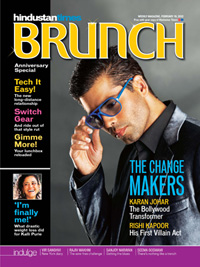
    HT Media Limited (HTML) unveiled the new avatar of Brunch Weekly on February 19. Brunch is the popular weekly lifestyle and entertainment magazine from Hindustan Times launched in 2003. It is currently circulated complimentary with HT and select editions of Mint on Sunday, and is the largest read English lifestyle magazine in India with a circulation of 13.1 lakh and growing.


    Poonam Saxena, Editor of Brunch Weekly, commented on the launch: “Brunch has an unmatched reach and a large bank of extremely loyal readers who have enjoyed the magazine over the last eight years. It was time to give our readers something new, something unexpected and something fresh. Readers will be delighted with what they find on their doorstep every Sunday morning. It is the same magazine we all fell in love with all those years ago, but with an exciting new look and feel, and more entertaining and interactive content. Brunch just made Sundays better!”


    The brand promises its readers “The Good Life” week after week with gripping content that covers various lifestyle and entertainment-related genres. The revamped Brunch includes several new features including weekly contests and feature series, celebrity columns, and stories with web codes that can be scanned for exclusive supplemental content. The lineup of Brunch columnists includes Vir Sanghvi, Rajiv Makhni, Seema Goswami, Shikha Sharma and Sanjoy Narayan.


    Rajan Bhalla, Head – Corporate Marketing & Magazines, added, “We decided to give Brunch a makeover for the benefit of our readers. More than three million people across the country read Brunch because we give them an exemplary reading experience. Brunch is a Sunday ritual for them; something they eagerly look forward to. We wanted to give our readers a clutter-free, sharp, witty, entertaining, and interactive start to their Sundays. All the favourites are still there, we have simply upped the ante on the design and content. The new, arresting masthead and crisp and clear pages give Brunch a contemporary edge. We are certain readers will love Brunch’s new style.”


  • The Economist circulation in India grows 26% y-o-y

    By A Correspondent


    The Economist inIndiaregistered an impressive 26 per cent growth (year-on-year) in its circulation as per the latest ABC period [ABC UK/US July-December 2011] to reach 34,953 copies.


    Suprio Guha Thakurta, managing director,India, said: “This is the eighth consecutive ABC increase, confirming our belief that curiosity about the world is growing rapidly inIndia. We have made considerable investments in developing the magazine’s circulation inIndiaand the results are heartening.”


    TheIndiaperformance is in line with the growth of The Economist globally. The world wide circulation of The Economist has passed the 1.5 million mark for the first time. It has achieved print circulation of 1,487,010 in the latest ABC period [ABC UK/US July-December 2011], combined with a digital-only paid circulation of more than 100,000 in December 2011.


    Andrew Rashbass, CEO of The Economist Group, said: “It took us 160 years to reach one million circulation, but only seven years to reach one and a half million. We now expect to reach two million within five years, fuelled by rapid growth in digital circulation. By then, we expect to have more digital than print readers.


    Although our print circulation continues to rise, at some point in the near future it will go down as more and more of our customers choose to read us on a tablet or e-reader. We’re relaxed about that because we are discovering great opportunities in digital having already reached a digital-only circulation of more than 100,000. Over 75 per cent of these readers are new to us and 12 per cent had previously given up their print subscription.”


    The following table is a breakdown of ABC UK/US released and certificated figures July-December 2011 for the print circulation of The Economist.


    Table: Combined growth figures for The Economist in print and digital:


    Print CirculationABC UK/USJuly-December 2011 Print YOY GrowthABC UK/USJuly-December 2011 Digital CirculationData sourced from The Economist
    Global 1,487,010 +0.9% 100,000 


    UK 210,384 +0.1%
    North America 844,766 +1.3%
    ContinentalEurope 241,726 +0.4%
    Middle East andAfrica[MEA] 29,129 +0.4%
    Asia Pacific 146,531 +2.2%
    Latin America 14,474 -14.4%
    Combined total circulation: 1,587,010


    With a global print and digital circulation of over 1.5million and a reputation for insightful analysis and perspective on every aspect of world events, The Economist is one of the most widely recognised and well-read current affairs publications. The paper covers politics, business, science and technology, and books and arts, concluding each week with the obituary. Its website (www.economist.com) offers articles from the past ten years, in addition to web-only content such as blogs, debates and audio/video programmes. The Economist is now available to download for reading on Android, iPhone, or iPad devices.