Category: PRINT MEDIA

  • @FF12: How relevant is newspaper content to the reader?

    By Archita Wagle


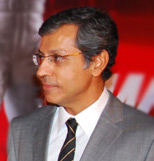
    N Ram, former Editor-in-Chief, The Hindu, opened his keynote address by stating that there is ‘anxiety and gloom’ over the fact that journalism is in ‘meltdown’.


    Speaking on ‘Building Deeper Reader Engagement- Sustaining Long Term Newspaper Loyalty over Regions’, Mr Ram said that news media is in crisis in the mature markets, due to which there has been a decrease in the circulation and readership of newspapers. But the fact to be noted was that the decline started in mature markets like theUSeven before advent of the Internet. He added that even the broadcast media, ‘the dominant player’, has also seen a sharp decline.


    Mr Ram outlined Two Media World Phenomenon next, where the less developed countries are witnessing increase in circulation of newspapers unlike the mature market. He illustrated his point with the example of the regional, especially the Hindi, newspapers which have seen increase in their circulation. But he added a word of caution when he said that TV, even in the developing world is going through a crisis which it has so far covered by showing entertainment as part of news. Inspite of this, Mr Ram was optimistic that the medium term prospects for the media industry are looking good.


    The key factor for the decline in the newspaper is the increasing popularity of the digital media. Mr Ram called this the Digital Age Paradox and added that in recent times the newspapers have seen an increase in the readership of their online editions. But he added that the recent paid content model will impact the readership in a big way.


    Mr Ram opined that the paid content model will not replace the old revenue model of the newspapers any time soon as a lion’s share of the revenue earned goes to the search engines like Google and content providers like iPad apps.


    He added that the paid content model has put a “double squeeze” on the newspapers’ revenue, as they have to subsidise digital journalism, which in turn is cannibalizing their circulation.


    Mr Ram was optimistic about Indian newspapers surviving the challenge of the Internet as he believed that India has a “new kind of advantage” due to its fact the media here is still growing at the time when it is faced by the Internet challenge. But he said that the media can’t afford to be complacent about the time before it faces ‘a mature market-like situation’, estimating that the newspapers have around 3-7 years before the negative trends overtake us.


    After taking the audience through a detailed study of the challenges being faced by the newspapers, Mr Ram turned his attention towards how the newspapers can engage the readers to sustain their loyalty.


    Mr Ram said that readers today have real time access to information and could check out the information that was provided by the newspapers. He was of the opinion that if the newspapers stuck to the basic principles of journalism – context, accuracy, perspective, fact checking and verification – they can build a relationship with the readers, which it can rent out to the advertisers. But he was emphatic that “newspapering” must not be reduced to consumer marketing of news.


    He advised the newspapers not to target “attractive demographics” which help in getting revenues, but to provide news for all sections. He said “trust is the key to good journalism”. He asked the newspapers to be clear about their identity, core values and focus on where they want to go and cautioned them against imitating anybody else.


    He said that the readers today want shorter articles and more analyses and editorial content and views, especially in the digital viewing context. But he expressly warned against “editorialising in the guise of news”.


    He concluded his address by stressing the importance of having an internal mechanism for correction of the mistakes that ran independent of the editorial and the advertisers which will help the newspapers to do the right thing.


    Director of the Dainik Bhaskar Group Mr Girish Agarwal took the stage next for a short but relevant address. He started off by stating that he agreed with Mr Ram about maintaining the standards and fundamentals of journalism but begged to differ from him by stating that Indian newspapers are growing in their circulation and readership.


    He said that India had a huge advantage in terms of number due to the gap between those who can read and those who actually read a newspaper.He spo


    ke about the need to engage the reader by asking “How relevant are we (newspapers) to the reader?” He said the need for an intellectual organisation like newspaper is external understanding and internal adaptation. He opined that a newspaper cannot rest on its past glory but should move ahead by acknowledging and understanding what the consumer wants and giving him what they think he needs.


    He also differed from Mr Ram when he empathetically suggested that newspapers need to be simplified and adapt themselves to the readers’ requirements. He ended by saying that newspapers should have global vision and hyper local content.


    After the speeches the floor was opened to the audience who questioned Mr Ram and Mr Agarwal about threat perception of the culture of medianet and media houses being bought over by MNCs


    Mr Ram denounced paid news as a rogue practice which has been rubbished by the Press Council and Mr Agarwal added that since only one company had this practice it was not fair to generalise about the industry. Mr Agarwal said that ethically media should report anything that may be perceived as defaming by the parent company but the ground reality is not always so rosy.
     

  • 5th Mint Luxury Conf to explore future of lux industry

    By A Correspondent


    The 5th edition of Mint Luxury Conference will take place in Mumbai on March 23 and 24. The theme for the conference is “Luxury inIndia: At the Tipping Point”


    Over the last few years,India’s luxury industry has witnessed significant transformation. The ever-growing Indian market has drawn a lot of attention from across the globe in recent years.Indiahas been a production outsourcing destination for a long time, but now due to a steadily growing economy and globalized businesses environment,Indiahas rapidly transformed into a large market for luxury goods.


    In view of the growing importance of the country in the global luxury industry, Mint, from the house of HT Media, has initiated a conference to bring together stakeholders to a common platform.


    The Mint Luxury Conference is the largest event of its kind in this sector. Industry experts, designers, marketers and owners of prestigious international luxury brands will come together for multiple sessions spread across 2 days of the conference.


    This year marks the fifth anniversary of the Mint Luxury Conference. Among the speakers this year are legendary designers Diane von Furstenberg and Christian Louboutin; Indian design star Manish Malhotra; expert in luxury retail, Michael Ward – MD Harrods; Michael Perschke, Head of Audi India and Anoop Prakash, MD of Harley-Davidson India. The sessions range from the intricacies of design and creativity to the minutiae of the luxury market inIndia. A much anticipated session is the very topical “The Impact of 100% FDI on Luxury” which will see Ajay Dua, former Secretary, DIPP, Ministry of Commerce and Industry, Peter Beckingham, Deputy British High Commissioner to India, and Armando Branchini, Executive Director, Fondazione Altagamma, butting heads on the issue of FDI.


  • HT extends Brunch IP to live events

    By A Correspondent


    Brunch Dialogues are essentially conversations with the Indian Film Industry that are light-hearted in context, yet deep-rooted in content; just like the weekly Brunch.


    However, in its event avataar, it is a heady mix of glamour, music, spirits and style. The endeavour is to be led by Vir Sanghvi;  whom we all know best for his ‘In Conversation’ sessions at the HT Leadership Summit and the ‘Rude Food / Travel’ columns in HT Brunch – that make the Sunday read quite irresistible. It is his inimitable expertise in exploring living biopics and his astute humour, liberally laced with repartees, that forms the central character of this evening.


    While the conversations will set the pace for a racy evening, the evening will also have live performances to lift up the mood. It will culminate into a showcase of ‘THE DAMN GOOD LIFE’ – full of Fine Food, Good Wine and Smart Indulgences – something that weekly Brunch encapsulates in print every Sunday.


    A host of showbiz icons like Anil Kapoor, John Abraham, Vidya Balan, Ekta Kapoor, Kangna Ranaut, Sanjay Gupta, Naseeruddin Shah, Nana Patekar, Sonu Sood, Mahesh Manjrekar will be attending the event whoch will see some stellar musical performances.


  • Long way to go for Indian athletics: Sports journos’ meet

    By A Correspondent


    The problems faced by Indian athletics in its attempt to catch up with the rest of the world echoed at the seminar on athletics held to mark the start of the 36th National Convention of the Sports Journalists Federation of India (SJFI) in Guwahati on Tuesday.


    While the elite panel comprising former internationals Bhogeswar Barua, Adille Sumariwalla, Sunil Abraham and Tayabun Nesa and eminent coach, Kuntal Roy, spoke generally on a variety of factors, the common refrain amongst them all was the need of a long-term plan, support from within the educational system and the adoption of a supportive sports medicine system for the growth of the sport in the country.


    Setting the ball rolling, Bhogeswar Barua, 800m gold medalist at the 1966 Asian Games in Bangkok, was critical of the powers-that-be who controlled the affairs of the Athletics Federation of India, for the failure of Indian athletics to really take off at the world stage. “They have really no genuine concern for the sport. Or for all the gains we have made through the years, Indian athletics could have really made a real impact at the world level by now. Power and pelf are what they are interested at, while the real concern should have been that of the welfare of the athletes.”


    Barua also said that there was no point in blaming Indian cricket for the ills plaguing Olympic sports disciplines in the country. “There is enough space to co-exist for all sports disciplines along with cricket. But then, the attempt should be to have a long-term plan which should be backed with some vision.”


    Adille Sumariwalla, former National sprint champion, emphasised the need for society to change its approach towards athletics. “The crowds are simply not there at any meet held in this country despite the fact the action provides much more thrill than any other sport. Where else, can one witness competitions in more than one event being held simultaneously other than in athletics.”


    Sunil Abraham, also a constituent sprinter of his times, pointed out that things were bound to improve only if the middle class took to the sport in large numbers. “They are our main stay and I see an attitudinal problem as they choose to shun the sport and its excitement without any valid reason. The blame for this could be the lack of commitment of the present generation of athletes despite the facilities being made available to them.”


    In her intervention, Tayabun Nesa spoke generally on how the sport had got totally removed from the educational system through the years and stressed on the need for the adoption of a sound system to take advantage of modern sports medicine. “The Government should look seriously into both these aspects if Indian athletics has to go places.”

    Later in the day, the convention was officially inaugurated by 94-year-old Pulin Das, Assam’s first sports journalist, while the daily SJFI newsletter, Guwahati Rocks, was released by Bhogeswar Barua, by handing over the first copy to former National table tennis champion, Monalisa Barua-Mehta.


  • Dainik Bhaskar’s ‘Junior Editor’ creates history

    By A Correspondent


    Junior Editor-2011, an initiative of Dainik Bhaskar, under the umbrella of Bhaskar Champ’s club has created history by being recognised by Guinness World Records as “The Largest Writing Competition”, by ‘Limca World Record’ as “The Largest Countrywide Newspaper Making Competition for Children” and also recognised by ‘India Book of Records’ for “The Largest Number of Manually Prepared Newspapers by Kids.” A total of 67,130 manually created newspapers were submitted by children from 41 cities of 10 states. The activity commenced on February 2011 and culminated in September 2011.


    Junior Editor was an exceptional interactive programme with elements of editorial, designing, creative writing and reporting of the major happenings in and around the world. 67.130 participants of class 1 to class 12 manually created their own newspapers using the framework provided in the 8 page templates. These even had creative spaces for subject as varied as ‘Cartoon & Caricature” and ‘Ad Mad – Creativity at its best’.


    Vinay Maheshwari, Vice-President- Sales & Market Development, Dainik Bhaskar Group said, “Guinness World Record is just an affirmation of scale. The Junior Editor 2011 has made to all the three relevant records, ‘Limca World Record’ & ‘India Book of Records’ and the participation of 67,130 participants from 592 schools joining in reflects the stature of the club as well as the strong brand presence of DB Group”.


    He added ‘The idea behind the initiative was not only to engage kids but the entire family by providing them a smart reader engagement, as the participants were expected not to just cut-paste the information but to give their own interpretation and at times use imagination to complete a story, it definitely had the family interacting as a unit. That was also the focal point of Ideation”. Such initiatives tap the existing enormous potential of strengthening reader connect with the brand.’


    The participants participated in 2 categories based in level of expertise and expectations. Category- A (Class 1st to 4th), Category- B (Class 5th to 8th) & Category C (Class 9th to 12th). It was interesting to see the spectrum of subjects picked up for making the newspaper by different categories of participants.


  • Water bottle for the front page of DNA

    By A Correspondent


    DNA initiates a path breaking front page innovation on the occasion of World Water Day DNA is known for its revolutionary approach towards almost everything it does and along with the daily news analysis; this English daily is impeccably marching ahead in making a change in the traditional newspaper industry.


    On the 22nd of March, when people grabbed their copy of DNA they experienced a refreshing change with a brand new colour on the front page. On the occasion of World Water Day, DNA and Tupperware had teamed up to showcase a new product by this well known high quality smart kitchen solutions company.


    Every newspaper, until today was getting printed in a four colour system through an offset printing machine, whose colours namely are CMYK (Cyan, Magenta, Yellow and Black) and occasionally various newspapers experimented with Gold or Silver. But the first time ever, in the history of Indian newsprint industry, a broadsheet has a shade of blue as a part of their printing colour palate and a live edit to make believe the trueness of the Tupperware bottle and making people comprehend a fresh and pure colour of blue on the well deserved occasion of the World Water Day.


    “Tupperware was launching their aqua fresh water bottles and we chose World Water day, March 22nd, as it was a perfect fit for the announcement. We wanted to do something exciting for Tupperware and this is when DNA came up with the concept of innovating it in a three-dimensional way. It’s the first campaign of the year for Tupperware and stands as a clear communication for all readers to drink fresh and healthy water”. – Surbhi C. Murthy, AVP, Allied Media This was done to launch the Tupperware bottle that is so pure and perpetual that it could be used for life. There could be no better gift for the readers than this, on the occasion, isn’t it!


    “Tupperware’s Aquasafe Bottles provide a quick, sustainable solution to safe, healthy water for consumers. Towards this, we have embarked upon an advertising campaign which is based on clutter-breaking innovation to generate buzz amongst the consumer. Committed to make the world a better place to live in, Tupperware endorses the idea and cause of effective water storage solutions and lends its whole-hearted support to the World Water Day.”  Anshu Bagai, Director- Marketing, Tupperware “Water bottles are a significant part of Tupperware’s range of products. The ‘Sip of Bliss’ campaign was created to celebrate water. What we wanted was to have an innovative kick-start for the campaign. And there could not have been a better way and a better day than the World Water Day, on March 22nd,   to launch it with a special innovation using a special colour to make it memorable and effective”  Jyotsna Chauhan, COO,  IBD India Pvt. Ltd.


    “Tupperware’s summer campaign is all about the romance and the sheer bliss of water.  The DNA innovation provided a refreshing twist in taking the idea further.” Jai Singh, Senior Creative Director, IBD Brands, Gurgaon. Explains Mr. Nirmal Kanthode, the DNA Production Head “The printing process had to be altered to create the depth of the Tupperware colour. After the normal 4 stage process, a 5th printing round with a special ink had to be done to create the magical effect. While this sounds easy, doing it for a full run of 6 lakh copies with high speed machines meant meticulous calculations & calibrations to ensure no delay & perfect output. Any shade change would be disastrous & we would have no way to stop it either.”


  • Ashutosh: Anna book is written in anger

    Video and Text by Shruti Pushkarna


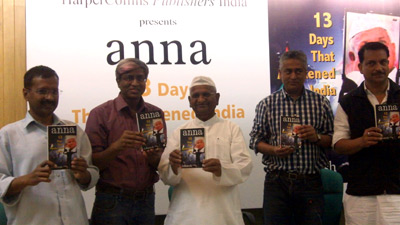
    Launching his book titled, ‘Anna: 13 Days That Awakened India’, in New Delhi, Ashutosh, well-known Hindi journalist and Managing Editor of IBN 7 noted that the book was not about Anna Hazare but about the larger people’s movement. Addressing a gathering of journalists, social activists, politics, family and friends at the book launch, he said, “People think that the book is about Anna Hazare, it is not about Anna Hazare. It traces the movement, from where it started, the principal actors of the movement, their confrontation with the government and the politics of the day. Basically it encapsulates the entire movement from beginning to end.”


    The 74-year-old activist, Anna Hazare released the book written by TV journalist Ashutosh on the agitation in Ramlila Maidan last August, at the India Habitat Centre in New Delhi.


    In the book, Ashutosh weaves together the story of the thirteen days of Anna’s hunger strike. He had a ringside view of the developments, stationed as he was at the Ramlila grounds in New Delhi, the venue of the fast, and had intimate access to the two warring parties, the Congress government and Team Anna. Lauding the book, Mr Hazare said that it would be a great source of inspiration for the youth for whom this book will serve as a historic account of those thirteen days.


    [youtube width=”400″ height=”200″]http://www.youtube.com/watch?v=1i96hzMWcMY[/youtube]

    Ashutosh told the audiences that he’d written this book in anger at the so-called ‘elitist’ section of society who, he feels, have failed to understand the anti-corruption movement led by Anna. He also said that despite being a Hindi journalist, he chose to write the book in English because he wanted this group of people to read the book. He said, “This book is written in anger. Anger because through the movement I realized there is a section of English intelligentsia which is refusing to understand the movement and they are unnecessarily trying to find faults and trying to project it as anti-democracy. These people I thought, had no understanding of reality, they had never been to the Ram Lila Maidan, so I thought if I wrote in Hindi these people won’t read it. I wanted them to read and realize that there is a section of society which is very angry with their stand. That’s why I decided to write this book. I wanted to take my battle to their turf to understand how wrong they are. I wanted to take the battle to those who claim to be the guardians of history but actually know nothing about it.”


    The book release was followed by a panel discussion moderated by Editor-in-Chief, IBN 18 Network, Rajdeep Sardesai. The panelists included social activist Arvind Kejriwal, BJP spokesperson Rajiv Pratap Rudy, and Anna Hazare. Talking about the Anna movement, Arvind Kejriwal, member of Team Anna said that three factors had led to the success of the movement. One was Hazare’s leadership, second anger of people against corruption and third was the fact that Team Anna provided an alternative to fight the menace.


    Responding to whether the movement had lost its steam, Anna Hazare said that we will come to know by 2014 whether the movement still has the steam. He said, “There are questions about the movement. Some people doubt that the movement has lost the steam. Whether the movement still has the steam, we will know in 2014 when the country goes to general elections.” He added that he will wait till mid-May to see whether Parliament passes a strong Lokpal law during the ongoing budget session and then embark on a nation-wide tour to awaken people about the issue.


    Mr Hazare also said that one law cannot end corruption and therefore what we need is a change in the system. BJP spokesperson Rajiv Pratap Rudy said, “What we need is a change in the system. Bureaucrats are supposed to construct roads and MLAs and MPs make laws. However, in India bureaucrats make laws and lawmakers construct roads.” Mr Rudy asked how one could call India a functional democracy when a former Chief Minister, who was jailed for a multi-crore scam, gets elected to the Lok Sabha. Mr Rudy extended full support to Mr Hazare’s movement and appealed to Mr Hazare to urge good people to join politics.


    Rajdeep Sardesai expressed his reservations about the movement but he accepted that somebody has to take the lead in the fight against corruption.


  • E Raghavan, Editor, Vijaya Karnataka and Vijaya Next is no more

    By A Correspondent


    E Raghavan, the Editor of Vijaya Karnataka, the Kannada daily from TOI and the weekly Vijaya Next passed away on March 24 of cardiac arrest at the age of 61. He had also been the Editor of The Times of India Bangalore and The Editor of The Economic Times, Southern Editions.


    Mr Raghavan had been a TOI veteran and been with the company for long holding various positions both at TOI and The Economic Times. He had started his career with The Indian Express later to move to TOI. He had also been an Editorial Consultant to DNA Bangalore.


  • A Golden year for Femina Tamil

    By Archita Wagle


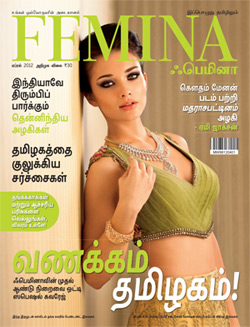
    The 1st anniversary special issue of Femina Tamil was unveiled by actress Amy Jackson, cover girl for the issue, and Tarun Rai, CEO, WWM, at a party held at Taj Coromandel, Chennai. Leading city jeweller GRT Jewellers partnered with Femina Tamil for this event, providing select pieces of jewellery from their newest collection for the anniversary issue.


    Femina Tamil was launched in April 2011, taking off from the parent brand with content customised to suit the modern, progressive Tamil reader.


    The anniversary issue is a special 200-page issue with the focus on Tamil Nadu. It includes a tete-a-tete with 10 most gorgeous women of South India, the fun side of Chennai explored in 24 hours, and scoops on the biggest scandals to hit Tamil Nadu in recent years.


    Additionally, there is a gold pendant that is the special cover mount for the issue. There is also a contest where readers can win jewellery vouchers, sarees, holidays and other gifts.


    The marketing campaign for the anniversary issue spans radio, print, Facebook and on-ground visibility through display, POS and inserts.


    Tarun Rai, CEO, Worldwide Media said, “We are very happy at the response that Femina Tamil has got, both from readers as well as advertisers. It has only been twelve months and Femina Tamil has already established itself as the magazine-of-choice of the discerning and progressive Tamil woman.”


    Commenting on the 1st Anniversary Issue, Tanya Chaitanya, Editor of Femina & Femina Tamil said, “It has been a year of remarkable grit, inspiring stories and women power. It has been a year of Femina Tamil. A huge thank-you to all our readers who have helped us gain an insight into their lives and who have given us a thumbs up. Here’s to a great first anniversary and many more to come.”


    ‘The perfect magazine for the modern, progressive woman’

    On the occasion of the first anniversary, MxMIndia talked to Tarun Rai, CEO, Worldwide Media, about Femina Tamil, the magazine industry, and whether there will be more Feminas in South India.


    Q: With 2011 witnessing a decline in the readership figures of dailies, monthlies and fortnightlies, how comfortable were you launching a new magazine in such a scenario?
    We launched Femina Tamil last April. For us, this was an entry into a new market where we tapped a whole new set of readers. The Tamil market is a large one, with multiple magazines being present in the Top 10 list of most popular magazines in the country.

    We have targeted the 20-29year old SEC A Tamil-speaking woman who is modern, progressive and forward thinking. Based on previous IRS figures, there was no Tamil magazine that was popular with this segment and it provided us with a perfect opportunity to enter the market.

    The increase in sales figures month-on-month has been promising and we are very happy to have been accepted by the readers.


    Q: What was the different approach you took… positioning and branding?

    Femina Tamil was positioned in line with the popular English magazines that are available in the market. The monthly magazine is a 140+ page glossy with production values and quality same as that of the parent brand Femina (English). The content is a mix of stories written specifically for the Tamil reader and popular features from the parent magazine.

    The magazine was targeted towards the progressive, modern, Tamil-speaking woman in the age group of 20-29 years from SEC A.

    All communication and branding was customised to speak to this woman – showcasing different aspects of her life and how Femina is the perfect magazine to suit her needs as she tackles different roles in her life. The campaign embodied the tagline of the magazine “for all the women you are”.


    Q:What was the revenue model you adopted? How has it helped?

    As in the case of all print media, this magazine also relies heavily on ad sales. The advertisers are a mix of local and national clients who have used this vehicle to reach out to their TG in this market. Additionally, we have relied on magazine sales through new channels like format bookstores like Landmark and Crossword. We have also worked aggressively to get subscriptions for the magazine. Tamil magazine market is primarily a sales driven market. We have rolled out several attractive schemes to bring in subscriptions both from ground activations as well as online channels through our subscription website www.timesmags.com and promotions on Facebook.

    Femina Tamil is also available on Magzter, the popular online magazine portal where it is receiving a good response from the readers in terms of downloads and online subscriptions.


    Q:There have been a lot of specials in the magazine. Was it a deliberate move? Has it helped?

    Femina Tamil has had a special theme in all its issues – this has ranged from Akshay Tritiya special in May to Ddiwali, Pongal and Valentine’s Day specials. We have also had ‘shopping’ and ‘bridal’ special issues. The aim has been to give readers something interesting to look forward to in every issue.

    Being a new entrant in the market competing against multiple old and established magazines, we have used our fresh and novel edit content to attract readers.

    The special articles, along with other edit initiatives have helped us gain a dedicated reader base in the market in a very short space.


    Some key changes we have introduced:

    The cover girl is always a woman who is a celebrity in Tamil Nadu. In the past, we have featured Trisha, Asin, Shriya Saran, Shruti Hassan and Kajal Aggarwal and Deepika Pallikal on our covers.

    The cover story is always an original story, covering topics that are relevant to t he reader.

    We have introduced a special column called ‘I want’, where our readers meet experts and learn a new skill like make up or baking – anything that they want!


    Q: Do you have the readership figures for Femina Tamil for the past year?

    We have not participated in IRS in the launch year. However, we have seen a steady growth in our numbers both from Trade sales as well as Subscriptions from the launch issue onwards. This is a positive indicator that the magazine has been well accepted by the readers. We plan to become even more visible and active in the market in the coming months to capitalise on the buzz created by our recent marketing activities and consolidate our position in the hearts and minds of readers.


    Our print run is 85,000 copies across South – 80 percent circulation is in TN, rest in main cities (Bangalore, Hyderabad and Cochin). While we have no IRS/NRS figs, however even if we take two readers per issue, we have 1,70,000 readers.


    Q: What plans for the future? Are you planning to launch in other South Indian markets too?

    South India is a vast market and is extremely exciting in terms of the scope it provides us to reach out to new readers. Yes, we are looking to launch in other South markets too.


  • KAAA asks govt to end Kerala newspaper distribution impasse

    By A Correspondent


    Continuing with the situation that has been created by the newspapers vendors in Kerala, T Vinay Kumar, President, Kerala Advertising Agencies Association (KAAA) has addressed the issue. In a letter to its members he has mentioned how the strike has affected the advertising agencies and the loss of considerable amount of business in the last one week.


    As both the parties including the vendors and the publisher cartel being adamant with no signs of issue being resolved, KAAA has been left with no option but to interfere to safeguard its interests, and has made a statement in mainline dailies requesting the CM and the involved parties to take a stand to end this impasse.


    They have also planned a symbolic distribution of newspapers near Ernakulam Public Library today (March 29), followed by a meeting in front of the residence of Justice VR Krishna Iyer who will share his views on solving the issue.


    It has been more than a week since newspaper distribution in Kerala has come to a stop with Newspaper Agents & Distributors Association demanding 50 percent commission of the cover price of the newspaper, pension, medical insurance, extra payment for advertising supplements, and stoppage of inserts, among other things. The Hindu, Mathrubhumi and Malayala Manorama have vehemently opposed these demands while Indian Express has agreed to 40 percent commission.


  • Nai Dunia acquisition set to be announced

    By A Correspondent


    The much-awaited Nai Dunia acquisition by Jagran Prakashan, which is reported to have been inked a while back, is set to be announced. Nai Dunia insiders tell MxMIndia that discussions with Jagran insiders on sales planning and execution has been happening for around a quarter.


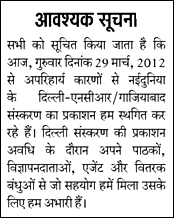
    The Indore-based group has also suspended its Delhi NCR-Ghaziabad edition which, according to reports, the Jagran group wasn’t keen on acquiring since it is still in investment mode. “The objective is to dominate the regional space and not the high cost Delhi market,” said a source close to the development. “That Nai Dunia was making losses in Delhi NCR is not a negative against the group… even today some high profile publications are in losses, but the promoters continue to invest in them given brighter future prospects.”


    The deal may be announced formally before the fiscal year-end, the source said. The Delhi NCR-Ghaziabad edition suspension is effective today. The March 29 edition carried a short announcement.


  • Dainik Bhaskar’s Save the Girl Child campaign in Punjab,Chandigarhand Haryana

    By A Correspondent


    Dainik Bhaskar, as part of its social responsibility, conducted a month-long educative drive against female foeticide and abandonment of girl child at birth. The ‘Beti Bachao Muhim’ (Save the Girl Child) initiative is concentrated in the state ofPunjaband Haryana, where this practice has lead to a serious gender imbalance.


    The campaign was aimed at creating enhanced awareness on this social menace of female foeticide by educating the masses through a series of editorial articles and public rallies and to create the much needed social impact through participative ground movement.


    The campaign saw relentless editorial coverage for 23 days. Additional local level focus group discussions among eminent personalities of the region were conducted and shared with the readers. Other than the local social and political influencers, 23 Bollywood celebrities like Vidya Balan, Bipasha Basu, Shilpa Shetty, Kiran Kher, Preity Zinta, Juhi Chawla, Divya Dutta, Shabana Azmi, Lara Dutta and Aishwarya Rai shared their point of view on the initiative.


    A series of interactive activities were conducted to further enhance awareness across 40 centres inPunjaband Haryana. Among the activities conducted, a signature campaign on March 20 saw 4 lakh people signing an oath against this social menace. On March 22, a candle light vigil was organized across 40 centres inChandigarh,Punjaband Haryana.


    The culmination of the campaign saw a ‘Beti Bachao’ March on March 23 with collective participation of more than 3 lakh people.


    Dainik Bhaskar will keep working on its agenda of socio-economic changes, catalyzing the mass psyche on social and economic issues. Speaking on the ‘Beti Bachao Muhim’ Ashu Phakey, COO, Dainik Bhaskar said: “Declining sex ratio is a serious problem in the state ofPunjaband Haryana. As an enabler of socio-economic change, Dainik Bhaskar has a responsibility to create awareness against this social menace and making more people aware of this social evil. This endeavour from Bhaskar is small step to uproot this social evil from society. We will continue our work against this social menace”


    Kamlesh Singh, State Editor, and the force behind the critical editorial environment for the initiative said: “Punjaband Haryana are industrious and prosperous states but always figure at the bottom in case of gender ratio. Female foeticide is rampant and known but the two states have not woken up to the harsh reality of a crisis. We were overwhelmed by the response and to quote a reader from Ambala who sent a message the following day, it was organized in “an unprecedented manner. The scale of coverage and number of people involved is unbelievably large.” That quite sums it up”.


    Dainik Bhaskar is the leading newspaper in Chattisgarh with editions fromRaipur, Bilaspur, Jagdalpur and Bhilai. The Dainik Bhaskar Group has a strong presence in newspapers, radio, event marketing, printing, short code, Digital, services andMobileapplication. Its flagship Hindi daily newspapers are Dainik Bhaskar, Divya Bhaskar, Divya Marathi and DNA. It covers 13 States with 64 editions reaching across 19 million readers every day.


    Additionally, it publishes 3 other newspaper – Business Bhaskar, DB Gold, DB Star. In magazine sphere it publishes Aha! Zindagi, Bal Bhaskar for young readers and Lakshay.