Category: PRINT MEDIA

  • With Moradabad launch, Hindustan now pan UP and Uttarakhand

    By A Correspondent


    Hindustan Media Ventures Limited (HMVL) recently launched its 10th edition in the state of UP from Moradabad. With this, Hindustan completes its footprint across the two states of Uttar Pradesh and Uttrakhand. It is now printed from 18 centres across the states of UP, Uttarakhand, Bihar, Jharkhand and Delhi.


    Commenting on the launch, Benoy Roychowdhury, ED, HMVL said: “Moradabad is a unique region of Uttar Pradesh that has placed India on the global map through its exports of over Rs2,200 crore of brass artifacts annually. Through the launch of our Moradabad edition, Hindustan now serves the entire footprint of Uttar Pradesh and Uttarakhand – two progressive and prosperous states with a rich, cultural heritage.”


    Sharing his views on the launch, Amit Chopra, CEO, HMVL said: “With our launch in Moradabad, we mark the completion of our journey of expansion that began in 2005. We now serve this economically powerful and culturally rich zone. As in our other markets, Hindustan will work to create reader delight through a high-quality newspaper and continuous engagement. We will become partners in progress for the citizens of the region. I am confident that Hindustan will emerge as the preferred newspaper for the people in this region.”


    Rajan Bhalla, (Head-Marketing, Strategic Businesses – HT Media) said: “The core proposition of Hindustan is ‘Tarakki ko chahiye naya nazariya’ – central to our brand and activation campaigns. We approached Moradabad with this very distinct perspective. Our Election Campaign “Aao Rajneeti Karein” reflects our commitment towards the state of UP and creating positive social impact.”


    Hindustan’s Moradabad edition has started with a strong 1.1 lakh circulation, a number that is unsurpassed in that zone. Moradabad launch comes on the back of the recent Aligarh edition launch which continues to progress by leaps and bounds; setting new benchmarks of journalism and reader connect.


    Hindustan Media Ventures Limited (HMVL) is the publisher of the leading Hindi newspaper – Hindustan, Hindi magazines Nandan and Kadambini and the news website livehindustan.com. Hindustan, which is the fastest growing daily in the country has presence in the states of UP, Uttarakhand, Bihar, Jharkhand & Delhi, with a Total Readership of 3.75 crore.


    The company is a subsidiary of the HT Media Group – a diversified media group with interests in Radio, print & online media.


  • [MJR] Quality of journalism has gone up: Mohan Sivanand

    Mohan Sivanand, India Editor, Reader’s Digest talks with MxMIndia’s Archita Wagle about his journey so far, touching on the changes in the field which he has seen in the past 36 years. Excerpts:


    Q: Tell us a little about your background and your life as a journalist.

    I have been in this field since I finished college in 1976. After my Senior Cambridge exams, I did a BSc in physics, then studied for an MA in English and a post-graduate diploma in journalism. Everything I studied has helped me in some way or other. I think and use, both, science and arts every day at work. I joined The Times of India as a trainee in 1977. I worked there for Science Today magazine (the magazine is not published any more). I worked with the TOI group for over six years, till 1983, when I joined Reader’s Digest. I joined RD as an assistant editor, when I was about 30.


    Q: Having been with RD for nearly 30 years, did you never feel that you needed a change or wanted to move to a different publication?

    No, I have not wanted to change jobs. I’ve liked it here.


    Q: How has the journey in these two companies been so far? What have been your learnings from them?

    Both the companies, TOI and Reader’s Digest, have been extremely good as learning experiences and dedication to journalism go.  I had very good editors to look up to, Surinder Jha of Science Today and Ashok Mahadevan at Reader’s Digest. Both these gentlemen gave a lot of importance to error-free content and laid emphasis on fact-checking. Ashok insisted that we learn to respect our readers and never underestimate them. That’s why our magazine is called Reader’s Digest.

    I follow those principles. One should never compromise on the quality of the content. I will hold an article back if I have some doubts about facts or if they have not been properly verified.


    Q: How does the process work?

    The process is the same for everybody, be it our US editor, myself, a staff writer or a freelancer. Even when I write an article, I have to give references and provide my sources to our researchers. The researchers have to double check every fact. They are, generally, the youngest employees who start out in RD with fact checking. Even I, sometimes, check and verify facts.


    Q: Over your 36 years in the industry, what are the changes that you have observed?

    In spite of everything, I feel that there has been a positive growth in the field. The quality of journalism has gone up in the past 30-odd years. I read a lot of articles and I feel that youngsters today are writing very well.  It is a pity that some of the better talent may be going towards the electronic media, but even the print media has people writing extremely well. I read a lot of good stories in many publications.

    Take the example of The Economic Times. It is much better today than it was 30 years ago. Maybe it is because business and markets have developed, and journalists today are well-connected via the Internet and they have access to a lot more information.

    In the past, most youngsters never thought of going for business journalism or working for technology magazines. In those days, we had just one Science Today, but today there are a lot of specialised magazines.

    Despite all the negativity, like ‘paid news’ or advertising interfering in editorial content, I feel that there is a lot of good stuff too. The vast majority today are proper journalists.


    Q: As a part of a magazine that places so much importance on content, what is your take on advertising interfering in editorial decisions?

    Actually, the ad people aren’t allowed to interfere in any editorial decision-making at Reader’s Digest. It is unethical. We have strict guidelines in place. Our ad colleagues can give us ideas just like anybody else, and that’s it. They can’t ask us to publish advertorial content and pass it off as editorial content.

    Most leading American magazines have the same policy. Indeed, some Indian publications bow to advertising pressure. By doing so, they are only killing themselves.

    If they continue to pass off advertising as editorial content, sooner or later the reader will realise what is happening and stop reading the publication. One can always tell the difference between an advertising plug and editorial content. The readership will drop and the publication is the loser in the long run.

    Often the ad executives are short-term employees who only look at short-term profits. They often don’t care about the damage to the publication’s reputation, so editors have to take a stand and refuse any such interference.


    Q: There have been rumours that Reader’s Digest editorial is being shifted to Noida…

    There is a corporate plan to shift to Delhi but nothing has been finalised yet. It has to be a very cautious move, since we can’t train new people overnight for our kind of journalism, our kind of writing and editorial practices.

    India Today Group, which is the Digest’s partner in India, wants to house all their publications under one roof.  We are the only India Today publication in Mumbai… but as of now nothing is finalised.


    Q: Will such a move, in any way, affect the editorial policy or content?

    There will be no change in terms of policy and the kind of content. Nowadays it doesn’t really matter where you are. One can work from anywhere. But as far as our content is concerned, we are the world’s, and India’s, highest-selling magazine, so why would anybody want to tamper with what has been working well so far?


    Q: We hear that RD is also going the digital way…

    Yes, from February 2012, RD can be accessed on tablets, including iPads for a subscription fee of about $1 a month, which is less than the cost of the monthly print edition. Our US parent edition launched its digital version last year. We were a little late, but I believe sooner or later, most of the print publications will have to go the digital way side by side. If you don’t do it, you are risking your future.


    Q: Has there been any drop in readership?

    We haven’t seen any significant drop in the readership. We print five lakh copies a month in India. But we had to move to a digital version before we witnessed any drop. Print magazines will never die out in India, but they may witness some decrease in circulation and that can hopefully be covered by increases in digital versions.

    As of now, the marketing of our digital version has not started with full force. But we will soon, and possibly have some more interactive content for our digital readers.


    Q: Apart from being the India editor of Reader’s Digest, you are also an artist.

    I was an artist before I became a journalist. When I was in college, I used to draw for Shankar’s Weekly, which was India’s equivalent of Punch magazine. I started oil painting in 1991. Between 1994 and1999, I held four solo exhibitions and some group exhibitions of my work.

    But after I became the editor, I stopped exhibiting as I don’t get enough time. My job takes a lot of my time. I still paint and draw, but as a means of relaxing. I will go back to painting full time after I retire.


  • Mail Today launches in London

    By A Correspondent


    The large population of Indian descent in and around London have reason to cheer. Mail Today, a product of the joint venture of London’s Daily Mail and the India Today group, has announced its entry to London. The paper had launched in New Delhi four-and-a-half-years ago and Chandigarh more recently.


    “Targeting the large south Asian population in London, Mail Today wants to connect with the diaspora by bringing the best of Indian news packaged in a modern avatar,” Aroon Purie, Editor-in-Chief of the paper, wrote in the e-edition of the newspaper.


    British citizens of Indian descent as well as the growing number of Indian nationals studying or working in England have reason to cheer given the India Today group’s pre-eminence and of course Daily Mail’s local leadership.


  • IRS 2011 Q4: Media consumption grows but Radio and Cinema continue to decline

    By A Correspondent


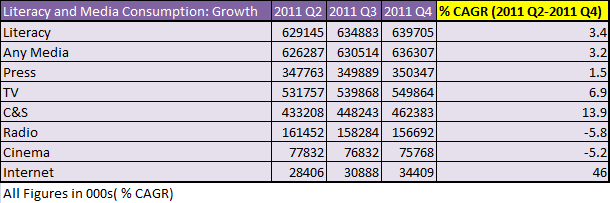
    IRS Q4 2011 findings have revealed that the literacy rate and media consumption in India has witnessed growth when compared to IRS Q3 2011. The other media categories to have grown are Press, Television, C&S (Cable and Satellite) and the Internet. While Radio and Cinema consumption have witnessed a decline, the Internet has emerged as the fastest growing medium in the country.


    Press has seen a marginal increase of 1.5 per cent in the CAGR (Compound Annual Growth Rate) whereas TV grew only 6.9 per cent of the CAGR. After the Internet, C&S is the second largest medium to have grown in double digits i.e. a CAGR of 13.9 per cent. Radio and Cinema on the other hand declined -5.8 per cent -5.2 per cent respectively.


  • IRS 2011Q4: Same old magazine story

    By Robin Thomas


    While consuming the data for magazines, it may be remembered that many magazine publishers have been critical of the IRS numbers as worthy  indicators of their readership. The Association of Indian Magazines has readied an Engagement Study in order to educate advertsiers and agencies. Having noted that, let’s look at the IRS 2011Q4 topline figures for magazines.


    Top 10 Hindi Magazines

    IRS2010 Q4 Vs IRS2011 Q4:

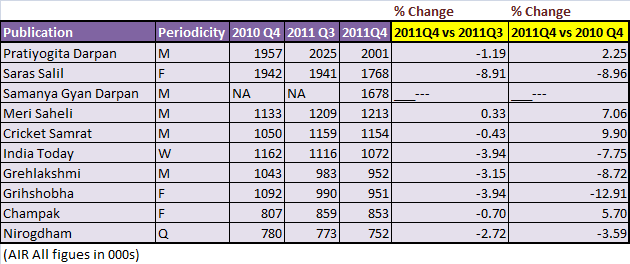
    AIR figures for Q4 2010 vs Q4 2011 may bring mixed feeling for the Magazines, as only four of the Top 10 Hindi magazines have grown in AIR (Average Issue Readership). Hindi monthly magazine, Pratiyogita Darpan is the most read Hindi magazine and is one of the Top Ten Hindi magazines to have witnessed growth in its readership figures. The other three Hindi magazines to have also grown in their AIR numbers are Meri Saheli and Cricket Samrat, both of which are Hindi monthly magazines, and Champak, Hindi Fortnightly has also witnessed growth.


    Interestingly, Samanya Gyan Darpan, another Hindi monthly magazine is a new entrant in the IRS and has already emerged as the third most read Hindi magazine with a readership of 16,78,000 AIR in Q4 2011.


    IRS 2011 Q4 Vs IRS 2011 Q3:

    The Q3 Vs Q4 2011 AIR numbers could certainly be disappointing to most Magazine publishers as only one in the Top 10 Hindi magazines has registered a growth in readership. Hindi monthly magazine Meri Saheli is the only Hindi magazine to have witnessed a growth, the growth however is a marginal 0.33 per cent. The most read Hindi magazine, Pratiyogita Darpan declined 1.19 per cent. Its nearest rival Saras Salil also declined 8.91 per cent.


    It may be noted that the most popular Hindi magazines are mainly monthly magazines followed fortnightly magazine. There is only one weekly magazine in the Top 10 Hindi Magazine category.


    Top 10 English Magazines:

    IRS2010 Q4 Vs IRS2011 Q4:

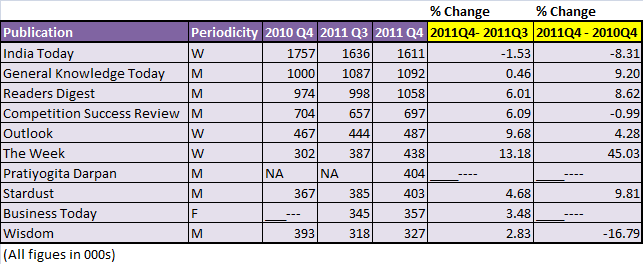
    The English magazines may bring some cheer to the industry as an overwhelming seven out of ten English magazines have registered growth in AIR. The Week has received the highest growth in its AIR from IRS 2010 Q4 to IRS 2011 Q4 data i.e. it grew from 302000 in Q4 2010 to 438000 in Q4 2011, that is a 45.03 per cent growth in AIR.


    India Today is the most read English magazine however the Weekly witnessed a decline of -8.31 per cent in AIR. The other English magazines to have increased in readership are General Knowledge Today, Reader’s Digest, Outlook, The Week and Stardust. Interestingly, the most popular English magazines are mainly monthly magazines followed by the weeklies.


    IRS 2011 Q4 Vs IRS 2011 Q3:

    The Q4 vs Q3 2011 results seem to be even more encouraging for the magazine industry, especially those in the English magazines as nine out of ten English magazines have witnessed growth in AIR. The only English magazine to have received a decline in readership is India Today, the number one English language magazine. The Week has again witnessed a double digit growth wherein its AIR grew from 3,87,000 in Q3 2011 to 4,38,000 in Q4 2011, a growth of 13.18 per cent. English monthly magazine, Pratiyogita Darpan is a new entrant and has already emerged as the seventh most popular English magazine of the country with an AIR of 404000 in Q4 2011.


    Top 10 Language Magazines:

    IRS2010 Q4 Vs IRS2011 Q4:

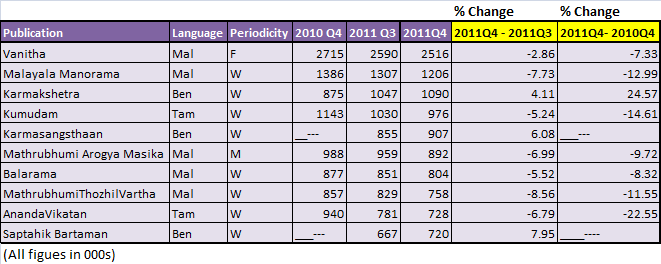
    The Top 10 Language Magazines reveals a gloomy result as nine out of the Top 10 Language magazines have witnessed a decline in readership. The only magazine to have grown in its AIR is the Bengali weekly, Karmakshetra. The weekly received an AIR of 10,90,000 in IRS 2011 Q4 as against 8,75,000 in IRS 2010 Q4, a growth of 24.57 per cent. Vanitha and Malayala Manorama are also among the Top 10 Language magazines to have declined in readership.


    IRS 2011 Q4 Vs IRS 2011 Q3:

    The scene is no different when compared to Q3 2011. However Bengali weeklies are the only magazines to have recorded growth in AIR. While the Bengali weekly Karmakshetra continues to grow even against Q3 2010 numbers, the other two Bengali language magazines to have witnessed significant growth are Karmasangsthaan and Saptahik Bartaman.  It may be noted that unlike the English dailies or even the Hindi dailies, most of the language magazine readership i.e. those in the Top 10 categories are coming from weekly magazines.


  • Assam’s Manoj Barpujari wins Nat Award for film criticism

    By Archita Wagle


    The recently announced National Awards 2011 saw Manoj Barpujari win the Best Film Critic award Swarna Kamal and Rs75,000 for his critiques in English and Assamese.


    Mr Barpujari is based in Guwahati and works as Assistant Editor with the Assamese daily, Dainik Agradoot. He also “very occasionally” contributes to the English daily, Assam Tribune. He is a member of Indian section of FIPRESCI, the Paris-based international federation of film critics and contributes to the website, www.filmfocusindia.com. He has been associated with the film society movement for more than two decades and has been tutoring on media and film studies. Mr Barpujari’s win makes him the fourth from the North-east to win this award.


    Mr Barpujari said that winning the Best Critic award was “Beyond my expectation. I am feeling what any man would feel on winning such a prestigious award.”


    When asked about his foray as a film critic, Mr Barpujari said: “I started as a film critic in the early 80s, even before I became a full time journalist. I was very much influenced by the parallel cinema movement in India and that inspired me to write about films. I write mostly about political and social issues. Only 10 per cent of what I write is about films.”


    Fellow film critic and Assamese journalist and now a film-maker, Utpal Borpujari, who was also the first from the North-east to win the Best Critic in 2003, was all praise for Mr Barpujari. “Manoj is a very senior film critic. He follows Indian and world cinema very seriously. He is the fourth from the North-east to be awarded the Best film critic. This proves that there is serious film criticism happening in the North-east. Unlike the mainstream media, regional publications are giving space for serious film criticism.”
    Apart from Mr Barpujari and Mr Borpujari, Altaf Mazid and RK Bidur Singh, both from North-east, jointly won the Best Film critic award in 2009.


    Mr Barpujari is not just a film critic and a “working journalist” as he calls himself. He is the winner of the Hafeez Karamath Journalism Fellowship 2010 of Trinidad & Tobago and has published nine books on various subjects in the fields of socio- political issues, art and literature including cinema. He has co-edited with Dr Garima Kalita the first ever comprehensive volume on cinema of Assam titled Perspectives on Cinema of Assam (2007).


    Mr Barpujari has served as jury in many competitions and film festivals in India and abroad. He presented documentaries from Assam in a program organized under the auspices of the Media and Communication Department, Goldsmiths College, London in 2008.


    Mr Barpujari is also a poet whose have been translated in to several major Indian languages. A collection of his poems won the Munin Borkotoky Literary Award in 2004.


  • Exclusive: BCCL President Bhaskar Das is now also Principal Secretary to MD

    By A Correspondent

    It was Holi. And time for colour and loads of cheer.  In media-land, we received this missive via our BBM: Bhaskar Das, the man who brought to The Times of India group most of its monies (as head of response), and the man who’s captained many industry associations and is known for his very interesting and intellectual questions at media industry conferences, will now be President and Principal Secretary to the Managing Director at Bennett Coleman & Co Ltd (BCCL). MD = Vineet Jain.
     

    In a signed office advisory, Mr Jain recognises Dr Das’s contribution to the company. “Bhaskar Das has always excelled in every responsibility entrusted to him – be that of leading Response function to newer heights, brand management, profit centre head or special projects in the area of Wellness, Times Foundation among others.” And he mentions that the new role “has the potential of becoming a gamechanger for the Group”.


    So what does this gamechanging role mean?


    In addition to the responsibilities he has been entrusted with at ‘Brand Capital’ (eka Private Treaties), Dr Das will now look after the following:


    * Exploring new revenue opportunities across the group’s media initiatives

    * Evolving a collaborative sales approach across various group properties

    * charting out a future roadmap for Optimal Media Solutions (that is, Medianet)

    * Facilitating a shared understanding an aligning all functions and group cos. to shareholder philosophies and objectives


    The end-objective is to “capitalize on the wealth of knowledge and expertise and to leverage the same across the Group”.  Given this, Mr Arunabh Das Sharma, Executive President – Response will report to Mr Ravi Dhariwal.


    See also: MxMIndia interview with Dr Bhaskar Das


  • IndiaToday Conclave 2012: Securing the global promise

    By A Correspondent


    The India Today Conclave, India’s largest thought festival for the finest minds from across the country and the world, is scheduled to take place in the capital on March 16-17. The theme this year is The Asian Century: Securing the Global Promise. The focus, as usual, is on contemporary concerns as well as on innovations. But the Conclave will have a wider reach this year. Because India Today firmly believes that the more ideas are shared the bigger they become.


    The India Today Conclave goes free with ThinkTent, a brand new innovation this year, to increase the reach of the Conclave and to engage theIndiaof tomorrow-young executives and management students. Conceived as an outdoor event in a massive and comfortable tent, ThinkTent will beam proceedings live, via giant screens, concurrently with the Conclave.


    Not just that, the audience will get the opportunity to interact with Conclave speakers, who will also be available for photo ops and autograph sessions. One can register for ThinkTent at the Conclave website and, if selected, can be a part of ThinkTent for free.


    The Conclave is also proud to present a debriefing session from the Union Finance Minister, Pranab Mukherjee, a day after he presents the Budget to the nation. March 17 will open with the Finance Minister’s keynote address, explaining his budget. Delegates will get the rare opportunity of interacting with him over a Q&A session.


    On March 17, Akhilesh Yadav, the young Samajwadi Party leader, who has pedaled his party to sweeping electoral success, will address the Conclave. But he will not be the only one. There will be the opportunity to listen to a range of new heirs of political dynasties from acrossIndiaand its neighbours-from Namal Rajapaksa, MP,Sri Lanka, to Sajeeb Wazed, Special Adviser toAwami League,Bangladesh, Omar Abdullah, the Chief Minister of Jammu & Kashmir and Shehrbano Taseer, Journalist,Pakistan.


    With India Today’s culture of being in step with news, this year there will be a concurrent session, The Business Today Budget Studio@India Today Conclave, on March 16. The live budget coverage will be accompanied by senior editors from Business Today, India’s premier-most business magazine, and experts from the world of finance explaining the implications of the budget and answering queries.


    As usual, the Conclave promises to be a star-studded affair. Beginning with an inaugural keynote address by social activist Anna Hazare on ‘Yeh Dil Maange No More Corruption’, the two-day conference will reflect the full range of contemporary interests, passions and concerns: India’s favourite cricketers Virender Sehwag and Harbhajan Singh on the zigzagging fortunes of Indian cricket; superstar Kareena Kapoor on the rise of the New Heroine in Bollywood; His Excellency Anwar Bin Ibrahim, Leader of Opposition and Former Deputy Prime Minister of Malaysia, on arguments for democracy and a keynote address by Henry Kissinger, Former Secretary of State of the United States of America and Nobel Laureate.


    The conclave will close with  Imran Khan,  Pakistan’s legendary cricket captain and chairman of the political outfit, Tehreek-e-Insaf, delivering the Dinner Keynote address. The event will be followed by a gala dinner, specially created by British gourmet chef, Rob Rees.


    With some of the finest minds from around the world assembling inNew Delhi, The India Today Conclave will once again provide the perfect platform for a free and frank exchange of ideas.


  • Conde Nast India launches Architectural Digest

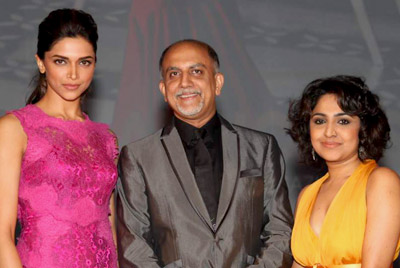
    Deepika Padukone with Alex Kuruvilla (MD Conde Nast India) & Manju Sara Rajan, Editor of Architectural Digest India

    By A Correspondent


    Publishing group Conde Nast India launched their fourth magazine title, the Indian edition of AD Architectural Digest, following the success of premium luxury magazines Vogue, GQ and Conde Nast Traveller. Architectural Digest in India will position itself as the most trusted authority on design, architecture and living.


    AD India is the ninth edition of the magazine, after the United States, Italy, Germany, France, Mexico, Russia, Spain and China. It is targeted towards the affluent Indian population in the age group of 25 to 50 years who aspire for fashionable living spaces. The magazine aims to capture the attention of new home owners and renovators, architects and designers as well as design enthusiasts.


    Speaking on the launch of Architectural Digest in India, Alex Kuruvilla, Managing Director of Conde Nast India said: “Having established leadership in the luxury lifestyle magazine space with Vogue, GQ and Conde Nast Traveller, we are happy to extend our portfolio and bring Architectural Digest in India, recognized as the world’s design bible – the most trusted authority on design, architecture and living to Indian homes.”


    The bi-monthly magazine will be priced at Rs150. AD’s editorial content is broadly divided into four key parts, including AD Discover with a focus on news, trends and lifestyle; AD Perspective bringing to light the people who matter; AD Spaces featuring the most beautiful homes and the AD Inside section sharing advice and tips on the must-have products. Key target markets for the magazine include metros like Mumbai, New Delhi and Bangalore.


    Manju Sara Rajan, editor of Architectural Digest India shared: “The editorial content of this bi-monthly magazine will contain photo spreads of the best homes in the world, feature stories on the latest trends and people in design plus advice on practical solutions for home improvement. AD will become an essential resource for refined home-owners planning luxurious spaces.”


    “By showcasing the best of contemporary Indian design and key international trends, AD will help readers visualise, plan, adapt and innovate homes to reflect the personalities of the people who live in them,” she added.


    The launch event of AD was held in Delhi on March 9 at the Aman in association with India Design Forum (IDF) and supported by Absolut elyx and Maserati.


    Architectural Digest, an interior design magazine published by Conde Nast was founded in 1920. The magazine is aimed at an affluent and style-conscious readership. AD is positioned as the most trusted authority on design, architecture and living. The Indian edition of AD Architectural Digest will present the very best of international and Indian architecture and design.


    Conde Nast, a division of Advance Publications, sets the benchmark for magazine publishing excellence. Conde Nast currently operates in 24 countries, publishing 126 magazines, and with 98 innovative websites from Conde Nast Digital.  Recent print launches include GQ inBrazil, Wired in the UK and Italy, Vogue in Turkey, and Conde Nast Traveller in India . Conde Nast India is a 100 per cent owned subsidiary of Conde Nast International.


  • 7 Indian finalists at INMA Awards 2012

    By A Correspondent


    As many as seven Indian entries are among the 89 finalists announced in the world’s premier competition for marketing newsmedia brands by the International Newsmedia Marketing Association (INMA) on Tuesday.


    Of the 89 marketing campaigns from 66 newsmedia companies in 23 countries selected as finalists for the INMA Awards 2012 competition by a global panel of judges. In India, there are seven finalists from five newsmedia companies for the INMA World Congress May 6-8 in Los Angeles.


    According to the INMA site, from these finalists, 30 first-place recipients across three audience groups will be announced Tuesday evening, May 8, at the conclusion of the INMA World Congress at the JW Marriott/LA Live in Los Angeles.


    The announcement also said, “The INMA Awards 2012 competition judging was completed recently by 24 industry expert judges from media companies, advertising agencies, trade magazines, and more. Judges came from the Australia, Canada, China, France, Germany, India, Mexico, Oman, South Africa, Spain, Sweden, Turkey, United Kingdom, and the United States.”


    Earl J Wilkinson, executive director and CEO of INMA, said, “Almost all of the finalists were multi-media in nature aiming to motivate cross-platform subscription sales, integrated advertising solutions, and hybrid print/digital products.”


    Indian Finalists for the INMA Awards competition:

    (under each of the 10 categories, there were three sub-categories of under 75k, 75-300k, above 300k)

    Category 1: Marketing Campaign With the Best Results

    Over 300,000

    • The Economic Times, Mumbai, India, “The Economic Times – Young Leaders.”
    • The Telegraph, Calcutta, India, “t2.”


    Category 3: New Brand/Product/Audience Development

    Over 300,000

    • The Economic Times, Mumbai, India, “The Economic Times – Young Leaders.”


    Category 5: Marketing Solutions for Advertising Clients

    75,000-300,000

    • Mint, New Delhi, India, “Mint Brand Solutions – Values & Fortunes.”


    Category 6: Digital Audience Usage and Engagement

    Over 300,000

    • The Economic Times, Mumbai, India, “The Economic Times – Young Leaders.”


    Category 9: Print Single-Copy Sales

    Over 300,000

    • Malayala Manorama Weekly, Kottayam, India, “Haritham Kitchen Garden.”


    Category 10: Public Relations and Community Service

    75,000-300,000

    • Mid Day Infomedia Ltd., Mumbai, India, “Mid Day Domestic Violence Campaign.”

    Read more and check the complete list of 89 finalists at: http://www.inma.org/blogs/main/post.cfm/89-top-marketing-campaigns-named-finalists-in-inma-awards-2012-competition#ixzz1p1VpGNoJ


  • Femina, L’Oreal announce Women Awards 2012

    By A Correspondent


    Women’s lifestyle monthly Femina in conjunction with beauty products brand L’Oréal Paris has announced the launch of women’s awards property ‐ the L’Oréal Paris Femina Women Awards 2012, in association with Rasvihar, to be held in Mumbai on March 22, 2012.


    The first ever L’Oréal Paris Femina Woman Awards will celebrate and honour the most accomplished women in the fields of art, music, education, business, social activism and cinema for their talents, grace and ability to inspire. The jury includes names from photography, film and the corporate world such as Gayatri Ruia, Jatin Kampani, Nandita Mahtani, Nathalie Gerschtein, Priya Dutt, Sulajja Firodia Motwani, Tanya Chaitanya and Zeenat Aman will choose the winners across various categories.


    Readers are also invited to vote for The Man We Love, The Woman We Love, and The Favourite Face of a Cause by visiting www.facebook.com/feminawoman. They can also participate in the L’Oréal Paris ‘Who’s worth it to you?’ contest by logging on to www.lorealparis.co.in. Commenting on the announcement, Tarun Rai, CEO, WWM said, “Indian women are making their mark in diverse fields including in the traditional male bastions. The L’Oréal Paris Femina Women Awards are both a celebration and a recognition of the achievements of Indian women in arts and entertainment as also science and business. Femina believes that the modern Indian woman can be all that she wants to be and these awards are a tribute to this belief. And we are very happy that L’Oréal Paris is our partner in this celebration.”

    Tanya Chaitanya, Editor, Femina said, “The first‐ever L’Oréal Paris Femina Women Awards set the spotlight on how much a woman can achieve if she believes in herself. Femina, having known the Indian woman for more than 50 years, hopes that the inspiring stories behind each of our winners will help our readers realise their own strength. To women power!”

    Nathalie Gerschtein, Director of L’Oréal Paris in India said, “Our legendary signature – “Because you’re worth it” – has empowered women over the past 40 years. These four timeless words are a reflection of women’s potential to express themselves. L’Oréal Paris is not just a leading beauty brand, but also a brand that embodies self‐confidence and empowerment. Today, being a L’Oréal Paris woman means being an individual with a charismatic personality, a determined outlook and a strong personality. We are happy to honor such women by partnering with Femina to host our first Women awards.”

    Readers can vote in the categories of Woman We Love; Man We Love; and Face of a Cause.


  • From Zero, Bihar reaches 100: Hindustan shares a dream to take it beyond

    By A Correspondent


    Bihar has long been known as the land which gave the world “zero”, Gautama Buddha’s message of peace, the foundation of structured education with Nalanda and the seat of culture. It led the creation of modern thought. The recognition of Bihar’s contribution to society and the modern world led Hindustan to create a programme on the occasion of completion of 100 years of Bihar’s formation on March 22.


    With a stable and progressive government at the helm for the second time, citizens are nursing a dream of a modern and developed state. Unknown to most, at several places the seeds of change have been sown and have taken root as well. For the pools of transformation to become an ocean of development in Bihar, it is critical for the good work to be shared with the citizens of the state. With that objective in mind, Hindustan embarked on a grassroots campaign to unearth 100 “quiet reformers” who are working tirelessly for the betterment of society and life in the state. The zeal of these “gems of Bihar” deserves to be lauded and should not be a quiet endeavour.


    Over the last 25 years in Bihar, Hindustan has been a partner and a witness to the state’s transformation story. Hindustan kicked off a campaign in December 2011 with the mission to first locate 100 individuals and then reveal their stories to the citizens of the state. These real stories of hope and inspiration have a tremendous role in communicating the importance of “naya zariya”, initiative and responsibility of citizens to make their own future brighter. A multi-pronged strategy was used which involved communication through the newspaper and an appeal to readers to nominate deserving initiatives that they knew of in one of 8 categories:


    1. Education

    2. Agriculture

    3. Women Empowerment

    4. Employment Generation

    5. Communal Harmony

    6. Entrepreneurship

    7. Self-reliance

    8. Social Upliftment


    The news network was also used to reach out and identify transformation initiatives. January 1, saw the formal launch of “Bihar…100 ke aage” which featured the first of a daily series of articles to highlight people who were creating positive social impact. Readers were introduced to citizens who did not wait for help from any external source to make a change in their immediate surroundings. For the first time, these initiatives were brought into public knowledge.


    Along with these stories, a campaign was launched that appealed to readers to nominate deserving individuals. Hindustan created an out-reach programme by contacting opinion makers and other socially aware individuals for their collaboration in this effort. Schools and colleges were also activated through painting and essay competitions. Organisations like the Bihar Chamber of Commerce and Bihar Industries Association were also co-opted into the campaign. “Samvaads” were held to help spread the message and to get more leading citizens to join the movement. Close to 500 nominations were received. Of these, 100 deserving nominations were scrutinized closely by an eminent panel of judges which comprised Justice S Jha, Justice R Prasad and VS Dubey (retd. IAS, ex-Principal Secretary, Jharkhand) to identify initiatives with the maximum social impact in their respective categories.


    The Hindustan Samagaam on March 19, 2012 will bring these 100 individuals together. The Chief Minister of Bihar will honour selected individuals at this event.


    At the same event, eminent panelists like the Chief Minister of Bihar, Mr Nitish Kumar, Mrs Shobhana Bhartia (Chairperson, HT Media), Mr NK Singh (MP, Rajya Sabha), Mr Sunil Bharti Mittal (MD & Group Chairman, Bharti Enterprises) and Dr Rukmini Banerji (Director, Pratham) will participate in a dialogue on insights for growth and development in Bihar.


    Hindustan Media Ventures Limited (HMVL) is the publisher of the leading Hindi newspaper – Hindustan, Hindi magazines Nandan & Kadambini and the news website livehindustan.com. The Company has presence in the states of UP, Uttarakhand, Bihar, Jharkhand & Delhi and its publications have a combined Total Readership of 3.81 crore readers.


    The company is a subsidiary of the HT Media Group – a diversified media group with interests in Radio, print & online media.