Kofluence, Social Media Influencer Marketing-Tech platform, announces the release of its annual report, Decoding Influence: The 2024 Influencer Marketing Report. From tracing the genesis of influencer marketing to delving into the psychology underpinning consumer behaviour, and from analyzing the total market size to examining compelling case studies, the report comprehensively illuminates key trends, challenges, and opportunities within the Creator Economy. By offering strategic recommendations and actionable data-backed insights, readers can be equipped with the necessary tools to effectively navigate and capitalize on the opportunities presented by this evolving industry.
Ritesh Ujjwal, Co-founder of Kofluence, emphasized the report’s significance, said: “In today’s digital age, customer acquisition costs are constantly spiralling and, combined with customer retention D30 retention rates at 5%, Brands are facing formidable challenges across customers lifecycle. They are responding strategically by leveraging trust through influencer collaborations, a marked departure from traditional approach, particularly in an online environment where ad-fatigued consumers allocate a substantial portion of their time. Our report meticulously examines platform dynamics and the evolving preferences of creators and brands, offering readers a centralized resource containing exclusive insights and proven strategies sourced from top brands and industry experts.”
In recent years, the influencer marketing industry has matured significantly, emerging as a global billion-dollar market. The transition from traditional celebrity endorsements on platforms such as television, radio, and newspapers has evolved towards social media creators, emphasizing a strategic focus on the “5 Ws” – addressing who, what, when, where, and why the specific target audience comprises. According to the report, India’s Creator Economy is thriving, with 2.5 – 3.5 million creators predominantly engaging on platforms such as Instagram and YouTube. Notably, between 110-170K creators on YouTube are actively monetizing their content, solidifying YouTube’s position as the leading platform for creator monetization in India.
Sreeram Reddy Vanga, CEO & Co-Founder of Kofluence, shared his perspective, adding: “At Kofluence, we hold steadfast in our belief in the influence wielded by content creators as they shape the very fabric of online engagement. The growing emphasis on creator monetization over the last few years underscores that sentiment. I envision a future where standardized metrics and regulatory guidelines will bolster transparency and efficiency, with data-driven platforms at the helm. In this 2024 edition of the Influencer Marketing Report, we draw upon the insights of over 1000 content creators, brands, and industry professionals, encapsulating the prevailing sentiments within the current Indian influencer marketing industry.”
Saregama, a RP Sanjiv Goenka Group company, launches – Padhanisa, an AI based music learning app that aims to make Indian vocal learning simple, easy and accessible to everyone across the globe. Saregama, India’s oldest music label has expanded its horizon with Padhanisa, from delivering super-hit music for over a century to creating a platform that simplifies music learning.
Padhanisa aims to be a personal singing teacher for those who enjoy singing but have never considered learning due to lack of access to the right resources or fear of judgement.
The personalized approach of the app ensures that every individual receives tailored recommendations based on their vocal range, suggestions on warmups and workouts focussed on the key improvement areas. A comprehensive assessment of the performance is shared after every level so that learners can keep improving.
Sharing his views on Padhanisa, Vikram Mehra, Managing Director – Saregama India Limited, “Padhanisa is an obvious extension from Saregama. The insight of the app comes from the fact that all Indians’ love to sing, be it any occasion or just to feel happy. We truly believe that there are no bad singers, but just untrained ones. So, here we are with an AI based app which trains you to sing in Sur. All you got to do is download the Padhanisa App and start your personalised music learning journey.”
Way2News, a hyperlocal digital news platform, appoints Amit Chopra, co-founder of Avanzia Consulting, to its Board of Directors. In line with this, the platform has also forged a strategic partnership with Avanzia Consulting, which will serve as a key advisor as the company accelerates its growth trajectory. These strategic initiatives will mark the dawn of a new chapter of innovation and growth for the platform in the digital news landscape.
Welcoming Amit and Avanzia Consulting on board, Raju Vanapala, Founder & CEO, Way2News, said: “We are thrilled to extend a warm welcome to Amit as he joins our board of directors. With his deep expertise in media and technology and a remarkable track record of driving growth, his joining not only signifies a strategic elevation but also marks a significant milestone in our journey towards pioneering excellence in digital news. Amit’s expertise and strategic acumen will undoubtedly propel us towards sustainable growth. With him on board, we are well-positioned to navigate the complexities of the digital news landscape with precision and agility, ensuring Way2News continues to lead in delivering unparalleled news experiences to our audience nationwide.”
Commenting on his onboarding, Amit Chopra added: “Joining Way2News’ Board of Directors is a tremendous honour. I am eager to collaborate with the exceptional team to capitalize on new opportunities and contribute to the platform’s continued evolution and success in the digital news landscape.”
Narayana Health, hospital network headquartered in Bengaluru, in association with streaming platform Jio, unveiled medical docu-series “InsidER” – an initiative on Emergency Awareness. Viewers will witness the intense efforts of clinicians, the profound struggles of families, and the amazing efforts of clinical teams fighting to save lives. All ten episodes features patients and their families, giving a deeply personal perspective on these powerful stories.
Said Dr. Ashish Bajaj, Chief Marketing Officer at Narayana Health: “The ‘InsidER’ campaign was born from a deep-rooted desire to honour the extraordinary courage of patients and the often-unseen daily struggles of families coping with medical emergencies. We’re thrilled to join forces with Jio for the launch of this pioneering series. Their vast reach on Jio TV, Jio Cinema, and Jio TV+ maximizes the impact of this groundbreaking initiative.”
“Over ten months in the making, our teams overcame production challenges across India to authentically portray the gripping reality of the ER. This collaboration with the clinicians, patients & their families paints a powerful picture of those critical moments between life & death and their lasting impact. This series, a first by any healthcare group in the country, is a tribute to those moments, a testament to the strength we hold within, and a reminder of the incredible work done on the frontlines of healthcare. With real patient stories from across India, we have showcased the heart-stopping urgency of the ER, the split-second decisions, and the unbreakable human spirit. The series highlights the clinicians’ preparedness and underscores the importance of knowing the ER number for immediate assistance. Something as simple as knowing your ER number and having it on speed dial could be the difference between life and death,” added Dr Bajaj.
Colors Kannada has announced a feast of entertainment for Ugadi (April 9) by way of a lineup of new shows that will mark the celebration with daily episodes, starting from Ugadi itself.
Said Prashanth Nayak, Business Head of Colors Kannada: “This year, we celebrate this Ugadi with a theme Hosa Bannada Shubharambha (A new beginning of bonding) and we give this to our audiences. We feel very blessed that audiences of Colors Kannada across the state have always supported us with love and affection. As part of our continued bonding with our audiences, we are coming up with the launch of fresh contents. We take this pride to be part of bringing our audiences’ emotions on screen and we term this as the most perfect way to celebrate Ugadi with us.”
Speaking about Colors Kannada’s plans, Sushma Rajesh, Cluster Head at Viacom18, added: “As a brand, Colors Kannada has always been a pioneer in bringing shows that resonate with our audiences’ emotions. We consistently present unique storylines that celebrate family bonding and values of nativity. This is evident in the fact that shows launched on Colors Kannada’s unique stories have already travelled across the country. We are confident that the new year will bring a whole new level of connection with our audience. We wish everyone a very Happy Ugadi with our exciting new lineup of shows.
COMvergence, the independent research and data consultancy which analyses mediaspend investments and produces benchmark studies on new business performances, released its latest New Business Barometer for FY 2023 for India.
Maruti, Reckitt, PhonePe, Proctor & Gamble (digital), Swiggy, Pernod Ricard,Vivo Mobiles, Beiersdorf, Ferrero, Berger Paints and Jaguar Land Rover were among some of the account moves and retentions that dominated the Indian market from January 2023 to December 2023.
The Media Agency Groups were led by GroupM by a wide margin with a total new business value of +$654M, followed by IPG Mediabrands at +$200M new business value and Omnicom Media Group with a new business value of +$128M.
Wavemaker, Mindshare and Lodestar UM led the media agencies’ ranking followed by EssenceMediacom and Havas Media.
In 2023 COMvergence, assessed an overall of 215 account moves and retentions, with media spends estimated to be around $1.5BN. Out of these Local pitches dominated the Indian market, whilst 55% of the total pitches held globally were local in nature ( country specific pitches), making India well above this average with 91% of total pitches being local whereas global and multi- country pitches made up only 9% of the pie for India.
2023 saw a whole of 192 local pitches estimated to be around $1399M and 23 global and multi market pitches were estimated to be around $132M in India.
We are exactly three weeks away from the first phase of polls in the General Elections. Expectedly, elections are dominating news coverage, and the action is only going to heat up over the next two months, leading up to the results on June 4.
Historically, pre-elections and elections coverage on television news has been about programming ideas and access to the top politicians. The psephology part stopped being a differentiator a while ago, with opinion polls and exit polls being commoditised over time. Channels that could create engaging formats, have more feet on ground, and connect their viewers to the biggest names on the ballot, performed better than their competitors.
Early indicators suggest that programming formats may not be the differentiating factor this year. Channels have maintained their typical debating formats, focusing on election-related topics, but barely breaking the template in the process. Yes, there is ground coverage, and it will pick up as we get closer to actual polling, but a lot of that is restricted to specific timeslots, often outside the primetime.
What is striking is that channels have well-defined narratives, and are engineering their programming around it. In an election where most experts believe the outcome is a foregone conclusion, the narrative is easier to script. Yet, it is difficult to miss the political agenda behind these set narratives.
For example, the electoral bonds data released by SBI a few weeks ago was arguably the biggest political story of March, till the arrest of the Delhi CM. But it was hard to find a debate on the electoral bonds on mainline news channels. Even as YouTube news channels covered the story in considerable detail, TV channels chose to turn a blind eye, barring a token story or two.
Story selection is the most potent instrument of bias with a news channel today. Because if you choose to not show something, that’s the end of that anyway. One could argue that certain stories, like Manipur riots in 2023, do not generate ratings, and hence, are not commercially viable on mass television. That is a contentious argument anyway, given that principles of sound journalism would demand a separation between editorial and business. But with electoral bonds coverage, or the lack of it, even that argument doesn’t hold.
It will be a pleasant surprise to see one of the mainline TV news channels stand out in the election clutter with an original and thought-provoking programming approach. Thankfully, there’s online news to fall back on!
Kuku FM, the platform for audiobooks and shows, has launched a new ad film titled ‘Koi Baat Nahi’, conceptualised and executed by The Ensemble.
Speaking about their collaboration with The Ensemble, Kunj Sanghvi, Head of Content at KuKu FM, said: “Making ads for a content offering is a doubly challenging task as the ads also become a proof of the quality of the actual offering, which is audiobooks and shows in our case. In a cluttered landscape, finding standout ways to appeal to the TG so they sit up and take notice is highly important. The team at Ensemble showed great agility in understanding the brief, cracking great ideas and doing swift and faultless execution,” said Sanghvi.
As the co-founder of The Ensemble and the director of the ad films, Abhishek Dixit added: “With KuKu FM’s unwavering trust in The Ensemble’s creative prowess and our commitment to exceed expectations, we have once again demonstrated that stellar ideas can thrive even under tight deadlines. It was truly a collaborative effort from both the client and our team to achieve this, as at The Ensemble, collaboration means everything to us.”
Is it just me or is this election season very subdued?
Some people inform me that the battle is now in TV studios and not on the streets.
Others say that people are just resigned to their fate.
A political commentator tweets that election and political analysis makes no sense any more when one ideology/party/alliance is in such a dominant mode that all commentary is pointless.
Since I cannot watch the nonsense that passes for Indian “news” television, this essentially means that the election is passing me by. The one newspaper I do buy – a physical actual literal (to use the nonsensical twisting of language common amongst young trendy speakers) paper newspaper (tautology of a sort since online newspapers are also newspapers) – is not very strong on local election news either. Tucked away in some inside page: the King Emperor visited the other half of the state and swore to keep “fighting” corruption.
The front page had other news like Arvind Kejriwal’s trial and the horrific earthquake in Taiwan. Nothing on electoral bonds in the whole edition.
Which gives one some clue on this lacklustre election season.
I don’t mean that political parties don’t have enough money: the BJP has much more than it needs, that’s for sure.
Rather, the big story this election is the Supreme Court decision banning electoral bonds and that is why the media is so silent on them. Yes, newspapers like The Hindu and the Telegraph have not given up. Occasional articles and investigations in other newspapers cover the changing of textbooks to suit the RSS narrative, or the further sly insertions of religion into everyday laws.
For the actual meat and potatoes, it is only the digital media that can be relied upon. The Reporters Collective has two ongoing firebrand investigations: the electoral bonds and the handing over of sainik schools to the RSS and BJP.
So let’s assume for now that all the excuses non-media people make for these cowardly media outlets are true: o, they are scared of government action, o, their owners are scared of government action and so on. Why people make these dumb@$$ excuses are beyond me. But I suppose as a media outlet, you want a loyal, sympathetic audience which buys into your third-grade pretence of journalism. Forgive me for repeating this, but the whole idea of journalism is to question, and put governments in spot. Now to bow down low every time an emperor looks your way. Or worse, take a selfie with the emperor!
Let’s segue out of these bonds, elections, horse-trading, illegal action against opposition parties, flouting of Election Commission norms and look at another burning issue facing us. Literally (to use another word much loved by trendy with-it young people).
The climate.
Heatwaves across India. No let up until June, according to both the meteorological department and private players. The monsoon itself, well, who knows. Increasing deforestation and rampant construction activities are both taking their toll. Union ministers speak garbled nonsense on India’s vehicles going all-electric even while they play more expressways through forests. The Prime Minister’s claims of doing more for the environment at international fora stand up to no internal scrutiny.
Instead, we see more devastation. To be fair, the Prime Minister has stated that we have too many rights and is thus working to reduce them. As the article linked below demonstrates.
In a revealing experiment, American teacher Mary Garza asked her pupils to leave their phones on loud while they were in class. An unusual request, yes, but she wanted to show them something.
Every time a phone notification went off, the pupil would then have to put a mark under the correct category for what the notification was for. The result was eye-opening.
In the space of one class that is roughly an hour long, her students received a combined total of over 1,000 notifications from Facebook, Snapchat, Twitter, text, email, calls and other social media platforms. That’s a notification coming in every 2.5 seconds.
So every 2.5 seconds one person in class was being distracted by their phone, which obviously has a huge impact on their attention levels – and education.
A few months ago, I sat in a presentation to a marketing director in Jakarta. Her boss, the country manager, popped his head in and informed us that he had to finish appraisals that evening. Now, they had fixed the meeting time and date. The marketing head had their laptop open throughout our presentation; we realised that they were doing their appraisal on WhatsApp while sitting in the meeting. Were they paying attention? Absolutely not.
I have known CEOs who bring three screens to meetings, boasting they’re multi-tasking. Globally, managers especially struggle to maintain focus, with 683 hours lost to distraction annually. In fact, managers lost more than 100 additional hours of productive time compared to other roles, which averaged 553 hours lost each year – driven in large part by unproductive meetings and administrative tasks. Put another way: lost focus costs companies $37,000 per manager, compared to $21,000 for other roles.
So, while marketing gurus harp on how we’re in the Attention Economy, I’d like to posit that what tech, marketing and entertainment are building is the Distraction Economy.
Infinite scrolling and dopamine
Today, the fastest growing sector of the culture economy is distraction. You can call it scrolling or swiping or wasting time or whatever you want. It’s neither art nor entertainment, just ceaseless activity.
The key is that each stimulus only lasts a few seconds, and must be repeated.
It has already become a huge business, and will soon be larger than arts and entertainment combined. Everything is getting turned into TikTok, an aptly named platform for a business based on stimuli that must be repeated after only a few ticks of the clock.
TikTok has made a fortune by filling our screens with fast-paced scrolling video. And now Facebook—once a place to connect with family and friends—imitates it. As does Instagram, YouTube, and everybody else trying to get rich on social media. So long, Granny, hello Reels.
The advent of infinite scrolling has marked a significant shift in how we consume content. When you watch a video on YouTube, the next video loads immediately. Netflix starts the next episode of your favourite show right away. Browsing Reddit reveals an endless stream of social media content.
This is more than just the hot trend of 2024. It’s worrying because it could last forever—because it’s based on body chemistry, not fashion or aesthetics.
Our brain rewards these brief bursts of distraction. The neurochemical dopamine is released, and this makes us feel good. So we want to repeat the stimulus.
It’s human nature to seek predictability and pattern. In their absence, we search for them. So, we pull to refresh. Rewards aren’t guaranteed, and most of the time, we don’t discover anything remarkable. In the same way as we gamble, we continue to refresh in hope of a quick rush of dopamine.
This is a familiar model for addiction.
Chart by Ted Gioia
Although we have endless founts of fun at our fingertips, the data shows that we’re less and less happy, says Dr Anna Lembke, Stanford University professor and a world-leading expert on addiction.
We’re forever “interrupting ourselves”, as Lembke puts it, for a quick digital hit, meaning we rarely concentrate on taxing tasks for long or get into a creative flow.
Only now it is getting applied to culture and the creative world – and billions of people. We are unwitting volunteers in the largest social engineering experiment in human history.
Addicted to drama
Even ‘distraction’ is just a stepping stone toward the real goal nowadays – which is addiction.
Instead of movies, social media users get served up an endless sequence of 15-second videos. Instead of symphonies, listeners hear bite-sized melodies, usually accompanied by one of these tiny videos, just enough for a dopamine hit, and no more.
This is the reason why two-minute episodes of “The Double Life of My Billionaire Husband” have been showing up on your content/ social media feeds lately.
After exploding as a content format in China, micro-dramas are the latest content trend racking up views everywhere, showing in our feeds as we scroll. Delivered in two-minute episodes that have mostly been adapted from Chinese web novels, the market is already estimated at USD 5 billion.
Thanks to TikTok, younger audiences gravitate towards bursts of content that adapt to their preferences in real-time. To feed this impatience, apps like ReelShort are creating minute-long, mini-dramas that are part TikTok video, part soap opera.
ReelShort, owned by California-based Crazy Maple Studio and backed by Beijing-based digital content company COL Group, launched in 2022. And its format, which is already popular in parts of Asia, is taking off worldwide. In 2023, 7m+ people downloaded ReelShort in the US, while worldwide downloads surpassed 24m. It’s hardly alone: a slew of other apps – Sereal+, ShortTV, DramaBox, and FlexTV – are all vying for our short attention spans using the same recipe.
These short dramas prioritise quick, oversimplified stories of love, wealth, betrayal, and revenge, sometimes featuring mythical creatures like vampires and werewolves. Stories of marrying into a rich family attract men, while stories with a powerful female protagonist in control of her life appeal to women.
One of the highest-grossing shows on FlexTV is called Mr. Williams! Madame Is Dying. It’s a corny romance story about a love triangle, ultra-rich families, cancer, rebirth, and redemption, and it was adapted from a Chinese web novel that has nearly 1,300 chapters. The original story has been turned into a Chinese short drama, but FlexTV decided to shoot another version in Los Angeles for an international audience.
The revenue model for these hits (pun intended) is not unlike that of a drug dealer’s.
Unlike most streaming services, which require subscriptions, Chinese platforms for streaming and web novels use a business model of paying by the episode or chapter.
Essentially, the first 10 or so episodes are always available for free, but once users are hooked, they need to pay a certain amount to watch each episode. It resembles the micro-transaction mechanism in mobile games, which Chinese companies, like the developer of the global hit Genshin Impact, also perfected. Users can quickly rack up thousands in payments by buying small items in-game here and there.
FlexTV has a similar tactic. Viewers can pay $5 for 500 in-app coins, which in return unlock about seven episodes. A whole series therefore can cost around $50, but there are also small tasks users can do in the app to earn free rewards, like watching ads, posting about the app on social media, and doing daily check-ins.
This is the new culture. And its most striking feature is the absence of culture or even mindless entertainment, as both get replaced by compulsive, repetitive activity.
Are we going to see 2-minute micro-dramas from brands soon?
—————
Kunal Sinha is a senior strategy and foresights executive based in Jakarta, Indonesia. He is the author of several books including The Future of India’s Rural Markets and Raw – Pervasive Creativity in Asia. He writes for MxMIndia every other Monday. His views here are personal.
Every six-odd months, we publish our Code of Ethics. For more than ever before, the Indian media needs to adopt one and practise it.
We are now part of the Digital Publishers Association of India and will follow the self-regulatory procedures set by it. Our editor is also a member of the Editors Guild of India and the Press Club, Mumbai. More than ever before, it’s important the media acts responsibly as must people around it.
MxMIndia adopted a Code of Ethics even before it was launched. Although it’s on the site, since it could have become a blindspot, we publish it as our Big Story once or twice a year. This is the link to the Code: http://www.mxmindia.com/code-of-ethics/
Read on…
The MxMIndia Code of Ethics
This code of ethics is not meant to be a treatise in ethics. We believe all MxMers are mature professionals, of sound character and have values we agree with.
However, since a Code of Ethics is not really followed in organisations that some of our employees may have worked with in the past, we have a formulated an easy-to-follow set of Do’s and Don’ts that each and every employee has agreed to follow.
Also, since there’s a general belief that many media companies (business-to-business and mainstream) follow unethical practices, it’s hence critical to put the record straight on why MxMIndia isn’t like the ‘many’ others.
1. While the objective of MxMIndia is to be a profitable enterprise, our revenues will not come from compromising editorial standards. Excellence is what we are setting out to achieve, Ethically and with Integrity.
2. We will not be influenced in any way by advertisers – past, present or future, and will write or comment on an individual, service or organisation regardless of whether or not it advertises with MxMIndia.
3. We will not sell our editorial content. Content includes text, photographs, videos or any visuals.
4. Accuracy in presenting facts is of utmost importance and facts must be correctly presented.
5. We will not present any bias in our news sections. If, however, MxM India does undertake a campaign, it will clearly state its editorial policy
6. If there’s any advertisement that could be confused with editorial content in appearance, it will be clearly tagged as an Advertisement and be displayed in a style that is different from normal editorial content.
7. Our reports and features will always attribute sources to people. In case, the source does not want to be named for fear of loss of employment or due to some sensitivity, every attempt must be made to look for an alternate source who could be named. If that fails, every attempt should be made to make the reader rest assured that our source is authentic and this may be done by describing who the source is.
8. We have a no tolerance policy towards plagiarism. Employees may be given a warning if found plagiarising, but in most cases, the services of any employee found plagiarising – regardless of her/his seniority or utility to the organisation – would be terminated within 24 hours of the Editor-in-Chief conducting his/her investigation on the act of plagiarism.
9. If any attempt is made to influence us by way of a threat to withdraw advertisements, we reserve the right to expose such individuals and/or their organisations.
10. We will not publish photographs off the internet. If a picture is be taken from the internet, it will be done only after written permission of the source. Else, we will own the rights for the picture which may be procured by buying rights for appropriate usage. Ditto for text. If we do carry syndicated content, the source needs to be clearly be stated at the end of the article.
11. Our journalists will take the permission of the interviewee to record her/his comments, especially when the meeting is not face-to-face.
12. Unless approved by the Editor, we do not part with the transcript of any interview. A journalist may however play back a few quotes attributed to an individual.
13. We will allow individuals or organisations adequate time to revert with their response to a question. In most case the adequate time would mean four to six hours. If it’s a non-critical story, then we would recommend holding the story for at least (and at most) a day.
14. We will not accept any gifts that attempt to influence us. These should be returned immediately. Gifts in the form of chocolates, mithai, flowers or basic promotional material that is of reasonable value (of up to Rs 750-1000) is fine. Mementos or promotional material of nominal value may be accepted. No gifts must be solicited. If there’s a doubt, please consult the Editor-in-Chief/CEO. If an organisation is found to influence an MxMIndia journalist, under extreme cases, MxMIndia may even blacklist the organisation and/or its products and services.
15. We will not solicit any outstation trips. If however there is an invitation for a junket, we will accept it only if the Editor believes there is a news value in the event. In such a case, MxMIndia will mention that the journalist concerned has visited an outstation venue at the invitation of the company which must be named. For local travel, all our employees are defrayed expenses towards local travel, and hence we discourage taxi pick-ups or drops, as is the norm in some sections of the media.
16. We will not solicit any invitations for a meal or a drink. We discourage MxMIndia employees to drink beyond their limits at events, dinners, press conferences etc where they represent the Company. We will also not solicit free books, software, movie tickets etc.
17. MxMIndia employees are discouraged from moonlighting. If, however, employees do receive requests to write an occasion article for a non-competing publication, the employee could do it after seeking permission via email.
18 .Unlike some media houses, we are happy to see our employees – regardless of their seniority levels – to be interviewed and featured in other media. However, prior permission is desired for every appearance on television. Employees must ensure that their work at MxMIndia doesn’t suffer due to their appearances on TV, radio etc. While tweeting, participation in social networks like Facebook and Linked In are encouraged, every attempt must be taken to ensure that the values and interests of the organisation are not compromised.
19. We will ensure that our ethical standards are followed in all that we do – events, conferences and awards. We will ensure our integrity is not compromised.
20. We discourage the use of pirated products and services for official use. We advise our employees to only use legally procured software. Employees using their personal computer equipment for work are encouraged to switch to legal software.
21. MxMIndia has a no tolerance policy on sexual harassment.
22. Our employees are not allowed to deal in stocks related to the media and entertainment sector. If they hold shares before joining the organisation, they must disclose their holdings in writing to their immediate boss. They could, however, invest in mutual funds related to the M&E sector.
23. While this Code is only applicable towards conduct as an employee, we advise all MxMers to ensure that they are ambassadors of MxMIndia and all that it stands for even outside of work hours.
24. Over the last few years, there have been question marks raised about the ethical standards adopted by journalists and media organisations. While a lot of it may be untrue, we believe that journalists and others working in various media organisations are also responsible for this perception. At MxMIndia, our attempt will be to reverse this.
25. This Code is applicable for all employees of MxMIndia. Associates, retainers, columnists, regular contributors are also required to adhere to the above Code.
We encourage all our constituents and advertisers to read the above document and cooperate with us and enable us to abide by it. If you wish to report a dishonest act, write directly to pradyumanm [at] mxmindia.com
Seqrite, the enterprise arm of global cybersecurity solutions provider Quick Heal Technologies Ltd, has announced a new brand identity.
Said Vishal Salvi, Chief Executive Officer of Seqrite: “Our brand refresh signifies more than just a cosmetic change – it embodies our growth over the years and our unwavering commitment to offering simplistic solutions to counter complex cybersecurity challenges. We invite businesses to explore how ‘Brand Seqrite’ can empower them to stay ahead in an ever-evolving digital landscape.”

 We are exactly three weeks away from the first phase of polls in the General Elections. Expectedly, elections are dominating news coverage, and the action is only going to heat up over the next two months, leading up to the results on June 4.
 Is it just me or is this election season very subdued?
 In a revealing experiment, American teacher Mary Garza asked her pupils to leave their phones on loud while they were in class. An unusual request, yes, but she wanted to show them something.
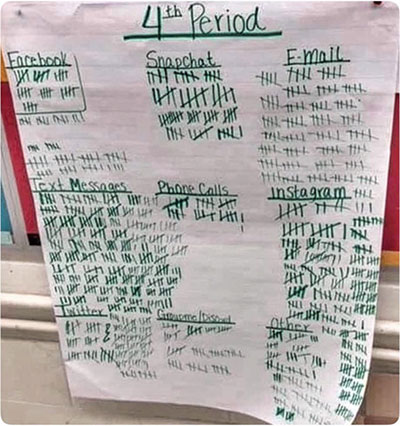 In the space of one class that is roughly an hour long, her students received a combined total of over 1,000 notifications from Facebook, Snapchat, Twitter, text, email, calls and other social media platforms. That’s a notification coming in every 2.5 seconds.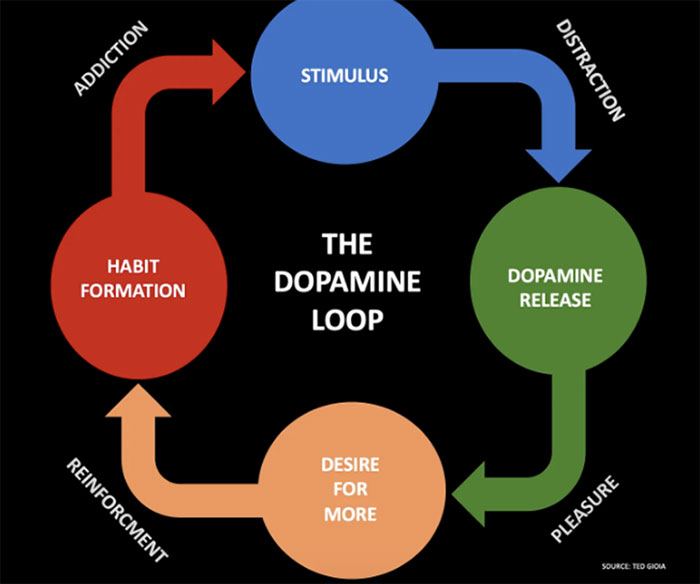
 This is the reason why two-minute episodes of “The Double Life of My Billionaire Husband” have been showing up on your content/ social media feeds lately.