 The front page of yesterday’s Times of India, Dehradun edition, is an ad from an education company which will help you to study in the UK.
This is a zeitgeist ad – the spirit of the times. It is an ad which is using current trends. That Indians are moving out of India like never before. Occasionally, you will see glimpses of this in news sources, but not at the top of the list. In the 1980s, newspapers screamed about the “brain drain”, how the cleverest and best were leaving India. Today, snippets tell us that more students are moving out than before, more residents are giving up Indian citizenship than ever before, Indians are willing to go to Israel to fight someone else’s war. And Indians are cheated into going to Ukraine to fight wars they know nothing about.
Sunanda K Datta-Ray, former editor of The Statesman, author and columnist, writes this in his latest column for the Asian Age: “With the India Employment Report claiming that 29 per cent of Indian graduates need jobs, graduates of Lucknow’s IIM and Pilani’s Birla Institute of Technology and Science reportedly also face difficulties.
“India has indeed made significant economic progress in many sectors.
The stock market is booming. Property prices are soaring. But investment in human resources is relatively feeble, although one quarter of the population languishes below the official poverty threshold of Rs 32 per day. The World Food Programme reckons that 21.25 per cent of Indians live on less than $1.90 daily. It also says that India is home to a quarter of the world’s undernourished people.”
Is this top of the news?
What is also not top of the news is the upcoming general election. There is some news about Prime Minister Narendra Modi making some random allegations against opposition parties on some campaign somewhere rather than discuss his own towering achievements.
There is disturbing news about drivers falling asleep on the Yamuna expressway, leading to accidents. Indian roads remain a major cause of death in India, whether they are the usual bumpy craters or smooth fancy highways. At no point must the Union government be held to account, even if the National Highways Authority and several falling flyovers and bridges come under its jurisdiction. I would make the excuse that the media has been told that criticizing the Union Government violates the Election Commission’s Model Code of Conduct but for the fact that criticism of the Union Government is verboten even when the Model Code of Conduct is not in force.
The Hindu, far away from the Centre of India, well not the centre of India but the centre of power, can discuss anomalies in the contentious Citizenship Amendment Act and discussions about the attempt to destroy the Aam Aadmi Party by the Union Government’s various departments of arms and ammunition. In other discussions, the media is careful to frame all problems as originating from and because of the opposition parties, leaving an innocent Union Government with no option but to arrest people without any evidence.
I am of course picking up random bits of news from a couple of newspapers. In many of these, you won’t even find any news about the state of Manipur. It is almost as if it has ceased to exist. An article in The Times of India reports Modi saying that “timely intervention by the Centre saved Manipur”. The newspaper itself cannot contest this open lie. Instead, as usual it quotes the Congress’s allegations against the Centre. Courage is tough in tough times when democracy is at its highest flourishing point.
Other newspapers present a very different and disturbing picture:
https://www.deccanherald.com/india/manipur/deaths-destruction-race-for-dominance-turns-manipurs-moreh-into-a-war-zone-2969899
https://indianexpress.com/article/political-pulse/manipur-lok-sabha-polls-2024-campaign-violence-9257249/
As in India, so in the great western world. Over 30,000 Palestinians dead thanks to Israel and its “defence forces”. But the great western newspapers are also unable, six months after the assault on Gaza began, to fairly present the fact it is Israel which is doing the killing. Or that students in their universities are being punished for supporting Palestine. Or that they themselves are so deep in the clutches of Israeli propaganda, that they cannot even breathe independently and without permission from Israel.
Thus, journalism what???
I mean, What journalism?
Ranjona Banerji is a senior journalist and commentator. She writes on MxMIndia on Tuesdays and Fridays. Her views here are personal.

 A few decades ago, I was helping an advertising honcho craft an acceptance speech for a Lifetime Achievement Award. High on the list of reasons why advertising is a social good is that it enables citizens to access information and entertainment by providing media at a reasonable or no cost. Fast forward a few years, and the media veteran Pradeep Guha shocked the world by overtly positioning the primary role of the Times of India (TOI), once India’s newspaper of record, as an amasser of audiences for advertising to address. Pradeep’s honest assertion presaged the fall from grace of TOI and most other newspapers from a necessary read to a toilet accessory, if that.

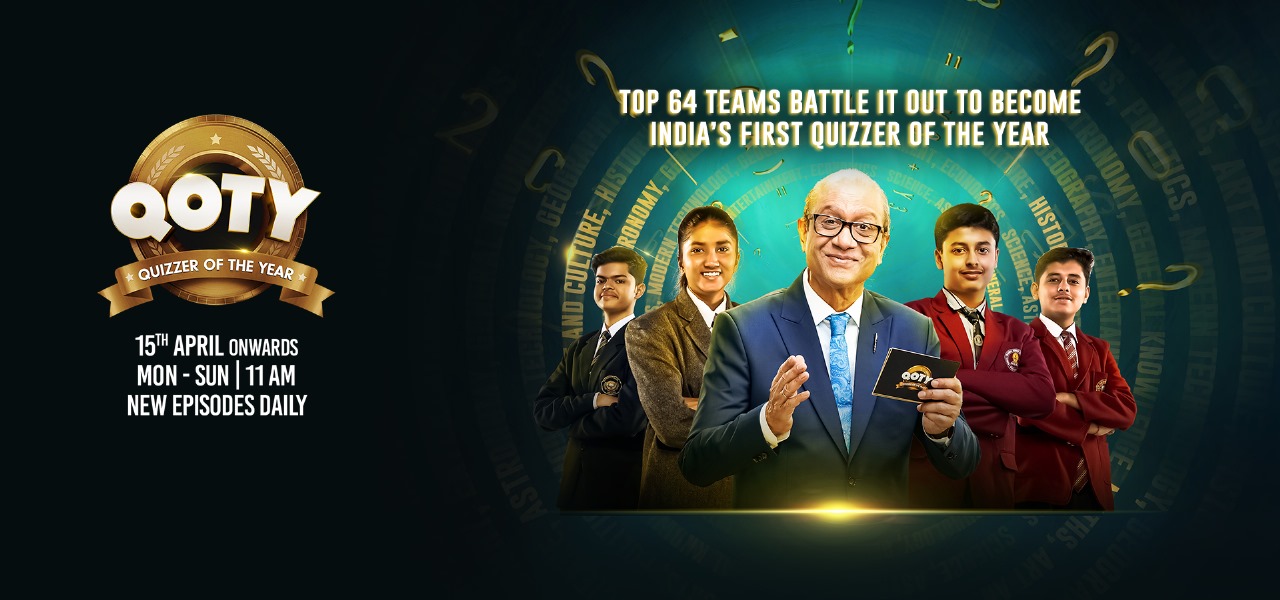 Remember Siddhartha Basu doing Quiz Time on Doordarshan in the mid-1980s? And various other shows like: Spectrum, The India Quez, The Beanstalk Quiz Summitt, Mastermind India, University Challenge, India’s Child Genius and of course Kaun Banega Crorepati.
 In my last column, I featured two brilliant foreign films that dealt with the subject of disability in a sensitive as well as an entertaining manner. Moreover, persons with disabilities were truly represented and their challenges highlighted in both productions for mass consumption.
 You remember the SRK starrer ‘Pathan’ that made headlines even before its release? Yes, I’m referring to Deepika Padukone’s controversial orange bikini and the Besharam Rang song. A lawyer filed a complaint in Muzzafarpur district court of Bihar against the leading actors and the objectionable song that allegedly offended the sentiments of the Hindu community.
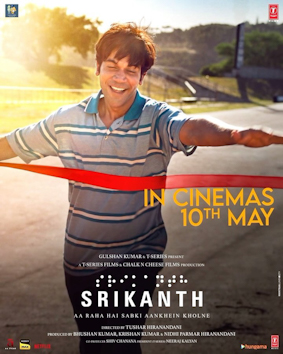 The court has ordered for these accessibility features to be included on OTT as well as theater screenings. For now, the cinema halls and producers can work with certain mobile application providers (XL Cinema, Shazacin) which offer access to an audio described track that synchronizes on the user’s smartphone as the movie plays up on the big screen.