Category: PRODUCTS

  • Bajaj Pulsar N160 ad in two parts

    By Our Staff


    Bajaj Pulsar new ad asks viewers to ‘scan’ an embedded QR code to land on a second film – unlocking another level of an action sequence. It has been created by Ogilvy.


    Said Narayan Sundararaman, Head of Marketing, Bajaj Auto Ltd:  “Brand Pulsar is all about action and thrill. For its new avatar as Pulsar N160, we had to deliver a communication package that would talk about the category-first feature of Dual Channel ABS. In this cluttered media environment, we thought our best chance would be to involve the viewer and nudge them towards a thrilling film… do they want to watch an ‘uncensored’ ad of eye-popping motorcycling action? It’s great to see that the answer is a resounding yes!”


    Added Sukesh Nayak, Chief Creative Officer, Ogilvy India: “Pulsar is the most thrilling motorcycle on the road, so we took its communication a notch higher on the thrill. How? We got their attention twice! We made an ad in an ad. First, we made a Censored Pulsar ad for TV and released it with a QR code. The film invites the die-hard Pulsar fans to scan and view the most thrilling ‘Uncensored Pulsar ad’ ever. The Uncensored Pulsar QR code will make not just the TV ad but every ad thrilling, newspaper, outdoor, and even posters. Let the thrill take over.”


  • Do not berate brand purpose purposelessly


    With apologies to none at all

    By Vikas Mehta


    Vikas MehtaThe last two weeks were very purposeful. I was a panel member at a leading institute discussing the importance and genuineness of brand purpose in recent times. Coincidentally, two big brands in India, Stayfree and Dove also released some new work on their brand purpose.

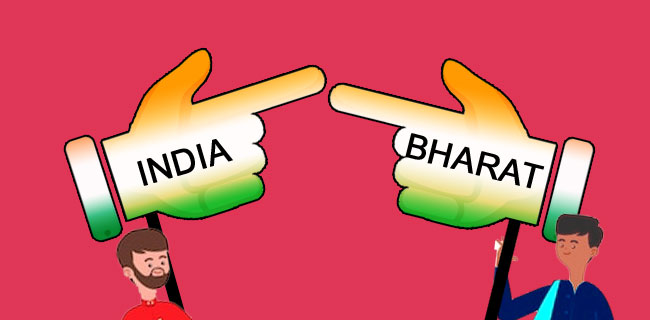
    Both the pieces of work, have been panned by some marketing pundits and marketing gurus. While everyone has a reason and right to do so, I find the arguments put forward illuminating the ignorance of what is actually happening in the country. Most of the critics are metro-based with hardly any connect with the real India, Bharat, as it is called by some. Some of course also presume that every consumer is as marketing savvy and informed as they are. Let’s get into the details.

    First a look at Dove. And before I begin, here is a disclaimer. I was involved with Unilever brands for more than a decade at a global, regional and local level in South Asia, Middle East, North Africa and Far East and this includes Fair & Lovely now known as Glow & Lovely.

    Dove, for many years now, has been talking about body positivity. Very famously, Dove has in the past refrained from using models for its soaps and were using real homemakers, sans glamour and beauty, even in India. So, the body positivity was a natural progression with a scope to use various elements like colour, race, gender, depending upon the market they are in. The current campaign in India is about girls facing beauty issues as parents prepare them for the ‘marriage market”

    The issue that critics have raised is first, not with the brand but with the company Unilever. They have chided Unilever who have profited very well with Fair & Lovely in the same marriage market. And I concede it’s a valid point. It does sound hypocritical. But then if a brand is calling out a practice which another brand in the company stable maybe encouraging, is it wrong or gutsy? Sure, the company must look inwards but should it stop raising issues that are real in the society. The marriage market is still a reality. The focus on the daughter’s marriage is still an issue. Or are they saying that the issue is not important. I found some critics mentioning that. And that highlights a bigger problem. If we think that because our daughters or our friends’ daughters or even our driver or help’s daughter are getting educated and are building a career or niche for themselves, it does not mean that the problem does not exist. I live in a small town in North India and I find the focus on the girl’s marriage still takes centrestage from an early age. Prosperity has meant that more money is being spent on the daughter’s beauty issues. Visits to dermatologists, increase in use of facewash, is a sign of the times. But the issue has not subsided or lessened in its importance.

    And let us not forget that matchmaking, dowry etc have assumed gigantic proportions. When I started working in marketing more than three decades ago, the big society evil was dowry. Most of public service ads focussed on dowry problems. Now we hardly see any such communication or message. That does not mean that dowry problems or dowry as a society evil has lapsed. It’s in fact more monstrous. A cursory glance at vernacular newspapers in the Class 1 town editions reveal a spate of dowry-related death and torture stories on a continuous basis. The marriage market and the problems associated with someone who is not traditionally beautiful (read fair or blemishless skin) having to shell out more in dowry is a stinking reality of our times. Let us not wish it away. I moved to a small town almost a decade ago and not a month goes by when my wife is not reminded about our daughter’s future in the marriage market and what she should do to help her look better. And my daughter follows in amusement what some of her friends are forced to do.

    It’s a bigger hypocrisy that we are trying to attack a purpose which is most relevant just because another brand from the same stable partakes in the marriage market. In fact, I will stick my neck out and claim that Glow & Lovely had stopped partaking in the marriage market even in its earlier avatar of F&L. So that too actually does not hold good. The real issue that Dove has highlighted is the marriage market.

    I see similar issues in the panning of the Stayfree communication. Critics claim that the society has moved on from the “period talk is uncomfortable” issue. We have had movies like the Padman and some brands are showing in their demos red colour of blood, so why are we stuck with the same old issue of male friends and relatives uncomfortable with the talk of blood? I am afraid the critics again have a “big city” view. In metros, the issue of periods may not be uncomfortable anymore but in small towns and villages it is still taboo. Actually, I doubt if it has overcome the society stigma even in big cities. Just before the pandemic, I was attending an awards show in a 5-star hotel in a metro and a gent on our table noticed that a lady on the adjoining table had a stain. He pointed it out to his wife and was immediately admonished for making the observation so loudly and openly in front of men too. She then proceeded to discreetly inform the “victim” and help her cover it up with a stole, She was so embarrassed that she left the show, with a fuming partner in tow.

    The situations in the Stayfree communication are very common and prevalent in small towns. It’s actually quite irresponsible to think that the issue isn’t relevant anymore. Just because we had many anti-dowry communications did not mean that dowry as an evil was vanquished. Or just because our circle of friends and relatives, even in smaller towns have risen above the period issue does not mean that the society has. The brand has actually opened a new window to the same issue. Teach the boys that talking about periods is not taboo. Just like one detergent brand talks about sharing the load by teaching sons the same at a young impressionable age.

    I genuinely think that the metro, western influence phenomena continues to blindside our marketers. We also get overwhelmed by our own rhetoric. Yes, India has done very well. We have taken great strides in pulling up the society and breaking some myths and taboos. But the battle is far from over. A myopic metro-centric view is more detrimental than even the societal woes. Why, the most amusing comment I read was the one in which the marketing person stated that he is not sure that an average Indian user isn’t aware of Unilever, Axe and Glow & Lovely. Did he actually mean that an average Indian user knows that Axe, Glow & Lovely and Dove are all brands belonging to Unilever? Really?

    It tells me all about an average Indian marketer.


    Vikas Mehta is a senior business and marketing strategy consultant and educator. He is based in Dehradun. This column will appear every other Tuesday (and sometimes on other days as well). His views here are personal


     

  • A Tale of One City!


    By Avik Chattopadhyay


    Avik ChattopadhyaySo, the Honda City completes 25 years in India. That is quite an achievement given the proliferation of choice the consumer has had in the last 10 years and the sheer impatience automakers have with continuing with ‘old’ product names.
     

    I have never owned a Honda City neither have I worked in or for Honda, yet I take this opportunity to salute one of India’s most successful brands, across industries and product categories. So, what exactly has made it such a darling of the Indian marketplace?


    It pioneered a segment

    When the first City was launched at Auto Expo 1998, it started a trend of the affordable performance sedan. The Opel Astra was too expensive and unreliable while the Maruti Esteem was a bit underwhelming. Till then, the only Honda people had access to was the expensive Accord, imported through Tata Exports. Suddenly, the aspirational Honda badge became accessible in the form of the City and there was no looking back.


    It has stayed true to its core promise

    In its fifth generation in India over the last 25 years, not once has the City wavered from its core promise of “comfort + reliability + performance = prestige”. It is not that every generation has been equally loved and successful, as competitive offers have kept increasing, but one cannot fault the brand for deviating from its promise. The service standard has been a terrific support to the cause.


    It has kept reinventing itself

    The brand has kept listening to customer feedback, media feedback, social media chatter and expert inputs to keep refreshing its proposition every 5-6 years. And the refreshment has been totally transformational in style and shape without compromising on the promise. The second generation launched in 2002 was not much liked for its polarising styling yet the promise was otherwise delivered. It has had its dip for the lack of a diesel engine when diesels were the toast of the day, but came back with an offer, even though some may say too late to make the desired impact. Given the stereotype of the Japanese image of being slow and procedure driven, the City has shown that as a brand it has had no ‘holy cows’ to live by.


    It has a symbiotic relationship with the mother brand

    “City” is a standalone brand by itself, just like Bravia and iPhone. While it derives its core essence from the Honda DNA, its unprecedented success across South Asia and China has allowed it to feed into the Honda DNA too. The Honda brand has always been about race-bred performance, reliability, and edgy styling. The City has definitely added the facet of comfort to the mother brand. This can only happen when a product badge evolves into a brand with its own following and advocacy.


    It is loved by competition

    Strong brands are usually feared or at the most respected by competition. The City is in fact loved! Every automaker has had the City as a benchmark. The V-tec engine was a performance standard for competition to follow. Just like the Maruti 800 gave the Indian consumer access to modern technology and motoring, the City allowed the consumer to experience an enviable package of comfort, safety, performance, reliability and badge value! Competition always has wanted to outdo the City in providing a better package. Interestingly, when in Maruti Suzuki, my team used the entry-level City as a benchmark in deciding the feature package and price point for the top variant of the to-be-launched Swift in 2005. When working out the India entry strategy in Peugeot, we had the City as the only benchmark to use ignoring sedans offered by other badges. In VW, we used to keep scratching our heads on how Honda could offer the City at that price point maintaining the quality index.


    For any brand professional, the City is a perfect case study of what product and brand management is all about…staying true to one’s promise, always open to feedback and, sincere respect for the consumer and the market!


    Frankly, I remember none of the Honda City communication or advertising. Not because of any quality issues but because the fundamental package of the product + service was so compelling, that all else can only exist on the side-lines. The growing clan of Honda City owners and the increasing tribe of an envious competition has done all the talking all these 25 years. I hope the brand story is kept the same way if it wishes to celebrate another 25.


  • Lowe Lintas’ crafts for HP Spectre range

    By Our Staff


    HP India, has launched its latest range of HP Spectre laptops with a multi-film campaign conceptualised by Lowe Lintas Delhi.


    Talking about the campaign, Prashant Jain, Chief Marketing Officer, HP India said: “The AI-based features of the new HP Spectre line-up are designed to help you thrive in today’s hybrid world. The campaign brings alive 3 such truly unique features. We hope to inspire everyone to ‘Be your Best You’ as you navigate seamlessly across the hybrid environment.”


    Added Vasudha Misra, Regional Creative Officer, Lowe Lintas : “Sometimes all it takes is going back to basics. Make the product feature the front and centre of the communication. And that is just what we did. To this mix, Sidhant Mago added characters that are steeped in modern folklore – start up founders. And finally, the casting took these films to the next level.”


  • Cutting Crew Studio bags Westside & JBL mandate

    By Our Staff


    Cutting Crew Studio (CCS), the boutique creative agency has bagged the festive season campaigns for Westside, the clothing retail chain by Trent India Ltd and leading audio brand JBL


    Said Vivek Shah, Founder of Cutting Crew Studio: “We are proud to work with brands like Westside and JBL India, for they have entrusted us with their new campaigns. We have burnt some midnight oil to really come up with some extraordinary concepts keeping their TG in mind.


  • Content Lab film for Kirtilals

    By Our Staff


    Mumbai-based content studio and digital marketing agency, The Content Lab, has developed a film for diamond jewellery brand Kirtilals.


    Said Vaibhav Mehta, Founder, The Content Lab: “It’s great when a brand trusts us with the creative onus of imagining a storyline and bringing to life their vision. From the production perspective, it was extremely important to have a fine balance between the contemporary and traditional – from set design, casting, costumes, the smallest of nuances were meticulously chosen.”


    Added Seema Mehta, Creative Director, Kirtilals: “Diamonds are known to make important milestones in our lives memorable, spark sheer joy, and embody familial stories of generations. That narrative has been heard time and again. With this film, we wanted our audience to look beyond the jewellery alone. We wanted them to look at marriage and relationships with another eye where implicit mutual support of both is key. We hope this message resonates with our young clients who are embarking on life with their partners, and will remember us as a brand who truly gets them.”


  • Hoopr.ai launches #HarGharCreator Campaign

    By Our Staff


    Hoopr.ai, the music licensing platform, has launched a new campaign called #HarGharCreator with an ad to celebrate and empower creators across India.


    Said Gaurav Dagaonkar, Co-founder & CEO, Hoopr.ai: “We are excited to roll out the #HarGharCreator campaign as part of the Hoopr platform launch. A creator is now emerging in nearly every home across India, and we want to help them find phenomenal Indian music for their videos. Apart from individual creators, the music on Hoopr is also being used by brands, enterprises, and OTT platforms, as it is cleared for use and free from any copyright strikes or takedowns.”


    Speaking on the campaign launch, Meghna Mittal, Co-founder & CMO, Hoopr.ai, said, “The creator economy is primed more than ever to grow, and we’re excited to support creators across India. There’s also increased awareness about the need for sourcing licensed music since the awareness on issues such as copyrights has increased. Apart from helping creators, Hoopr will also enable music creators to unlock a new source of revenue for their music.”


  • Coca-Cola rolls out festive campaign

    By Our Staff


    Kicking off the festive fervour around Diwali, Coca-Cola has unveiled a new #MilkeHiManegiDiwali campaign.


    Conceptualised by Ogilvy, the 360-degree campaign will be amplified across television and digital touchpoints for optimised reach.


    Commenting on the new campaign, Kaushik Prasad, Director, Marketing, Coca-Cola, said: “Coca-Cola believes that Real Magic happens when people come together, share moments and create lasting memories. Festivals are the perfect occasions to bond with the ones we love and so this Diwali, we want to encourage people to do just that, to meet and not just greet each other and to create memories to cherish for years to come, of course over a chilled Coke. We’re excited to bring this invitation to people through a 360-degree campaign, which we hope will provide a positive nudge for people to come closer together.”


    Added Sukesh Nayak, Chief Creative Officer, Ogilvy India: “Real magic happens when we meet in person. And not just online. This Diwali, Coke with its inviting bottles of Coke is doing just that. ‘Gale milke kaho Happy Diwali’ is urging people to do make the effort to meet in person and hug again to really enjoy the real magic in life. The campaign comes alive from packaging, TVC to a full-fledged 360 plan.”


  • Bumble launches new OOH campaign

    By Our Staff


    Bumble, the women-first dating and social networking app, has launched a new out-of-home campaign that captures “nuanced dating cultures” in cities including Kolkata and Ahmedabad.


    Said Samarpita Samaddar, India Communications Director, Bumble: “After two years of restrictions and lockdowns, this year, people are gearing up to celebrate the festivals in a big way. From sharing your idea of festive fun and your favourite festival food, puja pandals you’d like to visit, a garba dance you’ve been eyeing to attend–festivals can be an exciting time to find new connections that you’re looking for! With our latest campaign, we aim to encourage our community to own their dating journeys and find their connections on Bumble.”


  • H&M Brighter Than Ever campaign

    By Our Staff


    With the release of the first Brighter Than Ever campaign in 2020, H&M India has released narratives on the shared desire and hope to celebrate the way we used to.


    Said Amit Kothari, Regional Head of Customer Activation & Marketing – H&M South Asia: “Each year we continue to build the ‘Brighter Than Ever’ offering, giving it a new narrative that resonates with the ever-evolving times we live in. A visual delight with an undercurrent of magic, we’re proud to associate with such a diverse and talented star cast for this year’s campaign. With the desire to create the best offering for our customers, we are driven to provide a wide range of festive wear across categories that are stylish yet designed for everyday wear at incredible price points.”


    View this post on Instagram


    A post shared by Jim Sarbh (@jimsarbhforreal)

  • Lupin unveils new campaign for Lupizyme Plus

    By Our Staff


    Contract Advertising has rolled out a new campaign for Lupin’s over the counter Lupizyme Plus digestive aid syrup.


    Speaking on this, Anil Kaushal, Head OTC Business, Lupin said: “Lupizyme Plus has been a category leader for years. To take the brand to the next level, it’s important to make the brand a conversation leader. This idea is the next step in that regard, to build engagement with our audiences, start conversations and make the brand top of mind when it comes to gut health.”


    Added Sagar Mahabaleshwarkar, Chief Creative Officer, Contract Advertising: “The story of a life told in the format of documentary has a different level of engagement. And with the Gut Whisperer, we got a chance to disrupt traditional OTC communication conventions.  And with Lupin, we had a great client who immediately saw the potential of this idea.”


  • Candere online jewellery portal launches Diwali campaign

    By Our Staff


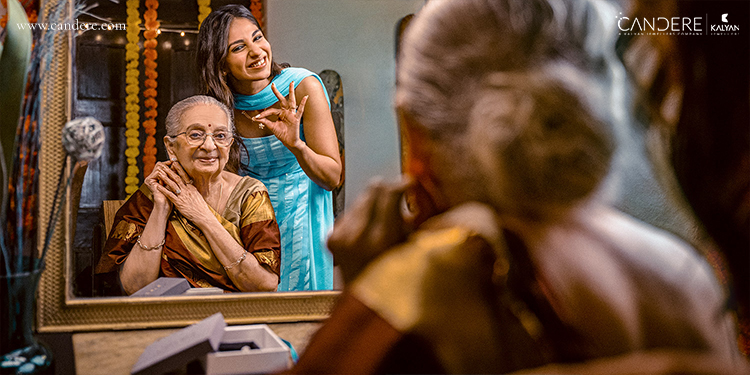
    Candere, the online jewellery portal by Kalyan Jewellers, has announced the launch of its Diwali campaign. The 82-second Diwali film titled ‘Khushiyon kfe Gehno se, #RishtonKoSajayein’’ has been crafted by The Luminant Media.


    Sharing his thoughts on the launch of the Diwali campaign, Rupesh Jain, CEO of Candere, said: “Growing up, we have heard from our parents and grandparents how festivals used to be much more fun back then, with the entire family together. Unfortunately, during the pandemic, people had to stay away from their loved ones, even during the festivities. With things slowly falling back to normal this year, Candere wants to encourage families and friends to celebrate togetherness. Our tagline, “Khushiyon ke Gheno se, #RishtokoSajayein, is an attempt to spread joy/ happiness this Diwali by gifting Candere’s special festive collections to thei close ones.


    Added Anant Rathi, CCO, The Luminant Media: “It’s that time of the year again when everyone gets together to celebrate the festival of lights. This Diwali, through the campaign, we wanted to showcase an emotion of nostalgia. In this fast-paced world, we want people to recreate memories like the old times urging them to celebrate the bond of togetherness.”