Category: MARKETING

  • The Anchor: Karthi Marshan’s 5 rules for engaging financial services consumers on social media

    By Karthi Marshan


    Social media engagement for brands have many uses, and just like dating, socializing and evangelizing, there are things we must keep in mind. Here are a few of mine.


    #1 Listen first

    Obvious, isn’t it? Yet, we’d be amazed at the number of brands that ignore all the digital chatter their brands already enjoy / suffer, and dive blithely into a ‘campaign’ that plugs a product or extends their offline messaging. Just like you would at a party you have entered late, identify a group where some interesting conversation is happening, hang around and listen long enough to understand the mood, and then maybe, yes maybe consider interjecting with your two bits.


    #2 Speak human

    While it is contingent upon brand ambassadors to ensure propriety and appropriate representation of the brand’s stature, it would be prudent to eschew any language guidelines that the stuffed shirts throw at you and talk like you would at home or in a restaurant. It’s amazing how the people who run brands seem to check their human selves at the door when they communicate on behalf of brands, and start spouting what can only be described as ‘brandese’. Big words don’t impress, sincere ones do. So chill, be real, stay cool.


    #3 Chat, don’t plug

    Don’t be misled by it being called social ‘media’. Do not just blindly run your ads here. Just like you wouldn’t turn up at a friend’s cocktail party and start singing your brand’s jingle, apropos of nothing. Talk about what they are talking about. Be interested first, and then hopefully interesting. For heaven’s sake, don’t plug your messaging. Social media users are very sensitive to blatant plugging, and will flame the brand so badly, Hades (the place, not the person) will seem like Manali.


    #4 ‘Fess up

    When you join discussion groups or respond to comments about your brand and category, be clear about your identity. Don’t pretend to be just another regular guy who just ‘happens to really love the brand’. It smells a mile away. It’s perfectly fine to be a representative of the brand and defend it where relevant. So ‘fess up straight off the bat, don’t be cute.


    #5 Tell the truth

    While this sounds like a twin of ‘fess up’ there is a nuance I am trying to convey. Lots of brands are happy to troll the web and selectively display only the compliments they receive for good service. Stinks. If you want to share the bouquets, have the body parts to show off the brickbats also. So long as your intent to address the brickbats sincerely is evident, ‘they’ will understand. And just like in your marriage, saying sorry sincerely is usually more than enough. You will be forgiven and allowed to stop sleeping on the couch.


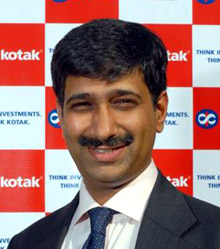
    Karthi Marshan heads marketing for the Kotak Mahindra Group.


  • 10 years of ‘Naye India Ka Bazaar’

    Since heralding the birth of modern retail in India in 2001, Big Bazaar has adapted to varying consumption needs over the past decade. It has not only catered to the Indian consumer’s inherent search for value, but also attuned itself to his emerging aspirations. Big Bazaar’s offerings were amongst the first to address these dual needs.


    On the occasion of Big Bazaar’s 10th anniversary, the challenge was twofold. They had to narrate the brand journey and also recast Big Bazaar’s promise – “Iss se sasta or accha kahin nahin” with a new and relevant meaning. They  needed to craft a promise which would mark Big Bazaar’s commitment to continual evolution.


    India of today was different from that of 10 years ago, and so was Big Bazaar. There was an existing symbiotic relationship between the two, which became the inspiration for the new tagline and logo.The promise of continuously evolving and keeping pace with the consumers was captured through the new logo and tagline – “Naye India Ka Bazaar”. The word “Naya” connoted an embrace of modernity while “Bazaar” re-instated the brands belief in rootedness and Indian values


    The journey of Big Bazaar would then be captured in the same way.


    The reason is simple; they are changing with their consumers. And in this journey of 10 years they accept the mistakes of the past, because Big Bazaar believes, ‘only when we accept and acknowledge our mistakes’ can real improvement occur.


    They have expressed their willingness to evolve through one simple word – “sorry”. A bold stance for any advertiser. And they express our gratitude towards our consumers by saying – “Shukriya” – Thank You.


    Credits:

    Mudra India (West)

    Office Head: Arijit Ray

    CCO: Bobby Pawar

    Creative Copy: Anil Bhardwaj

    Creative Art: Vinayak Nayak, Ninad Gharat

    Films: Vishal Sane, Mahen Solanki

    Production House: Red Carpet Entertainment

    Director: Rajkumar Gupta

  • Middle India market for FMCGs will exceed US $ 20 bn by 2018 : Nielsen

    By Ratna Bhushan


    The FMCG market of about 400 smaller Indian towns with populations of 1 – 10 lakh, is expected to surpass US $ 20 billion by 2018 and 80 billion US $ by 2026, a new study by insights and analytics firm Nielsen said.


    Currently, the 400 smaller towns represent approximately US $ 6 billion.”Although big Indian metros remain the staple for FMCG marketers and rural India is proving to be critical for volumes in the long run, the next wave of the Indian urban demand revolution may be found in these 400 smaller towns with a population of 1 – 10 lakh,” said Ranjeet Laungani, Executive Director, Nielsen. “It’s time for marketers to take notice”, he added.


    Nielsen’s study shows that out of the total US $ 28 billion in FMCG sales last year, products worth about US $ 6 Billion were consumed in these smaller towns. This number makes up more than 20% of overall FMCG sales, and 30% of the urban FMCG sales. Since 2002, the FMCG sector grew 3.5 times in these smaller towns of 1-10 lakh population, compared to 3.2 times at the all-India level.


    “The demand revolution has percolated down to middle India and these towns will behave like the metros of tomorrow,” said Laungani. “Middle India leads the pack across urban and rural segments for FMCG value growth rates.


    Out of 81 FMCG categories tracked by Nielsen, 49 product categories across personal care, over-the-counter drugs, household care, and food outgrew the all-India rate. Over 30 categories saw growth rates faster than 1.15 times the all-India rate. FMCG companies which anticipated this kind of growth and invested in these areas a few years ago, are likely seeing a positive return on their efforts,” says Laungani.


    Source:The Economic Times

    Copyright © 2011, Bennett, Coleman & Co. Ltd. All Rights Reserved

  • The Anchor: 5 skills you need to be a successful entrepreneur

    By Raj Gopal Iyer


    #1 Plan, stay organized and focused:

    It’s important to be absolutely planned with regard to the various aspects of the business. The more you plan, the better. Creating an effective organization with systems and processes are the key to success. The entrepreneur should be focused on the objective.


    #2 Be customer-centric:

    The customer is king. Happy customers will make an entrepreneur successful, for sure.


    #3 Have nerves of steel:

    This is an absolute necessity for being a successful entrepreneur. An entrepreneur is faced with many challenges, he/she needs to have strong will power to face them and succeed.


    #4 Hire the right people:

    People are extremely key to the success of an organization. A successful entrepreneur is someone who has the right people to manage the business.


    #5 Enjoy what you do:

    Finally, a successful entrepreneur is someone who enjoys what he/she’s doing. He/she should have the passion for it. Success will naturally follow!


    Raj Gopal Iyer is the CEO, Blue Ocean Media & Consulting.

  • Movenpick Hotels looking to expand in Indian market

    By Tuhina Anand


    Movenpick Hotels & Resorts, the international chain of hotels with its Swiss roots, has just made its entry in to India with its first property in Bengaluru. The chain however plans to expand its presence in India and is looking at having 10 properties in the next three years. The plan to expand includes building new hotels as well as rebranding some of the already existing properties of other brands into Movenpick.


    Talking about their plans, Gary Moran, GM, Movenpick Hotel & Spa Bangalore said, “It clearly makes sense to have a pan-Indian presence. This can be only achieved if we have more properties here thus helping us in having a significant brand presence. We have big plans forIndiaand in fact we are constructing a resort hotel in Dharamsala which should be done by 2013. It’s a new build so it will take time but before that we will have many hotels inIndiaand we are looking at rebranding. We are very close to signing a deal in Chennai and looking at two hotels in Rajasthan one of which is an existing brand and one is a new build. So it’s a combination of two. Rebranding definitely is a quicker way to grow.”


    On the Indian hospitality sector today, Mr Moran said, “The market is becoming fragmented as more hotels open up. There is an increase in both supply and demand, but right now it looks like supply is outdoing the demand. This trend is healthy for consumers and even will make hotels raise their game. In a monopolistic market the opportunity to improve is not a priority whereas with competition this becomes imperative.”


    Movenpick positions itself on the old values of hospitality which is stressing on the basics and being a very good quality upscale four and five-star hotels. It doesn’t profess to be super super luxury hotel and doesn’t compete with this category, but competes with the best of 5-star hotels. The company has in all 71 hotels and is planning 30 more, one of them inBalito be finalized soon. The company is focusing onAsiain a big way.


    Movenpick has come up with its first property in Bengaluru primarily because the management contract came into fruition first here, but they are constantly in talks with prospective owners in Mumbai,Hyderabad, Rajasthan and Chennai among others. The property in Bengaluru is called Movenpick Hotel & Spa Bangalore, and is positioned as a business hotel.


    The company is clear that the only way to build the brand is to bring in more properties with the Movenpick brand name. Also, in terms of marketing, since they just have currently one property they have planned hordes of activities like its grand launch, Christmas special and art exhibition to get more people to experience the hotel. Besides a geographical presence, the plan is also to build an India-specific team which will look after sales and other activities of the company.


    Movenpick Hotels & Resorts is represented in 25 countries with 71 hotels and resorts currently in operation. A further 30 properties are planned or already under construction inAnkara, (Turkey),Dubai(four projects -United Arab Emirates);Abu Dhabi(three projects -United Arab Emirates),Shanghai(China), Dharamshala (India) among others. The hotel company is owned by Movenpick Holding (66.7%) and Kingdom Group (33.3%).


  • dummy post

    December 16th is Johann Wilhelm Ritter’s birthday. Ritter was a German scientist who invented one of the first dry pile galvanic batteries.

    • Early batteries used electrodes dipped in an acid solution where the energy is produced through oxidation reactions. A dry pile uses just enough moisture to function and did not have the dangers of spilling acid solutions.
    • Ritter’s pile used alternating pieces of silver and zinc foil separated by pieces of paper.Ritter was also responsible for the discovery of the ultraviolet region of the electromagnetic spectrum. While investigating the discoloration of silver salt crystals exposed to sunlight, he discovered there was a part of sunlight beyond the violet range responsible for the discoloration.
    • He initially called this part of the light spectrum ‘de-oxidizing rays’ because of their chemical reactivity.
  • Don 2 marketing on overdrive


    By Tuhina Anand


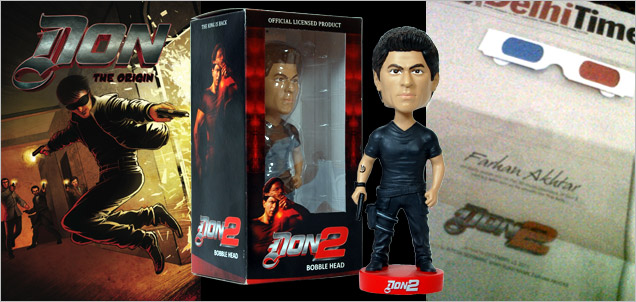
    It’s another SRK release on December 23 and the marketing team for Don 2 is on its feet to get the maximum audience thronging the cinemas to watch the magic of King Khan. The December 19 edition of Bombay, Delhi and Bangalore Times carried a front-page invitation from Farhan Akhtar for the 3D music premiere of the movie on Google +Hangout – with a pair of 3D glasses encouraging people to watch Don 2’s videos in 3D on YouTube. The strategy is to attract audiences as the movie is being released in 2D as well as 3D.


    Priti Shahani, Chief Strategy Officer, Reliance Entertainment, said, “The TOI innovation is a tactical move. For us the strategy for Don 2 has been to partner with marketers and media that reach out to large numbers. We have looked at all platforms that would give us visibility so while our partnership might not be as grand as RaOne, it should reach a large platform.” Don 2 has associated with platform partners and media partners including Sakal, Lokmat and Amar Ujala to reach beyond metros.


    The Don 2 marketing may not be ubiquitous as the blitzkrieg for RaOne, but as Vishal Ramchandani, the Marketing Manager of Excel Entertainment puts it, it has been consistent and concentrated, and peaking at the right time with the movie release slated for this week.


    The marketing effort has been 360-degree including even a comic launch published by Om Books. The comic is on the origin of Don and fills in details on the making of Don, thus acting as a prequel to the sequel. Mr Ramchandani also said that on December 23, two sets of games will be launched, made in collaboration with Gameshastra. These games are compatible on PS3, iPad and Android platforms and are basically shooter games where the player gets to be the Don. The social media presence is taken care of with the Facebook game.


    Mr Ramchandani said, “We have looked at various innovative and interactive ways to connect with the audience. While SRK is a big name, these marketing bursts ensure in keeping the excitement alive. When tickets today are priced around Rs 300-350 in the first week of the launch, there is a need to create urgency to get people to the theatre and these activities help in doing that.”


    Besides the comic and games, there is also a tie-up with Microsoft India where the contest promotes ‘Meet the Don in Berlin’ on various platforms. There is a spin to the Don on the city tours where the hunt is for a Don from each city. This is a positive take on the search for Don. Last week eight cities were toured and more city tours are slated.


    The makers are also relying on the highly popular Don ‘sayings’ and marketing it in a big way. ‘The Don says…’ have been popularized on the 360-degree platform.  These dialogues have also been showcased at cinemas halls and even washrooms, thus trying to catch more eyeballs.


    In terms of merchandise, one can see T-shirts, bobbleheads and Think Tank board games. There are also a few brands present in the movie, though Mr Ramchandani vouches that these associations are not just for the sake of it but is in sync with flow of the story or, as he puts it, “requirement of the script”. Though a number could not be put on the marketing spend, it is estimated to be running into single-digit crores.  Trade pundits suggest that any big ticket movie spends at least Rs 7-8 crore on advertising and marketing.


    Explaining the reason behind marketing even an SRK release, who is a big brand himself, and the need to be promoted aggressively, Ms Shahani said, “Today, the reality is that the shelf life of a movie at best is around 8 weeks and the audience window is even shorter and shrinking. To capture the mind, a brand like SRK helps where like in this movie he stepped out 10 days ago to promote and the impact has been instantaneous. Owning the minds of the audience is impossible today and that’s where marketing and SRK helps.”

  • Small regional brands get modern retail push

    By Sagar Malviya


    Small and regional brands are tying up with retail giants to push their merchandise, as middle-class Indians shift from mom-and-pop stores to the comfort and variety of modern retail.


    The latest to join the bandwagon is ayurvedic products maker Baidyanath Ayurved Bhawan. The 95-year-old company has tied-up with Future Supply Chain Solutions, the logistics arm of retail giant Future Group to widen its consumer base and boost its position in the health products segment where it competes with Dabur and Emami. The Kolkata-based company will use Future Supply Chain’s network to sell its ayurvedic medicines, tonics, hair oils and toothpastes in more than 2,000 outlets in the country.


    Future Supply Chain serves several large retailers besides the parent group’s Big Bazaar.


    “More than just sales, modern trade gives a very high visibility that’s important to us. Also, it’s an easy way to break into newer markets without investing substantially in distribution,” said Ameve Sharma, president of the over 350-crore Baidyanath.


    This strategy is not only giving smaller brands a pan-India presence, but also helping them reap dividends. Within a year, the share of organised retail in total sales of brands such as Wagh Bakri tea, Super-Max shaving products, Nilon’s pickles, Dukes biscuits, NR Group’s Ripples fragrances has risen from near zero to about 15%.


    “Due to consumers moving and settling across geographies within the country, we are able to support small and regional brands get national footprint and also where relevant communities stay,” said Devendra Chawla, president of FMCG and food at Future Group. “For several small vendor partners, setting up distribution networks can mean lot of resources and costs. Modern trade is the quickest route to market in relevant markets,” he added.


    The move is also partly driven by the need to be where the competition is. “You have to be where your competitors are,” said Ravi Chandra, general manager, sales and marketing at Super-Max Personal Care, which earned 2% of sales from modern trade from just 0.2% a year earlier. “We have heightened our focus on modern trade as our product portfolio matched the target consumers of these stores,” Mr Chandra added.


    Nilon’s, the country’s largest pickle brand that was available in some 100 stores two years ago, is now available in 400 stores.


    “We were hardly present earlier in Mumbai and Tamil Nadu. We realise that the future in big cities is through large outlets,” said Nilon CEO Rajheev Agrawal. The company has seen sales from modern retail rise from 7% to 15%. Future Supply Chains, which works with 20 such clients, has added half of its clients over the past one year.


    “No distributor has an all-India presence, and that’s where we come in. We also take care of shelf and merchandise management,” saidAnshuman Singh,MDand CEO of Future Supply.


    However, firms say that jump-starting sales has its own problems. The margin for modern trade is higher than that of general trade, and small brands end up paying about 10% more than their bigger counterparts. But they are not complaining. “The fallout of margins is basically on the return on investments calculations and large stores are increasingly giving higher throughput,” said Mr Chandra.


    Also, these firms are getting into premium products, which need the platform of modern trade. For instance, Baidyanath is entering soaps and shampoos while Wagh Bakri Tea is focusing on tea bags and instant tea.


    This trade route has another plus: when a retailer expands, it carries the product with it. “Retailers have almost doubled their stores. This means more sales of our products,” said Anik Mukherjea, chief business creator (fragrances) in NR group, the Mysore-based maker of Cycle Agarbattis and Ripples.


    Source: The Economic Times

    Copyright © 2011, Bennett, Coleman & Co. Ltd. All Rights Reserved

  • Online artifacts store makes good money

    By Amit Kumar


    Pallavi Singh Keshri believes that people should give wing to their dreams. Little wonder then that she has named her labour of love Eyass, which translates to falconry, wherein the young ones of a falcon are taken from the nest for training. There is another reason she chose the name – falconry is a near extinct art form in the Middle East, and art is what Eyass is all about.


    A two-year-old online store, Eyass showcases craftwork from all over the world. All the pieces are either hand-crafted, unique or endangered, and eco-friendly. This effort has enabled the creation of a platform, which connects artisans directly with the consumers, bypassing middlemen and margins.


    The road to entrepreneurship has been a circuitous one, but Ms Keshri was sure she would have her own business some day. After graduating from Delhi University in 1996, she picked up a post graduate diploma in marketing and joined a media house. Subsequently, she worked for Naukri.com for about two-and-a-half years. Then, in 2006, Ms Keshri quit her job as marketing manager at Dale Carnegie Training in Mumbai to pursue a one-year MBA degree in general management and international business. She worked in Dubai for a year and it was on her return to India in December 2008 that Keshri felt ready to start her own venture. “The time was right. I had gained enough experience in the field, had made the right contacts, and shored up adequate savings to start on my own,” says the 36-year-old.


    Over the next year, she worked on the idea, got the legal documents needed for the venture (export-import licence) and developed the website design. Finally, in December 2009, the company was launched with a seed capital of Rs 4.5 lakh, which mainly covered the expense for the website and inventory. In the initial months, Ms Keshri hired people on a freelance/part-time basis, her residence in Delhi serving as office to save on expenses.


    Around this time, Ms Keshri also realised that she had to narrow down her business focus if she wanted to succeed in the sector, while remaining true to the concept of direct marketing. “The point of starting Eyaas was to ensure that we get to work directly with artistes and craftsmen. I realised that if we tried expanding too soon, I would have had to compromise on that aspect, which I wasn’t comfortable with,” says Ms Keshri. Today, Eyaas works with many partners, including All India Artisans and Craftworkers Welfare Association, an African associate and a Cambodian one. The repertoire includes toys, home accessories, pottery, stationery and jewellery.


    Eyaas has raked in revenue of about Rs 3.5 lakh in the past year and is expected to breakeven in the next six months. The venture currently employs four people, including Ms Keshri. Although she hasn’t been able to pay herself a salary yet, she hopes that this will be rectified in the coming year. Meanwhile, she has managed to keep herself going financially by helping aspiring candidates prepare for GMAT exams in various institutes. However, she is sure that Eyaas is destined to soar.Future plans? “We need to work on reaching out a little more to the artistes in south India,” she says.

  • Micromax strengthens its core team in India

    By A Correspondent


    Micromax, the leading Indian mobile brand, in its endeavour to further firm up its leadership position in the market, on Tuesday announced the appointment of key positions in its management team in India.

    Deepak Mehrotra, joining as the new Micromax CEO, will now be at the helm of affairs. His last assignment was in Bharti Airtel as the operations directors- mobility business.

    The brand is already a key player in the feature phone segment and is now looking to capture the smartphone market share as well. The focus will now be on two separate divisions: the ‘feature phone division’ to be led by Khaja Muzaffarullah and the ‘smartphone division’ to be headed by Ajay Sharma.

    Commenting on the development, Rahul Sharma, Executive Director, Micromax said: “We are a brand that’s admired for challenging the conventional. The new team brings with them a wealth of experience by virtue of their long-standing association and in-depth understanding of the overall mobility market globally.”

    Considering the leap Micromax has taken in the mobile ecosystem in India and globally, the appointments are a testimony to a great future in coming times as well. Deepak Mehrotra, CEO, Micromax Informatics Ltd said, “These are exciting times, not only for the brand, but for the industry as a whole. We are witnessing technology advancements every day and that further excites us at Micromax. The Indian mobile industry is growing at a rate of 12 percent and we would like to capture this opportunity and drive the next phase of growth for the brand. We would further leverage brand’s success in this high potential Indian market and build new capabilities.”

    In the next two years, as India gears up become the largest mobile market, Micromax aims to double its reach as well and strengthen its distribution network. Leading this vision will be Khaja Muzaffarullah as the Head of sales for feature phone division. Mr Muzaffarullah, was earlier with Sony Ericsson.

    Commenting on his new role, Mr Muzaffarullah said, “The channels partners are a key to our business model and form the backbone of our strong presence in the country. We would be strengthening our distribution across the country and work towards creating a robust network that brings us closer to the customer.

    Micromax, having already established its leadership in the feature phone market in India, now aims to build a strong portfolio of smartphones for the discerning Indian consumers.


    Commenting about the potential of smartphones, Ajay Sharma, who will be leading the smartphones division, said, “Micromax would aspire to a 10 percent of the market share at the earliest.”

    Micromax, is the largest Indian mobile handset company, in terms of units shipped during the quarter ended March 31, 2010 and the third largest mobile handset seller as at March 31, 2010 (according to IDC’s India Quarterly Mobile Handsets Tracker, 1Q 2010, June 2010 release).


  • Homeshop18.com and Microsoft join hands

    By A Correspondent


    This holiday season, HomeShop18.com, Network18 group’s online and television retail marketing and distribution venture, is teaming up with Microsoft to bring its best selling offers closer to its customers. HomeShop18.com users can now browse the website faster through a one-click access system, using Windows 7 and Internet Explorer 9.

    All customers who upgrade to Internet Explorer 9 and pin HomeShop18.com to their IE9 browser will get a free gift voucher and easy access to the shopping portal from their desktop taskbar. Windows Internet Explorer 9 can be downloaded free from www.homeshop18.com or from www.beautyoftheweb.in.

    Commenting on the association, Sundeep Malhotra, Founder and CEO, HomeShop18 said, “We feel proud to partner with Microsoft to offer easy access to our e-commerce portal, HomeShop18.com. With this association, we wish to introduce unique technological benefits in order to strengthen our customer interface. Keeping all the consumer needs in mind, we have announced the association with Microsoft.”

    “We are very excited about our partnership with HomeShop18.com, one of India’s fastest growing web destinations. Through this association, we have made it simple and fun for Homeshop18.com subscribers to get one-click access with Internet Explorer 9. We are confident that Indians will love this all new immersive browsing experience”, said Senthilkumar Sundaram, Director – Product Marketing, MicrosoftIndia.

    This association will help Homeshop18.com users to easily ‘pin’ the website to their Windows 7 taskbar and get one-click access to the shopping site. Additionally, users can simply right click the taskbar icon for quick access lists, also called jumplists.


  • Flash mobs may lose sheen if overdone

    By Neha Dewan


    There was nothing unusual about the busy weekend evening at Ambience Mall, Gurgaon, in the second week of December. Christmas was just round the corner, and the mall was thronged by scores of shoppers eyeing bargain deals.


    It changed at 6 pm when suddenly a large group of people gathered and broke into a dance that lasted a few minutes and ended with the signature Nokia tune. It was one of the flash mobs that the Finnish mobile phone maker organised simultaneously across six cities to mark the launch of its Lumia smartphone.


    It took most onlookers by surprise, but many shoppers have seen other such song and dance in recent times.


    Flash mob-when a group of people suddenly assemble in a public place to perform a dance or any other short entertainment act and then disperse quickly-is perhaps the hottest marketing buzz in the country, but analysts warn it will lose its sheen because marketers are overdoing it.


    Often used for the purpose of entertainment or to spread awareness about a social cause, flash mob has its modern day origin in 2003 when it was first held in a retail store in Manhattan, the US.


    However, in India the flash mob kicked off in big way last November when 23-year-old Shonan Kothari led a 200-people crowd to dance to the tunes of ‘Rang de Basanti’ at Chhatrapati Shivaji Terminus railway station in Mumbai. The event was a grand success, getting several views on YouTube.


    Since then, there have been a string of flash mobs organised by brands, TV channels, NGOs across leading malls in Delhi, Mumbai and Bangalore to promote shows, create awareness and generate buzz. And here lies the danger-killing the hen that lays golden eggs.


    Moreover, in some cases, brands end up advertising before the show, either through social media or through word-of-mouth, which dilutes their spontaneity.


    Too much, too soon? Maybe, that’s why brand experts sound a word of caution against using flash mob frequently.


    And this is what made Arjun Sharma from deciding against having a flash mob last year. “We thought it would be predictable to do it again in 2011,” says the director of Select Citywalk Mall in South Delhi, who organized a flash mob in 2010. However, Mr Sharma does plan to organise another one-most likely on Valentine’s Day in February.


    “It’s a fabulous way of community building as it leaves an image in the minds of the consumer.”


    Perhaps that explains the need of many brands to get associated with this ‘surprise’ quotient. Santosh Desai, CEO of Future Brands, calls it a classic case of ‘interactive advertising’. “There is much talk about creating experiences for the consumer. And this acts as the perfect medium to give them that.”


    Ashley Lobo’s Danceworx, which organised a flash mob on the Christmas weekend at DLF Promenade mall in the capital, now gets at least 4-5 queries a month for such shows. But Heemanshu Sharma, choreographer at Dancework, says flash mobs should be limited. “I think flash mobs can be far more productive if used less. Otherwise, they tend to become very predictable,” says Mr Sharma.


    Source:The Economic Times

    Copyright © 2012, Bennett, Coleman & Co. Ltd. All Rights Reserved