Category: MARKETING

  • M-commerce is the way to go in 2012

    By Rishi Vora


    The Q3 report for 2011, which was released in December 2011 by BuzzCity, a global company which serves advertisers and publishers of mobile internet sites, augurs high growth prospects for mobile commerce (m-commerce) , which grew by 30 percent from the second quarter in 2011, in India.


    According to the report, a major portion of the growth came from mobile content players, but there were a few financial services brands that also ran promotions.


    BuzzCity, headquartered in Singapore specialises in mobile internet advertising and India tops its priority list among emerging nations. BuzzCity has served more than three billion ads in India alone – it tops the list of ads served by a company in the Asia Pacific region.


    BuzzCity’s India operations were started four years ago when the Mumbai office was set up, at a time when mobile internet, as a medium, had just begun to gain momentum.


    K F Lai, co-founder and CEO, BuzzCity said, “India is one of the most important markets for us. It contributes a significant chunk of revenue to our global network. Though the market is still small in size, it is beginning to open up and 2012 should see many advertisers and content players invest in the medium.”


    The report also stated that while Indian market was heavily male-dominated as far as usage of mobile internet was concerned, the sheer size of the market still gave advertisers reach into a substantial demographic of over 14 million unique users.


    Sharing his view on the Indian market, Mr Lai said, “There are about 150 million mobile internet users in India, these numbers are bigger than internet numbers, thanks to the mobile penetration and the decreasing price-points of smart-phones, 3G services and so on. We will also see increase in the number of mobile internet users, with tablets becoming popular, it means better user experience, opportunity for brands and for publishers – it means serious business.”


    Mr Lai believes that 2012 will be a year where m-commerce will evolve in a big way. India has already seen unprecedented growth in e-commerce. The key for the industry, however, is to maintain high levels of trust among consumers and transparent dealings. If proper care is taken, it is a medium which can pay rich dividends to brands in India.


    The report also revealed that in 2011 Nokia was the most popular handset brand for internet access (64.81 percent), followed by Samsung (11.85 percent). The generic mobile phones, known as ‘white-box handsets’, cumulatively accounted for a marginally higher share than Samsung at 11.95 per cent.

  • Brands get a designer touch


    By Tuhina Anand


    Wendell Rodricks for Polo, Malini Ramani for Bata, Tarun Tahiliani for Timex… Some of the top Indian fashion designers have moved from their familiar territory of creating haute couture to creating new lines for popular brands.


    Wendell Rodricks has designed four new flavours called the Polo Fashion Flavours for Nestle’s Polo and has even given a funky new look to the staid-looking green and blue packaging of the mint.


    Malini Ramani, who is known for her bohemian style, has associated with Bata to come out with a new collection of footwear called Malini Ramani for Bata.


    Tarun Tahiliani has designed a special collection for Timex to help the brand break away from the sporty image it is associated with.


    Giving his views on this trend, Harish Bijoor, brand expert and CEO of Harish Bijoor Consults Inc. said: “I would call it bringing bizarre into branding. Fashion designers have no connect with the (product) category and it’s a stretch to think of them designing footwear or a designer mint. This is done to just get eyeballs and media share, and not necessarily about gaining market share.”


    For brands, it may be an effort to garner eyeballs, especially now, when they jostle with numerous others to grab the consumers’ attention.


    For Bata the association came at a time when they were looking at opportunities at designer footwear market inIndia. This, in fact, is the first time that Bata India has roped in a designer to design a special collection for them.


    On the reason behind associating with a fashion designer, Rajeev Gopalakrishnan, Group Managing Director, Bata India Limited, said: “The designer market is unique and full of innovations and Bata, as a brand, believes in constant innovations to bring forth the best for their customers. Therefore, we decided to rope in Malini Ramani, who is one of the most coveted designers in the country.”


    The footwear major has had a positive feedback of its association with Malini Ramani and hopes to further strengthen this association and even look for similar opportunities with other designers in future.


    Mr Gopalakrishnan added: “With the increasing demand for footwear in the Indian market, it is essential for any brand to introduce various designs and variety often. BataIndiaoffers various footwear ranges in every category. We bring out new designs for our customers as per the global trends and standards every month. The entire collection is changed every quarter to cater to the changing needs of Indian consumer.”


    Besides the Malini Ramani collection, BataIndiahas genuine leather casual collection for men under Bata and North Star Collection for the young customers. For customers with an active lifestyle, Bata launched a new collection under the Weinbrenner brand with personalized branding. It has Marie Claire collection for women, Power brand for the sports enthusiasts and variety of designs in attractive colours for children under Bubblegummers and Baby Bubbles, besides school shoes for children.


    For Timex the association with Tarun Tahiliani was to give break to the stereotype image that the brand has been associated with. VD Wadhwa, MD & CEO of Timex Group India, said: “Timex has been perceived as a sporty and outdoorsy brand since its inception and we want to move beyond that image. To strengthen our connect with the women costumers; we associated with ace designer Tarun Tahiliani. The aim of this association was to establish credibility amongst the women customers at comparatively higher price points and cash in on the wedding and festive season.”


    Mr Wadhwa stated that the response has been tremendous as far the collection is concerned. In fact, many costumers have come back asking for more options in this line. Though Timex doesn’t have any plans to add to this collection with other designers.


    “Marketers are increasingly leaning on homegrown designers for business associations to launch signature or limited edition lines. All this is done to attract the young and ambitious Indian consumers who would happily pay a premium price to stand out in the crowd. Indian designers are the best bet, since each one of them has a specific style and can fuse Indian and international designs brilliantly to develop an aspirational product,” said Mr Wadhwa.


    Fashion designer Manish Malhotra has also been featured in La Opala Diva ads and there is a possibility that he may design for the crockery brand, though the plan has not been finalized yet.


    One may even recall that few years ago, Sabyasachi had designed Bombay Dyeing’s new bed and bath range. It is clear that the marketers have started tapping the designers to give a fresh appeal to their products.


    It could be to create an aspirational value or tap consumers that have remained away from the brands and lure them in. In a cluttered market, this may be the way to at least garner eyeballs and somewhere succeed in getting an increase in sales too.


    Polo image: Nestle.in, other images: courtesy company spokespersons

  • Journo-authors: Telling a story, both ways


    By Archita Wagle


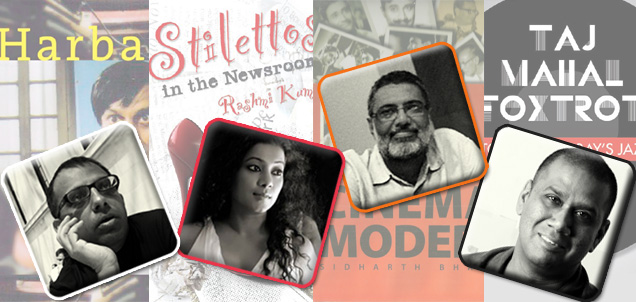
    “Modern journalism, which is about 100 years old, has a tradition of journalists going on to write books,” feels Naresh Fernandes, Editor, Time Out and author of Taj Mahal Foxtrot: The Story of Bombay’s Jazz Age, which was launched recently at the Goa Literary Festival.


    And probably that is the reason that so many take the plunge from writing a story to writing a book. So then in spite of having a day job, why does a journalist, whether a reporter or one of the editing team, take the time and trouble to write a book.


    Sometimes it is just the desire to share the experiences that the person has gone through like Rashmi Kumar, Features Editor, Deccan Herald, whose first book, Stilettos in the Newsroom is an effort to chronicle her experiences in the newsroom. “I felt that I was a misfit in the newsroom, I was not well-connected or aggressive or as street smart as others. I still am not. But I was always sure that I wanted to write,” she said.


    Sometimes it is a personal passion that translates into a book, as with Arunava Sinha, Head, ibnlive.com and cricketnext.com, who translates Bengali classics and contemporary literature. Mr Sinha said that he has been translating for a long time but he started publishing only five years ago.


    There is a story waiting to be told in every subject, so how does a journalist decide on the topic to base his/her book on? Is it something that they are passionate about, or something that they want to explore in depth? Mr Fernandes’ Taj Mahal Foxtrot was an idea that took root when he was doing an article on jazz for Man’s World. “While doing the article I realized that there was a story in there aboutBombay’s cosmopolitanism. I decided to explore the idea in-depth in a book.”


    For Siddharth Bhatia, author of The Navketan Story Cinema Modern and consulting editor, Asian Age, the book was something he had toyed with for years. “I was fascinated by films made in the 50s and 60s, especially those made by Navketan. I would have written this book much earlier but it was only recently that Devsaab agreed to give time for the book.”


    Writing a book while continuing with the day job of being a journalist isn’t an easy task. Sitting up late at night, working on weekends, fitting time around a busy schedule become a part of a journalist-author’s life. There are times when they suffer from the classic writers’ block. They go away, keep the book aside, take sojourns, or sometimes just keep hacking away. But they don’t give up. And if they do, the publishers are always there to remind them. “I pitched the idea to the publishing house and they accepted. After that I just kept it aside, it was they who reminded me that I had a book to write,” said Ms Kumar.


    If one were to look at the books that have been written by journalists over the years, one notices that there is a mix of fiction and non-fiction. Though almost all journalists agree that non-fiction is easier to write as it deals in facts, something that is a “natural progression from being a journalist” as Mr Fernandes says, but he is also quick to point out that writing non-fiction is tougher than fiction as “we have to construct the narrative out of facts, we can’t let our imagination take over when we hit a blank spot”.


    Writing is a book is never easy but what after the book is written or even halfway complete, how easy or difficult it is to get it published. Do the journalists pitch their proposals to the publishing houses or vice versa?


    Priya Kapoor, director, Roli Books explained the process of publishing a non-fiction book. The publishers have a commissioning program. Sometimes there might be an event of interest like the IPL controversy. They then research on what has been written about the topic, who has been covering it, how has the person covered the topic and then approach the person they feel is best suited for writing the book.


    “When we commission non-fiction books, 70 percent of the time, we approach them. Sometimes it is because the person has been covering the subject for a long time or because they have access and contact required to do the book or if writing about the topic excites them,” she added.


    She illustrated her point by citing an example: After 26/11, Roli decided to come out with a compilation of articles and perspectives on the terror attack in a book. Everyone was working around the clock. It was here that the journalistic discipline of sticking to deadlines came useful. The book was on the stands in January the following year.


    That makes it sound as if it is easy for the journalists to get their books published. But that is not the case all the time. “It is not very easy for journalists either to pitch for getting a book published. We might get an extra point for our ability to adhere to deadlines, but that is all that we get as an advantage,” feels Mr Bhatia. He is the first one to point out that he isn’t an authority on films, but when he approached the publisher, Harper Collins, something did click and the rest has been published as Cinema Modern, a look at Navketan, cinema in the 50s and 60s and India’s history along the way.


    But not all journalists stick to writing non-fiction. Some like Sidin Vadukut, Sonia Faleiro and Rashmi Kumar also venture into fiction. “I would not say it is all fiction. My book is part fiction and part autobiography. I have left it to the reader to figure out which is fact and what is fiction,” explained Ms Kumar, whose book Stilettos tracks the journey of Radhika Kanetkar’s slow raise in the world of newspaper and finally her wedding.


    Some even venture into other territories like translating. Arunava Sinha has already translated works like My Kind of Girl by Buddhadeva Bose, considered to be one of Bengal’s foremost writers of the 20th century, Harbart by Nabarun Bhattacharya and Three Women by Rabindranath Tagore. Mr Sinha would love to give up his day job but agrees that he doesn’t get paid enough to pursue his passion full time. “It is not a profession, but a passion. Money is not my primary consideration,” he stated.


    After the book is complete, it goes to the editor to be edited. How easy is it for a journalist to give up something that s/he has toiled for to another person who will very critically edit it? Most reporters say that they are used to the fact that their ‘copies’ would be ruthlessly edited. As Mr Bhatia very succinctly puts it, “The book editors have a particular way of editing. They look at continuity, the flow of the book, contradictions in chapters and so on. I was fortunate to work with one of the best editors of Harper Collins. He pointed out several things that I would have never noticed as I was too close to the subject.”


    Even Ms Kapoor agrees, “It is not as if journalists interfere more with the editing process than any other writer. But sometimes looking at a particular subject we might give them some leeway, with respect to their sources and contacts.”


    But Ms Kumar begs to differ, being from the editing side of the business. “I never had a problem with the way my story was edited. But I also edit copies and that is something that is now internalised. I made sure that the material I submitted was clear and concise,” she said.


    Mr Fernandes took nearly eight years to complete his book, working around his job. Bhatia could only focus full time on the book after he quit his job. Mr Sinha makes it a point to sit at night and focus on his translations. Ms Kumar is now ready with her second “tongue-in-cheek” book on a 30-something girl’s matrimonial adventure search. But they are not ready to quit. “After all one day I will retire from my day job, but I can continue to write as long as I want,” says Mr Bhatia. Indeed aptly summed.


    Coming attractions


    After the release of Mumbai Mirror editor Meenal Baghel’s debut novel Death in Mumbai, which Priya Kapoor, Director, Roli Books describes as a “well written and well researched book which makes the effort to get inside each character, 2012 will see the release of S Husain Zaidi’s book “From Dongri to Dubai” on Mumbai’s underworld and the history of gangsters.


    Mr Zaidi, resident editor of Asian Age/ Deccan Chronicle, already has two books on the underworld connection to his credit, Black Friday (which was made into a film) and Mumbai Queens, which chronicles the tales of Mumbai’s female gangsters.


    He took four years to complete the book according to Priya Kapoor. If there are no further developments or twists, the book is set to be released in the first quarter of 2012.


  • Bajaj Allianz: ‘Not keen on chasing numbers’

    With the current economic crisis casting a dent on the prospects of certain industries, it is turning out to be a testing phase for many players. Not the one to be spared, the insurance sector too has been jolted by the sudden turn of events. Adding to its woes is the recent shift in policy decisions that have been issued by the government in streamlining the industry, but the industry players are responding positively to the new diktat as it would ultimately mean netting in more customers. One of the players who is doing everything right to face the future is Bajaj Allianz.


    As Head-Product Development and Market Management, Bajaj Allianz Life Insurance, Rituraj Bhattacharya is taking the onus on himself in adding new customers but not without doing enough ground work and coming up with solutions tailored to meet the needs of the customers. In conversation with MXM India’s Johnson Napier, Mr Bhattacharya shares the reasons behind launching new schemes and why ULIPs would be a suitable investment option for most customers, especially those from the tier 2 & 3 towns and cities, in the future. Excerpts:


    Q: As Head of Product Development & Market Management what are your key responsibilities at Bajaj Allianz?

    It is relatively a difficult time for the industry at large. The new regulation that has come in is customer-centric and has resulted in insurers reassessing their business models. Some of the basic practices that were being followed by retail insurers are being revisited. So it is a period for a lot of consolidation in terms of business models, where players will be forced to develop long-term practices in the organization. A lot of emphasis in our organization has gone in training our work force and preparing them for the future. Once this entire process of training and consolidation is over, we expect better results to come out of the exercise.


    Q: How have the insurance players responded to the sudden shake-up in systems and practices?

    The industry is still in a learning phase and therefore the regulations as a practice will also have to keep evolving. It’s part of the ecosystem. I don’t think it’s only the regulator that is to be blamed; there is some amount of uncertainties in the consumer’s mind. Inflation, fuel prices, etc have taken its toll on the consumer. And where the insurance players are concerned, they too have not been able to replenish their product basket. This has led to consumers being exposed to lesser product offerings from the players. All these factors put together have contributed to the current situation.


    Q: Despite the decibels, insurance is still perceived as a ‘fragile’ investment option. Why are customers still apprehensive about opting for an insurance policy?

    I don’t think that’s the case. If you see, globally, insurance has been a successful offering. It has survived two world wars and other natural calamities where Allianz has settled so many claims. In India, most insurance players like us are financially very stable. Our capital is high, we have a higher solvency than what the guidelines prescribe, etc. So the issue is not about financial stability, it is about the current economic situation that affects different practices as well. It’s just a matter of time before we overcome this crisis.


    Q: What are the investment trends you foresee from the tier 2 and tier 3 towns across India?

    One thing that can be said with certainty is that the insurance penetration is definitely high. Recent studies conducted by IRDA reveal that the awareness levels around insurance products are on the up. People see insurance as a tool, device, instrument that helps them diversify their risks, assets and at the same time get adequate coverage for life. In fact, insurance is the only device which a person with a low disposable income can use to diversify his portfolio. If you see a person with low income around Rs 10-15,000 he finds it difficult to manage his assets around so many different instruments; but he finds it easy to do that within various offerings of a single insurance company.

    In Bajaj Allianz we are happy to cater to the tier 2 and 3 cities. Around 75 per cent of the business comes from these two segments. That’s because we have been able to develop a personal relationship with the consumers from these belts.


    Q: Could you share the growth pattern that has been observed at Bajaj Allianz?

    We have consistently added new customers to our portfolio. In the last financial year, we have issued around 2.2 million policies. We have a total customer base of 8 million insurers. We currently occupy a market share of around 2.8 per cent.


    Q: Could you elaborate on the objective and need for launching new ULIP schemes recently?

    GMIP is a completely new offering from us. We are trying to cater these offerings to certain new growth pockets where we are trying to offer solutions that suit these segments of the population. As a company, we are keen in doing a more stable business. We are not keen in chasing numbers; we hope to deliver quality products with emphasis on strong customer satisfaction.


    Q: What do the newly unveiled commercials seek to propose to the customer?

    If you look at our current communication campaign including the one around GMIP – I think we are more keen on what we as a brand want to deliver to the customer. We want to tell the customer what is the very essence or the insight behind our products that we offer. It is about learning facets about the customer and offering him products tailored to meet their needs. Our latest GMIP commercial talks about uncertain situations that we face in our lives and how we can overcome the same. Given the uncertainties that exist today, is the common man willing to go back to traditional ways of investing? We don’t think so. He is aware of the complex regulatory policies and is therefore on the lookout for products that are simple and address his needs. That’s what we seek to address through our communication.


    Q: Apart from regulations, what are the other challenges facing the industry?

    Changes in regulations are not a challenge as such; it is ultimately being done for the betterment of the industry. It has come as a jolt in the short term because that will mean change in systems and processes. The real challenge is not regulations, it is about how we do our business and develop products for our customers.


    Q: With the coming of several new private players, do you see the dominance of the country’s largest insurance player LIC on the wane?

    LIC is and will continue to be one of the strongest players. We are very small compared to them but customers have opened up and are keen to try out other insurers as well. Most of the customers who have tried us have an LIC policy also, but they are also satisfied with what we have to offer.


    Q: What would be your core focus areas for 2012?

    Over a period of time, I see ULIP getting more preference amongst customers especially those with lower incomes as it promises them more options to save and manage their money. If you see Bajaj Allianz, we have already lined up many products under ULIP. That’s because our focus as an organization is to cater to the masses. So the plan is to increase our portfolio of ULIPs while at the same time we will keep our portfolio of divisional products equally prominent. This will be our key focus in coming years.


  • Nestle India rolls out the Nescafe Plan

    By A Correspondent


    Nestle India has announced the implementation of the Nescafe Plan in India. Nescafe Plan is a global initiative by Nestle S.A. to bring under one umbrella the company’s commitment on coffee farming, production and consumption which will help Nestle to further optimize its coffee supply chain.


    To start the roll out of the Nescafe Plan in India, the first Nescafe coffee demo farm and training centre was inaugurated in Kodagu District of Karnataka by Mr. Jawaid Akhtar, I.A.S, Chairman, Coffee Board of India, Mr. Nandu Nandkishore, Nestle executive Vice President and Zone Director for Asia, Oceania, Africa and the Middle east, and Mr. Antonio Helio Waszyk, Chairman & Managing Director, Nestle India.


    This first coffee ‘demonstration’ farm in India will help farmers improve quality, productivity and sustainability. The company is assisting coffee farmers in the states of Karnataka, Kerala and Tamil Nadu to develop their agricultural practices as demand for soluble coffee grows in the country. Furthermore, Nestle research and development teams aim to provide farmers with high-yielding, disease resistant plantlets suitable for Indian conditions.


    Through the initiative, the company seeks to source coffee sustainably by working closely with Indian coffee farmers and ensuring competitive prices, transparency and traceability.


    Mr. Jawaid Akhtar, I.A.S, Chairman of the Coffee Board of India, said: “I am happy that the nescafe Plan is being launched in India. It will provide coffee farmers with technology and best practices for sustainable production of high quality coffee and also benefit them with improved access to markets.”


    During the event, a group of 20 farmers who have been trained under the Nescafe Plan were felicitated. While releasing the training manual ‘Nescafe Better Training Practices’, Mr. Nandkishore, Nestle executive Vice President and Zone Director for Asia, Oceania, Africa and the Middle east, said: “Nescafe is the world’s leading coffee brand. The Nescafe Plan demonstrates our commitment to working with thousands of farmers around the world, including in India, to provide training and technical assistance.”


    In recent years Nestle India has been doing extensive work to improve penetration of its Nescafe instant coffee amongst consumers and expand the market. The Nescafe Plan is important to ensure that the business is sustainable and that the coffee farmers also benefit. It reflects Nestle’s business philosophy that it must create value for its shareholders as well as the communities where it operates.


    Mr. A Helio Waszyk, Chairman and Managing Director, Nestle India said: “Indian coffee is currently amongst the best in the world and we would like to use our own expertise in coffee to help it retain its excellence in the future as well. In the Nescafe Plan our team will work with coffee farmers as well as other experts to combine the traditional wisdom with the benefits of modern science to make coffee farming more sustainable.”


    Currently The Coffee Board of India assists in research, development, extension, quality checks, market information and the domestic and external promotion of coffee from India. Nestle India agronomists will also work with coffee farmers and train them on how they can further improve the productivity and quality of coffee in a sustainable and efficient manner.

  • Kotak Mahindra: See you, say me

    Elizabeth Venkatraman, Head of Marketing, Kotak Mahindra Old Mutual Life Insurance Ltd


    Campaign

    Kotak Mahindra


    The Insight

    We had conducted in-house research, the findings from which provided the stimuli for the campaign. The research threw up the following findings: In today’s recessionary phase the value of money is reducing, and I am looking for a way to not just beat inflation but actually grow the value of my money to maintain my lifestyle and take care of my needs. The global economic situation continues to be uncertain and with that comes job and income uncertainty and I am looking for a way to beat it. My own needs are growing with time – both aspirational needs such as a better car, new house etc. and non-aspirational such as growing school fees, medical fees etc. and the pace of organic income generation is not keeping pace (salary) and I need supplementary income


    The Creative Concept

    Arising from the Insight, the creative concept: In today’s day and age, work life revolves around targets, long working hours and hard to achieve deadlines. And all this even while we have responsibilities towards our home, family and friends. The pressure is even harder to handle if one happens to be the sole earning member in the family. In such times we often wish to have another like us in our lives who can take the pressure off once in a while and bring in some additional income.  Although as a brand we understand that no plan can ever replace or be what you are for your family, but a guaranteed plan such as ours can provide that much required additional help.


    The Product Proposition

    Our flagship product for the year, Kotak Assured Income Plan is a guaranteed plan with a 30-year term. With this plan you can earn a fixed amount every year starting with the 11th year, for a period of 20 years. The guaranteed aspect of the plan lends it a surety typically associated with the income you earn at work; and hence we had the idea to position it as a second income which is guaranteed. The product benefit also gels well with the consumer insight and providessole earning members the chance to take another pay cheque home.


    The Creative Idea

    Keeping the insight and the product benefit in mind, we came up with the thought of ‘another you’ who can support you to make your life better. The creative idea that stemmed from this thought shows ‘another you’ stepping in to lend a helping hand and allowing you to shoulder your responsibilities better. The ‘another you’ here is a personification of the plan and the certainty of additional financial support that it offers which only you can otherwise provide your family.


    The Audience

    Be it a accomplished chef; or a aspiring singer trying to make her mark or simply someone struggling through the daily maze ; everyone can do a with the little extra help – the additional income. Hence, the scenarios, much as the need itself, cuts across age and class to show different kinds of people benefitting from the ‘another you’ in their lives. The target group in effect is anyone and everyone who has ever felt the need for financial support or for some help at work. As this need is universal this thought will find favour with a large base of people and will be easy to relate to. The Film & Jingle


    The ad film is a peppy, optimistic and fun take on this insight and thought.  The jingle plays a very important role in the film as it puts the thought across in a succinct and fun manner. A re-recording of the old Bollywood song from the ’80s “Aap jaisa koi”; our jingle goes “Merejaisa koi meri zindagi mein aaye, toh baat bann jaaye!” In creative terms our ad messaging is that if you had another like you, your life would be made because that would mean having a second income. The scenarios in the film show people at work being helped by another who looks exactly like them. The film opens in a recording studio where a singer starts out by singing the jingle only to see someone exactly like her walk by and join in, to make the song more peppy . The next scene cuts to a chef in a restaurant kitchen tasting a broth and trying to figure out how he can better it, just when another one like him walks in and sprinkles some spice to help him complete his dish. Next up is a regular office going man trying to catch a bus that has left the stop. Ashe runs towards it an outstretched hand grabs his hand and helps him get in just in time, in the process ensuring that he does not miss his bus. The man with the helping hand looks exactly like our protagonist who acknowledges the effort. The VO comes on “Aap jaisa ek aur hota toh second income ho jati; Guaranteed Second Income from Kotak Life Insurance, Faidey ka Insurance”


    The Team:

    Creative Agency: JWT

    Production House: Keroscene Films

    Director: Rajesh Saathi

  • Ghari ousts Wheel to be Detergent No 1 (in Oct & Nov 2011)

    By Sagar Malviya


    Twenty-five years after launching a laundry brand inspired by Nirma, Ghari detergent appears to have edged out, at least temporarily, Hindustan Unilever’s Wheel from the number one slot in the Rs 13,000-crore laundry industry.


    Ghari, manufactured by Kanpur-based Rohit Surfactants Pvt Ltd (RSPL), had a higher share in October and November than Wheel, a brand that contributes over Rs 2,500 crore, or 12%, of the Rs 20,000-crore top line of Unilever Plc’s Indian unit.


    “As per value market share data, on a 12-month average share basis, the gap between Wheel and Ghari now stands at just 30 basis points; however, Ghari’s shares were higher than Wheel for the last two months,” said brokerage firm Prabhudas Lilladher in a report, dated January 2, quoting numbers from market research firm The Nielsen Company.


    In November, Ghari had a 17.4% share compared with Wheel’s 16.9%, according to people familiar with the numbers. The market researcher will generate data for December in the third week of January.


    Ghari’s achievement is reminiscent of the feats of Ahmedabad-based Nirma, whose eponymous washing power evicted HUL’s Surf from the top slot in 1985. Nirma achieved this by pricing its products considerably lower than Hindustan Lever (HLL), as the company was then known as.


    The resultant rumpus and the incumbent’s fierce response are part of Indian business folklore and have made it to management textbooks.


    HUL, which contributed 6% to Unilever’s top line in 2010, eventually prevailed as Nirma’s challenge faded in the early years of this century, with the global consumer giant stepping up marketing and advertising spend to levels its homegrown rival could not match. Wheel, the detergent whose market leadership is under threat, is very much a product of that period.


    HUL still dominates


    A powder variant of Wheel was introduced in 1988 to take on Nirma’s challenge. Despite the wobbles in October and November last year, HUL still dominates the detergent market with Wheel as the country’s largest brand on a yearly comparison, though the gap has been narrowing each quarter. The Hindustan Unilever spokesman declined comment on the data.


    “Our laundry category has grown significantly ahead of market in both volume and value in the period from January 2011 to September 2011. Wheel also contributed significantly to this with strong double-digit growth driven both by volume and price,” the spokesman added.


    The company said it could not validate the Nielsen data. “We cannot confirm the factual correctness of the market share data you have emailed as it is proprietary data of Nielsen. We request you to contact Nielsen to validate the data.” The Nielsen Company’s spokeswoman said: “As per company policy, I will not comment on brand specific data and will not be able to verify and validate the data.”


    Big hitters from Kanpur


    Both Wheel and Rin, another detergent from the HUL stable, have increased their market shares compared with the same year, but have been lapped by the faster growth achieved by Ghari, which was launched in 1987 by brothers Muralidhar and Bimal Kumar Gyanchandani.


    The Ghari phenomenon, emerging as it did from Kanpur, a business backwater, has been widely celebrated by many as an example of small town entrepreneurial chutzpah. “Losing share isn’t as big as losing leadership in its largest brand.


    In trying to maintain its margins, HUL didn’t adjust the pricing at the challenger’s level and that did the trick,” says a former HUL senior executive who was directly involved with HUL’s operation STING (Strategy To Inhibit Nirma’s Growth) in the late eighties.


    In 2011, Ghari gained not only by growing faster than Wheel but also yesteryear’s price warriors such as Nirma, which has less than 6% share now. “While Wheel may have maintained its market share, its other brand Rin has been consistently gaining share clearly reflecting the company’s premiumisation strategy,” said Anand Mour of Ambit Capital.


    “On the other hand, Ghari has taken share from smaller regional players, especially brands from the southern states, where it entered last year.”


    Ghari’s expansion


    RSPL attributes its growth to a variety of factors, including expansion to more states. The company has entered 10 more states in the last three years and now peddles its ware in 19 states, through more than 3,500 dealers. It has 21 manufacturing units, 15 of which were added since 2006.


    “We will be setting up plants in Bihar, Raipur and Karnataka soon to catch up with our sales growth of over 25% in the last nine months. Even in volume terms, we have been growing more than 10%,” said Mr Sushil Kumar Bajpai, president (corporate affairs) & company secretary, RSPL.


    Also, what’s helped Ghari is the sheer size of its home market Uttar Pradesh, which contributes 17% to total FMCG revenues, according to The Nielsen Company. Judging by its past, HUL is likely to respond fiercely.


    “Hindustan Unilever has a tremendous capability to fight back and they will do it soon,” says Mr Amin Babwani, an independent consultant who has spent three decades with HUL.


    It clearly has the marketing muscle to do so. The company’s existing distribution footprint in rural India, where a brand such as Wheel would sell, reaches nearly 200,000 villages, which is nearly double the industry average.


    “The growth in soaps and detergents segment will come from gradual upgradation of cheaper alternatives, ” said Mr Vijay Chugh of BNP Paribas Securities India in a recent report.


    Source: The Economic Times

    Copyright © 2012, Bennett, Coleman & Co. Ltd. All Rights Reserved

  • FMCGs make hay as noodles, soft-drinks etc drive growth in rural India

    By Samidha Sharma


    Noodles, macaronis and soft-drinks made rapid inroads into the rural markets driving up growth in the fast moving consumer goods (FMCG) industry – 10% by volume and 12% by value – in the first ten months of 2011. The consumption story for most part of last year dispelled slowdown fears as Indian rural households piped urban counterparts in growth sweepstakes , said market research agency IMRB. Rural India had clocked a negative volume growth during 2010 (here volume growth is the increase in sales clocked over last year while value growth is volume growth plus price hikes).


    The urban FMCG market, on the other hand, grew 4% by volume and 7% in value and was led by categories such as ready-to-eat mixes, deodorants , breakfast cereals and soups. Growth for personal care products such as toilet soaps, shampoos and household products stagnated compared to last year, while F&B space saw a healthy growth. The IMRB survey is conducted across 30 product categories.


    Sector analysts said the F&B market witnessed hectic action in rural India with players like ITC and Hindustan Unilever (HUL) leveraging their distribution muscle to push products in this category. ITC’s Sunfeast noodles and HUL’s Knorr brand of soups have been able to penetrate the hinterland leading to increase in the category reach.


    “In the F&B market we are seeing the share of rural markets grow. Packaged fruit juices have traditionally been a very urban market product, but with growing health awareness among rural consumers, we are witnessing a marked growth in demand. To cater to this demand, Dabur has already expanded the distribution footprint for juices to cover smaller cities,” said Mr George Angelo, executive director – sales , Dabur India, maker of Vatika shampoo and Real fruit juice. The FMCG biggie saw its personal, oral care and health supplements report strong growth in the rural markets.


    While the low-penetrated products in the F&B space witnessed good growth, detergents , washing soaps stagnated volume wise. “Due to lower rural reach household care categories such as floor cleaners , household insecticides are showing faster growth. But foods especially staples such as cooking maida, atta/wheat which are driving the growth in volumes,” said Mr Manoj Menon , group business director at IMRB International. In the urban market emerging categories , noodles, macaroni, vermicelli grew 20% in terms of volume, while ready-to-cook mix products saw a whopping 64% growth and soups grew by 20%. In the personal care category , which largely remained stagnant in the urban market, deodorants saw a 31% growth.


    There have been some concerns over consumer spending with price hikes being taken across the board by FMCG companies to offset the impact of rising input costs.


    “Because of healthy disposable income growth and lower absolute spends on FMCG products it hasn’t impacted the consumption yet, however if there is uncertainty around income growth risks of downtrading exist,” said Mr Gautam Duggad, an analyst at domestic brokerage firm Prabhudas Lilladher.


    Most industry players said they haven’t seen any palpable signs of downtrading yet. “Directionally there is no slowdown in the market but there could be some cut back in the next few quarters on discretionary items by consumers. The impact will be felt in the top-end product categories and non-essentials ,” said Mr Saugata Gupta, CEO, Consumer Products at FMCG major Marico.


    Source:The Economic Times

    Copyright © 2012, Bennett, Coleman & Co. Ltd. All Rights Reserved


  • From agency maverick to ‘khadoos’ client…


    By Shubhangi Mehta


    Switching jobs is an avenue for growth. But how does it work when the switch is drastic – such as going from an agency which creates a communication for a brand, to becoming a part of that brand? With increasing numbers of agency heads moving towards the client side, it looks like a trend.


    A mix of work and pleasure is what agency life promises an individual. With that also follows a pattern of sleepless nights, tight deadlines and the pressure to impress the client. What happens when one moves to the client side? How does life change, and do the switchers miss the agency days?


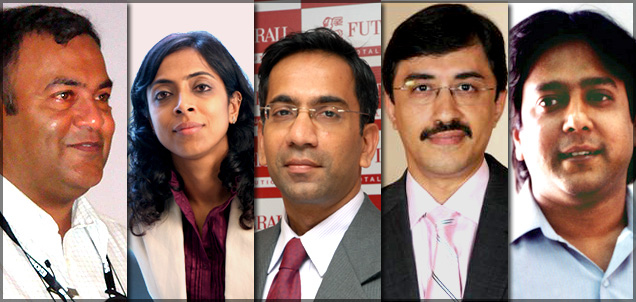
    We have an ample amount of such examples already in front of us. Rahul Kansal, Sunil Lulla, Ajay Kakar, Abraham Alapatt and Sheran Mehra are some such examples.


    Kamal Basu, Head of Marketing, Skoda, who was working with Saatchi & Saatchi is the most recent example of such a move.


    On his new role, Mr Basu said, “Moving to the client side is all about trying something new for me. I personally feel that advertising agency and brands work very closely and cannot do without each other hence the changeover is fairly easy as compared to moving from an agency into banking. For me right now, the most important thing is to have the mindset of a student eager to learn new aspects of the business.”


    Ajay Kakar, CMO – Financial Services, Aditya Birla Group who has worked in a creative agency environment as well, said, “The grass is always greener on the other side. Having been on both sides of the table, at the agency and client ends, I can now relate and empathize with this sentiment. Throughout my 14+ years experience at the agency side I shared the sentiment of every colleague, ie, ‘Hum kaam karte hain, while clients aish karte hain’. And during my more recent six-odd years at the client end, I can’t deny having heard or felt the sentiment, ‘Yeh agency waale kya jaane, what pressure we face’!”


    On the agency side, one is usually thought to be a lot more casual about ideation, creative, deliverables etc and the perspective is that it changes completely when one becomes a client.


    Rahul Kansal, CMO, Bennett, Coleman and Co, said, “I moved to the client’s end nine years ago. I had experienced agency life for approximately 20 years and was itching to implement my own ideas rather than just being an advisor. Though the two lives or work culture cannot be compared, yet as a client there is an ownership of the brand which leads to a personal connect.”


    Certainly an agency person enjoys agency life. But an invitation to partner a client is a thrilling mandate which might be quite enticing.


    Abraham Alapatt said, “After 10 years in the agency business, I was keen to grow into a more complete ‘marketing’ professional (as opposed to remaining a pure advertising man) and when I was offered my first head of Marketing role in 2005 with Reliance Mutual Fund, I took it most eagerly.”


    For those in the agency, the universe tends to revolve around advertising and agency imperatives. But as a as a marketer, one comes to understand that advertising and the agency are key cogs in a very large wheel.


    Sheran Mehra, Head of Marketing and Corporate Communications at Dhanlaxmi Bank, said, “I had planned my career in such a way that I wanted to move to the client side after working with an agency, since I wanted to play a larger part than just being an advisor for the brand. The agency setup is more informal, and more like a family. Not that here it isn’t like family, but it’s more formal, more of a corporate environment.”


    Alapatt further explains, “In terms of effort and pressure, being on the client side is as challenging and difficult, because the line of responsibility and accountability, especially when it comes to ROI, budget accountability etc, is a lot more definitive. If earlier at the agency, I spoke to my clients every morning and then planned my day’s priorities before catching up with my team and then breaking up jobs to meet expectations – now as a client I have to plan my day ahead (based on current business and leadership priorities) and then along with my team, chart out tasks/timelines/deliverables. I also have a lot more information available to help prepare an annual plan, review it regularly, and then make more meaningful contributions to overall marketing and business strategy then when I was on the agency side. Overall it is a lot more organised, planned, systematic, and accountable.”


    A client initiates a brief. And his job is not complete till long after the agency hands over its input and output.


    The most obvious change after moving to the client side is that one can now plan a day or a schedule and prioritize a lot more, and there are far fewer firefighting situations than when working with an agency. This is probably because ad agency teams (who work with multiple clients) need to constantly re-align their priorities in line with their clients’ changing needs.


    Mr Kakar further adds, “Today I feel like the ‘complete man’, because I now have a realistic perspective from both ends. Having been on the agency side I believe that I can be more sensitive to the agency’s needs and constraints. But on the other hand, I am more demanding on what I know is possible. But life in an agency is what I miss… the masti and the laughter in the corridors, the camaraderie, the training sessions, et al.


    “As a client we can say that one is responsible for one’s team delivery (besides your own KPIs). These are directly linked to the company’s overall performance targets and plans, and every idea, plan, activity, campaign needs to be very clearly defined and measurable as one is accountable for every rupee spent to the CEO and the board of directors.”


    Most of the people who have made a move have stuck to the client side, which seems to indicate that working as a client is more enthralling.


    “I am not sure I yet have an answer to which part I enjoy playing more. But I do believe that the agency and client are two sides of the same coin. A marketer’s success depends on his agency partner, just as an agency’s existence depends on its clients. And only when both of them come together in harmony, is there real value in the form of fun, fame and fortune, adds Mr Kakar.


    While Mr Alapatt muses, “Looking back, I am glad I made the shift for the growth, learning and opportunities it has afforded me. But I can confidently say that the first 10 years of grounding/experience that I enjoyed with ad agencies like Ogilvy and the exposure to multiple clients/categories has been invaluable to my growth, both personally and professionally.”


    The big picture seems to be that the transition from one side to another is a natural evolution and part of the growth process. And this part of the journey as a client can be said to mature one as a person and marketing professional.

     

  • NICC and CII bring ‘Momentum India’

    By A Correspondent


    National Institute of Creative Communication (NICC) along with the Confederation of Indian Industry(CII) is organizing ‘Momentum India’ that will highlight the growing need for industry-oriented professionals in Media and Design. The event is slated for January 15- 16 at the JN Tata Auditorium, IISc in Bengaluru.


    Momentum India will bring together educational institutions, industry and public on a single platform to establish free and dynamic interaction on design and media technologies that are cornerstones of industrial and economic growth and central to the National and Global industrial-commercial process.


    A joint statement from Mr P.P. Shukla IFS, former Ambassador to Russia, Advisory Council Head, NICC, with M. Anjan Das, Executive Director, CII and Dr. Akash K Rose, Chairman, NICC said, “Indiais a rich source of creative talent and a major potential hub for global design. Momentum India is an effort to display the current scenario of Education in Media & Design in India and abroad, acquire industry perspectives and furnish information on career opportunities to students and parents, as well as illustrate the vital importance of Design to Industry in the process of becoming a Global force – just as we have already done in the IT Sector. Achieving this smoothly and rapidly is best done via closely interactive relationships between the Education and Industrial sectors. It is equally essential that the general public be fully informed of the career and professional scope in Design and Media such that the best talent is drawn to this vibrant and rapidly-growing stream.”


    Momentum India will have speakers from around the world, exhibition, workshops, contests and panel discussions aimed to provide information on emerging global trends, industry-centric specialized education and career opportunities. Topics will comprise both traditional and new age media – ranging from Motion Graphics and Animation, Retail and Retail Design, User Interface (UI) design for Web and Mobile, Photo Journalism, Copy Writing, Cinematography, Fashion Design, Product and Packaging Design, and Television and Print Advertising to name a few.


    The event will host prominent national and international names including Prof. Theo J.J. Groothuizen India Regional Advisor, ICSID, Counsellor for Science and Technology, Embassy of the Kingdom of The Netherlands, Nick Talbot, Global Design Head, Tata Elxsi, Srinivas Reddy, Director, Glynt Jewels, Michael Foley, Product Designer & Founder, Foley Designs, Sonia Manchanda, Director IDIOM Design Consulting, BR Swarup, Creative Director Ad campaign ‘Your Moment is waiting’, Kerala Tourism, Ramesh Ramanathan, Senior Advertising Consultant, Wasim Khan, International Fashion Photographer and Abhijeet Sojwal, Head of Photography and Imaging, Myntra to name a few.

    MxMIndia is partnering Momentum India.


  • Deloitte study says outlook for Indian retail sector gloomy

    By Writankar Mukherjee


    The outlook for the organised retail sector in India is gloomy as the economy is slowing down following a period in which monetary policy was tightened to fight inflation, according to a global study by Deloitte Touche Tohmatsu.


    The study, christened 2012 Global Powers of Retailing, says although the monetary tightening resulted in slower economic growth, it did not bring the inflation down. And because of this, policy makers are faced with the conundrum of slow growth with persistent inflation, it says.


    “Indian retail sector offers significant potential for growth of modern trade but given the recent policy flip flop related to FDI in multi-brand retail, both global retailers as well as existing Indian organised sector retailers appear to have adopted a cautious ‘wait and watch’ approach before committing fresh investments,” says Mr Rajan Divekar, senior director of Deloitte India.


    Mr Divekar says Indian retailers are also customising and fine tuning their business models across retail formats to ensure there is a balance between store expansion and profitability. “The recent liberalisation permitting 100% in single brand retail is a welcome sign especially for select luxury and niche retailers,” he says.


    The Deloitte report says retailers have learned to succeed in emerging markets like China and India as they significantly customise both their market models and product offerings to meet local needs and preferences.


    It says foreign investment in multi brand retail will have a positive impact on India’s economic growth. The move could lead to a rationalisation of the supply chain, greater supply chain efficiency, and greater effective spending power for consumers.


    The study says some retailers may find some silver linings in this otherwise cloudy environment. One positive effect of slower global growth will be the continued dampening of commodity prices. “For retailers, this means some improvement on the cost side of the ledger while retail price inflation in some economies presents an opportunity for improved profit margins, even in the context of slow top-line growth,” says Mr Divekar.


    According to the Deloitte report, the world’s 250 largest retailers recorded sales growth in excess of 5% in fiscal 2010 The figures mark a substantial improvement as compared to 2009, when the group of the top global retailers recorded anaemic growth of just 1.2%. The growth took place despite the end of fiscal stimulus in the US, the crisis in the Eurozone, and tighter monetary policy in key emerging markets like India.


    Source:The Economic Times

    Copyright © 2012, Bennett, Coleman & Co. Ltd. All Rights Reserved


  • Not Linking Road or Khan Market, Delhi airport is the best retail location for some luxury brands

    By Sagar Malviya & Kailash Babar


    Can you name the retail location in India from where Swarovski, Marks & Spencer, Samsonite, Hidesign and Kimaya all reported their best sales numbers last calendar? Not Khan Market or Select City Walk Mall in Delhi, not Linking Road or the Phoenix Mall in Mumbai; it’s the Delhi airport.


    Indira Gandhi International Airport in the capital is the most lucrative retail location in the country, having generated sales of 5,000 per square feet per month in 2011, which is almost four times higher than the second-best location. This figure includes sales from duty-free shops, but regular shops too are buzzing here.


    “Our ticket size at airport is double in value compared locations elsewhere,” says Ms Ruchita Sharma, marketing operation manager of high-end crystal products maker Swarovski’s consumer goods business. The brand store at the T3 terminal of the Delhi airport ranks among its top stores by sales globally.


    Retailers are at a loss to explain why a place meant just for travelling let brands rake in more moolah than most shopping malls and high streets.


    Many of them are, in fact, surprised. A case in point is high-end fashion house Kimaya, which did not exactly expected hurried travellers to indulge in couture when it opened its outlet in the swanky international terminal in November last.


    Its promoter Mr Pradeep Hirani says he had turned down offer to open a shop at the airport two times before saying yes the third time. “For us, it was more of exhibitional than commercial.”


    Not any more. Today, Kimaya’s airport store sales are much higher than its high street outlets at around 3,500 per sq ft every month. And Hirani regrets having opted for a revenue-sharing model-where the retailer pays a percentage of its sales as rental to the airport operator-instead of the high rentals the airport had quoted earlier.


    So what makes Delhi airport the most profitable destination for brands? One reason is its sheer size. It is the largest and busiest airport in South Asia. More than 35 million passengers used it last year.


    It is the fourth largest retail hub in the country with sales of 1,200 crore in 2011 despite being ten times smaller than malls such as Ambience Mall in Gurgaon and Phoenix High Street in Mumbai. “For any retailer, sales-per-sq ft is the most important parameter while deciding on setting up their store,” says Mr Susil Dungarwal, chief mall mechanic at Beyond Squarefeet Advisory, a boutique mall consultancy firm. It reflects the profitability of an outlet as the per-square feet cost is comparable in most prime locations in metros.


    Premium leather accessory brand Hidesign mopped up over 10,000 per sq ft per month on an average against 1,500-6,000 elsewhere, while Samsonite generated sales of 7,200 from the Delhi airport store compared to 1,350 in other stores.


    Source:The Economic Times

    Copyright © 2012, Bennett, Coleman & Co. Ltd. All Rights Reserved