Category: MARKETING

  • Ten years of Big shopping

    By Johnson Napier


    The common man’s go-to bazaar where all the essential commodities and goods could be purchased at reasonably modest prices has crossed another milestone as it celebrates its tenth year of existence. To mark the occasion, Big Bazaar has undertaken a rebranding exercise that will see the retail chain don a new logo and unveil new promises towards their customers.


    As part of its rebranding plans, the retail chain unveiled a new tag line, ‘Naye India Ka Bazaar,’ replacing the earlier ‘Isse Sasta Aur Accha Kahin Nahin.’ A television, print and social media communication initiative is being launched to mark this event. The new logo design has been developed by Bangalore-based design house, Idiom and the media campaign has been developed by Mudra.


    Asserts Vibha Rishi, Director, Future Group Strategy and Customer, “The logo and tagline will become an integral part of all our communication. With the new change we are moving on to a more emotional level of positioning. The new logo and tagline are contemporary and reflect a changing India and the ethos of shoppers here.”

    As for the new changes to be expected from the retail chain, a senior source from Big Bazaar said, “The retail chain will now be focusing on providing valuable service to the customer – an introspection measure drive. The new campaign will illustrate such an austerity measure being undertaken by the retail chain, inspiration for which comes from an ancient Jain custom of Michchami Dukkadam, meaning ‘Please forgive me if I have offended you knowingly or inadvertently’.”

    This apart, Big Bazaar also plans to provide a platform for people to do good deeds and contribute to the welfare of the society. Says the source, “A tula will be set outside select Big Bazaar stores where we plan to weigh children (below age of 12 years) of all the employees and commodities like rice and flour equivalent to their weight, will be donated to NGOs. Customers too can participate in this ritual and donate any product of their choice.”

    Apart from a commitment to further improve services provided to customers, a key initiative being rolled progressively across all stores are priority counters for senior citizens, pregnant women and mothers with infants. Big Bazaar stores will also have more customer feedback sections. Stores across the country will also be rolling out signature community initiatives like Annasantharpane and Protsahan.

    First launched in 2001, Big Bazaar has grown to over 154 stores today spanning 90 cities. “The plan is to touch 175 stores by the end of this fiscal year,” added the source.

  • New music world under the scanner at Nokia seminar

    By A Correspondent


    The global digital music industry is growing significantly; Piracy across the globe will fall. The next few years will be a challenge for the music retailers. CDs today are slowly being replaced by digital format. The whole environment is changing with digital media. A lot of our revenues come from television stations or background music. These were some of the points raised at the day two of Nokia Music Connects event held in Mumbai on November 17, 2011. Nokia was the title sponsor of the event.

    Among the many sessions on day two of the Nokia Music Connects, one of them was ‘Digital Media, Global Landscape and the Future Ahead’. It was presented by Sandip Biswas, Director- TMT Practice, Deloitte. He spoke about the growth of physical format of music despite the enormous growth of the digital format. “Most of the assets are going digital. I believe that digital music will surpass the physical music format. However the physical format of music will also continue to grow and radio, television will contribute more.”

    One of the points this session raised was whether piracy is a legal or economic problem. He also pointed out that since the year 2008 piracy did not grow but, remained stable. Mr Biswas observed that the next few years will be a challenge for the music retailers and with the growth of digital format, CD prices will rise globally.

    The other sessions that followed ‘Digital Media, Global Landscape and the Future Ahead’ were, ‘Music Publishing- Soon a reality in India?’ This session discussed what the passing of the copyright act mean for the music industry and steps can be taken to foster the healthy development of the publishing industry in India.

    The session was moderated by Vijay Lazarus, President, IMI / PPL; the panelists were Achille Forler, Managing Director, Deep Emotions, Peter Jenner, Discoverer of Pink Floyd, subsequent Manager of many, Advisor to WIPO; Brandon Bakshi, Executive Director – Europe &Asia, BMI; Myles Keller Membership Development Director,PRS for Music; Rakesh Nigam, CEO, IPRS; and S L Saha, Managing Director, The Indian Record Mfg. Co. Ltd.

    The next session was Internet/Mobile radio and streaming services. One of the points this session discussed was revenue models for these players and the opportunities in store for the music labels and artistes with these new platforms?

    This session was moderated by Ted Cohen, Managing Partner, TAGStrategic; The panelists were Prashant Bahadur, Vice President & General Manager, The Orchard; T Suresh, Managing Director, EMI Music India; Raju Singh, Music Composer; Shehzad Azad, Head- Business Develeopment &Alliances, Spice Digital; Siddhartha Roy, COO – Consumer Business & Allied Services, Hungama Digital Media Entertainment Pvt. Ltd.; Jai Maroo, Director, Shemaroo Entertainment Ltd. and Pradeep Rao, Head – VAS,Aircel.

    The ‘Music Television, Reality Shows- The opportunities’ session discussed, music on television with new channels launching in HD running back to back music and its impact on music business and consumption. Reality shows such as Sa Re Ga Ma, Indian Idol, X-Factor have helped unearth talent. What has happened to them? Have they managed to make careers for themselves? How has the journey been? What sustains these shows? Why do broadcasters persist with them?

    This session was moderated by Anil Wanvari, Founder CEO, Indiantelevision.com Group. The panelists were Neeraj Vyas, Executive Vice President & Business Head, SONYMAX & SONYMIX; Aditya Swamy Senior Vice-President, MTV; Arvind Krishnan, Director – Marketing, Bacardi; Meiyang Chang, Former Indian Idol Finalist; Anushka Manchanda (Singer); Gitanjali Sriram, Founding Partner, Naked Communications.

    In the session ‘Of Live, And Independent Artistes’ discussed the emergence of independent festivals spurring a huge amount of opportunities for independent artistes and what it means for the music business? It was moderated by Brian Tellis, Chairman, Fountainhead Promotions & Events Pvt. Ltd. The panelists were  FarhadWadia, CEO, E18; Venkat Vardhan, Founder, DNANetworks; Joji George, CEO, Percept Sports & Entertainment; Sabbas Joseph, Founder Director, Wizcraft; Devraj Sanyal, Managing Director, Universal Music Group and Jayesh Veralkar, Label Head – Day 1, Sony Music Entertainment.

    The last session of day two was on ‘Artiste Management’. It discussed whether artiste management is becoming a profession like it is in more developed music markets? What role do they play with musicians in India? And how is it evolving keeping in mind the evolving music scene and the needs of the artiste today?

    This session was moderated by Brian Tellis, Chairman, Fountainhead Promotions & Events Pvt. Ltd. The panelists were Pakul Chaturvedi, Chief – Asia Pacific, Promo Sapiens; Robert Horsfall, Lawyer / Business Manager, SoundAdvice; Shaan (Singer); Jordan Berliant, Linkin Park’s Manager; Mark Wood, Imogen Heap’s Manager and John McLellan, Partner, Haldanes.

  • Google’s India Head Rajan Anandan on ASCI Board

    The Advertising Standards Council of India has appointed Mr Rajan Anandan, Managing Director & India’s Country head of Google as a member of its Board of Directors. Mr Anandan’s induction immediately follows the appointment of ASCI’s new Chairman I Venkat during the last AGM.


    Mr Anandan’s appointment on the Board is strategic to ASCI’s plans to step up its efforts to promote fair advertising practises in the online domain.  With a large percentage of India’s population being very young, digital adoption is expected to increase going forward as more of the population comes of age and there will be a proportionate increase in online revenue spends. Thus, it becomes imperative for ASCI to ensure that advertising on the internet conforms to the current code of conduct.


    Commenting on Mr Rajan Anadan’s induction on ASCI’s Board, Mr I Venkat, Chairman, ASCI said: “The internet is increasingly becoming a significant touch-point for brands to connect with consumers. Thus, it becomes essential that online advertising is aligned to the primary objects of ASCI. Rajan’s appointment on ASCI’s Board will help ASCI generate the necessary consciousness towards fair advertising practises in the Online domain.”


    Mr Anandan said, “The Internet in India has over 100 million users is quickly becoming a scale advertising medium for companies in many industries.  Being on the Board will quintessentially help ASCI and Google to jointly create awareness about fair advertising practises across a large bandwidth of consumer touch-points on the internet.”


    It is estimated that the Indian online advertising revenue will touch Rs 1,500 crore by the end of 2011. With the kind of growths seen in this space, online advertising would possibly be worth around one billion dollars by the end of 2014. Thus, bringing an increasing consciousness on the way brand advertising is done in the online space is critical for ASCI.

  • The Anchor: 5 reasons why broadband internet will grow in India

    1. Better devices
    2. Ease of use
    3. Better connectivity
    4. The pricing at which the broadband in now available – the government of India, BSNL has been doing a lot to get pricing and affordability in play.
    5. People coming onto the web is the effective reason. The fact that more and more services are available on broadband will also result in better broadband services.


    The broadband penetration is bound to grow, there is no two ways about it. Take for instance China, five years back China was around 100 million internet users, four years down, now it is at 450 million internet users. It has an extremely high penetration of mobility but its broadband continued to grow because infrastructure rollout has happened, ease of use is there from a connectivity perspective. Therefore I am opportunistic about the fact that broadband will continue to grow in India.


    Siddhartha Roy is the COO, Consumer Business & Allied Services, Hungama Digital Media Entertainment.

  • The New Big Boss of India’s Biggest Brand


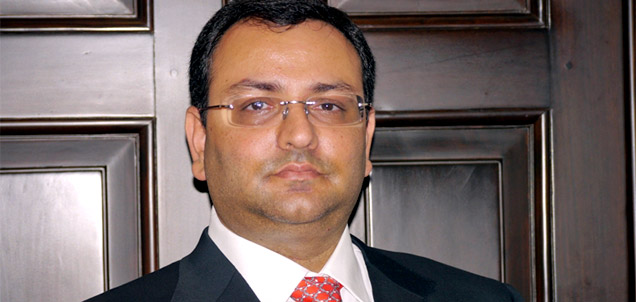
    The search for Ratan Tata’s successor of chairman of the Rs 4.3 lakh crore Tata group has ended with the appointment of Mr Cyrus P Mistry as deputy chairman of Tata Sons. But who’s this 43-year-old Mystery Man?


    Read on for:


    > The Main story on announcement with Mr Ratan Tata’s statement

    > Statement of Mr Cyrus Mistry

    > Profile 1: Avid golfer & foodie, avoids cocktail circuit

    > What Titans Of India Inc Have To Say

    > Profile 2: A reticent man with strategic vision, humility

    > Profile 3: Official profile from the Tata corporate website


    The Main Story


    The mystery over who would succeed Mr Ratan Tata as chairman of the Tata Group ended yesterday as the board of directors of Tata Sons met to appoint Mr Cyrus P Mistry as Deputy Chairman. He will work with Mr Tata over the next year and take over from him when Mr Tata retires in December 2012. This is as per the unanimous recommendation of the selection committee.


    Endorsing the appointment, Mr Tata, Chairman of Tata Sons, said: “The appointment of Mr Cyrus P Mistry as Deputy Chairman of Tata Sons is a good and far-sighted choice.


    “He has been on the board of Tata Sons since August 2006 and I have been impressed with the quality and calibre of his participation, his astute observations and his humility. He is intelligent and qualified to take on the responsibility being offered and I will be committed to working with him over the next year to give him the exposure, the involvement and the operating experience to equip him to undertake the full responsibility of the group on my retirement.”


    Mr Mistry, currently managing director, Shapoorji Pallonji Group, has been a director of Tata Sons since August 2006. He is a graduate of civil engineering from Imperial College, London, and has a master of science in management from the London Business School.


    And this is what Mr Mistry said in his statement:


    “I feel deeply honoured by this appointment. I am aware that an enormous responsibility, with a great legacy, has been entrusted to me. I look forward to Mr Tata’s guidance in the year ahead in meeting the expectations of the group.


    “I take this responsibility very seriously and in keeping with the values and ethics of the Tata group I will undertake to legally disassociate myself from the management of my family businesses to avoid any issue of conflict of interest.”

    But who’s this mystery man?


    Read on:


    Profile 1:

    Avid golfer & foodie, avoids cocktail circuit


    By Reeba Zachariah & Namrata Singh


    The man who will head a group synonymous with Indian industry is an Irish national and shares his birth date (July 4) with the US Independence Day. But in many ways, he resembles the business giant he has been handpicked to succeed. Like Mr Ratan Tata, Mr Cyrus Pallonji Mistry, 43, is described by close friends as soft-spoken , candid and down to earth.


    Again like Mr Tata, Mr Mistry is said to love cars – especially SUVs – and steers clear of the cocktail party circuit. But unlike lifelong bachelor Tata, Mr Mistry is said to be a devoted family man. He is married to Rohiqa, daughter of renowned lawyer Iqbal Chagla, and the couple have two school-going sons. An avid golfer, mr Mistry is known to be a foodie and his favourite holiday destination is Europe. Besides Mumbai , he owns houses in London and Pune.


    According to a Tata group insider, “Mistry is one person who can laugh at himself.” His sense of humour should come in handy in facing the challenges that lie ahead. A person who has shown a preference for the shadows , he will now have to put up with the arclights for years, perhaps decades.


    Tellingly, his Wikipedia profile was created within minutes of the announcement that he had been effectively chosen chairman-in-waiting of Tata Sons. The youngest son of construction baron Mr Pallonji Shapoorji Mistry, Cyrus hails from one of the richest Indian families with a net worth of $7.6 billion. But he will disassociate himself from the family business to avoid conflict of interest.

    Voracious reader with eye for detail


    Mr Cyrus Mistry has been managing director of Shapoorji Pallonji & Company, which is part of the Rs 15,000-crore Shapoorji Pallonji Group (SP Group). An avid golfer and prolific reader, Mistry got the chance to join Tata Sons’ board a year after his father retired as director in 2005. The family is the single largest shareholder in Tata Sons with a stake of 18%. Mistry is also on the board of Tata Elxsi and holds non-executive positions on the boards of several other companies. He is a trustee of the Breach Candy Hospital Trust as well.


    Although he does not have experience in heading a Tata group company , Mr Mistry, a graduate in civil engineering from London’s Imperial College, has been actively involved in the family business. His expertise includes formation of business plans, risk evaluation, business investment strategy and property and infrastructure development.


    Mr Khurshed Daruvala, MD, Sterling & Wilson, in which the SP Group holds 56%, describes Mistry as a “ hands-on leader” who is strategy oriented. “ Ever since Mistry started working with this partnership firm in 2003, the turnover has jumped from Rs 50 crore to Rs 2,000 crore.”


    If this is exemplary, consider what Mistry accomplished after he took charge at loss-making Afcons Infrastructure. SP Group acquired a 53.96% shareholding in Afcons in 2000. In March 2011, Afcons earned a total income of Rs 2,893 crore with a compounded annual growth rate of 21% over the past five years.


    He joined the SP Group in 1991 as a director and became its MD in 1994 in charge of the construction business. His brother, Mr Shapoor Mistry, is actively involved in the real estate and textile business.


    Conservative in his approach, Mr Mistry is said to have an eye for detail. “Once he takes decisions, he sticks with them,” said an insider. He can safely expect to take many crucial decisions in the years to come.


    What Titans Of India Inc Have To Say


    It is a historic and great moment


    -Krishna Kumar, director, Tata Sons


    A young leader means long-term stability for the Tata group


    -A M Naik, CMD, L&T


    There is strong chemistry between Mistry and Ratan Tata. He is very thorough and has good financial insight


    -J J Irani, former director, Tata Sons


    Good sign to have a young chairman -Ajay Piramal, chairman, Piramal group Cyrus symbolizes continuity, yet change


    -Harsh Goenka, chairman, RPG


    He’s mature beyond his years


    -Zia Mody, senior partner, AZB Partners


    Source:The Economic Times

    Copyright © 2011, Bennett, Coleman & Co. Ltd. All Rights Reserved


    And here’s a little more…


    Profile 2:

    Cyrus Mistry:  Tata Sons’ deputy chairman a reticent man with strategic vision, humility


    When senior advocate Mr Iqbal Chagla met Mr Cyrus P Mistry for the first time, he felt there was something special about the man. “He struck me as a young man who will make it big one day,” says Mr Chagla.


    Mr Chagla had good reason to ponder over Mistry’s future prosperity – the younger son of construction tycoon Mr Pallonji Shapoorji Mistry was keen to marry his daughter Rohika.


    On Wednesday, Mr Chagla’s prediction for his son-in-law couldn’t have come true in grander style. In the early evening, Mr Ratan Tata sent out an email to the top five-six executives of all Tata Group companies, informing them that Mr Cyrus P Mistry would succeed him as chairman after December 2012. In his message, the 74-year-old chairman hoped the Tata brass would lend the same support to Mistry as it did to him.


    Not all may choose to do so, but Mr Ratan Tata for his part surely will. Top officials in the group who have worked closely with Mr Mistry say he gets along famously with the Tata Group chairman and is very similar to Tata in nature and attitude.


    Cyrus was Ratan Tata’s First Choice


    They add that Cyrus was the chairman’s first choice right from the time the hunt began for a successor. But Mr Tata was also keen to follow a systematic process of selection, involving shortlisting of candidates – both external and internal.


    So who exactly is Mr Cyrus Mistry, and what makes him the best man to head the sprawling Tata empire? He’s low-profile, reticent and conservative, qualities he has inherited from his father. After graduating in engineering from Imperial College London, Cyrus plunged into the family-owned construction business.


    His father gave him a clear mandate: grow the engineering, procurement and construction activities. Cyrus focused on the Middle East and grew the business in Oman and the region.


    Cyrus’ big break came when the group acquired construction company Afcons Infrastructure Ltd, which undertakes large infrastructure projects in India and abroad.


    The company was acquired at a time India was witnessing a construction boom. As chairman of Afcons, Cyrus oversaw many important projects. The company was involved in the construction of Delhi Metro, and Cyrus often flew to the capital to supervise the work.


    Those who have worked with him say Cyrus possesses a near-perfect blend of hands-on involvement and the ability to give long-term strategic direction. “He has excellent leadership qualities, can think on his feet and combines all this with humility,” says former Unilever honcho Mr Keki Dadiseth, who was at one time believed to be in the reckoning to succeed Mr Tata. Another executive who has worked closely with Cyrus says he has the ability to operate both “as a telescope and a microscope”.


    Among those backing Tata’s choice is Mr Darius Pandole, who remembers Cyrus since their days in the Cathedral & John Connon School in Mumbai. “Cyrus’ is an inspired choice; he will provide long-term stability to the group,” says Mr Pandole, a partner in New Silk Route, a private equity investor. Cyrus is just 43, and even if the retirement age of chairmen in future is brought down to 65, he will still have a good two decades at the helm.


    Yet, there are those who point out that Cyrus has succeeded Tata purely on the strength of his father’s 18.5% holding in Tata Sons, which makes the senior Mistry the single largest shareholder in the holding company of the Tata Group. Others feel Cyrus lacks global exposure and may not be able to tackle the complexities of a diverse business house like the Tatas. But Pandole retorts: “People raised eyebrows when Mr Ratan Tata succeeded JRD. Look at what he’s achieved.”


    Meantime, officials at some of the front line Tata companies are baffled by the sudden announcement. Most have little or no exposure to Cyrus. A senior official in the group said on the condition of anonymity that the Tata Group will now be known more as Shapoorji Pallonji Group. “The Mistrys are known more as sharpshooters, which is in sharp contrast to the Tatas’ trusted brand image,” adds another old hand at a Tata company.


    Source:The Economic Times

    Copyright © 2011, Bennett, Coleman & Co. Ltd. All Rights Reserved


    Profile 3:

    Profile of Mr Cyrus P Mistry from the Tata corporate site:


    “Mr Cyrus P Mistry, 43, joined the board of Shapoorji  Pallonji & Co. as director in 1991 and was appointed managing director of the Shapoorji Pallonji Group in 1994.  He is a graduate of civil engineering from the Imperial College, London (1990) and has an M.Sc. in management from the London Business School (1997).


    Under Mr Mistry’s guidance, Shapoorji Pallonji’s  construction business has grown from a turnover of $20 million  to approximately $1.5 billion. The group’s companies have evolved from pure construction to executing projects under design and build and EPC delivery methodologies, implementing complex projects in the marine, oil and gas, and rail sectors. Under Mr Mistry’s stewardship, the group has registered many firsts in India — construction of the tallest residential towers, the longest rail bridge, the largest dry dock and the largest affordable housing project.  The group’s international construction business now extends to over 10 countries.


    Mr Mistry is responsible for launching the infrastructure development vertical in the Shapoorji  Pallonji Group in 1995 with a 106 MW power project in Tamil Nadu, followed by the development of India’s largest biotech park near Hyderabad in partnership with the Andhra Pradesh government. The infrastructure vertical has also developed two large road projects totalling an investment of USD 550 million.


    The Shapoorji Pallonji Group’s recent foray into agriculture and biofuels, with the leasing of 50,000 hectares in Ethiopia, was also overseen by Mr Mistry.


    Mr Mistry joined the board of Tata Sons in 2006. He has been a director of Tata Power and Tata Elxsi in the past.


    He is also on the board of the Construction Federation of India, the Imperial College Advisory Board, the board of governors of the National Institute of Construction Management and Research (NICMAR), and is a fellow of the Institute of Civil Engineers. ”


    Photograph: Tata.com

  • 26/11 Mumbai attack: HR practices converted ordinary Taj employees into heroes

    By Saumya Bhattacharya


    In the weeks that followed 26/11 – the day on which rampaging terrorists killed some 150 people at 10 locations in South Mumbai, including 11 employees of the Taj Mahal Palace hotel – Mr Ratan Tata made visits to some of the bereaved families. The chief of the Tata group, which owns the Taj via group company Indian Hotels, met a woman who pointed to the garlanded figure of her late husband and said: “My children never realised their father was a hero.” It took Mr Tata by surprise, as he expected to encounter anger and sorrow.


    The above anecdote is narrated by Mr Rohit Deshpande, professor at Harvard Business School (HBS), who was interviewing Tata for a five-part video case study on crisis management at the Taj during 26/11. Mr Deshpande started to teach the course at Harvard from October 2010. His students, especially non-Indians, were transfixed by the topic and were incredulous why employees were willing to give up their lives when they had the option to flee.


    The student reaction prodded Mr Deshpande, along with Ms Anjali Raina, executive director at HBS India Research Centre in Mumbai to delve deeper into the HR practices of the organisation. The uncommon valour of those who worked at the Taj convinced the duo to research the human resource (HR) practices of the organisation. After all, here was an extremely rare case of employees placing the safety of guests over their own well-being; and in the process some of them sacrificed their lives.


    “We wondered whether the HR best practices made them do this and decided to dig deeper into the HR processes,” said Mr Deshpande, while Ms Raina added that: “It was intriguing to unpack the Taj approach to HR and speculate on the linkages between the hotel’s HR policies and practices and the customer service experience.”


    The research of Mr Deshpande and Ms Raina spanned more than a year. They began by asking for manuals, wondering if there was training given to these employees for an incident like this one. There was none.


    An intrigued Mr Deshpande started to research the HR practices of the company and found three pillars of practices that explained the courage and actions of employees: A recruitment system that hires for character and not for grades; training programmes that not just mentor employees but also empower them to take decisions; and a reward programme that recognises employees on a real-time basis.


    “I teach both MBA and executive programmes. In my experience, these practices have been unique,” Mr Deshpande said. Just one aspect- that of recruiting from small towns and recruiting for attitude rather than grades – was unheard of, he added.


    This research is interspersed with tales of employee heroism – a 20-something banquet manager helping guests escape; telephone operators staying at their posts and alerting guests to stay indoors; and staff forming a human shield to protect guests at the time of evacuation.


    One executive chef at the hotel told the researchers that other groups have tried to hire him, but he refused to go. Reason: There is a connection with the guests.


    Generations have come to the Sea Lounge for matchmaking and weddings are celebrated in the Crystal Room; and waiters have been serving people for generations, the researchers were told.


    “(At a time when) we are hearing so many stories of human frailty, mismanagement, moral turpitude, the Taj research is about ordinary people who became heroes. It’s about leadership from everywhere, especially leadership from below,” said Mr Deshpande.


    The research will be published in HBR’s December 2011 issue. The context for the students and organisations is to learn about HR practices that have been put together on unique criteria, said Mr Deshpande.


    The culture of employee-empowerment has been ingrained in the Taj workforce for some time now. For instance, the researchers found similar displays of gallantry at the at the Taj properties in Maldives at the time of tsunami in December 2004. “I realised that just like the character of a human being is the sum of choices made over the years, the culture of an organisation is the sum of values, policies and practices consciously fostered over the years,” said Mr Raina.


    Source:The Economic Times

    Copyright © 2011, Bennett, Coleman & Co. Ltd. All Rights Reserved


  • The Anchor: 5 indications that India is e-commerce-ready

    #1 Internet penetration

    The sheer number of internet users has grown drastically in the past decade. In 2001, the number of internet users in India stood at 7 million. In 2010 this figure had grown to 100 million (source: Internetworldstats). As a result, the size of the market that needs to be addressed by e-commerce players today is very different and has much more potential.

    This growth in internet users is also largely due to the fact that the key enablers for e-commerce are currently coming together in the Indian market. Aspects like broadband and credit card penetration, wireless connectivity, and penetration of hand-held and computing devices have found widespread acceptance today, unlike their limited penetration in 2001. Moreover with mobiles, especially smartphones, becoming more accessible to the average consumer, internet access through mobile platforms is also on the rise.


    #2 Multiple players investing to increase awareness and adoption rates

    The players currently operating in the e-commerce space are also of an extremely different mindset. Players are more organized, and understand and appreciate the value proposition offered by the industry far better. E-commerce companies are today making investments in technology and innovation that will serve to strengthen and grow their business in the long run. They are not looking at short-term business solutions but are interested in scaling up their operations over a period of time. They are also taking the trouble to understand the points of concern that consumers may have with respect to online shopping and taking the trouble to address that. At Flipkart, for example, we have started our own logistics company to smoothen last-mile deliveries. We also offer services and features like cash/card on delivery, EMIs and 30 Day Replacement Policies to deal with concerns like revealing credit card details or not being able to check the quality of products online.


    #3 Change in consumer mindset

    Additionally, an increasing number of Indians are now trusting online players as a reliable channel for shopping. Post the success of travel sites, more and more customers are beginning to appreciate the convenience of online shopping. They are beginning to realize that the choice, convenience and cost benefits of online shopping outweigh those of physical retail stores, and are turning to e-commerce for more and more of their shopping requirements.

    The industry is expected to grow by 47 percent in 2011 to reach Rs.46, 520 crore by the year-end, according to a report by the Internet and Mobile Association of India. Online retail (excluding travel ticket booking, etc.) will account for 6 percent, or about Rs.2, 700 crore, of the total market. By 2015, this space is expected to grow to about $10 billion. E-commerce users today stand at 10 million (including travel) and this number is constantly growing.


    #4 Popularity of online travel sites

    Certain sectors related to e-commerce have already proven themselves in terms of their growth and popularity. Online travel sites began to do well even when there were hardly any players in the online retail sector. This has given e-commerce companies the confidence that the Indian consumer is open to the idea of shopping online and the success story of online travel has consequently begun to rub off on other verticals as well.


    #5 Growing investment in an e-commerce eco-system

    Market trends are not going unnoticed and more and more professionals/industry bodies are giving serious consideration to e-commerce as a viable investment option. There have been extensive investments made in the e-commerce ecosystem by both government and private players. The realization that the industry players are in this for the long term and are building up their business, keeping in mind benefits to the consumer and the economy, have fuelled an interest that can only speak well for the Indian e-commerce market.

    We have been a big believer in the e-commerce story of India. With the country poised to become one of the largest e-commerce led economies in the world, we will continue to aggressively invest in this space and contribute to this growth story in every way we can.


    Sachin Bansal is the CEO and Co-founder of Flipkart.com.


  • Flipkart: Making e-commerce click with an Indian flavour

    Sachin Bansal is the CEO and Co-founder of Flipkart and oversees all the customer facing activities of the company ranging from technology to marketing. He is also in charge of Flipkart’s corporate divisions which include the finance and legal departments. A graduated from IIT-Delhi with a degree in Computer Engineering, he joined Amazon.com in India in the year 2006. He left the company to set up Flipkart in 2007, and talks to Tuhina Anand about current developments and future plans.

    Q: With plans of Amazon firming up in India, how do you think this will affect Flipkart, considering the might of Amazon?

    E-commerce in India is at a very nascent stage. The industry is evolving and the growth will escalate with the entrance of serious players like Amazon. Such a development should boost the momentum that the e-commerce market is now witnessing. We do not see this impacting Flipkart’s plans to a great extent. We have met all the benchmarks that we had set for ourselves and will continue to do so in the near future.

    Q: Do you think that India is a different market and even a behemoth like Amazon can’t succeed unless it understands Indian sensibilities like Flipkart has, especially with its COD option which even FashionandYou has adopted to?

    Amazon has the advantage of being an established brand name. However, the challenges posed by the market in India are unique – from supply-chain and logistics to warehousing and payments. Any company which is starting operations in this country will have to invest time and resources to overcome challenges that most other companies operating in this space have already faced

    Q: There has been a lot of speculation on Flipkart looking for PE/VC funding. What is your response to it?

    We are not commenting on any speculation with respect to our funding.

    Q: What are some of the portfolio expansion in terms of selling that one should expect from Flipkart in the next few months?

    We have recently added categories like healthcare and personal products as well as home appliances. We will complete the entire gamut of electronics first and will then look at other categories. We will continue to add more products / selection to our existing categories as well. For example, we have recently added tablets, desktops and peripherals like printers and scanners to our computers category.

    Q: Any plans of partnering with Indian e-book reader companies to offer on Flipkart?

    We are keeping a close watch on this market and also studying similar models abroad. We will definitely give this space serious consideration when we see that the opportunity is right in India.


    Q: What would you say has been the reason for Flipkart’s success?

    We were confident of the space and the model we were operating in.  We continued to focus on delivering a positive customer experience by ensuring convenience and a hassle-free shopping experience at every customer engagement point, and this translated into strong word-of-mouth promotion for us.

    Our obsession with customer experience, coupled with offers, EMI options as well as setting up our own delivery network to take care of last mile delivery bottlenecks, has worked in our favour and made it easier for customers to trust us.

    What started off as a modest venture has gone on to becoming one of India’s leading online shopping destinations with 2,500 employees across the country. We are present across ten product categories – movies, music, games, mobiles and accessories, computers, gaming consoles, MP3 players and iPods, personal and healthcare products and home appliances – and are still growing. In books alone we have nearly 11.5 million titles, making us the largest online book retailer in India.

    We now have a registered user base of 1 million customers and are currently selling 22,000 items a day, clocking daily sales of Rs 1.5 crore.

    Q: Recently, the brand has been active in advertising, especially with the new TVC; what really prompted this move at this point of time? How are these TVCs being supported offline?

    While most consumers in Flipkart’s core target group understand the benefits of online shopping, such as selection, price and convenience, many are held back by apprehensions associated with online purchase of physical goods. These range from shipment of faulty products, delayed or lost shipments and the reluctance to divulge credit card details online.

    The campaign, which talks of some of our path-breaking initiatives like payment on delivery, product warranty and 30-day replacement policy, seeks to address these concerns and bring those shopping offline into the online space.

    Our national campaign on TV and print is being supported by other mediums like OOH and radio. These will be used to expand reach in markets that already have high e-commerce penetration like Mumbai, Delhi and Bangalore.

  • Binaca, Dalda, Moti… Kahaan Gaye Woh Brands!

    By Bhanu Pande & Ratna Bhushan


    There was a sense of deja vu when, earlier this month, Titan Industries acquired Swiss heritage brand Favre Leuba for 13.8 crore. “The brand Favre Leuba has been dormant, we intend to revive the brand in India,” explained Mr Harish Bhatt, COO of Titan, India’s largest watchmaker. The 1960s and 1970s were the glory days of the 274-year-old brand, and it even sold in India for about five decades till the early-1980s, a recall that Titan now wants to capitalise on. If it succeeds, it will be a rare instance of an Indian company acquiring an old, but flagging, brand and giving it new life.


    In the last two decades, for example, Bunge didn’t manage that turnaround with Dalda. Neither did Dabur with Binaca, or Hindustan Lever with Hamam and Moti. The reasons are many: the new owners did not want to, or failed to, or had a change of plans. “It’s unfortunate that a lot of companies acquire brands and then don’t know what to do with them,” says Mr Ramesh Chauhan, chairman of Parle Bisleri. In 1994, Chauhan sold five aerated-drink brands-Thums Up, Gold Spot, Limca and Citra and Rim-Zim-to Coca-Cola, only to see them mostly being left to drift or die.


    Another drifter is Dalda, the iconic vanaspati brand that was a market leader till the 1980s. In 2003, when US agri and foods company Bunge bought Dalda from Hindustan Unilever for 90 crore, the brand had travelled the arc from being the proxy for its product category to a marginal existence. Bunge’s reason for the buy- a toehold in a new market-could have put Dalda back in the reckoning.


    The company tried, but the cooking-medium market had shifted — from only unhealthy vanaspati in the 1970s and 1980s to healthier refined oils. Bunge India did not respond to an email. A senior brand professional, who handled a cooking oil brand in the early-2000s but did not want to be identified, says Bunge was essentially a commodity player and lacked the “marketing mindset” to revive Dalda. “The company launched refined oil variants under Dalda, but it was too late, too little,” he says.


    Industry players say Dalda now has a share of about 2% in refined oils, where the leader is Fortune of Adani group (13%) and brands of Ruchi Soya (10%). In vanaspati, Dalda is still among the top brands with 12% share, but the segment itself has shrunk significantly.


    A worse fate has befallen Binaca, an oral care brand whose popularity in the 1970s and 1980s was next to that of only Colgate, and which was also a prefix to a much-loved radio programme, Binaca Geetmala. Binaca has faded to near oblivion in the subsequent two decades. Dabur bought it from Reckitt Benckiser in 1996 — for “less than 1 crore” according to an official at Dabur who was involved with the deal — with the intention of reviving it to ride into the white toothpowder segment.


    Dabur failed in that product diversification because the category was stagnant and margins thin, and it withdrew.  Mr Sunil Duggal, CEO of Dabur, calls Binaca’s acquisition a “gamble that did not pay off”. “Sometimes, when a brand is available at a throwaway price, you don’t think twice about picking it up,” he says. “We bought Binaca hoping to leverage it in some way, but it didn’t work.”


    Following an organisational restructuring, Dabur decided to focus on brands that had some herbal association. Binaca, not being one of them, languished. Mr Duggal says Dabur put the brand for sale, but found no takers at the designated price of 25 crore. It is still present in Dabur’s portfolio as a toothbrush brand; Mr Duggal declined to reveal Binaca’s contribution to its revenues, but says it has helped the company recover its acquisition price.


    Mr Viren Razdan, managing director of Interbrand India, a global brand consultancy, says the value in an acquired brand can be broken into four parts: its equity (what it promises); its culture (how the previous owner honoured that promise); its infrastructure (distribution, marketing and sales); and the visual expression of its identity (advertising). “How it ‘fits’ into the future ambition of the acquiring company is what dictates how it is cultivated, or destroyed, for a larger good,” he says.


    Killing competing brands by buying them was one flank of Coca-Cola’s entry strategy. While Dalda and Binaca were neglected and dying before they found new buyers, Mr Ramesh Chauhan’s array of aerated drinks were market leaders when Coca-Cola bought them in 1994. Between them, Thums Up, Gold Spot, Limca, Citra and Rim-Zim had a 70% share.


    Coca-Cola wanted to kill Thums Up and Gold Spot to give its own competing brands — Coke and Fanta — greater space to grow. But such was the popularity of Thums Up, it has always remained Coca-Cola’s largest selling brand in India despite poor marketing support in the initial years.


    Conceding its strength, the company re-launched Thums Up, making actor Akshay Kumar as its face. Today, according to market research firm Nielsen, Thums Up remains the country’s largest aerated drink with a share of about 15% of the 13,000 crore category.


    Thums Up made its own story, but Gold Spot and Citra (citrus drink) could not. A former Coca-Cola India executive says the company let those two brands die a natural death to give life to its competing global brands — Fanta and Sprite, respectively.


    Coca-Cola did not respond at length to a questionnaire on its thinking behind these four brands. “As for Gold Spot, we are the owners of the trademark, but do not share future plans for our brands,” was all a company spokesperson offered by way of explanation. “They seem to have no attachment to the brands,” says Mr Chauhan about Coca-Cola’s approach to Gold Spot and Citra. He feels even Limca has been not marketed to its full potential.


    For acquirers, more than emotional attachments, such brand buys acquisitions are about business strategy. For example, says Mr Prathish Nair, brand consultant at Bangalore-based Transcend Brand Consulting: “When the acquired brands are regional, the companies deliberately don’t take the brands national so they can block regional rivals.”


    It’s what PepsiCo India has done with Uncle Chipps, which was the largest selling potato chips brand in India till 2000. PepsiCo acquired it from Amrit Agro in 2000 to drive its own growth in snack foods.


    But PepsiCo also had its flagship snack-food brand, Lays, to push. So, while it markets Lays aggressively, Uncle Chipps is distributed in select states, primarily Northern ones, to combat smaller brands. Similarly, Hindustan Unilever has ploughed Hamam, once a national brand of repute, on regional duty. Clearly, more than the brand, it’s about the business.


    Source:The Economic Times

    Copyright © 2011, Bennett, Coleman & Co. Ltd. All Rights Reserved

  • IKEA, Carrefour welcome FDI

    By Tuhina Anand


    The Government’s decision to allow FDI in retail has opened up possibilities for international retail giants who till now have been waiting in the sidelines. While Indian politicians are busy either batting for FDI or opposing it vehemently, the international biggies are playing safe and watching their step before making any decision.


    IKEA, the international home products company that has been clear that it will only enter India when 100% FDI will be allowed now seems to have crossed that hurdle. With Indian government allowing 100% FDI in single brand retail, it clears way for the Swedish furniture giant to make its presence in India.


    An IKEA spokesperson informed MxM India, “The IKEA Group welcomes the Indian Government’s decision to allow 100 percent Foreign Direct Investment for single brand retailers. We will now over the next few days look into the details of the decision and we expect to present more information shortly about our intention to establish retail operations. India is since long a strong and growing purchase market for IKEA.”


    IKEA has been looking towards India increasingly over the years to outsource its products including textiles and carpets and the country finds the retailers focus in its social initiatives. Looks like it’s not far when IKEA would announce its plan for India and be present in a market which is seen by many International retailers as crucial because of the changing dynamics and economy of the country. In fact, giants like Walmart is already present but in Cash & Carry business with a partnership with Bharti Enterprises. Tesco has strategic partnership with Tata Trent for back end and supplying for Tata’s Star Bazaar. French retailer Carrefour too has opened last year its cash and carry store in Seelampur area in Delhi.


    Carrefour’s statement on FDI in India stated, “Carrefour welcomes the Indian Government’s decision to allow up to 51% foreign direct investment in multi-brand retail. This legal evolution should contribute to modernise Indian food supply chain and to fight against food inflation for the benefit of Indian customers. It will also provide farmers and local SMEs with new outcomes and will more generally contribute to India’s economic development. Carrefour will remain attentive to the finalisation of this new regulation and continues the development of its cash and carry operations. Please note that we cannot give you any further elements.”


    The move is a welcome relief for the international biggies but it now remains to be seen how and when these giants make their entry into the front end of the business in India.

  • VIP journeys into e-commerce

    By A Correspondent


    Buying a VIP suitcase has become easier. Through its e-commerce site (www.vipbags.com), consumers can browse through VIP’s wide range of product offerings and make purchases online. The bags will be delivered to their doorstep within seven working days at no extra cost. Currently, payments can be made only through credit card, debit card or net banking but soon ‘cash on delivery’ will also be offered on the site. www.vipbags.com can also be used for gifting.


    Speaking on the initiative, Manish Vyas, Vice President Marketing, VIP Industries, said, “VIP as a brand has through the years been constantly evolving with the consumers to give way to category defining product ranges. The e-commerce feature is yet another initiative that places VIP Industries high up on the social relevance scale. It is focused on bringing the VIP brand experience closer to the consumer base no matter where they are in the country. With the launch of the online purchase feature, we have taken the first step in ushering a new age in the luggage segment.”


    Established in 1971, VIP Industries Ltd today has a global footprint with its products available across India and various other countries. Its four factories produce nearly five million pieces a year, making it the second largest producer of luggage in the world.

  • Stark stats: 40 mn traders may gain, 122 mn consumers could lose if retail FDI is trashed

    By Smriti Seth


    The consumer is not king, apparently. The hullabaloo over easing foreign investment norms in multi-brand retail is centered on the notional loss to a fraction of traders in the country and the consumer has been passed over.

    A comparison of potential gainers and losers in the government’s move to open up the country’s $450 billion (over Rs 20 lakh crore) retail segment to foreign direct investment (FDI) reveals that while a section of 40 million traders are likely to be affected by competition from organised modern retail, about 122 million consumers stand to benefit from it.

    Some experts say FDI debate underplays the importance of consumers in an economy.

    “We must not forget that consumers are the most important part of our economy today. They will also be the biggest gainers from FDI in retail, thereby benefiting the entire country,” said Mr Akash Gupt, executive director at PWC.

    The government on Thursday allowed 51% FDI in multi-brand retail, but restricted it to cities with population in excess of one million. It also raised FDI in single brand to 100%. As per the 2011 census, consumers in the 53 most populated cities of the country add up to over 122 million. In contrast, the numbers of people connected with retailing in the country is about 40 million, according to several estimates.

    In big cities, the number of people working in the retail sector is likely to be lot less.

    Buyers are expected to benefit the most from the increased competition in the retail industry in terms of prices and quality. “Competition will push prices down and improve quality of products,” Mr Gupt said.

    Despite the apparent benefit to consumers, some political parties and state chief ministers have come out strongly against the government move. Eleven states have said they will not allow supermarket chains to set up shop. On Monday, the parliament was adjourned because of the uproar.

    The opposition could restrict access for foreign retailers such as Walmart and Tesco to only about 25 big cities.

    Experts debunk the entire notion of FDI-funded modern retail causing a widespread loss of jobs in the unorganised sector, or the ‘kirana’ segment.

    “Since foreign retailers are only being allowed in large cities, it should not have an impact on employment, most of which comes from smaller cities,” said Mr Mathew Joseph, co-author of the report ‘Impact of Organized Retailing on the Unorganized Sector’ published by ICRIER, a think tank.

    “It might have some effect on profitability of small retailers in the beginning, but they will have enough time to brace themselves for entry of foreign players and will recoup quickly”, the report says.

    There are other stakeholders as well who stand to benefit.

    As per the FDI policy approved by the cabinet, the foreign retail outlets have to necessarily source 30% of their raw materials from Indian micro and small enterprises.

    The policy mandates a minimum of $100 million worth of investments, of which at least 50% has to be in back-end infrastructure, most of which will be in rural areas that will fuel employment growth there.

    “Employment opportunities will be created from the need for front-end retail staff; improved supply chains will generate more jobs and sourcing goods from small industries will help in job creation as well,” said Mr Paresh Parekh, partner, retail and consumer product sector, Ernst and Young.


    Source:The Economic Times

    Copyright © 2011, Bennett, Coleman & Co. Ltd. All Rights Reserved