Category: INTERVIEWS

  • Ready for the digital revolution: Vivek Khanna

    By Akash Raha


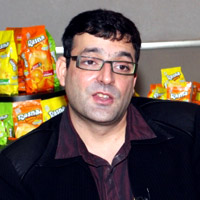
    Vivek Khanna, Publisher and Business Head of Mint, HT Media Limited

    Vivek Khanna joined HT Media in 2008 after working for more than 16 years, of which 11 were spent with Hindustan Lever Limited (HLL) where he led strategic and marketing initiatives – segmentation, positioning, advertising, and new product development. In his last assignment he was Director Marketing with Aviva, responsible for the company’s product and marketing strategy. He is a post-graduate in management from IIM-Ahmedabad and an economics graduate from the University of Delhi. In conversation with MxMIndia, Mr Khanna talks about Mint’s brand of accessible business news, new markets, and the digital wave, among other things. Excerpts:


    Q: Since its inception five years ago Mint has become a success story of its own. What has the journey been like, and what are some of the learnings that you would like to share?

    When we started off five years ago we identified a clear need gap amongst readers, which none of the existing business papers were satisfying. And that is how the entire positioning of Mint got developed, looking at the need gap and then asking how we could address it. We worked towards developing a product that would address the need gap; plus we said that we would get the best minds in the business – and we got editors and journalists from around the world and created a totally differentiated and unique product. I think the single biggest learning that we have is that as long as we are able to sustain this quality that we have been known for, we will continue to grow and do well. The journey so far has been very good, basically because of the fact that we have a product that is totally unique and well differentiated, and has been able to sustain and maintain itself from day one.


    Q: There are many reasons attributed to Mint’s success – the Berliner format, the content, and good marketing. What do you think is the main reason Mint has worked with both readers and advertisers?

    What clicks is with the readers first is the product. It is the quality of the product over the last five years that has helped us grow significantly since our launch. The advertisers are paying for the fact that we reach out to a certain number of very high-profile target audiences across the country. That’s really the key thing. Our product is something that this target audience likes, and therefore they are reading it on the regular basis. No one will keep picking up a product each day if it’s not good… Hence the fundamental thing behind our success is really our content.


    Q: Mint started off with emphasis on making business news easier for the masses. Is this still the ethos now and for the future?

    The Mint proposition is ‘clarity in business news’. We didn’t say we will be for the elite or for the masses. We just said that we will provide clarity to business news and that is what we continue to do – by analyzing and discussing a particular topic at length and presenting it in a manner that is easy to read as well as supported with facts, and therefore we have a certain credibility in the market. That focus has been there since the beginning, and it should continue.


    Q: What is the nature of Mint’s tie-up with The Wall Street Journal – content sharing or more?

    I can’t discuss what constitutes our tie-up with WSJ, as it is confidential information.


    Q: Following the Hindi and Gujarati editions of The Economic Times, do you see Mint also coming out with regional avatars?

    Well, as we speak, I have heard about some of these regional avatars getting pulled out from the marketplace. We will get to know over the next couple of days if that news is true or not. As far as we are concerned we have a certain growth path which is planned, we will continue to go on as per that planned growth plan. I can tell you that in the very near future, in the next 3-6 months, we don’t have a plan for any language business daily.


    Q: Regional media in India is still growing. How does the proposition of Mint in a Hindi or regional language avatar look to you?

    There is a increasing trend in smaller towns and among readers of Hindi and regional language. As the economy of some of these smaller towns continues to grow there is the tendency and the desire for people to be abreast with what is happening in the business environment. So if we feel that we have a certain role to play and we can provide those readers with news that will help them, then we will certainly evaluate it. But like I said, as of now there are no such plans.


    Q: Going forward how do you see the audience and revenue breakup for your digital editions? Specifically the web, tablets and smart phones?

    It is almost impossible to say that… You have different experiences in different markets. We have some western economies where people have moved predominantly towards digital and have dropped significantly. On the other hand we have a market like Singapore which has an 86 percent internet penetration, and 70 percent of the people there own a smart phone, and still there is no drop in circulation of leading products like The Straits Times. So we are talking about very different markets and very different experiences. I think in India the printed form still has some way to go. However, digital is going to emerge over a period of time. Now whether it is going to be five, 10 or 15 years is very difficult to say. What we have to do is, be prepared when it comes. Therefore, we have launched some apps and some more are going to come. So there is a whole plan to be ready for the so-called digital revolution in newspaper, when it comes.


    Q: What are the plans to break into newer markets?

    We are in fact evaluating a few markets. When we feel that the time is right for us to enter, we will do so. We still have some way to go in a few of the existing markets… So the focus remains in growing in the existing markets as well as looking at the right time to enter in some of the newer markets.


    Q: What are some of the marketing initiatives that the paper has planned and in which cities?

    We have two big initiatives coming up which are around the budget and around our luxury conference (in March), which is an annual event.


    Q: Since you are a listed company, will you be give us some numbers as to how Mint has been doing over the years?

    I can’t disclose that information.


    Q: What are some of the upcoming trends that you observe in the print industry?

    What is happening is that there is a clear trend, in terms of increase in readership, in some of the language publications that we have been seeing. Clearly, as the literacy level is rising, people’s urge to learn more and read more too is increasing. In times to come, this phenomenon will grow further with penetration of technology and spread of education in India. The other trend that we can observe is the proliferation and spread of digital media.
     

  • Vijaydutt Shridhar: Passion for the printed word

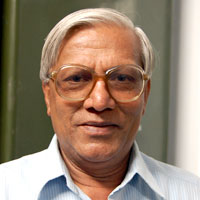
    The Padma Shri award for Sahitya (Literature) this year has gone to author Vijaydutt Shridhar, 60, former editor of Navbharat and the only journalist on the list. The award is well-deserved for the man who has almost single-handedly taken up the task of preservingIndia’s history through the lens of time, past and present – the newspapers, magazines and periodicals.
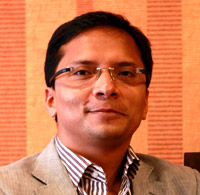
     

    In an email and telephonic interview with MxM India’s Archita Wagle, Mr Shridhar talks about his passion, the Madhavrao Sapre Samachar Patra Sangrahalaya evam Shodh Sansthan in Bhopal, Madhya Pradesh.


    Q: Tell us about your career, and what you are doing now.

    I am retired now and I concentrate on the museum and my books nowadays. Before that I was the director at Makhanlal Chaturvedi University of Journalism and Communications. I also worked as the editor of Navbharat. I have worked with several state level committees related to journalists and newspapers in Madhya Pradesh. I was a member of the Madhya Pradesh Vidhan Sabha Press gallery committee for two decades.


    Q: What prompted you to start the Sapre Sangralaya in 1984?

    I was working on my book Shabd Satta, which chronicles 150 years of journalism in Madhya Pradesh. I had to travel far and wide to research for my book. While researching for the book, I realised that there was no systematic classification of the material that I required. Authenticating the material was also difficult, and posed a lot of problems for me as history is incomplete without properly verified material. I visited individual collectors, but the newspapers in their collections had started deteriorating. This sparked the idea of preserving newspapers.


    Q: How did you get the material for starting the museum?

    I met Pandit Rameshwar Guru, a veteran journalist, Hindi poet and Mathematics teacher. He also had an extensive collection of journals, newspapers and periodicals going back two generations. But due to family obligations he was ready to donate them. He had two conditions, though. One, he wanted the material to be saved systematically and in the name of future generations. Two, the collection or the museum which would house them will not be handed over to the government or any university as Mr Guru feared that the material would not be cared for properly at either places and that the universities are more concerned with their salaries than preserving the heritage that such a collection represents.


    Q: Can you tell us more about the Sapre Sangralaya and the work it does?

    After Mr Guru agreed to donate his collection, a society was set up in the name of Madhavrao Sapre, the pioneer of Hindi journalism. The ideology that Lokmanya Tilak had when he started Kesari, was the same ideology that Shri Sapre had, so he launched Hindi Kesari. The Sapre Sangralaya collects all kinds of old periodicals and newspapers in all the languages – Hindi, Marathi, Urdu and so on – for the purpose of preserving them. Earlier I used to travel to different places scouting for materials. I once bought an old collection of Punch magazines from a man who sold them for a song because he wanted to pay for his liquor. But as time passed, people came to know about the work we are doing and they donate their private collections to us, knowing that we will take good care of the material they donate.


    Q: How are the footfalls in the museum? Do you get a lot of visitors?

    The museum is acknowledged as a research centre by many universities. We mostly get journalists and academicians who come to the museum as they know that what they might not get anywhere else, they will find it here. Once, the editor of an established and well-known Hindi newspaper came to the museum because he wanted to see a copy of a particular issue for January 1962 of his paper. It was a moment of pride that we had the issue which their archives didn’t have.


    Q: How do you arrange for the funding for the Sangralaya?

    The Central and the state government provide funding for the museum but they never interfere in the day-to-day working. We also receive donations. So funding is not a problem for us.


    Q: Any future plans for the Sangralaya?

    You should know that the paper a newspaper is printed on is not of the finest quality. We have newspapers and journals dating from the 1600s. Constant handling also accelerates the deterioration. We have preserved the material we have gathered so far by chemical treatment, pest control, laminating the old papers, and transferring the old papers onto microfilm. So far, we have transferred material up till the 19th century. But now we are looking at digitising the content we have. We are looking at transferring all the material to DVD so that people who come to the museum to look at these newspapers for their research will be able to go through the DVDs and the newspapers can be preserved better.


    Q: The website for the museum is in Hindi. Would you consider having a website in English, in order to reach a wider audience?

    The suggestion that you have given is a good one. We are translating the summary for the website in to English and other languages… but only the summary, the rest of the website will be in Hindi as that is the language we work in. But once we translate the summary, that will provide enough information for people about what we do.


    Q: You are an author; any work in progress on that front?

    I have written three books and now I am in the process of completing my fourth. My first book was Bhartiya Patrakarita Kosh, which is an in-depth study of Indian journalism in the pre-Independence period (1780-1947). The book covered the whole sub-continent -India,Bangladesh and Pakistan. It is the history of Indian journalism in all languages of country – origin, growth, struggles, achievements and contribution.

    My second book was Shabd Satta which covered the history of 150 years of journalism in Madhya Pradesh from 1849 to 1999. My book Choutha Padav is the history of 1000 years of Bhopal with special reference to BHEL. Now I am working on my latest work, Pahela Sampadkiya, which is a collection of the first editorial in prominent Hindi language newspapers. The book has about 28 editorials and my comments and analysis on each of the editorial.


    Q: How do you find time to manage both your writing and your day-to-day commitments?

    Now that I have retired, I can devote more time to writing and my work at museum. So it is not difficult.


    Q: How does it feel to have your efforts recognized by the government in the form of the Padma Shri in Sahitya?

    I didn’t expect to be awarded. I have been working on the museum for the last 28 years. I never expected to get the award as the government doesn’t declare it in advance, but it feels good.


  • Very challenging times for radio: Rana Barua


    By Robin Thomas


    Rana Barua is a veteran media professional. He is Chief Operating Officer (COO) at Red FM. Prior to joining Red FM, he was the EVP – Programming & Marketing at Radio City. Before he moved over to radio, he was VP and Head – Mumbai at Bates. And earlier:

    Client Services Director at Rediffusion DY&R, Account Director at McCann, Senior Account Exec at Ogilvy & Mather and Account Exec at JWT. He’s been through it all.

    In conversation with MxMIndia.com, Mr Barua speaks about FM phase III, and how radio can emerge stronger from the ongoing slowdown.


    Q: How did your transition from advertising to radio happen?

    Advertising was getting a bit stagnant, the market in media was opening up, television had opened up in a big way at that time, newer media were on the anvil, movie marketing was also opening up, radio was also growing at that point in time (ie about six years ago). I have always been very keen to move into a domain which is more or less a specialized medium. Since radio was also into huge expansion mode with phase II at that time, it made more sense to move into radio rather than any other medium.


    Q: And the advertising experience came in handy…

    Oh yes! I think it comes in extremely handy if you come in from classical advertising or communication which is more specialized. Since I moved as Head, Marketing, it made a lot of sense because I worked with a lot of brands, and had the entire expertise of knowing clients, advertising, communication skills, media and creative agencies. Thus the entire gamut came in handy which helped me settle in easily. So, the transition was good, it was just that the scope was very different.


    Q: Can you throw some light on the overall importance of phase III for FM radio?

    Phase III is extremely, extremely important for radio growth. This is probably going to be very exciting, at the same time a really challenging time for the industry because radio is multidimensional. There is huge expansion, multi frequency will be allowed and news will be available but not in its best form as it will be sourced from All India Radio (AIR). FDI gets raised from 20 percent to 26 percent. I’ve always said it should have been higher because that would have allowed more international players or private investors/ equity holders to look at it in a more serious way. Fourthly, networking will be allowed, which means one will be allowed to run the FM station sitting out of a main hub; as a result the cost may come down. Therefore if you look at it on the whole, these are definitely exciting times and we will probably know how all of us shape up in the next two years. There are going to be many challenges and a great number of opportunities for everybody in the radio medium.


    Q: And this will help increase the ad pie…

    It should! The only contrary point is that you may have new FM players entering, but the ad pie will grow because of different genres coming in, as a result new clients may also come in who would have not necessarily advertised on radio. And since costs will also come down, you will find a lot of innovative programming happening in radio. Nevertheless, these are still early days; the overall scenario looks very positive, but the challenge is, what will be the benchmark for research? There are also other challenges like the music royalty issue, the entire migration process from phase II to phase III, the e-auction as bidding process etc.


    Q: Do you view e-auctions favourably?

    We are pretty okay with e-auction, and from what I have understood from a lot of people, it is a much cleaner exercise.


    Q: Are there any setbacks…?

    Everyone will have some issues which are different from each other. The common factor however is the music royalty issue which is still unresolved. We are still a little unclear about the multiple licensing because if the e-auction bid goes into some preposterous amount it will naturally lead to some kind of setback for the overall industry, so we are hoping that this does not happen. News could have been better if it had been a bit more independent and I am sure we would have invested in the entire medium/department. Nevertheless if you see the overall picture, especially the way radio has been growing over the last three or four years, this gives you an impetus. Today if you look at the global economic scenario you just can’t predict any more but, yes it is a movement forward, with exciting times, greater challenges. Yes, certain things could have been better or more favourable for us, but we will go step by step.


    Q: How is Red FM gearing up for FM phase III?

    We are still weighing the pros and cons. Yes, we will be seriously involved in Phase III. We are clear about being present in most of the markets which will have some kind of ROI but we will weigh the pros and cons, we will see the costs, we will be extremely cautious about the approach because breaking even in radio is not the easiest of forms as it will all depend on the return on investment (ROI), the advertising revenues etc. If you ask me whether we are serious about phase III, then yes we are definitely looking at it in a very serious way.


    Q: Any specific cities that you are looking at?

    No, we are not looking at certain cities, but we are looking at towns… say where we are not available, which are important for advertisers. We are looking at these as one of our strategies, but we are weighing all the pros and cons and only then are we going forward.


    Q: Is there any lesson or takeaway that the radio industry should learn in Phase III from Phase I and II?

    One of the critical learnings for a lot of us in phase I and II is probably going to be that we must not overestimate the potential of the market. We also know that we look at certain benchmark figures and we tend to overestimate and because of that one tends to overbid. This is one of the key learnings one is hoping that everybody puts on the table before one gets into the e-auction process because at the end of the day it’s a fixed pie and from that fixed pie you would probably get a certain amount of revenue for radio. More than phase I, and phase II, one of the learnings for all of us is the uncertainty of the markets as we don’t know what’s coming up in the next three months. Therefore, I think the biggest challenge that lies ahead for all of us is the uncertainty, which has become such a huge thing that everybody is talking about the uncertain future. Hence I think a cautious approach is going to be extremely critical.


    Q: So, is the uncertain future – the global economic slowdown that seems to have come back – is that something to worry about?

    Yes, absolutely. However, more than worry I believe we should be taking complete cognizance of the fact that there is definitely a slowdown. The clients, advertisers, everybody are extremely, extremely careful about the money they are investing in any form of media. Taking things for granted and creating business plans for the next two or three years seems passé now. It’s more like making a business model and reviewing it every month because the numbers keep changing every month, not because of wrong projections of estimation, but because the moment costs go up, inflation goes up, prices go up. The environment has become so dynamic – which it wasn’t even a year ago; every day there is a new story. So, it’s great to plan for the future, but I think one needs to be very cautious about any kind of numbers or projections or predictions made by various studies and research etc, which will however be reviewed very soon.


    Q: How would you sum up 2011 for Red FM?

    We have definitely grown; even this year we have made overall growth in our entire network, at a certain target we had set for ourselves. But as I said, with the environment being so dynamic naturally those numbers are nowhere close to what one would have guesstimated maybe earlier, say last year when things were so much on the rise and one had hoped that coming out of a slump the next two or three years would be on the way up. What we have managed to do very well is that as a network we have grown extremely strong – into a formidable player post the RAM numbers which were released I think a month or two ago, wherein for the first time RAM went into the nine markets which they are hoping to do more frequently. So we are pretty confident that all the efforts of building the brand and all the efforts in programming have really helped. We are confident because we have got people and our talent in place.


    Yes, we are aware that with phase III coming in there would be a lot of movement again, but that’s part of the business. We have got a great team going, who are extremely motivated and work passionately for their brand and numbers therefore are showing very well. As I said the larger markets are not showing growth that it should have ideally shown, but it’s the mini metros and towns which have grown much more dynamically for us.


    Q: And how would you sum up 2011 for the radio industry?

    Overall if you look at the numbers one had predicted for radio, the growth has not been as dramatic as one would have expected because it is understood that there has been an overall slowdown. One of the things we need to look out for is some kind of consolidation which is how we would want the medium to grow.

  • ‘Food Food is a lifestyle channel themed around food’

    FoodFood,India’s first Hindi 24-hour food lifestyle channel, launched by celebrity chef Sanjeev Kapoor in association with Malaysian based company – Astro, has completed a year.


    The channel caters to food lovers inIndiain the SEC A B, Metros and mini metros market.  Company officials state that the channel has produced an average rating of 11 GRPs in the year gone by, and promises to cover a lot of ground this year.


    At the time of launch – January 2011- the food lifestyle channel had got Madhuri Dixit on board as the life ambassador. While the central programming is centred on food, special attention has been paid on bringing the lifestyle elements too in the shows. Shows like   Ladies First, Firangi Tadka, Mummy Ka Magic, Sanjeev Kapoor’s Kitchen, Turban Tadka, Secret Recipe, Tea Time with Rakesh Sethi, and Food Food Maha Challenge are some of the shows aired on the channel.


    The channel is available on both analog as well as digital platforms panIndia. Outside ofIndia, it is currently being telecast in theMiddle East countries. It was brought to UAE by Etisalat, a telecom operator and TV service provider inMiddle East. The Middle East is an important market for a food channel, primarily becauseAbu DhabiandDubaiare popular destinations for expat Indians.


    “It has truly been a memorable year for all of us at Food Food. Going forward, we plan to enhance our presence across the world, appealing to the expat Indian population,”  says Sanjeev Kapoor, celebrity chef and one of the promoters of Food Food.


    The popular chef spoke to MxMIndia’s Rishi Vora on Food Food’s journey so far and the plans ahead. Excerpts:


    How has the journey been so far?

    The journey so far has been very good. In a sense, it has been like a dream because not many people believe that a 24-hour channel dedicated to food and lifestyle can work in this country. But the response has been fantastic. In terms of viewership, we are three to four times higher than the channels that have been around for years.


    Has the market for a food lifestyle channel evolved in the past one year?

    There was always a huge market to explore through food, which has remained marginalised for too long. The food gamut is endless and offers a huge opportunity for growth. Food covers a vast sphere, from travel to entertainment to culture and even kids. Almost every aspect of media lends itself to some aspect of food, be it game shows, travelogs, lifestyle features, talk shows, or even soaps.


    After the advent of satellite television in India, food and lifestyle shows did not grab much attention initially from advertisers. But things have undergone major changes now with the growing demand for food-related shows. Advertisers have started spending a substantial part of their budget on food and lifestyle shows.


    What particular time-band is considered to be prime time for the channel?

    At Food Food we defied the concept of prime time through research and market study. While other channels have their original programming in the evening, our channel has its original programming in the afternoon. This helped us catch the interest of our target audience.


    What is your core TG?  And do you find traction from small towns and cities?

    Food Food is a channel for the middle class Indians in urban towns and cities. The core audience is the average Indian belonging to SEC AB in metros, mini metros and the top towns.


    How big is the market for a dedicated food channel in India?

    Food, today, is not a mere consumable; it’s not just a hunger-driver. It is rapidly acquiring a lifestyle halo. As prosperity invades Indian households, food is coming out from the kitchens and well into our entire lives. Today food is not only being devoured, it is being relished; it is becoming integral to our lifestyle aspirations. In an introduction to one of her books, Nigella Lawson wrote: “the kitchen is not a place you escape from, but the place you escape to”. Indeed, food, today, has become experimental; it has gone cosmopolitan; it has discovered fusion.


    Being a 24-hour food channel, what are the challenges you face in the business?

    There are certain business challenges which will always be there. As a specialty channel with mass approach, we are a new category. Food Food is not only a food channel, it’s a lifestyle channel themed around food. Food on TV is no longer just about stand and stir cookery shows. The viewer has changed. He demands richer content, more innovative programming, even in the realm of food.


    In GRP terms, how well has the channel done?

    Our viewership is three times higher than some channels that have been around for years.


    How has been the response from advertisers?

    The food genre today is what news and GECs were a few years back. This speciality genre is not only a natural fit with consumers (given the love we Indians have for food), it also allows a high degree of interactivity and entertainment. Both of which the consumer seeks from the media. It took some time for the advertisers to understand the potential of food and food lifestyle platforms. But today, advertisers are more than willing to spend on this category.


    Distribution wise, what is the reach of the channel? Is the channel operational on all DTH platforms?

    The channel is available in both analog and digital formats. With 360 degrees of food available across multimedia platforms like TV, web, mobile, food is all set to become the new entertainment. Food Food is not just a food channel, we are here to provide Indian viewers their very own Khushi ki Recipe!


    How has been the growth of the channel revenue wise?

    This is a specialty genre and we have very unique programming. It would not be fair to gauge this genre with revenue. But looking at the response, I can surely say that our advertisers and viewers are very happy with us. So in that way we definitely see tremendous opportunity and growth in the future.


    How do you see the channel grow say in another year’s time?

    We have expanded beyond HSM markets such as Kolkata, South Indiaand so on. We’ve gone international.  We’re already available in Middle East. This year, we also plan to expand further internationally. Keeping alive our promise of 360 degree entertainment, we will continue to offer exciting repertoire of food-related products to keep the family entertained and engrossed.


  • [MJR] Quality of journalism has gone up: Mohan Sivanand

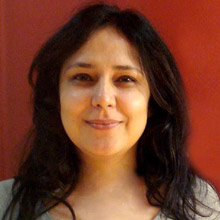
    Mohan Sivanand, India Editor, Reader’s Digest talks with MxMIndia’s Archita Wagle about his journey so far, touching on the changes in the field which he has seen in the past 36 years. Excerpts:

     

    Q: Tell us a little about your background and your life as a journalist.

    I have been in this field since I finished college in 1976. After my Senior Cambridge exams, I did a BSc in physics, then studied for an MA in English and a post-graduate diploma in journalism. Everything I studied has helped me in some way or other. I think and use, both, science and arts every day at work. I joined The Times of India as a trainee in 1977. I worked there for Science Today magazine (the magazine is not published any more). I worked with the TOI group for over six years, till 1983, when I joined Reader’s Digest. I joined RD as an assistant editor, when I was about 30.


    Q: Having been with RD for nearly 30 years, did you never feel that you needed a change or wanted to move to a different publication?

    No, I have not wanted to change jobs. I’ve liked it here.


    Q: How has the journey in these two companies been so far? What have been your learnings from them?

    Both the companies, TOI and Reader’s Digest, have been extremely good as learning experiences and dedication to journalism go.  I had very good editors to look up to, Surinder Jha of Science Today and Ashok Mahadevan at Reader’s Digest. Both these gentlemen gave a lot of importance to error-free content and laid emphasis on fact-checking. Ashok insisted that we learn to respect our readers and never underestimate them. That’s why our magazine is called Reader’s Digest.

    I follow those principles. One should never compromise on the quality of the content. I will hold an article back if I have some doubts about facts or if they have not been properly verified.


    Q: How does the process work?

    The process is the same for everybody, be it our US editor, myself, a staff writer or a freelancer. Even when I write an article, I have to give references and provide my sources to our researchers. The researchers have to double check every fact. They are, generally, the youngest employees who start out in RD with fact checking. Even I, sometimes, check and verify facts.


    Q: Over your 36 years in the industry, what are the changes that you have observed?

    In spite of everything, I feel that there has been a positive growth in the field. The quality of journalism has gone up in the past 30-odd years. I read a lot of articles and I feel that youngsters today are writing very well.  It is a pity that some of the better talent may be going towards the electronic media, but even the print media has people writing extremely well. I read a lot of good stories in many publications.

    Take the example of The Economic Times. It is much better today than it was 30 years ago. Maybe it is because business and markets have developed, and journalists today are well-connected via the Internet and they have access to a lot more information.

    In the past, most youngsters never thought of going for business journalism or working for technology magazines. In those days, we had just one Science Today, but today there are a lot of specialised magazines.

    Despite all the negativity, like ‘paid news’ or advertising interfering in editorial content, I feel that there is a lot of good stuff too. The vast majority today are proper journalists.


    Q: As a part of a magazine that places so much importance on content, what is your take on advertising interfering in editorial decisions?

    Actually, the ad people aren’t allowed to interfere in any editorial decision-making at Reader’s Digest. It is unethical. We have strict guidelines in place. Our ad colleagues can give us ideas just like anybody else, and that’s it. They can’t ask us to publish advertorial content and pass it off as editorial content.

    Most leading American magazines have the same policy. Indeed, some Indian publications bow to advertising pressure. By doing so, they are only killing themselves.

    If they continue to pass off advertising as editorial content, sooner or later the reader will realise what is happening and stop reading the publication. One can always tell the difference between an advertising plug and editorial content. The readership will drop and the publication is the loser in the long run.

    Often the ad executives are short-term employees who only look at short-term profits. They often don’t care about the damage to the publication’s reputation, so editors have to take a stand and refuse any such interference.


    Q: There have been rumours that Reader’s Digest editorial is being shifted to Noida…

    There is a corporate plan to shift to Delhi but nothing has been finalised yet. It has to be a very cautious move, since we can’t train new people overnight for our kind of journalism, our kind of writing and editorial practices.

    India Today Group, which is the Digest’s partner in India, wants to house all their publications under one roof.  We are the only India Today publication in Mumbai… but as of now nothing is finalised.


    Q: Will such a move, in any way, affect the editorial policy or content?

    There will be no change in terms of policy and the kind of content. Nowadays it doesn’t really matter where you are. One can work from anywhere. But as far as our content is concerned, we are the world’s, and India’s, highest-selling magazine, so why would anybody want to tamper with what has been working well so far?


    Q: We hear that RD is also going the digital way…

    Yes, from February 2012, RD can be accessed on tablets, including iPads for a subscription fee of about $1 a month, which is less than the cost of the monthly print edition. Our US parent edition launched its digital version last year. We were a little late, but I believe sooner or later, most of the print publications will have to go the digital way side by side. If you don’t do it, you are risking your future.


    Q: Has there been any drop in readership?

    We haven’t seen any significant drop in the readership. We print five lakh copies a month in India. But we had to move to a digital version before we witnessed any drop. Print magazines will never die out in India, but they may witness some decrease in circulation and that can hopefully be covered by increases in digital versions.

    As of now, the marketing of our digital version has not started with full force. But we will soon, and possibly have some more interactive content for our digital readers.


    Q: Apart from being the India editor of Reader’s Digest, you are also an artist.

    I was an artist before I became a journalist. When I was in college, I used to draw for Shankar’s Weekly, which was India’s equivalent of Punch magazine. I started oil painting in 1991. Between 1994 and1999, I held four solo exhibitions and some group exhibitions of my work.

    But after I became the editor, I stopped exhibiting as I don’t get enough time. My job takes a lot of my time. I still paint and draw, but as a means of relaxing. I will go back to painting full time after I retire.


  • We are the dashboard for the client’s car: Michael Wolfe


    By Tuhina Anand


    Michael Wolfe, the CEO of Bottom-Line Analytics, has been successfully providing solutions to his clients to measure the impact of their marketing spends and thereby help them increase revenues. The point being that while the marketing budget remains the same, the revenues increase because of the valuable insight that the analytics team comes out with for their clients. Wolfe who is also a Senior Director, Consulting and Analytics at BBDO Atlanta as well as on the advisory board of Bengaluru based Rainman Consulting was in India for the first time recently and met up with MxMIndia to share how he and his team have been working on helping clients gain maximum on their ROIs.


    Q: How does Bottom-Line Analytics help clients in getting the maximum out of a client’s marketing budget?

    We look at any commercial enterprises and a very large part of their expense is on marketing and sales. Traditionally there has not been any means to understand what results that investment generates. What I do is develop mathematical models which directly link each and every marketing activity that a company undertakes – be it TV, radio, outdoor, online, distribution or availability of products. These are what we call drivers of the business. One of the things that my work does is that it challenges the idea that marketing is an expense; it is an income- and revenue-generating activity that companies engage in and we simply derive the means to measure that. In developing that we can also measure a means to recommend how companies can improve the performance of their marketing investments by spending the available funds in a much more effective fashion.


    Q: How do you perceive the Indian market and do you think that with growth also comes the pressure to maximize ROI?

    In India, there is a fairly substantial middle class who obviously have a very significant amount of disposable income. Among the BRIC (Brazil, Russia, India and China) countries, growth is happening as far as businesses are concerned and the truth is that wherever there is growth there is also an interest in generating that growth which usually is achieved by marketing. Without any measurement yardstick for marketing, it’s like an automobile which doesn’t have a dashboard, hence one cannot get any reading of its performance. Simply put, we provide that dashboard to our clients for them to understand how well their marketing is performing.


    Q: In tough times, does the measurement aspect become much more significant? And how easy or difficult it is to convince clients to go for this kind of measurement?

    In the US the demand for talent in marketing analytics and demand for the skill exceeded supply even during the depth of the economic recession. So there has been no lack of opportunity to develop in this profession. We have seen from experience that in the US the demand emerged more during a weaker economic period. It’s when there is pressure on being more accountable with large investment that marketers become more conscious of how each and every penny is being spent and what kind of returns they are getting from it. We are able to quantify the impact of media and marketing and tell the clients what is working and what is not. Moreover, we can help identify aspects that are not working, be it any kind of product, communication, even sales issues or any other external factors, and help clients move their money from non-performing assets to those that will give higher growth. By this we have seen companies seeing an increase of 5-10 percent revenues without increasing their marketing budget. Also from our experience we have seen that companies that are developing at a fast pace is where we somewhat face a challenge to convince them that they need us.


    Q: In a market like India, which is not homogenous, do you think any yardstick of measurement can actually be applied?

    Our task is difficult in India as there is diverse set of people and preferences. Here, I think the measurement yardsticks become all the more important for marketers as it will give direction on how much their spend is actually reflecting on the revenue.


    Q: Does marketing analytics of your kind only help big spenders?

    Not necessarily. We have done this kind of marketing optimization modelling for clients with modest budgets. One of our clients was a zoo and we were able to tell them with the help of our mathematical models what kind of animal exhibits work for them, we even looked at external things like price of fuel and weather conditions that might lead to a fall in revenues. So our conclusions look at different aspects and come out with solutions that will help in growth.

    At the Coca Cola Company, where I worked earlier, we have even introduced new products based on our findings that have seen a rise in sales. We just finished an assignment for Coca Cola in Pakistan where we were able to tell them which, out of the six advertisements that they had come out with, was most effective. We have been able to help clients in driving their business even from the sales point of view. So there are different models that will suit different kinds of client.


  • PlanetRadiocity launches new genre on Web Radio

    By A Correspondent


    PlanetRadiocity.com has formally launched its new web radio genre, IndiPop Radio, which plays back-to-back IndiPop hits 24×7. The newly launched web radio station will feature popular IndiPop music from all over the world, the segment will also feature popular music of artistes like Lucky Ali, Mohit Chauhan, Kailasa, Strings, Junoon, Apache Indian, Sukhbir and so on.


    The launch of the IndiPop stream (a new genre on PlanetRadiocity Web Radio) is said to be an effort to expand the offerings of PlanetRadiocity Web Radio. Web Radio which offers 24 hours of streaming internet radio was launched in March 2010 by PlanetRadiocity.com.


    Indian rapper Baba Sehgal also launched his new single and video ‘Praji Kunjam Kunjam Control’ exclusively on PlanetRadiocity Web Radio. Listeners will have to visit IndiPop Radio on PlanetRadiocity.com’s Web Radio to listen to the song.


    A little more than three years since its launch, PlanetRadiocity.com, the music portal from Radio City, is set to undergo a revamp. Its Web Radio, after ‘Live Radio’ and ‘IndiPop’ will very soon launch more genres such as Devotional and Independent music to name a few. In conversation with MxMIndia, Ms Rachna Kanwar, Head – Digital Media and New Business, Radio City the brain behind PlanetRadiocity.com spoke about the future trends of online radio, mobile plans for PlanetRadiocity, on the revamp plans and much more.


    Q: Can you throw some light on the new web radio station – IndiPop? 

    Last year we started ‘Web Radio’, which is a separate entity and not the same as the terrestrial radio. Web Radio has been created keeping in mind our TG which is the internet audience and now we have launched IndiPop Radio which was formally launched on Tuesday, March 20, 2012. We believe there is a huge space that is yet to be filled by the non-film music. Today most people are focusing only on Bollywood music, which of course is very popular and we too play and endorse it.


    However there are also other genres or type of music which are very popular and have a lot of audience and hence needs to be played. In fact most of the popular Bollywood singers have emerged from this genre (IndiPop) whether they are Kailash Kher, Mohit Chauhan, Shaan etc. So if Bollywood is dipping into this creative pool then why not create space for the IndiPop genre itself. This year in fact is in a way seen as a comeback of the IndiPop genre because a whole lot of artists of this genre are announcing their albums whether it Lucky Ali, Indus Creed or Baba Sehgal himself.


    Q: Now, once an artist launches his/her album, take for example the Baba Sehgal album… How does PlanetRadiocity promote it or take it forward?

    What we plan to do is take a 360 degree marketing approach by promoting it through our terrestrial radio station, online we will be using the social media, search engine marketing, mailers, promos etc. and then create events around it.


    Q: On Web Radio, (launched in 2010) you have Live Radio and now IndiPop Radio. How has the response been for web radio? What are new genres that you would explore soon?

    Very soon we will be launching devotional music and independent music which is very different from Indipop and many more. Our TG is completely the internet audience i.e. anybody and everybody who is interested in listening to music but, our web radio are consumed heavily in offices and by college students. Apart from them, we have a whole lot of audience listening from home as well and a large chunk of them are the NRI’s. We have received huge response from audience on our Web Radio. We have about 1.6 million listeners from across the world including UK, US and Pakistan etc.


    Q: Is there a market for web radio in India? What is the audience profile that visit PlanetRadiocity’s web radio? Do Radio City listeners also visit the website?

    Frankly, people have just begun to understand digital music in India, people are becoming quite aware of music online and therefore you have more websites targeting music lovers online. So there is a market for web radio in India and we have been quite successful with web radio.


    Radio listenership to a certain extent has been moving to the digital platform and while we do realize that radio has its loyal listeners, there are listeners particularly the younger ones who are moving to digital. We already have headway in engaging this audience, we have a full-fledged digital team and music website.


    Q: The business model for web radio (and PlanetRadiocity) is ad sales led, isn’t it? Is there any other revenue source?

    Web Radio is also dependent on banner advertising and ad sales etc. The advantage being that within the stream also one can sell air time and which is a huge advantage for us because our sales team know how to sell air time.


    Q: It’s been nearly 3.5 years since the launch of PlanetRadiocity.com. You have the web radio now and more genres to come. Any plans to revamp the website or give a new look to the web radio section?

    Yes, very soon we will be revamping the website. We would also be including new features in it which should happen in about a month time or so.


    Q: How are you leveraging mobile? Any mobile specific plans? Will mobile internet users also be able to listen to PlanetRadiocity web users?

    We are in the process of creating mobile apps for the website. Once these apps are created we will also have mobile internet users also visiting our website.


    Q: How has 2012 welcomed PlanetRadiocity? What can we expect from you this year and say a few years from now?

    The year 2012 looks extremely positive and encouraging because we will be launching a new look, we would be launching a lot of music streams, new web radio genres etc. which will attract new audience. As far as our growth target is concerned we have been able to meet them.


  • Our core belief is innovation: Shyatto Raha, NDTV Worldwide

    By Akash Raha


    Shyatto Raha, CEO, NDTV Worldwide and NDTV Emerging Markets, has been with NDTV for over 13 years and is an integral part of NDTV’s strategic team which has helped develop new growth areas.


    He spearheaded the successful launches of NDTV Arabia in the Middle East and Astro Awani channels in Indonesia and Malaysia.


    In his role as CEO of NDTV Worldwide and Emerging Markets, group subsidiaries, Mr Raha heads its business and operations and is responsible for the setting up of local news, current affairs and business channels targeting the local population, in emerging markets across the world.


    In a chat with MxMIndia, Mr Raha speaks about NDTV Worldwide, its focus and growth.


    Q: NDTV Worldwide has created a footprint in the media consultancy business and spread the banner of the NDTV group to newer areas. What are the other key focuses?

    Over the years NDTV has become one of the most trusted brands in the broadcast industry. Also, we have been a very successful brand. As far a media consultancy is concerned we have only shared the knowledge from the talent that is their within NDTV. Many of us have been at NDTV for over 15 years and it’s all about taking that knowledge base and creating media consultancy and media services which is due to bring about a change in the industry. It is definitely a change for the better. Here, we are making sure that the people who are coming into the market, the new entrants, are at least buying into technology, buying into programming ideas, buying into a way of working which will help them sustain and survive in the environment. Otherwise, what happens is that we find that a lot of broadcasters who enter the industry and then after a about a year or two they wither away because they were never set up properly. So considering that this (broadcast business) has been better and better and we have run it for over 23 years now, it gives us a very good foothold to advise broadcasters who are new to the market as to how to set up channels, on best practices, and tried and tested workflow. We don’t impart bookish knowledge but rather a very practical approach to things. We have been very small to start off with and we have been a very small consultancy in the market compared to many others in the market. But we like to take baby steps because we believe in getting it right. The aim is not just to take on 78 clients and get it all wrong. The aim is to take baby steps, manage fewer clients, get it right and then expand.


    Q: What are some of the major developments that you have seen in NDTV Worldwide since its inception?

    Over the years, the kind of services that we are offering in the market has expanded. Earlier we used to do only channel set ups. But today we do channel set ups, broadcast consultancy, training, channel management services… We have also added digital consultancy, where we have set up web mobile and apps platforms based on the success of NDTV convergence. So it’s a wide array of services that we have added since we started. In terms of client base, our prime focus in the first two years was on international clients and in the last two years it has been the Indian market. And I think we have done fairly well in the Indian markets with the clients that we have and we have got it right. I think they have all seen the result and the benefit that has come out of it


    Q: What are some of the new clients you have bagged?

    We can’t talk about recent signings due to confidentiality. Last year, the big launch was the Beximco Group, which is one of the biggest television channels in Bangladesh. That was a feather in our cap because, of all the TV stations launched in that market, I think independent television has set a new benchmark in the industry.

    And that’s the NDTV value that we bring to the table. Our core belief is innovation and it has been Prannoy-Radhika’s belief since the day I worked with NDTV. It’s been innovation at every level. When we set up NDTV – the news business – we innovated, not just in terms of technology platforms that we brought into the country but also innovation in terms of content. The kind of shows, the programming, the business practices, the kind of work flow and management style were all innovative. We don’t like following people. It’s not arrogant; it’s just trying to set a new standard and do something different.


    Q: NDTV group started off with a news channel. How did the idea of this subsidiary business emerge?

    It all started with one project, where we launched Astro Awani in Malaysia. We completely revamped it and created a differentiated channel for the audiences. This was NDTV’s first launch outside India and a very successful one too. We saw a business model in this that could be worked and built upon. We thought that NDTV had a lot to offer in terms of knowledge and ideas to new entrants in the market, and we could successfully leverage upon it.


    Q: What has the growth of NDTV Worldwide been like?

    Over the last year we grew by 70 percent. Our target for the current year is 100 percent and we are well on course to achieve it. In terms of expansion, our pre-eminent focus in the past few years has been India and the international market in South East Asia. However, in the upcoming years you can definitely see us entering newer countries and perhaps continent.

  • The Mindshare Mantra for the Digital Age


    By Johnson Napier & Insiyah Rangwala


    With a new global CEO at the helm and a host of other reshuffling activity on the talent front, the most recent being the appointment of Greg Brooks as Global Marketing Director, it’s been a busy 2011 & 12 for Mindshare Worldwide. But organizational changes are just one aspect of the overall vision that the global media and marketing behemoth has charted out as it prepares to confront new challenges that the future will inevitably throw up.


    In India for a one-day seminar titled Mindshare-Brand Equity Compass 2012, Marco Rimini, Leader, Business Planning, Mindshare Worldwide opened up to MxMIndia on how his agency is preparing to deal with the digital tide that is expected to sweep the sector off its feet, on the agency’s plans for India and emerging markets, and his mantras for surviving the slowdown blues. Excerpts:


    Q: What is the moment of truth facing media agencies today where the medium of digital is concerned? How is Mindshare Worldwide gearing itself to face the medium for the challenges that it will throw up tomorrow?

    The world is seeing a digital revolution and everything changes as a result of that. It will be important for organizations to get their balance right in the way they approach the medium of digital. As for Mindshare, first of all, it is about making sure that we have people who understand that we have information we share between people who understand the medium of digital. Also, the fact that we have to deal with technology ourselves.


    Q: As one moves across markets from the US to Europe to Asia Pacific, what are some of the new digital trends that have sprung up in the recent past?

    The most important thing is the amount of time people spend online and that differs by market and by region. And so obviously, the amount of time you spend online marketing to them changes remarkably by region as well. So in some markets, we are already seeing a 30-40 per cent spend by sectors such as financial services and telecom, going towards digital. Countries which are leading that race include the US and the UK.


    Q: Asia Pacific is being touted as the region that’ll churn out highest growth numbers where the medium of digital is concerned. What are your views around this thought?

    I think where digital is concerned, the Asia Pacific market is ahead because they can leapfrog ahead of the US and UK and because they have less infrastructure issues. For example, where wireless is concerned the Asia Pacific markets can leapfrog ahead because they don’t have to go through the cable revolution.


    Q: But despite the decibels and the glory, why are adspend figures around the medium still abysmally low? Do you see the low growth as an opportunity or a challenge for the sector to deal with?

    I definitely see it as an opportunity for both marketers and agencies to get it right, but to ensure that you go ahead you have to make sure you get your today and tomorrow also right. But I am positive of seeing healthy numbers being posted as we move forward.


    Q: What are the growth numbers that you anticipate for the medium in 2012?

    I think we will see an immaculate growth coming from the medium and it will differ across sectors. It is observed that sectors which sell online spend the most on online. Also, the sectors in which the advice is given the most online spend the most online. So you’ll see cars, telecom, retail, etc all have become very big spenders whereas you see less fast growth in the FMCG space.


    Q: Which are the categories that will drive online growth in 2012?

    I think it’s the ones that have a better online distribution presence; online distribution and online services will be the ones that will drive the growth. Examples include retail, banking, telecoms and cars. These are the top four high-probability sectors that I can think of.


    Q: Going forward, can we expect a renewed focus on some of the emerging markets for Mindshare Worldwide?

    There won’t be any renewed focus on any of our markets – we have always been strong in Asia and we expect Asia to continue to be strong for us. Also, within Asia we expect markets like Indonesia to drive substantial growth for us. If there is anything new it will be growth in Latin America and Africa.


    Q: Mindshare India has seen some reshuffling in the recent past where a host of people have been promoted and new talent inducted too. Globally too, there have been a few key appointments as well. What more can we look forward to on the talent front?

    Nick Emery has taken over as the global CEO for us and we wish Dominic Proctor well in his role as Group M in-charge now. Nick comes from a planning and strategy background and I think he is going to make sure that we all drive the company strategically and also do our marketing right. In fact we have just announced a new global marketing director for Mindshare Worldwide – Greg Brooks. Greg is coming from C Squared which was the organizer of the Festival of Media and also publishers of M&M magazine. So Greg is a digital maven; a digital consultant who used to be a digital journalist and his job will be to market Mindshare in this new digital age.


    Q: Has the much-spoken about slowdown impacted growth at Mindshare?

    I’ve heard a lot about this in the last 24 hours since I have been here but I have to tell you that if you come from Europe all of you here are being far more pessimistic; 6-7 percent growth is still very good and I am sure this will only be a very short-term slowdown in India and growth will continue to come. At the end of the day 6-7 percent is a very significant amount to stand by.


    As for Mindshare, we expect it to grow more or less with the average growth rate of the economy. The target for us is to grow as per the relevant economic conditions; so we say that our target in Europe is to beat the economic growth that gets registered.


    Q: What is the number you are looking at?

    We only set targets at the WPP level and I’m afraid you will have to look at their targets rather than ours. Obviously the growth in Asia Pacific is higher than Europe and we expect the growth to continue to be high. Logically, Asia Pacific is a very important region for us. Also, recently Latin America has also become an important region for us.


    Q: It was interesting to see representatives from P&G grace the panel for a Mindshare event. Worried about how Unilever will react to this?

    (Laughs) I didn’t choose the panel, Vikram Sakhuja did. But we are very proud to work for Unilever and hope that we continue to do so.


    Q: The team in India seems to be busy behind the Unilever pitch with hectic travel and meetings being the order of the day. Would you delve on what’s the current status of the pitch?

    We are all very engaged in the pitch; we knew it was going to happen and look forward to doing it. We hope to continue working with them as they have been one of our founding clients and through JWT and Ogilvy before that — we have worked with Unilever for over 100 years so we hope to continue our association with them.


    Q: What are the sentiments amongst your clients where advertising budgets are concerned?

    I think in 2008-2009, you saw dramatic cutbacks but in the last 18 months or so we have seen clients being more confident about their spending decisions. As we know, some clients are spending right in the middle of recession. So I don’t see so much of restraint from the client’s end. I think the point here is that the financial community is more nervous than the client community — it’s a government issue and not a corporate issue that’s facing us this time. In 2008-09, it was more of a corporate issue.


    Q: What will be your single largest agenda for 2012?

    The focus will be on people – there’s a lot of talent out there especially in Asia. We have to make sure we get our fair share. It’s a work-in-progress; it’s always a work-in-progress.


  • We’re after the hot, poor countries: Piruz Khambatta, Rasna

    In a day and age where cola beverages have captivated the attention and pockets of the youth and masses to a large extent, there are still a handful of juice-based companies like the old-yet-strong Rasna that are still posing a threat to the cola players. In fact, if Mr Piruz Khambatta, Chairman and Managing Director, Rasna Pvt Limited is to be believed, the volumes of colas are seeing a downfall while juice-based drinks are churning out highest volume consumption.
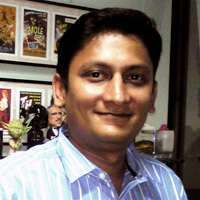
     

    On the sidelines of the Mindshare-Brand Equity Compass 2012, MxM India’s Johnson Napier got Mr Khambatta to reveal the secret behind the company’s strong and consistent growth showing, on the need for regular product innovations and what the future augurs for brand Rasna.


    Q: Rasna has been around for quite a long time. What are some of the new trends that the soft drinks market has thrown up in the recent past?

    We’ve been the market leader for more than 20 years. To be a market leader you’ve got to have 2-3 facets right like the need to have a good product, a good distribution chain and a good marketing practice. All these three cannot exist without proper customer insight and knowledge. For example, earlier people wanted soft-drinks, today they want fruit drinks. Earlier, people were looking at drinks only for enjoyment but today they are looking at drinks for the nourishing value that it can bring. There were days when it was believed ‘deeper the colour better the drink’, if it was dark, it was good. But today the reverse is true. Today, if it is dark that means you have put more colour in and as a result the consumer doesn’t want to pursue such drinks.


    The question that arises is: how do you create a new product, how do you do proper marketing, how do you do proper distribution without customer feedback and knowledge? So I believe that today it is the duty of the top management (decision makers) to be in touch with the customer and know what is the customer’s requirements. Also, it is about doing research in a way that you interpret it correctly. Like I always say, if you are a good doctor you will interpret the X-ray film or the CT scan film yourself; you should not wait for a report card that will tell you what the outcome is. In the same way, companies should be able to read the data themselves – collect the data and find out the problematic areas. All this has to be done in record time as well, as most of the time when the issues are identified and sorted out the trends have changed. So management has to push for research and have it done in quick and record time.


    Q: At a time when cola products are flooding the market in a heavy manner, how are juice-based soft-drinks manufacturers like yourself keeping pace?

    I would say the sales of colas are actually going down. If you see market data, cola volumes are either in the negative or at the least. The highest volume data today is from juice-based drinks. At Rasna, we have never believed that we compete with a cola or a juice company; our actual competition is with water. That’s because the price-point is starting from Rs 1 a glass to Rs 5 a glass while competition starts from Rs 5 a glass. In fact the competition should thank us with folded hands because we are converting people from water to a beverage in the first place so that they can go and reap the benefits of it later.


    Q: How essential is it for beverage companies to keep innovating products to adapt to the changing palates of the consumers?

    At Rasna, based on what the customer wants we have made our products more juicier and fruitier and with more vitamins, glucose, calcium, and so on. I believe that as we have to dress with the times, so also, products too have to keep pace with the times. I could proudly say that most of our products have kept pace with the changing times and most importantly, the heart of Rasna is the value-for-money proposition that we offer our consumers. People consume Rasna because they find it value-for-money. Even today after so many years, we still remain one of the most value-for-money soft-drink companies in India. In Rs 2 nobody can give you as much vitamins and calcium and a juice which is as fresh as a freshly squeezed juice. In fact I think the biggest challenge is to keep the price-point at Rs 2 itself. My products have been priced at Rs 1, Rs 2 and Rs 10 for the past ten years and they haven’t changed as yet despite the slowdown and rising inflation. That is the strength of our strategy and the direction that we want to take as a company.


    Q: What is the growth that you have put up in the past year and what do you anticipate for 2012?

    We have always been growing at a double digit rate which is higher than the average growth rate of the market. In fact we have been growing more than the carbonated soft-drinks market. I always push my team to acquire a larger growth number. It also depends on the intensity of the summer as the soft-drinks market are summer-dependant. For the current year we have two major campaigns, one is with Genelia D’Souza and the other is with Virendra Sehwag. Sehwag will be seen promoting Rasna as an energy drink and not just a soft-drink juice.


    Q: What are your core mediums for carrying out promotional campaigns? Is digital being considered as an active medium by Rasna?

    We do not want to take the digital route as yet for our campaigns. As for Rasna, the vanilla markets could best be reached by television. In fact I am a big fan of television and films and I would also like to put my money on cricket. As for digital marketing, I will only use it as a tool to know what the customer wants but I wouldn’t be pursuing the medium aggressively as yet.


    Our budgets for television campaigns this year is about 50 per cent more than last year and would be in the range of Rs 30-35 crores. Right now we are going big on Hindi GECs; cricket is something that we are waiting for the broadcast players to quote the right price. I believe the prices will come down and maybe we could look at associating with IPL more seriously.


    Q: How have you grown across the many international markets that you are present in?

    We have our presence in more than 40 countries and we are doing localized marketing across each of these markets. Multinationals who make one ad and try to run that across countries have failed miserably and we do not do that. Some areas we do not advertise as distribution does it for us but in some areas we are on television, in-store etc. It all depends on the needs of the market.


    Q: Any plans to venture into new and emerging markets in the coming days?

    For Rasna, it is the hot and poor countries that we are after. Countries like Vietnam, Egypt etc are our key markets as I believe that powder juices perform well in these markets as they are economical and nourishing. Probably it is not as fun for the sales workforce but for the top management it is fun to be present there.


    Photograph: Fotocorp


  • Focus on increasing number of formats: Govind Shrikhande, Shopper’s Stop

    As was predicted of the sector, retail did take a beating at the hands of slowdown, especially the second half of FY 2011-12 where growth was difficult to come by. But the downturn is not as bad as it seems and good tidings are being predicted for the medium for 2012-13. Much will depend on how the large players will be geared to tackle this difficult phase including undertaking risky yet calculative decisions that will either see them in the red or see them walk away with pots of money.


    Govind Shrikhande, Customer Care Associate & Managing Director, Shopper’s Stop Ltd is all set to take his company to new heights and feels that expanding its product offerings across the country could work in favour of the company as there are always new markets and consumers who are waiting to savour variety. Mr Shrikhande opened up to Johnson Napier of MxM India on the sidelines of Mindshare-Brand Equity Compass 2012 on how his company is geared to tackle the challenges of the future and what the retail industry needs to do to overcome the downfall scare that’s had everyone on tenterhooks.


    Q: It’s been a shaky 2011-12 for the retail industry in India. How is Shopper’s Stop handling the slowdown conundrum?

    2011 has been a mixed year for us – the first half went pretty well, but Q3 which is the biggest quarter for the retail sector witnessed a slowdown. We expect some recovery to take place in the second half of 2012-13 while the first half of 2012-13 will be a little slow.


    Q: How have you grown organically across the multiple formats that you are present in?

    We have grown very fast in the last one year. We added around 13 stores in the main format; overall we added more than 20 stores in all the big formats that we have. So it’s been a very fast-paced expansion drive for us. Going ahead, we plan to add atleast eight stores every year. I’d like to state here that the opportunity for retail community in the future is big, so it’s important that you expand today. Though there could be some short-term difficulties of sales growth not being as high as one expected it would be but if one prepares oneself so well that the model is good, the consumer traction is strong and the assortment is very good then one can be in a good position to perform well and really be ready to face challenges of the future.


    Q: Are you contemplating expanding your product offerings apart from the staple departmental and hypercity formats that you currently cater to?

    We have enough formats today like Shopper’s Stop in the department store format, Hyper-City in the hyper-market format, Crossword in the books store format…so we have enough formats currently by which we can expand and we are doing that.


    Q: What do you derive from the changing FDI stance between the government and the retail industry?

    I think FDI is getting a new meaning every season now. The Indian government did announce FDI in multi-brand retail and took it back. Also, the concept of cash-and-carry has been around for some time but now it’s getting into a different kind of a situation. I think the industry as such is waiting for the government to come up with some concrete plans around FDI but yes, once it does come in it will definitely help the whole retail industry to expand faster than what it has been able to do right now.


    Q: What is the impact that digital will cast on the retail sector? A lot of brands are taking the e-tailing route to increase product traction…

    Digital will help drive growth of retail because it is has been found that globally, a lot of consumers first check details on the internet and then go to a shop to buy stuff. It plays a support role where shopping is concerned. The fact is that almost 30-40 per cent of shopping that happens in a physical store has already been researched about before by people on the digital platform. So I do not see it posing any competition or threat; it would be self-supporting.


    We too have started our own websites for Shopper’s Stop and Crossword which will further ensure that a customer will get a multi-channel delivery whether through physical store or a digital store.


    Q: Apart from talent, what is the other big challenge facing the retail industry as of today?

    Apart from people, the other big challenge for the retail sector is the availability of quality space and rental. This in fact is a bigger challenge than people. As for the people challenge that we face, we are trying to overcome that by building new programs like Fashion Associates, which should help us to face this crisis in a much bigger way. But availability of quality retail space at reasonable rent is still a big challenge.


    Q: As you move forward, what would be your main objective for 2012?

    We have enough happening in the company right now. The key driver would be expanding into more cities and growing the total number of formats rather than getting into new formats.


  • Monetising big ticket movies isn’t easy: Hemal Jhaveri, Star Gold

    Movies on TV are, no doubt, a hot business now especially for general entertainment channels who often do premiers of big-ticket movies to spur GRPs and in the process move ahead of the competition. Recently Star has acquired the rights of Kahani and Dabangg 2 while Zee has acquired Don 2.


    Last year Star acquired the Viacom library as a strategy to become the largest player as far as the sheer number of movies is concerned. Now the network enjoys a rich library of movies that it showcases across channels.


    MxM India’s Rishi Vora speaks to Hemal Jhaveri, Business Head of Star Gold on acquisition strategies, cost versus profitability issue and much more.


    Q: What is Star India’s strategy as far as acquisition of movies is concerned?

    We have been very aggressive on movie acquisitions. In fact, Star Gold, where we do a lot of premiers, is in the forefront of movie acquisitions. In the recent past we’ve acquired movies like Singham, Ra.One, Zindagi Na Milegi Dobara and Rockstar, to name a few.


    Q: Do you normally sign deals even before the movie goes on ground for the shoot?

    It is Dabangg 2 that we signed before the shooting began. A few acquisitions we’ve done – some of them are under production. While the stars do matter, what we do as a practice is put a strict content lens on it, so we try to minimise the risks in that fashion.


    Once you buy a movie it has to deliver the same amount of returns over seven to 11 years. That’s the length of time we look at while acquiring movies. So it’s clearly beyond the premier game. If a great movie comes our way and we feel that it’s not apt for the television audience, we will not go for it.


    Q: In case of Dabangg 2 – you’ve acquired that at a significant price. So, why make that kind of an investment when you don’t really know if it’ll deliver?

    It’s Dabangg 2. It’s Salman Khan.


    Q: That’s the only factor?

    Yes. See, Dabangg 2 is a great franchise to earn. After acquisition of the Viacom slate where we have Dabangg and now Dabangg 2 – we’ve acquired the whole Viacom library. All of their 500 movies are ours.


    Q: When did this acquisition take place?

    We acquired that in December last year. With this, it just makes us the largest movies library in the country.


    Q: Huge monies are spent on movie acquisitions at times. Dabangg 2 in this case. Is it a risk worth taking?

    It depends on what you’re buying and at what price.


    Q: 3 Idiots got acquired in about Rs 30 crore by the network which owns the rights. They’ve milked it well and the buzz is it has made about Rs 200 crore or even more.

    Yes, 3 Idiots did very well from the standpoint that it made a lot of money.


    Q: The buzz is that Dabangg 2 has been acquired for Rs 50 crore.

    I will not like to make a comment on that. The cost of acquisition is higher than 3 Idiots considering the latter was acquired some three to four years ago. And the fact that inflation plays its part.


    Q: What is your view on ROI for advertisers who buy spots on big-ticket movies that premier on TV?

    Well, I can only talk about Star Gold and the advertiser response we get. Singham rated 8.7 TVR, Bodyguard set the new record at 10 TVR and Ra.One was 6.7. All of these movies have done well on the ratings front.


    From the standpoint of an advertiser, these movies are a fantastic platform. So it’s really a win-win situation.


    Advertisers need to look at it from a portfolio approach and not just a single movie. There are movies which may or may not do well on TV. It’s not easy monetising big-ticket movies. The cost continues to go up. The cost of movies has gone up close to 30 per cent since the last two or three years. Advertisers should look at the portfolio of movies and the duration period till we own the rights. We have movies to which we own the rights for 11 years.


    Q: But if you keep playing the same movie again and again, how much will you be monetising on that anyway?

    We’re in the business of repeats. First and foremost there are not many movies that get made, and out of the movies that are released, there are only a few that do well. So the universe of movies keeps getting smaller and smaller. For example this year there are going to be only two Salman Khan movies and one Aamir Khan movie from what I gather.


    Q: But what I’m saying is that if you’re running a movie say for the 20th time, the revenue in terms of ad sales on that 20th run will not be much.

    Not really. Say a channel which does 140 to 150 GRPs, there are a good set of audiences that come on to the channel. So yes, we may have movies running many times on the channel. What we attempt to do is make enough profits. And the revenue that eventually gets generated is not bad.


    Q: What movies are we going to see from Star this year?

    The movies for 2012-13 which we have acquired are Bol Bachchan, Kahani which will be aired soon, and Housefull 2.


    Q: When was the acquisition done for Kahani?

    Kahani we acquired four months ago. I can’t tell you exactly when it’ll be aired on TV.