Category: INTERVIEWS

  • Too many people taking undue advantage of TAM, says NDTV’s Vikram Chandra [from our archives]

    While CEO Vikram Chandra wasn’t reachable for comment, this is what a spokesperson told MxMIndia: “We confirm we have filed a lawsuit in the Supreme Court of New York State. Because the matter is sub judice, we have no further comments at this time.”

    While the legal documents present the NDTV case, this interview of Mr Chandra from the MxMIndia archives (interview published on December 7, 2011) gives you a good idea of NDTV’s standpoint. – Ed


    By Akash Raha


    Recently NDTV 24×7 came out with an advertisement announcing the GFK-Mode survey which showed it to be most watched English News Channel. The survey which the group has conducted for the third time since 2009 places it well above its competitors. MxM India spoke to Mr Vikram Chandra, CEO, NDTV Group to know more about why he went in for the survey.


    Q: Could you tell us a little more on the GFK-Mode survey…are there any other insights that you would like to share?

    We have now done three surveys over the last three years since 2009. We did the last one in 2011 the results of which you have quoted. The results of this survey have been very consistent now. All the three surveys have shown the same kind of results for us. A large sample base has been used here showing NDTV 24*7 to be the most watched channel with 56 percent. There is obviously an interesting lesson in here somewhere which someone should try and figure out.


    Q: The findings are very much in variance with those published by TAM. Why do you think this is the case?

    You know, we have our own opinion on the way TAM ratings are conducted and we have frequently discussed this with TAM without gong forward. We are hoping that they will get the complete picture…We do feel that the TAM rating meters aren’t adequate to measure a country like India. I think that there are not adequate boxes to measure viewership. Moreover, I think that TAM has not been able to focus on all parts of the society to derive their ratings from. One of the issue which is of concern for us, and it is causing a lot of concern to TAM too, is that there are people who are using undue advantage of the way TAM functions. There are a large numbers of outliers who are there in the TAM samples. I think TAM needs to be a little robust in their system. Measurement is a serious issue which has been going on for a while now.


    Q: Media planners and marketers still subscribe to TAM as the ‘currency’ for buying ads on channels? Would they take your survey findings seriously?

    There are two things to it…While numbers and TAM ratings remain important in the absence of any other measurement system, media buyers and planners look at other variables and other aspects of channels. So I think the message is being communicated to them. We are also drawing attention to some of the anomalies that are there, and we are hoping that media buyers will also join us to get rid of these anomalies. That there are anomalies, everyone knows… A lot of money is been spent on this data and hence it is important that the data which comes out eventually is robust.


    Q: What do you think should be done to come out with a robust currency?

    First of all the broadcasters should work together with TAM and other measuring organization to try come out with one robust measurement. I think we should all work in partnership as this is in everyone’s interest – It’s in TAM’s interest, broadcaster’s interest and in interest of media buyers too. What does it mean? It means that we need more boxes and a bigger sample sizes. Also, if somebody is trying to tamper with the measurement system, how can that be identified and corrected. These things are in everyone’s interest. It is not only NDTV who face these problems, I am sure the others do too. So we are appealing to the entire industry to come together and fix the measurement system. We are in the process of trying to reform and fix the whole media business. That is the most important challenge before us. Digitization, distribution problems are being sorted out and only in a few years time everything should be stream lined and a systematic model. Similarly, on the other side of the business we have a measurement system which is a cause of concern and we have to find a way to make it more robust.


    Q: You’ve said ‘why scream and shout’ in your advertisement. But isn’t that what most news TV channels do? On air in their shows and in their advertising and sales pitches?

    I am glad you ask this question…We have a very strong viewpoint on what we think we should do. At the end of the day NDTV’s strongest asset is our brand and we stand for something. We try to do a certain type of journalism and a certain type of programme, and this is one of the things that we have tried not to change too much. And if you compare us to other Hindi channels, you will clearly know the difference and how we are different from most of the channels. Now that I am the CEO one of the things I want to do is to make this differentiation even stronger. We are not ready to put up random shows and we don’t believe in going tabloid. We don’t believe in bhoot banglas, tantriks and astrology and alien abduction. We are not going to do any of this and that’s the kind of environment we want to build for our advertisers. And we will appeal to media buyers and people who want to protect their brands to think about that.


    Q: Would you like your advertiser to buy spots on your channel for the number of viewers or because of the environment it offers…quality and experienced anchors and reporters, sobriety in coverage, credible leadership?

    Both! And that is precisely what we say to our advertisers. We have numbers, not like we don’t have numbers, but one should also consider the people who are coming and watching our show. People who come and watch our channel come for a certain kind of program and sobriety. I am not doing a value judgment on others’ programs…everyone is free to do whatever kind of programming that they want. But people who are coming to us are coming for a certain type of program. There is a certain style that NDTV stands for and we believe that that’s the style we are most comfortable with. And we think that offers the advertisers an environment, which if they sit and think is going to be beneficial for them in the long run.

  • Digital, the efficient earner: B N Chandrakanth, Theorem

    By Robin Thomas


    Theorem, a technology company focused on digital marketing or online media operations, started at a mere number of four, and today has over 1000 people  with offices in the Americas, Asia Pacific, Europe and the Middle East. The company provides a broad suite of digital solutions in areas ranging from creative services and media operations to reporting and analytical services. In conversation with MxMIndia, Chandrakanth B N, Co-Founder and Managing Director, Theorem India, spoke at length about the company’s journey over the last ten years since its foundation in 2002. He also spoke about his India plans, specifically post Rs 100 crore investments in India, and much more.


    Q: From mere 4 people in the organisation, today Theorem is said to be more than a 1000 in just 10 years, over 150 clients… What are the key drivers that have led to this success?

    We are more of a technology player in this domain. One of the biggest growth drivers for Theorem has been the growth of the digital media over the last 10 years. Even in mature markets like the US, the overall ad spends going to digital was only 7 percent; the digital ad pie has of course doubled over the years. We set up our company with the vision to focus on the digital media operations domain. What we brought was the strength of the strong Indian IT service business ie efficiency and technical knowledge, while keeping the costs low for our clients. This became very attractive to our clients in the west, and so our team achieved better quality service delivery than their own teams based in New York or San Francisco etc. Hence, it was very attractive for companies in the digital media space whether it is an agency or publishers or technology companies to work with us because we brought in both domain expertise plus we brought in the scales of operations and very importantly the technical knowhow and skills required. These are some of the factors that I believe helped us grow in the last 10 years.


    Q: What would you say are some of the learnings so far in the last 10 years?

    Digital offers the most cost-effective way of communicating or advertising. Not just cost-effective, but it is very effective in terms of reach as well. When we started, display and email were two big key drivers for digital marketing. Right after we started, Google took off, which basically brought in search marketing and so search became a key element of the digital marketing eco-system. We adapted to these changes and then obviously social media came along and mobile came along. So we have seen an evolution of different media vehicles within the digital sphere. We also saw a lot of technological innovation happen within this domain. The evolution of this space has been very fast and there has been so much technology coming in, and there has been much more efficiency too.


    Q: So, has there been a change in the way the marketers have approached digital media over the years?

    Absolutely. Since we have largely worked with western markets, we have definitely seen that change wherein marketers or brands are adapting to digital a lot more. We can see that in the numbers ie doubling of the digital ad spends from 7 to 14 percent. There is a lot more awareness about the effectiveness of digital advertising in the western markets and marketers are also a lot more demanding as far as their requirements from the media are concerned. It is a fairly mature market today.


    India on the other hand is still an evolving market. Marketers here need a lot more education to understand the benefits of the digital media, its effectiveness in delivering better ROIs, how digital is going to be different from the traditional media, and so on… So, there is still a fair bit of education that is required. We are seeing changes and I believe a company like ours can play a huge role in educating the Indian marketer. I still believe that there is a lot to be done in the Indian market.


    Q: What are your India-specific plans? Theorem will be investing Rs 100 crore in India over the next 3-4 years… What is the nature of these investments?

    We have a large facility and teams based out of India, supporting our global clients right now and so we are looking at expanding on that. In Mysore we have our own campus and we are looking at expanding that. More importantly though we are looking at India as a market and how we can take our domain expertise and add value as opposed to being a large-scale IT support organization. We are also trying to be in the forefront of the marketing itself and help with more innovation. So, yes in the next four to five years we are looking to expand our operations from both facilities and team perspective which is potentially a Rs 100 crore investment.


    Q: You have two offices in India, Mysore and Bangalore… Any expansion plans within India?

    Yes, as the industry evolves further this is definitely a possibility. It is nevertheless early years for us, but we are definitely looking at probably newer cities, newer regions. The operation centers are in Bangalore and Mysore right now so that may continue to grow in these regions but, if we see the need we may even look at other regions.


    Traditionally US has always been a very large market for us, UK would be the next largest and then Europe but, where we are really seeing growth is in regions like Australia and Middle East. In India we have to do a lot of work in terms of creating solutions and that is what we are working on right now. India as a market is very interesting for us, and we are definitely seeing growth in some of the non traditional markets as well.


    Q: What is the business model you follow? Which of your services bring bigger share of revenue – creatives, media operations, analytics, consulting? Any newer services we would see you introduce this year or in the near future?

    Right now we are an IT services company supporting the digital marketing world. Largely we provide experienced or trained resources to support online media operations. So, this is really our business model, it is a traditional IT services model but, then we are obviously trying to move up the value chain and provide more high-end services for some of the local markets.


    Our revenues are spread evenly across our services, our media operations have been a big portion of our business and all the other services are also growing quickly as well. We are working on some new solutions and products, a couple of which we will launch soon. Some time later this year we will be launching another product and some time next year we aim to bring in some more innovative solutions to the market.


    Q: What rich media services does Theorem provide?

    Theorem provides end-to-end rich media services including creative development, trafficking and QA (quality assurance), across a range of media including mobile, email, banner ads, landing pages and micro sites. Furthermore, our expertise spans technologies including MediaMind, DoubleClick Studio, Eyewonder, PointRoll, and Flashtalking among others. Theorem strength and key differentiation lies in its depth of knowledge and breadth of services in providing rich media QA that’s extremely complex and highly evolved. In fact, we are one of the very few firms globally that offer this service to our clients.


    Q: And what do you think are the biggest concerns or challenges that Indian markets face, as far as rich media ads are concerned?

    Bandwidth issues in India are a big concern as the internet infrastructure needs to mature a lot more for the mobile rich media ads to become more popular. I believe it has to evolve, the infrastructure needs to get better and I think once we see our infrastructure improve rich media ads will also get more popular.


    Q: We have been witnessing some consolidations in the digital industry, with a lot of mergers and acquisitions lately… What is your take on these developments? Good signs for the industry?


    I believe it is a sign of maturation for the digital industry in India. I personally think it is a good sign; there is a lot of focus on India. So, as the market matures, our internet infrastructure gets better, and we are able to convince the marketers that digital is a more effective medium for them to start leveraging. We have a huge youth population and they are all going to get on the internet and the easier it gets to log onto the internet, obviously the larger the population you will have to market to. Therefore all our tier II and tier III cities need to get better bandwidth and internet infrastructure.


    Q: And are we going to see Theorem too acquire some agencies soon …?

    Potentially yes. There is always a possibility of this as we grow …


    Q: What kind of impact did the global economic conditions have on your international and India business? Did it have any impact on the industry?

    Interestingly, we never saw never saw a slowdown in the last 10 years. In fact 2008-09 were one of the biggest growth years for us. During the slowdown we have been hiring and giving raises. So digital provides a cost-effective means of communication and advertising. During the years of slowdown more people look at cost benefits of digital advertising. Although the overall spends may shrink, the piece of the pie is definitely going to increase for digital during these times.


    Q: What are your growth targets and goals over the next one or two years?

    We are looking to double by the end of 2015…


  • IRS will see a technology leap: Prashant Singh, MD-Media, Nielsen India


    By Johnson Napier


    Nine months since RSCI began the process for shortlisting the most bankable partner, it was jubilation time for the team at The Nielsen Company in India, having won the coveted contract of research work for the Indian Readership Survey. The victory is sweeter following as it does the controversies of the past few weeks.

    While the industry is still taking in the news of the appointment, for Nielsen India it is a chance to prove its authority in the print measurement space. And what better metric than IRS. The company plans to centre its focus on newer mediums – with increased dependence on technology – that will help ease data collection and analysis and more importantly bring about consistency in the readership numbers.


    MxMIndia interacted with Prashant Singh, Managing Director – Media, Nielsen India to gather his views on being appointed the new partner by RSCI for IRS. Though it is still early days, Mr Singh dwells on what the future will look like for readership studies in India and how they are geared for the big challenge that’s being watched closely by all concerned. He even had some words of comfort regarding the controversy that it is currently embroiled in thanks to its joint ownership of TAM Media but he assures that it won’t have any impact on how they continue to do business going forward. Excerpts:


    Q: This isn’t the first time the Nielsen Company has done a readership survey in India, though it is after a gap. How have things changed since then (other than the size of the population and hence sample size)?

    Things have changed within the market research industry itself. With the advent of technology there is so much that is available to us to tap into. Today, the scenario is such that any market research can be elevated to a level where one can get a much better read of the market without going through the peeves that are associated with it. For example, Nielsen is actively deploying Computer Aided Personal Interviews (CAPI) instead of the regular pen-and-paper format that was practised for market research. What that does is that while there is an interviewer who goes and interviews the person instead of using pen and paper, the person uses a computer/tablet/palm-device to capture responses. As I said, the entire market research industry has gone through a significant change in the past 5-6 years. With MRUC, we hope to bring significant technological upgrade even on the IRS.


    Q: What is it that you think won you the bid (we know it didn’t go to the lowest quote, because yours was higher)?

    I have no idea. This is something that you should ask MRUC. We are just happy that we bagged this prestigious project.


    Q: Do tell us what you are going to be doing from now to when your part of the study will start? When does work start for you?

    The MRUC and Nielsen teams will sit down and discuss what the plan will look like going forward. The first step for us is to sign the contract and start with those proceedings. Probably MRUC is the right body to talk about future plans, which we will do sometime in the near future.


    Q: For the benefit of the industry, what are a few of the salient differences between the IRS we see now and the IRS that we will see when you’ll be there?

    Multiple innovations in technology features are being brought in. Some of them would be visible to the users while some will be visible to MRUC. But at this point it is not fair for me to talk about the specifics of the proposals. There will be more clarity on what are the things that are coming to the fore in the near future.


    Q: Do you see any challenges cropping up with Nielsen planning to lay increased emphasis on technology?

    Where market research is concerned, with technology we’ve been fairly confident that there are benefits and not challenges. In fact there are challenges in doing market research in India whether it is about how you show inputs to respondents or about how you make sure that the right interviews are happening at the right time and place…and technology actually enables us to do a better job at it. In the last 3-4 years, we have taken multiple steps to embrace technology wherever we can right from data collection to data reporting, etc. So we see technology as an enabler and not a challenge.


    Q: One of the problems that any such vendor contract arrangement is about what do you do when the contract is not renewed? For instance, even after 8 years of working on, Hansa (and Ipsos) lost the contract to Nielsen?

    We do a good job and keep our clients happy; there is no reason that the contract will not be renewed. It is about how you deliver to the promises made. If one doesn’t deliver then obviously the contract could go away from you.


    Q: Will you hire some of the talent from Hansa if rendered redundant due to the loss of contract, later in the year?

    I cannot comment on this.


    Q: Media measurement is a tricky business these days and most often a thankless job. Your take on this?

    Not just media measurement but market research anyway is challenging. In India there are multiple challenges including sociological, geographical… and every market research agency has to understand these challenges and figure out ways to deal with them. Sometimes you can deal with them nicely and sometimes not so nicely. If we are open with our clients and talk to them about the challenges that there are then I think we should be fine.


    Q: One of the frequent peeves we’ve heard from the magazine sector is that IRSes don’t measure niche readership very effectively. How will you correct that?

    Again I cannot comment on that but it is part of the proposal and the RFP and you will hear more about that from us and MRUC together.


    Q: There have been some charges that while Nielsen is a specialist in television measurement, it isn’t with print readership?

    Globally, Nielsen is a specialist in television (measurement)…that’s what I can say. I cannot comment on what  others speculate. Yes, we do specialize in television measurement which does not mean that we do not do other things. People will speculate what we can and what we cannot but I cannot say much on that.


    To give you a higher perspective, Nielsen as a company globally looks at business in two key parts: we measure what people buy and we measure what people watch. Both the businesses are very significant in terms of revenue. So it’s not that Nielsen is just a ‘watch’ business we have a huge portfolio within the ‘buy’ side of the business too. It would suffice to say that we do a lot more than television.


    Q: One last question, and we know the matter is sub-judice: but we heard murmurs that Nielsen shouldn’t bag the contract because its name is stained in the TAM controversy. Also, a hitch with the retail audit earlier this month. Your comments.

    We are happy that the MRUC and RSCI have given due importance to the proposal that we submitted and have awarded the contract to us. We are working towards making sure that we do a great job in delivering IRS. As for the controversy, we have a policy of not commenting on issues that are under litigation and will stick with that. But I can say that it is business as usual for us amidst all that is happening around.


  • We need an Indian voice in our ads: Ram Madhvani


    By Anil Thakraney


    I did a few ad films with Ram Madhvani nearly 18 years ago. Both of us were very young at the time, quite fresh into the ad business. But there was one difference: While I was floundering around, trying to find my way, Ram was already on top of his game. He was confident, committed and meticulous in his work.


    As the years rolled by, Ram has cultivated a powerful name for himself in the Indian ad world. He is, for many ad agencies, the go-to filmmaker. But it’s not been a linear journey. The director has had to keep re-inventing himself to stay relevant in a market that has seen many rapid changes. And this is the key reason behind his continuing success; Ram has thrived even as many big names in the ad filmmaking business fell by the wayside. The director’s dazzling portfolio contains many memorable commercials. Happydent (which won two Cannes Lions), LMN, Hippo, Airtel, Coke, Bisleri and Adidas, to name just a few.


    Over a long session, we discuss his craft, his sensibility and his views on advertising and filmmaking. This is not an interview; it is a solid training session for all those associated with the ad world. Not just on filmmaking… on life itself.


    Director Ram’s Mantra
    1. The director’s job is to have a vision, and then to pass it on to the team. To the art department, the camera department, the actors, etc2. Intellectual rigour without intellectual rigour mortis.3. Have an opinion and not a judgment.4. Don’t organize shoots, host them.

    5. Meditate daily to connect with your own self.

    6. Try to see how cinema or advertising can be the vehicle to self knowledge.

    7. Have a conscience. Can you face yourself, look yourself in the eye, on the work you do?

    8. ‘If you don’t know where you are going, all roads will take you there.’ (From the Wizard of Oz.)

    Q: How did a nice Gujju boy become an ad filmmaker? Didn’t want to pursue the family business?

    I was very clear from the age of 16 that I wanted to be a filmmaker. Actually, there’s an interesting story. My school friend tells me it happened because of the smell of burning film. We used to watch all kinds of movies when I was at school in Panchgani, this used to be on Saturdays in the assembly hall. There was this old projector, and the film would tear and burn. Maybe that’s how it started! Films, of course, happened much later, after college and theatre. My father expired early, and I had to earn a living. I sold carpets, I sold diamonds, I sold milk, in fact, I even worked as a peon for a while. (Laughs.) But in the evenings I would either do theatre or catch up with international cinema. Later on I did a course at NYU, when I worked for a while with my elder brother who was in America. I came back and joined Equinox. And two years later, Sumantra (Ghosal) offered me a partnership.


    Q: But why ad films?

    Because the family felt that rather than getting into the big bad world of feature films, it’s better to get into the big ad world.


    Q: Which was your first ad film as director?

    Baygon Spray – ‘No entry for pests’. I still have a copy of the cheque with me. (Smiles.)


    Q: Is Sumantra still active? Or are you the sole owner of Equinox?

    No, he’s retired, I am now the sole owner. Sumantra is of course the Chairman and he’s on the board of directors. He’s my guru; I consult him on many things. He is more than an elder brother… in fact, Sumantra gave away my wife.

     

    “I have to re-invent, I have to be on top of the game. I would hate it if people said, ‘Ram used to make great films at one time’”

    Q: It’s been over two decades. What keeps you going?

    Fear. That I will become a has-been. I have to re-invent, I have to be on top of the game. I would hate it if people said, ‘Ram used to make great films at one time’.


    Q: Which ad film turned things around for you? You did a number of mediocre ads when you started out, and I recall I was one of those guilty of palming off rubbish storyboards onto you.

    (Laughs.) You know, sometimes you take on work in order to convert it. In the hope that because people saw the hard work you put in the film, tomorrow you will be considered for a better film. At the same time, when you are doing that work, you do think it will be of some import.


    Q: I always thought you made such films only for money.

    To be honest, I haven’t been a profitable director for this company till as recently as a few years ago. I would not be living today in a 2BHK house in Prabhadevi if I had made lots of money. In fact, if I had made a lot of money, perhaps I wouldn’t be in the game today. People know if you are out there to do your work, or to make money. Also, very often a friend calls up and says, ‘This is how much I have, will you do it?’ There is no option but to say yes, and then try and figure how to make it work. Because if I say no, they’ll go to the next person and forget me! (Laughs.) I was reading somewhere that the Sistine Chapel was the world’s biggest hoarding for Christianity. Who commissioned Michelangelo? The Pope did it. And when you look at it, it was meant to advertise a certain thing. So if Michelangelo can be commissioned, why can’t I be? (Laughs.)


    “From last year I have started doing theatre workshops for every film, I bring all the actors together, I do familiarization and touchy-feely exercises.”

    Q: Still, which was the first film that made you proud?

    I had done a lot of good work for a long time. Tata Steel, Thums Up, Dunlop Spectrawide, etc. But I wasn’t considered an A-Lister. And I was very upset about this. I thought maybe I am not a pedigree top dog. So I went for a week to my friend’s farm in Kodaikanal, and I sat down and wrote what I needed to do to at least become a footnote in the history of advertising film producers and directors. I decided the first thing to do is to acknowledge that you are a mongrel. Two, look at what’s your voice, and what is everyone else’s voice. And having done that, see where you want to go. Then I decided I will only do films with a visual language. Because, at that time, I wasn’t too respectful of the Indian tradition of acting. Which was about ‘to show’ and not ‘to be’. A number of my friends suffered because I took their scripts and converted them into visual language films, and I screwed up a lot. But three or four films got talked about. One of them was Adidas with Sachin Tendulkar. And then for five years I followed the visual language route, and it culminated with Happydent. And then I realized that people are now expecting me to do a certain kind of work. So last year I decided to become a humanist, I re-invented again! You must have seen that with Airtel’s ‘Har Ek Friend’. My mission now is to try and get truth into acting. On how do I make the audiences believe that these actors existed before ‘Action’ and after ‘Cut’. For e.g., in the Airtel ‘Classroom’ ad, those kids in the classroom have a life before and after the ad. From last year I have started doing theatre workshops for every film, I bring all the actors together, I do familiarization and touchy-feely exercises.


    Q: Is there one aspect of filmmaking you enjoy the most?

    I don’t like shootings. I have been trying very hard to make the shooting space like my home. So I am figuring out how to do housekeeping. When I go to a studio floor, my production team has to show me a map on where things will be kept. I also do human traffic policing. When I walk from my video assist to my actor, sometimes I feel I have to wear a rugby helmet just to push people out of the way. I have a very polite person stationed at the shoot, whose job is to ensure people stand where they are supposed to stand. I think I am 25% there in terms of making it my home environment. I don’t want to organize a shoot, I want to host it.


    Q: What is the sensibility you bring to your ad films?

    What I like to be is an experimental filmmaker, one who’s precocious and is looking upon, with curious wonder, at this art and this craft. And practicing it in a non-judgmental manner. I am here to play with clay. Currently, as I told you, I like to do human work. Now when you look at a film, you won’t be able to say, ‘That’s definitely Ram.’ Right now, I don’t know what my voice is, but I know what I have lost. I think I have lost a bit of the experimental nature, I have become too popular. (Laughs.) I actually want the surprise factor. I want people to say, “Haila, he did that?”


    Q: You made the Tata Docomo ‘maid’ film, where the bai was seen stealing a mobile phone. It was criticized for promoting a stereotype. Regret the film?

    No, I don’t. These things shouldn’t be taken so seriously, there was no such intention. It was not a judgment on all maids, it was about this one character in the film. It did not even occur to any of in the team that we are stereotyping someone. But I must tell you I don’t do fairness creams. There no logical reason for this, it’s just a stupid hang-up. I don’t want to tell people that if you are white, you will become this or that.


    Q: How do you keep yourself refreshed and relevant in the changing milieu?

    I have the greatest collection of books on films. I have also been a voracious reader. But in the last few years, I have stopped reading. Every book I read entertained and enriched me in that moment, but it hasn’t enriched me in the long term. Apart from a few books, like the Bhagwad Gita and Patanjali’s Yoga Sutras. And these are the kind of books I am now reading. I have become very sceptical about Western philosophy, because the epitome of that philosophy is: ‘I think therefore I am’. The epitome of Eastern philosophy is: ‘Don’t think’. The whole purpose of life is to find peace rather than the buzz in our heads. Western society wants us to have more buzz. Eastern philosophy told us 5,000 years ago that the mind is not where you reside, you reside in your heart. The greatest distance I have traveled in the last twenty years is between the mind and the heart. From the intellectual side, I have moved to the emotional side.


    Q: Do awards meaning anything to you?

    Yes, they do. Because I am living in a world where they do, people do judge you for that. I have won two Cannes awards, and it has helped. At the same time, I have no creative envy, and that’s happened because of Sumantra. There was an indoctrination of creative generosity that happened at a young age. Whenever I see a great ad film done by anybody, I send out a congratulatory SMS. And that generosity gives me greater joy that what envy would have given me.


    Q: Creative directors you most enjoy working with.

    Prasoon Joshi. He’s got a poet’s mind, and he’s also a true intellectual. And Aggie (Agnello Dias). He’s very rooted. I would also include Raj Kurup and Ravi Deshpande.

     

    “I am finding that nobody in Indian advertising is doing pure emotional work. Kal Bhi Aaj Bhi Kal Bhi and Hamara Bajaj had soul, they made you cry, and that is something we have lost.”

    Q: Is there something that disappoints you about ad agencies in India?

    I think we need more of the Indian voice in the ads. Right now what’s happening is the universal joke. If there is one nation that can teach the world about heart and emotion, it’s us. The reason Bollywood works is because they are purely in the emotional territory. I am finding that nobody in Indian advertising is doing pure emotional work. Make me cry, I am sick and tired of being made to laugh. Thailand has a voice, so do South America and England. Kal Bhi Aaj Bhi Kal Bhi and Hamara Bajaj had soul, they made you cry, and that is something we have lost.


    Q: Anything else?

    There is too much internecine warfare amongst the ad agencies. Everybody is out to get each other. I don’t know why that is, it’s perhaps the very nature of competition. Maybe it was different when Mr Subhas Ghosal and Mr Gerson Da Cunha were around, maybe there was a certain camaraderie then. Also, there isn’t enough of passing on of knowledge. So if I want to learn, there is no trade journal. A lot of it is I-Me-Myself.


    “There is too much internecine warfare amongst the ad agencies. Everybody is out to get each other.”

    Q: I watched your feature film, Let’s Talk. It was very well received and yet you didn’t make another film.

    I was supposed to direct a big budget film with Vidhu Vinod Chopra producing it. It was a fantasy film called Talisman. But I wasn’t happy with the script. I have been approached by many people, but I think they are approaching me for my craft. And I believe cinema should have something to say. Now, the things I want to say, I am not getting the money to say them. And what they want me to say, I don’t feel like saying it. Right now I am in a situation where the universe has not conspired and grace has not descended. (Laughs.)


    Q: Which genre of cinema excites you?

    Three of them. Love and infidelity. Food. And spirituality.


    Q: Er, why does infidelity excite? Worried about it?

    As a warning! (Laughs loudly.) In this business, you do get close to people. And you have to tell yourself, ‘Hey, hang on!’. I am extremely happily married for 24 years, and I have no such desires. But I get completely amazed with other people when they go through it, because it’s so much heartache and suffering. Why don’t they just do their work yaar? (Laughs.)
     

  • We’re already No 1: Gautam Kiyawat


    By Johnson Napier


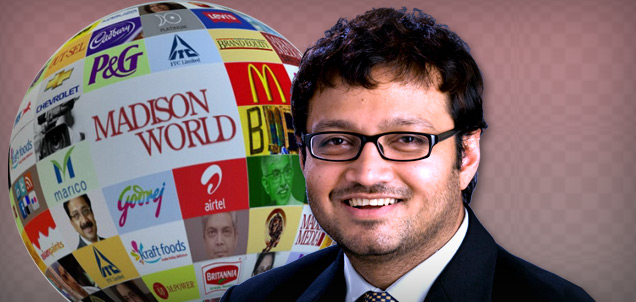
    While 2012 will be remembered as another familiar year at the Emvies given the absence of a new winner, what it will also be remembered for is the emergence of new challenger brand. Madison Media Pinnacle – the agency that emerged a close runner-up with 135 points – was a surprise entrant at the top having beaten other notable agencies by quite some margin.


    While it was the campaigns for big-spending client Cadbury that did the trick for the Pinnacle, CEO of Madison Media, Gautam Kiyawat offers other facets of the agency that he believes made it race its way to the top. According to Mr Kiyawat, what has worked for all of Madison’s various media agencies is to create the right structures for the right clients and to enable the team to drive results. In fact, without sounding too pompous, he even goes on to state that if Pinnacle and Infinity are combined (as the teams operate under a single roof), then Madison is the No 1 agency at the Emvies this year.


    In conversation with Johnson Napier, Kiyawat throws light on the factors that worked well for the network this year, on Madison Infinity bagging the Grand Emvie, on how clients are reacting to their newfound success and what to expect from Madison on the awards front for 2013. Excerpts:


    Q: A brilliant performance by Madison at Emvies this year. What according to you were the factors that worked in your favour?

    I would term our performance at Emvies this year as fantastic. It’s a result of all the hard work that the team has put in over the last year. We’ve put in a structure that creates excellence by design and not by accident. The fact that the wins have been so emphatic and across the board is testimony to the above statement. That’s the way forward for Madison which is to create the right structures for the right clients and to enable the team to drive results.


    Q: Personally, did you have any favourites from across the units under Madison Media that you had pinned your hopes on?

    All the entries were truly deserving of the awards that they received; I wouldn’t want to single out any one of them. In some cases there were other agencies in some categories which had potentially more deserving work. So I wouldn’t want to take the credit away from the other winners. But at the same time the entries that went from Madison were equally deserving of the awards. Let’s not miss the point that if you look at the agencies under Madison (Pinnacle and Infinity) and add up the tally, we beat leader Mindshare by quite some margin. The way we work at Madison is that we put dedicated teams for each client but they all sit under Madison Media.


    Q: You will also be remembered this year for edging out several other big agencies to emerge a worthy runner-up at the Emvies. Would it be a good re-invention accolade to move forward with?

    Madison has always been a force to reckon with. The philosophy at Madison has always been to be the best agency that it has the potential of becoming. We’ve been fortunate to do what we think is right for the client’s business and we keep our eye on that ball and then everything else follows from there. It’s clearly a question of achieving our own potential as opposed to comparing versus other agencies.


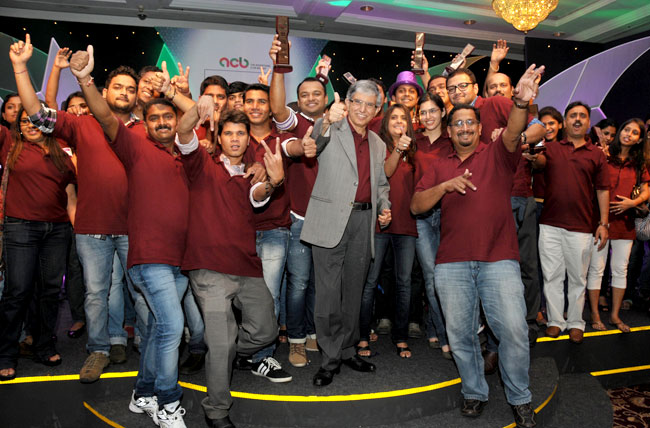
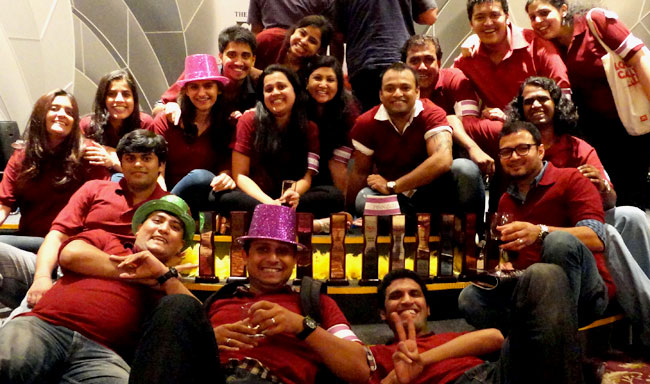
    The Madison Media winning team at Emvies 2012 A jubilant Madison Media team


    Q: It looks like the decision to float an agency for a large client like Cadbury has paid off… at least on the awards front. Do you see this as an encouraging move, one that may find more followers going forward?

    I think every decision has to be taken in its own merit and its own context. So I am not a big fan of blindly re-applying the way teams are set up; I think teams should be set up in context of what the client’s needs are and then everything else moves on from there. We’ve done what is right for Madison and our clients and that’s what working in the context of the objective that we’ve set out with.


    Q: What has been the response from Cadbury over your performance at the Emvies?

    Cadbury is over the moon. They are a fantastic client to be working with. They treat the Madison team as an extension of their own organization and the results are there for all to see. Apart from the fact that we have capable teams to handle all of our clients, it really makes a difference when the client makes an environment for driving excellence. And we all know that it takes two hands to a clap and that’s what’s driving both Madison and Cadbury.


    Q: Do you see Cadbury upping marketing spends on the back of a super showing at the Emvies this year?

    Marketing budgets will always be a function of the business priorities so an award win as emphatic as the Emvies doesn’t necessarily mean more market budgets would come in, going forward. That continues to be a separate parameter that gets decided by the business priorities of the client.


    Q: How would you rate the judging task that was set out for the jury members at the Emvies?

    I would say the judging process was very well done. It deserves to be added that it was judged by a jury of peers in the first round and a jury of clients in the second round, so how much more rigorous can it get? Among the other parameters the judging process that was done online this year was good. The results are for all to see. People had a chance to go and have a look at the entries and case studies, and it was clear that there were a few that stood head and shoulders above the rest, which showed in the results.


    Q: Also, Madison Media Infinity won the Grand Emvie award for Saffolalife-Saving Private Heart campaign. Surprised at the win, or was it expected?

    This again was a fantastic piece of work and an example of a great team working very seamlessly with the client towards a common objective. We were quietly sure that Infinity would do well and convert shortlists into sure-shot winners. The client too is extremely thrilled at the outcome.


    Q: Are you looking at a better showing in 2013? What would it take for a new winner to emerge at the Emvies 2013?

    Like I said we are going to keep our eye on the ball, do fantastic work in line with the business priorities of our clients and the results will be there to show for it. In my mind, Madison is already No 1 because Pinnacle and Infinity sit under the same roof and are part of one Madison Media entity. If you add that we are already at the top. But yes, if you continue to do good work in line with driving client’s business the results will be there to show for it.


  • Jaldi 5 with Raj Nayak: No sex, no violence, no Pakistani in Bigg Boss 6…

    Raj Nayak

    Okay, we’ve cheated. We went out to ask just five questions, but ended up with several interjections, so the Jaldi 5 is a rapidfire 10. Or thereabouts.

    Raj Nayak, CEO, Colors is one of the best minds in the broadcast business.  MxMIndia caught up with him soon after a presser with actor and Bigg Boss host Salman Khan and Endemol India CEO, Deepak Dhar. Mr Nayak was candid when he admitted to MxMIndia that the show was a dampener last year. Guess for the honesty in answering some tricky questions, Mr Nayak deserves to win this critical round.


    01. A ‘paarivaarik’ Bigg Boss? Why junk the USP of catering to the voyeuristic Indian?

    Over the last few seasons, we Bigg Boss became very predictable. Even participants who’ve previous Bigg Boss shows think they need to behave in the same way. Tasks in the house have been very predictive. While the vouyerism is the soul of the show, it has also alienated a lot of audiences. We believe that it is a cult programme, no doubt about it. It is one of the biggest programmes for Colors. Among all the reality shows that we do, it is the most expensive show. There are 59-62 cameras at work. It is an amazing experience.


    Over the last six months whatever we have done on Colors, we have done differently. We scaled up Jhalak Dikhla Jaa. We did not make it just a dance show, but dance and humour. A show like Bigg Boss has a huge cult following. Then we have Salman Khan whose popularity transcends from 7- to 70-yr-olds, he appeals to everybody. Whether it is classes or masses, he is a superstar. Not to leverage his brand appeal would be stupid. This was the thought process then. We thought, let’s convert the show, flip it on and do it on a positive note. Some of the things we have learnt – what we can do, what we can’t do. So we have tinkered with the format a little bit.


    So no voyeurism, no sex and violence?

    The voyeurism will be there. That cannot go. It is the soul of the show. The casting will ensure that all houseguest are achievers. There will be no negativity. Earlier we had people who were newsmakers but they always had something negative. But this year, not one person who goes into the house will be negative. Even if there is voyeurism, there will be a lot of fun element in the show. Even voyuerism will be in acceptable norms.


    And clearly no sex and violence. We want the whole family to watch the show. One can have a good show without having sex or without having violence. Jhalak Dhikla Jaa is good example. That will give you a good indicator of the slotting.


    But someone like Sanath Jaisurya didn’t do very well?

    Yes but what it did was to bring out the wow factor of the show.


    Any Pakistani?

    No, we won’t. We think there is enough talent in this country at this moment and the casting team thought they have enough people they can cast from within the country at this moment.


    02. What are your expectations from ratings? Last year was a dampener and the bar has been rasied much now…

    Yes, last year was a dampener. There is no doubt about it. But the way we are looking it is that we want Bigg Boss 6 to be the most successful season that Bigg Boss has ever had. We have dissected the show from the first to the last frame and you will very many new elements this time. We genuinely believe that it has the potential to become blockbuster. As for the bar, it will always keep raising. You can’t keep looking at the scoreboard because it is different matches and genres. Within the genres, ground and match that we are in, we are sure that we will put on a bloody good show.


    Sur-Kshetra didn’t do well in ratings last week?

    Yes, last week setting the foundation. We hadn’t have Ashaji then.  The show actually started this week. Last week, the show was setting foundation of how the auditions happened in Pakistan and India. I am a firm believer that the show will pick up with every passing week.


    03. Sony pushed KBC to the weekend slot. How will Bigg Boss affect your fiction slot?

    We shifted Khatron ka Khiladi to weekend. We did Jhalak Dhiklaa Ja on weekend. We don’t have a fixed policy. But we felt Bigg Boss is a big show, it is bloody expensive show. And if you have to amortize the cost, you have to run it seven days a week.


    04. Who are your sponsors? Are reality shows value for money?

    We are in discussion with sponsors.


    Vodafone?

    With Vodafone as well and many other players


    The ticket price has gone up substantially this year because we are scaling up the show in many different ways. Hopefully, we will have enough sponsors to achieve our targeted figure.


    See, value for money means different things to different people. But let me put it this way: most reality shows do not make money. While there may be exceptions to the rule,  on a reality show, you normally recover about 70 percent of your investment. There may be some reality shows on which you make 100 percent. But you need to have reality shows for the intangible value they bring to the brand, and to the channel.


    Last year, in-show placements had become a little too much?

    Exactly. Those are the things which we have taken into account. One of the things is that not only Bigg Boss, but also other shows like Jhalak Dhikla Jaa and India’s Got Talent we are very conscious that at the end of the day we have to give value to our advertisers but I think we can do it far more creatively, we can be subtle about it which probably will give more credibility and give more bang for the buck.


    05. What next? The Yuvraj Singh show?

    If all goes well, we should have it either at the end of October or first week of November.


    We are looking at one or two more show formats.


    Reality or fiction?

    Can be either. But we are looking at some more interesting stuff. It may be big or small. You must have noticed that in last six months, we keep reinventing, experimenting with new things. Like Manmohan Singh said, ‘We are not afraid to take risks and we have courage to do so.’


  • Jaldi 5 with Shailesh Gupta: Both readership & circulation will co-exist & complement each other

    On Friday, Shailesh Gupta, Director-Marketing, Jagran Prakashan was unanimously elected Chairman of the Audit Bureau of Circulations (ABC) for the year 2012-2013. S M Ahmad, Executive Vice President – Marketing of ITC was also unanimously elected as the Deputy Chairman of the Bureau for the year 2012-2013. Sam Balsara, Chairman and Managing Director, Madison World was the outgoing Chairman of the ABC.

     

    MxMIndia caught up with Mr Gupta on the sidelines of a dinner hosted by Mr Balsara on the occasion and sought his answers in the first edition of a new ‘quick interview’ series.


    01.   What will be your priorities as Chairman of the ABC?

    The priority is to bring about a more transparent system, evolve the ABC as a currency and make it a powerful decision-making tool for the industry.


    02.  Over the last few years, the ABC’s role has diminished given the growth of readership as a currency… what will be your attempt to reverse it?

    The idea is not to reverse it. Both Readership and Circulation as currencies will co-exist and complement each other. However, in order to make it more relevant to decision making, the currency needs to evolve with the changing times. The attempt will be to ensure that circulation as a currency regains the confidence of the industry and is of genuine use for decision making by both planners and media owners.


    03.  With the merger of the NRS with the IRS, the readership currency will only get stronger with newspaper marketers. Do you see a further diminishing of the role of the ABC and the currency of ‘net paid sales’?

    The core issue I think is that while the Readership currency has evolved on the one hand, the circulation as a currency has lived in status quo. Also while Readership as a currency will always be a sample-based study, Circulation is the census – therefore, the importance of the NPS is very clear. Rather than the role being diminished, I look at a scenario where we see these studies complementing each other and eventually benefiting the print industry at large.


    04.   One of the charges that many publishers have had is that the ABC – over the last 15-20 years – has failed to take into account present-day practices of invitation pricing and low cover prices of publications. As publisher of India’s largest daily, do you see that rule being amended in the near future?

    It’s too early to talk of the possible amendments. But clearly we will need to march ahead, look at the changes in the environment, and be able to evolve the currency to reflect the changes. For this, we will need to have all publishers on the same page. It will be important to consider suggestions and opinions of all stakeholders to create a robust and transparent currency – one that truly reflects what’s happening in the marketplace.


    05.   In the United States, there’s an ABCi for measurement of traffic on websites. Do you see the ABC in India doing that in the future?

    Too early to comment on that at the moment, but as of now we have a clear priority ahead in terms of restoring the sanctity of ABC as a currency and making it more relevant for the entire industry eco system.


  • Jaldi 5 with Sorbojeet Chatterjee: Quality editorial is core for any news brand

    A disclosure: he’s our quizmaster and hence part of the MxMIndia family.

    But he’s a professional first and as he sets out to make a dramatic switch from television to print, we thought it would be good to do a ‘Jaldi 5’ with him. For the record, Sorbojeet Chatterjee assumes office today as Vice President – Marketing at Diligent Media, publishers of the multi-edition DNA newspaper.


    01. From the No 1 Hindi news channel network to a challenger sports network to a challenger newspaper brand… you could”ve been sitting pretty with the leader at Aaj Tak. So why change?

    The answer lies in the question… as a marketing professional it’s critical to get varied exposure and not get too comfortable. After a fantastic stint in television news, the scale of sports was indeed tempting. I have been quite fortunate working across strong leader and challenger brands with some of the sharpest minds in the media industry. The momentum continues with DNA.


    02. You don’t hear of too many people switching from television to print. As a media marketer, do you see fair amount of action in print?

    There is no denying that the relevance and more importantly the impact of newspapers are constantly growing… especially in India.


    For me it completes the proverbial ‘circle’ in media…television, radio and now print. The complexities of building a strong newspaper brand are quite different from what I have done so far and I am looking forward to a new set of marketing challenges.


    03. What’s the first big thing that one can see on you joining DNA? Will there be more synergies with the parent group’s media offerings?

    Too premature to say anything. Will be suitably poised to answer this after a few weeks of rolling up my sleeves and getting my hands dirty.


    04. There are various views on it, but we would like yours: what’s more important for a newspaper’s success – quality editorial or great marketing?

    This is hardly a debate. Quality editorial is the core product for any news brand and is the solid foundation. Aggressive marketing is essential to create consumer awareness and overall buzz. A strong product without strategic marketing or a struggling product with cutting edge marketing yield the same result – a failed attempt!


    05. How’s Mumbai been for you at work? Pardon our putting you into a spot on this, but a quick Mumbai v/s Delhi analysis?

    Ah, this is a toughie! As a professional in this dynamic environment, one can’t afford to get attached to any particular location… it’s not the city that matters, but the culture in the workplace. How’s that for diplomacy?


  • No resting easy on laurels: Ravi Rao


    By Johnson Napier


    There’s some magic mantra that seems to be driving the team at Mindshare India to be at their performing best. How else would one explain the endless series of notches in their awards belt? After emerging No 1 agency at the Emvies this year, Mindshare India has gone on to win another big accolade – Media Agency of the Year at Spikes Asia 2012.


    MxMIndia spoke to the man behind the agency churning out the dream run, Ravi Rao, Leader, South Asia for Mindshare. While he admits to the agency throwing up some spectacular work it would in no way mean resting easy on the laurels. There’s a bigger challenge that lies ahead for the agency, he affirms. Excerpts:


    Mindshare Mumbai is on a roll again on the awards front. You’ve just bagged the all-important Media Agency of the Year accolade at Spikes Asia. What was it that brought the tide in your favour?

    We are extremely delighted to have won the accolade; and to win it for a client like HUL is a double delight. If you analyse, we had 5 shortlists and they were spread across three of our brands. More importantly, all three brands went on to win some award at Spikes, which is terrific for us. I would credit the showing to the all-round performance of the team.


    The big takeaways that emerge from our performance at Spikes this year are: firstly, all of the brands are local by stature – other than Rin – so that’s a big booster for us. Very simply, the power of an idea to push it through and get us an award is something that is very unique and has also helped the brand awareness as well as volume share in the process. Most importantly, it is the combination of every single media playing a role and each one delivering and creating synergies to bring the best out of the results. In a way, if I again look at the tally and say that we won against several competitors across the region also gives us a sense of bearing in terms of where we are today.


    What it also means is that we need to continue to deliver similar if not better work for our clients. It is a challenge that we want to continuously keep pushing ourselves against. No doubt the competition is getting tougher but we will have to adjust ourselves and up the single point of call that we have in Mindshare.


    By winning this accolade, have you pipped other notable contenders (from Mindshare) across Asia to the tag of being the best in the space?

    I think it is a matter of structuring how to get out real ideas. It is an idea that has to be behind an insight that works very well for the brand and land it properly. I think that is the key element in getting an award. We managed to do that well. The interesting part is yes, it has been a windfall for us this year but we do not want to rest easy on our laurels and want to keep pushing our boundaries even further.


    Are you disappointed with some entries not managing to make the cut in terms of a win?

    What we realised is that there are certain other entries that we thought were worthy of an award but somehow didn’t make the call. For example, if we look at the Emvies in terms of the wins that we’ve had and at the others too…I guess the parameters change and it’s important that you really look at how best you can reach the audience in a different way. As a country, we still have some way to go in terms of one, the content and secondly, in terms of the format of presentation which is also very critical. But all said and done, we are in the learning phase and will only get better and better as we move ahead.


    What significance does a creative award like Spikes Asia hold for a media agency like Mindshare India?

    Winning at Spikes is a big accolade for us but we do not want to take it easy because yes, there were a great set of campaigns that collectively made it work for us this time but what it requires is that we need to excel in a similar way across every single campaign and client that we cater to. It means that we want to keep doing better all the time and it’s only going to be a bigger challenge for us in the future. So while we would definitely relish the wins we want to fold our sleeves and get back to doing some great work in the future.


    Do you see HUL emerging a hot contender for the Client of the Year title in the future?

    As I see it, it is a systematic way of shoring up everything in the process. In my mind, it is an intense but healthy competition and all it does is bring the best out of every single team – whether from the agency or client’s side. We will surely give everyone a run as we go along as much as the competition is going to do and it is only going to get more intense as we move ahead.


    What would be the next big focus area for Mindshare India as you move forward?

    One area that we really want to look at is Cannes. It is the single biggest aim that we have going forward. The other thing for us is to make great campaigns that have a high ROI. By doing this, we even want to look at other areas like winning awards with IPA. Those are the targets that we have. We are working towards that goal and time will tell.


  • Jaldi 5 with Supriyo Sinha, VP – Bengali Dailies, ABP

    Supriyo Sinha

    Ebela, the tabloid from Anandabazar Patrika Group, recently launched in Kolkata and Howrah, priced at Rs 2. Supriyo Sinha is positively hopeful about its success. Jaldi 5 with him reveals more about the Bengal market.


    1. Since ABP is the undisputed Bengali daily in the market, why was there a need to launch another Bengali daily?

    ABP is the most iconic group in Eastern part of India. The group has been in the market for almost a century. ABP is, by far, the leading newspaper. A Bengali tabloid is a historic milestone for us. We launched Ebela to address the certain need gap that arose from communicating with Bengali youth, and the Bengali young-at-heart.


    2. Why has the launch been restricted to only in Kolkata and Howrah? How is ABP marketing Ebela?

    We launched in these markets based on market research. The research estimated that the appetite for a tabloid is higher in Kolkata and neighboring regions. The other markets are still traditional when it comes to news consumption and believe in broadsheet.to market the product, we are using a four-pronged approach. We are out-of-home media in a big way to spread awareness. Then there is web promotion to capture the youth on Facebook and Youtube, Television and radio commercials created by Ogilvy, and on-ground events. We are also driving subscription promotions.


    3. Is the advertiser profile for ABP and Ebela the same?

    Yes and no. National brands who wish to target the young-at-heart and local brands with youth as TG have been approaching Ebela. The ad rates for both the products is different.


    4. TOI is entering the market with Eyi Shomoy. Would it imply any strategy shifts for ABP?

    No. There is a core market reason for us to be doing this. TOI has been changing its own marketing and communication strategy in this market because of our strong presence.


    5. What are your expectations from Ebela?

    I dare not speak for the market but I am hoping for a positive response. From the initial print of three lakh copies, we only wish to grow. The readers, and advertisers, are calling it a refreshing and exciting product.


  • Jaldi 5 with Roop Sharma: Govt must be transparent with consumers on digitization

    Roop Sharma

    She has been one of the most vocal voices in various discussions on digitization having been part of the cable industry for over two decades. While the government came up with a status report stating that 68 per cent of the TV households in the four metros was digitized, in the run-up to the Sunset date of October 31, we first asked Roop Sharma, founder President of the Cable Operators Federation of India, on what the reality is on the ground.


    1. We have a little over a month to go for digitization in the four metros. If the government estimates of last week were to be believed, by now over 70 per cent of Mumbai, Delhi, Kolkata and Chennai would be digitized. What is your information?

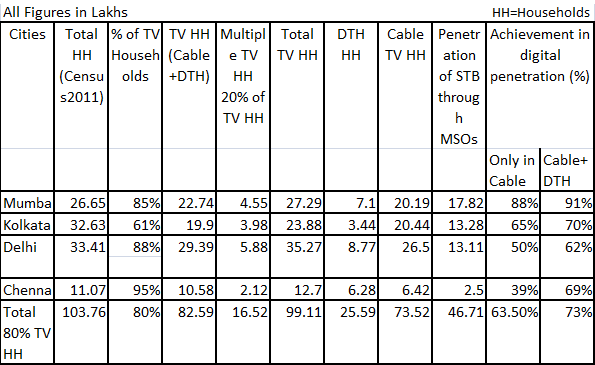
    Well, there are still some issues, but we think the government figures are off the mark. Our figures are as follows:


    Corrected STB Penetration Table -17 September 2012

    ( Includes DTH HH as part of Multiple TV HH not considered by I&B)

    Note:-
    1. Ministry has not included DTH TV HH in multiple TV HH where as it should have done so, being part of the same universe.
    2. Basis of % of TV HH in the Metros is hypothetical. Mechanism of its working out or its source has not been mentioned.


    The time has come to incentivize MSOs, but instead the licences have been cancelled of two of them.


    We are on September 24, and the price that consumers would have to pay is still not out, so things need to be moving faster.


    Broadcasters need to also ensure that there is availability of digital signals in all four metros.


    2. What is your information: are the lower income groups in these cities buying set-top boxes?

    They have been asking many questions. They want to know how much it will really cost them. Remember, some of them don’t even have colour television sets.


    Unfortunately, there is only one group representing consumers in the various taskforce meetings. Consumers would like to know how much it will really cost them.


    There will be an uproar if people don’t get to watch TV from November 1 because of this lack of information.


    3. There is a worry that there will be some piracy in the form of pilferage of signals after November 1…

    Why should there be any such pilferage? The broadcasters can simply stop the analogue signals. The question is: do they want to stop these? Will they fear loss of advertising if according to them digitization is not complete?


    4. What more would you like the government to do to ensure 100% digitization?

    Well, the government needs to do a variety of things.


    First, through the various advertisements, tell consumers very truthfully and clearly that one needs a set-top box for every TV set. And there’s an entertainment tax to be paid per TV set. So in Delhi, a consumer needs to pay Rs 20 for one set-top box and Rs 60 for three, if he or she has three TV sets.


    Second, consumers need to be made aware, that there is electricity consumption of around 18-20 watts per month which would roughly mean an extra spend of Rs 100. Also, they need to be aware that on these vanilla set-top boxes, they can’t get broadband or video on demand. There is no swap scheme and there is no portability currently.


    Third, consumers must also know where are the service centres for these set-top boxes in case the boxes need to be repaired.


    And broadcasters?

    Broadcasters also need to do more. For instance, in the various serials and reality shows, they must get the stars and anchors to talk about the need to buy set-top boxes!


    5. The last mile which is managed by the local cable operators is the key to the implementation of Digitization. Are all cable operators in the four metros about the implementation of the October 31 deadlline?

    Let me reiterate here that all cable operators want digitization. We will be happy to see consumers getting a choice and they will only pay as they watch.


    In fact had there been good availability of set-top boxes, we could have achieved things much faster. Right now, when a cable operator goes to the MSO for boxes on paying money, you don’t get the entire lot of boxes.


    We will be happy to see total transparency. We would like to also see deals between broadcasters and operators signed not on a lumpsum basis but as per the set-top boxes.


  • Jaldi 5 with Ashok Mansukhani: To achieve 100% digitization, govt must be a facilitator, not a schoolmaster

    Earlier this month, the government came up with a status report stating that 68 per cent of  the TV households in the four metros were digitized, a figure that was disputed by head of the Cable Operators Federation of India (COFI) Roop Sharma when we interviewed her yesterday (http://www.mxmindia.com/2012/09/jaldi-5-with-roop-sharma-govt-must-be-transparent-with-consumers-on-digitization/).

    We asked the very same questions to Ashok Mansukhani, President, MSO  Alliance about on-ground reality of digitization.


    We have a little over a month to go for digitization in the four metros. If the government estimates of last week were to be believed, by now over  70 per cent of Mumbai, Delhi, Kolkata and Chennai would be digitized. Is that the case?

    The information is the same as that of the government. However, 68 percent is not the national figure. It varies from city to city. With four weeks to go for the first phase of digitization, the question is about the rest of 30 per cent homes. Of course, it is not insurmountable. Lack of publicity from broadcasters is a problem. Then, there is no joint selling effort from  broadcaster and MSOs. The packages are yet to be announced. That is when the customers will begin to think of switching to digitization. Right now, they think DTH and cable is different.


    Are the lower income groups in these cities buying set-top boxes?

    The slums in Mumbai and Delhi sure have a television. But how do they know that from October 31 midnight, the analogue signals will stop? The digitization message says ‘box nahi to, TV bhool jaao’. One has to remember that digitization is a means to enable customer, not a retribution.


    The lower strata homes are being made used to use a set-top box and a remote. They have been told, ‘you see it, we will come and collect it later.’ Now this later will happen only when the packages are announced. The packages, however, have to be communicated door-to-door.


    There is a worry that there will be some piracy in the form of pilferage of signals after November 1.

    This is a rubbish claim that I have been hearing since long. The pilferage happens only when the broadcaster keeps his decoder ‘on’. Once that is switched off, there is no way that pilferage can happen. Yes, it can also happen if someone demodulates a cable signal. But the government has the power to take action against that person.


    What more would you like the government/others to do to ensure 100% digitization?

    The government needs to speed up the fiscal incentives, and should act as a facilitator. The fact is that it has become a schoolmaster instead. Since each city has different issues, which need to be tackled positively.


    The last mile which is managed by the local cable operators is the key to the implementation of Digitization. Are all cable operators working step-in-step with MSOs in the four metros about the implementation of the October 31 deadline?

    There is no issue with the cable operators. They have been pushing for DAS since 2000.