Category: INTERVIEWS

  • Must make OOH likeable: Daniela Krautsack

    Mainstream advertising is going non-traditional; print media has caught up with viral; it is a manifestation of media in which the logical conclusion seems to be 360° surveillance.

    How does the consumer cope with the futuristic outlook of a media world in which everything seems to be public and nothing is private any more? Does the media industry’s guiding light of ‘branded utility’ justify an unlimited use of hi-tech chips and codes? Who are the consumers that voluntarily jump on the ambient media bandwagon?

    Daniela Krautsack, Media Innovation Strategist, Managing Director, Cows In Jackets, talks about today’s global media trends and visions with a critical eye on their creation, their degree of popularity and their lifespan in an interview with Nibha.


    Q: When did you discover your passion for the non-traditional form of out-of-home media?

    It was about a decade ago when I moved from dreamy but advertising ‘old-school’ in Vienna to London. The company transfer within the MediaCom group offered me three simple things: to watch, listen and learn how international media strategy & co-ordination is done. Today, when I look back, I know how lucky I was. “To be at the right time, at the right place.”

    The ‘Find Your London in Yellow Pages’ campaign got me ‘in touch’ with many new forms of media when I travelled from my home in Belsize Park to work in Soho. From the moment that I walked into the station to the moment I walked into our office door, I was touched by ‘The yellow pages points’.

    The company had advertised on the backside of my ticket and even on the wallet that protected it. The entire train and its seat interior were covered in bright yellow design. Never having experienced transit media in this scope before, I felt intrigued to find out more. That was the moment when my exploration started.


    Q: Does the OOH media industry’s guiding lights of branded utility justify an unlimited use of hi-tech chips and codes?

    I would like to define that term ‘branded utility’ first: it means that brands or ideas are genuinely useful to the people they touch. So, how useful are codes and chips and do they ‘touch’? The integration of codes in OOH media in countries such as Japan where I experienced the use of QR (= quick response; a two-dimensional bar code) and other 2- and 3-dimensional codes years ago has not spread considerably across the world – yet. My experience is that the percentage of mobile phone users that have an application installed which allows reading a QR code, has not even in Japan reached the mass. The use outside of Japan is still insignificantly small in order to consider an OOH campaign that would achieve reasonable results. At present, QR codes can be rated as the best and most effective technology for mobile data capture. What I like about it so much is the thought of reducing OOH media to its core function, the visual transfer of a brand and product image with the focus on “image” rather than “text”. Including a QR code within the design of an advertising campaign that uses billboard or any other ambient OOH form allows a “pull” interaction by the recipient of the message. QR technically allows future billboard designs to use significantly less space to transfer lots of information. If interested in the message, people will connect.

    So, returning to your question: Every way that ‘helps’ the community – and this touches current trends such as “economy of time” symbolizing our aim to efficiently manage time – will be embraced and appreciated. I personally do not fear an unlimited use of this code technology. At the moment companies use codes and chips within their communications strategies predominately to play with people’s curiosity and the media’s enthusiasm and willingness to publish these ‘media-first’s’.


    Q: Who according to you are the consumers that voluntarily jump on the speed media bandwagon?

    I am always quite amused to see how small the number of people is that jump on the media bandwagon. When I visualize this ‘future train’, I only count the number of passengers with two hands. I have just been to a party with a crowd of 20- to 40-year olds, people that you could describe as pretty normal when it comes to adopting trends such as the latest technology and fashion and during a discussion, someone asked: “What is a podcast?” I looked around, astonished to experience this lack of contemporary knowledge. I had to realize that only a handful of people knew that a podcast is a word fusion of the word iPod and broadcast, that it is a digital media file and that podcasts allow you to download or stream content about any topic you care about.

    The consumers who are the clever cookies when it comes to being updated of what’s going on around the world in society, culture and technology are those who jump on. And we don’t necessarily only speak about the ‘young’ crowd. They just adapt easier to new technology because they don’t think about it as much as an older, more experienced media consumer.


    Q: According to you how does the consumer cope with the futuristic outlook of a media world in which everything seems to be public and nothing is private any more? Panopticon or individual freedom of expression?

    When I observe the mood and listen to the opinions of people who share their thoughts about the ‘media’ world we live in, I notice that they appreciate the increased opportunity to express themselves, but they are also aware of being monitored. This place can be visualized as a panopticon. We still have a choice to publically plead for a higher sensibility and reluctance to give out personal data to somebody we do not know. The careless behavior of our society to wildly publish every intimate fact bears a huge risk of violating our private sphere.


    Q: What has been your greatest challenge in ambient media?

    Convincing clients who were very sceptical towards this media form. The other one was the launching of a communications agency, ie  entirely dedicated to ambient media and non-traditional strategies and that too at  a time where taking the risk and trying out new things in communications planning wasn’t fashionable.


    Q: How do you define third place marketing and creativity in the OOH media?

    While ‘first places” represent “the home”, a place that I decorate and feel comfortable living in and ‘second places” the ambience of work, ‘third places’ are landmarks with a core attraction of such extraordinary extent that seeing them is an absolute must; thus talk-of-town organically develops. Third places can be museums, wide-open spaces but also supermarkets and shopping malls. They come to life with light, video projections and special installations. These venues feature an emotionally charged ambience and for which there is no admission fee. Without creativity, I dare to say, a third place doesn’t exist. Creativity is one of the cornerstones of the third place foundation. And OOH media logically benefits from the strength of such an eye-catching place.


    Q: What all factors do you take into account when you make a media strategy, which involves innovation in the ambient media?

    • The objectives of the campaign

    •  The demographics/psychographics, moods and opinions of the target group

    • The brand status

    • The competitors’ activity

    • The creative execution

    • The budget

    • Innovative technologies or never used before ideas, techniques or material

    • A measurement tool / method


    Q: According to you what is the approximate share of ambient media advertising in terms of ad spend when compared to the total ad spend in the OOH media?

    Considering the different definitions of ambient media (in the UK, the media industry does not even use this term anymore, they call it non-traditional OOH or brand experience or shopper marketing or stunt, etc) worldwide, I can only give a rough estimate. I just looked at the OOH share in Austria, the UK, Mexico and India and it is quite similar, roughly between 5.5 percent to 7.6 percent, Mexico showing the smallest share and India the highest OOH share.

    While ambient media is a category still not being monitored in most countries in the world, the UK reports approximately a share of 6 percent. This however does not consider guerilla, ambush and experiential marketing, sampling, promotions and events. It is clear though that this is a category that will continue to grow.


    Q: How do you see the scope of ambient media in South-East Asian countries and Africa and where does India stand among all?

    Overall speaking there is a large potential for ambient media throughout Asia and Africa. Whereas we experience a counter movement by ‘the new’ traditionalist opinion leaders in cities across Europe and the United States that plead and demonstrate for an advertising-free ambience, the outdoor category overall is growing. We are challenged to create OOH media not only in a more visually attractive way but also in one that is considered as a “useful” platform again, e.g. as an information platform that hopefully focuses on core images and incorporates technological measures (e.g. code technology) to allow information to be picked-up when needed. The important model for the future is to position OOH media as “a likeable platform” that interacts with the life of city inhabitants; media to stimulate opinions and thoughts, to inform and to entertain.

    Due to its high level of ambient media activity, Thailand has become a role model for non-traditional media in the Southeast-Asian market. Some of the award winning ambient media campaigns were developed in Bangkok and rolled out across Asia. According to my own observation in India as well as the opinion of local media experts, the potential for ambient media in India is considerable. The biggest challenge for India is not the lack of investment or funds – it is about finding clever solutions to scale ideas across India and the increase execution opportunities outside main metro-cities.
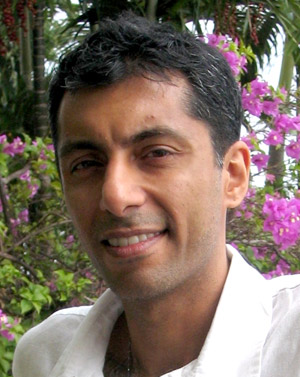
  • Exploiting OOH’s true potential: Mukesh Manik

    By Nibha


    If developing strong and reputed brands makes good business sense, and if brands are what the consumers relate to, identify with, and buy, then it is important for marketers to exploit the true potential of billboards and other OOH media.

    More on this in an interview with Mukesh Manik, M-I-C (Man-In-Charge) at Encyclomedia Networks, the only Indian OOH media creative shop that is currently headquartered in Mumbai, India. It is represented in four markets under joint venture agreements – Australia & New Zealand out of Melbourne, Australia (www.mediatag.com.au), Latin America out of Buenos Aires, Argentina (www.encyclomediala.com) with offices in Guatemala and Mexico, Kiev, Ukraine and Jeddah, Kingdom of Saudi Arabia (www.encyclomedia.me). Besides, Encyclomedia is also represented through exclusive distribution contracts in Bangladesh, Kenya, Nigeria, Pakistan, Croatia, Kazakhstan and Hungary.


    Excerpts from the interview:


    Q: How has your journey been in the media Industry till date and what is it that excites you about billboards?

    Media and advertising has always intrigued and amused me. A message is sent out to the masses repeatedly over a period of time, and that this message has a multi-dimensional impact on the choices that are made by an individual and the perception of a product is fascinating. Billboards are my favourite as more and more people are spending time out of home. They also present their own set of challenges as they have to deliver a message while the viewer is moving in most cases at speeds of 60 km/hour. This gives just a few seconds to catch the attention, deliver the message and assist brand recall. The trick lies in the design which should be able to engage the viewer in those critical few seconds while there are other distractions like traffic, environmental landscape, music, etc. A well-designed billboard is easily one of the most powerful, consistent and effective means of communicating to an audience on the move. Marketers still have to exploit the true potential of this medium and this in itself presents an opportunity like no other.


    Q: What role do you think innovation plays in OOH media? And in the recent past can you name any campaign which can be termed as “really innovative”?

    Innovation isn’t just about using cutouts and neon, though I admit that they are effective at times. Innovation lies in understanding how best to use the tools available to enhance the billboard creative, to create an impact that has a lasting recall. Truly innovative billboards are remembered years later, much after the campaign is over. In the recent past, one of the most innovative billboards I have seen was the Barclays Bank Billboard which just carried their logo on a white background. The innovation was in its simplicity and ability to make the announcement that Barclays is now in India.


    Q: How does one justify the cost of innovations in terms of both the recall value and the rise in the market share especially when we don’t have any posting technology at place to justify the effectiveness of the OOH campaign?

    “Innovation” is perceived as being expensive but in actuality it is quite the opposite. In the Barclays billboard mentioned above, there was no additional cost of materials, cutouts, neon, etc. but it still had the desired impact. Innovation drives recall, recall fuels sales. Advertising is meant to provoke a response. If the ad is forgotten, it cannot possibly invoke a call to action. Though there is technology available to measure the effectiveness of Outdoor advertising, the true measurement is in the after effects of the campaign. Product advertising is easier to measure compared to a service as the advertiser can just take a look at their sales graph.


    Q: What difference can be made in terms of ‘Innovation’ for Outdoor (Traditional Media) and for Indoor (Alternative Touch Points)?

    I believe that a media plan consisting of an Outdoor campaign and an effective Point of Sale is sufficient to achieve sales objectives for a brand. Marketers need to appoint specialist agencies for the different media formats they advertise on. This is easier said than done. The creative and innovation has to be across all the formats. An agency specializing in TV commercials and Radio cannot possibly be expected to come up with innovative creative solutions for an Outdoor campaign.


    Q: According to you is accountability the factor that is keeping the clients at bay from the OOH Media, when it comes to the media plan? And do you think that the clients are ready to experiment with the real time innovations and not just cutouts and neons in the near future…?

    Clients are increasingly accepting Outdoor as an independent medium. The double digit growth in the Outdoor advertising industry confirms this trend. With over a 100 TV channels and hundreds of print publications, the chances of an advertisement being missed is higher than ever. Outdoor advertising addresses that issue easily as a good outdoor campaign cannot be missed when people are on the streets. The industry will mature with the growth in Outdoor spends. Cutouts and Neon are considered innovations in the absence of specialist Outdoor design studios.


    Q: How do you rate the change in the Indian OOH industry, especially in the past 3-4 years…? And according to you, what is it that will make OOH media more than just a reminder medium?

    The more clients see pathbreaking billboard designs by specialist agencies, they will demand the same for their brand as well. This will lead to fantastic creative innovation in Outdoor advertising and billboards will not be considered a poor cousin of mainstream advertising. There are many brands even today that successfully use only Outdoor Advertising to communicate their message.


    Q: How do you see the n-sync between the agencies, the media owners and the statutory authorities? And who according to you should take the initiative to improve the OOH industry overall?

    To expect the media owners, agencies and statutory authorities to come and work together is far-fetched. The change has to be from within. I believe that if media owners offer international standard media formats and quality media displays to agencies, it will encourage better designs and print quality. This in turn will change the cityscape for the better. It has already started to happen with the introduction of street furniture, modern bus stops, etc.


    Q: What according to you are the essentials of outdoor advertising?

    There are five essential skill set components in outdoor advertising.

    The first essential skill is creativity, the art of being innovative and imaginative. We must apply creativity to everything we do – tirelessly exploring innovative ways to communicate the brand USP in a meaningful, relevant way. The message has to break through and resonate with the consumer to be successful. Consumers are not waiting for your message. You must deliver it to them in an unexpected manner. An effective creative has an after-shock. It will be felt long after the campaign is over. When that happens, you’ve done your job. That’s creativity; you can’t put a price on.

    The second skill is being media-savvy. With the media fragmentation increasing exponentially, each medium must be understood for what it is really capable of delivering. It must be targeted precisely and assessed with the end user in mind. As with the creative, media planning and placement must build the clients business.

    The third is unyielding commitment. You are more than the agency; you must be an evangelist, preaching the virtues of your client to your staff, your client’s staff and public. We must be committed advocates as well as dedicated business partners. The entrepreneurial approach that we apply to each of our client’s business must be evident in every phase of the advertising development, from planning to creative to execution.

    The fourth essential skill is discipline. At Encyclomedia, we assist clients in focusing on the compelling, differentiating selling points that include consumer consideration. We must never lose sight of that focus as we move from creative development through media planning and execution. We seek to reach the targeted consumers with an effective, focused communication to which they will respond.

    The fifth is accountability. The bar is set with the client’s business objectives. Then we raise it a few notches higher. Our philosophy is the image-building and branding must always be balanced against the need to deliver on the bottom line. Advertising in Outdoor is a mean to an end, not an end in itself.


    Q: What’s your take on breakthrough ideas in the OOH domain, especially in terms of the changing scenario?

    Breakthrough ideas might appear to be instant or impulsive, but they are not. They are based on sound strategy, outstanding visuals, and the correct application of timing and media. The art is in ensuring that all elements of communication work together, so that the end result is more powerful and effective. It’s like conducting a symphony orchestra – all the instruments working together, the timing just right to make beautiful music. In outdoor advertising this is a total business solution.

    We’re a very visual audience. The world is changing in so many ways. Today, television shows and movies are quickly clipped, with constant talking and constant cuts. There are no more long scenes. In outdoor advertising one must understand that this is how people consume information, so one must work to bring them in, but then your campaign must nurture them and be there for a long time. Remember that an outdoor medium is not a “speaker’s point”.


    Q: And about the core component of the brand message?

    It is important to understand the life cycle of a category, a brand, and a product to take a brand to the next level and drive long-term success. New brands must establish a niche. A mature brand must find new life, possibly by re-inventing itself through extension or by creating a new identity that connects with today’s consumers.


    Q: Do you think the budget affects creativity and deliverables to the client?

    Outdoor advertising will always, like any other advertising, be dependent on the brand’s budget to some degree. Having inadequate money to spend puts undue pressure on the advertising. Whether you have the budget or not, the advertising must be truthful, relevant, eyecatching, memorable and downright pleasing; only then will it go through to mind and memory of the consumer. Smart advertisers know that outdoor advertising helps develop brand awareness, and they select a specialist outdoor design and production agency to deliver the job.


    Q: What’s the key to your success as a specialist OOH creative agency?

    To be successful, you must be involved. You must take the time to learn your client’s business and brand attributes well. Let the client know that you care as much about the business as he or she does. Analyze the business, its chief competitor its unique culture, mission, vision and trends of the category it’s in. Most importantly, stay focused on brand attributes upon which the client can build. Be single-minded, literally. Don’t throw many attributes out there in the hope they’ll take away just one. Be certain the one is the one you want them to take away. If you don’t know your client’s business intimately, you are likely to focus on attributes that aren’t really important to the consumer, often at the client’s request. It’s your uncomfortable obligation to be honest and say, “That’s an attribute that has no meaning to the consumer.” Recommend what is right for business, what is supported by logic, research and solid, strategic thinking; that which differentiates your brand from the competition. Only then can you communicate in a compelling manner, cut through the clutter and attract interest and attention.

  • Innovation and OOH are synonymous: John Ellery

    Having studied to become a Chartered Surveyor, working in property management and sales, Mr John Ellery joined the outdoor contractor London and Provincial in 1968 and trained in all aspects of the outdoor medium from billposting to backlight development. L+P was at the forefront of the outdoor advertising industry at that time and led many industry initiatives.

    Specifically Mr Ellery was involved in the birth of the street furniture medium, developing acceptable designs and working with local authorities to integrate outdoor within modern town centre developments, and the street scene.

    From there on it was an upward progression as Mr Ellery went on to become Marketing Director of Smiths and Masons, Board Director of L+P Group and Adshel, Managing Director, Dennis Sullivan at Portland, and formed the International Division of Poster Publicity. He opened their offices worldwide, providing a global network with 18 offices outside the UK, producing over half of the groups annual billings of US$400 million. PP opened their 19th office, in Sydney, early in 2005.

    PP and WPP formed a joint company, with Portland, called Kinetic Worldwide, to continue to develop the outdoor specialist function globally. Since 2006 Mr Ellery ceased his connection with the company and is now an international OOH consultant.

    In an exclusive interview with Nibha, John Ellery shares his views on tackling the economic slowdown, global consolidation, work ethics, global OOH guidelines and much more.


    Q: Do you think that the current economic slowdown will give out-of-home advertising an edge over other media, across the globe?

    This will vary market by market. In the main I believe that OOH has many advantages over other media, but as several advertisers believe that OOH so often only accounts for a small percentage of total media spend, in difficult times, it is sometimes the first part of a media schedule to be cancelled. However with the right marketing and enthusiastic, well connected sales force, many outdoor owners can provide advertisers with some more reasonably priced advertising alternatives to their regular media choice. There is still an education job to be carried out on many advertisers. All sectors of media are suffering at this time, but from what I am seeing, a medium that can offer a specific and well targeted audience is enjoying a better sales ratio, than a medium that is broader in its audience appeal.


    Q: The current economic slowdown is affecting the OOH media owners’ businesses across the world; as a result a number of major advertisers are cutting back on their advertising spends. What according to you is the key to win back advertisers to the OOH arena?

    It must be a continuing effort to provide a well positioned OOH medium with top quality servicing and display performance. Of course this costs money, but we have such a public medium which is only as good as the last site that was seen. In the UK and US the number of outdoor sites displaying paper and glue displays is reducing quite dramatically. In the US it is proposed to have no further paper and glue sites by the end of this year. I know traditional panels in India are now almost all vinyl, but with “dry posting” recyclable materials are being used. Good qualitative research is playing a growing role in outdoor, and is important to be able to demonstrate “eyes on results”’ rather than simple opportunities to see.


    Q: What advice would you give to the Indian Outdoor fraternity, both in terms of marketing and pricing of their media’s so that they don’t face the heat of the global economic slowdown?

    Be realistic about the economic climate. It will help if the OOH business was to work in concert as a proper industry. I know that it is easy to say, and it is a difficult dream to realise, but OOH is one of the more minor media choices, and we should work together to demonstrate its strengths and advantages. Each individual company will want to maximise its share of any budget. That often leads to reducing price. Of course an advertiser wants to achieve good value for money, but OOH must hold its head up! We cannot be turned off, or ignored like TV and press. Both TV and press have seen dramatic reductions in their advertising income over recent years, due to a reducing audience. The Outdoor audience is generally increasing, and that should carry an equivalent increase in value. The growth in the online sector is generally to the detriment of TV and press, not OOH.


    Q: Is the OOH industry doing enough to foster new formats and has the global consolidation of media owners helped this?

    There have been a number of new formats over the recent years, and OOH is all about the position of the site and audience. I have seen several new formats fail because they have not reached the awareness of the client. All very traditional and simple. But we are seeing successful new formats – LED, plasma screens, mobile phones.  The current financial conditions are not really supportive of these sorts of formats, but we need to encourage advertisers to really appreciate the positives that these new formats provide.


    Q: Out of Home is in the spotlight more than ever for its variety and breadth of offering. What new OOH media types have impressed you and why?

    LED enables so many clients to present their advertisement in the key locations where the opportunities exist. However, the success of LED is very dependent upon the programming and creative expertise utilized. Similarly, the same applies to plasma screens. The escalator plasma panels on the London Underground have been well used by several advertisers. The angle of the escalators provide a truly great creative programming opportunity, which a number of advertisers have taken full advantage of, to provide a very memorable advertising campaign.  To see products jump from screen to screen in time with the movement of the escalator is very eye-catching and absorbing.


    Q: What role do you think innovation plays in OOH media? And in the recent past can you name any campaign which you could call really innovative?

    Innovation and OOH are synonymous, whether the innovation applies to the creativity of the artwork/programming, the location in relation to the audience, the timing of the event, or the combination of media used. However it must be said that many and indeed most OOH campaigns simply work because they advertise a product or brand in a simple and clear way on a campaign of well placed outdoor sites. It would be inappropriate, I think, to name one or two “really innovative” campaigns as there are, and have been, so many.


    Q: How does one justify the cost of innovations in terms of both the recall value and the rise in the market share especially when we in India, don’t have any posting technology at place, wherein one can justify the effectiveness of the OOH campaign?

    This is a difficult question to answer. The simple answer is that since its origins, many hundreds of years ago, OOH has been proven to work in many, many markets. Justification of “innovation” can be measured by research, and by sales and ROI. The research work that has been going on in our industry world-wide has been immense. The India market can benefit from it, and I do hope that it is at this moment. In Europe and the US we have been working on global guidelines for OOH research which I have encouraged the market to consider and accept, and I believe this is happening. Where you don’t have a particular technology in place I think you need to look at other markets and share their experiences to your advantage.


    Q: How do you rate the change in the Indian OOH industry, especially in the past 3-4 years? And according to you, what is it that will make OOH media more than just a “reminder” medium?

    One of the obvious changes, probably in more than the past 3-4 years, is the reduction of hand-painted, and the growth in “PVC” or “vinyl” on large scale panels. This has really improved the presentation and appearance of the medium in India. Also the growth in the Street Furniture sector, and the huge improvement in the Airport Advertising offerings, is helping the medium to become a force to be reckoned with. The “negative” that I have heard from a number of people on the buying side of the business is the clutter that appears in a number of locations in most of the cities in India. OOH is seen in conjunction with the environment, and this is a matter for improvement by all the players that are in the business.


    Q: According to you is accountability the factor that is keeping clients at a distance from OOH, when it comes to the Media Plan? And do you think that the clients are ready to experiment with realtime innovations and not just cutouts and neons?

    Accountability is extremely important in the OOH business. Lack of accountability has held the medium back in many markets around the world, over the years. It’s a difficult factor to achieve when there are many players in the business, and all very keen to maximise income. But without it, as you say, it will keep clients at bay. In a market with many landlords controlling site locations, who are only interested in their financial returns it is difficult to establish a trusting, level OOH business which is accountable. But overall it is the contractors that can bring accountability. They need to work together for the benefit of the OOH Industry, by establishing a code of conduct, that all will adhere to. The research programme that is currently ongoing will go a long way towards helping out. I am sure that clients are ready to experiment with real time innovations which will become more apparent as time moves on.


    Q: How important is building up relationships with Agencies, Advertisers and Associations? And what sort of difficulties have you faced in the recent times across the globe?

    Very important! I am not the first person to state that the most important relationship is with the client, and the agency. It’s more straightforward to tell clients and agencies about a TV commercial – time of transmission, and potential audience etc, than it is to explain the locations and potential audience of a group of outdoor sites. We are back to accountability and trust again. Explaining the way in which the message can be delivered directly to the target audience is all important. In some markets there have been questions asked when it appears that not all sites booked appear. Double bookings have also caused questions to be asked. If we do not play our business in a straight and honest way, then the future will not look good.


    Q: Your site mentions the steering board of a new group, responsible for providing global guidelines for OOH research. What is the current progress on this?

    FEPE – the “Federation of European Publicite Exteriure” was formed in 1959 by the legendary Jacques Dauphin. This year we celebrate FEPE’s 50th Birthday at the World congress in Sardinia 3-6 June (www.fepe.com). FEPE represents the European OOH industry, along with many other OOH countries who are members.  Back in November 2007 FEPE met with ESOMAR – the global media research body and agreed that global guidelines for OOH research should be produced. This would help agencies and clients to compare the OOH medium globally, to compare apples with apples. A number of bodies were invited to join, and in addition to FEPE, and ESOMAR. These are:

    EACA – The European Association of Communication Agencies

    Chairman of the Technical Committee – Neil Eddleston JCDecaux

    WFA – The world Federation of Advertisers

    OAAA – The Outdoor Advertising Association of America

    AAAA – The American Association of Advertising Agencies

    MRC – The Media Ratings Council

    CANA – The China Association of National Advertisers


    Q: What sort of challenges and opportunities do you see, when you look at a market like India?

    There is a notable improvement in the way OOH is handled and marketed in India. New developments into the street Furniture domain, the modern treatment of airport advertising concessions show how more aware operators have become.  Improved accountability always helps generate a greater trust in the medium. A closer and more trusting relationship between the site operators can also improve the way OOH is perceived.

    Clients do not wish to be associated with clutter, so a continued drive to improve the environmental landscape will be to the advantage of the OOH Industry.

    Support the research guidelines and generate “eyes-on” figures will create more credibility for the medium. So, continue the move towards standardisation of panel sizes and the investment in backlights, MUPIs etc. Move towards using recyclable print substrates, and improve awareness of green issues.

  • Conde Nast Traveller hits many highs

    By Akash Raha


    Conde Nast Traveller completed its first anniversary in the Indian market. The magazine was launched in India in October 2010. The anniversary issue of the magazine is on stands at a price point of Rs 100. Conde Nast Traveller is the third magazine from the group in India, after Vogue and GQ. Whereas Conde Nast Traveller is concerned, it is the sixth international edition of the brand.  Even though Traveller’s stay in India has been only for one year, it has been there for a long time in UK and US. MxM India got in touch with Divia Thani Daswani, Editor, Conde Nast Traveller to know more about the magazine’s year-long journey.


    Q: Conde Nast Traveller has completed one full year in the Indian market. How has the journey been so far?

    For my part, I can say this has been an incredible first year for Conde Nast Traveller! When we were launching it, we believed this would be a very niche magazine with a print run of about 15,000 copies. Our print run for the anniversary issue is 40,000 copies, just one year in.  It’s a wonderful reflection of the enormous passion for travel that we have in this country—and also the sophistication of the Indian traveller. But numbers aren’t the only thing that matter: the feedback has been tremendous.


    Q: How do you think Conde Nast Traveller has fared vis-à-vis its competitors in India?

    Readers follow us with an acute eye; they read us closely; they love the visuals; they take our recommendations seriously. More so than any other publication I know, Conde Nast Traveller is a magazine people save for years—it doesn’t become irrelevant or less interesting when the month ends. Finally, I’m very proud of the fact that some of the greatest writers and photographers in the world—from Suketu Mehta, Pico Iyer, Amitav Ghosh and William Dalrymple to Julien Capmeil and Prabuddha Dasgupta—have worked with us so enthusiastically. It’s the power of travel, really. It brings out the best.


    Q: What are the content and product innovations you have done for the anniversary issue?

    The anniversary issue is especially close to my heart because it’s our first India Special. This is an idea we’ve been working on for many months; in fact, ever since we started doing our research back in January 2010. We discovered that there’s a collective desire among discerning travellers to discover more of our own homeland. It seems the further away we go, the more we jet-set around the world, the greater the longing to explore India. So this anniversary issue is a tribute to our ‘incredible India’. It’s full of secrets and surprises from each corner of the country, from New Delhi to Tamil Nadu to Bihar to Mumbai. Even the international destinations we’ve covered have been captured by Indian voices. The lineup in this issue is superb; it’s been the collaboration of the great talent and hard work of dozens of people across the world, from Amitav Ghosh in China, Hari Kunzru in Los Angeles and Rashmi Uday Singh in Paris to Michel Figuet in Delhi, Julien Capmeil in Bihar and Ruskin Bond in Mussoorie. And of course, there’s a healthy dash of glamour, with Frieda Pinto, Tina Ambani and Rahul Khanna! Another favourite of mine is the photo essay featuring some of our favourite unseen images from the first year of Conde Nast Traveller—images so glorious we couldn’t help holding on to them. There are other innovations, of course, from a printing and production perspective, but to me, this issue is special because of the dozens of gems inside.


    Q: What are the other campaign initiatives you have undertaken around your product to highlight your brand among others in the space?

    I think the focus has been to create a magazine that appeals and talks to the affluent well travelled  Indian audience which is really been the biggest success story for us. Apart from this we have focussed on a targeted marketing plan via outdoor in key locations, targeted subscriptions program and of course working on the signature event which is the Conde Nast Traveller Reader Travel Awards. We also have a program to reach out to the key influencers in the industry by hosting small events.


    Q: What do you think about the travel magazine space? Do you see it growing in the years to come?

    As far as the travel industry is concerned, the future is India and China. Outbound travel from India is set to grow to 50 million people by 2020. Already we are among the top spenders in the world when it comes to hotels, shopping, food and nightlife—and of course, destination weddings!


    Q: What has been the response to your anniversary issue?

    The anniversary issue is already out and has received an extremely positive response on the newsstand. The cover price continues to be INR 100.

  • Zippo lighting up India. Sales could double in 5 years: David Warfel

    By Shubhangi Mehta


    Mr David Warfel, Global Marketing Director – Zippo Manufacturing Company, is a marketing professional with over 25 years of experience. Mr Warfel oversees the development and management of the Zippo brand worldwide. Responsibilities include the direction of all advertising and marketing communications, product management, trade and consumer relations, and product and retail development.


    The Zippo Manufacturing Company’s products are sold in over 160 countries worldwide and Zippo is one of the most highly recognized and respected global brands. The famous Zippo Windproof Lighter has been manufactured in Bradford, Pennsylvania since 1932. Since that time almost 500,000,000 lighters have been produced and sold.


    In addition to Windproof pocket lighters and fuel, Zippo markets a wide range of consumer products, including candle and utility lighters, writing instruments, watches, fragrance, and outdoor speciality products.


    MxM India caught up with Mr Warfel for a discussion on Zippo and its growth trajectory and plans in India.


    Q: How has growth been for Zippo when it comes to Indian market in the past 2.5-3 years?

    Last year, Zippo witnessed a 69 percent increase in sales volume in India – one of the fastest growing markets for the brand.

    We currently operate in shop-in-shop formats across the country and also plan to open up a Zippo branded store. This shall happen once the entire range of accessories and brand extensions are launched.


    Q: What kind of market do you see India as?

    The brand has been present in the country since 2008 and has seen a strong increase in popularity over the last few years. India is a key market for Zippo. The country views Zippo as a brand, not a product.


    In the last two years, India has become a significant market with great potential and we expect it to be one of the key players in the international market. The growth in India is predicted to be more than double in the next five years.


    Q: Which markets do you consider the best in terms of scope and development when it comes to growth?

    There is a 90 percent brand awareness globally of the Zippo brand. Forty percent of our business comes from North America. Currently, China is our major international market followed by Japan. If the success in the Indian market continues we expect sales to reach similar levels to China in the not-too-distant future.


    Q: What do you think are the attributes that help a brand like yours click and connect in the market especially India?

    Zippo is an iconic American brand. It is aspirational. The lighter is ingrained in the fabric of both American and global culture. With strong India and US connections, constant global traveling, inflow / outflow of Indian students from the US has transferred the qualities / aspirations of an American brand to India. Attributes like these truly connects Zippo with India market making the brand relevant to our target audience.


    Q: How is the consumer behaviour different in Indian markets when compared to global consumer?

    Indian consumer confidence has been consistent during post recession period. The overall optimism pervading the country finds Indians open to spending a little more than they did in the past two quarters. There is also a high level of acceptance, openness to new ideas and cultures, therefore, more confidence towards testing new products.


    Q: What is your growth strategy henceforth?

    In the last few years Zippo has begun to expand its product range into the lifestyle space focusing on men’s accessories and outdoor products. India is the single most important focus right now. We have increased our marketing spends ten folds worldwide in the last 10 years.


    As we are diversifying the product category to lifestyle products and accessories, you will soon witness a lot of the below mentioned products in India. Our windproof lighters have been performing phenomenally well in the India market and are really helping to establish the brand amongst our target audience.


    Zippo’s product line up is divided under four heads:

    Lighters & accessories – Windproof lighters, Zippo BLU, Pouches, chains, ashtrays, lighter fluid, butane gas, flints and wicks

    Home, Hearth & Patio – Candle lighter

    Outdoor line – Hand Warmer, flex neck, emergency fire starter, campfire starter, Windproof lighters

    Men’s lifestyle – Writing instruments, leather goods, watches and fragrance


    Q: Please tell us about your foray into the digital medium and experiments with social media.

    In 2011 Zippo launched a global Facebook page and also Twitter accounts in key markets in order to interact with our core consumers. The Zippo Facebook page now has around 200,000 fans, a number which is growing daily.


    Q: How do you plan to capture your target audience?

    The product range from Zippo has been well categorized for both men and women. We are selling through shop-in-shop formats and regularly engage customers through interesting marketing initiatives. Also, with growing music trends worldwide, the brand Zippo has also built up a strong association with rock music. The brand has been able to play a prominent role in key live rock music festivals across Europe, US and also in India.


    We recently sponsored the Harley Rock Riders concerts in India and were thrilled to see avid Zippo fans waving their lighters in the air in time with the music – a classic Zippo moment!


    We also have Zippo owned music platforms, the Zippo Hot List Tour, in China and Korea as part of our Zippo Encore music programme. This programmme is aligned with supporting emerging rock talent within the local market.


    Q: What are the key challenges before Zippo?

    As legislation gets stronger, it is likely to affect the business and that is why Zippo as a brand has diversified itself into various lifestyle product categories, transferring the Zippo brand’s key characteristics across all new products.


    Also, another major challenge is that of counterfeit products. We are ever vigilant in protecting our intellectual property and have a legal team dedicated to tackle counterfeit issues.


    Zippo enthusiasts know that authentic Zippo lighters carry the Zippo bottom stamp and the Zippo trademark stamped on the lighter insert. The famous Zippo Lifetime Guarantee also accompanies every genuine Zippo lighter.


    The counterfeit goods are both locally and internationally sourced. It is a vicious market for any premium brand and the best way to deal with them is to stick to company guidelines while making any purchase.

  • With animals, what you see is what you get. With human beings, it’s more complicated


    Make no mistake about this: Lynn de Souza has a soft, warm, chilled out, happy exterior. But inside that resides a steely, tough, hard-edged professional. And she needed all that internal strength to survive and thrive in an industry notoriously dominated by what she calls the ‘Old Boys Club’. Lynn and I go a long way back, and this made our conversation frank, fun and, yes, highly argumentative. And we discussed many issues ranging from the dubious media research, the future of various media, her role in promoting gender equality, her formula for cleaning up the otherwise scandalous Goafest. And why she, er, chooses dogs over men.  


    By Anil Thakraney


    What’s your exact job portfolio at Lintas?


    I look after Lintas Media Group, and our subsidiaries Karishma Initiative, Aaren Initiative and Lin TV. LMG and Karishma are media agencies, Aaren Initiative is the largest OOH agency and Lin TV produces and distributes branded content. I am responsible for their overall financial and reputation, health, corporate governance, etc.


    Who do you report into?


    Michael Wall, the global CEO of Lowe Worldwide.


    Would you not like a global role now, having been there and done that in India?


    Have I been there and done that in India? I don’t think so. India’s potential story is not even the tip of the iceberg, and I haven’t even travelled the whole tip yet! I would love to have a global role that is based out of India, because this is where it’s all happening. I am fiercely proud of India and all things Indian and it’s our time to show the globe a thing or two. We don’t need to be sitting in Manhattan or London to do that, in fact, that could be counterproductive.


    Would it be correct to say you’ve reached the top of the Indian media peak?


    More like the bottom of the ocean, which has the most beautiful creatures and colours in the world. There are so many challenges ahead, so much to learn and so much to do. Our lives as consumers of media are being transformed so rapidly it’s really hard to keep pace, and this rate of change is even faster in an emerging market like ours. What we thought we knew yesterday is no longer relevant today, and what we think we know today will not be relevant tomorrow. The only people who can be on top of all of this are those who want to keep learning and keep evolving and keep travelling. There is no place for those who think they have arrived.


    What’s your goal for the next 10 years? What else would you like to achieve?


    Goals are for footballers and 20-year-olds. I don’t have any. I am just happy to be alive, to have a wonderful family, to work with some awesome people, to have a few good friends, and to do my little bit for my four legged friends. I take each day at a time, that’s all, and just try to do the best I can for that day, honestly. When I was young, I did have plans and was ambitious, too ambitious. My values have changed. It’s important to be good at what you do, but it’s also important not to be so good that you become bad for everything else around you.


    Key challenges ahead for the media buyers.


    Look beyond the colour of money to the colour of advertising and media content, and the kaleidoscope of consumer insights. Get away from the keyboard and play some real piano now and then. Visit places they have never been to, in reality, and not only on 3G. Meet and talk to people from all cultures including, especially including, our villages in the length and breadth of our country. Data will never be a substitute for reality and as long as we hold on to it for dear life, we will continue to reduce the value of the media, and the consumers they deliver, to the lowest common denominator – a CPRP.


    Are our creative people ready for the new media? And the clients?


    I think the younger ones are. I have been meeting a lot of independent digital agencies recently, and it’s always great fun to meet their founders – usually young creatives and techies who have left traditional agencies and employers to write their own dreams and ‘apps’! You would also be surprised how many clients are now taking to what you call ‘new’ media like fish to water. There are lot of questions and uncertainties and domain knowledge issues of course, but there is no dearth of desire to learn, because user technology has become so easy and enjoyable that once they use the digital spaces for themselves, they want to start using them for their brands.


    Was media unbundling a good thing? You pioneered it.


    It was the best thing to happen to the media function. Till then, media planners were languishing in the backrooms with their big red NRSs and estimates, always at the tail end of a presentation and often sent home without even presenting. Making the function profit seeking in its own right attracted the right kind of front-room talent, investment in tools and databases and the ability to then cope with a magnifying media world. Which industry has seen such an explosion of new offerings in such a short time – 600 TV channels, 70,000 print titles, 350 radio stations, and countless websites, all in 15 years or less? Unbundling has allowed us to specialize enough to cope with this growth, possibly even enable this growth.


    Predict the future of the print media in India. Newspapers are shutting down all over the world.


    You need to separate form from content. Newspapers abroad have digital versions that have a much larger following than the newsprint version. I read the NY Times every day because the reading experience is so enriching, it doesn’t matter that I don’t live in that city. As long as people have eyes, they will read, and as long as they read, there will be something delivering the news to them in a written form… in newsprint or cyberspace, or Kindles, how does it matter? About India, do you know that the highest read newspaper in the world is a Hindi daily? Regional language papers have trebled in readership in the last ten years. Tier two and three cities, where literacy is still not even 70% and growing, register the highest growth.


    And what about television?


    TV will be fully digitized very shortly and this means that the convergence of content across digital broadcast, web and telephony platforms is almost here. My agency is already producing content for television, re-purposed for mobile, and developing web apps to go along. As are many others. Consumers follow and lead content, so to track them and predict their behavior will be very important, our measurement systems will need to keep pace and adopt new technologies to capture, retrieve and analyze data.


    There are too many complaints about media research in India. What can be done to change things?


    There’s an overload of data in some aspects. We have different data sources for different media. And there’s no one single source available. That’s why many of the media agencies invest in their own studies. We have our own, for example. What worries me is that nobody’s looking at the future. So that we have future-ready research which is truly centered around the consumer. I told the IRS people that they need to think ahead. They have a 10-year-old way of collecting data and that has to change.


    Also TV viewership measurement.


    That’s why you can’t recommend media only on that basis. Which is why a lot of us have our own proprietary research which picks up a whole lot of other aspects. You cannot rely only on these data sources.


    That’s no solution. We need few but reliable research studies which the whole industry can follow.


    It’s not necessary for everything to be done at the industry level. You do things at an industry level when you want a currency. When you want a common parked research where both the buyer and the seller access it, so it becomes a currency. But if you want to do things that are genuinely good for the brand, you develop a whole lot of other proprietary studies, which many of us do.


    Lynn, frankly I am disappointed with you. You’ve spent a lifetime in the media industry, you’ve done it all, you’ve made your money. Isn’t it time for you to think of the industry and take on the challenge of reforming media research so that everyone benefits?


    If I did that, I wouldn’t say it to you. If I had any ambitions that I want to change something, I would quietly go about doing it my way. Three years ago, I didn’t want that there should be two research agencies, the IRS and the NRS. I was sitting on both the committees and I found both doing the same things, both saying the same things, so I said why can’t they be together. So quietly, at both meetings, I would suggest let’s have only one study. It took three years of doing this before the RSCI got formed. They’ve elected me as the first Chairman and we had our first meeting only last week. I am hoping we will change the readership agenda of this nation. Print is still the largest medium in India, and if the RSCI works out, we will make a big change. But I won’t thump my chest and say ‘Hum yeh kar rahe hain, hum woh kar rahe hain!’ (Laughs.)


    Not enough. You should take on media research full-time, and become the Queen B who made a huge difference.


    (Long pause.) I promise to give it a serious thought just to please you. (Laughs loudly.) But I will not commit to anything you wish me to commit to!


    You’ve cleaned up Goafest. There were no scandals this year. How did you do it?


    I am a great delegator. And I give a lot of respect to people I delegate to. So we had Shashi (Sinha) completely given the role of running the awards. I gave Sundar the role of running the conclave. I looked after the organizing and the venue. The most important thing I did for Goafest was to create an impression of being clean. I looked for a very clean looking place, I changed the venue itself. So it looked fresher, cleaner, greener. That had a very subtle effect. Then, I roped in the ASCI and the IAA with the responsibility agenda on the first one and the sustainability agenda on the second one. That gave the impression we are doing something good for the industry, and not just pampering creative egos.


    How did you handle the problem of self-voting?


    Shashi led that and he did a fantastic job. People were not allowed to self-vote. One or two individuals who were supposedly high on self-voting in the past were not included as judges this time.

    But Lintas still won’t take part in the awards…


    We do not have any confidence in the awards given by our peers. I was given a job to do, to chair Goafest. I was forced to do it, and I did it to the best of my ability. But that’s different. You know, I served at the Cannes media jury in 2009 and it was a fantastic experience. It was professionally run, it was technically advanced. I have served on the Indian juries as well, and it was nonsense, though am sure this time around they did a better job. I have seen the behaviour of our peers, the kind of lobbying and planning that goes on. As an agency we are not into chest-thumping. But when our agency wins awards because our clients have won, I value those because the consumers voted us.


    But now that you’ve cleaned up the place, will Balki take part next year?


    That you have to ask him. But it has to do with the value you place behind awards. Not everyone thinks awards are the best thing in life.


    Looks like you’ve fallen in line with Balki’s ideology.


    (Laughs.) On the contrary he may be falling in my line! We have our own independent reasons.


    What’s this about women’s rights you’ve been promoting?


    Internationally, diversity and inclusion is a big agenda. As a part of that agenda, two years back, IPG asked me to set up and lead the women’s leadership network. Initially I refused. I didn’t think there should be segregation of any kind. Later I studied the subject in detail, and I realized there’s a very powerful economic reason why you have to support women. There are three ‘Ws’ that will transform this century: Web, Weather and Women. And the power that women are exerting on this century is enormous. It’s said if women were empowered at Wall Street in 2009. things wouldn’t have been the way they were. In India we have 29 women heading banks and financial institutions. So there is an approach that women bring to the table that improves the productivity of a team. So it’s important to keep and retain women. At IPG, 30% of our staff are women, and when you come to the top, it’s just 11%.


    How do we change this inequality?


    We need hardcore practices in place. We can have a hiring quota set aside for women. I believe last month Hindustan Lever hired only women. We need to make everybody conscious we are not doing anything special for women. We have to make men and women understand that when you work together, you do well. For example, Coca Cola has something called the ‘Power of 3’. They believe that in any big team, the minute you have three women in the team, the group becomes far more productive. And if you have just one woman in the team, she gets eaten up.


    But Lynn, women falling out along the way is a social problem. Babies have to be looked after. How will you change that?


    You try and keep them engaged in the work orce. Some of the things we’ve done include giving them the option to work from home when they are pregnant. By giving them a desktop mirroring system at home. That’s literally like working in the office. There are lots of such ways in which you can keep women productive even if they have babies.


    Personally, I am quite cynical about this whole thing. You can’t change deeprooted beliefs and attitudes so simplistically.


    Anil, you are basically cynical about everything! Anil ‘bloody cynical’ Thakraney! (Laughs.)


    Why are all ad agencies headed by men?


    In the creative agencies there is a very strong old boy’s club. It’s very difficult for women to break through into that club. And if they don’t play by those rules, they will not break into it. Read my blog on this (link).

    Exactly why were the 3As of I guys giving you stress? Why didn’t they want you in?


    (Long pause.) Because I am clean.


    You found corrupt activities going on?


    (A longer pause this time.) No comment.


    One rival media chief you admire.


    Sam Balsara. He’s awesome. A hardcore desi boy with so much energy, he does so much.


    The best boss you’ve had.


    Ravi Gupta. And Steve Gatfield.


    One thing you learnt to do from Roda Mehta?


    Two things. Precision and integrity.


    One thing you learnt NOT to do from Roda.


    (Thinks.) Over-precision. Beyond a point you have to just let it go, you don’t need perfection.


    Roda didn’t just do the media job, she built the media planning and buying industry in India. None of you guys have been able to do that. She was a game changer.


    It’s not needed. You don’t need a crusader in today’s world. You need inventors and innovators. In today’s world we need enablers. Twenty years ago it was different, it was the licence era, there were strictures and rules. Today there’s far more freedom. No one wants a crusader. Everyone wants an enabler.


    Would it be correct to say you love dogs more than men?


    (Laughs.) Why only dogs, any animal. With animals, what you see is what you get. With human beings it’s more complicated.


    Is that the reason you are still single?


    No, it has nothing to do with that. I didn’t find anyone as intellectually stimulating as… my dog! (Laughs.) Are you happy to hear that?


    Have you watched Balki’s two films?


    I haven’t watched ‘Cheeni Kum’ yet. And Balki hasn’t forgiven me for that. But he sent me the ‘Paa’ DVD, and I really liked it. I didn’t watch the last five minutes of the film though. Because I wanted to make my own ending. I wanted the character to live. So I made him into a dog. (Laughs.)

  • Copy us? Go ahead, says Reckitt honcho


    By Shruti Pushkarna

    Reckitt Benckiser needs no introduction and neither does the man who has ensured an outstanding record for the company in India.


    MxM India caught up with Mr Chander Mohan Sethi, Regional Director – South Asia, Chairman and Managing Director, Reckitt Benckiser (India) in a one-on-one interview, at the release of the latest international Dettol Habit Study by the Global Hygiene Council in association with Reckitt Benckiser, in New Delhi. The study which was carried out in 12 countries including India, found that people who have good manners have better personal hygiene.

    Mr Chander Mohan Sethi has envisioned and assisted Reckitt Benckiser in its entry into various sectors, as well as helped the company establish a strong foothold in the household products and personal care sector.

    Mr Sethi began his career at Reckitt Benckiser India as Branch Manager- Eastern Region in 1984. He was promoted to the position of National Sales Manager in 1987 and in three years, recognizing his huge contribution to the company, he was promoted as Head of Marketing and Sales. He also headed Reckitt Benckiser, Nigeria and West Africa in 1994. Mr Sethi began his career as a management trainee with Glaxo SmithKline Consumer Products Ltd.

    Reckitt Benckiser, a global consumer goods company, headquartered in UK, is a world leader in household, health and personal care. Some of its leading brands include, Dettol, Harpic, Strepsils, Vanish, Veet and Mortein.

    In this candid interaction, Mr Sethi reinforces Dettol’s growing market share and the need for competing brands to think of newer ideas to take on an iconic brand like Dettol.


    Q: What are the key insights of the latest Dettol Habit Study, specific to India?

    First and foremost, the study has been done in 12 countries; more than 14,000 consumers have been contacted. In India, the study has also been done, both in metros, mini metros and in smaller towns. I think two key insights have come. One is that, male and female hygiene habits are the same. And secondly, which is a bit concerning, is that the younger generation unfortunately is not following as good hygiene practices as they should. I think that certainly is a surprise for us.


    Q: As the latest report states, good manners and behaviour are equally important factors as much as the availability of good infrastructure to practice good hygiene. How do you react to that?

    I think it’s a great insight, it’s a great fact of life, that you could have the best infrastructure but if you don’t have the right hygiene habits, it would lead to, you know, infection. So you can have a very clean room, you have a very large home but if you don’t have the right habits, there is going to be a problem of hygiene.


    Q: Is Reckitt Benckiser taking any specific initiatives for hygiene awareness in rural India?

    There is a very fine definition between rural-rural and what I call semi-urban. In very small, 40,000-50,000 population towns, we focus in different regions in terms of going to these towns and doing mother contact programmes, also in school programmes and hospitals. I would like my team to go into areas where they can effectively to do it.


    Q: How does the Global Hygiene Council function?

    The Global Hygiene Council is basically an independent body made up of very eminent doctors and scholars. They do studies on hygiene practices, on what should and what should not be done, after getting insights into consumers’ lives and consumers’ homes, in places of work. These are independent specialists, who get funded by their universities or hospitals where they are attached. But when they come to the Council, which is where we put an education endowment to run this entire body for more than ten countries, they meet a couple of times, and we use their material to be able to propagate good hygiene.


    Q: Dettol ranked as No1 in the Most Trusted Brand survey by Brand Equity in 2002. It slipped down to No2 in 2003. Even though the brand has consistently ranked in the Top 10 Most Trusted Brands, it never regained the No1 mark. How do you react to that?

    The first point is that Dettol is one of the most trusted brands in this country and over decades together. The second point is that there are a lot of new brands that have come, whether it is in the technology sector, cars, information or services etc. So it’s a question of what is the priority in that consumer’s mind at that point of time on his list of things. For us, it’s very important that we read the consumer’s reaction and feedback. But just to give you an idea, Dettol Liquid, in an independent survey by Nielsen, is 85 percent of the market. If you take Dettol Liquid hand wash, again Nielsen says, 53 percent of the market, so I could go on. Now if Dettol were not in one of the most trusted brands then we wouldn’t have 85 percent of the market in liquids, wouldn’t have 53 percent in hand wash. And just to say, Dettol soap for example, the body soap, it used to be No 8 in the soap market, and it is today No 3 in the entire soap market. Certainly in the germicidals, we are today at the top.


    Q: Dettol has positioned itself as the germ fighter brand; how have other players in the market affected this position? In fact, as a study indicates, in 2007 Dettol made an effort to reposition itself to take on Lifebuoy. What do you say to that?

    Lifebuoy tried to position itself like Dettol, I mean they must be running out of ideas that they have to… but you know, I can’t blame them. If you have an iconic brand like Dettol, everybody would want to be like Dettol. So good luck to those guys who want to copy us but the consumer says there is only one Dettol, there is only one brand which they trust in terms of hygiene.

  • Huge demand for Indian content in US: Chris Brown, NAB Show prez

    Chris Brown, President, The NAB Show, talks to MxM India’s Rishi Vora on how he’s looking at India to participate in a big way in the global event starting April 14 – 19, 2012 in Las Vegas, Nevada USA.  Edited excerpts:
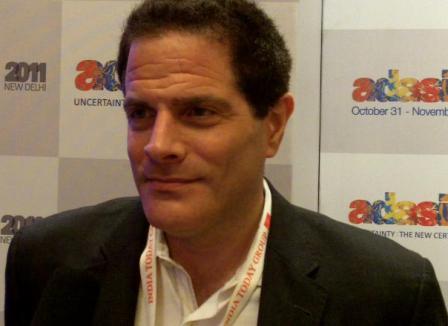
    Q: It’s been 90-odd years since The NAB Show was first introduced. How has the event evolved over the years?

    The NAB Show started as a television-radio event in the US at a time when media—primarily radio and television—were just about introduced. The focus was on technology, very basic in nature. The industry was evolving and you basically had small station operators. Over time, technology became more sophisticated, the internet started to become a potent medium, software started to play a major role. Then came high-definition TV which is a big plus for the industry.  Our audience became much more diverse; they began to expand into whole world of production and that tied us with the film community—the Hollywood and the Bollywood community. We then got into the enterprise community, covering segments such as retail and healthcare, companies that want to build content for entertainment or communication purposes.

    So effectively what we are doing is bringing buyers and sellers onto a common platform to meet business needs, to enable buying, selling and distribution of great content around the world. We get participation from more 150 countries. We are the world’s largest media and entertainment event. Our audience demographic is very wide, it covers television in all forms – cable, satellite, internet, mobile and cinema—and it’s a big reason why we’ve come to India.

    Q: Does the majority of the participation come from the US?

    Thirty percent of the total participation is global, and that’s a very high percentage. More than 2,500 people come from different countries.

    Q: What are your expectations from the 2012 event as far as the number of delegates are concerned?

    We expect to have 95,000 participants out of which 25,000 to 28,000 will be global participation.

    Q: How many do you think will participate from India?

    About 750 to 1,000.

    Q: What are your plans for the 2012 event that is schedule to take place in April?

    There will be focus on things like connected TV, and we’ll have new things like an Apps pavilion and a Cloud Computing pavilion. We are also bringing focus on Online Video.

    Q: Are you talking to YouTube too?

    YouTube is a company that has been on the show in the past, not in a big way but we’re trying to get them back. They have not committed yet but we hope they do.  But yes, there is no doubt we’re putting heavy focus on content platforms like these and that’s why we’re here to talk to companies and try and get them to the event, meet other companies from around the world, and explore business opportunities.

    Q: What’s the USP of NAB as a global event?

    We’re very strong on the digital media side, helping folks on the buying and selling space connect to each other. So YouTube and some major players in India and US, we try and get them together. The other part is just the straight connection of international content where it makes sense around the world. And in the US, we think, there is a huge demand for Indian content.

    Q: What’s in it for Indian participants?

    It depends on what kind of a company they are and what their focus is. If they are coming from more of a technology side, I think what they would want to do is come and understand trends—where is technology heading and how is that going to drive the business going forward. The other thing on the technology side they can do is, develop partnerships with companies that can help leapfrog their business to greater levels. If they are in the content business, they would want to build international alliances, partnerships and JVs etc.

    Q: How was the response from India last year?

    We had about 600 delegates from India.

    Q: Why is it that a delegate has to pay a separate fee for the conference and a separate fee to participate in the show?

    The conference is a different offering, and hence we charge a fee for that. We get the best speakers across the globe to share their knowledge and experiences, so there is huge value on that. However, it is not a huge revenue generator for us by any means. This year your focus is more on India, China, US and the UK. What are the parameters that determine the focus countries?

    For the last four-five years, China has really been on that list with India. So we look at economic stability, how much growth, whether there has been transition to HD TV etc. Brazil is generally the top country in terms of participation with close to 2000 participants every year. India is very much the focus country now. We are spending more time in India than in China. That’s primarily because our focus is on content. India is today producing top quality content that needs to go global, whereas China is a hardware driven market.

    Also, what we bring to the table for our participants in India is the scale. We are the largest media and entertainment event in the world. It’s a showcase of the world’s latest technologies.

    Q:  What companies in India are you initiating talks with?

    We are speaking to Balaji, Shemaroo, Idreamz, UTV, Reliance, Hungama, Big Synergy, Tata etc. The idea is to get a cross section of companies, across television, digital and films.

    Q: How big a challenge is it to market this event globally?

    It’s tough! We do a lot of work through the US Department of Commerce, so that connects us with embassy contacts around the world and that helps us reach local companies in different markets. We also work with trade associations in different countries, publications etc.

    Q: Should we expect many Indian participate as speakers in the event? Have you already got some names on board?

    We’re trying to get them but none have confirmed yet. We are hoping to get some really good speakers from India. We have extended our invitations to companies like Reliance and UTV.


  • Need to focus on consistency: Tom Doctoroff, JWT

    [youtube width=”300″ height=”250″]http://www.youtube.com/watch?v=6qvtd5T__QI[/youtube]

    By Tuhina Anand

    Video by Shruti Pushkarna

    Tom Doctoroff is a JWT man who has worked with the agency across geography. Having started his advertising career at Leo Burnett in Chicago he later moved to JWT. In 1994, he moved to Hong Kong as Regional Business Director for clients such as Pepsi, Philip Morris/Kraft and Citibank and then in ’98 to China as the Managing Director of JWT Shanghai. In 2002, he was appointed Northeast Asia Area Director (China, Taiwan, Hong Kong and Korea) and Greater China CEO. In 2008, he also assumed leadership of JWT Japan. Mr Doctoroff has played a key role in the growth of JWT in North Asia.


    Q: How do you see JWT based in the scheme of things in Asia today?

    I think that we have a lot to be proud of. JWT has an extremely cohesive management structure where all our goals and values are aligned, and I’m particularly proud of our creative community which is probably one of the jewels of our global network out here in Asia Pacific. I think we’ve got people who are proud of their own output in their own countries. One thing that I’ve always liked about JWT is that we are not cultural imperialists. I’ve never felt for example that because I’m in China, even 13 years ago, that I am on the other side of the world. We have a company culture that does respect individual idiosyncrasies and that’s very important to avoid this hegemonistic-macho advertising ethos. So, I am proud of JWT. We’ve certain things that we could do better, like digital where we’ve been a little bit slow, but I think we are catching up now. We are trying to bring into the agency an ethos of the need for digital to reinforce brand ideas. As for India, JWT in India is a powerhouse and it has a lot to be proud of. And I’m sure that it will overcome some of the frustrations of the past year because everybody knows it needs to be done.


    Q: How do you see JWT China in terms of creativity, going ahead?

    If this doesn’t get broadcast in China I’d be happy because I don’t want to appear arrogant where I live, but I think we set the standards of creativity in China. Honestly, we have a very stable management team and a very stable creative leadership team, and what that means is that we create an environment of safe self-expression within the agency as a whole. So we usually are the ones that are doing the firsts, we won the first Cannes Grand Prix, yes it was for print but it still didn’t happen by chance; it’s because we have a belief of what creativity is and how people work together in the agency and in collaboration with people outside the agency, even outside of China to develop engagement platforms. So I am very proud of our creative leadership. People call us the ‘temple of advertising’ and I think that’s because we’ve been so stable for such a long time. I’m not saying we don’t have weaknesses but creatively speaking, I think if you ask around, we tend to define a high ground to a certain extent.


    Q: What are the two things that you would advise to people in the industry which they could follow to get more ROIs?

    As soon as you bring in the ROIs, you bring in a different question altogether. So before we get to ROI, I think that one needs to always focus on consistency. A consistent brand idea, a consistent engagement idea that is genuinely media-neutral. I think the danger is that as we experiment with new forms of technologically-enabled engagement, we forget about the primacy of an idea. And if you start your media plan without having that idea clearly understood by all, then you have chaos. One thing that is critical in new markets is order, in consistency, in clarity of ideas or else people will tune you out. Nobody wants to figure out how the internet or how the digital app or the landing environment connects to the TV ad. So consistency is always key, and that will always require a high degree of conceptual craftsmanship. And the second thing about digital is that all digital is not the same. There is certain digital that is relevant to campaigns, there is certain digital that is relevant for customer relationship marketing, there is certain digital that is more transactional at the point of purchase; some of those belong inside the agency and then the big question is how you make sure that the entire agency is digital, but having a digital core centre of expertise as a heartbeat within the agency with some of that for outside the agency. So agencies need to know who they are first and then build their digital strategy based on that.


    Q: Talent is an issue; how much of an issue is it and how do you tackle it?

    It’s an issue at the most senior level. I find that the biggest issue for talent is that many senior people – and this is in China, I don’t think it’s the same in India – there is an abstract nature of advertising which makes people feel insecure. Chinese people want to have a sense of control over their destiny and they revere the concrete, and so what we often find happening is that people in their desire for control either start leading dysfunctional agencies, their own small agencies or they leave the industry altogether. So what we need to do is find ways to make a long-term career in advertising seem safe. Part of that is financial and frankly in China it’s not a problem, because once you get to be senior in China as a local person, the pay is quite respectable. But the real issue is making sure that you are providing a platform for senior management to stand up and feel confident on, and that requires a lot of persuasion and a lot of coaching as people come up to the ranks. On the junior level or the mid-level, it’s really a question of liberating their creative potential and making them feel that when they will open their mouth, they will be saying something that’ll be appreciated; and that gets into corporate culture and how you have an environment of dangerous silence, safe self-expression where proactivity is truly rewarded in a meritocratic sense. So advertising has to be very meritocratic and that’s something that’s not always compatible with traditional Chinese culture. But we make it quite meritocratic, so our attrition rate is much lower than the industry average is.


    Q: What do you think of Indian advertising in recent times; how do you think it has improved?

    I have been working with India tangentially for 17 years so there’s been huge progress. I think the progress first came on the production level. The change started around 10 or 12 years ago. I just noticed the ads didn’t look that cheap, the production values were pretty high. And now when I take a look at Indian advertising, I think that it is strong. It is very culturally rooted which is fine, as long as that culture is not gimmicky and it comes from cultural insight as opposed to just a celebration of anything Indian. So I personally think that strategically Indian advertising is very strong, execution has become better. I just think that the unfortunate thing is because of its proud confidence in the Indian identity, it’s not as accessible to many people around the world but it’s good, it’s made much progress.

  • Raising the Bar: Colvyn on JWT with Bobby


    By Johnson Napier


    The last few days have witnessed media and advertising circles going gaga over news of a restructuring exercise at JWT and the surprise coronation of Bobby Pawar as the Chief Creative Officer & Managing Partner, alongside the elevation of three of its key ECDS to the post of NCD – Swati Bhattacharya, Tista Sen and Senthil Kumar. But what has kept the industry guessing is the swiftness with which this transformation has been carried about and who from JWT is responsible for this smooth makeover.


    MxM India meets the man who has effected the change – Colvyn J Harris, CEO, JWT India. In a detailed conversation, Mr Harris reveals the new creative direction that the agency will root for with the coming in of Bobby Pawar, the unmatched experience that would be delivered to clients and how he could get back to serving the industry with the easing of the creative function at JWT. Excerpts:


    Q: Apart from the CCO and NCD level restructuring exercise, have there been any other senior-level elevations at JWT?

    The restructuring exercise where creative is concerned is over. We have Bobby Pawar as Chief Creative Officer; he will be supported by three NCDs comprising Swati Bhattacharya in Delhi, Tista Sen in Mumbai and Senthil Kumar in the South. There are a set of ECDs who would work in partnership with the above team. There won’t be any replacements as such where the earlier ECD posts are concerned.


    Q: Were there any other candidates you considered other than Bobby Pawar, including any international contenders?

    We did consider international candidates but we were very clear that we needed somebody who had roots in India, who understands the country in which we operate – the nuances and sensibilities of India. As for Bobby, he has international experience, having worked in BBDO and Ogilvy in the US. So that’s the best of both the worlds that one could ask for.


    Q: Was it a long chase to get Bobby Pawar take up the offer at JWT?

    It was not a chase actually; it was fairly mutual. We felt that he had the right qualities to lead and help us deliver on a vision which is to be the very best in what we do.


    Q: Knowing Bobby’s liking towards working for an indigenously-run agency like Mudra (before Omnicom buying out a majority stake), what was the differentiating factor that convinced him to take up an offer at the WPP-run agency?

    I think where JWT is concerned, we may be global and affiliated to WPP but we are finally rooted in India. If you trace the lineage of JWT India, it is actually Hindustan Thompson Associates (HTA). We have not shed any of the institutional attributes that JWT or HTA was built on. So I think that foundation continues and we are as Indian or as global as a client would want us to be. For creativity to flourish and thrive and do well, you need a platform. JWT has some large and reputed clients. We work with the leaders in every category so the work you do is going to get visible. So it’s an opportunity that presents itself to all of us who work for JWT. And for talent, what more can you hope for other than the set of clients that we have? We work with the best known Indian clients and we work with the world’s most admired brands, whether it is Nike or Pepsi…


    Q: How has the industry reacted to the nomination of Bobby Pawar? Moreover, what has been Sir Martin Sorrell’s reaction to the appointment?

    Sir Martin Sorrell and Bob Jeffrey (Worldwide Chairman and CEO, JWT) are very happy with the decision. They realize that I also need a partner to carry forward this responsibility. JWT is a big ship, we have been suit-led for too long. So this gives us a nice balance.


    Q: Yes, don’t you think the agency has been suit-led for a while now?

    That’s not how you should look at it because we have eight ECDs, because our scale of operations is large – in Delhi we have around 380 people. So if you were to compare you’ll understand that wherever we operate we are completely full-service; all skills operate in all offices. We just didn’t have somebody to drive the creative agenda for us with a greater focus. That’s because when you run businesses or lead an agency on a management framework you take your eyes off the ball on a greater platform. So Bobby’s going to play that role.


    Q: Having being suit-led for some time, would you then agree that the agency did witness a creative slump post the going away of senior resources like Agnello Dias and Josy Paul?

    Not at all. Whatever talk you hear is all loose talk. When people don’t know then there is talk but finally the success of a company is derived by how our brands perform in the marketplace – which is a great success as all of them are leaders. The success of an agency is how our people perform – again, all of them have done extremely well, and finally, where success is concerned there are financial benchmarks and there are creative benchmarks and we have been very consistent in winning. Senthil is an international award winner, the Mumbai office is the most awarded agency… so you have got all the success stories that you need.


    Q: How would you also react to the claim that your former creative heads took along some clients with them after they quit JWT?

    They didn’t take clients as such; they took projects along with them. We still have over 200 clients; we can’t be a hundred percent of every client all the time. I am sure a client chose to exercise his judgment on an idea which will help his business. We definitely respect that and welcome it. In both cases, they got something good so I am happy.


    Q: Coming back to Bobby Pawar, what would be expected out of him? What’s his mandate as CCO?

    Firstly, he has a team – he has NCDs, ECDs and a team of about 300 people in creative. So he’s gonna have to set an agenda for creative. That means there will be a vision and a purpose that we want to go back to. And after that it is actually how do you achieve those objectives – how do you deliver on that vision, how do you execute that vision, how do you get the work to look better… So that’s the agenda that he would be riding on.


    Q: Do you expect Bobby to get his set of clients from Mudra to JWT or wish such a natural progression to occur given his stature at Mudra?

    We are not looking at that. In our gameplan, Bobby fits extremely well and our strategy is to improve the work, change the benchmark, create new standards…and that’s what we are doing.


    Q: So while Bobby gets to set a new creative agenda, do you see a creative shift coming about at JWT?

    As I said, our agency has been very successful. What we will do is that we will jointly set a vision, and as a team we will have to work jointly on delivering on that vision.


    Q: Would Bobby lend his expertise to other domains under JWT like digital, activation, public relations, direct marketing, etc…?

    Yes, of course. We talk about idea-centricity – the idea at the centre based on a brand and how you seamlessly use every touchpoint to the audiences identified. So it’s a one seamless idea which we will try and make it a big platform idea.


    Q: With Bobby at the helm, will the focus now be on reclaiming the ‘most awarded agency’ tag – that was his claim to fame at Mudra, making it the most awarded agency in recent years?

    If you look at our work, we are all over the place. Now with Bobby at the helm, we want to raise the bar and improve our standards. We want to be recognized firstly at an Indian platform, we want to be recognized globally and we definitely want to improve our body of work. But all said and done, it is not about winning awards; it is also important that the work we do for clients is effective and successful for them in the market. That’s priority No 1. If that work goes on to win awards then that’s fantastic. So it’s actually an and/and rather than an either/or.


    Q: Any new verticals being planned for take-off?

    Nothing as such. We have design, digital, Thomson Social, Encompass… so we are not looking at anything else right now. But digital is something that we are looking at going forward with and that’s why we have hired Max Hegerman.


    Q: Moving on to you, how would your responsibilities change, going forward? Is there anything that has been planned for you?

    I think my responsibilities will reduce, hopefully, because I have been on a treadmill and a rollercoaster at the same time last year. Hopefully this new change will give me some breathing time…


    Q:…It could also allow you to get back to serving the industry and catering to several issues like you did while you were the Chairperson of Goafest.

    I used to be involved on a big scale earlier but I have cut it down as it takes away a lot of your time, but it’s important for us industry leaders to be a part of the industry; to engage with people who make it what it is today so that this industry, firstly, is successful. On an overall basis, it’s industry definitely for me; it is what you give back as well. And also the network as well; we are a global company, and that is also equally important for me to look after.


    Q: Lastly, if you were to set a goalpost for JWT in 2012, what would that be?

    I think if by the end of 2012, we are able to do good work on our key clients and that is acknowledged by clients first, and then maybe awards as the second parameter, I think that will be a great step forward.

  • We’ve bn inconsistent in r work: Sonal Dabral


    By Anil Thakraney


    Sonal Dabral’s career has been nothing short of fantastic. In the nineties he partnered Piyush Pandey and together they turned around the fortunes of O&M. He later flew to Malaysia and then Singapore, and did ditto with O&M’s offices there. A few years ago he took on another challenge: To recreate the magic at Bates, where he is Regional Creative Director, Asia Pacific & Chairman for their Indian operations. While he has been over-seeing India, Sonal physically moved here only a few months ago. And though a few cartons still remain to be unpacked, the man is very clear about the way forward for his agency.


    In a rare, frank and a very insightful interview, the 49-year-old reveals his ideologies, his plans for India and his opinions on the ad industry. We also take a trip down his memorable career journey.


    What struck me most is how clued in Sonal is about the key challenges that face brands in contemporary times. I don’t always find that in Indian ad agency leaders.


    Q: There’s a buzz about you joining Mudra.
    No truth in it at all. But I can understand why the rumours must have started. Balki is the face of Lowe, Prasoon is the face of McCann and Piyush, of course, is the face of O&M. So for somebody of stature to walk into a big agency like Mudra… that just leaves me.


    Q: But if they approached you, you would talk to them?
    I won’t be interested. Lots of things to be done out here at Bates.


    Q: What motivated you to shift to India after all these years?
    When I joined Bates about three years ago, the agenda as the regional creative head was to improve the creative health of the agency through the right kind of hiring, inspiration and hands-on involvement. Bates, historically, has had some big clients and pockets of excellence with sporadic good stuff coming out. But overall the network’s creative health has not been good. My additional role is that of Chairman, Bates India, and it was the duality of the role that attracted me to this job. Which is to get back in touch with India and yet have a bigger role than what I was doing at O&M Singapore. So my first job was to ensure that we had the right kind of creative leadership in every place. Once that got done in the last three years, we started looking at India as a very important market for us. And India is a place where I can make a visible difference because of my equity out here, because of all the years I have spent here. And that’s why I decided to locate here.


    Q: Cut to the past. Why did you leave India in the first place? You were Piyush’s blue-eyed boy at O&M. Doing phenomenally well in the agency.
    In the latter part of the nineties, Neil French had taken over as the regional creative director for Asia. On his first trip to India he saw some print work I had done for Cadbury Perk and he was pretty impressed. He cancelled a lunch meet with Ranjan Kapur and Piyush Pandey and took me out for lunch instead! (Smiles.) And he asked that I move to O&M Malaysia. The agency was going down, and they desperately needed a creative head to come and build the place.


    Q: Am sure Piyush must have been upset with your decision to move.
    Neil spoke to Piyush and Ranjan about this. And they called me for a morning cup of tea on a Sunday. They said Neil sees this as a good opportunity for me. They said they wouldn’t like me to go, but wouldn’t stand in the way either. I thought about it for a long time because I was heading O&M Bombay which was 50 percent of the agency’s business, we were riding high. Anyway, I did a recce trip to Malaysia, and the O&M office turned out to be a small one, though they gave me a red carpet welcome. I came back and thought I would never join such a small place. Then they started writing to me, saying they wanted me out there. You know Anil, I believe in destiny, I believe things happen for a reason. Also, the charm of the unknown has always enticed and fascinated me. The discomfort of going to a new place, that too to a place that has nothing to offer, appealed to me. The same thing happened when I left Lintas to join Ogilvy in 1991. Ogilvy was nothing at that time and the only remarkable thing they had done was the ‘Mile Sur’ film.


    Q: But then you eventually left Ogilvy and joined Bates.
    Again, for the same reasons. Helping a place to shape up has always excited me. Maybe it’s to do with a big creative ego, though otherwise I don’t have an ego at all.


    Q: The key difference between working in an international market and working in India…
    In India we work a lot on the individual, friendship level. It’s like if I know Thakraney really well, and he is the agency and I am Unilever, then Thakraney and Dabral will work together and create a campaign. Things happen on a very personal level here. In the international markets… and you can call it professionalism or stuck-up-ness… there are still a lot of procedures and processes that get followed. I prefer a combination of the two methods. We are a very chaotic, free-for-all nation and at times that free-for-all-ness helps creativity. But it also brings with it a sense of indiscipline. And this affects the execution of work, that’s where we fall flat. Obviously, in the last 12 years, I have learnt something that’s different from India. And I am trying to get some systems in place in the way we work out here at Bates.


    Q: When you first came to Bates India, the good and the bad things you noticed…
    (Thinks carefully.) Creatively we have not been consistent. There is potential but the realisation is not happening. We need to correct that so that our number of hits increases.


    Q: The significant changes you’ve made in the last few months.
    I want to make this an agency of people who are not just creative but are intelligent, aware and knowledgeable creative people. True creativity needs you to be curious. The curiosity bit I want to feed as much as possible. Last weekend I invited a film chief from the National Institute of Design to conduct a film appreciation workshop. And it had nothing to do with advertising. Sometime later we’ll have another kind of workshop. Basically, I want to tell people that advertising is the only profession where you don’t learn things from the inside, it will all come from the outside.


    Q: What do you look for when you hire creative people?
    Besides obviously the work, I look for a certain amount of authenticity. It might be difficult to get that in a meeting, but you do get a sense of it. It’s very important for any creative person to let his or her guard down.


    Q: As a client, why should I choose Bates?
    We are the ‘change’ agency. It’s about making strategies that are based on the shifts that are happening within the product category or within the target audiences. And based on the cultural shifts that are happening within the society. We call that positioning ‘Change Engage’. It means a changed thinking which leads to work that has a two-way communication with the consumers. For example, you saw what happened during the Anna Hazare movement. It was about the power of people coming together really fast and having an opinion about something. Or for example what happened with the Kolaveri video. It’s the power of tech that consumers now have. This means advertising has to change in the way we approach things. We need to make an impact on a consumer for him to start conversing or debating about our brands. The other thing is we are an Asia-only network, so we are still small when compared to a JWT or an Ogilvy. So there’s a certain amount of nimbleness and spontaneity that we have. Also, on a personal front, the wealth of experience I bring with my Indian and global experience.


    Q: Why hasn’t Bates really taken off in India?
    It’s to do with the fast changes that have taken place. It’s been only about four years since it has emerged as Bates. Before that all the mergers were taking place. First it was Enterprise, then came David. Also there have been personnel changes. Subhash Kamath left for BBH, I have come now, Sandeep Pathak has taken over as CEO. It’s been going through a churn. It’s only now that we have begun to feel settled.


    Q: What’s all this about Smashing Pumpkins and Cabbage Curry?
    Smashing Pumpkins is something I coined for our annual creative conference. We would smash pumpkins at the event. Bates’s earlier colour was pumpkin yellow. And I said we need to be doing smashing work, so that’s how it got coined. Cabbage Curry Fridays I had started in Malaysia and Singapore. Every Friday we would have a chat session or a presentation which had to do with the culture of curiosity I was talking about earlier. I want to tell people that if you don’t have a passion beyond advertising, then your mind will become like a cabbage. (Laughs.)


    Q: What’s happening on your movie script?
    There are a couple of ideas in my head. I have started working on it but it’s been going very slowly. I have a story in mind that’s solid and substantial. It will not be a time-pass flick.


    Q: I last met you in the late nineties when you were a young, happy creative director. I have a feeling you have become a tough guy since.
    I have changed over the years to an extent which is required to run a place. But otherwise I am not as tough as I should be. Laughter to me is the biggest asset an ad agency can have.


    Q: I think in India you’ll have to kick ass at times.
    I totally agree with you.


    Q: Would it be right to call Piyush Pandey your mentor?
    He is one of the people. There would be others too like Neil French.


    Q: Do you at times feel you should never have left India? Bates is a small player, and had you stuck on, you could have been the captain of a very large ship.
    Not at all. I am extremely happy and I feel very lucky. That I did go and work in Malaysia and Singapore. The exposure that gave me towards communications, advertising, work, etc, couldn’t have happened in India. Also when I was abroad there were offers to head a large organisation here, and those offers won’t run away anywhere. I totally believe in destiny, I wasn’t meant to be here for those 12 years.


    Q: One creative chief of a large Indian agency you most admire.
    (Thinks for a long time.) I like the way Aggie (Agnello Dias) and Padhi (Santosh Padhi) have gone about their work. The way they have approached business, the kind of work they are doing. Their small size has not held them back. In terms of the large agency Chairmen, is there anyone I envy or admire? Well, no, not really.

  • Primetime debates an excuse for doing TV cheap: Mark Tully


    By Shruti Pushkarna


    [youtube width=”350″ height=”200″]http://www.youtube.com/watch?v=2RilcOb3GrQ[/youtube]
    [youtube width=”350″ height=”200″]http://www.youtube.com/watch?v=PdgXFlJ8g1g[/youtube]

    He likes to refer to himself as ‘British who is much influenced by India’. Often called an ‘expert on India’, Sir Mark Tully is famous for his extensive reportage of the changing social, political and economic trends in India as the BBC India Correspondent and as BBC Bureau Chief later. He quit the BBC in 1994 after an argument with the then BBC Director General, John Birt, where Mr Tully accused him of running the corporation by fear. But his deep-rooted familiarity with India and its culture made him stay on here even after his term ended with the BBC.


    Sir Mark Tully has co-authored and authored quite a few books on India, his latest being Non Stop India which he released in the capital last week.

    He is currently the regular presenter of the weekly programme, ‘Something Understood’ on BBC Radio 4.

    In this interview with MxM India at his Nizammuddin residence, the veteran journalist shared his views on what he thinks of the Indian media today. Mr Tully also shared some instances from his BBC days to point out the changes that the media has seen over the years. While he seemed extremely hopeful of the print media, he felt there is a need to hold back the expansion in Indian television to see what’s going on really. “Technology,” he says, “is being badly used to overload journalists, particularly in multimedia organizations, to make journalists into radio, television and online journalists at the same time, with the net result that they have absolutely no time to find out what’s going on.”


    And although he believes that India has a great future, he urges India to stop following the western model and to create its own way forward.


    Q: Much has changed from the time you wrote No Full Stops in India. If you were to write that book now, what would change?

    I think the big thing that would change would be that India is in a very different position economically than it was before, and India is in a very different position in what I call ‘morale terms’ as well. At the end of the ’90s, things were looking very bleak in India, we’d had twenty years or more of Neta-Babu Raj and the economy was stagnant basically because of that neta-babu raj and all the bureaucratic controls that existed, particularly controls on investment and on doing business. So that would be very different. But one thing I would say which would not be different would be the emphasis on that India must find its own way ahead and not simply ape and follow American or the western model.


    Q: The Indian media has gone through an explosion in the last five to 10 years. As someone who dominated the airwaves just before that, what’s your take on the current explosion?

    Well I don’t think I ever dominated the airwaves but what has happened basically is that television has taken over in a big way and sadly radio, the media which I love best and which I think is a very very important media, has not been allowed to develop properly because the government has restrained control over news and current affairs. Television has expanded and I believe that what is now needed with television is to sort of in a way call a hold to the expansion and look at what is going on on television and see whether improvements cannot now be made in that.


    Q: We have had a Press Council Chairman Justice M Katju virtually damning the media and media persons. There are many who agree with him but say he’s got no right to say it. As an outsider now, do you agree with Justice Katju’s views?

    I think that maybe he overstated the case, probably he did. But I don’t think we should react hysterically as journalists. I think that we should examine ourselves and see what is going wrong and there are things which are going wrong. And the first thing I would say is our failure to stand together to resist the onslaught of commercial pressures which have turned television and newspapers, and even radio into commercial rather than news organizations. Secondly, I think that we journalists, very much need to examine the way we exercise the editorial function. There isn’t, particularly in television, enough editing going on. I’ll give you one example, the Bombay attacks, if the editor in the studio had exercised tight control over reporters in the field then we wouldn’t have gotten into the mess that we did over the Bombay attacks. That’s just one example. Time and again, you see examples of shows which drift on, breaking news which drifts on without any apparent editorial control. And thirdly, what I find whenever I ask anyone in television, whether there are reviews of what has gone on the day before or a week before so that people can learn from their mistakes, so that you can criticize and benefit from that criticism, I’m always told that reviews don’t take place. When I worked in BBC World Service Radio, we used to have two meetings regularly every day; part of that meeting was looking forward to the news we would be covering that day or expected to have to cover and part of it was very much a review, and a critical review of what we’d done the day before.


    Q: Your views on the long-drawn-out debates with the usual suspects as panelists on Indian television prime time news?

    Well, as someone who is sometimes on these panels, frankly I am amazed that there are so many of them. There is a stage army of people really who come on to these panels and they always get politicians, and the political parties send the same people every time. And I think this is largely an excuse for doing television on the cheap. I personally believe that we should have other ways of presenting the news, discussing the news than endless panel discussions, and of course one way which you would have seen nearly often enough is through news and current affairs documentaries.


    Q: And while Indian media has gone through this explosion, how would you think the British media has seen the last decade?

    Well I think that the British media has changed a great deal in the last decade because of course of the media which you are in, the internet and the electronic media, that has had a very considerable effect on newspapers. Newspapers have been the main victims really and you’ve got a situation in London for instance, where a historic paper like the ‘Evening Standard’ is now given away free because it couldn’t get enough circulation to attract advertising. I think the commercial impact has been there in Britain as well. And the other thing I think change has come to over very much, which I think is a pity, is that there is far more of correspondence giving you the news in conversations with presenters rather than properly crafted news stories; and very often television just turns into bad radio. The other day I saw a comedian do a wonderful imitation of these dreadful interviews where clearly the presenter has warned the correspondent of what the question is going to be. So the presenter very earnestly asks him a question like, ‘Is the rupee going to fall further?’ And the correspondent says, ‘Yes, yes you are quite right, that is the big question.’ That sort of thing rather than the properly crafted news stories. And also like in India, because it is so much easier to broadcast from the site, there is too much broadcasting from the site now and too much repetition. I was watching the night that Gaddafi was killed, and you saw the same pictures going round and round and round.


    Q: Since the time you were active and on the field in India, what do you think has been the changes that the political class has had towards the media?

    I think the political classes have become more organized, they have these spokesmen now and all that. I think some of them rather like coming on the Tele, they weren’t so interested in coming on the radio. When I was with the BBC, it was a strange fluke of history really because the transistor radio had come and so radio listening was very widespread but all the listeners had was to listen to the All India Radio. So lots of them turned to the BBC as an alternative source of news and we became in effect, a domestic news broadcaster. So that meant that the politicians were much more concerned about the BBC than I think they are now, their attention is much more on the local media now.


    Q: And vice versa? Journalists towards the politicians? After all they are all in the hunt for the exclusive?

    I’m not sure that there has been any big change about that except one thing, I wouldn’t say they are in the business of exclusives, they are in the business of much less worthwhile, which is ‘bites’. Time and again, when I go to a book launch or something like that, quite often a young journalist would come up to me and say, ‘can you give me a bite?’ That didn’t use to happen nearly as much. And we used to have many more set-piece interviews. I must in my time have done five or six interviews with the Prime Minister, with Indira Gandhi, I interviewed Rajiv several times, I interviewed Morarji, I made a whole film about Morarji. Now you don’t see those set-piece interviews and the big leaders don’t seem to have as many set-piece press conferences as they used to have.


    Q: What’s your view on the Indian print media? With the breaking news constituency now clearly dominated by news television, has Indian print been able to adapt itself to the new times?

    I think that the Indian newspapers do seem to have adapted quite well, circulation figures as far as I know are doing very well. What there has been I think which is very important and very good thing really, is there has been a realization of the power and influence of the media in languages other than English. Even twenty years ago, general assumption of advertisers was why bother to advertise in a Hindi or Punjabi or Bengali media because people who read those papers, they don’t have much money, they can’t buy what we advertise. So all the stress was on the English media. Now if you look at the top ten newspapers, you will find there is only one English newspaper in that, and that was the Times of India. So I think this is a good and healthy development which has taken place.


    Q: Do you think a News of the World-like scandal could ever happen in India?

    Yes it could happen anywhere. I’m not saying that I have evidence that people are tapping phones here but there’s obviously a risk that journalists will fall into that. If you take the whole question of sting operations which comes fairly near that, there have been cases In India where sting operations have been mounted against the wrong person or not for proper reasons and that has caused problems and we do know perfectly well that in the local press, in remote areas, sting operations are sometimes used as a way of blackmailing people. In my view, sting operations should only be used when there is a story of very considerable importance and there is no other way of getting at it.


    Q: Rupert Murdoch isn’t a bad name here in India… our values are different.

    Perhaps he’s not a bad name in India because he isn’t a name here really. Yes he is involved marginally in television here but you don’t have Murdoch newspapers here and you don’t have a channel like Fox News either. And you haven’t had a phone-tapping scandal like the News of the World one. So maybe he is comparatively unknown here, although maybe he wouldn’t like to hear that.


    Q: And what about our corporate sector? You have written a whole chapter celebrating the Tatas. Did the Radia tape controversy impact your views on the group? Especially Mr Ratan Tata?

    Well that’s all very muddy and I mentioned in my chapter about Ratan Tata and I mentioned that his voice was heard but I didn’t come to any conclusion about it. The reason why I’ve written about Tatas in my book was something which some people haven’t quite understood. It wasn’t really to investigate them and say that are they good or are they bad, what is good about them, what is bad about them. The thing was really to bring to the attention of people, the remarkable achievements of the Tata group once they were freed from the restraints of the Neta-Babu raj and of the license permit raj. So that was the intention, to demonstrate the enormous ability that there is in India if only we can get governance right. And also to get into the book some criticism of the government and bad governance by business because I always contend that if only business will raise its voice against bad governance then we may get something done about bad governance; because if business doesn’t flourish, then the economy doesn’t grow and all the politicians seem to be interested in is the economy growing. But I would just add one thing there, I don’t believe that business should be able to dictate the policies of the government; I do believe that business needs to play a role in a balanced economy in which all sorts of other elements are also playing a balanced role.


    Q: The fact is that the news media is dictated by technology these days. Is that a good thing or bad?

    Well, you know, I didn’t think things in life to be wholly good or wholly bad. There are advantages in technology and disadvantages. The great disadvantage I think of technology now is that it is the ability to transmit news on the spot is being badly misused. It’s being badly misused by the endless badly edited breaking news syndrome. It’s being badly misused by this overuse of this syndrome of a presenter talking to a journalist on the spot. And it’s being badly used to overload journalists, particularly in multimedia organizations, to make journalists into radio, television and online journalists at the same time, with the net result that they have absolutely no time to find out what’s going on. So the ability to communicate in any way is of course valuable but we always forget that there can be over-communication. I think many people spend far too much time in front of screens rather than meeting people face to face. Recently I did a radio programme about the difference between talking to people on the net and talking to people face to face.


    Q: India doesn’t have any news on private radio (except of course the government saying that private FM saying you can take All India Radio feeds). Do you think that once in, there could be yet another dramatic change in the way we will see news?

    Yes, I think there would be a dramatic change, I think it will make a difference to FM radio. It would give FM radio many more listeners. If you take the example of Britain, the No. 1 political show of the day is not on television, it’s on radio; the one which sets the agenda is the Today programme on BBC Radio 4. If you go to Britain and you talk to a lot of people, for many people it’s almost become fashionable to say ‘I don’t watch television but I do listen to radio’. Radio is a hugely powerful medium and of course news can be prepared to broadcast on FM radio, it will make a big difference to radio and I think there will be many people who’ll turn to FM radio for their news.


    Q: And one final question: Telling a story on radio versus telling a story on television?

    Well I think telling a story on radio is much harder than telling a story on television. But, and I firmly believe this, the pictures on radio are better than the pictures on television. And the pictures you tell/show on radio, you describe on radio, the stories you tell on radio are much more likely to stick in people’s heads than television shows are. The art of radio broadcasting, in many forms of radio broadcasting, is to make each listener think that you’re speaking to them individually and I think you can do that in a much deeper and more meaningful way on radio than you can do on television.