Category: INTERVIEWS

  • Social Media is here to stay: Jonathan Kopp

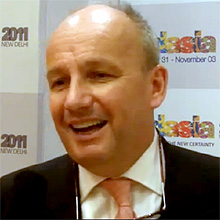
    Mr Jonathan Kopp, Partner & Global Director, Ketchum Digital was in India recently to launch its India division with Sampark. The company is betting big on Social Media. On the onset, Ketchum Sampark Digital (Sampark is the Indian affiliate of global communications network Ketchum Inc) will service its existing clients in India, offering digital media services of which social will be a big part.


    MxM India’s Rishi Vora spoke to Mr Kopp on the Social Media scene in India. Excerpts:


    Q: What was the thought process behind launching a digital agency in India now? Have you entered the Indian marketplace a little late?

    I think the timing is perfect. Right now we’re in the era of the social web. There used to be a distinction between digital media and social networks, and now we are in a period where everything on the web is social. So if you have a web plan, or a digital plan, you’ve got to have a social plan as well. Pure play digital agencies are good in creating destinations, but that is not very relevant any more today. What matters the most is how you drive the conversations, what sort of content you require to drive conversations. These are areas which we specialize in. As for the timing of the launch, I think it’s just the right time to be here. Companies and brands are more than willing to go social.


    Q: Do you think Social Media has enough money to sustain itself as a profitable, longterm business?

    I think the growth of Social in India is going to be upward for a considerable period of time. If you think about the penetration of Digital – the numbers are good but percentages are small. So the opportunity is very much there. Whether you succeed as a brand in the social media space is a matter of how you present yourself in that space. Mobile is a potent medium in India. Combining that with video and social, it becomes so much more exciting for users; yet another reason why content should be taken so very seriously – how can you be more creative, more compelling and interesting enough to engage many users online, on to the social networks.


    Q: Is it a big challenge to sell social media to clients?

    There is not a single company in any industry that can afford not to be on the social web right now. So I’m a big believer in the power of social media. If you’re not on it, then you’re losing out a fantastic opportunity to speak with your customers. As a brand, it’s mighty important to be in the social environment because the consumers are out there.


    Q: But they’re not necessarily there to speak to brands.

    Yes, people are not interested in becoming friends or having a relationship with a brand. What they really want is to connect with the people behind the brand and so the personalisation of the brand, bringing forward the humanity – the faces, the voice, the personality – this is critical in the brand’s success in the social space. Authentic and transparent voices. Immediate response to consumers’ queries – things like these can only happen in social media.


    Q: What are the learnings from other markets that you bring to the table for Ketchum Sampark Digital?

    It’s an important question. We have invested an awful amount of lot of time and resources to build the Ketchum Global Digital Network of about 180 digital and social media experts around the world; expertise and case studies working together to really create a global perspective. One of the first things we need to do with our clients is help them understand the power of social media. So social media training is important for us to start, our clients need to understand it. It requires a lot of change – mindset change and structural change. Digital is blurring the lines across traditional communications disciplines. Digital and social media is also creating a potential clash of messages from the organisation to the public. So marketing, advertising and public relations, sales, customer service – are all entering the social space at the same time without coordinating with each other. So it’s a mess in a way. As a company, you may want to hire expertise on HR, Operations etc. Similarly, the time has come for companies to look for social media experts. I don’t think there is enough expertise on things like managing work flows in social media, guidelines, the right approach etc. These are things we have learnt by being in the business for several years internationally, and in India, it is time that we bring our expertise in the marketplace.


    Q: How do you, as a social media professional, handle negative publicity on brands?

    It’s a very good question. One of the ways to try and prevent damage in social space is be there first. You first need to be in the social media space, because when you’re in crisis, it’s not the time to be going around and looking for friends. So we have a base of constituents, a base of supporters going into the crisis and you already have an established network to tell your story. So it is important to be there first. Second, things happen. They happen in traditional media, they happen in the interactive space, they happen offline, events; so you need to respond to them. Where companies go wrong is when they are not direct and as transparent. And if the consumer figures that out quickly, the problem gets worse. So if you make a mistake, apologise and explain the situation, and do it quickly.


    Q: Do you agree that a social media campaign will have minimal impact on a brand’s profitability?

    No, I don’t agree with that. I think social media can be proven to drive revenues. Very tactical small example: Dell has sold laptops through Twitter. When there were discounts being offered, Dell tweeted about them and sold huge numbers of laptops. Social transaction as a trend is only going to grow in the coming years.


    Q: Most of what we’re seeing in social media in India is Facebook marketing. Do you see that changing?

    Facebook is an amazing company and a great platform. Over 800 million users worldwide. Those who use the mobile phone to access Facebook – there are as active as their desktop counterparts are. Facebook is a force to reckon with and it’s admirable and enviable in every regard. At the same time I also believe that it’s never been about the channel. It has always been about the conversation and the content. So yes, today it’s Facebook but it wasn’t that long ago that it was MySpace, and before that, it want too long that it was AOL.


    Q: Social media picked up when Facebook picked up.

    Absolutely. But the first mover is not always the last. So will Facebook continue to dominate? Maybe. But, my concern more as a social media professional is not to be too invested in any one channel; rather it should be driven by where the consumer is. Right now, conversation is being held on Facebook, so it would be absurd to ignore Facebook. We’re going to use Facebook, but there are many other channels that we need to watch and learn from. For example, if you’re looking at corporate communications and executive positioning, Facebook might be important but I would want to look at Slideshare because that’s a perfect platform for you to share thought leadership. Similarly, if your concern is employee recruitment or professional networking, LinkedIn is the place to be on. So it really depends on what the purpose is.


    Q: What do you think about Google Plus?

    Google Plus is a new entrant. It is directly connected to YouTube. If you’ve got video and video is the way you’re telling your stories, then you need to consider Google Plus and YouTube. Just like the numbers tell us India is an important market to be in, the numbers tell you that Facebook is an important platform to be on. But, our job is to look at all of the platforms and all of the technologies that’ll help our clients tell their stories on the social web.


    Q: Do you see Google Plus catching up with Facebook?

    Google takes a very different philosophical approach to social web than Facebook does. It’s just got launched and Facebook has been around for some time now. But I don’t think Google Plus is as important as a standalone social network as it is for its ability to connect content and people across the entire social web. Facebook is about the Facebook platform and selling advertisements on that platform and creating social commerce on Facebook. So I don’t see them competing with each other – they both have a different role to play in the social web.


    Q: Can Social Media be a primary medium of communication for brands?

    I think the way we are going to be moving forward is really about integrating communications. It’s not about social over others. It’s about a consistent message and consistent requirement of content across all the channels where we need to reach the audiences. Broadcasting, print – newspapers and magazines are doing social media but some campaigns are starting in the social space and moving out to traditional. Some are moving from traditional to social. We really need to be everywhere.


    Q: There is a feeling that the medium is not taken seriously. Marketers and advertising professionals are talking about it, but in a way, they are the ones who are not really putting in the time, money and effort vis-à-vis traditional modes of advertising. Is there anything that social media experts need to look into?

    Metrics and evaluation is going to play a big role. The way we evaluate social media today – there is no single measure. TV, there’s GRPs; in traditional PR, it’s impressions. What we are trying to measure in the social space is engagement, and it’s a fuzzy concept right now. Facebook, with its analytics has gone much closer to measuring engagement in a very important way… The analytics behind a Facebook page drives you to not just the number of fans or friends but really the active user and the talked-about and how content is moving and who are the people that are moving it. As that science continues to move forward, I think people are going to be able to put a specific value on social media. You can certainly measure direct ROI if you’re seeing sales through social commerce.
  • Change is the biggest challenge, says Divya Gupta (now @ Dentsu Media)

    By Tuhina Anand


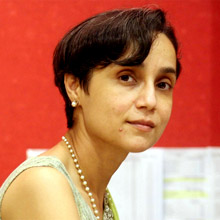
    Divya Gupta, who has joined Chief Executive Officer, Dentsu Media is back in the media agency side of the business after a gap of almost seven years. She has been away from the agency set up but not really away from the industry as she was gaining experience being on the other side of the fence. First with Reliance ADA Group as Media Advisor to the Chairman’s Office providing strategic advisory on media investments for the group; later at Hindustan Times Media as Business Head – West with the mandate of building the business. Just before joining Dentsu India, Ms Gupta was an independent consultant advising and consulting marketers, media agencies and owners in the media business.


    In seven years, a lot has changed in the media landscape and MxM India deicided to catch up with Ms Gupta and find out what changes in the industry she can outline. She puts it concisely, that the changing environment presents both challenges and opportunities for the industry.


    Ms Gupta says, “First, I think the changing environment allows for having meaningful dialogues with consumers, almost on a one-on-one basis. Media today allows us to actively engage, build and nurture rich relationships with our consumers. And both the message and the medium can be tailored and served to each consumer.” For example she cites that the advertisements that are served to the consumers while accessing mail, search, etc, is basis their past interests and behaviour. Hence, the targeting goes beyond the demographics and makes a marketer’s and media professional’s job much more exciting.


    “Second would be about harnessing collective media synergies, seamlessly, in real time. Media roles are changing and no single medium, even TV, will be self-contained. The opportunity lies in media blending; combining and harnessing each medium in a digital chemistry that delivers across all, paid, owned and earned media,” continued Ms Gupta. “Centered on the brand engagement idea, the focus will be to get better “earned” dividends and the ultimate goal being allowing our consumers themselves to carry forth our crusade.”


    Also she emphasized that today’s landscape allows for realtime, instantaneous consumer feedback. If on the right track, one can march forward or do some quick course correction if need. No more waiting for months to understand the impact of advertising that used to happen some two decades ago, as now the response is instant.


    “Lastly, it is about tightening ROI from computing mere eyeballs to an engagement metric. Reach that is layered with engagement, in both planning and pricing, is a step forward in computing actual ROI. Today, computing eyeballs alone is sub-optimal. Think about it, how often do we check our mobiles while supposedly viewing TV? Dual screens are here to stay. Or how often do we read and register (keep click aside for the time being) all advertisements that get served to us on a search page?” said Ms Gupta.
    Concluding she said, “To encapsulate, it is exciting times, with media posing huge challenges and opportunities in building engaging consumer connections, experiences and nurturing relationships.”


    Talking about her task at Dentsu Media, she shared that it is to first stabilize and deliver to their current clients and then harness their global experience, to the way they work and their suite of media tools to deliver an integrated, multi disciplinary, channel solutions to their clients.

  • [PR CHANNEL] We are happy being No 1 as MSL group: Jaideep Shergill

    By Johnson Napier


    It was a year of jumps and gains as also of twists and pains for one of India’s leading PR agencies Hanmer MSL. After a fruitful 2010 that saw the company acquire a host of clients leading to a healthy growth story for the agency, 2011 was a challenging year given the lull in financial markets and the possibility of another slowdown striking the industry. But the company did post a 20 per cent growth rate in 2011 that was followed by the launch of a host of new ventures.


    Jaideep Shergill, CEO, Hanmer MSL India puts on his thinking cap and scrutinises the year gone by in a brief conversation with Johnson Napier of MxM India. From an increased focus on digital – led by social media – to acquiring a host of new clients and getting the talent platform right, Hanmer MSL is on track to be amongst the best in 2012, he says. Excerpts:


    Q: As the year 2011 draws to a close, how would you describe the journey so far for Hanmer MSL?

    The year has been a good one, I would say. From a business point of view, the year was good because we tried a few things differently. We started focusing on certain practices and industries; started looking at offering better solutions for our clients… Also, in areas like content and insights where we were not doing much earlier those are the areas that we have invested in now. We have started pursuing digital very aggressively although we were doing that in the past few years as well. The other area that we have gotten into is employee engagement and working with companies on their employee communication.


    But while we had a good year it was also a tough one – partly because the market has become very competitive. My feeling is that 2010 has been a bit better than 2011 and that’s also because of the fact that there has been a slowdown in the second half of 2011. Overall, it has been an okay year for us.


    Q: How would you rate your company’s performances in the last two-three quarters since you took formal charge from Mr Sunil Gautam?

    We continue to do the things we did when Sunil Gautam was around. It’s been a year now that I have been running the company. Sunil and I have been working with each for a long time now and we both had a common vision, which we continue to follow even now. So in that sense there is nothing new that we are doing.


    Q: Could you quantify the growth story of your agency with appropriate figures?

    I would say both in 2010 and 2011, we have grown by 20 per cent plus. We couldn’t grow at that rate in 2009 because of the slowdown.


    Q: While your roster of clients boasts an aggressive line-up, how has the client acquisition exercise panned out for you in 2011?

    It has been fairly good. Like I said, from the market point of view 2011 was not as good as 2010 although we did grow by 20 per cent – the thing is that we could have grown by more than 20 per cent. Normally what happens is when you’ve grown by 20 per cent one year, the next year you are expected to grow by 25-30 per cent. In terms of business development too, it was an okay year for us. We did win a lot of business. As for the centres, Delhi is an important market for us. In Mumbai we keep winning accounts consistently given our size and reputation but I think we need to do more in Delhi. We have grown to 60 people in Delhi though now. Bangalore is another market that has been performing well for us. There are already markets where we are established and are doing well like Pune, Chennai, Ahmedabad, etc. But with Delhi the thing is that there were a lot of agencies who were bigger than us when we entered that market, so they have a natural advantage over us.


    Q: Any (client) win that was worth the effort more than the others in 2011?

    I don’t just want to talk about 2011 but the last couple of years. Airtel, Star, World Gold Council, Western Union…and also across industries like Biocon (pharma), Volkswagen (auto), etc. So there has been a fair mix of clients and across sectors.


    Q: How would you rate Hanmer MSL on the parameter of client retention? How faithful have your clients been to your group?

    The retention levels have been fairly good. I would say 2010-11 have been our best years so far. We have hardly lost any business – less than two per cent, so to speak. This is a good number where the industry in concerned. For a long time the problem would be the inability of the agency to hold on to a business and clients too would not stick to an agency for a long time. But that is not the case here also because of the fact that we are investing in the right people and systems and making things work.


    Q: There was the famous recession of 2008 and now there is financial turmoil that has gripped Europe and to an extent, the US as well. How do you see the PR and communications industry being affected going forward?

    I don’t see an immediate impact right now. But there are signs that it is about to take place – pitches are slowing down, new clients coming and investing in communications is on a downward slide…and it is being observed across sectors like media buying and planning, advertising, etc. Moreover most of it is also psychological; it’s an artificial fear that is created in the market because of which companies start cutting back on their budgets. But after the 2008-09 slowdown, we should have learnt how to tackle the problem, which I believe we are ready for this time around.


    Q: How has the social media as a unit under digital grown over the past year for Hanmer MSL? What can be predicted from the unit going forward?

    It’s a medium that is going to continue to grow. Digital as an industry is growing by over 100 per cent. Currently it’s a very small pie in the entire media mix. As for the budgets, only 2-3 per cent of the budgets go into digital, which is very less. But I would say that digital is a medium that is here to stay. We started investing in the medium in 2008 itself and this year we have seen fairly good numbers.


    Q: You recently announced the launch of a separate Crisis Network unit; what was the need to branch off and launch it as a separate vertical under Hanmer MSL?

    We’ve only now started calling it by a separate name. Actually all global PR firms do crisis communications and we also have been doing it for a long time. The reason we have decided to package it and launch it like this is because we see that the world is changing very quickly and crisis and issues is becoming an integral part of people’s and companies lives and futures. 10-15 years ago nobody cared as such when crisis broke out as there was no social media – digital was largely undeveloped. So something would happen in the US and we in India wouldn’t know about it until later. But today the rate at which it spirals is a matter of concern.


    For us, there are a few things that we see as trends. The first is trust. People don’t trust companies as much as they used to. There’s more accountability because ever since banks and financial systems collapsed in 2008, people have started raising doubts on trusting people and systems. There is also a trust issue when it comes to government. So when there is a lack of trust, an issue or crisis can become much bigger. And the other big reason is digital, as I already explained. So that is the reason we launched the unit in a formal way so that we can strategise and build around it going forward.


    Q: What is the rationale behind agencies hiking their budgets when tending to clients in crises? Is this a common practice that most agencies follow?

    Crisis communications is a very big part of the PR business. I wouldn’t say that clients are over-charged; it’s just that we charge them the right amount of money. Normally they undercharge, so this is the right charge. The fact is that when there is a crisis then money is not the concern – things like reputation and all takes precedence. Also, what happens is that because it’s a crisis, the PR agencies and clients are willing to invest more time in more people and more money because they have to make it work. I am not saying that they would be overcharged but that you will have to spend a certain amount of money or resources or people to make the crisis work in your favour. Moreover we don’t have to do it on a day-to-day basis so it is okay to go the extra mile.


    Q: While pleasing the client is an attribute sacrosanct to any PR firm, is it right to gloss over the wrongs when engaging in a damage control exercise?

    I think the best thing that one can do is have a point of view. So if there is a negative sentiment floating around a company, it’s their job and that of the PR agency to correct that and give the right perspective or message. But that doesn’t mean that media or people can be gagged or stopped from writing; I don’t think that should be the approach.


    Q: How would you analyse the entry of foreign entities into India? Do you see more standalone Indian agencies being acquired in the future?

    The PR industry will see the coming in of more foreign players and also the existence of domestic players. There are advantages of multinationals coming in as they get in systems, practices and other such things. There is also an opportunity for talent acquisition. But at the same time the domestic agencies will continue to exist and operate as well.


    Q: How would you rate Hanmer MSL’s standing amongst your peers in the industry?

    As a group we are definitely No 1 but Hanmer as an agency is amongst the top 3. If the market is valued at Rs 400 crore (rough estimates), then MSL occupies double digit numbers. But it’s difficult to put a specific number as there is no clear indicator of the size of the industry. Even the figure that’s being put out by ASSOCHAM puts the industry at an unthinkable number whereas industry experts peg it to be in the vicinity of Rs 700-800 crore.


    Q: On the industry per se, do you see an order in the way the industry is organised or is it still work-in-progress?

    I don’t think there is a single solution; time is the best healer — like advertising agencies got consolidated with time. There will still be fragmentation – small, medium and large agencies will coexist. In a country like India, you will need to have agencies of different sizes and shapes to service an array of clients. Our market is still not mature enough; it will be another 5 years for that to happen, I guess.


    Q: What is the roadmap you have charted out for the agency for 2012?


    To survive another year and keep on posting healthy growth. If there is a slowdown this time we will be better prepared because we have a game plan. So let’s see how it pans out.


    Q: When do you see Hanmer becoming a clear No 1?

    Only Hanmer becoming No 1 – maybe two years, but we are happy being No 1 as MSL group. We prefer to operate as a single brand under MSL.

  • Sony as GEC #1? I don’t speculate, says biz head Sneha Rajani

    The phase three to four weeks from now could be an interesting period for the GEC industry. Mainly because Sony, having tasted success with KBC and a couple of fiction shows (Bade Achhe Lagte Hain and Kuch Toh Log Kahenge), is all geared to topple Star from its No 1 position.  Colors is not too far behind; in fact both Sony and Colors have locked horns at the second position, on 236 GRPs. Colors’ Bigg Boss opened with 4.3 TVR and the general sense is that the show hasn’t delivered as per expectations, especially after a high-octane marketing activity.
     

    For Sony, it’s an opportunity to get to the top. The channel is launching two new shows – Dekha Ek Khwaab and Parvarish – in prime time, replacing KBC. It is clear that the channel is betting big on fiction again. Several attempts have been made in the past but none has worked out well until the channel’s recent hit – Bade Achhe Lagte Hain.


    If the two new fiction shows (Dekha Ek Khwaab starting November 21) succeed in its plan to become household names, we might see a new genre leader. The channel has tasted success in the ’90s, but that was some time ago. The focus for now is on the present and the leadership team is hoping to make the most of this opportunity.

    MxM India’s Rishi Vora speaks to Senior VP and Business Head Sneha Rajani on expectations from the new movements.


    Q: What are your expectations from the new show ‘Dekha Ek Khwaab’ on the ratings front?

    I never speculate.


    Q: At least tell us what you’re expecting from it on the launch day, or the first few weeks so to say…

    Obviously, since we’re launching the show, we expect the numbers to be good.


    Q: Do you expect it to match the kind of viewership KBC has produced, to keep that momentum going?

    Absolutely not! That is not our expectation. And it would be foolish to think that immediately at launch, it’ll deliver the kind of numbers KBC has. That would be a very false expectation to set.


    Q: Why would you say so?

    KBC is a popular show, it has been around for a while and it has created a special interest among the viewers across India. For our new fiction show, to expect it’ll deliver or match up to the popularity of KBC, would be asking for too much, honestly.


    Typically fiction takes time to settle down as against reality formats which have the ability to spike up the ratings of the channel at launch at the start.


    Q: Which means the GRPs is likely to see a dip in the coming few weeks?

    Yes, there will be a drop in GRPs post KBC. At least for some time till the fiction shows settle down.  But, that’s as per plan.


    Q: When do you see Sony becoming the No 1 channel in the GEC line-up?

    Like I said, I don’t like speculating. I don’t think we are going ahead with the strategy fixated with the idea of being No 1. We are going ahead with the plan to focus on fiction. Bade Achhe Lagte Hain and Kuch Toh Log Kahenge have delivered the goods, and I’m sure Dekha Ek Khwaab and Parvarish – our two upcoming shows will also do well in primetime.


    Q: What is the split ratio you like to maintain between reality and fiction?

    Fiction 80. Reality 20.


    Q: You’re No 1 in the prime-time band. And all it takes to be No 1 overall is just one good show, because as far as your current standing goes, you’re just 30-35 GRPs behind Star.

    Yes, the gap is not very big. And it is our endeavour to get there.


    Q: Three months is a decent time to get there.

    I will not speculate on three months or six months. As long as we get there, I will be happy.

  • PR must look up to advertising: N S Rajan

    By Johnson Napier


    With foreign players taking a keen liking to India, the PR industry is poised for a quantum leap. Not the one to miss out on the race, Ketchum Sampark is doing everything right to stay on track and be counted as a contender worth the deal. In conversation with Johnson Napier of MxM India, N S Rajan, Managing Director of Ketchum Sampark outlines his agency’s plans to be counted amongst the best and why quality, and not numbers, will be the differentiator in the race to win and retain more clients. Excerpts:


    Q: It’s been some 7-8 months since the much-hyped tie-up with Ketchum. How would you analyze your journey post the acquisition?

    There has been no change as such at the ground level but yes, processes have changed, reporting has changed – it is now more in terms of financial and MIS reporting and not so much in operations. Also, what probably has changed and helped us is the access to information, access to best practices, access to case studies… so it is a win-win situation for us while we continue to work the way we are.


    Q: Could you elaborate on your choice of shortlisting Ketchum as your foreign partner?

    We have been working with Ketchum for more than three years now so this tie-up is actually a formalization of our relationship. We have been very comfortable with the cultural match. I think philosophically, Ketchum and Sampark have always had the same focus in terms of client deliveries, choice of clients, etc so there were a lot of similarities between us.


    Q: Come to think of it, the venture looks like Omnicom’s reply to making its presence felt in India – just the way Publicis did with Hanmer. Your thoughts?

    I think this is something like a process of evolution. We have been working with them for 3-4 years, and it just happened that the timing is now. It did take time for us to tie the knot as there had to be a comfort level on both sides. We probably got into a JV at the opportune time as the media is opening up and India remains a good market for bringing a foreign partner where we are able to service global clients in India and also open up our offices and network for Indian clients wanting to go abroad.


    Q: On the growth perspective, how would you analyse the year 2011 for your agency?

    I think we have done well. We have grown by 25 per cent and this has come on the back of 30 per cent growth that we recorded last year. Also, we signed on a lot of good clients. This apart, we just recently announced Ketchum Sampark Digital and also set up specialised verticals in healthcare and infrastructure. We believe this tie-up will take us to the next orbit in terms of skill-sets, information flow, etc. More importantly, what we have learnt from this venture is best practices. We have to understand that the market dynamics are changing and people are looking for specialised services in each of the areas. I think there is a lot of comfort at the client level if you are able to bring in value in each of the domains. That’s because clients are also looking at core focus, specialisation, skill levels, agency background, etc. So to that extent healthcare and infrastructure remains our focus areas because a huge growth is predicted in these areas. Another important area for us is crisis communications; we believe a separate vertical would be good to go with for crisis.


    As for our agency, we are divided into four verticals – brand, corporate, technology and financial services. Healthcare and infrastructure would continue to be separate verticals but could probably be clubbed under corporate. This apart, sports is another area that is huge for us. We have handled some very big marquee properties across India ranging from cricket, golf, football, etc. So that would continue to remain a focus area for us. We also engage in organising festivals like the Jaipur Literary Festival which witnessed the gathering of more than 400 authors and many media professionals from around the world.


    Q: How according to you will digital change the way PR functions, say, in a few months from now?

    According to me, the game changer in 2012 for the PR industry will be digital, as its significance and importance will be largely felt. The traditional way of communicating today will probably go direct-to-consumer with the help of digital. Also, with digital, there is a lot of opportunity for content, for social media, for gathering traffic to your site, to build conversations around content and also monitor them, etc. With Ketchum being one of the global leaders in digital I think we have a huge advantage in terms of assimilating knowledge much faster, so we will be able to scale up very quickly.


    Q: You’ve mentioned a growth rate of 25 percent plus; does that translate to occupying a fair market share as well?

    While we figure amongst the top 5-6 agencies in India, our emphasis has always been on quality. We would probably be happy if we were perceived as an agency known for its quality. I may not be the No 1 in terms of size, but I certainly will be No 1 in terms of quality. We would love to earn the respect, trust and long-term partnership from our clients. Also, we would like our employees to be happy. If in the process of doing all this we improve our ranking, we’ll be happy with that.


    Q: Despite the low-warning signs, how are you warming up to the current economic situation being tagged as ‘tough’?

    While on the slowdown, let me tell you that during the 2008-09 recession, when most agencies lost business, we were the only agency that grew that year – even if the growth was single digit. So there will always be some amount of hardship so long as clients believe that you will be able to deliver value to them. In our experience, our clients have retained us during the tough times as well. The challenge for any business is to see through the bad phase and that is possible when you are focused on quality, people and such attributes. But if you are chasing to be the No 1 player then there are chances of you losing out.


    Q: Do you plan to scale up operations across other centres in India?

    We are currently present in seven cities and we do have aspirations to roll each of the practices in each of the regions. We just hired a senior person to handle our office in the South so we are taking all steps necessary to grow all our offices. Also, we have an SBU concept where we encourage and handhold all our businesses to be profitable and contribute to the growth. So that process is happening. Finally at the end of the day, it is important for each SBU to contribute to the overall growth of the agency.


    Q: Where the industry is concerned, what can be done to make it more organised than the state it is in now?

    I think it should begin with individual agencies taking the onus and coming on a common platform to address the woes of the industry. It is important for the PR industry to look up to the advertising industry which, despite having its share of problems, is much more organised. Today, one is not even sure what is the exact size of the industry. If you put the top 10 PR agencies together I think they would be estimated to be around Rs 300-400 crore whereas the unorganised industry would be around Rs 150-200 crore. So the total industry size could be anywhere between Rs 500-600 crore. Also, the problem is compounded by the fact that compared to other markets, our fees are a little lower. Our fees are 30-40 percent lower than even that of China. There are too many players in India leading to the fees being compromised. But having said that there are clients who are willing to pay a premium if they are convinced about the quality of the service being offered.


    Q: What is the way forward then?

    I think in the long term a lot of agencies would opt for the consolidation route. What is happening is that companies here are also realising that they need networks that will lead them to get more organised, have access to better offices, skill sets, etc. All this is possible with a larger network. While pop-and-mom stores will continue to exist they too will increasingly take the consolidation route.


    Q: Any other attributes that need to be paid greater attention to?

    One attribute I think needs more attention is people. I think we don’t have too many qualified people. Also, the good PR professionals are not adept at running a business – a lacuna that needs to be bridged. This is possible with effective training programmes. We have our own in-house training programmes and we hope to train our colleagues on this front as well. Also, we plan to have a fixed number of hours for training our staff. At the end of the day, being in the services industry skills and people are important attributes that one needs to pay adequate heed to.

  • Life Ok will compete with Star Plus: Sanjay Gupta


    By Rishi Vora


    The new gleam in the sky from broadcast major Star India promises a unique viewing experience, differentiated content and a philosophy which it will thrive on. The idea is to have a challenger brand, one that’ll challenge even Star Plus – the No 1 channel in the GEC line-up today.


    Life Ok – the new avatar for Star One – was launched on December 18, 2011. The channel will target to first get to the 60-70 GRP mark, and from there its first big milestone – to be a significant player by winning the No 4 position and beating one of the four big players.


    How well it suits the Indian viewers is something to look out for. Meanwhile a quick glimpse of what the management is thinking. MxMIndia’s Rishi Vora speaks to Chief Operating Officer Sanjay Gupta on his expectations, and much more. Excerpts:


    Q: Why the decision to shut down Star One and launch Life Ok?

    Star One as a channel has been there for several years. But it delivered a very average sort of performance. It catered to a niche audience and never quite made an impact. In GRP terms, it clocked about 30-40 GRPs. So there was a need to ask tough questions. We thought there was an opportunity in the GEC landscape to come up with a channel that is unique and differentiated, going by the viewer and the way he consumes content. So we decided to rebrand Star One to Life Ok.


    Q: It is said that Star One was not given the required strategic push to compete with Star Plus and other GECs.

    Every business can reach its potential. The business idea, in the case of Star One, was to be a niche channel. So in thought terms, I don’t think we were very sharp. We did not have a content offering that was differentiated enough to create a long-lasting impact on consumers’ minds.


    Q: So was Star One treated like a second channel? Was it a conscious call that it should not compete with Star Plus?

    The question that we asked ourselves was: Should we continue to have a channel which is a second channel or should we really continue to have a channel which fights? Which may be second, third or fourth, but that’s not very important. We thought we should have a channel that’ll compete with every channel – be it Zee, Colors, Sony or even Star Plus. The whole idea of changing the name to Life Ok was to liberate the channel so that it could cater to consumers as a brand and as a content destination. So that it could be different and unique and in the process have a more meaningful presence than Star One.


    Q: So Life Ok is not going to be the second Hindi GEC channel of the Star Network?

    It is in the Hindi GEC, one more offering from Star India. Star Plus is our first offering. The reason why we have changed Star One to Life Ok is because this channel has come up basis our understanding of viewers and we believe there is a gap. The name carries a philosophy. Unlike Star Plus for example, where we connected Star and Plus-and it became Star Plus, Life Ok is a name with a purpose.


    Q: Was there any research done on the name? What was the thought process behind naming it Life Ok?

    The idea was to have a name which captures the philosophy of the channel. A lot of research and consumer work has gone into deciding the name.


    Q: Can you elaborate on the philosophy?

    Let me explain. We’re entering a very, very tough competitive market – the Hindi GEC market. So why will this work? In my view, this is likely to work is because this channel comes with a very unique promise which consumers and viewers will see every day. Stories and characters of this channel will come on every day – not for five days but for all seven days in a week. As a viewer you want to seek whatever you like – it can be music, films, radio, newspapers, and also in my mind the characters of the shows you watch on daily basis. So content will be offered to consumers seven days a week.


    Also, stories on other GECs are not pacy enough, in terms of the speed. So what we’re doing on this channel is, we will tell three stories in an hour unlike the norm which is two stories every hour. We will tell a story in 20 minutes, so when viewers come to our channel, they will find the stories very pacy.


    Q: What is the thought process behind the two-minute break?

    The two-minute break is again a viewer experience. I don’t want a big break. As a viewer that will put me off. A lot of people get distracted with a long break and end up not watching your show. So with three stories in an hour and the two-minute breaks, we’re telling the viewers that they don’t need to go anywhere. They know it’s coming back in two minutes, so they are more likely to be on your channel if the commercial breaks are not very long.


    Q: But that means there will be an impact on the bottomline.

    In the short run, yes. But in the long run, it brings you more eyeballs. Once we have a set of viewers, we can then make up…


    Q: What is the programming strategy for the weekends?

    Fiction shows, non-fiction shows, we will use Sach Ka Saamna every day including the weekends. We will also have movies on weekends, in the afternoons. Afternoon time is very important-the whole family gets together and watches TV. So yes, we will have a variety of content running on the weekends.


    Q: We’ve seen some failures in the broadcast industry – 9x and Real being prime examples. So what are the things that you need to be extra careful about?

    Doing a new channel is a very costly exercise. Therefore, there will be a huge amount of risk that you always run, whether you refresh a channel or you create a new channel. In either of the cases, it is important to have a differentiated offering. If the viewer is getting the same thing on many other channels, why is he going to watch yours? The idea for this channel, therefore, is to keep the viewer at the centre and offer him something unique. So if you’re able to stick to that – not only in the philosophy and the thinking, but also on the content you offer every day, then it gives you more chances of being successful.


    Q: True, but second GECs which have launched in the past haven’t done well. SAB, you may say, is an exception.

    Yes, Sony is a good example where it has two channels – Sony and SAB. And they’re working well, so if there is an appropriate positioning, relevant content, it would work. I think the learning which I mentioned earlier, if we have a unique proposition, keeping the consumer at the centre and differentiated content, it should work. And Sony and SAB is a good example in my mind to quote. Hopefully, Star One can learn from that and create a more meaningful positioning.


    Q: Are you going to roll out shows which cater specifically to the youth, the single largest segment of India? Something like Bigg Boss which does well in that department?

    We’re very focused on youth because we believe that is an important target audience. So if you look at the non-fiction we are beginning with – Sach Ka Saamna with Rajeev Khandelwal, where the big issue which we are tackling is corruption. Now, that is something which is at the top of every young person’s mind in the country. From the content, which you will see in the next few days, in terms of the message it delivers, it is not about saying let’s point fingers at others. It is about saying, ‘If somebody has to clean up the system, he or she has to start with us.’ That’s the message. And it is very much focused on the youth of India. Another show – Devon Ke Dev… Mahadev – we’re talking about one of the biggest gods of the country for whom most youngsters, especially women, fast for Mahadev in their early teens and before marriage. So that is a very unique thing we have on the channel and that’s the beginning of FPC every day. The rest of the content is dealing with absolutely the key issues which youth will emphasise on in a really big way.


    Q: But mythologies haven’t done very well for other channels. Colors and Imagine have tried it and haven’t produced fantastic results.

    I think Colors did fairly well on Jai Shri Krishna – the mythology serial they had. So if positioned well, it can work. We believe there is a market for mythology in a big way. It will have a different kind of emotion being catered to consumers.


    Q: Did you consider doing a big-ticket show like KBC, Bigg Boss, bringing a popular celebrity hosting the show?

    I think we have been very careful in the kind of emotions we want to deliver. And we wanted to be true to the philosophy of the channel that we’ve created. So we’ve stepped away from bringing a big celebrity. If somebody comes, he or she should be able to respect the values of the brand. And it is about cherishing what you have as a philosophy ‘Jo Apne Pass Hai Woh Khas Hai‘ and that’s why all the content pieces are on the lines of that philosophy. In fact everything we’re doing is true to that. And that’s the reason we’ve stayed away from having a big celebrity on the channel.


    Q: So going forward if there is a need to have a Amitabh Bachchan or a Shahrukh Khan, would you go for it?

    At this point in time I would say if it fits in nicely with the philosophy of the channel, then we will definitely consider it.


    Q: Why Madhuri Dixit as the Sutradhar?

    There is a lot of learning that’ll come out from the shows we’re putting up on the channel. What we wanted to do by bringing Madhuri was: as we show the content, everybody takes away their own understanding. What she does on the channel is, she poses questions, brings in her understanding and her life reality, and really puts a lens in front of viewers to evaluate and see the content well. And therefore, it really raises the question – are we really cherishing what we have or not? Or are we worrying only about possibly the dreams of future alone? And, in her life she’s done the same. She has been one of the big superstars and has taken a break – been a family person. So she has balanced her life very well. So the persona fits in well with the channel’s philosophy. And she hopefully will be able to raise the questions in everybody’s mind and help viewers view the content through a new lens.


    Q: But what is the fan following of Madhuri Dixit today? Do you think there are enough fans, because quite clearly, her days are gone.

    Firstly, all big stars have a really valuable equity in consumers’ minds. But the important thing is how this fits in with the channel’s philosophy. And in my mind, it fits in very, very well.


    Q: How has the response been from the trade?

    Mixed response, I would say. People are surprised that the brand name doesn’t carry Star in the name – that’s been one of the questions from a trade point of view. And they’re wondering why. And also the other trade response is that we have a good variety of content. So they feel that the content looks very powerful and hopefully, the next few months will tell us how the business goes.


    Q: What will be the channel’s reach on Day One?

    Star One today reaches out to around 40-45 per cent of people every week. Those are the people who come every week to view Star One. Hopefully those people would definitely come to see the channel and basis the marketing campaigns, other sets of viewers will get curious about the channel and they’d come and like to watch it. So anywhere between 40-45 per cent definitely should come and maybe some more would like to come and check out the channel. And finally the content strength will determine how many people will become regular watchers.


    Q: Do you expect to be the No 4 channel, beating Zee, say in a month’s time after launch?

    Star One is at around 40 GRPs right now. And if we grow significantly, that’s the first good number to look at, because this journey is a long journey. We are not starting it to really take a big leap in week 1or week 4. If you’re able to grow from where we are significantly, that’ll be the first milestone. And as I said earlier, it competes with every channel in the GEC space. If the content is powerful, it’ll grow – but the first initial aim would be to get to a 60 or 70 GRP mark. That will be an important milestone for us.


    Q: How long will the aggressive marketing campaign continue?

    We started this campaign around a week ago. We started it on December 12, it continues in full intensity now and it will continue for another few weeks. So it will be a four-week campaign which will run supporting the channel launch.

  • India is a long-term play for us: Sukanti Ghosh, APCO

    By Johnson Napier


    In a day and age where PR agencies are grappling with each other in offering services with a differentiated touch, US-based APCO Worldwide has its own unique formula of approaching the Indian communications space. Far from being referred to as a PR agency, the firm would rather let each of its verticals, be it corporate advisory, government affairs or civil, act as individual competitors versus the other full-time agencies in the space.


    Entrusted with the task of bringing a differentiated tactic to the market is Sukanti Ghosh, MD, India for APCO, who has donned several communication hats across the sectors of radio, advertising, and banking & financial services. In conversation with Johnson Napier of MxM India, Ghosh elaborates on the tremendous scope for agencies to make it big in India and how government relations & public affairs would be a large space to reckon with in the years to come. Excerpts:


    In a largely blurred communications space where agencies try to play the differentiating game very cleverly, how would you categorise APCO Worldwide as an agency in India?

    If you look at the Indian communications industry, it is at the various stages of maturity; it’s along a continuum. So on one hand, we have a lot of the commoditised services in India, and frankly speaking, there is no bottom to that pit – there is always another mom-and-pop agency who will offer a service at a cheaper rate – and there is another end of the spectrum that is highly evolved, extremely mature and as good as any other global market. So it depends on which end of the market you want to play in. APCO, nowhere in the world, really plays in the commoditised end of the communications industry. So like there are many Indias within India, similarly, there are many communication industries within the communication industry. It occupies and lives in various forms of maturity. You have to decide which slice of the market you want to play in.


    So what is it about APCO in India that you would say is different?

    What has defined APCO since I have joined is that we are very clear about the market that we want to play in. APCO looks at communications very differently. If you are aware of the Venn diagram that we studied in school (three intertwined circles), we typically turn around and say, if you look at the three circles – one is business strategy of any company, the other is public perception or civil society and the third is government regulations – there is an interplay between the three and whenever there is an interplay between the three that is where we are the strongest.

    So to begin with, if you remove the government element and look at the other two elements of business strategy and civil that is where you get marketing communications. Frankly, that’s not an area where we are the strongest and that is not an area that we would want to play in. Then if you take out the part of civil society, and look at the interplay of government and business only then that’s where you get the issues that keep arising every day.

    Today if you look at India and where we are as a country, civil society and the voice of civil society is here to stay and it will only become stronger going forward. Again, that is not an area where we want to play.

    We are very clear that at the outset, we are US FCPA (Foreign Corrupt Practices Act) compliant, we are UK Bribery Act compliant; we believe in ethical representation and in the sphere of ethical representation, we are the single largest ethically-owned firm in the US, and also the eleventh largest around the world and that’s where we want to grow.

    If you look at the third element, where if you remove out business and look at the interplay between government and the people, that’s where public awareness advertising from the government arises. Again, if you look at the government and business, that’s where you have a number of government initiatives to try and rope in business, that’s where we are again strong. An example is the vibrant Gujarat campaign that won few awards despite being pitted against some brilliant campaigns from around the world. So that’s going to be our focus at this point in time.

    Do we really see ourselves as a marketing communications agency – perhaps not. That’s not an area we want to focus on. We would want to focus on selective areas of communications in the broader sense and do well in that.


    How would you analyse the performance of your core businesses in India?

    Globally, we are a market leader in public affairs, we are a market leader in STG (service to government) practices and we hope to replicate that model out here in India. It would be fair to say that we have got off to a very good start in India. We have more than doubled our revenues from the year before, we are working with some of the finest Fortune 500 companies in India, we are fortunate to have worked with the government of Gujarat and are seriously looking at growing business in that space. Also, even as we speak we are working with several companies, advising them on public-private partnerships; helping them work alongside the government because we believe the Indian government is at a stage where it is more than ready to look at and listen to global leaders to hasten the pace of progress in this country. That is something unique because most companies that have come into India have a misconception with regard to the government and the way it works.


    While it seems to be a merry-making affair for you in the government and public affairs space in India, it is not the case with other players who appear apprehensive of making it big into this space. Then there are also allegations of red tape and corruption. Your comments?

    Frankly, in the last sixteen months, we have never faced a single problem working with the government. Part of it is misconception and part of it is reality, but the fact is that it is only when a company wants to take a shortcut that the problem arises. The government has very clearly defined processes and companies need to understand and work the processes. The fact is that India is a long term play; so you’ve got to work here to stay and proceed accordingly.

    We also help companies in understanding policies and regulations. The latest example being the FDI norms in retail being discussed lately. So the output does not have to be limited to the media; there are cases where you will work with the media and that is only right, but it does not have to be limited to only the media.


    Increasing number of multinationals are evincing interest in India while India continues to look up to the outside world for encouragement. What are the trends that you foresee currently on that front?

    There are a couple of things happening on that front. If you look at the STG space – I am referring to outward investment as well – there are a couple of things being observed. One is the government bodies or the economic development boards, are today trying to woo Indian companies and get Indian companies to invest in their markets. If you look at the policies space, there are so many Bills that are being talked about, there are so many changes in terms of legislative reforms and these are throwing up hundred different opportunities for companies. So that in itself is humongous.

    Globally, if you look at APCO, we focus on a number of areas and those are the areas that we will continue to focus on. We focus a lot on energy and renewable energy, on telecom, on food & consumer products…we are probably the single largest player in the healthcare space. So we would be bringing and developing a number of these practices in India.


    How is APCO Worldwide performing outside of India? Also, what are your plans for India outside the two metros that you are already present in?

    Apart from Washington, US, which is our largest office around the world and 2-3 regional offices, our London office has a few odd people, Dubai has 40-odd people, Brussels has 40-odd people, and all the other offices are around 20-odd people in operations.

    In India we see ourselves moving to three offices by next year, we see ourselves adding one more office in the south besides Mumbai and Delhi. We would grow to be about 50 people soon.

    If you see recent industry reports that classify firms from small, medium and large, I think without trying too much in the span of one year, we are very much already in the middle. We are very confident of growing very quickly into the so-called large segment very soon.


    How would you rate the fee structure that agencies command in India? There are allegations of it being under-par compared to other countries?

    We are expensive and our clients know that we are expensive. Clients know that they will get firms for half the cost but they come to us for the quality and value that we deliver; they don’t come to us for the fees that we charge. In certain parts of the business we compete with the big four, in certain parts of the business we compete with law firms, with the communications industry, and so on but the fact is that we have never had an issue with fees. It is made out to be an issue primarily because you are on the wrong end of the value chain. So you won’t see our people running around with press releases, issuing statements or chasing people.


    Do you largely agree with the claim that the PR industry in India is largely unorganised?

    I thing the PR agencies have brought it on themselves because they have become so tactical at the bottom end of the spectrum that there is always a cheaper option. And when you are at that level, you would never command a premium and it will always be unorganised. But does that mean that there is no organised side of the business, of course there is. The thing is, India is a large country and is big enough for everybody. Even the largest PR agency is India is around about 40 crores or so, according to Holmes report. This despite them being very big in the communications space and having a large clientele. So you can imagine the opportunity that exists in the communications space.


    What is the emphasis that you lay on digital?

    Globally, we are very big in the digital space. We have a unit called APCO Online, a pureplay social media unit that has won more than 300 awards across the world. So those are resources that we would be bringing to India. So it’s one of the units that we would be looking at very closely in 2012.


    Given your diverse presence across industries, who would you cite as competition?

    I can’t name any one firm. In corporate advisory we compete with management consulting firms, in the public affairs space we compete with some of the large law firms; there are very few communication agencies that are doing serious public affairs work. The thing about APCO that strikes me the most is the number of clients who have been with us in upwards of ten years and also the number of people who have been with us average around 10-15 years. So it’s largely a firm that is relationship-led; it is largely a firm that is culturally very strong and frankly speaking, you either fit into the culture or you don’t.


    Is the current economic scenario casting its toll on the industry?

    We grew at a rate of 6.9 per cent in the last quarter which was the slowest in the last 8-9 quarters, but the fact is, how many countries have grown by that per cent around the world? We may be going through a bit of a rough patch, but we will get out of it eventually. Is it a period of concern for us, I guess not. I think there are austerity measures that have been undertaken and there is a note of caution everywhere.


    What are the imminent challenges facing the industry?

    There are two big challenges that face the PR industry, the first being the PR industry itself. The second being people. The skill gap that we keep talking about for other sectors is very real for our sector as well. The trend internationally is that people are very focused when it comes to taking selective career paths and so they go ahead and specialize in that from the beginning. That’s not what is happening here. In India, it is still an emerging profession and with all emerging professions there is a period of instability but there will be a shakeup. We need to elevate the status of the industry. Unless we get PR out of being just press releases into being something a lot more sophisticated and holistic, we will not get the right people.


    What are the trends you foresee for the industry, and for APCO, in 2012?

    For 2012, I see fierce competition and a certain degree of consolidation taking place. I foresee a lot of foreign companies coming to India and a lot of Indian firms willing to sell out. As for us, we are fiercely independent and we prefer to remain that way.

  • Chris Thomas: BBDO India’s performance has been fantastic

    By Tuhina Anand, Video-Shruti Pushkarna
     

    Chris Thomas, Chairman and CEO of BBDO in Asia, Middle East and Africa and Chairman of Proximity Worldwide, has spent over 25 years in the communications industry, and the majority of his time working for BBDO. In an exclusive interview with MxM India, Mr Thomas shares his views on the network and his view on BBDO’s performance in India and the road map ahead.


    Q: Are you satisfied with the way BBDO brands are performing in India?

    I think we’ve seen tremendous developments in the BBDO brand in the last three years. Our partnership with RK Swamy BBDO has been a tremendous success and continues to grow and develop. BBDO India has been ranked as one of the most creative and the most effective networks in India.


    Chris Thomas on BBDO expansion plans

    You measure their performance at Cannes, by winning the first Indian effectiveness awards at Cannes; there has been tremendous progress.


    BBDO India’s performance has been fantastic. We’ve gone from nothing in BBDO India to an agency that punches well above its weight in terms of size, is winning on the world stage, is developing our multinational clients’ businesses and brands in a way that’s highly compelling and effective.


    Q: With the recent development of Mudra, would it in any way also affect the scheme of things for BBDO?

    Well, that is a tremendous commitment and recognition of the importance of the Indian market. For Omnicom, there’s been a long standing relationship with Mudra. Obviously from the BBDO perspective, Omnicom’s continued commitment to the Indian market is very important and supportive.


    Chris Thomas on Omnicom Mudra acquisition

    Q: Are you looking at expanding your footprint any further? If yes, where would it be?

    The only thing I’m looking at expanding is quality. What I’m always interested in, is doing great work that’s talked about and moving consumers in the Indian market. If we have specific needs to be addressed in specific geographies, then we develop those needs. But the most important thing to expand is to make sure that we are doing the best work in the market and expansion comes after that, not before.


    Q: So if you were to define BBDO, would you say it’s small, mid-sized or big?

    BBDO is a network around the world, so obviously it’s enormous. But it’s not what we focus on, what we focus on is on being good. BBDO is defined by what we call the work, the work, the work, producing the best and the most compelling commercial content on behalf of our clients.


    So in this market, we absolutely live up to and deliver on that promise, and that’s why it’s been fantastic for our clients.


    Q: In the current times, what are the two challenges that you are facing?

    The challenge… it’s true in all of the Asian markets, it’s around the world, I think. But I think particularly in India and China, the key for all of our networks is to make sure that we are attracting the best people into the industry, we are retaining them and we are developing and growing them. So for me, I spend a huge amount of my time on attracting talent, developing our talent, and making sure that we have got an unfair share of great talent.


    Chris Thomas on current challenges

    Q: So what is your formula for attracting talent?

    Well we have a phrase, ‘culture eats strategy for breakfast’, and what we mean by that is, it’s about the power of the brand and the power of the culture. The fact that we are indisputably the most creative network in the world, the fact that this year we’ve been ranked as the No. 1 effectiveness network in the world means that we have a very powerful culture, we are aligned around a set of beliefs and what we care about, and that tends to attract good people. And that’s what we preserve and protect at all cost. So culture ahead of anything else.


    Q: We’ve been hearing about a talent crunch but there’s also the issue of being paid well. Is that an issue or is it being blown out of proportion?

    I think there’s a difference between accountability and effectiveness, and I think as an industry, we are spending quite a lot of time thinking about accountability. There are things we can count, like the cost of production, cost of media and so on. And we need to be concentrating a lot more on effectiveness and the value we add as a business to our client’s business. If you do that and you can demonstrate that case and that value, then you can command a premium. But it’s for the clients to see value and that’s about generating effectiveness and effective work. And I think if you can get that right, then the remuneration conversation can follow from there.


    Chris Thomas on his formula for attracting talent

    Q: Can you tell us about Proximity in India?

    We launched Proximity about a year ago now. Obviously as a network, it’s a rapidly growing direct CRM and digital network. I think there’s been a huge amount of conversation around social media, digital CRM, and we are seeing good growth in that business and I think that will continue in India as digital media, broadband penetration, use of mobile – which is enormous in this country – continues to grow, there are tremendous opportunities ahead.


  • Bajaj Allianz: ‘Not keen on chasing numbers’

    With the current economic crisis casting a dent on the prospects of certain industries, it is turning out to be a testing phase for many players. Not the one to be spared, the insurance sector too has been jolted by the sudden turn of events. Adding to its woes is the recent shift in policy decisions that have been issued by the government in streamlining the industry, but the industry players are responding positively to the new diktat as it would ultimately mean netting in more customers. One of the players who is doing everything right to face the future is Bajaj Allianz.
     

    As Head-Product Development and Market Management, Bajaj Allianz Life Insurance, Rituraj Bhattacharya is taking the onus on himself in adding new customers but not without doing enough ground work and coming up with solutions tailored to meet the needs of the customers. In conversation with MXM India’s Johnson Napier, Mr Bhattacharya shares the reasons behind launching new schemes and why ULIPs would be a suitable investment option for most customers, especially those from the tier 2 & 3 towns and cities, in the future. Excerpts:


    Q: As Head of Product Development & Market Management what are your key responsibilities at Bajaj Allianz?

    It is relatively a difficult time for the industry at large. The new regulation that has come in is customer-centric and has resulted in insurers reassessing their business models. Some of the basic practices that were being followed by retail insurers are being revisited. So it is a period for a lot of consolidation in terms of business models, where players will be forced to develop long-term practices in the organization. A lot of emphasis in our organization has gone in training our work force and preparing them for the future. Once this entire process of training and consolidation is over, we expect better results to come out of the exercise.


    Q: How have the insurance players responded to the sudden shake-up in systems and practices?

    The industry is still in a learning phase and therefore the regulations as a practice will also have to keep evolving. It’s part of the ecosystem. I don’t think it’s only the regulator that is to be blamed; there is some amount of uncertainties in the consumer’s mind. Inflation, fuel prices, etc have taken its toll on the consumer. And where the insurance players are concerned, they too have not been able to replenish their product basket. This has led to consumers being exposed to lesser product offerings from the players. All these factors put together have contributed to the current situation.


    Q: Despite the decibels, insurance is still perceived as a ‘fragile’ investment option. Why are customers still apprehensive about opting for an insurance policy?

    I don’t think that’s the case. If you see, globally, insurance has been a successful offering. It has survived two world wars and other natural calamities where Allianz has settled so many claims. In India, most insurance players like us are financially very stable. Our capital is high, we have a higher solvency than what the guidelines prescribe, etc. So the issue is not about financial stability, it is about the current economic situation that affects different practices as well. It’s just a matter of time before we overcome this crisis.


    Q: What are the investment trends you foresee from the tier 2 and tier 3 towns across India?

    One thing that can be said with certainty is that the insurance penetration is definitely high. Recent studies conducted by IRDA reveal that the awareness levels around insurance products are on the up. People see insurance as a tool, device, instrument that helps them diversify their risks, assets and at the same time get adequate coverage for life. In fact, insurance is the only device which a person with a low disposable income can use to diversify his portfolio. If you see a person with low income around Rs 10-15,000 he finds it difficult to manage his assets around so many different instruments; but he finds it easy to do that within various offerings of a single insurance company.

    In Bajaj Allianz we are happy to cater to the tier 2 and 3 cities. Around 75 per cent of the business comes from these two segments. That’s because we have been able to develop a personal relationship with the consumers from these belts.


    Q: Could you share the growth pattern that has been observed at Bajaj Allianz?

    We have consistently added new customers to our portfolio. In the last financial year, we have issued around 2.2 million policies. We have a total customer base of 8 million insurers. We currently occupy a market share of around 2.8 per cent.


    Q: Could you elaborate on the objective and need for launching new ULIP schemes recently?

    GMIP is a completely new offering from us. We are trying to cater these offerings to certain new growth pockets where we are trying to offer solutions that suit these segments of the population. As a company, we are keen in doing a more stable business. We are not keen in chasing numbers; we hope to deliver quality products with emphasis on strong customer satisfaction.


    Q: What do the newly unveiled commercials seek to propose to the customer?

    If you look at our current communication campaign including the one around GMIP – I think we are more keen on what we as a brand want to deliver to the customer. We want to tell the customer what is the very essence or the insight behind our products that we offer. It is about learning facets about the customer and offering him products tailored to meet their needs. Our latest GMIP commercial talks about uncertain situations that we face in our lives and how we can overcome the same. Given the uncertainties that exist today, is the common man willing to go back to traditional ways of investing? We don’t think so. He is aware of the complex regulatory policies and is therefore on the lookout for products that are simple and address his needs. That’s what we seek to address through our communication.


    Q: Apart from regulations, what are the other challenges facing the industry?

    Changes in regulations are not a challenge as such; it is ultimately being done for the betterment of the industry. It has come as a jolt in the short term because that will mean change in systems and processes. The real challenge is not regulations, it is about how we do our business and develop products for our customers.


    Q: With the coming of several new private players, do you see the dominance of the country’s largest insurance player LIC on the wane?

    LIC is and will continue to be one of the strongest players. We are very small compared to them but customers have opened up and are keen to try out other insurers as well. Most of the customers who have tried us have an LIC policy also, but they are also satisfied with what we have to offer.


    Q: What would be your core focus areas for 2012?

    Over a period of time, I see ULIP getting more preference amongst customers especially those with lower incomes as it promises them more options to save and manage their money. If you see Bajaj Allianz, we have already lined up many products under ULIP. That’s because our focus as an organization is to cater to the masses. So the plan is to increase our portfolio of ULIPs while at the same time we will keep our portfolio of divisional products equally prominent. This will be our key focus in coming years.


  • Focus on making SMG India a human experience company : John Sheehy

    By Johnson Napier


    For the Starcom MediaVest Group in India, 2011 was a particularly testing year. Apart from the top-level exodus that the network witnessed, it was also faced with the grim task of getting its three-pillared strategy, around Insights & Analytics, Digital and Content, deliver on its targets. But the mayhem didn’t happen. With the coming in of plenty of new and experienced talent, the agency was able to fire with renewed energy, with the result that it swept a record 18 wins, the best by the agency since its inception.


    Showering praises, John Sheehy, President, Global Operations, Starcom MediaVest Group says that this superb growth wouldn’t have been possible without the zeal and efforts of CVL Srinivas and his team. In conversation with MxM India, Mr Sheehy talks about the growth story in India so far, on the scope of emerging markets and how digital would continue to be the core focus area for the agency in 2012. Excerpts:


    Q: It was claimed that SMG’s growth story in India for 2011 was way ahead of what the industry average stood at. Does that give you a sense of accomplishment or do you feel that the growth story could have been even more stellar?

    With a revenue growth that was nearly twice the industry growth rate, 2011 was a very strong year for us in India. In fact, the strongest in three years. With 18 new business wins, this team has achieved great momentum in a relatively short amount of time working together.


    Yet, in many ways, 2011 was a building year for SMG India, with a new management team and a fair amount of restructuring. Importantly, the team has managed to attract some of the best talent in the industry and has established a strong foundation. We are focused on human understanding and creating experiences that go well beyond a smart media strategy, and as we’ve seen throughout 2011, it’s something clients are responding to.


    Q: The three-pillar strategy adopted by SMG was one of the talking points, both within the agency and outside amongst industry players. How would you rate the performance of each of these verticals in 2011 — Insights & Analytics, Digital and Content?

    Our three-pillar strategy, focusing on Insights & Analytics, Digital and Content, was key to helping us reach our goals of creating a differentiated media product, attracting quality talent and growing our business at a pace faster than the market average. On each vertical front, we will continue to push Digital forward aggressively. For example, 10 percent of our revenue comes from digital which is a strong performance for this market and I fully expect that percentage to double within the next two years.


    In addition, we are in the process of setting up a Centre of Excellence in Analytics in India. The Global team is working closely with the Indian management and we hope to leverage our existing knowledge and observations through this center.


    Q: As part of the restructuring exercise that the network engaged in last year, what stood out was your emphasis on attracting experienced talent from within the industry. How would you rate the performance of the new inductees, including the chief?

    Our new chairman, CVL Srinivas, is a world-class operator, who is very strategic and very focused. He’s a talent magnet, and he has been able to attract world-class talent, including CEO Mallikarjunadas C.R.; National Digital Director Arnab Mitra and Insights & Research Director Amrit Kaur. They set an agenda that aimed to create a differentiated product, attract quality talent and grow the business at a faster rate than the market average, and achieved these aims on all counts in the year.


    Q: SMG winning almost two dozen clients in an otherwise dull year may be an achievement that must have surprised many. How would you quantify the many (client) wins bagged by the network?

    We won 18 businesses in 2011, many of them coming in the second half. We will realise the full impact of these wins in 2012. What was heartening to note was that the wins came from across our four offices and from both our agency brands, Starcom and MediaVest.


    Q: While winning clients is one way of acknowledging success of being a good network, do you feel winning awards, too, should be another benchmark for rating the network?

    It can be a part of the measure to rate a network, and we celebrate our accolades (including “Network of the Year” at the Festival of Media and the Most Awarded Network at Cannes) as ONE. Our focus globally is one of creating meaningful experiences that connect our clients and consumers through a “future-proofed” practice of content, digital communications and consumer understanding. This drives all that we do and unites us to be the best, awards and accolades are a byproduct of a world-class product.


    Q: How would you rate SMG India’s performance compared to the siblings across APAC, and around the world?

    We had high expectations from our team in India and they have delivered. We have had our best performance in the past three years in this market. Overall, SMG continues to do well across the globe.


    Q: While you’d continue to channelize resources around emerging markets, are there any new markets that you plan to explore/pursue in 2012?

    From a geographic standpoint we have a leading global footprint, consistent with the changing global consumer, our focus is expanding core capability in key growth areas, which are Analytics, Insights, Digital and Content.


    Q: Given the volatile economic scenario, what were the impediments that SMG had to deal with from a global standpoint?

    Many clients are still in a “watch-and-wait” mode when it comes to 2012. I can say that early predictions of 15 percent industry growth have been significantly scaled back and are in the 8-10 percent range. Regardless, based on our 2011 performance, our large client profile, diverse revenue streams and the changes we’ve made to position us for growth in 2012 and beyond, we expect our agency’s growth to surpass the industry average. While TV is still our largest area, we do hope to double the percentage of revenue coming from digital media in the next 1-2 years. Right now, I’d say we have a “measured optimistic” outlook when it comes to 2012, but the first two quarters will be very telling.


    Q: What according to you were the key media trends of 2011 that may redefine the way we do business in the future?

    Consumer expectations drive and define our focus, going forward. To this point we will focus on creating meaningful human experiences by leveraging our core capabilities like Insights, Data, Analytics, Content and Digital.


    Q: What is the vision that you have chalked out for the network in 2012?

    Moving into 2012, we will continue to build on the three-pillared strategy as we move SMG India beyond mere “media agency” offerings to becoming a Human Experience Company, which grows client business by transforming behaviour through uplifting and meaningful human experiences. In doing so, we’ll become more than an agency that simply releases advertising across a variety of channels, but as a storehouse of research and insights that can help integrate communications plans across media and non-media channels. While others in the marketplace are still working in the commodified world of planning and buying, we feel we’ve carved out a unique place to operate that’s focused on where the industry is headed, not where it’s been.


    John Sheehy image courtesy: Starcom MediaVest Group


  • I don’t read rival newspapers: Bhaskar Das


    By Anil Thakraney


    I have met Bhaskar Das on and off. (I once even secretly freelanced for him in my advertising days.) During my stint with Mumbai Mirror, I got to know him a little better. He has always come across as a cool, calculating and sharp business manager… but someone who’s smart enough not to build his own image over that of his company. In a long conversation inside his plush corner office (previously occupied by Pradeep Guha), Bennett Coleman’s president answers searching questions on his long career with the Times, the group’s ideologies and sometimes controversial practices.


    The one new thing I discovered about Bhaskar during this discussion is that he’s a deeply spiritual person, and often, as he himself said to me, uses learnings from The Gita to ‘sanitise’ his various marketing strategies. Wonder what Lord Krishna would have to say on Media Net.


    But I must say the man who heads the nation’s largest newspaper house retained his composure even when facing tough queries. Spirituality at work, I suppose.


    Boss, when do you retire? You are 58.

    See, retirement has two different connotations. For me, it’s ‘Retyrement’. Like re-treading tyres. And that means adding new capabilities. Coming specifically to Bennett, I have a flexible retirement plan. As per the company’s desire, I should stay as long as I am mentally, physically and intellectually fit. But I must add that I live by the day. So I am only bothered about the now.


    You’ve been with the company for 32 years. Never got bored of the same place?

    Boredom only happens when you don’t love your job. I have continuously rediscovered and redefined my space, so the journey has always been very exploratory. I don’t know whether the excitement would have been there if I had worked in a bank or in some other financial company. Newspaper is a 360 day product. Because of my personal liking for content, I have always been involved in it in some form or the other. Honestly, for me, 32 years feels like 32 days.


    The flip side is some people would say Bhaskar is risk averse.

    It’s not the question of being risk averse. By that logic if you continue in a marriage you are risk averse! I don’t believe in changing jobs for the heck of it. People use it as a spring board for becoming financially more solvent, and that has never occurred to me. For me, a job is a gateway to learning and it’s not for pay slips. Also, even if I have worked in the same company, I have done multiple roles in multiple markets. Our shareholders have always been great teachers. So, I have updated myself continuously, and I can challenge anyone in terms of my cognitive bandwidth on various industries.


    Your biggest achievement in all these years?

    I am proud of having been a part of the company when it re-invented itself. The process started post-1985, when our Vice Chairman took over the reigns of the company and subsequently the Managing Director. And finally, in the last six years, I have been able to drive the ambitions of the company to such great lengths, that today the company is the biggest media house in terms of both, turnover and profitability.


    Bhaskar, the real challenge lies in turning around failed, small brands. Anyone can build on success.

    That’s the classical model. For me, taking a giant brand and making it bigger and taking it to a different level also requires equal guts. And even for a loss making brand, we have done that. Mumbai Mirror, when we started, was making losses.


    Today it is a Rs200 crore brand. This has become possible over a period of six years. And I have to add that I have taken many risks, in terms of launching new brands and making them successful. A number of big groups have also folded up, they screwed up. Success is its biggest enemy. When you are No 1, there’s only place for one person. To stay there requires more energy than reaching there.


    How many years do you give newspapers to survive in India?

    I am very optimistic about news per se. Today, we are leveraging the core and also investing in the embryonic and the emerging media, in terms of a news channel, websites, and so on. We are seeing ourselves as a complementary option as opposed to a substitutive option. Point is, TOI of 1830 and TOI of 1990 and TOI of 2020 will be a very different paper. We are constantly re-inventing to develop the complementary utility of the brand. We have become very futuristic, we are creating more and more niches. As for the newspaper itself, it is a matter of conjecture. I think in the Indian context, there’s a peculiarity, which is that English language is a big deal. Let me explain. To think of India as one nation is a mistake. There is a developing India, there is a developed India and there is an under-developed India. The developed India’s behaviour is more or less like the West, so there might be some erosion of the newspaper in this segment as they shift to Iphones and Ipads. But for the other two Indias, newspapers will continue to prosper for some time. For them, English is a gateway to career and growth.


    Coming back to your question, I am not an astrologer, but I do agree with the gentleman who said that in 2040, the last copy of a newspaper will get printed.

    Having said that, I do not suffer from format myopia, because that would kill a corporation. I think of news as a genre, not as a format.


    There’s been some buzz of an IPO from your group. True?

    This can always be on the agenda of any corporation, including ours. But as of now, nothing has been decided. I am not saying it will never happen, but not in the near future.


    Do you admit that competition has been good for the TOI as a newspaper? Pre HT and DNA, the TOI in Mumbai had lost its edit focus. Now, the news coverage is remarkably superior.

    I have always believed competition is good. Obviously, one has to respond, not react. If, while responding, the quality of the product improves, then that’s damn good. But it’s a part of the re-invention process. In Calcutta, we are the dominant force now. Or for that matter in Bangalore and Delhi, where we became the competition. But not all market leaders have responded positively. We are a dynamic group; it’s in our genetic core to re-invent.


    What are the innovations Bhaskar Das has masterminded in the last five years?

    I have not, it’s all a team effort. ‘I’ as a word does not exist in my dictionary. In our group we all work as a team. No individual is bigger than the team.


    Private treaties, for which your group has been both, admired and dissed… it hasn’t eventually paid off, right?

    It’s thriving; it’s a part of our deep strategy. We didn’t want to make money on these.


    Whoa, the whole idea is to do a space and equity barter for revenue. And to encash on the acquired equity.

    If we wanted to encash on the equity we would have gone to the stock market. Our strategic intent has not been understood, and we want it to remain not understood. It’s a demand-side innovation, and nothing else. Private treaties are now called Brand Capital out here, we have re-invented it and it’s doing extremely well.


    Is Pradeep Guha your mentor?

    I have had many mentors in my life, and he is one of them. He has been a great teacher for me.


    Some years ago, in this very room, Guha said to me that for the group, the target audience is the advertiser. Do you agree with this ideology?

    This kind of question cannot be answered with ‘one size fits all’ sort of a thing.

    We have two customers: Readers and advertisers. Agreed, that our business model is so skewed that we are dependent on advertisers, but we have never forgotten that the reader is the franchise that leads to advertising revenue. The point is to get ad relevant audience… which means people who are culturally and financially solvent enough to engage with the advertisers. But for getting that also you need interesting content. So it’s both, Lakshmi and Saraswati.


    In 2004, you were about to buy Mid Day. What went wrong?

    Nothing went wrong. We wanted to buy and even Mid Day wanted to sell, but in any such deal both the partners have to have a buy-in on terms and conditions. That didn’t happen.


    Regret losing out on Mid Day?

    Now that Mirror has come, Mid Day is not required.


    It’s generally believed Reponse calls all the shots in your group. True?

    There’s no truth in this. I worked in Response for 30 years, and I have never seen any semblance of power. Only thing is, because of the business model, which is that advertising gives us 90 percent of our revenues, it’s perceived to be the most powerful. Every division plays its part. We have no say in the content. If that had been the case, the TOI wouldn’t face the maximum ban from clients (amongst newspapers). We have the Chinese wall, though we do Brand Capital. The editorial is completely independent.


    Cross your heart and tell me. You have never gone to one of your editors to ask him or her to plug an advertiser?

    I have never done it.


    That’s very hard to believe.

    Trust me. I cross my heart. When clients approach us, we ask them to approach the editorial director. Because it will never work if it goes through us.


    Funny that happens in a media company that runs Media Net.

    That’s because people haven’t understood Media Net. Others do it secretly, we are very clear we do it only for the entertainment publications, and with clearly defined protocols. Others do it as legitimate coverage.


    Truth is, Media Net sowed the seeds of paid journalism in this country.

    I don’t think so. There have been enough examples in the past, where, for financial and public issue ads, journalists always got a bad name. I would say it is much more transparent and protocolised out here.


    Are you proud of MediaNet?

    (Slight hesitation.) See, it’s not the question of being proud of it. Life is not black and white. It’s a part of the strategic process we have done. I feel what used to happen previously was more unethical, where, if you knew a journalist, you could get a plug. And we have openly announced these are promotional supplements.


    You’ve kept a very low profile. Looks like you don’t want to repeat Guha’s mistake.

    (Smiles widely) No individual can be like another person. I can’t be what I am not. I don’t think Mr Guha was high-profile; the job is such that you get noticed. Now, maybe there’s nothing noticeable in me! I always say that ultimately it’s the corporation that gives you the halo. And I have no personal halo.


    I think you have decided to be clever about it.

    That’s your conclusion. I did exactly what I believed in. That my work is to serve the company, which I do.


    An Indian editor you admire. Someone not from your group.

    Unfortunately, I can’t comment because I have not worked with them. Also, I don’t read competitive products.


    You don’t read rival newspapers?

    I don’t.


    Don’t you want to know what the competition is doing?

    For that my MIS reports are there. My brand team is keeping an eye on the competition, I don’t have to do it. I don’t have the time to read everything, it’s better to read a few publications in-depth.


    Vir Sanghvi said to me that even if it was the last job in the world, he would still not work at the TOI.

    It’s a democratic country, we respect individual opinion. These things don’t affect me at all. I am a spiritual person.


    When did you become spiritual?

    I have always been spiritual, it’s a journey. We are all expressions of god. And so you must love everyone and not be judgmental of others. When you are spiritual, you love everyone.


    I think the Jain family’s spiritual beliefs have rubbed off on you.

    It would have happened anyway, even if I had worked in any other corporation.


    Photograph: Fotocorp


  • Debenhams’ Aditya Nadkarni: Finding the right fit

    Aditya Nadkarni, Brand Head, Debenhams has been leading the brand to become the forefront of multi-brand retailing in India – setting new industry standards, venturing into uncharted territories and launching revolutionary retail concepts to provide an extraordinary shopping experience to the customers. Mr Nadkarni’s association with the retail industry started as an assistant manager – retail at Shopper’s Stop. Since then he has worked with several well known retail houses such as Trent and Piramyd where he undertook various operational functions and has been instrumental in the successful development and launch of a number of private labels as well as international brands like Blend of America, Versace, Versace Sports and Cerruti 1881. Here he talks to MXMindia’s Tuhina Anand on Debenhams’ plan in India.


    Q: How do you see Debenhams poised amongst the fashion brands in India today?

    Debenhams is the only premium woman-centric department store in the country today. We offer wearable fashion for the sophisticated, mature and well-travelled woman. We also provide assistance to women for their beauty and cosmetic needs, stylish home linen, speciality cookware, kids’ apparel and men’s apparel. As we offer not only international products but also products from international designers as well in every category, we believe we are unique in the premium department store segment.


    Q: Can you elaborate on your expansion plans for Debenhams this year?

    This year, we expect to make a strong entry with large format stores in Bangalore and Mumbai. We also aim to open three to four stores on an annual basis. Since Debenhams is a premium department store, we will be targeting Tier 1 cities.


    Q: How have you been promoting the brand here?

    We have focused our attention and resources towards working on an editorial basis with fashion media in the country. We also believe that our presence in the digital media space is helping to take the Debenhams brand to more and more people across the country. And of course, our customers are our brand ambassadors and they really do help to highlight the Debenhams name. Today, we enjoy one of the highest conversion rates in the segment, which is a result of the trust and confidence our loyal customers have placed on us.


    Q: With the FDI in retail, especially multi-brand retail, having gone to the back burner, does it in any way hamper your expansion plans?

    As a leading brand in our segment, we do not believe foreign direct investment in retail, multi-brand or single brand, would stifle our growth. In fact, we welcomed such regulation, as it would bring about more players in the segment and provide consumers with more choice.


    Q: With so many international players vying for the attention of Indian buyers, what advantage does Debenhams have?

    Debenhams enjoys the status of being the sole department store, in the premium segment, in the country today.


    Q: How do you view the fashion retail sector, especially for international brands – the size and opportunity – in India?

    Over the years, Indians have developed their fashion sense to mirror other countries and the latest trends. We see that with consumers travelling more and becoming savvy about international trends and lifestyles. The Indian consumer has evolved much more in the past decade than ever before. With the Indian economy growing positively, consumers are able to more afford the international brands present in the country today.


    Q: What is the kind of investment that Debenhams will make in India in the next three years?

    Debenhams is looking at opening three to four stores per year. The stores will range from 30,000 sq ft to 40,000 sq ft each. We expect to make substantial investments, keeping customer demographics and psychographics in consideration. Each store will be equipped with the traditional superior fit-out and superior quality staff.