Category: INTERVIEWS

  • Our aspiration is to be the leader: Amar Babu, Lenovo


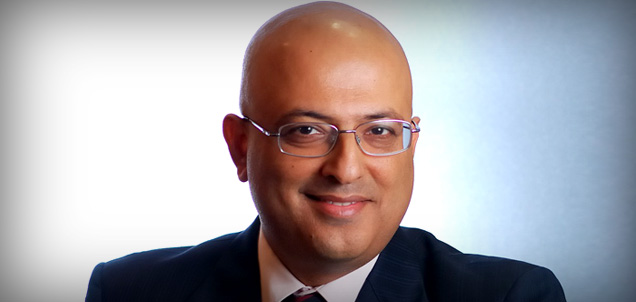
    One of the biggest worries of being a Chinese company wanting to make inroads into India is gaining trust of the customers who approach brands from that nation with caution. But Chinese-origin company Lenovo has had a smooth sailing on that front as it continues to make steady gains by winning consumer trust and confidence leading to rising sale of their brands. Much of the credit for the stellar showing goes to its Managing Director, Amar Babu, who has carved out niche priorities which he feels would enable the company to become a leader in the space.


    In conversation with MxM India’s Johnson Napier, Mr Amar talks of Lenovo’s dazzling growth story in India, on the parameters that have set Lenovo aside from its peers and how the company plans to replicate the dominance that it shares in China and Japan in India too. Excerpts:


    You’ve managed to throw up impressive growth figures in 2011-12. How would you define the year for Lenovo in India?

    We’ve had an excellent year where we grew in excess of 40 per cent y-o-y in a relatively flat market. We have managed to move to the No. 2 position with a market share of 13.7 per cent. We had our strategy of protect and attack where we protected our strength which is enterprise business and attacked our opportunities in SMB and consumer. So we invested in retail outlets and we invested in the brand; which is where we need to improve our positioning of the brand and our reach with consumer and SMB. The strategy would be similar; we are not going to change the fundamental strategy where we will continue to protect and attack. But the nuance will change as today we have more than 1000 retail outlets, we now need to ensure that all these outlets are productive and profitable. So while we had invested in the brand and created a larger framework now we will work and try and continue that journey and try and relate that brand to a wider range of people. So we believe we have the right strategy; it has worked brilliantly for us till date and we hope it will deliver equally well as we move forward.


    Despite being a relatively new player in the space, you attained the No. 2 spot in a short space of time. What were the factors that helped you achieve that kind of growth?

    We took over IBM business over six years ago but as you said, we are a relatively new player in the market. I think what has worked for us in the first place is products – as a technology company we need to have the right products. A technology company is as good or bad as its products. We do have great products – whether it is the ThinkPad range of enterprise business or whether it IdeaPad range of business, we have great products with us. The second most important thing is partners. We’ve really built a nice network of some strong and loyal partners. Those channel partners make a difference to us especially in the consumer and SMB business and also in the enterprise business. And the third is the brand. We have invested in the brand in a big way – Lenovo as a brand has a good awareness level, what we are now trying to do is build the preference so that we may be more in the consideration set and the preferred brand of consumers.


    What was remarkable for Lenovo was that you achieved stardom when the rest of the players were seeing a slump in sales due to the economic turmoil. How would you explain this phenomenon?

    There are two areas that we invested in — one is we invested in the brand during the slowdown and created a communication where we said we are ‘For those who do’. It is for people who use technology as a tool and not as a badge and we wanted to build the association by targeting the youth. So we invested in the brand. The other thing is that we invested in our retail outlets. Two years back we had 150 exclusive retail outlets and today we have more than 1000 retail outlets. So we have worked with our partners and are today the largest retail & IT company in the country. Also, we have invested sufficiently in our sales network. Earlier we had service centres in a little less than 100 cities, today we have service centres in excess of 400 cities. Again, we have invested significantly in our post-sales service so that we can provide great service to the customers.


    Apart from urban and metro cities, have you made a conscious effort to reach out to more markets across India?

    If you see how our 1000 stores have panned out, most of them are beyond the top-15 cities. Clearly our focus has been beyond the metros and that’s where now since we have got the infrastructure on the ground we would also like our brand to be related to that part of the world and not just metro cities.


    How does Lenovo India view the digital medium that’s caught the fancy of many players?

    I look at digital as a medium, just like television or print. But digital is an important medium because in print or television you communicate one way but in digital you have the ability to improve customer engagement and it’s a two-way process. We have done a lot of work on digital including tying up with projects and companies for various assignments. So digital for us is important as one, people research online but purchase offline. So the offline purchases are the retail stores whereas the research online is what we need to do. So we need to ensure that we are present in terms of communication. Second, is to increase brand engagement. Clearly, digital plays an important role in both these areas and we are investing heavily in the medium.


    What would be your focus areas going forward?

    What we now need to do is take our messages beyond the top 15 cities and see how we can be a little more of a mass brand, especially in the upcountry markets or what I call India 1 and India 2. In India 1, Lenovo is well-known and has good preference but in tier 2 we have to do some work and are aggressively pursuing that. But the bottomline is we need to ensure that we are able to send across our message to both these markets and increase our awareness.


    When do you see yourself emerging a dominant No. 1 player in India?

    We are the No. 2 player right now but the aspiration is to be the leader. I am not saying that we will achieve it this year, but clearly that’s the path that we would like to go towards. We are No.1 in China with over 35 per cent market share, we are No. 1 in Japan with over 27 per cent market share so clearly that’s what is the dream in India too – to be a No. 1 player soon. Though I must say that we are not in a hurry to race to the top; the plan is to build the business and stay there. I am not in a hurry to get there but yes, I would want to get there as soon as possible.


    Photograph: Fotocorp

  • Radio One is a station with a difference: Anil Machado

    Beginning March 28, Radio One Kolkata made a transition from a station that played a mix of Hindi and Bengali songs to a full-fledged Hindi retro station. The Kolkata station is now a 100 per cent Hindi retro station, playing the biggest hits from the sixties through the nineties. By going completely retro, the FM station aims to create some differentiation in the Kolkata market which has nearly nine FM stations. The decision to go retro was taken after extensive research was conducted, which found that no FM station in Kolkata dwelled into the retro music space and that there is huge potential for a 100 per cent retro music station in the market. In conversation with MxMIndia’s Robin Thomas, Mr Anil Machado, National Programming Head, Radio One shared his view on the reasons for going retro in Kolkata, how the station is different in other markets and the response received. Radio One, a joint venture between Next Mediaworks Ltd and BBC Worldwide is operational in seven metros – Mumbai, Delhi, Kolkata, Chennai, Bangalore, Pune and Ahmedabad.


    Please throw some light on the decision to go retro in Kolkata?

    Radio One is a differentiated station in every market we are currently present in and there is no market better than Kolkata to go 100 per cent retro.  The biggest retro singers are from this market… Kolkata is a market that swears on retro music, that’s grown up to retro music. Our motive is being different in every market and we noticed huge space in retro music that no one was catering to and if they did, then they were catering in time slots. We did our research and found that people of Kolkata are crazy over retro music and that the market is huge. In fact, no other player has dwelled into this space and hence we took the step and went 100 per cent retro in Kolkata.


    What genre of retro music will the Kolkata station play?

    We would be playing the biggest hits from 60s and 70s all the way through the 90s. You can listen to over forty years of the best music ever churned out in the country. The best of retro music will be played on Radio One Kolkata station. Tune in any part of the day and you will listen to songs you have grown up listening to, and therefore you will end up enjoying the station.


    And before going retro, Radio One Kolkata played….?

    Before going retro we were playing mainly a mix of Hindi and Bengali wherein Bengali music occupied nearly 25 per cent of the music mix.


    You have tried to create a differentiated station across markets…?

    We have differentiated content in all our markets. In Mumbai andDelhi, we are the only radio station playing international music. In Kolkata we are a 100 per cent Hindi retro station. In Chennai we are the only 100 per cent request station. In Pune we are a hardcore Bollywood music station whereas others play a mix of Hindi and Marathi. InBangaloretoo we are truly a Bollywood music station whereas others play Kannada music and in Ahmedabad we stand to a maximum music, maximum choice wherein we air only two shows and the rest is back to back music. The others in Ahmedabad market, on the other hand, air approximate six to seven shows whereas we air only two shows.


    What’s the kind of response the Kolkata station is generating, particularly from the advertisers?

    The response, from both listeners and advertisers, has been overwhelming. Advertisers mainly look at audience profiling and the differentiating factors of the station, and Radio One provides that differentiating factor and the audience profile. Kolkata has nine radio stations and advertisers realize that Radio One is the only FM station that plays 100 per cent retro music, our TG continues to remain the same i.e. 30 years plus listeners. What we have noticed in the Kolkata market is that they breed music from the sixties, seventies, eighties, nineties, and the people of Kolkata know their music, the singers and lyricist and so on.


    Radio One Kolkata went retro towards the last week of March, 2012, yet you didn’t make much noise about it…?

    We went retro from the March 28, 2012. I believe that the moment your product is differentiated, it works on the principle of network marketing but, if you are similar to other stations in the same market that is when you would invest heavily in marketing. Therefore, the moment you are a differentiated product, you would automatically stand out from the herd.


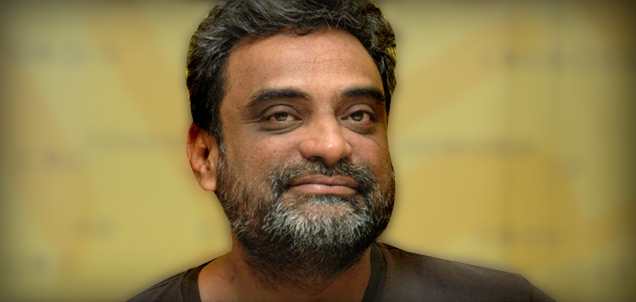
  • Awards have no relevance to advtertising: Balki


    By Anil Thakraney


    It’s always fun meeting the big boss of Lowe Lintas. Since we have worked together before and since Balki is always forthright and politically incorrect, one is assured of an exciting but meaningful exchange. Here is he, speaking his mind on various issues. Movies, advertising, the challenges facing the industry, the kind of people he’d like to hire, and yes, about his continuing allergy to advertising awards.


    You have to respect the man for the wonderful work he’s been doing on both, the small and the large screen. And more so for being that rare individual in the ad world who has the balls to stand up for something he believes in.


    Still around in advertising? Shouldn’t you be busy making big films with Big B?

    I am making a movie a day, it’s the same thing. An idea is an idea whether it’s three hours or thirty seconds. The day I stop tripping on getting the high when one gets an idea, that’s the day I will stop. In fact, I haven’t done a film in the last two years, I have been caught up with Lowe Lintas. I do have an idea for a film which I will work on towards the end of this year.


    And it will back to Bachchan, I suppose.

    Not back to, WITH Bachchan. I haven’t gone away from him.


    What’s with the Bachchan fetish?

    When you work with the ultimate guy it becomes difficult to work with somebody else. He’s phenomenal. Such hunger and greed for performing at the age of 70… it’s truly inspirational. I can keep on making films with him for the rest of my life.


    Are you a fan of Abhishek Bachchan too? His career isn’t going anywhere.

    Actually I found his performance in ‘Paa’ the best. It was the most difficult role. I think his problem is more the choice of films rather than the quality of his acting. He’s got his niche, he’s very good at certain things. He’s also a good friend.


    So that’s why you keep using him in the IDEA commercials, often when he’s not even needed.

    He’s a better friend of IDEA than he’s of mine. I didn’t choose him, IDEA chose Abhishek.


    What are the learnings from movies you’ve taken to advertising?

    The biggest thing that happens when you come back from cinema to advertising is that you are even more impatient. Because cinema takes so much time to execute, you want to make the ads even faster. That’s the reason I like making ads. You make them fast and you move on. There’s an idea a day, and that’s an addiction which is difficult to escape.


    Your wife’s directing ‘English Vinglish’. Are you the producer? And what’s it about?

    Rakesh Jhunjhunwala has co-produced it with me, along with another investor. It’s about the insecurities of a middle class woman who doesn’t know English in today’s context. It’s about how she overcomes the fear of English. It’s a very relevant issue to a lot of people in this country. In India, it’s money, fame and (knowledge of) English which determine the class and quality of a person.


    Let’s cut to Lowe. Are you still as hands-on as ever?

    I am. There’s so much of work, yaar. Today, Arun (Iyer) and Amer (Jaleel) have taken on a hell of a lot, they handle 50 percent of the business. My travel has come down but my ideation hasn’t. So yes, I am still involved in major things, I know what’s happening. This is not a profession where internal structures and motivations of the agency can dictate solutions for a client. The client comes to an agency for a solution and we have to get it, by hook or by crook. Gone are the days when creative directors would sit on a revolving chair and give motivational advice to people on how to crack things.


    Piyush Pandey said to me the reason he isn’t making movies is because he’s not bored of advertising.

    It’s about the number of things you can do, it has nothing to do with being bored of advertising. So maybe some people are capable of doing a lot more and some people are not.


    Significant changes you’ve observed in the ad world in recent times.

    It’s the same, in so far as it’s still a problem/solution business. What I find is that the clients today are hungrier for more interesting solutions. I find that clients don’t want to waste an idea. And because of the complexities of the marketing issues, the problem articulation is no longer simple. You can no longer say this is small, this is big or that is cheap. It’s about understanding the complexities and simplifying them. And I find that fewer and fewer people are able to do this. Therefore far more is expected of a creative person today than it ever was. The creative person is now seen as the solutions provider. Planning is now playing a big role in the articulation of the problem. Planners are now working more for the clients than for the agency. This shift is something I don’t quite agree with, but it’s happening. This situation requires more discipline, rigour and understanding from a creative person than ever before.


    And I guess this impacts your hiring policies.

    It impacts that hugely. The three Cannes Gold winners don’t make sense any more. Today a lot of senior creative people have to grow within the current system. So you hire junior people who are clever and intelligent and then groom them into the system of understanding problems. It’s very dangerous hiring very senior people from the outside. We went through a phase in advertising where we said we are losing our respect as an industry. That’s changed. Today the clients respect the advertising agency for providing solutions.


    Both, Prasoon Joshi and Piyush Pandey told me that the industry is losing talent. There seems to be too much pressure from clients, they no longer pamper creative people. And opportunities have opened up for agency personnel in other industries.

    I don’t agree with this. I actually think there’s never been a better time to be in advertising. You are no longer respected for your whacky ideas, being a maverick won’t get you any special respect. The problem isn’t that the industry is losing talent, the problem is it’s not attracting talent. It’s damn difficult to find talent to address today’s problems. In fact, today there are a lot of people in marketing who want to join advertising. Where we are not attracting the right talent is at the junior level. We as an industry haven’t been able to articulate what is the kind of people we want.


    As an old-world creative director, do you find yourself struggling with the new media?

    No. Clients want you do virals in the new media, but it’s still film. The video will never die, though the medium for broadcasting it may have changed. The production methodologies may also have changed. But the idea is the key to it all.


    You are not even on Twitter and Facebook. How will you ever understand the digital world?

    The reason I am not on it is that I don’t want the world to know what the fuck I am doing. That’s a personal choice, it has nothing to do with the new media. In fact, today if I am on Facebook, I am a fuddy duddy cock.


    The problem, Balki, is that all you uncles are obsessed with the TV commercial.

    I approach a problem very simply. There is a solution, and there is an idea. And if the solution demands a certain kind of medium, you use that. Nobody knew how to make films before or how to make a digital programme. So it’s all about expression. And you go into that particular medium and do it. I didn’t know how to shoot a film earlier, so I went to the experts to do it for me. I don’t watch television at all, but that doesn’t mean I am fuddy duddy on television.


    Small shops are springing up. People like Aggie are doing very well. Does that worry you?

    It’s always been happening. What do you think Mohammed Khan and Ravi Gupta did? If Ogilvy and JWT don’t worry me, then why should they? They are all competition. In fact, the more the merrier, it means more people are doing better ads, and that’s fantastic for the ad industry.


    Why are so many creative directors branching out on their own?

    In some cases they believe their talent is far superior to what a large agency can harness. The other reason is there are only so many people who can grow to a point in an agency. So it could be the frustration of not being able to grow beyond a point. They have to start their own thing to be what they want to be. The third thing of course is money. Some people want to be richer than what they are.


    Words of wisdom for young creative people.

    I think if you like sport, you should come to advertising. There is a hurdle to be crossed every day, there is a goal to be scored, there is a wicket to be taken, there are problems that come your way. It is like a game. The moment you start taking it too seriously, it’s very difficult to function in this business. A lot of things don’t make sense out here.


    Shashi Sinha tells me he’s cleaned up the GoaFest judging process. All the scams have been dealt with. But you still won’t take part.

    I believe the advertising industry needs credible awards. But how do you judge advertising? You say, ‘Haha, this is so funny! Oh, what a technique in this one!’ And based on that you award some ads. And two months later the agency loses the business. So obviously it doesn’t work. What the fuck are we doing in advertising? We are supposed to solve a problem interestingly. You are supposed to state the problem and the judges are supposed to ask if that ad could have solved that problem. I judged at Cannes once, and I refused to judge after that. I’ll give you an example of what happens: Those Coke print ads, where someone is sleeping under the shadow of Coca Cola bottles, has been hailed as the greatest piece of creativity. And then you have those great TVCs of Coke with Aamir Khan, which the nation loved, but which they (the Cannes jury) didn’t understand! This kind of judging has no relevance to what the purpose of advertising is. Basically the award show is a game and you play it. So it’s not about cleaning it up, I don’t value what you award.


    And you also have a problem with your peers doing the judging.

    Some of them I respect and some I don’t.


    So what sort of jury will satisfy you?

    Having some respected marketers on the jury would help. And some very good advertising people. Right now they ask anybody who’s free to come and judge, and that’s not the way to do it. You can’t choose people just because you want representation from various agencies. Thing is, before I give you a piece of work to be evaluated, before I give you the right to say if I am good or bad, I need to be assured you are a person who’s capable of telling me that. We need to first judge the judges.


    What disappoints you about the ad world?

    What pains me is the amount we try to market the barometers which decide who’s good and who’s bad in the Indian industry. The Gunn report, the Asian awards, etc, they tom-tom the barometers rather than the advertising itself. And all this has absolutely no relevance to what we do here. It’s time we found a barometer or an evaluation process that tells India which is a good agency. A method through which clients can credibly choose agencies beyond just the surveys and the awards. And this lack of a proper barometer has led to personality driven agencies. This propels a lot of false media management. PR for advertising people happens because of this.


    Why don’t YOU work on that barometer?

    Piyush Pandey and I have had many whiskies discussing this, but we only walk away promising that we should drink some more, and that’s about it. (Laughs.)


    Click here to view all Goafest 2012 stories


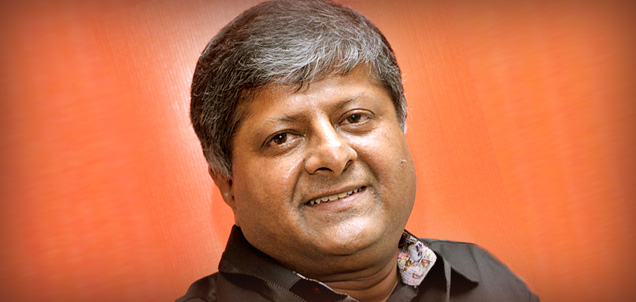
  • The media planner has become a zombie: Shashi Sinha


    Shashi Sinha has done a lifetime in the business of advertising and media. It’s been an interesting journey for an engineer who went from selling booze to crunching complicated numbers. The CEO of Lodestar UM shares his views on many important issues, including media research, the demise of the full service agency, key challenges facing media buyers in today’s market and how he managed to restore some credibility in the creative awards. The 54-year-old, who’s usually soft-spoken and politically correct, candidly speaks his mind on this occasion. Media buyers and creative directors must pay close attention. He makes some very valid points.


    By Anil Thakraney


    You work for two companies?

    I work for the Draft FCB group where I handle Lodestar. And recently I have taken charge of a creative agency called Interface. But my primary responsibility is Lodestar.


    Whom do you report to?

    I have dual reporting. I report to the Draft FCB Global CEO, Laurence Boschetto. On the Universal McCann side, I report to a gentleman called Jim Hytner who’s based in London.


    Dual reporting is always a tricky thing…

    It is tricky. Since they are sister companies you have to keep both masters happy. One of my strengths is getting along with people and ensuring that their objectives are met. I have been doing this for five years now. As long as the combined operation is successful, things are okay.


    Cut to the past. What attracted you to advertising, when you were a sales manager with the UB group?

    I actually came into advertising for the wrong reasons. I grew reasonably fast in the UB group at a young age and I was in sales there. But I wanted to migrate to marketing and that would have been an effort. Then a friend said to me I should work in advertising as I would get to work on many brands at one shot. And so I joined the ad world in 1986 and stayed on.


    And you started out as an account planner in Ulka. How did media happen?

    In those days planning was an unknown concept. Bal Mundkur used to run the agency at the time, and he thought planning was an airy fairy function, that it had lost steam. He asked me to do some ‘real work’. So I started doing odd jobs like running the financial advertising cell, selling sponsored prorgammes, etc. Later I shifted to client servicing. Along the way my interest in media grew. When the FCB guys decided to make India the regional hub, Anil Kapoor said the time had come for me to fully move to the media function.


    Share an interesting memory of Bal Mundkur.

    He had balls. Today our revenues and profits are huge and yet I would not take a decision which Bal took in the late eighties. The servicing team handling a large multinational client was very unhappy, they said they were being treated like shit. Bal wrote a six-page hand-written letter to the client explaining why the agency would like to part ways with them. When he told me about it, I was horrified. I asked him to instead change the team on the account. But Bal said, “No, it is a matter of pride.” (After some prodding Shashi reveals the name of the client. It was Glaxo.)


    You are involved in many activities, you run the GoaFest awards, now you are heading the Ad Club as well.  You have excess time on hand?

    (Laughs.) I have enjoyed it for the last three years but it’s getting to me now. I believe when you take something on you must give it your best. I took on GoaFest last year because it was in a mess. So one had to get some credibility back, I had a point to prove.


    I guess next year you would not want to do it.

    I will definitely not run the awards next year.


    Why has the Bombay Ad Club gone dead in the last few years? I recall they used to hold many events in the past.

    You are right, it has ended up becoming an awards-only body. The regular interactions have reduced. The agenda for the future is to make it broad-based. The Delhi market has become very big and it’s a starved market. So we can collaborate and do things. As soon as GoaFest is over you will see a lot of action happening in the Ad Club.


    Do you miss the days of the full service ad agency?

    I do. In fact, I’ll let you in on a secret. I want to go back to the integration system with Interface, and the response I have got so far is very good. I genuinely believe that full service is the final solution. The best ideas come when you are sitting around the table.


    Shashi, after all these years of happily running a media buying agency you are suddenly talking of integration.

    One has been playing to a role. One is building the media agency, building one’s clients. But the best quality works happens in a full service agency.


    And the media buying market has become like a sabzi mandi. How much fun can that be for someone who comes from the old school?

    This is the unfortunate downside of globalization, global clients and global processes. Truth is that internationally advertising is not a hot profession any more, it comes way down the totem pole. Though in India it still has a pedigree, there’s some respect left. Ten years later it may not be there.


    One super media innovation you are most proud of having effected.

    It’s always teamwork so it’s embarrassing to say I did it. We have enabled many, but the one I am most proud of was for Nerolac Paints about five years ago. We took up a Mumbai local and deposited the shades onto the train. Nerolac deposited their paint on the outside of the train and made a shade card out of it. It was a wonderful idea.


    How many years do you give the print medium in this country?

    I can’t say about Bombay, Delhi and Bangalore, but as a country, print will be here for a very long time. The smaller towns are under-leveraged. Secondly, even if there’s internet access, there’s no power supply in these places. So how much can one use the computer, how much can one read on the mobile? If the time spent in Bombay on a newspaper is 15 minutes, for a town in UP it would be forty minutes. The entire family reads it.


    Key challenges the buyer faces in a highly fragmented media market.

    Everyone chases the rate game and how to buy it cheap. To me that’s stupid. For most of the organized media there are metrics in place to measure the media efficiencies. So in media terms how many consumers we’ve reached is all bull. The big challenge is to find whether that’s working for my brand or not. That, no one is able to answer.


    That’s the media planner’s job. And the industry has killed the planner.

    Correct. The problem is that the media business has become all about volumes, the business has become transactional. The planner today has become a zombie, a computer programmer.


    How can the industry improve media research in this nation? There are too many question marks on television audience measurement and print readership studies.

    Someone has to put money on the table, it’s as simple as that. The solutions are all known, I know very bright and talented people in research, what needs to be fixed is known. The problem is: No one is wiling to invest. Today, if television measurement costs Rs 20 crores, what if Rs 100 crores was spent on it? Or, for readership surveys, which cost Rs 4 cores today, what will happen if they had Rs 15 crores? So it’s nothing but lack of funds. Neither the newspapers nor the media agencies nor the clients want to put down that kind of money. And that’s the only problem.


    GoaFest will be a sub-continental event this year?

    This being a tough year, we’ll have to see how to bring Pakistan and Bangladesh in. We have to see how many of them will come, it’s early days yet so I don’t know the answers. We are also trying to get the clients in.


    On the awards, how did you lick the problems of self voting and media leaks?

    On the problem of self-voting, it was very simple, it didn’t need a very bright mind. We stopped the practice of raising hands during the judging, and they had to vote on a piece of paper. So if a judge voted for his own agency’s work, we would block that score.


    You must be very disappointed with the creative directors who were indulging in this.

    Yes, 110 percent. In the Effies, the majority of the judges are the clients. And they are not as desperate to win as the creative directors. Which is why the creative directors take short cuts. And as long as you allow short cuts to happen, people will get even more emboldened. As far as the issue of the leaks goes, we solved it from the media end, because it’s very difficult to nab the person who was doing it. I reached out to various people in the media and got a commitment from their senior leadership that they won’t do it. Also, the switch to secret voting format helped.


    And yet, Lowe refuses to take part. Which means you still haven’t been able to crack the core credibility issues.

    Balki has taken a position and his problems are beyond the purview of someone running the awards. I am just a process coordinator. If he says he does not like his peers judging his work, that he doesn’t respect them, I can’t do anything about it. I can only clean up the processes. But forget Balki, there are other people who have their own agendas for not entering the awards, they fire over the awards committee’s shoulders. Privately they’d say to me they don’t have a good enough body of work so they won’t take part. But their public posture would be very different.


    Can’t you change the composition of the jury? Does it have to consist of creative directors?

    I would definitely like to bring the clients on the jury. Perhaps 50 percent of the panel. But I have been told by creative directors that ‘these are our awards’. You must understand that one is running an industry association and there will be many voices. And so it’s like a democracy; I may have a point of view but there are nine other people voting.


    One rival media buying agency head you admire.

    Jasmin Sohrabji (Managing Director, OMD India). She is far younger than I am but I respect her for building something from the start. She’s built the company from scratch in the last five years, and she’s done a terrific job.


    What are the future goals you’ve set for yourself?

    I think there’s a huge opportunity in the content space. And one would like to do something that’s related to advertising. It could be digital or television content. We have taken some baby steps in that direction but haven’t been able to ignite it. In fact, I have told our global parents they should offer quasi-entrepreneurial opportunities to the team members. In the sense that people within the company are given pilot projects to run, in which they have some stake.


    One big life regret.

    It’s not a regret but sometimes I wonder if after completing my IIT I made the right decision to stay on in India. I had the opportunity to get a scholarship to do my MBA abroad, and I could have stayed on there.


    Why? Don’t like working in India?

    Nothing like that. But the scale of operations abroad is dramatically different. The quality of life is good out here, but one is a big fish in a small pond.


    Click here to view all Goafest 2012 stories


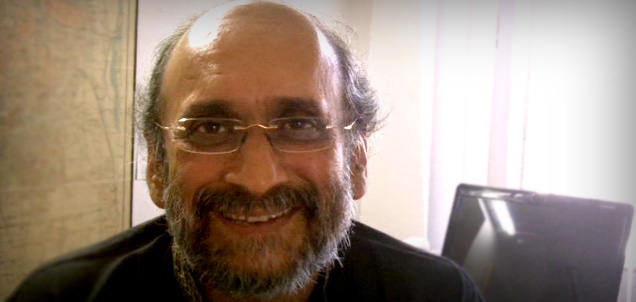
  • Possible for ethics & profit-making to co-exist: Paranjoy Guha Thakurta (Text & Video)


    By Shruti Pushkarna


    As he launched the second expanded edition of his book, ‘Media Ethics: Truth, Fairness and Objectivity’,  in the capital last week, MxMIndia caught up with veteran independent journalist and educator,  Paranjoy Guha Thakurta for an exclusive interaction. In this candid one-on-one, Mr Guha Thakurta spoke at length about ethics in media today, self-regulation vs. regulation; the debate on the freedom of expression on the internet and the need for media to be ethically and socially responsible.


    Mr Guha Thakurta’s experience spanning nearly 35 years, cuts across different media: print, radio, television and documentary cinema. He is a writer, speaker, anchor, interviewer, teacher and commentator in three languages, English, Bengali and Hindi. His main areas of interest are the working ofIndia’s political economy and the media, on which he has authored/co-authored books and produced documentary films. He lectures on these subjects to general audiences and also trains aspiring and working media professionals.


    Mr Guha Thakurta has served as a member of the Press Council of India nominated by the University Grants Commission between January 2008 and January 2011. In April 2010, as a member of a two-member sub-committee of the Council, he co-authored a 36,000-word report entitled ‘Paid News: How Corruption in the Indian Media Undermines Democracy’.


    Does an expanded edition mean a lot more to discuss in media ethics?

    The first edition of this book came out more than three years ago, since then a lot has happened. Moreover, after the book came out, there were a lot of people who came up with suggestions on how this book could be improved. So this book is about 40 per cent bigger and thicker than the earlier edition. There are new chapters – there is an entirely new chapter on corruption in the media based quite a bit on my experience as a member of the sub-committee of the PCI, which inquired into corruption in media and how it undermines democracy, the entire phenomenon of paid news. There’s also a new chapter on reality television and some of the existing chapters have been drastically rewritten and revamped, notably the chapter on the internet because a lot has been happening in the internet space; also the chapter on advertising, which was particularly weak in the first edition – I think it has been strengthened substantially in the new edition.


    Also a whole lot of major developments have taken place concerning the media in the recent past; these have all been incorporated in the new edition. Among these would be the News of the World and Rupert Murdoch controversy in UK, the entire Wikileaks and Julian Assange phenomenon and back home here in India, the entire Niira Radia conversations; all of these have raised significant questions pertaining to media ethics and these have been incorporated in the new edition of the book.


    How important is the ‘code of ethics’ in today’s commercialized scheme of things?

    Ethics is very important in every sphere, particularly so in the case of media, because you are dealing with information which is akin to a public good. The problem essentially arises because this information is being disseminated by privately owned corporate bodies with an important goal to maximize profit; therein lies the conflicts of interest. The problem arises because there are sections of the media that are interested in profit maximization to the exclusion of other goals.


    It’s become a bit of a cliche – once upon a time it used to be said, ‘journalism is a mission’, today journalists work only for a commission. We are seeing the corporatization and commercialization of the media having an impact on the kind of content that is being produced. The viewers of television channels, the readers of newspapers, and the listeners of radio stations are being perceived more as ‘consumers’ rather as citizens. They are ‘consumers’ of products and services which are being provided by companies which advertise.


    Can journalistic ethics and profit-making can co-exist?

    I do believe it can, it’s not easy but it is possible for ethics and profit-making to co-exist.


    What is your view on the issue of regulation v/s self-regulation? What works for you?

    In an ideal world, self-regulation is the best form of regulation. But what do you do with those who cross that proverbial ‘lakshman rekha’, what do you do with those who don’t follow the code of conduct which is supposed to be self-regulatory in nature. I’ll give you an example, in the US, when Janet Jackson had a wardrobe malfunction in the middle of a live broadcast, the channel was fined immediately by the Federal Communications Commission because the wardrobe malfunction happened during a live broadcast, it happened during primetime and the channel had to first pay the fine and then appeal against the decision in a court of law.


    What happens in India? Not very long ago, there was a series of incidents involving Bhanwari Devi Maderna episode in Rajasthan and content was put out during the day on television, which many considered to be pornographic in nature. When the Ministry of Information and Broadcasting issued show cause notices against these TV channels, all of them came to Shastri Bhawan saying, ‘we apologize and we won’t do it again’. That’s the nature of self regulation in this country.


    As far as print is concerned, we have a Press Council of India which has no powers to punish anybody, it cannot impose a fine, leave alone put a person behind bars, and its recommendations are not even binding on the government. We don’t have statutory organizations which are empowered in the manner in which say the Federal Communications Commission is, or the Office of Communications in the UK is. So it’s fine to talk about self regulation but what do you do when somebody doesn’t listen to you, do you have the wherewithal to punish them?


    Do you think we need an independent official regulatory authority for television news channels as against one set up by the channels?

    Yes, I do personally believe that it is possible and desirable to have an independent regulatory authority which is independent of the government as well as the media. Such a regulatory authority can be funded by the government, but it can nevertheless be autonomous and independent of the government, in the manner in which bodies like the Supreme Court of India, or CAG or Election Commission of India function.


    So, I do believe it is possible to have such a communications commission. The problem is that for the last decade we have been debating the need for such a commission and the joke is that every time the government proposes to form such a commission, the government collapses. There have been 10 or 12 avatars of a Bill to set up such a commission; time alone will tell when and if such a commission is established in India.


    Your view on Dirty Picture not being allowed to air during the day on Sony?

    The whole Dirty Picture episode has thrown up a number of issues pertaining to censorship, pertaining to what content is appropriate or not, and if adult content can be shown on television, if so when. I think these issues are contentious and debatable and they are going to be debated for quite some time to come.


    Would you agree with Justice Katju’s view when he says people in media are of poor intellect?

    I think Justice Katju is exaggerating. There are journalists who are dumb and there are journalists who are not dumb. I think Justice Katju is not being fair to the media fraternity but that’s his personal point of view, he also thinks 90 per cent of Indians are fools, I beg to disagree with him.


    There’s a belief that the Indian media doesn’t take too kindly to criticism. Agree?

    Who among us are willingly going to accept criticism? All of us have our egos, in that sense, I don’t think the media is unique. I think there is neither any individual nor any group who likes criticism but the point is if you do believe in democracy, if you believe in fairness, and if you are in the public eye, then you better get used to criticism otherwise you’ll end up like Ms Mamata Banerjee who could not take being lampooned online. This shows not only lack of tolerance on part of individuals, especially public figures, but I think it fails to appreciate the nature of freedom of expression.


    Isn’t it upsetting that all the journalists’ organizations like Press Club, Editors Guild are tightlipped about Paid News?

    I won’t entirely go along with you on that, I mean there was a conspiracy of silence about corruption in media and paid news, even the report of the subcommittee that was prepared by me and my colleague for the PCI, was sought to be suppressed by a powerful lobby of publishers within the PCI. Finally in October 2011, the PCI was literally forced to make that report official, place it on their website with a disclaimer saying that entire council had not approved of its content. But I won’t say all journalists’ organizations conspired to put under wraps this report. There have been sections of the media who have been reticent of highlighting corruption within the media fraternity, but I don’t think it’s true for the entire media.


    Do you think that Public Relations has adversely impacted the quality of journalism?

    No, why blame the PR person…she or he is doing his or her job. You can also say the government has bribed the media, you can say that corporate captains have bribed the media. So I don’t think we need to look for excuses, I think journalists have to look within if they have to introspect about why there is corruption in the media. You can always hold somebody or the other responsible for your sins but at the end of the day, you are yourself responsible I believe.


    Your views on the ongoing debate on the freedom of expression in the internet age

    I think this is a huge debate. The internet is not just the newest medium of mass communication, it’s also a form of personalized communication, and it’s difficult to control. Issues relating to freedom of expression on the internet have acquired many new dimensions and these are very contentious and not easy to resolve. And we’ve seen this debate been going on for a while…the ‘infamous’ Danish cartoons on the prophet Mohammed were all drawn ostensibly to generate a debate on freedom of expression. Yes, that cartoon was widely circulated on the internet, as was the gruesome video showing Daniel Pearl getting beheaded. But it’s also worth remembering and underlining the fact that the mainstream media were restrained in reprinting, publicizing either the Danish cartoon or Daniel Pearl’s beheading.


    The point is, sometimes in the name of freedom of expression, you want to generate a debate but you end up generating one huge controversy which goes out of control. It was the Danish PM who argued that the cartoon controversy was the biggest crisis that small Scandinavian country faced after the Second World War and he was particularly worried because it even had an impact on the economy of Denmark because countries of West Asia stopped buying dairy products made inDenmark.


    So very often we might want to start a debate without realising its wider ramifications. But the bigger question of what constitutes the right to offend, what is freedom of expression and the new dimensions these issues have acquired in the day and age of internet, these are very important, they are being debated and I think these debates are going to go on for quite some time.


    And given all of this, your view on the future of news media in India?

    The future of news media in India is very bright. Unlike many countries in the world, all media in India continue to expand, whether it’s print, radio, TV or internet. According to 2011 census, one out of four persons in India still cannot read or write her or his name, so as more and more people become literate I think all sections of media are going to expand. At the same time, media has to become more responsible, not just socially responsible but also more ethical if it indeed has to contribute to building democracy, to building a better country.


    If you were still a kid getting out of college, would you get into journalism given the ethical standards followed?

    That’s a difficult question…when I became a journalist 35 years ago, the Emergency had just got over. That was a unique 19 month period in the history of the country where for the first and so far the only time in politically independent India, the government of the day sought to abridge freedom of expression. For 19 months, during the Emergency, freedom of expression was sought to be curbed. I don’t think that will happen again, but the very fact that I was a student during that period did influence my decision to become a journalist. If I was born 35 years later, I don’t know if I would have preferred to become a rock star, or an airline pilot or a heart surgeon instead of a journalist.


  • Govt policies anti-small radio stations: Goyal

    Tarun Goyal is the Founder, Director of Radio Chaska, a radio station which was founded in 2006 by the Goyal family. In conversation with MxMIndia’s Robin Thomas, Mr Goyal speaks about the challenges facing the station in achieving break even, the issues that need to be resolved before the phase III rollout, on their plans to revamp their official website and whether the radio industry has been hit by slowdown?


    Founded in 2006, when you look back, how would you say the journey has been for Radio Chaska?

    The journey since 2006 has been a different one. We started a radio station in Gwalior, thinking that FM radio will catch the fancies of the people, and it did. Over the years there has also been a shift in the advertiser perspective about the medium. However it is the support from the government that we are lacking today, they are spending very less on radio. On a positive note, despite odd challenges, radio has managed to grow tremendously over the last many years, and has also contributed to the development of the city as well.


    What is the Gwalior market like for radio?

    Well, it certainly is very different from the metros. People invGwaliorvhave an altogether different taste for radio itself.  The advertising category on radio is mostly retail. We mainly play music all the time – mostly latest Hindi or Bollywood hits.


    Apart from advertising, what are the other sources of revenue generation for Radio Chaska?

    We do generate some revenues from activations, a good pie of our revenues also come from Radio Mirchi (ENIL), with whom we are instant partners for sales and then we rely on our local revenues. Although activations help increase our revenues, the profits generated are low, mainly because of the high costs in activation. Thereby, we primarily have to concentrate more on advertisements because that’s where a good portion of our revenues comes from. Nonetheless, more number of activation definitely helps us increase our brand value in the city, which in turn, helps us get more local advertisers.


    So, has the strategic sales alliance model worked? How does it benefit both Radio Chaska and Radio Mirchi?

    Since we are a single station owner in Gwalior, this partnership has been a strategic move for both Radio Chaska and Radio Mirchi. Since Radio Mirchi is present across Chhattisgarh and Madhya Pradesh except inGwaliorand Radio Chaska is present in Gwalior, therefore Radio Mirchi (ENIL), in strategic sales alliance with Radio Chaska, has created a space for itself in Gwalior as well. It is quite hard to sell a single station and keep track of various campaigns coming from different parts of the country. This strategic alliance with ENIL gives Radio Chaska an edge in reaching out to other parts of the country and the state. Thus we have had an extremely good partnership with ENIL ever since the inception of Radio Chaska.


    What are your break-even plans? When do you see Radio Chaska achieve break-even?

    I don’t know when we would be achieving break-even as the costs are escalating and hence we are unable to increase the revenues as anticipated. Unless we have some good policies from the government, small stations will never achieve break-even. Government policies, I believe have gone against the small radio broadcasters and, besides, there are other small issues which if resolved would help small stations achieve break-even.


    Music royalty is one of the issues that are yet to be resolved. The escalating fuel cost is another worry because it is adversely affecting the industry. A company’s five to seven per cent cost is always burnt in fuel because the government is unable to provide electricity. These may be small issues but nevertheless they are vital in helping the business sustain in the market.


    The MIB (Ministry of Information and Broadcasting) has already given its nod to news on private radio stations, multiple licenses are allowed, FDI limit has been marginally increased. How does Radio Chaska view these developments? Will these benefit smaller stations?

    We welcome this move, but issues like music royalty need to be sorted out first and only then I believe FM radio stations can probably flourish in the long run. Right now challenges for smaller stations, in particular, are many and only time will tell how FM phase III will benefit the industry. Nonetheless we welcome the policy and we too would try and be part of the phase III policy.


    So, will you approach phase III more cautiously? Will you expand to other markets? What are your phase III plans?

    We are eyeing for expansion in parts of Madhya Pradesh as well as in other markets, but yes, our approach will be a little cautious. We will not hype up the prices and bid unnecessarily. If we find the scenario viable only then we will bid, otherwise we will stay away.


    How significant a role does the website play for a radio station? Do you plan to add new features or redesign your website someday?

    Yes, we will be upgrading our website very soon, probably in next two months. Official websites have also become a medium for radio stations to interact with their listeners. Our RJs regularly interact with listeners on social networking sites and today official websites have also become an integral part of a radio station.


    It is said that the radio industry being hit by the economic slowdown. Do you agree?

    Yes, I do agree that the radio industry too has been hit by the economic slowdown. The telecom industry, for instance, was one of the highest spenders on radio and in the last three or four months we have not received any business from the telecom sector. So, yes there is a slowdown and radio has been affected by it, but nevertheless radio is surviving the slowdown.


  • A whole new world to discover: Rahul Johri

    The footprint of his responsibility is huge and very challenging. Mr Rahul Johri, Senior Vice President and General Manager, South Asia at Discovery Networks Asia-Pacific, leads his network’s South Asia operations and is responsible for driving the company’s growth in the region which includes India, Pakistan, Sri Lanka, Bangladesh, Maldives, Bhutan and Nepal.


    He is responsible for revenue generation, portfolio expansion, affiliate partnerships, networks’ viewership, content creation and talent management. In 2010, he led Discovery Channel to become India’s No.1 channel in non-fiction entertainment. He cemented TLC as India’s favourite lifestyle channel and energized Animal Planet within the advertising community.


    Mr Johri has over 18 years of media industry experience across various verticals including news channels, magazines and print dailies. He has been actively involved in the launch of many of India’s leading media brands including Aaj Tak, Outlook and HT City. Prior to joining Discovery, he was the General Manager – Sales of IMG India.


    In this interaction with Tuhina Anand, Mr Johri talks about the channel and its impact and further plans.


    It looks like the way to go ahead is regional; how has Discovery in regional languages and feeds helped in garnering greater viewership share?

    Dubbing in Indian languages has been one of our important growth strategies in India. Dubbed content attracts strong viewership from across age groups, genders and geographies and is accepted very well by the viewers. Thus introduction of regional language feeds is our attempt to localize the content for viewers across India, reaching the specific markets in their own language.


    Discovery Channel which is currently available in four languages – English, Hindi, Telugu and Bangla – has shown upward trend in viewership post introduction of 24-hour parallel language feeds. It has helped the channel grow and connect with a larger audience.


    In 1998, Discovery Channel launched its 24-hour parallel Hindi feed, which boosted the channel’s nationwide viewership. Continuing with its promise to delight its viewers across India, the channel launched the Telugu feed from January 01, 2011 and Bangla from 15th April 2011. Post the Telugu launch, Discovery Channel’s viewership in Andhra Pradesh jumped by 180 percent (source: TAM, Market – Andhra Pradesh, Wk 1-40 2010 vs 1-28 2011, 0700-2359 Hrs, Viewership comparison, TVR000s), and witnessed rise of 20 percent post the launch of the Bangla feed. (Source: TAM, West Bengal, Wk 1-15, 2011 vs Wk16-28 2011, TVR%)


    From August 15, Discovery Networks Asia-Pacific has launched its first regional channel – Discovery Channel Tamil for the viewers of Tamil Nadu. Our constant research and feedback from the viewers encouraged us to launch a dedicated 24-hour channel for Tamil viewers in their native language.


    Our 24-hour wildlife channel Animal Planet which presents engaging stories from the depths of oceans to the interiors of jungles in the comfort of your homes, is also available in English and Hindi.


    What other regional languages do you have on your radar and by when would they fructify?

    We constantly keep evaluating new languages.


    How have the channels such as Discovery Science and Discovery Turbo fared for the network?

    Discovery Science and Discovery Turbo are unique content channels dedicated to science and automobiles respectively. These channels were launched last year to cater to the demands of quality content by the aspirational Indian viewers. The channels are available across analogue and on all leading DTH platforms – Dish TV, Tata Sky, Airtel Digital TV and Videocon D2H, the channels are currently reaching over 17 million subscribers each.


    India is a young country and there is immense curiosity amongst the viewers for information. Knowledge is cool. The viewers want to be informed and entertained about the various advancements and technologies from around the world. As expected both Discovery Science and Discovery Turbo have received encouraging response from the viewers across the country.


    The most visible proof of the growth and success of these unique content channels is the increasing interest and spends by advertisers and affiliates on our networks.


    From your own experience, how much does re-branding help a channel, a case in point being TLC?

    TLC, formerly known as Discovery Travel & Living, has remained India’s leading lifestyle channel. It was the first channel to introduce lifestyle programming on diverse manifestations in travel, food, fashion, music way back in 2004.


    Today’s consumer has evolved. The aspirational, well-travelled and informed Indian viewer demands unique and compelling content. This evolution is accelerated by increasing integration with globalised lifestyle and consumption patterns leading to the overhaul of the Indian consumer.


    Keeping pace with this metamorphosis, television channels have to innovate and remain relevant. Re-branding helps refresh the brand proposition, offering and strengthen consumer connect. TLC was rebranded in 2010 to make it bigger, better and bolder, featuring new faces, new genres and new places.


    Travel as a genre has become a competitive space, with some channels like Fox History & Entertainment re-branding to include the travel genre in their name. Does it impact TLC in anyway?

    TLC offers unmatched brand proposition and remains India’s ultimate lifestyle destination with a distinct identity. The channel offers a unique blend of international lifestyle programmes and India productions which sets it apart from the other channels in Indian television space.


    Having innovation at its core, TLC pioneered in travel programming under a variety of themes such as exotic locales, cultural destinations, luxurious hotels, world’s best beaches, culinary journeys and this year introduced a dedicated time band for travel, at 9pm. Some of the popular travel series on the channel presented by renowned travel experts are  Samantha Brown’s Great Weekends, Beach Watch, Anthony Bourdain: No Reservations, Get Out, Xtreme Tourist, Sea Nation and Fun Asia.


    Redefining the food genre on Indian television, TLC introduced the most sought after chefs and food experts who bring in variety of cuisines from different parts of the world. The channel explores the finer nuances of culinary skills through its enticing food series presented by celebrated chefs like Kylie Kwong, Nigella Lawson, baking expert Rachel Allen and bizarre foods with Andrew Zimmern.


    TLC offers its viewers an experience of the fascinating world – ranging from ice diving in the high Arctic to watching the sun come up over the pyramids, from stripping in Las Vegas to diving with sharks, from driving a Ferrari to swimming the English Channel and from spending a night in a haunted castle to exploring the volcanoes in Indonesia. No experience is left unturned.


    For further growth, you need to go beyond tier 1 cities, do you think in tier 11 and 111 cities are ready to go beyond fiction, news and sports? What does your research say?

    Discovery’s mission is to satisfy the curiosity of millions of Indian viewers through high-quality, entertaining programmes. The power of the Discovery brand stems from our ability to provide unparalleled content and create meaningful connections with audiences. Introduction of local language feeds gives us just the opportunity to reach millions of viewers across India.


    Our flagship channel Discovery Channel last year became India’s 9th largest channel amongst all 600+ channels, in cumulative reach. Discovery Channel is currently amongst the top ten distributed channels, available in over 2 lakh villages and reaching over 160 million subscribers through the country.


    Also, the various programmes on Discovery’s various channels are mostly documentary-dramas, which further makes dubbing more relevant without losing the basic essence of the series.


    Animal Planet is also available in English and Hindi. This year Discovery Networks has launched Discovery Channel Tamil dedicated to the viewers of Tamil Nadu. This dubbed content is much appreciated by the viewers beyond metros.


    In terms of big properties, what should we expect from the channel by the end of this year?

    We continue to refresh our programming on a quarterly basis across our seven networks, bringing new programmes, refreshing formats, enthralling hosts and newer seasons of the existing series.


    Some of the new programmes across our channels are:

    Rising: Rebuilding Ground Zero (to air from September12-17, 9 pm) which is nearly a decade after the September 11th World Trade Center attacks, Discovery Channel and acclaimed producer Steven Spielberg bring special series chronicling the historic reconstruction of Ground Zero. Documenting this gigantic project in a six-part series, Rising: Rebuilding Ground Zero, Discovery Channel takes a comprehensive look at Ground Zero’s rise from the ashes, as seen through the eyes of those who are making it happen.


    Discovery Channel – Norway Massacre (to air on September 21, 9 pm): July 2, 2011, a day now indelibly ingrained in Norway’s history, is the date Anders Behring Breivik killed eight people in a bomb set off outside government headquarters in Oslo and embarked on a 90-minute shooting spree, resulting in the death of 69 young people on Utoya Island. Discovery Channel chronicles the events of that horrid day – and the impact it has on this nation and its people – in Norway Massacre.


    On TLC we will have Chuck’s Day Off, where the owner and head chef of one of Canada’s hottest restaurants spends his only day off by… cooking!


    Discovery Science- Innovation Nation: What will the future look like? Will people fly to work? Will one live a disease-free life? Will one never age? Brilliant thinkers, cutting edge research, backyard inventors are on the way to breakthrough science that will change lives forever. Innovation Nation features budding inventors, innovators and designers who have been laboring away in sheds to dig out things that we would have only thought of. Travelling across the globe from cutting-edge research to ingenious inventors, it offers intimate access to the people who make high science a reality. Real world demonstrations, lab experiments, and in-depth interviews are complemented by stunning visuals, all of which bring the planet’s bravest new ideas to life.


    One last question: it’s been 15 years since Discovery’s debut in India; in these years what has been your biggest challenge?

    Discovery refreshes the content of all its seven channels in India every three months. This decision to offer new content every three months is a big challenge but we have been successful in converting into an opportunity. Variety is our unique strength. No one can replicate it.


  • Creative agencies have allowed themselves to be dumbed down: Vikram Sakhuja


    By Anil Thakraney


    Vikram Sakhuja heads GroupM, India’s largest media buying conglomerate. In a long and animated discussion, the ace number cruncher shares with us insights from the Indian media industry. As well as his own organization’s approach to the various challenges staring at the media business.


    Fifty-year-old Sakhuja is an IIT/IIM grad, and he did a number of years in marketing before he shifted to the world of media in 2001, when he signed up as Managing Director of Mindshare Fulcrum. During our meet, I could see that the outspoken GroupM boss is extremely passionate about his work, and is someone who could get easily agitated over provocative questions. Thankfully, we had a smooth run. Guess it’s all thanks to Yoga which Sakhuja has recently taken up. 🙂


    You were a hard-core marketing man at one point. What prompted the switch to media?

    I believe in taking the career as it goes, and taking decisions at different points of time. Let me take you through my career graph to explain this. After IIM, Calcutta, I was pretty clear I wanted to get into the marketing side of things. So I joined P&G and did eight years there. When I joined them, Richardson Hindustan Limited (RHL) was becoming Procter & Gamble (P&G). So when I started out, the company had RHL values and very quickly the organization got Procterised.


    And you were not happy with that?

    I was happy with that, but Procter believed in the system of specialization. So the guy who gets into sales, stays in sales. The guy who gets into advertising, sticks to advertising. I was in research and they extended that to marketing services. I learnt a lot there, but later on I wanted to move to brand management and P&G wasn’t allowing me that. And I didn’t want my epitaph to read ‘Marketing Researcher’. So I moved to Coca-Cola which was more flexible in these areas. Out there I managed the entire brand portfolio. That worked very well for 5 years. I was reporting to Sanjeev Gupta in those days, and he was handling both, marketing and bottling. And later he went on to take up a bigger job. So they got Shripad (Nadkarni) to head marketing, and I felt my job would get undermined a little bit. And so I left to join Star TV.


    And you lasted there for just one year.

    It was a mistake. I call it jawaani ki bhool. Peter (Mukerjea) said they wanted to start a strategic marketing function there, and it would include marketing of the creative product as well as on-air marketing, which is where the bulk of the spending goes. But it didn’t pan out like that because the programming department had a territorial interest in the programming piece. So it became very clear to me this was going to be an off-air game, and that didn’t have too many legs. And I left Star without a job. Later, Ranjan Kapur introduced me to Andre Nair (this is year 2001) who was looking for people to start Mindshare in India. We had a drink and one thing led to another. I felt a little trepidation in the beginning because I perceived ad agencies to be a little unprofessional. But later I thought about it rationally and it made sense. And so here I am.


    There are large media shops under the GroupM umbrella. How do you manage to give personal attention to each one?

    I am running GroupM, I am not running Mindshare or Maxus. There are capable people running those. I am a management by objectives kind of a person. One aspect of my deliverable is Profit & Loss, there’s no getting away from it. I have told my guys we should get growth from our existing clients. We should have the source credibility to go to them and manage 100% of their marketing investments. That is the agenda I drive. Then, I have to create an eco system for technology, talent and on how to do things better. The scope of service has actually dumbed down, clients are paying peanuts and they are getting monkeys. So I go and tell my clients if they want the right kind of talent and want to get the value out of it, then this is how it works.


    I suppose you operate more as a coach than as a player.

    Do I meet clients? Yes, I do. Am I directly involved in the day to day plans? No, I am not. Unilever is our biggest client. So every year at least one or two deals I will sit in on. Also for other clients. I love to be there for the sheer passion of it.


    What is Sir Martin Sorrell’s brief to you?

    Martin is pretty hands-on in most of the businesses. I rely on him more for counsel. I whet my new plans with him. For example, I went to him with the idea of celeb endorsements. And he felt it wouldn’t work, but asked us to try it anyway. And it didn’t work. Then there was a time we were offered some sweat equity in the IPL Deccan Chargers team. I took it up to Martin and he didn’t think it was a good idea, because he didn’t know the nature of the animal. But he’s brilliant, he is one of the few guys who understands our business, he wants to get in deeper.


    What is your stand on the shift from the commission system to the fixed fee system for media agencies?

    I definitely support the fee system. Though I would prefer a balance of commission and fee. Because in a growing economy you win with commissions. But when spends are not looking good at all, as is the case this year, fee bails you out. In principle, however, I like the fee system.


    How are the clients reacting to it?

    The people who take their marketing seriously believe in the fee system in letter and spirit. The top notch companies like Unilever, Ford, Pepsi, etc, totally get this. I believe clients should pay us Cost + for service, and a factor of that for the value we are able to demonstrate.


    What qualities do you look for in a media buyer in today’s time?

    You must understand that in our organization we don’t just buy media. I would like to believe that our agencies are actually driving the marketing agenda, probably more than the creative agencies. Most of the creative agencies have allowed themselves to be dumbed down, most of them are only interpreting briefs in a TV commercial format. They are only driven by the tactical creative idea rather than a long term view of the brand. All these wonderful creative minds should spend a little time thinking brand stewardship. Out here, we want people who can think account planning and communications. People who can understand the brand, the consumer, and then have the ability to unlock all the media solutions. So the media person needs to understand content, activation, digital, conventional media, and then he has to see how all this comes together.


    Key challenges ahead for media agencies?

    The clichéd one of course is that the commissions we earn are not allowing us to invest in the best talent. But we have to all individually work ourselves, show value and then ask for stuff. The other challenge is in the digital space. The erstwhile DNA of the media companies excluded digital. I believe integrated media planning is the way to go. This is distinct from multimedia planning, which had the TV plan, print plan, radio plan, etc, all working in silos. But with the increasingly multi media environment, the key is integrated planning. And digital is allowing that seamlessness even more. We have embraced this some time back.


    And yet, the media buying business, after the unbundling, has got totally commoditized. Shashi Sinha said to me the media planner has become a zombie.

    I was the first guy to bring the AOR into the country. So you can blame me for the disintegration of the full service agency. (Laughs) I would say each of our agencies has its own planning way. Maxus has something called ‘Relationship Media’, MEC has got ‘Navigator’, and so on. Each of them talks the consumer journey. They talk much more about the communication challenge. I am actually finding the plans looking more different now than they were earlier. So I disagree with my dear friend Shashi Sinha. Maybe I am not cynical. The planner is alive and kicking. It’s in fact the most exciting time to be in the media because of the large amount of fragmentation and the large amount of media choices.


    You did a stint with television. Do you foresee threats to this medium in the near future?

    Yes. The problem with TV today is that it has become a media game of the value of the inventory. At the end of the day, there are only about four million commercial GRPs being broadcast every year at an all India level. And that’s growing at 2 or 3% per year. This is the market for TV eyeballs. So like it or not, you have to extract value out of this. Today, at last count, we have 500 or 600 channels, and it’s getting fragmented. If an Imagine TV dies, someone else will pick up ratings. And if someone else launches, there’s further fragmentation. So the problem is that the same money is chasing some eyeballs. Until the new ratings system comes up and there’s a tectonic shift, you are talking about a metastable equilibrium. Now if the value has to go up, either you have to deliver more reach, or you have to deliver some associated imagery or sponsorships or incremental value.


    When do you expect the shake-out to happen in television?

    We’ve been expecting a shake-out since 1996. I guess some people seem to be having deeper pockets. I am not a finance guy so I don’t know how it works. But I can’t imagine many of them are making money.


    Think the IPL is losing some of its sheen?

    No. The ratings this year were a tad higher than the last year. But for all practical purposes, have held on to last year’s levels. It has stabilized at about 5 rating points. In fact, this year was the best year primarily because of the games, which went down to the wire.


    And it’s a good investment for team owners?

    For them it’s going to be a slow burn. You have do it sensibly, like the KKR franchise does, and I think they make money. Whereas a large number of other people don’t make money. It’s about how you manage the entire franchise.


    There’s a perception that you guys are not passing on bulk rates you get from the media to your clients.

    We have something called the WPP Compliance. And we take it very, very seriously. So we are making sure that we do everything as per our contract with each client. In letter and spirit. We are definitely not holding back anything which is due to a client. We have a media owner invoice and it’s backed by an agency invoice. If the clients want to audit us, they are most welcome to do so. We are a global leader in this space doing global deals, we won’t mess around with something where there’s a breach of trust involved. We can’t afford that.


    Perhaps this was one of the reasons Reckitt Benckiser came up with the idea of agencies paying to pitch, and compensating them in case of a drop in ratings.

    They invited us to pitch and we asked them if they were being ridiculous. We turned them down. If somebody has an obscene point of view, I cannot subscribe to it.


    And yet, some agencies pitched for that account. Isn’t the industry united in these things?

    I thought we were united on that but obviously we weren’t. What do I say now?


    You’ve done many years in this business. Ever thought of starting out on your own?

    The thought has crossed my mind but I didn’t pursue it. I am not a very entrepreneurial guy. My philosophy is: Don’t fix it unless it’s broken.


    Does the lack of adequate talent in the media industry frustrate you? Is it a constant battle to find the right people?

    Yes, it is. But we have to be able to pay right to get the right talent. And for that we have to work our own internal financial structures. The level at which we work, there’s only so much we can afford to pay people at the entry level.


    Is there corruption in this business? There are allegations of planners taking money and other favours.

    One hears about these things from time to time. There is an opportunity for something like this, and clearly we have to plug it. This is where I believe organization culture is very important. If conversations in an organization involving integrity are strong, then the one or two people who entertain these thoughts will find themselves in a very uncomfortable situation.


    Have you ever fired people from your company because of this?

    Oh yes, I have.


    I saw a Youtube video of yours where you mention something about getting stressed out at work.

    I tend to be very animated and passionate, and I do get worked up. But I have been doing Yoga and stuff like that. And that’s helped. I have also started taking it a bit easier now, we have a good team. And at the end of the day, tension lene ka nahin, dene ka! (Laughs.)


  • Here for the long haul: Anthony Good

    Anthony Good
    Deepak Khanulkar

    If an agency has been around for almost a quarter of a century in India- and more than 40 years in existence globally – there must be something valuable about its offerings that may be setting it apart from its peers in the business. True to its objective, Good Relations India has been one such agency that has been the bedrock for clients who continue to flock to its doorstep for seeking solutions, however small or complex they may be.


    As part of its continuing efforts to provide the best solutions to its clients, Good Relations has announced the rollout of its CSR initiative – CSR Advisory and CSR Audit, with which it hopes to redefine the way clients approach the function. With Anthony Good, Founder & Chairman, Good Relations and Deepak Kanulkar, CEO, India leading the drive, the company has an imperative plan up its sleeve as they take to the new terrain in India .


    In conversation with Johnson Napier of MxM India, Anthony Good and Deepak Kanulkar delve deep into the need for such a service in India, analyse how the CSR marketplace is currently placed in India and predict what’s in store for the agency in time to come. Excerpts:


    The Good Relations Group boasts a legacy whose origins sprang at a time when the PR industry itself was in its infancy. What was the thought process you went through to come up with an agency that was much ahead of its time?

    Anthony: We were one of the first public independent agencies to start here in India in 1988. Before that the agency took wings in the UK even before you were born. Our claim to fame was for two things: one was that we were the first to float in the London Stock Exchange, making us the only PR company at that time to do so. The reason we got there was because we were pioneers in extending the bricks of the PR service from pure Press Relations. I myself was a journalist and started at the lowest level but it’s funny what you learn as a beginner and when it stands you in good stead. I then spent time doing PR for an airline group and that responsibility led on to a marketing role. When I left to start a PR agency, I realised at that stage that PR even then was moving away from press relations to a broader range of responsibilities. In fact, when we floated Good Relations in the UK we had seven operating subsidiaries. We were also the first agency to own a design firm and have an advertising arm – though not in the conventional sense. Unlike the way things were structured in those days, where many ad agencies owned PR subsidiaries our ad agency was designed to carry forward programmes which were PR programmed.


    Having planted the seeds of ingenuity across several domains, how did your tryst with CSR come about? Also, when did India figure in the scheme of things for the Good Relations group?

    Anthony: One of the domains that has always been high on our radar is the area of social responsibility. Let me illustrate with an example. You may have social issues relating to, for example, water pollution. Now you may need to use advertising as a tool to tell people what you are doing so that they get the message from more than one source. That led us to believe that the future of PR was combining a number of specialist areas so that for any given set of requirements of the clients you could bring together the specialists in those areas. But one may wonder why we didn’t do that when we came to India ? The answer to that I’d say is: India wasn’t ready for it at that point in time. It wasn’t even that way when I originally started Good Relations. We didn’t have seven specialist units then. PR wasn’t ready, even we launched on the London Stock Exchange, but when we floated we had a range of offerings, which meant we could feel like specialists in each of those areas. Now you may say: aren’t these things that companies can do for themselves?


    Exactly. And, also you do have companies that have an in-house CSR facility…

    Anthony: In fact there is a tendency with bigger companies to only do these sort of things (CSR) in-house. Even in a country like Britain, which is in no way near as hierarchal like India, and I say this with a bit of experience – this is my 371st visit to India – and I have learnt that Britain may be hierarchal, but India is the expert at that. If you are not at a decision-making level in an Indian company, you are unlikely to be able to convince the senior management that what you are saying is right. I think it is a dangerous thing to keep all these responsibilities in-house. If you are talking about basic press relations, a large retail store for example, will need to have in-house people who will know the ins and outs of merchandise, stores and management, but when it comes to rather broader issues not only do you need a greater breadth of experience but also you need the ability to say: Mr client, you are wrong!


    When you come to Corporate Social Responsibility, often you will find companies who think that they know what they have to do and what not to do and actually reminding companies of their responsibilities in this area of the importance of developing a reputation into the community relaying a very important message that if you are not at a decision-making level then it may be just as difficult. What we are doing here is very much to duplicate what we did in Britain but also having regard to the particular need of this environment. One must realise that doing the right thing lasts a very long time but doing the wrong thing lasts even longer, maybe forever.


    How would you differentiate CSR from Crisis Management, which is another important function that’s receiving due attention by most agencies?

    Anthony: The two, in a sense, go hand in hand. Being responsible and making companies aware of their need to be seen as part of the community in which they operate, establishing what the needs of the community are and being seen as a source of solutions looking at what they should be doing and what they should not be doing. I remember what someone told me during one of my trips to this country: nothing ever moves upwards in an Indian company. The best advice that one can give to companies looking to come to India is that bit of advice. We know of companies who have tried meeting company ‘x’ for years but nothing comes out of it as things only move downwards. That’s why I feel it is important to have a consultancy relationship, because the top people do listen to consultants. There is a need for specialised professional advice but they are unlikely to think that it will come from within their own business.


    Do you provide consultancy services to any other units of Good Relations across the world?

    Anthony: You must know that Good Relations Group Plc, which we floated in the UK, was acquired by the Lowe Group which was also acquired by the Interpublic Group. And, you may know that there are two big communication companies in the US namely, Omnicom and Interpublic. The Good Relations agency was bought out by one of my friends and refloated as Chime Communications. So I am no longer part of that group, however, we had started GR in India when it was independent. My personal involvement as of now is only with Good Relations in India .


    As you make a dash for floating CSR into India, what has been the attempt in finding out what is it that is desired from this unit in India?

    Deepak: I have been on the client side of the business before I joined Good Relations in 2007 and what I have seen is that whenever it comes to CSR – especially at the ground level – clients start doing CSR initiatives as per the specifications provided by the local panchayats without even due diligence as to what is required in that particular area. This, I feel, is a huge gap. In the sense that the money is being spent but whether it is rightly spent is the question to be asked. In most cases, this used to be the actual ground situation where the money is spent because the sarpanch is saying so. What we plan to do is something different.


    What is the difference you seek to bring with your offering?

    Deepak: We would be offering two services: CSR Advisory and CSR Audit. Where CSR Advisory is concerned, when a company has to set up office in a certain location apart from other branches of engineering, what is also important is social engineering. Where is the location, what is the demographics, breakup of population and so on, it is important to have adequate knowledge of the entire social scenario. There is that gap which I have always seen. I’ve seen it rampantly. I have travelled a lot; I have travelled in interior places and I have seen ground realities. I have travelled to the village where UID card was launched…and I have seen people and I have seen the requirement, there is always a gap between what the company does – although they are spending on CSR -but whether it is effectively benefitting the community and the company nobody knows. So, I think our product which we are offering will bridge this gap. Each rupee has to be spent prudently and each rupee spent has to achieve its objective.


    What about CSR Audit?

    Deepak: The other product is CSR Audit. Now, normally companies do CSR directly or indirectly through the NGOs. The person who is sitting in the HQs is not getting a real picture of what is happening at the ground level. The NGOs are reporting that everything is happening properly; occasionally they send photographs of the activation programmes. But I think that like we have financial audits, there should be an audit from a third-party, not really the CSR company representative or the NGO local catalyst. It has to be done by independent body or agency which will actually go and see what is being implemented and report it back to the management. Normally, it doesn’t get reported in the right frame or the right percentage to the management. I used to work with a couple of MNCs and one thing I have realized is that whenever there used to be someone visiting from, say, Singapore or Hong Kong, it always reminded me of my school inspection days. On that school inspection day, you’ll have everything neat and tidy. Everything will be organised and in place. During inspections, things are taken care of, which isn’t the case otherwise.


    What is the connect you are trying to draw with CSR?

    Deepak: With the above example, the bosses here are showing the super bosses from the APAC region only what they want to see. And if the company is going to have a certain strategy on the basis of what is shown to them then that strategy is definitely going to fail. Because you are not giving them the right picture or a full picture, or maybe both. So, I think for sustainable organizations, we have to look in the mirror and assess ourselves and project the right picture. For a management, be it any strategy, a right picture has to be given. And our products, both the services that we are offering, are actually kind of an outreach program which will give the right picture. And if CSR is about helping the communities around, we have to make sure that it is ‘actually’ helping the companies around. I remember some time back Rahul Gandhi had mentioned that out of Rs100 that is spent on social initiatives, only Rs5 reaches the poor while Rs95 is getting evaporated.


    I think same could or would be happening in the corporate funding front for social products. And this needs to be arrested especially because CSR Bill has taken shape now; companies having a certain slab of turnover and profitability have to spend 2 per cent of that on CSR. I think this is a very big and good move and which is why we are getting into this. It’s because CSR is going to be something which is not a feel-good kind of a thing but something which deals with corporate sustainability. It will be an integral operations issue, it will be related to the DNA of the organization and not something that I am doing because I am liking it or not liking it. This is very important and this is why we are coming up with the two offerings.


    When do the two units flag off?

    Deepak: Right now, as we speak. And the reason we are doing so is because we want this to reach out to the corporate audiences. And of course, this will be available at a cost because this is not a CSR that we are doing. We are doing it as a service which will be chargeable. But there is a proper framework that has been put in place. It is not that services are being launched for the sake of launching. They are being launched after understanding all that I discussed with you and also there is a framework of not only system in process but also of right people. So we have people who are part of NGOs, we have people from the public life – MPs and MLAs who have done a lot of good work at the ground level , we have people from academics who are into CSR… So it’s not something we say that we know everything about it. No. We have taken partners in progress who are experts in the domain of social responsibility. This is broadly what it is.


    Any other USP to expect from your CSR venture?

    Deepak: In terms of specifics, each CSR mandate is going to be unique and the biggest thing which is going to happen is that in each CSR, it will be mandatory for each team to go on a ground visit. We are not going to teach or preach CSR by sitting in AC offices. We are going to roll our sleeves and go and hit the ground and do an audit. And when we are doing a third party audit, we are going to do it independently, so that we get an honest feedback from the beneficiaries. We are not going to go as a part of an NGO or a company because the opinions can be twisted. We are going to go there as independent people and get the real picture.


    Not many PR agencies have a CSR Audit unit which in a sense makes you different from the lot…

    Deepak: People have CSR advisory but I don’t think they have Audit. For this, I have worked on grass root level. And CSR is not something which you can start or launch by sitting here in Mumbai. You have to have the experience of working in the interiors. I have travelled to tribal habitats where a concrete road ends 6kms away from the village. I don’t need packaged water but can have water from the railway station because my system has become immune. So, it’s about your ability to reach out to the grassroots and how many companies will be in the capacity to have this? None. We have in-house team members who have travelled inside-out across many states of India . You need that passion.


    It’s a product that we are offering but one needs to have that passion to have that sympathy and empathy to drive this as a product. We are not developing this as a profit making machine; it is because we feel that if India has to grow, Bharat has to grow. And if Bharat has to grow, we all need to take an inclusive approach. India cannot grow at the cost of Bharat. We are there as messengers of finding the truth at the grass level and getting it on discussion platforms. Until and unless we honestly get it out from Bharat, it will be difficult of India to manage Bharat and Bharat to be part of India . Although, we are a one country but there is a Bharat and an India . And through this product we are attempting to see that Bharat benefits from the money India makes from India and Bharat.


    So for 2012, CSR is going to be a big thing for GRI.

    Deepak: It is a good thing and we are looking at it in a way that a rupee saved is a rupee earned. So it is all about sustainability and it is all about going and ensuring that the rupee spent is spent on right cost.


    How would you rate the growth of your agency in India thus far?

    Deepak: This is my fifth year at GRI. I have seen the slowdown of 2008 and at that point I was very new in the company and I was promoted to head the company. We are in the business of relationships, although everyone wants to make money at the end of the day.

    We did not lose a single client at that particular time which means we have a valuable service to offer. I still remember that there were some clients who were offered same services by competition at 35per cent of our fee. I got a call from a CEO of a company to know how the other company was offering same service at that fee. So I went and met him and quite a few others and told them how they are offering you can ask them, but why and what I am offering is because we are very prudent in terms of taking business. As a company policy we are not into rat race.


    What is it you desire to see becoming of Good Relations in time to come?

    Anthony: We are not in this business for the short term; we are here for the long haul. We have been around for almost 25 years so we must be doing something right. Our effort is to see that the relationship we share is a win-win for both the client and for ourselves. What we intend to do is have an annual fee review which is based on work done on our side and value delivered to our clients. And with inflation making a comeback here, we hope to have an inflation-proof fee which will see us giving the best value to our clients even in dire times. In every business there are two sets of people: those who are there for making a quick buck and those who are there for the long ride. And I can claim that we are very much here for the long run.


  • Times Internet acquires stake in logistics co

    In a move towards enriching customer experience and delivering quality service, Times Internet has invested in New Delhi-based logistics company, Delhivery to step up its last mile delivery for Indiatimes Shopping. Speaking to MxMIndia’s Shruti Pushkarna, Mr Gautam Sinha, Director- Technology & e-Commerce, Times Internet Ltd said that this acquisition is done to boost the delivery capabilities of the e-commerce vertical. He said: “After pivoting from a marketplace to a retailer model, we had to strengthen our warehouse network and last mile delivery. Some e-commerce companies in India are doing this by launching their own courier network, but that requires time to scale, hence we have decided to take the acquisition route.” Currently Indiatimes Shopping has Fedex, Bluedart, ASL and Aramex as its logistics partners.


    Gautam Sinha joined the Times Group in 2007 as CTO, and is heading e-Commerce as well. He leads and drives the technology strategy, vision and execution for all the internet, mobile and telecommunication properties of the group. He has over 24 years of rich experience in technology innovation and execution, which includes a wealth of startup and industry expertise. Most recently, Mr Sinha was the COO/CTO of CashEdge Inc, where he worked since 2001 building and leading the company from startup to profitability.


    Mr Gautam Sinha spoke about the recent investment in Delhivery given the importance of logistics and the focus area for TIL’s e-commerce business.


    Can you throw some light on the strategic investment you are making in a logistics company?

    Logistics is the key to any e-commerce player and there are multiple approaches a business can take. One is to build your own logistics company. Another approach is to work with third party partners, which we have been doing so far, and have strategic tie ups with one or more such partners. The third case is what we have done. Understanding the importance of logistics, we invested in a company which can have very tightly coupled systems and processes with us to make it work as if it’s your own company in-house logistics. That’s the reason why we invested in Delhivery. And this is just first of the series of investments and we are actually looking at multiple such investments.


    Why this investment in logistics? Wouldn’t it better to outsource it?

    We continue to outsource, so even with the investment, we are still outsourcing. They will execute the orders as an independent company.


    How is Times Internet’s e-commerce doing?

    We are doing very well. The growth has been on target and as per plan. We expect to grow another 100 per cent this year in terms of business. And we will be a credible player in this space. We used to be in the marketplace model, and we are pivoted to the e-commerce model, where we own the entire experience, right from warehousing to last mile delivery is owned by Indiatimes Shopping. Previously, this part of the experience was owned by the suppliers, which were on our platform; now we do end to end experience management for every business that we do.


    There have been several e-commerce players that have come up in the last few years… especially in the lifestyle segment?

    Indiatimes is a horizontal player. Our primary focus, as of today, is in the electronics, mobiles, computers, cameras, movies, music, books and games. The other category we are interested in is gifts. Although it’s true that a lot of players have come up in the fashion category recently, we don’t see a lot of impact on the business because of fashion as an industry.


    Deals sites have been doing very well, as also classified sites like Olx, Quickr and so on?

    They will continue to do well because there are a lot of people who are in the market for second hand products because of the price advantage. So Olx is a good place for buying used products. But if you talk of deal sites, they are typically in the services space, and only recently, a lot of them have started using products in terms of deals. For example, Snapdeal and Mydala are using more products in the deals space, but primarily they have been in the services space like spas, restaurants and so on.


    Given the current environment, what are the steps you are taking to shore up revenues?

    I think the market is growing at 60 per cent atleast and certain players are growing at 100 per cent or more. And the growth of the market is because of a lot of people converting from offline to online, the growing penetration of internet and the improved ability to brand yourself and deliver quality services. The first two are functions of the market, so our focus is on getting the repeat customers, so that the lifetime value of a customer is realized with the platform. So using that, we expect to grow at 100 per cent this year as well.


    If you look at the revenue pie of TIL, how much of it is brought in by e-commerce?

    See I can’t share this information, but I can tell you that e-commerce as a business is a focus area for TIL. We have put increased focus on it and that’s the reason you’ll see investments made by TIL in e-commerce in other players which are contributory to the ecosystem in the way we play in. So for example, Flipkart went ahead and built their own logistics network, we chose to invest, Snapdeal doesn’t want to do either, they want to outsource. For us, outsourcing but having a strategic relation was the right way to move forward. And we want to do it with more and more such companies so we can strengthen the ecosystem in which we play.


  • TAM’s set for Digitization: L V Krishnan


    If there ever was a poll in the television industry professionals to name the one entity that impacts their business the most, it will not be the Government of India which has, mercifully, been taking a backseat in recent times. It’s TAM Media Research of course since it manages the ratings. Heading TAM since October 2000 has been LV Krishnan. Other than the owners and a few professionals at some of the networks, he has been one of the few constants in the business. And that puts him in a vantage position as the Indian television industry gets set for its big leap into digitization. Although delayed by four months in the four meros, digitization can indeed alter the course of the broadcast business in the country.


    In an interview with MxMIndia’s Pradyuman Maheshwari,  Mr L V Krishnan speaks on how TAM Media is getting set for the new world, the investments he’s making for the 650 boxes in the four metros and 20% increase in staff and most importantly the opportunities for smaller, niche players post-digitization. For once, we are not publishing excerpts from the interview, but nearly the entire transcript given the nature of the content and the benefit of the industry. Here goes:


    With just a little more 100 days left for the new Sunset Date, how is TAM getting ready for digitization?

    Actually for us, the July 1 was the date when digitization was supposed to happen. So, we expected it will hit that date and things will move forward from there for at least the four cities. We didn’t see the four cities as the big issue clearly because there was a certain percentage which had converted into digital in the last three years as a slow-burning exercise.


    As per a TAM Study, as on Jan 2012, Mumbai already had touched a digital penetration of 25% and Delhi touching with a score of 20%. The other two metros, Chennai and Kolkata were lagging behind.  Interestingly, if we look at those same figures in first week of June 2012, those same numbers for Mumbai had shot up to 35% and Delhi to 26%. Chennai and Kolkata which were lagging behind as of January had by now touched around 24%.


    Awareness in the markets on digitization was really high. In Kolkata there was 90%+ awareness level, Delhi and Mumbai had close to 80%. So, from the awareness and on-going installation perspective it was going very smoothly. Except that there is a gap between the awareness and the actual set-top box induction into homes. So, at TAM, we expected that all will culminate on June 30 when the sudden peak happens. And we expected digitization to hit close to 60% by June 30 if the deadline had been kept in pace and implementation went rampant. So that’s how our panel was also moving forward. The TAM panel hence is already 35-40% digital homes in these markets, especially in Mumbai and Delhi.


    Now once the digitization hits in, we are expecting three things to happen.

    1) The access to long-tail channels (many of them with unique content targeting viewer segments) which means the channels which are not presently seen on TV screens due to bandwidth issues at the operator’s end suddenly jump up. Therefore, the number of these long-tail channels will grow significantly.


    2) There will be an initial 8- to 12-week period when audiences are going to try new genres or new channels before they settle back to the list of favourites.


    3) There is going to be higher growth in time spent in other day parts in various segments of audiences which you don’t see much in the present analog era.


    So, considering these things in our analysis, we have planned out an expansion of the TAM panel in the four metros by an addition of almost 50% of homes. The objective of the expansion is to give a boost to more sample viewers to these long-tail channels, enabling more robustness in the data we provide to users.


    More than 50% homes in Delhi, Mumbai, Chennai and Kolkata?

    Yes. An additional 650 homes.


    And this is in line to the announcement you had made earlier. (see TAM to cross 10,000 Peoplemeter mark soon @ http://www.mxmindia.com/?p=22044)

    Yes, the announcement that we made in the month of June about the expansion of the sample size.


    You just said that 20 days before the deadline, 35-40% digitization was achieved. So if digitization had to happen by July 1, there was a fair distance to be walked?

    Ever since the digitization exercise started on the ground, TAM began to conduct a baseline study. The once-a-year baseline study we release on digital penetration every Jan has now become almost a monthly study from May 2012 just to gauge the digital penetration in the four cities. The first wave encompassing 12,000 homes in the study across the 4 cities was ready three weeks prior to the deadline of July 1. This showed that while the penetration levels in a market like Mumbai were 35%, we were on way to touch a 60% mark of digitization if we had kept the pressure up through the month of June 2012 (since awareness levels for digitization were over 80%). We had the entire month of June left!


    Do you think the path for digitization has slowed down again?

    The growth certainly seems to have slowed down as per our present on-going baseline study.


    Are you optimistic about the Oct 31 deadline?

    There was a clear momentum in May and June because there was communication happening at an overall industry level to consumer about the impending digitization. I haven’t seen any new communication about the new deadline and will have to check the data to see if new communication informing consumers about the new deadline of digitization has started or not. In the absence of the lack of new communication, obviously the demand of those boxes is not going to come up immediately. It will only get pushed from platform owners – DTH or cable operators – to push the box into the home by telling consumers about the Nov 1 deadline. Given that there was 90% awareness in markets like Kolkata and 80% in markets like Delhi and Mumbai about digitization happening on July 1, the conversion could have been much higher if the date had not been pushed. The minute you push the date there is a slack in demand. Now we need to bring back that awareness of Nov 1; it requires that much more inventory-burning from broadcasters to make that awareness. And at the same time, synchronize it at the local level to make the consumer buy into the set-top box. It’s another big task.


    Back to the 650 additional boxes, when will that happen?

    We had kept the time between July and December, keeping in mind the July1 digitization as obviously, all these new panel homes too will be in the digital end of the market. Now with digitization being pushed back to Nov 1, while our present panel will automatically align to the new digital universe, we will have to ensure that for these new additional panel homes being recruited, the profiles we select are in alignment with the new digital universe profiles too (via using our baseline studies again). That may require some additional time. Work is in progress.

     

    You have three levels of data currently – analogue, CAS and DTH, will you now have four levels of data?

    In markets like Mumbai and Delhi, there is already Terrestrial, Analogue cable and Digital (which has representations of Digital cable and DTH). What will happen is that analogue cable will get phased out completely after Nov 1 and what will exist is only Digital cable and DTH. The only interesting fact is that, the DAS is applicable to the city part in the phase I, it’s not applicable to the Urban Agglomeration (UA) part of the city. So for the city part from a TAM perspective, whatever is reported will be for Digital, because any analogue signal will be considered as pirated signal automatically and cannot be reported as per the legislation. How much of the digital happens in the UA part as it does not fall under the phase I exercise, will have an impact on overall city reporting. So if UA part becomes 100% Digital too on Nov 1, then there won’t be anything called analogue data for the 4 cities.


    But it’s going to take some time, right, since UA part goes digital only in 2013?

    Part of UA is in Phase II and part of it is going to Phase III as per the legislation. But we see digital conversions happening in UA part too presently.


    A city like Delhi also has a complex UA…

    Delhi has NCR. So how much of it gets converted after Phase I, we will have to watch through our baseline. My guess is, Delhi is much easier than Mumbai and Kolkata.


    You mentioned about the channels which are in a sense on periphery now in analogue but will now get noticed. How equipped are you for this since the extent of data you will crunch for the larger number of channels will leapfrog?

    Because more long-tail channels are going to become accessible, but those channels base level viewers are going to be minuscule in nature.  So, to bring in more sample viewers to these long-tail channels is why we are boosting up the sample numbers in these four markets so that they also have equal opportunity to grab viewing that mainstream channels have.


    The interesting eventuality of digitization is distribution parity. This itself will ensure that every channel will have equal opportunity to get sampled by the viewer. Now given this distribution parameter as constant, the preference of the viewers will be based on the following parameters:


    1. Inheritance of loyalty – today what I watch is what will get carried over in the digital era given the fact that content is not going to change but it’s only the accessibility that is going to increase.


    2. Marketing and the promotional effect – The one who yells the loudest will get the largest walk-in. The bigger strength of network stations will emerge out in digital phase than the independent stations. Clearly, because the independent stations will not have the bandwidth to talk to larger segment of the population and address it through marketing and promotional campaign.


    3. The buoyancy of viewing – the large accumulation of family members will continue to drive viewing patterns dramatically. Digitization is not going to bring about a revolution in number of TV sets in the home, it’s only going to increase the bandwidth on the same TV sets already accessed by the family.


    So all these things will ensure that on one hand while accessibility is created in distribution, the present set of genres that capture larger set of viewers, will not change dramatically even in the digital era unless and until some of the smaller channels start shaking out of being independent to start joining networks or using the networks to become more dominant.


    Which is what the job of a bouquet is… and we also have a bouquet for independent channels in existence in the form of Prime Connect. To give you an example from print, the magazines crib that the readership survey is unable to monitor niche publications and how they are read and consumed. Given that a lot of niche channels will come up, how well these are going to be measured?

    It will happen in three stages, in order to capture the unique content channel’s viewing patterns.


    The stage 1 is when we are doing the base line studies. We had done this study in June and will continue it in July and August, September, October, November. It will roll on till the end of the year to get an essence of how the things are changing on the ground and we’ll keep reflecting that change in the panel. It will be like a mirror data set.


    In this baseline exercise, we are also capturing the most important data which is called the tier-packages that homes are subscribing to in the digital era. In each tier, we are also capturing the kind of channels that are coming into those tier packages. Now if we start looking at the kind packages that are getting developed and the kind of subscription those packages are fetching, we see that packages are centered either around Kids Content (in only homes with Kids as household members), language (regional flavour adding to it) or lifestyle (which is to do with premium channels per se) or it could do to with functional content (which is to with education, food etc.). So when you look at these tier packages brought into a home, we see that it is centered towards fundamental variables like availability of Kids in the home, Language spoken in the home or the lifestyle that they lead in home. And if these fundamental parameters that are assigned to purchase of tier-packages are already built in the sampling plan itself, then there shouldn’t be any conflict at all between the growth in tier packages vis-a-vis the data we report for Unique Content channels. We already have variables like Kids presence in the Home, Language Preferred in the Home as fundamental variables in our panel home selections.


    And is this data is from TAM study?

    Yes. So, for example, when we do the measurement, we are already planning and selecting homes in such a way that the proportion of families with kids are taken care of in the base sampling. The proportion of different languages in the city of Mumbai is also taken care of. Hence when we have the fundamental variables already in place in the base sampling plan itself, the variables that will affect purchase of tier packages at consumer end is already taken care of. Now what could be happening is that there may not be enough viewers that might exist in the panel while reporting a channel within a small unique content genre. So than you do boosting in specific target segments, keeping in mind the variables we can weight back to the Universe. Hence in a larger sense, these additional set of homes we are introducing in the panel across the four metros post digitization is to give a boost to the base viewers for these kind of unique content genre channels, which we call as the long-tail channels. Eventually, there will be new specialized genres coming up like Auto genre, Fitness genre, International Travel genre etc. trying to reach out to Unique small segments of audiences. The advantage of digitization is that you can talk to segmented audiences without worrying about the spill-over effect to audiences not connecting with that type of Content. As the scenario pans out, the panel is getting ready to capture these kind of future audiences too.
     

    And we are going to have a la carte too so if a neighbour tells me that I should try out Channel X, I can subscribe to just that… Therefore, there could be a boost in terms of reach for a channel after a few months of digitization starts which will also need to be captured.

    Yes. Actually what you are seeing is a trend among the homes that have got digitalized. In fact, most of the homes presently have gone for either the basic tier with language channels or for all the channels that are available. The minute the digitization comes into play full force, they’ll make sure that the channels they want are all there plus any other host of channels the operator is providing, so there is no clear cut-off limit. The reason is that, they might want to experiment with what they like and what they want to explore so after some time, they might go back to the operator and say these are the actual list of TV channels they would want (and not want) and therefore, is there a package you can give us or you want to give us a full-fledged bouquet of all channels put together.


    Presently, from the Digital Homes data, the accessibility of channels have increased tremendously but consumption of these long tail channels haven’t grown in similar proportions.


    As digitization starts maturing and audiences start coming up with preferences according to the likes and dislikes of family members, this is where we are going to see the biggest impact of Digitization and the need to get ready in the future to handle such customers by the Broadcast and Distribution community. Audiences will start selecting channels and creating preferential set of channels they want to watch and those channels may not be mass audience genres in nature. We will be using the baseline data plus the subscription data that comes from operators to tell us that which kind of profile of audiences are choosing what kind of packages and see how we want to make them inclusive in the Peoplemeter study.


    Ok, what if a new channel comes up catering to just Class 10 ICSE students… that’s not going to have pockets in terms of location. How do you plan to grapple with issues like these?

    In the sampling plan, we are ensuring that there is enough representation of homes with kids in the age band of 4 to 9 years and 10 to 14 years age. But it is important here to realize that Peoplemeter measurement is not the only way and the final way of measuring audiences. Hence the reason TAM is already working with couple of Digital TV platform owners and exploring the usage of STB in measuring audience behavior for channels broadcasting Content in Unique genres. Gradually, as Digitization grows and segments get created in viewing patterns, there will definitely be other forms of data available to gauge viewing behaviour from TAM.


    I am not worried about channels that are seeking audiences that are mass segments of population or segments that are language oriented in nature or catering to specific demographic segment of population…because those are things that are already taken care by panel that we have built in already. I am looking at channels that are closeted towards specific kind of audiences. Like a sport that may be among a certain class of audiences who may be playing and watching that particular game – those kind of homes may be too small to get represented fully in a panel. Maybe there are few in the panel that are watching that sport and also playing it but they may not be enough sample size to represent that kind of audience. That’s where we will continue working with Digital platform owners and help in unraveling the behavior patterns of that specific group of audiences. In this regards, we have already taken the first steps towards unearthing these kind of information for future.


    In the case of channel selection to a panel, it is choice made by TAM or does the channel pay for it?

    The fact that the channel in a genre is existing and viewed by specific kind of audiences means that it gets reported in TAM. But in the coming months, the TAM Measurement Science unit along with their international counterparts are giving this rule a hard look. There may be minimum cut-off requirements for new channels and some existing channels in very small genres to qualify for reporting in TAM on a regular basis. The white paper is being presently under discussion and will be discussed with the industry members before it comes into implementation. Of course, subscription to the service of TAM has nothing to do with a channel getting reported or not. The data reporting will continue to be operated as per set international guidelines and norms governed by the Measurement Science team.


    It is just about four metros right now in the Phase I of digitization, but as we go forward, do you anticipate greater complexities?

    In terms of geography growth, yes, it is going to be a much harder task to ensure 100% compliance to digital in hinterland markets. But the interesting aspect of digitization presently is that, its penetration is higher in mmall towns and rural segment of population than in urban areas and the metros. So in a way, by the time the legislation hits these small markets, 50% of homes could have anyway got digitized already. First, we should get this process started in the four metros. The benefits of digitization needs to be experienced and then communicated to help other markets see the exercise in the right light.


    On the consumer front, there is much more homogeneity in the TV viewing behaviour than the heterogeneity we observe in various other segments. Whether it is eating food at home or clothes we wear, there is much more diversity among families in those areas compared to the homogeneity that exists in TV viewing. 80 per cent of what constitutes TV viewing will get constrained by the top 30 or 40 channels, even though the accessibility can go upto 500 odd channels in the home (as per TRAI guidelines). Because ultimately time spent that dictates channel share will actually get compelled to be limited to those 30-40 channels.


    Now, what makes these 30 – 40 channels preferred by the viewers will be depended on the stimuli which will be based on the content that these channels put in, which has led to loyalty over the last couple of years. Second, from the POV of marketing and promotions, and thirdly, on the kind of pricing they offer as a bouquet. So, I do not see any big changes on that 80 per cent of the viewing time spent presently. But, where we see the alterations in terms changes in viewing patterns is between the channels within the genres and within the remaining 20% of the viewing time for the long-tail channels. Those long-tail channels that have accessibility – they will have to start fighting and come into prominence among the viewers’ mindset to say: hey, I am here can you have a look at me and sample me much more effectively than what you are doing in the early analog world. They will need to start edging towards becoming the 38th or 39th channel from the bottom and enter into the mind space of the viewer.  And how they do that will be will be their forte in marketing, programming, scheduling etc. From our perspective, we will be ensuring that, with the panel expansion, these channels will have more sampled homes to benefit from if they create more base viewers for their content.


    To give you an example of say a Bhojpuri channel that has picked up steam over a period of time…

    True. Suppose the Bhojpuri community is about 3 per cent of our population in Mumbai. Therefore, the sampling process itself will have around 3 per cent of the population being built within that community itself cecause language is one of the variables in which the viewing is done. So when Bhojpuri comes into play and becomes a dominant player – to become a dominant player it cannot restrict itself to be a channel that is getting watched within that community because the 97 per cent is larger than the 3 per cent. Hence they will have to start influencing that 97 per cent community to come and watch Bhojpuri channel. From the community that belongs to the Bhojpuri segment, the viewing will be picked up effectively. But if they want to fight the 80 per cent share, they will have to broaden their inputs / stimuli.


    But a golf channel will never appeal to audience not interested in golf…

    Sure enough, but the fact of the matter is that while there may be a golf-loving community, there is nothing that prevents a non-golfer to watch that content provided there are stimulis that garner his interest to watch it. For example if Big B or a Salman Khan inaugurates a golf tournament or even starts playing in a Golf tournament, there is going to be a follow up audiences who are going to come in and tune to that content just because of the star attraction. Hence, branding need not decide who the audience is going to be, it is the weapon of Marketing and Content that will decide who the audiences are going to be.


    But what does all this mean for the TAM organization? You are looking at 650 boxes, but how many humans….

    For us it is an exciting phase beginning next goal of growth largely. It is going to begin from the expansion exercise that we are planning to undertake but, beyond that it is going to much more in trying to unearth new ways to measure a digital mobile audience and in exploring data by building analytical tools for our users to use the data for business decisions.  So the compounding factor will be how the growth rate of digitization will happen and in which form it takes shape.


    There are newer technologies that come into play, that is, technologies which are moving television, out of home. In that case, we are ready to move with picking up data on in-transit devices like mobile phone or a tablet kind of devices. So it is a kind of anticipation game that we are in to see how things are going to move, which curve digital phase moves into and how consumers are adapting to it so that we have the requisite capability to measure those kind of changes that are happening instinctively.


    And in terms of team strength?

    The good thing about technology is that it takes care of growth in terms of team size which may not be proportionate to the growth in which the technology we implement starts growing. It is more of capability rather than sheer no. of hands per se. So the same person handling one meter technology is now equipped enough to handle two different devices to manage across platforms effectively. So, the 650 meter expansion is not necessarily leading to the increase in number of hands but more in terms of capability of the individual to handle analog measurement as well as digital measurement.


    The sheer number of channels you are going to be handling…

    On the client management side and analytics side obviously there will be much amount of hands that will come into play.


    What kind of percentage…

    At least around 20 per cent more which will happen this year and next year.


    Are there more investments coming into that?

    Yeah! But the biggest investment is the meters, the technology itself because fixing the meters will be proportionately close to 25 to 30 per cent of the existing cost. Then there is the variable cost of running the operation for the additional 650 homes, so effectively there will be close to 50 to 60 per cent higher cost that we will have to absorb to make this exercise happen.


    On whether these are met internal accruals?

    It is presently internal because we believe the fact that it is the need of the hour as digitization comes into play. We need to put them in place to ensure that the data continues to be robust and moving forward usable in a practical way for decision making by small channels. At the same time the cost will be spread across a couple of years for clients so it will be a combined exercise.


    Any areas you think are your challenges in this whole process?

    I think the biggest challenge for us is not the metros, it is the expansion into small towns and rural markets, that is, the future rural market. We have already taken the first step in that direction and we will be releasing the less than Class I data from west and North markets in Jan 2013. This is where the biggest challenge is going to lie for us. Presently, we cover 162 cities with addition of less than class one towns, we will be crossing a whooping 225 to 230 towns. It means the fact that we are touching even towns with population of around ten thousand, which means you are talking about towns with just two thousand homes. So when you look at those kinds of towns, where it is so thinly populated, where every neighbor knows not only his neighbor, but the entire town! So there are security issues that you got to take care of and that is one of the biggest and toughest job that we have on our hand presently.


    So, managing security, connectivity and the inventory are the three biggest priorities that we have in terms of focus points. When I say security, it is the management of security at the ground level which means trying to ensure that the home remains confidential by primarily revolving homes continuously. By ensuring code of norms that each home follows in terms for the security.  Acting in whatever possible manner on MIS that we get from ground, from every town regularly. Connectivity is ensuring that the data that gets picked up by the meter gets transmitted to the head end because GPRS connections are not all that stable in all the markets. Ensuring alternate methods exist for data capturing if the real-time connectivity fails at the service provider end. And third, is continuously upgrading technology and managing the inventory of different technologies, that is, technology working in analogue vs technology working in digital homes. Given the power situation in individual markets, even the hardware that goes along the meters needs to be robust to allow for power flux of varying degrees and ensuring proper power supply to those meters continuously. Therefore to manage these inventories and ensuring that we have right equipment for the right place across 225 locations is becoming an uphill task. But with the right well trained team members and the passion to drive this process day-in and out existing within the team and a big support from our two parent companies – Nielsen and Kantar, we have been able to deliver to cater to the market’s expectations for the last 15 years.


    Have you started speaking to channels who will be coming on board…?

    Yes we are in continuous dialogue with many of them in this course of action and the changes that are expected in the market place. Many of them are seeing this point very clearly the enormity of challenges lying ahead of us in the measurement exercise.


    On the need for some amount of education for the channels on the impact of digitization…

    True there is a huge amount of education that we need to prioritize on. In fact we did some road shows with some clients on the impact of digitization on the channels and what it means from the viewer perspective that changes are expected. Therefore what they should be ready for, some of them are already done, some of them are in the process of being done and some of them will be addressed in the second phase of July – August.


    Do you anticipate any significant changes in the complexion of the data released post-digitization?

    Certain changes are expected to happen but at the end of the day, it depends on the extent to which the growth in digitization happens. We can at best be ready for the change. So far when we say that 35 per cent of homes in Mumbai have got digitized, it has happened over three years time and not over a single day. The subtle changes you see in viewer behaviour are hidden with a time lag that happened in that growth rate. Nevertheless when you look at it at a closer level, there are three or four clear directions that are emerging, which may have a much more profound impact if suddenly on a one single week or one single day the penetration shoots up from a 35 per cent penetration to 60 or 70 per cent digital penetration. From that perspective, the postponement of digitization to November 1 really helps if the continuity of growth in digitization happens like the way it has happened in the month of May and June. Because what it allows is the fact that the user to gets settled with the new equipment at home and therefore his behaviour changes not on a single day, but it settles down over a period of time.


    Like for example, the biggest change in going forward in a digital era is the way a viewer lands on a particular channel. Today, in the analogue world, the viewer lands onto the channel or a genre which is on prime band but tomorrow when he moves to digital, he will be choosing the channel / genre he wants to land on as a first channel. So that itself changes the complexion of the channel he will be landing and the channel he would like to watch. So what is going to happen is that there are certain set of genre that will actually diminish a little bit in reach terms but, will have a much more prolonged time spent because the viewer is wanting to be and stay with that particular genre once he enters into it in a compounded manner. So some of the genres like the GEC’s, kids, Movies are increasing in terms of their engagement level and therefore seeing growth level in a Digital home than the Analog home.  It also offers opportunities for genres to clearly market themselves much more strongly. For example, genres like News, Biz News, Sports, etc will see the growth from a very clearly targeted audience segment once they clearly identify that segment and start communicating to them in a stronger way about their available Content.


    The other advantage of digitization is the positioning of the channel within the genre. For example, sports has a distinctive advantage of being present in that particular channel no. for 24 hours and 365 days and not necessarily have to depend on cricket to drive viewership. So it will have the segmented audience for each sport on the same channel. For sports other than Cricket that the audience might have missed out in the earlier analog world where the genre could have got pushed to a hyper band or probably to oblivion once cricket gets over, the Digital world presents a fresh opportunity to them to connect back to audiences.


    In India we are not going to have too much of a price problem i.e. channels will not be priced very high but, that could also be one of the factors which could determine the choice of channels. True?

    True. Internationally price is a very key factor that plays a role in deciding to which tier of packages is the home going to subscribe to. In India at the initial stage of digitization, it will not be so significant wherein the ARPU’s may not go up dramatically. But with time consumers deciding to choose which packages they want depending upon the need of the family, the decision to look at pricing will be very closely linked to the kind of audience that each channel wants to market. So therefore you are bound to see price changes for genres like Sports, Kids, Movies and some GEC’s. While we may see probably some amount of price flux for genres overall, within genres itself we are going to see top three or top four channels which have high brand equity leading the above genre pack with higher price. This may not only happen on just GEC or Movies or Kids but, also on News or music or Regional stations where each one is going to look at how valuable the brand property is and depending on that give a pricing that may be more impactful than the remaining set of channels in that particular genre.


    You mentioned briefly about getting ready for other forms of viewing in terms of mobile phones. What is that stage of development because we see it happening already…

    From our perspective, we are looking at the measurement itself changing in the longer term. Presently we are led with platforms. That is, we measure TAM for television platform, we do RAM for radio platform etc. That’s today’s perspective, based on the way we look at each medium. But, when we look at it from the audience perspective, they are moving seamlessly across these medium and what they are absorbing is something to do with Video, Audio and Text. So for us therefore if we need to cut away from the platform-centric approach and look at it from a consumer perspective, we need to track consumer seamlessly across platforms. Our measurement is also looking at that in a way that we need to move into the future. So it means the fact that whether you watch Video on Television, or whether you watch the same Video content on a Tablet or Mobile phone device, it is only the devices which are different but, the content remains the same. Therefore it will be an accumulation of audiences across the three platforms that we will start to report one day. This means the fact that the viewing will be for the content with an amalgamation of the all platforms rather than today which is segregated as television separately or radio separately.


    For instance, from what Google and Indiatimes have reported, online viewership for IPL has been fairly good…

    What they reported is the reach number… the number of people who came in to watch the game per se which is equivalent to the reach terminology we use on TV or Radio. The engagement factor (Time Spent) was missing from their reporting or probably I might have missed it. From a data user perspective, the engagement factor reported on TV research is more important to understand the value of the Content broadcast.


    The other perspective of the data sets reported today is that we don’t know whether the online viewers who watched in the digital platform are the same audiences who watched it on television or not and what is the extent of duplication between these two platforms. So that’s where the magic lies in, that if we have the same software tracking all these devices,  we could actually be able to say what is the incremental addon by the digital platforms on to the television platform. So no longer are we chasing or measuring platforms but, we are actually measuring content – in the form of video, in form of audio and in the form of text. That’s the future of measurement coming up soon.
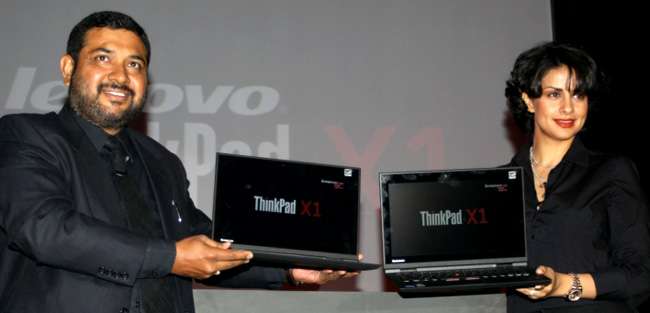
     

  • Our battle is to out-think TOI: Meenal Baghel


    Meenal Baghel is the founder and Editor-in-Chief of Mirror, the nation’s most sprightly newspaper. Mumbai Mirror was launched seven years ago, and today the paper has editions in Pune, Bangalore and Ahmedabad. A part of the Times group, Mumbai Mirror boasts of a fantastic circulation of nearly 600,000 copies, and it’s become the city’s favourite compact paper.


    Meenal relives the journey with us, and speaks candidly about the many challenges she’s faced along the way. We also discuss her first book, ‘Death in Mumbai’, which received wide critical acclaim.


    I did a stint with Mumbai Mirror some years ago, and this gave me a chance to watch her in action. Meenal can be a demanding editor, she can be impatient, she can be tough. While these qualities don’t endear her to some, they have played a huge part in her success. I have to say she’s the most passionate editor I have worked with.


    By Anil Thakraney


    It’s been seven years editing Mirror. How’s the journey been? Tell me the highs and the lows.

    The high obviously has been to see the paper become an important part of Bombay. We have been successful in forging an emotional connect with the readers, which is very important. We get an enormous number of people calling in with stories. And we’ve routinely broken a lot of stories, so those are the big highs. The low is that the paper is still a bit inconsistent. You know, when we started the paper, it used to be called Mumbai Error. I wish we had a cleaner start in terms of the paper being more finished. But it’s been a sort of work in progress. We have learnt a number of journalistic lessons along the way because the market has changed, the reader has changed. For instance, when we were at Mid-Day, you could get away with a lot of things. But in this day and age, you can’t.


    Give me an example

    Like sometimes when, just to break the monotony, you put an entertainment story on the front page, there is a backlash. People now expect a more serious newspaper, it’s something different from what I had envisaged. But that’s also because there’s so much of entertainment everywhere that people don’t want more of it.


    One story you regret

    We ran the FIR of the TISS girl who was raped. That was a mistake. Because the details in the FIR were very graphic on what had transpired. And you realize that you may have ended up titillating. I regret that story, we got terrible feedback for it and we apologized for it.


    “I don’t think journalism offers enough challenges to the really bright people any longer.”

    I still see a number of typos in Mirror. Is this an un-lickable problem?

    I think there is a very real problem with journalism today, and it’s not only limited to Mirror. The problem is that the deskies is a disappearing breed. And it’s going to be a big challenge over the next few years. Also, there are very real problems we are facing, and these are going to change the profession drastically. It’s so rare to find people who want to come into journalism because they want to be journalists. For example, when you ask people, ‘Who edited this copy?’. Invariably the response will be: ‘I looked at it/I glanced at it/I skimmed through it.’ Another thing is I don’t think journalism offers enough challenges to the really bright people any longer. There is an attrition problem across aboard. People want to try out various things. When you and I were growing up, it was about sticking to a profession, a career path, and that no longer holds true. People now have the advantage of taking breaks, taking gap years, studying, etc. The journalism hours don’t allow too much of a personal life. And I think HR, owners, publishers, editors need to take all these things into account.


    Is the passion for journalism diminishing in young India?

    I think the important thing now is personal growth and personal life. That has taken precedence over wanting to change the country.


    What was Vineet Jain’s brief to you when you signed up for Mirror?

    His brief was very clear. He said it should be a smart paper and that it should be different from the Times of India. And because it’s a compact size, there are elements of a tabloid that you can incorporate. In fact, when we started the paper, there were a lot of conflicting opinions, so I was a little tentative in the beginning. And then one day he called me and asked why was I so tentative. He said, “I have given you this brief, just stick to it. And don’t be apologetic about it.” So that was wonderful.


    You think this country is ready for a Brit style tabloid?

    No. Though it’s very interesting because everybody is trying to incorporate the tabloid elements, but you can’t be openly unabashed about it. We are not ready for it. For instance, look at the responses Dr Vatsa’s column gets.


    Guess it’s a tightrope walk. You want to be tabloidy, and still have to be aware the nation isn’t ready

    Yes. Sometimes in the newsroom we think we can do a story, but when we see the backlash the next day, we start being more careful by censoring ourselves.


    And the problem is if you play safe and cut down on controversy, you get dangerously close to the TOI

    Yes. So what we try and do is this: I always say our competition is the Times of India. Because we go with the TOI. Now the TOI has massive width, they do like sixty stories at an average. So our battle is to out-think the TOI, in the sense that ‘this is what they will do, so let’s do something different’. We can get away with some naughty things that they can’t.


    Lots of court cases?

    Actually they’ve come down, ever since we’ve become safer. (Smiles.) But there’s also a lot of frivolous litigation, which is easily dealt with.


    More editions in the offing?

    At the moment, no.


    And for Mumbai Mirror, are you still as hands-on as ever?

    See, I am out for lunch with you! (Laughs) But yes, I like being hands-on. There are times when I can breathe down people’s necks. But I am trying to back off a little now that we have a very competent senior team. I also realize that people should be given more space, but it’s difficult. (Laughs.)


    “The TOI has lots of products that come with it, but everyone doesn’t necessarily read all of them, right?”

    Meenal, the perception is that Mirror benefits a lot from being the TOI’s free paper. Without that advantage, your circulation would be nowhere close.

    I am lucky and I won’t question my luck. We have a great readership, thanks to the TOI. But then you have to capitalize on that luck, you still have to deliver a good product. The TOI has lots of products that come with it, but everyone doesn’t necessarily read all of them, right?


    If you were a standalone paper, how much circulation do you think you’d lose?

    I guess we’d retain 60%. Because Mirror has become a genuine commuter’s paper. You have to travel in the train to see how many people carry it. It started off as a guilty pleasure, which people didn’t want to acknowledge they were reading, but they were all reading. But over time it has also become a lively paper. And that can’t be said about too many other papers in town. And people like that.


    Would you say Mid-Day was your training ground?

    Absolutely. I had always worked with broadsheets before that – Pioneer, Asian Age and The Indian Express. So when I joined Mid-Day, for a while it was like, where the hell have I landed? This is not how journalism is done. For the first six months I had no idea what I was doing. But I was in a senior job and I was getting paid an X amount, and I must tell you I HATE giving up. And then one day I went for a walk and said to myself the paper won’t change because of me, there was a reason why this paper was so beloved in Bombay. And that was the Eureka moment for me. I decided to try and understand it rather than look down upon it. And that changed things. I must say I learnt a lot from Aakar Patel (the then editor of Mid-Day). I learnt a lot from what the paper did on Page 1 and on headlining.


    One Indian print editor you most admire.

    I owe everything I learnt in journalism to MJ Akbar. About writing, about making pages, about what not to do, etc.


    It’s been seven years at Mirror. Don’t you feel the itch? Isn’t it tiring to do the same thing day in and day out?

    I keep wondering why nobody else offers me a job! I am joking, of course. Which is why doing the book was wonderful for me. It gave me a chance to step back and follow a story that had been fascinating me. And it was extended journalism. I have always felt when the number of days you feel bad about what you do exceeds the number of days you feel good, you should quit. I haven’t reached there. And there’s always something exciting happening.


    Being a hard-edged journalist, how do you reconcile with something like Medianet?

    That’s easy, because we don’t have Medianet in Mirror.


    But it’s there in your group.

    It doesn’t affect my life, so I don’t care about it.


    You aren’t asked to carry plugs?

    No. And it’s one of the things that has pleasantly surprised me. They have maintained the Chinese wall from the start.


    They have left you alone?

    Yes. And there’s another reason. Mirror is a small paper in the group, so it’s not necessarily the focus. We are a small cog in comparison.


    Have you ever been asked to drop a story?

    (Pauses) Not drop a story. I think what one learns over a period of time is that you have to pick your battles. I’ll give you an example: If there’s an entertainment story which is coming right ahead of the Filmfare awards, where somebody is going to be performing, and I have a damaging story on that person, would I delay it by a few days? Yes, I would.


    There used to be intense rivalry between the Independent and the TOI. Is it the same with you?

    Not rivalry, but there is great competition. When the TOI does something, and we’ve missed it, I give my reporters hell. And I am sure JoJo (Jaideep Bose) does the same when we get something.


    “Mid-Day killed itself. And I feel really bad. I feel bad that what was such a robust paper is no longer that.”

    You’ve pretty much killed Mid-Day. Feels good?

    The paper killed itself. And I feel really bad. I feel bad that what was such a robust paper is no longer that. We all worked very hard out there. We worked our asses off at Mid-Day and we used to take great pride in the paper being so robust, that it was second only to the TOI.


    What would you do if you were editing Mid-Day today?

    I’ll bring in more energy. What’s going for Mirror despite the inconsistency is that it’s never dull. And dullness in journalism is a cardinal error. Especially if you are a tabloid.


    Let’s shift to your book, ‘Death in Mumbai’. Does Meenal think Maria Susairaj got away lightly?

    I must tell you I ended up liking her quite a bit. I feel that she is a manipulative woman and that she may be a tease. But that’s not a crime, there are a lot of women like that out there. Did she kill or abet the killing? I don’t think so. She was in love with Emile Jerome, she really wanted to marry him. But he wasn’t committing to her. When he killed this guy, it was, in her mind, like his commitment to her.


    When you started writing, was there something you had decided you won’t do in the book?

    The only thing I told myself is to not be judgmental. Because someone else’s idea of morality could be different from mine. Like, I started out with a certain view of Maria but it became something else.


    In fact, that was the only criticism I read about the book. As a journalist, readers expected you give us your own view. Perhaps as the epilogue.

    There were genuine difficulties. Something happened in a room where there were only three people. One guy is dead and two are in jail. There is only so much information I had. And I genuinely did not want to play judge.


    You have always kept a very low profile. Marketing the book must have been tough.

    (Laughs.) It was! It was terrible. The only time you would see me on television was on things that were related to the book. Otherwise I wouldn’t be caught dead going on TV.


    Any more books coming up?

    I would like to write more books, but I love this job too much. Ideally I’d like to do both. But I haven’t thought of another subject so far. Might be interesting to write fiction.


    Would you like to edit the TOI?

    No. I think it would be fun to edit a broadsheet, but I don’t think I am ready to edit the Times. It’s the biggest paper in the country, it requires a greater understanding of business, politics… and I don’t think I am ready for it. Also, it requires certain people skills which I perhaps don’t have.


    Don’t rate yourself high on people skills?

    I think I am very good. But I need to be more patient. I can be impatient and that’s a serious shortcoming.


    You are 43. Don’t want to marry?

    It’s too late now (Laughs).


    Is it important to be single to edit a high pressure daily? Is it a price one pays?

    Sure. It’s a price a lot of women, more than men, have to pay for any high pressure job. It’s unfortunate, but it’s a fact. I may have been married, but it would have been very difficult with children.


    Photographs: Fotocorp