Category: INTERVIEWS

  • Getting SMEs to advertise on telly, the Amagi way


    Amagi, has launched an online media planning and buying commerce platform – Amagi MIX. With this, Small and Medium Enterprises (SMEs) can plan and launch television campaigns at an affordable cos, the Bengaluru-based adtech firm says  and advertisers can choose from over 50 channels on the platform which includes both regional and national channels to target a specific region. Santosh Jangid caught up with Baskar Subramanian, Co-Founder, Amagi Media Labs, to know more about AmagiMIX and the future of Amagi going forward.


    Amagi has been around for some years. While the acceptability was steady in the early years, how would you say has the going been in recent years?

    I think the company is in a pretty exciting phase at this point of time because a lot of things are coming together. Obviously, Amagi was the first one to pioneer geo-targeted advertising on television which I think we have created a new marketplace and if you look at it, it’s starting to be announced as a separate market that people are trying to start tracking and all the advertisers have started using it as a regular part of their media planning and media buying exercise. So I think that’s our first success from a company perspective.


    The second step and the most critical step that we are doing is to expand the advertising market for everybody. Two important classifications that we have addressed is to go online which allows us to then expand the marketplace, bring in completely new set of advertisers to the whole spend which didn’t exist or they couldn’t  access the media options that are available.


    The second part is the whole online video that we are expanding which allows you to expand the pie in terms of new media options that are available for people. So, I think we are in a fairly very exciting phase, the company has grown quite healthy and we believe the next three years are going to be much more exciting because of the new offers coming on board and with our international expansions going quite well and growing rapidly.


    In a sense, your platform is eliminating the need for an advertising agency? Is the process of bypassing an agency a healthy one for you in the long run?

    Fundamentally, if you look at it, the target group for AmagiMIX are SME businesses which are either having budget that is small for a media agency of any medium or large sizes to even address. These are not for businesses which are already large. So, if I have a large business, I have a media agency relation, then this is not the platform you will come to because it doesn’t make sense for you. These are for businesses that are smaller and which are looking for self-service models to address rather than have the ability to go and engage with a media option or I am in Tier II- III towns where I don’t have access to quality media agency options to do that and online model allows me to do that. So what AmagiMIX provides you is three things: first, it allows you to have an unbiased media planning. What it does is that it makes it so simple for you to just give your category and it has a lot of knowledge at the back end through which it actually identifies what is the best plan for you, in a very unbiased fashion it provides you. So it becomes a very trusted media consultant in some sense. Second, it provides you breadth of TV options or tomorrow all the media options which you wouldn’t have got access to when you are sitting there. Third, is a model which is self-service which means you can start buying directly and get your creatives done without having to go through a lot more people or businesses to address. So you come to one entity, pay by credit card or bank transfer and you are literally done with your whole transaction. We believe ease of option, the depth of media planning and the capabilities that it has and the breadth of TV channels and media options that we are going to bring in will be the biggest benefit for the SME client.


    Local cable television hasn’t grown as it should have and the tendency for advertisers on television is to be more national and regional than local? In that scenario, how does Amagi grow beyond what it is today?

    Largely, if we look at it the target group of our advertiser base is SME. These are brands, masala brands, papad brands, pickle or oil brands largely. The needs of these people are either in a single state or maybe two states. So, I might be a brand in Rajasthan but I need Rajasthan and Gujarat. This is the sort of SMEs we are talking about. For these brands, AmagiMIX is a great platform for two reasons, one is that it allows us to bring in a lot more regional inventory. For example, in Maharashtra, we provide about eleven to twelve Marathi channels. So you can just come to the platform and now start buying Marathi channels, you can buy geo-targeted Hindi channels (GECs) which are only for your Maharashtra market for example. Now suddenly we have got a very compelling media option that was not available to you before. Second, you now need not call and talk to people but you can come online and start exploring and experimenting and finding out what is the best media options that are available.


    Many of the big channels that you deal with also use their own sales routes, and use you essentially for regional split beaming. Does that work well with you, because aren’t the monies are in the bigger ads?

    From a geo-targeted perspective, we get inventory at the national level, split it and send it to different passives. The model is pretty straightforward, some of the parts become real in the whole. Second part is, if you look at it from AmagiMIX perspective, we are providing a compelling platform for broadcasters to reach SME population which is very hard for them. Their teams sales team do not have the access to the breadth and depth that you need to go after SMEs across the country. AmagiMIX allows you to explore and expand the marketplace.


    Star India has its own geo-targetting solution. There are rumours that Zee – a key client of yours may also go in for its own. Comments?

    Largely, we work with Zee, we work with Colors, we work with Times Now and we work with many different channels. The fundamental reason or value that TV channels work with us is because this is an extremely hard technology workflow processes and the sales mechanism and it is kind of uneconomical if we are doing it for a particular channel or a particular group. The advantage of Amagi is that it creates a whole bouquet of channels. The investments needed for a single channel to do it is quite uneconomical. As a company, because we are an aggregator, it makes sense for us to aggregate many more channels to do that and that is one of the reasons why all the channels that we talked about continued to be with us for the last three years for example and we continue to grow almost on a 100% Year-On-Year basis with them.


    Lastly, BARC recently announced that it is working towards measurement of geo-targeted advertising. Will you also be providing audience measurement data in parallel or will it be in sync with BARC?

    It will always be in sync with BARC. In fact BARC has already started third-party monitoring of geo-targeted advertising which Amagi is participating in as a part of it. Today, advertisers already use that information to look at their monitoring logs through a third party basis. So they don’t need to depend on an Amagi to tell them when it played or where it played. Now they get BARC information to provide that and there are mechanisms to enable measurement on top of this as well. Yes, BARC is committed to bringing a whole geo-targeted suite of products which allows the measurement to be done. We think that BARC is the right consortium through which this is to be addressed and instead of building an independent measurement information mechanism we work with BARC very closely in this process.


    Dear MxM by Jaisurya Das

  • Happy days for Dentsu Aegis Network!


    It’s been doing the rounds for many months, but when the news came in of Dentsu Aegis Network of acquiring Bengaluru-based creative agency Happy Creative Services, there was much happiness all around. Happy has being doing some spending work in the past and the Dentsu Aegis acquisition will ensure that it grows bigger. Plus with this, mcgarrybowen enters India and it will possibly carry some of its global mandates here. A few hours before complete the final legal formaties of the deal on Thursday, Ashish Bhasin, Chairman and CEO of Dentsu Aegis Network South Asia and Happy co-founders Kartik Iyer (also CEO) and Praveen Das (also Managing Director) took time off to speak with Pradyuman Maheshwari and Santosh Jangid. Excerpts from the interviews.


    To me the most important thing in an acquisition is chemistry: Ashish Bhasin


    One more acquisition?

    Yes, it’s another global brand that we have managed to bring to India with this and now Happy Mcgarrybowen is going to be our fifth creative agency in the market.


    While the Happy acquisition is significant, the big other story is that you have got a large full-service agency like mcgarrybowen to India. Tell us about that.

    mcgarrybowen is one of the most creative agencies which started off in the United States. It’s really huge there and some most outstanding global brands that they have worked on. Their philosophy is that they don’t want to have 200 offices in 180 countries. They have picked up few centres of excellence of places where they will operate from – in Asia, that is China, India and Singapore and we are very proud that they have selected India as one of those markets. They are now present in several European countries and perhaps in South America and few countries they are gonna take on. So it is a very big opportunity for us that such an agency which is known to be one of the most successful and large creative agency networks, we are able to bring in to India with this partnership with Happy. So that’s going to be Happy mcgarrybowen


    How will it be different than the other four agencies in the Dentsu Aegis Network fold in India? 

    Each agency that we have has its own independent leadership, its own independent creative directors and its own independent set of clients and they operate as completely separate agencies. Each of them has a different flavour and that depends to a large extend on the leadership, the creative directors and the business heads as well as on the flavour of clients that they have. So you will see each one of them having a very different flavour, different sub-culture. What we try to do is we allow each of our businesses to maintain their own sub-culture which they use to growing up with, which is healthy and which is why they have been successful. But we bring it under the over arching umbrella of Dentsu Aegis Network’s culture. We all subscribe to same vision, same values and that’s what binds us. But we don’t want to make any agency or any part of the business look like another part of the business.


    So why Happy?

    To me the most important thing in an acquisition is chemistry. When you meet somebody you must get that sense that these are people I want to wake up with every morning on a work day for next ten-twenty years. Their quality of work has to be superb because that’s what clients really want and value and their value system should be very similar to our value system. We had very straightforward meetings, we had two quick discussions and by the end of the second discussion itself both of us were very clear that we wanted to go ahead. Of course this being India and processes being what they are it takes a long time from that time to the acquisition to be finished but the actual decision-making process in my mind happened the fastest in this instance because the way the chemistry just stuck.


    Are you going to grow the mcgarrybowen network in India in terms of more acquisitions?

    I’m not sure in terms of more acquisitions but I’ll be happy if Kartik and Praveen are in an agreement, i would be happy for them to go to more bigger clients, I would be happy that we target some of mcgarrybowen clients which are there globally but we don’t have here in India  because we are just setting mcgarrybowen now. I will also be happy if need be and if clients want more offices of Happy mcgarrybowen in rest of India I don’t think another acquisition is what we will go for mcgarrybowen but definitely we would like to go for different clients, different cities, different set of challenges we work it.


    If you want to stay in business, stay relevant, you have to keep growing: Kartik Iyer and Praveen Das


    Why the sell-out after nine years as an independent creative agency?

    Kartik Iyer: We are not looking at it that way because we are still sitting here and doing everything we did up until now and in our perspective this is only going to help us do it better. Happy is an organically grown debt-free company and anybody who has been in business knows that at various stages of growth, money is what makes more money and we have done everything in our capability without pulling too many favours to bring this agency this far and our clients and campaigns have worked and our campaigns have brought to life the fact that what we are trying to do works and is correct in a lot of ways. It just came to a point where we had to give Happy everything it needs. We have always been very clear with that. We both are the founders of Happy and we are not Happy and to be able to compete in a market with the biggest guys we needed to equip the agency with everything that it could require. Happy has come to a point where we can’t turn away10 people especially because we are handling large clients saying that we can’t do this or you will have to find somebody else. We must have it all. Not saying that we provide every service that’s available but I think it needs that kind of muscle to pull forth from every angle.


    Does your acquisition and that of various others in the past meant that there isn’t much of a future for independent agencies

    Praveen Das: I don’t believe that. It’s a fact of life but when we started Happy we said we would just be 35 people and we will do some really kickass work but though we did that with that bit, there were a lot of people who wanted to join us and at that point we reached a stage where we were neither small nor big. So we thought why not just go to the other end and become a large agency with the same culture of a small agency.

    Kartik Iyer: Let’s not forget there are independents in the industry today who have aspirations to buy networks. So there is no hard-and-fast rule that the network is the end-game. For some it could be end-game for some it could be means to the end.


    Is acquisition the only way out to go to the next level?

    Praveen Das: We had Flipkart and Myntra when they started off and as they grew bigger we also had to grow bigger.

    Kartik Iyer: I wouldn’t look at it as a way out. It depends on what kind of business you are. Growth is the only law of business. So if you want to stay in business, stay relevant, you have to keep growing, at various stages capital is a very important ingredient. So far you can provide it yourself it’s fine but at a later stage you need that capital to be coming in and lastly it’s got to do with what is your vision, what kind of agency you are and what is it that you want. For some it could be a way out, for some it could be a way in.


    At which point did you think this is the way to go?

    Kartik Iyer: It’s a matter of perspective. Are we aligning ourselves with a large one or are we taking on the backing of a large one? Are we wiring into the nervous system or are we using their muscle? So it is a matter of perspective and that is the difference between different agencies. There is no single formula, there is no single perspective.


    Why Dentsu?

    Kartik Iyer : We met pretty much everybody. We have always had the belief that it doesn’t matter what organisation or brand who represents if long as the guy sitting on the other end is a monkey run. So it didn’t matter and it was all depended on the individuals we met. There was a certain no-nonsense, straight-to-the-point-kind-of person that Ashish is that we felt very comfortable about.

    Praveen Das: We met a lot of people before we met Ashish who came to our office and met us but we never found any fire on the other side but when we met Ashish we knew there was a leadership that was on fire.

    Kartik Iyer: We were very clear that at some point we would merge with someone. It wasn’t so much of a network but we wanted to merge with someone who would really bring in to the agency that would be a match in the philosophy and Ashish came speaking to us about mcgarrybowen. DAN was just the holding company. The brand and the philosophy that we were marrying into was mcgarrybowen and mcgarrybowen has a pretty much similar story as Happy. So we saw their work, we met them and there was a match in culture. At one end you have the DNA of a Japanese firm which we both are a big fans of Japanese culture and the work that they produce and on the other end there was a brand which was coming out of New York. It was a dream come true.


    What would be tangible difference apart from a name and ownership change?

    Kartik Iyer: One is opportunity, two is working with global units on global pictures, third is exchange of in talent which we had no one to ask, other agencies write to someone and dust it off and say, send me your presentation on this, but we had no one to send us any presentations.


    How are you looking at growing the mcgarrybowen brand in India?

    Kartik Iyer: We are not seeing Mcgarrybowen  as a separate brand, we are not seeing Happy as a separate brand. How we are going to grow Happy Mcgarrybowen in ways that we didn’t till now. We plan to go and take a shot at bigger accounts.


  • Meet Atul Kattukaran. The first Indian to make it to the Top 10 director’s list


    When we received a communiqué from the Cannes Lions press office on Thursday, we almost missed the subtext. The annual Cannes Lions Global Creativity Report was announced and we were obviously looking at how India fares in it.  The Cannes Lions International Festival of Creativity 2016 received a record-breaking 43,101 award entries from 91 countries in 2016. The 24 Lions awards were judged by 387 jurors and 61 countries took home trophies.


    Now, the Global Creativity Report showcases the award-winning work, highlights the world’s most creative countries and cities, agencies and networks, and identifies the trends and themes at the heart of branded communications. Results from Cannes Lions, Lions Health, Lions Innovation and the new Lions Entertainment are incorporated. Other than agencies, offices and clients, the report also ranks top performing creatives including art directors, copywriters, creative directors and directors. Nicolas Hardy from Argentina becomes No1 director, a first time for the country, and Atul Kattukaran is the first Indian director to rank in the Top 10.


    Who is is Atul Kattukaran? We googled and figured that he’s the director of the Reshma and Nike Films and is co-promoter of 1st December Films. We figured the office was very close to ours, called them and hopped across to meet Atul and his co-partner Ganesh Pareek. While most of the questions were answered by Atul, there were a few which Ganesh also responded to. Read on…


    Ganesh Pareek

    So how come you didn’t know about this?

    I absolutely had no idea about it.


    I must confess, the industry doesn’t know enough about you, though we all love your work and are familiar with it. So tell us about yourself. The only newslink I found via Google was to a Hindu feature on destination weddings!

    So, work-wise I would like to start by saying work began with experimentation in films and I used to do a lot of stuff on my own this was back when I was in Bangalore. And there was lot of stuff that I tried. We made this film on Bangalore which went viral


    Team 1st December Films

    So when was that?

    This was back in what 2011–12. And then I met gentleman Ganesh (points to him) who is now a Producer and we spoke about this whole thing of doing something in advertising in general.


    Where did you learn the craft?

    On my own, this is a self-taught thing …


    Sitting in Bangalore…

    Yes, sitting in Bangalore, computer, internet.


    School, college regular?

    Regular school, college; I have a B.Com degree, no film background at all.


    Which school?

    St. Joseph’s. College was St Joseph… everything was St. Joseph.


    Ganesh interrupts: You can tell him you are dyslexic??

    I am very slow at reading, that’s why I don’t read too much. But dyslexia is not a big issue anymore. So coming back, I met Ganesh randomly and we got chatting and we spoke about advertising in general in India. Now the thing is there is some stuff happening here but we want it to do it something more, maybe bring in new technology, bring in new techniques.


    Family background?

    My dad was in business, mom homemaker…


    No one in the media, nothing to do with films?

    Not really, my brother is a photographer that’s it.


    Elder?

    Yes, elder brother.


    So some influence was around?

    No we started around the same time.


    You met Ganesh after that?

    I met him and we got talking. We did this one film called put up online it is called Little Bangalore I don’t know if you have seen it.


    No.

    So it went viral and we tried a new technique called Tilt Shift or everything it looks miniature I don’t know if out know about it.


    That was in 2012?

    Yes, and this whole idea of stop motion in photography is when we got chatting and we actually pitched the same idea to a few agency… I don’t want to take anybody’s name.


    Incredible India?

    We went there and met them like I said okay let’s pitch.


    And how old were you at that time, how old are you now?

    I am 30 now I just turned 30 so about 4 years ago so it could be 26. It would be 25 or 26.


    You didn’t do anything after BCom, didn’t take up a job?

    No nothing, ever since I was a kid I wanted to make films that’s something I always wanted to do. So anyways so we got these things we met these guys.


    So let’s cut to your first big project. Incredible India

    It was a big pitch, they loved it


    And?

    Forget it. We didnt’ get through it. Later on, with the same idea of stop motion and same technique is where Nike came in.


    But stop motion as an art, as a form is nothing new…

    Yes


    So?

    Of course, even the idea of tilt shift is not something which we have discovered but it is something which is not being done in our country. Everybody has this sense of ownership of his own country, his own city. Hence I wanted to make something for the city that I was born and bought up in hence a video for that city. Hence Little Bangalore.


    And then Nike happened…

    Yes, and we had the opportunity now to do something different. The brief was very cool and simple. Get the whole country to bowl one ball.You have seen the film, right?


    Yes, How did you get to JWT.

    One of my shots in Little Bangalore was from the JWT office in Bangalore. In Bangalore there are not too many high skyscrapers and this office was from the 12th floor. I met the films head and she let me go to the terrace and the cafeteria. There is a football scene in this that all is shot from the JWT office and I have even thanked them in the film. So basically everybody in Bangalore saw the film. It went viral for the first two days and was a big hit.


    That’s how you got Nike from JWT?

    Yeah, then there was this Nike campaign and we were briefed about it.. about stringing the the whole country and it is just one delivery, one ball. So we started coming up let’s do this and that. We  spent close to one-and-half months including post-production. We went to 18 cities shooting, for which a lot of pre-production than the actual shoot was involved.


    Whose idea was it?

    So like I said that the brief that they gave us was to let the whole country bowl one ball, stop motion is something they had seen us doing before, and hence they wanted to explore the idea, they wanted to explore the technique. It was their idea to show the kids all over the place. They also give us the flipbook idea…


    And that was your first big ad film? Well, your first ad film – big or small?

    Yes.


    And from then on it’s been a smooth ride

    Ganesh: The moment Nike came out we knew we have lot of value, because of my art background I spoke to a lot of my firends, and, yes, from then we have had a lot of work.

    Atul: We stated thinking about a lot of ideas, we met a lot of people …


    Why 1st December… you all met that day?

    No, 1st December 1903 was when the first-ever commercial film was released. But honestly there is not much philosophy behind the name


    So let’s look at fast-forwarding through your work… after Nike came what?

    Hmmm. What did we do after that? Peter England  We did hotstar this year, 5 rivers last year.. there was Maruti Baleno.


    What would do you say is your best piece of work. Stuff that you are proud of?

    Ganesh: No, no see Nike has taught us, it’s the first film that we did. I know it has got a lot of awards and it has all that behind it.

    Atul: We have been growing we have doing better work ever since Nike, Nike was the start it will always be special, because it’s the first it’s the first film that we ever did…


    Which has been your best work so far?

    I personally like the Maruti film, I really like Channel V films and of course the Reshma film, which is so very different from all of these. It has a lot of meaning behind it. Frankly, I don’t want to pick favorites, but that one film is something different.


    Mose satisfying? So with the Reshma film, was the idea of the film yours or Ogilvy’s?

    The Reshma film started with them coming to us this is the concept of Stop Acid Sale. It’s an NGO we met.  Harshad and his partner from the agency [Ogilvy], told us about the NGO. We wanted to meet with the NGO person Ria Sharma. We actually met this girl, we went to her house, met her family, heard her story. It’s a terrible story. The acid attack you know was not even meant for her, but that day she was in wrong place at the wrong time. So now the thing is how do you connect with everybody and tell them that there is a problem in this country, and it has to be addressed the issue. Acid sale is there everywhere… people use it to clean their toilets, but we had to connect all these people to make them understand that the petition needs to be signed send to our Prime Minister that something needs to be done… which happened. After talking to her, we decided to go forward even though being an NGO, there we no budgets.

    Ganesh: And then Atul spoke to his wife, and we didn’t charge anything. We spent our own.


    Hmmm.

    Now, you know, one of the most watched things online are tutorial videos, makeup tutorial videos specifically. We spoke with the agency and we came up with this plan and idea together. It wasn’t easy, given what happened to her. Half the face was missing… it’s very difficult to see. We were in tears. Every one in her family is very very good looking. Obviously she was in shock. The one person who really helped her was Ria from Delhi who started this NGO. She is almost like a second mother to Reshma, she helped her understand that as the ambassador of this campaign she can help a lot of people in the future.


    So this whole idea of it the campaign etc. was essentially yours or it’s his or it is combined?

    Atul and Ganesh: We can’t say because we discussed a lot.. it took us some three months to work on the concept, the script…


    And you did all of it free of cost?

    Yes. we have put all the money. Because otherwise the idea was not going to see the light of the day.


    And clients and awards?

    See with Nike, a lot of people came to us… we have got 100 + awards till. But this was different,


    Hmmm

    We were there in Cannes this year. but more than the award, it’s for the girll. Like in one of the three films, she is teaching everybody to put an eyeliner. Now, she doesn’t have eyelashes even. So it was very touching. She has immense hidden power.


    How come you haven’t put up the Reshma film in your body of work on the site?

    Reshma is not an ad for us actually. We didn’t go to any awards first. Even at Cannes we didn’t go to collect the award although we were there. If it wins an award, we are happy because that girl’s life will get better.


    But the credits to the production company and direct exist?

    Yes, they put it that is their choice.


    But you don’t want to…

    W did it for different reason, we did it for Reshma.


    Tell me, what does being among the Top 10 directors of the world meant to you?

    I don’t know I am trying to process it (laughs)… I just don’t know. Cannes was a real eye-opener where we saw amazing work being done. If you go back to the beginning of our conversation, our whole objective is to do good stuff, do good films and put it out there. If you see films that come out of Brazil for instance are amazing. So they have really dug deep into their culture, their roots their problems. India, with the second-largest population in the world, has so much material to talk about, so many subjects to cover, but I don’t we are doing justice to things around us for us. We have even met so many agencies and we’ve told them let’s collaborate, the whole system of writing scripts, going to your client they look at 25 and 50 scripts and pick 1 I don’t know, because the marketing guy said this will work and then they come to us and we look at it and we say that if you come at Stage 1 when one is writing those 50 ideas or you have a thought it will make much more sense we will be able to tell you which direction it can go and how it can be made.


    But is that practically possible?

    We did it, we have done it with one of our that is another thing we have gone directly to companies like Star India. The whole network actually. They gave us six films in one year and they took all our idea and gave us money and they’re very happy. Whatever you see of Star, except hotstar is stuff that we’ve gone directly. Everything starts with a thought: what do you want to do? What do you want to say?


    Are agencies okay with it? To find that you’ll directly with the client?

    Ganesh: We’re not telling you that we will tell you how the brand is. I’ve spoken to a lot of creative people and we’ve figured out they have a lot of work. They are very talented but clients somehow dominate and they don’t listen to great ideas. They also have a job to do. So, they told us they have good ideas. We thought we’d help contribute… Because, at the end of the day it comes to the film maker.


    What according to you got you the award… it is for Cannes Lions and you say you didn’t even enter the awards for Reshma. And they selected you. You have sett the benchmark for creative excellence, it’s the definitive ranking is from the Annual Cannes Lion Global Creativity report has been announced

    We haven’t sent it. We didn’t enter for it. This is the film that they [Ogilvy] sent.


    That is commendable because… it was sent not for Film Craft… you’ll haven’t sent it and they’ve still selected you despite the fact that you didn’t enter.

    It’s a good thing. Feels good. We did the right thing. We didn’t attach ourselves to awards. But the thing is that if you want to go back and see… I don’t want to sound clichéd, the truth is you should see how this girl’s life has changed. She walked the New York Fashion Week. That’s our happiest moment.

    Ganesh: I showed my wife that see, this girl is our inspiration. We feel we should have the courage she had. It’s all her I believe. If she didn’t want to do this film, it wouldn’t have happened. It’s her destiny. You know there was actually a court hearing on the subject. Everyone has woken up suddenly. When something big happens, that’s when… They also posted it. People are rooting for her also, that she should win the case. So, again, why? So, all of this has been led…


    Moving on, Iis there something specific that you’ll are good at and you’ll like to do…

    Yes, films related to sports is something I’m obsessed with. I want to tell the story of sports in this country through advertising, feature films, whatever it is. That’s one area. If you ask me as a subject, that’s something I want to do something about. There are stories on sports that we have seen from India specifically. It’s good, it can be better.


    So, you’d like to eventually look at feature films.

    Of course.


    Is there something you’re working on?

    You can say, there is something that we’re working on. It’s not something we can talk about at this stage but when the time comes.


    Is there any timeframe you’re looking at?

    It’s something that we’ve discussed. We’ve set a timeline. It’s very near. We have to completely exit advertising. We will do things parallel.


    So you’ve set up this thing with Anup Joseph?

    He’s my brother. He uses the shorter version of our surname. I use Atul Kattukaran.


    Also based in Mumbai?

    No, he’s in Bangalore but he keeps flying because his family is there.


    Okay. Given the fact that there are reasonably big film makers here in India this is the first time somebody from India has been selected to be in the Top 10.. it’s huge. Where do you see yourself in the midst of all the others around us?

    I don’t want to compare with anyone out there the kind of films we do. That’s one decision we’ve made pretty early in this career we’ve had so far. In India there are a lot of story-based films on mother, father or all those things… Those are something we won’t touch. I’m talking about advertising specifically. Most of our Indian films are based on family. You know what I’m talking about. The kind of work we do is very different. If you go by our showreel, it’s very edgy. It’s very fast. It’s very visual-based. If you look at it in that little universe, the people doing that kind oif work are much fewer than everybody else in the ad fraternity. Wouldn’t you agree to that?


    I agree. But I must confess I hadn’t heard of you’ll.

    We mutually decided to stay low. Let’s focus on work. Social media is a lot of self-appreciation, self-praise and it distracts you.


    I only saw one article of yours which was about your destination wedding.

    We turned down the Reshma interview because we didn’t want to promote ourselves.


    So, what next?

    Ganesh: There’s a lot that’s coming. Let’s see. There were a lot of commercial offers but he said no (pointing to Atul). Then I also decided I didn’t want to get into this stuff. I said they’re asking us to do what everybody is doing. What’s the point?


    So, for every offer that comes to you, how many do you turn down?

    Ganesh: I think 44 to 47 offers in a month. That’s the status from the last 11-12 months. Now it’s one per 90-95. It’s just the fact that we believe in what we do. We say we won’t work on these kind of things.

    Atul: We do something like one film in a month but we do have to believe in what we do. It’s only then that you’ll see the results. If you don’t believe in something, it will show in it’s reproduction.


    Next step is a feature film or more ads?

    Right now, we want to do a lot of ads. Like he said, there will be a stage where we know that enough has been done and the ball is rolling. We want to spend some time in advertising. We want to make good films. So, maybe the trend of good films…


    And more money?

    Of course, money is always good to have. In the creative process, that stream of consciousness, some of the ideas stay with us, we make them into the film.


    We’ve had Happy from Bangalore being acquired recently. Would you ever be looking at getting bought out?

    I don’t think so. No chance. Our purpose between us is that we want to do this only for a limited time till we know that we’ve done enough and then it’s… we will move on.

    Ganesh: I’ve turned down a lot of money as well, as a producer. I’ve said no completely to directors outside. We are sticking to that. We know what we are. 100%. The kind of material we have right now, we can easily rock for the next 10 years. We develop a lot of ideas. It’s all here.


    What is the team strength here?

    7-8 permanent and the rest is all depending on work. But, I think these people are groomed in terms of philosophy. We go with a fresh mind, we train them. We have a module where we decide this is how we have to think. This is our process. That’s all! And the process is… the first think we teach to be creative is… Don’t get into self promotion. Come up with your own ideas. Everybody follows that. You won’t know about our team also. They’re so silent, but they are brilliant. People have hired our editor because they can’t get us. He’s a freelancer. Everybody hires him and they realize, he works into combination.


  • Digital is a given for Magazines


    A quick chat with Mitrajit Bhattacharya, outgoing president of AIM and Chitralekha group president & publisher on the sidelines of the Indian Magazine Congress held in Mumbai on Wednesday. Text and video by Santosh Jangid.


    The various adspend forecasts don’t paint a very good picture of the AdEx growth of magazines, in fact a recent WARC study which combines various studies puts the picture in the negative for 2016 and 2017. As President of the Association of Indian Magazines, what is your view on the magazine sector?

    There is a lot of good work that is happening by magazine brands and that is obviously moving into social media. If you see some of the legacy brands, the way they are catching up with social media, they are riding the wave. It is absolutely on par with any of the new age social media platforms. Also non-traditional format of experiential for magazines is a very weak source of revenue which if you see all major groups today activate major programmes whether they are events owned by them or they participate in major events. So if you look at Chitralekha as a group, we do a very large scale Bollywood concerts which sometimes have about 10 to 15,000 people. So they are very different kind of moneyspinners for the group. Similarly, if you look at the India Today group they have their own events which are pretty huge, similarly Outlook, Femina, Filmfare, they are doing major in the area of events. So events, digital, social media and all are coming together for magazines as a brand and I think we have to invest in this area and make the whole business profitable. Many brands have crossed the tide and started delivering profits for the investment that they have made in the past few years. I don’t see magazines in any trouble. It is as much in trouble as any other medium because it is completely unpredictable.


    Successive editions of the magazine congress in the past have been talking about digital. How effectively would you say is everyone embracing digital beyond the e-magazines and porting content online?

    I think we have crossed that stage many years ago. It is no longer the question of whether to get into digital or not because everyone is on digital platforms. A magazine like Filmfare is competing on social media with a company which is a year or two years old and covering celebrities and Bollywood. Digital is not a platform which we are discussing as magazine publishers whether to be in it or not. Different brands are on different stages of adoption on digital. Some brands have performed very well on Facebook, some people have done well on Twitter and some have adopted the newer platform like Snapchat in a better way. Each one depending on whether you are a news publications or gossip publication have adopted to different social media platforms but you cannot have the same game which is going to be played by a news magazine like India Today or a film magazine like Filmfare or a regional magazine like Chitralekha. Chitralekha is 66 years old in the print form where the age profile of readers is very mature. They are all 35+ where as if you see our social media presence, we have over 1 million active fans who are under 35 years of age. Each one is using digital to its own advantage and there is no one size fits all. Magazine industry has adopted digital fairly but having said that, are we all satisfied? Obviously not because the digital environment changes almost on a daily basis so what works today does not work tomorrow. So that is a continuous process and yes I must agree that the revenues are still not in line with customer acquisition and thats where we need to figure out how to keep the costs low and how revenues should be on par with the customer base which our digital assets have acquired.


    Are number of people visiting the online substantial enough to merit the spends on creating the content online?

    It is a chicken-and-egg story. If you don’t do it, you will not get it and if you do, you may have to wait. You may be successful, you may take time to be successful, you may not be successful. MPA (Magazine Publishers Association) results from the US quoted substantial jumps from mobile and the amount that mobile is contributing today is huge but not revenues. So the access today comes 62% from mobile but only 16-17% revenue comes from mobile. These are the gaps which need to get filled up. It is a constant challenge which is not particular to print or magazines but the same challenge is faced by television broadcasters. Your programme is not watched on a pre-appointed time which you see it on television. You may watch it when you want to watch it, in whichever format it is available. So I think, is Netflix affecting broadcasters? Yes, it is.


    What about paywalls? Some of the magazines are being sold online, but that is also being very heavily discounted

    There is no such formula. Our magazines online are equally priced if not higher than our print copies. It is not necessary that you need to have discounted prices and that’s how it sells. It’s also convenience, it is also dollar pricing. A printed copy may cost Rs 25 and the online copy may also cost the same. Highly discounted rates are for subscription models which is in print. Physical deliveries are also going through subscription of 50% – 70%  off. Digital online magazines are a highly profitable model but just the volumes need to jump.


    How effective is the monetisation happening online? Are print advertisers willing to pay extra for the digital edition?

    That is really where the problem comes. First, you need readership figures, you need measurement figures which is print plus online. Until you have the online measurement figures, it is difficult to demand a certain price for the advertisement which runs on the digital version. There are issues but digital copies and the revenues from the digital copies that you sell online if very good and that’s growing because it’s convenient. If you have a consumer who is in America who is waiting for two days to get the product delivered, he is okay about getting it online without waiting and today readability is much better. Phones are huge platforms. Currently, a lot of publishers are dumping the desktop data on mobiles and not creating content for mobiles. Mobile is very different from digital because with digital you create something and start putting in different formats but in mobile first, you create content only for mobile devices. That is where the tipping point would be, as to how big the mobile category is so that you start investing for content which is only for mobile.


    Despite the negative view on advertising spends and readership of magazines, we still have new magazines being launched, especially in the B2B arena?

    The launch of magazine is not an expensive proposition. So if you have conviction, lot of people launch magazines because the cost of launching a B2B magazine is pretty low but I don’t believe in that concept because you should not launch a product because it is cheap to launch it. If you see the spate of products coming in the market, it has really slowed down. We have had hardly any major magazine which has been launched in the last two to three years whereas a lot of them have either closed down or recalibrate. That’s the maturing up of the market. You see a lot of global licences which were given to Indian publishers they have pretty much realised there is not so much of a market here and they have gone back. I don’t think that mad rush of launching magazines is any longer there and talking about B2B, people launch because it is cheap and economical to launch. They try their hand out, if it works, it works, if it doesn’t work it’s fine. I must add that B2B magazines have a great role in building communities which they can do well beyond their printed avatars. And the success rates of these community-building B2B properties are very high.


    One last question: your view on the Magazine Congress. We’ve had two-day congresses in the past, and this year it’s been just a one-day affair?

    Everything is getting concise, our attention is getting concise. Earlier, we had a lot of international speakers, they would come, speak and they used to sell. They were all licensers of major magazines so they were very actively romancing this market. We have passed that stage. Also, people’s attention is very low nowadays and getting so many people for two days is a very difficult format. So this time, it is very tight but we have managed to get good speakers from different fields. We have got people who not just come and talk, you will hardly find publishers speaking in this congress. We are not trying to restrict knowledge from within the industry, for the industry and for the industry because we have passed those stages and this is the 10th congress.


  • Need balance between big and small data: Mainardo de Nardis


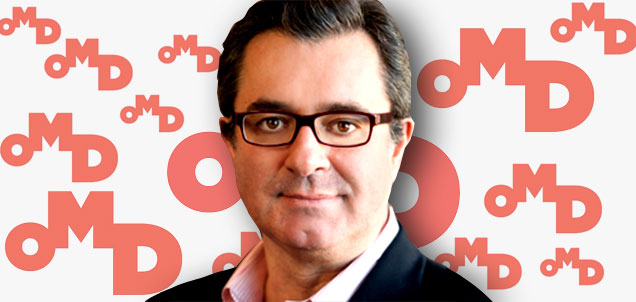
    Mainardo de Nardis has been at the helm of OMD Worldwide since 2009, and having been in the advertising and marketing services industry for 36 years, 25 of which have been heading global operations of media agency networks, he is on top of the way the industry is moving, spotting trends far ahead of most others. In India this week to address industrypersons, his team at OMD and clients, he took time off to meet Pradyuman Maheshwari for an interview on video for Admatazz.in and in text for MxMIndia.com. The full interview will appear on www.Admatazz.in tomorrow (Thursday, November 17).


    On disruption, Brexit and the US election results being disruptors and whether the two events will impact adspends:


    I think disruption is a positive word in our business because it means evolving from one situation to another and we shouldn’t be scared of change. I don’t think we know it yet in terms of Brexit and the US elections and it’s too soon to judge. The forecast for Brexit is that not too much is going to change in the short term because Brexit has not happened. Brexit may happen over the next two years if they are lucky or it may take a little longer. Yes, uncertainty is not good for our business but it does not look like it’s going to affect the advertising expenditure in the short term in UK. In the longer term, we still have to understand what is going to have the impact in Europe. On the American elections, I really don’t know because we have a president who is yet to take office. So let’s wait and see what kind of government he has and their first priorities… I think we have got to see but I wouldn’t expect any major change in the short term.


    On data science and how the US election results have thrown questions as whether big data analytics work.

    Ten years ago, everything was about small data. Small analysis, understanding, in depth thinking of consumers was what is reading their brain and their passion for a brand or a political party. In the past five to eight years, we have seen big data approach. I think in the future we will put big data and small data together. Big data is like electricity, you cannot live without it. We may not talk about it but we don’t talk about electricity either ,it just helps us to do everything we do. I think we need to bring back people who brought us small data and that insight and that level of depth that we need in order to match and combine the two to have big trends supported by data and deeper, in depth understanding of consumers and what they love. That was not done and both Brexit and US elections are good examples of too much data focus whereas we needed in depth understanding of consumers of that specific political product for better understanding of what was gonna happen.


    Whether technology dominates the media agency business (over creativity and innovation):

    I don’t know what it is but I know what it should be. It should be a good balance between what is in our heart and what is on our brain. Exactly as I said before, we need balance between big data and small data. We need balance between long term and short term, we need balance between building brands and performance especially in digital to achieve short term specific objectives. We need balance between big ideas and technology and the systems and data which will allow us to deliver that. It is never one thing or the other, it is always one thing and the other. That should be the approach. If sometimes in the past we had too much on one side or too much on the other side, we always understood that and paid the price because we need to find that balance again. I don’t think the agency’s work should only be about data and technology. It is about finding a balance which is really important for our clients to relaunch and generate profits with sales.


    There’s loads more that the OMD Worldwide CEO spoke. Watch out for the Admatazz interview tomorrow (on www.admatazz.in)


    Nirmala:: ground floor

    Mr Mainardo de Nardis

    CEO, OMD Worldwide

    OMD Worldwide is a leading global media communications agency, recognized for its global footprint, strategic integration and creative innovation


    Since 2009 CEO, OMD Worldwide


    Since 1980 working – 36 years, of which more than 25 have been as Global CEO


    OMD India started in 2007


    Hello, and welcome to Admatazz.


    Over the last 10-odd weeks, we’ve met with a large number of biggies from India. But today we have one of the

    Disruption is the buzzword in media and advertising. And we’ve seen the biggest of them all – in the form of Brexit earlier this year and now the Donald Trump election. What do you anticipate the mood to be for media spends?

    disruption in India continues to be outside of digital even thought mobiles are ubiquitous

    One of the spends report out just yesterday by GroupM says growth of AdEx in Britain will actually increase?

    Data Science is what everyone is talking about. I’ve watched you in interviews also talk of the new reality. But now marketers appear to be rethinking how to read consumers after the results were misread by most pollsters and the media?

    I am told your New York office has more than a 100 data scientists. While media agencies are all about crunching numbers to achieve innovation and creativity, do you think your business is being taken over by the technologists?

    In the new media agency order, how do you manage to get talent? Two years from now, would you see the likes of a GroupM or Publicis Media or Interbrands as competition or some other consulting or number-crunching firms?

    And my next question on this is: so does an OMD reinvent itself?

    Moving to India… are you happy with hwo it is today?

    You had mentioned some years back that you expect India to be amongst your Top 5 revenue markets by 2020. Is this oncourse.

    I ask you this question because in a recent interview you’ve spoken about China and Latin America as the places to look at, but not India. Sob, sob!

    Awards are key and the way of measuring oneself… awards are important. But in India, OMD doesn’t appear to be as aggressive on the awards circuit.


    PcP study, or the recently released ‘teqknow, Checkmate, global tools… global account management programme

    What are the targets that you have marked for India in 2012?

    To be the benchmark of excellence for the media industry in India, and continue to be one of our star operations in the network.

    50 per cent global, 50 per cent local

    agency model is going to change?

    so many pitches last year, how do you ensure the relationship with brands

    key trans tbat will dominate industry over the next 12 months

    data scientists… over a hundred in the New York office…


  • Riding high in Nepal


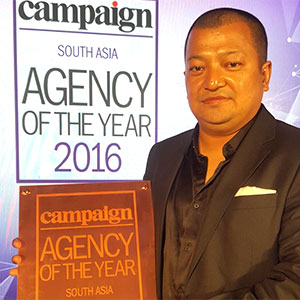
    Ujaya Shakya is Vice-president of the Advertising Association of Nepal and Founder and Managing Director of the Outreach Group. With over 15 years of experience in the field of management, strategic 360-degree communication/ branding and social communication development, Shakya

    heads one of the largest communication groups in Nepal, with dedicated vertical units in activation, rural communication and visual merchandising, digital and social media optimization, PR and event management. With much new innovation to his credits, he has been able to made a name for himself in both corporate and development sector communication alike. He has assisted several brands to establish successfully in Nepal. His first book, ‘Brandsutra’ on branding and advertising was published last year.

    Last week, Outreach bagged a bronze at the Campaign India Agency of the Year awards. A quick Q&A with Ujaya Shakya…


    Congratulations on winning a bronze for the South Asian Independent Agency of the Year.  It’s the first big award for a Nepal agency, so what does it mean for Outreach Nepal and the Nepal advertising industry as a whole?

    Thank you on behalf of team Outreach. This is definitely a big recognition for our advertising community in the region and I would like to share this achievement with our team, clients, media partners and Nepalese ad fraternity. This award is not just an achievement for Team Outreach, it marks a beginning for the Nepalese advertising industry in the international arena. The award has boosted our morale and motivated us to work even harder to make our mark further in the region.


    Although we have had many ad industry folk visiting Nepal for the various events some of which have been organised by you, we don’t know too much about the industry in Nepal? Can you give us some idea of the scene there?

    Nepal is a very young country with over 72% population below 35 years, who are open to new ideas. They like to accept new trends in communication. The media landscape of the country is also drastically changing and it is an exciting time to showcase your creativity and the right strategies. There is more audience segmentation today than there was before with more specialised media content. There is 90% mobile penetration and it is increasing every year with a rise in the demand for smartphones. Internet penetration is almost 40%, one of the highest in the region with data prices going down and soon 4G service is expected to get launched. We have about 6.7 million Facebook users registered from Nepal and Viber already has about 4.5 million registered users in Nepal. With these changing dynamics, Nepal’s advertising industry is up for a radical change in the near future and I see a future for media neutral ideas where the key strategy will be to integrate different media to arrive at impactful results.

    At the same time, rural opportunities are not to be neglected. As much as 80% of the population resides in rural Nepal as per the government census figures and the recent spurt in the increase of rural household income, particularly owing to the rising contribution of remittance which is more than 25% of Nepal’s GDP today, is leading to rising aspiration for a higher standard of life among the rural people. Increasing lifestyle orientation of rural audiences due to media penetration within Nepal and the exposure received by their family members now residing in the Middle East or Southeast Asian metropolitan cities further activate this consumerist demand for a higher lifestyle.

    Other factors like relatively high inflation in agricultural products and increasing literacy level is also helping the rural people to increase their purchasing power. To top it all, increasing road accessibility is helping brands to reach them and high penetration of mobile phones is also turning them into a vibrant consumption segment of the country that cannot be neglected by any national-level brand. All these provide a background for the positive trends in our vibrant advertising economy in the coming years.


    Why do you say that your advertising industry is still so small there?

    Nepal is largely a trading-based economy, which make it obvious for most marketers to think tactically and less thematically. But, things have been changing lately and many domestic brands and even key multinational brands now want to invest in creating brand stories that are relevant to Nepal. There are examples of a few groundbreaking works in recent times, which are based on enduring partnerships between clients and their agencies. So this is an exciting time for our industry.


    Is it also a function of talent… save a few like you, most of the bright media professionals leave the country for the West or for India?

    Right, talent is always a problem and there is a culture of young minds leaving the country. But many new youngsters are also getting into entrepreneurial ventures, which is very good for our business. We regularly approach B-schools and other institutes within Nepal to hunt for next bright mind to join us in our team. In fact, a bunch of youngsters have joined our team after studying in the UK, Australia and India. We have also been providing internship opportunities for young students to work in our organisations at regular intervals.


    Is the local industry and are marketers confident of the creative output, or will we see Indian ad professionals being taken there to produce?

    There are a couple of advertising professionals from India, who have been working in Nepal for sometime now. But I feel that now that we have a crop of youngsters interested in making their career in the local advertising world, many of whom are educated outside Nepal but are joining the Kathmandu advertising circle, the future is bright for their leadership. There are already many films being produced here locally for multinational brands.Also many new campaign ideas, which are relevant to Nepal, are being executed with great success.


    Tell us more about Outreach Nepal. Who are your key clients, since how long have you been in existence, agency size and where you stand in the pecking order in Nepal?

    Outreach Nepal is an advertising agency with the prime focus of providing “Business Driven Creative Ideas”. The team comprises experienced, committed and dedicated young minds with a firm belief in teamwork, sharing thoughts and generating creative ideas that sell. The agency has a proven track record of producing and facilitating business ideas and strategic inputs for clients since 2003.

    We are among the top agencies in the country with a full-fledged team structure in placed to provide solution in creative, strategy, media, digital PR & events. Our team believes in media neutral ideas that can bring discernible positive results for our clients’ business.

    Unlike traditional agency practices, we have many examples in our portfolio where we are involved in the strategic planning process with the client as their true brand custodian. To compliment and seize the opportunities, we pioneered in starting new trends in advertising business by introducing dedicated vertical units specialised in activation and visual merchandising, Digital and Social Media Optimisation, PR & Event Management and as Outreach Group we have over 110 full-time employees.


    What are your plans and targets for the next year? Any plans for affiliations/joining hands with international agencies?

    I am currently trying to enhance the exposure of my team to global trends so they can replicate similar success stories for our clients in the Nepal market. I strongly believe that if we have the opportunities to keep updating ourselves, we will learn many new things. Learning is a major KPI in our team’s performance today.

    We have been holding discussions with some key international agencies for some time now. We are open to any idea that will be a win-win proposition. We have local expertise and a huge amount of experience in this market, which will definitely have a multiplier effect.


  • Great looks, with safety…


    By Santosh Jangid


    In March this year, Titan Company announced that a unique watch was in the works that would offer safety for women. Sonata, the mass market, sub-Rs 2k brand of the Tata’s Titan Company was working on a relatively low-priced watch that could trigger a distress alert to pre-determined set of people.


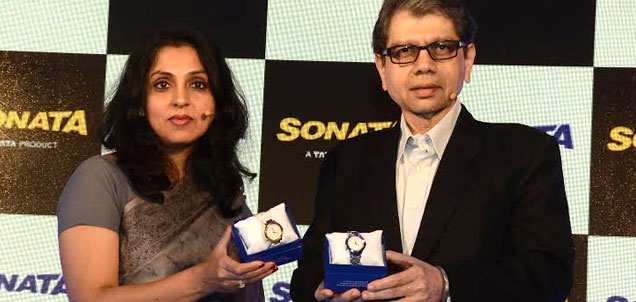
    On Friday, CEO S Ravi Kant and CMO Suparna Mitra – both of the watches and accessories division of Bengaluru-based Titan were in Mumbai to unveil the watch – called Sonata ACT, ACT standing for App-Enabled Coordinates Tracker.


    The watch’s makes use of custom-made technology and will interface with the user’s smartphone to trigger distress alerts to a network of designated recipients when needed.


    Sharing insights on Sonata ACT, Kant said, “The Indian woman continues to evolve with the changing times. As she faces new challenges and responsibilities, Sonata is proud to present a unique offering for the new-age Indian women. With Sonata ACT, we are extending our offering to women and girls who are seeking new opportunities and are empowered to chase their dreams.”


    Sharing her views about the product, Suparna Mitra – Chief Marketing Officer, Watches and Accessories, Titan company Limited said, “Today we launched Sonata ACT. ACT stands for App Enabled coordinates Tracker. This is a different and totally unique product. It’s a great looking watch that has a safety feature embedded. It’s a regular watch but at the 8’o clock place there is a button in case of any kind of situation where the women owner of the watch needs help she can press the button twice and the watch is paired with an app and selected 10 guardians immediately get informed of the fact that she is under some kind of situation and they can reach out and help her. This watch has been conceptualised and executed over the last a year and half with a single objective of trying to do a little bit to solve the Indian women’s concern over safety  and as she goes about the world doing what she has to do as a working women and as a home maker, women need to be out and about and there are issues and concerns about safety and this watch is an enabler and a partner in her progress.”


    Priced between Rs 2,749 and Rs 2,999, the watch will be available in three variants through World of Titan stores, large format stores like Central, Pantaloons and Shopper’s Stop, authorised dealers and on the company’s website.


    Sonata ACT TVC Link: https://www.youtube.com/watch?v=OVp_exwO7lU


    We also caught up with Suparna Mitra -  Chief Marketing Officer, Watches and Accessories, Titan Company Limited on the company’s marketing strategy and more


    On the product:

    We have launched Sonata ACT…  ACT stands for App Enabled coordinates Tracker. This is a different and totally unique product. It’s a great-looking watch that has a safety feature embedded. It’s a regular watch but at the 8’o clock place there is a button in case of any kind of situation where the women owner of the watch needs help she can press the button twice and the watch is paired with an app and selected 10 guardians immediately get informed of the fact that she is under some kind of situation and they can reach out and help her. This watch has been conceptualised and executed over the last a year-and-a-half with a single objective of trying to do a little bit to solve the Indian women’s concern over safety  and as she goes about the world doing what she has to do as a working women and as a home maker, women need to be out and about and there are issues and concerns about safety and this watch is an enabler and a partner in her progress.


    On the decision to arrive at a sub-Rs 3000 price point:

    We thought of this as something that Sonata has to offer which is our mass volume brand. Sonata sells 4.5 million watches every year and so there are 4.5 million Indian consumers who are buying. Smart technology or connected watches typically are coming at very high prices but we were very conscious that this need is not a need of people or women who are at the upper end of the society but in fact the need is greater with middle class women and it is very important that if we are making such a product it needs to be at a very affordable and accessible price. We have three versions all of which are under three thousand rupees. We didn’t want a situation where a woman says, I really like the idea, this is very useful to me but I simply cannot afford because it is priced at 15,000 or 20,000. So Rs. 3000 is still a stretch for many of our sonata consumers but given the technology and utility it was something that we felt was a sweet price point that really opens up and allows a lot of women costumers to access this product.


    How Sonata is different from Titan, since they are produced by the same company:

    Sonata is a large volume brand. It operates at price points between five hundred to three thousand rupees. Sells a lot in both men and women in small towns and large cities. Titan is our mid market to premium brand. Its price point start from a little less than Rs 2000 and go up to about Rs 25,000. Titan is a more premium brand and has many shades of styles but it also has many sub-brands like Raga, Octane and all of these have their own unique facets.


    Change in marketing strategy for various brands:

    We go from the consumer out and that is the best way to keep it differentiated. We start with the Titan consumer and then we look at what the consumer’s needs are with respect to products, differentiated designs, technology, etc. Similarly with Sonata, we start with the consumer and the more clear we are about who the consumer is we are serving the more automatically the differentiation comes in both the products, marketing and communication. From a positioning point of view and from a media choice point of view it changes. In this particular TVC that we have created for Sonata ACT, it is going to be all the general entertainment channels, mass genres, regional channels, heavy investment and for Titan we advertise at the airports because that consumer is exposed to a different set of media.


  • CEOs sing a song in support…


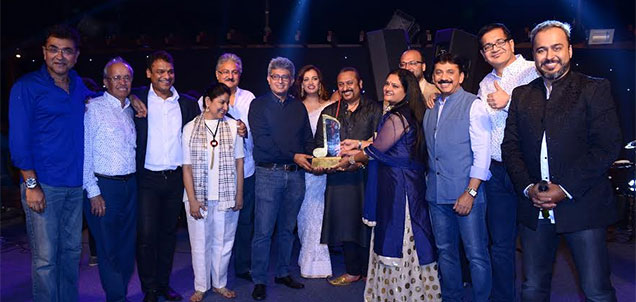
    Genesis Foundation held the second edition of its one-of-a-kind fundraiser – 40 CEOs Sing for GF Kids, in Mumbai last Saturday. Business leaders from Delhi, Mumbai and Bengaluru came together once again to compete as teams, singing old, new, Hindi and English songs, to support the treatment of critically ill under-privileged children in the areas of heart, cancer and thalassaemia.


    The Delhi team, comprising CEOs from Jubilant Foodworks, SAP, iBus Network, Global Access Learning Solutions, Cargill India, Napino Auto and Electronics, Modern Foods and McKinsey were announced winners. The performances were evaluated by Zila Khan, Indian Sufi and classical singer, Lesle Lewis, Indian and Western fusion singer, and Ashish Manchanda, accomplisthed mixing and recording engineer, remixer and music producer.


    Speaking at the event, Prema Sagar, Founder Trustee, Genesis Foundation expressed her gratitude and delight, “A delightful event with every person giving their time, effort and best wishes to support critically ill children. What more can one ask for! Just like last year, I am amazed at the commitment that our CEO supporters have for the cause to come all the way from different parts of India to participate in this event. It has been an incredible year for us and I want to express our heartfelt gratitude to each person associated with not just tonight’s event but with the Foundation in any big or small way. The task at hand is huge, but our supporters give us the reassurance that it’s not impossible.”


    In keeping with the Genesis Foundation’s core to build a participatory culture of giving, musically inclined CEOs come together each year to raise funds for the critically ill and underprivileged children. “Over the years, the CEOs Sing events have created a community of supporters who don’t just give their time to participate in the singing events, like tonight’s 40 CEOs Sing For GF Kids, but with their influence, they also inspire their colleagues and other people to give their support to the cause of Genesis Foundation,” said Jyoti Sagar, Founder Trustee, Genesis Foundation.


    We spoke with the Sagars and three industry captains.


    Prema Sagar, Founder Trustee, Genesis Foundation

    How has the journey of Genesis Foundation been so far?

    The journey has been quite long actually. Started working with children in orphanages and then it became about thalassaemia, cancer and heart and so we started expanding and it has expanded right across the country mostly, so it has gone particularly to the South, the West and the North.


    Having 40 CEOs singing for a cause

    The reason why we got into music is because we wanted the children to survive and be happy and not be serious about fund raising. A lot of CEOs are bathroom singers or dinner singers so we thought why not get them on the stage. This has been going on for a few years and its been exciting not only for them but for us as well. We all become like one family because we all know each other and we get together even when we are not doing an event.


    Dia Mirza’s association with the Foundation

    Dia is a wonderful wonderful wonderful person whether it is about environment or about children she really believes in it and so you know that what she is giving to the foundation is also fantastic for everybody else and so I don’t want somebody who is just a brand but somebody who is really part of it and that is what Dia is all about.


    Jyoti Sagar, Founder Trustee, Genesis Foundation

    The Genesis Foundation journey so far?

    First of all, a bit of what Genesis Foundation does is we provide or facilitate critical medical assistance to orphans and to children from underprivileged sections of the society which we define as families whose monthly income is Rs.10000 or less and there are three areas in which we work – heart, cancer and thalassaemia major. In the last six to seven years we have been much more active. So, the journey has been amazing. This September we crossed a milestone of 1000 children lives being saved and it’s been fantastic.


    CEOs participation in the fundraising event.

    We have used music as medium to reach out to our supporters at large and even for fund raising and the corporate engagement in that has been quite interesting because we discovered that there were many CEOs who are very talented in music. So it turned out to be a very wonderful combination because we ended up providing this platform for CEOs to come out of the closet, so to say and to come out and perform for a very good cause. We have been doing in cities individually in Gurgaon, Delhi, Bangalore and Mumbai. The CEOs sing event for last six years now and last year we started with this idea of getting teams from banalise, Mumbai and Delhi to perform together. This one is our second edition of the 40 CEOs sing for genesis foundation.


    How was the response about CEOs for singing for this cause ?

    All the CEOs that you see here perform today are very kind-hearted and generous people and they are very happy to give their time. In the beginning of course when we started the process there was reluctance not that they didn’t want to do it but the typical reluctance that you have for doing something different but these people are very very willing participants and very generous supporters. We are here in Mumbai and we have CEOs who have come all the way from Bangalore, who have come all the way from Delhi and Gurgaon and these people have not only given their time but have flown here, they are going to stay here overnight and go back tomorrow on a weekend. For us, its just their commitment and their generosity which really matters and its very gratifying to see all these people give so much time for the cause of the foundation.


    Geetu Verma, Executive Director Foods & Refreshments, Hindustan Unilever

    Association with Genesis Foundation:

    I have actually lost count of the number of years I have been associated with Genesis. I think ever since Genesis started this particular event I have been associated with Genesis and I feel fiercely proud about the association. I think it’s a symbiotic association and I think it’s an incredible way how Prema and the Genesis team have brought passion at one level along with purpose together in such a sweet spot and in a wonderful way.


    How much time do you give to social causes?

    There are two causes very close to my heart, one cause is to do with women and having more women in the workplace and thats something that I advocate and promote a lot in the course of my work and wherever I get opportunities outside my workplace as well. The second cause is children, there are two causes that I support, one is Genesis Foundation for kids and the other one is St. Jude child centres. Both of these are really for giving life to children and I think it works quite seamlessly. I give whatever time I can give, sometimes have spells which are extremely busy and sometimes it’s a bit leaner but irrespective I think whatever I am able to do it gives me a lot of satisfaction.


    How was the experience of singing and your view on the need to unwind?

    I think everybody needs to have some creative outlet. You could be a painter, you could be a singer, you could play an instrument and I think it’s the best way to destress. I have had days which have been extremely tuff but when you come back in the evening and you switch on your own, whether its Kishor Kumar music or Sinatra and you can just sit back and chill you get transported to a different world. I love music. Music is god, music is life for me. So having opportunities like these are not something that I would ever pass out.


    Shireesh Joshi, COO, Strategic Marketing, Godrej Group

    Association with Genesis Foundation:

    I have been associated with Genesis Foundation and their CEO event right from the time they started back in Gurgaon in 2010. I have had the honour and pleasure of being with them in Delhi events, in Mumbai events, in Bangalore events and its been awesome trying to give back to the cause and the support through music which is my first love as well. So it’s the best of everything. A chance to give and a chance to have great fun in music with friends you love being with.


    How much time do you give to social causes?

    Well I have not kept count and most of the ones that I have done have of course been with Genesis and there have been quite a few over the years. So six years and counting. So yeah, I have done quite a few with them and I have managed to do a few others as well.


    How was the experience of singing and your view on the need to unwind?

    Many CEOs that I know have some hobby or the other. A lot of them have singing as a hobby but others have other things to do. Some paint, some write, I know people who publish books quite a bit. So people manage to do everything they love with passion no matter what or how responsible position they are in and I think if you do that it makes you do best for both. You get to be a better writer, musician or a sportsperson and you get to be a better geo because you are able to express yourself much better.


    Sanjiv Sarin, Managing Director & CEO, Tata Coffee

    Association with Genesis Foundation:

    I first got introduced with them because of what they have put together which I think is an awesome platform. Everybody has a brilliant time and yet is going for a good cause and over a period of time  I have seen the kind of work they are doing. I think its moved from entertainment to really appreciate and understand the depth of work that genesis has been doing.


    How much time do you give to social causes?

    I am actually pretty deeply involved with the Art of Living foundation. I am a corporate teacher with them and I am also involved with social projects. So it’s not that it’s only genesis foundation. Genesis is contributing of my time to somebody who is doing all this but I do tend to spend as much time as I can juggling work life and putting back to society.


    How was the experience of singing and your view on the need to unwind?

    I think it’s exceedingly important. One is besides the work that genesis is doing, each of the CEOs here for one day believes they can become a rockstar which I think is awesome and having been through a little bit of training and getting ready for this entire thing just shuts you off and puts you in a creative space which I think is absolutely critical for anybody right now.


  • Winning, the MullenLowe Lintas way


    Continuing with our interviews with Effies interviews, on Day 2 (of three), we bring you interviews with Subramanyeswar S, Arun Iyer and Amer Jaleel


    Subramanyeswar S, National Planning Director – Lowe Lintas India:

    Winning effectiveness and strategy awards:

    Yes, and we are very happy to be there. It’s not just one grand moment for us, it’s the culmination of year-long efforts at various award shows and where we had done consistently well, fantastically well everywhere and something which I would  like to say is that it’s like a game of pole vault. In Olympics when you see the game of pole vault, the idea is not about how fast I run or how deep I have dug into. The question is how high have I jumped and once you do that keep raising the bar and keep jumping again and again and we hate coming second best.


    Planning for the awards:

    Planning in the sense of culture, it’s a culture that we have consciously built over many years and at MullenLowe you see that it’s a collective fund of intelligence between creative, planning, account management and the client where everybody comes together and this culture we have consciously built. A culture which actually breeds damn good ideas, ideas that actually win in the marketplace and become effective.


    What’s most important for you: planning, creative or strategy?

    It’s not about which is more important. Collectively together. Everything needs to come together into the play. You can’t say if batting is more important or bowling is more important or fielding more important? Everything has to come together. Of course there are times when one plays lot more than other but in the end it’s the collective fund of intelligence of all of us together and we thoroughly enjoy it amongst us and because I am a part of the system I know it, you always feel that energy and that momentum keeps us making it do again and again and we don’t get tired.


    Arun Iyer, CCO, Lowe Lintas

    If you have to list the takeouts from this years Effies in terms of winning, what would it be?

    My biggest takeout is the fact that there are a lot more agencies which are actually in the game now and that is a very positive thing for our business. It’s a good thing that other agencies are really doing well in terms of campaigns. That’s my biggest takeout.


    Any regrets of not bagging the Grand Effie?

    No real regret but yes it’s actually motivating to make sure that next year we also need to get the Grand Effie and make sure we have a campaign that does that well.


    We have noticed in various awards that most of clients are traditional clients of the agencies. There are very few new clients. Does that mean the newer, younger clients are not experimenting enough?

    Not true because even if you see our list of winners, we have won big on Unilever but we have won enough on new e-commerce clients. We won on Byju’s, we won on Hike, we won on Freecharge. so there is a bunch of new e-commerce clients that we have won on as well. One of the things that we have managed well is the balance between old,  seasoned marketers and fairly new marketers. I don’t think it’s about the marketers and the muscle that they have. It’s just about what you do for them.


    Any fresh thinking on participating in the creative award?

    Not really unless it dramatically changes because for us it’s really important that what it did in the market place not because we have an opinion on the creative awards, it’s only because that’s the approach we take to our work. While we are thinking about creative, we are trying to push creative boundaries but it’s not pushing creative boundaries for ourselves. It’s pushing creative boundaries for the clients.


    So the standpoint doesn’t change after Balki’s moved on?

    This is a question I am asked very often. It’s just that Balki planned this very well. He has not been there on day-to-day basis for sometime now and it’s a culture we all believe in otherwise we wouldn’t be spending this kind of time in the agency if we didn’t believe in the culture. It was a culture that was introduced in the agency by Balki but it’s a culture we all believed in and I’ve lived it and we breathe that culture.


    Plans for next year:

    I am taking away a lot of learning. I am taking away learning like conventional media is not enough, we have got to do more stuff. So those are interesting learnings that I am taking back from a lot of the work that I saw. Some of the work that has won is the work that I personally liked very much. So I think there are a lot of learnings at an individual level which I am going to take back and hopefully translate it to the agency.


    Amer Jaleel, Chairman & CCO – Mullen Lintas


    Winning has become a habit for Lowe Lintas group at the Effies. Third time in four years…

    For me personally the journey that we have started a new agency and we did a little bit of contribution this time to the MullenLowe group but I am very very excited that the work that we did on Bajaj Avenger sort of stood out and won some points for us. Next year, please watch out for us.


    Is there some healthy competition between you and your older sibling?

    Healthy, yes but we are not at this moment really competing but I’d like to say that we want to be a parallel agency. We have come with this objective of being a competitor not just to MullenLowe group but to the big networks, Ogilvy, JWT, to McCann of this world and we want to be that agency that makes a difference at the Effies hopefully in time to come as an agency on its own.


    Agencies like Pickle which were merged to form Mullen Lintas did participate in creative awards…

    I have a view on this and I want to say that whether it’s the Abby or any other awards I have always said that I would like the criteria to have a bit of contemporary input from the agencies and the thinking of today. As far as Abby considers the input from the people of today, the people who make the advertising today, if they are willing to consider the inputs of today then I don’t mind being a part of Abby


    What about your clients? How have they contributed to the success at Effies?

    Let’s take a case in point. Let’s take Bajaj brotherhood, such a huge and differentiated piece of work. We cannot pull it off without having our clients believe in the piece of work. So big big contribution.


    A word on Bajaj Auto. Other than Avenger, its Bajaj V campaign has also won great accolades. We’ve heard it from the folks at Leo but what is it that makes Bajaj a dramatically different client than others?

    I’ve been doing work with Bajaj for the last twelve or thirteen years and I think how they look at their brand, for example Avenger, you could say it’s a narrowly focused brand but in that narrow focus they work with the agency to make such a strong and incisive to the kind of audience they are talking about. If you look at the work for V, if you look at the work for Avenger, the work is so different and so incisive and so pointed towards the kind of audience that makes them of the leading clients today.


  • ‘We had a great idea, but we had a better client’


    Rajdeepak Das, CCO, The Leo Group India


    Grand Effie is huge… what does this win mean to you?

    We had an idea but we had a better client. The client had a vision on marketing team, Rajiv Bajaj and everyone bettered the vision. Not every time in your life you create a brand from an iconic historic thing from Ground Zero and make it one of the biggest brands in the country. A brand which is going to be $5million brand. I think it’s close to my client. People have ideas but it’s the client who give she to those ideas. So cheers to the client, Sumit, Saumya, Rajiv, Eric and everyone. It’s a massive team behind the client. We are just the creative team, you think we are glamorous but there is a massive team behind this that has made it happen. It’s (Grand Effie trophy) is black because it has gone through a massive amount of fire to be black.


    Did you think the client would accept your (Bajaj V) idea?

    In Burnett, we believe in one thing: human kind. Every piece of work that comes out is human kind. We don’t believe if it’s not human kind we are going to sell it, when you have human kind we make sure people buy it and thats what we did.


    This year Leo Burnett has done very well on the back on Bajaj V and HDFC Life. You are Agency #5 which is a dramatic leap from last year. What do you attribute the success of this to?

    As an agency we are one of the youngest agency in the country. If you look at my team, the people who work on it, have one goal in life, do the best piece of work for client and believe in one thing, human kind.


    And you are one of the youngest CCOs in the country!

    A CCO is as good as the team you work with. Guys like Projo, Kevin, Sachin and there are 750 creatives people in the agency that make what we are.


    Jitender Dabas, Chief Strategy Officer – McCann Worldgroup India


    McCann did very well this year compared to the last few years. You had some great work. Your views on the overall performance of the agency?

    Very happy because as you rightly said we had some big campaigns which were very dear to us and not just in terms of the work you saw on Maggi which brought the brand back from dead but even on behaviour change campaigns like the one on open defecation because that gives a special joy because then you are working towards trying to change behaviour of Indians and I do believe that the kind of work you do for behaviour change, that’s the real work because that is not just selling products but actually moving a nation towards newer habits. So I am particularly proud of that and if you look at our other clients that have won like IDFC which is a completely new entrant. We won Effie for Dabur Odomos, again a fairly big campaign in terms of trying to change people’s behaviour and to fight dengue. Nescafe again is a campaign that we have always loved and built a campaign over years. Yes, of course, there we other misses, we thought Dettol and Paytm campaigns which we were very proud of.


    Regrets on not winning the grand Effie for Maggi or Dettol?

    Well, if we are competing there should always be regrets because that will bring you back much stronger. Yes, I did expect that both Dettol and Maggi were massive campaigns and the results are quite evident but it’s the jury’s prerogative to decide what deserves the award.


    You were in three figures this year, one of your best performance ever in the Effies over the last 16 years. How do you ensure you get to #1 next year?

    We have the breadth of brands. We have big brands right from global clients like Nestle, Coca-Cola, General Motors, Perfetti and there are Indian biggies like Britannia, which are currently under presented in the list we have. So what it takes is to focus more on producing good work.


    Your takeouts from the awardwinners this year?

    Lowe are worthy and deserving winners of this year. They have a spread of work which is just not concentrated on certain brands but across the brands. Also, a lot of work that is not just about the brand but impacting stuff outside the brand, changing what the society does, having a point of view on the society. Lowe has always done excellent work around that.


    Bajaj again a big idea and not the conventional way you look at a brand campaign or advertising. What I am happy about is that the kind of work which is winning is not straightforward work though from a pure planner perspective, Effies were about what moves the needles on sales. That’s something I would love to perhaps bring the focus back more on that but because the ideas are bigger they are winning but bringing it back to the needle of saying simple work that really increases market share even if it is one poster or a film should also get rewarded.


  • Up, Close & Personal… Shailendra Singh interview


    Shailendra Singh is colourful and flamboyant in more ways than one. He founded Sunburn and wears it on his sleeve. He has produced and even directed films and is now contemplating new things in life. Excerpts from a freewheeling interview with Pradyuman Maheshwari


    The tenth edition of Sunburn is a significant milestone

    Yes, 10 years…


    Do you remember the time you started it?

    Of course, 2007, Carl Cox at Candolim Beach, I was waiting at 2pm when the box-office opened and no one came. At 4.45, there were just a hundred people. But at 5.45, we had 1200 and I realised this is something that’s going to work.


    The trials and tribulations you had then, and what you have now… any difference between then and now?

    Everybody now wants a share in Sunburn, wants to use the name of Sunburn and wants to do something with Sunburn. But I also take pride that it’s become such a big entity with the third largest in the world festival circuit. We are Asia’s #1 festival, and it gave me Asia’s #1 Music Promoter status. I am also the first Indian to be ranked in the Top 50 Indian people in the whole world [in music gigs]. So all that’s cool stuff, but, yes, I think that is the trouble part now. Like Sunburn is a name that it could come up in Parliament tomorrow for debate that this should not be there or that this should be there. It is madness.


    So, what were the stresses then and now? Are they of a similar nature?

    Well, it beats me that a country of 1.4 billion people which is the world’s largest democracy and has the youngest population does not understand the power of Music Tourism and Sports Tourism! So we don’t believe that the World Cup finals — when India is playing in it — is worth tourism. Countries are built on music and sports tourism. South Africa, Australia… all of Europe is built on music tourism. We don’t understand this that where will our young population go. It wants sports, it wants music, and we have created the world’s biggest festival, and even now we beg for permission for ‘Let us do. Let us do’. And they’ve been incident-free. In 10 years, we have done 926 events in 78 cities – Guwahati, Ludhiana, Jalandhar, Noida not only Goa.


    And 170-odd licences for each? 

    Yes, 170-odd licences for every event.


    And that is not just Goa. It can be anywhere across the country.

    Everywhere. Goa is where we started with, so we stuck to Goa. We did Martin Garrix two weeks ago [in Mumbai] and there were 60,000 people, more than Goa. So we do events on a daily basis.


    But, if you were to do the same event elsewhere in the world, how many licences would you need?

    Much lesser. See, each country has its own complexities. We are a pretty young nation compared to the United Kingdom and America. So our level of maturity and level of priority in understanding that this is the existing business model may be low. It is an existing event that is required for society at large. I am doing Electronic Dance Music, but with the success of Sunburn, so many other festivals have emerged – Sufi festival, rock festival, Bollywood festival, everything is running but we are the fire-starters. At least give the respect.


    Do you think the Global Citizens festival starring Cold Play would’ve helped changed the mindset at all?

    No. Global Citizen is an international charity organisation wanting to make a difference in India. We did an event on December 13, 2015. On ground, Global Citizens had 62,000 people with 30 artists or performers, 50 Bollywood artists, and 50 politicians on ground with Colors and The Times of India networks behind them. Plus Chris Martin and Bill Gates also gave a speech. Even Prime Minister Narendra Modiji made an address.


    We are fire-starters. On December 13 last year at D Y Patil, we had one lakh people on ground, we raised money for Magic Bus for education. We educated 18,200 children. We were the largest attended event of the Facebook history globally. We had 15 million views in the first 10 minutes.


    But it did not have a Cold Play.

    Yes, but we had 100,000 versus 60,000 on ground.


    Hmmm…

    We were the largest attended event of Facebook history globally. It’s a case of Ghar ki Murgi, Daal Barabar. Till today our Gora British fetish has not gone.

    I am tired of calling the media ‘Please come and support this’.  Anyway, these things don’t matter. Look, Global Citizen is a fantastic initiative just like what we are doing. Our event is called Guestlist events. So we do events for charity through Guestlist. This is my initiative. We just did Martin Garrix in Bombay, it was for free.

    We educated 10,000 children through the earning, we are doing quietly a lot of social difference initiatives, but we are doing in our fun way. That is not my issue. The question that you asked that if you do a Global Citizen with the blessings of Chief Minister Fadnavis and Prime Minister Narendra Modi then you can run a concert till 11 p.m. I can’t run a concert beyond 9.59. You didn’t ask a question as a journalist, no front page story came out that their concert ran till 11 pm full loudspeaker… what happened to that. We get FIRs. If 1 minute beyond 10 o’clock we get an FIR.


    Same ground? Given that it’s an office area…

    Sir, it is a law… 9.59 is a cut-off time for any live entertainment event in a public spot including IPL. IPL public commentary stops at that time.

    So-

    So, it means that if you do it along with politicians then it’s fine, but if you don’t do, you will be dead in this country. We shouldn’t be doing this. What will the next generation say? The youngest population is there in India… what are you teaching them?


    You obviously have a host of sponsors backing you?

    Yes, a lot of support.


    And they sponsor a slew of events that you do…

    Yes, they sponsor a season.


    10, 20, 30 crore rupees in sponsorships?

    Depends actually. Sometimes it’s decent money, sometimes it is not. It depends on the trends. So Electronic Dance Music was not a top priority for sponsorships till about three years ago. In the last three years, we have seen an influx of sponsors, who feel that this is part of their strategy. Please understand the ROI model for Sunburn is different from other events. 99% of media gurus work on ROI in terms of reach TRPs, GRPs. We are not broadcast, we are a ground-only event.

    Now the sponsors are matured to the point to understand that you are known by the company that you keep. They understand the power of Brand Sunburn and they feel that Sunburn-goers are influencers of society.


    So you are covered by gate money and sponsors?

    Yes, 60:40. 60 sponsors, 40 gate is the ratio we have reached now. Max it will go is 50:50.


    And what is the international norm?

    Internationally it’s 90% gate and 10% sponsors… they don’t like sponsorships.


    And when do you think it will happen that way?

    I don’t think it will ever happen in this country.


    No?

    Because the consumer is different here. When you have a sponsor in India, a consumer thinks it’s a respected and celebrated event that is why there are big sponsors on it. Abroad, if you have a sponsor, then a consumer feels that it’s not a pure experience and will be a branded experience… so I don’t want to go.

    The overseas customer is far more matured, and wants an unplugged pure experience versus India. They are still living in the world of credibility.


    Therefore, if Pepsi is sponsoring your event, it’s good?

    It’s good, yes, that’s the Indian psyche.


    What about Patanjali? 

    No comment.


    Coming back to the story from then to now, you have enough people coming in, the concept is known, sponsors are there, and you really didn’t have to hunt for sponsors as much as you had to once upon a time. 

    True


    But the success of Sunburn has also created clones…

    It is something like Khans versus someone else in the industry. It is like Varun Dhawan trying to compete with a Shah Rukh Khan. I don’t think there is a comparison, to be honest. Varun Dhawan is doing well but he can never be Shah Rukh Khan…And similarly Hrithik Roshan cannot be Amitabh Bachchan, so on and so forth. But having said that what is to be seen for competition; I have always said this bluntly and not politely, but just f*** **f. Get the runs on the board and then talk to me.

    We do events in Noida with 40,000 people incident free. You say Noida is the rape capital and learn from us how to do it. No one asks us how we arrange events in Noida. How do we do it? Learn from us. No one invites me and I am always free… Having said that you should judge this not with perception or competition but by the box-office.

    BookMyShow is your straight example. We sell 82% of the tickets in this country in EDM. The balance 18% is divided with the other idiots whoever they are, God bless them. Why are you wasting your time with 18% and asking me who is my competition? I have no competition.


    Others are not necessarily idiots, right?

    82:18 is the ratio in India. 82% tickets sold in India are only Sunburn. 18% is collectively the competition. This is the data by Ashish Hemrajani [founder and CEO, BookMyShow]. Call and talk to him. Don’t talk to me about who the others are. I have worked really hard for this. I deserve the respect and not compare to others.


    Well, we speaking about how your success has created clones, people who have broken away.

    I wouldn’t say clones. I would say industry. My success has created an industry. I feel damn proud with that. I have produced 75 feature films in the industry. I have launched half a million that is 500,000 debutants in Bollywood. It is fun when I go Andheri, Infiniti Mall. Every café has somebody of mine – Vishal, Shekhar, Salim Suleman, Vishal Bharadwaj, Shoojit Sarkar are saw their debut with me. It feels good. Similarly when we talk about our industry, when I meet Warren [Dsouza], the sound guy, Nikhal Chinappa, DJ Lost Stories, Arjun Vagale or production people that I work with, it is so cool to see where we have evolved from where we started.


    Are you happy with what Nikhil is doing?

    I don’t know what he is doing actually. It happens when things go wrong. So Nikhil used to work for us but that perception was created otherwise. So it went wrong and also a lot of conflict issues happened technically on ground. He is a person who loves the music, has worked relentlessly to grow the same. I respect him as a talent who has actually nurtured the seed and nurtured a lot of talent and grown the seed. So whatever he does, I am supportive of it.

    We disconnected on business values and transactional issues. I don’t think strategically I ever disregard him or disrespect him.  When the split was happening, you can please check on internet any public statement, for two-and-a-half years, you won’t find a single reaction from me at all while he has lobbied against; But I felt so much respect that I didn’t want to react.


    Both of you did fight fiercely

    No, nothing. It was one-sided. He felt emotionally disturbed. We felt technically disturbed. So whatever we did we did technically as per the books and as per the law. We never reacted emotionally. I also met him during that time. We were together in Amsterdam, we had a big hugging session and all. He said ‘What you are killing me’ I said ‘Bro, this is business and this is friendship. Let’s have beer’. We are friends. He is also proud of what I have done…


    You have done a lot on the EDM front and with Bollywood. Why not concerts with Hindi music?

    I love Hindi music. The biggest drawback of Hindi music is that playback singers cannot be superstars until the heroes keep lipsyncing them on the stage. Except Arijit and AR Rahman… but no one can become Chris Martin from our country because Salman Khan still forcibly dances on someone else’s song at Filmfare [awards night]. I am a huge lover of Bollywood. I feel Bollywood has more genres than EDM…


    What about Daler Mehndi, Mika …

    They are not pop icons. They are not Taylor Swift, and not Micheal Jackson.


    Of course.

    Why not? It is a population of 1.5 billion.  So many Indians. Why not? Why is Adnan Sami not Elton John? He has got the skills. What a performer on the piano, what a singer, why is he not Elton John?


    People like yourself who are pioneers, why haven’t you’ll tried…? 

    I tried. I signed Adnan exclusively. What happens is what I had realised and that happened because I was running one of the top talent management companies in Bollywood and now my all my ex-employees have their own talent agencies – Reshma Shetty, Matrix, Bunty Walia, Bunty Behl,  Vinita Bangad, all are my ex. All of them have opened [talent agencies]. So all opened and I closed down. What I realised is that with an artist like Daler Mehndi;  there is a famous dialogue in Bollywood which I like a lot: The kettle is hotter than tea. Our artists, they don’t realise their true potential.

    Daler Mehendi has not understood that the No 1 viral video in the entire world watched is Tunak Tunak. He did not know this till today. Daler Mehndi’s comeback should be Tunak Tunak. 80 million is not a joke. The Whites are doing Tunak Tunak but he doesn’t understand.

    So I met Daler, he came to my Deadmau5 concert. He performed. I called him. He loves me and I love him too. But boss, he came with an entourage of 80 people at the time when his career is f****. So the packaging is so big with these guys that they are not able to break through. The time taken is too much.

    If I go to Salim Sulaiman and say let me design you a show. Let’s make it a show. See Sonu Nigam show, the orchestra is very simple. They wear simple clothes and chappals. They don’t have an LED behind. Sonu is singing – Tujhe Dekha – and then you need a  Shah Rukh behind in an LED… only then you will enjoy.

    Then I tell Sonu – Sonu you are taking Rs 25 lakh for the show, you could have given me 12 lakh and I would have put an LED. He said ‘25 is mine and then you put whatever you want to.’  I said, ‘You will sing without LED?’ And he said, ‘I will sing… I need my 25 lacs’

    I gave up. I tried very hard. I felt Sunidhi Chauhan had the potential to be a superstar. Salim Suleman are great performers and live artists. Sonu Nigam has a fantastic voice. Shaan is a brilliant player. These are before Arijit. But I gave up. I was tired. I asked to reduce their fee to half so that I can put the other half on production. Let the orchestra wear clothes.


    But you are paying a very high fee compared to the international artists.

    To match the international trends. If we don’t pay them they won’t come here. They will go to Los Angeles, South Africa, Japan or China.


    So if you are okay in paying Rs 25 lakh to an international artist, why not pay the Indian artists too as much plus LED.

    They are selling tickets. Indians are not selling tickets.


    Indians are not selling tickets?

    No, no. All sponsored shows. Other than Arijit and Rahman, no one has broken through.


    But tell me aren’t the risks too many in this business – just in case there’s a law and order issue, you could well see a cancellation of the event.

    Live entertainment globally is an edgy business. Ditto with all sports events. We have seen football events cashing out in Germany. Live entertainment has its drawbacks like Live TV has its drawbacks. But the excitement that you get from Live entertainment is phenomenal. I had said at a press conference in 2007 that someone has the power to make a social difference in the society. So if I am getting 60,000 people to unite through music, it is far more powerful than leaving 60,000 people in bars to drink or be jobless in the evenings.


    The fear of cancellations isn’t that much and you have had them.

    If Paytm is making a loss of Rs 200 crore and the stocks are coming down no one can control that.


    Paytm has Alibaba, but you use your own money, right?

    Yes, hard-earned but I am saying any business per se as we are seeing has its own risks. Even Sunil Mittal in Airtel today is still fighting Mukesh Ambani. It keeps going on.


    But the difference is that Sunil Mittal has public money. But here it is all your money or you may have some sponsors. 

    Yes, you are right. But my brother and I have been partners for three decades and how we see life – I used to be a waiter in Shamiana at the Taj Mahal hotel. My salary was Rs 1280, I used to get a cheque of State Bank of India.


    That was huge money that time.

    I couldn’t afford a taxi. I used to take a 82 bus from Sachivalaya because I couldn’t afford 87 and 89 because there were limited bus tickets. At Rs 3 per day I used to eat my meals. Having said that, we have come up the hard way in the same city which we love a lot. I used to drink water from Azad Maidan and drink even today. I am not embarrassed with that. I drink water from anywhere and eat my Pav Bhaji from VT. It was four bucks that time, now I don’t know what the price is maybe Rs. 16 or Rs. 20-24. We are used to that lifestyle. So we feel that we had fun reaching till here.  Are you getting my point?


    There are rumours that sometime last year you were going through rough financial patch.

    We are going through a tough time since 2009. We had a terrific 25-year run. We have been flying.  Twenty-three companies in 23 years I launched and startups without funding. All killed it. PPC, PM, PDM rocking. It was like ‘Wow’ and then my brother went through a rough patch of around six months. But we didn’t lose any staff or clients to be honest. Nothing happened. Some shift happened in the Karma. Something happened. Stars went down. It’s all downhill from 2009.


    How is it now?

    It is a tough time, financially. We are very honest people. We have tried our best. It is always said – it will be delayed but you will always get your money. We are very honest people because we came from nothing. So we don’t like to…


    You are doing very well. You have an office as large as this. You had a garage.

    I also have an office in a garage in Worli. I like it a lot.


    There are rumours that your brother and you have split.

    Trying to split. It is a very conscious effort. We have had a fantastic run and we are trying to go through a family separation which is what we call it in India. And it has taken a long time. We are both trying to do it amicably because I think it is crucial that  I do strategically what I feel is correct in my journey because I have been a creator all my life and I am not saying he is a trader but he is more financially inclined and my job is to create. I feel my destiny is to create things. And I have created these 23 businesses in 23 years; they are all my start-ups. My brother himself gives a speech saying, Shailendra started all these business and he flourished them. So I feel my destiny; because imagine if I didn’t go into Bollywood – 5 lakh people I wouldn’t have  launched,  Vishal Bhardwaj  wouldn’t have debuted…


    So, what happens once you’ll have split and all happens as you’ll desire. What happens to Sunburn?

    Yes, so at that point of time, I feel that whenever it does, the family separation takes place, like I said to you that I am a creator, so I personally believe even to take Sunburn or Percept or whatever it is, I have a line sometimes: it’s  a pretty radical line, I don’t know if they want to use it but it’s good for a conversation piece… ‘Sometimes you have to destroy what you have built to rebuild’ and also Einstein’s formula of madness. You know that, right? Definition of madness- ‘To do the same thing every day and expect a new result’ People keep doing the same thing day after day- they will go to Sidhivinayak Temple for result. Why are you bothering the Lord Ganesh. Turn your day upside down, work during the night instead of the day, do something new. So that is my way of thinking

    That is why I have launched so many different businesses….


    So are you saying that when you do have….

    When we have a separation, we’ll see what comes in whose kitty. But I am fine with anything in life. I am a floor.


    When do you think this will happen?

    I don’t know. We are hoping for a long time. It’s got a lot of technicalities in it. It’s like a divorce; imagine a divorce after 20-30 years of marriage.


    But you are still buddies?

    We do our best to be buddies, I would say because Dad passed away six years ago and for me I feel our father was the glue. And that same time Harinder went through the tough patch and father had lung cancer and was in the fourth stage. So it was parallel. Very intense moment for the family. So father passing away for me was a turning point for me  in my opinion in our joint family.


    And Sunburn Pune?

    Sunburn Pune is his decision, entirely


    Are you involved with Sunburn Pune?

    Yes I am involved but, I would say I am not involved, Pune Sunburn is the first edition of a Sunburn event that my brother is running.


    So it’s Sunburn Harry?

    Sunburn Harry is running in the hills


    Are you going to go for it?

    I don’t know, I am not sure about it because I feel that I am not convinced for the safety of the fans with regard to the location…


    Where and when will Sunburn Shailendra happen?

    No idea. Right now I am praying and hoping that Sunburn Pune goes smoothly because it is in the larger interest of…


    And of the franchise.

    Franchise and everything. I am 50 percent holder of the business and so I want it to succeed and also I am seeing it as a blessing because I have really worked hard these 10 years. I have done 900-odd events. I am exhausted now. I have done the biggest tours in the world Tours in India.


    What’s next for you?

    Understand the tradition that I m trying to tell you. I have not celebrated Dec 31 in the last 10 years.  I have not had Christmas in the last 10 years and just for your knowledge I am a very intense worker. At 4 am, I am on site. I am the first in and last out man. I entertain everybody who comes to Sunburn and I work round the clock. So having said this and I have a tradition that every January 1, I go to Babulnath Temple at 6 am. aarti. Nobody understands this, and I do Hanuman Chalisa before every Sunburn starts.


    Tell me, I know you are doing another show. Now all energy is on that, you are doing something right?

    Yes, it’s going to be very big.


    I repeat my question: what’s next for you?

    Lots of stuff. 2017 is a very big year for me. I am also directing feature films. I have gone into the creative space, so I did short films. I have got 25 million views for my short films… the Sexaholic series.

    Yes.

    I went on the topic of sex. They are killing it. I am enjoying it 25 million is not a small number to get. I did a feature film Sunshine Music Tours and Travels, this is based on Sunburn great fun enjoyed the journey of shooting – three-and-a-half thousand kms. Life is good. I am going to direct movies, I have got lot of intellectual properties that I propose to launch in times to come, because I am an ideator, I am a fire starter I won’t give up that, just 51 years long way to go, fully charged.


    And Sunburn will continue the way?

    Sunburn, IPL these are legacies yaar whether Lalit Modi dies, Shailendra Singh may drown what difference does it make? Times Now did not die when Arnab went away.

    Hmmm.

    The beauty is that Arnab set the tone, I set the tone. I made the No 1 festival of Asia, the third largest in the world. What more does one want? I feel that I have 15 years more.
     

  • We are not answerable to an Excel sheet…


    Founded in 1997 by Preeti Vyas with the vision to transform the marketplace through strategic integrated iesign and innovative communication solutions, today Vyas Giannetti Creative is one of India’s better known consultancies, completing 20 successful years in the business earlier this week. Santosh Jangidmet the VGC Chairwoman and Chief Creative Officer to talk to her about VGC’s two-decade journey and the year ahead.


    Twenty years is a significant milestone. As you look back, some memorable moments?

    The journey has been very interesting. Completely unpredictable. So before we come to the 20-year journey there was another journey which led me to the twenty years. I have had a rather unique background. I come from the National Institute of Design (NID) and all of the culture it gives you, awareness it gives you, responsibilities as a designer. I graduated as a Visuals Communication Designer. I’ve moved into advertising and I’ve worked with some of the fabulous people in advertising. So the advertising community influenced me a lot and the way advertising things influenced me a lot as well as the entire NID culture and the inputs that I got from NID amalgamated into creating a rather different kind of a designer or communication personality. So with that in mind I said that there is no one place that I belong in, I need to have something which carry forwards my vision, my experiences into a completely different kind of a company and as a result one fine day I said let me start VGC. This was backed with a lot of confidence that I had because there were people out there who believed in me, believed in my work, believed in my creativity, believed in my vision and they were strong enough and opinionated enough to actually have me come and take their business. That’s how VGC started.


    Milestones, huge milestones. Can I count them today, honestly very difficult. we will have like a two-hour interview of I did that but we are gonna be doing is counting our milestones as we celebrate our 20-year journey but I do believe that milestones in the terms of the kind of people who helped me along my journey are innumerable team members who started out with being with me and eventually maybe moved out or they stayed with us but these people also brought in their way of thinking and the way they worked with me, the way they have actually furthered the vision of VGC was fantastic and of course there were fabulous clients. Sometimes we didn’t always agree with the clients but they made us see a perspective which perhaps  otherwise I wouldn’t have seen and some of the clients are still with us, they believe in us… some of the clients who gave us humongous opportunities because sometimes they believed in us more than we did in ourselves. So the kind of work we did was truly I believe because of the team we had, really fresh, intelligent and very very creative. Today, I have so many messages from people in India and around who say that they are really inspired by the VGC story because it’s a rather unique story. We are neither a square nor are we a circle, we are a company which has sort of evolved its own creative language, its own creative grammar and that’s what I think is our true DNA and that to me arriving so comfortably at your true DNA is perhaps the biggest milestone that you can hope for in this business.


    A turning point in these two decades from where  there has been no looking back?

    There has never been a turning back. It has been impossible for me to think that I will do this for two three years and I’ll go back to something else. That just never happened. We have gone through incredible difficulties, incredible successes, incredible downfalls but all of that we have come out of and we continue stronger, braver and perhaps even more creative.


    In a world where to be considered a player to contend with, you need to be part of a big network. How has it been being independent? 

    I really challenge this notion that you have to be a part of the big network in order to be recognised. I think VGC stands amongst the most respected agencies in the country and we have been ranked often enough among the Top 4 or 5and we are perhaps the only non-network agency which has been ranked in the top agencies by Economic Times and so on and I think the reason is that we are true to who we are. We are not diluting our positioning, we are not trying to be somebody else and above all we are not we are not really answerable to an Excel sheet. That has given us the strength and the freedom to be what we truly want to be, to evolve into what we truly should be evolving into. So does that mean that networks are bad? Of course not and I think that it’s an unfair comparison that network agencies, do we compare with them or not. Honestly it’s the work that compares. Are we doing work which is as good or as bad? I think we are doing great work and I think we are doing great work amongst the best which is available in the country.


    Since VGC is also into advertising, can you give us a breakup of your business`in terms of revenue and staffing?

    Today we are considered as a branding design and a communication consultancy. We are amongst the largest agencies in the country in terms of staffing. If that gives an indication of the kind of revenues we have and that could be anybody’s guess.


    A piece of work that VGC has done in these last twenty years that has given you maximum satisfaction?

    It is an unfair question because so much work gives me satisfaction personally and I can speak for my team that everybody in VGC endeavours to do that. Nobody in VGC is working towards an award. Everyday these kids come here including me. We all come here to do good work, to try to break boundaries first of all of our own limitations and then how do we make our work even better and that for me is a fabulous place to be in. So keeping that in mind it’s the work that we do which is fulfilling. Is there a single client that gives us continuously fulfilling work? No, but every client has given great opportunities to do fabulous work for them which we are proud of. Having said that, if you really insist that I give you one and only because of the longevity of it, Aditya Birla Group which has been with us now for over twenty years. In a sense, our relationship started even before VGC was formally formed, they have given us several opportunity. So that several opportunities of creating great and fulfilling work comes from one basket of one client, that’s Aditya Birla Group but having said that all of the clients rosters that we showcase we have done fabulous work for and the motto is lets do work that is creatively fulfilling for us. Personally for me if it doesn’t hit the mark, it doesn’t see the light of day.


    How do you see the year ahead for VGC?

    I think the year ahead for VGC is really exciting one. First of all, we are taking a year-long celebration course and we want everyone to join us. Other than that the message out there is that the people really appreciate the way we think, the way we work and increasingly from the kind of profile of people who want to come and work with us, people who want to give us business, it’s becoming very very interesting. The fabulous mix of business which are senior to start-ups and that’s a very exciting place for us to be in right now.