Category: INTERVIEWS

  • Disruption raise to Infinity: Ferzad Palia


    On Wednesday, Viacom18 announced its foray into the English general entertainment space with Colors Infinity, a 24-hour channel with the promise that 98 percent of the content showcased has never been seen before on Indian television. Colors Infinity will tag alongside its sister channel Colors Infinity HD. Although the channel hasn’t indicated a date of launch, trade sources tell us it will happen before July 2015 ends. The channel’s content is set to be co-curated by Bollywood majors Karan Johar and Alia Bhatt. In a freewheeling chat with Pradyuman Maheshwari and Dyanne Coelho, Ferzad Palia, EVP, Viacom18 and Head, English Entertainment tell us the how Colors Infinity came to being and why he thinks it’s going to be as much of a gamechanger as Colors was in 2008.


    The news of the English GEC has been around for a while…

    Ferzad: I keep hearing rumours from time to time about us launching many things. I’ve heard many of them over the last few years, some true, some untrue.


    So for how long has it been in the works?

    18 months. The fact of the matter is that this is a very elaborate project. When you’re launching a channel of this scale, there’s a lot of prep that goes into it, and that’s what has taken us quite a bit of time, the research, branding, acquisition of content, because we’ve gone and done a very unprecedented level of acquisition.


    I can see that.  Very impressive, and some from competition’s stables also?

    It’s an extreme market. That’s how it is. We syndicate our content to competition as well.


    But of course the fact that you have Comedy Central for a while means you understand what works and what doesn’t?

    While comedy is one specific genre and, touch wood, it’s done extremely well, better than all our expectations when we launched three years back, but this a very different market because you’re now catering to a very, very wide section of audience. You’re catering to somebody who is an action lover, who likes food, who likes magic… various things. That’s the true essence of a general entertainment channel. And getting the mix right, understanding the need gaps in the market today, and there are quite a few players as you know…


    In the free as well as the premium space..

    Yes, right. So the whole genre has been evolving a lot, but I think the main thing that we’ve seen in the last four years, has been this sudden boom of television series across the world, where even if you track social media metrics, TV series are getting talked about a lot more than movies. So TV is the new movies.We’re yet to see that change happen in India, but it’s rapidly happening and we’re seeing that very closely. So the timing couldn’t be better to enter into a space like this. And because you want to enter into a space like this, you’re coming several years after competitors have been here for a long long time. It’s important to get your A game out there.


    So what’s the need gap that exists currently?

    One big clear need gap is something that’s actually been created by channels like ourselves, which is that we keep getting annoyed by the fact that people are downloading content, but if you take a few steps back and see why Indians are downloading international content, one very important reason is that we are repeating the same shows that have aired internationally over the years, and we play reruns during primetime. There’s so much great content out there, but we’re not putting for the audience to see it. So the audience will go and watch it when they want to watch it. In some way, all of us put together are guilty. If a show starts in the US in September and you wait till the show finishes in May or June to air all 22 episodes in June, the consumer is not necessarily waiting for you. So that’s one very important need gap. Having said that, there is a very small fraction of a percentage of the viewers who want to go watch a show one hour after it has been aired in the US. That’s a very, very small segment. So if you keep that out, the broader base is saying two things to you. One is that give me content that the international markets are watching, talking about, and give it to me at a time when I want to watch it. You don’t take your own pace because you want to schedule it Monday to Friday the same episode at the same time, because that’s not how the West creates content. They create an episode every week. So if you’re not able to show it to me at that frequency, then I’ll go my own way and find my own way to watch it, and today there are various options for the consumer. The other thing that they’re saying to usis that we are watching the same content over and over again. That is the third issue that we don’t know what comes on what channel. One channel is showing a new season of the same show, another channel is showing a marathon of that Monday to Friday. So essentially reruns or library is an issue for one section of the audiences that is something that we will address in the way we schedule, in the kind of content that we bring. So one of the most important things in the channel is that almost 98 percent of our content has never been seen on Indian television before because there is so much out there. In the last five years, the number of TV shows produced in evolved markets like the US has gone up four times. So that’s how much content there is, but a lot of great content is not being shown. So somebody left the door open, and it married our objective of broadening our English entertainment cluster which in any case we’re very bullish about.


    What got you to the name of Infinity?

    There’s a certain imagery that you need to have when you’re an English language channel. I think it’s quite clear that the channel will be in English so there was no real need to go and say its Colors English. But Infinity to us is a whole philosophy and you’ll see that in pretty much everything that we do. Lots of which I can’t share with you right now. But you will see it in the way we market, in the way we schedule, in the sheer volume of content that we have, it’s infinite content. We will be doing a lot more around the word infinity which will give you a sense of the philosophy of the brand.


    But don’t you think people have got used to watching software on their PCs or various devices. So Even though you may say it’s a small section of people, but that section is growing, isn’t it?

    There’s no doubt about it and when I was saying that the section of the audience is very small, I was referring to the peoplewho want to watch it instantly after the US. Like I will not wait even one hour to watch it kind of people. That section is very small. The other section that you talk about which is the guys that we ourselves have driven to download, by not giving them what they wanted to watch on a preferred screen of their choice, that section yes has grown. Will it grow further? It could. Will we be present on other screens? In all likelihood we will. But will we reduce their reason to go and illegally download? Yes and that is the first step that we need to make. So it is a process. It’s not going to change overnight.


    So is that other screen version going to happen simultaneously for Infinity?

    It will happen in due course, it will not happen simultaneously, but it’s something that we’re considering extremely carefully and weighing our options on.


    What is the time gap you’ve planned between the US telecast and for you?

    Starting in the fall season, which starts in the last week of September in the US, we will be going day and date which means a few hours after the US for multiple shows. And we’re also going to be scheduling it in a way which makes it easy for the audience to watch.


    So it means our primetime?

    That’s our part of it. The other part we’ll unveil in the days to come. So we will be going right after the US with some of the big series and in the interim we’ve got a whole new lineup which people have not consumed at all. First they come up to speed and post September we go day and date with those shows as well.


    You mentioned how you’re going to have comedy, live entertainment and all that. Now some of that already exists on your other offerings. Is that going to possibly clash with Comedy Central/Vh1?

    No, not at all. See the beauty of having clearly defined services, is that they will continue to carry the best of their services of their genre. The space that we’re going into is a much broader space, which consists of superheroes, drama, fantasy, crime, thrillers and will also have a sprinkling of comedy. So if you’re question is about cannibalisation, for starters, we aren’t here to cannibalise on the existing genre. Our aim is very clear, we want to broadbase the jar. We want to grow from the pie, we don’t want to eat from a small pie. In doing that will competition lose viewers to us? Yes. So we will eat from the existing pie. But our main objective is to grow a much larger base so that. You have people who are extremely English literate and their very comfortable with the language, but for reasons of inertia, don’t come to English entertainment and that’s one of the      things we found from our research that nobody has reached out to them. Even in the metros, of course we’ll be going beyond the metros in a long way. That’s one of our strategies to go well beyond the metros, because English has percolated. We’re seeing it in our existing businesses, close to 60 percent of our viewership is coming from the non-metros, which is massive. If you had asked me this five years back. I would have looked at you blankly.


    But some of your competition is also now looking at that right?

    So while we take the lead, we’re hoping that others will join us. It’s very difficult to build a category and an audience on your own. We can do with all the help, but coming back to the specific question on cannibilisation, that’s not the way we’re looking at this service.


    Surely you’ll have a comedy show which you will like to have on Comedy Central…

    But it’s not to say that it may not rest on both. While Comedy Central continued to do the best in comedy, there’s a lot of Comedy Central content that we can’t necessarily carry to Infinity.


    What about Made in India content. You have Karan Johar so is Koffee with Karan going to shift?

    We are looking at localised content in the English language that will definitely be…and I’ve always said, it is very important for us to create our own content, whether it’s in comedy, whether it’s in action, whether it’s in unscripted, etc.


    You don’t have any local content on Comedy Central?

    We have experimented, but not on a very large scale. We will eventually get there, but it’s a whole ecosystem that needs to be developed from writers to actors to production. And it all has to be managed in a cost that normally people are not used to working in, because that is how English entertainment is.


    In terms of talent, now English theatre has a fair amount of decent talent.

    It does, but comedy as a specific genre, the most important people in comedy content creation are the writers and without being either racist or abusive or politically very incorrect, a lot of our writers struggle to make content funny.


    What about  the reality shows… will they be the international reality shows or are you also going to have Indian shows?

    At this point of time, it is international shows.


    In terms of sheer percentage of overall programming, how much will be Made in India?

    Too early to talk about it. In terms of local content what I can tell you at this point of time is that we’re extremely serious about it, given that this is not just comedy, this opens up a whole new set of avenues for us to do local production and Hindi production in the English language. Will it be unscripted, will it be scripted? We’re working on various options right now, but nothing that we’re ready to announce as yet, it’s a bit far from there.


    With your competition, some of the buzz-creating shows have been locally made. So obviously that’s something pn your mind.

    See one of our main objectives is to create relevance, and more familiarity with the content. If you see when people introduced English subtitles on English content, it was a great benefit because you didn’t start losing out on the accent.  A lot of us can’t follow different accents. Sometimes it’s tough to pick up even for us. So where building relevance is concerned, that’s where the brand Colors comes in. That’s where Karan and Alia come in and that’s definitely where local production will also come in. Will it be a very large percentage of our programming mix? I don’t think so. At least not in the foreseeable future.


    So on Day 1 do you have any local content?

    We’re unlikely to.


    Karan Johar not doing a show on Day/Week One?

    Trick question. But there’s a lot that is a work in progress, which I’m not at liberty to talk about right now.


    Tell us more about this co-curation bit. You’ll have done the research, what will Karan and Alia do as co-curators?

    You’ll be surprised with how in tune they are.


    That they may be, but…

    Both of them are extremely insightful people. One is a content creator. The number of shows that he has actually suggested to us that we were not aware of, will surprise people when we reveal what those are, whether he’s caught them internationally, whether he’s caught them in flights, and similarly with Alia. They are very heavy consumers of the content. So.it’s a meeting of like-minded people.


    Interestingly Alia Bhatt stands for various things. She’s young, she’s popular, but she’s also considered a little duh, na?

    No, not at all. I think that everyone goes through a phase that they get branded in. As far as we are concerned, Alia is very far from that particular positioning that you suggest. She’s extremely intelligent, she’s super-talented, she’s extremely with the genre that we’re concerned with, she has a great pulse of the younger audiences especially, she hasn’t got to where she is at such a young age without having a pulse.


    One more question I have on Karan Johar, is that over the years, he’s been associated with various channels, so is this a larger contract that you’re having or is this only for the launch?

    This is not a typical brand ambassador kid of a relationship if that’s your question, where he will be a part of the launch and then never seen again. There’s a reason we’ve used the term co-curators. It’s not a fancy term that we’ve put out there. They legitimately have been co-curators. And where Karan specifically is involved, as an organisation we have a great relationship with him for many years, and when this opportunity came along, he was only very happy to be a more integral part of the family.


    When you look at an English GEC channel, as in the case of Star, they’ve went go in for a premium channel and more allied offerings like action, etc. Some of it works, some doesn’t. Too early to ask, but will you’ll also look at variants soon?

    We’d love to. To be really honest, with the amount of content that we have, we could well have started with two or three different channels at the same time. That’s the breadth of the offering that we have. But I think strategically, we’ve decided that since it’s the first time that we’re getting into English general entertainment, it’s important to establish the mother brand first, take stock in some time, and the definitely branch out into different variants if the need arises, if the market permits, if the economics work out. But at this point of time, the premium pay channels that you’re referring to, we couldn’t necessarily have started off with that, because that’s a very limiting space to be in currently with a few 100,000 subscribers at best. And that could well be what we do in sometime, when billing is more, and addressability is better and collections are better and so on and so forth. But at this point of time, obviously we first establish the mother ship and then take on from there.


    So huge marketing effort, especially because you’re going into the mini metros..

    Yes, it’s going to be a major 360-degree media plan, and obviously we’ll be doing certain impactful things in various markets to draw in the buzz. But no stone left unturned, just like we haven’t in content, we won’t here as well.


    And with Karan and Alia..

    Yes, they will a part of the marketing campaign.


    And are you looking at flying down some of the stars of the international shows?

    It’s possible. We’ve been approached actually by quite a few people who are interested in the Indian market, who actually will be starring on our channel. And there is a strong likelihood that we will see some of them come down in the future.


    How’s the advertiser interest?

    I think that we’ll start gauging a lot more now. We’ve tested waters and with the few people that we’ve shared it with, the response has been more than encouraging. But I think everyone realises the attempt, the need and they’re happy that some is coming in to try and change the game. So I am strictly buoyant about it.


    The question of how it’s going to be different from others is the key thing that we need to understand.

    I think the difference will be very stark once you see the service go live and once we announce our shows, etc. You’ll get an immediate sense of how it will be different.


    I’m sure that’s a question that you’ve been asked… on why and how yet another English GEC?

    Strangely enough that’s not the question I’m getting asked. The first reaction of everyone is that thank god you guys are doing this.


    Really?

    It is, across the board.


    I thought people are happy with what they have.

    But that’s on the surface of it. When it goes back, it ties in very closely to our research which said we are not happy with this. Or whatever the points were and therefore our need gap developed. See there are different kinds of consumers. There’s one set of consumers who are very heavy consumers of this genre, who consume it on TV and whatever you don’t give them because they already know about it, they go and download. There’s another set of consumers, which knows little about this genre, so whatever they are given, they watch and they either like or they don’t like the content. There’s the third set of consumers who know nothing about this genre. They’ve barely heard a sprinkling if ‘Ha yein English channel Hain, shows hain aur serials hain’ you know as some respondents referred to them. So yes, but that’s a very large set. Are they not comfortable in English? They’re very comfortable in English. It’s almost their first language, and they’re definitely mixing English with all the other languages that they talk in regular communication. That’s a big set of audiences there. So for the first set of people, all we need to do is announce our line-up, you’ll see instant reactions there. For the second set of audiences, we need to bring them on, to experience the kind of content that we have that is literally cinematic in experience, because we’ve got some very high-budget shows, shows which have been made on seriously high budgets.


    And Colors is known for that right?

    Colors is known for its success and for disruption. We won’t let you down on either. So I’m quite confident.


    Disruption with international shows?

    You’ll hear about it soon. I’m not just making tall claims.


    How are the rest of the channels in the English network doing? Is there a need for reinventing or is…

    I think some networks focus on it a lot more, on English as a space and some networks don’t focus on it at all.


    By focus you mean investing monies?

    It means investing monies, time, effort, all of it put together. Because this is not a genre where you throw money and things happen. It’s not one of those. Can you enter without money, no, but it’s a combination of understanding the consumer, understanding what will work, getting into the right kind of deals at the right time and then of course at the right price. Though some networks are less focused on their English brands, and there are some networks that are extremely bullish on English, and I think you would know.


    And now are you saying that Viacom18 is going to be very focused on English?

    Yes, if you see this will be the second launch in the last three years in English. So I think we’re demonstrating our full intent. Comedy Central was a massive launch and this is an even bigger launch. As an organisation, English is a very important genre for us.
     

  • Clients want media at the front-end…


    Pele Cortizo-Burgess, Global Director, Integrated Planning at leading media agency MEC isn’t from a typical media agency background. He was last at Grey North America as Chief Strategy Officer. Excerpts from an interview with Pradyuman Maheshwari when he was in Mumbai for Zee Melt 2015.


    With the kind of background you have, what are you doing in a media agency? Apart from the fact that both your last agency and the current one are WPP-owned?

    [I’m] still learning, growing, getting sharper, because there’s a level of creativity, media that I think a lot of clients and makers, if you will, people who are responsible for the advertising product… there’s a lot of creativity within media that they’ve not been exposed to.


    Before you came in to a media agency, you must’ve come in with certain expectations. Obviously, media agencies have changed dramatically from the last few years…

    I wouldn’t know because I’ve only been in one media agency, and it’s this one.


    What was the perception?

    The perception has been almost disposable. It is in the last 10 minutes of the meeting that the media guy stands up and gives a presentation, which is such a shame especially when you look at the resources, discipline and talent media companies have. It’s almost irresponsible to save that to the very end of a creative presentation, versus if you start the approach of understanding the opportunity, challenge, problem on the client’s behalf with inputs from media, I think that the idea actually ends up being more exciting.


    Would you say the clients expect a lot more from media agencies today than before?

    I think clients are incredibly open to media companies being [engaged in] more than just buying and planning. So I think what’s happening now is clients are recognising the value of media being at the front-end of the approach, versus the back-end.


    Are creative agencies okay with it?

    Yes, they are smart. There are agencies that are for this, but, I think that it’s not a hundred per cent. There are advertising agencies that, unfortunately, still look at media as a discipline that’s [revolves] around execution, versus looking at media as an essential ingredient in a creative process, to create an idea. And when that happens, it’s only to the positive benefit of the client.


    I’m not very sure what the scene is internationally, but in India, media agencies have always suffered from the fact that they’re unable to hire talent – especially at junior levels – because they don’t have the money, thanks to what they earn. Is that a problem elsewhere in the world?

    Not many people have enjoyed my saying this, but if I reflect on my own career, some people ended up doing media because they couldn’t become an account planner or couldn’t make it in the creative department.


    Like if I can’t become a doctor, I turn a dentist.

    There was always that stigma which led to a lot of people not choosing to go into media. Given the changes that are happening right now, when I look at the talent that’s coming in — mostly outside India in the markets that I’m more engaged with — it’s about retaining that talent, not just retaining them on the possibility that they’ll go to another advertising agency, but to Facebook, Google or Twitter. Today, there are so many different environments that are calling out for amazing talent. Media is one that deserves that amazing talent.


    Increasingly, media agencies are becoming full-service, because in digital they do creative and they also do buying and planning. This is happening in India too. Your views.

    I’ve heard a lot of people talk about it as a prediction. I myself don’t see that as a way of embracing or creating the most amazing ideas for a client. Because it’s fragmented. I’ve been asked if, in future, I see all disciplines coming together, and my response is that they may not all come together under one roof, but if you’re my client, [I have a] responsibility to connect all those different inputs to ensure that you have an idea that is as dynamic as the world that we’re about to unleash it into. Does that mean that I see media agencies becoming full-service? We’re not built that way at the moment. What we’re building ourselves is for transitioning that discipline from just being the backend more towards being an essential component…


    Could there be a conflict between media agencies and creative agencies, given the larger growing of those roles?

    I think there will always be conflict around territories, humans being humans, organisations being organisations. A lot of the companies that have started to create a discipline [do it to] create a holistic point of the view for the client. When you talk about better understanding a customer’s journey, you can’t do that without better understanding his/her behaviour and engagement with media. When that happens, a lot of people will say, may be there’s conflict. That happens because we’ve traditionally kept media separate — in terms of involvement in the creative process — which I think is a shame.


    For clients it’s a win-win because they’re getting ideas from everywhere…

    Yes, but be careful about ideas coming from everywhere. Despite what people say, every idea may be a good idea, but there are also a couple of bad ones. And I think bombarding a client with ideas from everywhere isn’t a role that partners need to play. I think partners need to engage in creating the most dynamic, most engaging, most relevant idea and then implementing that accordingly. Yes, it’s a win situation for the client, knowing that the idea put in front of him/her has been holistic in its creation.


    MEC, for instance, has this unit for Colgate. For large clients, composite units have been built.

    I can’t answer that question in too much detail other than to give you a general point of view. When that is being built, it’s being built in pure dedication to that client.


    How familiar are you with the Indian scenario in terms of the work that’s being done?

    Not as familiar as I should be, or would like to be. This is my third trip to India. When I think about the practice of media here, what’s exciting for me is it’s almost a proof point of the shift away from paid/owned/earned, to starting with owned first, when you look at media. It’s exciting. There’s still tons for me to learn from here, and to share, hopefully.


    First appeared in dna of brands dated July 6, 2015


  • Ready to be dissed by all and sundry: Anil Thakraney


    Most people who’ve been reading MxMIndia and some of those who would read The Brief: in the 1990s are familiar with Anil Thakraney’s work. Or you’ve read his interviews or stings in Mid-Day and Mumbai Mirror.


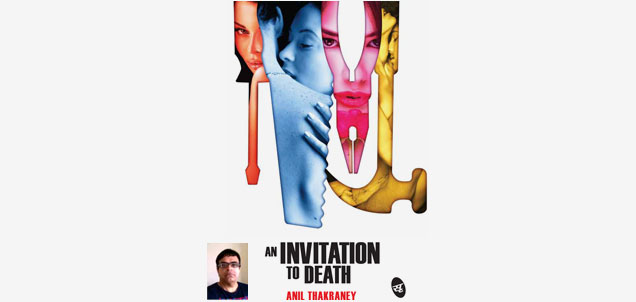
    Over the last two years, Thakraney has been working on his first novel – a crime thriller called ‘An Invitation to Death’. Released on Friday, July 10, the book has been received well, we hear. We read a review on Sunday and that said it was unputdownable.


    Pradyuman Maheshwari interviewed Anil Thakraney and put him through the kind of questions he [Thakraney] would subject various others to. Anyone smiling, hehehaha?!

    Read on…


    Why I wrote ‘An Invitation To Death’

    Once I decided the time had come to get cracking on my first book, the decision to write on crime was a no-brainer. Because crime has always fascinated me (I would dearly like to eliminate a few people, hehe). And I gravitated toward fiction because I needed my characters to be interesting people. People I would want to hang out with for a drink, even at the risk of being stabbed on the way to the loo. Real-llfe crime stories I have read about in India (and covered as a journalist) have left me uninterested in the protagonists; hard-core criminals, mind-effed for sure, but essentially boring, depressing people.


    While pondering on the subject, the thought of writing on a serial killer was alluring. Mainly because there hasn’t been a noteworthy story written on the subject in this country. Perhaps because most of the serial killers in post-independent India have come from the lower strata of the society, there hasn’t really been a suave, handsome, intelligent white collared serial murderer (aside from Charles Sobhraj, who is half-Indian, from another era, and has been dealt with to death across the world). I suppose this might have been a dampener for writers.


    This got me thinking. What if there WAS one such in today’s India. What would he look like, how would he behave, what would be his background, what would he do for a living, indeed, what would be his personality and motivations. And soon Darius Irani was born. A dark, mysterious, edgy but immensely interesting and charming character. Someone you want to know more about, someone who attracts you. Someone who invites you to your death, and you gladly accept it.


    As novelist Chelsea Cain says, ‘Ugly people kill people all the time. But when pretty people did, it got attention.’ And Darius Irani will get your attention all right. He will stay with you long after the last page is done. That’s a promise. (I can hear him sniggering. Loudly.)


    (from AnilThakraney.com)


    Why a crime thriller? Why not a love story? Or something else?

    Hard crime has always fascinated me. Have always wondered exactly what goes on inside a killer’s mind, what are his/her motivations, what drives a human to take another human’s life. And within this genre, I was most keen to write the story of a serial killer. Mainly because there haven’t been too many serial killers in India (not recorded, at least), and most of those that have been, have come from the lower strata of the society. This got me thinking; what if there was an educated, urban, white collar, true blue desi serial killer in our midst? Someone like you and me? That I found enormously alluring. Sure I will write a love story some day but there will be plenty of blood and gore in it. 🙂


    You weren’t ever a crime journalist. As a genre, does crime interest you more than anyone else?

    While crime wasn’t my specific beat, both at Mid Day and at Mumbai Mirror, I worked on the odd crime story. Also don’t forget, I have interviewed policemen, top cops and criminals in my journalism career. Not to speak of the netas and the so-called religious heads with criminal records. Crime does interest me but that won’t prevent me from exploring another genre in the future. Basically it’s about the story idea, that’s paramount.


    You are an accomplished writer of not-so-long print/digital media copy? Was writing loooooong copy for fiction tough? How much time from start to finish?

    Not really. Once I got going, the words simply poured and poured. It was like the characters had got a life of their own, and were doing their number with me watching as a spectator. It’s almost an eerie feeling. I once went for a drink, and felt the serial killer in my book, Darius Irani, sitting right beside me, loudly making fun of someone seated on another table. It’s almost a schizophrenic feeling. It took about two years in all, but it would have taken lesser if I didn’t have bills to pay! I would write for maximum three hours a day, and then slip into work that kept the home fires burning.


    As someone who’s revels in subjecting others to intense scrutiny, is it worrying that now you too will be subjected to the same, especially by all those you damned?

    Haha. I am ready for the book to be dissed by all and sundry! As you know, I once edited a fearless, give-a-damn ad and media magazine called The Brief. I then went on to write hundreds, maybe thousands of columns with my pen loaded with sulphuric acid. The extremely harsh reader comments I would often get in return, and the open threats from the high and mighty, to either get me sacked or killed, only helped to make my skin thicker than it already was.


    If you have to self-assess, how would you rate ‘An Invitation to Death’? On a score from 1 to 10?

    9.5. I have taken off 0.5 because I don’t want to appear immodest. 🙂


    You haven’t gone for a big-name publisher for your first novel? Is it because the biggies were acting difficult? Or is it because you make money in self-publishing?

    An Invitation To Death isn’t self published, it’s been published by the Delhi-based Srishti Publishers & Distributors. While they aren’t as high profile as some of the bigger ones, their distribution network is solid, and that’s well know in the publishing industry. Also, I approached only three publishers. One did not bother to reply, the other asked me to ‘tone down the violence’ (eeeks!). Srishti fully believed in the idea and the story, they were super excited, and that’s what I needed from my publisher.


    One has heard stories about how certain writers rose up the popularity charts by buying their own books in bulk from the bookstores? Any plans on that?

    Sounds good! What an idea, Sirji! Would love to do that but will need to rob a bank first. You know how poorly we freelance journalists get paid in this country. I can’t even afford a fancy book reading do at Crossword, and that’s being honest.


    We have read the first chapter, and it’s possibly too early to talk about it, but are you looking at converting this to a film or TV series?

    Yes. Would make for kickass cinema. Will discuss with a few producers after the book is out. I just hope they don’t tone down the violence! 🙂


    There is talk of likenesses to real-life folk from the media in your work? You’ll obviously want us to read the book to figure it out for ourselves, but some clues?

    Yes, you will identify a few characters. But the book isn’t really about targeting individual media personalities. As for the media angle to the story, it’s more about how the Indian media, particularly television channels, deal with crime in this country. The focus is usually on sensationalism and eyeball gathering, rather than concern for loss of human life. You will discover the heartlessness and callousness of India’s so-called ‘vibrant’ media.


    What next? Have you started work on your next book?

    Nope, not immediately. Have to first get my bread and butter work in order, the courier company just delivered the latest electricity bill. 🙂


  • Big Star for a Big Launch


    With a thickness of 5.1mm end-to-end and weighing a mere 97 grams, the Canvas Sliver 5 is being billed as the world’s slimmest and lightest 4G smartphone, Micromax announced revealing its innovative TVC starring Hugh Jackman last Friday. This is reportedly one of Micromax’s biggest marketing campaigns. Shubhajit Sen, Chief Marketing Officer, Micromax tells Dyanne Coelho the kind of work that went into it, why Hugh Jackman is back and how the new product grabbed more eyeballs than anticipated.


    It was launched last week with much fanfare. Tell us more on the marketing campaign for the Canvas Sliver 5?

    We started working on this campaign about a couple of months back or little more than that. It was an absolutely brilliant product. It is the world’s slimmest and the world’s lightest phone and of course it had a lot of other features packed into that product. As a marketing team we really wanted to focus on the differentiating factor, and that quality was about how slim this product is. So that was the brief that was given to our agency [Mullen Lowe Lintas]. One thing that was clear was that we wanted to focus on this differentiating quality, we wanted to target the urban youth with this product, and we wanted to do that focusing on this one differentiating quality of the product. And we wanted to create a sort of bigger than life advertising campaign because it was not just about selling this particular model, but we wanted the campaign to have a similar rub-off on the entire brand equity.


    The phone has got some rave first-look reviews. How much of the success of a product like a cellular phone would you attribute to smart advertising with a celebrity in it to the product itself and distribution?

    I mean obviously it becomes a talking point, but it’s true across categories, advertising is just part of a larger communications system. And all niches of our communication story and reach program have to work in corals with each other for the success of the product. So just as an example, we got fantastic reviews and a lot of buzz created when we did our press conference to announce the launch of the product and there the focus was not so much the marketing campaign, which took off much later. There the focus was just the product and frankly we got incredibly good reviews at that point. So we threw the advertising campaign per se as part of a larger communications strategy, but the important thing obviously for everything is to talk to each other and not be at cross purposes.


    It’s been a huge blitz, possibly your biggest ever. Right?

    I’ve been in this organisation for five months and this has been the biggest for me but Micromax has been totally aggressive with some campaigns in the past. When we launched our canvas range that was huge. So we’ve had multiple campaigns in the past which have had similar scale, and I just get the feeling that this particular campaign has broken with a bang and it is just getting noticed a lot which feels good for me, but from a pure investment perspective it has stuff which is of equal stature of the past.


    Could you give an indicator of your spends on this campaign?

    I wouldn’t know completely, but the number that kind of jumps out of my mind is our TV spends is not going to be more than 40 percent. There’s a lot of outdoor and print which is going out, a lot of digital. Digital will be at least 20-25 percent of the total marketing budget.


    And vis-a-vis your annual marketing budget?

    For us we start the year with April, and so far this is the biggest one. I won’t rule out the possibility of us doing something of this scale again in the coming months. But a lot of that depends on the kind of innovative product we bring out, because this is genuinely a world’s first, and we are very, very proud to have this product. If we get something great with this kind of engineering, we would absolutely spend this kind of budget.


    Micromax has been a heavy investor in cricket. Wouldn’t a launch like this have been better around a cricket tournament?

    I don’t think we want to breakthrough innovation based on marketing as such. When we launched we looked around to find what the biggest sporting event was and it was Wimbledon. So I think it’s better to find what are the different sporting events at the time of launch rather than plan our launch around it. So I think it makes sense to figure out what are the big sporting events at the time when you have a launch, rather than planning your launch around the event. For this marketing campaign we associated with Wimbledon, which was the biggest sporting event in our opinion.


    So how and why Hugh Jackman?Micromax’s second time with him?

     Hugh Jackman’s association with Micromax has been fantastic so far. It was before my time (at Micromax) that we got Jackman on board, and I’ve been seeing data and research and frankly the impact of this association on Micromax has been tremendous without question and it just took the Micromax brand to a very different level in terms of being seen as a global brand rather than just as an Indian brand and making it premium and upmarket and aspirational. So that was the original strategy and I know that it’s played out really well. What’s also happened is that one of the things that is strongly associated with Micromax is now Hugh Jackman, which is why we kind of extended our relationship with him. And then we were kind og thinking about how do we make the next advertising campaign, and we of course had this product that was coming in the pipeline, and we said this is the perfect time to have the next campaign with Hugh. The only difference I would say is in the comparison between the ways we used Hugh Jackman in the first versus the second. In the first one, I think a lot of association was between Hugh Jackman and Micromax the brand, and the second we said that we’ve got that bit established, how Hugh Jackman can introduce this path-breaking product. So if you see the advertising that we’ve developed, frankly this advertising would not have been possible if we didn’t have this phone.


    There are enough action heroes in India too.  So why him?Or does it help having an international, ‘gora’ star like Jackman for a product like a smartphone?

    We don’t make those choices and frankly to a large extent, we’ve been associated with Akshay Kumar in the past. So there is absolutely nothing about using just foreign or international stars versus Indian stars. So I don’t think that was the decision point. The point was that our association with Hugh Jackman was very strong in the consumer’s mind. Also a lot of Indians (actors) tend to be used by multiple brands, so in that sense there’s a little bit of confusion sometimes, but Hugh Jackman as far as I can tell only endorses Micromax.


    So is this contract for Jackman for a year like the last one?

    We’ve just kind-of reworked the contract and this will run through 2015. I don’t really want to get into it because that’s a relationship between Hugh Jackman and Micromax, but we at least have him through the calendar year 2015.


    You’ve of course retained your Indian creative agency Lowe Lintas for this?

    Yeah, they’ve been coming up with some really great communication, and they are our exclusive creative agency.


    The obvious measurement of the success of a blitz is in the sales? How have you done so far since you announced it and unveiled on Friday?

    We measure success on two different levels. One is the impact it has on the overall brand and the equity of Micromax and the second is obviously how many products it sells. Those are the two ultimate measures of outcome, and our specific measures are obviously how does the brand equity move, what is happening right now on our Google search patterns, how many enquiries our distributors are getting, etc. So then we have a number of individual measureable parameters to see the impact. The new product is just hitting the shelves, it’s been about four days, but the kind of interest levels and excitement that we’re getting from our distribution channels has been absolutely fantastic. It has been good in terms of placing the product, visibility and getting support. Also while it is very early, there is a spike on our Google search patterns as the measure of consumer interest has been phenomenal. The number of times the TVC has been seen on YouTube has been awesome and much better than what we had anticipated.


    Do you find a positive rub-off on the sales of your other products too?

    Absolutely.We are anticipating this to happen also as part of our 4G range of products. We are betting big on 4G. We have another product called Knight2which is also a 4G product, very slim, not as slim as this, but we absolutely anticipate a halo effect on similar products in the portfolio.


    Micromax may be having a fair number of premium handsets, but the early image of a ‘massy’ brand has stuck. Are you happy with that?

    I personally don’t accept that concept, the issue being one of equity. My judgment is that it has been a bit more of a business model issue because until recently our portfolio in the premium segment for Micromax has not been very strong. But now we have two or three new models that we’ve launched in the last two or three months, which are in the mid-premium segment, and frankly they’re doing really well. And because our portfolio was not very strong, our distribution perspectives we were not focusing on the mid-premium segment. So that was a chicken-and-egg kind of a situation. I think as we build a portfolio of more premium products, the distribution also changes itself to also gear for a more premium distribution kind of a thing. You’ll see that our market share dramatically improved in that segment, so my hypothesis is that it’s not an equity issue, but more a portfolio issue.


    For someone who has spent over two decades in healthcare giant like GSK, and since you’ve moved to Micromax just in February this year, how’s the transition been?

    Nothing like anything, but I think both in their categories can learn a lot from each other. There’s a sense of dynamicism, there is a sense of entrepreneurship. A lot of the stuff that happens in this industry I think is run by pure dominance of genius as was the thought out strategy, because that’s what the industry is like. I think what this industry can benefit probably from my previous experience, is in some of the areas to have a base line of processes and beta-driven decisions. So the challenge that I’ve kind of put myself through is to get the right balance between intuition and genius which exists in the system but a little bit of process and though-out decision which would give a great balance to it.


    We know comparisons are incorrect to make, but personally, which do you find more challenging?

    I think they’re different challenges. It really is like trying to compare apples and oranges. I’ve been here for five months and I don’t think I’ve got myself thinking, oh this is how I would have thought if I was in my previous industry, because the category is different, the consumers are different. In the old industry, the FMCG industry, there is a degree of stability; technology tends to be less frequently changing. There is less disruption that happens with the consumers and consumers are kind of attuned to our particular product, as well as there is stability in the distribution channel. Whereas if you look at this industry, frankly the consumers can’t predict what they want, because they don’t know what technology is coming. The technology itself is changing differently everyday and in a pretty erratic manner if that’s the word. And with the whole e-commerce thing happening things are changing. So the past is a very poor predictor of the future in this industry, whereas it is a very good predictor in the FMCG industry. The big difference as a result of that is I think FMCG industry I would characterise it as batch marketing, which is you do a campaign then you take some time off see  how that’s doing before you start working on the next campaign. You take a month, two months off between two campaigns. In this category, every day I have to put something out on digital, every day I have to track what’s happening with competition, so it’s a continuous marketing effect. These are the two differences, but it’s like comparing apples and oranges.


  • Smart, not Big Data: Jason Harrison


    In April this year, marketing services conglomerate WPP set up Gain Theory in India with an attempt to offer data analytics, technology solutions and consumer insight capabilities.  Gain Theory founding CEO Jason Harrison was in India recently where Pradyuman Maheshwari met him for an interview. Excerpts from the conversation:


    It’s been a couple of months since Gain Theory launched in India. How has it been so far?

    It’s been very exciting. We’ve had tons of interest and energy inside of WPP, which we’re a part of, as well as outside, from potential and existing clients, competitors, other parts of the industry and such. So far, it’s been really interesting and fun and busy.


    WPP is a large marketing services agency with loads of clients. But you’re obviously going beyond the WPP clients…

    Correct. While we have a few categories and clients that we’re targeting, we’ll work with any company that has the kind of marketing questions that we’re good at answering. Because we sit inside WPP, we have a few rules that we play by, so we try not to compete with our partners. Our preference is to collaborate wherever possible, and become very good at reaching out and putting together horizontal solutions across WPP, to be able to bring those to clients.


    But they’re already doing a fair bit of what is your core activity…

    Yes, that’s right. Gain Theory was set up inside of WPP’s media holding company, GroupM and we were set up as an independent data and analytics offering that would sit side by side with the GroupM media agencies. The point of doing that is so that we can be an independent analytics offering for clients who prefer separation between analytics and performance evaluation, and the actual planning and buying of media. We have existing clients for whom that’s an issue. So we only do the analytics and they work with a different media agency that may or may not be GroupM.


    You could also have a situation where a GroupM client is being serviced for analytics by the same agency. In a sense, then, you are competing with each other.

    We’re set up to not compete with each other. We try to not work on each other’s clients. Unless we agree in advance and work with one of our agency partners who has a client who has a unique problem that needs solving, they might bring us in on that. But in general, the focus and the emphasis is to work on separate clients.


    What’s the appetite for analytics? Would you say it has grown over the years?

    It’s strong and getting stronger. The marketplace is accelerating for a variety of reasons. There is increasing pressure on companies to better understand RoI in marketing, and there’s a variety of analytical players to help clients solve that problem. We’re seeing an inflection point in the industry that’s brought out by the availability of data. What we have now is an availability of measurement capability and just data points across the marking ecosystem that will make it easier for us to measure consumer response, the effect of campaigns and to use that foundation to use advanced analytics in a way that really hasn’t been possible until now.


    FMCG majors like Unilever or Procter & Gamble have always been doing a fair amount of analytics. But the real growth for you would happen when you have home-grown players who also get into that, right?

    Our source of growth will be both. We actually work for Unilever across 20 countries and do marketing, mixed modelling, data collection and advanced analytics for them in multiple categories across 20 markets. We’ll see growth from those types of clients. We’ll continue to work with Unilever and others like them. We’ll also want to work with anybody that is trying to solve the kinds of problems we’re good at solving, from any market where we’ve got a presence. The India market has tremendous potential and opportunity. Things are changing fast and there’s an appetite to try new things along with lots of innovation. Having a footprint in Bengaluru in the way that we do is tremendously exciting because we can potentially export some of the things that we’ve learned to work into other products and markets around the world.


    In the case of data analytics there’s a lot of confidentiality, so companies may not want to share that with you.

    I can’t speak for others but it hasn’t been a problem for us. We have data safe cards and privacy protections in place, and clients definitely put us under scrutiny on requirements around data security and privacy. And we’ve been able to measure up. We’re part of WPP, which is a world-class organisation that deals with the data of a variety of companies, sectors like e-commerce, banking and financial services, retail. We’ve been able to show successfully across WPP over a period of time, that we are good stewards of data. In order to get value out of the analytics that we do, we have to have sales data. If clients want the outcome of the analysis to help them answer questions, they’ll share the data with us.


    Marketing data, people don’t mind sharing, but, sales data is something that…

    We get sales data from clients every day. That hasn’t been an issue.


    Are there success stories you can share about the marked difference that you’ve brought to a media campaign?

    We have a bunch, actually! The work we’ve done for Unilever stands out as something that defines the way in which analytics can help a complex organisation address and answer questions around marketing tactics, pricing etc. Although Gain Theory has been [in India for] only five weeks old, we’ve been around for a while in the UK and US. We’ve combined around 50 years of having done this. There’s lots of history, maturity, capability that’s locked up in the company and under the Gain Theory banner.


    What about talent? Are you able to attract top quality talent?

    Certainly talent is a critical success factor for our business. Real good talent is real hard to come by. I think, this market is full of really good talent. So, we have some amazing super smart people in the India market and my hope would be actually, for us to continue to acquire…


    Lastly, what are your targets and plans for growth?

    Our plan is to grow, knowing the marketplace and the energy and the number of clients out there trying to solve those problems. Our hope is that our story will resonate and we will get involved in lots of client conversations. We have a good pipeline right now and hopefully, in some time, we’ll have gotten bigger.


    First appeared in dna of brands on June 22, 2015


  • How social media has impacted the world for marketers, politicians & even journalists!


    Hate it or be hooked to it, social media has revolutionised the communications industry. While some people say for the better, others point out its various flaws. We bring together expert views from a cross-section of influentials – actor Gul Panag and social media strategist Hareesh Tibrewala, brand expert Harish Bijoor, former Member of Parliament Milind Deora and journalist-columnist and MxMIndia Consulting Editor Ranjona Banerji — to tell us more. Dyanne Coelho listens in


    Do you think social media has really revolutionised the communications industry?

    Amith Prabhu: Social Media has impacted a lot of areas in an individual’s life, includinginterpersonal communications. We often see people expressing their strongest feelings and views personally or otherwise on social media. This behaviour has also transformed the way the communications business functions in a big way. Unlike in the past, a customer-brand relationship is not a one-way communication anymore. Social media has enabled consumers to voice out their opinions to brands directly which helps them grow. They take the customer feedback seriously and act accordingly. Social Media is a healthy support system in a brands communication chart which ensures a vigorous growth of a company if this medium is applied and used intelligently.


    Gul Panag: For starters, it’s two-way communication, which was missing earlier, because you had people talking at you. Now you have people who talk, and those who speak back to you. That’s the one big change social media has brought in, and it’s revolutionary.



    Hareesh Tibrewala: Communication in the pre-social media days meant a monologue: the brand talks and the consumer listens. Now, communication has become a dialogue. This monologue-to-dialogue transformation has been the biggest impact of social media on communication.


    Harish Bijoor: Social media is a revolution for sure. Media, which was hitherto owned by publications, television and radio channels alike, is today open to all. Everyone can broadcast. My tweets are read, liked, re-tweeted, even massacred, by thousands in an instant. In the era before social media, this was not the case.


    Milind Deora: Social media has really democratised the ability to communicate. Most of it is free, which also makes it extremely attractive. It’s a new, accessible way of communicating with friends and with people you want to reach out to, if you’re a politician or an entertainer. Social media has disrupted traditional mediums [of disseminating news] such as newspapers, magazines, television.



    Ranjona Banerji: I was an early sceptic about Facebook and Twitter, and only tried them out to confirm my reservations. Since then, however, I’ve been hooked. Twitter is now the top way to get news first (often, along with some outrage and hysterics). The Arab Spring – or whatever happened to it along the way — would not have had any success without Twitter. This, more than Facebook, has truly broken down barriers of language and distance, and allowed people to get in touch, like never before.
     

    Would you say it has been a gamechanger in influencing public discourse in India?

    Amith Prabhu: The last Lok Sabha and Delhi Assembly elections are a fitting proof of this phenomenon. We saw Mr. Kejriwal winning the election with a record breaking number of seats even after he was widely criticised for his resignation. His campaign is a perfect of example of how social media was used intelligently. Similarly, the success of Mr. Modi in winning the national elections can be attributed to the smart use of social media to a large extent.


    Gul Panag: Political discourse has gained a lot because of social media. Never before in our history have so many people, and across socio-economic strata, discussed politics as they did during the 2014 General Elections. Also, people and issues that never got attention earlier, now have more of a chance of this. For instance, the North East was never a part of mainstream public discourse. But thanks to social media, the Manipur blockade from a few years ago, got attention. It was already in its third week when some of us posted about it on Twitter, but once it started trending, it made it to the front pages of most newspapers as well.


    Hareesh Tibrewala: Indian society is a very communicative one. We have an opinion on everything. Till now, public discourse was limited to views expressed by celebrities or the media. Now social media has made everyone “the media”, and the collective opinion of a large majority starts influencing public discourse.  At times, it may lead to mobocracy, where half-baked ideas find emotional resonance with a majority and subsequently force public opinion. But that is the price to pay for democracy


    Harish Bijoor: Public discourse is public today in the true sense of the word. There is a democracy in social media that was not visible in the pre-social media days. Though there is anarchy as well, of course.


    Milind Deora: It has made not just politicians, but the government and even corporations more accountable. Today, if people are outraged over the Maggi issue, the company has to respond. Even journalists, who hold stakeholders like politicians and businesses to account, have been kept in check by social media. It really is the ultimate accountability tool.


    Ranjona Banerji: In India, although there is a vast nation outside the world of social media, there is no doubt that social media dictates conversations. The fact that politicians and the police get upset about Facebook posts, and the more savvy try to have Twitter accounts, only underlines social media’s reach and importance. Both newspapers and news TV are forced to keep an eye out for what’s happening on social media. Though you could also argue that sometimes they forget that there is a world beyond hashtags as well.


    And while social media has given new voice to people, how do you think has it changed the way brands, marketers, politicians and journalists communicate with their stakeholders?

    Amith Prabhu: As pointed out earlier, social media if used intelligently is a big advantage to brands. It gives brands a ready platform to engage with its audience and take their feedback to alter their products and services as per the needs of the customers. Brands are now more interactive with their audience which hugely works in their favour.


    Gul Panag: Brands need to realise that it is not just a one-way conversation where they talk at consumers. It is not only about talking to your target audience, but getting your target audience to talk about you. Brands like Redbull don’t employ direct marketing. They sponsor an F1 team, or an aerobatic flight squad for air shows, and that makes people think Redbull is cool. It is rewarding for a brand to have people talk about it, rather than it talking to people, because that also comes at a very large cost.


    Hareesh Tibrewala: The best example of how social media has influenced consumer behaviour, is TripAdvisor. If you are in the hotel business and don’t get good reviews on TripAdvisor, you might as well shut shop. It no longer matters how you ‘market’ your brand. All that matters is the opinion of consumers who have used your product. Social media is now about building brand advocacy among consumers.


    Harish Bijoor: Marketers, who are essentially used to marketing to the ‘patient’, need to embrace this quick and decisive media for their brands. Time to wake up, smell the social media and learn the art, science and philosophy of marketing to the ‘impatient’. Social media management is a different skill altogether. Marketers cannot hide behind the cloak of their PR outfits anymore. They need to be hands-on and quick in this medium.


    Milind Deora: I use it as a good way to get feedback on issues. The current joke on social media is that the Prime Minister tweets to wish Algeria on its national day, but won’t tweet about scams in the government. But sooner or later, this will build up to a crescendo where he’ll have to say something. Social media makes you, as a politician, more accountable. It is all about a viral communication strategy and it’s different and more interactive than any other medium.


    Ranjona Banerji: I think the corporate world has not yet fully understood how to exploit social media. The internet community is averse to intrusive advertising and many companies have not yet understood this. However, Twitter is a great way to complain to service providers and in my experience you often get a far prompter and more effective response from social media handles than you would if you had the courage to take the call centre ‘press 1 to be ignored, press 2 to be insulted’ route.


    Conversations have now moved from the coffee table to a social media platform. What do you envision for the future of the communications industry?

    Amith Prabhu: Communications business in India has a lot of potential and social media is a big part of it. A couple of years ago a PR conference was born thanks to a conversation on a social network. PRAXIS was born on twitter basis a single tweet. Similarly there are innumerable things that one can do with the help of social media. Social media opens up new ideas, infinite avenues and amazing possibilities for people who are ready to explore its power. I even secured a job at the global co-headquarters of the world’s number one PR firm using social media.


    Gul Panag: In the future we’re going to see periodic, disruptive changes. For example, the first round of disruption came with Twitter, then Pinterest and Snapchat. You will always find a disruption the moment we settle into a status quo, and you can either evolve yourself, or you will be forced to evolve because of the disruptions that will happen. Instagram began as a photo-sharing medium, but it also has videos now and that’s enabling people to put their stories across in a manner like never before. So that’s disruptive change.


    Hareesh Tibrewala: Mass communication in its current form will remain. However communication strategies going ahead need to have active social listening (to understand public chatter), social engagement strategy to engage in one-on-one conversations as well as influencers and advocates strategy as something integral to any communication architecture.


    Harish Bijoor: Yes, discussions which were one-on-one in the physical world are today all about one-to-many in the virtual world. This is a trend. On social media, your friends are those you have never met, but seem to know well.


    Milind Deora: I think the future of media will really be a hybrid of social media and television. Back in the day, if I was an artiste, a fan would write to me and I would respond. Now the fan is not writing to you privately, but in a public forum, letting the whole world know what he thinks of your music, and you are responding to his comments publicly. So one has to be very careful about using it. But it’s definitely opened up individuals, corporations, governments to greater standards of transparency.


    Ranjona Banerji: Perhaps people sitting at the dining table tweeting to each other instead of talking? The methods of communication keep changing. Who knows, if you ask me these questions 10 years later, we might be saying: “Wow, I’d forgotten all about social media!”


    First appeared in ‘dna of brands’ dated July 20, 2015


  • ‘Social media is the right partner for OOH’


    Digital has led to the explosion of Out-of-Home advertising in recent times. At the Outdoor Advertising Convention 2015 held last week, Mauricio Sabogal, Global CEO, Kinetic Worldwide, highlighted some  key trends in OOH and tells MxMIndia why this format works best in conjunction with other media.


    From a global perspective, how has OOH been doing?

    Out-of-home (OOH) has been growing a lot in the last five years, especially because of the explosion of digital out-of-home. Luckily, digital OOH is not coming out of the static OOH, so that means we are expanding the offer as a platform. While digital is eating in the budgets of traditional media, like television or print, OOH is becoming a real complement for digital advertising. We believe OOH is playing a central role in media planning, helping to activate and amplify measures through digital assets.


    India seems to be doing fairly well in OOH…

    I think because of geography, the difficulty in advertising and the penetration of other mediums in rural areas and small towns. OOH provides a real value for advertisers in this kind of environment. It is indeed difficult for the advertising industry to access the entire population. So in those environments, OOH works well.


    What trends do you see in OOH in India vis-à-vis the rest of the world?

    The biggest challenge in India is fragmentation. It’s the complexity in the markets, in terms of how to approach the population, and it’s a very complex market in terms of OOH as well. However, that challenge gives us the possibility to offer more value to our clients because of the need of an agency to integrate all the assets around, and create value for the business within the complexity. I see really good growth in India, especially because digital OOH is just starting, so in the coming years we can expect to see trends that we see in other markets.


    There’s so much competition between mediums. A person travelling in a car has his/her mobile phone, tablet, perhaps even laptop on, and might miss the billboard s/he passes. So how can one grab attention with an OOH ad?

    If you employ creative measures, you’ll get the attention. When you have competing screens, the advantage we have is the connection that OOH has with a mobile phone. The more interaction we offer with the mobile phone, the easier for the consumer to assimilate the measures and be engaged by the creativity in OOH.


    So is it one or the other, or it is necessary for mediums to complement each other for a brand to effectively pass on its message?

    OOH is becoming the centre of media planning. It’s the least fragmented, and offers the possibility to reach people in an easy way – particularly since mobile penetration is not yet that good, with [the reach of] smartphones beginning to expand. Also, OOH can be activated by the digital asset by default, especially through a partnership with social media which allows us to amplify the measures.


    While the number of smartphones in India may be large, the usage is still at a nascent stage…

    Not necessarily. OOH works depending on the situation. And in countries like India, the value that OOH offers in different towns and cities, is exactly how it is happening by country as well, depending on its development. In Korea, like in Singapore or the UK, the use and value of OOH is totally different, and the interaction that OOH allows is also totally different. That’s why specialised agencies matter; they understand the consumer and the local conditions and create the right plan for the right geography and culture. So no matter the difference in terms of development or technology, agencies are the ones provide the role that OOH plays in different spectrums.


    Among your clients, how do they look at OOH versus other media?

    I don’t think clients prefer mediums. It’s strategic planning matters that matters, and it depends on the conditions, the measures that need to be transmitted, the objective of the communication towards different mediums etc. When you are doing strategic planning, you are no longer rethinking in specific media; you are thinking of strategies to reach and engage the consumer. I’m not saying that the client prefers one or the other, I’m saying there are campaigns where OOH matters or where OOH is used in a better way than others. As I said earlier, creativity matters. Sometimes what is important is how creative the message is, and how we’re going to transmit that message depending on the medium and the amplification required.


    So would you say that OOH is stealing budgets from other media?

    At this point, I don’t see that. We are not stealing budgets from traditional media. When you see the trends, digital is taking most of the budget. However, the connection between digital and OOH is allowing us to take those budgets and put them into our sector. I believe the expansion of OOH is going to come from traditional media rather than digital, or more from expansion of our sector.


    Are the spends on OOH in India in line with elsewhere in the world?

    When you see advertisement invest by country, out of 100 per cent, about five to seven is on OOH, and that’s not different in India. The distribution of advertising shows that OOH represents between four and five per cent in India — a little less than in developed countries. What I hope is in the coming years, digital OOH helps us increase that percentage in the advertising expenditure.


    There is no definite way to determine how many eyeballs a particular OOH ad has grabbed. Do you think the lack of measurement parameters is a downer for the sector?

    Measurement has been very difficult for OOH. First, because it’s expensive and second, because of fragmentation. It’s difficult to put all the vendors together to create a trustworthy index. However, with the data available from cellphones and social media, we are using different methodologies to allow us to find the real impact of OOH and compare that with what digital is producing. Digital has a lot of data to track and measure effectiveness. So we are looking at the same data for how to measure OOH. The advantage is that once we are connected with social media, we can measure the effectiveness through social media data.


    Are you saying there ought to be some synchronisation between OOH and other forms?

    Totally. Social media, for me, is the right partner for OOH. While the latter provides the creativity, the idea, execution and amplification comes from social media. We have plenty of cases to show that OOH in combination with social media provides fantastic results.


    With OOH being essentially a one-way medium, how do you make sure your ads will help lead to sales?

    I disagree that it is one-way. It is changing, and today, with interaction with the mobile phone, OOH is becoming a two-way communication tool. Secondly, the value that OOH provides has different models. We are using econometrics to measure RoI and effectiveness in OOH. In fact, one of our companies is creating dynamic placing based on econometric modelling to allow us to place the advertising based on what the model suggests, and be more efficient and measure RoI for advertisers.


    Lastly, what trends do you forecast for OOH?

    The key trend is that OOH is moving towards the centre of media planning, while TV is moving out. I believe that OOH is the least fragmented, and giving us an advantage over digital, because in most countries, mobile penetration is poor. Also, the connection between the mobile phone and OOH creates a certainty for advertisers to reach people on-the-go.


  • Creative awards don’t really matter for Mullen Lintas!


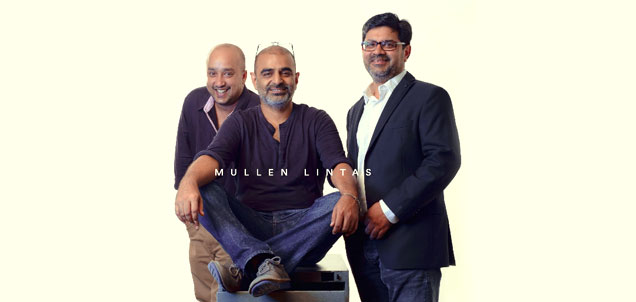
    Born August 1, its captains say Mullen Lintas will carry forward the values and legacy of its parent body, but be completely new in terms of its offerings. Chairman and CCO Amer Jaleel, CEO Virat Tandon, and National Creative Director Shriram Iyer outline the new agency’s future strategy with Pradyuman Maheshwari


    So, the birth of an all-new agency. How did it come about and how’s it going to be, if you could tell us in a few words. Lintas already has its second agency, in the form of Karishma and Linen Lintas. But this one seems to be a bigger play…

    Amer: The bigger play is the idea. And I can tell you both sides of the story. One is, of course, the big vision, which comes from the fact that a brand like Lintas has to have a growth story to coincide with the growth story of the country. Our big growth story revolves around how to expand business exponentially, and how to offer the market an agency of the stature of Lintas. We noticed, from the other side of the story, that we have a lot of home-grown assets with the company that we’ve been able to employ, both in the country and abroad, for companies like Unilever. But the question was, how do you use the assets internally? That led us to the idea that we need to have two agencies, because there are people, brands and marketing setups that were looking to have that kind of big, mass-based-thinking agency, with experience, expertise and a deep understanding of markets.


    I thought people today are looking for boutique agencies and smaller creative shops.

    Amer: We like to be contrarian here. We don’t believe people are looking for boutique agencies, nor are we operating one ourselves.


    For Lowe Lintas, do you think the timing is right, or is it a year or two late?

    Amer: The idea has been in the pipeline for some time, and the trigger was our international merger with a company called Mullen. Globally, we’ve now become the Mullen Lowe Group. Because of this, we found this to be the perfect opportunity. We are possibly the only country in the Mullen Lowe Group that is actually going to make a play with two brands.


    The last time something like this happened was when Lowe came into being, right?

    Amer: Yes. But those were takeovers. This is a merger of two big, distinct brands. Mullen [has more visibility] in the US while Lowe is more distinctive in Europe and Asia. We can lead and project the two brands separately now.


    And in terms of the way it’s going to be staffed etc, it’s going to be part of the same team that you possibly had in Lowe Lintas?

    Amer: So we are all homegrown. And we all have very rich experiences in building brands. We think, I don’t know who else can think like us, that only from this much of a legacy can be born two big brands. I don’t think where else this much depth of expertise and experience is available at this higher level to be offered to the market.


    How has the process been, in terms of moving people? How did you decide who to retain from within, and whom to hire externally? I’m sure there would have been some ‘tu-tu mein-mein’ around the process…

    Amer: Actually it just happened organically.

    Virat: Amer and I were once talking about how it would be good to come together and have another agency. I had a separate conversation with Joe about this, and he agreed (from a business point of view) that it would be a good idea to have this second agency play. Over time this idea grew and we realised there was a common understanding [among us] about what the company needed to do. It all came together, because we’ve also worked with each other and been a great team.


    How much time did this whole thing take to happen?

    Amer: It’s been cooking for at least six months now, but the trigger happened a month ago. The idea of Shriram leading the creative product of the agency, and Virat being the business head has been in the works for a while, but when Mullen happened, we decided it was time to make a really big play.


    And this is an expanded role for you?

    Amer: Expanded and contracted both. So yes I have more things to do, and I’m leaving behind a lot more things that I used to do…


    How does it feel to give up quite a bit to get into a bigger role?

    Amer: You may grow really fond of your brands and the work you do, but the fact that you’re building a brand for your agency, makes it easier for you to give up what you’ve been doing. Here is a completely new brand that we will build. And it’s not really adopting the philosophy from our international network, because we believe the work we’ve created has been aligned to India’s culture and identity.


    But it’s peculiar that while you have a new agency, you also have existing brands that were there with the earlier parent agency. So however much you try to change the culture, you will be guided by the earlier culture because your clients wouldn’t want anything different…

    Amer: We are going to have a lot in common with our past. We want to retain all the good things that have happened from there — how we investigate a brand, how we look at people’s behaviour and all of that will be [a throwback to] Lowe Lintas. What we are going to try to be different about, are the solutions. Because we are now growing and because we were born differently, we are going to act and solve differently too.


    I’m sure clients would want the same thing. But at the end of the day, it’s creative solutions, so how different can it be?

    Virat Tandon: What clients like about us is the depth we bring when we work on a brand, and what they like from Lintas, is the width of solutions offered as a whole. Both these things endure over a period for brands, and we will carry that forward to Mullen Lintas as well. What changes is that we structure ourselves a little differently, and we get equal on-board with what we call core-plus-one skills: people who are good at the core of the stuff we do, while they also pick up a plus-one talent or skill. Somebody who is not just an Art Director, but has also picked up a skill to do UX Design or content work. Those are the kinds of talent we will start bringing on board.


    From the client’s point of view, how would your solutions be different from what they were until July 31?

    Amer: I don’t want to say that we’re going to be different from Lowe Lintas. Why should we? We have to be different from everybody else. The approach to dealing with a brand problem, will be different because of this structure. So when we have new people sitting around the table with different skills and ideas, we will be solving a problem seen through many different lenses.


    At the new agency, how many people are going to be from the existing setup versus new?

    Virat: The leadership will be carved out from Lowe Lintas. In Delhi, we are folding the Linen Lintas office into Mullen, and doing the same in Bengaluru with Karishma. We will do some additional hiring. In Bombay, our headquarters, we will need to set up an office at an operating level as well. We are going to be an independent agency, operating out of different premises and with different people. The only thing we might share is the backend work, like finance, administration and such. Starting August 1, we’ll be working out of Lower Parel.


    And what’s been the response of your clients to the new agency?

    Virat: Mostly enthusiastic and supportive. They are confident of our revision, and that we will make a big play.


    Do your clients have an alternative not to move to the new agency, or is that something you will decide?

    Amer: How can we decide? We have to ask them and they have to agree to it. The mandate is to attract fresh businesses. We are confident there are brands and marketing teams who are waiting with categories which are already occupied by Lowe Lintas, but they may not be getting the Lintas legacy sort of offering. With us, the legacy will be there, but we are going to needle them to work in a new way with us.


    And you’re going to compete with Lowe Lintas?

    Amer: Of course.


    Will your creative process be different from what you have now? Will there be a greater emphasis on digital?

    Shriram Iyer: There will be a larger focus on exploring new media. For a while we’ve believed we’re good with insight, with the big idea, and experts in print, TV and radio. We’ve been consciously exploring new media ideas and trying to have clients [see the value in it too]. Clients know they can rely on us for TV or print or the big idea; we want them to believe they can rely on us for the solution too.


    But it will be a challenge for you to look at long standing clients who want a certain sense of continuity. At the same time to offer something afresh right?

    Shriram: So, most of our longstanding clients are..I would like to believe that they are total believers in us by now and it is up to us to lead them the journey with them along newer paths. I think marketing today has also more than ever before totally aware of what’s going on. They know that nothing can be a formula for too long. So it’s the perfect timing for us to just go out there with the solution and say here’s a new way to do it, and I think they’ll receive it better from us because we are a new organisation.


    Amer, the entire advertising landscape has changed over the last couple of years. Competition has also increased. As an all-new agency, do you see greater challenges in terms of the landscape and getting business?

    Amer: I don’t think it’s late. We are at that stage where all tech brands believe they are distinguishing themselves on the basis of tech. The time is now coming where they will distinguish themselves on the basis of the brand. With the first wave of apps and tech offerings, everybody now has the same tech, so brand play becomes important. That is when we’re back in the reckoning, and I think that time is now.


    So what you’re saying is that you need people who have a great amount of brand experience. But given that, wouldn’t clients want to look at a bigger agency like Lowe Lintas and others, rather than a smaller player?

    Amer: I don’t believe we are a smaller agency. We have a solution and we have an execution of that solution. We are going to be as big as a JWT, a Lowe Lintas or an Ogilvy. We’re going to be a part of a big agency brand; we’re starting out now, that’s all.


    And of course, you have the advantage of a few clients from Lowe Lintas as a starting point?

    Virat: Yes. Big is not just in terms of a revenue or size; big is also in terms of what you bring to the table. With the kind of experience, depth and solutions, we will have in the team, I don’t think there will be any question in anyone’s mind about what Mullen Lintas can put on the table.


    What would Mullen Lintas’ approach be towards participating in creative awards? Lowe Lintas has not been participating for a while, though Linen Lintas has. You’re now a part of both, so what’s your stand?

    Amer: We really haven’t spoken about this. We are believers in the effectiveness of our work. What rules is what works. We’re seen the results of that kind of philosophy and culture, and can’t really go back.


    Shriram: To tell you the truth, we’re not even missing recognition. I think awards are an outdated idea. They were instituted to recognise people and celebrate work when wasn’t much of that happening. Today there’s enough and more recognition for work through the year.


    As somebody who’s looking for new business don’t [awards] metals help?

    Virat: We are a big brand agency, and I think big brands and big clients look for work that stands out in the market. As a team, like Amer said, we’ve all been after work that works. Again, we haven’t really discussed this, but….


    Let me ask this again: As of now you’re not looking to participate in creative awards?

    Amer: No, we’re not.


    But every year, one of your entries does go to Cannes through the creative council, right?

    Virat: But what we’re after is the creative of effectiveness. That’s the end goal.

    Shriram: So no campaign is created for the awards.


    At your level, you don’t really feel the need for one more metal, but what about lower down the rank?

    Amer: The chatter out there on an ad, whether it is criticism or praise, has become more important than it used to be. Within three days of something going out, you know whether you’ve made 10 lakh hits or not. It’s immediate and rewarding.


    Social media recognition has become a huge thing for advertising folk.

    Amer: Yes, because it’s public recognition, coming through social media.


    For yourself Amer, being Chairman obviously means a P/L responsibility…

    Amer: I hope that I can direct some of the team relationships that we’ve built over time.


    Does it worry you? Do you think you were happier as a creative guy, and now this additional…

    Amer: No I’m looking forward to it.


    But you can’t be very creative in accounting.

    Virat: I’ve worked with Amer for 7-8 years, and he always comes with this entrepreneurial hat and sets a great vision for the team, and for clients. A lot of the clients get that from him.


    Suit in a creative clothing?

    Amer: Or the other way around.


    But what’s your target? What do you want to achieve?

    Virat: Our first milestone would be to, very quickly, earn the right to be completely independent, and right now the group is supporting us. We want to make enough to become independent.


    And when do you hope to be self sufficient…

    Virat: It’s not the time and day to talk about that


    But you must have some vision for when that will happen. Within a year, two years?

    Virat: Yes by that kind of time.


    And when will your score be number one in the Effies?

    Amer: We’re not looking to be number one in the Effies. Acquiring new brands and new clients is the goal.


    Because what’s going to happen is now there’ll be a division right at the Effies also because..

    Amer: We will all root for Mullen Lowe, that’s for sure.


    That you obviously will, but when the points are being calculated for the Effies numbers, now it will be divided between the two agencies, with some going to Lowe Lintas..

    Amer: Would you like to work with us? Because you’re thinking about this much more than we are! No, we haven’t thought about all that.


    This interview first appeared in ‘dna of brands’ dated August 3


  • OOH in the times of Digital


    We may skip the occasional YouTube ad and attend to some chores while the television commercial is on, but Out-Of-Home advertising is one form of promotional activity we cannot avoid. It is right there whether we are on our way to work, out for a party or even when we are driving away for a holiday. In this interview at the Outdoor Advertising Convention 2015 last month, Amit Sarkar, Chief Operating Officer, Kinetic India talks about the growth of OOH in India and what lies ahead.


    Can you give us a broad idea of how OOH has been growing over the years in India especially at a time when there’s so much buzz about digital.

    Anything that is new will always have a buzz. So digital has been growing at a larger pace because it is a new evolution of media format. And a large part of digital is growing because you look at the age groups which are digitised, they are our larger consumers today. If you look at the larger shifts from consumer-centric age groups, young people are more prone to digital. OOH has been growing at a logical pace, 5 percent, 4.5 percent, except for last year towards the end of the second quarter when elections happened and we saw a lot of money in OOH. I think that’s an interim situation which actually took the pie to about 10-12 percent growth last year. But, if you have to keep that out of the event of normal spending pattern, I think we grew about 4.5-5 percent.


    So would you say that this digital buzz has stolen the thunder of OOH and other mediums as well?

    I really don’t buy that story, because when digital was not there, OOH still grew at the same pace. Which means OOH has its own independent challenges of growth and decline. Digital is something that is new, so obviously there is a perception that that is pulling out more monies. I can tell you with assurance that digital has pulled money out from television and they would be having the same sort of concern which OOH may have. I think OOH’s problem is independent of whether digital or mobile advertising is going out or not. And these are very uniquely positioned over the last one decade that we have been seen in OOH as a business. It’s very independent. I mean OOH doesn’t grow because of larger logical reasons like we have become pretty format-driven, we have regulation problems, different cities and different municipal corporations and revenues from OOH is different. While there is tremendous opportunity, but a slow pace of growth is largely to be blamed in the way media has been consumed, and also position perception. If you look at it, it’s more of positioning.


    What is the difference in the growth of OOH in a metro like Mumbai versus a Tier 2 or a Tier 3 city?

    If you look at it, about 75-80 percent of consumption today is all in the urban cities. While Tier2, Tier3 is extremely growing and that’s because of any other reasons of all businesses.
    If you see telecom as a category, these are pockets that are growing too. If you look at FMCG as a category, these are pockets that are growing too. New acquisitions have been drying up in our own cities. So OOH thereis more an evolved format, better environment, but if we look at core OOH in terms of visibility perspective, Tier2, Tier3 and Tier4 towns are the ones which provide us business. Because more as we progress, when you look at rural India where there is a lot of purchasing ability for people who are just farmers in the context of it. Gradually when their behavioural pattern changes in the way they consume something from a media format perspective, OOH in those markets will evolve, but need wise, there is tremendous potential. I have seen double digit growth inside that 5 percent, coming only from Tier 2 and Tier 3 towns.


    Does that have anything to do with the fact that internet penetration is also slightly lower in a Tier 2, Tier 3 city compared with a metro?

    I think they are two independent points, but all independent points from a consumer’s perspective have a correlation, which means more internet penetration, more exposure, therefor more knowledge clearly, more aptitude towards media. So similarly, just take an example I would say, if you would have looked at a city like Mysore about 10 years back, till the time Infosys actually made a game-changer there and all of us know that Mysore is great for Mysore palace. Today if you look at a lot of people who have migrated to Mysore, from Bangalore and other large cities, your consumption pattern of that particular city has changed. Your real estate prices have gone up. Almost everything around it is a newer ecosystem. That proves ability and OOH would actually work with it.


    Measurement in OOH, unlike digital and other mediums, it still a weak point. In your opinion what is the best way to tackle this?

    Every media format has its own challenges. Not to say digital for clicks could be measureable, because clicking and getting absolute time to consume an advertisement are two different things. Just because of clicks, it doesn’t mean that your attention towards an advertisement in digital is great. OOH has challenges of currency and ROI. But the reason for it is also that it is more difficult to measure OOH because of the nature of the business, the geographical spread, the immense amount of unorganized formats across different markets. If you look at television, you would actually take a smaller sample size to determine what will be your viewership pattern. In OOH every market works differently, vendors are different, formats are different, cultures, languages are different. Just to give you an example, in Karnataka if you ever do OOH, you have to actually put a sign of the creative in the local language. Without that you will not be able to display. The same thing is not really applicable in Delhi. So it has perennial challenges, however to build a currency, it has to have industry initiative and investments have to come in. So that’s the larger challenge. There’s no trial. There has been trial for the last 10 years that I know of, but everytime you progressed. So I’m hopeful it will happen sometime tomorrow, and it has to happen, otherwise the trade matrix will die. I mean our margins are shrinking, investments are not coming in, regulations are a challenge. You have to have a modelling of ROI which will move you fast. In closed environments like the airports and malls, it’s still addressable, because you can assure walk ins, profile a TG, it’s a closed environment you know how things are. It becomes very difficult on roadsides, on larger platforms.


    In this perspective do you think it’s good to have competition between mediums, or do you think that all need to work in synchronisation to ensure sales for the brand?

    OOH all of us realise has become more environment-driven. So whether it is an experience to be combined with digital, social, or anything to do with word-of-mouth as well, which amplifies it to a larger extent is OOH. So, just because digital and OOH can combine together to give a larger proliferation, it may not be a right story, all forms of media, together form an OOH ecosystem today. And that’s where the importance and the opportunity lies.


    From the perspective of your clients, what are the spends on OOH versus other mediums?

    On an average 5-6 percent. Some categories actually would be more spendthrift. So telecom is high spendthrift in OOH, FMCG to an extent yes, but largely on an average it is about 5-6 percent.


    So according to you is that fine, or should clients allocate a larger portion of the budget to OOH?

    OOH is the most seen medium according to TGI consistently for years together. But if you look at commitments of budgets, it’s still very vague, because at the end of the day everyone needs to understand what is an ROI. I’m not debating the fact that every media ROI is absolutely correct, but it is the time we have a matrix and if we keep on selling OOH in the way it is positioned today, there are challenges. So from the way I look at it, OOH has to shift from its current positioning. So that proposition becomes robust and therefore currency will still matter, but what will matter more is experience with consumers. And that will actually drive it.


  • ‘There is space for more creative awards’


    As President, Srinivasan K Swamy has breathed new life into the India chapter of the International Advertising Association making it unarguably the most active body for advertising, media and marketing professionals in the country. And just when he had achieved the impossible with an event like the silver jubilee summit that is scheduled for September 3-5 in Kochi, he has announced the IndIAA Awards. Hours after the announcement was made, Swamy spoke to Pradyuman Maheshwari of MxMIndia on IndIAA, its highlights and whether it will impact the other awards for the creative fraternity.


    So IAA too has jumped on to the awards?

    We have been discussing for nearly two years that we should have an award for advertising that’s not just for the sake of creativity but an award for making a difference to the marketplace. We’ll award good, creative work coming from Top 20 categories based on audience response. We’ll see all that’s happened in the last one year – July 2014 to June 2015 and get people to also nominate what they’ve missed out and we will shortlist this on certain parameters. We have a wonderful set of jury members. We’ll put it in front of them and they’ll handpick the winners. We have two awards for each category – one for an established brand and a challenger brand.


    Unilever COO Haresh Manwani to chair all-new creative advertising award – IndIAA 

    By A Correspondent


    There are awards and awards and awards, and there’s yet another for India’s creative advertising craft. But this one is with a difference. For one, the top captains of big business are on the jury, and two: there’s no entry fee, and in fact all entries will be nominated.


    Organised by the India chapter of the International Advertising Association (IAA) which is in its silver jubilee year, the IndIAA Awards is being billed to honour “real hardworking creative advertising.”


    Chairing the jury is Harish Manwani,  Chief Operating Officer, Unilever and Non- Executive Chairman Hindustan Unilever with senior business leaders like D Shivakumar (Chairman & CEO, Pepsico India), Bhaskar Bhatt (MD, Titan), Mayank Pareek (President, Passenger Vehicles Unit, Tata Motors), Sangeeta Pendurkar (MD, Kellogg India), Sanjeeb Chaudhari (Global CMO and Regional Head – South Asia, Standard Chartered Bank) and B Sriram (MD, State Bank of India).


    Said Manwani: “Creativity is critical to great advertising – advertising that ultimately helps to build successful brands. Effective advertising implies the existence of deep consumer insights, the rigour of a repeatable process between the client and agency and optimal level of  media spends.  Only then does a great creative idea get transformed into effective advertising.”


    There is no entry fee for the awards, Srinivasan K Swamy, President, IAA India said. Asked whether this would compete with the major awards in the country – notably the Abby from the Advertising Club and the Kyoorius Awards, Swamy said there is space for all awards to co-exist.


    Added Pradeep Guha, Chairman, IndIAA Awards: “In its inaugural edition, advertising campaigns that were released between July 1, 2014 and June 30, 2015 will be honoured in multiple product and service categories. To qualify for an award, the campaign should have film (TV or Digital) as one of its elements. In each product or service category, no more than an overall winner and a challenger brand (a newcomer) would be awarded.”


    The jury meeting is scheduled to happen on September 2 and the awards ceremony is likely to be held in early October 2015. Details on categories, criteria and nominees are available atindiaa-awards.org. Campaigns can be nominated by mailing a link of the film atawardsindia@gmail.com.


    Is there space for another award?

    You will be surprised. The kind of work that will be awarded is the work you and I enjoy sitting in our living rooms. Awards, otherwise, celebrate work which none of us have seen. There’s a big difference here. The awards won’t be just for creative agencies, but also for advertisers who co-created it, to the media agencies, digital agencies who’ve been part of amplifying it. Everybody will be called upon stage, the advertisers and the agencies related to them and they’ll be honored together.


    In a sense you have that in the Effies which looks at effectiveness…

    Effies are more process-driven in terms of the results delivered. But you don’t celebrate all the people on one platform. You don’t get the full team who co-created it to come on stage and get it.


    You’ve been part of the Advertising Club, Goafest and 3As of I…  don’t you think the Abby could’ve been improved?

    Talking about GoaFest and Abby, I think it has its own purpose and if people are ignoring it, it’s out of their own personal reasons. All awards have a role to play. Celebrating good work in whatever manner is always good and I won’t say Goafest, Cleo or Cannes have lost their relevance. All these awards have a purpose and the creators must celebrate their success there. This is special from our point of view where we’re talking about advertising that has made a difference in the marketplace and all of us sitting in our living room, enjoying that advertising; that will be seen for the first time in the awards shows.


    Could we well see a IAA versus Goafest-3As of I- Advertising Club war?

    No. As I said there is space for more awards. If we can have so many awards for feature films, why can’t we have more awards for creativity and advertising?


    I am asking this because we don’t see the bonhomie between a Goafest Abby and Kyoorius after the latter has its own awards

    Kyoorius is a private organisation award whereas Abby is certainly an industry association giving the  award. But you can’t ignore the fact that Kyoorius came and took some impetus away from Abby. That’s the division. When there was a division between Ad Club and 3As of I, a lot of effort was taken to bring them together on the Goafest platform. There’s very little difference between a Kyoorius and an Abbyaward. Both awards are for creativity, both have jury members, more often than not, it’s for work that more often we see in life. It’s still only the peripheral work that brings the awards.


    Do you anticipate any problem between 3As of I and the IAA?

    I think there’s enough space for a Kyoorius, Abby and IndIAA awards. People like to receive an award for the good work they’ve done. The more platforms celebrating it, it’s better for the creative perspective.


    How have Ad Club and 3As of I reacted to it?

    It’s possibly not been internalised by many. We’ve been working in the background and not made a serious announcement about it till yesterday. A few days ago, Campaign magazine broke that news. The more people realize there is another award coming up, they realize there is space for a lot more. There is a relevance for Kyoorius, Abby, Goafest… more awards is good, because more appreciation for good work is always good. As I said, there are so many film awards…


    With agencies not having enough budgets for sending entries to awards, not charging an entry fee is a good idea?

    Yes, all our works are nominated, they’re not entered. There’s the difference. There is also a process by which all good work can be nominated by the jury.


    Nomination always means there can be an element of subjectivity. The best work may not necessarily come.

    We also have a process of suo moto nominating, we also nominate ourselves. In front of the jury, all the good work is dropped into categories. We know what the 20 categories are. We know the brands of the 20 categories. We know what work has come out of those 20 categories and brands.


    The fact that you have Haresh Manwani and D Shivkumar, you can be sure that a Lowe Lintas and an Ogilvy will participate.

    They have no choice! I’m not even asking a Lowe Lintas or an Ogilvy to participate. We have a panel. We will review all the work and nominate work. If your work is good in our opinion, we nominate you for consideration to the jury. We’re not expecting an O&M or a Lintas Lowe to send in their work for consideration. We are going to pick the work from the public domain.


    But, they have to come and accept the award.

    They would be fools if they don’t! The client has to be there to accept the award. The person who co-created the work is going to be there for the award.


    Yet again: do you expect fireworks thanks to the awards… amongst the industry associations?

    There is space for multiple awards.


    Given what’s happened in the past?

    At one level, because award shows collect money, they are seen as commercial activity. We’re not just seeing it as commercial activity. We’re giving something back to the profession. We want to honour people who are doing genuine work, making a difference to the marketplace with their creativity and we want to get them on a platform where we can honor all of them… both, from the established and the emerging brand.


  • Tech is fine, but relationships will always be there: Jasmin Sohrabji


    Omnicom Media Group CEO India and South East Asia Jasmin Sohrabji says the agency goes public only when there is a need, like the establishing of its second agency, PHD. But who needs a constant spotlight when you’ve got a full trophy case and several ‘firsts’ in the industry to your name, particularly in the digital and mobile space, she tells Pradyuman Maheshwari. Hmmm. Read on…


    There is a perception that both you and OMD are extremely low profile. That you are doing great work, but you never talk about it!

    I set up a brand which didn’t exist in India, so there was some conscious effort to establish the brand. In the first four or five years, everything we did — every win, every office opened — we made it into a PR story. Once the brand was established, the focus was on internal consolidation of the second brand and the group. That’s why I think you won’t see the sort of media coverage we sought earlier. We did it again when we launched our second brand, PHD, year before last. We did the big Cannes wins that we had last year. And while we’ve been inundated with awards we’ve won, particularly for PHD, we didn’t PR the whole thing. By that time, we believed our fraternity and our potential clients, already knew us.


    Others who are well-established, are also high profile. Is this [reticence about PR], then, OMD’s personality?

    No, it’s not a personality and it’s not even my personality. We go in cycles of doing PR when we need to. We went through a cycle of establishing OMD, then establishing our second brand. Now the focus is on the overall group, and we will make a big group hiring. When we hired Shavon Barua as Managing Partner for PHD, we did some PR around that. But I think maybe you are right, to an extent we have not [gone public much].


    How is OMD doing? And PHD? What is your self-assessment?

    We’ve done very well in the last few years we’ve been there. Our growth has never been under 25 to 27 per cent. We’ve done very well both in terms of organic growth as well as new business. Not all of it is announced, or can be, sometimes. It’s not just the growth per cent, but we’ve established ourselves quite well across markets. When OMD launched, it was first a Mumbai entity, and later went to the south and Delhi. With PHD, it’s the other way around. We won the HP and SC Johnson [accounts]. The geographical balance is something I’ve always valued, because if you’re going to establish yourself as a group and grow, you can’t be seen as a one-city, one-market business. If you look around, many of the agencies – not just the top ones – have struggled to establish themselves in the south, west and north zones. I think we’ve been fortunate with our brands. Though OMD is stronger, PHD is relatively new since it’s been around for only two years. And so it still needs to be established and that’s why you’ll see more buzz around that.


    Other agencies have branched out into various areas like outdoor, digital, even activations. What about you?

    So have we, and on that we’ve done a little more conscious thinking. We’ve been one of the key agencies in the digital space, and it’s helped because of the kind of clients we’ve had. I think the biggest strength we had in digital is not just client and leadership, but the fact that because we were relatively new and launched in the heart of the digital era. In our case, digital didn’t come as a little add-on to offline; we’ve evolved it as a product as we’ve grown.


    You were among the first one to bring in mobile too.

    We’ve done a lot of firsts in digital. That’s been our key strength. We’ve focused on creative and content, in terms of both alignments as well as internal hiring, in digital. We’ve not done that much in the offline space. We focused on mobile too, very early on. I think the out-of-home space is an area we haven’t built, in-house.


    There are rumors that Mudra Max might merge with OMD

    When there is something to share, we’ll do it. Right now, there isn’t. Mudra is one of our partners. We’ve never gone the route of just one alignment because a lot of the clients are looking for a whole mix. So the pitches happen separately. The agency selection process is also quite different, and doesn’t always come as a part of the mix. So if you win the business, it doesn’t mean that you [automatically also] win digital and outdoor.


    Technology is virtually ruling the way business is done today. Is that a worry

    God, no! I think it’s great. It’s a huge positive for various reasons. New media has driven technology into the future. Old media has not seen the change as much yet, but it will. The change we’ve seen, however, are just in the efficiency of tools. We’ve not seen a smarter technology, just tool efficiency which means I can get my teams to finish their runs faster and spend time on the more interesting parts of brand communication. Although we haven’t seen a big technology change in the offline space, I believe it’s just a matter of time before they merge. It’s my belief that the more we go into technology, the smarter the machine becomes and the more important it is for us to then keep ahead and be smarter than the machine. The day we let the machine decide, I think we’ll have lost a large part of the value we bring to the client. We operate a lot on gut, so I think, we need to be smarter and always one step ahead of technology.


    And relationships do matter, don’t they?

    See relationships will always be there.. They will go up and down in terms of relevance, but will never go away. But if people let technology decide or guide their plans and think therefore they’ll sit back and see a run being done I think somewhere that, that individual or that agency will not be ready and prepared for the future. My expectation is, the more we advance in technology, the more quality people we’ll attract, the better our industry will be. Think of the kind of work that’s happening in our space today.. What was the conversation all you media people came and asked us about 10 years back? Every conversation is that do we have enough talent available. Why are people going and joining channels? Why are people going away to Asia? Remember all those conversations? Today who has that conversation? Today, we can attract very good talent because of technology. Because today our industry seems so much more in the front rung of decision-making.


    Are you able to attract talent from top B-schools and such?

    Top B-schools are not easy right now because of cost reasons. Top B-school graduates expect to get paid more than someone who has five or seven years of experience in our industry. We can’t give entry-level people those kind of salaries. So I may not be able to get that kind of talent yet, but in future I think we will. There is only plus and plus coming for us. The kind of work that we are seeing, that our network is doing globally in combining both offline and online data to better our strategies and such. When I see that, I wish I was still a planner at that time.


    You’ve been on the Cannes jury and you know that not too many Indian agencies make it [there]. So how do you rate our work versus the rest of the world?

    Firstly, I did media and we only get to see about 20 per cent of the work that’s out there. I didn’t see too of the India work, but I do know there was work like the Touch The Pickle Campaign this year, which generated a lot of talk. So while I think we have huge potential, we’re not up there on storytelling, when compared to work done globally. I don’t think the work is such a big issue with us as much as the way we tell our stories. If you’ve to wait for the idea after almost a minute into the video, that’s not good.


    OMD is not too active on the awards circuit in India, especially the Emvies

    OMD has not been as high profile as PHD. Yes, we aren’t at the Emvies. We don’t dominate that. Only PHD has been doing it, we’ve not been doing it.


    Any reason why?

    There is no reason; it’s just not happened. But this year we have. I’m going to send you a list of this year’s wins of OMD because I think you’ll be a little surprised.


    Do awards matter?

    It’s client specific. I feel the quality of your work, your team, your efficiency and savings takes precedence over winning awards, but it’s good PR. However, I don’t think that’s the reason we could be winning. Our product has so many elements to it; a big part is on savings, rates and negotiations. I don’t think [awards are] winning us pitches. So it’s important, but not the most important for a new business, for sure.


    Where do you see yourselves in 2020? How do see the business shaping up

    Earlier, I was a seeing a lot of data analytics and insight-informing strategy work. It was being done a lot more efficiently with technology in the digital space. Now all the conversations are looking at data across, because while digital makes sense in the evolved markets, data leading to insight-leading to solution-leading to optimisation may not work in India where there are a large number of activities happening offline. Four years later, I hope we will not be having these conversations and will have better integrated [online and offline] media. So there will be people who understand data well, and there’ll be people who can ideate and optimise from that data. Technology will help drive it, and I think people will eventually become online, rather than offline, specialists.


    Do you think going forward, media buying will get integrated as against just print or television or digital…

    I think it should. I really think it should because today you can afford the isolation but or the separation but I think as we go forward if there is a conversation… a buyer should know a conversation about buying a video versus buying a channel. And why am I paying this versus that? How can there be two separate conversations? It should be a video conversation. It shouldn’t be this channel and that Youtube kind of conversation.


    In terms of the kind of media you do, how do your digital spends compare with the rest?

    Our digital is way higher than the industry average. I think our digital spend is more than a component; the skew is more than 20 per cent of our overall.


    Over media investments?

    As a percentage of our overall media investment. We are very high on digital which is why our focus has been so much on the kinds of platforms we are launching, the technology we are investing in, the people we are hiring. When you think of long-term investment in other media, there’s an industry average. Everyone’s spends have similar amounts of outdoor and activation in their mix. But they are not growing at the same rate. Today, we are all at one level. Two years later, I might still be spending only 10 per cent on these mediums. But when you look at digital, it may have moved from one to five to 10 or even 20 per cent.


    Going forward, what new things can we expect from you?

    Now that our second brand is also established, I think the focus will be on consolidating individual brands and consolidating as a group. The work that we are doing in digital, research and technology, will be of benefit to all the brands. Earlier, we were carrying out initiatives for individual brands. We’ve hired a senior investment lead because it was time for us to compete at a group and brand level. Earlier we did have brand-level investment and trading leads. But now we feel the need to do a lot more of our initiatives, not just at the brand but also the group level. We recently launched a study called Touch Point Analysis, an OMD initiative. There’ll be more things which will benefit both groups.


    Is it the knowledge you provide or is it finally the kind of discount you offer?

    There is no one person or client in a pitch. There are multiple kinds of clients. For some, your rates have to be the best. For others, it could be the quality of your future thinking. How much are we able to read the future in our industry, and the quality of our people, is driving the pitches. That’s why clients want to meet more of the people going to be involved in the business.


    In your business, you can’t be isolated from the environment around you. Do you look at how others are playing? And where do you want to be, say, two years from now?

    Of course we do. When we started out eight years ago, we were very clear in our minds that we had to quickly catch up [with others] in terms of scale. Clients want to give their business to someone who is well established. The focus at that time was to ramp up very quickly, which we did really well and balance the geographies. We’ve seen agencies who’ve just focused on one market or another, and not been able to maintain their momentum over the long term because they’re seen as a Delhi or Mumbai agency, not a national one. Today, while we look at other agencies, we don’t look at what someone is doing right or doing wrong. I don’t think any agency styles itself on another agency. People just compare to see where are we on digital versus someone else on digital, or talent, or buying capabilities.


    And where would you say you are?

    We are always No 1 on everything. We’ve built a strong business for ourselves.


    This interview first appeared in dna of brands on August 24, 2015


  • No usual suspects at IAA Silver Jubilee Summit


    President Srinivasan Swamy talks about the IAA India Silver Jubilee Summit coming up in Kochi from September 3-5 with a handpicked line-up of speakers and experts from around the globe, and the soon-to-be-held IndIAA Awards. Excerpts from an interview with Pradyuman Maheshwari


    Twenty-five years of IAA India and we didn’t really know about it. A silver jubilee is a huge milestone for any industry body.

    IAA is 25 from when we incorporated ourselves as a company. But technically, IAA was formed 10 years earlier, in 1981, so we’re actually 35. The early stages are not very well-recorded. So we celebrate 25 years as a company, taking it from 1991. But it has been an amazing journey. We are the only organisation which is truly international, and we’ve had all the big leaders passing through the IAA platform, both in India and globally.


    Does an industry like advertising need so many associations? There are quite a few already.

    Actually, there are specific associations for specific lobbies. We have an ISA for advertisers, INS for the print media, IBF for television broadcasters and the AAAI for the agency’s interests. It is the interest of advertising which is at the heart, for us, not lobbying. Therein lies a big difference.


    So it’s more of a club then, right?

    We don’t see ourselves as a club but as an international body which used to be involved in important aspects of advertising. The records will show that we were behind the formation of the Advertising Standard Council of India. We are actually focused on issues which are taken care of, not just by private agencies, advertisers or media, but all of them together, and make sure advertising is protected and nurtured.


    What is it that gets IAA to be so active and the others are not?

    I think it is probably in my DNA. In whichever body I’ve been involved in, I try and give my best. I can’t see the reason why anybody else can’t do it. It’s just that they are not passionate about doing what is required to be done on these jobs.


    Coming to the Silver Jubilee summit, which is obviously a big landmark. You say it’s in the same league as Ad Asia…

    It is. I don’t think we’ve seen a line-up of speakers of the kind we have [for the summit]. The president of the Global IAA, Faris Abouhamad, is coming down — not just for the inauguration, on September 3, but for all three days of the summit. The Kerala tourism minister will be there at the inauguration, as well as Amitabh Kant, who was behind the God’s Own Country, Incredible India and Make in India campaigns. He will deliver the keynote address. We have a lot of international speakers as well.


    You also have people like Sachin Tendulkar, Shah Rukh Khan and Jaggi Vasudev to provide colour…

    Sachin has been a brand ambassador and advertising icon. He is not there as a cricketer. We also have Arnab Goswami, who is another brand. We find today that at any conference, a spiritual leader connects very well with the audience. Jaggi Vasudev is going to talk about the miracle of being a good human.


    Are you happy with the line-up?

    We avoided the usual suspects. We could’ve approached the Chairman of IPG, Omnicom or WPP, but those are easy options to chase. The names we have are actually going to talk about newer things. Our theme is ‘What’s coming next?’ We have Cindy Gallop, founder of BBH in the US, who has done some excellent work with the websites ‘If We Ran The World’ and ‘Make love not Porn’. She is also Cannes Chairman of the Jury for The Glass Lion. We have Paul McCarthy, who has written a book called ‘Online Gravity’, a runaway success about how online impacts different aspects of our lives. Jeffery Cole will speak about the future of digital, while mobile expert Ralph Simon will talk about how mobile is going to transform the world. You won’t get these perspectives from the usual suspects.


    Are you going to use your popular debate format here?

    No, we will have only keynote sessions because we find people don’t come prepared for panel discussions. They answer questions put to them, which is not a structured way of taking you through your problem. So we have 18 keynote sessions and only two subjects which will have a discussion – the first, with Prasoon Joshi, after Sachin makes his presentation, and one with Sam Balsara after Darshanbhai Patel makes his opening remarks. All the presentations are of 25 minutes by the keynote speaker, followed by 10 minutes of Q&A.


    Since this is a large-format event, it is obviously well sponsored…

    It is sponsored. We are on track to fulfilling our obligations in terms of money. Our friends from various media support us. And we have got all the support from Kerala, like from Mathrubhumi, a Kerala publication. Different TV channels from across India are also supporting us.


    Your tickets are priced very low. Would people in India value an event with low-priced compared to one that has higher priced tickets?

    We deliberately kept it low because we want more people to come. For members it is Rs 4,500 while non-members pay Rs 9,000. I also want members to come with their spouses, who comes for free. Non-members pay an additional Rs 4,500 rupees for an accompanying person. I think Rs 9,000 is not low. Attendees also have to spend on air travel and hotel stay.


    Kochi is an unusual venue. These events are mostly held in Goa, Delhi or Mumbai.

    IAA is an unusual institution. With programmes in Bombay and Delhi, people come for one session, leave for meetings and come back for cocktails and dinner. In Kochi, there’ll be very little of such distraction, so one can focus on the content and observe as much one can. Delhi, Mumbai and Goa have been done to death.


    A part of this interview first appeared in dna of brands dated August 31, 2015


    See also on Zee Business at https://www.youtube.com/watch?v=M2Y054u7t50


    Â