Category: INTERVIEWS

  • Don’t compare Goafest & Melt..


    Media agency heads have always played a key role in India’s growing media services industry. GroupM, the holding arm of a clutch of agencies owned by WPP, has been on the forefront over the years, with CVL Srinivas, CEO – South Asia, now doing that in a quiet, definitive way. So while we were not surprised when Mr Srinivas was actively associated with Goafest, we wondered whether all was well in the AAAI when we first heard that he had virtually turned co-organiser of Melt, a two-day festival of creativity being organised by Kyoorius on May 21 and 22. Here, in an interview with Pradyuman Maheshwari, Mr Srinivas talks about why GroupM supports multiple trade events and the ‘tu tu, main main’ between the supporters of Goafest and Kyoorius…


    You answered this question when Melt was being announced, but given that it is happening now, one would like to hear it from you again: How is it that GroupM and you personally are as actively involved with Goafest and the Abby as you are with Kyoorius Melt?


    At GroupM, we try to support as many initiatives as our bandwidth permits. Apart from Goafest over the years, and Melt2015, we have been supporting a host of events, be it MMA, Social Media Week or supporting organisations such as IAA. We believe in doing our bit to shape the market and help the industry evolve. One of our biggest challenges as an industry is to attract talent. We see all these events as having a role to play in keeping our industry exciting and attractive for young talent. For us, it has never been a case of either/or (with regard to the events). Having said that, I must confess that if at all we do not support any particular event, it will be more because of time and bandwidth constraints than anything else.


    When we first heard that GroupM was actively associated with Melt, our response was one of disbelief. Did this [Kyoorius] in any way impact your association with that [Goafest]?


    We have supported Goafest over the years and even this year, be it with speakers, designing the event, or with sponsorships. We continue to send the maximum number of award entries and among the highest number of delegates. When Melt came to us as an opportunity, we found the format interesting. Coincidentally, it came at a time we ourselves were driving a few programmes internally and externally around creativity in technology and media. We felt this would be a great platform for us to energise our teams and learn from the experts who will be taking part.


    I know it’s early for you to make a forecast, but what’s your sense on how Melt will turn out?


    We have a great line up of speakers and good buzz around the event. Considering it’s the first such event being held in Mumbai, I am sure it will pick up momentum as we go along.


    You were at the Kyoorius Awards last year giving away some of the awards, and you were also present at the Goafest Abbys both last year and this year. What, according to you, would be the key differentiators?


    Each awards event has its own flavour. There isn’t any need to compare the two and get worked up. Goafest is clearly an industry event, since industry bodies are behind it. Kyoorius awards is run independently. Just to clarify, GroupM has no role in the awards; we are only partnering on Melt.


    A slew of media agencies seem to have no problem with any of the awards shows, or even with each other. Why do you think creative agencies have problems with participating in awards shows?


    I am not very sure!!


    Even agencies from the WPP group have stayed away.

    Well, GroupM hasn’t.


    We may not hear it said out loud, but there is a clear ‘tu tu main main’ between Goafest and Melt/Kyoorius Awards. What would you say to the naysayers from either camp?


    It’s better to live and let live and not criticise either of them.


    And to all those in the industry who may not have made up their minds yet: Since you are one of the co-organisers, why should they register and attend Melt?


    It’s an event that combines advertising, media, digital, marketing and technology. In the real world, each of these areas is merging into the other. Melt is bringing alive this phenomenon in a very interesting way.


    A version of this first appeared in dna of brands dated May 18, 2015


  • No gyaan, only learning


    This interview was conducted around Melt 2015 was announced in April this year, but the views Punit Goenka, MD and CEO, Zee Entertainment Enterprises Limited are still valid and relevant given Melt (or Zee Melt 2015, to be precise) starts today (May 21) and Zee Mindspace, the conference for CMOs, happens tomorrow. We asked Mr Goenka on why he associated himself with Kyoorius, will it impact his linkages with Goafest, on how speakers have been chosen for the event and finally with Rajesh Kejriwal, founder and CEO of Kyoorius.


    This is fourth edition of Zee Mindspace. What have been the learnings so far and what made you switch to a much larger scale?

    In this fast changing world, our own teams feel that the learning for the changing world is not happening at the pace that it needs to happen. We have got that feedback from our Mindspace series that we’ve been running so far. And when Rajesh [Kejriwal] approached me for Melt, I was of the opinion that we need to scale up Mindspace to a bigger level and why not put it as part of the industry initiative, which means it will be created for the industry by the industry. Normally, we do a half- day session, but this time we are extending it to the full day. Instead of just two speakers, we’re targeting many more to come in and speak up on different aspects of marketing and challenges and their learnings from other markets and bring it on the platform for the CMO world at large.


    There are quite a few events such as these which keep happening and apart from the likes of

    Goafest you have CII which does a marketing summit and there is AIMA etc. So how is it different from the others that you’re looking at?

    So, first and foremost the clear differentiation that attracted me to this was that I’m not just a sponsor here, I’m actually curating the content along with the Kyoorius team with learnings from my own professional space and what industry professionals are facing whether it be in the media or advertising or content world. So when people leave the venue, they should leave with the feeling that they have learnt something new which will help them in their day-to-day running of their professional life. And it should be clearly beneficial for to them, rather than it being a marketing conference where I talk about how great Zee is and what great thing Zee has done in the past. I want to actually make it a learning experience not just for my own team but for the industry at large.


    What made you choose on Kyoorius?

    I’m very happy to be partnered with Kyoorius because I have seen their benchmark in events that they have created and I don’t want to partner anything less than that. I want only improvement in that if at all, and I said yes to the partnership because I know Rajesh will deliver great standard of quality and best practices. And of course, why would I not want to associate my brand with something at that pinnacle of creation and implementation?


    You aren’t associated with the Awards though

    No, the Awards are not part of Melt. That’s an independent activity. It’s the culmination of Melt. So, by that definition we are not associated with the Awards as a partner or anything. But of course, I would love to be there and see who wins this year.


    With Goafest being an industry event and all creative and media agencies backing it, are you worried of a negative impact your association with Kyoorius can have on business?

    I’m not comparing Goafest with Melt. I know what Melt is all about and I know what it’s going to deliver for the industry, and that’s why I have chosen to partner here. I’ve been associated with Goafest in the past and will continue my association with them. Frankly the difference is that in the case of Melt, I’m working on creating the content for this festival. Whereas in Goafest, I’m not involved at. So I would not want to consider what’s good in Goafest and what’s not good in Goafest? Would those agencies look at Zee in a negative manner because I’ve associated with Melt, well, that’s their business, I can’t tell them what they should do and they should not do. We do so many events and that does not mean we make enemies with competing events.


    (Rajesh Kejriwal who was alo present while the interview was on steps in: Just to clarify this case, Melt has no sponsors. Melt has only partners. So, Zee is a principal partner, GroupM is a strategic partner, D&AD is a strategic partner, then there are other partners who are bringing in content in some way or the other. Everybody is a partner at Melt… there are no sponsors.)


    You’ve been associated with Kyoorius Designyatra for a while and I find it interesting that that you are actually not part of the event at all in the form of making a speech, presenting awards etc. We’ve also heard stories that Rajesh Kejriwal has told a sponsor that a certain logo doesn’t look very good in the creative, etc etc. Would you say he’s a tough guy to be associated with as an event curator?


    Yeah, he can be a pain, but nothing that can’t be fixed over a drink (laughs). There is no problem that you can’t fix over a drink, so let me just keep it at that.


    Zee has been associated with several industry events over the years. Is working with him different various others with whom you have dealt with in the past?


    As I said, normally people just put an event together and ask you for money and for a sponsorship logo on top of it. Beyond that, there is no value addition that one gets. Here, I’m being part of the team working on what should the event be all about. Rajesh came with certain ideas, my team then looked at the kind of speakers they should invite. What they should talk about. And we are actually considering all that before we take a speaker onboard, because I don’t want people to come and give us gyaan as to how good they are and how they have done great stuff, and what their great companies do. At the end, it has to be learning for the people who attend it, that here is the problem, and here are potential solutions, now debate.


  • ‘Kuchh Pal’ with the McDonald’s India CMO


    Competition may come and go, but the fast food major, as Kedar Teny, Director- Marketing & Digital, McDonald’s India (West& South) says, will always focus on keeping abreast of changing customer needs and eating out patterns rather than look over its shoulder. Set up in October 1996, McDonald’s runs nearly 400 restaurants across the country with 209 being in West and South India, the regions that Teny oversees. Excerpts from a freewheeling interview:


    You started off in the 1990s. Do you see any specific milestones in the way the marketing or advertising pitch has changed over the years?

    When we started this business, way back in 1996, it was about trying to build relevance. People were broadly aware of what the plan was, but the format was completely new to India. If you look at our early campaigns, they’re about how you can shed your inhibitions and come to McDonald’s. There was no order-taking at the table. You had to go to the counter, look at the menu above you, place your order, collect the tray and find a seat for yourself. This was very different from how informal eating out was, in 1996. At that time, people may have been intimidated [by McDonald’s], wondering if it would be expensive or the food, certainly alien to them, would work. Those barriers were broken by the initial pieces of communication we sent out, which talked about the experience rather than the food.


    The next phase was about celebrating the menu. When people started wondering whether we might have vegetarian food, we spoke about the McVeggie and separate kitchens [for vegetarian and non-vegetarian food]. That brought in a new set of consumers and built trust. Then we reached a point where we said we need to grow, with more stores. That’s when the real localisation of the menu happened. First came the McAloo Tikki, which today is a significant part of our business. And then the Happy Price Menu. That really brought us a whole new set of customers and changed the business completely.


    If you look, this is the most democratic place you’ll find in the restaurant business. You’ll find young adults, kids, first jobbers, older and younger parents, everybody. We’ve also augmented our services by introducing drive-throughs (more than 40% of our restaurants have this), high-street mall and standalone outlets.  As the coffee culture began to catch on, we introduced McCafes. We take great pride in the coffee that we serve; it’s probably the best at that price point. There’s also a big focus on digital. We introduced McDelivery about four or five years ago and this, along with McCafe are extensions of the brand.  We’ve done a significant amount in the digital space, whether it’s the website, mobile ordering through apps or the site, and all this helps us stay ahead of the competition while also staying relevant to consumer needs today


    How much does Indianisation of the menu contribute to your overall sales?

    McAloo Tikki is our flagship, when it comes to contribution to business.


    McDonald’s advertising has always stood out, over the years. It looks like a fair amount of research has gone into your current one, the ‘Kuchh Pal Offline’ created by Leo Burnett campaign. What got you into it?

    For a long time, we had an almost monopolistic market presence. Over the last five or seven years, while competition has increased significantly with new entrants in the market, the eating out patterns have remained the same. Category growth has not happened as much as we’d have liked. Since we were first off the block, everybody ends up emulating us. If we have a Happy Price Menu, someone will have a similar menu at a similar price point. The market is becoming more crowded. That’s why we’d got Leo Burnett’s Chicago office to do a robust, quantitative study on the Indian market, the frequency of eating out and the habits and attitudes around that.


    So is it goodbye to the ‘I’m Loving It’ campaign?

    I don’t think ‘Loving it’ is something we’re moving away from. We’re just trying to capture the mood and sentiment of what’s going on right now, to create more differentiation for our consumers. People see us as a fun, social, change-of-pace kind of place. While we still want be fun and social, we also wanted to move away from being a change-of-pace place, to a constant.


    So how do we ensure we become the preferred destination for our consumers?  We met customers at the store, and one of the things that emerged is that today, customers are a lot more distracted than they used to be, continuously looking at their phones and losing out on conversations. Also, people today want to share things, and the internet has made this possible. We decided to bring these three or four things together and see if there’s a proposition that can help us achieve the objective we want. That’s how the ‘Kuchh Pal Offline’ campaign was born. We’re an offline destination, a bricks-and-mortar restaurant. We want people to come in and spend time with us, keep their phones down and have wonderful conversations, supported by our food and the overall experience.


    Now the competition is not just from QSRs right? There are Starbucks and other coffee destinations…

    The category overall is of course growing. As more options kick in, people are spending more time outside of their homes now. Consumption will obviously go up. What remains to be seen is how much of the share we will be able to get.


    Over the years when we’ve seen the McDonalds advertising look at families, kids, young adults. Who is your primary TG now?

    We started off as a family destination since, at that point in time, eating out was a family thing especially on weekends. But what happens on week days? That was a chance to explore the market through menu innovations and pricing. About 60% of our walk-ins are teens and young adults. Families still give us our volume and value of business, but we’re not catering to a particular audience or driving a particular menu at a particular price point.


    The QSR space is getting crowded. We’ve had Wendy’s launch recently. Earlier, at the malls, you just had McDonalds; now there are many others. Will this mean more spends on advertising?

    Not really. As the business grows, advertising will grow. But we don’t want to be spending particularly because of competition. We’ll spend in line with our business objectives.


    Now that there are a lot more players, are you looking at any change in terms of television, on-ground and all of that?

    Television will continue to play a stellar role, but as you start growing into Tier II and Tier III geographies, where you may not have the same presence as Mumbai, Bangalore or Pune ,it makes more sense driving on-ground excitement to generate footfalls. Typically we leverage our assets like Ronald McDonald. You conduct kids’ shows, have weekend events and things like the First Tasters Club, for the select group of people who apply to sample our menus.


    McDonald’s is known as a value-for-money brand. It fits all budgets. Will this continue to be a part of your marketing strategy?

    Yes, it will because McDonald’s stands for value and it’s not just value for a particular audience. Its relative price index with respect to the market will always be at a slight discount to the company that’s defining that thing for you. But we’ll always be a value brand.


    What are your digital spends now? Has the percentage increased? And how does digital compare vis-à-vis others?

    Yes it has. From practically nothing to a very insignificant amount, it’s moved to a 10% of total spends. And we’re seeing this number increase every month.


    What about print and BTL?

    Print has more or less maintained its ratio at 20%, while TV continues to dominate with about 75%.


    No celebrity endorsements for you?

    We haven’t given it a serious thought. If the proposition deserves it, maybe we’ll look at it.


    This interview first appeared in dna of brands on May 18, 2015


  • Betting big on India with data analytics & search


    By Ravi Balakrishnan


    Starcom MediaVest Group’s CEO Laura Desmond in conversation about building a media and content company that is future-ready:


    This is something we’ve always wanted to ask a media agency CEO. What are your media consumption habits like?

    I am a daily online newspaper reader: The New York Times, The Wall Street Journal, The Economist and then the newspaper of my city, The Chicago Tribune. I spend a decent amount of time with Twitter and Facebook keeping up with friends, getting news and information. When I am home, I watch a lot of sports. That’s what gets my attention, if I’m watching something live. Everything else is time shifted. I saw the first couple of seasons of Mad Men on my iPad in planes. I also watch Breaking Bad, Homeland and Jimmy Kimmel.


    Maurice Levy has spoken about how he’d like Publicis to be a hybrid between an internet and an advertising holding company. Where does SMG fit into those plans?

    SMG is not only at the centre of those plans, in some respects, it has led some of the thinking. Agencies and companies that have made a commitment to data and ad tech will drive the business and have a bright future. Those who do not risk losing scale and becoming irrelevant. Over the last three years, we’ve been working on Playbook 2017. It’s about moving on from a world where we have driven digital billings as a source of our business to about 55 per cent. We’ve jumped the analogue-divide. We are more of a digital, data and content company


    You’ve bagged a lot of trophies at the creative awards of late. Did that require a different approach?

    In 2014, we were global network of the year at Cannes, the Effies and Festival of Media — that’s never been done before. We wanted to commit to them since we saw those platforms as a way to elevate the craft of our work. Our view is that media not only should be the distributor of big ideas but can create them via partnerships as well as understanding how people live and what they need.


    We created a global product committee about 5 years ago. 25 leaders around the world meet four times a year to review our work, develop strategic initiatives for some of our focus clients looking for breakthroughs and guide entries at all award shows. A lot of media companies just want to be about scale. And that’s selling what media can and should do, so short. Effective media and communication is really creativity, scale and technology all coming together.


    You’d made a video on five do’s and don’ts for agencies sending entries to Cannes. How well are they followed at SMG?

    (Laughs) We are a lot better than we used to be. Like everyone, we are guilty of falling in love with work too much, not editing enough and using tech insider language. We really need to work hard on trying to make our work and how we talk about it simple. Sometimes there’s too much sausage making going on.


    How satisfied are you with the Indian operations?

    It’s a very important emerging market. And very important when it comes to strategic developments with data analytics and search. As you know, we acquired Convonix two years ago and it’s more than doubled in size. It’s working for Tata and Lodha, two of the largest clients in the country, and doing global search work for nine of our global network clients across the UK, the US, Europe and Latin America.


    15 per cent of the workforce in SMG lives and works in a market outside of their home country. I met the team at Convonix and issued a challenge that I’d like to see 10 per cent to 15 per cent of them go across the global network.


    The future leaders of SMG and other media companies will be global citizens who work and live abroad. They don’t have to be from the UK or the US at all. But no matter where you come from, you need to have a global outlook.


    Has the nature of what your clients expect from an agency like yours changed?

    We are trying to understand where the future dynamics are going and building capability around it. We bring the ideas to our clients many of whom are very supportive. Some of the things we have been building is a suite around data and analytics. We are working on understanding paths to purchase. Incredibly important tools for clients who need to understand what’s working and why. We’ve also developed our content practice. We are not interested being in the 30 second ad business; that’s for others. But content that can live inside a show or associated with a program that has a halo effect on the brand’s equity and vice versa.


    Are there any acquisitions on the anvil in India?

    Quite possibly yes but we never give anything away too soon. We have zeroed in on the digital business, performance and content.


    Source:The Economic Times

    Copyright © 2015, Bennett, Coleman & Co. Ltd.

    All Rights Reserved, Licensed to republish


  • We want Dentsu Aegis Network to be #2 by end-2017: Ashish Bhasin


    Hours after it emerged that Ashish Bhasin, Chairman and CEO – South Asia of the Dentsu Aegis Network, would take overall charge of the network in India and South Asia, he spoke to Pradyuman Maheshwari on the advantages of an integrated agency network and his plans for the next few years.


    Other than you getting overall charge of the Dentsu Aegis Network for South Asia, what does this development mean for your business?

    What we’re actually trying to achieve is have just one P/L for the country. We believe we can service the needs of clients seeking special help – be it digital search or social media, in outdoor etc, without the work being done in silos. The legacy creative agencies, each about 100 years’ old, aren’t able to move talent freely. With Dentsu Aegis Network, we are able to do that.


    It’s been in the works for some six-odd months now, right?

    These things do take time. We are a large organisation now, with 1700 staffers, 700 of who are in digital alone. We have15 standalone companies, four of these being in digital.


    Rohit Ohri is looking forward to regional role as CEO, Dentsu APAC (excl Japan)


    Rohit Ohri who has moved out of his role as Executive Chairman, Dentsu India and CEO, Dentsu Asia Pacific (South) to a more regional one as CEO, Dentsu Asia Pacific, spoke briefly to MxMIndia.


    Having worked 26 years in India, he says this is an opportunity that will help him “see regional brands and look at greater challenges”.  “The agencies in India have turned around, we have some strong CEOs handling each agency and the next step was to build a strong regional network and get on board non-Japanese clients,” he said


    Ohri moves to Singapore this month, but will be at Cannes Lions later this month and will also take a short vacation. Although he didn’t indicate it to us, most likely he will settle into his new role in July.


    As CEO, Dentsu Asia Pacific, Ohri will continue to oversee the five creative agencies currently under him, the head of which will also report to Bhasin.


    The reporting of the Dentsu-branded agencies will be quite like the individual agencies at GroupM. Dual reporting – one to your agency regional head and the other to the GroupM head in the country.


    Dentsu is known to be a full-service network.

    That’s right. The difference between 50-100 years ago and now is earlier it was a bundled offering now, it’s no longer that because we want specialisations. Media and everything is unbundled, each of those businesses have to be standalone. You can’t go to a client and say, just because it’s part of my network, therefore you should use it. You have to go and say because this is the best in class, as it so happens it’s also a part of my network. That whole thing, we’re able to bring it together by this one P/L and that’s the idea of bringing Dentsu Aegis Network together under one management in every country.


    Yes, one figured your structure was a lot complicated when we interviewed Rohit Ohri some months back.

    For historical reasons, they were two different businesses. No doubt about it. The Aegis media business which I’d brought in to India and the Dentsu business which Rohit was looking after. Now with this merger, we’re going through the entire process of bringing it all together. When a client is talking to us, we will be able to satisfy his/her entire communication and marketing communication-related needs, whether it’s creative, media, outdoor, digital, retail, whatever.


    Isn’t there a flipside to the building of the group image given that it’s critical to build each of the individual agency brands to attract competing clients?

    It still is the same. They are standalone individuals, separate agencies. Each with their own front-end managers, planners, creative folk. There are some areas where you can take advantage of the collective. For example, in the media area, wherever it’s feasible, we try to bulk up clients together so that our clients get benefit of larger volume. Wherever a benefit can be drawn for our clients, we bring it together. Think of it as a garden with many gates. A client can enter into this garden with any of the gates that they want. Obviously, we try to cross-sell and upsell all our services in the group. But a client has the option to choose one service or several or three which are most relevant to him etcetera. That’s the advantage it gives us. We make sure there are complete Chinese walls between each of the businesses. There’s no commonality on the front end of each. Each has its own managing director.


    What are the targets you have set yourself post this integration?

    In India, we had a very small and late start. We only had Carat on the Aegis side and Dentsu has also been a relative young network. Our competitors have been here for 90 to 100 years. We have a long way to catch up. I have a clear vision that by the end of 2017, we must be the distinct No 2 group in the country. At the moment, WPP is clearly the largest. IPG is quite big and then there is us, Omnicom and Publicis being roughly of the same size. So, we’re at No 3 today and there are other contenders too. We want to be the distinct No 2 in two-and-a-half years. If we have to do that, it has to be a combination of good organic growth, up-selling and cross=selling all our services to our clients. So, if today a client is buying only media services from us, tomorrow we should be able to bring digital services to him or search to him or creative services. Our own clients who we know well and already have a relationship with, it’s much easier for them to trust us for a larger repertoire.


    End-2017 is pretty ambitious.

    We’ve been the fastest growing agency group for the last two years. We’ve come a long way from where we were and the way I look at it is that there are still competitors who are a long way ahead of us, so we have to make sure that we don’t look back and we just have to make sure that our growth is disproportionate to the market. We’re growing at least two-and-a-half to three times of the market growth rate. If we can sustain this for another three years or so, we’ll be a very clear No 2 in the market.


    But some of the biggest media accounts are still with your competitors.

    They are, that’s why we’re still not the market leader. If you look on the media side, for the last seven or eight months, we’ve won the Microsoft business, we’ve won the General Motors, Nokia, British Airways, Allied Blenders, Panasonic, Sony and so on. On the media side alone, we’ve won nearly Rs 2000 crore business in 6-8 months. I don’t think any agency has seen this growth. So, we’re not No. 1, clearly GroupM is. But, we’re by far, the fastest growing and now our scale is significant. So, we hope to keep building on it. Jet Airways came in last year, the number of clients that have come are… of course we have our existing clients and now we’re pulling all our muscle together collectively. We’ve got Dentsu Media, Vizeum and Carat… they’ll continue to be independent agencies because they have independent clients and wherever it’s beneficial for us to pool our volumes together, we’ll try to.


    Dentsu Creative is headquartered in Delhi, thanks to Rohit being there. Earlier too, it had a large base in Delhi. Will that shift to Mumbai now?

    No, Dentsu has four creative agencies. Two of them were headquartered in Delhi. Taproot Dentsu is in Mumbai, Dentsu Communications has been headquartered in Bengaluru. Dentsu Marcomm and Dentsu Creative Impact have been in Delhi. That will continue exactly like that and each of them will have their head who’re already in place. Simi will continue to head Dentsu Communication. She now reports directly to me. I’m going to be announcing a new Executive Council very soon. Each of the representatives of the media as well as creative agencies will also be members of that and collectively that executive counsel will run the full country.


    Are you looking at any second-in-command or a COO for the network?

    No, our model is slightly different. We have a managing director or a CEO for each of the businesses and all these heads will all form the Executive Council.


    And will you have a centralised buying arm like the CTG of GroupM?

    We’ve appointed a trading head in Harsha Joshi and we’ve already started seeing the benefits and our clients are already getting the benefits. Yes, we’ll have a centralised trading. It won’t be a company, the buying and trading will keep happening in the companies but it’ll all be brought together.


    Any acquisitions on the anvil. One hears that the Dentsu Aegis Network is hungry for more!

    Yes, we are. See, the thing is I’m 90 years late in this market


    Dentsu Aegis Network has been slow on the awards front. We don’t see a Carat or Vizeum winning big at the Emvies or the Media Abby

    If you notice for the last few years for most of the places, we didn’t really have much of a business in India so our focus was on building the business. Two years ago was the first time when we started entering awards and we said we’ll focus on international rather than the Indian awards. Campaign Asia, we won the agency of the year, South Asia, not just India. The same year, Carat won Gold, Vizeum won Bronze, Isobar got…


    So only international awards for you?

    Well, all awards matter and Posterscope has won more than 45 or 50 awards already in this year. They’ve swept every award function.


    Hmmm, Posterscope is active and so are your digital arms. But your media agencies aren’t

    We’re very new to the game. so to speak. It’s only in the last year or two that we’ve even started of entering into awards. We’re so busy building the business and getting it. Going forward, we’ll concentrate a little more. It’ll be on a selective basis. It’s not that we’ll enter every single media award show.


    On a personal front, is it good to get back to creative?

    Of course. I started off and two-thirds of my career has been in creative. Obviously, there is the thrill and joy of going back to it, looking at good creative work, interacting with creative directors. I think the exciting today is given the technology and business prospects being so vast, how do you take it to the next level?


    What’s more fun and creative? The media or creative part of the ad business?

    The biggest fun, challenge or opportunity is bringing it together. I don’t think creative or media should work separately from each other. That doesn’t mean I’m saying they should be bundled together. That’s not going to happen. The door is bolted on that one. If we can find a way to make our digital, media and creative agencies work together, we’d have created magic which no one else can. That’s really the philosophy of one P/L , because; today if you look at any agency; somebody creates a campaign, somebody else goes and briefs it to the media and in the end you’re trying to force-fit thing to see how it can be brought together. On the other hand, if you can conceptualise it together, you can really create magic and to me, that’s a big opportunity. That’s the big thing we’re looking for.


    Obviously, you’ll now be spending more time on creative than media.

    Yes, I will have to, because, for one it’s an area where a lot of activity is happening at the moment. The second thing is that with Rohit’s moving out there’s a little vacuum that I’ll have to step in and fill up on the leadership. The media, outdoor and digtal part of the business is something I am familiar with it so for the next few months, I’ll have to spend more time there.


    Are there going to be any new people or any change?

    At the moment, we’re not envisaging any new people. There isn’t any immediate change or anything as such, because we have enough people running each of our businesses. But, if opportunities arise, if there are better career prospects and great talent available, we’ll obviously look at adding on. But the structure is in place. I’m in that happy position where I don’t need to make a change at the moment.


    The fact that Rohit has moved to Singapore indicates that like is the case in GroupM, you will see people from India also moving to regional roles

    Yes, of course! In fact, we believe completely in liquid talent. When I was running South East Asia and South Asia for six years for the Aegis Media part of the business, there were quite a few people who we moved. V S Mani, who runs Carat in Vietnam has moved. Anupriya who runs ZenithOptomedia now used to run my Singapore operations. There are tonnes of examples of people who’ve moved up and down. We’ve actively encouraged that and we’ll definitely have much more of that. I think Indian managers are best in class! We completely underestimate them. There will always be a very high demand for Indian managers, because they are of such good quality. But, however, you do have to respect the sentiments of the country you’re in. It’s a very fine balance you have to keep. Some of our competitors have a problem that they’re seen as Indian mafia in some countries. I hope we never get into that scenario. It’s an issue of balance.


  • Premier league indeed


    By Nandini Raghavendra & Ravi Teja Sharma


    The final match of the Indian Premier League’s (IPL) eighth edition between Mumbai Indians (MI) and Chennai Super Kings (CSK) got an average rating of 6.4, according to data from Broadcast Audience Research Council (BARC), which tracks and monitors television viewership.


    About 49.4 million individuals across 20.7 million households spent an hour and 48 minutes on an average watching the IPL final, BARC ratings show. The data also shows that the final game delivered a rating of 12.8 for CS4+, All India Households. The average rating for the last 47 games of IPL 8 was 6.


    According to TAM Media Research, which also provides television viewership ratings, the final match of the T20 league garnered a rating of 7.4, which was much higher than any other match in the current season.


    Time spent by viewers per match during IPL 8 was 46 minutes and 17 seconds, which was 9% higher compared to IPL 7.


    Overall, IPL season 8 was sampled by 192 million unique viewers, according to TAM.


    While BARC and TAM both provided data on television ratings, BARC is the new industry currency that most broadcasters, advertisers and agencies currently use.


    “The rating of the final is in keeping with what has been happening with IPL and is at similar levels to last year. The format has retained its popularity and ended on a positive note,” said Rohit Gupta, president of Multi Screen Media (MSM), the official broadcaster of the T20 cricket league.


    TAM data shows that the average rating through the 60 matches played in IPL 8 was 3.8, which is 20% more than IPL 7.


    The cumulative reach of the IPL has risen from about 100 million in its first edition in 2008 to 160 million in IPL 4 to 191.4 million last year in its seventh edition. Last year, rating for the tournament grew 7% from 3.2 in 2013 to 3.6 despite a part of the tournament being played in the UAE and stiff competition from the Lok Sabha elections in the country


    While the league was plagued by controversy over the last few years, this year it was relatively controversy-free. MSM was able to sell most advertising inventory before the start and expects to make close to Rs 1,000 crore from IPL 8. It has signed up 12 sponsors that include e-commerce firms Amazon, Paytm, Magicbricks and Car Dekho and traditional advertisers such as Vodafone, Hero MotoCorp, Intex Mobiles, Pepsi, Vimal Pan Masala.


    Source:The Economic Times

    Copyright © 2015, Bennett, Coleman & Co. Ltd. All Rights Reserved

    Licensed to republish


    Everything worked out just perfectly in IPL8: Vaishali Sharma 

    Vaishali Shama, Head of Marketing at Sony Max, has reason to be elated with the success of IPL 8. But along with the cricketing action, a lot of credit would go to the preparatory marketing aggression before the tournament and even as it was on. Excerpts from an interview


    The 2015 edition was fantastic for you in terms of popularity and ratings, in specific.  This is despite the fact that it was on the back of a World Cup where India did well until a late stage  What would you attribute this success to?

    From a couple of perspectives really. One is that in last one or two years, it’s all become very exciting and unpredictable. The quality of the games has been fantastic, new players have emerged, and the whole dynamics of the game have become very interesting from a product perspective. So that definitely is a really strong point. Secondly. I think there are a lot of new audiences also who have walked into the existing base of audiences and therefore added fresh energy in terms of people watching and talking about it. So we’ve seen a growth in the last few years.  From a marketing perspective, in the last two to three years. we’ve tried to go down to newer, smaller markets to create an excitement around the property, and I think the returns of the consumer engagement activities are now beginning to show.


    Smaller markets like?

    Last year, we did a really big LC1 activation. In five states we went to over 400 districts. And then of course the one to one million-million-plus centres.  So from a marketing perspective you’re going out, it meant creating that excitement, and finally I would say that one of the biggest things is that this year we also hit the right note in terms of a campaign. We very consciously said we have to strengthen emotional affinity while not losing the ethos and losing the strength of what the IPL has always been known for, which is entertaining cricket. And how do we simultaneously keep things at the same platform, really reach out and touch people’s hearts. I think we’ve been really successful in coming up with a campaign idea of ‘India ka Tyohaar, which our agency has crafted very beautifully for us, which really says that this is the biggest festival, and this is the biggest event that any sport in this country would have and also give you the length and breadth of the largeness of the event from an idea perspective. The fact is families come together to watch the IPL, the fact is it’s a conversation starter, the fact is that you can bridge distances through it you know. And then adding another layer in the final campaign of ‘Isme Hai Dilon ka Pyaar’, so bringing people together really. Everything worked out just perfectly, and given that we had one of the largest cricket events which was the World Cup. However I think that we’ve really held our ground, because the IPL from a product perspective has something very different to offer, which is two to two-and-a-half-hour’s excitement… nailbiting excitement


    And this is despite the fact that unlike football in Europe where people are nuts about their teams…

    See I wouldn’t compare it to EPL etc, because those are very well-established for many years, but in the last few years we do hear conversations about alignment to teams. So, for example, the home team matches always score more than other team matches. And also while people do watch the IPL for the excitement of the game per se no matter who is playing, at another level, from a consumer or an audience-viewing pattern, you do tend to take some team’s side. There’s always that sentiment that I want this team to win, or I support this team. I’m sure it’s only going to grow further as people get more and more into it and the way that teams build themselves in the future.


    We’ve not seen weekend shows like Comedy Nights with Kapil go down in viewership thanks to IPL. Ditto with many fiction shows, as we noticed some years back. Given the rising popularity of the IPL, would you say we’ve seen the emergence of a new viewership base?

    Possibly, a hundred percent.  While new viewership you examine through reach, we have a very strong time spent also this year, so I would say that it also shows that the current base is spending a lot of time on it. I’m sure there is enough space for everyone to ensure that they watch what they want to, but I would also see it from two parameters of measurement. One is to see if new audiences are coming in or not, and the second is to see if the time spent is significant, so you know that your consumers are also watching it significantly.


    Given that you also the transmission on high definition feed on Sony Six, did you see divided viewership in urban and premium home segments?

    That’s led to expansion. Absolutely expansion. Plus more and more audiences coming in from our language regions. That’s been actually a very critical aspect of expanding our audience base as well.


    And how have the languages done for you?

    We’ve done fairly well. We’ve seen a significant growth even for Six and Kix too has performed very well. Overall I would say that it’s been a great strategy. We also promoted these channels in local markets very aggressively.  With Max, obviously the Hindi base in really huge, and in places where you expect a viewer to see regional languages, you have a strong significant base that watches English as well, and in the case of Kolkat, it’s English, Hindi and Bengali; all three languages, and of course in the South you have a lot of people who watch English, plus language versions.


    What are the learnings from this year?

    It’s too early actually. Unfortunately this year we do not have a comparative base, since it’s a fresh new BARC base. So the learnings will be highly qualitative if at all. We’re just waiting for the complete data to come in now, to really look on a week-on-week and then to take learnings on-board.


    From the Max point of view, how is it post IPL, after the 60 days of hyperactivity? You do always have announcements of film festivals, et al?

    No we continue hyperactivity every month. We never rest. We always have something to do in terms of consumer engagement, movies, so from a marketing perspective, there’s a lot of work that we do to even engage with our audiences in the realm of movies as well. There’s a lot of brand connect work we do. There’s a lot of engagement we do, there’s a lot of pushing our premieres. In these months our hands are full with movie promotions and Max Deewana Bana De and we also have a second channel which is Max2, which has worked brilliantly in the last one year.


  • Could Nestle have handled it better in a world of social media & 24×7 News TV?


    By Dyanne Coelho


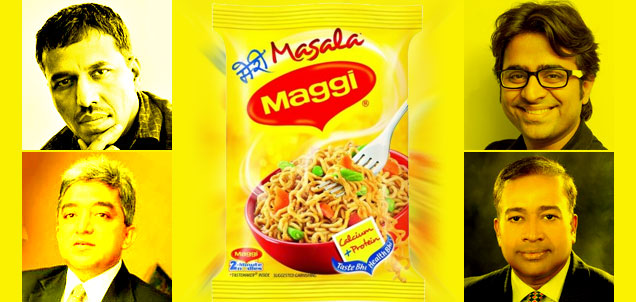
    The boycott, the pull-out of stocks and the subsequent bans have put the popular Maggi noodles in an avoidable mess. The brand has been brought under severe scrutiny for high content of lead; above the permissible limit as well as MSG; a taste enhancer. While at a press conference convened last Friday, Paul Bulcke, Global Chief Executive Nestle, defended the brand saying it is safe for consumption, regulators point out otherwise. The controversy has hit Nestle hard and communication with the consumers and others seems to have taken a backseat, causing distrust and confusion. MxMIndia spoke with senior marketing and media professionals (in alphabetical order of their last names) Manish Bhatt (Founder-Director, Scarecrow Communications), Harish Bijoor, Brand Advisor and Commentator, CEO, Harish Bijoor Consultants, Rajiv Dingra, Founder and CEO, WATConsult and Lloyd Mathias, Marketing Head, Hewlett-Packard India and requested them for some insights on what went wrong for Brand Maggi, how such a crisis ought to be handled in the age of the digital media and 24×7 news television and the role of celebrities as brand ambassadors.


    Would you say the controversy around Maggi has been badly handled in terms of the way the company has communicated with all stakeholders especially consumers?

    Manish Bhatt: No, I would not say that. I would say that this happens. There must have been something that went wrong. This is a decision between the company and the food and drug authority. It’s a very scientific matter. It’s a scientific and chemical lab kind of matter. Marketing and communication is an absolutely different thing. We can’t command authority and say whether they are right or wrong, especially with a reputed company whose products we have grown up with. Now communication is a completely different ball game and this can happen to anybody.


    Harish Bijoor: Most certainly yes. Each of the stakeholders need a different degree of communication. The regulator, the traditional media, social media and consumer communication needed to be quick, forever-on and active, more active than what was seen.


    Rajiv Dingra: The handling has been efficient but not effective. During crisis it’s not only important to clarify or state facts but it’s also important to come across empathetic and concerned for your consumers. Nestles responses have been defensive and at some point dismissive as well, which is why they have been ineffective even though they have been quick to react.


    Lloyd Mathias: I think Nestle could have been far more proactive when the issue first surfaced by directly communicating with stakeholders and clarifying issues.  Their initial silence – on both paid and unpaid media – has complicated matters and contributed to the issue spiralling out of control.


    Has the presence of a hyperactive news media – especially 24 x 7 news television and the social media make matters worse in handling crises?

    Manish Bhatt: Yes, but this can happen to the media also, some things can go wrong. Everyone wants information round the clock. Today news is not like a morning event, where the newspaper comes in the morning and you get your news. With social media, the news is not getting analysed by the right kind of people. It is done by anybody and everybody.


    Harish Bijoor: Absolutely. Today, brands cannot escape the scathe and scythe of television and social media.  If you are not agile, you need to pay the price. At times an unfair price of reputation erosion even. I do not believe Maggi deserves the kind of reputation-erosion it saw in the last week.


    Rajiv Dingra: The world has changed and the power is in consumers hands since the advent of social media. It only grows in their hands and brands need to embrace and not fight this reality.


    Lloyd Mathias: No. 24×7 news and social media is a reality and one must come to terms with it.  For corporations it means devising communication strategies and means to stay responsive to this medium. Consumers tend to air their grievances and concerns on social media and these need to be addressed effectively.


    Would you say that the social media and TV news media often becomes a mob and hence all consumer-facing organisations need to train themselves better to interact with both?

    Manish Bhatt: Today people get swayed by these things. But after sometime there will be more maturity and there will be more understanding and people won’t get affected by it. Today it becomes a mob and if any issue happens, people throng to social media, twitter, etc. It’s uninvited, but social media is at such a stage. But maybe after some time, it will mature and people will not get affected by these things. What happens on social media is really out of your hands. People also are 24×7 sitting at Ramlilamaidan, and if any issue happens they protest, it’s the same attitude on social media. It makes everybody nervous. I’ve worked with the present company, and they are pretty systematic and organised and very concerned and responsible. But what can one do in such a situation?


    Harish Bijoor: Absolutely. This is the new reality. No corporate and brand entity is perfect and infallible. You need to have the ability to manage the tender and weak-points of possibilities in this day and age.


    Rajiv Dingra: Mobs happen when you frustrate people by either not answering them or try to talk over them in a loud voice. People have busy lives no one wants to indulge in non-productive banter. But when products that concern them let them down they do speak up. Brands need to realise that consumers place their trust in them and hence when trust is broken there will be noise. Brands need to be more caring and humane in the era of social media.


    Lloyd Mathias: The viral effect of social media together with 24×7 news certainly tends to magnify issues – often unreasonably. Consumer facing organizations and indeed all businesses must devise strategies to address this. Keeping communication lines open, putting out clarifications, responding real time to social media posts, having spokespersons addressing live media – help considerably in crisis situations.


    Would you have advocated Nestle to be apologetic in their assertiveness about the safety standards as against being defensive and uncommunicative?

    Manish Bhatt: It is not right for us to comment on this. It is absolutely none of our business. As a consumer if it affects us, then yes, the sales would be affected, but I would not say that anybody is right or wrong right now. It’s like the law. You have to wait for the law to take its course now.


    Harish Bijoor: No. I do believe Nestle has handled that well. It has taken the high ground of quality and it has withdrawn packs occupying that high-ground.


    Rajiv Dingra: Maybe apologetic is too strong but certainly more empathetic and more concerned for consumer health. The war is not proving oneself right, it should be about ensuring consumer safety. A great way could have been to pause Maggi supply and redo packaging which reassured consumers and relaunch. They could also release videos on how Maggi is produced. Cadbury did that when worms were found years back. It showed commitment to consumers on ensuring they upped their safety and product standards.


    Lloyd Mathias: Being communicative always helps.  I think stating the facts clearly while highlighting safety standards the company adheres to both locally and globally would have helped.


    Do you think it is appropriate for celebrities endorsing brands to take the heat and while legally they may be protected, they must take the moral authority for the product’s attributes?

    Manish Bhatt: Whoever the celebrity may be, he/she is not a chemical engineer or anything. He can’t really check what is there in the product. Beyond a point, nobody can go into anything to that extent. You really can’t accuse them. They can’t check everything. This is the technical and moral responsibility of the company who produces it, or it is the duty of the governmental authorities to keep on checking things on time. You can’t accuse the endorsers.


    Harish Bijoor: No. Celebs are really indemnified. No celebrity can be 100% certain of everything about a brand.


    Rajiv Dingra: Consumers don’t think legally but logically. Logic is that if you endorse it and I eat it and I fall sick then I will hold you responsible.Consumers will always question celebrities on their actions because celebrities are there due to consumers love and fandom. Though it’s an opportunity for the celebrity brand too to take a higher moral ground and win more fans.


    Lloyd Mathias: I think celebrities must be selective and fair in their selection of products, as their endorsement often swings public opinion.  So, yes, they carry a moral responsibility. However, in specific instance of Maggi, I don’t think the brand ambassadors are to blame at all. Instant noodles are a relatively safe category and if the food safety authorities had cleared the product, the celebs would obviously believe them. Clearly the brand ambassadors can’t be expected to have independent labs checking on product safety beyond what food safety authorities do.


    And lastly: Do you think celebrities need to be more careful in their selection of products while signing up endorsement deals

    Manish Bhatt: They should have one more clause added in the agreement that says that they will not be responsible in such an event.


    Harish Bijoor: Yes, celebs need to be and will be more careful in the future.  And celebs will continue to take risks in the future as well. Let’s accept it. What one celeb refuses, another will pick with glee.


    Rajiv Dingra: Maggi is an iconic brand and no celebrity would be able to say no. What comes across from this incident though is that brand aside what’s the actual impact of products on consumer health is also to be considered. The future is one where the consumer is an evolving and educated being and his needs and reactions will be far more evolved than consumers of yesteryears. He will be more profound in his articulation of needs and wants and will also create more movements together due to social media. The powerful thinking and action oriented consumer is here. Brands need to be ready for him.


    Lloyd Mathias: Yes, they always need to be careful.  As I said above their endorsement is meant to swing public opinion, so they need to be very careful.


  • AAAI does a lot more than just Goafest


    The common perception, that AAAI is only about organising events like Goafest is wrong. Veteran adperson and current President MG Parameswaran tells Pradyuman Maheshwari that there is a lot more that the apex advertising body does, from redressing disputes redressal to skill development. In this freewheeling interview, he also comments on the functioning of BARC, the fact that broadcasters have more stake than ad agencies and advertisers, on IRS, IAMAI and digital agencies and advertising education. Read on, but bring in a large coffee… this interview is some 4000 words long J


    Most people know it, but for the benefit of a large number of our readers who don’t: what is role of the Advertising Agencies Association of India (AAAI/3As of I) as the apex association of ad agencies in the country?

    AAAI is for the betterment of the advertising business. One avowed mission of AAAI is to improve professional standards in the industry, so we welcome anybody who is organising training, knowledge seminars and dissemination of information and knowledge to young people in the advertising industry. Whether it is Kyoorius, Afaqs, Exchange4media, Kulzy, MxM, Campaign India or IAA, all of them are welcome to provide affordable, valuable training for youngsters in advertising today. I’d say even older people in the industry need inputs; we don’t know everything.


    AAAI was also set up to look at issues cropping up between advertisers and media owners, and resolve them. Do you think that the perception of AAAI, as the organiser of Goafest, has become bigger than the rest of its functions?

    We do a lot of work which isn’t in the public domain, for obvious reasons — client agency disputes, issues agencies are having with the media etc. Unfortunately, what comes into the public domain at regular intervals is Goafest, which is organised by us. A lot of youngsters in advertising believe our job is to only organise Goafest, which of course isn’t true. We have a managing committee that meets every month for at least three or four hours, and Goafest takes up less than 10% of our time. About 80-90 per cent of the time is spent on other issues, a number of which also get tabled.


    In terms of revenue, how much does Goafest contribute?

    It’s significant.


    Is it more than 50%?

    Yes, about that much.


    So since it’s a significant contribution to the AAAI coffers, it makes sense for you to host Goafest…

    Yes, it gives us some surplus which we can then plough back into setting up a training centre, like we’ve done. The other thing is that it’s held in Goa, not in Mumbai, and people can fly in from all over the country to be here. Third, we do spend a lot of money to get good speakers, senior clients and to bring industries together. We’ve had to pay for some speakers, and some have requested that we contribute to a charity of their choice. We’ve done all that.


    Do you think it helps to have a single, private organisation hosting an event? Internationally, we’ve seen that something like a Cannes is more successful than what industry associations can put together…

    There are pros and cons. The private organization can charge whatever it wants to, and may be arbitrary about how much it charges people and how many free passes it distributes. As an industry body, we are audited. We have a 22-member managing committee that asks questions! Any event organised by an industry body has to go through a process of approvals, so we may not be agile when taking decisions, but we are transparent and fair. Second, the surplus we generate goes into the advertising association kitty and will get re-deployed into things for the industry.


    Since Goafest is such a large event, do you think–

    Are you going to talk only about Goafest?


    No, I’ll move to other things. But then it’s so big and prominent…

    It’s not. But it’s good if people think so…


    Back to my question. Since Goafest has become such a large event and the 3As of I makes good monies on it, do you think the planning must start much earlier?

    Last year, we started planning in October, which was early. I think it paid off and Nakul Chopra put his shoulder to the wheel to get the momentum going. In fact, he had finalised on the event agency in December. Obviously, you can plan even earlier. But having done this for many years, there will always be some last-minute cancellations and requests, so we have to juggle that.


    There are people whose calendars are planned well in advance.

    We’ve realised that sending a request in August for an event in April gets you no response. The right time to send a request probably is early December. Before people go off on their Christmas vacations. We’ve realised that sending requests in March is very late. Sending the requests in October is too early.


    All of you’ll have day jobs and their pressures are tremendous. Everybody has international networks to answer to. Hence, the thing of whether there is a need for appointing someone within your team or outside of it to look at Goafest affairs?

    I think there is a merit in bringing someone on board. Hopefully, we’ve got a very good event company on board this year. Hopefully, they’ll be able to add value next year as we go forward.


    You mentioned various educational activities of 3AS of I. I remember you conducted a very successful copywriting course. What are the other activities AAAI does?

    AAAI has four or five broad agendas. One is handling client agency issues, particularly to do with clients who don’t pay and run off to other agencies. A lot of our time goes in managing these disputes. We’re an industry body and 85 to 90 per cent of all advertising is through our members. So if a client parts ways with one agency and goes to another, we can put pressure to get the client to come to the table and talk. We spend a lot of time doing that.


    The other issue is between media agencies and print and TV organisations. We set up a good system to manage disputes between television channels and media agencies. Every month we have a committee meeting with the IBF. If the client hasn’t paid, they bring the client to the meeting. It has been working like clockwork. In case of print, we’re talking to the INS for setting up something like that.


    A lot of business now goes directly from clients. Even media companies deal with clients directly too.

    You’d be surprised! At least in the last 2, 3, 4 years where I’ve been seeing stuff… whichever agency brings a dispute to the 3S of I, we’re able to find a solution. Even big issues are being sorted out.


    In terms of media companies where they try to bypass the media agency… they go to get a client directly… that’s where a lot of disputes also exist. Right?

    Client-agency issue is one. The other issue is between our media agencies and the various media organizations which is print & TV. Actually, we’ve set up a pretty good system to manage disputes between television channels & media agencies. So every month we have a committee meeting with IBF. If the client hasn’t paid, they bring the client to the meeting. It has been working like clockwork. In case of INS, again we’re in dialogue with them for setting up something like that.


    INS is obviously a well oiled machinery.

    Yes, but even with them, there is a talk that we need to setup some process in place to handle wrong reporting, incorrect reporting etc. INS, of course, has a long history behind it. So, the issues with INS are different in nature. But, with IBF, we’ve covered a lot of ground. One is client-agency issues and 2nd is agency media issues. A lot of our time & effort goes in handling these things. It may look small to you… but these are money issues.


    That’s why people are members of 3S of I.

    They come to this body for that and that’s the role we have to play. In the last 3 years… AAAIis a body that’s involved with media research and in the last 2,3 years, we’re very heavily involved with BARC. Members of AAAIon the BARC board are adding value to BARC. The Comm chairman again a AAAInominee. Hopefully, BARC has started and it will be…


    Are you happy with the way BARC is performing?

    Yes, I think so.


    Do you think the fact that BARC is still 40% not 60% owned by broadcasters is a little flawed?

    Look at the economics of it. For every Rs 100 spent in media, over 85 goes to broadcasters. And if you look at the old rating system, more than 90% of the revenue from the old rating system went from broadcasters. In a sense, broadcasters having 60% equity is lower than what they actually pay, in terms of data. They pay for about 85 to 90% of the cost of data. It was set up as a joint industry body between IBF, ISA  and AAAI and I think we it worked out what I feel is a fair shareholding agreement which is 60-20-20 though the technical committee chairperson is from 3As of I.


    Will it always be so?

    As of now it is. The shareholders will take a call when the current chair’s term expires. I think ISA and AAAI would obviously want an AAAI nominee. But it’s up to the Board to decide finally who it will be.


    But conceptually, for the future health of the process, is it fair to let broadcasters have the upper hand?

    The board composition in 60-20-20 and any major decisions will have to go to the Board. In the Board, you need a 76% vote to pass anything. I think it’s a nice balance of power.


    In South Africa or some place there’s a small fee levied on all advertising spends that should go for research or measurement. Do you think that’s a better way to do it?

    Each country has it’s own system of managing it. There’s nothing like a perfect system. So, with BARC we’ve evolved a particular way of managing how IBF members, media agencies will pay. This system will get iterated because currently, we’re at 15,000 meters… it will go to 20,000… 25,000 in the next few months. It’s already at 17k I think, now. I think at the end of the day, all of us have been somewhat involved. I’ve only been involved for the last one year. But, people like Uday Shankar, Puneet Goenka, Shashi Sinha and Vikram Sakhuja before that have produced a great product. It’s a world class product. We keep discussing that can associations create products… do you need quick decision-making? But, in this case you’ll see actually three associations actively involved. Bharat Patel has been involved right through. It’s admirable they’ve created a world class product! Will there be some niggling problems? There will be. but, we’re committed we’ll ensure these problems will be solved.


    When the BARC report was out, everything appeared to be topsy turvy. For instance, Zee had been at No. 3 for long and suddenly was at No. 4 even though at primetime it was still in the Top 3. The reaction to it was dramatically different from what we saw last year in the IRS…

    I don’t think it’s fair to compare IRS with BARC. Maybe in the case of BARC, we had the power of hindsight. As a result, we put some precautions in place which helped us to avoid the pitfalls. Having said that, it’s still early days for BARC, and I believe the IRS will get it together. Because we need a good readership measurement system; 45% of advertising spends depend on old data.


    With growth of print going down, more than ever before, the industry needs a good readership study.

    Absolutely! Which is probably the reason we need to start putting it on the top of agenda soon.


    If a media agency comes to you and says ‘How do I take the right decision to advertise in print?’, will the AAAI do anything about it?”

    As of now, no media agency has approached us. If they do, we’ll discuss it and we’ll give them an answer. We won’t do anything proactively.


    What about digital? How many members of AAAI’s managing committee are active on digital?

    All the members have digital arms and the AAAI has an agreement with Internet and Mobile Association of India, and meets with them every quarter to discuss disputes. Unfortunately, the IAMAI doesn’t have full control over some of the big digital players. So we’ve been trying to persuade them that it’s in their interest to join the IAMAI and get into a dialogue with us. In a country like India, even the biggest of players will need an association [to support them].


    When I look at the managing committee of AAAI, you have agencies who have digital arms, but, there are no specialized digital folk there…

    This is why this year we’re in the business of setting up digital forums. One forum is the outdoor forum where we will get outdoor arms of all our key agencies to sit together and discuss issues. The next on the cards will be a digital forum where, to start with, we will have the digital arms of all the key agencies sit in. If you look at it, several large digital agencies today are part of a group. It could be IPG… they’re all part of the group. They’ll all start coming, attending and contributing.


    For instance a Leo Bennett or a Publicis have digital arms, but the digital guys don’t come and attend the meetings.

    Exactly, which is why the thought is you set up a digital forum, create a forum which meets once in two months to start with; purely digital people. You set up a forum of purely outdoor people who sit & discuss issues concerning outdoor agencies. So, only issues concerning digital agencies. What are the issues?


    Can digital outdoor agencies become a part of AAAI?

    We have three categories of members: Full service agencies, Creative agencies and Media agencies.

    Even creating these 3 categories took us a lot of time. For a lot of time, we were not sure who to let in & who not to.


    Is there a resistance, like the Rotary Club had towards women until the 1980s?

    The reason is simple. If you become a member of AAAI, a media member… you automatically get credit from IBF, you automatically start being eligible for some credit from IBF. Which is why, we have to be careful to not let in someone who will us the AAAI to run off big bills and tomorrow we’ll be held responsible.


    No, but for instance, I’m an advertising agency in digital.. can I become a member?

    You can become a creative member. Nothing stopping you from becoming a creative agency member.


    In the digital space, everyone is full-service

    That’s the thing. If we get an application from a pure digital agency, today we can admit them as a creative agency. We can’t admit them as a full-service agency because they won’t be able to get credit from IBF or IRS etc. etc. So, it’s a little complicated. I think, in the not-too-distant future, we’ll have to expand the member category and we’ll have to look at that. Maybe, in a year or so.


    The media landscape is changing rapidly…

    The fact is that so many creative agencies are being acquired as we speak. They’re all becoming a part of GroupM, IPG and Publicis.


    Given the fact that mobile has become the biggest media, it’s unfortunate IAMAI is unable to become as big as the IBF.

    That’s the problem. If IAMAI can bring all the digital, media, mobile vehicles under one roof, it’ll solve our problem.


    Like, for instance, as a digital publication, MxM isn’t a member. The fees are so high! Why should I pay Rs. 25,000 to IMAI where for my magazine activity I can become a member at just Rs 5,000-odd a year?

    But then tomorrow, if IAMAI tells you that you become a member and I’ll ensure agency money will come to you in 90 days or 120 days… won’t you? Why did IBF happen? There was a benefit for everyone concerned. That television channels bill correctly, on time… which helps agencies and as a flip agencies therefore tell their clients to pay in a particular time. It helps the whole ecosystem. You bill on time, bill accurately, you get paid on time. And everyone has to start doing that. Today, we are not.


    Obviously, I shouldn’t advise you what you should be doing… but, isn’t there a need for more aggression for making AAAI more inclusive and all of that?


    We are planning to do three or four things. One is will collaborate with the Subhash Ghoshal Foundation to have the Subhash Ghoshal memorial lecture every year. The other is, we’ll use the facility in our new office to start offering specific training useful for industries. For example, in June, we’ll conduct a one-day course, using international experts, in negotiation skills. We’re in talks with Rajan Nair to scale up his copywriting course. AAAI used to have a copywriting course run by Jameel Gulrays, Larry Grant and Neville Gomes. We wanted to convert it to an online course. The advantage is, you can be anywhere in India and participate in this course. This should, hopefully, help us create other online courses which we might seed-fund through scholarships.


    We want to create an ecosystem to bring in more talent to the industry. The advertising agency business in India is a 100 years old, and a lot of Indian industries which have come up later (like radio and TV), have borrowed much from it. The CEOs of most television and radio channels have an advertising background. Today, lot of new talent in Bollywood does too. Advertising is a great industry which grooms talent and, as an industry body, we will try to do whatever we can, to further that.


    When it comes to accepting agencies as members, we have certain criteria because we often take up for them in a dispute with clients. So we need to make sure the agency has a clean record. We insist on a lot of paperwork — balance sheets for three years, profit and loss statements, income tax returns, letters from clients and media etc. Unlike an Ad Club, which is an association of professionals and doesn’t mediate in industry-related disputes.


    Given that a lot of digital agencies are new, they can’t become AAAI members for a year?

    No agency can become our member in Year 1. We ask for 3 years balance sheet and profit & loss. We can let you in as a provisional member, but, we’ll watch you and make you a full member. We have to be very careful and sure about the person’s financial standings.


    I was there at an event two years back where some small agencies suggested an association or grouping of smaller ad agencies. It emerged from there that there is a sentiment among small agencies that AAAI is an agency for the big ‘agencywallahs’

    I think it’s a good point. We have small agency people. There is Vinod Nair. Every year we do one or two small agency meetings outside Mumbai because this year, we’ve done a meeting in Delhi. We’ll try and do meetings in Bengaluru. We’ll definitely do meetings in Delhi. I think we need toi make this more collective.


    You have such a terrific Ad Club in Chennai!

    Small agencies one day have to become big. Small agencies will only be able to solve small problems. If they want to solve big problems, they have to come and sit with them. It’ open! We write to our members every month asking them if they have any problem with any broadcast bill, any INS member. We’ll go to battle for you. Right now, we’re helping someone from Chennai who’s client has been playing truant, including confidentially talking to the VC firm which is funding the client. Sometimes, there are allegations that this is a big boys club! It’s not! There are 24 people.


    Isn’t there need to be more inclusive, for some amount of spreading of the message. Because, increasingly advertising is growing and new agencies are surfacing throughout the country. AAAI, it appears, doesn’t represent more 25% of ad agencies in the country?

    But our throughput is close to 80-85% of the total advertising spends. The largest amount spent is through AAAI agencies.


    There are a lot of clients and a lot of publications. INS and IBF members today are approaching clients directly. Given the economic conditions over the last few years, many agencies find they haven’t been paid. Do you talk to an ISA or clients to advise them to do business only through agencies, or is that not really your problem?

    Our stand is clear. We cannot stop any media owner from approaching a client. Our only directive to media owners is, please tell the client to route the business through the media agency. It’ll help them both, and we can ensure the money is paid up. But there are complexities in the media business, like barters which cause their own problems. It’s then left to individual media agencies to handle it with the individual clients.


    In case of sponsorships, the deals are done directly…That’s difficult to manage, right? It’s all directly done! Which is why, today as we’re seeing, the industry is getting more organized. Television is, print is, digital is a bit disparate, outdoor is a bit disparate, we expect outdoor to get organised in the next five years. We expect digital to get organised in the next five years. Hopefully, all these associations will become strong and therefore we’ll have a clear association-association understanding.


    Do you think five years is a decent window?

    I’d like it to happen in two years. Five years is a bit too long.


    What else do you plan to do with AAAI during your presidentship?

    I’d definitely like to give a thrust to skill development, which is why I’m trying to drive this negotiation skill and copywriting workshops. These are things I think the association should do on a regular basis.


    There’s not much research done in advertising. You’ve done a doctorate in marketing. Is there any encouragement from agencies to educational institutes on this… whether it’s the IIMs or or Symbiosis…

    NMIMS had started a two-year course which used the surplus from the AdAsia 1982 to fund that. But, they’ve collapsed that into their regular MBA programme. We haven’t done anything until now. Recently, someone sent me a proposal for a PhD on doing a comparison across multimedia, effective as a multimedia channel and they said, “Can AAAI partly fund it?” We haven’t looked at it, yet. Those are the kind of things we may… for example, create a best research award to people who do research in the area of advertising.


    Given the fact that advertising has been there for a long time… education in the field hasn’t really picked up very much across the country. There are various advertising schools and programmess but quality is very suspect.

    That’s why we’re trying this online experiment. If this succeeds, we’d probably like to do this more and more & you may be doing MBA from whichever business school in India, but you can go online and do this course on strategic planning, creative judgment or on media planning.


    Online is fine, but nothing to beat classroom teaching!

    Nothing to beat classroom, but, where is the faculty?


    From your own agency…

    Agency people are working very hard. The clients won’t let you go into such things. Online is one solution, that may not be the only one, but it’s a very powerful solution. We’re trying something. Let us see how it goes!


    One last question: when you move on from the AAAI President’s job, what would you like to be remembered as having achieved?

    That I gave a thrust to skill development. When I was in Ad Club, we had 10 programmes on Ideation, Strategic Planning. Marketing Research and other topics. I’d like to do that if possible in AAAI, through a mixed online, offline approach.


    A shorter version of this interview appeared in dna of brands dated June 1, 2015
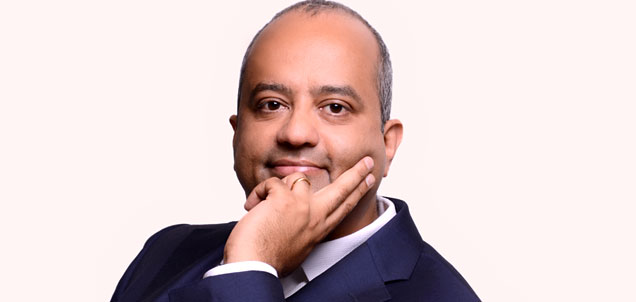
     

  • Kalpana Sharma on Himmat’s defiance of press censorship in the Emergency

    Senior journalist Kalpana Sharma worked with Himmat magazine when the Emergency was declared. She took charge as Editor in the year 1976 until 1981 when the magazine ceased operations. Since then she has worked with The Indian Express, The Times of India and The Hindu and is currently Consulting Editor with Economic and Political Weekly. In an emailed interview with Dyanne Coelho, Sharma recalls the Dark Days and how when freedom of the press is denied, it is the poor who suffer the most 

     

    Q: Give us some insight about the plight of the press at the time. What was it like working under the pressure

    A:  On June 26, 1975, press censorship was imposed.  No one had a clear idea what that actually meant including those given the task.  In Mumbai, in Mantralaya, a room was set up for the Special Press Adviser (the official name for the Censor).  Around 15 people from the department of publicity of the Government of Maharashtra were assigned to assist him.  In the intial weeks, apart from daily newspapers that were compelled to follow the “guidelines” the government had issued, many smaller publications remained outside the net.  I worked with one such publication, Himmat, an English language weekly edited by Rajmohan Gandhi.  We read the guidelines and decided that we would not submit to pre-censorship.  If the government thought we had violated one of these guidelines, they could move against us.  Of course, this was risky, and we experienced the challenges right through the 20 months of the emergency.  But our defiance showed us that it was possible to challenge the censorship regime if you were prepared to take risks.  I might add that this was easier for smaller publications like ours than the big newspapers.  Even so, some like the Indian Express did resist, thanks to their owner Ramnath Goenka.


    Q: Would you share some incidents, memories, anecdotes during the period of Emergency, particularly in your capacity as a journalist.

    A:  There are too many to recount.  As I said, Himmat had decided not to submit to censorship.  But within a few weeks of the declaration of emergency, we were served a notice that we had printed “prejudicial” material and would have to submit to pre-censorship.  This was a report about a meeting on Gandhi Jayanti in Delhi at Raj Ghat where Acharya J. B. Kripalani spoke.  Those sitting on the stage with him were arrested by the police which disrupted the meeting.  For carrying that news, we had apparently violated the so-called “guidelines”.

    Many more such incidents took place, including a demand that we deposit Rs 20,000 with the Commissioner of Police or would be denied the right to continue printing.  Our printing press was also served a notice not to print Himmat.  We went through some really challenging times.  But we did not miss a single issue.  This was only possible because of the committed group of journalists working with the publication.

    What it taught me, and all of us, above all is that when freedom of the press is denied, it is the poor who suffer the most.  The government can then do what it likes, as it did during the emergency, and in the absence of the check that a free press provides, it can literally get away with murder. After the emergency, we heard about the terrible violations of human rights, the mass sterilisation campaign, the slum demolitions, the torture in jails, fake encounters etc.  Not a word of this could be reported during the emergency.


    Q: Do you think we’ve evolved since then, in terms of ensuring the freedom of the press is protected. Where do we stand now in your opinion?

    A:  Legally, it will be difficult to impose that kind of emergency and to bring in press censorship.  But I’m not sure we really value the freedom we have.  If we did, we would make sure that the untold and unrecorded stories, of the people who are marginalised, virtually invisible, find space.  But where do we see that?  We have another form of self-censorship in the media today where the nexus between big business and politics has ensured that certain stories never get told.  And is anyone really defying or resisting that?  Fortunately, the internet is providing some kind of democratic space for some of this information to come forth.  But for these stories to see the light of day, we need many more journalists committed to seek out the truth and report it.


    Q: In your opinion do we as a country have a strong enough leadership today to ensure history doesn’t repeat itself?

    A:  My short answer is No.  I don’t think any of our present lot of politicians, including those who suffered during the emergency, feel passionately enough about the real meaning of the freedoms guaranteed under a democracy.  These freedoms are not words on paper; they have to be seen in the actions and decisions made by those who govern.  Yet, no sooner than a group gets power, they are willing to resort to any measure to hold on to it.  How different is that from what Mrs Gandhi did 40 years ago?


  • How Ashok Mahadevan innovated in his protest against the Emergency


    Forty years back, veteran journalist and former Editor of the Indian edition of Reader’s Digest was incensed with the Emergency and what it meant for free India. Then Deputy Editor of the Digest, Mahadevan was inspired by an ad in a Sri Lankan newspaper and inserted in The Times of India, which has now become one of the most enduring examples of how the country fought back the draconian government led by an ill-advised Prime Minister. On the eve of the forty years of that Dark Day, Dyanne Coelho interacted with Ashok Mahadevan who responded to her questions and also asked her to pick up some accounts from an article he wrote in the Reader’s Digest in 2010.


    The Q&A:

    What was the situation like especially for journalists during the days of the Emergency?
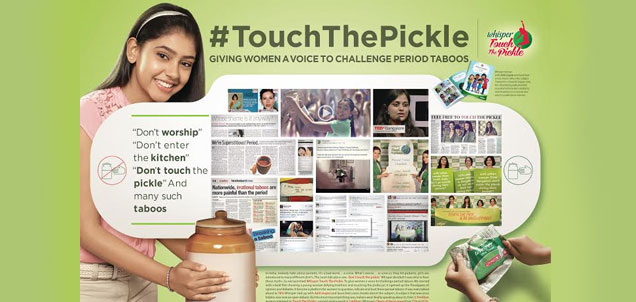

    For more than a year, the Prime Minister had been besieged by a nationwide movement against her led by her father’s old friend, the venerable Gandhian Jayaprakash Narayan (JP). Now, as she had done so often, Mrs Gandhi hit back ruthlessly. On June 25, she declared a state of “Emergency.” The press was muzzled, civil rights were abolished and tens of thousands of political activists, including JP, were arrested. In effect, India became a dictatorship. These momentous events—40 years ago this month—also enabled me to prank my way into becoming a small footnote in the history books. When I learnt the news on the morning of the 26th, I was incensed. India no longer a free country? As acitizen, even more as a journalist, it was intolerable. I had to do something. But what? Fear was spreading like an infection. When I asked a friend, who’d just flown in from the US, how it felt coming to a dictatorship, he told me to shush. People were too scared to jump queues at bus stops! I wasn’t exempt either; some of my politically active friends had been incarcerated and although I visited them in prison, I had no desire to join them there


    Was the idea of the obituary you published your idea? Tell us something about it.

    I remembered an item available for publication in Reader’s Digest—I was then this magazine’s deputy editor, based in Mumbai— about the “death” of democracy. It had originally appeared in a Sri Lankan paper when an emergency had been declared in that country. The ingenious item dealt with the demise of “D.E.M. O’Cracy,” who left behind several relatives, including a son named L.I. Bertie. Why not put this item in the obituary column of the Times of India? I copied it down and made my way to the office of the Times nearby. The clerk in the classified advertisements department there told me he couldn’t accept it because it was too long. I began arguing with him; then, fearful that he might suddenly realise what I was up to, I shortened it. “Are you Bertie?” the clerk asked me. It took few moments to understand what he’d meant. “Oh, yes,” I bluffed. The obituary advertisement was accepted. I paid the small fee and left. Would the item appear? I spent an anxious night, and made sure I was the first in the family to grab the Times the next morning. And there it was! O’Cracy, D.E.M., beloved husband of T. Ruth, loving father of L.I. Bertie, brother of Faith, Hope and Justicia, died on June 26. I was overjoyed. But for it to have any impact, a lot of people—and not just those who read the obituary columns regularly—had to see the item. So I called up a friend in the Times and, disguising my voice, asked him if he’d read the day’s obituary column. “Who’s this?” he asked suspiciously. “Never mind,” I said. “Take a look at it.” He began grumbling, but obeyed, and I heard his voice rising in excitement as he read the ad aloud. “Make sure you tell everyone about it,” I said, hanging up. Word about my ad spread fast. Those who were against the Emergency loved it. Many people sent clips of it to everyone they knew. Among them, I later learnt, was the advertising director of the Times of India! (After the Emergency, he told me so himself.) The ad was even reproduced in foreign newspapers.


    Were you scared of a backlash from the government following its publication? Is that why you withheld your identity and changed your physical appearance?

    The police were called in to find out who had placed the ad. But they got nowhere. This may have been partly because I took some precautions. Shortly after the ad appeared, my wife Jessica and I were scheduled to appear in a Doordarshan programme featuring couples. Since there was a chance that the Times clerk would watch the show— Doordarshan was the only TV channel in those days—I shaved off my beard to look less like “Bertie.” (Several people grew beards to protest the Emergency; I was the only one to have removed his!) Naturally, there were all kinds of rumours about who’d placed the ad. In fact, one Digest reader who dropped into our office even told me a lurid story about how the perpetrator had been caught and tortured by the police! Of course, for all the publicity the ad received, it did not have the slightest effect on the Emergency. That was lifted only 19 months later when Mrs Gandhi, for reasons scholars still speculate about, announced that Parliament was to be dissolved and elections held. To everyone’s astonishment, her party was routed—she even lost her own seat—and the Janata Party formed India’s first non-Congress central government in mid-1977.


    The gutsy obituary drew attention to the situation in India even in the foreign media. What was the reaction when you finally revealed yourself as the person who published it?

    Apart from my friends who congratulated me for publishing the ad–I outed myself in the magazine Debonair, then edited by the late Vinod Mehta–the Times of India clerk who’d accepted the ad called me to say that he’d been punished by the Times for accepting it. Since I knew Mr Thirumalai, the then ad director of the TOI, I complained to him about penalising the clerk. Thirumalai angrily denied that any action had been taken against the clerk and revealed that that he’d been personally delighted by the ad (see article) etc. He then called the clerk and gave him a firing in my presence for lying to me!


    Do you think journalism today has evolved to an extent that we can be protected from such happenings in the future?

    I wish I could foretell the future and reassure you that journalism today has evolved enough to ensure that another Emergency is not possible. However, I think that, thanks to TV, and most importantly, the social media, I think there will be much more opposition to any attempt to impose dictatorship in India.


    In your opinion is the government today strong enough to prevent history from repeating itself?

    Power tends to corrupt, so the stronger a government, the more likely it is to rule dictatorially. All citizens, and especially journalists, should always be on guard against strong governments and fight dictatorial rule (non-violently) if it is imposed.


    Ashok Mahadevan photograph courtesy Reader’s Digest


  • How Whisper sent a loud message via ‘Touch the Pickle’


    Whisper’s curiously-titled but hard-hitting campaign was awarded the Grand Prix in the newly-created Glass Lion category at Cannes Lions this year. The awards went to creative agency BBDO India. Spokespersons from the brand’s parent company, Procter & Gamble, responded to questions from Dyanne Coelho on why the movement, which aims to eradicate the taboos and age-old myths around menstruation, received an overwhelming response both at the international festival as well as back in India.


    How did the idea behind Whisper’s ‘Touch the Pickle’ campaign come about?

    Whisper’s brand purpose is to advocate for, and empower, women, to reach their fullest potential. The Touch the Pickle movement was conceived when we realised that a majority of Indian women feel restricted from achieving their dreams because of irrational taboos around menstruation. We believe women should not feel restricted on their period days, and an overwhelming number of women across the country responded to our campaign with their own stories of breaking taboos. A survey by market research firm Ipsos on understanding these taboos revealed that among urban women, 59 per cent still don’t touch pickle, and more than half prefer not to venture out of their homes, during their periods. In light of these findings, Whisper embarked upon the journey to launch a nationwide movement — across not just TV but also PR and digital. ‘Touch the Pickle’ was one of the most irrational taboos and was an apt metaphor for all the other irrational taboos that hold women back.


    Many argue that these so-called taboos have been passed down over years because they are healthy practices women should adhere to, during menstruation. And that it is only now that these practices are being labelled taboos. How would you respond to that?

    There are two kinds of taboos that Indian women follow. Irrational taboos, like not washing their hair, not touching the pickle, sleeping in areas away from the house, have no relevance to menstruation today and are age-old myths imposed by families that considered periods as impure. The other set, like not wearing whites, not leaving the house and not exercising, started at a time when good sanitary protection did not exist and women had to use cloth, rags or even sand or ash during periods. Today, when there is superior technology in terms of sanitary pads, women shouldn’t worry about following such unreasonable practices. About 99 per cent of gynaecologists believe sanitary napkins are the best form of protection during menstruation as per a national study by the Feminine and Infant Hygiene Association and Ipsos. In the 21st century, when there is a solution, there is no need for women to restrict themselves.


    Was the impact to the campaign different in Tier II and III cities from the metros?

    An eyeopener for us during the research conducted by Ipsos is that even in urban towns, most of these taboos are still observed. For example, 65 per cent of women from urban India perceive periods as an obstacle in achieving their full potential and some 54 per cent are not allowed to water plants at this time. Our focus has been to drive awareness of the irrelevance of these taboos and encourage consumers to help change the social behaviour and gender inequality that restricts them. We’ve done this in different ways via TV, PR and digital, but we’ve also focused on educating young women and their communities on menstrual hygiene. We’ve also pledged to educate 15 million girls by 2017 on menstrual hygiene, and saw this impact in the sudden surge of conversations, discussions and debates women across India were having around menstruation, where many of them were questioning the myths that were holding them back.


    The campaign received positive publicity elsewhere in the world, more than in India. What do you think the reason for that is?

    Touch the Pickle was an integrated movement not restricted only to television. Women Achievers like Aditi Gupta (founder of Menstrupedia), Ishita Malviya (India’s first female surfer), Nungshi and Tashi (the first twins to scale Mt Everest), anthropologist Suneela Garg and film personalities like Parineeti Chopra, Kalki Koechlin and Shradha Kapoor, all came together to support this movement to eradicate taboos. The winds of change are blowing through India and the world, and insights regarding taboos around menstruation resonated with global audiences because taboos related to periods are not an Indian phenomenon only.


    There are some who believe that while this campaign had a positive impact on many in India, it also paints a socially-regressive view of our society, when that is not the case.

    Although 65 per cent of Indian urban women observed these taboos, 82 per cent wanted to break free of them. Interestingly observing irrational taboos is not just an Indian thing. Across the world, women hide their sanitary pads. You will find it heartening to know that in the last year, a surge of Indian women have expressed how normal menstruation is, and how important it is to eradicate these taboos — whether it is the Jamia Millia university [campaign], the Rupi Kaur Instagram incident or even the Menstrupedia comic (which we partnered with) which educates women on menstruation. This means Indian women are empowered and unstoppable in leading this movement.


    Has the campaign resulted in a growth in sales for Whisper? If so, by how much?

    Touch the Pickle was an integrated movement across touchpoints, including PR, TV and digital, where the central idea was the consumers’ need to be empowered and lead this change. Consumers rewarded us by choosing Whisper, and we have seen our business grow in the last year.


    After the overwhelming response it got, are you thinking of running the campaign again?

    We are thankful to Cannes Lions International Festival of Creativity and Lean In for instituting this much-deserved award category, the Glass Lion, and awarding us a Grand Prix. We have our partner agencies BBDO, Madison PR, Mediacom, Quasar and Encompass to thank. This is an important movement and we’ll continue to stand for empowering women.


  • Thinking Big with The Social Street


    If you drive around the arteries of Mumbai, the billboards – some fifty of them – tell you the story. Pratap Bose, former Chief Operating Officer of the DDB Mudra group, has moved to the fast lane. And with a bang. Last Monday, Bose announced that he along with outdoor and experiential specialist Mandeep Malhotra, Arjun Reddy an entrepreneur who owns and runs a diversified portfolio of businesses, and Pradeep Uppalapati, who was Senior Director and India Lead for Global Corporate Development Team at Accenture have teamed up to launch ‘The Social Street’, billed as India’s maiden advertising conglomerate. Positioned as a digitally driven agency, traditional creative advertising, digital and social media will be added on to the bouquet of offerings by the end of the financial year along with more offices across the country.  In an interview with Pradyuman Maheshwari and Dyanne Coelho, Bose that he believes starting big, with multiple types of businesses, several offices and many big-ticket clients, all within a few months.


    What’s the journey been like from the time you left DDB Mudra. And when did you start thinking about this venture?

    To be honest, when I left at the end of April last year, the natural tendency was to reach out to headhunters, and find out what the offerings and options were.


    So you had nothing in hand when you left?

    No. I had no inkling that I was going to start my own agency. That’s a thing you do when you’re still working. The thought was there, but honestly when I left, the first thing was that headhunters started calling within the first 10 days [with offers].


    And you were getting offers until as late as December 2014?

    Yes, in fact, I was getting calls until I announced the venture. I was flying to Malaysia, Hong Kong, Singapore, New York for meetings. But on one flight back from Singapore, after an interview that went very well and the company pretty much confirmed me for a regional position, I asked myself: do I really want to do the same thing for another day? You live month by month, not even quarter by quarter. It’s all about the numbers at the end of the day. I sort of snapped and decided that I don’t want to do this again. I’ve done it for 24-odd years, and if there is a better option, then I’ll look at it. I got a few client calls as well which were interesting, but at the end of the day it’s one client, a few brands, and it didn’t excite me enough.


    So when did you actually think of setting Social Street?

    Mandeep and I went to Cannes in June, and on one drunken afternoon we went to that love bridge and proclaimed our undying love for each other and the business. When we came back, we said it’s probably a good idea that we should start something of our own. But at that point of time, we had no inkling of how we were going to do it.


    You went to Cannes on your own?

    Yeah, I have been going there for some years. All the global heads and CEOs were there and I had a lot of meetings and interviews lined up. That was two months after I’d left, so the time was also right. But around then my mother was detected with cancer. That was in July. I brought her to Mumbai and was looking after her, but then she passed away a day before my birthday. That shattered me and any thoughts I had of starting anything on my own, fell by the wayside. At the end of October, given that my gardening leave and contract with Mudra ends in December and I need to move now. That’s when I sort of started putting things together. I envisaged what sort of agency I wanted and met every probable Venture Capital firm in the country, because I needed a certain amount of money to start up.


    I heard from VCs that you were asking for loads of money…

    Yes I was asking for a lot of money because I’m not the type of person who’s going to start with 10 people, build an agency, win your first client, then grow with it and add people. I think if you’re really serious, start big and take the risk. If you’re sure of your business model and you know your numbers, then there’s no point in starting small. Also, because of the kind of businesses we are in and the clients we chase want scale. Large clients want scale in terms of ideas and capabilities. The fact that we’re opening up three offices simultaneously, which not many people do, and then scaling up to 140-150 people within a year or less, needs a considerable amount of funding. I spent a lot of time trying to work out the business model. You can have any number of great launches, but at the end of the day, you have to have a business that works. I spent a lot of time looking at areas that are high-growth margin businesses, or those that have the potential to grow for the next 10 years in the space where we are.


    Let me give you an example, in the rural space. I don’t think there are more than four rural agencies in this country. It’s virgin territory, with no competition. That’s the space to be in, because that is the future. If you’ve got a great offering, I think there’s a lot of money to be made, especially with not too much competition. So it makes it easy to grow. Why will I not be excited about digital? There’s no finite definition of what is digital, and technologies are changing so fast. So I will not start and build a digital agency; it doesn’t make sense. I will go and acquire somebody.


    And finally you got somebody who is not a typical VC…

    Yes, so I decided two months after meeting every VC, that I was just making them more knowledgeable about my business. VCs come with a huge chip on the shoulder saying ‘since I’m giving you the money, I’m your Lord and master’, and they contribute very little to the business. I decided that VCs are not the route I want to take. Therefore, I went around looking for like-minded individuals who trusted and believed in the business that I was in, and were prepared to stay with me for the long term. I ended up with a short list of about three or four people who were happy to fund me.


    So how active are Pradeep and Arjun going to be in the business?

    So Pradeep has worked for 11 years with Accenture. I think he spent eight years in Australia, and three in India. Obviously he’s the CFO/analytics/strategic investor, and Arjun is the part of a larger conglomerate. He owns hotels and varied businesses, and is on the retail side of the business.


    Have you also put in any money?

    Yes.


    Is this a long-term investment or will your investor-partners and yourself sell out eventually?

    No I don’t think you start a business with the idea that you’re going to sell out. If someone is starting a business with the idea that he is going to sell out, then I don’t think he should be starting a business in the first place. Does that thought occur to you? I’d be lying if I said no. But I think right now that’s far from anyone’s thought.


    So this happened April-end, May first week. How many people have joined you from DDB Mudra?

    I’ve lost count. But I think the media is making too much of an issue of it.


    Come on, there is an issue.

    There isn’t (laughs).


    Okay, but what you’ve started is like a MudraMax, right?

    I think people make that comparison. But I’ve already been there and done MudraMax. I don’t want to create MudraMax 2; that’s not my intention.


    Things like content, digital and social is pretty big for us and will become very big, but was never part of MudraMax, nor was branded content or entertainment, sports marketing etc. We’re looking at the businesses very differently and, unfortunately, not very many people are able to actually see a USP. So we’re in this space, and I’ve been in this business long enough, and the one guy who really taught me what the real power of integration is with clients was Ranjan Kapur.


    Did you go to him for funding, because he is also a VC in his personal capacity?

    No. Ranjan has always been my boss and mentor. I have the most immense respect for him as an individual, so I did talk to him in his personal capacity.


    Given that you are an outdoor-experiential business guru, isn’t that’s going to be your mainstay?

    No, it won’t. We have all the operations right. We have all of the skillsets. So we into out-of-home, rural, events, promotions, trade marketing, retail, shopper, youth marketing, media, branded content etc.


    The way I see it, in the next three years, I think retail, sports, branded content are going to be the big players and not the other businesses. Because the big money and opportunity are in those areas. The retail industry is probably five times bigger than the entire communications and advertising business. Sports entertainment is massive. Exhibitions, though we’re not into it, is part and parcel of the experiential and retail business. It’s probably bigger than anyone can imagine.


    These are areas that you’ve not typically been specialists in…

    No, but I’m saying that’s the opportunity. At the end of the day, most agencies see themselves as B2B and never B2C; they’re never in direct contact with consumers. I think with the offering that we have, and the use of technology and the ability on great ideation, for me the biggest challenge would be in the B2C area.


    So Social Street isn’t going to an outdoor specialist?

    No, outdoor is a medium, as much as digital is a medium. It’s part of a media plan. It never works in isolation. Twenty-five years ago, I brought the specialisation into this country. I created the AOR concept. I started my career with it and I’m very proud of that.


    But outdoor is or was 12-15 per cent of DDB Mudra’s revenues?

    It always has been profitable. It was an extremely profitable part of Ogilvy when I was there. I’m not saying that that is not going to be a part of my business, it is. I think what’s important is the positioning in which we go with clients. It’s not that we’re experts in all of those areas. I think the biggest USP for us is that we’re able to string it together with a team that is a combination of excellent creative people within those tiers. Not typical agency people who are making print and TV ads. Everyone’s asking me why I have media in this whole business. I think people don’t realise that media for me is the kind of glue that binds everything together.


    Do [clients] take advice from people from a creative consultancy or from a marketing consultancy service like yours?

    Only if you really understand his/her business as well as he does, then are you a trusted partner. You can never do it across clients. You can do it with a select number of may be eight to 10 large clients. But it positions you as far more than just an advertising agency. And the kind of businesses I am, I’m looking at marketing budgets of clients, not advertising budgets. Sometimes marketing budgets are much bigger than advertising.


    How did you come up with the name?

    Actually the biggest problem was that no one had ever talked about finding the name of the agency.


    Getting Josy and Bobby to help was interesting…

    So I came up with about 150 names, and we were struggling for about 45 days to come up with a name, so names from Wasabi, to Deep End Purple and all floated around like those names, but once Mandeep just went to meet Josy and told him we’re struggling for a name. So Josy asked what are the businesses you’re going to be in. So he rambled off some things and Josy just came with The Social Street within like 10 seconds. If you’re in advertising you try and look at the sexiest names. So the name social in terms of what we do, and also the brand manifesto that we wrote out, it fitted, it was kind of very apt for what we did.


    So when was the name finalised?

    About four to five weeks ago.


    Moving on, are your partners ready for the vagaries of the business?

    They understand the business. I think a lot of people ask me because the businesses that are in it, are also very spread out. I’m not risking it; I’m not just a digital or advertising agency where, if something goes wrong, I’m screwed. Because I have so many verticals, even if just three or four fire, I’m home on the numbers.


    You obviously have a lot of senior people and more will come. When are you getting your creative head?

    I think it’ll be a while before I have a creative head, since I’m not an advertising agency. First of all, I don’t think there’s anyone qualified to be a Creative Director for all of the businesses that I have. So I’m not looking at a typical Chief Creative Officer profile.


    So how many clients have you had on Day1? Is the meter running?

    The meter is running, the clock is ticking, the taxi is moving. I would say we have about 15 to 20 clients on board.


    One or two names?

    I don’t want to talk about it.


    But you will eventually?

    Of course I will. I’ll be releasing saying that streetsmart Social Street wins  creative duties of xxx.


    Any targets to yourself? What do you want to achieve?

    I think the role I see — apart from driving business — is to build a strong people-driven agency. A sense of ownership is something that I’m currently driving. I use the word ‘our’ and ‘we’ all the time and every single person that I’ve spoken to I’ve told it’s your agency, our agency.


    So numbers purely in terms of business and revenue targets — any ball park figures?

    I will have about 140-150 people by the end of year, or within nine months of operation. We’ve already hired about 50-odd. We’re across three offices, not just one. If I broke even in 14 months, I’ll be a very happy person.


    And how much will it take to break even?

    You can ask the question in as many ways you want to ask (laughs). When I moved from Ogilvy to DDB, we made huge investments. With no business, we probably hired about 120 people overnight. We broke even in 12 months.


    So do you think you should achieve a Rs 100-200 crore you’re looking at Rs 100 crore in year one or nine months, in billings?

    Yes, billings will be about 250 crore. But billings is not an indication of what your revenue is. However, 250 crores we will definitely do, easily.


    It helps being a finance person to run a business?

    It does, at the end of the day numbers bring a lot of happiness because you can invest and go to exotic locations for conferences. You can go to Barbados, you can go to Port of Spain, you can go to Hawaii, you can only do that if you have profits, you can’t do that if you have no money.


    One last question: Can you, in 140 characters, tell us what ‘The Social Street’ is all about and how are you different?

    It’s difficult to say it in 140 characters. I believe in brevity, so you need to be able to say it on one slide. But because we are so many different businesses, we’re not just one digital or advertising agency. I think we want to be seen as the best-in-class digitally-driven social agency.


    A shorter version of this appeared in dna of brands dated June 29, 2015