Category: INTERVIEWS

  • Coffee & Conversations with Rahul Kishore: Week #3: Nisha Narayanan

    Coffee & Conversations normally appears on a Friday. We missed two weeks – the first since Good Friday was a holiday and in the last week as we had a connectivity hitch in Goa where he had shifted base for Goafest.  We are carrying one today and will henceforth appear on Fridays. Thanks – Ed


    Nisha Narayanan is easily the most glamorous COO I have had the pleasure of meeting. Ever-smiling, tough, balanced and easy-to-get-along-with are some of the things I know about her. I met her in 2009 and she continues to be a good friend till this day and some one I greatly admire.


    I began by asking her:


    Do you consider yourself lucky?

    Yes, of course, she says. Opportunities come, you have to grab them and learn. I was an RJ in AIR about 20 years back. Was taking a break from Economics,  and listening to music, when I heard an advert for RJs. I applied and got the job. From there till here is all about a lot of hard work. I don’t come from a media family. My bosses were supportive and gave me space to perform.And I did.


    Difficult being a woman in a man’s world?

    The challenge is to be taken seriously whether you are a man or a woman, she feels. Initially, the possibility of being taken lightly is higher, being a woman. Once they know you mean business, it goes away. I was travelling 28 days a month for almost the first four years of my job. Sometimes I would come home just to change my suitcase. I got taken seriously pretty soon. I feel for me its business as usual.


    Do you intimidate men?

    No, not at all. I am accessible to all and pretty open with all my colleagues. I like wearing sarees to work, which is rare, but I wear them just because I like them.There is no rule for office attire, is there? Ultimately it’s your work that talks, not what you wear to work! People do speak to me very formally and with grace, maybe because of this. I dont think I intimidate anyone


    How do you destress?

    I travel a lot on work and this helps me destress as well. Work for me is everything and I love my job. I am learning music nowadays. I know Carnatic music, am learning Hindustani classical these days.


    If a movie were made on your life, who would play you and why?

    Nandita Sen is the instant answer. She is grounded, simple and level-headed. What Nisha forgot, is that Nandita too, like Nisha, has lovely hair! She supports causes and has a social consciousness that’s essential in today’s age.


    Nisha’s dream job would be?

    I will focus on radio only. Right now radio does not reach villages and small towns which is the real I ndia.I want to drive this when the government allows it and help in educating and empowering people via this medium. This is a dream of mine. This wil happen once the regulations are easier for the broadcasters. I will lead this movement once am allowed to.


    Three things most important to you?

    Happiness

    Freedom to do what I believe in

    Honesty and hard work


    How much time do you spend on yourself?

    Currently I have no work-life balance. Work, for me, is religion. I have no time for myself, and I don’t feel the pinch either. I do a bit of yoga now and then and some exercise when I find some time


    One word that describes you?

    Passionate


    Favourite animal?

    Horse. Because it’s strong, has speed, is regal, and powerful. Also has a great mane (that’s my addition!)


    Lastly one CEO you admire?

    Narayan Murthy for his vision, simplicity and for being so humble. Inspiring leader, hands-on guy , leads by example, grounded. Built a huge empire with practically nothing, willing to take risks and maintaining great standards of integrity. In a corporate world which is in the grips of scandals and scams, he set himself high standards of corporate excellence and transparency. And a man with a huge social conscience


  • Coffee & Conversations with Rahul Kishore: Week #4: Shantanu Bhanja

    It’s is very difficult to pin Shantanu Bhanja, Chief Digital Officer of HT Media, down to anything. He operates out of Gurgaon and Delhi and is super-busy. But he’s forever courteous, agreed to meet at short notice, and once you are with him, he is at ease and gives you all his attention. I think the time he has  spent in London and Lisbon helped!


    I started by asking him:


    Are you lucky?

    Yes, Life has been good. Fun things have happened along the way. He worked with Reckitt in London and Lisbon. His bosses have been nice to him although he has taken care to choose his bosses carefully!


    The beliefs that define him?

    He read in Reader’s Digest that it’s nice to be important, but it’s more important to be nice. He follows it. I have not known of anyone in the industry say negative things about him. He is very courteous, soft-spoken and genuinely makes you feel nice, even if it’s with an impish grin. Whatever you do, do it with a 110% of what you can bring to the table. No half-measures for him.  Ethics: Life needs it. The world is so open. Everything is so transparent. Can’t afford to be non-ethical. It’s not like Shantanu to not be genuine.


    How do you destress?

    Shantanu takes three holidays a year. Two of these are international. One is in the UK with a large part of his family being there. If he is really stressed whilst at home, he takes refuge with TV and likes to surf the internet. Reading is a long time love as is theatre. Work is worship for him, so he never lays off it.


    If a movie were to be made about his life who would play him?

    He said ME. That is, Shantanu himself! Acting is a hobby and he has essayed the roles of Professor Higgins and Shylock. When pushed, he said Farhan Akhtar or Aamir Khan. They are smart and intelligent and that would be required to play him, he says.


    If Bill Gates were to walk in and say here is a 100 million, give me one big idea and it’s yours?

    He has the big idea in his new digital job, though he will not share it for now. It would come in very handy, he says for his new business venture. The digital business can create large business ides, he says.


    Dream job

    Doing what I am doing today, else I would have moved on. I work for long stints with companies. He completes eight years this year at HT


    Favourite animal and why?

    Tiger, because it’s majestic, powerful and a leader.


    One word that describes him?

    Passionate


    And, lastly, a CEO he admires?

    Steve Jobs is an almost instant reply. He loves everything about him. His ideas, the fact that he was a visionary, passionate, driven, obsessed and a perfectionist.


    Coffee & Conversations with Rahul Kishore will henceforth appear on Mondays


  • No stake sale on cards: Sam Balsara


    Hours after announcing the news of Vikram Sakhuja coming on board as an equity partner and group CEO, Madison World Chairman and Managing Director Sam Balsara spoke on the announcement, his expectations from Sakhuja and rumours on stake sale in an interview with Pradyuman Maheshwari


    This is by far the biggest news of the year in the world of media.  Formidable rivals and now bedfellows, in a sense.  So clearly there is no permanent rivalry, in business?

    Yes, that’s true. In today’s complex and uncertain world, one learns to collaborate and compete at the same time. Look at our relationship with WPP. We collaborate with them in Mediacom with our 51:49 partnership and our Madison Media competes  with their Group M at the same time. Telecom companies compete fiercely in the market place for data and voice but collaborate on Towers.


    We have of course seen you together several times, you would jointly host a media quiz some years back, so there’s clearly a fairly good relationship that both of you have had over the years?

    Yes, I know Vikram very closely for the last over 20 years, first as a client in P&G and Coke, then as a media partner in Star and finally as a worthy competitor in Group M. I have the highest respect for him as a professional. WPP recognised his exceptional talent and performance by choosing him to be elevated straight from Country Head to Global Head.


    I hope your readers appreciate that in my own small humble way I have done my bit to arrest Brain Drain. India has enough potential and can offer rich playing field to top notch Indian professionals. They need not seek greener pastures abroad. I first got Gautam Kiyawat  back from Singapore; now comes Vikram, back from NewYork!


    Apart from him captaining the ship, what exactly does Madison hope to achieve with Vikram Sakhuja on board? Any specific targets.

    You will be surprised , at Madison we are not so focussed on financial targets. Yes we work with budgets, but we understand that budgets are after all budgets. It allows our people to operate in a non-pressured environment which is essential in our creative communication field. Remember, we are not a public limited company and do not have to report quarterly profits. But over a long period of time, I can’t say I am unhappy with Madison’s financial performance. It could be much better. But it’s fine.


    With someone of Mr Sakhuja’s stature on board, do we see you spending lesser time on the media agency business and concentrate more on others?

    I don’t play golf, so I can’t retire! I hope to stay actively involved and useful to the Company and my clients, without getting into Vikram’s hair!


    This is a question you are asked several times over. But we keep hearing of talks between you and international giants for a possible stake sale. Are discussions still on or with this development, all of that will be on hold?

    NO. It is not on the cards. The media and our competition needs something to talk about, so they pick on us. We are fine with that. Any news is good news. We have generally proved most speculative reports to be untrue.


    A message to competition on clients on the all-new Madison (with Vikram Sakhuja as Group CEO and Equity Partner)?

    There’s enough opportunity for every competitor to survive and thrive. Let’s all collectively do a good job. That will make the pie grow.


    First appeared in dna of brands dated April 22, 2015


  • Change the world with Data


    By Labonita Ghosh


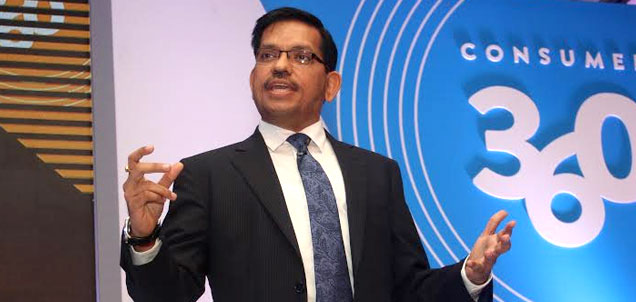
    Madhav Mishra is a 19-year-old magazine seller on the streets of Mumbai. On Friday, he made it to a high-profile Nielsen Consumer 360 conference hosted by research and insights major Nielsen – via the opening speech by India region president Piyush Mathur. Reason: Mishra has done something remarkable in his work life. Just before he makes a sale, the secondary-school graduate takes a good look at the car his prospective buyer is travelling in, and pitches his product accordingly. If the occupant looks like a banker or corporate honcho, he pulls out the business publications; if she appears to be a homemaker, then it’s the society or lifestyle magazines. He has only a few seconds to make that call, but over the years, Mishra has perfected the art of creating successful outcomes for his business from years of learning.


    “Just insights are not enough,” said Mathur, on the conference’s theme, ‘Create Outcomes’. “It gets better when these lead to actions, and the real difference comes when there are actual outcomes for our clients’ business.” Indeed, Nielsen no longer just hands over findings to clients. It has started doing a value-based exercise where it checks back with the client on what the company has done about the recommendations. “Increasingly, we are also collating the value of what outcome we’ve created for our client,” added Mathur.


    Voices from the panel discussion:
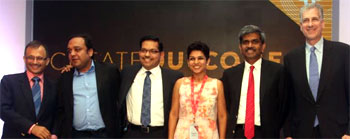
    Group photo (L to R) – (Panel discussion participants): Harish Bhat, Member, Group Executive Council, Tata Sons; Punit Goenka, MD & CEO, Zee Entertainment; Piyush Mathur, President, Nielsen India Region; Kirthiga Reddy, MD, Facebook India; D Shivakumar, Chairman & CEO, Pepsico India & John Lewis, President, Global Summer Goods, Nielsen


    Sub-brands vs mother brand

    Harish Bhat, Member, Group Executive Council, Tata Sons

    You have to be careful that a mother brand does not become a grandmother brand. Mother brands have a tendency to age. And typically, the sub-brands that you launch, have to be aspirational for your current set of customers. So companies do a lot to keep their sub-brands young, sexy and aspirational but in meantime, the mother brand has aged. Marketers will have to keep this in mind. Only if your mother brand is young and edgy and aspirational, will the sub-brands under the mother ship, work.


    Moving away from the mother brand

    Punit Goenka, MD & CEO, Zee Entertainment

    Today, in the analogue world, the consumer is used to accessing anywhere from 50 to 80 channels, which will grow to 200 or 500 channels, which means fragmentation of TV viewership was bound to happen. Newer viewership will be created, and not just on the TV screen but on various kinds of screens. Lastly, today’s young consumers say Zee is my mother and father’s channel, it’s not meant for me. So even the new-generation families were looking for new content. That’s why we decided to move away from the mother brand and embark on a host of new channels which were in no way linked to the mother brand. This also allows us to experiment with more edgy content that we can’t have on the mother brand


    The power of digital

    John Lewis, President, Global Summer Goods, Nielsen

    All mediums have to be more addressable, more precise. The notion of a demographic group – that will increasingly no longer be the right construct [for measurement of impact]. It will be about people who are looking for a specific brand or service; for instance, those who are about to buy a car. It’s all becoming more precise. It already happens digitally, which is what makes digital so powerful. But it will soon happen with broadcast or any other medium. And any medium that cannot be more precise, will have problems.


    Information and Innovation

    Kirthiga Reddy, MD, Facebook India

    We believe information equals innovation. The Facebook experience from more than five years ago was very different from the one today. When we started, we had a very static photo image because we thought people would only want to change these on special occasions, birthdays and such. But then we found that people were changing the photo several times a day. It became clear that people wanted to express through photographs what they were doing through the course of the day. It was that user interaction that led to us very quickly launching our photos product, which has become the largest photo-sharing site on the web. We believe in innovation coming from information.


    Lessons for marketers

    D Shivakumar, Chairman & CEO, Pepsico India

    Very rarely in India have I seen a brand move up the ladder. It’s easier for it to come down. For example, if you start with the premium position, you can go down. But if you start with the bottom position, you will find you can never go up. There are some categories intrinsically that consumers don’t give you licence for. No hair care brand across the word has been able to go into skin care. But every skin care brand has gone into hair care. At the heart of all branding in India and most emerging markets, is aspiration and quality. Thanks to disruption in technology, consumers are willing to give brands a lot more latitude today than they did before. But if you’re not in your core area and going somewhere else, then you will have to up the value significantly.


    Jairam Sridharan

    Invited to showcase their outcomes-based initiatives at the meet, different corporates seemed to have divergent results and experiences. Jairam Sridharan, president, retail lending and payments at Axis Bank, spoke about the creation of the Asha home loan. Research had shown that while a large number of high-end properties was coming up in Mumbai, there weren’t enough takers for those. Instead, there was an overwhelming demand for low-cost housing mainly because consumers wanted to do away with rent and live in their own home. This made the bank create a new product called Asha, a home loans for buyers of low-cost housing.


    What a constantly-evolving marketplace needs, however, is innovation outcomes. Sunita Bangard, President, Marketing at Idea Cellular realised the company needed to make its product stand out in a crowded and competitive market. In the early stages, in the debate about India vs Bharat, Idea decided to concentrate on the former (hence its initial, rural-setting ad campaigns). More recently, the cellco found it needed to stay relevant to its rapidly-changing customer base, so it launched the ‘No Ullu Banaoing’ and ‘IIN’ campaigns. “The insight we received was that information is power,” said Bangard. “Keeping the customer at the centre, you need to create innovation in the way you do work, not just in terms of products and services.”


    Srirup Mitra

    Innovation can sometimes mean swimming against the tide, as Srirup Mitra, head of the hair care category at Hindustan Unilever (HUL) found with the launch of TRESemme. He had to take several Big Leaps (of faith) by under-leveraging the HUL scale of product launches and deciding to unveil TRESemme in only seven centres across the country; eschew the traditional 30-second TV spot and go digital with YouTube, and even launch the shampoo during the Lakme Fashion Week. “Do what is right for the brand, but make sure you’re consistent in getting across to people in multiple ways,” said Mitra.


    Sunil Kataria

    Sunil Kataria, business head, India and SAARC at Godrej Consumer Products, however, believes that marketing should not be at the centre of innovation but one of a bouquet of things (including R&D, design, packaging etc) that will lead to “whole brain thinking” about changing course in business in the interest of growth. This idea certainly helped when Godrej launched its Rich Crème hair colour in sachets instead of the older, glass bottles. The demand for the product skyrocketed so much that Kataria believes it turned into “teaching India a new way to colour hair”.


    Sameer Satpathy

    Every company has its own way of reading trends. At Marico, the Consumer Preference Score is sacrosanct; the success of a brand is calibrated against this, says Sameer Satpathy. The company operates on CPS metrics from each state and city, and this came particularly in handy when it launched its Nihar Shanti Amla hair oil. “It’s not about strategic coherence versus tactical flexibility, but both together,” said Satpathy.


    Future Group, on the other hand, took customer preference to a whole new level when it revamped the very layout of its stores. As Devendra Chawla, group president, food and FMCG brands said, the stores became more focused on young customers; brought in a regional assortment in the food sections, since culinary preferences change quite significantly from place to place; and adopted a cross-category strategy through an adjacency of product placement. That is, placing mugs and ‘tea time’ snacks alongside tea and coffee. When research indicated that women shoppers spend 20 minutes out of their 30-minute shopping time browsing beauty and personal care products, the group decided to include one-stop beauty centres in its stores, for women.


    Eventually one could argue that it all boils down to creating consumer demand. But there are certain rules of the game one needs to follow to do this successfully, said Harish Bhat, member, Group Executive Council at Tata Sons. “As a business companies have to be very clearly aligned to some of the big consumer trends that sweep the market from time to time. There are decades in which certain trends are very big, and any category can hitch itself to a big trend.” But that’s not enough. It’s also important for a brand to have its own lens with which to view and leverage this trend. It’s only when these work in tandem, can successful outcomes be created.


    Earlier in the day, Harish Manwani, non-executive chairman Hindustan Unilever and former COO, Unilever, spoke about living and operating in a VUCA world – a volatile, uncertain complex and ambiguous place, that business has to strive to work and grow in. Garth Viegas, Global Insights Director, Tata Global Beverages, and Kartik Sharma, MD, Maxus, South Asia participated in a talk about marketing effectiveness and the art of effective advertising, while Ravi Desai, Divisional Marketing Manager, ITC Foods weighed in on consumerisation and how to engage with the ‘super consumer’. Several top Nielsen executives also participated in the conference, including Prashant Singh, Managing Director, Nielsen India Region, Senior Vice Presidents (Nielsen India) Roosevelt D’Souza and Adrian Terron, and Executive Directors Vijay Udasi, Dolly Jha and Nitya Bhalla.


    ‘Research important, but can also go wrong’

    Companies and the agencies hire sometimes don’t even realise they’re trying to compare apples to oranges until it’s too late. But figuring out why the numbers don’t match and fixing it, has to be a collaborative process, Piyush Mathur, President (India Region) for Nielsen tells Labonita Ghosh


    Given the rise of the services sector and some others like telecom, who are the biggest consumers of research?

    Traditionally, it is the FMCG companies have been big research spenders. But now telecom and financial services companies are also doing so. The requirement for most of them, going forward, will be how to marry their own data with external data, and how to put it all on one platform. You can go down to a very small geography, like a locality, and find what is relevant to consumers there. FMCG has been at the forefront, and now telecom is catching up


    But there is a lot of scepticism in the corporate world about research and how findings can go badly wrong. Companies can’t do without agencies like yours, but they always whip research when things go wrong. Comes with the job or is this a case of sour grapes when business logic might be faulty?

    There are always possibilities of research going right and research going wrong. For instance, in retail audit, the number of outlets goes up every year by three to four per cent. But where does it go up, in which city and which channels – just to assess this is a nine-month exercise. We visit 14 lakh outlets and try to simply find this which channels are changing and whether the smaller outlet is becoming bigger. It takes nine months to collate this data and another three or four to insert that into our data. So by the time you finish, you’re already 12-14 months into it. That change has already happened and it’s no longer reflecting in your data. By the time you manage to incorporate the changed data, the market may have changed again. It is a challenging market. We work closely with clients and sometimes things don’t match. But we sit down with them and try to figure out why. A lot of times their products are sold through channels we don’t cover — sale to institutions or army canteens, for example. So we tell them to take these figures out and then compare like-to-like for a clearer picture.


    Still, it’s about improving and figuring out better ways of doing research. We have a 40,000 panel for retail and there are nine million outlets. What we often wonder is, is there a way we can a million-outlet panel in future? Of course this is not cost viable. But if there was another way – for instance if we could get a small retailer to take an EPOS machine where he would simply swipe the barcode of products, we would get some data every three hours. Suddenly that would change the game. So we are piloting things like that.


    We’ve teamed up with Facebook to see which consumers are going to which sites. That information is used in media planning. If I’m targeting housewives in the 30-35 age group, then I should be advertising on certain sites. So you tag that campaign to that site, and see who’s watching it. Through cookies you can also see the person’s profile is. Now my panel size becomes 118 million [the number of Facebook users in India], and that’s probably more than 50% of the country’s internet population. So chances are, I’m fairly accurate with this data.


    But just Big Data or panels is not enough. Big Data will provide granularity, and panels will provide quality, and you need both together. We’re planning something called digital ad ratings. Any campaign that’s run on a digital platform — a website or a mobile app – will tell us who’s watched it, though in a privacy-compliant way. We’ll be able to get the reach and frequency of television, but in the digital space, in terms of ads being viewed. So now one can compare the digital metrics with the television metrics, and that will help the client decide where he should advertise and how much to spend.


    Another reason for the scepticism about numbers is that consumers sometimes buy on impulse. And this is impossible to factor in, into findings.

    I agree with you. In fact even as a consumer you may not be able to articulate things that guide his or her choices. There might be things happening in your brain or your subconscious that even you are not aware of. This is what made us buy a company, three years ago, called Neuro Focus. They have created a process that goes deep into your brain as you’re watching certain stimulus – an ad or you’re looking at a product — and registers what are the things that appeal to you and what don’t. And this is the unfiltered response of a person, captured at a one-third of a second before the brain can even activate the filters. The capturing is done via an EEG (electroencephalogram that detects electrical activity in the brain). Sometimes even the consumer can’t figure out why certain things happen, but the behavior is there. We’ve taken the help of neurosciences to figure this out.


    Because we’re constantly asking ourselves: can we get the real sense of the consumer without asking questions? Over the years, we’ve funded MIT and Berkley to invent new technology which is our IP. So, instead of hooking people up with a mass of wires, it’s a Bluetooth-enabled baseball cap with a camera which captures the brain waves, and you can see these on your phone. The data is then transmitted to our hub in Chennai and processed. We have invested in this process enough that it is now viable to even do large samples, although you don’t really need large samples in neuroscience vs traditional methods. You only need to pick samples based on some parameters – gender, people who are already loyal to your brand versus new users, age etc. Currently these are mobile rigs that we take from place to place for testing. We also have our own lab in Mumbai, and will soon open one in Delhi. This process, called the Nielsen Neuro, takes much less turnaround time for data collection than traditional research.


    Do you sometimes feel marketers use research as a crutch to mask their own shortcomings?

    I wouldn’t say that about my clients. It’s a collaborative process. Sometimes they don’t get things right, and sometimes we don’t. Sometimes we figure out that we’re comparing apples with oranges. Sometimes we don’t even realise that we’re doing that, so then we deep-dive and try to figure out why the numbers don’t match.


  • Coffee & Conversations with Rahul Kishore: Week #5: Rahul Johri

    By Rahul Kishore


    It is very tough to get a long response to anything from Rahul Johri, Executive Vice President & General Manager – South Asia & Southeast Asia, Discovery Networks Asia-Pacific. He doesn’t talk very much. He agreed to meet me instantly though and said that he had never had an interview of ‘this’kind. He was forthright and crisp in his responses. What came across was a man involved totally in his job and very happy doing it. I began by asking him…


    Do you consider yourself lucky?

    I have always worked hard and strived for excellence. Luck definitely plays a part. Being at the right place at the right time has its advantages and I have been fortunate


    Beliefs that define you.

    Always have a goal and work tirelessly towards achieving it. The happiness and satisfaction you derive is unmatched.


    How do you destress?

    I like to read and travel with my family. But what gives me maximum pleasure is the opportunity to satisfy people’s curiosity and make a difference in their lives through our enriching content.


    If there was a movie made about your life who would you to like to play and why?

    Tom Hanks for his versatile acting abilities.


    What’s your dream job?

    This is my dream job. I work with one of the most admired global brands, finest team and create compelling content that is watched by millions across the world.


    If Bill Gates were to give you $100 million what would you do to change the world?

    I would invest in developing sustainable and clean energy sources so that we leave behind a pollution-free world for the generations to come.


    Your favourite animal.

    Elephant.


    One word that defines you?

    Passionate.


    CEO that you admire.

    It has to be David Zaslav, CEO, Discovery Communications Inc. for his business acumen, energy and effervescence.


    Who would you like to be re-born as?

    As myself. I consider myself fortunate for the life I’ve had. I have no wish to be reborn as someone else.


  • As industry gets set for a new measurement regime, TAM gears for new innings!


    The new BARC television viewership measurement service is scheduled to kick off tomorrow (Wednesday, April 29). While there have been multiple measurement providers in the past, for over a decade, TAM, a joint venture of the WPP-owned Kantar Media and Nielsen has been in existence.


    There has been some resentment against TAM over the years. Not all the reasons though were well-founded. The sample size was one, but stakeholders were unwilling to pay more for increasing the sample size then. Part of the problem these imported and hence attracted a customs duty. The other peeve was the integrity of data. And another was the frequency in which data was disseminated, a cause of great concern to the news channels.


    However, what can’t be denied is the contribution of TAM and its team to the broadcast ecosystem over the years. L V Krishnan, CEO of TAM for the last 15 years, took time off to chat with Pradyuman Maheshwari about life after BARC data gets released… which is tomorrow.


    So what happens to TAM after BARC starts releasing its data?

    Whether BARC exists or not doesn’t really impact TAM. There are two databases allowing users to look at information and analyis for decision-making. It’s a measure of what one wants depending on business needs. I believe the market is large enough for a BARC and TAM to co-exist as long as we provide service or information that covers the essential needs of a consumer…


    But most of your key, high paying clients like Zee and Star have opted out and you obviously need monies to run a service like TV viewership measurement.

    Clients can move out of the business and come back again later if the service is crafted back to what their requirements are. There’s no permanency in the evolving, constantly changing marketplace. When you become the only provider of data, bringing in change may be a little slower because there’s a large constituency of users you need to take into consideration before you make changes on a continuous basis. Yet, I think the productiveness of time during the digitisation phase as well as during the-ever changing environmental space of homes moving from analogue to digital in a non-DAS market reflects the fact that as the market has changed, the system has evolved by itself. If a customer feels that there’s another system that provides a better value, they’re all free to go and subscribe to that system. That doesn’t mean that TAM has to close its offices and cannot deliver information that it’s designed to deliver. What TAM needs to do is to re-craft its business because as of today there are different scales of thought that come into play.


    One, the mass volume game where I measure every corner of the country and try to deliver that information back to the user’s homes which is what BARC’s mission is…. cover urban, rural, J&K to Kerala, North East to Gujarat. That’s not TAM’s endeavour, we don’t have those kind of funds to do that kind of an enlarged exercise. But, we also realise what’s happening in the environment today. From 2001-11, the number of towns with a one million population has almost doubled from 35 to 55 towns. And if you do the projection for 2015, you’re talking about 62-plus towns in the 1 million market. We believe that you don’t need to reach out to the population, the population is reaching out to markets and areas where there’s growth happening and sustained possibility exists and at the same time where they believe that fundamentally the growth prospects for them and family are much more stronger. Migration is one of the biggest elements here.


    So what you’re saying is that TAM will continue as an urban index?

    We believe that urbanisation is going to continue to progress which is what we see in the overall data. When you look at the census data of 2011, it talks about a 65-35% of urban to rural where rural has come down from 2001 from 72 to 65%. Either the population is migrating to big urban markets or more and more markets are becoming urban in nature. In that kind of a situation, given the diversity of the population existing in the 1 million plus markets, does that create an opportunity for segmenting of audiences & bringing in understanding of the behavior of audiences toward media?


    Will your ownership pattern (of being a Kantar-Nielsen 50:50 jv) change when you adopt this new approach?

    Yes, very much, the ownership continues the way it is actually. The service may undergo a sea change. The urban places will be the focus, not the small towns.


    So, will LC1 will go off your serice?

    Possibly. LC1 may not be in the radar, as also rural. It’ll be a permanent urban market. With the focus on the 1 million plus markets which is where we feel segmentation and targeting are becoming more and more easier


    Will GroupM subscribe to this urban-centric service… given that despite being a sibling (owned by WPP),  it unsubscribed to your service?

    We’ve always looked at GroupM as a customer as much as a Star and Zee. From our perspective if they want to try out a new service, they’re welcome to do so. At the same time, we believe that there are opportunities in the market where we can craft the service to the needs of a new customer and we continuously have a dialogue with the old customers too and as and when they feel the new crafted service is important for the old customers, we’ll make it useful for them too.


    When are you announcing the new service?

    There need not be an announcement. It’s a gradual evolution. It’s not like one day we announce this and next day stop it. The way we graduated from analog to digital… it’s a continuous process of evolution.


    You’re not going to be switching off…

    There’s no switching off.. we’re in the data providing area and there are enough customers in the market.


    We’ve had heard rumors of TAM selling its service to BARC… some talks initiated by Sir Martin Sorrell…

    I’m not aware of it. If that’s so, I’ll go with what the industry wants. If they seek a combination of services provided by TAM with an existing talent pool to assist  BARC, I don’t see any reason why we shouldn’t.


    Would you recommend that as…

    I don’t see a wall between us and BARC. There’s always a bridge that can be constructed between two service providers if it’s in the benefit of the industry. Ultimately the customer needs to decide.


    It’s not just the benefit of the industry, it’s the ego too.

    We don’t have any egos that rule. We think it’s the customer and his needs that rules.


    As you see the industry rallying around BARC and as you look back on your 15 years, do you think you should’ve also got the same amount of industry attention and monies?

    TAM is an industry-supported service.


    But it was a joint industry body that endorsed it, right?

    I mean price or spend supported. When it was created, it was a formulated idea. There was  no seed funding for the formation of TAM. It was primarily from subscription itself. When ownership doesn’t exist and it exists with two multinational research firms, then obviously one expects the fact that they will fund and push the services ahead. The difference between the TAM and the BARC system is that in the latter the industry has put money behind it to fund it, and that’s why they are standing behind it. It ultimately comes down to stakeholders. If they are two giant international research companies, they’d want to put the money behind it, make it run and they’ve done that. From where we were with 750 meter and five cities in 1999-00 to a 12,000 meter running the urban panel, it’s a huge milestone that’s being covered. If the subscription money was higher, we could’ve increased it to even higher levels, but frankly speaking there are no regrets to that now. At the end of the day, the stakeholders of BARC believe that they’ll be able to take it to a much more higher level. No regrets at all.


    Do you think that this wouldn’t have happened had the various stakeholders been more actively involved?

    There are two parts to involvement. One is from a technical perspective and the other is a price or a value perspective. When you involve yourself in a technical perspective, some recommendations help in making the measurement sharper. When it comes to price or value part of it, it becomes an investment yield question, in respect to sample size. In the case of TAM, the joint industry body took a call in late 1999 saying they won’t involve themselves in the price or value part of it at all. They only wanted to be the advisory technical perspective. There’s nothing TAM can do about it. It had to then depend on the two parent companies to see how much funding can be possible to keep expanding on a continuous basis. There has been all kind of involvement from a technical perspective into even as late as in 2012 when digitisation was around the corner when the AAAI, ISA and IBF appointed a three-member technical committee to work with TAM to work from analogue to digital. From a financial perspective, could there have been better involvement from them? I don’t think we could’ve rejected it if they wanted to come into it. At the same time, they took a call they didn’t want it. So, we couldn’t push them…


    Do you think they should’ve taken you as one of the components of BARC’s new measurement system.

    We welcomed BARC right from the time they announced it and we also participated in the RFI and then RFP. We’ve no biases on not wanting to be a part of BARC or any industry movement.


    There was no response to RFI or RFPs and we expected the fact that there’ll be a discussion on some of the proposals we put forward.


    Perhaps there was an issue that the then government had about the ownership of TAM, given that GroupM is owned by one of your co-owners?

    I don’t know where the government got involved because it had no role to play on an industry issue. If that’s so then today the way BARC stands, they shouldn’t have allowed that till the information was an all-India service.


    Do you think the industry should’ve continued with TAM and let the BARC system settle in?

    Well, some of the small and medium level users of data are not taking calls at this time. They believe that both systems have their merits or demerits and they want to look at it from their business perspective at what’s important and what’s not. Many of them are taking a call saying there is a new measurement system coming up which will provide the same measurement that TAM has but will have a larger sample and may have more number of markets to cover up in future.


    What could you’ve recommended?

    3 to 6 months is a good time frame.


    What about the dialogue with AAAI and IBF?

    I was never given an opportunity. I was surprised more with the letters even before I could ask for a meeting with the industry body.


    Moving on to one of the fears we’ve expressed in MxM, we’ve seen a joint industry body like MRUC which is populated by key newspapers and publications having a problem like IRS. Here you have an industry populated body and when the results came out the members were up in arms. Do you think that’s a fear for the numbers that are going to come up in BARC? You yourself in a sense faced it. Very recently after LC1 and digitization there were some very dramatic shifts of data. Given that and given the IRS example, do you think there’s a reason for fear?

    One needs to reflect back on the industry and where it stands. Media is a very peculiar category which isn’t an industry but actually a power centre. It’s close what a government or judiciary is. When you look at it in from that perspective, the key factor governing these sectors is power. If power is the centre, nothing else other than remaining at the top or growing continuously matters. And sometimes you tend to know what the ground reality looks like, but at the same time you don’t have anybody to tell you what that ground reality is. It’s in negativism, demoralizes people, runs into quite a few other conundrums that you don’t want to think about at that point of time. From that perspective, measurement is a harsh reality. Whether it’s for the government and the government doesn’t like it, whether it’s for a judiciary who at least gives it a thought and sees how it can overcome that with some way or the other and for media, definitely it’s not something they’d like to see again and again. The only reason why media needs measurement is fundamentally because 50% of the money in print or 75% of the money in television or 100% of the money in radio all runs through advertising. Or else, I don’t think measurement will exist at all in a public, common platform.


    Given the experience that you’ve had in the recent past, reactions to LC1 etc, is there some kind of piece of advice that you would like to give to the BARC folks, as to how they should possibly tackle the media/

    Frankly the fact that it’s a service that is funded by industry bodies should take care of things….


    But in the case IRS that didn’t happen?

    But I don’t think over there, the funding happen with everybody.  The stakeholders were only the publishers.


    Did it upset you at all that TAM has over the years become the favorite whipping boy of everybody, whether it is members of Parliament, industry folks etc. And the whole degradation of content and television, the sensationalism of news television, everything is blamed on TRPs?  

    No, it doesn’t bother me because it was expected, because you are the only one who are providing that particular data. What bothered me was the politicization of that particular exercise…


    Politicization by the politician or by the people in the industry?

    I could say anyone who is doing it.


    Who was a tougher evil, industry folks or the politician?

    The politicisation couldn’t have happened just because of the fact that the government was interested in the measurement exercise…


    So the industry folks…?

    Now one can’t easily draw a line, because at the end of the day some of the broadcasters, owners are also politicians and some of the politicians have also become broadcasters, specifically, if you look at the regional level. So, it’s a very difficult to say where the politicization happened.


    What are your sentiments like as the transition to the new service happens? TAM and you were after all a hugely influential factor in broadcasting over the last 15 years!

    I need to set the emotional aspect of this business aside and look at it very rationally. I can get carried away with emotions of the past but what needs to be look at is the present and the future.


    Well, the fact is that it’s about emotions. I have seen you over the last few years and your contribution to the ecosystem has been tremendous but and you have been the the lone and the sole voice of the rating business… in fact things couldn’t have progressed so far without you!?

    I’ve been lucky to be in this particular phase, of how the industry has taken shape, and I’m thankful to God for giving me a team that actually saw the same objective as me in driving the industry through a measurement exercise. The team has done a herculean task in the last fifteen years and we have worked very well with the industry for whatever misses that we might have had with them or missiles they might have fired at us, that’s part and parcel of the game. On May 1, I’ll still be in business and there is never an end-of-the-road for anything. There will be a new kind of a craft that we will create…


    Any personal high, you would like to look at? Would like to do go on a holiday now?

    There was a high point whenever we came out from a meeting, having heard the client, and we offering our perspectives with the client accepting and implementing it and seeing results getting delivered. Beyond that, I don’t think there is any other major high point. For us it’s always been the fact that there is a customer at the other end, we’ve got to listen to him/her and resolving issues. That’s what finally mattered and matters.


  • Coffee & Conversations with Rahul Kishore: Week #6: Ashish Bagga

    By Rahul Kishore


    Ashish Bagga is a difficult person to meet. Since he runs a large media corp as CEO of the India Today group, it’s very important for him to budget his time.After trailing him for almost two weeks, I had a cup of coffee with him. He always has been razor-sharp, with a keen sense of humour and rumour and laughs loudly. I began by asking him


    Do you consider yourself lucky?

    Indeed, I do! Luck has played a large role in my life but I have worked very hard to get where I am.


    Beliefs that define you?

    Behind every threat is an opportunity. While nothing succeeds like success, lessons arising out of failure are equally important. It is imperative to enjoy and learn from the journey of life! He lives by this and I think I agree with him


    How do you destress?

    By riding a Harley!


    What’s your dream job?

    Being the world’s top media honcho. Who knows he might get there


    If there was a movie made on you who would you like to play you and why?

    Aamir Khan. Because Aamir is an extremely talented and versatile actor and is at the top of his craft. Comes across as genuine, warm, approachable and humane. I relate very well to his value system and ideology.


    Your fav CEO?

    Richard Branson he says with a twinkle in his eye and a smile that hides something


    If Bill Gates walked in and gave you a 100 million for one big idea. What would it be?

    Contextual mobile commerce is the future and he has some ideas he would like to implement there


    Your fav animal?

    Bruno, our Golden Retriever


    One word that describes you?

    Go-getter…that he is!


    Who would you like to be reborn as?

    Marc Zuckerberg for what he has done.


  • What international creative gurus think of Indian advertising


    When we met her over a drink on Saturday evening, Vicki Maguire, Deputy Executive Creative Director, Grey Advertising, London, seemed ecstatic about what she saw in the four days as Foreman (chairperson) of the Kyoorius Advertising Awards jury. In fact, she said in jest, some of the ideas she saw were very replicate-able internationally. The jury sessions saw Ms Maguire and her team of jurors having a long day at work. Little wonder we could get the responses to our questions only on Friday, the second-last day of the jury meet. The responses were received via mail to questions from Pradyuman Maheshwari


    How does Indian advertising compare with that abroad? What can we do to improve our awards tally at international fests Cannes Lions and the D&AD? As the jury for the Kyoorius awards concluded their work on Saturday, Dyanne Coelho asked the international jury members gathered for the advertising and digital categories to weign in on the scenario in our country.


    Melanie Clancy – Creative Director, BBDO Proximity, Singapore

    There’s been a lot of really interesting work across a lot of different digital touch points. There have been some great social concepts in particular, which I am quite excited to come across. Advertising is such a diverse space, it would be difficult to compare. Based on what I’ve seen, I would advise India to focus more on case study videos, keep the ideas very telescopic, and come up with concepts that you can share in a second. Not ideas that take too long to explain.


    Tim Doherty – Chief Creative Officer, Isobar, China

    In China, because of the political situation, there was a long time when there was no advertising. That’s a market that still is catching up. India, on the other hand, has had a long history of advertising. There’s amazing film and print work coming out of the country. China is still sort of coming of age; it’s just the first 15 years of advertising there. It’s my first time looking at so much Indian work, but I think that digital creative isn’t yet as ambitious as traditional creative in terms of craft, production quality, and I think a lot of that has to do with budgets. But the work I’m seeing here is definitely on par with that in China. Great work is always something that connects with your emotions. There’s no faking it. But simplicity takes a lot of effort. You’ve got to push the work and refine it over and over. That’s my advice.


    Andy Greenaway – Executive Creative Director, Sapient Nitro APAC

    I think India is very good at storytelling, and that shows. It has found its own voice, and that voice is a part of the things India is known for. That’s the strength of Indian advertising. I think it’s very different. Indian campaigns are bigger and more brand-oriented. Singapore is small, much more retail-focused. Singapore, where I work, is a smaller, but has invested heavily in technology, unlike India. If you look at TV advertising, India is far ahead of Singapore, whereas in digital, Singapore is ahead. D&AD is a very British show, and the Brits are well-known for their innovation and design, animation and graphics. I don’t think India’s known for that. India’s DNA is in words, storytelling and narrative. So it’s just two very different markets. The fact that India has won 19 awards at D&AD is good. But it’s not a numbers game. If you get in, you’re actually doing a good job.


    Joji Jacob – Group Executive Creative Director, DDB Group, Singapore

    The process of judging was really refreshing. The organisers at Kyoorius seem determined to set a benchmark with the quality of the work. I think the tie-up with D&AD makes it even better. The awards are big in stature. I was a bit disappointed with the quality of work. I’ve seen a lot of great work come out of India in the last couple of years, but I haven’t seen that this time. The quality of work at Cannes, where also I’ve been a judge, is much better. Here, there is a lot of work that has not been entered, and some work here has been entered just for the sake of entering. A bit of advice would be to provide a proper explanations for your entry. A lot of the entries that were in Hindi, were not properly subtitled. I think it’s important to spend a little more time in preparing the entry.


    Juhi Kalia – Executive Creative Director, JWT Singapore

    The work I’ve seen till now is very good, very emotional. Personally, I was happy to see a lot of work that is very positive for women. There was some funny and some well-written work, in Hindi too. I’ve come back to India after a long time, and I enjoyed watching the Hindi pieces. At the same time, like most shows, there were some work that made us say, ‘really, why?’. Indian advertising is at a great level. We’ve done really well internationally, and it’s getting better and better. It’s interesting to see that there is a digital session now as well. India is quite at par with its international counterparts in most categories. As for the D&AD, I think you have bad years and good years. If your work is genuine and authentic, and it comes from a place of honesty, then it will get recognised.


    Farrokh Madon – Creative Director, Independent, Singapore

    I started my career in India, but I’ve been out for 22 years. A lot of the advertising in the country has local insights and local backdrops, which is good because there is enough confidence in one’s own culture to do work that’s relevant to the people, and not blindly ape the West. Within that format, it would always be nice to experiment a bit. Things like music, to me, seem very formulaic – like I’ve heard it many times before. So even when one focusses on one’s culture, one cannot lose sight of innovation. One has to try and experiment and do things differently. Also, don’t worry too much about awards; focus on doing work that is fresh and original, and awards will come naturally. Originality should be the Holy Grail, and not the award.


    Tim Malbon – Co-founder, Made by Many

    We’ve looked at a number of entries and some of them really stand out. A lot of them are, however, the same. Some of the entries that we didn’t quite like have been talking about what advertising could do for you rather than the original idea and concept. But on the whole, we’ve seen some really strong work. If I had to compare India from a few years ago to the US and UK, I might have said that the US and UK are much farther ahead. But today, I feel that the gap is closing, and there’s no reason it shouldn’t completely disappear over the next few years. One bit of advice is that from what I see, a lot of the entries today seem to be made for the wrong awards. Try and think about entering your ad for the right award, and the right category, so that it gains the right recognition.


    Andy Sandoz – Creative Partner, Havas Work Club/ Deputy President of D&AD

    There is an interesting social commentary in Indian advertising, about the role of women in society or how women are perceived or even how men or women should act. Advertising should be a good social product. In digital there isn’t quite the same level of execution in India as it is in the UK. There is some strategic thinking and some good ideas, but not quite the same polish of execution that you might see elsewhere. That simply means they haven’t yet reached their potential. My advice to India from a digital perspective would be to continue to use digital to make the world better. Use digital to create tools of utility and engagement for people to empower themselves, improve their lives and their work. That’s the kind of work that is winning. That’s the kind of future we all want to see. Embrace the craft. Embrace the beautiful ability that digital has, to surprise people.


    There’s much anticipation for the second D&AD-Kyoorius Awards. Were there any broad rules – Do’s and Don’ts that you are set out for your jury?

    I’ve just come from judging D&AD in London, I got straight on a plane, so the experience is fresh in my mind. If D&AD and Kyoorius share any rules it’s:  “Good isn’t good enough”


    That sentiment holds true here as it does around the world. We’re not just here to celebrate work from the region , we are here to protect standards and champion brave work, talent and clients. To that point there is no room for scam work or for tactical voting. It’s all about the work. the idea. the execution and the relevance.


    How familiar are you with advertising in India? Your views on our advertising?

    I’ve worked on global accounts for years so I have a fair idea what’s happening across the world. I’m  also familiar with the Indian  work that has made its way out of advertising and into wider culture. That’s the beauty of the internet and the generosity of the creative community to share ideas that excite them. I’m looking forward to seeing local work that I’m not aware of from the local independent shops.


    While India has a rich past of storytelling and our advertising industry has attracted top draw talent, we don’t do very well at the international awards. In fact at the 2015 D&AD Awards, India has bagged only 19 Pencils, down from 25 last year. What would you attribute as the reason for this?

    Yeah, interesting question. I don’t believe it’s down to talent, or the lack of it. My guess  is it isn’t the work, D&AD was tough this year. A lot of work I rated didn’t pick up. I think work that is strong locally has to do itself justice when it’s presented.  If we have no cultural reference it’s hard to judge. So make sure your case studies  do your idea justice and explain  its relevance in your market. I’m seeing work already that I expect to do very well internationally but I’d tweak the case study or take a little more time on the  background set up. I think Tim Lindsey did a talk here last year… could your bronze be a gold. He’s spot on.


    I asked this question also to the Foreman last year: what are the values that D&AD brings to an ad award? And what would you say should the winner at the Kyoorius Awards be proud of (given the standards)?

    D&AD and Kyoorius share the same values. they come from the same place. They have the good and the future of the industry at their heart.


    A Pencil or Elephant brings a standard and an integrity. Creatives globally strive to reach these standards and  perhaps even more important clients can trust that creativity can be a driving force for their business and not just an agency vanity piece. All my fellow jurors have won at D&AD and want to give picking up an Elephant that same sense of achievement.  But we shouldn’t just see Kyoorius as a D&AD me-too. In many ways it’s faster and more directional than  D&AD. Three out of Eight of my fellow jurors are women. More than any jury I have ever sat on, including Cannes and D&AD.  That says  a lot. If you  win an Elephant, congratulate yourself. They can’t be bought and they are not given lightly.


    As the jury foreman of an Indian awards, did you prepare yourself in any way or would you say creativity has no language?

    When you are part of a global network you are used to looking at and interpreting ideas from many countries and many languages. Yes, creativity is universal. The crucial thing is to judge every piece in its context. Our local juries are invaluable. And vocal. Which is good.


    One of your jury members is Arun Iyer, who represents Lowe Lintas. The agency doesn’t participate in creative awards. What would be your message to agencies who do not participate in awards like D&AD-Kyoorius?

    A D&AD-Kyoorious award is no vanity piece. They can’t be bought.  The set the standard. They are also recognised by clients locally and globally. Creativity does have a value, great creativity adds value. It can have a dramatic effect on a business’s bottomline.  Of course it’s an agency’s choice, but it’s a no-brainer as far as I’m concerned.


    One last question: In India, we don’t have multiple national awards. This is only the second year we are having Kyoorius. Does the existence of multiple awards impact the participation of some agencies because of limited budgets for spends on entries?

    I’d urge any agency to look at quality, not quantity when it comes to carving up their awards budget. I’m a champion of Kyoorius because it is good for the industry. From championing brave work to education. I see a need for another award that does this, but I’ve also found an appetite amongst younger creative and agency folk here. I gave a talk  to some younger members of India’s creative community at Kyoorius, and at the end of the talk I told any member of the audience  they could take my email and keep in touch. I expected a couple to email me in a couple of week’s time. No. I’ve been inundated. How cool is that!


  • Ruling it with the Game of Thrones


    She has been among the early entrants in the broadcast space and has since grown to be one of the seasoned professionals in the business. But even as she’s accomplished in adsales, it was interesting to see Monica Tata take on mantle of two ad-free HBO premium channels. While she did not disclose subscriber numbers, HBO has been aggressive in the broadcast space and top-of-mind thanks to content on the back of the very successful Game of Thrones. So when we heard about the simulcast of Season 5, we reached out to the Managing Director, HBO South Asia for this chat. Excerpts from a conversation with Pradyuman Maheshwari and Dyanne Coelho:


    Game of Thrones is indeed a big thing with you’ll this time given the simulcast and the overall marketing blitz.

    When HBO Defined came into India, our proposition was of making it the Home of the Originals. So we want to bring all our original content, which we were not airing on the basic HBO channel. Thanks to the shift of content consumption taking place, clearly there was an audience wanting to appreciate and consume this content. By the time Defined entered the country, three seasons of Game of Thrones (GOT) had already happened. So we launched Season 4 last year, and although globally it was well-accepted, it was still picking up in India.


    It’s now reached an all-new high in entertainment consumption…

    Yeah, so we did one week from the US telecast launch last year, which was still a big thing for us. Clearly there was an opportunity there for us to fix that. Hence Season 5 became that big launch for us as well as in many other countries… 170, to be precise. We’re doing a simulcast from the US. That’s a first for India too, and that has helped hugely.


    The leaks notwithstanding?

    Yes, the leak notwithstanding. The reality is that, I think the simulcast is going to help some of those issues that regions around the world were facing with piracy. We’re strong believers and we’re absolutely anti-piracy. We are very strong contenders of bringing the content simultaneously, and diminishing the chances of piracy. So I think such initiatives will really help.


    But don’t you think piracy has been allowed to flourish for so long that while it’s great to watch GOT on a bigger television set, people have gotten used to watching content on smaller laptop or tablet screens.

    Not sure if I agree on that  because I think if you don’t give them a choice then they will look for other means and if you’ve not seen any better way to get it. Now if you’re being given the opportunity to watch it HD quality, 100% ad-free, in the comforts of your home at the same time as it’s being telecast in the US, I find it really hard to believe that that is not reason good enough for a consumer or GOT fan to sit and watch it at home and not to go through that whole exercise of being a pirate.


    Being a person who has spent some of your best years in adsales, don’t you think a show like GOT would’ve attracted great advertising and but since it’s ad-free on HBO Defined, you are deprived of the revenues?

    I’m going to be very politically correct on this, because fortunately or unfortunately, the world of advertising is driven by ratings, and if a show doesn’t rate at all, and if the ratings mechanism did not capture those ratings, advertisers were questioning its existence. And when the ratings are not happening, advertising is not happening, you start questioning its business presence. And that’s why I think original content never made it to the ad-supported platform. But I think that was a while ago, times have changed, consumption content patterns have changed, and I think these platforms like HBO Defined have clearly brought about that opportunity for audiences to consume. So at this stage right now, we want to promise to our consumer 100 percent ad-free originals and hence it’s on HBO originals.


    How is the channel doing in terms of number of subscribers?

    It’s good, in fact from the time we launched, we’ve grown tremendously, almost 10 times to be honest in one-and-a-half years. Our success tells the fact that there is an audience out there ready to pay for content, if you’re giving him/her the value proposition.


    GOT of course has thrown up a lot of revenue-earning opportunities from merchandise, etc, also internationally. What about India?

    No, we don’t have it here, it is managed out of our New York office. It’s a global merchandising initiative, so some of it does trickle into this market too.


    Since your revenues depend entirely on distribution, are those monies taking good care of the kind of spends that you have?

    Can’t talk about money, but, yes, overall we’ve had a robust business, and as a region, we function as a region, so as a region we’ve had a reasonably good year.


    At what stage do you feel it would be hugely profitable?

    I won’t comment on that.


    Going forward are there any major spikes that we’re going to see in the kind of major shows that we’re going to have?

    Game of Thrones is so huge you know, so iconic.


    And after that?

    You know frankly, every show that HBO brings is fantastic, but once in a lifetime something like GOT is created. It becomes a phenomenon; you don’t make such things all the time. This is a one-off. It would be unfair to sit and compare. It even made it to President Obama’s speech… These things just happen once in a lifetime. It would be unfair to compare.


    Yeah, it’s also a challenge when you have something like GOT…

    Yeah you can see the glass as half-empty or half-full and we are seeing it as half-full.. in fact full-full.


    No but what do you do after that? What will you air after GOT Season 5 concludes?

    You create more. There’s one GOT that happened and it’s not stopping. We’re on Season 5 and there is 6 and 7 which is being sanctioned, and let’s see what happens and how all of that plays out. None of us are aware how the production of that will play out. But there is so much more content HBO brings to the table, like the True Detective coming which is the second season of it. The first one was a four-part series which is now the second season is coming as well. So it’s going to be very interesting, iconic, maybe even award-winning engaging content coming out from the house of HBO.


    Does a show like GOT bring in a new set of subscribers for you?

    Yes it does. That’s why we focus our marketing energy on a show like that because it is a hook for us. This channel has a lot to offer, but when you bring a show, the kind of marketing activity we put before the Season 5 launch has shown a spike. So it helps.


    Is there a number that you can share, a percentage in terms of growth?

    No there’s no reference point. This is the first time we’ve put such a large focus on the GOT Season 5 especially with the simulcast aspect of it, because we did focus our energy on Season 4 and we did a good marketing job as well. But there was a slight disadvantage because it was a one week later, but this was something that was fantastic.


    Is there some target you can quote in terms of number that you want grow by?

    We always want to target growth on a regular basis. There is no number, because at the end of the day, the entire universe of digital homes is our universe. That’s the potential really, that’s the whole world out there. But how far can we go, how fast can we go.


    Tell us about this news we read about Star India handing your distribution… is that happening?

    I have no idea. No comments on that.


    Given your own experience with the two HBO premium pay channels, would you says it’s a profitable route to take? Do you think other genres could also adopt it?

    I think there is an opportunity for paid channels in the country. Two HD channels at Rs 99. It costs you 1000 bucks to watch a movie in a theatre, one day, if just a family of four goes to a movie, picks up couple of popcorn, something to drink… . Here you’re getting at Rs 99 a month and a fair deal of content, which is award-winning, fabulous movies in a 100% ad-free environment. I think it’s a no-brainer really. So there is an audience out there who is ready to spend, and Indians are ready to spend. I am personally a very big optimist on that front and hence the proof of the whole thing is that we made a success of a channel, a premium proposition which wasn’t existing.


    But people in India have double standards on consumption. For instance, we see it with newspapers, where people don’t mind spending 10 rupees on peanuts or whatever, but they will not possibly spend that on a content-rich newspaper or magazine. People might spend on movies or going to a restaurant, but as far as paying for a channel….?

    No, but people have paid. See, had I been making this statement without putting my money where my mouth is, then you can question it, but the fact is that we’ve done it. We came in at a time when it was questionable, digitisation has definitely helped a business model like ours and that’s the positive part that digitisation has helped achieve.


  • Much influence of Big Data on Research


    By Moinak Mitra


    The late Steve Jobs famously eschewed market research arguing that customers don’t know what they want. It’s a viewpoint many chief executives may not see merit in but the jury is out on this question: Is Big Data killing market research? After all, why should companies spend time and money on market research to understand how customers feel about a product when they are out there on Twitter and Facebook, speaking their minds for free?


    We put that question to Richard Ingleton, CEO of TNS, a wholly owned subsidiary of Martin Sorrell’s WPP Group and one of the largest market research firms in the world. A former consultant with EY & Accenture, Ingleton believes that though its contours are being changed, market research still has a place in the world of business. Edited excerpts.


    How is market research changing as things go digital?

    The research industry is here to help people make decisions. So traditionally, we’ve asked people to punch in data by asking questions— what’s my brand equity, should I launch this product, are my products doing well? The way of answering is slightly different now. I can get data through a survey but I can also get it through search and social media.


    Market research is becoming much more real-time. There are two things that are driving that— social media and mobile. With social data, the ability to ask questions in the moment means we can give our clients a much more accurate answer than any of the traditional techniques. They’re still asking the same questions, we’re just answering them better—more quickly, more accurately and more relevantly.


    What about visualisation tools and apps available today at a fraction of the cost?

    You can argue that market research was the original big data business. We’re paid for finding insights. And if it can be automated and you don’t need a human being, we’re fine with that. When it comes to understanding why my brand’s moving or product innovation, you still need people to interpret that.


    And you also have to understand that there is a big part of our industry which we call qualitative research — which uses tools that computers can’t—to get into the human psychology. If the gathering of data becomes cheaper, that might affect our revenues, but not our profits. We used to have thousands of people in the field. That moved to call centres calling people up, then online and now to mobile. So the amount of money we’ve made from gathering data has gone down.


    Big data is helping us to bring it down further. It just makes it cheaper for clients, which means where we really make our money is in the research expertise, asking the right questions, the storytelling. I’m less concerned with revenue, more concerned with the margin. If you are a consultancy and if you have a business like ours, which is half the price of a consultancy on a daily rate basis answering these questions, maybe we’re a threat to the consultants. Big Data is helping and threatening us.


    How are clients viewing this shift?

    Our clients too have researchers and they’re much like us. So this understanding of how research is going to be done in the future with the two coming together helps. But we’re a little bit ahead of the clients because we’re doing it in 80 countries for 26,000 clients, while they’re doing it in their country for themselves. So hopefully we’re there before them on average, if not in one particular case. So we’ve got an education job helping our clients understand there are faster, better, cheaper ways of doing what we’ve always done.


    It also depends upon the study. For example, big data just won’t help if you want to understand some complex social issues, like how do I get people to use toilets, how do I get kids to go to school, how do I get adults to use contraception? For governments, there are important questions that are never going to get answered from social media.


    Where does TNS figure in the new scheme of things?

    We’re using social media and search data to help in our research. We’re using mobile as well as online communities. The combination works for us.


    With all this digitization, isn’t there a tipping point in the horizon?

    There’s Ray Kurzweil, who was professor at MIT’s Media Lab and invented the Kurzweil synthesizer. He’s written a book called Singularity. He says computer intelligence is scaling so quickly, there will come a point where computers will be as intelligent as humans. He estimates that point to be 2040-42.


    That point is called singularity, beyond which we don’t know what will happen. But two years later than that point, those computers will be twice as intelligent as humans, and it will grow accordingly. So when you talk about humanoids or computer intelligence or one-man businesses, you never know what will happen.


    Can computers understand us better than we can?

    Computers will be able to understand what people think about a brand by observing them through their online behavior, which means we won’t need people to go to the market and ask questions. At the other end of the spectrum, complicated math like discreet choice modeling (which needs very good statisticians) can be done at the press of a button.


    So at one end of the scale we’ve got low value activities being undertaken and at the other end of the scale, we’ve got complex math and difficult statistics. Computers can do them too. Humans become designers and managers of the process. In 20 years, I’m sure it will get to genuine artificial intelligence in which it will be able to interact in a way which is completely indistinguishable from a human being.


    What do clients want more of?

    They have all of this social data, internal data, survey data and they have to put it together to get some kind of insight. So we have data integrators, which collect data from all sources and put them together to ask appropriate questions.


    For example, we have done some work for Holiday Inn. We’ve surveyed 5,000 people who travel through Holiday Inn: what they wear, what they drink, age, mode of transport. We’ve built a very detailed profile of them. Then you use that profile against a data set of 50 million people.


    Why such a large universe?

    Because it is a large hotel chain across so many continents. If I get a database of 50 million people, I will get at least 15 million people who are more likely to go to that hotel brand with targeted advertising. So you go from a survey to build a profile. You apply that profile against a massive database. Then you do targeted advertising against that super-set of people


    And what was the outcome?

    There was a 34 per cent increase in consideration, which is a massive increase in people who are likely to stay at Holiday Inn.


    So let’s say the hotel is automated and all data is being captured on an integrated dashboard, where my software tells me exactly what I need to do. Do I reward the market researcher or the IT guy?

    The difference between market research and IT is getting smaller and smaller. We’re using IT to do research. So I think you reward both. In what you defined as your smart hotel, somebody designed the questions to ask your customers, somebody designed the profile of your customers for you to target, somebody designed the pricing and promotional models that you used. So you put all of that research into your process, and you merged your business.


    The IT guy doesn’t know anything about how to ask a question. Behavioral economics, which is a big part of what we’re about, is about skillful question asking. This is the thing we’re selling and computers can’t do yet.


    Is the talent required in market research different from the past?

    Not massively different. I think we’re looking for people who’re curious about the human condition—psychologists, philosophers, statisticians. To understand regression and other drivers, we need analytical people too.


    Daniel Kahneman, a psychologist who won the Nobel for Economics, has identified what he calls ‘thinking fast, thinking slow’. He is actually saying the brain is not rational. The math guy is very logical, very rational. But human beings are not logical. So, on average, what you say is true, but in particular, it’ll be wrong. This is where behavioral economics comes into play.


    That is why 60 per cent of our business is creative and analytical together, the things computers can’t do now. It’s quite hard to identify the irrational motivations of behavior and to ask questions in a way people understand. That is why I don’t feel our industry is under threat.


    So how much would you say is that mental part to your business in per centage terms?

    The money we make from that thinking part is about 60 per cent of our business. The rest is gathering data in all sorts of different ways. The big data guys have a point but it’s still about the quality of data and about the truth.


    You’re a philosophy student. Draw a parallel between philosophy and market research?

    Philosophy is about understanding big subjects, great unknown questions. And that’s what market research does. And the philosopher who demonstrates that best is Socrates, the grandfather of great questioners. If market research were a philosopher, it’s got to be Socrates because he was the greatest questioner.


    Where is big data being used today?

    Accenture’s ‘Big Success with Big Data’ report focuses on companies that have implemented one or more big data projects. For the study, Accenture Analytics interviewed more than 1,000 experienced users of big data from 19 countries and seven industries, including Banking, Communications, Consumer Goods & Services, Energy, Healthcare Providers & Payers, Insurance, Retail.


    In India, 65 per cent of the companies sampled are using big data to analyse customer behaviour while 59 per cent rely on big data to improve customer personalisation. Only 14 per cent use big data as a tool to get a grip on cost. Incidentally, most of these areas are core areas of enquiry for market research firms.


    Source:The Economic Times

    Copyright © 2015, Bennett, Coleman & Co. Ltd. All Rights Reserved

    Licensed to republish


  • Winning ways for IAA India captains


    Depending on when you are reading this, today (May 18 ), to be precise, the International Advertising Association will award veteran adpersons Srinivasan K Swamy and Ramesh Narayan with 2015 IAA Inspire Awards in London. The IAA Inspire Awards were created to celebrate IAA members who have achieved leadership excellence and contributed their professional expertise and inspired the marketing communications industry locally, regionally and globally. Swamy, who is Chairman, R K Swamy BBDO and President, India Chapter IAA, and Ramesh Narayan is an industry veteran and Hall of Fame awardee at the IAA Leadership Award in 2014. Said Swamy on the recognition: “These awards are a validation of the active and meaningful role the India Chapter of the IAA has been playing as the leading industry association of its kind in the country. Ramesh and I will accept these awards on behalf of the entire team at the India Chapter”. Messrs Swamy and Narayan took time out for questions from Pradyuman Maheshwari. Excerpts from a freewheeling interview:


    The IAA is unique. It’s not the primary industry body, like the Adverising Agencies Association of India (AAAI), the Advertising or the Press Club. How would you describe the association to someone who doesn’t know anything about it?


    SRINIVASAN K SWAMY (SKS): IAA is international, as the name signifies. We in India are part of that large multi-country, multi-cultural institution. We represent the interest of ‘advertising’ — we believe in free commercial speech, self-regulation in advertising, and in the power of communication to reduce prices, improve quality by increased competition and offer choices for consumers to choose from. No other body has such laudable objectives in the world or in India, if we look at what IAA stands for in totality.


    RAMESH NARAYAN (RN): I would describe it as a friendly, useful, busy, meaningful, go-to industry-association that actually cares for the industry it represents.


    And what does it aspire to achieve?


    SKS: If we believe in the power of advertising, we should use this to good purpose that benefits both the consumer and the producer. IAA Global constantly creates campaigns that demonstrates the power of advertising. Plus, we led a campaign on climate change for UN called Hopenhagen in 2009 which was rolled out across the globe. In India, we believe what is good, is good for business. Like the Lighting a Billion Lives campaign, IAA’s Olive Crown Awards, Gender Sensitisation Seminars, Changing Role of Women in Advertising, the Overcoming Voter Apathy campaign etc.


    RN: One aspires to be part of an association that helps you showcase a plethora of initiatives, ranging from technology-based to intellectual, marquee, industry-specific and meaningful. Initiatives that tickle the intellect, satisfy the need to do things that are adding value to the industry, and also never lose track of the fun element.


    How have you done in these areas?


    SKS: From the examples above, I think we have done well. Now it is for others to judge.


    RN: I’ve said this before, but I’ll say it again. People like Pheroza Bilimoria, Pradeep Guha, Raj Nayak and Kaushik Roy set the stage for a great association. Then our president-on-steroids, Srinivasan (Sundar) Swamy came along and took the association into another orbit. There is no other association that does as much for our industry as the IAA. Our webinars bring technology and information about the digital world into management classrooms and offices. Our Retrospect and Prospects is a topical event where a CEO takes a look at the highs and lows of the industry in his rear view mirror and then does a little crystal ball gazing as well. Our debates are a unique format to bring a dash of intellectual thought back into our lives. Our Leadership Awards primarily salute the marketing world. Our mentorship and Young Turks programmes reach out to the younger people in our industry who might be feeling a little left out otherwise. And as far as I am concerned, the IAA is doing the industry a great service by proving that communication can be a force for good with its Olive Crown awards, gender sensitisation programmes, anti-voter-apathy campaign and the like.


    When you took over responsibility of the IAA India, what were the goals you set yourself? Did you plan on such a super-active association?


    SKS: In the very first meeting I took over as president, we announced a slew of initiatives and much of what has happened since, is not by accident but by design.


    RN: I planned nothing. Pradeep Guha called me out of retirement. He, Raj and Kaushik have encouraged me. Sundar has been a revelation. His energy is as infectious as his smile is. He combines being hands-on with complete delegation in a manner where he inspires a diverse group to work on the several initiatives the IAA has.


    Since both of you have been actively associated with various other industry associations, why do you think others aren’t as active as the IAA?


    SKS: We have a very cohesive team at IAA. I think our success lies in that. Wherever I was fortunate to lead, I always put together a team that gets energised and is willing to make a difference.


    RN: The AAAI is possibly active in industry-specific areas that are not in the public domain. The Ad Club has mega events, so I guess each one has its place.


    Is IAA India fortunate to have the existing industry associations inactive through their basic activities?


    SKS: It doesn’t take much to make an association to get active. If others have not moved ahead, may be this was not that committee’s priority. You should ask them.


    RN: Our industry needs its industry associations. And they perform unique and important roles. I have had the privilege of having been President of both AAAI and the Advertising Club. I believe they perform important roles. If I had to crib, I would just say that both these Associations need to include the “good” quotient into their activities. They have the resources, the talent, the bandwidth to establish that “what’s good is good for business”. And they should lead from the from in doing this. This is one important way of positioning our industry as something the youth will aspire to get into.


    And there is no monopoly on doing good. The IAA is showing the way. We need all industry associations including the ISA and the IBF to step up to the plate. There should be a collaborative approach. Our goals are the same. Let’s bring our respective strengths to the table and complement one another.


    08. Who would you attribute IAA India’s success to? And let’s not be politically correct here…


    SKS: If I had to be politically incorrect, I might say I, me, myself. But the reality is we had many people in the Mancom shouldering specific responsibilities to deliver the unified whole that is IAA India.


    RN: I can only say that the IAA has been president-driven. And it has had the good fortune to have good presidents. It needs to be more committee-driven, which is the effort right now.


    Both of you will need to hand over reins to someone else. You could well be given an international responsibility. Any succession plans?


    SKS: We have strong senior leaders in the committee. We also have many good young leaders who can assume primary responsibilities. So IAA in India is on solid footing. As to our international roles, we’ve already enjoyed it. I have been on the Board of IAA Global for three years. Further growth depends on whether we want to spend more time and money, and also whether the democratic process at IAA Global will provide us with any opportunities.


    RN: I believe a succession plan is already in place. Last year, in a never-before move, the Managing Committee decided en masse not to offer themselves for re-election. So the entire elected Managing Committee of the IAA already has an average age of under 45. These are the leaders of the future. We are already in an advisory role, without voting rights. Very few people realise this, but it is one of the healthiest things to have happened in our industry – no staying on, no bickering. Just a bloodless handing over to GenNext before people even spoke about it.


    We’ve seen both of you work selflessly for IAA’s India chapter. Had you decided to spend the same amount of time on your respective businesses, wouldn’t it have done more good for the industry (and yourselves)?


    SKS: Some years ago, I settled in my mind that there is no such thing as either/or. It is this and that. So I wouldn’t have liked to play this any other way.


    RN: It is said that if you have an urgent job, give it to a busy man. I have devoted a lot of time to industry initiatives even when I ran my agency. “No time” is just an excuse lazy or unwilling people resort to.


    This might sound like an unfair question, but it’s kind of fashionable to say that one needs to give something back to the industry. Isn’t selflessness also a type of selfishness, because while business success can provide material gain, it’s the larger industry recognition that one seeks…


    SKS: It’s true that we are doing this for the hand that feeds us. But equally, opportunities don’t present themselves to many. We were lucky. Also, one pursues all this to achieve one’s purpose of self-actualisation.


    RN: Recognition is never guaranteed. Sure, it feels good to receive it, but I believe that if you work expecting recognition you either lose steam, do a half-hearted job or end up miserable. There is a joy in saying ’I have no axe to grind. I enjoy what I am doing’. I have lived by that credo and when I no longer enjoy what I am doing, I will walk away from the industry.


    A shorter version of this appeared in dna of brands dated May 11, 2015


  • Ready, Steady, Melt!


    Last year, Rajesh Kejriwal, Founder and CEO of Kyoorius, created waves with the slickly produced and D&AD-backed Kyoorius Advertising and Digital Awards. This year, he has extended the offering to a two-day festival called Melt to be held in Mumbai on May 21 and 22. Not unexpectedly, comparisons are being made with Goafest, the three-day event organised by the Advertising Agencies Association of India and the Advertising Club. In a freewheeling interview with Pradyuman Maheshwari, Kejriwal takes pains to explain that there is no rivalry between the two. In fact, as he says, he created his events out of a desire to stimulate and encourage youngsters in the profession. Read on…


    A day to go for the inaugural Melt… your thoughts? All set?

    As set as one can be a day or two before the event. There always will be challenges but there are no hurdles or any real surprises, and that is a good thing.


    Are you satisfied with the way things are going? The speakers, the arrangements, the registrations?

    Very satisfied with the speaker list and topics being covered, satisfied with the arrangements, just about satisfied with the registrations in the inaugural event.


    You appear determined to take on the folks at the AAAI and Ad Club. Last year, you organised the Kyoorius Awards and this year, there’s Melt.

    There are two ways to look at this. First, I think the media is actually pitching us as competitors much more than we ourselves are doing. I don’t think there is any direct competition between the Goafest, Abby or Kyoorius, whether it’s Melt or the awards. I don’t even think the industry says it’s either this or that, except may be to those who have a slight budget constraint.


    Everybody has a budget constraint.

    But I’m painting a larger picture here. I don’t think it should be either/or. Goafest does what it needs to do, and we’re doing what we need to do. We’re exploring gaps that exist in the industry, especially for young people.  I’m not saying an advertising award itself was a gap that we’re filling; it was simply a space that allowed us to do something to stimulate the industry, and we did it. It wasn’t to say, ‘hey Goafest is doing badly so let’s do something’. I don’t think Goafest is doing badly. They need to tweak some things and it can come back on track. Like any other country with multiple festivals and award shows, India too can have that. What clearly needs to be defined is, can we make sure that these two festivals are positioned differently? As I mentioned last year, we are more of a critics’ event, while they are more popular. They have a gold-silver-bronze structure, while we have a certain standard that we maintain, and all the best works win. So there might be nine winners in a category, or none at all; it doesn’t matter. There’s a difference in how they view things and how we do, and that difference works for the industry too.


    Secondly, if you look at Melt, I don’t think this model exists anywhere in the world except perhaps with something similar at Cannes Lions. Cannes is obviously much bigger, more popular and with much more of everything. Melt, I would say, is a unique convergence of five segments — marketing, media, advertising, digital and emerging technologies. Other conferences have more straightforward sessions. People [in our industry] have a lot of questions but there are no ready answers. Nor are the possible answers all black-and-white, but more in shades of grey. Melt offers everybody an opportunity to look at these shades of grey critically.


    Let’s talk about the difference in the awards. First, you mentioned that one is a Critics’ Award, while the other is a Mass Awards event. But the entrants for both these awards are almost the same – it’s the same agencies

    I agree.


    Hence the thing of competition, because you’ll are catering to the same set of entrants…

    At the end of the day, I also compete with Cannes; with D&AD globally; with One Show, Clio, Adfest, all of them, because all the money an agency can provide, comes out of only one budget, right? As for Goafest and us, I agree that the universe is the same. The difference is, for instance, between having international and Indian jury members. We have an open jury system. We have an awards night which brings creativity and production qualities into the awards night itself. So there are a lot of differentiating ways in which we do things and those are what we think can stimulate the industry. There must be something beyond winning which motivates an agency.


    But you’ve still not been able to convince Lowe to participate.

    Last year was the first year. So if in our first year we’ve been able to convince and get 1,000 entries, I think that’s a great first year. Maybe Lowe will come in this year, or maybe they’ll come next year.


    You had Arun Iyer on the jury

    Yes, Arun was on the jury, but that has got nothing to do with the fact that we want him to participate.


    Maska?

    No maska.


    Give us more on Melt? Was the idea to first organise an awards event last year, impress the world, and give people something to talk about?

    I don’t think Kyoorius, at any point in time, does anything to impress the world. I think the larger goal is to impress the people from a content curation perspective, not grandeur perspective. I think what really kicked off this whole aspect of Melt was an internal discussion. We were talking to a few people, and a few of them said, ‘Next time make it bigger and better’. So my first question to them was, if you’re asking us to make it better, can you please tell me what was wrong with last year? Better usually means there was something wrong, otherwise why make it better? And when people say make it bigger, does that mean I look for an 80,000 square-foot space instead of 60,000, or do I use a larger LED screen? I think for me the more meaningful words were, can we make it more relevant to the industry?  Can we help fill a gap, especially for youngsters in the industry that can help them in their professional life? And can we bring the industry together in some way that celebrates creativity? So Melt, for us, is a festival of creativity.


    Are you saying that all this doesn’t exist in Goafest, hence, the gap?

    I’m not saying there’s a gap. I don’t think it exists in Goafest to the extent that we are doing it. Also Goafest happens in Goa, this is in Mumbai, and so more inclusive. I think Goafest also does not have the unique convergence of the five segments that I’m talking about, with something happening for all of these five people at the same time in parallel sessions. So we have workshops, debate sessions, discussions, conferences, installations, interactive Q&A sessions and such. We probably will have a showcase area and are looking at having what we call on-the-flow. People in the audience could think of a subject, go to a room and inform that they’re going to have this discussion in the hall, and invite anyone interested, to join them.


    What I’m trying to say is this unique convergence of marketing, media, advertising, digital and emerging technologies — nothing like this is happening in India.


    Do you think somewhere associating yourself with media houses could mean that other media companies may not embrace your event. Because once you are associated with a big player, the others just ignore you. For instance, when a Filmfare Awards happens, a Screen does not report about it, and vice versa.

    Which is sad.


    Which is sad, but don’t you think that will alienate the others from Melt?

    If you’re looking at it from a sponsor’s perspective, may be yes. But as a rule, Kyoorius does not take on sponsors from the same industry any way. We are very clear that if we take a sponsor from one industry, we normally and we’ve been able to maintain that so far, we do not take on another sponsor from the same industry. It makes no sense.


    So you’re not worried about The Times of India group not doing anything about Kyoorius?

    Editorially, the event is open to everyone. It’s not restricted to anybody. So if HT is my partner, editorially they have no exclusivity. None of them have exclusivity, editorially, nor do any of them have any preference, editorially.


    But since Zee is the principal partner and it has its name prefixed to Melt, do you think you’ll have a situation where Star will not participate as wholeheartedly, may not send a busload of people for it as it would have otherwise done, if it was neutral.

    I don’t think Star is narrow-minded. Zee also sponsors our Designyatra, Zee is our principal sponsor and we get our largest delegation from Star.


    Yeah, but Designyatra is different. Melt concerns the advertising agencies which is the big bad world, which is where all the negatives exist.

    So Melt is not specific to advertising. Melt is at the intersection of marketing, advertising, media, digital…


    Changing tracks, how do things work. For instance, is Zee Mindspace being organised by Zee or are you doing it for them?

    We, together with the Zee team, are helping in curation of what Zee is doing, which is the Mindspace conference. So Mindspace is happening at Melt, but it is Zee’s property. We are helping in the curation of speakers.


    In case of a dispute, who takes the final call?

    We argue it out  and a decision is taken. But we are very clear that Melt cannot be a platform where the content is not right for the audience. In terms of content for that audience, we take the final call.


    So, what if a partner decides to get a certain speaker or a certain panel and you say sorry, that doesn’t work…

    No, it doesn’t work that way. We’ve had one partner who said no, I’m willing to come on board and I want this hall blocked for half a day to conduct a session. We didn’t feel it was right for the audience since it was more of a sales speech for their own business. So we didn’t accept it.


    Was this partner paying you?

    Yes.


    And you didn’t take it?

    We didn’t take it.


    I thought you were a smart Marwari businessman?

    I am, but I have to look at it long-term, because if people are not happy about something, I will have a problem next year. I’d rather have a problem this year than have one next year.


    I’ve also heard stories where you’ve had partners or sponsors wanting a speaker slot and you said no. You told another partner that its logo wasn’t creative enough and such. How do you manage to get away with all of this?

    I don’t think it’s a matter of getting away with it. It’s a matter of convincing the other person that what we’re trying to tell you, is good for you. Designyatra is a design conference, Melt is a creative conference. You cannot tamper with the overall look-and-feel visually. It’s a creative conference and if you mess up your own creative output, you’ll become a big joke.


    But creativity is subjective right? What seems creative to you could appear tacky to somebody else. How do you manage to convince others about that?

    The convincing point has to do with how I can make sure you get the value that you want to out of this event. Am I making sure you’re seen at all the right places? I can make your logo smaller or bigger and make sure that people engage with your brand in different ways.


    Sirji, last year at the Kyoorius Awards, even though Colors was the sponsor, it did not even get any standees…

    Oh, come on! There were standees outside.


    Shouldn’t they have been inside the hall?

    There were screens inside with the branding. The standees mess up the décor.


    But aren’t all these things a given in sponsorship deals?

    And how much does this spoil the décor of the place? You go to an event, you’ll see some 10 standees on one side in small hall and 10 standees on another side. These are creative awards and you can’t not be creative about your own place. You mess it up because you have 10 sponsors, five from the same industry, all wanting their standees.


    And we don’t allow them to bring their own standees, we ask them to send the art work, we print the standees. We make sure that all standees are of uniform size and placed in a way that catches the eyes of everybody who walks in, but not by making it like 40 standees. Even four standees can do the same job, you just have to be creative about it.


    It appears you’ve managed to convince people about it.

    Yeah.


    By the end of the day, repeat sponsors is an indicator of the fact that they are getting their RoI.

    We’ve always had repeat sponsors. I haven’t seen any time any of my sponsors walk away with a minimum of two years, but mostly all have been there for three years.


    Back to Melt, if I were to attend it on May 21 and 22, what would be my takeaways?

    First, irrespective of whether you’re from a creative or planning background, there is something or the other happening that you can attend. At Melt, we have four pillars — learning, showcase, celebration and networking. We are curating things around these four pillars so that you are able to have exposure to all of these four pillars during your time at Melt. You should feel, at the end of either the first or the second day that the event was worth your while.


    Will Melt move to other cities or will it stay in Mumbai?

    One of the reasons we didn’t call it Mumbai Fest or something is that we don’t want to tie it down to any one city. For instance, it could go to Delhi next year,. I think for us, the two good locations are Mumbai and Delhi. There’s a huge gap in the way events happen in Delhi. There’s nothing happening in Delhi largely, so we are looking at either taking Melt to Delhi next year, or alternatively, doing another version of Melt in Delhi after six months. It may not be as large as what we are doing here, but will be similar.


    There is much anticipation and expectations from Melt. Is that a good position to be in or are you worried about meeting all the expectations?

    I think it’s a position that one always should be in and that becomes the driver to ensure that you meet as much as possible the expectations of the audience. One cannot satisfy 100% of the people 100% of the time but if the majority of the audience come back saying that they benefitted from being at Melt, we would have achieved our expectations. And for the reminder – thats feedback and we learn more from this and be better the next time around.


    Does the absence of some key agencies or decision of some adpersons to stay away upset you?

    In the larger scheme of things: not really. The industry is not defined by agencies – rather by the talent. This is our focus. However looking at how the future globally is going to be built on co-creation, co-existence, collaboration, etc – then yes to certain extent – our objective is to be inclusive and we’re sure to work with them and have them with us in the near future. The fundamental question one should ask always with programmes and initiatives like this is: Is it Good for the Industry? And I’m sure the answer is a resounding yes.


    A word to those who are undecided and can still register on what they can expect?

    There is a fear in the minds of the people in the marketing communication industry today – am I still relevant? The marketing communication industry is changing furiously and those who do not keep in touch with the changing landscape will face issues where the application of their particular skills can become redundant. Melt helps answers the big question to all stakeholders. Given this, I would say that it’s essential to be in touch with what is relevant today and that means – Be At Melt!


    A much shorter version of this appeared in dna of brands on April 27. This interview has been updated with a fresh set of questions asked yesterday (May 19)