Category: INTERVIEWS

  • SCORE high with PR!


    For people who have spent all of their professional lives building the reputations of organizations and professionals, this duo just doesn’t believe in their faces doing the talking. Just use the logo, we were told. Thankfully, our phone was out of bounds so we couldn’t be reached, else we would have been persuaded to drop the pictures.


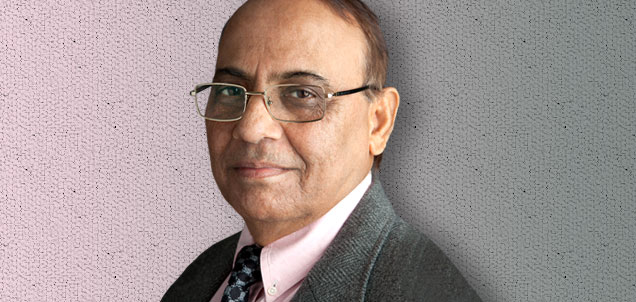
    Over the last few weeks, over phone calls, text messages and meetings, N S Rajan, Global Partner and Managing Director of Ketchum Sampark and Amith Prabhu, PR professional, MxMIndia columnist and founder of PR conference Praxis have been stitching together plans to set the Indian School of Communications and Reputation (SCoRe). Messrs Rajan and Prabhu were in Mumbai on Tuesday to announce the plans for the institute and meet select media to address questions.


    SCORE has been set up by a limited liability firm promoted by Messrs Rajan and Prabhu. Although there’s no direct monetary investment made by either of them, the broad arrangement is that while Mr Prabhu will run the institute, Mr Rajan will play the role of a Mentor and also bring in the monies if there is a need. The business plan expects the institute to be in the black from Year 1.


    The institute is is being established in Gurgaon and while admissions process will start soon, the classes will commence in July. SCORE, according to a communiqué, aims to be a centre of education and research focused on Public Relations, Corporate Communications and Political Communications. The vision is to be the best school for those who want to make a mark in the field of strategic communications. SCoRe will offer a Post-Graduate Diploma in Strategic Communications with two specialisations Political and Corporate.


    Details of the programmes offered are at www.scoredindia.org


    Students will experience life of being in a workplace at SCORE


    Q&A with SCORE Chief Mentor N S Rajan and Founding Dean Amith Prabhu


    Congratulations on the announcement. But having heard more about it, and given that there are various media and management schools offering PR training programmes, one was wondering that since why set up another?

    The industry still doesn’t have good number of trained freshers who are pinning their hopes on a career in Public Relations. That explains the overwhelming support of all members of the profession. Moreover, there is a lot that a postgraduate programme in strategic communications can offer, both students and organisations that has been untapped so far.


    Don’t you think it would’ve been better if you had tied up with an existing player and offered your services to them? Some – if not all – of the institutes do boast of excellent faculty and have been producing quality PR professionals. So why reinvent the wheel?

    There is no institute that has been set up by practising professionals. And there is no institute dedicated to Public Relations. If PR has to get its due, it needs an academic management that is focussed on offering various specialisations within the craft without being attached to a larger educational set-up where it remains one of many specialisations. For example, SCORE will offer specialisations in Corporate, Political and Developmental Public Relations. Sometimes a new way of doing things is the best solution. More importantly, the school will aim to be the fountain of talent in the years to come.


    How is SCORE going to be different from the others?

    SCORE will be the only school of its kind dedicated to Public Relations. Something we have broken down into what we do and what we say – Communications and Reputation. Five things will stand out a) The school will be affordable by offering a well thought out programme at a price point that students can pay easily as they start out a career. b) By being located in Gurgaon the school will tap into a wide talent pool of professionals who will teach c) The accessibility of large organisations and PR consulting firms will enable students to work on live projects and real-time assignments d) This will be the first independent school that has the leadership of most of the Top 10 firms supporting it with guarantees of internships that will translate into jobs. E) And lastly, the curriculum is inspired by the leading communications schools of the world offering an intense programme with extensive in-classroom training


    So, why should students apply?

    The programme being offered is like no other. It is carefully planned with the work-life in mind. Students will experience life of being in a workplace at SCORE. They will learn from the best in the profession. Work on live projects. Solve case studies. Make campaign plans. Track news. Consult on projects. Plan events. Meet business leaders. Be equipped to tackle reputational problems. Trained in elements of brand communications, business management and strategic communications in small batches


    Rajan, when you are recruiting talent, would you prefer to hire talent that’s from a communications/PR school or someone with a general MBA. For, after all, the people at the other end of the table in the form of clients are pedigreed B-schoolers and hence it makes sense to hire people who can match up to them?

    As is the case with most graduates coming from school, the industry including the PR fraternity and the firm I have been associated with has had to invest substantially in their training and in many cases retraining to make them unlearn some of the concepts. So in the past we have recruited quite many Management graduates.  Hopefully, the curriculum of SCORE with its emphasis on practical training and case-study based learning along with a holistic learning approach would fill the current void and make the students ‘industry ready’.


    Or is the hiring of IIM/ISB/etc Tier-1 something that PR firms can never dream of given the price tag?

    There are several considerations in the minds of an IIM or an ISB graduate and salary is only one of them. For instance, my own son would prefer to join a start-up.


    Yes. I do agree as an industry, we have not actively tapped talent with a general management background. The Top management schools better prepare students to work specially in areas like FMCG . We hope the SCORE curriculum and the rigour of the programme places  those choosing a career in Strategic Communications  on par with their peers from general management in terms of being industry ready.


    Rajan, could you for the benefit of our readers and the fraternity, explain your exact association with SCORE? How did you think of mentoring SCORE? Post-Ketchum Sampark retirement planningJ ?

    I have been part of several discussions with industry leaders over time on the need for a practical curriculum for entrants as also training to current young professionals to raise the overall standing of the Industry. This project is to me in a waygiving back to the profession in a small measure the great joy and fulfilment it has given me. SoI am not looking at this as a business venture.


    Amith has done a yeoman service to all of us in PR by bringing us under one roof with PRAXIS and I felt if the School project was to be truly neutral and independent and stand for the PR industry in India, Amith is best equipped to anchor and run it.  I am gratified that the Industry as a whole and many of my fellow professionals have graciously accepted to participate actively in this venture and I thank them sincerely.


    At 55, I’m far from retired and I’m looking to build my firm in India. While I initiated the idea it was Amith who, having worked for the fraternity at large, immediately saw the opportunity and agreed to anchor it. I will not be actively involved in the day to day operations other than mentoring the young team that will run the school.


    Amith, given Rajan’s active association with SCORE and the fact that he’s a veteran PR professional but associated with a large PR firm, did the thought that some PR consultancy professionals/agencies who are rivals of Ketchum Sampark could possibly not encourage your institute?

    This institute is being created with a clear purpose. To offer a world-class education at an affordable price to the future managers and leaders of the profession. My biggest strength has been to work on challenging projects without letting biases creep in. Be it the weekly column I write or the annual event I organise, I never take sides. The school offers every PR firm CEO and corporate communications head the option to nominate an individual for the rigorous training programme on the condition that they will hire the student on successful completion of the programme As mentioned by Mr Rajan , I have the mandate to run the school independently and it will be company agnostic .The fact that a large number of leaders from across agencies and companies have agreed to participate whole heartedly is perhaps an indication of the need for such a school as also its neutrality.  I look forward to their continued guidance and counsel in my new avatar as they supported PRAXIS


    PR firms like having journalists on their fold?  Does the setting up of SCORE imply that trained PR professionals is possibly the way to go rather than getting bored-of-their-journalism-jobs editors?

    There is room for everyone. While journalists join PR firm at middle and senior levels bringing in the strength of content creation and media relations. There is always a need for good talent at the entry level as generalists and at other levels as strategists and planners. Some institutes offer PR as a specialisation but do not deep dive to train students in emerging areas where PR is in great demand like the developmental sector or the political arena. Besides, the institutes offer a programme that is expensive thus preventing good talent from embracing it because of price barrier and those that graduate want to work in jobs that have higher starting salaries compared to PR which leads to a brain drain of sorts.


    Amith, at 34, you would obviously be among the youngest professionals to get into education. Does the fact that you are not been an educator or have too many years into the profession, do you think SCORE wouldn’t be taken too seriously as an educational institute?

    I turned 35 this monthJ. Well, I was expecting this question from the media but this question has not come from parents of potential students I have spoken to or from fellow ‘senior’ professionals who have signed up to be on the Academic Council and to teach. Age is no barrier to the success when there is an idea whose time has come. That is why Rajan and I chose to collaborate in creating this programme. A good mix of youth and experience can always create wonders. When I floated the idea of PRAXIS in early 2012 I was 31, and many dissuaded me saying it would have no takers but when people saw the product which was of high calibre and independently done there was overwhelming support. My role is three-fold. To attract the best students and faculty. To be the custodian of something that the professional community has been yearning for. And lastly, to let the programme do the talking. 


  • ‘Achhe din’ are here again for adspends: Sam Balsara


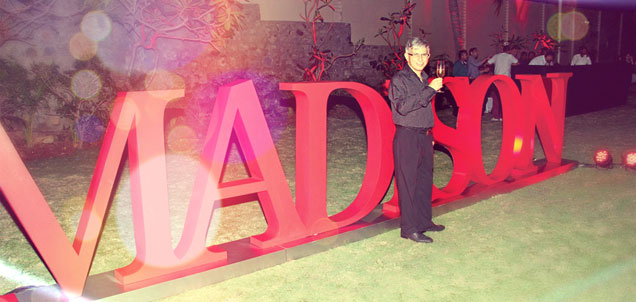
    Because it’s the sentiment that counts, Sam Balsara, Chairman and MD of Madison World, tells Labonita Ghosh soon after the presentation of the Pitch Madison Advertising Outlook 2015. The current mood of optimism in India Inc, he feels, will translate into greater adspends, based on the expectation of a strong tomorrow.


    Senior industry person Deepak Parekh recently said that the ‘achhe din’ haven’t really arrived for Indian business. Would you echo a similar sentiment with respect to adspends and advertisers in India?

    It’s very important to understand that advertising works on India Inc’s sentiments, because everybody knows that you have to advertise first before you can get results on the ground. The advertiser has to make an investment first in advertising. So what does he base his advertising decisions on? He bases it on sentiment. He understands the mood of the nation, the mood of India Inc, what is happening today and expected to happen tomorrow, and takes a decision – on how much to spend on advertising – based on this. Clearly, he is guided by his P/L. But whether or not he should increase his investment on advertising is dependent on sentiment. Beyond doubt today, sentiment is high. My understanding is perhaps Mr Parekh was referring to the high, bullish sentiment not yet translating into higher sales for brands. Fortunately, it has translated into higher market valuation. I’m no expert, but I guess like advertising, the stock market, too, works on sentiment. So it is the expectation of a strong tomorrow on which you are valued today. Otherwise why are companies like Flipkart and Snapdeal valued so high? They have nothing to show for, except what we can expect from them in the years to come.


    In the light of the fact that there is no Parliamentary election this year only sporting actions, would you justify your forecast as realistic?

    Our forecast is always realistic. We never put out an either optimistic or pessimistic figure. It is a realistic figure, and that is why you will see that although we consider ourselves bullish, our actual forecast in 9.6 per cent versus what we’ve achieved in 2014 which is 16.4 per cent.This is so because last year, almost 50% of the increment came on account of the Lok Sabha elections. That will not be the case this year. But there are several other reasons – the World Cup, the continued aggressive push by e-commerce, other social media and apps; the appearance of Phase III in radio by the end of the year; the launch of new channels; geo-targetting becoming possible by newer advertisers and newer brands emerging and such. It is because of all this that we expect the television market to grow by 10%, and print by 5%, on the back of increased government spending.


    Could you specifically comment on print growth, particularly with respect to magazines and regional papers?

    We are extremely bullish about regional papers. English newspapers have already taken a hit in terms of percentage contribution. In the last decade, the contribution of English newspapers was dominant. All other languages, put together,could not match up to it. Today this is no longer the case. Now Hindi is the single largest language segment in terms of spend, and English is trailing behind it. And this will be the case in 2015 as well.


    Magazines are a niche player, and I think increasingly, we are seeing a not very healthy trend in magazines in terms of growth. We think the future of magazines is in niche magazines rather than general-purpose publications. Magazines that are focused on specific areas, like cooking or golf or architecture, these have a sensible future. As an advertiser, if I am interested in particular products, I will look at only those magazines that relate to these. For instance, if I want to sell golf balls, I don’t have to advertise in India Today because that ad will be wasted since non-golfers also read the magazine. I should, instead, advertise in a golf magazine which will provide restricted, focussed circulation. That focus will be of immense value to the product-specific advertiser. That is why magazine advertising as a segment is so small.


    Does all the sound and fury of news television attract good spends?

    It does. News television goes to male audiences, who are otherwise difficult to catch. So news channels are a useful medium for advertisers who want to speak to men. We saw in the genre by spend, the largest is Hindi satellite TV, followed by Tamil satellite TV and news comes in third.


    Digital growth may be high, but in terms of real spends it’s still low. Is it just a lot of euphoria?

    By end of 2015, digital will account for 12%, but its growing at 30% (whereas print is growing at 5%). That’s why there is euphoria. But you can’t forget that while print is already at 40% plus, digital is simply growing from 10 to 12 %.


    This interview first appeared in dna of brands dated February 23, 2015


  • Action time at ASCI


    Narendra Ambwani, chairman of advertising self-regulator Advertising Standards Council of India (ASCI), talks to ‘dna of brands’ about the extensive campaign to connect with consumers and educate them on how to file complaints, and seek redress, against ads which make tall claims. Everyone, from local agencies and state governments to the Centre, are now happy to partner with ASCI.


    Although established way back in 1985, would you say that 2014 was a landmark year for the Advertising Standards Council of India (ASCI), given all the activities that were undertaken in its capacity as a self-regulator for advertising?

    We have seen growth in leaps and bounds at ASCI every year, but 2014 was definitely a notable year for the organisation.


    The year started off with ASCI bagging a gold at The European Advertising Standards Alliance (EASA) Global Best Practice Awards for ‘significantly reducing’ average time taken to handle complaints. We were credited with reducing the lead time for processing complaints from an average of 45 days in 2011-12, to 28 days in 2012-13 and just 12 days in 2013-14. Recognising our efforts to curb misleading advertisements, ASCI was also made a key stakeholder in the Inter-Ministerial Monitoring Committee (IMMC) by the Department of Consumer Affairs. Further, during the year, ASCI’s role was strongly appreciated and acknowledged by the Medical Council of India (MCI) for taking action against misleading advertisements by doctors. We were approached by various ministries for a potential partnership to look into this issue. So all in all, last year was indeed a landmark year for ASCI.


    From a government that was, some years ago, questioning the role of ASCI as self-regulator, to one that is collaborating with it, ASCI has a come a long. Your comments?

    Even though ASCI was considered a self-regulating industry body, it has received considerable support from the Ministry of Information and Broadcasting (MIB). A notification dated August 2, 2006, issued under the Cable Television Network Rules, 1994, states that “no advertisement which violates the Code for Self-regulation in advertising, as adopted by the Advertising Standard Council of India, Mumbai, for public exhibition in India, from time to time, shall be carried in the cable service”. After that, ASCI received statutory recognition. The FDA authorities have also been sending us complaints against advertisements violating the Drugs and Magic Remedies Act. Besides this, ASCI is a key stakeholder in the Inter-Ministerial Committee of the MIB, as well as the Inter Ministerial Monitoring Committee of the Department of Consumer Affairs. Efforts at ensuring ethical advertising practices have earned ASCI its credibility, and the confidence of the government of India.


    While policing unethical ads is taking place through ASCI’s Consumer Complaints Council (CCC), there is still a view that by the time any penal action is taken, the damage is already done. Is this correct?

    ASCI has to provide due process for the advertiser, whose advertisement has been complained against, to respond to the allegations. Providing adequate time for the advertiser to respond, is mandated by law. However, ASCI has recently instituted three new initiatives to speed up the CCC decision process. One is to have the CCC meet four times a month instead of once, so that decision-making takes places within 12 days on an average (as opposed to a month or 45 days previously). And two, starting the Fast Track Intra-Industry complaint (FTCC) redress process, where decisions regarding complaints from one member advertiser against the advertisement of another, are taken within seven working days. Since March 15, 2013, ASCI has initiated the Suspension Pending Investigation (SPI) process. According to this, ASCI can, ex-parte, ask an advertiser to suspend an advertisement, pending final decision by the CCC if, prima facie, it is seen to cause harm or hurt to consumers and the society in general.


    If one feels an ad is making unrealistic claims and complains to ASCI, in how much time can one expect a response?

    In the past few years, ASCI has made significant changes in the complaints processing system. Thanks to electronic communication, weekly meetings of the Consumer Complaints Council and the Online Complaint Monitoring Services, the average lead time to take a decision on a complaint is 12 working days from the date a “complete” complaint was received. This includes full details of the print advertisement, the name and date of publication, and clippings or a copy of the print advertisement. In case of a TVC airing, we require the name of the channel, the date and time of the broadcast; a reasonable description of the clip, specific claims or visual depictions which are considered to be false, misleading or objectionable, and the reasons for the same.


    Would you recommend a Censor Board-like pre-release certification for ads, just as it exists for films?

    Throughout the country, there are a large number of advertisements being released every year. Under our National Advertisement Monitoring Service (NAMS) initiative, we scan at least 45,000 print ads and 1,500 TVCs every month. It is impossible to create a mechanism and run an efficient system to pre-approve every advertisement which is released in the country. No system would be able to cope with such a large number. So we as an organisation, from inception, have been promoting the concept of “self-regulation in advertising content”, and truly believe in this best practice which is being implemented all over the world.


    There are several advertisers who release ads directly through specific media, like mailers or SMS blasts. How do you check these, especially if the publication is not an ASCI member?

    Ever since the launch of our Online Complaint and Monitoring Service (OCMS), we have received complaints against misleading advertisements across all media. While complaints relating to mailers and SMSes comprise a small percentage, they are increasing year on year. Currently, we are monitoring print and TV advertisements via NAMS. However, we do have plans to also track digital media. The processing of complaints is uniform across advertisers, regardless of whether they are an ASCI member or not.


    Your Clean Ad Campaign seemed to have been quite a hit. Tell us more about it. Are you going to make it an ongoing exercise?

    We launched the ‘Swachh Ads Abhiyan’ to mark National Consumers’ Day on December 24, 2014, and made a splash about it on social media (Facebook, Twitter, LinkedIn and YouTube). Since it resonated with the Swachh Bharat campaign, it created a great amount of media buzz. The aim of the campaign was to increase awareness about false claims [made by advertisers] and combat misleading advertisements to safeguard consumer interests.


    We engaged with consumers through our virtual platforms, and this drove consumer attention towards the campaign, educating them about not to be misled through advertisements, and the importance of taking action by lodging an online complaint. We believe this initiative has empowered and encouraged consumers to make the right choices, when it comes to advertisement claims.


    The campaign was conducted through videos that lent clarity to misleading claims and invited interaction from consumers culminating with a call for action to lodge a complaint online. This resulted in 150% more people engagement and the message reached more than 2.5 lakh consumers. It also resulted in tangible change that was sustained by the social media thrust. For instance, the number of online complaints increased by 166%.


    What’s next at ASCI? What are the other activities you propose to take up?

    Our priorities for the year have been chalked out as self-discipline by creators of advertising, easier access to ASCI services, collaboration with regulators and we are keen on being viewed as fair by all stakeholders. Our major focus, therefore, would be on activities enabling these goals. We are going to launch, shortly, an online training programme called the ASCI e-learning. We have plans to further increase awareness and accessibility regarding ASCI. As mentioned earlier, in terms of collaboration with the regulator, we are in talks with the Department of Consumer Affairs and the FSSAI.


  • Vinod Mehta: I just want to fade away quietly (Text + Video interview)


    This interview with Vinod Mehta was conducted in November 2011 soon after the launch of ‘Lucknow Boy’. As we look at the late Editor’s life and times, we replay this interview – in text and video – which so effectively captures what made him such a great journalist. Read on…


    By Shruti Pushkarna


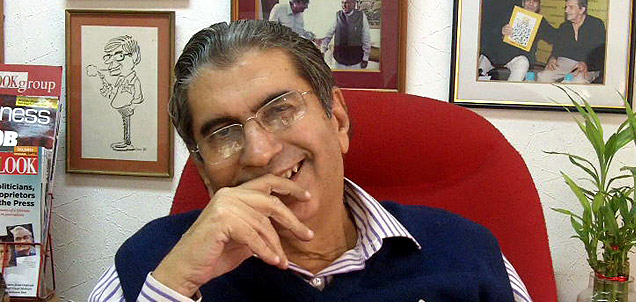
    Soon after he launched his memoirs ‘Lucknow Boy’ in the capital, MxM India caught up with Mr Vinod Mehta, Editor-in-Chief of Outlook magazine, for an exclusive interaction in his Delhi office. He spoke at length about his memoirs, his editorial journey and of course, his dog, Editor.

    Prior to his memoirs, Mr Mehta has also authored biographies of Sanjay Gandhi and Meena Kumari. In 2001, he also published a collection of his articles under the title, ‘Mr Editor, How Close Are You to the PM?’

    Popularly referred to as ‘one of the most independent editors’ of our times, Mr Mehta has founded and edited numerous publications, including The Indian Post, The Independent, the Delhi edition of The Pioneer and also India’s first Sunday paper, the Sunday Observer. At present he is the Editor-in-Chief of the Outlook Group, which brings out ten magazines including the weekly newsmagazine Outlook.

    Q: Tell us a little about your memoirs.

    It’s not just my life that I am presenting; it’s a snapshot of India from 1974 when I started, to 2011 which is now. And I am giving you a kind of history of India from that period, a personal history as I have seen it. So it’s more than my life, it’s a history of India – and whether they agree with my version of history or not, that’s another point but I have tried to present people, places, incidents that I saw and I interacted with since 1974. In that sense, this is not just about a journalist writing about his life, it’s about a very important period of India’s history which should be remembered, and I hope that I got some of it right.

    Q: Why Lucknow Boy? You’ve always prided yourself as a Bombay Boy…

    No, I was born in Lucknow, and studied in Lucknow and I reached Bombay much later. So I called it ‘Lucknow Boy’ because I am, my education etc. was all in Lukcnow.

    Q: Was it tough writing a free-and-fearless memoir? Especially the admission about your daughter?

    Well, these things are never easy but if you’re writing a memoir then you have to tell the story of your life and you must tell it in its entirety, the good and the bad. So you can’t hold anything back, otherwise it’s half the story.

    Q: Anything that you’ve not mentioned in your memoirs? In hindsight, would you have liked to include anything?

    No, no; I made sure that everything that I wanted to put in my memoirs, I did put in my memoirs. There were so many other things which were not important, the more important things I’ve put in my memoirs.

    Q: Given that you had moved jobs rapidly before Outlook, what’s the secret of your lasting so long with the Rajan Raheja group?

    Well, I’ve been here for 17 years and I think the mean reason is the fact that I got the kind of editorial freedom which I didn’t get elsewhere, so I lasted so long – because I was allowed to do my work, and I was allowed to produce a magazine according to what I thought was right, and what my colleagues on the staff thought was right, and there was very little or almost no interference from the proprietors.

    Q: We missed you at the World Magazine Congress. Why were you not there?

    Well, I am told the magazine congress was mostly about the management side of things and not editorial, but I wasn’t invited.

    Q: If given the opportunity, would you like to edit a daily newspaper again?

    No, I’m too old now. I’ve done three daily newspapers and now I don’t want to do anything new. I’ve reached the end of my career so I just want to fade away quietly.

    Q: Wouldn’t it have been good to have an Outlook current affairs programme for television, if not a full-blown channel?

    No, we thought about this many times in Outlook and nobody in Outlook, including the proprietor, was very interested in television, simply because there were so many other… there are already about 300 news channels. So we felt that we couldn’t provide anything new or different and we were quite happy with print. And since I’m mostly interested in print, I didn’t show any great interest, neither did the owners, to get into television.

    Q: Your word of advice to a wannabe media baron?

    Well, my advice to a new media baron would be – don’t get into this business if you are just interested in making money. This is a business where, of course, profits are important but this goes beyond profits. So if you have any kind of commitment to the country and if you can withstand occasionally some kind of losses even to your investment, then get into the business. But if you are getting into the business because you think there are profits, or you think that you will have great political clout in the government etc, then those are all the wrong reasons for getting into publishing.

    Q: And your advice to someone working with a wannabe media baron?

    Be good at your job, that’s very important. Whatever you do, you must be very good at your job, outstanding at your job; therefore if you are outstanding at whatever you do, if you are sub-editor, or a correspondent or a photographer, if you are outstanding in your job, somebody somewhere will always hire you.

    Q: Debonair is dead. Would you like to revive it?

    No, that was just the beginning of my career and I wouldn’t like to go back there. But the seven-eight years that I spent there were very interesting, and I learnt a lot in that period.

    Q: Back to the book: worried about it upsetting anyone? Vijaypat Singhania?

    I don’t think so, because I’ve been fair to everybody. In his case, he was also under a lot of political pressure so I had full sympathy for his situation, where between Indian Post and his own business interests, he couldn’t sacrifice his entire business interest because at that time you had this license permit raj and the government would be active in economic affairs.

    Q: Did you read those barons wrong… Singhania and Thapar especially? And Ambani and the Jains?

    No, I didn’t read them wrong because they also I suppose, did not realize how difficult it is to be a media baron at that time, I am talking of 1980s and 90s, when businessmen who had say 5 percent interest in publishing and 95 percent interest in other things. If they attacked the government, then their other business interests would suffer, and I don’t think they fully appreciated this.

    Q: Any career regrets?

    Oh, I think there are always some regrets, some things that you should have done and you didn’t do. But by and large, I think I have played it by the book, as I say. I have no regrets. I think life has been very fair with me.

    Q: Do you think the news TV folk sensationalize more than inform?

    Yes, I think there is some need for self-regulation, there is some need for accountability. You can’t have a free-for-all as far as the channels are concerned. And I think most channels now are realizing that they are losing public support; the most important thing is their viewers’ support and therefore they need some professional guidelines. There is that appreciation now and I think that in the next few months, you will see something, some self-regulation.

    Q: We know you don’t agree with this, but still: do you think news only constitutes current affairs and matters of national importance?  For instance, would current affairs only mean political news or also whom Ranbir Kapoor is dating?

    No, I think current affairs is current affairs, anything which is current, for example, film stars, Aamir Khan made a film called Peepli Live , that was very much part of news. Entertainment is part of news, entertainment and news are not separate, but I think that there is a place for everything. Entertainment has a place, national politics has a place, everything has a place. So you must find the right balance I think; that’s the job of an editor.

    Q: Is there a need for a Press Council-like body, or should the print media too have a NBSA- like self-regulator?

    Well, we do have a Press Council but I think even the print media now realizes that the Press Council doesn’t have any teeth, doesn’t have any punitive powers. So, there is some need even in the print media for a new set of guidelines.

    Q: Your dog is called Editor. If you had another dog, what would you call it?

    Editor Junior. Well I have already got Editor Senior so I got Editor Junior now. But I can’t keep another… We tried to keep another dog, my wife was very keen that we should have two dogs. But Editor wouldn’t just allow another dog to come in. So we tried once or twice, actually brought a dog into the house but he made life hell for that dog, so we finally had to give him away to somebody because he is very possessive and he likes 24/7 attention.

  • Publicis eyes the Top 3


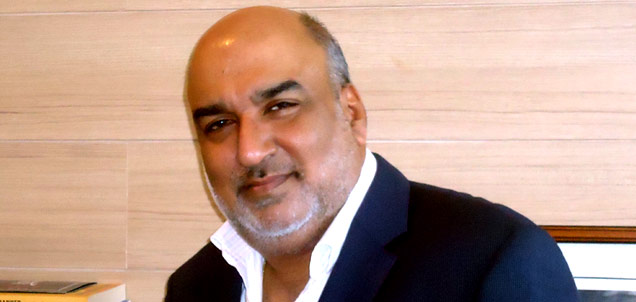
    Nakul Chopra, CEO of Publicis South Asia, has had a long innings at the agency. Over the past 17 years, he has led Ambience in its transition first to Ambience D’Arcy and later Publicis Ambience. Today, he leads the operations of the multiple Publicis units in India in addition to overseeing the French network’s affiliates in Bangladesh, Pakistan and Sri Lanka. In a freewheeling interview with Pradyuman Maheshwari he says that with some of the best minds in the business already on board, and with fresh talent coming in, Publicis has set a course for its reinvention. Something that he hopes will buoy it to the top soon.


    You’ve had a long innings as head of Publicis in India, and over the last three or four years, we’ve seen Publicis take on a renewed focus what with Bobby Pawar and Partha Sinha on board and a slew of acquisitions. Your view on how the business has been?

    I’ll respond to your question in several parts. First, I haven’t been CEO of Publicis for such a long time. Second, you’re right; in the last two to three years we’ve acquired talent, agencies and clients too. But reinventing ourselves, or bringing in fresh talent, or making acquisitions is not new. If I go back to the time prior to the 2003-2010 period, Publicis concluded four acquisitions then, including Ambience, Zen and Madhyam in Delhi.


    We are one of the last entrants in terms of the Top 10 networks in India, so our relative youth also reflects in our size. We had to play a lot of catch-up with the rest. There is no published data in our field. You can only assume the size of your competitor, you can’t be 100% sure. But, by our estimates in 2003, our entities were at No 15, according to size, whether it was Ambience or Zen. Bringing them together and building the organisation through Phase 1 got us firmly into the Top 10 bracket. We’ve conducted acquisitions and — according to what we’ve been able to organically build on the basis of the strength we’ve gained as an organisation — we estimate ourselves to be at No 5. We made these moves with the clear view that we need to become one of the Top 3 players in this market. Of course, there’s been a huge qualitative upgrade with people like Bobby and Partha coming back…


    Do you think you could’ve moved a bit faster after the two stars came in?

    When I look back, one area of dissatisfaction could be the speed of our ambition to take things, versus the speed at which we’ve actually travelled. There are two factors we need to talk about in that regard. You can take small organisations, wipe the slate clean and give them a fresh start relatively fast. Partha and Bobby came into a relatively mature organisation where the pace of change has to always be measured by the ability of the client relationships to make that change. We are now the dominant agency for a lot of big clients like L’Oreal, Nestle, Citi and Procter. But we can’t drive only our change agenda; we have to drive our clients’ too, and pace ourselves by that. If I factor that in, I have nothing to be dissatisfied about. We’ve set some internal benchmarks too; if we’d set five or six goals, we’ve probably achieved four or five of them. We’ve not quite got to the 100% mark that we wanted to, but I think that’s within a normal margin of error that you have when you set out to do these things. It’s impossible to meet your ambition on every single index. You always set your three-year plans on a given set of market assumptions. But as you go through that three-year period, not all of them occur as predicted and you have to re-prioritise things.


    But the expectations were huge. They were expected to produce some magic…

    I wouldn’t say they haven’t. They both joined together and some of the industry controversies that preceded them, came along as well. It was a Big Bang arrival. Given that, you might just set yourself up for disappointment because they’d have to achieve something.


    In terms of creative awards, the best benchmark for excellence of a creative agency are the Effies and you haven’t done well there

    Let me put it to you like this. Have we met our own expectations with regard to the Effies? We haven’t. I can’t say that, being No 5 last year and No 6 this year, though there’s a very large gap between the Top 3. I don’t think it is a fairly big step for an organisation that’s not been on the map of the Effies, ever. But this year in particular, even Partha wouldn’t mince his words to say, that we’d expected to do better. What would I have done differently over the last 12 months to achieve this result? I don’t know. I’m not dissatisfied with the effort I’ve put in. With the material we had, we’d hoped we’re going to win more. But you win some, you lose some. Our first and most important focus has been on how much difference we can make to the clients’ business.


    Do you think your work did improve the clients’ business?

    I’m 100% sure of that, and I have enough client testimonials to go by.


    What’s the most effective work you’ve done over the last year?

    I think we’ve done very effective work for JK, for some of which we’ve won an Effie. We did very effective work for Ambuja Cement. I must confess that I – along with Partha and Bobby – was a little disappointed this wasn’t recognised at the Effies. I’m not pointing fingers, just expressing disappointment. We’ve done effective work for Nestle across brands as well.


    How much do awards finally matter to an agency? While at one level, one is doing a fair amount of business and clients continue to stay with you, at another, you’re getting some awards but not the numbers which the Top 2 or 3 players get?

    Awards matter a lot. Maybe not as much as the clients’ sales figures, but they matter because they represent recognition by your peers, and that can be a great motivator. You make an effort and it gets recognised. That gives you courage and motivation to do more of the same. Creative awards also matter, not just the Effies. It would be naïve to think that awards are an end in themselves. Winning lots of creative awards if you’re not making a difference to the clients’ business and if you’re being unable to grow your own business, is not an end in itself. In 2009-10, Publicis ranked third two years in a row at the Goafest for Creative Awards. It was very fulfilling for us.


    This was when Ogilvy was participating and was No. 1?

    JWT was No 2 one year and DDB Mudra was No 2 in another year. There was some controversy about the latter. By my reckoning, after they returned the medal, they should’ve been No 2 that year. Goafest does not, in any case, give you points.


    What about Kyoorius?

    Kyoorius is a very new phenomenon.


    You mentioned you want to be among the Top 3. With Ogilvy, Lowe and JWT already in that bracket, displacing one of them is a huge ask, right?

    When we were No 12 and I said we want to be in the Top 5, it was a huge ask. But we’ve made moves in the past three or four years which have startled people. We’re now in the Top 5. It’s not going to happen by doing business as usual. At the same time, we can’t startle and surprise people every year.


    Is there a target year by which you want to achieve this?

    We’d given ourselves three years to get firmly in the Top 5. We’ve achieved that. The next three years is when we seek to make the next move. But that depends on us being able to do some things other than great or effective work for our clients.


    Such as?

    It’s about how we build up our skills and capabilities. When you compare us with Ogilvy or JWT, or Lowe or even DDB, which is at No. 4, their range of services and therefore sources of revenue at this stage, are wider than ours. So it’s about finding effective solutions on that side too. Now we’ll have to see if we’re going to get those capabilities or acquire them


    How have your inorganic growth efforts been, since Beehive and Market Gate and I-Strat?

    I think all three have been performing fantastically well for us.


    Is the integration total?

    Integration is not a 24-month process; it takes longer. Our integration expectations from the three are quite different.


    Are there any other specific areas or gaps you’d like to look at filling by way of acquisitions?

    I’d answer this slightly differently. The gaps we’re trying to cover are in the experiential marketing and some specialised skills in digital.


    So will acquiring an experiential agency happen soon?

    It’s a question you all ask at every interview and it always begs the same answer. You’ll know when you know. It’s a capability we’re seeking to build, whether we build it via an acquisition or organically or through induction of talent.


    How has the situation with new talent, accounts etc been, apart from the big ones in the last three years?

    We’ve not only been hiring people, I see Publicis as an organisation which is constantly in metamorphosis. For me, the difference between Ogilvy, JWT and Lowe is that they seem to be organisations who’ve reached a destination. On the other hand, we see every year as a year of reinvention. For us, we’ve had a steady change or upgradation of talent across all disciplines.


    Are you looking at any new direction of business and of clients? Your peers have got into political advertising.

    As a group policy, we don’t do political work. You’ll notice that no Publicis group company has been at any of last year’s hectic political campaigns. Many of us were approached, but we don’t do it.


    Among the various agencies you have, will any of them see a significant change over the next few months?

    I don’t foresee that, with this being a fairly intense period of reviews. We may be unhappy with ‘x’ aspect in one unit, and ‘y’ in another, and we have the managers address those. Talent acquisition is a continuous process. We’ll continue to see that happen.


    If you were a 20-year-old, would you have joined an agency today?

    If you’d asked me this when I was a 20-year-old, my answer might have been ‘No’. But I did end up in an agency and never left. If I were a 20-year-old today, would I join an advertising agency? The answer is probably still a yes.


    It’s still a big bad world. You’d have possibly made more money on the client side.

    I think I had several occasions to do that throughout my career. As somebody who’s been in this business for more than 35 years, I just had a genetic match with the profession. Is today’s 20-year-old choosing advertising over other professions? Probably not.


    Personally, what goals have you set for yourself? Publicis is doing well, it’s going to be on course. Is there any unchartered stuff you are looking at?

    As an individual, I have a re-purposed life. At 54, I have a two-and-a-half-year-old son. The challenges and goals I have for myself have undergone a metamorphosis in the last three years and I’m not completely sure I’m up for all challenges the situation poses. But I’m doing my best to cope.


    A slightly shorter version of this appeared in ‘dna of brands’ on March 9, 2015


  • Introducing a new Friday series: Coffee & Conversations with Rahul Kishore: Ashok Venkatramani, CEO, MCCS

    We kick off the first season of a new series of easy weekend interviews conducted by Rahul Kishore, senior media professional, now turned entrepreneur. In Season #1, Rahul interviews a cross-section of media CEOs. But no shoptalk… nothing on business, plans, targets… Presenting Season #1, Episode #1

     

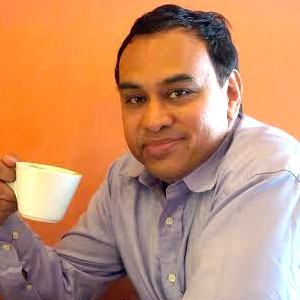
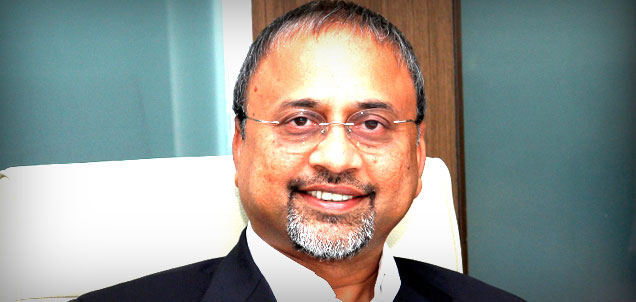
    Ashok Venkatramani, Chief Executive Officer of MCCS India, the people who bring us popular news channels like ABP News etc, may come across as a quiet, blasé, non- aggressive person if one took him at face value. But scratch the surface and you find a funny, soft-spoken yet forceful individual who speaks his mind freely. We meet over a coffee at a Barista outlet in Gurgaon


    So does he consider himself lucky?

    Yes I do, was his response. He’s been lucky in quite a few things. Hard work, he says, takes you up to a point, but then luck plays a part. He’s been lucky in the kind of people he’s worked with. The colleagues have been wonderful as have all his bosses who gave him a long rope and lots of space to express himself. He trusts people and has been rewarded with excellent relationships all around that have helped him immensely. Though essentially a private person, he seems to be quite a people’s man. Ashok himself will never prejudge you. He will allow you to grow and guide you along the way.


    The beliefs that keep him going?

    I am extremely punctual he says. He expects it from others too. Being a Bombay boy and commuting on local trains has taught him the value of time. I have observed this myself, being very punctual myself too. He maintains a strict work life balance. Never works on weekends, fixes no meetings after 5pm and does not socialise much with the fraternity. Money does not motivate him. If he does his job well, money will follow… “but it’s far more important to do my work well”. Empower people, is his credo. He is trustworthy by default. Yes, people have let him down sometimes, but he still goes with trusting them unless they prove otherwise.


    And how does he de-stress after a hard day at work?

    Ashok says that he has learnt classical music and can play the keyboards and piano upto a certain level. These days he sings old raga-based songs as he feels that is true music. A state level badminton player till three knee surgeries put paid to any hopes he may have had of playing at a higher level. So, he walks a lot these days. And holidays by the sea as a Piscean and water is what works for him.


    If there was a movie made about his life who would he like to play him and why?

    Ashok kept with his penchant to surprise me… normally a guy would opt for one of the Khans or a Ajay Devgn or even Amitabh. He said after a great deal of thought: Irfan Khan!


    Why Irfan? “It would need a very sensitive guy and a good actor to capture the finer nuances of my sensitivity on celluloid. It cannot be one of the with-it guys. Has to be someone who is a master of the actor’s craft.” Ashok says he is very poker-faced and nothing ruffles him, nothing at all. And Irfan would do justice to the role


    Dream job and why?

    CEO of Air India. He said it saddens him to see the plight of a genuine Navratana and how it’s been brought to its feet by terrible mismanagement. Ashok feels he has the ability to make a difference in this case. We are on the verge of losing a family jewel and we should do something about it, to restore it to its former glory.


    Three things most important to him?

    Values. NO compromise at all on these. Maintain a healthy work life balance. He doesn’t work on weekends ever, strange as it may sound. I know it’s easier to get a media CEO at 1 am than it is at 11am. Ashok is different. A good night’s sleep and keep things simple.


    Lastly, rate me as an interviewer

    7/10. No, make that eight!


    Rahul Kishore is Managing Director, Taurus Infomedia Pvt Ltd. A man of many interests, he has authored a book on his Facebook updates, does a fair bit of gardening, likes meeting people and says he’s the best badminton player never to have played for India.


  • Building on Colors. Interview with Sudhanshu Vats


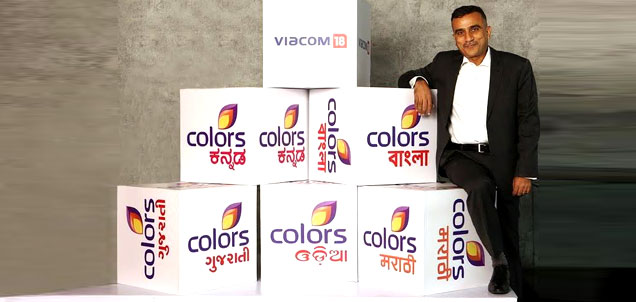
    It may have been more of a coincidence. A day before the first day of the festival of colours, Viacom18 announced its five regional entertainment channels would drop the ETV branding and adopt Colors. The ETV GECs, owned by Prism TV Private Limited and part of the Viacom18 networks, has operations in the Hindi entertainment, youth, children, English entertainment and regional clusters.


    Speaking to MxMIndia, hours after making the announcement, Viacom18 Group CEO Sudhanshu Vats said the exercise helps in building the Colors franchise. Colors, as a brand, has become the cultural touchstone for millions of Indians across the world, he said.


    Meanwhile, Colors Marathi will be relaunched on Sunday, March 22 starting 6:30 pm with MICTA awards (the Marathi film and theatre industry awards like the IIFA) and two new shows starting March 23 – Majhe Hoshil Ka and Sakhi. Colors Oriya will go live on April 1 while the Bangla channel will happen on April 12. Colors Kannada and Gujarati will go live on April 19.


    Excerpt from an interview.


    The rebranding of the entertainment bouquet with the Colors prefix may now appear to be a no-brainer. But for how long has this been in the works?

    Yes, Colors’ foray into other general entertainment spaces or language general entertainment is natural. From a strategic point of view, it expands the footprint of Colors as a brand. Particularly in general entertainment, we are a multi-brand media network. So, whether it is Nick in kids or MTV in youth and Colors in general entertainment, the natural extension of all our marquee brands into subsequent languages is a very natural strategic move. I think ETV as a brand enjoyed legacy, because it was the first regional brand, it had history and huge loyalty to some extent. But one of the things we noticed was that it had also aged a little and was not contemporary enough. If we juxtapose ETV with Colors, Colors, as a brand, stands out for its young, modern, urban, contemporary and innovative nature. Therefore, from a consumer angle as well as strategic point of view, it was almost natural that you move as we build it.


    So just as youth brands are under MTV and for kids, there’s Nick, couldn’t we have had separate brands for the regional and Hindi GECs?

    It all depends on how you look at it as a segment. If you look at the genre as general entertainment and within that regional and language segmentation, then may be one brand for general entertainment, which is indeed Colors, does make sense. And, therefore, it has the capacity to have that scale. While Hindi is of course predominant in India, without doubt, at this movement at least, in viewership too, regional is also catching up the fast. To be honest, the answer is yes one could have had a dedicated brand. At the same time, could you have extension of your GE brand into other GE spaces? The answer is yes again. To me from some scale and some brand halo and Synergy point of view, may be it makes more sense to sort of…


    The Colors as channel we know it is not going to be rechristened?Or suffixed Colors Hindi?

    No.


    Colors, the Hindi GEC brand, is bold, young, urban breaks barriers and, well, a lot of money is spent on its programming and marketing. The expectation will be the same from the language GECs? And if not fulfilled, it could have a slightly negative rub-off on the Hindi GEC?

    We will of course try and play out the same brand philosophy and brand mantra. That’s the thinking behind it.


    In terms of programming are you looking at a significant change from what’s there right now? Or will we see a significant leap in look, feel and content?

    I’ll answer this in two parts. TV18 expressed its interest to acquire ETV in 2011-2012. Basically, post-TV18’s acquisition of ETV, we’ve been associated with them from a synergy point of view. What we’ve done across these regional Prism channels is let the Prism team look at some of the things they can pick up. To give you some of the examples, we’ve already attempted Big Brother in Bangla and Kannada. In Kannada, the Prism team has looked at ‘Dancing with the stars’ which is ‘Jhalak Dikhla Jaa’. It is in its second season and has been very successful and is already the No 1 show this year. We’ve also looked at few shows that are about ideas from Viacom18. Let me give you an example of another show called ‘Indian’ we ran on ETV Kannada. It’s Roadies meets Bigg Boss! There are also programming shows like Balika Vadhu, which are remade, Madhubala, Uttaran, in regional forms. From a programming perspective, it’s a two-stage journey. Journey 1 is already on from synergies and it has helped uplift the viewership of these channels. And #2, as we launch with the rebranded Colors, you’ll see considerable change in programming.


    Will there be any change in the Hindi GEC?

    Colors continues its journey. We’re a strong No 2 as you know and we’ll continue to work on that. That’s a completely independent piece.


    The launch of &TV means some tough competition for Colors, right?

    Early days. We’ve It’s been positioned as an urban channel with some amount of social messaging, reasonably high decibel and expansive non-fiction. So, the zone you seem to see it is in Colors. The direct competition could be more with Colors. It makes a lot of sense if you step into Zee’s boots. Zee enjoys a huge legacy. They enjoy a tremendous first-mover advantage, clearly in distribution. I think they’ll be ahead of Star, in sheer distribution. Because of that, I can say that they are slightly less urban.


    Would you at any time look at a mid-market GEC?

    We keep evaluating from time to time. There are two ways of looking at it. One is that may be there is more room for more GECs in India and that could be a hypothesis. The second is that people have tried and not many have succeeded. You had others, headed by people who had reasonable experience. Off late also, Zee’s Zindagi made a very different attempt. Sony Pal, which is almost like a full-fledged GEC, wasn’t very successful. We’ll see what comes there. There is one school of thought that there are four or five GECs which have established themselves and may be as a GEC there is room for just about this much. The second school of thought is that there is more room. To answer your question, yes we are looking at it, evaluating. We don’t have anything firm at this moment.


    Surely, more is in the offing. We hear about an English GEC. Any indicators of the directions you are looking at?

    My answer on this one is also similar. I don’t want to say something we’re not yet firm at. Basically, you’ll be seeing more offerings. I can’t share them convincingly till I don’t know them well. But, yes, we’ll continue to deepen and strengthen our presence in the genres we’re playing in.


  • Telling the truth in ads always works


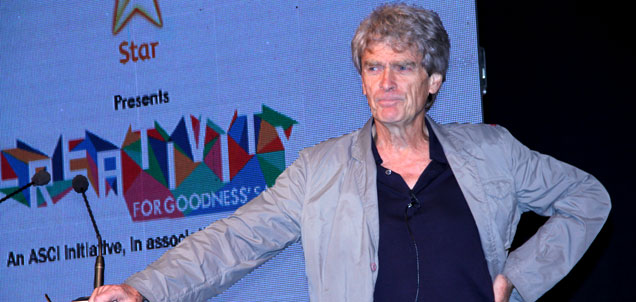
    A little exaggeration is ok to make a point. But agencies must stand up to their clients if they are being forced to make tall claims, ad guru and BBH founder Sir John Hegarty tells Labonita Ghosh. And in such instances, self-regulation by an industry body is always better than guidelines being imposed from the outside


    Can creativity happen without some exaggeration and tall claims?

    Creativity always involves some exaggeration because you exaggerate to make some point. Since the beginning of time, mankind has done that. But in advertising it must be done in a way to engage people and not just try to shock them. That’s the real creative skill


    So where does one draw the line, given that the exaggeration and tall claims may be subjective?

    There’s the idea that the truth is a moving feast. Your truth isn’t necessarily my truth. The Japanese film Rashomon deals with some of this – what is the truth and what did you see. People genuinely think they saw one thing or another. I like to use the word integrity, because it imposes upon you a responsibility. Did you do something because you believed it to be true, as opposed to someone seeing a different truth? And once you’re doing what you believe to be true – and I don’t mean being dishonest with yourself – then I think that’s all you can be expected to do. I don’t think you can do more than that. So we try and build our strategies around some truth because that’s what will resonate more with people. And [such advertising] is much more effective.


    One could argue that that’s a bit cynical. But actually, the truth really does work, as an advertising and commercial strategy. Trouble is, a huge number of brands don’t believe that they can tell the truth. In hair care ads, why is that they always show someone with lovely, long hair? It’s such a cliché. But a brand that finds a way of talking about hair and what the product does for it in a way that is more unique, and more relevant, is the brand that will walk away with the prize. The point is to make that truth relevant at that particular moment in time. After all, circumstances change. I may have different requirements at different times from the product I buy. So it needs to be relevant at that point in time for me. It isn’t just enough to sit up and say ‘I tell the truth”.


    For instance, we always tall about the famous ad campaign done by DDB for Volkswagen in the early ’60s. It’s famous because it created more than advertising. What it said was that the Volkswagen is ugly, but it works. This, at a time when American cars were selling luxury, size and volume and such. The ad worked against the current point of view, and there were enough people with whom this idea resonated, for the campaign to have become a huge success. The point is that it has always got to be relevant.


    You mentioned integrity earlier. But isn’t that different for different people? Whose integrity do we trust?

    [As a brand] you have to do it. Because you’re the one communicating the message which will then make people decide whether or not they want to buy your product. That’s the choice you make. I don’t think we should be afraid of making choices – after all, that’s what brands are about. Great brands stand out because they stand for what they believe in. They don’t try to be all things to all people. All brands define themselves in some way or another, so you shouldn’t be afraid of doing that.


    What happens when, as an agency, you have the client twisting your arm about projecting something?

    That happens all the time. Agencies are handed the information and they can only trust that their client will stand by it. But if they think it’s incorrect or not working, they should also tell the client so. We were working for a large, rather famous cola company many years ago, and the reason they said their product was failing slightly was because their competitor had more sugar in their drink. We found that hard to believe so we tested it ourselves and discovered that [our client’s] product actually had more sugar, and their product failing had nothing to do with this at all. We shared this information with them and they had to back down on their claim. So agencies can’t just be the messenger. They have to be a responsible messenger too.


    Given that there will always be a bit of a gap between the broadcast/ printing of an ad, and action being taken on a claim, can self-regulation work effectively?

    Self-regulation has certainly been effective in the UK. There, the Advertising Standards Authority, which is financed by the advertising industry, regulates, brings out reports and issues condemnations if there are any. I think it’s better if there’s self-regulation rather than outside regulation. Advertising campaigns now are very expensive. So a client won’t be happy if it has to pull a campaign [because of some irresponsible advertising]. But one of the things I find amazing is somehow companies manage to distance themselves from the advertising when they’re in trouble. As a company you are employing the advertising agency and you are making these claims. So you should be taking responsibility. One way to make companies toes the line is by constantly naming and shaming them as offenders. If you keep have your ads withdrawn, it’s not going to be good for your mage, it won’t go down well with your shareholders and all sorts of things will begin to impact them, which will make a company think twice before making tall claims.


  • Coffee & Conversations with Rahul Kishore: Week #2: Maheshwer Peri

    By Rahul Kishore


    Maheshwer Peri strikes you as no-nonsense , gritty with a fun side, hard taskmaster kind of guy when you first meet him. He is. But with a smart and funny side. A guy who’s totally on the ball with all that is going on around him whether it be politics, news channels, print or his love: Education. I met him over a cup of coffee and began by asking him:


    Do you consider yourself lucky?

    Yes! All my breaks have come because of luck. I was  an investment banker with Hathway Investments and we decided to get into the publishing business and Outlook was born. I became a publisher by chance. Got into education by chance too. Luck has a role if you grab it. Bosses were good to me but they couldn’t have been otherwise also. I am humble, nice to work with, retreat easily if I feel it’s right to do so and not a sycophant at all.


    The beliefs that define his ‘Outlook’ in life?

    I am ethical he says. It’s a good business practice these days to survive. Those who say ethics for any other reason are not right. We live in an extremely transparent world where the slightest mistake can be easily highlighted. It can completely result in the collapse of the business.


    Punctual.I hate people waiting for me.I always am punctual.


    I am not surrounded by ‘yes’ men. If we go for a presentation as a team, it’s difficult to tell who is the leader of the team. Gradually that happens, but I allow any and all to lead if we feel that is the right way forward. People are encouraged to say what is right.


    How does he destress?

    With his kids, he says.The younger one especially. Walks often to Sanjay Van from Vasant kunj where he lives. He has chosen a middle class locality deliberately to reside in as he wants his kids to grow up imbibing these very values. He often gets off his car and walks home if the mood takes him. Every two years, he takes off to a healing farm to detox and clear his mind. Also makes his business plans here. Holidays once a year mostly in game parks in India.


    If a movie were to be made about his life, who would he want to play him?

    Ayushman Khurana is his answer. Why, I ask. Because he’s normal. He’s human, has no halo. Has a child in him, like I do. Also can act stupid at times. He can also show the fighter and grit in me. His answer floored me…


    Dream job?

    Lawyer, he says. You will find him practising law and helping the poor once he retires. Getting a law degree is very much on his mind, he says. Also wants to educate people and harness the fire in their belly. This fire, he says, is wasted in stone-pelting, rebellion and aggression. This needs to be harnessed. The politicians have failed us. We should channelise this into some constructive activity. That would be something I would like to achieve


    If Bill Gates walked in with a hundred million, what’s the one big idea that Mahesh would offer to change the world with the money?

    The words demographic dividend excite him. People think building roads is investment, education is social welfare. Actually we need to invest in people. Educate them. Invest in people instead of plants and machinery.


    Work pattern that works for him?

    I work six days a week. My phone is always on and I reply almost in under 30 minutes each time, if busy. Sunday is an off day. I have a small team and I work with them closely, he says.


    One word that describes him

    Outspoken. Being a typical Arian, this bluntness comes out. He is a no-nonsense guy. No time to waste on unnecessary social graces.


    A CEO he admires?

    Azim Premji… a near-instant instant response.


    Loves the social side, the philantrophy, his simplicity and his sense of ethics.It is okay to be like him and still make those billions.


    What animal do you like?

    Elephant. Elephants are humble, keep to themselves and are not bothered by anyone.


  • Getting set for Mindshare Mena: Ravi Rao


    As you read this, Ravi Rao, until recently Leader of Mindshare, South Asia is gearing up for his role as Chief Client Officer, of the group’s Middle East operations which he takes up next month. As he readies for it, Mr Rao tells Pradyuman Maheshwari about the things he is sad to leave behind – a great team, some good clients and the street food of Mumbai.


    Your thoughts as you take on the assignment of Chief Client Office-MENA…

    I’m excited to be back in MENA in the run-up to the 2020 Expo and of course the 2022 World Cup. The role enables me to uplift the Mindshare product and go on to become the trusted advisor to all our clients in the region.


    Will it be a homecoming of sorts? We’ve heard that you enjoy Dubai more than Mumbai. You can tell us the truth – we won’t lynch you for it!

    Though my real love is Mumbai — with Old Monk, the Jehangir Art Gallery, Colaba Causeway, the monsoons, and mouth-watering street food every Sunday after a two-hour session of badminton — Dubai has its share of eateries from over 100 countries, great shopping, Zaatar, clean beaches, a mix of the West and the East. The truth is, I always miss the ‘other side’. It is only a three-hour plane ride away, so I will continue to make frequent trips back.


    On a serious note, what would you say were the highs and lows of your stint as head of Mindshare South Asia?

    The biggest high was my Fulcrum stint. There is nothing like Unilever and – in my second avatar – winning pitches. The amount of adrenaline and high energy that I see in the team, is fantastic and allows up to keep raising the thinking and learning quotients. I hit my all-time-low in the last few weeks, when I knew it was time for me to wind up and that I would leave behind some great clients and team members who were far better than me in several aspects but made me shine.


    Did you have a happy relationship with you clients?

    Yes, with all of them. Some were easy to deal with; some made us really happy. But there were a few tough ones, too, that exasperated the team. But never once did this lead to any animosity.


    You’ve always been busy – lots of travel, clients meetings etc. And just when you should be enjoying the fruits of your labour, you’re moving. Shouldn’t you have chosen to stay on in India?

    Who isn’t busy in our industry now? This is a place where you get a lot of nibbles as you go along, never a big, fat feast at the end, to savour, relish and relax. I have had my share of wonderful nibbles. Why not get onto the other side of table now – not necessarily another table –for a new set of highs?


    Any lows? What has been you lowest moment?

    When the competition won a battle, once in a while, I felt a momentary low. But then you bounce back and say, “What the heck; Mindshare always wins the war”.


    Any regrets?

    None.


    What about the Emvies last year?

    [That was] a momentary despair in the longest winning streak of Mindshare. We will continue to haunt others, year after year.
    The last year-odd has also seen you as Chairman of the Media Research Users Council (MRUC).  How has your tenure been… a thankless job?

    Despite the acrimonious and inaccurate comments that made the gossip columns, I don’t take anything personally. The IRS is a fantastic product, designed and implemented by all the three stakeholders. But sometimes, there may be some bad losers. I am pretty confident that the industry needs a robust measurement metric, and the IRS is one such currency. It is here to stay.


    But the IRS has just not taken off and has been mired in much controversy. Your thoughts?

    The one for 2014 has just been released. Controversy is created by a few people who have time on their hands. This has only helped in realising that the IRS product is good. Everyone wants an increased sample, yet the same people who want the increase, do not want to pay for it. But I see that everyone will have to pay, in the near future.


    South Asia versus MENA – what are the key differentiators?

    The challenges remain the same – diversity and complexity. A robust quantitative research is still an issue in the Middle East, but the digital [space] is far ahead of South Asia. The heterogeneous mix of nationalities in an agency really adds to great learnings, both at a professional and a personal level.


    What would make you return to India? Any plans?  It’s too early for retirement plans for you, but any thoughts on the next 10 years?

    No plans, I make them as the need arises. But one thing is for sure, there is nothing called a retirement plan and I will continue to work, learn and teach. In 10 years, will it be anything to do with advertising or media? The answer is no.


    If you had the opportunity to relive the last three years as Leader, Mindshare South Asia, is there anything you would do differently?

    I would have celebrated every single month with my team for so many wins, successes and milestones. Lucky to have had a great team.


    This interview first appeared in ‘dna of brands’ dated April 6, 2015


  • Credibility of Abby has been restored: Pratap Bose

    Is there anything to ask, Advertising Club’s Pratap Bose asked us, minutes after announcing the 2015 edition of the Abby Awards. The awards have been controversy-free so far, and save the non-participation of some of the bigger advertising agencies, they could be termed a huge success. In this Q&A, Mr Bose speaks to Pradyuman Maheshwari on how the awards have been this year, and whether the Ad Club will ever be able to bring Ogilvy and Lintas back to participate.


    Your broad view of how the Abby Awards have been this year…

    I think on the personal front I am happy because we continued with what we did last year. My objective was to deliver a fair and controversy-free process at Goa, which will ultimately bring back the confidence of most advertisers in the future. Now, whether they come next year, or the year after, I won’t hazard a guess. But I think the credibility of the event, the awards and the awards metals we gave out, have been restored.


    Would you say it was scam-free also?

    That’s a debate I can have for three days with you. What is the definition of a scam? We are not the Interpol at the Ad Club. It’s work that has ticked all the boxes in terms of the process. That’s been done and adhered to. It is very difficult to say it is a scam ad. Has it been created just for the awards? If that is the case, it’s been sanctioned, it’s been delivered, the client’s approved it and it’s gone out in the market, on even one release. Can you then call it a scam? I think you should be able to answer that question.


    JWT is the No 1 agency in terms of the number of metals (it has won). But then, Since you’ve not had an Ogilvy or Lowe participating in the Abby. Do you think JWT can rightfully say they are the No 1 creative agency in the country?

    We don’t take the position on whether they are No 1 or not. I think they have won the most number of metals in terms of the actual number of awards. In that sense they have been the most successful agency. It would be unfair of me to comment  on whether they are the most creative agency or not. Our job is to deliver an awards event that celebrates creativity. That’s always been the mantra at Goafest. We haven’t gone back to the old days where we declared an ‘Agency of the Year’.


    What do think will get an Ogilvy and Lowe to come back?

    I think it’s largely the leadership at the top which takes those calls. It’s not going to be easy. For example, Balki has clearly said I’m not going to enter the creative awards though the Grand Prix winner this year – Linen Lintas – is part of the same group. I don’t know whether he is going to smirk or have a smile on his face (because of this). But I think it’s difficult for anyone else to say whether they would participate or not because at the end of day, it is the boss who needs to decide.


    You’ve been leading the Ad Club and the Abby for two years. Must be sad to see these guys not participating. Is it a kind of unfinished agenda?

    Of course, if you had every agency in the country participating without exception, that’s always the best cake you could get. But life is not always about pretty roses.


    How do you take it to the next level?

    That’s something we need to get back to the drawing board for, because Goafest is a templated event over three days. It has graduated from two days, to three.


    Will Abby continue to be part of Goafest?

    Yes, that is the intention as we go forward.


    One of the reported reasons for an Ogilvy to not participate in the Abby is it’s not in Mumbai…

    Well, no one holds any one at ransom. An agency can’t decide where the awards ceremony is going to be held.


    You think combining an Abby with an Effie will help bring back Lowe and Ogilvy, both of whom participate in the Effie?

    Both the events are completely different. This is a creative show.


    One message to the people who did not participate…

    Goafest is a celebration of work. I would say there is nothing you gain by not participating. And you only stand to gain when you do. We are not ranking agencies over here; that’s the media’s job. But I think it’s for the younger people that work in the agency, to give them a sense of pride, a sense of achievement in their hard work. That’s one of the biggest reasons I would recommend every agency to participate.


  • It was a slick and satisfying show: Nakul Chopra

    As Goafest 2015 concluded after the last of the Creative Abby Awards were presented, Nakul Chopra, chairman of the Organising Committee, tells Pradyuman Maheshwari that he is content to have helmed a successful edition of the three-day fest. And that he certainly achieved what he set out to do


    As Chairman of Goafest 2015, your views on how the event was this year…

    I feel all the boxes I wanted to tick have been ticked. I wanted this to be a grander, bigger, wider, deeper Goafest than it has ever been before. I wanted it to be a slickly-produced show. I wanted it to have all the elements, and I think I have done what I set out to do. Now it is for people to give us feedback about what they liked or didn’t like.


    Is there something that you would like to include next year or in the years to come?

    For me, a single-screen Goafest, 10 years after it was established, is the biggest shortcoming. We need to have a multi-screen, multiple-track event. Not everyone is interested in the same thing at one time. I need to give people a choice.. There are limitations, no doubt. But if I had to say what would be the target for next year, I would like add one more screen to the event.


    But can’t you do something about the time of the event? April is too hot and humid…

    What is the problem with the season? There are 2,000 people here. Does it seem like it an issue? I don’t think it is.


    But the 2,000 could increase if the weather was better. In the past, Goafest has seen a larger number of people particpating

    The maximum we’ve had is about 2,600. At this venue (Grand Hyatt), 2,000 is the upper limit. But 2,000 people do not all eat at the same time. And it’s a three-day festival, and almost half or more of the people attend on a two-day pass. They come either for the first two days or the second and third day. So I never have 2,000 people here all at once. Next time I don’t mind willing to take the risk of registering 2,300 delegates provided I am not selling them a three-day pass.


    So will you continue with this venue?

    I am not sure. Last year, we got feedback that the delegates missed the outdoors.  And this year, all the feedback I’ve got points to this being a better venue. So I don’t know. We had logistical issues with this venue last year. But I must say the hotel has done a great job. So there is a very high chance we will be back here next year.


    What do you have to say about some sessions having poor attendance and half-empty halls?

    I don’t think we need to have 800 people in the room for a session to be a success. For me, even if 200 interested people attend and go back saying they’ve got something from the session, it’s been a great one.


    How do you ensure that the biggies from your fraternity turn up for Goafest?

    I think the two things need to be separated. There is an awards event and there is a festival. The awards are a question of trust and credibility. According to me, that wasn’t an issue, and that’s why I am here. But we have to win back that trust and the credibility. Second is the question of the festival itself and how useful or meaningful it is, and what value can agencies extract from it. I may participate in the awards, but do I send 20 to 70 people to attend the festival as well? We are working very hard to make it people-oriented. So that they can plan more and focus on the young guys. The job the festival had to do, is demonstrate these values. I think we demonstrated that value this year. It took us a little time to build it up in a particular way. We had to reinvent things last year. So give us a little time, and we’ll get back. One day you and I will stand here and discussing the 4,000 delegates who attended the fest.