Category: INTERVIEWS

  • Getting Smart with Infotainment on NGC


    [story and headline updated]

    A good amount of the battle was won for National Geographic Channel given that it has been a household name in the country thanks to the superior print, pictorial and content values of the magazine. But television is a different medium and so are challenges it poses. With a healthy mix of infotainment (which as Keertan Adyanthaya, Managing Director, NGC & Fox International Channels explains is more information and less entertainment),  the group has been forging ahead in recent years. Shivani Jain speaks with Mr Adyanthaya on the flagship channel and the others which are part the NGC and Fox portfolio in India currently.


    National Geographic Channel has been in India for over 16 years, having launched in July 1998. How has the journey been?

    The journey has been very interesting. We have tried and showcased a host of different things in India, essentially a lot of local production for the first time. Earlier, all content used to be produced in the United States. Our first local programme was called Mission Everest, made seven years ago. Then we took a break for two years because it took time those days to convince everybody else in the system that we can do shows out of India. Our next production was Mission Udaan, which was partnered with the Indian Airforce, to feature in detail behind-the-scene preparation on how air force defends the country. Mission Udaan was very well-received, so we followed it up with Mission Navy, Mission Army with similar detailing and stories.

    Along the way, we discovered that we are getting pretty good at creating National Geographic shows out of India. We had also won over the trust of the International society. They felt comfortable with us doing shows out of India because they are very, very sticky about the amount of research and fact finding that we do, before we go out and create our shows.

    So, now recently we did a show called Inside IPL which is a six-part series about the IPL and what goes into making one of the world’s biggest sporting spectacle. We also did a show called Emergency Room, a programme which captures critical, life threatening moments and real life medical dramas. We shot at Medanta  Medicity. Under Megastructures we made documentaries on Bandra Worli Sea Link Architecture, Kokilaben Dhirubhai Ambani Hospital and Chhatrapati Shivaji International Airport.

    A year back we started a new genre of programmes called Smatertainment. We launched shows like Brain Games, Science of Stupid and None of the above. And they become flash hits. They captured the imagination of a lot of audiences in the country.  Earlier with shows like Megafactor, Megastructures, Aircrash Investigation, Taboo, Banged Up, our audiences were more adults, in 18-35 age group. But with Smatertainment our audience base has grown phenomenally. Now you have kids, adults and lot of the older audience watching as well. The programmes are very riveting and addictive.


    Your new positioning with the likes of Arshad Warsi, Manish Paul and John Abraham is interesting. Can you take us through it?

    One of the things we are very confident about is our shows itself.  We believe that if people watch our shows, they’ll get riveted by it. But, in order to get them there, we have to attract them there. Because the old association with National Geographic programmes is that it is too scientific, a bit too heavy to watch. But some of these newer shows we are talking in simple, layman’s language. So it is still scientific, we are still learning about science, but in a very palatable kind of way, more accessible. In order to make it more palatable, make it more accessible, we are making local Indian achievers, celebrities present the shows.


    While you have the likes of the live streaming of Rosetta Spacecraft’s Lander Launch, Cosmos, on the other hand you have Science of Stupid you also have the dumbing down of science. Is there a contradiction of sorts or is there a method to this?

    It is actually not dumbing down. If you watch Science of Stupid, we explain science in a very interesting way. Earlier, we were seen as a professor. We were fine with the Professor tag, but we wanted to be Professor Indiana Jones, not Professor Boring. So that is the difference. Even when you see the Cosmos, he explains things in a very interesting practical fashion. He brings scientific examples down to the level anybody in a room can sit down and watch it and really like. I think that’s where the change is happening. We are trying to explain things in far more interesting way. Some people would call this dumbing down. But I would say that’s the difference between wanting to talk to more people and make more people interested in science. We are looking for a wider audience, more diverse audience.


    There is a perception that there is not much difference between the core content of Discovery and NatGeo. Your comments.

    I feel if you call us both infotainment channels then there is a world of difference. On NGC, the stress is more on information, little less on entertainment. Whereas on  Discovery, I think the stress is more on entertainment, and a little less on information.  You’ll see it even in the kind of flagship shows that we both have. Their flagship shows are in the Survival Space, Man vs Wild, Man Woman Wild, Dual Survival. We have three key strands. One is Smartertainment, there is nobody else in the infotainment segment who has this as the genre. The other strand deals with architecture, technology and machinery with programmes such as Megastructures and Megafactories. And the third is true life stories with shows such as Banged Up Abroad, Aircraft Investigation, etc. I think these are our spaces. I think Natural History, Wild Life is the only common factor now between both of us. We both originated as natural history kind of channels, but now we have taken two divergent paths.


    How has it been with Fox Life after the switch from Fox Traveller?

    Fox Life has been a break-out hit. It has gone into a different stratosphere altogether. Competition put together doesn’t total up to Fox Life’s share. It’s even bigger than English entertainment channels like AXN, Zee Café, Comedy Central, VH1…everybody. When we were Traveller, we were focusing just on travel. But now we have branched out into style, fashion, music, food. We cover almost everything. We now have a mix of international shows as well local shows. It’s done very, very well.


    And with a fair bit of Indian content too?

    We create four different strands of  Indian shows. One is Twist of Taste, the other is Life mein ek Bar, then we do Style in the City, it is designers taking inspiration from small town India, and the fourth is Sound Trek, its independent musicians people revisiting a particular song from a particular region going in and discovering and singing it in their own style.


    And what about NatGeo, Wild, Adventure?

    Adventure has become NatGeo People. NatGeo Wild is also getting a good traction in the market. On People, Music we are really working on the distribution because we don’t really take carriage fee. So we have to work doubly hard in order to get the distributor. So it’s an interesting bunch of channels that we have. Our focus in terms of marketing, programming is on the top three which is NGC, Fox Life, NatGeo Wild. People, Music, Baby TV we are really pushing in the market and trying to get the distributor wherever we can.


    Baby TV doing well?

    Yes. For whoever has a baby at home, it’s very, very popular. Very sticky also. Kids just can’t get off it.


    While digitization in the first phase benefitted channels such as yours, how has the second phase been for you?

    I think tiering has to be done. It’s very necessary. DTH has done tiering for at least five years. But the cable platforms behave like we are talking about some alien thing. Our subscribers will not accept packages, they say. How come half the subscribers in India have accepted it, and the other half will not accept it. Packaging is normal. It exists around the world. It exists even in India. Some 50 million household are operating according to packages. They are all operating on pre-paid. But unfortunately, in all the big cities, the digital operators they still want to operate according to the 1990s where they want to give you just one pack. But our digital operators want to operate according to their own model which only they understand. They are refusing to evolve with time.

     

  • Maximising on Bond way for life:Saurabh Yagnik

    By A Correspondent


    The world of movie channels have a peculiar problem. There are over half a dozen players, all waiting to break the clutter. And chasing the same audiences, showing similar fare. The challenge then is to look and feel different to viewers. And this is what Sony Pix from the Multi Screen Media stable has been trying to achieve in the last year-odd. That’s how we came up with this entire clutter-breaking packaging and communication, says Saurabh Yagnik, Saurabh Yagnik, Executive Vice-president and Business Head, Sony PIX & AXN India, in an interview, adding: “This got embodied in the words Stay Amazed!”
     

    “The desired response we want from our viewers is that its wow, cool and entertainment with a twist. Whenever we try to do something, we always try to pass through this muster,” says Mr Yagnik, highlighting the success of the ‘Pix School of Bonding’ campaign with tennis ace Sania Mirza.


    The challenge for the Bond franchise, says Mr Yagnik, was to “sustain the relevance of a 50-year iconic franchise for today’s youth”.  Bond films had changed hands across some three channels, and the challenge for the Pix thinktank was to create something different. “After our research, one thing we found consistent across Bond films was not the girls, gadgets and gizmos but his evergreen Bond attitude! That’s what we want to bring alive through this proposition. This attitude is relevant to a viewer from a 1962 Dr No right up to Skyfall.”


    Thus started the Sania Mirza campaign from November 22 and is scheduled for 12 weeks. Excerpts from a conversation with Saurabh Yagnik:

    It’s unusual to get a tennis star like Sania Mirza to promote a James Bond movie. Was it an easy task to get her onto this… was she your first choice?

    I think she was top of the notch. She was bang on, our first choice and when we presented this idea to her, she also liked it, because it was showing a very different aspect of her onscreen which people hadn’t seen before.


    Why this craze for Bond that all our movie channels have. Does Bond still have a pull?And do you think the current festival will help you get to the No 1 or No 2 which you lost recently?

    Absolutely, Bond movies rate very well on television. We want people to look at the Bond franchise in a very different manner. Ratings are cyclical, there are ups and downs, what is required is to have a consistent and a robust strategy based on a deep understanding of a viewer which we believe those pieces are in place for our business.


    Tell us about the Stay Amazed positioning. Has it worked for you?

    It’s worked very well. It has created a distinct differentiation for us, it brought us into the Top 2 and for many weeks we were No 1. When we look at all measures including brand tracks, ratings data etc, they both show us that things are very positive for the channel.


    But there’s competition from the various other Hollywood channels, from NVODs and DTH channels plus the premium HD channels which carry no ads.

    Competition is coming in more ways than one. Theatre is one competition, Digital, PPV model that DTH operators have, premium services that are being offered… When you talk about channels like ours, they are significantly lower priced compared to the pricing one has to pay for a PPV viewership of a movie or for a premium channel which is ad-free.


    What will eventually happen is that a new segment will get created with the right volume and the right mix which is the premium segment where affluent audiences will keep paying for better services. I don’t think we have come to a state where we have critical mass and the right mix to make a viable proposition out of a premium service, but it will evolve over a period of time. English movies in this country is still less than 1.5% of all television. So there’s a lot of headroom for growth.


    What’s coming up next on Pix after the 12 weeks of Bond?

    Raid 2, Amazing Spiderman 2, Hercules… We’ve also acquired the Star Wars franchise. Because of the width and depth of the Marvel franchise that we have, we’ll do something around that as well.


    Will any of these have promos like you’ve done with Sania Mirza?

    There’ll be differentiation. You can’t be predictable in what you do. It’s about how you create those twists. Everything won’t be in a similar template. Each of our campaigns have been very different in clutter breaking and that’s what our attempt will be.


    We had Rocky Pixathon when Mary Kom was happening, it was a great brand fit. We had Priyanka Chopra talking about Rocky as the hero… a hero across all times inspires generations. Watch Rocky Pixathon on Sony Pix and watch Mary Kom in theatres was the joint promotion that happened which beautifully brought out the essence of both Mary Kom and Rocky.


     A promotion like this costs top dollars. The brand ambassador, the media you’ve used… do the returns from revenues or sponsorships take care of the marketing monies or is it more of a long-term view for the channel?

    The objective is to ensure you get maximum out of the property itself and we’d like to break even within the property itself and we’re closer to that when we look at the way we’re spending versus the kind of monies we are making. The important thing is not to look at a standalone profitability of a property, but to see its impact in the overall brand.


  • Zee TV will always stand for Ummeed


    If there’s one man in the broadcast sector who knows what works to generate a good, consistent score on the ratings roster, it’s the Pradeep Hejmadi, Business Head of Zee TV. Mr Hejmadi led the all-important S-Group at TAM, the audience measurement firm currently the sole player providing us TV viewership data.


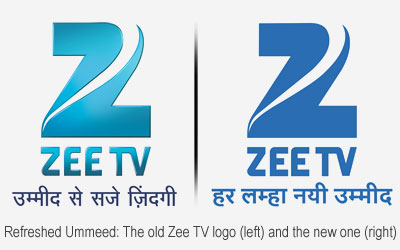
    Having joined the Zee Entertainment flagship channel as Business Head, Mr Hejmadi got onto the act of building a new brand identity and packaging for the channel along with his marketing head Sorbojeet Chatterjee and the rest of the team. On Sunday evening, at the annual ‘Zee Rishtey Awards’ show, Zee Entertainment Managing Director and CEO Punit Goenka unveiled an all-new brand packaging that resonates with the channel’s core ethos, while staying relevant to the changing palate of its loyal audiences. The Zee logo turned to a deeper more in-your-face shade of blue and the look-and-feel got vibrant and younger. From the proposition of ‘Ummeed se saje Zindagi’, the new tagline of the channel changed to: ‘Har Lamha Nayi Ummeed’.


    Readers of MxMIndia would’ve read the news of the branding on December 15. But, now let’s hear the story from Pradeep Hejmadi himself. Excerpts from an exclusive interview with Pradeep Hejmadi:


    Zee TV has been doing very well in the crop of Hindi general entertainment channels (GECs).  Of the various fictions that took off in 2014, Zee shows had the best launch ratings. So, as they say, if it ain’t broke, why fix it? Why this relaunch? And would you say this is a repositioning as well?

    Our successful fiction launches this year and the consistent growth of our fiction programming speaks of a very special relationship we have closely cultivated with our audiences – one that has only evolved and strengthened over the years. It has grown due to our ability, as a broadcaster, to innovate and keep pace with the changing times and expectations. What we’re going in for is a brand refresh exercise and not a relaunch. Zee TV’s core proposition of ‘Ummeed se saje Zindagi’ was about a celebration and vindication of a woman’s emerging beliefs and a reflection of her changing hopes, dreams and optimism. In that sense, Zee TV will always stand for ‘Ummeed’. It is the articulation that will change to reflect the changing times.
     

    Today, with India poised for distinct growth, there is a feeling of ‘a new hope, every moment’. So, Zee TV adds another layer to its core proposition, making it even more relevant to everyday life scenarios that its viewers are faced with. Zee TV’s new slogan ‘Har Lamha Nayi Ummeed’ captures the prevalent spirit amongst the people and our brand philosophy as also our content will reflect the same.


    Would this also mean a renewed content focus?

    Our core proposition isn’t changing. As I said earlier, Zee TV will always stand for ‘Ummeed’ and our content has been a reflection of  this universal life truth. The brand refresh exercise is aimed at arriving at a more ‘here and now’ rendition of our core proposition, making it more relatable in our day-to-day lives. Naturally, our content will mirror the same.


    Can you take us through the entire exercise? What were the findings on the earlier look-and-feel and the logo and what it is now?

    The brand refresh exercise has been about dialling up a few aspects of our brand identity – it always stood and will continue to stand for Ummeed. It’s just about taking it to the next level and making the packaging more vibrant, assertive and dynamic.


    In terms of ratings and revenues, are there any specific targets of this exercise?

    None.  If there is a currency for affection, we’re gunning for it!


    Did the entire mood of ‘achche din aane waale hain’  influence your line of ‘Ummeed’ ?

    No. ‘Acche Din …’ is a more recent campaign. Zee TV adopted ‘Ummeed’ as its core proposition way back in 2011.


    The problem with words like ‘hope’ is they build an expectation and if the hopes are belied and not met with, then there is disappointment. Is that something that you factored in or does this have no real bearing on the repositioning?

    Expectations are raised when promises are made. There’s absolutely nothing wrong with fuelling hope. That’s what makes the world go round.


    When Zee was launched way back in 1992, it had a simple, snappy line of ‘Yeh Hai Zee TV’. Do you think stuff like the tag line or the brand’s promise work with viewers, because a GEC is a GEC is a GEC after all?

    Contextually, it was perfectly right to have a slogan like ‘Yeh Hai Zee TV’ because we were pioneers in 1992, paving the way for satellite television in India. Now, over a period of time, where Zee, as a broadcaster, has etched a distinct brand identity in the minds of the audience, our current positioning is a reflection of the way our content is treated and the impact it has on our audience.


    A version of this appeared in dna of brands dated December 15, 2014


  • Brand Mantras from Nick Foley


    As president of South East Asia Pacific & Japan for Landor Associates Nick Foley is a frequent visitor to India where his firm – owned by the WPP Group – is an active player. Prior to working at Landor, Mr Foley managed strategic brand portfolios for Mars as well as Nestlé, working across insight generation, brand positioning, strategic brand planning, new product development and mass media campaigns. In a freewheeling chat with Pradyuman Maheshwari, Mr Foley talks about how Landor is doing in India and the growing acceptance of firms like his in the country.


    Do you think more than ever before the environment is just right for firms like Landor? In countries like India, the acceptability level for consulting firms such as yours has increased over the years?

    Yeah and it definitely relates to how mature the economy is and how it’s developing overall as a country. We are definitely experiencing more requests for assistance with branding.


    Is that from any specific sector or is it overall? 

    Overall, for sure. But one of the areas where we are experiencing a good level of demand right now is within real estate and property development.


    And the fact that they come to you as against advertising agencies indicates they realise the importance of concentrated attention to branding.

    Yeah, may be we don’t examine it to that degree, but one of the things people associate with Landor is that we are a good, trusted advisor. We have 74 years experience of brand consulting and, in every market that we operate in the 27 offices we have around the world, we have a consistent approach to how we develop and build a company’s brand profile.


    But isn’t real estate an industry very Return on Investment-centric and hardnosed about deliveries. Is it the same internationally or is it only specific to India?

    What we are seeing increasingly with, our clients regardless of whether they’re real estate or government departments or packaging firms or automobile industries, is that return on investment is table stakes. We are hired in the expectation that everything we do yields the appropriate financial return and that the impact we have is demonstrable in a fairly short period of time. We’ve noticed that every client we work with wants to quickly get through to an idea that they can then move on to the overall brand, which is the main impact they need. RoI is across the board with every client we are working with.


    Are there any conspicuous traits commonly seen in Indian clients versus the rest of the region?

    What I would notice the most with India is, there is an exponential level of change and that the pace is rapid. When we are hired, things move fairly quickly. In other markets Landor operates across South East Asia and Pacific, sometimes greater consideration is given at various points of our engagements, whereas in India the tendency is for projects to start quickly and move at a rapid pace.


    Is the acceptance level for branding consultants, in addition to advertising, the same as the rest of the world or is it still slower?

    Without a doubt, creative agencies are all endeavouring to be media agnostic, where Landor and our fellow competitors are different from the advertising agencies in that, we focus on the brand, not the campaign. The reason you would hire a brand consultancy such as ours, is because you want to find that tangible, engaging, desirable, distinct decision in the mind of your target audience. Typically, what we are very good at doing is coming in and helping companies to identify what a single compelling idea that drives and accelerates their brand. And of course, once you have that, which is a robust brand position that will then inform the advertising, public relations, internal communications, packaging, overall identity and messaging. What we are fundamentally good at and what I believe is the critical difference between branding and advertising is that we provide something that shouldn’t really change that much. If you think about a brand position, once you’ve created it, it should last a good period of time,. What we offer compared to advertising agencies is very different. The advertising agency has a campaign-centric mindset. Do we encroach on their space with communications? Not really, that’s not our area of core competence, and if we can help a company stand for something, and then articulating that in a compelling, engaging way then that’s our job done.


    Besides real estate, which are the other sectors you looking at growing in India in the near future?

    One of the areas across the region that we’ve been quiet successful with has been shopping malls and helping firms establish a clear brand presence within that sector. That’s one area where we will continue to work with companies, because we are building a good track record there, but again whether it be banks, airlines, telecommunication and FMCG companies, the challenge is the same. Our expertise is branding and we can apply that across a broad spectrum of companies.


    What about governments? Is that a sector you’ve wooed?

    Yeah! In other markets we have done a lot of work with governments


    So are there any specific recommendations for the Indian government? You’ve been a frequent visitor here, so what are your impressions and what are things that you wish you could change here?

    The single biggest change that India could make which would advance her economy, its economic growth and the organisations within the country would be reducing complexity and making business simpler to do. Great brands are driven by a single compelling idea.  If I was advising Prime Minister Narendra Modi’s team on the message they want to send to the rest of the world, the single compelling idea which when you asked me that question, would be something along the lines of being simply open for business.


    That’s something which every successive government tries to say… that we are open to business and we welcome foreign investors.It’s easier said than done, right?

    Yup! So what’s happening there is, if you think about it that is very much at the embryonic phase, the Brand Idea, which then needs to form everything within the overall ethos of an organisation. You’ve had successive governments promising that to the world and delivering in varying degrees, so the power of the brand should be to provide the appropriate vision, let people know what the values are that feed into that brand, what the attributes are, what the beliefs are… And once you have that, how can you ensure that every government official is starting to encourage all internal stakeholders within the various departments of the government to ensure that everything they do, feeds back into that over actual narrative and that Brand Idea. At the moment it’s ‘Make in India’ So, that’s really clever, What you’re saying with Modi at the moment is what Obama did


    And would you have a view for Mumbai, since you’ve worked for Melbourne?

    With Melbourne, the brand we created for them needed to be a catalyst for change. If you look at Melbourne, what happened there was, it was six or seven councils were merged into one. So when we worked with them, they had 53 different brands and sub-brands. We simplified it to putting everything under the city of Melbourne brand mark and there were two remaining brands after that.


    Didn’t politicians and administrators object to the all these councils and departments and being merged? Because at the end of the day you’ll are brand guys, you don’t know the complexity of the administration and the intricacies of politics. So did you ever get told that, hey guys, mind your own business, let us do what we know better.

    Change is never easy, but that’s what we do and it’s interesting that the brand essence from Melbourne was catalytic which of course is heavily skewed towards change. Procrastination has no place when you’re trying to put fundamental change through, which is what are we doing and the best way to encourage change is to make change aspirational. So if you can ensure that people see the benefit of that change, which we were very clear with the city of Melbourne, then actually that becomes quite motivating. If change is brought to you in a dictatorial manner, then the likelihood of you actually gaining significant traction with it is low, I’d say one of the challenges India has is, that it is overly democratic and sometimes too much public opinion is garnered and what that actually does is slows progress down. The importance of what Modi is doing now is, he is coming with a clear vision for India, he has identified sectors where change is most required, but more importantly whether that change will be valued by the outside world. So, unilaterally, he is engaging a number of different stakeholders, which will help with that change, but if I see in India right now and again the sentiment I pick up from your media and from talking to people is one of overt optimism. He’s already started, that aspiration to create a better India, which should ensure that people then start to move with him the government for  Mumbai should be no different. Mumbai needs to drastically look at its infrastructure and how could an overarching brand vision feed back into that. Even if they prioritise three key things and how an aspirational brand would help with that transition, again, keep it simple, but identify where you’re going to make that change, how it’s going to benefit people’s lives and then use brand as the catalyst for making that transition.


    One of the accusations against Modi is that, he is slightly dictatorial. Do you think that’s possibly not a bad thing?

    I think you need to find the appropriate balance between being directive and being consultative.


    Some of the things you said a Landor does is quite like what a consulting firm like a McKinsey would do. In what way is your consulting approach and the advice you give different from that of a McK?

    Having worked with Bain and McKinsey in the past, my analogy with them is that these guys are kind of cruising at 30,000 feet in a Boeing 777 while we are hovering at about at 1000 feet in an Apache helicopter. Often once they’ve come in and identified fundamental change, we come in and personify it by using the brand as one of the key pillars for encouraging that change. What we do is very different to them and what they do is fundamentally different to ours.


    In India, currently the word brand is used in a very loose way and everybody is talking about Brand India and Brand this and Brand that, do you think there could be be revulsion, could there be people revolting against the whole concept of Brand, of looking at everything from a Brand point of view?

    Yup, that’s completely understandable.


    Is that something you worry about?

    Yeah, I do. But if people understand one of the key benefits of a brand is that it allows to you to create an emotional connect with your audience, then that’s a very good thing. Branding allows us to create an emotional connection and focus on higher ordinates for their target audience, otherwise it’s just a fairly homogeneous world, everything is commoditised and if you think about that, that’s a fairly boring world in which to live.


    A shorter version of this appeared in dna of brands on January 5, 2015


  • Leaning into change with Kartik Sharma


    For the Maxus South Asia Managing Director, last year was a huge high for more reason than one: 20-plus new clients, Rs 300 crore+ business, many awards, including the biggest of them all – the Emvies. Pradyuman Maheshwari caught up with Kartik Sharma who completed a year at the helm earlier this month.


    Fond memories of 2014?

    Last year was fantastic in many ways. Apart from the role change for me personally, we got many new leaders into the system. Anand Chakravarthy, Navin Khemka, Monaz… a lot of internal teams got promoted. Business was fantastic! We earned about Rs 300 crore of new business, we had 20-plus new clients added to the roster.


    Vis-à-vis the rest of the industry?

    Different agencies have got new businesses. Twenty-plus is a big number for us. We haven’t had so many wins in a single year. We focused the beginning of 2014 on 3-4 key pillars – people strengthening, new business and product. Product, in terms of how we deliver client delight every single day.  A lot of emphasis on strengthening products. We launched Resolve which is a global proprietary planning tool and Moribus, our behavioral science unit.


    How was it stepping into Ajit Varghese’s shoes?

    Both internally and personally I don’t think anyone was trying to make any kind of comparison. Each leader has a different style of working. For not even a single moment when I stepped into the role, had I even thought of how Ajit would have done it or this is what I need to do. That puts artificial pressure on you. A directional understanding on what you want to do for Brand Maxus was very clear from Day1. Then you actually set out to do it in the best way possible, using your own way of working.


    If you were to compare your style of working with his, what would be one key differentiator and the one thing in common?

    Obviously, each of us come with a different perspective to business, Ajit has his own way of wearing his lens and looking at situations. I have my own lens and somewhere we complement each other. Even now, whenever there are challenges, we talk and try and solve a problem.


    The perception is that Ajit is very aggressive in his approach, even in the way Maxus has to be projected, whereas you are cool and calmer?

    That’s the way we are. The way we convey our thoughts is different. I’m equally aggressive when it needs to be. There’s an external side and there’s an internal side. It’s how you convey it. We express it in different ways for a common goal. I can’t change my style. This isn’t a surprise feedback. That’s the way I am.


    Ajit had you around. Do you have any one as your second-in-command?

    I have the entire Maxus team with me. I’m not just saying it for the sake of it. I have a very strong team, a very diverse set of management team members, which is actually helping me. We talk to each other on a daily basis. We understand all of them as people first. There’s a huge level of understanding and comfort, as individuals, as professionals, which actually helps us solve all problems.


    Having Anand from broadcast, Navin from another network makes it a melting pot of various cultures?

    We always wanted to have a very diverse set of people, not just agency people. That was a very conscious decision. They bring in freshness, different points of view, which is very critical at this stage of building a business.


    Last year, one of the biggest highs was the Emvies. In fact when dna interviewed Ajit when his elevation was announced and when we asked him if there was an unfinished agenda, he said it was winning the Emvies. Twenty-plus clients, Rs 300 cr-plus business, top talent… would you say coming out tops at the Emvies was the biggest high of the year?

    It’s one of the biggest highs. We’ve always wanted to win Emvies. It’s recognition coming from clients. It was very important for us. When a client or a larger universe, ecosystem says that you’ve done a good job, it helps us to see ourselves in a very objective way. Some of them are even competitors sitting and rating you. That was an important aspect for that. We’ve come very close to winning in the last four or five years but we missed by a whisker. We wanted to win, with a big margin, which happened! There was a lot of hard work at the back of it.


    How much of winning the Emvies is a joy more because you’ve beaten sibling Mindshare?

    I think more than beating, we’ve always wanted to win. Our goal is not just to beat Mindshare. It could be any agency for that matter. Mindshare is a great agency, we respect them.


    In your typical bouquet, how much of the work is full-service?

    It is increasing, if you’d asked me this a couple of years ago, it was little. Now, more and more have seen merit in doing it through us, I don’t recollect a number but it is definitely more than it was two to three years ago. At least about 10% plus.


    That’s a significant number! 10% of Maxus business is full-service. But, does it worry you that 10% of Ogilvy’s or any other agency’s business also could be full-service?

    We’re in a competitive world where the competition is not just creative agencies. We’re in an interesting space where everybody is competition in some way. Media owners, creative agencies, IT companies, there could also be a lot of boutique companies who could pay huge competitive consultants. The ecosystem is too large to worry about competition. That worry will never make you perform to your best. All you have to do is, run as fast as you can.


    Does the fact that programmatic buying and that you’re going to have number crunching outsourced, are these the things that are worrying signs for an agency like yours?

    No, we will be part of this in the next few years and we’re building skills in each of these areas. It’s not a major concern at this stage. It’s a major concern of the business. As the business is changing, the same question about creative, 8-10 years ago, nobody would’ve thought media agency and creative. We’ve seen the shift happening that media agency can also make creative. It’s more and more of getting ready and leaning into change.


    Leaning into change is the credo of Maxus. What are the leanings you are looking into for next year?

    Leaning into change is a philosophy, a guidepost for us to change ourselves and also the clients we work with, get ready to see and do things which have not been done before. An example of that is Moribus.  There is no previous benchmark of how a behavioral science unit should be. Even when we started creative as part of our offering in digital, there was no prior things saying these are things you can or cannot do. Each of those elements to me, is about leaning into change.


    What’s the target for this year?

    We would like to continue the momentum from 2014. We will be aggressive in our pitching. We don’t want to speculate a number. But, definitely, we want good business. Digital continues to be the focus and things like programmatic will gain more prominence in the next two years. You’ll also see a lot more focus coming in on content initiatives, Power of 49 was one stellar example, but we’re doing many more. A lot within the next 3-4 months will come on product also.


  • Meet the Pitchfork Partners

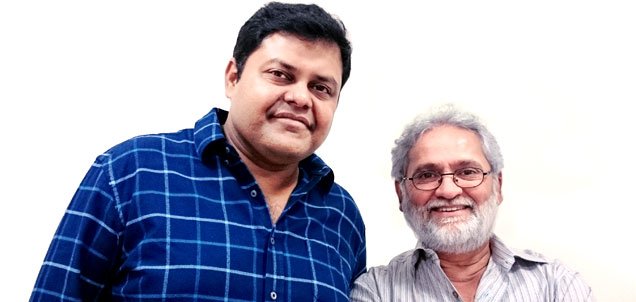
    Sunil Gautam (right) with Jaideep Shergill


    The announcement last November surprised many as Jaideep Shergill had a successful four-year run as CEO of the MSLGroup. He chose to leave the Pubicis Groupe to join former boss and mentor Sunil Gautam, the chartered accountant-turned-communications professional who founded Clear Advertising and PR and later Hanmer & Partners which eventually morphed into MSL India. SG, as he is known in the PR fraternity, was Chairman Emeritus of the MSLGroup. Effective January 1, Shergill and SG have set up Pitchfork Partners, a specialised consultancy which will handhold corporate and start-ups in their marketing service activities.  In an interview with Pradyuman Maheshwari, the duo share their vision and why firms like Pitchfork will thrive in the ecosystem.


    Fifteen years back, you chose Hanmer & Partners as the name of your agency. Now, Pitchfork Partners.  Sunil, what’s with you and your out-of-this-world names. Why Pitchfork?

    Jaideep Shergill (JS): Let me take this one. It’s what the devil uses. It’s his weapon of choice. We were looking for a mischievous, mysterious and magical name. Something that’s out of the ordinary. There are a lot of firms that do communication, creative, PR, digital, but all of them are very tactical and are not really putting their money where their mouth is. After running companies for many years, we’re fairly convinced there’s a vacuum out there. When we were thinking of a name, we wanted to think of something more irreverent. The devil stands for that. Pitchfork is his weapon of choice…


    So in what way does the name convey what you’re going to be doing?

    JS: Yes, it’s more than a name. The Trident, Pitchfork, is like the Trishul. In our scheme of things, there are three verticals.


    You were having a decent time, Sunil, near-retired, you could’ve invested here and there, played golf. Why get into an all-new activity with all the struggles?

    Sunil Gautam (SG): Yes, I was having a great time, but I want to have a better time. There’s lots to do, a lot of fun. I enjoy working, it’s my passion, it’s great to team up with Jaideep, we know each other for 18-odd years now.


    When did you decide to start Pitchfork? Is there an appetite for a business like this?

    SG: We’ve been talking about it for a couple of years but were in no hurry. With markets opening up, we feel the time is right. We hope there is an appetite for business like this. Our initial response has been very encouraging so far.


    Will you charge a retainer fee or…

    JS: Retainers and projects. Some long-term programmes where the client will work with us for six months or a year. If it’s a project, we’ll bill them as per our hours. We’ll have billable hours like a McKinsey. We’ll have hourly models.


    Will people agree to this? They agree to a McKinsey because they expect them to re-engineer their operations and offer high-end consultancy.

    JS: But we have had hourly systems in MSL historically anyway. We had a large number of clients who pay us a flat retainer fee. But even today, a large no. of clients also pay MSL by the hour. It’s not like that model doesn’t exist. It’s not new, but, yes, it’s not yet at a McKinsey level.


    Jaideep, you helmed MSL independently for four years and seemed to be on a high. So why give that all up?

    JS: Three or four reasons. Having been in the mainstream business for a long time, I’ve been through and seen a lot of change. The company we were a part of got acquired, we acquired other companies, I’ve seen the transition from traditional PR to modern communication. I honestly wanted to do something different. There was a wide space there. That’s what Sunil and I were looking at. It’s in three areas. Strategy consulting, because we want to move up the value chain, the second area is aggregation and disintermediary. We won’t work in the traditional PR alone. Given our wide-ranging experience in communications, we’ll be like a business or marketing or brand consultant to a company. That’s the wide space I saw.


    When you were with the MSL group, you had the opportunity to steer the company to do some of these things, right?

    JS: Yes, we did! 96% of our business was traditional. In the last four years, we moved it more significantly than any PR firm. Today 55% of MSL revenue is traditional and 45% is non-traditional. From 5% to 45% which comes from research and insight, creative, content, digital. It’s happening. Where Sunil and I see the gap is when we come in to the equation, we come in as people who can implement, execute stuff. The clients have decided what they want. We come in at a late stage, sometimes even after the ad agencies are brought in. We come in as the last mile. We want to change perceptions. We want to move up the value chain. We want to offer a service that can work directly with the top management, can be more strategic and can work with a complete backward and forward option. Literally from when the client is looking for a marketing director or a CMO or a Corp Comm Head, we want to come in even at that early stage, help the company through that evolution. That’s what we can’t do within a structured environment. You need to be out there on your own and at the end of the day our value is what he has and what I have. It’s two people bringing their collective wisdom, experience. We will give it a shot, this model hasn’t been tried before.


    Were you happy with the way traditional PR agencies have had to change course over the years?

    JS: They can certainly do better. They can do it faster. Speed is of the essence. When we’re together we’re more nimble because there’s just two of us. When you’re in a big institution, everything moves slowly. We want things to move fast.


    All going digital?

    JS: Of course! That’s the reality of life. If they don’t, they’ll die.


    You mentioned when an organisation is too big, you’re unable to do things. But the whole objective of setting up a new organisation would be to grow that big and do various things.

    SG: The whole idea is very few people who’ll be advising CxOs, the top levels, in terms of strategy. When it comes to implementation, may be we’ll outsource it. When you have to involve yourself at top levels to think strategy, you need to really give a lot of time. This is something you don’t want to delegate, which has been happening across agencies. We’ll be a very lean and mean set-up. At the peak, we may have not more than 10 people. Whoever worked with us will be a partner, will be handpicked, will deal with top level clients in terms of giving them strategic advice. We don’t want it to be large because we don’t want to implement things. We’ll get it done for clients, we’ll oversee it, under our advice and guidance.


    Wouldn’t that limit your scope in any way?

    SG: Not really, what we’re here to do is enjoy ourselves. Work closely with fewer clients but give a lot of quality time and thinking for them. Clients are willing to pay top dollar for this.


    Sunil, you’ve been part of the PR business since the time of the IPO boom. Unfortunately, clients do not use the services of PR consultants effectively unless there’s a crisis or a new development. They’re not really partners in their progress.

    SG: I don’ think PR agencies have really worked themselves to reach that level. That’s my opinion. I don’t think they’ve worked that hard to reach that level in terms of rubbing shoulders with CxOs to give that kind of advice. There are various reasons for that. But there are clients who are willing, who want, who recognise there is this gap and some of them are already talking to us.


    But isn’t all the PR advice they seek is getting the news out (or not out) the next day?

    JS: To begin with, we won’t just advise our clients on PR. That’s most important. We’ll be their communications and marketing advisors. It goes much beyond. It’s giving them a path on their communication needs. Advertising, digital, PR, events… whatever they need.


    Both of you known essentially as PR professionals. Do you think you can break that barrier and look at clients – blue chip clients – for their entire marketing services activities?

    JS: Absolutely! There’s no reason, why not? The walls have fallen any way. What’s the difference between the digital work an ad agency or a PR agency does? Everyone is doing everything. Even though we come from a more PR or communications background, there’s enough that we have to be able to guide somebody in the right direction. We’re not the people going to be sitting and writing the copy anyway. So, if a client has a creative requirement, we will find him the best creative talent.


    Tell us more about the start-up part of your business?

    JS: Yes, we will look at tech, digital, PR companies who’ve reached a strength of 20 to 30 people and they don’t know how to grow. Creative, digital companies now want to go to the next level. We’ll come in and guide them through the whole growth process, take them to the point where they can either get acquired or sell out or scale up and then we’ll buy into them early as early adoptors or seed fund kind of structuring. We don’t want to be private equity. We want to be mentors.


    If any of your MSL clients come in, would you entertain them?

    JS: We’d still want them to work with MSL. But if they are looking for something specific which we are doing, why not? You should also know we’re very transparent with Pubicis about what we’re doing. We also offer a complementary service which is also the reason why our relations with the group is as good as they are.


    So will Publicis be your first preference for your clients?

    JS: We’re more than happy to go with anyone. While we’re agnostic, we’ll look at Publicis as the first call. If we find a solution within, why go out? There are certain skillsets it may have not have like market research, for instance.


    Sunil, do you see the communications business headed this way with senior professionals like yourself setting up personalised consulting services?

    SG: I’m very confident the world will move that way. Clients today do not get time from senior guys who can think on their behalf.


    Do you have any targets on what you want to achieve in your business in the first year?

    JS: Not in terms of a number. As Sunil said, we’re in it to have some fun! The third pillar that we have will require us to give a lot of time for mentorship. We’ll be mentoring young professionals who want to grow. All that doesn’t have a revenue stream. There will be a long gestation period. As an example, if we’re advising a startup PR firm, we won’t actually get anything out of it for the next 5-10 years till it grows. We’re not setting business targets but goals we want to meet as individuals and getting to that self actualization place in life where we’re having fun, we’re working and are able to add some value to the people we work with.


    Would you at any point think of getting an investor on board? Maybe after 4-5 years?

    SG: It’s too early to say. This is just our first month.


    A shorter version of this appeared in dna of brands dated January 12


  • We knew Zindagi won’t be in league of Zee, other GECs


    Okay, okay, this is for the second consecutive day that we are doing a big story on a Zee channel, but that’s a coincidence. No motive… no quid pro quo 🙂


    So should a Hindi general entertainment channel necessarily score big on the weekly ratings roster to be termed a success? Not if you are Zindagi, launched in June 2014, which hit upon the winning concept of airing Pakistani television shows at primetime. The concept has worked, carving a unique ‘premium’ niche for the Zee Entertainment channel. Pradyuman Maheshwari spoke with Priyanka Datta, Business Head of Zindagi. Excerpts from an interview:


    For India and Indians, Pakistani and everything Pakistani is perceived as Enemy #1. Did the seven-month run of Zindagi see any unsettling moments given the various issues we’ve had with our neighbour?

    When we launched the channels we too thought along these lines. In fact we had security outside our office and were ready for any possible backlash. But the response has been amazing. There is no negativity whatsoever, in fact there’s only appreciation from all quarters.


    The channel was launched with much fanfare on June 23, 2014. How has the year been for you?

    The response has been overwhelming. It wasn’t a mass channel to deliver major ratings like you see in the Hindi general entertainment channel (GEC) space. We launched keeping the content for an ‘X’ mindset and we’ve reached that audience remarkably well. Now we intend to innovate and grow.


    If there’s one thing to differentiate the mindset of a ZeeTV versus that of Zindagi, what would it be?

    Zindagi very clearly caters to an absolutely progressive mindset. A person who can stand for her right, it has female audience-based shows, away from the melodrama, more in the realistic realm of things. That’s the content we offer and the audience we target.


    For an organisation which has a channel where ratings are always in three figures, it must’ve taken some to get used to this double-figure rating for a GEC?

    That’s all in the mind because in this very network you have English channels which also have a single figure rating but are doing very well in their genre. We knew Zindagi won’t be of the league of Zee or other Hindi GECs because the content differs widely. We felt it could’ve done a little better than what it’s delivering now, but we were not very way off.


    You haven’t caught the bug of reality or song-and-dance shows yet?

    We don’t intend to, this isn’t a typical Hindi GEC. I don’t think there’s any need for a reality show or non-fiction. For example, a DID doesn’t fit into it.


    No Pakistani DID?

    Zindagi isn’t a Pakistani channel. Currently, the content is all from Pakistan, primarily because the language affinity is there. In India, we don’t have finite shows in the Hindi space. That will take time to come on air here. We are already talking of regional productions as we go on, along the year.


    But, as of now, it is Pakistani…

    Yes, the content that you have is Pakistani. We’re looking at exploring content from various places like Turkey and Egypt from the second phase of this year.


    How have you done in adsales ?

    This channel is being received well. I’m sure we’ll do better as we go along.


    Are you able to attract any premium because of the kind of audience you have?

    Honestly speaking, whatever we are doing is the premium we are getting and selling on. We definitely can’t sell on ratings, seeing them as they are. It’s all on premium and the brands have only been growing. It’s faring pretty well. The mindset is also changing from an advertising standpoint. In the Hindi space, people so far are not used to buying content on premium. It’s all very CPRP- and GRP-linked. English channels, for instance, are bought on premium and perception, not ratings. Hindi channels haven’t been bought on perception because none existed to buy.


    The sentiment in Pakistan in the television industry is very popular towards Zindagi. It’s more money for them too. Are you cashing in on that in any way?

    We’re looking at getting more. We’ve already procured most of the cream they have produced so far. The good thing is, it’s not just the content that’s bringing the freshness. All their best actors and directors are into television. They are far more natural actors… they go to bed in nighties, not zari-lined sarees! That appeals very well to our audiences.


    Some of the Pakistani stars are quite a rage here, right?

    Yes, it’s working for them. Now, many Zindagi stars are getting into Hindi films. Like Fawad Khan was signed on for a film much earlier, but became a household name only after he was on Zindagi. Everywhere he went for the promotion of his film Khoobsurat, he was being asked about Zindagi Gulzar Hai and asked to sing, talk of his TV show etc.


    A version of this appeared in dna of brands dated January 19, 2014


  • In the family way…


    Pardon our cheeky headline, but a channel like Disney doesn’t give you the liberty to do this ever. For, starting tomorrow (January 31), Disney Channel takes the family route. Kicking off its new credo will be five new live-action shows over weekends with a brand promise of ‘Shanivaar, Ravivaar only for Parivaar’. They are Kabhi Aise Geet Gaya Karo, Maan Na Maan Main Tera Mehmaan, Goldie Ahuja Matric Pass, Lage Raho Chachu and Zindagi Khattee Meethi featuring television veterans like Renuka Shahane, Mahesh Thakur, Sudhir Pandey, and Maninee Mishra. On the eve of the the change, Vijay Subramaniam, VP-Content and Communications, Media Networks, Disney India spoke with MxMIndia


    From a kids-centric channel to now a family one. Given your long association with the channel, how do you and the team feel about the transition?

    It feels amazing because it’s the journey we pretty much imagined for the channel and the brand in this country. We are a kids-centric family inclusive brand and our brand of entertainment will always be that. We are a young brand. When we came into the country, the first protocol was to connect with the kids which I think we’ve done consistently and successfully for a while. While doing that, we’ve also enjoyed a great deal of parental approval and participation. Now, we find we’re in a great place to complement our offering with the opportunity to entertain the entire family together. What we’re doing is adding one more offering or layer to our content offering.


    The kids’ domain was also getting a little cluttered.

    No, I’d say there’s always a marketplace for differentiated high quality programming. I don’t entirely believe there’s enough segmentation yet. The real journey for us is that the brand entertains kids and families together everywhere. That’s the uniqueness of the brand and there was a point in time where we too wanted to take the time to invite families to come and sit on the couch together and be entertained by the Disney channel.


    While the flagship Disney Channel turns ‘family’, your other kiddie properties continue

    Absolutely! I said it’s a compliment. It’s adding an existing layer to our entertainment offering. It’s stuff that kids will also enjoy. It’s made for the entire family. These are shows and stories that are not just uplifting and positive but are very entertaining.


    You had a re-run of Shararat on Disney for a very long time

    That’s right. Those were the early days of experimentation on what kind of stories work and how do audiences respond. More recently, we started putting shows like, The Suite Life of Karan & Kabir and Best of Luck Nikki. We even piloted a DisneyQ in the Family Mastermind format. These are progressive steps we’re looking to take to add to our existing offering and bring families into our entertainment foray.


    What are your targets in terms of ‘Made for Family’ content? What’s it going to increase a year from now?

    In terms of number of hours, right now there are three hours and we’ve not really set an outer goal yet. It is a significant step that we’ve taken and our entire focus is on being able to do this and set out the high quality content we’ve set out to deliver. I think our focus is really going to be on those two areas.


    The family content also pits you against the existing Hindi GECs which in a different league altogether. Are you going to match that in terms of presence, scale and emotions?

    Our aim is and remains to entertain kids and families together on the weekend using differentiated stories and storytelling. It is organic. We believe, over time, our popularity, through the stories and the shows, will increase and grow. We’re very clear and independent in our view of how our journey is going to be for us. We believe the opportunity is there for great stories which families gravitate towards. If you were to draw a parallel, you can look at the movie industry. There are blockbusters and there are standout films – both equally successful. I think that analogy would apply to us as well.


    Surely you would’ve done a fair bit of research on this, but, in a market where kids are drawn increasingly towards detective shows like CID or funnies like Comedy Nights with Kapil, do you see enough of a pull for clean entertainment?

    Absolutely. I completely agree with you in terms of what they are watching but, equally, there is an opportunity that they would be, if given, delighted to watch not just them but their parents and their grandparents. That opportunity is what we are tapping into.


    From where you are right now, any targets in terms of how you would fair in terms of the ratings roster?

    Unfortunately I can’t share our targets with you. We continue leading the marketplace and we will hopefully continue doing that. We want to now start tracking strongly in the family measurement scores and I know in India you don’t have co-viewing as a measure, so if you were to interpret family as the 25 plus audiences, we want to start tracking pretty strongly there as well. That would be the first measure, really.


    Were there any worries that you would alienate your core viewer: children on weekends?

    No, again going back to Best of Luck and The Suite Life of Karan & Kabir. Those steps gave us enough insight into how you can actually entertain kids with live action content. Because it is the stuff that they watch. If anything, we were energised by the fact that we will be able to entertain kids and families together with a new dimension which is live action which otherwise isn’t coming from the genre. Secondly, it’s the unique storytelling style that we’ve chosen that we pride ourselves in. At the heart of everything we do, we are kid-centric and family inclusive. All our stories have to pass on that filter.


    Are you looking at films in the near or distant future? The Disney family in the U.S. have a fairly large film component.

    That’s right. The DCOMs (Disney Channel Original Movies), you mean. They’re not on the anvil right now. Our entire focus is to deliver consistently high quality wholesome family entertainment that, with finite fiction is what we’ve started with and moved down the path of…


    How has it been in terms of advertisers?

    The response has been very encouraging. The fact is that it’s two-fold. Firstly, we do have a legacy with our partners. Our journey has been progressive and it’s been for them too. We have a large roster of partners that are already engaged with us, both as a network and as a Disney Channel. This has only expanded their horizons because this allows them to target other segments which currently they didn’t have an access to from a Disney standpoint. Secondly, the response to the uniqueness of our stories and the fact that it’s wholesome and fun and uplifting and really the dil ko choo jaaye part of it has been tremendous. A lot of brands have seen the qualitative values besides the quantitative ones to want to be a part of this journey.


    I’m sure you’d have done your research. But, at one level, it’s good to talk about the fact that you want to be associated with the good things. But it’s another when it comes to ratings and alike.

    Absolutely! I do believe that, ultimately, high quality, differentiated stories with values stand out. They will stand out and they will succeed on both parameters. That’s our belief. It is a journey, it is organic, it takes time because you’re asking people to first come and sample the stories. We’re pretty confident that through that sampling, they will be first entertained and therefore, engaged. That journey done consistently well, we will be successful.


    Are you looking at any regional feeds of this family format?

    Not at the moment. Again, singular focus, we’ve made a conscious choice of entertaining the Hindi speaking markets first.


  • Structure, Talent and Innovation are action points for PK at Mindshare, says GMan. Exclusive to MxM

    Gowthaman Ragothaman

    Given that both CVL Srinivas, CEO GroupM South Asia and Prasanth ‘PK’ Kumar, Managing Partner, Central Trading Group, GroupM South Asia and CEO-designate Mindshare South Asia were busy with the presentation of the ‘This Year Next Year’ report, they preferred to not speak on the latter’s appointment to the top job. But since PK will also report into Gowthaman Ragothaman (better known as GMan), COO of Mindshare Asia Pacific, Pradyuman Maheshwari spoke to GMan in Singapore and requested him to respond to a few questions via email.


    It’s been three years since you moved out from direct responsibility of South Asia. From a regional perspective, what are the broad challenges facing the India office?

    We have to treat India/South Asia as a region. No other market/office in the world has so many offices. We have Mumbai, Delhi, Bangalore, Kolkata, Chennai, Lahore, Dhaka and Colombo. While all other markets are structured for a “one office leadership”, as we have expanded and grown across offices, our “speed to market” was significantly tested in the last few years – this is an internal dynamic. As an industry, I realised, when I moved out into the region, India is very inclusive and try to do/invent all things inside when a lot of best practice can be just replicated or brought into the country. I also realised that the talent drain from India to the region, has sort of depleted some good quality talent in the country. So Structure, Talent and Innovation – are the three broad challenges.


    Prasanth Kumar is a seasoned GroupM hand. What are the specific targets you have for him?

    Pretty much the above 3 points. And you will see some of these happening quite fast and quick.


    In your statement on PK’s appointment, you speak about getting leadership talent from within the group. But, don’t you think that for achieving something out-of-the-box or hat ke, as they say in India, you need to bring in talent from the outside?

    Totally agree with you. We continue to diversify out talent pool at all levels – and the constant churn in the industry helps us to manage this, especially when you flip it as an opportunity instead of a problem. Almost all the recruitments we have made in Mindshare in the past 2-3 years are external talent. And at the same time, if you look at the challenges that I have mentioned in the first point, our considered view is to groom local talent to leadership positions as they come with tremendous insights of the organisational issues. It is  a considered choice…but not necessarily a permanent choice for all the times.


  • Very Premium. Very Alok Nanda


    There are creative professionals and creative professionals and then there’s Alok Nanda. Founder and CEO of Alok Nanda & Company (ANC), billed as India’s only brand and communications consultancy focused on the lifestyle and luxury space. Nanda started his career with the legendary creative agency Trikaya Advertising, where he rose to become  National Creative Director and then member of the Grey Asia-Pacific Creative Board. He left Trikaya (now Grey) to set up ANC in 1999 to bring together the worlds of advertising, design, experience design and branding under one roof. ANC has helped build brands like the Taj Hotels, Arrow, Wrangler, Sula wines, Lodha, Barista, Ambuja and Marico, to name a few.


    But, then creative design for Nanda extends beyond the advertising work. He sells art, runs a design lab as well as a brand engagement firm. Pradyuman Maheshwari had a freewheeling chat with Alok Nanda essentially on advertising, and a little more. Read on…


    You’ve been through the hyperactive days of Trikaya and are now part of the frenzied adworld of today. What according to you are the key differentiators between then and now? 

    It’s a huge sweep of time. At the time when I was just joining, clients were dictated by the advertising industry. Over the years, equations changed when agencies became suppliers to clients and there were these huge global manuals on following this and doing that. In the last couple of years, we have seen enough agencies and clients a communication partner can go to. From our perspective, the big change is you can choose to work for clients you love to work for and clients can choose agencies they love to work with.


    To an extent, it’s a bit of the old, right? There are people who have seen your work would want to come only to you. Or they would also want a Piyush Pandey or an R Balki…

    Very much. People know the kind of work they want and would come to you. Talking from a business relationship perspective, today we really only work with clients we want to work with. Ten or 15 years ago, you’d be driven by business imperatives. 25 years ago, it would’ve been the client chasing the agency. I’m seeing how the shifts have balanced out.


    How has the journey been for you over the last 15-odd years?

    It’s been pretty good. I wish I’d started earlier. Trikaya was where I learnt everything, I chose not to and I didn’t want to take any business from Trikaya when I left. Not sure, I could’ve easily taken business. There was the Grey part too, the global clients, they obviously wouldn’t consider me even if I wanted to consider them. Even though I had a good relationship with many clients, I was clear I was starting afresh. The drive was my fresh journey…


    What were your sentiments when the Trikaya brand name faded away from the agency?

     I’ve honestly lost touch with Grey, have no alignment with the rest of the industry. I don’t even have a clue what’s happening at Ogilvy. I don’t track it.


    Huh?

    It’s not out of arrogance. Our business lines are vastly different. Advertising is actually a fairly small portion of what we do. We’ve carved our own space and we’re very happy with it. What I did and learnt at Trikaya was all premium brands. I was never a part of FMCG, big mass brands, rural India. I’ve only done what I know the best. The market has come full circle. India has grown rich, there’s premiumisation happening.


    Did you intend ANC to be what it is today in terms of being a premium communication firm?

    In the broader sense, yes. When I set up ANC, I was clear India doesn’t need one more advertising agency.  I said we’ll be multi-disciplinary but without walls. We have multi-disciplinary people here, designers, retail designers, corporate communications people and advertising people. We all sit together, there is no centre. When a client comes, the answer is not advertising. Advertising may follow or may not even happen.


    Everyone in the advertising world talks about rural India, about being able to connect with the masses and making a difference and here you want to stick to the elite urban stuff? 

    We’ve no such ambitions. We’re very focused on the lifestyle, luxury and also because of my personal passion, the corporate brand business, all of this are very focused on the premium urban India.


    The advertising you said you want to do is has a different, premium feel. But your campaign for Lodha with the claim Wadala is the new Cuffe Parade, is typical of advertising. It’s hardsell? Isn’t calling Wadala the new Cuffe Parade outlandish? 

    Actually, there’s nothing new in it. If you study what happens worldwide, real estate is about creating destinations. If you go to New York, there’s a place called SoHo, created by the real estate industry. It didn’t actually exist. The city of London is about the size of a postage stamp. Every year they gobble up more villages and then they call it Greater London. Why? Why not give it the name of the village? When the government said they’re creating a new city the other side of the creek, didn’t they call it New Bombay? When the residents of York settled in America, they called it New York. There’s nothing new. I studied a lot of history of real estate when I entered the market. This emanates from there.


    So was the new Cuffe Parade your idea or that of your client?

     My idea and I’m extremely happy about it.


    While real estate is all about selling dreams, it’s finally about selling property.

    It’s about delivery at the end of the day.


    The delivery has to happen instantly. If an ad appears in today’s dna, they need to have the phones ringing from 7 or 8am onwards. Are you happy doing this kind of results-oriented advertising?

    Yes and No. Each client has its own requirement and needs. You need to balance out building a brand and business calls. What you’re referring to is the amount of direct response that has to be built into a campaign. Working with Lodha, we’ve arrived at a manner that works for them. To what degree do you build a brand and at what stage do you start ensuring the calls come? You can’t start getting calls if you don’t build a desirable brand.


    So, typically, after how many insertions do you expect the ad to make an impact to have the consumer to make a call?

    It varies from project to project. It also varies from the scarcity of demand. If you were going to launch a tower in South Bombay, given the scarcity of land, chances are, even before you release your first ad, they would have sold a large number. It really varies from what is your location, your play.


    Abhishek Lodha says you’re more than just an ad agency. You’ve partnered his projects. What is the degree of you involvement? Has this been out of the ordinary or is that the same with all your clients?

    It’s the same with all and I’ll come to Lodha specifically too. We don’t call ourselves an ad agency because of the nature of the multiple offerings we have. We call ourselves, for want of anything better; a communications consultancy. We deep dive into what a client wants. When we work with a Taj, we did their ads, we also designed the identities of all their famous restaurants. We’ve worked in immense detail, bringing design in to Taj, bringing advertising to launches of their properties worldwide…


    You have Lodhas, hardcore businessmen, and the folks at the Taj, who’ve earned their stripes in the hotel industry and understand their craft very well. Are they receptive to your kind of evolved communication practice?

    The Lodhas were in the real estate business for many years before they came to us.Their vision, pre-ANC was to be in the middle class department  in Thane and the suburbs. Abhishek came to us and we worked with him on re-envisioning the brand. I sat and worked with him and we were clear that Lodha is going to be playing a premium game, I said you can’t be seen as a builder. You need to become a lifestyle brand. That’s how my relationship started. One of the most powerful things we created for them is a brand architecture and brand identity. That’s how we grew and I go back to saying, life is too short to work with clients you don’t want to. One of the greatest joys of Lodha is to work with Abhishek!


    You have a mixed bag of clients.

    Real estate is visible because it’s visible in Mumbai. We do all corporate work for Gujarat Ambuja. We’ve managed their financial brand, we’re now managing their CSR brand. That’s my corporate financial side of work, not visible to the audience but to the investor audience.


    If a BJP were to come to you for branding, would you accept it as a client?

    I’d see if I were able to add value to the client, first. We’re in a situation where we don’t need to go back to business for business sake. I’d ask myself if I take them on, which is the other client I wouldn’t have to? At the end of the day, would I be successful for them and therefore would I have a case study for myself? That’s the only way I can grow. I can only grow by creating one case study after the other. Our vision is not to make 30 employees to 300. Our vision is actually margin driven, to put it from a different perspective. I’d seek higher margin business tan higher volume business. My clients know me that I’m expensive and they get value. If I was able to offer that to a political party, I have absolutely no problem. I prefer it that way. It’s not about ideology. That’s the other question you asked.


    It’s the flavour of the season to do something for the government, Swaccha Bharat… aren’t you looking at doing some?

    We devote almost 10 percent of our time on public service and charity. We work with hospitals, charities, do identities free for them. We’ve just finished doing one for a doctor who has pioneered free heart service for babies. He’s doing such wonderful work. We said we’ll support you in whatever communication we need. We’ll do our bit in that way.


    What are the other categories that interest you as a communicator?

    I’m really excited by education. The big thing about ANC and the joy is that we don’t just build brands, we build categories. We’ve transformed real estate, not just Lodha, in many ways. To me, the next big thing is education.


    You seem to have a likeness for businesses with many shades of grey?

    Education is getting corporatised. You’ll have chains with 500 schools. For the first time, they need branding. You need competitive positioning, schools competing for customers.


    I’ve never seen an ANC ad which is less than a half page in size and in education you have very small 10×2-sized ads.

    I think it will change when you see some of the things that hopefully will come out from us.


    How much of TVC work do you do?

    Very limited, lifestyle luxury is very limited on TV. Luxury certainly is the antithesis of television. Corporates also tends to not be on TV. We make films. For Lodha, for every project we make films that run on sites. We make corporate films…


    Advertising agencies typically make their money on TVCs, right?

    I’m sure, they do,  we don’t. Most of our business is fee-driven and we demand a premium fee, upfront.


    You say you don’t do much television and most of your advertising is done in English.

    99.9%.


    What about other languages? Has that come to you…

    We do a miniscule amount.


    You’ve never thought of creating a fair amount of advertising in languages. That’s where premium is going to extend to.

    You’re right, premium will extend in that space. That’s not where the immediate growth is going to be.


    You’re not aligned to any big network

    Yes, we aren’t.


    Don’t you intend doing that? There were some murmurs sometime back that you are looking to align

    I wouldn’t say we have no intention to. We’d want to find the right partner. That wouldn’t necessarily be an advertising network. It could be a more interesting entity that deals with design and graphics.


    WPP, for instance, has a Landor…

    Not that Landor is talking to us or we are talking to them. But, if we did, that would only fit in as far as our brand architecture business would go. What will then happen to my advertising business? We’ll need a free thinking organisation that fits for who we are. People who design their own products. We’ve ventured into arts, for instance in a very interesting way with a JV. It’s a different space.


    Is it a definite No to alignments or acquisitions in the near or distant future?

    Well, we are also interested in acquisitions. You never know what comes your way. Our focus, if it has been driven on higher margins, by definition, we have to go from specialization to super-specialization. Art is a direction. If we were to get into interiors, I’d get a quicker way to learn the business, to acquire an interiors business. Things like that is where I would look at acquisitions. Packaging, in a far deeper sense, where you get into material plays, morals etc. We’ve done a fabulous packaging for milk from Sarda Farms. That’s where we started getting into, it’s not just graphics, it’s weight, performance of glass etc. If you want to learn that at a more rapid space, a quicker way is to do an acquisition.


    Don’t you think this is the right time to align and grow?

    We are looking for people to partner with, but we’re in no hurry if we don’t find the right person. We’re unique from a pure physical construct of the work we do.


    Are you happy with the way advertising is going?

    Yes and No. It’s developed pretty well in certain areas. The craft and film is phenomenal. It’s really improved. If you ask me the rest of it, it really sucks. Our digital design sense is abysmal.


    A shorter version of this interview appeared in dna of brands dated February 2, 2015. And, btw, if you thought this 2500-word interview was long, the original transcript ran into some 6500 words.


  • & the countdown begins for Rajesh Iyer…


    This interview almost did not happen. Many moons of leading the marketing function from the front have made him believe that it’s work that should do the talking. Not words. Some recent dostis and a bit of pushing did the trick though.  The objective was to read the mind of the Business Head of the world’s newest general entertainment channel: &TV. The finer details can follow.


    Rajesh Iyer isn’t an old Zee hand, having spent his past at Colors and earlier with Star India and adshops Publicis Ambience and Ogilvy & Mather. It is also his first stint at independently heading operations of a big budget television business. But despite that fact all eyes are on him from within the broadcast ecosystem and the Zee group, the nerves are in place, and he and his team are looking forward to the launch on March 2. Excerpts from a free-wheeling interview with Pradyuman Maheshwari:


    Two weeks to go to the launch, what are the preparations like?

    Quite honestly, we’re pretty much there. There are a couple of pieces we need to put together. We’ve been working on this project for the last eight to nine months now. We pretty much displayed part of our content piece at the press conference. That’s in place, our distribution is in place. Our marketing and promos have already kicked in – in and outside the network. The activities, primarily the marketing piece, will intensify as we go ahead. These are the three or four pieces we’re working on – the content, distribution and marketing. And, currently we’re well on course to launch.


    There are GECs and there are GECs. Is there one clear message to the trade as to how &TV will be different from the others?

    Our view in the group is that good content is good business and, it will always continue to be that way. The typical question is always how will we be different? The answer to that is it’s not about being different. It’s about how will we be different? That’s the key differentiation we need to make. As a GEC, by definition, one is playing the mass game. You’re catering to mass India. If you’re very different, then you become niche. Therefore, you can’t be very different from the marketplace. It’s a question of how you’re different from the marketplace and that you’ll see in the content and slant we put up. The love stories are universal. A love story is a love story but the slant which we take is going to be slightly different. It’s going to be contemporary, progressive to a certain extent.


    This applies to many media entities. If you remove the masthead, one paper looks like the other. Similarly, if you remove the logo of the channel, one channel looks like the other. Obviously, there is a challenge out there.

    The first task is to get audiences to sample the platform. Are the shows going to be extremely different from what’s there? To answer your question, if you remove the logo, will it look like another channel? I don’t think so. It’s a question of what position you want to occupy in the marketplace as far as the GEC is concerned. The content will define that. The consumers will position us. We won’t position ourselves. They will slot us. Let them slot us, we won’t position ourselves and go into the market saying, this is what we are. Our job is to give them wholesome, good, variety entertainment.


    As someone who’s looked at the marketing of various channels over a period of time, how tough or easy is the job of creating a perception for a channel?

    It’s not an easy job. We need to have a good product, fundamentally. We need to give people accessibility. Distribution needs to be strong and you need to create perception and enough entry for them to come and sample. There are so many products which are there currently. The choices are so many that if you don’t create entry, accessibility, meaningful, good content, you don’t have a chance. You’ll need to create all of these for people to come and watch. You need to have noticeability.


    Did it worry you that Sony Pal TV channel failed?

    Of course! Any channel failing isn’t a good thing. I was hoping that Pal will do well. It gives the audience more choice and opportunity to see what they want to and competition is good in this category. Pal is currently on air. I’m sure they have their own strategy and they’ve chalked out their year map and stuff like that to go forward. I would like Pal to have succeeded.


    I remember Zee had EL TV and Zee Next. Although Life Ok has done well having not followed the beaten track, the second channel of a large network with a major player like Zee TV is always tricky. All the best eggs tend to go to the flagship!

    I’ll answer your question in two parts. The first part of your question was Zee Next. We’ve learnt from our mistakes and we obviously won’t commit the same again. To answer your second, are the best eggs going to go to Zee TV? This is a different franchise, a different brand. We’re putting everything into this basket as well and the kind of investment we put into this channel is in line with any GEC. The question of the best going there and we getting second best does not arise. We’re playing in the same marketplace and we’ll go with the same ammunition and firepower. It’s not the same eggs, we’re multiplying the eggs.


    Is Zee TV for you as much of a competition as a Colors or Star Plus or Life OK?

    I’ve said this previously. There will be sibling rivalry. It’s like the Williams sisters playing a tennis match. Both of them want to win and when the time comes we’ll pair up to play doubles to beat the other networks.


    But you are advertising on Zee!

    It’s our channel, part of the group, part of the same family.


    Will the promotion continue even after the channel is launched?

    Till we find our feet, it will. Once we find our feet, it may or may not, but we’ll feed into each other.


    A channel like Zindagi has carved a niche for itself but isn’t doing too well on the ratings roster. Clearly, good content doesn’t really make for good ratings!

    Zindagi is premium Hindi content and we’re hoping that market will grow over a period of time.


    You’re launching &TV when the World Cup quarter-finals would’ve started, and then there’s the IPL post that.

    As far as the World Cup is concerned, it’s being played in Australia, the matches are between 9am and 6pm. That shouldn’t affect us too much. Our primetime starts well after that. As for IPL, we launch five to six weeks before that. In the last two-three years, the IPL hasn’t dented the GEC space much. We believe in our content. If it sticks, people will come and watch us.


    In the past, we have had some channel launches and the IPL kinda killed them.

    IPL is a very established and good entertainment brand. There’s no question about that. It’s just for 45 days, we’re there for the long haul. It’s not dented the GEC space that much, a few channels have grown too during IPL. We’re aware of IPL and our launch date. We’re confident we’ll stick around.


    Moving to your driver show. You’ve obviously had Shah Rukh Khan work for you. The media has written about it, people are talking about it. But he’s possibly one of the least bankable stars on original television.

    I think, Shah Rukh Khan is the biggest star in this country. He’s done extremely well in the cinema space, like we all know. If you look at the ratings, he’s done very well in the television space too. We believe this product Sabse Shaana Kaun perfectly aligns with Shah Rukh and he was the perfect match. It’s about the common man, Shah Rukh is an inspiration to the middle class. Everyone wants to be like him.


    Wouldn’t Salman have worked better?

    We were very clear from Day 1 that it had to be Shah Rukh Khan.


    But two high profile Shah Rukh shows have failed in the past. You had Paanchvi Pass on Star Plus and Wipeout on Imagine. Both were produced by Big Synergy. Given this, don’t you think you are betting rather big?

    Shah Rukh was a perfect fit for the concept. You can’t predict the fate of a show. It may or may not work, just like the movies. But Shah Rukh is the most bankable Bollywood star today. He’s India’s massiest star. We’re a mass channel. The product works for him and he works for us.


    What else do you expect to drive the channel?  Razia Sultaan looks good…

    We’ve faith in all our properties. Razia Sultaan, Begusarai, Bhabhiji Ghar Pe Hai which is a sitcom. Badi Devraani is a story based on a Marwari family in Kolkata. We have all of that as well and a few other shows which we’ll soon display.


    You don’t have anything from Ekta Kapoor as of now.

    Not yet. Well, anyone who’s giving us good content we’ll be glad to have them on board.


    Many GECs have a lot around Gujarati families. Is there any community you’re looking at?

    Not really, we’re not profiling it that way. As long as we get good stories, the backdrop can be different..


    It’s a good thing to say that but it’s all about ratings, finally. Is there a target you have in GVTs/GRPs? Is it three digits in Week 1?

    Of course, we have a target on GRPs. We’re hoping viewers accept us. That’s what our focus is on. Is it going to be two or three figures? While we do dream, I think it’s too early to put a number to it.


    Are you dreaming big?

    We’re dreamers and there’s no doubt about it. We obviously want to be accepted and successful. We’ll see how it goes. Rating is one of the success measures, not the only one.


    A bigger googly than the World Cup or the IPL are the new ratings from BARC which will come out from around mid-April. Is that a worry?

    At the end of the day, BARC will expand the universe. There are more people who’re going to be metered on this one. Preferences, behaviours don’t change overnight. The consumer behaviour won’t change with the rating system. They won’t switch channels or watch some other programmes because there’s a rating system which has changed. As long as the show is doing well, it’s accepted, we’ll be metered on that. We’re not too worried. As a matter of fact, we’ll be happy. With more people being metered, it gives us more opportunity.


    We’ve seen in print readership where the new IRS system was released with a new establishment study. There was a bloodbath after that and we’ve had no fresh round of data. I’m sure BARC is taking care of all of that, but the worry does exist for some of the existing players. In a sense, it’s also an opportunity for you, right?

    We need to wait till the BARC data comes up. At this point in time, it’s hypothetical to give you a direct answer on that one. We’ll have to wait for the BARC data to come out but we see it clearly as an opportunity for ourselves.


    How LC1-friendly are you going to be?

    From a marketing strategy, we’re also focusing on the LC1 belt.


    I see less of LC1 content in the mix…

    That’s part of the LC1 content that you see. We’ve to still unfold the other part of the content. We’re no one to differ on what’s LC1 and what’s Metro content. It’s universal. When we give them good content which is relatable to them, we will be fine. That’s the premise we’re working on. Some movies work well across single screens and multiplexes. We’ve done extensive research as far as content is concerned with consumer innovation studies or ethnography across cities to get feedback on the kind of content we’re putting across.


    As you are getting set to launch, there are others too gearing up to welcome you! Are you looking over your shoulder or just going ahead with what you’re doing?

    We’ve got to do what we’ve got to do. I’m sure the competitive set is also geared up. We’re gearing up and are confident about what we want to achieve so we’ll stay the course.


    One last (or second-last) question: there has been a fight between Zee and Colors for the No 2 slot. So guess it made sense for the Zee bouquet to have a Colors-like channel which is where they decided to launch &TV and it was best to have someone from that stable head it?

    We were obviously looking at a second or a mainline GEC channel. It’s not about competition, we’re not reactive to that. We’re reactive to what the consumer wants and that’s exactly what we want to dish out. We’ll give what the consumer wants and not what the competition is doing. We’re very clear on that. Our philosophy is that.


    Any message to the Colors team as you get set for launch?

    (laughs out loud!) That’s a tough one! Quite honestly, I wish them very well. Each of us have to do what we’ve gotta do. We’re just starting off.


    That last one was meant to provoke and figure if there are any chinks in the relationships. Even as it’s evident that &TV will fight Colors fiercely for audience mindshare, the camaraderie (and more importantly goodwill) between old colleagues and friends hasn’t faded away. Now, not all former employers and colleagues do that. Ask us.


  • The Birth of Pi


    As M&C Saatchi Direct & Digital becomes Pi Communications, following a change in ownership in its Mumbai operations, Rakhshin Patel and Sumantra Sengupta, managing director and CEO of the new company, give Pradyuman Maheshwari a lowdown on the changed set-up and their plans ahead.


    We’ve heard about big multinational media superpowers gobbling up homegrown enterprises. But now, two seasoned ad professionals have bought out the media superpowers. How come?

    You are turning this into a David and Goliath story, which it isn’t really. M&C Saatchi has always been steeped in entrepreneurial spirit, and supportive of entrepreneurs. In 2008, when we started out, they supported our fledgling ambitions, and partnered us as we grew. In fact, they have been supportive in such a way that their changed priorities didn’t ever limit our ambitions.


    M&C Saatchi is not a small agency. It’s a well-known, trans-national advertising powerhouse. And they are not known to invest in ventures quite so easily…

    As we mentioned earlier, M&C Saatchi is entrepreneur-centered. They have partnered with local professionals in many countries. It was the same here. We started with very little investment and managed to break even in the first year itself. Thereafter, our operations paid for themselves.


    We also started out with a much smaller stake in the company, and part of our terms with M&C Saatchi was a gradual increase in our stake over time. Our first increase was in 2012. The next one has taken place now, and we are extremely happy we could fast-track that.


    You’ve always had a stake, of course. But this is more than single-digit, loose change, isn’t it?

    Thank god for friends and family!We believe in what we’ve built, and we’ll certainly recover it over time. Cycling to work is an option perhaps.


    Digital agencies these days come with some fantastic valuations. And you are not doing just digital things, but also some big-data work. So can we assume that your stake runs into few hundred million dollars, ie in three-digit-figure crores?

    We had a 40 per cent stake in the company. Yes we’re digital and we do analytical consultancy, but we haven’t yet invested in data analytics. So a three-digit valuation is way off the mark.


    Didn’t M&C Saatchi also buy out February last year and ask them to control the company? Are they okay with this new situation? Also, another agency with Saatchi in its name, did a similar thing, not so long ago

    M&C Saatchi bought a minority stake in February; it did not buy them out. This followed a strategy similar to what they’ve adopted in China. Their focus and operations in India and China are a bit different from each other, probably given that the markets are different. I think the ability to think differently in different markets really means that all is, indeed, right with them. And globally, the brand in many countries is co-operated, if not co-owned.


    So how did it happen for you?

    As we mentioned earlier, our terms of agreement with M&C Saatchi allowed us to increase our stake over time. We just grabbed the opportunity when it presented itself


    Are your clients on-board with it?

    Our clients have not only been supportive, they have been actively encouraging and enthusiastic about this development. Many of them have said that since they know our work well, it doesn’t really matter what we choose to call ourselves.


    What about all the goodwill and global clients that the M&C Saatchi name would have attracted?

    M&C Saatchi did not really have globally-aligned clients here. Since there was no opportunity, in the past seven years, to work on globally-aligned businesses, it’s not something that we would miss. When for goodwill, it is garnered by both the name of the company as well as the people who build it. In this market, we have made a substantial contribution to the goodwill that M&C Saatchi enjoys. And while the name has changed we, the people, and our passion for the work, haven’t. So a part of that goodwill will continue to be with us.


    Digital and Direct shops in India are getting acquired. Will you take that route?

    Now you’ve got us thinking! Give us a few months and maybe we will look around to see whom to acquire…


    Ufff! One is obviously suggesting whether you would like to sell your equity to some large M&C Saatchi-like player in the future?

    Yes, of course, we understood it, so was a joke. But seriously we are just savouring this moment of being majority owners and our focus would only be to grow the business exponentially. That’s our goal.


    Does your buy out contract prevent you from doing that?

    The company has been taken over by us. We are free to pursue any path that is in our best interest. But right now, we are not planning to either acquire or be acquired.


    What’s next, in terms of growth?

    A lot of the distance we cover, will be through collaborations. Analytics is currently a gap in our offerings. We are in talks with people with whom we can collaborate on that. We need to take quick strides in that direction.  Besides, our business need not be limited by geography. We do have clients in Delhi whom we manage from Mumbai. But it would be great if we could create a presence in other cities as well.


    This interview first appeared in the dna of brands issue dated February 16, 2015