Category: INTERVIEWS

  • Wowing consumers by word-of-mouth


    Ravi Balakrishanan


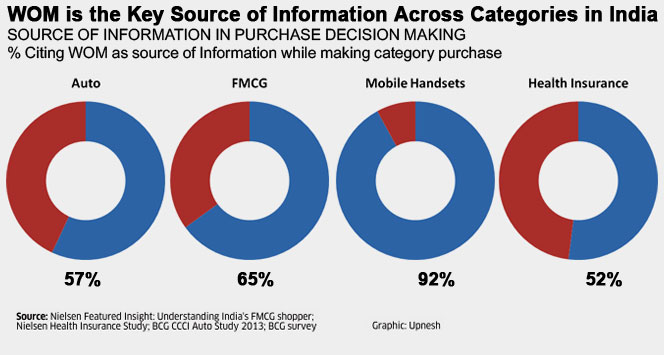
    Indians rank among the biggest users of word of mouth, according to a recent study by BCG. Here’s how you can get them to talk about you and say the right things


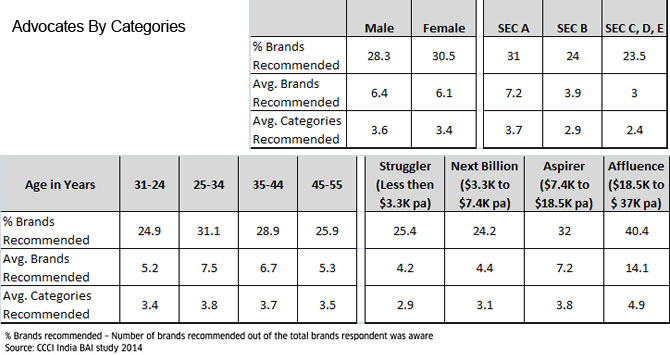
    Boston Consulting Group’s Centre for Consumer Insight spoke to 13,000 Indian consumers across different socio economic groups and cities, quizzing them on 16 categories including food & groceries, automobiles, durables, mobile phones and financial services. The objective: to come up with India’s first Brand Advocacy Index (BAI), which aims to capture the drivers of product recommendation. We spoke to Steve Knox, senior advisor at BCG and Amitabh Mall, partner and director, BCG India to find how companies can effectively leverage brand advocacy


    How do you account for WOM working better across categories in India?

    Amitabh Mall: Ours is a culture where people talk a lot more. I spent four years in New York with BCG and the number of people I spoke to in a day in India versus the United States was very different. There’s also the fact that we have many more people.Steve Knox: Some industries like banking have dramatically more talk in India than Western Europe or the US. It may have to do with the mindset of the economy. For marketers in India, advocacy is even more important.


    Any findings that took you by surprise?

    AM: In India, there’s a belief that price is very important. However, we found people talk more about features.In banking and retail, the conversation is very much about service.


    How is the BAI determined?

    Steve Knox: The last thing I did at P&G was the development of original research around advocacy . BCG developed that into a business process. It says what companies can do to drive actual actions. There were some tools tracking this before but they were structurally flawed. They asked consumers about intention and the intensity of that intention. While consumers have some sense of intention it doesn’t necessarily lead to action. Our index asks what have you actually done? We have advocates and critics and ask for spontaneous and non spontaneous feedback. Each of those carry a different weight.We can tell companies why consumers criticise or advocate. So what are the factors that influence WOM?


    AM: The three components to a structured advocacy programme are finding the critical 2% who are influencers and building relationships of trust with them. A lot of that comes from giving something without getting anything in return. And the third is a disruptive schema; something that interrupts the thought process and gets people talking. Are there any successful Indian examples of advocacy?


    AM: When Tata Tea ran Jaago Re, you didn’t expect a company to talk about awareness around elections. It felt like it was done without expectations that people would buy more tea.However, it was not focused on the critical 2%. It was a mass campaign.


    Another example would be Saffola.It stands for heart health and does activities and events around the theme for a small set of people. However, it’s not done with a disruptive schema.No one is actually using all three components in a structured manner.


    India Is Significantly Ahead of Other Countries on World of Mouth Across
    BAI SCORE ACROSS COUNTRIES


    Who do you think is doing a good job of it globally?

    SK: P&G in the US. And Red Bull: if you look at their total measured media spend, for a brand that size, it’s really relatively small. They do a wonderful job of organically creating advocacy. They have micro-targets on truck drivers, DJs, extreme sport enthusiasts, all of whom have a common theme of ‘I need energy.’ It then tries to create relationships inside those communities. They do really interesting schema disruptions that create conversations. One of my favourites is for young extreme sports fans about the so-called secret ingredient that comes from bull testicles. If you are 16 years old that impresses you a lot.


    How do you make sure that advocacy does not go too far and start eroding relationships between people and brands?

    SK: If you start compensating people for positive mentions, the relationship and trust begin to diminish. When it’s not genuine or authentic, people distrust that channel. Not advocacy in general but the channel in particular. Brands that do this are in the long term undermining their trust cause the consumers are eventually going to find out that the reason their friend posted something is they got “swag.” There’s another dynamic: social media is wonderful because we have a measurable and visible way of seeing advocacy take place but it’s less powerful than a face to face conversation. It gives you scale but not a lot of power and face to face delivers the exact opposite. If you are just depending on social media you are missing a big opportunity on advocacy.


    Have brands approached you to make their critics less of a part of the conversation?

    SK: Sometimes reducing the number of critics is the most effective way to increase your total brand advocacy.You do that the same way as positive advocacy: by disrupting the schema.One of the schemas that we encounter is “the company does not care about me.” An effective technique is to reach out to critics in a genuine authentic way for a conversation. They just don’t expect that. That action begins to turn the conversation.


    What do you do when the critics are following a trend on social media and may not even be users? Like the people who retweeted actor Gael Garcia Bernal’s rant against KLM

    SK: Social media presents an opportunity for a lot of positive advocacy and criticism. What you really need to measure is your target. In other cases, I don’t want criticism but sometimes it’s not significantly impacting my business. We have friends that do things we don’t like and we criticise them but it’s not like the relationship is over. The same thing is true for brands. If we make a mistake and admit it, the consumer says “I forgive you.” But if you make 20 mistakes in a row, they stop doing that.


    Source:The Economic Times

    Copyright © 2014, Bennett, Coleman & Co. Ltd. All Rights Reserved

    Licensed to republish


  • We don’t repeat our speakers for 7 years: Rajesh Kejriwal


    By Pradyuman Maheshwari


    The Kyoorius Designyatra (and IAA Kyoorius Digiyatra) happens in Goa later this week – from September 11 to 14 at the Grand Hyatt Hotel. MxMIndia caught up with Kyoorius Founder and CEO Rajesh Kejriwal on his plans for this year’s edition, the speakers and highlights and how the conference is a serious one and not about fun and entertainment. (*See Disclosure)


    For someone who’s a regular at DesignYatra, how will the 2014 edition be different?

    Apart from it being a great conference with a very inspirational and super line of speakers… well, I don’t think it will be very different. It’s not just the difference between 2014 and any other Designyatra, it’s always based around a theme. We sit and work with speakers for almost three months on the theme. Most of the speaker presentations are tweaked to reflect the theme and this year’s theme is “What if?” Last year’s was “create change.”  We also choose speakers based on that. At least 40 percent of our speakers are selected based on the theme.


    I don’t believe it. You actually tweak the presentation of speakers?

    We don’t tweak it, we discuss with theme and create it around the theme. We don’t have a hand in what they present, but we talk to them. This is what we expect from you, this is why you are chosen to be a speaker. This is our theme and this is the basis of what we’d like you to present. We also give them timelines. For example, if you take Ivan Chermayeff we have this year. We don’t really want him to come and show all the work he has done for donkey years. He’s an 84-year-old man. Everybody knows all the great logos that he’s done. Everybody has Googled that. We want him to talk about his life experience. What humbled him? What were his challenges? Which of his works challenged this?


    All biggies in the business. Do they really listen to you?

    They love it! There are a few speakers who have come back to me saying ‘we’ve attended so many conferences, where we’re just called as speakers, we go, we present, we come back. We like this! This is the first time! You’re interacting with us, talking to us, which means you’re very serious about what you do!’


    Don’t they say… who are these third world country guys telling us what to do?

    We don’t tell them ‘this is what we want you to do.’ We tell them, ‘this is the theme and this is the reason we’d like to have you on board’ at the invitation stage itself. Once they agree, we go back to them and say, ‘this is what we’d like you to do, these are the messages we’d like you to convey.’


    Do you pay your speakers?

    We take care of all their expenses – business class travel, stay, visas. A few of them are also paid.


    How many speakers do you have?

    Yesterday we had, 22. Very large number.


    22 speakers, business class travel, stay at 5/7-star hotels. That’s a huge amount of money!

    This year our cost is 54.5 lakh! Without the fees.


    How many Indian speakers do you have this year?

    Four.


    You’ve been very generous (laughs). All resident Indians?

    (laughs) We have been, yes. But, these are Indian speakers who have quite a different take on life. We have two from the US and two from India.


    Who are the lucky 2 from India?

    One is Stalin K who runs a company called Video Volunteers. It’s not about advertising but about social impact and how you use that. And then we have Karsh Kale.


    Coming back to this question of what’s new and special this year. What’s going to the standout event this year?

    The diversity of the speakers this year is far more than the previous years. We also have a musician this year. We have Silent Studios from London who actually are not graphic designers for advertising people. They use technology, music, design, intersection of all these three-four things put together to create meaningful messages. We don’t repeat our speakers for 7 years. That’s our bottomline.


    I’ve always been very curious about Kyoorius. The amount of money a person spends on coming to the Designyatra is huge! If you’re a regular delegate, it could be around Rs 50,000. Or even more. What is it that you offer to the delegate that he or she comes back to you again and again?

    Actually, we have to view it in different perspectives. Today, Designyatra in many ways is no different from Think or Ink Festival. inspiration, great speakers, diversity. You come back charged, you get a lot of learning, personal satisfaction, morale boost, you feel proud to be in the industry you are. It’s not very different from all of these festivals.  The minimum you pay at any conference in India that has a certain stature is Rs 8,000 per day. None of them have this depth of speakers, this huge width of international speakers. If you ask for a comparative chart, we are the cheapest design conference in the world.


    You spoke of the Think Festival.  And KDY is happening at the same venue? So have installed CCTV cameras in the elevators?

    That was a very sad thing to have happened. Coming back to your earlier question, I do agree that it’s a fair amount of money that the person spends. It’s a serious conference. That’s one of the reasons people come for it. It’s not about fun and entertainment. It’s serious. It also provides networking opportunities in the evening.


    It’s heartening to see people are willing to pay for serious fun.

    Today’s generation is willing to pay. One other thing I’ve sadly noticed is that over a period of time, the more senior ones, come once and then they disappear for two years and then they maybe, come back again. But if I make a chart of the people who’ve regularly come for the last four years, most of them are between 32 and 40 years in age. Oldies come in spurts. Not all, but some of them still come. That could also be because they are more senior. They have more responsibilities. I know some of them don’t come because they have budget constraints and they want to give this chance to the juniors. But some also feel that they’re senior enough to go just once in two-three years.


    So how many new people come each year?

    If you remove students and faculty from our delegate list, we have about 1000 delegates from the professional world. I think we always see about 200-250 new ones per year. So this year we’ll have similar to last year at KDY. 1420, that’s the maximum we can allow. We’re already at 1180. (this interview was done last Wednesday, September 3)


    Out of these 1420, you have around a 1000 professionals.

    We have about 250 students. We sponsor about 75 faculty members. There are about 75 VIPs, very senior people, associated people or past speakers and 50 fresh speakers.


    Are the traditional design company guys, the NID graduates, attracted to Design Yatra or is it the non-NID folks who come to KDY?

    There are a lot of NID guys who are not attracted but there’s also a large bunch of NID guys who are interested. But let’s not be specific to NID. Today, you have a lot of design schools across the country. Most of our regulars, 650-700 from the last four years. These are people who are passionate about design. That’s the difference. We attract creatively passionate people. These people come because this is a place where there passion gets heightened. At any Designyatra, when you walk out of the conference room between 10am and 6pm, except for the breaks. I doubt you’ll find more than 50 people outside, gossiping or at the bar. The bulk of the people are inside, listening. We need that passionate, serious crowd, who use the opportunity to gain something.


    How I wish other creative conferences were also similar?! Who are the star speakers?

    All of them are star speakers.


    Why is it that you don’t get Indian speakers?

    No specific reason. I think the content focus that these speakers bring, the bold and radical approach they have is something seen very rarely in India. Unless and until I find Indians on par with these speakers, it won’t be fair to bring them in as they will not get the applause once at their session.


    Advertising is huge in India and there’s a fair amount of design work happening there. You did have Pops last year. So why not from there?

    We had Pop to talk about a certain story and mixed him with another speaker who also had a similar story. When we have an angle, we call somebody. We’re not about famous, well-known or influential people. There must be a message, something in him or her that must be good for the audience to hear.


    The orientation of the Kyoorius Designyatra is on visual communication. But there’s a fair amount of great work being done on product design.

    Dhairya Dand is into product design.


    But one of the only criticisms I’ve heard about KDY is your bias is towards visual communication.

    Depends on who you’ve heard it from. I must tell you that we do bring in speakers who are away from visual communication also. We have guys who have done product designs, installations. In the past we’ve also had Ross Lovegrove. It’s interesting because we’ve been contemplating this since a very long time. We didn’t invite one or two architects this year, but we’re inviting them next year. The fact is that India has an infrastructure problem. We can fit in only 1420 people. They are from the visual communication field. I can have other diverse speakers, even an architect can inspire a visual communication designer. But if I have four architects, it becomes boring. Unless I then start drawing architects into this. Finding the right mix in this discipline is very different. This is why we’re starting another conference which will focus on architects, interiors, furniture and product. We’re going to extend it to architects and interiors from next year. We have a fair bit of expertise in the visual communication area. So we’re sending people from Kyoorius to the Milan Fair, London Design Festival. I don’t really understand the architect’s mind. I need to do a lot of research. From January we’ve been sending people to different conferences, festivals over the world, not related to visual communication to see what excites people and what kind of work they’ve been doing. We’ve been collating stuff.


    In terms of mix of people, we saw a fair amount of clients last year. Is it the same this year too?

    256, as of end of day today.


    What gets them to come?

    I once asked Karthi Marshan of Kotak this question. He brings his full team to the conference. He says, ‘For me, Designyatra is a pilgrimage. A place where my mind in that field of creativity, I get exposed to so many different things. I get exposed to a lot of people’s thoughts around the world, to what pushes people and I can then apply this to my business when necessary. I feel inspired, very nice listening to them. It’s the overall curated content.


    But you don’t get clients who come to speak too? Like Coca-Cola, McDonald’s, P&G?

    It’s a creativity conference. It’s not necessary that we must have only creative people but the plot has to revolve around creativity. This year too, we have a CEO of Moving Brands. Next year, we already have five speakers lined up.


    Why do you plan so much in advance?

    Most of the speakers are busy, there are a lot of conferences, advertising sessions happening around the world. These are people who are called to every conference in the world. That is a tedious task. One week away from work, three days preparation prior to that. There’s only that mush time each of them allocate to go to a conference. I’ve been trying to get Michael Bierut for two years now. He’s booked till 2016 because his fundamental rule is only to attend three conferences a year. Can’t spare more of my professional time, he says. I’ll get him in 2016. I have no choice. Basis the radical change we’re planning to have, I’d like to have those people booked in much earlier. It’s easier to do that too. I also think it’s unfair to the 1300 people who come, who plan three months in advance. Spending 50,000 to come. It’s not a small amount. Companies send 50 people to the conference. They spend upwards of Rs 25 lakh. It will be very unfair of me if I didn’t give them what they expect. It’s not possible in just two months.


    How many do you have working on the Designyatra?

    Three, full time


    You have nobody from the industry advising you?!

    We talk to people, we bounce off ideas. But we don’t have anybody on the committee. It’s Kay and me who are at core, Chaitanya is the third. We’re quick, agile. Fast No politics no egos to be satisfied.


    How are the design awards going?

    Very well.


    You raised the bar to a great extent with the advertising awards. Now you have to match that.

    I have to match that with the next advertising awards. Not really with these awards. The benchmark we set for advertising awards is the same for design awards. Except may be the awards night. The jury selection, curation, international jury mix, the software used, the process, it’s all the same. The D&AD involvement. The benchmark for advertising was only in the curation of the awards. Advertising is a much larger industry, design is a smaller one.


    So, will we have the same fizz and frolic at the awards?

    Not the same, but similar.


    The same extra large stage and scale.

    Can’t, because you can’t create that in Goa indoors. There’s no other place in Goa to create that. But, in terms of the graphic, the language, the look, feel, etc, it will be similar. Very unlike last year. I think, I set a bad example for myself last year, that helped me do better in the advertising awards and will help me do better in the design awards.


    Any entertainment acts on any of the days?

    No. No. The conference is a serious one where you must have networking in the evening. Also, an awards needs to be serious. You must have an opening show and a party afterwards. Entertainment every half hour or 45 minutes takes away the seriousness and the respect for the winners. We won’t do that.


    Are the sponsors happy with it?

    I don’t think entertainment adds to the sponsor’s value. The recall value for any sponsor for our advertising awards or Designyatra is far greater than for any other event in India.


    If you see a large television or film awards these days, you do remember the sponsor. For a conference, not just yours but even Goafest, there’s hardly any recall for thee sponsor.

    I’ve spoken to people who’ve come back to me and said, ‘Hey! What a great advertising show you’ve created. I’ve heard about it, brilliant! Colors is so lucky to have caught onto it early.” This is about 10 days back. Then they know Colors being a sponsor. We never have more than five sponsors. This doesn’t include media or event or hospitality partners. That means one title, one, powered by, one main and two associate. We will never take more than one from the same industry. If you have Zee as a sponsor for Designyatra, I will not have any other broadcast channel, not Colors. Max we allow two that too if it’s part of the agreement. Beyond two is something we won’t agree to ourselves. A sponsor must get full value out for the sponsorship.


    I’ve seen that Zee and &Pictures are your principal sponsors this year. Is there any integration with the entire event? Something in the conference or an element that will remind people of the association with the conference?

    We’re doing some stuff. It won’t be on stage. We’re very serious about the speakers and content on stage. We do integration in different ways. This year we’re creating something special for & Pictures and Zee. We’ll do something or the other in and around the conference, certainly. But not a direct intervention in the content of the conference.


    So you don’t have a person from Zee to speak?

    No. The audience knows that if a sponsor speaks, it’s a bought spot. I think that works in the negative even for the sponsor.


    We’ve spoken only about Designyatra. How’s the Digiyatra working for you? Has it worked well for your delegates?

    It’s evolved. See, Designyatra has always been a three-day event for us. In 2012, we decided to focus on digital because everyone was talking about digital. So we said let’s keep one day as digital. We didn’t brand it Digiyatra three. We called it a Digital Day. The next year we decided to split it because digital is going to be the future. That’s the future we all are in and it’s important people learn from that. To brand it separately, we also brought in the International Advertising Association to support it and made it flexible for the audience to just attend Digiyara if they’re from the digital domain, or not come for that and come only for Designyatra. Or you could come for both. This year we have about 1150 people coming for Digiyatra and 1420 people coming for the next two days.


    And how many of them are not common?

    There only 50 people coming only for Digiyatra. Digital is now the mainstream. It’s no longer a divide.


    This piece  is going to come on Monday. Is there any message for someone who’s not registered and still wants to come in?

    I’d like to say: Please come next year.


    * Disclosure: MxMIndia is a media partner of Kyoorius Designyatra (and Digiyatra)

     

  • The Promise of Better PR at Praxis


    By Pradyuman Maheshwari


    Not many moons ago, MxMIndia requested Amith Prabhu, earlier head of communications at Vivaki (Publicis Groupe) and then working at the Edelman office in Chicago to write an article on how Indian PR agencies had fared miserably at the Cannes Lions advertising awards. He then mooted the idea of a Lions-like conference for the PR industry, and even as we spoke with him to co-organise it, he had taken the lead with his friends to take things forward.


    We stepped back and offered him all the possible support in the effort, and are happy to report that the third edition of Praxis, as the PR conference is called, is being held starting today (September 12) in the historic city of Agra.


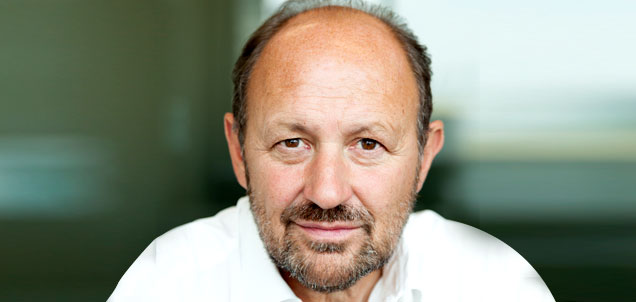
    So while MxMIndia is media partner, that didn’t prevent us from posing some ticklish questions to Amith Prabhu, founder and chief mentor of the event. Amith was not too keen on being interviewed and said the co-chairs of the conference should be doing the talking, but we could finally prevail upon him with an understanding that his pic will not appear as the Big Story image. Pssst, we’ve still sneaked in this headshot. We’ll try and feign ignorance. Read on…


    Pondicherry (or Puducherry), Lavasa and now Agra. How will the third edition of Praxis be different from the previous two?
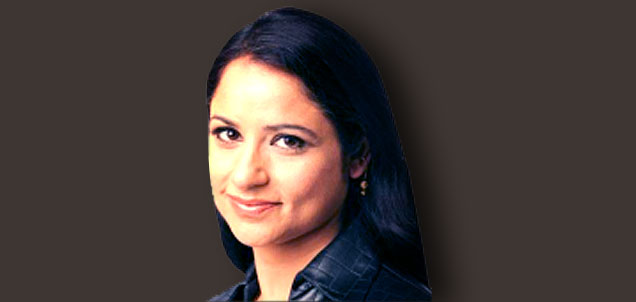
    Each summit is unique in different ways. Praxis 2014 caters primarily to the professionals in the NCR. We call it the super, smarter, slicker edition. The theme is Communicating for a Better World and the focus is CSR. We have nearly 30 speakers of which eight are are international.


    In many ways it was for you a dream to build this forum for early and mid-career professionals. Do you think you’ve been able to achieve what you had set out to? Or is it still mission unaccomplished?

    From 250 professionals in the first edition, 22 months ago to almost 350 this time around we have come a long way. A large chunk of participants from both consultancies and in-house are young and raring to go. We want this to be THE forum that professionals of all levels head to every year and we have managed to achieve that.


    And would you say that the PR industry and professionals have gained from this?

    I still like to believe we are not an industry but a growing community of very smart professionals. These forums help celebrate the profession. It is for those who attend to say if they have gained or not. The response this year has been overwhelming which makes us believe we are on the right track.


    The format though is still very short, right. Like in this year’s edition, just as people would’ve warmed up, it’s time to say your goodbyes?

    Time is at a premium. We have experimented with an additional night in the second edition but the feedback was that it should be optional because half the time we are dealing with client crises which allows for minimal time commitment outside work.


    Why not have a longer format? Because it’s just an incremental extra hotel night that people have to pay for, na? You’ve already got them out of their office and spend on travel?

    As I mentioned earlier, time is at a premium for PR professionals. We have had 15% drop-outs in the last 5 days, especially from clients who would have been over 100 at the summit but are now about 85 at the summit because work exigencies. We offered an option for those who wanted to learn from experts to stay back a second night and attend the workshop at an additional fee. So it is really not shorter in the true sense. Also, an additional night would cost Rs 10,000 more on an average which we felt younger professionals would find hard to bear.


    Has this South-West-North rotation of venues worked? What will you have next year… East? How about a Praxis in Bangkok, Nepal or somewhere cheap and still away from it all?

    We are open to having Praxis in the Eastern part of India or even in another country which does not require visas. We are exploring that option. Hopefully, when the third edition ends the team of volunteers may have a location for 2015. Someday, we will plan it overseas for sure.


    There is a cross-section of top professionals who’ve been giving Praxis a miss? Dilip Cherian, for instance. Various veteran corporate communications professionals.  Comments?

    Like several other leaders, Dilip Cherian has been invited every year and we are hoping to convince him hard enough to be there next year. This year, the CEO of his firm will be chairing a session. We have nine of the Top 10 firms and 18 of the Top 20 firms present in India that are represented. Unlike most events of this kind that are organised by associations we are just a bunch of volunteers with full-time jobs who put this together. Given that, there are six firms participating for the first time this year which is an achievement. One Founder is making his stage debut in a public forum, though his firm has been around for 20 years, which is amazing.


    Also, I was just speaking to the CEO of a Mumbai-based PR firm Who was sadly just not aware of the forum. Would you say this is ignorance on the part of the CEO or still miles to go for Praxis (and the Promise Foundation) to promote the conference?

    We would not say it is either. If you were speaking to the CEO, he or she has now heard of it ;-). Sur summit has been built on word of mouth and primarily on social networks. We have a long way to go as a community. The Summit was sold out a month ago and we decided to increase the number from 300 to 330 which is 10% of the 3000 professionals in the country.


    So a little about this year: standout, must-attend sessions?

    We have the mother of cause marketing, Carol Cone, who is Edelman’s global practice chair of the CSR practice who has flown all the way from New York to deliver the opening keynote. Paul Holmes will do the second keynote on the Consultancy of the Future.  These are not to be missed. The other stand-out sessions are a presentation on Measuring Metrics and four panels – one by millenials, one by CSR experts, one celebrating Founders of India’s iconic firms and one with regional chiefs of PR firms.


    If you were given to chance to go back three years and re-curate Praxis, would you do it differently?

    Each Summit has been planned with learning from the previous one and built with passion. We are proud of the fact that we do not have more than one speaker from an organisation and that we typically do not repeat speakers. We also follow a cooperative sponsorship model where partnering companies pay our vendors directly. What we can do better is to make more Indian professionals in the middle east and far east attend.


    Is the organisation of Praxis really a collective, cooperative effort finally? Wouldn’t you want to give the job to an event organiser to do it on a professional basis?

    Praxis began as a movement and continues to remain so. The commitment of some of us is for ten editions. An event manager still helps put together the final look of the conference. With or without an event manager, we are a professionally run social enterprise. But the personal touch can only be there when those who conceptualised it, remain at the forefront of driving it. We are a dozen professionals who ideate virtually and come together at the summit to bring the event to life. The uniqueness is that the 12 volunteers represent 12 different organisations – some PR firms and some corporations.
    So what’s driving the organisers like yourself and others to spend a huge amount of time, effort and possibly monies to organise Praxis?


    People and passion for the profession are the cornerstones of this initiative. We needed to bring back the reputation to the profession that had begun to get affected by two important events – the controversy of 2010 that led to one of the largest firm shutting shop and the fact that almost all of the Top 20 global firms making their presence felt in India by the beginning of this decade. One would have worked for a non-profit, but instead we decided that we will create a non-profit that builds reputation for the profession. So here we are!


  • Digital isn’t about technology. It’s about Ideas & Imagingation: Ajaz Ahmad


    At 21, Ajaz Ahmed founded AKQA to help clients create the future. The firm employs 1600 people in 13 offices, including an office in India. Clients include Red Bull and Nike. A recognized pioneer, Ajaz Ahmed co-authored Velocity, a bestselling book alongside Nike’s head of digital support, Stefan Olander. MxMIndia caught up with Mr Ahmed soon after he spoke to a packed hall at the Kyoorius Designyatra earlier this month


    You are one of the pioneers of digital media advertising. Since you embarked on the journey to what is the scene now, what do you think is the most significant difference in the attitudes of the people around in the rest of the advertising and media landscape?

    It’s difficult to believe now but when I was 21 and we talked about how we felt digital technology would transform the world… people didn’t believe us and those were people in the industry. A lot of organizations didn’t believe us, so, over time, that prediction we had that technology would change people’s lives and transform industry has come through and we’ve played a small role in that as well, by creating services, applications, ideas for some of the greatest brands and as we’ve done that, it’s provided inspiration to the industry. I think a lot of people love innovating, they love creating and digital expands the canvas. That’s really what it meant for people, it gives creative people a new canvas where they can try new things and experiment.


    A fair amount of what is happening in digital is technology-driven. Do you think digital media is more about technology or is it more about creativity?

    We’ve always felt that digital isn’t about technologies, it’s about ideas and that’s why we say the most powerful force in the universe isn’t technology, it’s imagination. Because it’s only through our imagination that we can create ideas that have resonance. You’ll get gizmos and flavours of the month and the focus should be on creating something that will contribute usefully to people’s lives.


    Lemme ask this differently. If you look at the last three years, Search Advertising, HTML5, the explosion of the social media… all these have been technology-led and the creative fraternity and people like yourself have embraced it well and used it optimally. So what comes first? Technology or ideas? Are you always dependent on technologists to dream up something new?

    I can talk from an AKQA and our clients’ perspective. AKQA is imaginative application of art and science to create beautiful ideas, products and services. That’s why we exist. When an organization produces a technology that we feel has an incredible application, that can be true to one of our clients mission, their authenticity, that helps them articulate a brand in a way that’s extraordinarily resonant with many people… we embrace that. With the examples that you’ve selected, you mentioned social, search, you mentioned HTML5, there’s also mobile, wearable devices, the canvas… it gets richer and richer and the tools that creative people get to be creative have improved. There was a generation of creatives that got excited about the airbrush when the airbrush technology happened and a generation when radio was invented. Why shouldn’t we get excited when there are amazing tablets, when there’s new wearable devices like the I-watch, when we can use technology in a much more engaging, fulfilling, creative and rich way? The test of a creative is how technology is applied in a non-obvious way to create something that has a sense of magic to it


    In a typical creative agency, you have creative folk who think of the lines and situations and there are radio/print/television production folk who get into the execution. In the case of digital media, there is integrated functioning. So how does a digital media agency get structured in terms of talent? Do you have more people who are into creative execution or you have people keeping tabs on the way that technology is doing and what more you can develop?

    A third of our business is people who are designing and in creative, a third are people in technology and about a third is those who are in project management and strategy. For everyone it’s about being creative. We’re organized like a collection of start-ups. We don’t have any bureaucracy. We don’t have anything holding us back to achieve what we need to on behalf of our clients.


    How familiar are you with the Indian digital media creative scenario?

    You can familiarize me.


    Well, the digital media scenario hasn’t taken off in a big way. Many creative campaigns are take-offs on the cult film Sholay or antics of a megastar like Rajnikant. In terms of usage of digital media, brands and marketers haven’t really grown like they should have. That’s why digital promotions haven’t taken off.

    That’s why we need your publication to champion creativity and excellence. You can really help educate leaders to embrace digital media.


    What I want to know is how did it move in the Western world? The big TVCs are essentially made for television. Here, not many dollars are spent on creative work in digital media. How does the transition happen and how do you think it could move?

    You need to see how people are changing, the equity of smartphones, the population is changing from being couch potatoes who sat in front of their television to people who’re doing many other activities and they’re using their device to empower them. Every generation uses technology in a more interesting and evolutionary way. We’re going through that evolution now.


    A little about AKQA in India…

    We’ve got a humble beginning, we’re under 50 people. We’re working with a number of clients and our focus is quality, we’re happy to take the long-term view and produce the best work we can with the best clients we can and if we focus in quality, the scale will come.


    In India the WPP group is very large.

    WPP has amazing authenticity in India. It has a real depth and it’s really invested in the market.


    Sir Martin Sorrell is here almost every six months, sometimes more often. In India a lot of digital agencies have been invested into or gobbled up by the large networks. Does it help being part of a large agency or is it better to have more independence and creative journalism bloom

    Where it has helped take AKQA is, where we want to set up in a new market such as Canada and we can get WPP’s help with the back-office and administration and the legal requirements to help us fast forward the presence… so we can be quickly on the ground to help our clients. That’s where we’ve been able to really benefit from WPP’s ecosystem of relationships all over the world.


    They’ve also invested in Indian digital enteprises. Will there be any synergies there?

    AKQA is now more independent than it’s ever been. We’re focused on keeping that independent, creative, entrepreneurial spirit. Certain culture, values and a certain DNA. WPP gives us freedom and independence so we could achieve the best work for our clients.


  • Product fails when commercial imperatives get in way of editorial integrity: Proctor


    By Pradyuman Maheshwari


    Dominic Proctor took on the role of President of GroupM Global in January 2012. Prior to that, he spent a decade-and-a-half years as CEO of Mindshare Worldwide, the GroupM agency he had founded in 1997. With billings of over a 100 billion dollars that constitutes around 30 percent of all global media, GroupM is the holding company for all of WPP’s media agencies – notably Mindshare, Maxus, MEC and MediaCom amongst others.

    Excerpts from an interview with Dominic Proctor while he was in Mumbai around a fortnight back.


    This is your third visit this year. What brings the GroupM CEO to India so often?

    I think it’s rather patronizing to speak about India as a market for the future. It’s a massive market now, and for us it’s a very significant part of our global company. It’s obviously going to get bigger and better as the economy and the population develops but we come to the present as well as the future.


    You’ve been coming here for over a decade-and-a-half. What do you see as the significant difference between then and now?

    Much more open-minded. I think those days were characterized by fairly closed minds in the marketing services industry. The status quo was everybody’s friend and therefore it took longer than most countries to get business going here. The thing about a closed economy or a closed mind is that you don’t get the fresh oxygen of ideas as in other markets.


    The disadvantages of a closed economy is there isn’t much business, but when you have an open environment, the competition also gets stiffer, right?

    That’s capitalism… that’s cool, that’s fine.


    How do you see the digital business in India vis-à-vis the rest of the world?

    The rise of digital platforms has been of fundamental importance to media and marketing and our business in India. It may have started rather slowly, but the important thing is it’s changing in the same way as the global, digital economy is. Each country starts in a different place and has a different speed. The direction is more or less the same.


    But the spends here are not as much as in the rest of the world.

    That’s exactly my point. They will catch up.


    Is it because the best creative brains don’t work for digital here? They work for television commercials instead?

    That’s not the reason at all. The reason for varying speed is the differential uptake of digital media by consumers. In the end, rupees follow the eyeballs.


    Could the spend be getting distracted by the many offerings in digital- search, social media, conventional banner ads etc?

    It’s a sign of growing up. It’s a sign of a platform maturing and moving in different directions to its usual requirements.


    If you were to self-assess, what would be your own assessment of GroupM in digital given that Unilever, one of your biggest clients, is not with you?

    I’d give ourselves a 7 on 10 and wouldn’t give anybody else much more than that, because I think there’s a lot of headroom to grow. Some of our direct competitors have been rather quick to assume the way of solving the problem is primarily through acquisitions. We’ve made some acquisitions and we’ll make some more. Acquisitions alone aren’t the main driver. The main driver is the fact that the whole world is becoming digital and therefore our business needs to become digital.


    In digital, both media and creative agencies have turned full-service. Would you hence say your competition is not necessarily media agencies like yourselves but also an Ogilvy, JWT, Leo Burnett…

    I think it goes way beyond that. Our competition for client attention, demand and revenue is not just from other agencies and other types but also from consultants, specialists and clients themselves who do things inhouse. Our competitive set is very broad indeed. That’s a sign of our business growing up and fighting on a lot of fronts. That’s good.


    Is there a need to reinvent yourselves given the way businesses are growing? Is there any one thing you’d like to do in terms of reinventing?

    We reinvent ourselves constantly. The most challenging thing in reinventing is of course training and development of talent. I’m very happy to say that our talent retention record in India is very good compared to other markets.


    Are you able to attract the top talent given the very high remuneration levels at B-Schools? Especially since your clients have them…

    That’s a challenge for us. I’ve been on platforms talking about the fact that we need to continue to move up hierarchy of partners to clients, because we need to earn the revenue that will pay for the A-list talent. There’s no doubt that other competitors for talent, example, Google, can have deeper pockets than us. I think people join us not just for that reason. A lot of them join us for varied life and varied training. It’s the environment. This year, we won the Porter prize for best places to work. To me that’s just as important, if not more, than our ability to pay a few more dollars to a few more people. People come here not just for that. They come here for the working environment, training, grounding in business. It’s really important to not forget that when you’re working in a media agency, you have the privilege of looking at a lot of different clients across a lot of different marketing platforms in media. That gives you tremendously good grounding for a business career.


    What happens is people use your organisation as a jumping board to move elsewhere

    That’s fine. I don’t mind that. That’s why I’m pleased our people aren’t jumping ship.


    Talking of higher remuneration, if a GroupM can’t achieve that, who can? You are a market leader, and have a longstanding relationship with clients.

    We can and we do. Our income rate and clients are increasing. We’re of increasing value to our clients. The more value we are to clients, the more revenue we can make, the more we can attract talent. It’s a virtuous circle.


    GroupM today is a lot more than just a media agency in India and the rest of the world. How much of your focus is on businesses such as Dialogue Factory and your association with sporting events and other BTL activity?

    A lot of it. One thing common to all countries is that the bedrock of our business is media planning and buying. It’s always been clear to me that unless we can get that fundamental activity right and be efficient and effective for our clients, then we have no ability and no permission to expand our service offering. We absolutely have the ambition to broaden what we do in our agencies. Sports marketing, digital consultancy, data analysis, we could go on. It’s becoming more and more broad because the clients demand is for agencies to have more and more specialist insight into the opportunities, to make sure that the specialist insights are integrated.


    In the current scenario where digital has overtaken print media spends, what is your view of the future for spends in print versus the rest?

    If your print business stays fresh, relevant and interesting, that’s where the eyeballs will go. The challenge simply isn’t just to abandon all traditional media platforms and just follow the digital dollar, the strength of a print brand, the attractiveness of its editorial, the freshness of its presentation are critical. If you lose those things, you lose your audience not just from print, but digital as well. Your brand suffers.


    One of the peeves of print publishers is that the advertisers forever want innovations. Like in the papers you have these jackets, one or two or more pages of advertising over the front page, taking away the interest of the reader?

    It does if it’s boring and it irritates people. So, the balance between the editorial and marketing judgment has to be more even. You just look at any country in the world,  where commercial imperatives get in the way of editorial integrity, the product fails. Media entities are brands. If you mess around too much with the brand, it becomes confusing to the consumer.


    Over the last couple of years, GroupM in India has seen a fair amount of changes. One is the embracing of digital has leapfrogged. We’ve had the Y-Co, a kind-of youth ‘Shadow Board’. How many processes of GroupM India have you followed elsewhere in the world?

    Y-Co is an Indian idea born here. I was at the launch myself, a year ago, and it has now been taken up in other markets. So, India is both an exporter and importer of ideas. Y-Co is an Indian export idea, made in India. Your current Prime Minister has been talking about Brand India. It’s also an importer of ideas. So, a lot of the initiatives happening here were born elsewhere. It’s an import-export business.


    Anything you’d like to see here in GroupM in future?

    We encourage our teams to continue to be open-minded. We encourage them to be more focused around the digital developments. As brand or market leaders in India, we’d want to be at the forefront of these and rather than wait for a market to form and join in, we’d like to form a market.


    Over the last year, India has seen a lot happening in the field of audience and viewership measurements. We are all set to get a new measurement regime in television and we have had an uproar over a print survey. Since you are a key stakeholder in the business, how do you advise your clients when questions are raised about the veracity of data?

    We have specialists who are able to give very special advice in very important areas. Measurement is a very important part of what we do. Return on investment is a very acute measure of our performance and return can be linked to the performance of leadership or viewership. of course, it’s fundamentally important to get it right. To me, it’s symptomatic of change. As media landscapes change, the way we measure them changes too. We intend on being a very important part of stewarding that change so that it’s fair and accurate. If it isn’t, we’re going to be rejected.


    A variant of this interview first appeared in ‘dna of brands’ as part of the dna issue dated October 6, 2014


  • Getting into the Right Shell


    By Shobhana Nair


    With over 17 years in the areas of marketing strategy and brand building, she started her career in 1996 as a Sales Manager for oral and healthcare, with experience of working on diverse product categories and enabling equity development of brands like Pantene, Olay, Vicks, Gillette, Pampers, Whisper, Ariel, Tide, Gillette amongst others.


    She has been Director for Global Male Grooming, P&G and Asia Pacific Head for Consumer and Market Knowledge. Tripathy has also been extremely active in spearheading partnerships and strategic alliances with suppliers across creative, BTL activation, market research, database management, analytics and media.


    Her current role at Shell Lubricants as the Chief Marketing Officer involves business building, organization excellence,growing brand equity and optimizing investments. She is also the architect of Shell Lubricant’s digital marketing and social media footprints.


    An engineer in electronics and communications from the National Institute of Technology Kurukshetra, Mansi Tripathy has done an MBA in Marketing from the SP Jain Institute of Management & Research, Mumbai.


    Excerpts from an interview.


    The oil and lubricants space is unique from the branding perspective as even though people may be aware of a brand, the challenge is of its availability at petrol pumps, service centres etc. From the marketing point of view, how do you grapple with the issue of supply?

    At Shell, we make a concerted effort to retain control over our brand throughout the value chain to ensure that the end-consumer always enjoys a consistent experience in terms of quality, availability and pricing. Therefore, we engage with influencers across the whole value chain and have designed special programmes benefitting each of those touchpoints.


    For lubricants, the value chain comprises consumers, mechanics on whom consumers depend upon for getting their work done, the retailer who decides which products will be placed and finally the distributor who works towards profit maximization.


    We are focusing our efforts in building stronger relationships and engagement with each touch point in a way that meets their needs as well as helps them understand why Shell is a better product. This will automatically ensure that our product receives better acceptance and push across the value chain supplemented by direct sales through our retail outlets.


    Some of the programmes that we have implemented include first-of-its-kind “demo kits” in the industry which demonstrate the role of lubricant in front of your eyes and display advantages over key competitors. We are very happy to have created these tools that are now placed with over 10,000 retailers at a very affordable price.


    Further Shell has developed a very insightful programme for mechanics to reward them for their loyalty by not only offering gifts but connecting to their emotional needs of ‘training’, ‘insurance’ and ‘experiences that money cannot buy’. We currently have 50,000+ mechanics across the length and breadth of India enrolled into this program.


    For our retailers we have devolved the Shell Superstar loyalty programme, where the more they buy, the more they approve with Shell. This is also working well in terms of its reception in the market. It is a continuous two way communication where they can log on to our websites and talk to us rather than a one-off engagement.


    Apart from these marketing efforts, to ensure availability in our select target geographies, we also have a strong and ever evolving network of distributors in place, which in turn is supplemented by our go-to-market strategy and distributor value propositions. The retail (petrol pumps) arm of our Shell corporate business also helps us in widening this reach.


    What’s your typical media mix for adspends: Above-the-line (ATL) and point-of-purchase Below-the-line (BTL) activity, outdoor and digital?

    For each of our brands we have a different target audience hence the marketing mix is a function of which medium has the right receptivity and touch points with our target audience. ATL, Digital, PR, In-store, BTL activations, and reaching out to our influencers i.e. trade and mechanics are all core pillars of communicating our brand advantage. To further add, the choice of medium is also a function of which parameter in the brand funnel we are trying to influence and thus what effectiveness can a medium deliver. For example, we are using digital specifically to generate trials for our premium portfolio. Over the last two years, we have witnessed a steady increase in our loyalty, equity parameters which gives us lot of confidence.


    Specifically, how do you deploy social media in your promotional campaigns?

    Although ever powerful, the digital medium has been conventionally an underutilized medium in the lubricants industry. The medium plays an important role as we are trying to focus on communities that are interested in our products and are passionate about this category. Digital strategy is not an option anymore and has to be part of the core way of communicating and co-creating brands with consumers.


    For e.g. for the biking sector we found this insight that bikers usually go out in groups for a long bike ride either during summer holidays or long vacations. That’s the time they are most careful about the fact that their bike is in the perfect riding condition and are searching for a lot of information around what to do, where to do and where to stop. This helped kick start the Shell Advance Yyayyy campaign and even though the campaign was TVC based, we extended it to digital as well. Similarly with Shell Helix Ultra #Mycar campaign where we are inviting people to share their stories about their car, we decided not to keep this as a one-time activity but an ongoing process to engage with our consumers. Winners of this campaign were sent to witness the Belgium grand prix. We also have forums wherein, we guide on and encourage technical discussions/queries around our consumers’ vehicles overall, not limiting ourselves to just the lubricant space. There are some call to action campaigns that we have been running on our Advance brand for bikers to initiate trials for our premium products in the portfolio. On the B2B front, we are trying to reach out to influencers and customers through providing relevant information through various platforms.


    And how does this compare with the status in more digitally active geographies?

    The campaign elements are similar; however the level of investment is a function of digital penetration in the market.


    With the mobile phone becoming ubiquitous and the smartphone penetration increasing, do you as a senior marketer see the mobile phone becoming the new primary media vehicle for a certain variety of brands (especiall the male-skewed brands?)

    The smartphone market is growing and proving to be important for advertisers. With data and handset prices becoming more affordable, people are increasingly accessing data with mobile devices. Easy-to-download-and-use apps have also propelled significant interest amongst India’s growing youth population to switch to smartphones. The audience is predominantly young with 82% of the mobile audience being male in the 18-24 age group. Keeping this in mind, Shell has devised Shell miGarage mobile app for iPhone and Android users that allows consumers to find the best lubricants for their vehicle or equipment amongst a list of recommendations.


    A large chunk of our consumer and influencer target audience is on non-smart mobile phone users. We reach out to 40,000+ mechanics across the country via our mechanic loyalty/CRM program. We also have brands such as Rimula in our portfolio which are meant for Indian truckers and farmers; we reach out to them via text or voice messaging initiatives to engage with them regularly on our brand initiatives or product promotions.


    This interview first appeared in ‘dna of brands’ as part of the dna issue dated October 6, 2014


  • From Maxus to? Q&A with Vikram Sakhuja


    By Pradyuman Maheshwari


    There was some reason for gloom in the advertising and media services fraternity on Thursday. Media services conglomerate GroupM announced the appointment of Lindsay Pattison as Global CEO of Maxus. But, more importantly, she replaces Vikram Sakhuja, who will remain in the group, but the position is not announced. What one is waiting for is the announcement on Mr Sakhuja, and as GroupM insiders who know him, he is someone who is going to be looking up and will be in to much bigger things.


    A million Indian hearts sank when they heard of you moving on from Maxus CEO, we told him. For, for the world of advertising and marketing professionals here, it was matter of great pride to have one of their own on the world stage. So, next is what? Am sure there’s an ace up your sleeve, but that’s a question which I guess everyone appears to be asking. “No reason for hearts to sink,” Mr Sakhuja – Vikkie to friends – said, matter-of-factly and responded to MxMIndia’s questions.


    To borrow from a well-known Hindi film song of our time: yeh kya hua, kaise hua, kyun huaaa?

    To also borrow from a well-known song – Main toh chala jidhar challe rasta – only in this case I have an idea of what the manzil is.


    Your sentiments on handing over charge? What according to you was the most satisfying moment and/or high of your stint as Global CEO?

    Always satisfying when an internal succession can be planned. Maxus is in great hands with Lindsay. Highpoint was to continue the Maxus growth juggernaut. I wanted to double the size of the agency in three years. After two years we are well on track for that.


    Any unfinished agenda? Something that you would like to have done?

    Oh, lots to be done. We are positioning Maxus as an Agency that leans into change. We have embarked on a process to build culture, systems, talent and capabilities that allow us to responsibly question status quo and provide innovative brand solutions in an always-on real-time world. And to come across as a compelling Agency to Advertisers. That is an ongoing and exciting journey.


    You spent the last year-odd based in the US. Working here in India v/s the US?

    Tremendous learnings from the US. The thing that hits you is scale. Also the realisation that a large part of the global economic world does operate from a NY or London.


    Given a chance, would you like to work here in India or elsewhere in the world? Preferred location?

    Honestly, am pretty open, depends on the assignment. Needs to be a place where my wife is comfortable going to, and she’s open. As they say, watch this space.


    And one extra question: you’ve achieved much already, what’s the next challenge for you? Or something that you would like to achieve, workwise?

    Two things excite me. Making media more accountable especially in the area of effectiveness, and unlocking the business potential of the content-technology-platform space.


    Lindsay Pattison takes charge as Global CEO for Maxus


    By a Correspondent


    Media services conglomerate GroupM announced the appointment of Lindsay Pattison as Global CEO of Maxus. Pattison will co-locate between London and New York and will report to Proctor. She replaces Vikram Sakhuja, who will remain in the group, but the position is not announced.

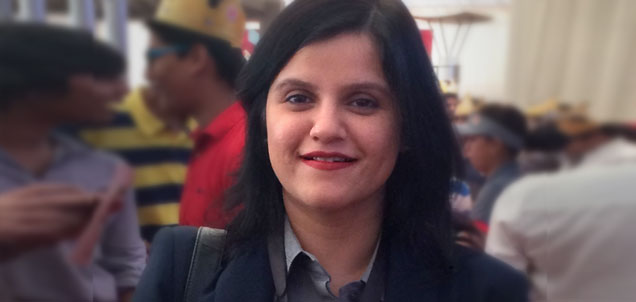
     

    Under Mr Sakhuja, Maxus was the fastest growing agency in the world and expanded its network footprint and added major new accounts such as NBC Universal and L’Oreal. The announcement was made by GroupM’s Global President Dominic Proctor who was in India recently.


    Ms Pattison has been successfully leading Maxus in the UK for five years, taking it in that time from a ranking of 14 to a No 7 position, and from 30 people to now over 250. She has also held the global Chief Strategy Officer role for the last two years, overseeing product, planning, marketing, new business and effectiveness.


    “Lindsay has a proven reputation as a leader and is held with enormous regard both internally and by her clients,” said Mr Proctor in a communique. “She exemplifies the spirit and ambition of the Maxus culture and we are confident she will take the network into the next stage of growth.”


    Said Ms Pattison, “I am thrilled to step up into this role. I love the energy of Maxus and I relish opportunity that comes from our unique and fortunate position as the challenger brand within GroupM. At Maxus we have a mantra to lean into change. In fact it’s really to lead change for our clients, navigating the complexity and embracing the possibilities offered in a digitalised, mobile, always-on media landscape.” “It’s an incredibly exciting time to lead a global media agency, particularly across Asia where the opportunities for growth are extremely high and our people fantastic. In fact, I met our brilliant Indian team a few weeks ago, and I’m looking forward to working with the amazing talent we have across all of our APAC offices.”


    Ms Pattison, who will be succeeded in the UK CEO role by Nick Baughan, currently the MD, joined Maxus in October 2009 in the newly created position of CEO to drive the Maxus brand to a new level, both in the UK and as part of the global management team. In August 2012, she was named as the new Global Chief Strategy Officer for Maxus, working alongside her duties in the UK. She would take direct responsibility for global planning, data and insights, digital, marketing and new business functions.


    Ms Pattison is involved with industry events and is now a member of the WEF Global Agenda Council on the Future of Media, sits on the WACL Exec committee and has contributed to events including the Facebook Influencer Summit and Google Zeitgeist.


    Prior to Maxus, she worked at PHD for five years and in media for over 18 years. Ms Pattison has also worked client-side at Sony Ericsson, after starting out at Young & Rubicam in a full-service environment.


    When she was in India recently, she met with MxMIndia briefly and spoke of how she had met with clients,understood their aspirations and challenges. The leadership team with her conducted a training programme called the Mating Game and of course she mentioned on Maxus India is a shining star and among the Top 5 globally in revenues.


  • Leaning into change: Lindsay Pattison


    When we met her in Mumbai a few weeks back, a senior GroupM official had alerted us that she was the Global CEO-in-waiting.  Lindsay Pattison has been successfully leading Maxus in the UK for five years, taking it in that time from a ranking of 14 to a No 7 position, and from 30 people to now over 250. She has also held the global Chief Strategy Officer role for the last two years, overseeing product, planning, marketing, new business and effectiveness.


    And now Pattison replaces Sakhuja as Global CEO of Maxus. She will co-locate between London and New York and will report to GroupM Global President Dominic Proctor. “I am thrilled to step up into this role,” she said in the communique announcing her appointment. “I love the energy of Maxus and I relish opportunity that comes from our unique and fortunate position as the challenger brand within GroupM.”


    Pattison, who will be succeeded in the UK CEO role by Nick Baughan, currently the MD, joined Maxus in October 2009 in the newly created position of CEO to drive the agency brand to a new level, both in the UK and as part of the global management team. In August 2012, she was named as the new Global Chief Strategy Officer for Maxus, working alongside her duties in the UK. She would take direct responsibility for global planning, data and insights, digital, marketing and new business functions.


    In between her travel from London to New York, Pattison took time off to respond to the questions from Pradyuman Maheshwari


    Having seen Maxus grow from a small, smart media agency to one of the world’s brightest, your sentiments as you take charge as CEO of the agency?

    To reiterate my quote before I am thrilled to step up into this role. I love the energy of Maxus and I relish the opportunity that comes from our unique and fortunate position as the challenger brand within GroupM. I am most energised by our people; we have people with PACE; passionate, agile, collaborative and entrepreneurial and we take those values and behaviour very seriously. It all comes from having brilliant colleagues, solving client challenges At Maxus we have a mantra to lean into change. In fact it’s really to lead change for our clients, navigating the complexity and embracing the possibilities offered in a digitalised, mobile, always-on media landscape. It’s an incredibly exciting time to lead a media agency.


    You have been Chief Strategy Officer since the last few years and hence have been shaping the course of the agency’s business for a bit. Is there something that you would like to see happen over the next few months and years?

    We still need Growth - in our people as they broaden their skillsets and help our clients business navigate the multifarious opportunities in today’s media landscape. We want a win-win in the success of our clients’ businesses as without them we are nothing. And of course more growth for Maxus globally as the smallest and fastest growing media agency worldwide outright, and of course the fastest growing agency within GroupM.


    You were in India just a fortnight back. Any thoughts on Maxus Team India?

    Maxus India is a shining star in our global network. As the dominant agency in the Indian media scene, we’re in a tremendous position because of the incredible passion and energy of Kartik (Sharma) and his team in all our offices. I was delighted to see our teams in action as we met with several of our key clients. I could see the mutual respect and the strategic value our clients get from Maxus. And there is a palpable entrepreneurial zeal in our team in India - whether that is developing world leading commumications platforms such as the ‘Power of 49’ for Tata or developing fascinating partnerships with academia, Moribus. There is a restlessness to keep striving for better that is a real delight to see.


    Is the new digital, programmatic order scary for media agency businesses such as yours?

    Digital, and programmatic buying as a subset, is all about opportunity. I know it can be somewhat overwhelming for some clients - but our role at Maxus is to be a trusted advisor in this space and work with our clients to make the most of the opportunities on offer, to help them lean into change rather than be fearful of change. With programmatic specifically in mind, there is a huge benefit to clients working with Maxus and GroupM, where I see amazing talent and deeply impressive tech supporting our clients in their business goals.


    While new clients and great work are fine, eventually it’s the bottomline that shareholders are looking at. Any immediate thoughts on how you are looking at pushing profitability in your tenure?

    Well I think the answer to continued profitability is to focus on your clients’ needs and ensure you are delivering great work with great people - it’s a virtuous cycle. That’s how we’ve grown Maxus faster than any other media agency network over the past 5 years, and that’s what we will continue to do.


    And lastly, as he makes way for you, a word on Vikram Sakhuja as Global CEO?

    Vikram has been a breath of fresh air to Maxus, bringing an entrepreneurial zeal to our agency and in his own words, brought ‘systems to scale, whilst retaining the soul of a start-up’. I am looking forward to working with him closely in the future.


    First appeared on dna of brands dated October 21, 2014


  • Up, Close & Personal with Abhijit ‘Kinu’ Avasthi


    By Pradyuman Maheshwari


    He is a metallurgy graduate, has done various odd jobs before getting into advertising in 1997. Two years later, he joined Ogilvy and hasn’t look back ever since. Winning several Indian and international awards, on the jury of most big award shows and having done some superlative creative work. Last week, Ogilvy South Asia Executive Chairman & Creative Director Piyush Pandey , sent a mail out to employees that National Creative Director Abhijit Avasthi was moving on. November 30 will be his last day at work. The news sent shockwaves in the ad frat, because, one never thought he would quit. Excerpts from an interview…


    So what happened? How? Why?  The lyrics of a song from the 1972 Rajesh Khanna-starrer Amar Prem would possibly best capture my question: Yeh Kya Hua, Kaise Hua…

    Kyun Hua… Kuch toh log kahenge (laughs). While it may seem sudden, it’s something I’ve been mulling for a long, long time, and discussing with Piyush (Pandey) too. As I have maintained, there are many things I’ve enjoyed doing over and above advertising. There are certain products or opportunities outside that I would love to think about. There are problems that I would like to solve which need a totally different mind and head space to work on.


    Like?

    I enjoy absolutely everything.  While I like advertising , being from an engineering background, I love technology, design, history, music and maths. I love music to death. There are many things which I keep thinking about.


    So you want to wander?

    I want to wander and think about things a bit. I’ve always wanted to contribute in some way to society. There is a new government, there is an air of optimism, some change can genuinely happen. I would love to participate in a change like that and do whatever I can.


    Do you think it is the right thing to do when you are at the peak of your career? Just chuck your job to take a break?

    My heart tells me, so I think it’s right. I’ve never chased a career. I’ve never chased a designation. Even my entry into advertising was purely by chance. I am an engineer by training. I used to work in a steel plant. I used to sell sarees, I would work in a factory that made dyes for textile. I came to Mumbai in 1997 to figure what to do in life. Someone suggested advertising, so I got into it. I’ve loved advertising as it allows me to do lots of things. One day I will figure what I want to do and may be today is the time. I have the sense of this is really what my skills are, this is what I enjoy doing. This is where the opportunities are. This is a new age in India. May be the time has come to take a step back and say, ok, let’s pursue this, this seems like a good option.


    But look at it from the Ogilvy point of view. Here is a guy they’ve nurtured, believed in for 15 years. Now suddenly he wants to quit and go. From the agency’s point of view, it’s a huge loss.

    It’s a bit of both. Yes, it’s a loss, there’s no doubt. But that’s how all companies go. That’s how all individuals go. While I’ve been here, I’ve been nurturing a whole team and there are many Piyushs, Kinus and Rajivs waiting in Ogilvy. I think my exit may be a great opportunity for them to shine and come out. While I was here, I’ve served Ogilvy and its clients and its people with all my heart and mind. Every second of the day for the last 15 years. So I have received much and I have given whatever I have. And I think that’s the cycle of life.


    You and Ogilvy were like bonded with Fevicol.

    I thought so too. There’s still a Fevicol jod binding us. Just because I am moving out of Ogilvy does not mean I am not attached to the agency, or I don’t have an association with it or we won’t find some way of working together. Like I said, I am rolling so many things in my mind, may be I might stumble upon something whereby I need to collaborate with different disciplines or people in Ogilvy and move ahead. So it’s such a wide canvas.


    The clients who’ve trusted you much will now feel orphaned?

    No, I think that’s the amazing thing about Ogilvy. While I was the face, and yes I was the significant contributor to what they were doing. But I used to always work along a team. So they also know that when team makes a contribution and there is this Ogilvy culture and things will come to place and life will move on. And you know what, brand managers, managers, marketing heads change on the client side every 2-3 years. So here’s a guy who is leaving after 15 years.


    So are you getting into films? There are many adpersons out there.

    Unlikely. I think it is too much of work. Too much hard work.


    Advertising is also hard work!

     I am hoping to try out something really different.


    You wandered into advertising in 1997.  Did the fact that your uncle Piyush Pandey was in advertising influence you to join advertising?

    I’ve been very close to Piyush and Prasoon. They are more friends than anything else. So I would always love hanging around with them. I would see them come up with ideas, and would discuss with them. But in 1997 when I was in Mumbai and people said give advertising a shot and I also thought of the fact that I used to enjoy those moments with Piyush and Prasoon. I would just brainstorm with them and throw in my random idea and they’d say it was very cool. So it gave me a sense of confidence that maybe I should give it a shot.


    Why didn’t you join Ogilvy then?

    I was quite clear I wanted to earn my stripes elsewhere.


    And how did the transition to Ogilvy happen?

    I had a great time for the two years I was at Enterprise. I met my first art part Raj Kamble. But as I spent time there, I realised that my interest lay more in big brand stuff, in television than print. Then I had a chat with Mohammed Khan and said “Look, I need to move on”. There were friends at Ogilvy who were asking me to join, but I wasn’t ready.


    What was working with Mohammed Khan like?

    Absolutely fantastic. I had a great time working with him. His best quality is that he’ll never make you lose your passion for anything. Even if you’ve done something really crappy, he would never kill your enthusiasm, Of course he would be strong and strict and shout about at times. But I think he managed it in such a way that he would never kill one’s enthusiasm. I am quite grateful to him for that.


    And with Piyush… did the personal relationship impact your professional life? Or vice versa?

    Bobby Pawar and Anil Batwal hired me in 1999. But I have to admit, it was a little odd. I was always conscious of the fact that what will people would feel he is Piyush’s nephew… so what is he doing here? Is my work good enough or are people just being polite? What could they be saying behind my back? Those things use to bother me a lot. Initially things like what should I address Piyush as? I can’t call him Piyush, he is my uncle, my mama. It was very odd. Till date I don’t think I have ever addressed him in front of anybody because I refused to call him Piyush and I don’t think it’s right to call him mama in front of everybody in the office.


    You’ve haven’t been calling him anything for 15 years?

    I can’t call him Piyush, My values don’t allow me to call him by first name. It’s not possible. And I can’t call him mama in front of everybody. It’s an office, it’s a corporate setup. It’s just not done.


    And when you meet him one-on-one?

    Then of course I do refer to him as Mama.


    What do you do if you have to call his attention in a meeting?

    I find a way of addressing him.


    Like what?

    I have some tricks. I get his attention.


    He knows that?

    I’ve never mentioned it, but he must have figured it out.


    As you look back at the work you’ve done at Ogilvy, what can we say is a typical Abhijit Avasthi piece of work? Your signature style?

    I am hoping that nobody can say that this is an Abhijit Avasthi ad. If everything is going to have my style, then it’s not fair on the brand of the company. That’s my belief. Which is why my attempt is, and I don’t know how far I am successful, is to give varied flavour to different things. So I would be very happy if people say “are you saying that guy who did Fevicol bus ad is the same guy who did the Centre Shot ad?” I’d like to hear stuff like that. Rather than, oh this is also a Kinu ad, this is also a Kinu ad, this is also Kinu ad.


    How do you and Rajiv work along with each other…

    Yes, it’s all amazing that how Rajiv and I are working together. Till the time we became NCDs we’ve never worked with each other. So Piyush had put the two of us together. It’s just that we’ve been along for so long, we’ve put so much time together. We’ve joined in the same year, 1999, just a few months apart. We’ve always admired each other’s work. We’ve always been honest with each other. So when the NCD announcement came in, we never ever sat down to formally divide this is what you will do, this is how I will do. These disciplines you will look after, or these cities you will look after. Everything was natural and organic and it just happened instinctively. Both of us know our strengths and we know we are the persons can contribute so I seek pretty much every work he…


    And how is your work divided?

    It’s natural, it happened. The legacy business which I was involved in I continued on them, the legacy business he was involved in, Vodafone primarily, he continued. I am intelligent enough not to put my two bits in Vodafone and destroy it, because he has done something phenomenal. He has headed the Bengaluru office. So typically the most of the Bengaluru accounts he would look into. Some I would look into. And historically I’ve always been closer to the Delhi office, so everything was organic, we never sat and formally did anything, we had enough respect for each other.


    Do you critique each other’s work?


    So when I show him some stuff and what’s nice about Rajiv is he has no sense of diplomacy. So he’ll say Kinu this is rubbish. Which is very nice. There is no emotion.


    What about you?

    I try and cushion the blow!


    How much have you embraced the digital media yourself?

    I am very aware of what happens, what’s happening, what are the possibilities, but am I immersed in it myself? No I am not. I wish I was, but I think life is too busy.


    One thing which is said is that the reason why digital media hasn’t entirely grown  is because biggies like yourself are not doing too much digital advertising

    It’s a bit of both. I don’t agree with it entirely. Some great digital work is happening. See, everything our industry does is compared to what’s happening in the west. One must not forget that the societies there are much advanced and developed and digital is a way of life for people. So when you do something in the west, the man on the street gets it. Do I believe ad folk in India are capable of doing great digital work? Yes, they are. But the reality is that the person on the street is not digitally evolved. There is no point in doing a really creative digital innovation which the man on street doesn’t get.


    Any advertising from competition that you would have liked to do?

    Yes there are plenty. I think I enjoyed, rather than pick individual pieces, I would rather say the whole thought of ‘Daag ache hai’. It is a lovely campaign, I would loved to have done it. Some of the early Pepsi stuff, I would have loved if I’d done that. I think some of the work happening on Tanishq is fantastic.


    People whom you liked to work with? People who moved out of Ogilvy, whom you miss very much?

    Lots of them. I think one thing that keeps it going is more and more amazing people keep coming even though some amazing people leave. Yes, there are many, there use to be this guy called Avinash Baliga. I think he is one of those guys who understands my sense. He is the guy I genuinely believe who is way ahead of what India is now. He works in a hot shop in Argentina now. I think he is found his place over there. He is one guy, many a times I do think, if he had stuck on then things would have been really great.


    So effective December 1, we see you wander?

    Absolutely . , I won’t sit, I have some thoughts. I won’t lie that I don’t have thoughts. I have a sense on what is it that I should do next. I am not chasing money or some kind of crazy fame. Now is the time to put things down and evaluate, okay this could be some interesting place to go. For example, if I could use words, I would like to do some thing which is original, meaningful. Some thing where I could use all my skillsets over and above advertising.


    A shorter version of this appeared in ‘dna of brands’ dated November 3, 2014


  • The Whopper gets big on Social


    By Pradyuman Maheshwari


    Global chain of hamburger fast food restaurants Burger King (BK) opened its first outlet in New Delhi earlier this month (Nov 9) with plans to set up more across the country soon. In fact the Mumbai outlet at the Oberoi Mall in Goregaon is scheduled for the next weekend (Nov 22-23). Every day, more than 11 million guests visit across 13,000 Burger King restaurants worldwide. As it enters the country in a socially hyperactive environment, Burger King took the digital route to announce its entry and Made-in-India menu. A quick interaction with CMO Uma Talreja on the marketing plans of restaurant chain.


    Could you share with us your broad marketing message in the light of the fact that there are many offerings available and with some large international players already quite well-placed?

    Burger King is synonymous with taste and quality across the world. The menu for India is specially designed based on indepth research carried out with consumers across the country. The marketing strategy is focused on creating awareness for the differentiated platforms on which our menu has been built. We have created new platforms and concepts for Indian guests which will be new experiences. We recently launched the Whopper for India in three new variants – veg, chicken and mutton. Our guests will also be served different burgers and cravers under a new platform called The King’s Melt which has a cheese infusion in every patty so that u have a ‘melt in your mouth’ experience. This again is available in three different variants. The other important part of our strategy is to deliver an equally delightful experience for vegetarians. Our vegetarian guests will have a unique patty in every burger and can choose between bean, paneer, cheese, vegetables, the Veg Whopper and even more. Our intent is to offer a very good and wide choice to every consumer who comes to our restaurants. And we have done this through quality products and unique recipes with 100% vegetables, chicken and mutton that deliver the wholesome taste in every bite.


    You’ve had an interesting social media execution which possibly only a Taco Bell may have had among the international QSR majors. In terms of marketing spends, could you share what your spend pie is like. So TV, Radio, Outdoor, Print and Digital Display and Social. Also, any other BTL?

    The way we plan our marketing media is by selecting the right medium to deliver the message in the most effective manner. We found 4 lakh Facebook accounts in India that liked Burger King from their experiences internationally. This showed us that our guests were online and we started our plans with an online effort. We haven’t split our marketing plan by spends but by objectives. We have a set of audience who know Burger King but not what’s new in India, and we have a set of audience who don’t know Burger King at all. Our media mix is designed to address the target group and not governed by a split on spends. It will also vary by every location that we open depending on how the equity of the brand evolves and the customer base growth.


    We hear that the social media acquisition has been quite effective. Do tell us more. Also, what’s about the booking your burger on eBay?

    So far I can say we are encouraged by the response. Our engagement on social media is high. Our fans show active interest and response in our communication to them. And we have had very good support from our fans in building awareness for us to other consumers and the audience at large. We are definitely going to keep that effort on to engage our audience and grow our base.


    We offered a pre-launch booking of the Whoppers on eBay India and had planned a 3-day promotion to guests who would like to prebook the Whopper  for the opening day of our debut restaurant at Select CityWalk, Saket, New Delhi. It has been tremendously encouraging as we sold 1200 Whoppers in 36 hours itself. It has been a very fruitful association and gave us a good indication of what we could have expected for our launch.


    There are some who have been exposed to Burger King outlets internationally and they will miss the beef Whoppers, as is evident from the comments on your Facebook page. While I am sure others like McDonald’s also face this, but given that you are entering in an era when there is interactivity with the consumer, how are you addressing these comments?

    We encourage all guests to try our Indian menu as it has very good variety. We look forward to feedback of all guests to our menu and hope that we will satisfy our every consumer’s taste buds. Our menu has been tested through a structured research with 3000 respondents and with successful outcomes. We are hopeful to see a similar response in our restaurants as well.


    Do we see Burger King go on television in a big way now or only once you have a national footprint?

    These are early days. It depends on how the brand performs and what the business needs as we grow.


    How much are your team and you  personally at BK hands-on on the social media?

    There is never a dull moment and we work on this all the time between the marketing team and all agency partners. Everyone is closely involved at this stage including our management. It is an extremely passionate team who are striving hard to deliver best results.


  • An Enormous Year for Ashish Khazanchi & Ajay Verma


    It’s a little over a year since Ashish Khazanchi and Ajay Verma set up creative shop Enormous. Both had had a glorious innings in creative advertising agencies and, well, their jingalala moments. Why, after collaborating much on the Tata Sky account, they figured that they were perhaps made for each other. Excerpts from a free-wheeling conversation the Enormous managing partners had with Pradyuman Maheshwari :


    A little over a year since you’ll set up shop… so, would you say it’s been an enormous year?

    We aren’t sure if it would be right to call it enormous, but it’s been a good year, full of memorable instances. We are much better off than we thought we would be. The market has changed a bit. Clients are far more open to independent agencies, and from our perspective the timing was just right.


    You started when times were tough. As you look back, was it a good time to start?

    I don’t think we’ve ever faced those kinds of issues. We started from zero and we had everything to look forward to. We had a lot of clients talking to us, interested in creating newer kind of solutions or getting a fresh perspective.


    Did you move with any clients from your earlier?

    We made a promise to ourselves… that we won’t touch any people or clients from the agencies we came out of.


    Uff, but everybody does it!

    We started the agency from scratch and we’re happy that we don’t have any bad blood. Not to say that we won’t in future, but we didn’t want to create an agency on bad blood.


    What about the clients who were comfortable dealing with you?

    We haven’t said no to anybody too…. I think as we come to the end of the first year, we are far more confident than we were in the beginning. I think now the time is right to approach them.


    Any lows in the year?

    If you’re working in an agency and you don’t win a pitch, you forget about it the next morning. But if you’re doing your own business and you lose a pitch, it is not just commerce, but it is your reputation now that is also at stake.


    Anything else?

    We’re building every day on optimism – small and big victories. But there are things that bothered us. For example, talent, is a huge problem. And for smaller agencies, it is even a bigger problem. The other issue, which personally bugs us, is how a lot of agencies are shortchanging themselves in terms of monies they charge just to get a client.


    You have such large overheads and you charge so less, they are just making the process difficult for themselves. But the key pillars we go by are that we’ll get the client at our terms and work in a way that the client gets value out of us.


    If you look at a percentage of a large agency, how much would you charge?

    It would be on a case-to-case basis. We don’t want a client to come to us because he’s getting cost-efficiency. We’ve hired an ECD who would have been an ECD anywhere in the country. It’s not like we took a junior guy and gave him a huge designation. We have two senior creative directors, both coming from very good agencies.


    Are you optimally staffed?

    Honestly, no. We need a much bigger base of the pyramid. They are tough to come by. We’re hiring people who are more or less, best in class! Sometimes we can’t even afford an art director. But if he’s available now, and all positions are full, we still take him because we may not get him if he’s needed tomorrow.


    What’s your staff strength now?

    Sixteen people.


    Let’s look at the highs. What have been the highs of the year?

    The client support has been a great high!


    Other highs?

    The completely unique partnership between Cheil (television commercial for Samsung’s Galaxy Grand Neo) and us also was a great high. That was just less than 60 days from our Agency being formed.


    The phone call was a great high.


    When you pitch to clients, what is your proposition? What is it that Enormous is offering that others are not?

    Apart from a Lowe & an Ogilvy, who we have great respect for, there is this entire world of agencies which have no idea what they are about. If the work is good, it’s an aberration, rather than a result of a certain process and quality control. If I was to go to a pitch with an Ogilvy or a Lowe, I’d be very scared but if I were to get into a pitch with any of the others, I’d be very optimistic that we would most likely win it or we have an equal chance if not more. It’s the idea we put on the table. That’s what this field is about. We’re very good there. Because we’ve always given a damn about the kind of work we do. Not just here but as individuals this is a collective of people who care about what they do.


    Ashish, you’ve done some great creative work in the last 10 years. One was hoping to see some action coming up sooner?

    We’ve had ShopClues. There have been some smaller pieces of work, not that visible but we’re incredibly proud of some of them. There is some stuff now happening for an electronics major. It should be out by end -December. It’s for the World Cup. It would be one of the best! We’ve looked at sports in a completely new lens. There’s some really great work that we’ve done.


    So, how do you deal with your shareholders? Is Vivek Suchanti happy?

    Ajay:  The kind of brands we’re associated is also a great high. It’s fantastic. They’ve been great encouragement.


    Ashish: Vivek Suchanti has been very hands off. While we still have a lot to do in terms of big campaigns, financially we’re fine. If you’re diligent, more or less, they don’t interfere at all.


    Do you have periodic reviews?

    Ashish: None at all. It’s completely hands of. Hats off to them


    Ajay: They believe in us, our one year has instilled a lot of confidence in them,


    What are the plans for the second year? You said you have this big telco in the bag?

    Ashish: We’re doing digital work for them on project basis. For the second year, we have to triple our size, our visible campaigns and our talent. You also have to get to some critical marks before people start trusting you with their brands. They trust you as an individual but question …Is this agency robust enough? I think that’s exactly the reason we’ve got so many senior people on board.


    Even though the clients may trust him or me in their individual capacity, they want you to earn your spurs somewhere else. Once you’ve done it, more and more people let you in. This is exactly what’s happening right now.


    Ajay: The first year being very good and, like Ashish mentioned, the idea is to grow very rapidly. The market forces and the environment are just right for keeping ambitions intact.


    Ashish:Acche din aane waale hai’. Happy days are coming!


    Both of you have come in from big agency, big clients background. Personally, do you miss all the action of big spenders?

    Ashish: Of course I miss that. I keep on saying we’re not a small agency, we’re an agency that’s still small.


    How’s it working together?

    Ajay: It’s not like we’re working together for the first time. We did Tata Sky together. The relationship and bonding has only increased over time. I think through that last year, ups and downs, having a partner like Ashish has been really fantastic. So, nothing to really worry about.


    Ashish: It’s not like we started in day 1 and we’re like made for each other. It took us time to get into the kind of stride we are into right now. We’re perfect foils for each other now. I am the person who would screw up on all deadlines and anything with organizational abilities, Ajay is a rock solid person out there. I’d be going with complete airy-fairy strategies.


    Have you ever thought of expanding your team of co-founders?

    Ashish: Absolutely not. Between the two of us, we have the knowledge and expertise required to roughly run any communication setup. ETN*, BTN, Digital… whatever… now whatever we need, we’re going to hire.


    A version of this interview appeared in dna of brands on November 24, 2014


  • Upclose with Rohit Ohri, Dentsu India


    By Pradyuman Maheshwari


    After 21 years at JWT, Rohit Ohri moved to head Dentsu India in mid-2011. A scuba diving and golf enthusiast, Mr Ohri completed three years at Dentsu in August this year. From an all-Japanese client set, today over 70 percent of his clients are homegrown.


    With Taproot and WebChutney in the fold, Mr Ohri is now looking at more acquisitions – Public Relations consultancies, Activation companies and even regional agencies. Excerpts from a freewheeling conversation with Rohit Ohri:


    Over two decades at JWT – 21, to be precise and now three years at Dentsu. How was the transition and the journey been thus far?

    Three years have been enormous in terms of learning. For 21 years in JWT, I learnt at a particular tempo and pace. Being the largest advertising agency in India, there are systems and processes which kind of work on their own and you don’t really need to do much around them. When I joined Dentsu, the entire organisation had to be built. From IT to HR to the talent and client management systems, all that had to be put into place. While the previous management did a pretty good job in terms of launching Dentsu in India and getting clients, the fundaments were pretty weak. One of the big things we needed to do was to put these in place. It wasn’t just a quick-fix to get the organisation back on track, it was really about transformation. In the three years, we’ve grown significantly. In 2013-14 we’re the fastest growing Dentsu branded agency in any country anywhere in the world.


    When you joined, it was a depleted set of accounts…

    After the previous management and the top bosses moved out, there wasn’t any Indian leadership. There was an exodus of Indian clients and a lot of the Japanese clients weren’t really happy with the instability in the agency. There were challenges on every count. All the Dentsu-branded agencies were in the red. When I joined, I didn’t realise how big the mess was, but I knew it needed much fixing. Eight-nine months is a huge time for an agency to lose a lot of its momentum and its business.


    The fact that you have to build afresh must have also been an opportunity for you to set up an all-new organisation.

    Yes, we built the whole agency again ground-up; I dipped into my years of experience at JWT, into what was the University of Advertising, and I was fortunate enough to pick out the things that would work and leave things that wouldn’t.


    As you look back, would you say joining Dentsu was the right decision?

    The amazing thing is when the news broke on my joining Dentsu, many people called and said: ‘Are you nuts?!’


    Some of us in the media also thought the same.

    (laughs) They said I must be crazy. If I waited little longer, I’d be the head of JWT! Why quit? Today, the same people say this was an inspired move!


    21 years at JWT is not a short time. Clearly, the path to ahead was known to you. If it wouldn’t be JWT directly, a Contract, etc?

    Yes, but it wasn’t defined. It would’ve been a zig-zag road and gone up there eventually, but I don’t think we had great clarity behind that at that particular time.


    Many people have left JWT in their prime. Wonder why.

    It’s different strokes for different people. I felt whenever I needed growth, JWT was able to provide me the space. When I was in Kolkata from just being an account executive to heading all of account management, I said I needed another opportunity and I was moved to Delhi to head of Pepsi. That was a fantastic time. I absolutely loved the seven years I spent as head of Pepsi, we did some of the finest work Pepsi has ever done in this market. That was hugely satisfying! Then I headed the Delhi office which was another huge challenge and hugely exciting. We grew rapidly and Delhi became the largest office of any agency in India and one of the most profitable offices of JWT worldwide. It was very strong and when I quit, we were at the peak. To me, it’s very important in life to time your exits and entries.


    But at the fag end of your JWT stint, there were some dampners like a bit of Pepsi and Airtel going to Taproot, right?

    Not really. When you look at the time when I’d left, it was a Rs 112 crore revenue for JWT Delhi office only, larger than many agencies put together! That time it was the fourth largest advertising agency in India as an independent office. We were growing very rapidly. To my mind, one of the big reasons to move out was not the slowing down of JWT, but it was about the opportunity.


    Did they try to hold you back?

    Yes, of course. There were other options to go abroad and at that time I wasn’t so keen on moving out of India.


    You had some fantastic clients you were virtually married to at JWT. Didn’t you think of bringing them to Dentsu?

    Not at all. While I had relationships with many clients, to my mind the most important thing was that I didn’t want to run before we could walk. The agency had to be built first to a particular strength and capability before you could take on a big client. You can get a client but you can lose a client even faster. In all fairness, Dentsu at that time had pretty big clients. Toyota, Maruti Suzuki, Honda, Panasonic, Hitachi, Canon, we haven’t lost any. When I joined we just had the Japanese clients.


    So you consolidated and then the Taproot acquisition.

    Aggie (Agnello Dias) and I worked together in JWT and while I was in JWT, he started Taproot and we lost one project in Pepsi and a bit of the Airtel business to him. We were on two sides of the fence in many ways. There was fierce competition. It’s amazing to think that in one lifetime, there was this great partnership when we were together and then we were on opposite sides of the fence.


    The perception was that Dentsu is a Japanese agency only for Japanese clients and the creative ideology is completely middle-of-the-road! To change all of that you needed a flaming torch. That would be an agency like Taproot and quite honestly, Dentsu had not even heard of TapRoot. The Japanese took my word and we agreed this was a great idea. At that time, I think, Aggie was already talking to some holding companies and pretty close to signing on the LOI. Everyone said the Japanese will take so long! But if they have an agreement in the plan and they believe your strategy is correct, the implementation is absolutely fast! Within 10 days they had an offer on Aggie’s table saying this is what we’re looking at.


    It was a huge high for you, a personal victory of sorts. Would you say that has been your biggest high in the last 3 years?

    Yes, the Taproot acquisition was a huge high. Suddenly the industry perception about what Dentsu wanted to do in India actually changed. Fundamentally, apart from the fact that we’ve done well on a business front, changing perceptions is the hardest part in the business.


    Taproot has been reasonably independent in the Dentsu fold. Any plans to change the name.

    You’ll see some changes going forward. It’ll become a Dentsu company, the Taproot brand will stay.


    A Dentsu in the prefix or suffix?

    We’re working on the nomenclature. Taproot has a very unique culture and we didn’t want to destroy that. You’ve got something for a specific value. There were different stages in the post-merger process. In the first stage, we kept it completely separate. In this stage, we started working together. We have a Creative Council and all creative guys work with them on certain group creative initiatives. Part 2 is we’ve started pitching for clients together. Because we’re working together, we use Taproot’s creative ability and you use Dentsu’s integrated thinking.


    This has been working very successfully over the last two years. I’ll give you an example. We’ve got NourishCo, a Tata and Pepsi joint venture. We handle all their businesses together. We have AkzoNobel here, ITC in Bangalore and we did the Congress business together. It’s a win-win situation for both.


    What about your existing creative agencies?

    We have four creative agencies: Taproot, Dentsu Communications, Dentsu Creative Impact and Dentsu Marcom. It’s not such a huge number because Dentsu Communications is roughly the same size as Taproot. If you look at just Dentsu brands, they’ve also grown on their own. In the South, we won TVS, we have MRF in Chennai, HT here and then we have Max, the agency has won a large number of clients on it’s own. The big thing has been Honda. We’ve seen enormous growth in Honda Motorcycles. Dentsu Creative Impact and Dentsu Marcom are doing very well. All of them are growing. To achieve 65 per cent growth, every single piece of that business has to deliver. All the engines have been firing. The idea is that the acquisition adds to the overall Dentsu strategy which is interconnected. The entire group benefits then, from that relationship.


    How about Dentsu Media?

    Ever since Divya Gupta has come on, we’ve made fair progress, a lot of it has been a challenge for us. This year has been spectacular for Dentsu Media. They’ve done really well.


    How’s the WebChutney acquisition doing?

    When I look at my overall strategy, I see that four or five years down the line, there won’t be separate digital and creative agencies. There will be one agency. Keeping creative excellence in mind, I was looking for a digital agency that also excelled in creative work. That’s been my greatest satisfaction to see the quality of work that WebChutney has done…


    Is that also going to be integrated in the system like Taproot?

    A lot of it is already happening. One of the big initiatives we’re doing for next year is that the creative agency and the digital agency will sit collocated, so WebChutney move in with the Dentsu brand agency.


    And one keeps hearing about more acquisitions coming up, are they the route that you looking at?

    I don’t think acquisitions is the strategy that we are following but we are looking at full-service integrated offering for clients. Here, we have a creative agency with a media agency and a digital agency coming together and creating a whole set of services, so there are very clearly some holes still left to be filled.


    Like?

    Like PR and Activation.


    PR and Activation, and anything else?

    And, of course, digital is one space we are continuously looking at.


    Any more creative agencies?

    Well, we are not closed to that, that’s all I can tell you right now.


    You are already have a large presence in Delhi, Mumbai and Bangalore. Why another creative agency?

    May be for geographic expansion. We were not there in Kolkata.


    Is there any business there?

    There is a fair amount of business in Kolkata, Ahmedabad and Hyderabad. JWT’s Mindset acquisition in Hyderabad has been quite a successful acquisition for them. So the opportunities exist…


    Lastly, a few months back, there were rumours that you were quitting.

    Yeah, I heard those rumours myself, but I did clarify very quickly. There is no truth in them, but people keep talking. The interesting thing is that when I speak to my colleagues outside India, they are absolutely amazed that people in advertising agencies in India get so much of media coverage.