Category: INTERVIEWS

  • Other agencies should’ve participated in the Abby: Colvyn Harris


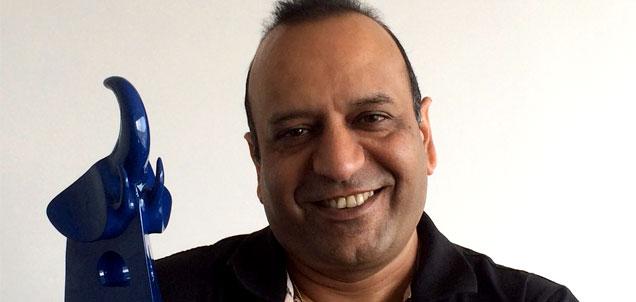
    Colvyn Harris, CEO, JWT South Asia is delighted as his agency won the maximum number of metalsfrom among the entrants at the Creative Abby. This included a Grand Prix for Direct. Shobhana Nair caught up with him hours after the achievement.


    Forty metals and the #1 agency in the Creative Abby at Goafest 2014. Your comments on this victory?

    The team is extremely delighted. As South Asia we have won 41 metals (Contract Advertising included) of which we have won 6 Golds. It’s fabulous to win so many awards. We have won across many client categories including digital, direct and traditional.


    What does winning so many awards including the Grand Prix mean for JWT?

    Personally, we want to do the best for our clients and their brands. This happens to be a validation of the work we have done. We are delighted when we win for our clients. As far as the creative team is concerned, their winning is a validation that the work they do is better than what the industry does.


    What’s your personal favourite from amongst the winning entries?

    The Grand Prix winning is obviously a favourite. If you get recognition from peers through a fair jury process, why would you wish anything better?


    What was the idea behind ‘Genomusic Project’ for Bay Beat Collection which won a Grand Prix in the Direct Response Digital Category?

    The idea around this was that your DNA can be used to create a unique music track. It’s an end-to-an end platform. On Facebook, there is an app to express why you should be there. Somebody is sent across to take your DNA samples which will be blended in to the music. So it’s unique and never done before.


    Back to the Creative Abby, did the fact that some top agencies not participating increase your chances?

    The Olympic Games takes place despite countries not participating in them. In Cannes, some agencies participate and some don’t but the ones who win believe their work is good. Coming back to India, Goafest is a property by the industry, for the industry. It’s very easy to boycott an industry function. Do we want to do that? No. We want to support this institution thinking that it will do well. If some agencies choose not to enter for whatever reasons, it’s not political. This is a clean event as there’s a jury. People have done a good job and they should be recognized.


    What would you say to all those agencies who decided to stay away?

    I think they should have participated. The other awards show (Kyoorius Awards) has other agencies which doesn’t worry us. The right approach to this would have been to enter both the awards.


    The Abby is an institution. We continue to enter this event by supporting it because it has been created by the industry. But it’s over now! We are happy and delighted.


  • Meet the Whizkid CEOs – Shravan & Sanjay Kumaran


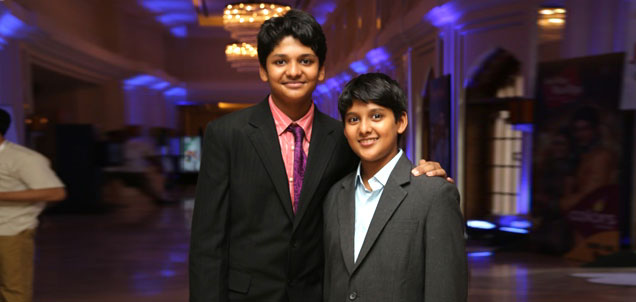
    Brothers Shravan and Sanjay Kumaran could well be the youngest CEOs in India as they head an app developing company, Go Dimensions. Content with the ‘Whizkids’ title that has been bestowed upon them, the duo were in Goa last week to deliver a knowledge seminar to stalwarts from the media, marketing and advertising domains at Goafest 2014.  While Shravan is 14 years’ old and in Class 10, brother is 12 and in Class 8. Both are students of  the Vaels Billabong High International School, Chennai.


    Shobhana Nair caught up with the Kumarans who were visibly upset about the fact that so much “rich food” gets wasted every day in 5-star hotels and were pondering what to do about it. Having developed more than 150 test apps before launching their first app, Catch Me Cop, these kids are well-versed with all the programming languages.

    Excerpts from a conversation with the dynamic duo…


    What is the one thing that you both have always believed in and mention it in all your seminars?

    Shravan Kumaran: One idea can make the difference. It’s not about making many products but it’s just one small idea that can make a change.


    At this age, most kids are active users of apps themselves while you both are out there developing apps for the market. What’s the inspiration behind developing so many apps?

    Sanjay Kumaran: It’s just our hobby which has now become our passion.


    Take us through the latest app that you’ve developed?

    Shravan Kumaran: It’s Car Racing HD. The car moves depending on how much you tilt your phone. It was released a couple of months ago and got 2,000 downloads on the first day. It has seen more than 10, 000 downloads till date. This app was also rated as one of the Top 300 apps by Apple on Day 1.


    Sanjay Kumaran: There’s another one called Emergency Booth where women in distress can reach out without any internet or extra support.


    How many downloads have you managed so far for all your apps?

    Shravan Kumaran: All our apps put together have had 60, 000 downloads from 60 different countries.


    Do you envision any strategy for your company which was set in December 2011?

    Shravan Kumaran: We want to build our company as a billion dollar company and we want to continue developing apps. Our ambition is to get more and more people to use our apps on their phones. Our vision is to have 50 per cent of the world’s smartphone users to be using our apps.


    The venture indeed sounds promising. Are the returns as exciting?

    Sanjay Kumaran: All our apps are free, as our intention is to reach many and try to learn how our customers are using it. We have monetization through ads in the app. But we get just 0.05 per cent from the online advertisements which are put up on our apps. However, these ads appear only internationally and not in India. We’ve made $700 till now through such ads out of which we’ve decided to give 15 per cent for charity as soon as we get the money. We don’t believe in delaying the process of charity.


    When do you see yourself taking the paid model route for the company?

    Shravan Kumaran: Only after 50 per cent of smartphones have our apps.


    Sanjay Kumaran: We’ve reached only 1 per cent of that. But I am still not convinced about this as I myself don’t buy paid apps. I have downloaded only 2-3 paid apps.


    But then if you don’t charge, how do you plan to make money?

    Sanjay Kumaran: It’s just a hobby and not meant to make money. We are not sure about this in the long run as we want to make cool gadgets and devices.


    How much time do you usually take to develop apps?

    Sanjay Kumaran: Gaming apps take 3-4 months while others take 2-3 months. Designing, getting images, making it colourful, creating caricatures take time as we believe in quality work.


    Which would be the most memorable moment of your lives?

    Sanjay Kumaran: Meeting the South Korean Prime Minister. We were invited amongst the top10 designers from the world.


    Who would you attribute your success to?

    Sanjay Kumaran: The reason we don’t fight is because of the values inculcated in us by our mother. The reason we code is because of our father.


    Shravan Kumaran: We only fight over chocolates and compare who has eaten most. Otherwise, we are best friends and can’t away from each other even for few hours.


  • Curious about Kyoorius? Meet Rajesh Kejriwal


    Alert: this is a looooong, loooooong interview. But after reading what Rajesh Kejriwal,  founder and CEO, Kyoorius says about his advertising awards show scheduled to happen on Thursday, June 12, you’ll be convinced that there is much method to his passion for communication. A disclosure: MxMIndia is a media partner of the Kyoorius Awards,but that didn’t prevent us from asking some ticklish questions 🙂


    This should’ve possibly been our last question. But, tell me, if I am from the advertising business, why should I come for the Kyoorius Awards night on June 12?

    We’re aiming it to be the biggest celebration of creativity in India ever. It’s an area where you’ll see a lot of interaction between industry people, meet-and-greet and with clients also. What we’re curating is a very entertaining fun-filled evening. Not entertainment, but entertaining.


    I wouldn’t have asked you to compare yourself with any other award function but the fact that you said “biggest ever celebration of creativity” implies you saying that your awards night will be better than the others…

    I’m not saying that I’m going to be better than the others. My aim is to make sure that I’m good. How others project themselves is a different story but you’ve to understand the difference. Kyoorius is one single awards night. The others have a much bigger conference plus multiple awards nights. There are different logistics that come into play in both. Both have their own space. For me, the focus is only the awards.


    Over the last few months, there have been many comparisons between Kyoorius and the Abby. People have been talking about the judging procedure, who’s participating in Abby and at your event, etc etc. What’s your view? How would you compare the two? Since you were there at Goafest and witnessed the Abby awards and you know what you’re going be offering, tell us how Kyoorius will be different.

    First, I don’t think we should compare the two. In India I think there’s ample scope for two awards to co-exist as long as they are positioned differently. And my own personal perspective is that the Abby is a popular awards show and we’re more in the mould of a critic’s awards.


    The judging criteria, the trophy criteria are all very different. At Abby, there’s a Gold, Bronze, Silver. For every entry, you typically aim to get one Gold, one Silver, One Bronze. Three awards. In our case it’s different. We’re celebrating the Best of the Best work which means we give a trophy to everybody who’s done justice to a particular piece of work. This is the criteria that we’ve set at very high threshold levels. There are categories in which there are about 8 to 9 winners in our awards which you’ll see on June 12t. There are categories in which there are no winners. So there’s no demarcation that you have to award a maximum of three. And that I think is critical because at some point in time if you have 9 or 10 great pieces of work, how do you judge which one should get a gold, which one silver and which one a bronze? The jury decides. It’s an experienced jury. Every great piece of work should be rewarded, not just three great pieces of work within the list of great works.


    Tell us more about your judging process. You have some people in your jury who were also there at the Abby jury. And there were international jury members who had the Indian jury helping them out with context.

    Personally, having an Indian jury isn’t enough because you must celebrate work from India that is of global standards. Which is not to say that an Indian jury can’t really think of global standards, but what I mean to say it must touch a chord with international folks too.


    You’re talking about creative work. If you see a work, especially in print and outdoor, there’s no cultural difference. The piece of work is either really good, it catches the attention of everybody, internationally and locally and we’d like to award those who strike a chord internationally as well. It must be for all audiences. Any piece of advertising must be made for all audiences.


    I was speaking to a digital jury member and he mentioned that the focus at Kyoorius wasn’t as much on digital techniques but more on the idea behind the ad.

    One of the criterion which we feel very strongly about is that it must be an original idea and that it must have relevance to context. That forms a crucial part of our criterion. And juries were asked to debate on that and then vote. This also means that we must have an Indian jury to explain the concept to an international jury.


    So before the award happens in Thursday, do the jury members know who’s won?

    No. Other than three people in the world, nobody knows.


    And who are these 3?

    Two from D&AD, one from Kyoorius. Officially. As we go along and we make the films for announcement, obviously the production house gets to know.


    So leaks possible?

    There are NDAs. No leaks possible.


    Given the process of the judging, is there reason to be happier winning a Kyoorius award than any other?

    I’m not sure whether you should feel happy about winning at Kyoorius against something else because it’s not one against the other. I think the key factor of winning at Kyoorius means our judging standards are very high…


    …so how many Elephants?

    I know the figure; I won’t reveal it to you (laughs). We received 988 entries, I don’t think more than 4 or 5% will turn out to be eventual winners of the Blue Elephant or the Black Elephant trophy, put together. To answer your earlier question, our standards are very high. You really must’ve done a great piece of work to won an award. That I think is rewarding enough to understand that you’re one amongst those that have done a really great piece of work.


    That’s easy math. So 50-odd Elephants?

    Roughly.


    And how many Black elephants?

    Ah! Not answering that. I’ve personally signed an NDA with D&AD so I’m not allowed to do that.


    One of the jury members said that approximately 20% of the entries of the winners here could be winners at international forums..

    We actually spoke to the international jury members on this fact and some of them have been at juries at D&AD, Cannes, One Show etc and most of them said that it’s sad India doesn’t put in so many entries at D&AD. There were a lot of entries here which could’ve won a D&AD award.


    A thousand-odd entries were sent for the Cannes Lions. Do you think you should’ve got more entries?

    I think so too but then you’ve got to realize that Cannes has been there for such a long time and this is the first year for us. A thousand-odd entries is a very respectable figure we’ve got and a very encouraging figure. That means the industry did believe in us. Now the second and more important part is to justify that belief to make it bigger next year.


    I don’t won’t try to draw you into a controversy on this, but did you ever feel that there were agencies divided between you and Abby? Especially since Abby was less than a month before yours?

    I do know some agencies which were not divided with us, they were with us. A lot of the other agencies were divided because of the budget constraints. I don’t think it was whether we should go here or there. It was primarily because of the budget. The timing was bad because both ended up happening at the same time and even Cannes is at the same time. So there was this two-week period when the agencies had to plan for all three awards. That became a little bit of a constraint for Goafest and for us too.


    Do you think next year you’ll sit across the table with the Goafest committee and possibly decide when each one will be?

    Well, we factored in the Goafest schedule this year too. I purposely kept my awards two months after Goafest. I planned our Call for Entry on the day the Abby judging starts usually. But were delayed and everything went haywire. Clearly, it makes no sense for two national award shows to be happening at the same time. We’re not in competition with each other. Both of us should aim for the betterment of the industry.


    Assuming Goafest happens next year in March-end or early April, when will you schedule the Kyoorius Ad Awards?

    I’m not sure but we’ll have a gap of at least a month between the two. I definitely don’t want to clash our Call for Entries or our jury sessions or our awards night. All of them should happen at least with a minimum one-month gap.


    Do you feel you were at a disadvantage given that the Abby is organized by the industry and there are many heads at work as against yours which you’re doing individually?

    I think the fact that many heads has both advantages and disadvantages. Sometimes being the sole deciding person is much more helpful. As an organization, they can’t have one person deciding everything. It’s a committee that decides. But having a lot of people who’re busy in their own businesses also has constraints. They are busy people. They have their own businesses to run, they’re doing honorary jobs. While it’s great that they take out time, there’s also a constraint. I think what works best for us is that while I could call on you for advice, I could call on somebody else to say hey, what do you think about this? I have a similar number of people as advisors but I’m the only decision-maker. So I can move more quickly, I can execute more quickly. They may have 10 people. All 10 of them must agree on something. Otherwise it’s a battle internally. I also may have 10 people. But I don’t have to battle against anyone. I just casually ask people, get their opinion, formulate a plan and execute it.


    I was speaking to a senior industryperson at Goafest who had a comment on the D&AD process. He wondered 6 or 8 jury members can do justice to 600 or 700 entries? In terms of time spent, will they be able to do justice to all entries and categories?

    It depends on the time. They were there for 3 full days and we were working from 8 in the morning to almost 8 in the evening. So when you look at that, there was plenty of time for them to do justice to all of them. I don’t think it makes sense to have 70 or 80 jury members for 1000 entries. There are 7 jury members, 9 different categories. When you cut across all of them, each jury member is judging 70 to 80 members in each category. That’s not relatively a large number. You’re not talking about 1000 films which could be very tiring to watch 1000 films and judge  for 7 people. We’re talking about 7 different categories and 34 sub-categories. If you divide the total number of categories, you have 30 or 40 or maximum 50 per category. So every jury member is just concentrating at one time on anywhere between 20 to 50 entries. That’s not difficult. The point here is if you curate it properly, you never have a problem.


    Are you happy with the way your relationship with D&AD has moved?

    Very happy. They’ve been great partners. They’ve supported us totally. Both of us are non-profit so we have no ulterior or commercial motive to do things differently or be non-credible. Whether we get 1000 or 5000 entries it doesn’t matter. The revenue matters because the surplus goes back into the industry. We’ll never lower our standards. We’re not commercial. We have no political or commercial agenda.


    Then why are you doing it? You aren’t an industry body. You’re not any advertising or creative association…

    Neither is D&AD.


    So why is Kyoorious doing the awards? If you’re not for profit, why do it?

    We’re not doing awards for the sake of awards itself. We’re doing it because we think there’s a genuine need to have a different, very credible, transparent show of very high standards. I don’t think there’s any association or any body or any individual company doing anything to stimulate the young people in the Indian industry. And that’s our goal: stimulating the entire creative industry? How can we get youngsters to be more inspired, more innovative, think differently? To do that we’ll be doing a lot of master classes, workshops etcetera..


    I appreciate your commitment to the quality and standards. Am just trying to figure what’s motivating you to be involved in a not-for-profit venture?

    All of Kyoorius is born out of a passion of a not-for-profit venture for the industry. We did design because design had nothing going for them and it just branched out into advertising because there’s a gap there that can also help us help the advertising professionals.


    That’s one helluva effort for passion!

    All the hair on my head is lost because of the passion. Not because of that business (laughs).


    But if you’d spent the same amount of passion on your business, you’ve possibly made a lot more money.

    If my brother was present here, he’d tell me, this is what I keep telling you. It’s a constant struggle. When we started off Kyoorious as a not-for-profit division, the whole idea was we’ll do a few meaningful initiatives to fuel a design movement in India, to fuel a creative movement in India to stimulate the industry. I didn’t anticipate this will become so big. But you could see the hunger in the audience for such type of content. And then it would’ve been very mean not to make it bigger for the people who are benefitting from it.


    But beyond a point, an award show like this is not really fuelling your bread-and-butter business of paper, right?

    Beyond a point, no.


    Is there a positive rub-off?

    There’s a positive rub-off because you’ve changed your impression from being a paper vendor to being a friend of the industry. You know people more intimately. There’s a certain amount of loyalty that comes across. But at the end of the day, it’s still a commercial business. So beyond a point as you said, it doesn’t make sense. But we’ve crossed that point now and there’s no looking back.


    I’d asked you this question last year around the time of the design awards and I want to ask it again. Why is it called Kyoorious Awards and why not the D&AD awards?

    One reason is that it’s an Indian initiative. It can’t be called D&AD awards. D&AD already has global awards. D&AD is now looking at partnerships like the one with  Kyoorious in Brazil and a few other countries. You can’t really have five D&AD awards happening everywhere. So, obviously the local name must be attached to it. The second point you could make is why isn’t it called Kyoorious D&AD awards? The reason is that there is a memorandum, an articles of association at D&AD which was formed a long time back. This didn’t allow D&AD to do certain things. They may change in future..


    We do have an EFFIE-India as well.

    All of those are American organizations which are more commercially-led. So they don’t mind. D&AD is actually an educational charity formed for the betterment of the UK creative industry. While they became global awards but it was meant for the betterment of the UK. Now they’re branching out to be a global institution. Ours is the first partnership they’ve had in 50 years. They do say it’s very difficult to find a partner like Kyoorious. They may not have similar partners everywhere.


    You mentioned earlier that it will be an entertaining evening but not an entertainment evening. Tell us more about the event. Will you have a stand-up comedian?!

    Well, everything that you do in life as an awards company or as a conference company has to be curated keeping in mind as to what serves the best interests of the audience there. Now there are different reasons why people come here. One of the most important reasons why people should come to such awards or conferences is networking. You meet industry people, you talk to them, you enjoy, you feel proud that you’re part of this industry. That’s necessary. You have to leave time for that. If I have to watch a singer or if I watch a stand-up act, I can go and watch that separately. That’s not the reason I’m there. I’m there to meet my people, to be a part of the industry. I need to know who’s winning or what I’m winning, cheer and celebrate the winners and have a good time and leave.


    I thought people in advertising want a good drink. That was the essential part.

    That’s essential but that’s part of the curation of the whole thing. It’s attention to detail. What kind of food they like? Do they like drinks through the evening or do you stop the drinks when the show starts? It’s paying attention to these small details.


    The all-important question:  Are drinks going to be served when the awards are on?

    Yes, in a very unique way. Different from the other award shows.


    Tell us more… who’s performing? Who’s the Chief Guest? Emcee?

    Well, we researched a fair bit on what people like and don’t like in award shows. I think one of the key factors is that once you start the awards, you need to just start and finish asap. People are anxious to know who’s won. There’s the anticipation. You shouldn’t break it by having anything in the middle. So we don’t have any break. We start and finish the award show in one go. The second is the small things I spoke about. You can’t stop the drinks and expect the people to be locked up in a room cheering for three hours.


    One last question: Now that the Kyoorious Awards are set to happen on on Thursday, do you have more enemies than friends in the advertising industry?

    I don’t I have made enemies. I’m very grateful and happy that the industry has embraced the fact that there’s space for two awards and there’s no reason one should exist and another shouldn’t. Budgetary constraints may mean both of us won’t get as many entries as we’d wished for. Goafest might still get more because it’s an industry body and it’s a body that the industry should support. But I think there’s ample scope for both and we haven’t had made any enemies so far. I haven’t made any enemies. We’re all all great friends…


  • Kyoorius should wake Abby up: Piyush Pandey (+intvu with Madhukar Kamath)

    Piyush Pandey

    It was celebration time for Piyush Pandey and team at the Kyoorius Advertising and Digital Awards last Friday. His agency Ogilvy & Mather took home three Black Elephants – for The Good Road campaign in the Technological Innovation, :{to:) CleftToSmile in the Use of Social Media category and Google Reunion in the Online Branded Innovation Category. Ogilvy was also the most awarded agency at Kyoorius. Shobhana Nair spoke to Executive chairman and creative director (south Asia) of Ogilvy & Mather soon after the presentation of the awards


    Very impressed by scale, grandeur and elegance: Madhukar Kamath


    DDB Mudra was awarded a Black Elephant for The Last Telegram in the Direct Response Category at Kyoorius Advertising and Digital Awards. Shobhana Nair caught up with Madhukar Kamath, Group Chief Executive Officer and Managing Director, DDB Mudra who was seen crediting his entire team behind this success.


    Your thoughts on winning a Black Elephant?

    Being recognised for the breakthrough work that we did on The Last Telegram is extremely satisfying.  I wish the people who worked on The Last Telegram were here. I am going to thank Anil, Deepak, Andy, Mandeep, Sonal, Nitin. Very importantly, our client Ajay Kakar and his team were outstanding. We just went up with an idea to them and it was not an idea that was planned. It was an opportune moment. Andy and his team were totally outstanding in coming up with the idea and executing it. The entire execution strategy for The Last Telegram is phenomenal.

    Your personal favourite from other agencies?

    The Google reunion is completely outstanding. I particularly liked the work done by Grey on Duracell.


    Content with winning just One Black Elephant?

    It’s a good jury. I will accept whatever they have decided upon. Next time around we will make sure we have not just one piece of work getting recognized, but at least 3 or 4.


    Your views on the award show by Kyoorius and team?

    Let me be honest. I am very impressed with what we saw – in scale, grandeur and elegance. The entire award show has been exemplary. In fact, what they have done to this NSCI stadium is outstanding. I compliment Rajesh on not just putting this up but also putting up such an outstanding show.


    won numerous awards in the past… how would you rate Kyoorius and why would winning here be important for you (and the others)?

    Kyoorius is new but it’s fantastic. They have an association with D&AD that every creative person in the world respects. They’ve made an effort to understand what advertising in India is all about. They have matched world standards but giving a lot of importance to what matters to our audience. For me, that’s the most fantastic thing that has happened and I congratulate Kyoorius and D&AD for creating a level playing field in a very transparent fashion. I am very happy and I salute the organizers.


    Obviously you are very proud of all the work that Ogilvy produces, but if you have to pick one favourite creative, which one would it be?

    This is a very difficult question. All the work is the babies of my babies. I will not differentiate as they all are great pieces of work. I will not choose between them. I am proud of their work that youngsters are doing in the agency and I look forward to their work. But the rockstar work in my mind is Google Reunion.


    And work from other agencies that you love?

    I liked a lot of work from other agencies.  I missed Lowe. I don’t know whether they entered or not. But I have loved their work on Gundappa for Lifebuoy. I think it would have been a better place if some other good agencies were also a part of it.


    Your thoughts on the show put up by team at Kyoorius and D&AD?

    It’s amazing. They have done a stunning job. As a first-timer, they have created hope and if they continue doing this, they will probably be the best award show in Asia very soon. The Abby has done a good job in the past but has lost track and may be this award should wake ’em up.


  • Inside the real world of Blippar


    Founded in 2011 and based out of London, Blippar has rapidly grown across markets with offices in US, UK, Turkey, Japan, India and Spain. Blippar is the leading augmented reality app turning physical imagery, print and products into instant, interactive digital experiences using image recognition technology. With over a million million consumers and 100s of leading brands and media-owners including Pepsi, Coke, L’Oreal, P&G, Conde Nast, News International and Metro newspapers, Blippar entered India formally a few months back. Co-founded by Ambarish Mitra who wears the title of Global CEO,  Blippar announced the acquisition of Layar, one of the pioneers in the AR business, on Wednesday. Excerpts from an interview with Mr Mitra.


    Congratulations on the Layar acquisition. What does it mean for an organisation like Blippar?

    To me, Layar has always demonstrated that it shares our vision of an augmented world. Now working together as one team, we will further define what consumer augmented reality needs to be, and what will be required to deliver it on a global scale as an intuitive daily behaviour.


    Tell us a little bit about Blippar and how it’s been doing..

    Blippar is an image and object recognition platform which allows users to interact with the physical world and objects in the physical world . How we are defining physical world is things you see as a human. It could be from physical objects to outdoor ads to TV to print to product. The typical triggers which we are walking through the road and takes attraction.  And what happens when you blip something, and in order to simplify the whole augmented reality for you: whenever you’re using your phone camera and a layer of additional information appears on the physical world, it almost enhances it. It could give you additional information, it can give you recipes, it could give you coupons, videos, games. It can give you either information or entertainment, whatever one’s trying to promote. The philosophy behind building the business from a commercial point of view is almost 75 to 80% on an average towards media is still above the line. It’s driven by print, outdoor, press, TV, in-store signage and rest of the stuff. That’s truly very broadcast-based and it’s not very measurable at all and you really cannot pull any additional content from it. What Blippar enables or acts as an enabler for the consumer is look at a poster and get additional information or buy tickets or look at a press ad and book stuff or get deals to go and redeem it at a physical store. So, it really converges all of the above the line media into a single offering.


    Does it work better with certain kinds of products and services?

    It works really well on everything but it’s being used well for. It works amazingly for end products and for print media, so, so far we’ve seen tremendous success in these two verticals where almost every leading conglomerate worldwide from P&G to Unilever to Pepsi, Coke, Pizza Hut, Dominos, Nestle…  everybody is using It for multiple channels. And Blippar has often appeared in multiple channels in the West where we were a part of all the media buys. We were a part of outdoor, we were a part of TV, we were a part of press. They were able to give a unique proposition out of each one of those channels and also at the same time measure effectiveness. We usually put a big question in front of all the advertisers who spend in media that: Do you know actually what happened to your newspaper ad today? Like, you did print, but what happened?


    We have very clear propositions for them. One is, we will really engage your users. If you sell stuff, you can inspire your users, give them an experience out of that ad. Secondly, you can measure the effectiveness of the channel. Who blipped, for how long? Was page 17 in magazine X more effective than Page 19…


    Wouldn’t this upset the intermediaries… the all-important media agencies..

    On the contrary. It’s making them happy. I wouldn’t have a business model if this wasn’t successful. In fact, it’s for the first time a business is waking up the world of media that print media actually works. So what’s happened is today the only major measurable way of media effectiveness is primarily been driven by Google on the digital side where you know you’ve spent X dollars and Y amount of people connect to you and you know very clearly your user acquisition cost. But Vogue  magazine doesn’t know that. And if Vogue magazine is sending 22,000 unique users to an advertiser’s webpage, there’s no difference between Google and Vogue. There’s a price to be paid and you just know your Page 19 and Google are going to give as many users. The results have been so optimistic that the world of media has actually opened up to it and Blippar‘s proposition has been very widely accepted by Hearst Media and Conde Nast and Telegraph Media Group and New York Times and all these guys where they act as media partners and they in fact upsell.


    While  your website does have some success stories, could you give us an example of someone who has benefitted hugely?

    Take BBC Match of the Day, it’s a massive sports magazine in Britain and the target audience is between 14 to 24. It covers sports. When the magazine went out, 37% of the readership converted into blipping and that level of media conversion, no one’s used to. Each user blipped on an average 5.8 times and spent 9 minutes of pure engagement out of that magazine. When you’re blipping, you couldn’t be doing anything else. It’s a very opted-in behaviour. It’s not like you’re driving and blipping or watching TV. So, if you add those minutes up, it added up to about four to five hundred thousand minutes. That level of engagement out of the issue is unheard of in any form of media or in history in any form of marketing. This behaviour is being repeated across several titles. Of course, when we worked with BBC, all their titles have now moved on to Blippar from Match of the Day, Teen Sport, Music, BBC Radio Times, the entire portfolio. That’s not because Blippar is cool. It’s because Blippar is measurable and data-driven, beyond being very engaging.


    Are all these numbers available to the advertiser?

    It’s real time, it’s very much very Google Analytics in style. It’s like if I Blip now in this room and you’re the advertiser, you’ll see this Blip happening in this complex. Everything that a mobile device can capture gets captured and presented in a very digestible and a very visually beautiful format where marketers can take instant decisions.


    When you started out, there were other such offerings in the business already, right? How are they doing?

    The technology existed but the business model didn’t. We were the first augmented reality business model in the world which had a clear proposition that how it could be used for consumer and business benefit. So we literally started this revolution of Blipping as a behaviour where consumers and brands converge and they have a unique experience together. It’s now becoming an industry but we were the first players to do it and we’re the market leaders of this space.


    What percentage of the market do you have?

    Literally, we’ve made the market. So our business model is almost a monopoly. There are other people who do something similar. But what they don’t do is they don’t offer a unified offering. They offer SDKs and White Labels for a brand to have their own AR experience but in Blippar’s case, Blippar is the end browser like Twitter or Facebook so users go onto Blippar and brands also push their content into Blippar. It’s not that I create a bespoke experience for you in your own app environment. We don’t do that. Others are doing that and I wish them all the best but this is our business model and globally it’s being very well accepted by more than 1,000 brands and publishers now.


    What made you come to India? Besides the fact that you are of Indian origin, a platform like Blippar obviously requires good connectivity and you know our speeds can be awful.

    Look, connectivity is a macro problem and the picture’s only improving. I’m a big believer of looking at all forms of indices and as long as the curve is upwards rather than downwards, those are the positive things. Smartphones are only getting smarter and the networks are only getting faster. They’re not getting slower. Blippar was itself built on a 2G network infrastructure, so we’re able to support it in most countries. And it’s a technology challenge we’re constantly overcoming and it happens to work. Of course it won’t work if your phones on Edge connection, but anywhere Twitter or Facebook would suffer, Blippar suffers too. So there’s no rocket science there.


    What kinds of targets do you have for India?

    Goals or financial targets?


    Well, in terms of the various markets, how much of that would you want India to bring you in business?

    I definitely anticipate that in the next 8 to 10 months the Big 10 to work with us. The 10 FMCG holding companies pretty much own 70% of brands worldwide. Also, we anticipate a significant multi-million user growth in India where multiples of Indian users would be using this as an everyday behaviour and accessing content. We also have ambitions at least to have 2 to 5% of publishers whether it’s in multiple languages in local markets or nationwide national newspapers or magazines to have interactive sections on their media pages either commercial in nature or editorial. To work with both. So these are the sort of goals we have. And goals are driven already by some groundwork we’ve done with Arnav Ghosh in the last six months and the symptoms of that groundwork are extremely optimistic which sync very well for commercial purposes I’m here.


    In specific terms what would you say India would be vis-à-vis the U.S. market?

    US is perhaps a wrong example. For any market in the world, US is big. The U.K. market is 7% of the U.S. market and the UK is no small market. So. the market can be looked at in two ways. One is reach, another is revenue. And we’re definitely attracted by the reach aspect from a global perspective, but at the same time I think revenue perspective as well will be very attractive if we keep local P/Ls in mind.


    While you speak about the Top 10 FMCG majors, are there any sectors you think that could embrace a platform like Blippar in a bigger way here than the others?

    I think FMCG would embrace it in a bigger way because it’s a very product-led world and FMCGs have a big influence in the Indian consumer mind and they advertise a lot. But two predictable sectors are connected to cricket and movies, we’ve already tried this in America which is a very sports crazy and sports savvy economy where entertainment and sports really engage users in a way. And of course brands automatically for marketing reasons come in the mix but if you’re looking for really good content, people want that additional content about things they are naturally engaged with and we personally feel that would be a major enabler for exclusive additional content in areas like films and cricket.


    Unfortunately, both these sectors don’t pay.

    Yeah. But think about it. They may not pay, but somebody might pay for it. I don’t want to promote any given brand but let’s say the Captain of India has to give some exclusive comment to only drinkers of a certain cola brand. You have to Blip the Cola brand to get that exclusive footage. Straight after the game! The cola brand would pay for it but the concerning cricket body or the team wouldn’t pay for it. Do keep in mind that we’re a very unique proposition. For us, the physical world is limitless. And remember, the physical world is still way bigger than the digital world. You can activate content out of everything.


    Will you be targeting your international customers who have a presence here in India or homegrown ones too?

    We’re looking at both. I think we will inherit the international ones to a great extent having worked with them globally in all our markets. That’s already in progress at some level. On local brands, Arnab’s having great conversations already, we’re targeting all the relevant ones to start with. But, for us it’s a key criteria to work with brands who have envisioned themselves. The reason for our success is we’ve been quite fussy as a platform. We’ve chosen people who’re the right people to represent. Because, this is so new, you shouldn’t give bad content experience on something that’s so new else it’ll have a fatal end to it. One reason for our success is that we’ve curated and controlled that environment. We’re not just giving this platform to anybody. There’s actually an element of privilege to start with and once some good casework is done, we’ll pretty much proliferate it and make it more en masse.


  • Bloomberg TV India is the only channel reaching out to global investors: Vivek Law

    It’s that time of the year where all business media entities get hyperactive. Yes, it’s Budget time. And this year’s edition is going to be extra special given that it’s the BJP-led Narendra Modi government’s maiden fiscal discourse. After all of the promises of ‘Achche Din Aane Waale Hain’, there is much anticipation from Corporate India.


    Bloomberg TV India has got its act together for the Budget that is scheduled to be presented on July 10. We caught up with Vivek Law, Editor, Bloomberg TV India on his plans for the channel’s coverage of the Union Budget 2014-15.  Excerpts from an interview:


    Before we get on to discussing plans for the Budget, tell us more about the channel is doing.

    Well,  we’re probably the only business channel which is relayed across the world. We’re live on the Bloomberg terminal. All the 400,000-odd subscribers of the Bloomberg terminal actually get to see the video that’s the TV version of the channel on the terminal. In addition to that, we feel in the last two to three years; especially in the build up to the elections our global TV network has been carrying a lot of dedicated Indian content. Also, we known that the Indian stockmarket is pretty much driven by FII investments. And it’s the global investors who’ve been very keen and interested in knowing what’s going on in India. They’ve already put in hundreds of billions of dollars and intend to put in more which is why we are at the levels where we are. Their interest in India has only grown. If you are an investor sitting out of New York or London; to my mind, your only window to the Indian economy or market is Bloomberg TV India.


    Yes, even though you are essentially a business channel, we saw a fair bit of elections coverage on your channel.

    Even though we’re a business channel, we had a daily one-hour programme which was called Political Capital. I know we’re not a general channel so our coverage was very distinct from what the others were covering. We were very sharply focused in terms of what the global investor would want to know in terms of the Indian elections.


    Your theme for the Budget programming ‘Will they walk the talk? is interestingly worded?

    This theme was chosen because there’s been a lot of expectation built up in the stockmarket in terms of the fact that this government is going to turn things around and is going to lift the economy out of the slumber. The message is: Wait for the Budget and the Budget will be the first document we’ll present in terms of giving a direction of what we want to do. So there’s a lot of interest as far as the global community is concerned. We’re also very clear that given the global interest, that’s where our actual strength lies… in terms of reaching out to investors internationally from across our studios all over the world. That would be the sharper focus we’d go with this time.


    But does the theme mean that you will take a critical view of what could possibly happen.

    The point we are trying to make is there have been enormous expectations right from September when Narendra Modi was formerly anointed as the PM candidate. If you see the market from then, it has jumped 20% and there’s a huge amount of expectations built in the markets especially with global investors. Here’s a person whose entire campaign was actually around the economy. He talked of inflation, lifting economic growth and jobs. In fact, we called it ‘Economy Election’ on our channel. Perhaps for the first time, he’s brought economic issues to the centrestage in many years. Therefore, there are great expectations built in. And there are various concerns in terms of whether he’ll be able to deliver all that he promised? It’s not that he’s going to be able to do everything in just one budget but the expectation factor is huge. That’s why we want to raise the question that a: how much is he going to be able to do? And b: What’s the kind of road map he’s going to be able to present?


    Any specific highlights and differentiators of the Budget telecast on Bloomberg TV India?

    I gave you the biggest differentiator. It’s not that we won’t give you what the others are doing. But there are two very important differentiators from what I expect others to do. A large part of our run-up to the programming is where the post-Budget will be in the whole personal finance space that’s an area I’ve been personally involved with. There’s a reason for that. It’s a fact that the Indian retail investor has been pretty much sitting out of the markets in the last few years. He or she has not been participating at all. In fact the redemption figures of both insurance and mutual funds testify. Now what we’re beginning to see is some of them coming back. It’s a very small amount; it’s still just a trickle. So again from the wider audience perspective, in terms of investing in equities there’s a lot of interest as well. I know we’re not a mass channel but at the same time we have a large number of viewers from the aspirational segment who’d want to be investing. That will be one of our major pillars in terms of the personal finance space. The second is we also intend to do a lot of programming around the youth. A large part of Modi’s following really seems to have come from the younger lot. Hence some of our programming will be going to campuses and trying to get a sense from the youth in terms of what are their expectations and once the Budget is presented, what do they think about it? This is in addition to the Indian stockmarket gurus and the stockmarket chiefs which we of course will do, but if you ask me honestly, that’s something everyone will do.


    In terms of show packaging, what can one expect?

    All our packaging and graphics are completely in sync with what Bloomberg does globally. If you watch our channel here and you watch Bloomberg Asia or Europe or America, they are identical. I’m not so sure I can give you more details at this point but what I can you is it will be a much fresher look on Budget Day for us.


    Is that going to change post-Budget Day or will it be only for Budget Day?

    It will change post-Budget day. We’ll introduce it around Budget Day or around that time. But that will be a permanent change. It won’t be something that’s just for one day.


  • The Past, Present & Future of Ormax Media


    Behind every channel and reality/fiction show’s success is a lot of hard work by its programming and business teams. And over the last few years by a  Mumbai-headquartered research firm called Ormax Media. It’s small in size, but big in ideas. Almost every television channel will vouch for that and in recent times other media companies too. But the maximum growth has been with films where the processes are getting structured and scientific. As Ormax Media completes six years in the business, Pradyuman Maheshwari spent an hour-odd with co-founder and CEO Shailesh Kapoor in his office last week and asked him for insights on the firm’s journey and plans for the future. Excerpts from the interview:


    Six years seem to have just flown by. As you look back, how’s the journey been?

    I think the most interesting part of the journey originates from the idea that while we are a media insights firm, we set ourselves up to be more like a media company than a research company. We are very proud of the fact that we don’t follow some of the processes and practices that typical research companies follow either in the way they approach their proposals, they way they do fieldwork or the way they write presentations and reports. We have always taken a very media expertise-driven approach instead on processes and people. It’s really worked well over time. Increasingly, when we meet our clients today, they see us less and less as a research company, but instead see us as people who understand their business well and also have a contact with the consumer. But ‘understanding the business well’ part is critical to Ormax Media’s existence.


    The fact that you were already part of the industry must’ve helped much in the early days?

    Yes, in the first year, a lot of business happened through personal contacts, both Vispy Doctor’s and mine. But that can only take you to a certain level and thereon you have to create equity and grow. I think we did something very well in 2009 and 2010, which is giving us rich dividends now. Which was that rather than just scouting for bespoke business, we focused on creating a lot of standardized products that could cater to common industry needs. Today, we have about 24 such products. Our top-end products keep us very stable in terms of our business growth.


    For example, Ormax True Value is a product we use to test television shows for GECs, kids, youth and other categories. Many channels were testing shows using qualitative research, but there was no standardized product for show testing that would give a forecast of the viewership and actually get into the diagnostics of what will work and wouldn’t, and have a very strong predictive sense to it. So once we have a product like that, which no other research company is offering, there is a natural advantage we build. If you need to test a show and you see a good product and that is the only product available in the market, you would tend to use that. And once you’ve used that once or twice and you like what you’re getting as an output and you get the confidence that this is accurate, you start using it more and more. We have used this product-led model to secure a lot of business over time.


    Content testing is a tricky business, right? Television software is very tough to forecast viewers. So, aren’t you forever treading on very tricky terrain?

    Yes, it is tricky. But I believe that forecasting any business parameter, be it box-office or viewership, has a very ‘put your money where your mouth is’ kind-of feel to it. There are times when we get it wrong too, but if we don’t take the risk, our impact on the channel’s or film company’s business is considerably reduced.


    When we were not in the forecasting business, our access was more to the marketing and research departments. Now that we are forecasting across industries, we deal a lot more with CEOs, CFOs, GMs, Business Heads and CXOs. I think that’s a very encouraging shift for us from commanding a certain market positioning. Today, 70 percent of our meetings have a boardroom impact. The number was less than 40 percent till two years ago.


    Of course, there is a lot of back-end work that goes into creating the right forecast models and generating accurate forecasts over time. A lot of data has to be collected and analysed. It’s like the black box or the secret sauce.


    Can you share some examples where you’ve made some specific comment and that possibly transformed the show for a channel?

    There’s very little I can share with names, as most such work is commissioned. But to give a general idea, there was a show we tested around three years ago. We tested it three times over a period of six months. It first tested average. There was an issue with the casting of the female lead and some issue with the narrative treatment too. But the basic idea tested well. The channel backed the idea and re-tested another pilot with a different female lead and director. By the third testing, the show had scored exceptionally well. It continues to be a successful show even today.


    Is it right to say then that Ormax has clearly moved from being essentially a research firm to now advising CXOs?

    I think that’s an accurate description of our recent journey. We’ve always had some consulting assignments, even when we started in 2008. But at that time, 90 percent of our work was still conventional research. Today, we are increasingly getting projects that are ‘mixed’ in nature, where we are playing the role of a consultant, doing some primary research, relying on some secondary data already in our system, or in the client’s system. So, we have liberated ourselves of the distinction between research and consulting, or between various types of researches for that matter. All that matters is the impact on the client’s business.


    When you speak to CXOs directly, doesn’t it create resistance with the research guys?

    There may be certain instances of that. But our Bollywood experience really taught us a lot regarding this area. Film people are driven strongly by box-office. Whether it is the studio head or the director or the marketing head, everyone understands the language of box office numbers. Even the creative people like directors and actors have a very strong orientation towards their film being a hit.


    Dealing with the film industry, we realized that the moment you can talk business language, people just open up to you and are far more willing to have discussions that they won’t have with a research company. We have applied this insight to TV, radio and other areas of our work. If we can tell you that this is the way you can increase your GRPs or TVR or whatever the currency is, then everyone would want to be in the room listening to us.


    When you have CEOs, CFOs and programming heads pouring their heart out to the problem they have, how do you manage with the confidentiality? Is that an issue?

    It’s an often-asked question, but it’s never been an issue so far in six years. Confidentiality is at the heart of our business. It is one of the core values we espouse as an organisation. Since 2009 itself, we started spending on data collection so that we build insights that are owned by Ormax, and hence, can be freely shared across clients. But the life of the data we collect on a client project ends with the project. That’s a clear distinction we make.


    We are bound by Non-Disclosure Agreements across clients. But more importantly, confidentiality, and the maturity needed for that, runs in our bloodstream as an organisation.


    Tell me a little about your structure, team size etc.

    We decided in 2009-10 that we won’t look at how the research industry is structured and replicate that. We intuitively structured ourselves as a service company instead, like say a good ad agency. We have three departments under which the 35-member team is structured.


    Keerat Grewal heads the Account Management team, which is responsible for business development, client servicing and relationship building. Amit Bhatia is a part of her team and in-charge of our Delhi business. He also handles new priority products strategy for the entire company as an additional responsibility.


    The Insights team is structured by domain. Anurag Bakhshi heads television insights, Gautam Jain leads film insights and Namrata Sukumar is responsible for print, radio and branded entertainment. Their teams include product managers and researchers.


    The Operations team, headed by Khushroo Dumasia, is responsible for quality execution of projects. We have a state-of-the-art CATI (Computer Assisted Telephonic Interview) setup in Surat, from where a lot of our products run. It’s arguably the best CATI research facility in India, in terms of technology, processes and best practices.


    What will the breakup of various domains in terms of their contribution to your business?

    TV would currently be about 60%, films about 20% and the rest put together will be the remaining 20%. All three domains are growing, and the growth in films has been the fastest – over 100% for the last two years.


    I remember you also doing work on radio. Give me an example of the work you do there.

    We have a long-standing relationship with Radio City. Also, one of our very popular products is Ormax Heartbeats. It’s a weekly music charts product, which radio stations, music channels, music labels and film studios use to decide which songs to play and promote more than others. We also have an annual RJ Track we conduct in about 10 cities across India.


    Are you looking at news channels?

    Definitely. We have a product called Ormax Brand Matrix (OBM), which is a viewership maximization tool. OBM is being used widely across genres, ranging from news to infotainment to movie channels, and of course, GECs.


    A lot of research companies offer ‘brand track’ products. The problem with brand tracks is that they are good-to-know, but not actionable. They give you a lot of data, but don’t help you convert it into specific plans to increase viewership.


    OBM is a complete 360-degree turn on the old idea of a brand track. It gives a brand track a complete viewership orientation. That’s where our domain expertise comes in handy.


    What about the kids’ genre?

    A lot of very interesting work has happened in the kids space in the last five years. Ormax True Value is used across channels to test new kids shows. Ormax Small Wonders, our kids tracking study, is now into its tenth edition. It captures media and entertainment habits and preferences of kids every six months.


    There is a lot of very satisfying bespoke work happening in kids’ genre, whereby the focus is on understanding trends and need gaps. We are very proud of our association with kid’s channels in India.


    As you said, your films business has increased considerably over the years. Are they relying more on consumer insights or have you established your expertise or both?

    I think it’s a bit of both. We’ve been very committed to growing our films business. We launched Ormax Cinematix, our flagship product in the films space, in 2010. Today, nine studios are subscribing into it for box office forecast of unreleased films and marketing inputs to improve their opening box office. But in the first year, we have only one client. We knew that film tracking and box office forecast is a big deal internationally. Our internal discussion was that we need to back our belief. Till 2012, we won’t question whether this product will work for us. We started seeing big results in 2012, and then there was no looking back.


    Our other films product is Ormax Moviescope, where we pre-test the actual film weeks or months before its release with real audiences, and give content inputs and lifetime box office potential estimate of the film. We have now tested about 40 films across studios. Word of mouth really spreads in the film industry, which is how we have grown so rapidly in this sector. TV is a little more insular.


    You’ve, in a sense, reached a stage of super-stardom in your business. There’s no direct competition, no specialized research firm doing this. So what next?

    There are two clear areas we want to focus on in our seventh year. We still believe that our journey from being seen as researchers to being seen as media super-specialists has still not finished. We’re probably 50-60% there. We want to be in a state that six months from now, we can say that we will not take work that does not do justice to our boardroom positioning. That day, we would have completed the transition. It should happen by early 2015 if all goes well.


    The second area we are focusing on is technology. We firmly believe that to remain relevant, we need to embrace the latest technology available to us, than sticking to traditional research methods. I understand we’re still not an Internet country as far as GECs or mass content is concerned. But that doesn’t mean we can’t bring in technology in another form.


    One of our recent collaborations has been with a UK-based company called RealEyes. They provide automated facial coding services. Suppose you have a video, like a promo or a trailer even a half-hour episode, you can get the viewer to sit in front of a computer and watch the content, and the webcam will record their facial expressions. In the backend, the software will analyse the emotions. When did the audiences feel happy, sad, confused, scared, etc.? It’s actually not “research”. You aren’t asking any questions. It’s behavioural data. It can be quite spooky to know that normal viewing of content can be converted into emotional response.


    We have created an India-specific product called Ormax Xpressive based on the RealEyes technology. We have already finished seven projects, even though the formal launch of the product is slated next week. The results are very encouraging. The sharpness of response we have got is something conventional research will never get close to.


    It’s like you can have your ECG and see how the heartbeat reacts when Arnab Goswami speaks.

    It’s like you just realized you don’t need an ECG! The technology is entirely via the webcam. No gadgetry is required, yet the results can be very interesting. We tested the first 2 States trailer as a pilot, when we were building the India product. The moment Amrita Singh would come on screen, the engagement with the promo will show a huge spike. This happened thrice in the trailer. It was clear that the trailer is working far more for its cultural stereotyping-led comedy, and less for its youthfulness. Claimed responses rarely give such clarity of thought.


    We’ve already started building India benchmarks. Also, you may see a graph for a promo and say this is the scene where it went up and this is the scene where it went down. But you need the expertise of the category to understand what exactly led to the rise or the fall. In a promo test, we realized that close-ups are working much better than long shots. And that became a larger point. We are now wondering if it is true in general for all promos? So, we want to and can marry technology with our understanding of content. That’s the advantage we have.


    There’s a belief that the best channels or the top shows across the world are all based on gut feel. Shows like Satymaev Jayate and Bigg Boss etc are on air more because of gut feel than research (or at least as much of both). What’s your view on this (and does basing content strategy on gut impact an insight advisory firm like Ormax)?

    My answer to this question often surprises people. Ironically, though we’re in the insights business, where we should negating gut, we’ve been quite open to the idea that gut is very important. We try and promote the whole idea of ‘informed gut’. We say, you should look at all evidence, whether it comes from the consumer, it comes from ratings, internal discussions, gut, anywhere.


    The research industry is globally moving towards evidence-based consulting, where you look at all the evidence available to you, including gut, and then you take an informed decision. We don’t enter a meeting where we’ve done some research and we say this is what it is and this has to be done. I think we put various perspectives on the table. Once the choices are sharply articulated, good business leaders find it easy to make choices. Even if they go with their gut, it will be an informed decision.


    Also, our role is to increase the probability of success. There’s no guarantee, but if out of ten shows you launched last year, three worked, if you work with us, five will work! So if we can push that ratio, we are relevant.


    You’ve been a business head of a channel yourself. Do you sometimes feel you should be sitting on the other side and actually running a channel?

    The answer is a definitive no. Just the amount of diversity of work Ormax offers, and I think I speak for many others who work here, is enviable. In the morning, if I have a GEC meeting, in the afternoon I’m working on a kids’ project, and then meeting a film studio head in the evening. Next morning, it’s probably a radio research, followed an editorial meeting at a news channel. This variety in work can create vast knowledge and always a sense of freshness. The ability to learn and grow is decided by every person working at Ormax, not by the market. I’m not sure how many media organisations can promise this.


    Would you be open for an acquisition or such a thing? There are others in the business that are looking at value-added television research.

    I think while you should never say never, at this stage, that’s definitely not a thought in the mind. Instead, there’s the thought of going public in next 2-3 years, say around 2016. There are a lot of ideas in incubation, which may require funding at some stage. We believe we have only scaled a small peak so far. There’s a lot more to achieve. But the acquisition route is not a thought on either Vispy’s or my mind.



  • Disappointed with branding work in India: Michael Johnson

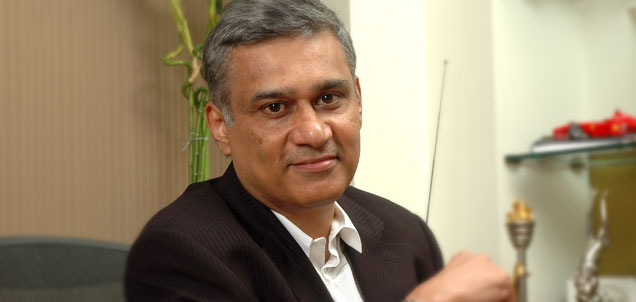
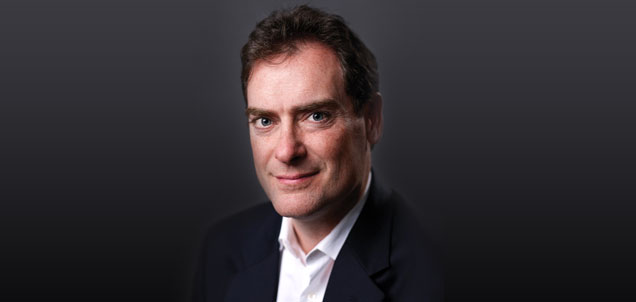
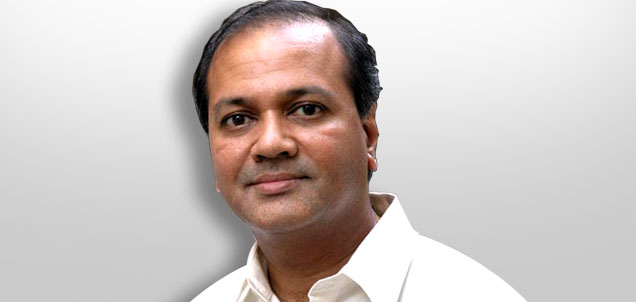
    Michael Johnson, Creative Director and Principal, Johnson Banks was in India to head the jury of the Kyoorius Design Awards as well as to conduct seminars on the future of branding in Mumbai and Pune as part of the Kyoorius FYIday series. His company Johnson Banks has re-positioned brands like Virgin Atlantic and Science Museum. MxM India’s Shobhana Nair caught up with Mr Johsnson to find out what’s the future of branding in India and more. Excerpts:
     

    Do you think there’s scope for brand specialists and experts in India at a time when a fair bit of the branding exercise is done by advertising agencies?

    The advertising agencies have seemed to dominate for quite a while. The design companies are at a second level. This used to be the case in UK and America several decades ago. In the ’60s, some of the most famous British design firms designed for advertising agencies. In the ’70s, they started their own consultancies and became independent. By the 1980s or probably by the 1990s, they were brand consultancies on their own. Now 20 years later, brand is powerful than advertising. We are often called first about a branding problem and then the advertising agency has to deliver an ad campaign. Things have changed but that has taken a while. It’s not easy to shift that paradigm.


    How do people in India react to your kind of work?

    I have been doing this for 30 years and we started by doing a logo in the corner. We did just the logos. In India, they think that they only design logos. This problem is not only here, it’s also in China. There aren’t that many countries in the world who understand this. Only people from Japan, UK and America and some clients in the Gulf understand the breadth of the project.


    Will the paradigm ever shift in India?

    It will but it’s going to take longer than we think. There’s a feeling that things happen quicker in a young, exciting and developing nation like India. But it will take a while. You need to be patient. It’s taking a while for an indigenous true design approach to emerge. A lot of work looks like a work of an American graphic designer. That has got to change. India needs to find its voice as well as an understating about the brand is. It will happen.


    Any brand that has caught your eye from India?

    To be honest, I am a bit disappointed. A lot of big branding projects look as if they are done in the Middle of Atlantic. Tata Docomo looks from Japan or London. It does not look Indian at all. Apollo looks primitive. Airtel looks dreadful. What’s happening is the very successful international consultancies are selling their international style to big Indian clients. India is more interesting in itself. The last thing that India needs is someone like me. India needs to find its focus. There’s so much originality there. I had spoken at Designyatra seven years ago. All the students wanted to design like me. I wondered why. Their clients demanded designs which looked western. I felt that these are early days and this will change. But not much has changed in seven years. The students don’t need to copy their American tutors. By doing this, India is denying their qualities. I think it’s a bit of shame.


    Any successful branding story that India can learn from the global market?

    Uniqlo is a nice, affordable, high street Japanese clothing manufacturer. Five to six years, they took the decision to put their Japanese and English logos on the main store in New York. They felt that that they are Japanese and why should this be hidden? I think this will happen in China and India too where brands will be proud of their roots.

  • 92.7 will be a 100-plus radio networks soon: Tarun Katial


    Buoyed by the success of some key stations going retro, Reliance Broadcast has Big plans for 92.7 FM. In a wide-ranging interview with Pradyuman Maheshwari on the radio business at his company’s headquarters in north-west Mumbai, Tarun Katial, Chief Executive Officer of Reliance Broadcast Network spoke on the switch to retro, his plans for Phase III and news on private FM radio.


    You must be proud of the way 92.7 Big FM has grown in leadership. The retro strategy has worked wonders, right?

    We researched that all radio consumers are not the same, all tastes are not the same and we will go region by region, city by city to decide the format and we put our radio station in buckets so there is the retro bucket where all stations that we saw that the liking for retro music was high, we’ve taken the ‘hit thhe, hit rahenge’ positioning in all those stations. There are some stations where we continued to run as contemporary hit radio but they are in a bucket of regional plus contemporary so there is Bangalore, there is you know the whole Punjab belt, there is Chennai. Chennai is actually different, there is Hyderabad, and some of the others which are regional contemporary hit radio. So they primarily belong to that region and to the music of that region and contemporary music of that region.


    Going retro has obviously been successful but did you think that it would alienate the youth?

    We did extensive research in all target audience groups and was quite surprised to see the results. New music has so little shelf value even among the youth that beyond eight to ten weeks, a song fades away and never comes back. That’s the maximum period that a song stays on the charts today.


    How’s it done for your revenues?

    The money today is in categories like auto, insurance and FMCG. And these all talk largely to 25+ male or female consumers. Even though you may worry about our youth ratings which are very, very big and competitive when compared to others, it is in the 25+ audience largely where all the advertising money gets spent. We are clearly the No 1 here. So it has impacted our revenues extremely positively. Our Mumbai station which was priced anywhere between Rs 6-700 bucks has nearly doubled its price, its ARPUs and its volume going up extensively…


    In terms of overall revenues, what has been the kind of growth?

    If you look at our last six months which is where we’ve really gone retro, we’s seen a near-15-20 percent rise.


    While you were always known to be the large 45-station network, given your leadership status in the two key markets of Mumbai and Delhi, you must be now calling the shots in the radio genre?

    I think most large advertisers realise that we deliver very good value and they’ve started to work with us far more extensively than they ever did in the last one year. A few of the larger ones have actually gone and done some really innovative work with us. So we’re seeing larger marketshare shifts towards us. We’re also seeing advertisers finally getting conscious about where they spend their money because spends on radio are going up after the cap of ad time on TV and so we’re seeing people holding themselves and their agencies far more accountable in terms of RoIs. Advertisers are increasing looking at RAM data. Around 70-80 percent of adspend is in the four metros which are measured by RAM weekly.


    An aside: radio players do not seem to have too much of a problem with RAM as the televisionwallahs have had with TAM.

    I think even radio players want RAM to upgrade itself. Baselines need to be updated, data needs to be looked at for challenges that it has. So there are issues with RAM and we want to move towards electronic from diary, but it’s far better than an IRS kind once-in-a-quarter, once-in-six-months, once-a-year kind-of study and now with IRS not come since 2012 that data is virtually redundant now.


    With BARC a reality, now from October onwards, presumably TAM will be off so they will only have RAM.

    I don’t know whether TAM will be off or we’ll have two sets of ratings….


    Huh?

    The jury is not out on whether TAM will be off.


    Yes, but they need to have enough subscribers to be able to fund that kind of research.

    Yes, but I think everybody is going to look at the stability of the BARC data for the first few months before we all switch off TAM… which is an eventuality


     Assuming that happens whenever, are you worried about research because that company will only have RAM as a business proposition in the field of audience measurement?

    Internationally there are enough companies that do both radio and TV research. The good part in RAM is that it’s a commissioned study by the radio broadcasters. Unlike TAM which is a subscribe-to data, this is a commissioned data and as a radio body we can commission it to any other research company we think fit.


    So will you continue with RAM for the moment?

    For the moment, yes, I think the radio industry is going to be with RAM.


    Coming back to 92.7, from what you say the people who matter for revenues – the adult listener – listens to retro and hence the switch to retro has been rewarding. It now appears to be a no-brainer, so why didn’t you do it all these years?

    I think everybody likes to believe that there is safety in majority and you try to do what  everybody else is doing and try to make the marginal delta difference of what you and the other player are. You realise that the marginal delta difference only gets you that far and you’re all pretty much aping each other and the only way to stand out is to break free from the clutter. So we decided that you have to take some slightly bigger risks to get some slightly bigger results.


    We took some risks, some aggressive ones and that paid off quite well and we also took these risks with a good execution strategy behind it. So not only have we gone retro, we’ve gone retro with some very pathbreaking shows.n Suhana Safar with Annu Kapoor is just one of that. What it’s done to radio is that not only is it the No 1 show but its added to new listeners on radio. And very few products or shows on radio or on TV can add to the base of viewers or listeners. There isn’t anybody who you would talk to around who listens to radio or listens to our network who wouldn’t have consumed Annu Kapoor today.


    What next? People are trying to replicate what you’re doing.

    What we have been able to do is that we’ve built a format with talent around it which you can’t replicate. You can replicate the music but not the talent around it and the insights that we’ve been able to do with music. We have actually had a panel of serious musicians help us classify our music. We haven’t done it with little knowledge like most other radio stations including us have about music. We actually brought in experts. I think the next step would be to add more formats within the retro format, to add new talent and new shows. We’re in the process of talking to two very big artists. You can replicate music, but not talent.


    But talent can be poached.

    Well, you can poach talent but you can’t replicate it.


    What about the attraction of associating with new films like a Humpty Sharma?

    You have to make some sacrifices right? You have to stay true to your format. We have not done any such movie tie-ups in a long while. Yes, we do interviews because we’re not away from the current world so they all come to us. They come and talk to them about the legends and the retro music they’re in love with.


    Given the success that you’ve had with retro, what are you plans for Phase III?

    I think Phase III will be a great opportunity for us to refine our formats even better so in places where we get multiple frequencies. Having succeeded with different shades of work with retro which a lot of people including some people on our Board said was doubtful and questionable, we’ve got some two-three formats up our sleeves that we want to test in Mumbai and Delhi and some of the other markets.


    Is there anything that you could make public right now? Would  you look at classical music at all in the future?

    While we haven’t done classical music but we do classify our music for ragas and we do play our music by day parts according to ragas.


    So Phase 3… how many licences are you looking at? 

    We’ll go for max. Max in terms of whatever is possible so I think from a 45-station network you can expect us to be a 100-plus network.


    But, of course, there’s still some time before Phase 3 happens.

    It should happen. I think the government will do it before December, I would think.


    Will you possibly look at regional also like in a city like Mumbai?

    Why don’t I just write the format strategy and give it to you? (laughs)


    Okay, what about news? Is that something that you will get into?

    Well I’m excited about it.  I think it’s almost archaic to not have news on free radio and not allow the consumer to be able to make himself aware on what his happening on the world around him on free radio. It’s not fair and I think this government had finally woken up to that reality I think we spent five years representing to the last government or more. I was so hopeful that they would have done something under the last regime. But I hope this regime will come and I think the statements from the I&B minister are very positive.


    This is independent news, not AIR news.

    We’re hoping that some of the leading news agencies will be allowed.


    But why don’t you still pitch for independent news?

    Definitely! And that’s our argument. We are still hopeful that the minister will stay true to his earlier announcements of allowing at least Press Trust of India (PTI) news on air. With all sorts of news available even on local cable television, radio should be treated fairly and equitably. It is a responsible medium, live, here and now, can be consumed on the go, and can be very effective. We free-minded and free-spirited media people like you will help us in taking this cause forward.


    I’m the only person who writes about it. Seriously, don’t you think the radio bosses haven’t pushed for it enough?

    I think we haven’t. I think we haven’t worked hard enough for it. I think we have been caught up in other issues and haven’t focused on this hard enough. I think some of the other business issues like renewal of licenses and music royalty caught our attention more than this. But I think we will fix it.


    Will Phase III licence prices be under control, unlike the past?

    I don’t think that we will see a new pan-India player coming in. Tough. I think there will be a certain amount of consolidation among current players but I don’t think there is going to be a new pan-India player coming in.


    This talk of consolidation has been there for a while but not really happened…

    I think people are waiting for the Phase III policy and the renewal of licenses clarity. And I think people are looking at their build vs. buy options so. Currently, the build options looks far more easier than buy because of the Phase III licenses so for current players there is no real motivation go buy.


    Assuming Phase III is announced in October, by when do you think you will be up and running?

    Launches are going to be far more quicker, they’re pretty much linked to just capex procurement because technology is easier and no real infrastructure is to be create so it will happen quick. Toh jaldi ho jayega


    Have you already started work on it?

    Obviously there is some amount of groundwork that is already in place.


  • Need to focus on Consumers: Brian Sheehan


    By Pritha Mitra Dasgupta


    Although he quit advertising in 2008, Brian Sheehan, a former CEO of Saatchi & Saatchi, is still a part of the network as chairman of the Saatchi & Saatchi WW Toyota Executive Board, which works exclusively on the Toyota account. Sheehan spent 25 years with the agency, 15 of which were as CEO leading its business in markets including Japan, Hong Kong, Australia and Los Angeles.


    In his maiden trip to India, Mr Sheehan spoke on the shifts in advertising and his association with Toyota, the agency’s biggest client. Edited excerpts:


    What’s your association with Saatchi & Saatchi right now?

     I run the Toyota worldwide board for Saatchi & Saatchi. And much of my 25-year career I have worked with them (Toyota).


    So, when I left Saatchi, Kevin Roberts, who is the worldwide CEO, asked me if I would continue coordinating the Toyota business on a global level. So I chair and run probably four-five meetings in a year with all the global people who run the Toyota business.


    You spent a major portion of your career in Japan, Hong Kong and several other markets in the Asia-Pacific. What kind of shift in advertising do you see now?

    It’s totally different from when I was here. I was in APAC from 1988 to 1999 and that was really the era of traditional advertising.


    What we are going through right now is a number of revolutions happening at the same time. The digital revolution that led to the social media revolution which led to the mobile revolution which has ultimately led to the data revolution.


    So all of those things have created a lot of fragmentation in the market. While that’s quite natural, clients don’t want to deal with so many different agencies to come up with one campaign. So we will see the beginning of integration or consolidation in agencies.


    Globally, can you talk about one or two key trends that will define the future course of advertising?

    That’s a tough one because if I could read the future, I would be a rich man. But I think the key trend that we are going to see is a return of the focus to the consumer.


    Right now there is a real focus on technology, data and things that help you reach consumers.


    But what is lost in all of those is what’s the real need of the consumer.


    In one of your previous interviews you said big data without Love marks is meaningless. What do you mean by that?

    If you have big love without big data, you will never reach your full potential. However, if you have big data without big love, it’s a complete waste of time. Because you don’t have a message that consumers care about. And the problem is so many people are now obsessed with data but they forget why we want the data. But I must also admit that data is extremely valuable but people are misusing it. They are in love with the data instead of the consumers.


    Source:The Economic Times

    Copyright © 2014, Bennett, Coleman & Co. Ltd. All Rights Reserved

    Licensed to republish


  • Q&A with Ramesh Narayan, the Do-gooder Adman


    Thirty-two years ago, he almost didn’t get into advertising. He would’ve been a journalist and perhaps editing a newspaper somewhere. Instead, he started an ad agency with zero experience and no client in hand. But there’s no looking back ever since until some eight years back, he just gave all up. However, what continues is his active association with industry associations and easy availability for anyone who needs help. He is the Indian ad and media industry’s go-to man in times of distress and even otherwise.  Excerpts from an interview:


    Although you didn’t have much experience in advertising, you were fortunate to have landed some prized accounts early.

    In those days, domains like telecom, insurance, banking and infrastructure were largely unexplored. The big MNC agencies were not interested in them and there was fear of dealing with government. I was luck to stumble upon these areas and in a very short span of time, these very areas opened up.


    So who was your first client?

    The National Rayon Corporation, for a Fixed Deposit ad. A big, large one. That was the first ad I had made in my life.


    MTNL was your first big client, right?

    Yes, and it happened by chance. I had applied for the account and was told that I was far too small and there were rules that needed to be adhered to. Some 11 months later, I got a call from the same office asking me to make some ads for MTNL’s first anniversary. I was given a brief and had to turn in the ads the next day. The boss saw them and was thrilled. So I asked him if his acceptance would mean I will get empanelled. He responded with a firm “No” adding that the rule would still apply.  So as I was leaving, he asked me why I was ready to work for him despite knowing that there was little chance of Canco being on his panel of advertising agencies. My reply: “Because I like to have the thrill.” Obviously, something has gone wrong as you said you would empanel only the large agencies, I said.


    How large was your office then?

    We had a four-person office. I was the account executive, copywriter… everything!


    Your father CA Naryan must’ve been a great influence at that time.

    He has always been the most important inspiration in my life. I had met almost all the legends of the advertising industry at my house. He was the INS chairman then and heads of agencies in a mess would come to him. So I really learnt what not to do in an advertising agency from him indirectly. Secondly, it also helped me, in a very warped way, as everybody assumed that it was his agency and I was the front. It was quite humiliating in the beginning as well quite humbling because very many of those people became very dear.


    Did it help that you were CA Narayan’s son?

    I don’t think so. In fact, one got a little defensive at all times in the early days. But once people saw the work I was doing and word spreads fast in the grapevine, I was accepted.


    The INS membership must’ve come easily?

    Not at all. It took a good year-and-a-half!


    The 32 years that you have been in it have also been the most interesting for advertising in India. Any milestones, turning points or memorable moments?

    Remember, that in 1982, the big names and entrepreneurs were on their way out and professionals like Mike Khanna, Mani Iyer and Anil Kapoor were on their ascendency. It also saw for the first time the corporatization of advertising agency from purely entrepreneurial, smallish industry. For the first time, a whole lot of  bright MBAs from the IIMs who opted to join the industry. The key word is that opted as they chose to join of their own accord. They could have gone anywhere, but yet they said advertising is their first and last port of call. There was some excitement about the industry, some unwritten magic in the air that attracted all these people.


    Cut to the present?

    Yes, having seen all the bring young B-school graduates rise to the top, today we are unable to afford IIM pass-outs. Nor are we invited for IIM placements.


    It’s said that part of the reason for this is that the fee paid by clients is too low to allow for expensive IIM graduates.

    As far as work goes, I think our work is on par with the best in the world. We also have the best people in the industry at the moment. Legends in our industry who have done us proud. The remuneration system has evolved. You will always have mature advertisers who will be able to pay a fees on the basis of your performance, etc. But a very large number of advertisers who I wouldn’t call mature have actually exploited the breakdown of the 15% agency commission system.


    But why don’t the large agencies hire top talent? Surely the large advertisers pay them good money?

    Do you think so?


    That’s the perception…

    Why do you think we hear that we are not able to attract the best talent.


    Something is evidently wrong somewhere….

    Yes, and there is a need for the advertising industry and the current leaders to introspect on this. We have made many of the top brands and advertisers look so good and yet we have seemed to have ignored our own industry.


    Is there a way to get out of the mess because we have discussed this for the past 5-10 years and nothing has happened?

    I am an incurable optimistic. I see the resurgence of the entrepreneurial spirit in our industry in the last couple of years. A lot of smaller agencies are headed by first rate people.


    Why do you think that our young leaders aren’t getting active in the various associations?

    We know of the big ‘I’ that’s Idea. But there’s another big ‘I’ and that’s involvement. I don’t think it is only these bright young sparks. It is a lot of people who do not get involved in the industry affairs as they ought to. They are happy to lean on the industry when they need help. All the big guys have approached the AAAI when they are in a mess. However, they do not feel that they have the time to contribute and get involved in industry affairs as they ought to.


    The AAAI was known to be this respected, apex association of advertising agencies. Resolving issues, but thanks to Goafest, it has got dragged into many controversies. Do you think Goafest is a downer for the AAAI?

    I am one of the three people who have been very actively involved in the Advertising Club and the AAAI as a president. I was also one of those who had said that the Abby ought to be a joint ownership property. Therefore, I endorse the idea of Goafest. However I think, Goafest became too much of an awards event. We’ve had only 20 people in the hall once in the Conclave. In fact I must say, I liked the last Goafest where it was positioned as a Knowledge event which also had awards. If Goafest is pursued in the same way where you get top class speakers, make it as much of a knowledge fest like Ad Asia and also have awards in it. It is like an AD Asia and Abbys as one. It could work. It will work.


    Do you think they need to get in professionals to run it as the officebearers have day jobs and huge responsibilities.

    Quite honestly, I have been personally associated with not just Abbys for many years but also organized two Ad Asias in 2003 and 2011. In 2003, I was also running an agency. In 2011, Madhukar Kamath was running an agency. Pradeep Guha, Gautam Rakshit and Bhaskar Das had full-time jobs. But they found time to do it more as a labour of love. Involvement is the key to all this and by doing so you are actually showing how much you care for our industry.


    Coming back to your agency, there were many agencies which sold out to larger international players. Why didn’t you think of doing so?

    Impossible! That’s the word that I used and that’s what I did. I got three concrete offers. I can’t name them but two were from multinationals and one from an Indian giant with some multinational links. Reporting to anybody was a complete no-no for me. Also, I sort of knew the agency I had built and run it alone with some standards of ethics and values. I knew I could in no way change all that by saying that I am going to get a lot of money. As an agency man, I have never asked the client what’s the budget. We have never had to make a pitch. It was referral-based agency.


    I’ll repeat my question… you never wanted to sell out?

    No, and that’s because I never wanted to run after money.


    Any regrets or are you happy with the way things have gone?

    When I wound down the agency in 2006, I resigned from all the advertising associations that I was on board. Many people said what’s the hurry. I was on board of ABC and NRC at that time. I quit all of that. Until, two and a half years ago when I got a call from Pradeep Guha who wanted me to come in and help. Oddly enough, I was not only back in industry affairs but I have had some of the meaningful years in the industry in those six years. Thanks to Presidents like Pradeepp Guha, Raj Nayak, Sundar Swamy who have allowed me to be a part of a team who said let’s do something that is good for the industry.


    Is there any consulting work you do?

    All the work is pro bono.


    That’s great to hear but I thought you would be advising some media companies

    I am doing what I think is good. Right, now I feel I’d like to do things which are good and things that I enjoy doing.


    As the recipient of the AAAI lifetime achievement award and earlier a similar honour by the IAA, is there one thing that you think the industry should do which will make you prouder to be associated with it?

    I feel as an industry we have the potential to do much and to position the communications industry as a force for good. And if we do that, we are not only going to make this an aspirational place but inspirational place. When you do good, you do good for everybody indirectly for yourself too.


    The only good that people are looking forward is money, right?

    That’s what I am saying… if we can position communications as a force for good. You need to position creative skills, planning skills, media linkages. If communication could do good, it has to be from us. Communication can actually alter behavioural patterns, attitude and mindsets. Who else can do it? Only we! Have we done it? Have we even thought of doing it?


  • Lunch with MxM: Partho Dasgupta, CEO, BARC


    By Pradyuman Maheshwari


    Instead of doing a drink or a lunch at a five star coffee shop, we decided on the headquarters of the Broadcast Audience Research Council in Parel. The office of the CEO Partho Dasgupta isn’t closed. Complete transparency assured, he laughed as he dived into some Pav Bhaji. Pav is something he loves, he told me, although he hails from Kolkata. The last two decades in Mumbai have made him a convert. Excerpts from an interview:


    It’s interesting you’ve the Rubik’s Cube as the mascot for BARC. Any significance?

    The industry has been posed with this puzzle of solving the audience measurement and numbers issue for so long. There’s a big puzzle to be solved and what better puzzle then what we’ve all grown up with – the process of solving which has been interesting, the Rubik’s Cube. With all its colours, dimensions, etc we thought it would be a good inspiration for us.


    The issue with the audience measurement business – whatever be the media type – is that it’s always puzzle people cannot unravel with ease. The Rubik’s Cube is in a sense symbolizes that as it’s not easy solving the Rubik’s Cube. So are you trying to say that you won’t be able to join the dots very easily?

    It should be signifying something which is very tough. We are trying to solve a tough puzzle.


    One of the reasons why the new system exists is because in the earlier format, people reportedly were puzzled by a lot of outcomes. Isn’t that an issue, symbolically speaking?

    Are you talking of puzzles being unraveled or the enigma that existed?


    The puzzle and the enigma!

    There are two parts. An enigma remains an enigma. We’re talking about a puzzle to be solved and we think we are solving that puzzle.


    Symbolism apart, let’s get to the real issue and the million dollar question – are we on course?

    It all depends on how you want to term it – on course or not on course. Let me tell you objectively where we are. We are fairly on course in terms of the four odd streams which on convergence will ensure that can start giving out the numbers commercially. The first is monitoring the channels that play out. That’s completely on course. The second being the placement of embedders which puts out the watermark, the technology we are basing the entire measurement process on. Roughly 250 channels have ordered and half of them have already been installed. We are looking at another 100-120 odd channels, which will come in and that also tells you that it’s completely on course. The third being the meters; the whole development of meters. Let me tell you this isn’t a very easy thing. This is embedded technology based on Intel chips that we are developing. This chip is new and hence it required a complete set of software and hardware development of all the other ancillary peripherals and stuff like that…which has all happened and they’ve already tested it out in the labs in different conditions. But now we’re trying to test it out actually on the field. From this month, the meters will be out in the field which will go up and up. We already have the back office ready to get the data back and see how the data is performing. So the third stream, the meter, back office and the related infrastructure is very well on course.


    What about the others?

    Yes, as for the fourth stream, which starts from establishment study data to the sample design to seeding of the boxes into people’s homes… here is where we have a small problem; rather a delay. This is because of the availability of data which we are trying to solve. Overall, yes we are on course. There’s a couple of months delay here and there which happens on a project of this caliber. It’s important to get it right, we’ll never want to commit a date; we’ll want to check, validate the data, be fully satisfied, get the stakeholders on board to understand this is the data and say this is good. Hence we will only announce it on a certain date when it will go live.


    Would the disputed data be from IRS? You said there’s a problem with the data, is it the same IRS data which has been the problem?

    I don’t want to name it because are a lot of data points we are using – IRS, Census data, NCR, MIB, TRAI data etc.


    Looking back, would you say that it was a bad idea to depend on IRS data as your base data?

    We’re still evaluating that. We haven’t come to a conclusion yet. Based on that outcome we’ll take a call for next year.


    Coming back to the date of launch, when do you think can the industry expect it?

    I’m not giving a date because I don’t want to make a mistake some of our other industries in similar situations have faced. I’m only telling you things of what’s going on as a process, which will give us data from the field as we go on to next month. When we see the full validated data fit for commercial use, we’ll announce and make it commercially usable. It would be towards the end of the year; around that time.


    So will Santa Claus bring in a new audience measurement system?

    (laughs) That’s for him to decide. Why should I?


    I’m pushing for a date because there are people who’ve paid money for an audience measurement system. And then there was a government which was fairly aggressively wanting a new audience measurement system.

    Uday Shankar, one of our directors, said at one of the meetings, “Understand we are doing something for a generation and not for a couple of years. Even if it takes few more months and few more iterations, do it right and at the right cost.”  It would be very easy for me like to go with one supplier of data. Typically, the world over, people take more than three years to do such a changeover but it would have been so much expensive for the Indian industry to bear, which is not funny. As you know, we are talking about 20,000 meters that are needed based on the country’s size and it’s heterogeneity so it would’ve been stupendously expensive if we would have gone with something simple used by some other countries. We took the painful, tough path purely because we thought that’s the most wise thing to do based on both cost and the country’s condition.


    Will you have 20,000 meters on Day One?

    We’ll have more meters. We’ll report from 20,000 households, not meters. If you have a multiple TV viewing household, it will have two meters.


    The government was exceedingly belligerent about wanting to have a new measurement regime. What has been your experience with the current government compared to the previous one?

    It’s been nothing different. They are not pushing us for the date and things like that. We keep them updated regularly.


    If a broadcaster asks you as to when do you think will the new system come into effect given there subscription monies to be paid to the old data system, what is your response?

    Honestly, that’s a broadcaster’s own decision. The board knows where broadcasting companies are present and they know exactly what’s happening. So they have to take their own call on that and when they want to cease a subscription or start it is completely up to them I honestly don’t want to give any advice on what they do with the other subscription.


    But clearly by this fiscal the new system will start, right?

    Should be.


    Are you worried about what happened with IRS?

    It is a big learning but I’m not worried.


    Let me elaborate. IRS was set up by esteemed members of the industry where members got together and selected a vendor. It was all done through various approved processes and when the result came in, because it wasn’t favorable to some people, it started facing issues. The same thing could happened with the BARC data too. You have people from the industry come together, appoint a committee, etc but since you can’t produce ratings or fake outcomes, are you worried that the broadcasters will not be mature enough to take aberrations or changes from the existing system?

    I don’t want to speculate at the outcome. I’m concentrating more on the process now. My belief is the outcome should reflect the process. We’re trying to do everything possible and hence I’m not giving you a date or things like that. We’ll ensure all the different processes we’re talking about to ensure the output is right. I’ll take extra precautions to validate the data and carry the stakeholders along before we go commercial about it. At the same time I won’t speculate on the outcome. I’m more concerned about the process now so that the output is right.


    What happened with IRS is that certain publications found that the data was not favourable to them. That could well happen here with BARC’s findings tooIn the validation process, how much would you want to alter in case if a certain channel was No. 1 earlier and suddenly falls to No. 3? We saw that when digitization and LC1 happened, there were some tectonic changes in the ratings. Is there a worry how the industry will take it given the fact that media people who otherwise try to sermonize from the rooftops are not very kind to being submitted to the vagaries of the world?

    Let us cross the bridge when it comes. I’m not worried about it now. The bridge is being built on a very strong foundation. We shouldn’t be worried about the bridge falling very easily; people who are working on the bridge, know the bridge very well.


    As an industry observer, isn’t it a genuine worry for all of us? Thanks to what happened with IRS, we didn’t have data for readership for a long time. Has this been discussed with BARC board on such an eventuality?

    Not really in these terms but obviously we’re taking all kinds of precautions for that. The BARC board has been advising us how to take precautions from such issues. I’m reasonably confident things will be taken care of.


    You now have 26 vendors. It must be quite a job to deal with the vendors and orchestrating the entire act together.

    To typically manage the handshakes particularly since there were many technologies involved and a lot of international vendors too, the whole handshakes thing is quite a job.


    Do you think it’s better to have it done this way rather than go with just one?

    Absolutely, 200 per cent. It’s a tough path, but it would be any day better to do it this way than any other path you mentioned.


    When you started, you selected the vendors. Has there been any change since? Have you looked at changing course if a vendor or technology doesn’t work?

    The path remains the same. A standard evaluation process is trying out different vendors. We have evaluated three vendors for the same job. The path or the principle is the same. In this, the whole board and the technical comity  have been a huge help and encouragement.


    One of the primary issues with the existing system was in terms of the integrity of the homes… how are you looking at addressing that problem?

    There are two to three basic things. One is the whole solution of technology. There’s no way the people who know homes will get to see any data. Similarly, the people who get to see the data will never get to see the homes. There are completely different vendors, processes in that. Even with the agency that is going and actually visiting the homes, we’re ensuring it doesn’t flow top-down. That means nobody in the agency at the central level gets the names and addresses of 22,000 people where the boxes will be placed. It goes to the local representative who controls not more than 100 odd homes, and that’s an approximate figure. So, even a corrupted person can’t do substantial damage. The third big thing that we’re doing is putting dummy homes. There will be normal seeming dummy motors in a lot of homes that actually will not ping. That data will not even be used.


    What percentage of it will be dummy homes?

    I won’t give that figure. Of course, it would ensure that people don’t understand where it is.


    You mentioned people who have access to the homes don’t have data but they have access to the previous week’s data.

    How would they know where it’s come from?


    The fact of the matter is that if an ‘X’ channel has not fared very well, they at least have that data and can influence people… bribe them, et al.

    It doesn’t work like that. For example, would Indore be a unit of measurement? No. He’ll never be able to figure out if it has come from there. It would typically not be. It’ll be small enough for people who won’t be able to correlate it to larger data.


    But 100 can be a significant number for a long tail channel?

    Do you think all 100 homes will actually watch it? It would never work that way. The other big thing would be outlier. The moment you give a gift or something it will come out in my outlier. It’s very easy to do. Just take the outlier completely out from the samples. I have extra homes I’m sampling in any case. If I find some abnormal things happening in certain sections, my outlier analysis will pick up those homes and take them off. This basically means I can replace them with other homes which already have my meters.


    In terms of data analysis, you have a mix of companies. Not just Hansa, but a few others too, right?

    Hansa is just putting boxes in people’s homes whereas Magic9 Media headed by Praveen Tripathi is doing the analysis.


    Are you looking to do any consulting work on how people should review the data?

    We think it can be a conflict of interest.


    For the industry, do you think there are some salient features you’d like to highlight so as to repose the confidence level that good times are here again…

    The industry should look forward to a 180-degree leap in terms of technology, in measurement which by itself is a big one. It is already seeing a leap by three times the sample size than what it is used to right now. Industry should also be looking forward to the transparency we’re bringing along in terms of what we’re doing and how we’re doing. We started with roadshows in the beginning of what we’re trying to do. You’ll see us taking the road again to tell people what kind of sample design we’re doing. Industry should also look at the way we’re overall presenting the whole data which you’ll also see when the final output comes out. The GUI we use, I’m sure they would love it a lot more than what they’re seeing now.


    There’s a fair amount to be done in terms of software the people have to install, the ones they have to read, the staffing at the organizations needs to be understood, a huge amount of education that needs to be imparted…

    In fact I’m already talking to a couple of media schools. They want to introduce courses for using BARC’s GUI so that when these guys graduate they can be easily picked up from apart from the fact that we’ll also train the users in the customer’s premises.


    Is there anything that you’re worried about? Something that’s giving Partho Dasgupta sleepless nights?

    Yes, lots. As I told you this whole handshake of technology and different businesses, there are 12 processes and about 26 vendors. This integration is something to worry about. It’s not easy and we’re doing it, but we really have to get it right. I’m not saying it’s happening without any effort. It gives me a huge number sleepless nights.


    What’s tougher to handle – technology or people?

    Ultimately, it’s all about people. Technology does what people want it to do.