Category: INTERVIEWS

  • IPG’s big bet on India


    By Shambhavi Anand


    IPG is coming off a bad year with a significant decline in net income. What are the reasons for this? How’s 2014 looking?

    We did not achieve our goals and the primary reason for that were problems in Europe. We took a restructuring charge of $61 million to rightsize our cost profile. We also had some new business wins and expenses, and cost to pitch for new businesses ahead of revenues. Some of our agencies were not performing well. We took care of that in the restructuring so those were the reasons we could not deliver the margin we were looking for. The restructuring charge should give rise to $40 million benefits in 2014 and growth in the range of 3%-4%. We expect to expand margin by at least a 100 basis points.


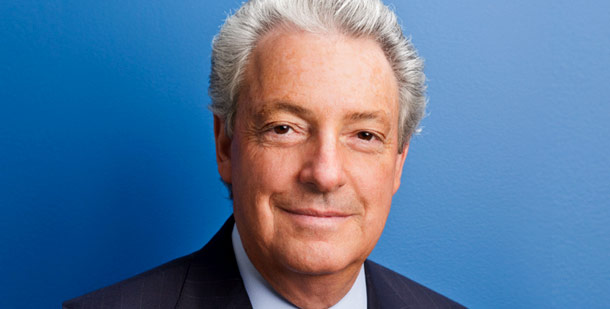
    Michael I. Roth


    Michael I. Roth is Chairman and CEO of Interpublic, one of the world’s largest organizations of advertising and marketing services companies.  Prior to serving in his current role, Mr Roth was a member of the company’s Board of Directors.


    Since assuming leadership of Interpublic in 2005, Mr Roth is credited with righting the company’s financial course and moved to make it an industry leader by defining new models that provide value to clients in a rapidly-changing media and marketing environment.


    Prior to his current role, he was Chairman and CEO of The MONY Group Inc., a financial services holding company that provides a wide range of protection, asset accumulation and retail brokerage products and services through its member companies.


    A certified public accountant, Roth holds an L.L.M. degree from New York University Law School and a J.D. from Boston University Law School. He is a 1967 graduate of the City College of New York.


    Given the Indian economy has been sluggish for a while, how has that changed or affected IPG’s hopes?

    The fact that we brought our board of directors here even though there is a slowdown indicates how important India is. Every market is going through a slowdown but the opportunities India offers are immense. We wanted to send a message to everyone that India is important to us. It is our second largest market and some of our best brands Lowe, FCB and McCann are continuing to grow.


    How do your clients feel about India as an investment destination?

    We invested in three acquisitions in India – Interactive Avenues, End to End Marketing Solutions and Corporate Voice. They show the confidence we have in the future. Macro economic conditions affect the environment in every economy. But with the kind of growth we have had, we can work through difficulties. Even in tough situations India has grown at 5%-6%, which is good. In the United States growth is around 2%-3%.


    What’s your evaluation of your Indian operations? Are you looking at any further acquisitions?

    We have done very well here. Including the acquisitions our growth is somewhere around 70%. We bring all the IPG offerings to the table here in India. We are always looking for acquisitions in various markets. We want to hear from our agencies on what’s substantial on the horizon. For us digital and activation seem to be the two most important areas of interest. That is one of the reasons we came here. But please don’t ask me to name names.


    Would you care to address the speculation that a merger between WPP and IPG is imminent?

    There used to be speculation about IPG and Publicis too. But there is no need to do a transaction like that. We have all the global offerings and disciplines to be competitive. We don’t need capital. The only reason we would do something like that is when somebody put a compelling price for shareholders on the table.


    But no one has done that so far. How do you believe the Publicis Omnicom merger will affect the industry?

    Whenever a transaction of this kind happens it will take a long time to be integrated. In this case, it is taking a long time even to happen, and in the meantime there will be disruption. We are seeing recruiting opportunities. There are disruptions in a number of their offerings and we hope to be a beneficiary of that. Obviously, there will be conflict potential, although the transaction has not taken place yet, so we haven’t seen a lot of it. We don’t view it as a threat. Everyone thinks that their media offering will be big. But it will be as big as WPP and we have proved to be very effective against them. Not being so big that we can’t be flexible and responsive to clients needs and provide the human touch. The answer is I don’t go home and worry about it.


    How has IPG Mediabrands which is competing in many markets where the other media agencies have a bit of a headstart doing?

    In 2013, Mediabrands was our best performing asset. So that is a pretty good indication that they are doing well. We don’t give specific figures on the profitability of our agencies but clearly both in India and on a worldwide basis they are leading us on growth, revenue and margin expansion.


    Source:The Economic Times

    Copyright © 2014, Bennett, Coleman & Co. Ltd. All Rights Reserved

    Licensed to republish


  • JWT acquires majority stake in Social Wavelength


    By A Correspondent


    Leading marketing communications agency network JWT has agreed to acquire a majority stake in leading social media agency Social Wavelength.


    Social Wavelength is a Mumbai-headquartered full-service social media agency specialising in social media offerings right from strategy to execution that includes social media marketing, online reputation management, social CRM and social media for HR.


    “JWT’s acquisition of Social Wavelength is a logical confluence of social media and mainline expertise, coming together to create integrated communication for brands. The rich experience of five years that we have, in this young industry of social and digital media, will find the next leap of growth, through this partnership,” said Hareesh Tibrewala and Sanjay Mehta, Joint CEOs and promoters of Social Wavelength.


    Established in 2009, the agency now has over 170 professionals servicing over 50 brands across their offices in Mumbai, Delhi and Chennai.


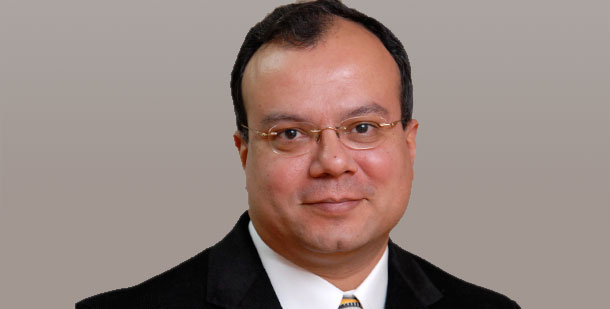
    “We want to be a critical resource partner across the many solutions we provide to our clients. As we continue to relentlessly transform our offerings, Social Wavelength adds a huge dimension to our existing clients and the brands we steward,” said Colvyn Harris, CEO, JWT South Asia. This is JWT’s second digital agency acquisition in India, the first being Hungama in June 2012.


    Acquisition part of JWT plan to be future-ready: Colvyn Harris 

    A quick chat with Colvyn Harris, CEO, JWT South Asia on the Social Wavelength acquisition and whether he is looking at any more buys in the future.


    01. This is the second digital agency that JWT has acquired in India. Would you be looking at acquiring any more soon? Or is this it?
    We are transforming the JWT group of companies to be future-ready. And digital is an important part of the mix. We have a definite roadmap on digital and while Hungama has been doing well, when it came to social media, we were looking at a good agency and Social Wavelength was the answer. So, in future, if something good comes along and if we find that we are unable to develop skills and build capabilities and if we think it’s better to acquire, we will do that.


    02. Social Wavelength is known more for work on the implementation and execution than strategising for brands and corporates. Will it stay that way?

    If you look at a specialised space like social media, the strategy that you develop is what you need to execute. Typically, the creative agency will look at the brand and its personality, while Social Wavelength will look at the social media implementation. Now that it is part of JWT, if we identify opportunities for our clients, Social Wavelength will definitely be able to deliver on that proposition. Also, they have their own clients for which they have been doing work and will continue to do so.


    03. Would you see India becoming a hub for servicing digital deliveries for other JWT offices?

    Across the globe, JWT has many digital offerings. In fact there’s a major global push that we have on digital. On being a hub, it all depends on what are the skills we can offer and if there is a requirement for then from within the JWT or WPP fold…


    04. With digital in most agency set-ups being a full-service activity, we now have creative agencies doing media work and vice versa. As an advertising industry veteran, do you think we are headed in the direction where all agencies will turn full-service?

    That may not happen. Media agencies have gone far ahead of the curve. Both media and digital agencies have developed and invested a fair deal expertise. But the client is central to our work so if it means working within the JWT or within the WPP fold, we work very seamlessly.


    05. You acquired Mindset in Hyderabad two years back, Hungama after that and now Social Wavelength. Would JWT be looking at any other acquisition? Any other business – new or old – that you would like to be looking at growing inorganically?

    In JWT, we believe in planning and we have considerable depth in that. Encompass is part of JWT which takes care of activation and big events. But yes, there are areas like mobile and analytics which are growing. We put the client’s business at the centre of what we do and where we identify a gap, we will definitely try and close that gap.


    ‘The JWT structure enables us to continue to be entrepreneurial and reasonably independent: Sanjay Mehta
     

    Q&A with Sanjay Mehta, co-founder and Joint CEO, Social Wavelength


    01. One more homegrown digital firm gets gobbled up. Wouldn’t it have been nicer for you to have stayed independent rather than become a part of a large global advertising network?

    Well, that’s always a dilemma for any entrepreneur. We weighed the pros and cons of the two options, and found it more exciting to join hands with a global major and grow faster.


    The WPP / JWT structure enables us to continue to be entrepreneurial and reasonably independent, and yet derive the benefits of a larger agency network. That looked like a good option for us.


    02. Is this (getting acquired by an international biggie) the only way to go for digital independents?

    Certainly not. One can remain independent and grow. Will there not be a Madison in the digital world? Why not? There would be one (or more) and it could be maturing even as I write this.


    03. From when did you start looking towards getting acquired? And how did the entire process start and how much time did it take?

    We were not consciously looking to get acquired. In the sense that we never mandated someone to find us an acquiring prospect, etc. We did have a few conversations which were all proactive and direct. We were prepared to look at opportunities that came our way, without being in any rush of any kind, as we were growing well, on our own steam. But we were open to strike a deal, if we found the proposal interesting. This one turned out to be that type.


    As for the process, it has taken several months, and we believe it was worth the time. As any relationship involves the getting-to-know-each-other phase, and the time was well utilised for the same.


    04. Is the choice of JWT a case of whoever gave the best price or is there also a fitment of cultures?

    We were genuinely very happy with the chemistry we saw with the folks at JWT. And that was the driving force. There are many other factors, including what the association can create together, and how it can yield benefit to us, over time. And sure, there was a factor of the right price too.


    05. What happens now with Social Wavelength being part of JWT?

    First of all, Social Wavelength remains an independent unit and continues to run its business completely independently. Operationally, some processes of WPP / JWT do get into place, but for most parts, we run the business like we have been doing. Quite independently.


    What we do get is the benefit of JWT’s local and global reach of clients, the best practices, the knowledge resources, etc. Which we reckon, will propel us to higher levels of growth, rapidly.


    06. Will there be synergies with the Hungama part of the business?

    Yes, there are plans to have a great working set up between JWT, Hungama and Social Wavelength. Details will be figured out as we run the course over the next few weeks.


  • I worked my butt off… I wasn’t willing to wait for 4 years: Pratap Bose


    The news that Pratap Bose had quit DDB Mudra has been doing the rounds for a few weeks. In fact there have been murmurs of differences between him and Madhukar Kamath, Group CEO and Managing Director, DDB Mudra Group for a while.  Mr Kamath was due to retire this year, and Mr Bose was the frontrunner for the position. But then came the news of a four-year extension given to Mr Kamath. MxMIndia first learnt about it on the sidelines of the conference unveiling the Big Bazaar campaign on March 14, but we were asked to keep it under wraps and wait for a formal word. Since we don’t specialise in breaking news of people movements, we waited for the news to come in officially, even as it was evident that it would lead to a conflict given Mr Bose’s aspirations for the Top Job.


    There is no denying the contribution that Mr Bose made as DDB Mudra Chief Operating Officer. From essentially a traditional creative agency, he grew the OOH and BTL businesses in a big way. The contribution of the non-core advertising business to the overall turnover is in the region of 50 percent.


    MxMIndia spoke to Pratap Bose early this morning. Mr Kamath was unavailable for comment as he was travelling and in meetings. Excerpts from an interview with Mr Bose:


    The news of your quitting has been doing the rounds for a few weeks. So what’s next?

    There isn’t a next rightaway. There are offers. I haven’t decided. I am in dialogue with people, so I will take a decision that’s right for me in time.


    In this day and age, people don’t quit until they land themselves a definite job. But you didn’t do that?

    There’s clearly no insecurity at my level. It’s not going to be difficult to get another job, if that’s what you mean. Once I had decided, there was no point serving a three-months notice. So I took the step. However, Madhukar and I have agreed that I will be available for the next one or two months.


    So was yesterday your last day at the office?

    No, I will be going there for the next few days.


    We read your comment that you quit since Madhukar Kamath was given a four-year extension. Quite a bold statement to make…

    Well, everyone knows I was looking at the Top Job. There were promises made. I am not the kind of guy who will wait for four years.


    Are you happy with your stint at Mudra?

    Oh, yes, very. It’s been a happy, satisfying journey. When I moved from Ogilvy to Mudra six years back, the brief was to building an empire that was a lot more than advertising. Mudra wasn’t the hottest agency in the business six years back. Then the partnership with Bobby Pawar happened, we built Mudra Max to what it is today. The forays into everything other than advertising – outdoor, analytics, digital, youth, trade marketing… I help build all that, and am happy that we much achieved much success.


    While it’s true that you lost out to Madhukar on the captaincy, isn’t it a fact that most creative ad agencies are almost always headed by suits or creatives from the traditional advertising side of the business?

    Well, yes, traditionally agencies have been headed by suits and creatives. But that’s the past and things are changing. The person who has taken over from Shiv at TBWA is a digital guy. Clearly, whoever heads an agency must have a vision for the future.


    You have a loyal bunch of people in the teams you’ve built. Will they move with you wherever you go?

    To be honest, and as I said earlier, I haven’t decided on anything about where I am going. What’s clear is that I want to join an organisation that has great vision and strategy. Yes, people look at me as a rainmaker and I am good at winning businesses…


    It’s true that there is a loyal bunch of people running Max, but they are really free to do what they want.


    Your next job will naturally be that of the CEO of any agency?

    Not really. The title doesn’t matter to me. I was CEO at Ogilvy and COO at Mudra. I am a person who needs to enjoy the work and do good work for clients.

    My cv doesn’t have five agencies that I have worked at. It’s been two agencies in 25 years. The next job has to be meaningful.

    I very much enjoyed myself at Mudra, but it’s just that I have reached a point of having been there, done that. But more than the slot, it’s the people and work which matter.


    At DDB Mudra, the slot did matter, right?

    Yes, because I believed in natural progression and had worked my butt off. But going forward it doesn’t really matter. I know I am contradicting myself, but that’s the honest truth.


    Are you looking at starting out on your own?

    There are many possibilities. It could be a big agency or a small one which will require to build it. I am open to an equity with a large group, and am not closed to starting something in my individual capacity. All options are open, and I am going to take my time in deciding.


    What are immediate plans? Wildlife photography?

    Oh,yes, travel at bit. Do some photography.


    So who’s wilder… people in advertising or the animals?

    That depends on your definition of wild… (laughs)


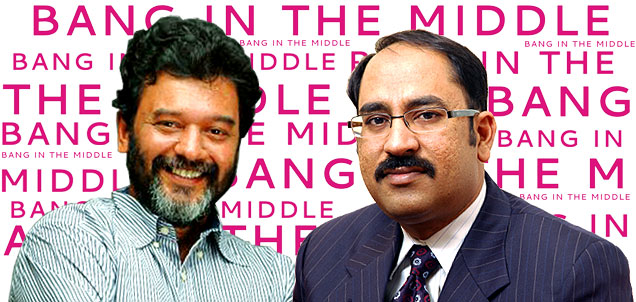
  • The Bang in the Middle theory: Interview with Prathap Suthan & Naresh Gupta


    Two years back, Prathap Suthan and Naresh Gupta and a few other professionals announced the formation of an agency with a difference: Bang in the Middle. Like its name, the proposition was meant to be ‘hat ke’, a lot of which came with the way the philosophy of its founders. MxMIndia has been tracking the agency right from the day it was launched, chronicling its every high, and every new client acquisition.


    As it completed two years last week, we posed a few questions to Messrs Suthan and Gupta including one on something that many have been talking for a while: that it’s a good target for an acquisition.


    The interview:


    01. The first two years can be good fun, but the trials and tribulations could also be many. Ask us. We had many, many highs. And many, many lows too. How has been your journey? Banged more or got banged more?

    Banged, we more than survived the first two years, and we survived to the plan we had written. We won many business, did some exciting work, won some industry accolades. To do a design project from Rolex was more than prestige, we learnt how exacting the Swiss can be, the Swiss learnt how detailed Indians can be. We won Dulux in a hard fought pitch with biggies just when we started,  Veen Waters gave us a global mandate, we won Zee News in a competitive pitch and as the second year came to an end we won Jabong in a dead heat against the largest of agencies.  Today we have a robust set of clients and some very exciting conversations with a set of large clients


    02. Do you find that the world around you has also changed in these two years and hence people are more inclined towards your kind of creative work?

    The world is changing at a pace faster than at least we can fathom. The largest of marketers are investing more in digital, the traditional agencies are not investing in that skill at all. We have experienced this in our conversations with many of the clients that they are willing to work across spectrum with one agency, it’s the agencies that are not ready to step up and play the role they could. Ideas have always been the currency of communication companies, and ideas have to go beyond TVC That does make brands more tuned to the kind of work we do


    03. For those who don’t know too much about BITM, how would you like to be described? Are you more creative-led, planning or strategy-led or just about everything and re-orient as per client needs?

    We are Mutant. We merge the traditional medium with new media. We are pure play digital agency for some of our clients, we are a conventional agency for some other of our clients. For a fees of our clients we are the only agency they use. We have more startup clients today than most agencies, and for each one of the startups: Diva’ni, Oxolloxo, Gyanshree School we are the only agency they have on board. From website to mobile app to mainstream advertising, we do it all for them


    04. How much of your work is traditional advertising and how much of it is digital and for BTL etc?

    We have stopped even looking at that divide, specially when the clients today are discussing the key words to target on web in the same vein as creating a campaign on TV. For a client we merged the social media with TV advertising, the brand trended on Twitter, saw a huge jump in traffic post the TV campaign and followed up the TV campaign with a social campaign. I don’t know where to slot a client like this. Most of the briefs we are working on today are mutant briefs


    05. Does it help being an Independent? Would you consider being acquired by a global network?

    It is absolutely fun being independent. Coming after many years of working for networks and waiting for decisions to be taken at some place in cyberworld, being independent is a big asset. More than us, its our brands that we work with will vouch for it. We are fast, we take decisions faster and add speed to their business strategy.


    On being acquired, we have been spoken with even before we turned one. Those conversations have only gained speed. There are more than one network speaking us, there are some non network brands speaking with us. Being a part of a network is not necessarily a bad thing, provided we can preserve the DNA of ours: of being feisty and of being quick on our feet


    06. What according to you has been the best work so far?

    I would like the clients to answer that. For us every piece of work we have put out from Veen to Rolex to Zee to Diva’ni to Vimal to Dulux to Freecultr to FabFurnish every piece of work we have done, we are proud of it. We strive hard to ensure that we put out a communication solution that will help the brand grow, beat competition, increase value or whatever else they may have briefed us. These two years have been the year of learning for us too. Today, we are doing things that we never did before, and there are challenges we faced without the support for a global network.


    07. One or two happenings in these two years where you would’ve told yourself the agency has arrived?

    First such moment was when Zee News consolidated more than one channel with us. Winning Jabong was second such moment when we realised we can stand up to the might of the large agencies. We actually feel that every new brand that brings us on board makes us believe that we are on our way. We have a client who has acknowledged that the best work on the brand ever done is from BITM, another said that they never realised that we were a startup, we never came across as one. Each one of such moments are moments that tell us that we are reaching the destination


    08. And one or two WTF moments? When you said why the hell did we get into this?

    More than one, almost every month. We lost a large brief only because the global system didn’t want to hire a home grown agency, we lost a brief because a Mumbai client didn’t want a Delhi agency. These are moments that tell us that we haven’t reached there, we are not established, we have to work hard and we have a long road ahead


    09. Do you think you could’ve been acquiring bigger clients (and hence bigger business) in the last two years?

    Yes and no. At one level its a good thing that we have a committed set of clients who work with us closely, some of them are large too, at another level we do feel we could have won larger brands. The latter is more a wish and in no way is to undermine the former. I think a few large clients are around the corner


    10. Any advertising that you think BITM should’ve been doing? And could’ve done better?

    The team has extensive experience across three categories with proven credentials: tourism, automobiles and cellphone handsets. Those are three categories where we would definitely like to have. In each of these categories we would have done better work than the work that is on air


  • We’ll look hard at strategy, what the ad is trying to do: Neil Dawson, Kyoorius Awards


    Save the three years in South Africa, he has spent his entire career in London. His ‘Weddin’ ad for Volkswagen Surprisingly Ordinary Prices has, for over a decade, been the most awarded print ad in history.


    And his ‘Fish’ commercial re-launched the Keep Walking campaign for Johnnie Walker globally. As Chief Creative officer on the Phillips account, he won back- to-back Cannes Grand Prix in 2009 for Phillips Carousel and 2010 for Phillips Parallel Lines.


    He was the ECD on the recent worldwide campaign for Bacardi – Untameable since 1862. With long time creative partner Clive Pickering, Neil  has recently launched London’s newest ad agency -  Dawson Pickering.


    Meet Neil Dawson, Foreman of the Kyoorius Awards jury. For three days starting today, Neil and a set of national and international jury, will pore over some of the top creative work done by Indian advertising agencies over the last year.


    On the eve of the jury meet being held in Mumbai, Neil took some questions from MxMIndia.


    Here we go:


    There’s a lot of anticipation for the maiden D&AD-Kyoorius Awards jury session. Are there any broad rules, Do’s and Don’ts that you are going to be setting out for your jury?

    One of the key points for me is that we look hard at the strategy, what the ad is trying to do. I’ve seen a trend in awards entries of ads that simply describe what the product does rather than find a new and different insight.


    How familiar are you with advertising in India? And your views on our advertising?

    Having done an international role on Philips and worked closely with India, I have a ‘fairly’ good understanding of Indian work. But I can’t claim to be an expert. I will be relying on my local judges to fill in the gaps.


    I have a general sense that a lot of Indian work is upbeat and fun – And there’s nothing wrong with that. Consumers are thankful of brands that convey a message in a positive way.


    While India has a rich past of storytelling and our advertising industry has attracted top draw talent, we don’t do very well at the international awards. What would you attribute as the reason for this?

    I think it’s no more than the international are harder to win than one thinks. The competition is extremely fierce. If agencies keep doing right by the consumer, awards will come.


    You have a good mix of international and domestic creative biggies? Have you interacted with them already? Your comments on the mix of the jury?

    I’ve judged with a few of them before so am looking forward to seeing them again. My feeling is that the jury is of a decent size and international mix to get the right results.


    The D&AD is very British, and one may add hence very propah. Having spent most of your career in London, what are the values that D&AD brings to an ad award? And what would you say should the winner at the Kyoorius Awards be proud of (given the standards)?

    Integrity. That comes with a not-for-profit organization that has one aim: the good of the industry. We need to protect the value of creativity. Clients need to believe it is a powerful force for their business not just an agency pastime. We are going to be hard and we don’t have to fill gold, silver and bronze slots so winning at Kyoorius will be a real achievement.


    As the jury foreman of an Indian awards, have you prepared yourself in any way or would you say creativity has no language?

    I saw Mandela come to power in South Africa and worked in the Rainbow Nation of 14 official languages. Ideas had to transcend language. Creativity is universal, and any local nuances will hopefully be explained by our Indian jurors.


    One last question: this is the first time we are seeing multiple advertising awards. You have many of them in the UK and elsewhere internationally. Is there intense competition between the awards or do all co-exist? Does the existence of multiple awards impact the participation of some agencies because of limited budgets for spends on entries?

    In the UK, awards do co-exist but, yes, there’s only a finite amount of money agencies can spend, so there is competition. Amusingly, everyone claims to be part of the Gunn Report ! My feeling is that not-for-profit awards like Kyoorius should be enthusiastically supported because long-term the whole industry wins.


  • The Rise & Shine of Brand Modi


    Even as the final results were coming in, it was clear that one of the many factors why Narendra Modi and the NDA emerged victorious in the General Elections 2014 was the advertising and public relations campaign. Shobhana Nair spoke to Harish Bijoor, well-known brand expert and CEO, Harish Bijoor Consults Inc to discuss the rise and rise of Brand Modi


    Harish Bijoor

    On what has worked for Brand Modi in the last year?

    Hard work. Very hard work. Add to it the fact that Brand Modi started off the block much before elections were announced. Brand Modi established itself first when it saw Narendra Modi as a hat-trick CM of Gujarat. This image was further boosted with development as a cue. And then came the announcement of Modi as a PM candidate of the BJP. This was decisive and focussed branding. And then kicked in the campaign.


    The solus attention on Modi has helped the BJP immensely in this victory. If you remove Modi from the BJP, you will find a huge crevice in terms of the resultant imagery. To that extent, this is a pure Modi win. In many ways, this paves the way for an epochal shift in the way campaigns will be run in this country. The individual will become more important than the party. Parties that hide behind the cloak of group-think will need to think individual personas, American style, in the future.


    Do you think it was smart marketing that gave Mr Modi the comprehensive victory?

    Absolutely. Narendra Modi is the ultimate political marketer. He had able support, and he was decisive in the way he managed his campaign. His campaign was a 360-degree campaign that had everyone else watching with awe. The best of product marketing gyaan was brought into this campaign. And it worked. Modi is a product. And this product promised what the people wanted. And in him people saw a strong  and decisive leader, someone who was an anti-thesis of sorts to the persona India was used to in the past decade with Manmohan Singh at the helm of affairs.


    Would you say the BJP’s ad agencies produce great advertising, or at least advertising that worked?

    They did. I love the “Abki Baar Modi Sarkaar line”, as did I love the jingles that captured the need of the people in bundling hope: “Acchhe din aane waale hain…” And media organizations loved the amount of money that was spent in airing all of this for sure.


    And do you think the Congress loss was caused by bad advertising?

    Not really. In the beginning, it is all about strategy. I do believe the gaps lie in the strategy rather than in the advertising executions. I do believe enough of emphasis on voter insight was not given. The campaign was top-down and ignored the bottom-up possibilities.


    How does Brand Modi not suffer from the same fate as various Opposition/non-Congress governments have in the past?

    Brand Modi is beyond it all for now. His assessment will start happening one year from now. And that will be the biggest challenge to tackle. Every single promise needs to be fulfilled. With care, tracking and passion.


  • Piyush Pandey, Jagdeep Kapoor & Harish Bijoor on what worked for Modi and the BJP

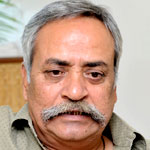
    Piyush Pandey
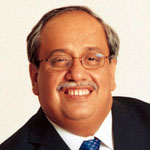
    Harish Bijoor
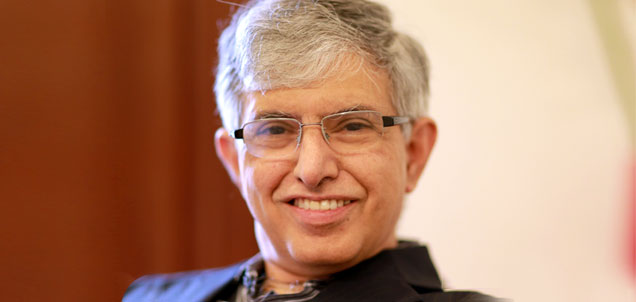
    Jagdeep Kapoor

    Even as the final results were coming in, it was clear that one of the many factors why Narendra Modi and the NDA emerged victorious in the General Elections 2014 was the advertising and public relations campaign. Shobhana Nair spoke to Piyush Pandey, Executive Chairman and Creative Director for Ogilvy & Mather India and South Asia, Harish Bijoor, well-known brand expert and CEO, Harish Bijoor Consults Inc and Jagdeep Kapoor, Brand Guru & CMD, Samsika Marketing to discuss the rise and rise of Brand Modi


    So what worked for Brand Modi since last year?

    Piyush Pandey: No brand is built in a few months; a brand is built over a period of time. What Mr. Modi has done in the last 10 years has been valuable to him.


    Harish Bijoor: Hard work. Very hard work. Add to it the fact that Brand Modi started off the block much before elections were announced. Brand Modi established itself first when it saw Narendra Modi as a hat-trick CM of Gujarat. This image was further boosted with development as a cue. And then came the announcement of Modi as a PM candidate of the BJP. This was decisive and focussed branding. And then kicked in the campaign.


    The solus attention on Modi has helped the BJP immensely in this victory. If you remove Modi from the BJP, you will find a huge crevice in terms of the resultant imagery. To that extent, this is a pure Modi win. In many ways, this paves the way for an epochal shift in the way campaigns will be run in this country. The individual will become more important than the party. Parties that hide behind the cloak of group-think will need to think individual personas, American style, in the future.


    Jagdeep Kapoor: Brand Modi has been persistent, has been insistent and has been consistent.


    Do you think it was smart marketing that gave Mr Modi the comprehensive victory?

    Harish Bijoor: Absolutely. Narendra Modi is the ultimate political marketer. He had able support, and he was decisive in the way he managed his campaign. His campaign was a 360-degree campaign that had everyone else watching with awe. The best of product marketing gyaan was brought into this campaign. And it worked. Modi is a product. And this product promised what the people wanted. And in him people saw a strong  and decisive leader, someone who was an anti-thesis of sorts to the persona India was used to in the past decade with Manmohan Singh at the helm of affairs.


    Jagdeep Kapoor: Yes. Very big. Because of 3 reasons:

    1. He does not need anyone’s help now. Therefore he will only help the country.

    2. Despite all the criticism for the last decade, he was clear in his strategy and ruthless in his implementation.

    3. He genuinely wants to benefit all Indians, just like he did for all people in Gujarat.


    Would you say the BJP’s ad agencies produce great advertising, or at least advertising that worked?

    Piyush Pandey: You can only position and market something which is good and based on what the product is all about. Nobody has ever been able to sell a bad product. Nobody can as people are not stupid. So a good product is presented with its attributes and the marketing of the brand which was done by Soho Square is only a presentation of what is good in its intrinsic value.


    Harish Bijoor: They did. I love the “Abki Baar Modi Sarkaar line”, as did I love the jingles that captured the need of the people in bundling hope: “Acchhe din aane waale hain…” And media organizations loved the amount of money that was spent in airing all of this for sure.


    Jagdeep Kapoor: Their communication and advertising was simply strategic and entered the minds and heart, but more important was the great performance of Brand Modi over the decade, which helped them communicate.


    And do you think the Congress loss was caused by bad advertising?

    Piyush Pandey: No election is ever won or lost because of advertising. Advertising is only an element. Advertising only presents it. To say that Congress’ advertising was bad will be incorrect. What are you presenting is an issue and to say Soho Square’s advertising was great for Mr Modi will be incorrect too. Soho Square did a great job in interpreting the right side of Mr Modi strategically and creatively. But at the end of the day, advertising doesn’t make you win an election or any product for that matter. With a great product, I can do great marketing. A good product has to be presented properly for that I complement my partner Soho Square. I will conclude by adding “Acche din aane waale hai!”


    Harish Bijoor: Not really. In the beginning, it is all about strategy. I do believe the gaps lie in the strategy rather than in the advertising executions. I do believe enough of emphasis on voter insight was not given. The campaign was top-down and ignored the bottom-up possibilities.


    Jagdeep Kapoor: Advertising has a limited role. Performance has a major role. Good performance gives good results and vice versa. Brand Modi was able to set a high standard not only in Gujarat, not only in India, but also in the world.


    How does Brand Modi not suffer from the same fate as various Opposition/non-Congress governments have in the past?

    Harish Bijoor: Brand Modi is beyond it all for now. His assessment will start happening one year from now. And that will be the biggest challenge to tackle. Every single promise needs to be fulfilled. With care, tracking and passion.


    Jagdeep Kapoor: In the case of Brand Modi, he’s positive. He focuses on growth proposition and not negative opposition.


  • Nothing wrong in airing Pak content: Punit Goenka


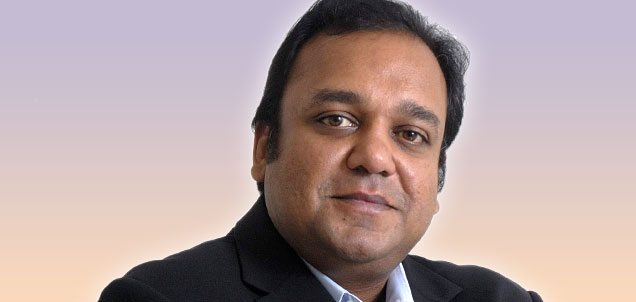
    It’s Zee’s boldest venture thus far: a premium all-India Hindustani GEC with ‘Made in Pakistan’ (and elsewhere) fictions. Launching on June 23, it is targeted at, as a communiqué notes, family viewing with today’s Indian sensibilities of wanting to balance household responsibilities and at the same time, creating one’s identity, the channel is set to infuse fresh storytelling to the Indian television industry.  An interview with ZEEL Managing Director & CEO Punit Goenka.


    Bold move to launch a channel like Zindagi?

    You have to do something every couple of years, to keep the blood rushing.


    Hmmm, since when has this been in the making?

    We’ve been working in the concept for a long time, but truly, about 15 months.


    Do you anticipate any problem given that Pakistani serials in India are not official aired in India. It’s not a done thing to be showing Pakistani serials.

    Well, there’s no law that says you can’t do it. I’ve received all my permissions. I’ve got everything in order. We’ve acquired all content on legal basis through legal entities. So my view is that if Hollywood content or content from the West can be brought here, why not content made in Pakistan? As long as it’s nothing to do with anti-India sentiments, there should be no reason why any entertainment content can’t be brought here.


    Given that there’s over rising hatred towards Pakistan and you have the likes of the Shiv Sena creating a lot of fuss about Pakistan, do you anticipate trouble. You may be on the right side of the law, but is there a fear or worry?

    No, it’s not a fear or a worry.


    And have you taken any one into confidence….

    No, I don’t think I need to take anybody into confidence, I’m doing what I believe is a good for the business and a good thing for the country also. I think, at the end of the day I’m entertaining and also bringing about a change which would allow people see the similarity in our cultures is so much that the reason for hatred is only select people. So, hate those select people. Don’t hate a country! That’s my view.


    Pakistani serials have been very popular in India in the last 25-odd years. I remember how they were huge even in the early days of the video wave. How old or new are the shows that you will be airing?

    They’re in the last two to three years’ range. Nothing older. Everything is as recent as the last two years.


    And are these among the top shows from Pakistan?

    Our barometer for selection was not how they’re performing in Pakistan. But the category we want to create is of the progressive mindset. While the predominant viewer is female here, the mindset of the female is progressive; not traditional… unlike what we offer through normal GECs that exist today. Therefore we handpick shows on that basis, irrespective of the fact of what the ratings were in Pakistan.


    Is the handpicking of shows been done by you or do you have somebody in Pakistan helping you..

    We have a team in Pakistan also and those are more outsourced kind of people. But largely it is our team in India.


    Would you also look at freshly produced content at any point?

    We’ve already started. We’ve already commissioned 12 telefilms that we’re producing and we’ve identified shows that we will be producing going forward. So it won’t be just syndicated content…


    How much of originai content will we see?

    Within a year I think we should be doing about 10 hours a week of original production.


    How much new programming every day?

    Four to start with, per day.


    Your press statement says that the footprint of the channel is all-India and you are also targeting South India? Are we going to see the channel dubbed in South Indian languages?

    No, it’s not dubbed. It’s going to be in Hindi and we do believe that the progressive mindset will consume Hindi, even down South, irrespective of the fact that it might not be their mother tongue. Our research has shown there are enough audiences available in different states, but therefore we deliberately chose to make it an all India launch.


    This is a significant difference from the audiences regular Hindi GECs have always looked at?

    Because they focus on the mass. This focuses on the premium mass. We’ve defined a new category which doesn’t exist today. My research tells me the premium mass are willing to accept content, irrespective of the language. They have to make a connect with the content rather than the language.


    In terms of distribution will it be part of the Zee package?

    Yes, absolutely, it will be in the Base Tier.


    So no extra money to be paid for this?

    Well, I think they should be charging extra for a premium channel like this. If they don’t pass on the cost to the customer, that’s the platform’s choice. But I do believe this gives them the opportunity to increase prices.


    Have you tested the concept with advertisers?

    We’re getting reasonably good response from them as well. So, I’m quite hopeful that we will have some sponsors and tie-ups on board before we launch the channel.


    Coming back to the original shows,  would you look at syndicating to Pakistani channels too?

    Why not?


    Zee TV is already available in Pakistan, now will it officially available?

    No, we cannot be officially available. Even Zee TV isn’t officially available in Pakistan. Pirated signals go, but officially we can’t sell it there.


    You mentioned that a year from now there will be 10 hours of original content. Would there be reality shows also or..

    No reality shows on this channel. It will predominantly remain fiction based.


    Any reason for this?

    I think the USP is the fiction part which we want to highlight. There are many reality shows which are already being done. So we didn’t want to bring in another element here. It helps us focus on the TG we’ve targeted and reality shows go away from the core and try and target a lot more than your bread and butter. So, we want to focus on the bread & butter rather than get garnished sprinkled on top of it.


    In the past we have had instances of popular shows being moved to the flagship channel of the network? Could that happen here too?

    No, that will not happen. How does it matter to me if tomorrow Zindagi becomes my flagship? Should it matter?


    Over the years, the second GEC hasn’t done well

    Zee Next.


    And before that, EL TV

    Well,  EL TV did very well. In fact Zee got scared of EL and therefore had it converted to a news channel (laughs)


    On a serious note, the second channel across networks hasn’t done well. Life OK took off well, but is still not up there. What is the Zee Network’s commitment to Zindagi?

    My view is that if we as a network were not sure about giving this a full shot, I wouldn’t be sitting here doing these interactions. I think we’re very clear on what has gone wrong. We can debate that till the cows come home! The fact is, have we plugged all those holes? Have we made sure that our go-to-market strategy is right or not? I think we’ve covered all grounds. The success, the viewer will decide. I’m no one to decide that. I have to make sure that I’m available. I’ve made the consumer aware of the product and then I’ve to get him or her to sample it and like it.


    Would you at some point also look at Bangladeshi content or from other markets in newer channels?

    I haven’t studied that market yet. But I do remember we were discussing the possibility of getting Bangladeshi movies which could run on the Bangla channel. But we haven’t studied it in that much detail. We’ve studied this market. It’ll be 15 months by the time we launch. A lot of work has gone in to get it to this stage and get it ready to launch. But definitely, we’re not closed to that. We can study that market also and if we find there is some proposition that can work, why not!


    And would you look at other cross-border content coming into Zindagi?

    I must add, in Zindagi itself we’ve identified content that we’ll be sourcing from markets like Turkey, Egypt and some of the Latin American countries where it’s not that we’ve just picked up shows, dubbed them and are going to be running them. We’re actually remaking those shows in Hindi. That’s part of the 10 hours of content I talked about. So, it’s not just Pakistan…


    You mentioned Hindi, but these are shows in Urdu, right. It may be a little tough for some to understand the language….

    This was one of the key parameters in my research. To my pleasant surprise, it came out that people appreciated that fact! Rather than making it a negative. They said that while some words are difficult to understand, in a conversation or sentence, as long as you get the gist of it, it’s fine. And the Urdu that was in existence 20 years ago when we watched PTV or Lahore TV has simplified. Quite like the way our Hindi was 20 years back to what it has become today. So, from that perspective I don’t think it will be such a big issue that it gets rejected. I’m quite hopeful that people will appreciate it and that will be one of the USPs. The dialect is so soothing to the ears unlike the tu-tadaak that you see here on our GECs today.


    Would you also at some pint of time look at other cross border content on your other channels? Like with your food channel Khana Khazana given the similarities between food in India and across the border? Do we see a Khana Khazana Pakistan?

    That’s quite possible. Definitely. Why not? We’ll definitely explore all that. Thank you for a business idea!


    With Zindagi and the rest of the offerings you have, what is the direction you’re looking at for the Zee Network over the next year?

    We’re definitely looking at outward growth for the Zee Network going forward. And as you know we love to beat the market projections every time. And that’s the endeavour for us. If the market is growing at X, how can we grow at 1.5X…


    Any specific targets for Zindagi?

    Yes, we have all those targets in place. The investment levels and all those things have been done to keep those parameters in mind. I wouldn’t want to pre-empt what my targets are right now, but I can tell you that they’re definitely aggressive.


  • Sam Balsara on the BJP’s Media Magic


    By Shobhana Nair


    While there’s no doubting the fact that it was Narendra Modi who led the Bharatiya Janata Party to victory, there were many who worked backstage to create the message. MxMIndia spoke with Sam Balsara, Chairman & Managing Director of Madison World, the media planning and buying agency that worked along with Team Modi to pull of what was decidedly the biggest ever political campaign the country has ever seen. Excerpts from an interview:


    Learnings for other Advertisers:

    > Don’t under-spend; most brands make that mistake and dilute their campaigns and sometimes waste the entire advertising money

    > To change consumer behaviour or establish brand preference - multi-media is a must


    What the new government must do:

    The new government must focus on growth in economy and provide incentives for that, provide infrastructure, make India the toast of the world once again, not focus on giving doles to the poor. Even if you distribute all the money to the poor there isn’t enough money to go around. It needs to focus on growing the economy. Most of India’s problems would get taken care of. In the media area, it must not interfere and allow free market forces to play.


    How did the mandate come to Madison? Who from the BJP called you and how and why did you decide to work on the campaign?

    We were first contacted by Prashant Kishore in Ahmedabad through our client Lodha. Subsequently, we were contacted by Ajay Singh and Arun Narendranath. Then we met Piyush Goyal and Arun Jaitley. We entered the fray late. All major agencies were competing for the account. What won us the business was a lot of detail work revolving around media reach in different constituencies, grouping them in three priorities and summating the whole strategy in an elegant 10 pillar strategy. Our reputation for transparency and integrity sealed the deal.


    When you took on the mandate, or any time during the campaign, did you get any direct brief from Narendra Modi?

    Lara has met Narendra Modi. I haven’t, yet.


    When you took on the job was there any apprehension about delivering it? Political parties like BJP, RSS are known to be conservative, not open to modern ideas and so on. Was there a problem on that count?

    We were confident of delivering on our product not just because of faith in our own experience, expertise and capability but we knew we had a strong product, compared to competition. Advertising works brilliantly for a good product, but kills a bad product fast.


    For the first time ever in India a political party was presented as a brand. Was BJP open to this idea from the beginning? How did you sell your ideas?

    Yes. That was the very reason they reached out to professionals and then played a supportive role, not an interfering role. I must say the people at BJP are not the politician stereotypes; they are smart, savvy and intelligent managers who have left their corporate jobs to help the nation catch up on lost time.


    Reaching out to media dark markets like UP and Bihar seemed to be a big challenge for BJP. How did you resolve that?

    These markets did pose a challenge and obviously got our greater share of our attention. In addition to mass media these markets got intensive below-the-line support.


    What were some of the biggest challenges you faced while executing the campaign? We have heard in many regions district magistrates refused to cooperate.

    Outdoor in UP especially, posed huge challenges because of unfair play by the ruling party in granting permissions for putting up hoardings. The other challenge was negotiations with media, some of whom artificially inflated their rates for political campaigns! Random numbers floating around in the media of the budget of our campaign made our task more difficult. Ultimately, it worked out well and we were able to do our job without fear or favour and I hope the media owners are also happy.


    Will you call this the toughest campaign of your career?

    What made it tough were the frequent changes based on feedback from state units communicated to us through BJP HQs that necessitated my team to work almost every night till 3 and 4 am. Work-day timings for the team changed from 9 to 5 to 12 noon to 3am. In many cases we succeeded in releasing jackets in newspapers at four hours’ notice (2am to 6am) and TV spots too at 2 hours notice. We launched the campaign on cricket. You can’t do better than that, based on our experience and the creative also was specially created for cricket.


    Going forward, will you continue to work for BJP or the new government? Has there been any discussion?

    We hope so. In addition, what I would really like is for the Government of India to appoint us as media advisors for all their advertising! We could make a huge difference in terms of efficiency and effectiveness. Communication is a very important element in the nation-building process. Most political parties unfortunately think of it only at election time.


    A number of people said BJP spent close to Rs 5000 crore for the election ad campaign. What do you have to say to that?

    That is indeed the finest compliment that Madison Media has ever received. The actual is just a miniscule fraction of that number, but I am not at liberty to reveal the number. Some professionals have put the mass media campaign at Rs 1000 crore. I am offering a prize to anyone, mass media professionals included who can guess or calculate the exact number spent in mass media! The BJP campaign has once again proven that mass media has the power to move mountains; that mass media is not expensive as it is thought to be and multi-media is essential for effectiveness. I must also admit that in my view NDA would have won anyway; they had a strong product and the competition was weak. What our campaign achieved is that it cost effectively raised the pitch to a crescendo, constituency by constituency as polling day neared which converted a communication task into what you in media call a Modi WAVE that resulted in a landslide victory for the BJP.


  • Helps being a strategically driven agency: Nandini Dias

    Nandini Dias

    A total of 11 metals comprising 2 Golds, 3 Silvers and 6 Bronzes were awarded to Lodestar UM at the Media Abby on Day 1 of Goafest 2014. Shobhana Nair caught up with Nandini Dias, CEO, Lodestar UM minutes after she and jubilant team got together for a group pic:


    Did you expect to win so many awards?

    In all honesty, I was a part of the jury so I had some idea that we had done well. But didn’t know how well, because when the categories go on and when we are judging, it goes on one after another. To that extent I am pleasantly surprised and happy to win these many awards. We have done a very good job. I am just dying to go back to the team and show them all the awards. Unfortunately, a limited people came to Goa and I am sure everyone back home will be surely celebrating.


    Who would you attribute the entire success the most? Which are the factors that have led to this win?

    I think in the last 10 years, we have always won whether it’s as a winner or a runner up. We have been doing well at the awards and thankfully, we continue to do so. The teams across the agencies really push themselves. At Lodestar, we see ourselves as a strategically driven agency… the kind of investment we do on the strategic front, the amount of investment we make to train our people and it is not about training them in an individual medium but across all mediums. I think anybody who has been at Lodestar will vouch for the best strategic thought processes that happen in the agency so I think it is an outcome of the kind of work, training and thinking that goes within the agency.


    Any category where you were not anticipating a win, but you did!

    In fact, it’s the other way round, personally Coke studio is by far the best youth work that has happened in the country in the last couple of years. Though it may have been a work that has happened from the agency, I can’t think of a better consistent campaign with the kind of marketing and ground activation that has been happening. We started off as a single MTV channel but it runs across on Colors with an occasional run on Doordarshan. It also airs across various radio stations so the kind of work in Coke studio is really amazing. I am surprised that it didn’t come through and that is a big disappointment. However, today is the winning day and I can’t be saying that I am not happy.


    Apart from Coke Studio which is close to your heart, any other work that you are really proud of which has won an award.

    We did an amazing job on Tata Safari 24. It’s amazing how the new age collaboration has come through. Everyone at Colors, Tata Safari 24 and Lodestar did things differently this time. It was not only about just buying FCT and going ahead. At every episode, we knew what’s going to happen and how would we integrate it. This is a great example of how content will be leveraged by brands in the future.


    You were a part of the jury and so have closely looked at the entries. Any favourites from other agencies?

    I loved BeBeautiful. In a simplistic way, it may look like a website but the kind of detailing that has gone into it is amazing. I am not surprised that it won as many Golds as it did including the Grand Prix. Unanimously, the jury voted for it!


  • Didn’t anticipate Grand Prix, but our work has been really good: Rachana Dharia, PHD

    In the first year of its formal existence in the country, PHD India from the Omnicom group has won a Grand Prix for BeBeautiful in the Best Digital Content Creation Strategy Category. Shobhana Nair spoke to Rachana Dharia, VP – Digital & Mobility Services on the occasion
     

    What was the brief that was given to you by the Client – Hindustan Lever?

    Our campaign was to create India’s largest beauty destination. It’s actually larger than Vogue, Femina and all the women’s magazine. It’s got one million-plus viewers coming that’s what it merits it as the largest beauty destination.


    What is the one reason that you think got you the Grand Prix?

    I think our agency has a specialized core team and that’s the reason why we have won it as we are a passionate team.


    Did you expect to win the Grand Prix?

    We didn’t anticipate the Grand Prix but we know our work has been really good and it has been appreciated by our consumers because of its uniqueness.


  • Bigger deal to win a Grand Prix in Goa than Cannes: Prasanna Sankey, Alok Nanda Company

    Low profile agency, but highly visible work, the 12-year-old Alok Nanda Company won the Grand Prix for Design on Day 2 of Goafest 2014. It was awarded to them for their Environment Design ‘The Rising’ for India Bulls Group. It also won 3 Golds, 2 Silvers and 1 Bronze on the day. Shobhana Nair spoke to Prasanna Sankey, CCO, Alok Nanda Company on what winning a Grand Prix means to him and ANC.


    Your thoughts on the wins, especially the Grand Prix?

    I didn’t see this coming through simply because what we did was so new and different. It was first accepted by the clients and the advertising industry. I didn’t know it would happen and that’s why we are thrilled that we tried something new and the industry has accepted it.


    What kept you going as you said it was a new concept?

    At our agency, we have put in a lot of passion and hard work into seeing an idea through to its final stages. That’s what has paid off. It doesn’t only matter that you have good ideas. It matters how you treat it like your own baby and see it till the end.


    Tell us, what does winning the Grand Prix at Goafest mean to an agency which has received many accolades?

    I think it’s a bigger deal to win a Grand Prix in Goa than in Cannes because it is your own industry and your own country which has recognized what they have done.


    And would you attribute any factors that led to this recognition?

    I think the most important thing of any award season is that you do good work but you have to have a team of young, motivated people around you. They get ideas and produce it really well. There has to be morale of the agency and they should feel like coming to work every day and create something new.