Category: INTERVIEWS

  • We can’t be without a measurement system: Hemant Bakshi, ISA Chair & ED, HUL


    What appeared to be a quiet start of the year emerged as an action-packed one as the ghost of the TV measurement scare emerged yet again with the Union Cabinet approving guidelines on television audience measurement issued by the TRAI.  Hemant Bakshi, Executive Director – Home & Personal Care of Hindustan Unilever (HUL) and Chairman, Indian Society of Advertisers (ISA) spoke with Shobhana Nair on how no measurement system is no good for the ecosystem, and the television sector in particular. The ISA, it may be remembered, had opposed the stand of several broadcasters who had unsubscribed from TAM last year. Excerpts from an interview with Mr Bakshi


    The danger of no measurement system hangs on the industry again though the reason is different this time around. How have you thought of handling it as the ISA Chairman?

    Firstly, it has just been announced and we need to get clarification on exactly how it is going to be amended. We are trying to figure that out right now. Meanwhile, ISA’s position on this remains the same that we do need a robust measurement system and I think the guidelines will help us get that. In the short term, we can’t be without a measurement system because ratings are the currency with which we buy television and the absence of the currency will affect the industry. We want to avoid that scenario at any cost.


    Have you discussed the situation with other members of ISA and what is a possible solution that has come out?

    I think we will come to conclusions but, as I said, right now we need to understand the details of the guidelines on how things will pan out, etc. And we are working on it.


    What are your thoughts on the guidelines by TRAI for TV Rating Agencies? Do you think it is a good attempt to create a manipulation-free environment?

    I haven’t seen the guidelines fully, so I don’t want to comment on it.


    BARC has many months before it becomes operational, what is on your agenda to speed up things there?

    BARC has already been working quite well and the progress has been outstanding. We need to keep in mind that to create something of this nature takes time and can’t be done overnight. Having said that, the work on BARC is at a good pace.


    After everyone came to an agreement last year on the need for a television audience measurement, we still have many  sections in the industry against TAM…

    I think we should look ahead and not look back. Going forward, the three bodies (IBF, ISA & AAAI) are working together through BARC to create a ratings system which will be acceptable to everyone. I think we should put all our energies in that.


  • The term ‘media agency’ is a bit outdated: CVL Srinivas


    When CVL Srinivas’s name was announced as successor to Vikram Sakhuja as CEO of GroupM South Asia, not many were surprised. Srini, as he’s known in the industry, had worked in GroupM before and had established himself as a seasoned media agency captain. While his tenure required him to ensure GroupM business was as usual, he took measures to steadily get the media services group to reinvent itself, without disturbing the status quo.

    In a free-wheeling chat with Pradyuman Maheshwari of MxMIndia, Mr Srinivas talks of his year at the helm of GroupM South Asia , how 2013 was for the business, his plans for 2014 and how he misses being a media planner/buyer in the digital age.

    Excerpts from the interview:


    As you look back at 2013 which has just passed us, how would you describe it? Annus Horribilis, as Queen Elizabeth had termed the year 1992 in a speech? Was it a good year, or a year that could’ve been worse?

    It was the year of the perfect storm. On the one hand there were structural and policy-level changes especially in the broadcast sector. On the other hand, we had a bit of a yo-yo year in terms of ad spends, up in the first six months, a slowdown post-July and a minor blip towards the year-end. Having said that, it could have been far worse. Given the fundamental strengths of the economy, advertisers continue to invest in brands and media organizations continue to innovate and diversify.  Things continue to keep happening in India, no matter what the economic or political scenario is. I am just back from a long overseas trip and I can definitely say that the most exciting market to be in today, at least from a media industry perspective is India.


    It’s also been a year for you as head of GroupM. How has it been for you, personally?

    Its been a satisfying year for me personally. All our agency brands and specialist units did extremely well in a challenging year. We won several new businesses, retained all our key clients who came up for a review and continued to innovate in terms of our offerings.  We launched a few interesting tools in 2013 to help our agencies manage the transition from offline to online and for sharper planning in smaller towns. GroupM agencies and specialist units continued to dominate all industry awards. We won the coveted Porter Prize for leveraging unique activities, the first for any media or ad agency. Its also been a year where we launched several initiatives on the Talent front. Including Y-co, our Youth Executive Committee. We’ve had our lowest attrition compared to earlier years. None of this could have happened without great team work – GroupM is a fantastic example of how team work can deliver great value.


    The digital media agency has become a full-service business. Are you also offering that at GroupM?

    GroupM has been an early mover in the digital space and we have scaled up our practice over the years. So while most of our competitors are acquiring digital agencies to build scale, we are taking our digital practice to the next level by integrating it a lot more with our core product and moving to the next level of sophistication in content, analytics and  activation, thereby providing a lot more value to our clients.


    You mentioned that digital is the centre of everything you do and if indeed digital will become the centre of most advertising, does it worry you that you will also have various players also doing media kind of work – including those from agencies within the WPP network?

    The ecosystem is extremely fragmented. Increasingly we get this feeling from our clients that they are looking for  integrated solutions. Clients are looking for ideas that can explode across multiple touch points with scale and  measurability . Ultimately it boils down to a deep consumer understanding and therefore the need to analyse data which is going to sit at the heart of the advertising product. I believe media agencies have an even greater role to play going forward. In fact with so much of expertise built in areas like consumer understanding, data management, analytics, experiential marketing, digital and content, I think the term ‘media agency’ is a bit outdated.


    But, digital continues to be a low-spending sector.

    Relative to TV and print, digital is still small, but it has been growing at 30-40% year after year. We have just crossed 200 million internet consumers in India and by end of next year could be hitting double that number. With improvement in digital infrastructure and growth of video advertising on the internet, we are bound to see digital hitting a double digit contribution of the AdEx very soon. Also, digital as we have known it (internet and mobile) is expanding into many more platforms including TV with convergence technologies.


    As someone who’s seen the business for a long time, do you think the reason for this is that the best creative work is not done in digital? And what fuels creative agencies is TV commercials which are more expensive to make and hence generate more commissions.

    That was a problem some years ago, but I think it’s changing. We have a whole new generation of fresh young creative minds who are born in the digital era. GroupM is attracting talent in this area and we have done good creative work for some of our clients.


    One of the key highlights that everyone’s made a note has been the creation of the Y-Co. How’s it doing? But, first, tell us how it happened?

    While working on our ‘New Me’ vision, one of the things that came out very clearly was in a digital era, if knowledge is equal to power, most of the power rests with the younger lot in the agency. So we felt that the ExCo (Executive Committee), which is the senior leadership team at GroupM, needed to have a closer connect with what’s happening on ground and needed to have better insights and better input when it came to areas like digital. That actually led to the creation of Y-Co: we got 15 of our brightest stars who’re all in their 20s to get together and form this body to actually complement the ExCo.Y-Co worked on several strategic initiatives through the year, in the areas of digital, talent retention, profiling, etc.


    Looking back, any key learnings for you from Year 1?  Any key differences that you’ve managed to bring in to the successful structure you inherited?

    Having worked in smaller outfits, including start ups, I realise the need to be constantly restless about the future, no matter how big or strong you are, in order to stay relevant for our clients. A key learning from last year was the need to bring in a lot of focus starting with a clear articulation of where the organization needs to be three years from now. And then aligning everything to this vision, the organization structure, talent, investment priorities, day-to-day processes, etc


    At the start of the year, GroupM senior leadership along with several of our key team members worked on creating a ‘New Me’ vision and a roadmap for the next three years, given the opportunities and challenges in the market place. We did an organization-wide cascade of ‘New Me’ that has helped bring focus and purpose into everyone’s day job. We simplified our organisation structure, embedded more specialist resources (digital, content, data experts) into agencies and built several partnerships, all tying in with our ‘New Me’ vision.


    On a very personal level, has it been a fulfilling experience?

    Yes, indeed.


    You were of course very familiar with the GroupM structure and the people…

    The best part about my job is that I work with a fantastic team. I have great support from our global and regional leadership. Having been a part of GroupM India during its formative years I am quite aware of the system and that really helps.


    From whatever one has seen of you, you’ve been exceedingly hands-on everything yourself… including receiving the media communiqués directly from you… until you had a full-time person heading that function. Do you prefer a federal structure where you have individual business heads doing their own thing or a more hands-on approach for yourself?

    I obviously got a lot more involved in some of the activities which I thought I had to personally drive last year like digital initiatives, talent, internal and external communications. At the same time, I don’t interfere in the day-to-day running of any of our agencies or specialist units.


    Do you miss getting your hands dirty with client acquisitions, servicing and all of that?

    I really miss being a media planner/buyer (laughs). Especially in the digital age, when there are so many fascinating opportunities you have in front of you and you’re sitting and working on a media plan… In fact, just the other day I was trying to strike a deal with one of my media planner colleagues to see if we can swap seats for a day. And I’m seriously planning to do that soon.


    You’re joking, aren’t you?!

    No, I am not.


    As you look at 2014, other than the routine things, could you tell us of a few key activities you plan to undertake this year?

    At a GroupM level, the focus on digital and the new core is going to continue in 2014. We could see a few more partnerships happening across areas of the new core, be it in digital, content and analytics. We’ll continue to focus on talent. In fact, on the talent front, we’ve started broad basing our profile and today we attract talent from different streams. For example, we are hiring a lot of people who have expertise in content, technology, data management etc


    More partnerships lead to more acquisitions?

    We’re not into acquiring for scale because that’s something we already have. We’re more into acquiring to be able to give our clients a more relevant and solid product.


    If you had to play soothsayer, is there any one new thing you think will happen this year?

    I think it’s going to be the year for digital video. We’ve seen a fair amount of traction last year especially from large FMCG players who are very heavy on television. A lot of them are moving up the learning curve and it’s only a matter of time before it gains a larger share of the media pie.


    And is there one thing that you wish had happened in 2013 which did not happen?

    I wish as an industry we could have better handled the regulatory and structural changes that happened last year.


    Any other pan-industry issues which you think should be tackled this year…

    We need to work a lot more closely across all industry bodies to be able to grow the industry. I think we’ve spent a lot of time trying to manage environmental issues and we hardly have time for constructive discussion in terms of what we should be doing as an industry, how do we ride the digital wave, how do we bring in more accountability and so on.

    I think a lot more of that needs to happen and I wish 2014 is the year when some of that starts happening.


  • Clients want works that work: Ajay Kakar


    A quick chat with Ajay Kakar, Chief Marketing Officer – Financial Services, Aditya Birla Group who is also Chairperson of Effie 2013 on the eve of the annual advertising effectiveness awards. Effie 2013, which is is scheduled to take place tomorrow, Friday, January 17 at the Taj Lands End, received 419 entries, a 20 percent hike from last year. Excerpts from an interview with MxMIndia…


    We’ve had a tough 2013 for marketing and adspends given the slowdown. So did that have an impact on the entries for Effie this year?

    Well, whether the times are good or bad, marketers always wish to have more budgets. The pressure on budgets is always there. And therefore the demand and the need for measurable results that work for either the brand or the business will stay high. In current times, where there is a cautious optimism, people will want to know what they can expect for their rupee. Therefore, going forward, effectiveness is going to be the primary measure of success for an agency.


    But for a creative agency, the ultimate high continues to be a creative award.

    So that’s why I said for agencies tomorrow and for marketers and brands today. A creative agency loves to do creative work. A client wants works that work. The ideal from a brand perspective is creativity that works in the marketplace.


    Given that we’ve had problems with the Creative Abby last year, what is it that seems to be happening right at the Effie and not so at the Abby?

    I can’t comment on what’s not happening at the Abby, but there are two clear distinctions with the Effie. This is the only award that recognizes work that works in the marketplace. Two, it recognizes both the client and the agency.


    According to me, clients are very keen to be aligned to the need for effectiveness. And when you have a client who’s aligned, the agency alignment becomes much easier. So I can see that Effie has a common alignment of clients and agencies. Both are agreed that effectiveness is good. Or effectiveness should be good. Creativity, by clients at large, is yet seen as an indulgence of the advertising fraternity but effectiveness is something clients expect, demand, appreciate and therefore agencies are becoming more and more proud that they have campaigns that are working in the marketplace. For the key agencies will soon say my work works in creativity and in effectiveness.


    Also, in the case of the Effie, you don’t have cases of proactive work or plagiarism, right?

    First, as I said, it’s a common agenda. Second, we have clients, planners and the numbers guys judging. Three, yes you’re right, the “scams/ plagiarism/done-for-the-sake-of-an-award” entries aren’t possible drivers of this award. Also, if you look at the constitution of the jury, we aspire to have a 70-30 ratio in favour of clients and within agencies we’ve brought in creative and media agencies. We’ve brought in business heads or planning heads and we have electronic voting.


    And…

    Before you ask the next question, I must also say that we announced the shortlists only a day after the final judging was done. We were being overcautious, and didn’t want people allege that there was any influencing. In fact when the jury came in for the second round of juding, they didn’t know entries they would be required to look at.


    You also have Lowe Lintas and Ogilvy participating!

    We have 50 agencies participating and the excitement isn’t just restricted to the big agencies. All agencies want to do effective work for all their clients. We’ve had a 20 percent increase in entries with as many as 419 entries this year. The entry fee is Rs 21,000 so it’s not like a free thing or a case of ‘jeetega toh jeetega, haarega toh harega’. Every entry and client sends is the best of the best. They are backing it with money.


    Any changes from last year?

    Every year we have a meeting of all the thought leaders of the industry for feedback and improvements that need to be taken. So that’s how I think we refined the awards this year. For example, people said that we should sharpen our definition for the ‘David versus Goliath’ category. Similary for CSR etc.


    Last year, we saw Mindshare shortlisted. This year, only creative agencies appear and only few others appear to be in the final shortlist.

    Yes, that’s a coincidence, but the fact is that anyone is allowed to enter. It’s not just creative agencies. You can even have clients entering, and they did. For example, there is a Marico entry from its agency and there’s something, the company entered directly.


    One final question: why such a delay in holding the Effie this year. In 2008, you had it on November 26, the day the terror strike happened. And this time, it’s on Jan 17, with a last-minute change in the date… all well?

    The delay happened because of the holidays that came in. We had one round of judging – in Delhi, before the holidays, and the second after that. Also, on the last-minute change in the date and venue, it happened because of a problem with the venue and the contract they had. In fact we are lucky, we got the Taj Lands End.


    Even luck is favouring effectiveness!

    (Laughs)


  • Independent or align with a global network?


    While the advertising industry has been abuzz with rumours on Law & Kenneth selling a majority stake to Publicis Groupe since last year, there are mixed sentiments on yet another independent agency (that is not a part of an global media services network) succumbing to the pressures. We asked two agency heads – Sajan Raj Kurup who continues to be an independent and says he will never sell stake to a international superpower and Santosh Padhi whose Taproot aligned with Dentsu two years back for their views.


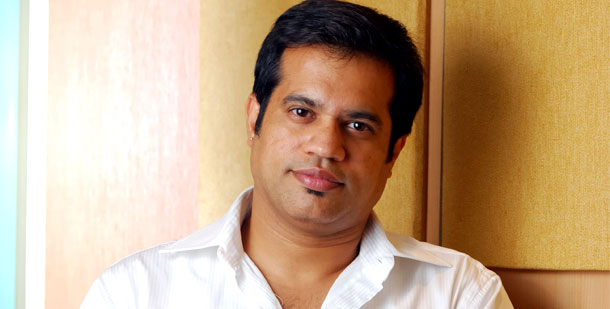
    Sajan Raj Kurup, Founder & Creative Chairman, Creativeland Asia


    While each agency will have its own reasons, how do you react to one more independent agency getting aligned with a big network?

    Every agency has its reasons to sell. To each his own. As long as they are happy who are we to judge.


    Is this something that you at Creativeland are also looking at now or eventually?

    If I wanted to start a place to one day sell it as an advertising agency and cash out, I would called it adland. Fortunately or unfortunately, I am not adland. I am Creativeland. And I have a plan 🙂


    In fact with each passing day I am lesser and lesser of an advertising agency. And I still enjoy what I am doing. There is a good chance I may fail and what an epic failure it would be. There is also a good chance I may succeed. But I am not thinking about it.


    Some of the reasons why L&K decided to sell stake was to increase scale, get better funded and increase its set of clients. Is that something that’s a huge pull as the agency size grows?

    Obviously scaling up and investments are a part of any business. Mine is no exception. I am not averse to conversation for strategic investments. But I am reluctant to talk with advertising networks. They are myopic. They don’t invest. They buy to kill and devour. Not to grow. That is not my game.


    Santosh Padhi, Co-founder and Chief Creative Officer, Taproot India


    Santosh Padhi

    While each agency will have its own reasons, how do you react to one more independent agency getting aligned with a big network?

    Different people have different needs and priorities, but in most cases coming together means strengthening your strength. Since I ran the recent Standard Chartered Mumbai Marathon, let me put the same analogy here :). On a long run you can decide to maintain a speed and decide to run the same speed throughout or you decide to speed up but run out of energy and momentum when you are pushing beyond your limit, where you need the right energy drink to add to your momentum and achieve the goals faster, without getting tired. It’s completely up to an individual or the agency to decide how fast one wants to finish the game.


    Some of the reasons why L&K decided to sell stake was to increase scale, get better funded and increase its set of clients. Is that something that’s a huge pull as the agency size grows? Were these the reasons why Taproot sold stake to Dentsu?

    While someone from L&K can address the issue of why they sold stake, we at Taproot joined hands with Dentsu for 2-3 reasons:

    a.Management control, a creative agency should always have this as that reflects in your output. Other department support as we were only focusing on creative product and limited to just Mumbai, but at times clients do look for many necessary support and we did not want to lose business just because of the lack of it. Dentsu’s multiple offices and departments have been very handy for us.


    b.Globally, Dentsu is an innovator when it comes to digital and sooner or later we all will be in this sea, and they will be of great help when India gets into such action.


    And, most importantly, c. We felt comfortable at a human level and that’s very important in a people’s business


    If there’s one advantage that you think Taproot has derived post Dentsu, what would it be?

    It has been a wonderful two-year journey. We have worked together on many projects like Nurishco, Dulux, Himalaya etc. We complement each other very well.


  • Don’t reject new IRS, correct it: Amit Ray


    By A Correspondent


    Sometime in the afternoon today (Feb 3), the Indian Newspaper Society is meeting the top brass of the Media Research Users Council for a discussion on the new Indian Readers Suvey findings . On Friday, 18-odd publishers issued a joint statement. The basic message: “We, the leading newspapers of the country, condemn the newly published Indian Readership Survey (IRS 2013) in the strongest possible terms.  The survey is riddled with shocking anomalies, which defy logic and common sense. They also grossly contradict audited circulation figures (ABC), of long standing. We also strongly ask RSCI and MRUC, the conductors of the Indian Readership Survey, to withdraw the results of IRS Q4 2013 immediately and  as well as put a stop to all future editions of this survey, as their continued publication will cause irreparable injury to the reputation of established publications like ours.”


    According to the information available to MxMIndia, a senior INS officebearer wrote to the MRUC saying that members of the apex body of newspaper publishers will pull their subscriptions if the new IRS findings weren’t disbanded.”


    The print media ecosystem is divided on what should be done with the new IRS. While many publishers have damned the findings and pushing for it to be dumped in the scrapyard, there are a fair number of media agency professionals and advertisers who believe that the media research findings must be honoured.


    MxMIndia Comment: Post IRS, worries for broadcasters * When publishers hailed IRS * Likely outcome of INS-MRUC meeting

    By A Correspondent


    Guess who should be most worried after the IRS 2013 survey findings that were out last week? The entire broadcast ecosystem of course, especially the folks at BARC. While the monsieurs at tech vendor Mediametrie and the yet-unappointed panel manager may mouth a few ouis, nons or whatever, the knives and suparis will surely be out if there’s any dramatic changes from the present.


    Let’s look at a few hypothetical scenarios.

    Scenario 1: Sony is Hindi GEC #1, ratings of the #1 GECs drops 100 GRPs

    Scenario 2: India News turns #1. The current leaders fall by the wayside

    Scenario 3: In Tamil, Pudhu Yugam becomes GEC #1


    These are of course just scenarios, but if the results of the IRS 2013 out last week are an indicator, they aren’t impossible to happen. It’s going to be a change of methodology, a change of vendor (possibly not fully if TAM is selected as panel manager), a change of philosophy and an all-new Technical Committee ensuring the processes are followed and the system is robust. And above all: BARC with a chairman from the industry, a CEO and his secretariat and a techcom that has reps of a broadcaster, media agency and advertiser.


    The problem, as many industrypersons told us, is not the process, but in the final numbers. These are after all IRS survey. As in the case of BARC, even the IRS saw representatives of all stakeholders actively participating in the processes.


    In fact on the day the IRS was launched in Mumbai in March 2013, Peter Suresh, the much respect research head (Head-Strategy) at the Dainik Bhaskar told MxMIndia:  “The entire process is automated, and that is incredible. Attempt to report individually on a far larger number of geographical units is also very heartening. District cut too has increased - hence the data can be analyzed at a far more granular level. Bulk of action of late has been in rest of India, beyond six metros and hence granular cut is extremely important. Data slicing at a deeper level, and multiple ways of presenting it, make far more sense. Readership numbers are the cornerstones of most media marketing and sales strategies - and the finer they can be cut, the more robust they are. And, of course, these will help in delivering better stories to the marketers.”


    Dainik Bhaskar is one of the signatories of the statement issued on Friday against the IRS. Interestingly, a day after the IRS was released - on January 29, to be precise -several newspapers front-paged their successful showing in the readership study. These include some of the signatories to the statement.


    The meeting between the Indian Newspaper Society (INS) and the Media Research Users Council (MRUC) at 2/2.30pm today is most likely going to end in a stalemate. It may be remembered the RSCI was formed by the MRUC and INS-sponsored National Readership Studies Council to govern  the new IRS. So the buck is clearly in the RSCI court. For the INS to damn the IRS is tough because its members had endorsed the process.


    The MRUC is being represented by Chairman Ravi Rao, TechCom chaiman Paritosh Joshi and Director General Shaswati Saradar. At the time of writing, one is not aware of who will represent the INS. But Hormasji Cama, a former head of the INS and MRUC and now chairperson of the RSCI, is travelling, the decision will need to be finally taken by him.


    According to the grapevine, the MRUC/RSCI has already written to Nielsen, asking the research agency to clear a few doubts. It’s possible that the new IRS findings will be put under suspension for a few weeks until the clarifications come in and Mr Cama is back.


    MxMIndia spoke with veteran media professional and former chairman of the MRUC Technical Committee Amit Ray for his views and to suggest the way forward of the mess.


    1. Is there really any anomaly as it is being made out to be? And if yes, why has it happened?

    a. There appears to be a lack of experience in the current dispensation vis-à-vis readership research. Instead of letting go of the previous experienced professionals, MRUC and RSCI should have engaged them more significantly given that the task was assigned to the same research agency that had failed earlier. If you remember, AC Nielsen was the agency which did the NRS in the past.


    b. The questions that are now rightly being asked are: Was Nielsen the right agency? Does it have the requisite experience for newspaper readership study in India? Did we forget that NRS had failed thanks to the same agency?


    c. I strongly believe that publishers ought to have got their own experts to validate Nielsen’s methods and later the results. How can the publishers let a body like new MRUC decide about their future knowing fully well that the real pillar of the earlier IRS was the research agency and the techcom together?


    d. One of the reasons why the print media rejected the NRS and opted for MRUC’s IRS was the concept of ‘continuous research’. So why was this junked overnight? It is very likely that the current people will defend this by asking for more time. This time the publisher would do well to have their own team of experts with experience and not just blindly trust the experience (or the lack of it) of the current technical committee and the research agency.


    e. Everyone inside MRUC would’ve known about what has happened historically. Even MRUC had a problem in the past when circumstances forced MRUC to choose a new agency NFO. This was the around 2000/2001. If my memory serves me right the new Agency took almost 3 years to complete the research. May be the current office bearers were not aware of this


    2. What are the next steps? Scrap IRS?

    a. Rejecting the new IRS will be a regressive decision. Instead of rejecting it, we should look at correcting it. If we reject it, we will be starved of another 15-18 months of data which will be counter-productive to publishers.


    b. Call the people from the earlier MRUC technical committee especially those who took it to another level because of which the INS agreed to team up with the MRUC. May be a good idea to urge the veteran Roda Mehta who set up the IRS to intervene and suggest changes. I will be happy to help too and possibly pull in a few others.


    c. Ask AC Nielsen to allow a detailed audit of their actual work. Invite some of the senior folks at Hansa Research Group to come in as professionals – and not representing Hansa – to offer their advice. They are clearly best suited to find the soft spots where mistakes are committed so that we don’t repeat them


    3. Both RSCI and MRUC are part-sponsored by print publishers. The officebearers of both bodies have publisher representatives. So is it right for the INS to now play Big Brother to decisions taken by its own members?

    For the sake of the industry and the entire print media sector, it’s important that IRS 2013 is salvaged. As I stated earlier, publishers will suffer the most if it’s scrapped. Media studies like that of KPMG, PwC etc make sectoral assumptions and projections based on these. I believe the entire sector shouldn’t suffer because of the mistakes of some.


  • No mainstream,puhleez. We’re Indie: Aditya Swamy


    The news of the channel had been outed a few weeks back. Cola brand Pepsi and music channel were coming together for what was a first in Indian broadcasting: a co-branded channel. There’s the lifestyle channel that NDTV runs, but the Kingfisher brand isn’t suffixed in NDTV Good Times. This association, albeit that of a three-year title sponsorship, has it upfront. And extends beyond the title and assorted sounds-and-sights.  Test signals of the channel are on and the formal launch will happen later this month. Aditya Swamy, Executive VP, Viacom18 and Business Head, MTV India spoke to MxMIndia on the channel, its differentiators and whether Coca-Cola was fine with the association given that Coke Studio airs on MTV.


    So tell us more about the Pepsi MTV Indies?

    Well, the Indies is our latest offering, is part of the MTV network and it is and will be a reflection of all the sub-cultures that are at play in India.  If MTV looks at pop culture, Indies will be sub-culture. So everything that’s not the mainstream.


    Will we see desi or international Indie music?

    The heart of Indies is Indian. It’s all that’s happening in India. There will be a short sneak into what’s happening in the world, but the heart is Indian and the heart is music. We are building a library of Indies films, a lot of graphic designers, visual artists, street artists, graffiti people and obviously Indie music.


    It’s will be one feed for HD and SD. From the distribution point of view, it will only be digital, and not on analogue. So It extends seamlessly into the website and the app as well. You can create your own playlist, you can follow geek calendars, you can follow artists, you can post your pictures. Then there’s an Indie music discovery app.


    Like Shazam?

    It is an Indian version for Shazam and recognizes Indie music. It is developed inhouse by our digital team.


    Getting to the basics, how did this association with Pepsi happen?

     Well, we always wanted to launch the channel. I think we were always excited about doing it from doing independent music on MTV.  Having realized the need for dedicated destination for it, we went to people who felt they would be interested and invested in the space. When we went to speak to Pepsi, which is a leading youth brand and is doing a lot of connect with young people, they were very positive and forthcoming. We shook hands in the very first meeting and said we are making things happen together.


    Specifically, we first met them around August-September last year and we are launching the launching it  in February. So, 60 days from the day we first met them we had everything in place!


    What’s the timeframe for the partnership with Pepsi and tell us more on how it will extend beyond the channel?

    We have a three-year partnership with Pepsi where they are the principal sponsors on the channel. Apart from this, the channel identity and a lot of subtle integration into the environment like you will get to hear a can opening etc. and you will get a can opening, you will get a bottle people plugging.


    But there’s a lot, lot more. Pepsi will go to colleges every month, find one young band and not just do a band hunt we get them to Mumbai, get them to a studio with a mentor, make a song and a music video for that song and that song will be played out on the channel.  The idea is to create more talent, curate more talent, give them the right kind of exposure. That’s a signature property that we have build with Pepsi. Apart from that, as the months go by, a lot of the college engagement that we do on and they do on their own will come together under the Indies umbrella.


    Plus the Indies identity will on their cans and on trucks. Select Pepsi warehouses will be converted into areas for bands to rehearse because the biggest problem that bands have is rehearsal space. These warehouses will have instruments where bands can practise anytime. And even recording equipment. So in a sense it is also giving back to the music industry.


    In terms of music, will it be essentially English or Hindi? And what about other Indian languages since a lot of Indie is now in the regions?

    Indies will be language-neutral. You will have English, you will have Hindi, you will have regional… Malayalam, Bangla rock, Tamil… It’s music and music doesn’t have any language boundaries. Having said that, you can break up the Indies scene broadly into three buckets. One is the metal rock scene which is largely the head-banging variety and there is a big following for that. The other end of the spectrum is folk. You know the Rajasthani folk musicians; you have Qawallis etc and in then there’s the hardcore Indie. So we will reflect all three and in equal measure. We also have a fair amount of Punjabis because if you see the Punjabis scene is India as well as the Punjabis scene in Britain, there is a lot of music which is great club dancing music.


    So, timezones for various kinds of music or just a free flow?

    We are breaking all rules of music programming. So it’s not that you will see five Punjabi tracks back-to-back because the idea is that when we hear music on our iPods, we have a mix of songs. I’m listening to Robin Thicke for a minute and the next minute I’m tuned in to Honey Singh and the third minute I’m listening to an Amit Trivedi film song. That’s how our playlist is, a mood-based playlist. It is not genre-based playlist. So you will not see 10 rock songs back-to-back and then 10 Punjabi tracks.


    And which language will people be speaking in?

    Well it’s actually what that person is comfortable speaking in. The guy who’s doing the section on motorcycle pimping is comfortable talking in English. But we have someone who’s doing a series on street art and he talks purely in Hindi. Today’s generation has no language bars. We are multi-lingual and that’s the language that will be reflected.


    Does this mean that you are looking at extending your reach beyond the Hindi-speaking markets (HSMs)?

    No, we will look at largely the HSMs because at the end of the day our channel is distributed to the HSM audience. Will the majority of content will be Hindi? Yes. The majority of content between Hindi and English? Regional will be much less…


    The Tamil Indies scene is quite happening!

    You bet it is. La Pongal band is doing very well. In fact we have a bunch of La Pongal videos with us!


    For a channel that got Coke Studio to India, it was interesting that the tie-up for the co-branded channel was with rival Pepsi.

    Well, we are deeply associated with Coke. I think they are very clear they want to build Coke Studio as a brand. Whatever energies that they put in, whatever investments they put in, they have always made this bigger. They never sponsored another concert; they have never brought any other international act to India, they have never done another music festival. I think they have a single-minded focus on a Coke Studio. That’s why Coke Studio has gone from just being a TV show, it’s across multiple channels on TVs, its available in DVDs, its available on iTunes, on Gaana, Dhingana… It’s got concerts in colleges but you will see, Coke has not done a single initiative outside Coke Studio in the music space in the last three years.


    Are they fine with you associating with Pepsi on this channel?

    It’s all about the faith you have in the relationship. If they for a minute believe that we won’t be doing justice to what we have built for them, then they have all the reasons to feel unhappy. But I think what we have delivered for them over the years, the kind of relationship that we share with them, there’s a fair amount of comfort that these are two separate pieces that we will treat with equal importance. Like we used to do Roadies with Hero; we still do Roadies with Hero. But we had a large show with Pulsar. They were two competing motorcycle brands but we never made them feel that one is bigger than the other. We managed both independently. We are a media house and our nature is to work with multiple brands. The question is, are we able to deliver the value the brand comes to us for?


    The thing is that Coke Studio is more than just a programme on the channel. And you are trying to do the same with Indies?

    Coke Studio is all about curation. Coke Studio is lot about getting artists who never meet, taking them out of their comfort zone and giving them a platform to perform. It’s not about taking really an unknown artist, it’s all about taking people who are great in their sphere. On the other hand, you have to discover talent and put them out over there.  People who have just got 500 views on YouTube, how do you actually make exposed to 20 million people? That’s really the role of Indies. We have to be clear, how we differentiate the two as well.


    In terms of advertising, you will obviously be carrying ads of all types? Will you be open to all brands? Will there be restrictions on some brands given the fact that Pepsi is the title sponsor?

    Yes, we are open to taking all brands. Obviously, when you have a title sponsorship like the kind with IPL, there is a cap on how much inventory a competition can buy. So there are some competition caps here as well.  But otherwise we open to all advertisements.


    So Coke can advertise too?

    Yes.


    You mentioned about some non-music shows, so, will see something like Roadies which is the perfect fit for Indies moving in here?

    See, the line that I have to keep drawing in my mind is it popular culture or sub-culture? Today, Roadies has become pop culture. It’s become big, it’s become popular.


    Popular sub-culture?

    Popular yes but the word popular has gone out of sub-culture. But a show like Sound Trippin which is about exploring the country, finding random sounds and making a song with them slowly move it to this space because it is really experimental, it’s very, very art- and creative-driven. It is not mainstream.


    So would you shift Sound Trippin and any other shows from MTV?

    Right now we have to build our own identity for Indies, so we will create a lot of original programming. If there are some things that exists on both, we would look at extending them but the idea is not to start taking away programmimg from MTV and plant it on Indies. Indies is a new journey that we have started. We would like to build original programming for Indies.


    What is the content ration between music and shows?

    I said we are led by music, so when I said music it’s not just about music videos but stories around music. So I consider a story about an artist as much as music, I don’t consider it non-music. Around 80 percent of the channel will be revolving around music, music videos and music-related content


    Most channels these days give in to some bits of Bollywood. A star from a forthcoming release strumming a guitar or singing away? Will Indies do that?

    Films are popular and that’s mainstream. So clearly not films, no film music. But there is very much Honey Singh’s non-film side where a sort of independent music will sit here, a lot of A R Rahman’s new album called Infinite Love which is not based on any film.  It is an independent album that he has created that will find a place. Kailash Kher does a lot of non film stuff.


    Can Priyanka Chopra’s non-film stuff come here?

    Yes. We are not against film folk. We are just clear about not airing mainstream work.


    In terms of launch what are you looking at? Multiple media, on-ground activity?

    We will be available on all key DTH and digital platforms. But I think once the channel really gets wide availability, you will see mainstream media kicking in. But this is not about full-page press ads. That’s not the audience were going after. We are connected close to 200 colleges, we really want to go down there and engage with the young people. We have a large digital plan on this, we are looking at strategic partner whether it will be Radio, magazines like Rolling Stone or Rock Street Journal. It’s very targeted at this kind of audience, we are partnering with lot of key music festivals and supporting them and not just going and sponsoring them. We are supporting them in terms of talent, in terms of marketing and that’s how I see this building organically. I don’t see it like a sudden huge mass media burst.


    Is it a good time to launch it given the fact that it’s the beginning of exam prep time for most college students?

    Well, if you look from media window point of view, I think the first quarter of the year is always the best time for any launch. It gets up the year, it’s before the IPL. A lot of clients look to enter the market; it’s the beginning of the marketing calendar for many people. So I think it is a great time to launch and I look at it this way; over the next three months, by the time summer holidays kick in, we will be up and running in most markets. A new channel launch takes a good 60-90 days to seed. So I think it’s good to give us that seeding period to get into the summer holidays.


  • #beyondbiz: It’s ‘mind over matter’ for Raj Nayak as he devours ‘khatras’ in real life

    By Sandeep Puraname


    At the unveiling of the new season of ‘Khatron ke Khiladi’ last Friday (Jan 31), Colors CEO Raj Nayak took the assembled media and the show’s participants by surprise when he lit a cotton ball and ate it up. His colleagues and friends of course know that he’s a pro at it, but he laughs it off as just a way of conquering fear with “mind over matter”. Do check the video, but remember, do not try this without trained supervision or Raj Nayak around. A quick Q&A with the ‘khatron ka khiladi’ in the first of our new weekend series: #beyondbiz


    It’s alright to do it as part of an HR programme, but isn’t there a fear of the trick not working and burning the insides of your mouth?

    Really? Ha ha What I did was child’s play. It’s just mind over matter. Life is about taking risks. It is about having fun . It’s about conquering fear. As the saying goes “If you are not living on the edge , you are occupying too much space”.


    So tell us, what are the other ‘khatarnak’ acts that you can do?

     As a child I used to play the game ‘dare’ I love challenges, it all about doing things that allows you to conquer your fear. When you conquer your fear you feel liberated.


    You are also a certified trainer on walking on glass or burning coal, right?

    Yes that’s right, I did it as a hobby from the Sundoor School of Transpersonal Education, California. And I have practised my skills with the entire staff of Colors. I have taken their Agni Pariksha, they have all walked on fire, walked on glass, bent iron rods with their neck, broken pencils with their finger, eaten fire etc etc.. with 99% success.


    Would you do a show like ‘Khatron Ke Khiladi’?

     Would love to do it.. Someday when I move out of corporate life perhaps, if I am still upto it. Ha ha, On a serious note, heading a GEC channel is no less challenging..


    What’s easier to handle: ‘khatras’ like these or those in real life?

    Both are difficult to handle. It’s all about having the conviction and the courage. It is about mind over matter. It is about going with your gut and taking the risk and believing in yourself that you can do it. It’s the power of positive thinking.


  • A lot of change in world & media landscape is thanks to digital: CVL Srinivas

    The GroupM CEO South Asia in conversation with Rishi Vora on growth areas for digital and how digital is at the centre of all business verticals. Excerpts:


    How would you look at Group M’s focus on digital media? Where does digital stand in Group M’s priority list?

    Last year we got together as a team and we created a new vision for ourselves. The vision was to have digital at the heart of everything we do, to create a digital culture and to provide digital solutions to clients with new ideas, new approaches. We decided to do more of the new and less of the old.


    We created a three-year programme called the ‘New Me’. For GroupM, New Me is a repositioning in terms of how we approach business practices across the GroupM verticals. We want each and every member of the Group M community to take notice that the world is changing and that the rules of the game are also constantly changing.


    As a media agency brand we are No 1 but there is no guarantee we will continue to be No 1 if we continue to have the same approach we did for many years. The world is changing, the media landscape is changing and a lot of that change is happening due to digital. It is with this thought we came up with the New Me approach.


    So the agency has evolved from its core of being a media agency and that it is adding a lot many layers to it?

    Absolutely! Earlier the media planning and buying was the core business. But now we have changed the definition of Core. We have seen the growth happening in non-core areas, and we are in fact calling these non-core businesses the new core.


    At the industry level, what are the various initiatives GroupM is taking on the digital front?

    Last year we partnered with Social Media Week, an event which came to Mumbai for the first time. The Mobile Marketing Association (MMA) is another industry event which we are associated with. We, in fact, are setting up MMA in India this year to evangelise mobile as a medium to help rest of the industry and the ecosystem.


    Digital Rendezvous was another initiative, but that is more internal. Maybe at some stage we will take it to the industry.


    So everything is flowing in from the New Me philosophy which we have adopted. Even the tools that we have created and launched.


    As an industry we need to take notice of the changes happening and manage the transition from practices of the old world to the practices of the new world effectively. It means investments in new tools, knowledge, skill sets etc.


    Talking about the rapid growth of digital as is estimated in the report, what are the implications on advertisers?

    Advertisers will be keen on investing in digital as consumers have got many options in the digital space – be it social platforms or mobile apps. We are going to see a rise in the user generated content. So all these aspects will have a positive impact on the advertisers’ mind.


    A lot of advertising will come from the entertainment sector for the mobile industry as smaller towns and cities – the mobile device is also seen as an entertainment device given lack of infrastructure.


    How do you see 2014 pan out for social media as a business?

    In 2014, we will see the emergence of new platforms. While platforms such as Facebook will continue to do well, we will see a lot of brands moving towards, Instagram, Pinterest etc.


    Are we going to see a rise in M-commerce in 2014? What are the implications on the industry on that front?

    Yes, there will be a growth in the M-Commerce space as well. Research online (from a PC) and pay offline. The thing is shifting to research on mobile and pay offline. If operators can connect consumers with payment gateways on the mobile phones, there will be a huge growth in M-Commerce where consumers will start buying products and services from their mobile phones.


    To mention a few clients – Nokia, Vodafone, Perfetti, Pepsi – they all have taken mobile as a serious platform and they have kind of experimented with it. 2014 definitely see a lot of initiatives on the mobile advertising front.


    Overall digital pie is at 35 per cent, what is the share of mobile in that?

    Last year the size of mobile advertising was about Rs 350 crore. By the end of 2014, we should see that increasing to Rs 450 to 470 crore.


  • Pune Design Festival: For the designers, by the designers


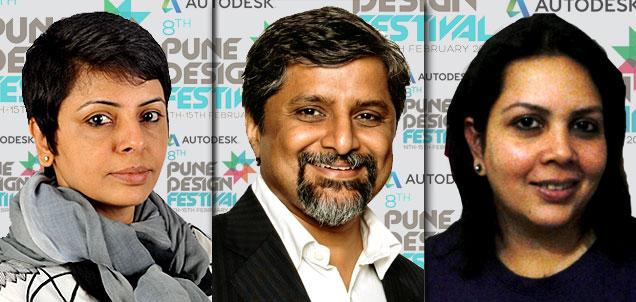
    L to R: Ashwini Deshpande, Balkrishna Mahajan & Darpana Athale


    First off, MxMIndia is a media partner of the Pune Design Festival. Over the last year, MxM has been associated with multiple design events, as we believe it’s a domain largely unaddressed by other media publications. We surely have designs on design. But to add the disclosure to this interview is being unfair to the organizers and the fraternity. For, we would’ve carried this interview regardless of our business association.


    It was tough meeting all the co-organisers of the event, so for this interview, MxMIndia met Ashwini Deshpande, Balkrishna Mahajan and Darpana Athale. The three captains of their respective enterprises – Elephant Design, Ticket Design and Sarvasva Design respectively – took time off their busy schedules of work and putting the finishing touches to the festival to speak on PDF and how it’s different from all the others. Excerpts from the interaction:


    It’s the eighth edition of the Pune Design Festival and a lot of people didn’t know it existed. So, where were you all these years?

    Ashwini Deshpande: Yes, we’ve not really been media savvy to be honest. And in all fairness, we’ve just kept it Pune-centric. The idea wasn’t to go that national when we started out. When we started out the idea was that we were here in Pune and no one considered Pune to be the centre of anything.


    The objective was not just the conference, it was ‘let’s just celebrate what design is’ because nobody knows it and at least Pune should know, if not any other place. When we started, we didn’t have the vision that we’ll become a national event. But somewhere in the third or fourth year, we realized that it’s a very unique event. Nothing like that was happening anywhere. The uniqueness of this is that it’s being curated by designers. Designers who are practising, successful, experienced and still have the thirst to know more. Because whoever we want to listen to and learn from gets  invited. So that’s why it’s probably stayed within us and as we have more knowledge-sharing, we realize more people should get that knowledge. That’s really how we thought of getting out there and telling about it.


    Balkrishna Mahajan: Your question about where were you all these years is something that we also ask. But it’s not an agenda-drivem activity where we have to put up a show of a certain kind and we don’t plan round the year to work toward this. The nature of the whole thing is very organic. And we have an Association of Designers of India, so, everybody takes out time to create  the content for it, contact speakers, make sure we have the right kind of people coming in and that’s how it’s  been But we want to grow big! We want to make this a much larger event with more people participating. But so far we’ve been happy with what we have got.


    Darpana Athale: I think when we started out our first idea was to create an awareness of design and the second was to promote designers and design from Pune. And in the first two-three years we also realized was that in design itself, there’s a huge diversity. There are a lot of fields. And every year, we’ve always tried to get in people who’re doing different things in different fields of design. And I think because we’ve been so focused on content, that we didn’t concentrate on marketing or creating a strategy for promoting this event.


    Do you think you’ve been able to achieve the going national bit?

    Reaching national? We’ve reached  international,  quite frankly, though a low key international.


    In terms of numbers, how many people from Pune versus out of the city?

    If we’re an audience of 2000250, I think about 30 per cent will be from outside. Interesting, it’s the outside number that’s growing?


    And all these from Mumbai, or even elsewhere?

    Mumbai, Bengaluru, Delhi, Hyderabad, Ahmedabad, and we even have people from outside the country too. Not  just the speakers. A lot of people who are planning their visits plan it around the two day of PDF.


    Other than design agency folk, are you able to attract clients and marketers to the event?

    Very much, in fact we’re getting our clients to sponsor the event… because that’s the interest we created. In fact this year, a lot of our clients will be be visiting.


    What is your pitch to clients and how do you attract corporate to attend the event?

    When we said content driven, it’s not just design for designers or designers speaking only to designers, we make it a point to include a lot of what’s happening in the industry or other fields of design. Maybe even architecture or heritage, craft… The scope is quite varied. Everybody who comes can take something back. And the other thing is that sometimes we have workshops specific to/for industries. We also have site visits. Sometimes we also open out offices for people to come and take a look, to see how a designer works. It’s an open house.


    People can just walk into a design studio on designated days. A lot of parents and media come in. So what we do is, show a typical process of how a product has been created or how a design has been evolved. So that exposure also helps and people can see a design. Because, normally this isn’t something that’s very easily accessible.


    Your theme this year of ‘Design Unlimited’ is very general. Can you tell us more on what to expect at the PDF

    There’ve been years where we’ve focused on design. Last year, our theme was regenerate. So we focused on repurposing, redoing, recycling and so on.  This year we thought that we’ve seen and heard a lot of designers talk about their design process, their design journey. There are a lot of fields other than design that embrace design thinking. Or there are a lot of designers who’ve used design thinking principles and gone and done something else. Hence this year we’re trying to open it out and look at those ideas and journeys. There are people who’ve gone into design for social impact. So we try to think how they use design thinking principles for social impact. There’s somebody who’s just become a venture fund for social impact who’s been a practising designer for about 30 years! So we’re trying to think of how design is affecting fields other than design? That’s really how our horizons are going to be wider and the younger designers will actually look at design in a far wider spectrum.


    It’s a festival organized by designers, for designers etcetera.. would you also be  looking at  issues which concern designers in terms of general hygiene kind of topics?

    Within the festival, we try and have a variety of topics. But apart from the festival, our association events also cover these things. So we have done seminars on IPRs because designers are supposed to be really poor at making contracts. In fact there are many who don’t even do any contracts. So we want them to come to a level and get educated and have certain kinds of standards. How to write proposals, how to have contracts done, how to have IPRs in their name? So we’ve done an IPR seminar and we do all such activities around the year. This is in Pune. We also did a program for schoolchildren called Generation D. That’s not just for designers. It’s a voluntary activity done by designers for schoolchildren who’re on the verge of going out and making a career choice. And our focus was not on how to make them understand how to take up design as a career. That would happen anyway. But our focus was to create a design aware generation. Because every field apart from design has to use design to make a better world. So we believe managements needs to understand how design can help them in their business. Or another field of work needs to understand how design can impact their field. Generation D was a program we reached through Sakal’s*NIE programme. Some 15,000 school students were exposed to the concept of design in that year.


    Clearly, the work does not stop at the Pune Design Festival. Other activities go on.


    While people appreciate the need for good design, in times of slowdown, many of these good-to-haves take a backseat, right?

    On the contrary, this is the appropriate time for design intervention. There are different ways of looking at design. One could look at design as an outermost layer to add to your products or your services to make them better. Or you look at it as a very intrinsic, central element. If your brief for design means that you need to work in a challenging environment or market situation, that’s the time you need to design more effectively so you can reach out to markets faster and create products and services that will cater to that requirement. It’s not a transient thing… just for a few months or weeks. We need to plan much ahead… seven to eight months at least. You need to plan for what’s going to come in.


    A lot of companies still go for international designers despite the rising dollar rate. Is that reason for worry for homegrown designers?

    It has been a worry but I think things are changing quite a bit. Clients have become more aware that there’s equally if not better design or designers available locally. So to up the brand value at times, sometimes yes, you get in a one-off international designer. But the trend has completely changed in recent times.


    Your set of speakers is interesting. You even have the Oscar-winning Resul Pookutty around.

    Before we speak about Resul, we’ll speak about how we’ve chosen the speakers. Since it’s ‘Design Unlimited’ we’ve tried to seek people who are not mainstream designers. There are mainstream designers as well, but people who’ve crossed some boundary or from some boundary, they’ve come into design. That’s really how we chose our speakers. And I think most of the time was spent on who to invite. So Resul was interesting because he’s a sound designer. The word design is used in a very different context in his  case. And we really wanted to understand the process a sound designer would follow. Someone of his experience, his talent and his genre of music, which is different. So we thought let’s try and understand how other designers follow a process. Is it similar or is it different? That’s really our interest in looking at people from different fields. Other than that, he’s well-known because of the Oscar and his work. But there are others are equally well-known in the field of design. For example, Mikal Halstrop who’s coming from Denmark. He runs the largest and most successful design offices in Europe. Compared to India, Europe has known design as a profession for the longest time. For us, it’s probably 30-odd years and for them it’s a100 years. How do they deal with ups & downs? How do they deal with need of design or no need of design? It’s much worse there, you know. So we really want to understand what keeps them going? Because we will reach there in some time. Then we have two very interesting sessions from mainstream designers. But what we really wanted to understand is how design happened yesterday and how it happens today.The two fields we’re talking about are museum design and typography and font design. What made people go into these fields 40 years ago and what makes them go into it now and how are they different. We call this session Yesterday-Today or Now & Then.


    There was a session called Beyond Design where people who’ve been traditionally trained as designers but have broken away,  they’ve setup their own businesses which is design-led but leveraging their design skills to set up independent business models  for themselves which would mean a product store pr your own brand. Like Mukul Goyal and Ayush Pasliwal. We also have Saskia Dies who’s a German jewellery designer. All in all, a lot of content on the two days.


    One last question and I would like the three of you to respond to. Pune Design Festival is just a day away, but if you were to make a pitch to someone who’s undecided or unaware, what would you tell him or her.

    BM: I think what’s exciting about Pune Design Festival is that it’s one platform where we hear a lot of design stories being told by people from across generations.  And what’s exciting about this is not just their stories, but also the people who come to the festival! Anybody who comes here has touched upon design in some form or the other. So it’s not just the sessions at the festival but also what happens during it. There’s a lot of interaction and people exchange stories too. And that’s what’s interesting because not everybody’s going to speak at the festival. So people exchange stories and their successes. The fact that it’s run by designers and there’s no other agenda to it. It’s completely based to create a platform for designers. It’s not-for-profit.


    DA: It’s an affordable event and an affordable celebration. In two days you get some of the best people from India in this field, from everywhere! And they are accessible, you can talk to them, listen to them, it’s not like a formal thing where you have to come and sit. There’s a lot of learning and sharing on the stage as well as off it. There’s a lot to take back from the programme. The good thing is there’s a lot of variety. It doesn’t focus just on one aspect of design but it focuses on design through various things.


    AD: I’ll try and remember the feedback we’ve got from people who’ve come and spoken or attended and the one thing that they always keep saying is that the positive energy that goes around the two days. It’s the difference between an event management-driven event and a people-driven event. People into design are the ones who’re managing it and planned it too. So I think that positive energy goes around in all directions. The second thing is that it’s not that the speaker will speak and go away. They are very accessible because the format is such that you can easily approach them. And then there are workshops. We missed mentioning this. We have three very interesting workshops. One is the kite workshop which will happen on the terrace of the venue. A Canadian designer who’ll conduct the workshop on the terrace. Where do you get to have that kind of fun in a conference? Her name is Skye by the way, Dr Skye Morrison. And there will be beer also! There’s always beer…


  • CDOspeak | Do less, but effective


    By Rishi Vora


    From the many aggressive moves Star India has made in the past two to three years in the area of content, it is evident that the broadcast major is leaving no stone unturned in ensuring its continuous dominance in the industry.   Digital, which is seen as central to consumers’ lives, is at the core of Star India’s strategy to augment growth, says vice president and digital marketing head of Star India, CVS ‘Venke’ Sharma. A former marine engineering officer with the Indian Navy and an MBA gold medalist, Mr. Sharma, who comes with around 17 years of experience in shaping the digital strategy for brands, was last with Leo Burnett in Indonesia where he built the digital practice in the agency.  Prior to that, he built a marketing services agency Arc for Leo Burnett India and a digital agency Tribal DDB India for Mudra DDB..

    Excerpts: 

     You joined as the digital marketing headfor Star India network a little less than a year ago. What was the brief given to you and how far have you reached in achieving your goals?

    We are  making steady progress. The brief remains  to increase the demand for the network’s content using digital marketing.   As you know Star India is a leading broadcast network in India with 40 plus channels. And digital being central to consumers’ lives today, it certainly forms a critical part of the network’s overall strategy.    Over 600 million watch television in India, of that, about 90 million are on Facebook and other social networks.  In Sports, the English cluster and even general entertainment channels Star Plus and V, there are a lot of young audiences who engage with these brands on social media on a daily basis.

    Generally in India, the dominant social conversations are about sports, entertainment and politics.  As a network, we cover a wide gamut with definitive content in sports and entertainment. Thus our content inspires conversations on social media. Consumers are interacting while consuming content on TV or on any other device. Our endeavorto shape meaningful conversations that can help create content demand for our channels/shows. So that consumption increases and ultimately morepeople watch our channels.

     Has it changed from what it was earlier?

    The fact is that the network is leading across many genres – like Hindi GEC and English, Sports.  We have made progress in reaching out to people via digital media and engaging with them.   We have been far more focused in terms of not doing too much and doing stuff effectively. It’s more about listening, analyzing, and connecting the dots with actionable insights. I wouldn’t say we are already there but with the effort we are putting in, hopefully we should be.


       What are the kinds of mobile initiatives the network comes up with?


    All our digital marketing initiatives are mobile centric.  Social media usage itself is largely on mobile. So whatever digital marketing we do is to connect with the audience on the go.  In addition, we do build  appsif there is a genuine consumer context.  For example, we have an app for Mahabharata where consumers can get some exclusive content and keeps them engaged. The app was an important part of the show launch strategy.  We launched an app for Channel V called Vith U. It is an app devised for women’s safety. It has received a phenomenal response.

    The Star Sports app as you know  is very popular, so yes we do invest in mobile and we believe that mobile and social is the way to go.  

    From a brand’s perspective, do we have enough penetration of 3G to support mobile initiatives? Interestingly, social media platforms are aware of this problem and are coming up with ideas to tackle this. Twitter, is promoting an initiative where you can give a missed call on a certain number and you can converse with or follow a brand without an internet connection via SMS.   What’s happening is that the smartphone penetration is really increasing rapidly and also the operators are pushing usage. There is a reasonable amount of usage happening even from lower end handsets.   In fact, the discovery of internet for many people in India is happening via the mobile phone.  And for these new consumers, the digital initiation happens not through email but social media or search. And that’s a very interesting trend.

     With so many brands across categories trying to reach out to the consumers, is there a method to the madness? What is your view on this from the point of view of promoting Star India’s content via digital media?

    The point is that you need not do too much in the digital space. Do less but be effective and disruptive. That’s our mantra. It is not about how loud and how much we can talk but how interesting can we be. That can come from having the social voice being led by the brand  personality.  A brand is an experience and that has to have a voice. This voice will attract consumers to take part in conversations with brands and that’s how the bonding happens. When you’ve established the voice for your brand, you don’t need to do too much. You don’t need to tweet every half hour. Not required at all. On Facebook, if you do too many posts, the actual reach will go down drastically. It’s better you do limited; do the posts which are content rich and which can get meaningful engagement and a wider reach.   If you look at the Facebook page of Channel V, you’ll find we are far more focused. We are not trying to be excessively funny or  irreverent. We are just trying to be what Channel V is as a brand – “Politically Incorrect, Emotionally Correct”.

    Can you share initiatives undertaken to promote the sports channels of the network in the digital space?

    Take the case of  Wimbledon in India. You got about four to five million fans of tennis on social media, and as you know, tennis is a niche sport. So how do you promote it online so that many people would end up watching it?   We came up with an idea of giving out alerts to tennis fans. The insight was that people follow their favorites and they do not typically know when they are playing.   So we said we will send you an alert when your hero is playing. That was the proposition and we got a terrific response. We gave them a site, a number they can give a missed call on and choose the players for receiving alerts. Thousands of people subscribed and  consumed more tennis on TV. These are the kind of initiatives where digital marketing  increases the buzz and viewership on TV.


    From a network standpoint, is there a bigger thrust on digital marketing vis-a-vis traditional advertising?

    Of course the network strength is in favor of TV – that is a given. But is there a bigger digital push? Definitely there is a lot of thrust on digital marketing from a network standpoint. Star is a very progressive network and have taken to digital marketing earlier than most other brands. Every media has got its own role to play. The network’s digital thrust is very interesting as it goes into areas where no other media can venture.   Digital media engages with consumers when the TV is on (via mobile) and it of course engages with them deeply when the TV is off.

     For the network’s regional channels, do you think language is a barrier as the most preferred language for digital which includes mobile, social and web is English? Is there an attempt to engage with them in their local languages?

    Language is not a barrier. Our regional and GEC channels use the local language to connect with audiences on digital.

    Are audiences moving away from TV and consuming content only on Digital?

    There are over 90 million social media users (whom we can consider as heavy internet users) and the usage varies from user-to-user. There are people who consume everything on the smart phone and there are also people who are active internet users but when it comes to entertainment-they want to lean back and watch their favorite shows onHD television.   We believe one size doesn’t fit all. We need to be prepared to engage with all of them in the way they are most comfortable with. At Star India, our endeavor is to do all of this with a singular goal which is to create demand for our content and increase overall consumption. There is scope to use digital marketing to increase TV consumption as well as digital consumption.


    Wish to feature in MxMIndia’s CDOSpeak? Write to MxMIndia Digital Lead Rishi Vora at rishiv@mxmindia.in with a cc at editor@mxmindia.com.


  • Festivals legitimise consumption: Ambi Parameswaran


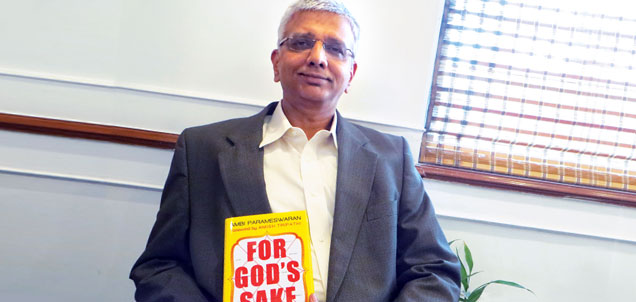
    In the world of advertising and brand management in India, Melarkode Ganesan Parameswaran needs no introduction. Or perhaps he does. For, the engineer from IIT Madras, MBA from IIM Kolkata and PhD from Mumbai University has been known in the industry as MG Parameswaran, and to friends and colleagues: Ambi. An author of six books – all serious brand- or case study-based, Mr Parameswaran completed his doctoral thesis in 2012 and did what many degree-holders aspire to do, but never get down to: convert the thesis into a bestselling book.


    With For God’s Sake, Mr Parameswaran, now Advisor at DraftFCB Ulka (until recently CEO and Executive Director with the agency), has managed to strike a heady mix of an easy-to-read tome mixed with some heavy duty business fundamentals.


    After the book’s launch in Mumbai on Tuesday, Mr Parameswaran took time off to take a few questions.


    Your book is based on your PhD thesis. While it’s critical for one to choose a topic that’s unique, surely religion was, to use an oft-used phrase in your business, much out-of-the-box. How and why religion or religiosity, as you call it?

    When you select a topic for PhD, you have to pick topics that are relatively new. I wanted to work on brands and castes, whether different brands have a caste typology. That was too out of whack, so my guide asked me to look at something on which there was at least some work happening in the academic world outside. I started looking again and found that religiosity was an area which was interesting and no real work had happened in India.


    India has become an increasingly intolerant nation. It’s tough questioning or raising issues about religious customs and traditions. Did that impact your discourse?

    Well when I started out I was wondering if Indian consumers would be open to talking about religious practices and beliefs. But the qualitative phase gave me enough confidence that we as Indians are quite open to talking about religion. In the US the religion question is not even asked in their Census. In India we are now digging even towards getting caste names. So it was not a problem getting consumers to talk.


    And was it easy rejigging your PhD thesis into a book?

    Well, it was a bit of a task. In fact except for the broad theoretical strokes I had to pretty much write afresh for the book. Fortunately, I had collected enough material for my PhD, so I had to go back to all those articles, books and monographs and look at them from a lay person and not an academic researcher. While the PhD took five years, writing the book took around five months, extra.


    Your book cover says ‘An adman on the business of religion’? While business could be defined variously, do you find that religion has become a business?

    Religion is very much woven into a lot of businesses in India. That was the theme of the book. I have intentionally stayed away from the hot topic of religion as business. There are some books that deal with that topic. Not mine.


    In the book you write about how Ramayana and Mahabharata on Doordarshan were turning points for the boom in religiosity, but there were also films like ‘Jai Santoshi Maa’ and Shirdi Sai Baba that propelled a great following for both gods. How much of the current surge in religious following would you attribute to the media? And print too, with coverage to film folk walking to Siddhivinayak…

    I think religion got into centrestage with Ramayana and DD. It has occupied centrestage ever since. In fact the first public sector enterprise to be named after a religious icon was Maruti Udyog. I feel as we Indians are experiencing a bit of prosperity, we are using our religious practices to buy an insurance for its longevity. The same is true with people walking to SiddhiVinayak or to Sabari Mala.


    As an adman who has been working with growing brands and also watching successes and failures, is there a great ‘brand success story’ of any religion or religious movement in the last decade or two?

    Not that I can think of. The last of the big religions belong to the Abrahamic era. However among the younger religions, Sikhism is named as the biggest by a recent Time survey.


    Akshay Trittiya is one festival that’s come up from nowhere? Valentine’s Day has become a ‘shubh muhurat’ for weddings. Do you see opportunities for many more such since marketers would want to cash in on occasions to fuel consumption/purchase?

    Absolutely. We will see the rise of more such festivals around us. In a sense, these festivals are legitimising consumption and making it perfectly okay. So more occasions the better, as a marketing man would say.


    Any religious god, custom, belief you – as an adman – think is pretty cool from a branding point of view?

    The rise of Shiva is cool. The way Hanuman and Ganesh got reincarnated as Bal Hanuman and Bal Ganesh are both great ideas.


    A personal question: are you religious and superstitious yourself?

    I am religious in the sense I do believe there is a GOD or a collective consciousness that keeps us going. I don’t think I am very superstitious at all. It is possible to be religious and not superstitious.


    And did you acquire any belief or superstition while researching the thesis/book?

    Not at all. But I lost faith in the quick fix Vaastu consultants.


    Lastly: while you’ve been known as Ambi, on paper and officially it’s always been M G Parmeswaran. But now it’s Ambi Parmeswaran? Numerological reasons? Or just better branding in a B2C world?

    Given the fact that “For God’s Sake” is aimed at the casual reader, my publisher wanted me to use a more reader friendly name, hence Ambi Parameswaran. My academic publishing continues happens under my formal name, M G Parameswaran.


    BOOK EXCERPT
    The Mystery of the Missing Bindi


    It was September 1994. Our agency DraftFCBUlka (then Ulka Advertising) had just completed a new advertising film for the soap brand Santoor. The new creative was set in an aerobics studio and featured the Santoor woman exercising to some lively music. The ad, which was being shot by the veteran ad film director PrahladKakkar, was going to be a breakthrough. All of us in the agency believed that it would work in the marketplace to resurrect the brand that had hit a plateau after seeing great growth for a few years. We had in fact bet the agency’s reputation on this ad with our long-term client Wipro. But I was very worried. I suddenly remembered that right through the film the Santoor woman was not shown sporting a bindi. In the story, she was a mother and her kid enters the scene with a loud ‘mummy’ squeal much to the surprise of onlookers. How could we have missed out on the bindi, I wondered. First thing next morning I called our film manager Monia Pinto and asked her if we could ‘rotoscope’ a bindi on the model PriyaKakkar’s forehead (rotoscopy is a technique whereby you insert a digital image into a real-life moving picture; it was relatively new and very expensive in the mid 1990s; the Hollywood film Who Framed Roger Rabbit had used this to great effect). Monia, the liberal that she is, pooh-poohed my worry. As did many of my other colleagues. The film was presented to the client, aired on television and became a landmark film in the history of brand Santoor. The Santoor woman, sans bindi, went on to play cricket, teach hula hoop to her kid and even made film stars dance to her tune over the next decade, helping make Santoor the third largest soap brand in the country. But the bindi thought stayed with me. The bindi is a part of Hindu culture and even has a strong tantric underpinning. Both men and women wear the bindi or bindu, which means drop or globule. It is supposed to be the sacred symbol of the universe, depicted as a dot or the zero. Applied between the eyebrows, it is purported to be the position of the sixth chakra, a place which is also the exit point of kundalini energy. Tantric literature abounds with explanations on the red bindu (symbolizing fire/blood) and white bindu (symbolizing semen). Married women also wear red vermilion or sindoor in the parting of their hair, which is first applied there by their husband on their wedding day, during the sindoordana ceremony. Only married women are allowed to wear the sindoor, according to Hindu custom. Interestingly, though Islam does not have a bindi or sindoor custom, most Muslim women in Bangladesh sport a bindi. Even in Pakistan, Muslim women at times wear designer bindis, quite ignoring the Hindu symbolism of the bindi.


    Not too many people know all this socio-cultural background to the humble bindi. And the Indian advertising industry is populated by young men and women from upper-middle-class families. Most of them are what are called EMTs (or English Medium Types). The scenario is changing rapidly now with an increasing number of HMTs (Hindi Medium Types) joining the tribe, but the EMT orientation remains.These EMTs were told, in the early days of their training, to ensure that advertising did not hurt anyone’s sentiment, least of all the Indian woman’s. So all ads that showed married women had to show them with a mangalsutra and a bindi! (Professor Julien Cayla of the University of New South Wales discovered that Indian Muslim women, whom she has studied extensively, were almost immune to this religious symbolism in most Indian television advertising.) My curiosity was piqued and I wanted to see if Indian advertising had evolved from the ‘bindi–mangalsutra’ trap. Accessing advertising archive services, my colleagues and I managed to extract around a hundred television commercials for packaged consumer goods (soaps, toothpastes, shampoos, tea, etc.) from 1987, 1997 and 2007. We wanted to see whether the portrayal of Indian women had changed in the three decades under study. Using content analysis techniques, we analysed the ads across several dimensions such as role portrayed by women (spouse, mother, working woman, celebrity) and occupation and setting (home, workplace, shopping, etc.). In addition to these specific well documented international metrics, we also added a few of our own Indian metrics. These were the dress worn by the woman (sari, other Indian apparel, western apparel) and the presence or absence of the bindi and other religious symbols (mangalsutra).


    From almost 75 per cent of women in ads in 1997 sporting a bindi, it was down to less than 30 per cent in 2007. (The next time you watch television, do check if you can spot an ad that shows a woman sporting a sari, a mangalsutra and a bindi. And reflect if these symbols trigger something in your mind. What do you think is the woman’s education level? What social class do you think she belongs to? What is her age? What would her outlook to innovative products and services be? What kind of mother would she be? As a wife, what would her big worries be?) We then turned our gaze towards print advertising. When Femina celebrated its fiftieth birthday a few years ago, we took the opportunity to revisit our hypothesis of the missing bindi. Our researchers spent several days at the Femina archives pulling out ads that portrayed women. We pulled out ten ads per year in a random but systematic process and in the end got to look at almost 500 ads that featured a picture of a woman over the five-decade period. These 500 ads were subjected to the same analysis as the television ads. We found that as against 3 per cent of ads portraying working women in the 1960s, the number had increased to 16 per cent in the new millennium. Once again, the sari and bindi stood out in our analysis. While 55 per cent of women shown in the ads from the 1960s were draped in a sari, the number was down to 9 per cent five decades later. What about the bindi? The dot had almost vanished-from 45 per cent to 5 per cent in the same period.


    Excerpted from ‘For God’s Sake’ by Ambi Parameswaran.

    Published with the permission of the author

    Portfolio Penguin,

    Pages 258, Rs 499 (hardback)


  • Changing talent scene in media agencies: Gaurav Hirey, Chief Talent Officer, GroupM


    An alert: this is a long, long interview. Possibly as long as the ones of business heads of huge broadcast networks. But, then, the hat that Gaurav Hirey wears is that of Chief Talent Officer South Asia. And as the media services conglomerate of the WPP group in India braces itself for the new digital order, Hirey has his life (read KRAs) cut out for him. Part of GroupM since 2008 and with a few stints in media and one in outsourcing, Hirey is based in the Mumbai headquarters of GroupM South Asia. He returned in December after a stint in Singapore as Group HR Director – APAC at GroupM.


    Excerpts from an interview over lunch and Diet Coke:


    So how has been the return for you so far?

    It has been both interesting and exciting. Like I keep telling everyone, it is homeground so obviously the day you walk in you are supposed to know it all and I have come back with a very different perspective, a much better one.


    Apart from some obvious developments, what’s the one thing you would say has changed in the last two years since you were away?

    I think from a scale perspective we have exploded more. We now have a diverse offering; we have a diverse talent pool now within GroupM. I see new types of people from technology, mobile etc joining us and I think the whole challenge is now much more than what it was maybe two years ago when I was here.


    Has it changed significantly? What would it be in percentage terms?

    From a diverse talent pool, I think we have changed remarkably. Close to 50-60 per cent of our pool is now diverse. So it’s not just media planning and buying… we have got people who do activations, we have got people who understand technology, we have people who understand brands and marketing much more, we have content specialists. The whole spread is remarkable.


    Is this happening across the GroupM network or only in India?

    I think it’s happening across the Group M network simply because of the way the industry is shaping up, but the pace at which it is happening in India is definitely faster than others as it’s become important for us reinvent and do new things and this market is doing it just right. We just seem to be making the right moves.


    How would you compare India’s performance compared to Singapore, Korea and other South East Asian markets?

    I think the pace is very high; it’s much faster, we are much more agile and in terms of opportunities there is a plethora of opportunities…


    Here in India?

    Yes.


    Would you say the same about India when compared to markets like China and Malaysia?

    China again is very similar to India and that is something that has stuck with me. I remember when I landed in China the first thing that I said was ‘Oh my God, this place looks so much like home’. The same pace, the same activity. The only difference being that the Chinese traditionally are a bit quieter whereas Indians have a tendency to speak and express ourselves much more clearly. Otherwise from a market perspective both are very alike.


    If you were to analyse your annual adspend reports that come out every year, what you are saying does not reflect very well through the numbers that have been released?

    We may be behind in adspends but we seem to be having a very healthy business model here as compared to other countries. India is ranked at No 2 or 3 most of the time in APAC in terms of business and the numbers so to speak, so it’s one of our critical markets. In fact China, India and Australia are considered as the most critical markets within APAC…


    Yes, the forecast indicates that by 2017-18 India will be among the top 10 markets in the world. But going back to comparisons between South East Asia and India, how do you compare the talent there to the people over here?

    I think one great thing that I have found outside India is the way they package things, the way they sell, the way they tell a story…and they really do a good job. So whether it’s in Singapore, China, Australia or the UK, the whole thing is phenomenally far better than what we do. What we do well is in the area of content, data; the kind of insights that we have and the kind of skills that we have today. Today you will find Indians everywhere; within APAC and also the GroupM network, I don’t think there is any country where you will not have an Indian representation. There is some Indian or the other in those markets as well.


    We know India has what it takes to deliver results in the digital domain but is it the same when it comes to their capabilities in sales and other functions in the organization?

    I see a lot of Indians in the role of client leaders…so they are actually facing clients and handling business development aspects of the trade. And it’s not just that, I do think that once somebody gets exposed to international experience one understands that this is one area that they need to be working on. So I do see a lot of Indians occupying frontlines roles.


    GroupM is possibly the only media agency network which has seen people moving on from India to occupy South Asian and other global roles. This is not observed as much across other networks. Do you think this is an advantage for the exposure that you gain and for the business on a whole?

    Absolutely, in fact I remember telling Vikram Sakhuja that if there is something that we should do is try and get our people to spend a year or two outside India and then get them back. This will give them a very different perspective. There are so many learnings, there is such a diverse group of people there…you have people from the UK, the Americans, Australians, Asians, Koreans… everyone is there and when you are working in that environment the way you work, the way you manage people, the way you communicate…


    Is it part of your plan then to have some kind of exchange programme to ensure a certain number of people go out and experience outside work culture?

    Talent mobility is one of our important focus areas and under that a lot of our agencies are preparing initiatives which will help people within the agencies to move to other countries depending on the skillsets that they have and the rules prevailing over there. I see this getting more and more formalized in the coming years. So if you are asking whether we have anything formal at this point, it is no. Whether it happens, yes, it does happen. India is probably one of the biggest exporters of talents including for GroupM India. What we are also realizing is that the new kind or type of people joining us now, they also seek international exposure…so if we do not give them the opportunities, they will find it someplace else. So it’s better that we do it.


    One aspect that a lot of publications or TV channels bring up is that the exposure by media agencies to affairs in rural India is not as widescale as it ought to be. What’s your emphasis on exposing your team to the countryside or middle India so that they can make more informed business decisions?

    In fact these are the markets where our focus areas are centered around. We are focusing on the B and C cities where we have got special initiatives; we have a team focusing on the growth that would come from these areas. We believe that the growth is now going to come from B and C cities. So we have already started an initiative which is targeted at getting people down and on the ground in such places. We already have units like our activations unit which already operates in B and c cities…then there is also the rural marketing unit which is functional there.


    Also, our focus this year is to open offices in B and C cities. We have already got satellite offices in areas like Trichur and would be launching in Ahmedabad very soon. So we see growth coming from B and C cities and our focus is there. We don’t have formal modules to expose people to those cities as such but I see next year being more about introducing them to what’s really happening in middle India and making them more aware so that they are able to service clients better. Even if you look at our client spends, a lot of it is coming from B and C cities. So it’s an area of focus and it’s also something that formally I think we need to start getting people to be more aware of.


    What are the challenges that typically give Gaurav Hirey sleepless nights?

    That is pretty easy at this point. What’s really happening is that the youngsters of today are not as aware of the industry as they should be…they are not aware of the opportunities of this industry and even those who join us… in fact today, we are facing a situation where 40-50 per cent of the young guys who join us, leave us. When I look at at the next 5-6 years, what gives me sleepless nights is thinking about who will I have with me; on whose shoulders the future of this organization would be built because if these young guys won’t join and stay with us and grow with us, then the organization of tomorrow is going to be quite handicapped.


    One of the reasons could be that they are not being paid enough…

    That’s not true.


    How much is the percentage of new hires in your company? Where do you typically hire new talent from?

    They come from all across. We have got a huge chunk of people say about 20-25 per cent who actually leave us and join us back. Then we have got another 20-25 per cent who are freshers…people who are fresh into the industry, just out of colleges etc. Currently, we have started hiring people from IIMs, ISB, MDI … We have a leadership training programme that we have introduced where we actually go to campuses and hire people from there.


    Typically how many of them come from IIM and ISB?

    This year we are looking at hiring about 14-16 people from that group. We are also looking at hiring another 30-40 from MBA institutes. So overall, a batch of about 60.


    Do you hire about 30-40 people from the top 10 MBA institutes?

    Not necessarily. We actually go to those places where we have had great experiences. So it could be from a college in Coimbatore where we keep on visiting or the SIBM, SIMC in Pune…it doesn’t have to be only the top institutes.


    Many clients aren’t too happy about the talent in media agencies vis-à-vis their own.

    So that is why we have introduced the Leadership Training scheme. What we are trying to do is to bridge that gap too. We can understand that. There are some clients to look at that and then there are many clients of ours who appreciate the kind of quality we are bringing to the table and they don’t really look at the pedigree at that point. A lot of our top clients today have client leaders who are not necessarily from IIMs or ISBs. They are extremely satisfied with the kind of services they are getting but yes, we hear this often and that’s why we said that even from a future perspective, we need to look at improving the quality of fresh talent that is coming. So we have just introduced the Leadership Training scheme about a year ago and this is the second year that we will be hiring from the ISBs and IIMs and we are hoping that at one point we will be able to cover that gap completely.


    In percentage terms, what’s your staff cost vis-à-vis your various other costs?

    Sorry, I can’t say that.


    But is it significant?

    Yes, it is.


    Say more than 50 per cent?

    Like typical service companies, yes.


    But media agencies are already working under tremendous pressure in terms of earnings and one reason that agencies often give for not hiring enough talent from the premium B-schools is because they hardly make money. Do you think there will be pressure now on the bottomline giving the hiring from the ISBs, IIMs etc?

    No. This is a conscious call, so we obviously have budgeted for this and we know what we are getting into. So when it was only traditional media I would totally buy this point but today the way the landscape has changed, we definitely think this talent is important and critical for the future of the organization. Secondly, with the new core that is coming in which is digital media, activation, data analytics etc these are not bound by the old rules of engagement. These are all project-based work; more interesting, there is more variety in the type of work too. This is also the kind of work that the new talent likes. So we are able to train and engage these young guys and I don’t think it will cause pressure on the bottomline eventually.


    If we were to assess talent across the top tier in agencies some of the names like CVL Srinivasan or Vikram Sakhuja or Shashi Sinha  are alumni from BITS Pillani, the IITs, IIM etc. That layer is all there. But somewhere after that, I think, media agencies have stopped hiring from the premium schools. Why?

    I think it was a factor of the numbers but today we see it as a combination. It is also about clients saying that we need to get different or new talent into the industry. We also feel the same way and it is not that we are hiring all 200 or 400 people every year from the IIMs; we are just hiring 10, 14 or 15. So that won’t put much pressure on the bottomline


    Is that number good enough given the fact that you have such a huge client base?

    At this moment, I think it’s a good start. I see this number increasing, I definitely see these people growing in numbers across the organization and not just at the entry level. So even when today we are hiring, we are hiring people from the client side as well. And they are people with pedigree.


    Earlier a typical media agency comprised media buying, selling and business development folk. Now, with agencies going full-service and digital taking centrestage, there are people working on activations, you have creative and art directors. Does this impact the equilibrium within the organization?

    Not in a big way, but it does because then we have to also make our people sensitive about the changing landscape. So the change we have undergone is about flexibility at the workplace. I think the next change is about bringing sensitivity to the fact that there is diverse talent now and that the way you manage this talent is going to be different from how we have traditionally managed it. So a creative guy, he will have his moment of inspiration and you’ve got to give him/her that space, give the flexibility, give him/her the environment where he/she can think that way and give you something creative rather than tell him, ok, you be here at 9.30am and you have to work till 5.30pm. So I think we moved away from that and we understand that we need to be flexible. Like you said equilibrium, it affects a bit because there are different sets of people and some of our managers have never managed such kind of people. So we are working on programmes which will sensitize them to the fact that these people need to be managed a bit different than how they were earlier managed.


    From the talent point of view, what is it that will make people stay on in an organization like a media agency?

    I think it is the experience that we provide. If a person has a great experience working with us and learning and growing with us, then the person will stay back. I don’t think anybody is going to join us and retire here. We are now borrowers of talent. So if there is good talent out there, you know that you can have that talent but it’s not going to be a permanent thing. Those days have gone when somebody would join us and just grow old with the organization. You just borrow talent for some time and after that you just see where it goes.


    At GroupM we have five different agencies, each with its own unique identity…


    Do you have separate HR functions in the agencies?

    No. So what we are working towards is getting an HR business partner embedded in every agency. Right now we have one in Mediacom, we have one for our digital businesses, MindShare had one till last year and we are now in the process of hiring one more now. Maxus is looking at appointing one more business partner. The idea of having a HR business partner within agencies is that they will drive the agency agenda and GroupM will anchor them.