Category: INTERVIEWS

  • Size & Price no longer differentiating factors: Anita Nayyar


    Media agency network Havas Media has completed 7 years in India. Ranked as the fastest growing agency in 2012 by global media researchers RECMA, Havas Media grew at 43 per cent in a market which saw growth of 15 per cent.


    Post a global rebrand earlier this year, Havas Media has bagged several new businesses. Its new wins include Voltas, Aspiring Minds, Shaadi.com, Wonder Cement, Neo Milk Products, Career Builder, Halonix, Simmtronics, Mobis, Bloomberg TV India, LG Electronics and more recently Emirates.


    In the midst of a hectic schedule, Anita Nayyar, Chief Executive Officer, Havas Media Group in India and South Asia took time to answer our questions. She’s been particularly candid in her responses and just for that, we would say: Three cheers!


    Seven years here in India… if you have to sum it up for us in one sentence, what would it be?

    It’s been a challenging journey.


    Did it help that you were growing at the international level too at the same time?

    Growth at International levels always has a positive rub-off locally especially if you are part of global wins. Post our rebranding earlier this year , there has been a higher degree of integration and we now follow a much simpler, integrated and meaningful structure to customize solutions. The  systems, processes, knowledge and tools shared across the globe bring a lot of synergy across the network. Sharing and exchange of knowledge and ideas helps adapt the same to different markets. More so, there is an exchange of business ideas, for example at our internal Asia Pacific Summit some of India’s strategies towards new business was a talking point of discussion.


    India is very well-leveraged on Indian brands and businesses or the India divisions of international brands. This 2013 has seen Voltas India, Aspiring Minds, Amway-Beauty,  Shaadi.com, Yebhi.com, Career Builder, Simmtronics, Neo Milk Products, Bloomberg TV India, etc.


    Havas Media has had an interesting last year with many new client acquisitions. So what worked for you last year which didn’t earlier?

    We have had more crest years than trough ones. 2006 when we started and 2010 were comparatively low in compitches and also as graded by RECMA. We strongly believe that our tools and processes are our USP. We are the only agency who differentiates itself by working on brands to make them more meaningful. We have been singularly focused and aggressive towards new client acquisitions. Unlike most agencies who believe in picking up clients of a certain size we have always looked at future potential of a brand, partnered them and grown with them. All this coupled with our passion and challenger mentality has worked well for us.


    Since buying constitutes much of the business, do clients find the negotiation power of the networks bigger than a relatively smaller player like yours? Or is that not an issue?

    Size and Price are no longer the differentiating factors. It is a sum total of a lot of factors more importantly about ideas and innovations. We have been successfully able to demonstrate our buying power. It is no longer about big volumes. It is about being Smart and buying smart.


    Havas Media is not much in the awards circuit. Is it by design, or is it quality of work or is it just that you don’t find winning awards worthwhile enough?

    Priorities are different at different stages in an agency’s lifecycle like that of any brand. While setting up, the focus is more on gaining new business, servicing and retaining them. So the award application process does take a backseat. Winning awards certainly adds to market perception and we have seen enough of that happening. It is not as though we have not submitted good quality award entries as our work and product is what we take immense pride in but we’ve for some reason been very unlucky and won only some. Everyone likes winning but it’s not always the best athlete who wins, it is also following the rules and getting it just right and there are far too many factors that influence the process. In fact in 2013 we were on the shortlist for the (Excellence in Radio) ERA Awards and won a Bronze and Special Award at the DMA ECHO Awards India 2013.


    We take pride in our work and client delivery. We have delighted clients and the testimony lies in retaining them over years. That to us is the biggest award.


    How much of your business is now centred around digital?

    Around 15-20% but you will see this figure grow.


    You were among the early entrants in mobile. How’s that doing?

    Operations with Mobext in India started about mid 2011 as a pilot outfit. This quarter on you will see us more aggressive on mobile with more resources allocated. Clearly we see it is a high growth area, hugely scalable and Mobext is armored with technologies for emerging and developed mobile markets which we are looking at leveraging for the Indian end-customer.


    Havas has been active on sports internationally, but in India that’s not done too well. Why.

    As you are aware India has limited sports to cricket with little focus on the other ones like soccer, tennis, hockey etc. Even the national game does not find too many takers. The gestation period for sports led solutions is very long and low on priority with clients. Unless of course it is cricket. This limits the growth of customized sport solutions and hence we’ve been going slow on the same. It is best to concentrate on what converts. However, we are doing our own bit in the area of sports hoping to take it to a better level.


    Below The Line is another area that is growing in demand as traditional media gets expensive. How active are you in that space and going forward to see much grow?

    BTL even for mega-brands today is becoming increasingly important more so with its direct speak mechanism. Havas Media Active our OOH division takes care of BTL. We are certainly looking at scaling it up.


    And lastly: Seven years hence, what do you see Havas Media doing and growing to?

    Everyone talks of integrated and digital but India needs a lot more stepping on the pedal.


    Advertising in its old format does not exist. The future is to those who will unlearn and re-learn and this means domain knowledge, its application, processes for execution, collaboration and attitudinal and mind-set shifts.


    We see Havas Media Group in India still relatively smaller, more agile, completely integrated with digital at core – as brand architects providing meaningful experiences – some award winning, some effective for our clients and their customers, scoring No.1 on client delight.


    Our focus is on adding incremental value to clients, training, investment in digital and looking at alternate revenue streams.


  • ISA Global CEO conf to help face VUCA world: Hemant Bakshi


    It promises to be the mother-of-all media and marketing conferences. The Indian Society of Advertisers (ISA), the apex body of advertisers in the country, is hosting a global CEO conference on October 30, 2013 at the Leela in Mumbai. The theme is ‘Navigating a VUCA World’ and a galaxy of speakers including Unilever’s global CEO Paul Polman are scheduled to speak. Mr Polman will be in conversation with Bajaj Auto chairman Rahul Bajaj.


    Other speakers at the event will include R Gopalakrishnan, Director, Tata Sons; Manu Anand, President – India & South Asia, Cadbury India; Marten Pieters, CEO, Vodafone India; and Ravi Kant, Vice Chairman and Former Managing Director, Tata Motors, Pawan Munjal, MD & CEO, Hero Motocorp, Shantanu Khosla, MD, Procter & Gamble India and Prabha Parameswaran, MD, Colgate-Palmolive amongst many others. One of the goals of the conference is to find out how organizational processes and practices need to be recast to deliver to this new VUCA (Volatile, Uncertain, Complex and Ambiguous) world.


    Hemant Bakshi, Executive Director, Home & Personal Care, Hindustan Unilever and Chairman, Indian Society of Advertisers spoke on the theme of the conference and his expectations.


    The ISA CEO-fest


    Over 300 delegates are expected to attend the conference, informed Paulomi Dhawan, Chairperson, Events Committee and Treasurer, ISA. For Ms Dhawan, the conference is a culmination of two months of hectic activity. And very little else.


    Asking global CEOs to come in and speak comes with its share of requirements. Explain to each of them (and possibly their office) what the entire is thing all about and the topic chosen for them, etc etc. But now that the curating is done, and the key sponsor is in the form of Star India, the emphasis for Ms Dhawan is to ensure it all goes off smoothly.


    The day will begin with a talk on ‘Leadership and Managing Human Capital in Turbulent Times’. The next session is themed ‘Reigniting Growth in an Economic Slowdown’ followed by a panel discussion On ‘Cut Costs, Not Corners: Smart Marketing for Turbulent Times’moderated By Sunil Kataria, COO, Sales, Marketing and SAARC, Godrej Consumer Products Limited. The panelists include Himanshu Kapania, COO, Idea Cellular; Sanjay Behl, CEO, Raymond; Kirthiga Reddy, Director, Online Operations002C and Head, Facebook India; KBS Anand, MD & CEO, Asian Paints; Shantanu Khosla, MD, Procter & Gamble India and Prabha Parameswaran – MD, Colgate-Palmolive.


    Post-lunch, sessions on ‘Why Businesses Must Factor in Economic Cycles’ by Ravi Kant, Vice Chairman, Tata Motors with Siddharth Mukherjee, Director - Chocolate Category and Media, Cadbury India Limited.


    There on, a session on ‘Not every Consumer has Sealed her Wallet: Finding New Pockets of Growth’ will be conducted by Marten Pieters, Managing Director and CEO, Vodafone India. The session will be chaired b Narendra Ambwani, Director, Agro Tech Foods Limited.


    Later, Pawan Munjal, MD & CEO, Hero Motocorp will speak on ‘Taking Risks in a Volatile World’. The last session of the day will be on’How Responsible Business Models Can Help in VUCA Times’ by keynote speaker Paul Polman, Global CEO, Unilever. This will be followed by a conversation that Rahul Bajaj, Chairman, Bajaj Auto will have with Mr Polman.


    The inaugural Global CEO conference has an impressive line-up of speakers. What does the ISA hope to achieve from the conference and the theme chosen?

    The ISA has been around for a long time to ensure that the interest of advertisers – large and small – has been taken care of. For us, the mandate of this conference is two-fold. As businesses and the economy face a slowdown, we want to ensure that advertisers can benefit from advice to make sure that our business is stable and strong. In difficult times, you question every line and component in your business and marketing investments make a large component of this whole. How to get the best return on these investments is the second area we will be focusing on. Therefore we thought that we need to get the best of global CEOs in one place to share their experience and wisdom.


    VUCA was a term coined in the 1990s by the United States military. Given that we live in volatile, uncertain, complex and ambiguous times, does the current market scenario require a different kind of leadership?

    Yes, the term has trickled into the world of business and it tells you that in a world which is VUCA your long-term visions and business goals need to be clear but don’t lock yourself into a rigid plan to achieve that destination. If you have a broad understanding of your past and you know where you’re headed then you will be able to be much more agile, consumer-centric and evolve your strategy as you go along. Flexibility and nimbleness are crucial because the strategies that may have worked in the past when change was certain and slow, may not work in the future.


    VUCA also talks about the need for awareness and responsible leadership. Apart from addressing marketing needs and optimizing ROI, how will the theme be made applicable for the advertiser ecosystem?

    In difficult times like these, we can no longer be in an ivory tower and focus on building brand equity and creating great advertising while our consumers are suffering and the business is struggling. It is important that as marketers, we play a role that goes beyond just marketing. Next, it is also important that in such an environment, marketing is done responsibly. The resources that our planet has are getting scarce and if we keep doing things like we have in the past, sustainability will become a serious issue for consumers. We are going through a business cycle of slowdown right now, but what we need to do in this difficult time is to prepare for the future and it’s important to get a much more holistic view of marketing.


    Media vehicles worry that the fallout of a VUCA world is a cutback on spends and pushing down prices. Is offering discounts and giving more value for money a key fallout of such a market scenario?

    That would be a myopic and conventional view of looking at the current scenario. We have observed that brands that build equity during such times reap benefits once the economy starts growing again. If we all start cutting price and promotions, it may benefit in the short run but not in the long term. At the conference, you will see a lot of our leaders talk about how you can cut costs, take risks and reignite growth as well as get consumers to get better value of what’s going on. The conference hopes to highlight alternative strategies that can be used in this period.


  • Time for full-service as Publicis buys Beehive?


    By Pradyuman Maheshwari and Fatema Rajkotwala


    The Publicis Groupe announced the acquisition of Mumbai-based Beehive Communications, a 10-year-old full-service independent integrated marketing and communications agency. Beehive will be absorbed in the Paris-based advertising conglomerate’s Publicis Worldwide agency network and will operate as a unit under the rebranded name, Publicis Beehive.


    Since mid-2012, this marks the Publicis Groupe’s seventh acquisition of an Indian company and Publicis Worldwide’s third. The first two being brand marketing consulting firm MarketGate and digital agency, iStrat.


    Beehive Communications has kept a low profile in the industry but been operational since a decade. With in Mumbai, Delhi and Bengaluru and a team of 130-plus, Beehive has its strengths in full-fledged teams for creative and strategy, a strong media agency offering, a full-circle digital solutions basket and research and BTL teams across 20 states in India. Its client portfolio has its key strengths in verticals such as tourism, education and real estate with brands such as Tourism Malaysia, Korea Tourism Organisation, Maharashtra Tourism, Gujarat Tourism, Indiabulls, Rolta, Palladium hotel group, Chambor, MT Educare and more. Almost 40 percent of the business comes from the media planning and buying activity and it has many clients which make use of its integrated functions.


    Partha Sinha

    While making the announcement in Mumbai, Nakul Chopra, CEO, South Asia, Publicis Worldwide, said this was part of the agency’s growth journey in the last year.  Clients and business have grown and the agency now has in its fold, the threesome of Bobby Pawar, Partha Sinha and Ambika Srivastava. From the Beehive side, the current leadership team will continue to lead the agency under the direction of Founder and CEO Sanjit Shastri who will now report to Mr Chopra.


    Bobby Pawar

    Explaining the thought behind the move, Mr Chopra said, “We have a broad strategy of what we want to achieve. We are clear that we want to be among the Top 3 in the country in terms of size, reputation and recognition.” While not revealing the money invested in the acquisition, Mr Chopra added: “Publicis is a latecomer to this market compared to others who have a huge lead due to historical circumstance. Catching up that scale is an intrinsic part of our strategy. Acquisitions are not born out of need but more when you have an opportunity to fast track your strategic direction.”


    Ambika Srivastava

    When asked what would be the primary advantage for Beehive post-acquisition by Publicis, Mr Shastri said: “The excuse that we are not aligned therefore we can’t grow fast, doesn’t exist anymore.” On why his agency has been keeping a low profile thus far, Mr Shastri said: “In the beginning, when we started winning travel and retail clients, we were terrified that bigger agencies will come and swat us like flies and pick up the business and go. That’s when we decided to keep a low profile.”


    Meanwhile, the move to have a full-service unit is sure to lead to some discussions in the trade given that media planning and buying and creative now work separately. Talking about the benefits of an integrated entity, Mr Chopra said: “There is considerable benefit that can be provided to the client with creative and media capability residing within the same organisation. This is especially true in the digital space where the divide is getting blurred. Media agencies do creative work and creative agencies do media work. This is a future-facing decision according to what we can see happening in mature markets. In the advice that we give to clients as a creative agency, we welcome the fact that media and access to media data are within the same agency. There may be merit in looking at them as separate functions but the end-consumer of advertising is concerned he/she experiences the media-creative strategy and execution all at one time. It will helps immensely in the quality that we provide by bringing the two together. The client is beginning to think one-stop shop again.” Clearly, we haven’t heard the last on this one.


    It’s been happy days for Nakul Chopra, CEO, South Asia, Publicis Worldwide. His agency is finally looking up with the acquisitions and the hires. Beehive founder-CEO Sanjit Shastri was with Mr Chopra when the interview was been done…


    You are a large creative agency. Was there need to acquire another agency?

    I don’t think need is what defines this. It is not that when you need an acquisition you go shopping for one – what are the chances you’ll find one with the right talent, the meeting of minds, financial agreements – it doesn’t work that way. We have a broad strategy of what we want to achieve. Publicis is a latecomer to this market compared to others who have a huge lead due to historical circumstance. Catching up that scale is an intrinsic part of our strategy. Widening of scale may have to be done within the organization. Acquisitions in that sense are not born out of need but more when you have an opportunity to fast-track your strategic direction.


    What kind of strategic direction did you see with this acquisition? For instance, in the case of MarketGate and iStrat the service specialisation was clear. This is a full service agency and a fair number of these services you provide too. You have a digital resource that may not do social media or some other services done by Beehive and you have to supervise media within the group too. Hence what was it that made Beehive a strategic move?

    We are clear that we want to be among the top three in terms of size, reputation and recognition. Size can also be a critical factor. If I go out and buy an agency which has more or less the same client profile as I do, then an acquisition would be pointless. Here, there have a width of service that I currently don’t have. It can be argued that we already have two media giants. Of the seven acquisitions that the group has made four may have been for digital strengths. Then why acquire one more? It is intrinsic to the holding group’s strategy that individual components of the individual brands, while they cooperate with one another, they also compete. We, Leo Burnett, Saatchi compete fiercely; we would pitch against one another. Some other part of the group having an offering is good to lean on and seek cooperation. It does not mitigate the fact that if I believe that it is essential to the growth of this brand, then I must have it here.


    In terms of the media agency business of Beehive, if a client is willing, would you now look at routing business through this agency as against the other group agencies?

    I am neither here as a spokesperson of the group nor are group media strategies decided by me. As far as I am concerned, there is considerable benefit that can be provided to the client with creative and media capability residing within the same organisation. This is especially true in the digital space where the divide is getting blurred. Media agencies do creative work and creative agencies do media work. This is a future-facing decision according to what we can see happening in mature markets. When you can see something in tomorrow and you have an opportunity like this, it makes imminent sense to do it.


    Having seen a time when there were full service agencies to later a branching of more specialized agencies… what is your personal view on what works better?

    In the advice that we give to clients as a creative agency, I welcome the fact that will have media and access to media data now within the same agency. There may be merit in looking at the two as specialized functions but the end-consumer of advertising is concerned he/she experiences the media-creative strategy and execution all at one time. It will help immensely in the quality that we provide by bringing the two together. I suspect as you look in the future, as the analog world gives way to the digital, the divide that we had in the past will get blurred to a large extent.


    For an academic discussion, do you see a time where you see yourself merging with a Starcom or ZenithOptimedia and becoming a large full-service integrated advertising agency?

    I don’t see merging happening in my working lifetime. However, the client is beginning to think one-stop shop again. There is a lot of new territory to be negotiated. Unlike the world of television and print that came about in spurts but had long periods of stability where learning curves were defined and verticals were formed, in the digital space, it’s changing every other day. You can’t say what element is having what impact if you cant look at it in a more holistic way.


    After interesting buys such as MarketGate and digital agencies and now, Beehive as a full service agency, are you looking at any more acquisitions?

    We didn’t sit down one-and-a-half years ago and decide to do three or four acquisitions. That’s not the way we approach it. What we did sit down at the start of last year was to set out a roadmap of where to where we want to take the organization. We are going to be very busy until the end of 2014 in capitalizing the deep and organic changes such as bringing in Bobby and Partha in. We believe this is the period in which we will create the future-facing organization which can genuinely engage with clients. That will take some re engineering within our organization in terms of training, putting in new processes in place etc. There will be a period of digesting all the change.


    Like in the case of healthcare, do you see possibly specialized sub-agencies focused on the verticals that Beehive as their strengths in such as tourism and education?

    In the case of healthcare, we were talking about something that is remarkably different. Here I don’t think vertical expertise will result in separate agencies. I definitely think that as we look at our organization in the future, it will lean into having specialists vertical as teams within the organization. We do currently have knowledge in verticals such as the food space, strength in the beauty and personal care space in Mumbai and now we will have much more knowledge in tourism and retail. But I don’t see us branding and selling it as separate services.


    And have Bobby and Partha settled in?

    I cannot believe how quickly and smoothly it has been. With Partha, the advantage we had is that he has spent five years in the past working closely with me. For Bobby, the word that comes to my mind repeatedly is – remarkable. It has been seamless.


    Did Bobby’s Ford Figo controversy bother you given you have large clients yourself?

    I was very clear much before the actions spewed out of that controversy that I don’t think any individual in the agency or at the client’s side can individually be held responsible. It was a breakdown of process. I am clear that he was not personally involved but as the guy on top of the team he took the blow, which if anything, should be all credit to him.


    Is there a parting line for proactive work at Publicis Worldwide?

    I think I have been quite unfavourably featured in the press for taking a simple stand when I say that I don’t understand certain terms such as ‘proactive work’. I understand only one thing – festivals have rules, most of them being the same. You should have a client. The client should be kept posted. It should be released in the media. I think we are celebrating creativity here. This is not a race; you don’t get money here, you get recognition.

    (Sanjit Shastri leaves the room)


    But there should be substantial release to the media and not just to few select publications for the sake of awards…

    I have asked this question before and I ask it again. A big client wants to put a Diwali ad which will be released in a publication once. He genuinely gives the brief and releases the Diwali ad but because it didn’t perhaps meet the definition of substantial, it does not qualify. Now, take the same example and flip it around to what is called proactive work. Agency turns up and tells the client that they have a great idea for a Diwali ad. Just because the story started that way, do you think it should be disqualified from an award? It’s rather silly. So, I have been very clear on this front.


    Now that Sanjit has left the room, I can ask an impolite question: tell us what is it that attracted you to Beehive

    Other than what I have mentioned, there was nothing that I was looking at such as a client that I wanted. I saw a great fit between what they had, the scale, the chemistry that we developed during our conversations and there was little overlap and no conflicts. So I am adding and growing my exposure to clients and width of services.


    But surely Beehive’s size is…

    You’ll be surprised on what Beehive’s revenues are. It can’t be spoken about, but they are substantial.


    Now there are a fair amount of agencies in Chennai, Coimbatore or the East that are doing a fair amount of good work. Are they now part of your acquisitions radar?

    It would depend on the scale.


    For an agency that’s got a handful of transnational clients, Beehive Communications has been particularly low profile. We started this Q&A with Sanjit Shastri, Founder and CEO, of the agency with the obvious question… “kahaan thhey aaj tak?”


    Beehive has always kept a low profile. Is that by design?

    I am not very good looking and I don’t speak too well so I’d rather concentrate on what I do best which is work hard and servicing our clients. Speaking to media is something that one does when one has to. We kept a low profile for very good reasons. In the beginning, when we started winning travel and retail clients, we were terrified that bigger agencies will come and swat us like flies and pick up the business and go. That’s when we decided that let’s not do PR and press releases and keep a low profile.


    It’s interesting that you say that because you are in a business of keeping people high profile…

    Our job is to keep clients high profile; not ourselves high profile. And that’s the way I like it.


    As an entrepreneur, you have built your agency from 2003 to a fairly large independent middle-scale agency, how does it feel now to have sold your enterprise?

    Prior to being acquired, we would have been in the top one or two independent agencies in terms of revenue. I don’t really see it as a sale because the spirit of entrepreneurship that we had at beehive will continue at Publicis.


    Is it a 100 per cent sale?

    Yes, a 100 per cent sale.


    I agree that the spirit of enterprise will continue but if were among the top three, you could have grown bigger…

    First, we will grow much bigger as part of the Publicis Groupe. Second, there is a debt of gratitude that I personally, and the Board of Directors at Beehive have to the very people who have been with us since ten years. For example, our Creative Head, Group Heads have been with us for 10 and eight years and they want to stay with us for another five years. The opportunity to grow in an international environment is much more than the opportunity to grow in an independent environment. There is only that much that we can do and with this, we can really do.


    In your old structure, did the team have stock options etc?

    No. But we looked after them well which is why they have been with us. Our Head of Media and Creative have been with us since 2003, our Head of Advertising has been with us since the time he joined us in 2007.


    Pardon our ignorance, but in terms of clients, who is your biggest? What according to you is your outstanding work?

    Tourism Malaysia is our biggest client. In my estimate, Malaysia is the largest individual international travel destination for leisure. And that is great victory for us. It is the only client with whom we have been working with for ten years and the contract is for two years more. It’s a 720 degree service where they make you go round twice. We do even food festivals for them; we do promotions in schools, painting contests etc. We have done a lot of work for Total Malls in Bengaluru, MT Educare, Century mattresses.


    Now as part of Publicis, apart from the scale that a multinational brings in, which are the specific areas that you think will see a value add?

    We had a pitch for a cruise company. I think we’ll win that. I just asked Bobby and he came down to our office within minutes and ensured that the creative was what we needed. The rest of the team, including Bobby, Partha, Nakul and Ambika’s knowledge of media is all that you need.


    Where do see your unit headed in terms of growth?

    We grow at around 15-20 per cent each year, which may be difficult this year but it will be maintained. I believe that will have about 180 people with us within the next year and a half. Of these, 30 per cent would be in digital and 30 per cent in the shopper-marketing space.


    How is the shopper-marketing space looking, especially with some international biggies joining the race?

    I believe for shopper-marketing client to be successful in India, it has to have a little bit of the Indian flavor in terms of execution, implementation and experience is it has to work. That’s where margins are and customer satisfaction is. I’m not saying that others won’t work but our focus will be to do this. There is enough space in shopper-marketing for everybody. It’s like an operational strategy where you have to run a kitchen with 1500 people working in it.


    For digital, it has been announced that there will be a synergy between the two company’s departments. How will this pan out?

    We will ask iStrat to carry out a lot of our execution. We will provide digital marketing solution to their clients and together we will provide a lot of execution and marketing solutions.


    How large is your media agency arm? Who are your clients in media?

    It’s fairly large. It brings in about 40-45 per cent of our revenues. We have Bisleri, Tourism Malaysia’s SAWAF region – South Asia, West Asia and Africa, which is about 30 countries.


    Since the acquisition has been announced, if there were one marked difference between yesterday and today at Beehive, what would it be?

    The excuse that we are not aligned therefore we can’t grow fast, doesn’t exist anymore.


  • Ravi Deshpande on the hows and whys of Whyness


    By Pradyuman Maheshwari


    He had made his exit as chairman and and chief creative officer of Contract India in April this year. While his design school in Central Mumbai was doing well, he was working on a project that he said he would tell us in good time.


    Which he has with Whyness Worldwide. Three offices – Mumbai, Paris and Boston plus alliances with Boston-based big data tech firm Findability Sciences and a branding and design company called Seenk from France.


    Said Deshpande, who is designated founder, chairman and CCO of Whyness, in a communiqué: “We are an integrated communications agency for the new world.  We address brand challenges with solutions that combine human insights, creativity, design and technology. In a sense it is an agency that bridges the gap between traditional agencies and digital agencies. We wanted to mix up things and produce surprising results that actually work for brands and companies. Design and Strategy combined with technology, Creativity mixed with Algorithms.” This isn’t Deshpande’s first attempt at being an entrepreneur. In 2001, he quit Contract to start Lemon.


    In a free-wheeling chat, Deshpande goes behind the setting up of Whyness, the name, the integration of tech and design in an ad agency and whether he would look at hooking up with a bigger player.


    Other than Ravi Deshpande, how will Whyness be different from the others?

    Whyness is born with a different genetic structure, and that flows through the way we approach businesses, marketing challenges and storytelling with the help of technology. We have built our team around that ideology. In a sense, Whyness will bridge the gap between traditional agencies and typical digital setups.


    There is an emphasis on Big Data in Whyness. While we have had India perform well in the international Echo awards, is Big Data really big for advertising agencies. And wouldn’t advertisers prefer specialists for that?

    It should be. With so much emphasis on social media, both by advertisers and marketers, it’s perennial to know your audience and have smart data to validate every step. It is a practice in Whyness, we don’t do anything without asking the right questions, and to ask the right questions, you need to have market intelligence. Big Data is just that, and it’s the lack of such practices is why Whyness is born with a specialist Big Data alliance called Findability Sciences.


    Ditto with design… there are a fair number of exclusive design boutiques in the country?

    Technology without design is soulless, and art without the use of new techniques of expression is stale. Both are disciplines that help you solve a marketing problem, and at Whyness we stitch them together in order to create more immersive experiences.


    A lot of agencies now display the ‘integrated’ tag. There are many agencies which are now sporting that tag? Is integrated the same as full-service or is it different?

    Integrated is not necessarily full-service agency. It is really about a seamless structure that combines storytelling, tech, strategy and design.


    Will you be having the strategic planning and media buying/planning functions too as part of ‘Whyness’?

    Strategy and Planning would be an integral part for Whyness. We are exploring digital media planners being part of the ecosystem.


    Any clients on board? Any one moving from Contract?

    We are in conversation with businesses from India and the US.


    Tell us about the funding?

    It is a self-funded venture.


    This isn’t your first experience with entrepreneurship? Any lessons from Lemon that you will not repeat now?

    Well, the biggest learning is that you have to control your own destiny.


    While we all knew that you were looking at setting up anew, the immediate response was: offo, ek aur nayi agency? Is there room for another creative shop?

    Indeed there is a need for an agency such as Whyness. Marketers in India and around the globe, feel the need to integrate disciplines when it comes to communication. But there aren’t many agencies that successfully manage this integration. Most importantly, I don’t know of any such agency in the country that is built around a technology core.


    What’s about the name of ad agencies these days… from agencies named after people (JWT, Ogilvy, R K Swamy) to business-like names (Enterprise, Contract, Rediffusion) to some interesting ones now like Taproot, Scarecrow, Enormous and now Whyness?

    Well, defining a problem sharply, is halfway to finding the right answer. Great work usually happens when we take a problem by its horns, and ask the question ‘Why’.  From the reply, emerge more questions. Which when answered, give rise to more questions. Until finally, we have narrowed down the problem, cornered it, pinned it to the wall and left no room for it to escape. No more room for questions.


    On such a clean slate, the problem lies, clear, waiting to be solved.  This, we believe is the perfect condition to deliver great work. Hence the name ‘Whyness’.


    You’ve just set up so possibly inappropriate to ask this now, but still: at what stage would you look at aligning with a Big ‘Un?

    We are beginning a journey, we have the steam and strength to move ahead comfortably for a long while to come. But if we do meet some partners who value us for our way of thinking, then a friendship may be forged. But till then, we are happily unmarried.


  • Star’s new sporting highs


    Last week, the 21st Century Fox-owned Star India unveiled its grand plan for sports that it has been piecing together for over a year. STAR, India’s premier media and entertainment company, unveiled a new brand for Star Sports across six TV channels — Star Sports 1,2,3,4, HD1 and HD2 and starsports.com. With an investment of over Rs 20,000 crore, the brand highlights the Star network’s ambition to change the face of sports broadcasting in India. Six channels on television and a vibrant website are are alreadyon and a slew of on-ground activities are planned.


    To signal the change to the consumer, Star Sports announced the new network with a campaign that urges India to “Believe”. The campaign, says Gayatri Yadav, Executive Vice President Marketing & Communications, Star India, is based on a core insight that consumers are searching for hero moments in their life. “They want to strive for better and realize their own potential for greatness. Our belief is that everyone can take part and share in greatness. We can all be inspired. The mission is to bring the fan closer to heroes than ever before.Our aim is to inspire the hero in you. “


    India cricket captain M S Dhoni is the first “Believe” ambassador. The campaign is created by Abhijit Awasthi and team of Ogilvy. An innovative media placement across news dailies with jacket ads and moving up of the sports page to the front of the paper was initiatied. News channel Aaj Tak (which was incidentally once headed editorially by Star India CEO Uday Shankar) saw Star Sports coming on before the Aaj Tak brand and anchors wore Star Sports T-shirts. On digital the thought was taken forward with all news becoming sports news on Yahoo and MSN networks. There was a strong engagement with fans on Facebook and the objective of reaching over 15 million views for the new look on Day 1 itself!


    Simultaneously, a TV campaign to promote ‘Star Sports 3’, the 24×7 Hindi Sports channel with Navjot Singh Sidhu extolling the virtues of Hindi was created by McCann.


    “The bold new star icon is to stand for a new era of sport,” adds Ms Yadav. The star is sharp, bold and iconic. It brings strength and authority to the channel. The fiery trail ignites and unites every sport, every player and every fan.”


    Hmmm. We didn’t leave it at just the unveiling of the brand story which the Star group marketing head gave MxMIndia exclusively.

    Presenting a Q&A with Gayatri Yadav, Executive Vice President Marketing & Communications at Star India.


    So for how long have you’ll been working on this refresh?

    We been working on this for about a year now and we’ve spent a lot of time thinking about the brand and what do we want to stand for, its values and what should be the identity of the brand and we were convinced that we needed a brand with a strong purpose and we wanted to build not just a leading sports brand in India which we are already but make it one of the most iconic brands in the world. And then we started work the brand identity being co-created across three continents with the Star Broadcast Design team in India working with Venture 3 in the UK who worked on the brand identity and Capacity who designed the broadcast package.


    The rest of the sports network specially in Asia changed ESPN to Fox Sports. So why the shift in India?

    It was a choice between Fox or Star and we just felt that Star is one of the iconic aspiration of brands in India and it make sense to bring sports under the Star banner. We also think that there’s a lot that Star as a brand can give to sports and there’s a lot that sports can give to Star, so there a mutually positive re-enforcing relationship.


    We considered what is the best brand option whether it should be Fox whether it should be Star whether it should be completely new brand. Star as a brand has such a strong Indian identity as well and has this connect with consumers. The Star entertainment brand has a very strong connect with women and with sports now we have a very deep connect with men as well and therefore the brand extension into sports makes a lot of sense for us strategically.


    Is there any difference that we see in the sports offering before and after the change?

    Earlier we had a clutch of very strong channels but there was no overarching brand identity. So there was ESPN which took premium sports, Star Cricket which catered to the cricket audience and Star Sports. I think it also got a little confusing for consumers to navigate on what sports was coming from what channel. Today we have just one platform one brand and one purpose and one of the overwhelming feedback we already got in the last day or so from people as varied as deep sports fan to the layman is that it its simpler to navigate. We also made a very clear decision not to have several channels for single sports. Star Cricket was such a strong channel and lot of people has asked us why did you retire the Star cricket brand. And I think Uday Shankar puts this best by saying “Cricket is too big to confine to any one channel”. Star Cricket which was a strength at first almost became a constraint because we want to offer consumers the deepest engagement with all forms of cricket.


    But while you have one big sports network, in entertainment you have two – Star Plus and the like and the Life OK bouquet. And it’s not Star Plus 1 and 2.

    That’s really an interesting question. We decided to create one brand – what the brand strategist would call monolithic brand identity – so it’s one brand Star Sports spread across six channels and you can find your content anywhere so it’s almost multiplex branding if you ask me where you walk into the Star Sports stadium and Screen 1 is showing this and Screen 2 is showing that and so on because it’s one brand one purpose, one consumer connect but we have so much content to offer to you that you can find it in continuum of channels.


    But why not adopt the same policy for sports that you did in entertainment?

    We segmented Star Plus and Life OK differently because they are talking to different consumers. The whole identity of Star Plus is also about an aspiration of emerging India. Life OK is talking to conservative India to whom we like to show that value of life is indeed Ok. So we needed two brands because we are addressing two different mindsets, two different consumer constituencies and therefore needed necessarily to have a different brandname and in sports we decided to take a monolithic brand strategy where there it’s one brand one purpose and the best way to describe it is think of it as a 96-hour channel where you can find your content spread across multiple channels and we could add more as time goes by.


    Did the new orientation of the channels also mean re-orient your faces, your commentators some of who are the biggest names in the games?

    We have a great panel of commentators. It is important to orient people not by way of re-training them but look at how the lens of storytelling changes a little bit. Explaining what the sportsperson was thinking about and not just the plot of the game.


    You had these sessions even with Sunil Gavaskar and Kapil Dev?

    We had these workshops where the focus is on storytelling and what kind of story you want to tell.


    While your credo ‘Believe’ continues to be that in the Hindi ads too, your channel even has the scorecard in Hindi.

    This was a commitment we made for the channel. It is India’s first 24×7 Hindi sports channel.


    Will there be any dumbing down of the commentary to gather a new set of viewers

    Not at all, there is no question of dumbing down but we do think that we need to explain the game better, we need to engage better, we need to be more entertaining, we need to provide insights, we need to help the consumer to know what’s going on and read the heroes mind and why he took a decision… so it’s all about telling a better story. It’s all about engaging and connecting the consumers and telling the story of sport in a more meaningful and provocative way


    Last year, you tied up with a sports recreation centre in Mumbai called Smaaash. Will the connecting with consumers happen on the ground as well and do we see more of these in other cities?

    When we undertook Smaaash, we worked to co-create the brand with Shripal Morakhia. We knew we wanted it to be this great destination and the strategy was to take the brand experience from ON AIR to OFF AIR and let the people live the brand so Smaaash powered by or inspired by Star Sports for me is a very important part of our strategy


    Is that going to be extended to various other cities?

    Absolutely.


    So when it is going to happen?

    Shortly, and it is a very important part of our strategy as a Smaaash really allows you to live the brand.


    Anything else other than Smaaash that is going to happen?

    We also started doing lot of engagement in terms of ground screenings. Star Sports dug-outs is something that we are working on.


    Which is nightspots and lounges airing your content on large screens?

    Correct, not much as lounges but creating spaces where people can come and watch sports together.


    So will you have a separate team doing that given that it’s an all-new activity?

    We are actually building up our entire events and application team. It’s not going to be only connecting with consumers ON AIR but on the ground as well.


    Any targets in terms of numbers… ratings?

    Like I said it’s just begun… it is beginning of the journey. It’s not just about a week’s ratings…


    The acquisition costs are high and the dollar rate has gone up, so obviously the emphasis is on marketing delivering the numbers. Any targets on that?

    I think numbers are out of the scope of this discussion (laughs)


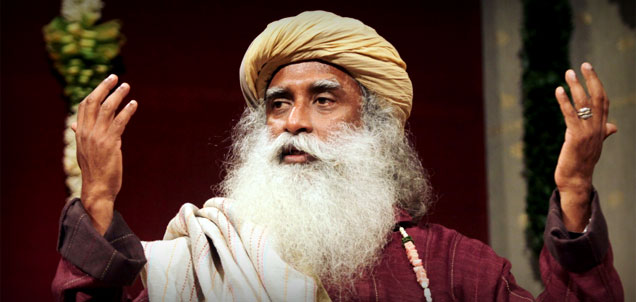
  • Sadhguru Jaggi Vasudev: When leaders are insecure, they are are fearful


    By Vinod Mahanta & Moinak Mitra


    He started out in the ’80s as the mystic on a motorcycle living on the proceeds of his poultry farm and conducting yoga classes across Karnataka. Today, Jaggi Vasudev or Sadhguru as he’s endearingly known, sports a flowing salt-and-pepper beard, drawing droves of disciples to his trademark ‘inner engineering’ brand of yogic intervention. Also a wag in his own right, the 56-year-old English literature graduate from Mysore University has an innate ability to simplify complex thought. So when we caught up with Sadhguru recently, he made no bones of calling a spade a spade, with a twist in the tale.


    Edited excerpts:

    When business leaders come to you, what do they ask?

    Some may come with trouble in their area of work but most come when they are doing well. When they are doing well, they are most troubled. It is only when you trouble yourself a lot, you will be doing well. Many of them have reached a level of success which they never have imagined.


    True, that may be the case in India after the 2004-2008 boom years…

    Yes, but they see that nothing is really great, except that they are doing a little better than some other guy. Many are surprised they have reached a place they have never imagined possible. Still, they are not happy or peaceful. So this is a very important lesson for everybody else. Are leaders up to their responsibility in modern times? When you have such a privilege, in business or politics or anything, it affects so many people’s lives. The moment you begin to see that your work is important, who you are needs to be worked at. This is what spiritual process means. If you have the privilege of being a leader in any sphere of life, you must have a way to turn inwards and fix your experience of life. If this is done, then you will see when a human being is joyful. So for a leader, it is very important that he is in the best of emotions within himself all the time because everything that he does, affects so many people. So there, our (India’s) leadership has not worked at all, especially in the last five years. When leaders are insecure, leaders are fearful. He will then do what is good for him only. Only when he is joyful, when his experience of life is not affected by what’s happening around him, he will do what is needed. We want leaders who will do what is needed, not what they need.


    Are leaders up to their responsibility in modern times?

    When you have such a privilege, in business or politics or anything, it affects so many people’s lives. The moment you begin to see that your work is important, who you are needs to be worked at. This is what spiritual process means. If you have the privilege of being a leader in any sphere of life, you must have a way to turn inwards and fix your experience of life. If this is done, then you will see when a human being is joyful. So for a leader, it is very important that he is in the best of emotions within himself all the time because everything that he does, affects so many people. So there, our (India’s) leadership has not worked at all, especially in the last five years. When leaders are insecure, leaders are fearful. He will then do what is good for him only. Only when he is joyful, when his experience of life is not affected by what’s happening around him, he will do what is needed. We want leaders who will do what is needed, not what they need.


    Throughout our education, why are we always told to chase the next level?

    Where did education come from? You have an education system which was created for an occupied mission. Education was created so that you will fit into the system. You will be one more cog in the larger machine. When this goes away, we do not have the sense to re-engineer our education for the making of a new nation. Everything that you have in your education is mainly educating you to fit into something. There is no free thinking, there is no enquiry. You just read, mug it up, vomit it on the paper and get 95% and go to the next one. Education should be about exploring an individual human being’s potential as to how this human being can find cool expression. Every human being has a unique type of genius in him. Maybe, we cannot provide it for the whole one billion people, at least a segment, at least 10-20% of the population should be able to explore the full depth and dimension of what they can do and cannot do. If you don’t create that atmosphere in the educational institutions, in industries, in whatever other realm, you cannot become a vibrant and successful nation. You will always have to import ideas from elsewhere. Right now, whatever happens in America and is a success, somebody wants to do it here. Why is it that we are not looking at ourselves? That is because our education system is not exploring the genius of an individual human being. It is always designed to fit you into the system. That has to change.


    Do business leaders work on IQ (Intelligence Quotient) and neglect EQ (Emotional Quotient) side?

    Intellect is only a small part of intelligence and only with the memory background, the intellect functions. If I wipe out your memory, your intellect will be useless. It is what happens when somebody has dementia or Alzheimer’s. His intellect is not gone, only his memory is gone. None of his other banks of intelligence is gone, only memory is gone because intellect hugely depends on memory. But memory is limited. If you take your body, for example, it carries trillion times more memory than your conscious mind. Will you remember your great-great-great-grandfather? You don’t, but his nose is sitting on your face because your body remembers. You body remembers how your forefathers were a million years ago, you don’t have any such memory in your mind. I think with my whole body. There is a way to do this. It may not necessarily be a conscious thought, but there is a way to perceive information through your body because your body processes far more complex information than your mind.


    How do you harness the other things?

    If we invest a little bit of time, we can help. But when it comes to internal things, people want a dividend without investment. But without investment, there is no dividend. You must invest a certain amount of time. It will pay off.


    India has a long history of spiritualism, but somewhere we seem to have adopted the Western materialistic culture. Have we lost the way?

    Whatever the spiritual ethos the nation had, in 300 years the British systematically dismantled it. Some of the transactions that were going on between the officers here and the British empire there clearly say they aimed at these things, and they successfully did it. So where we are right now, we have a whole lot of spiritual jargon floating around on the streets but no spiritual process. That is like anything else in the world. The spiritual process works only for those who do it. Now we have come to a place in India where we only talk about it, we don’t do it. Spiritual talk is plenty, spiritual act is very little.


    Source:The Economic Times

    Copyright © 2013, Bennett, Coleman & Co. Ltd. All Rights Reserved

    Licensed to republish


  • Kyoorius about Digital & D&AD: Interviews with Laura Jordan Bambach & Tim Lindsay

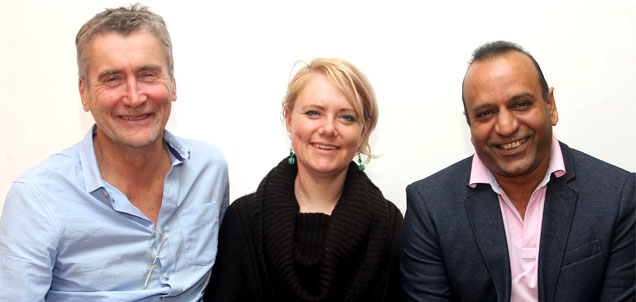
    Laura Jordan Bambach and Tim Lindsay with Rajesh Kejriwal, CEO and founder, Kyoorius


    Laura Jordan Bambach, Executive Creative Director of Mr. President and president of D&AD, and Tim Lindsay, CEO, D&AD,  were in Delhi and Mumbai last week for Kyoorius FYIdays and to evangelise the D&AD awards. The Kyoorius FYIdays is going to be held on a regular basis, presented by &pictures in partnership with CNBC-TV18’s Storyboard (Disclosure: MxMIndia is a media partner of the event).  The 100-plus audience in both cities (who paid Rs 1500+taxes) to get there is testimony to the success of the effort.  Good content ensures good, interested crowds, says Rajesh Kejriwal, founder-CEO, Kyoorius, matter-of-factly. Pradyuman Maheshwari and Johnson Napier caught up with Ms Bambach and Mr Lindsay at the Mumbai leg of Kyoorius FYIdays and a D&AD-hosted evening for the ad frat.


    It’s harder to win a D&AD award than any other award: Tim Lindsay With 4G, I hope to see a real shift to digital: Laura Jordan Bambach
    D&AD needs no introduction to the creative fraternity in India. But, as with the craft that it evangelises, the only way to move ahead is to refresh and grow. Earlier this year, it inked an agreement with design specialists Kyoorius to conduct the Kyoorius Awards. And now D&AD has yet again partnered with the Rajesh Kejriwal-led Kyoorius to promote the coveted D&AD awards.

    Tim Lindsay, CEO, D&AD was in Delhi and Mumbai to meet with the industry and reaffirm its commitment to give back to the industry, especially the young, in terms of providing quality training and education. Lindsay underscores the difference that D&AD brings to the table as a not-for-profit initiative.


    We hear D&AD has big plans for India

    Yes we do have big and important plans for India. We are not going to get everything done overnight; it’ll take us some time.


    But India is Cannes-country

    Well, everyone is a Cannes-country but we are different from Cannes. If I could put it crudely, the money that we generate we put it back in the industry mainly supporting new creative talent coming into the industry. While Cannes is a wonderful effort – and I love going there –it takes money out of the industry and invests little through training, seminars etc but D&AD is there to stimulate support and inspire creative excellence.


    It’s not that D&AD is new to Indian creatives. You’ve been getting a fair number of entries for your awards. So what’s going to be different?

    Yes we have been getting entries from here. Where India is concerned I’d like to share some personal experience here: I used to be president of Lowe Worldwide and while Lowe and Lintas were going through that global merger and when I was coming here in India for the Board meetings, i started to get a very healthy respect for high quality of Indian advertising particularly the stuff that was intended to change behaviour of a product…but given the level of talent and quality of work from design and advertising I think India is under-represented at D&AD so we would like more D&AD jurors, we would like more entries from India…


    R Balki, you know, doesn’t send entries to awards. Will you convince him to take part in your award show?

    I doubt that will happen but I have a healthy respect for his standard of work. The work that they have done for Lifebuoy is fantastic.


    What’s the one thing that should convince the fraternity to send in more entries to D&AD

    D&AD operates at a number of levels. In terms of the awards, it is the global yardstick for creative excellence. We are not ashamed to say that it is harder to win a D&AD award than any other award; the quality and integrity of the judging process at D&AD is better than any other awards show and what makes that the case is the quality of jurors that we have. We have around 200 fantastic people from around the world and about 60 per cent from outside the UK… so to be awarded a Pencil and be judged by that set of people is a huge accolade. The more important thing is that we reinvest all the money we make from our award show and the commercial activities. And because our awards income, which is the main part of our revenue, comes from all over the world including India we want to support creative industries in those places from where we derive our income.


    So from the entries that you have been getting from India thus far, have you reinvested in India?

    Not in the direct sense but more in terms of setting a standard and being an inspiration to the creative industry we have. But we have made some changes in the last 2-3 years where we have a D&AD Foundation and we want to spend the money we make in the most effective way to support creative excellence around the world. Also, there are key centres of excellence and India is in the process of becoming a great creative superpower of the future.


    In terms of the number of entries, what is the growth that you expect from last year?

    Through our partnership with Kyoorius and because of the footprint they have in the design and advertising industry, we would certainly help raising awareness of D&AD and that will certainly help having a positive impact on the awards entries. We should be happy to get over 500 entries as a start this year.


    The Indian ad industry has been faced with two issues for long: one is scam ads and the other one is plagiarism. How do you handle that at D&AD?

    The plagiarism thing is easier to answer. A lot of ideas get borrowed and sometimes ideas come up simultaneously in different places and have no connection with each other. What we do to tackle plagiarism is we choose the jurors and we do not interfere in any way and they make their own decisions. Also, at D&AD we do not have to give an award to any category so usually we do not give awards in 2-3 categories because the jury does not find the standard of work high enough.


    Scam advertising is a completely different thing. The questions we ask are: is it for a real brand, is it for a real client brief, did it run (in case of advertising), did it sell (in case of design) and did the client pay for it. The things that we think are not right we research and if the jury expresses any doubt on a piece of work,  we check it out further. I think the level of awards for scam ads has gone down in the past 5-7 years because the shows have been more stringent and systematic about checking things out.


    Does the D&AD award show also entertain creative entries from media agencies?

    The twin-core of D&AD when it started was advertising and graphic design and it has expanded to include other digital categories and also product design, retail design etc.


    What has been your experience with the Kyoorius Design Awards this year?

    I have only heard good things about the Design Yatra and I think we can surely help as we know how to run an awards show be it the entries, judging process etc we can only make it a smooth affair. I am sure that it would grow only further.


    Would you like to look at organising an advertising award here in India?

    Yes, certainly. We want to.


    How soon?

    It is still early days to talk about that.


    Laura Jordan Bambach has been to India before, but so impressed was she in her last visit to the Kyoorius Designyatra, that she chose to come in for the inaugural Kyoorius FYIdays initiative held in Delhi and Mumbai.

    Bambach, Executive Creative Director of Mr. President and current president of D&AD, spoke on how brands can survive in a digital world. To drive home the point, Bambach provided examples and ideas that companies could adopt to make their way into the hearts of their consumers.


    MxMIndia caught up with the digital diva and got her to share experiences and digital mantras that brands can be adopted here in India. That, and also the possibility of getting her agency Mr. President to launch operations in India. Excerpts:


    There’s so much being said about how digital is changing the way companies are going about doing their business. Is it for real? Is digital really as big as we think it is? Or just a lot of talk and less action?

    I think in terms of the actual consumer behaviour and in terms of the changes it brings about in the society ,it is very real and also very powerful. I think what entities like Twitter and others have done is that they have changed the equation between consumers and brands. If you love a brand, you almost expect to be a fan of the brand and you expect the brand to participate in the conversation and communication that happen on the platform…


    But ‘likes’ are not necessarily a true indicator of what’s going on out there, is it?

    Yes it’s not but if someone has a like on Facebook and if they are a real fan of the brand and if they are really talking to you about things that they find interesting and you are building a community then it’s great. Like, for example, I worked on a big project for a telecommunications company and they did a fantastic television commercial where you could chose the outcome for the main characters involved on Facebook…they ended up getting around 1 million likes because the story was really engaging for people watching the television ad. But they found it impossible to translate that into conversation for brands because the people that liked the television ad aren’t necessarily the same people that buy their products so it’s not used in the right way as it should.


    One of the reasons that there is not much work happening on digital is because agencies work on commissions. And while they make more money from television commercials which they can’t out of work on digital. Do you think this is the reason why there isn’t much evangelisation of the medium and there’s not much quality original creative work?

    I think what you’ve said is right and the budgets we have to work with for a digital campaign compared to those for television commercials always shock us, but I think there are great examples of integrated work where big budgets are going towards connected campaigns with social and digital thinking being at the heart of it.


    While we talk of integrated work the reality is that most of the work is being done for the medium of television which is then redirected to digital…

    It’s the common way of doing things, but it is the wrong way. If you can unlock the digital strategy first and not the medium then it could work. So it does not matter what medium it is expressed in but I think having a digital strategy at the heart of a brand is what is going to make it more successful.


    So we shouldn’t feel too bad about the state of digital affairs here in India. It’s essentially the same problems that are faced in the more developed markets like Europe as faced here.

    Yes, it’s kind of the same but we shouldn’t feel too bad about it.


    Is it also an issue of talent, especially in digital agencies that are not able to find good talent…

    Sometimes you need to have the good old-fashioned thinkers and planners, which is not impossible to find. There are plenty of agencies out there who are more digital-centric and who have great talent to handle everything.


    What is your view on the kind of work that gets produced out of India?

    In general I think the work out of here is just fantastic. Digitally I think we are not seeing loads of work atleast at D&AD from India. I think with the rollout of 4G internationally I am hoping to see a real shift to digital…


    Talk of performance at award shows and India has put up a bad show where digital is concerned be it at Cannes, Spikes or the recent Digital Fest. What according to you should the agencies be doing to spruce up their digital tally?

    What I have observed elsewhere from small agencies is that it takes a disruption between the agency-client process. You will find some really good integrated digital work coming out of countries like New Zealand and Australia and it has to do with their attitude of being different.


    But given that India has long history of storytelling and folklore still doesn’t put us up there in terms of creative wizardry…

    Yes I agree. I think India’s design work is comparable to some of the best that there is…even traditional advertising. It’s just the digital category has not produced enough top-notch work as yet…


    If you were to offer pointers for marketers or agencies on what the approach they should have towards digital, what would they be?

    Firstly, they need to find stories that people want to hear not what they want to tell. Also, how you launch something is also important as what you launch so you need to have a good strategy on how you are going to do that. Be brave; look two things at social for – insight and inspiration. Digital agencies need to channelize their focus on strategy as if they are to become big in the future then they should have proper strategic direction or else they’ll end up becoming production houses.


    Lastly, when do we see Mr. President in India?

    Yes, we are working in that direction but I cannot disclose the finer points on who is going to be our partner or things like that. But it’ll happen very soon.


  • India ad rev to grow 11.3% in 2014:Magna Global


    By A Correspondent


    Indian media companies will see ad revenues growing by 11.3% next year with the internet again leading the growth at 31.4%, according to Magna Global’s annual advertising forecast for the year 2014.


    The growth in television adspends will be 10.4%, while that for newspapers will be 8.8%. Magazine adspend growth will be 2.3% while OOH will be 12.1% and Radio at 11%. Cinema, given its lower base, will grow at 20%.


    Last December, Magna Global had predicted an 8.7% growth for Indian adspends. This was revised in June this year to 7.8%. The growth for 2012-13, although based on its current estimates, is 7.8 percent. Magna Global is the strategic media unit of global media agency conglomerate IPG Mediabrands. IPG Mediabrands is headed by Shashi Sinha in India.


    The economic environment remained weak throughout 2013 but is still expected to improve in 2014, especially in the developed world which has experienced four years of slow growth and stubborn unemployment, according to the IPG Mediabrands firm. As per the International Monetary Fund’s World Economic Outlook projections, India should re-accelerate at 5.1% following 3.8% in 2013. “That level of economic activity is not particularly impressive by historical standards but confidence indices keep improving and we believe advertising spending will reflect and amplify that economic trend,” said Venkatesh S, EVP, Director Intelligence, Magna Global, India.


    Venkatesh added that the growth estimates of 7.8 per cent for 2012-13 are end-2013 estimates and he does not foresee any extreme changes.


    Mobile share to total internet in adspends is 7.9%: Venkatesh S, EVP, Magna GlobalQ&A with Venkatesh S, EVP, Director Intelligence, Magna Global, India


    The annual forecast made in December 2012 had your annual year-on-year growth forecast for India pegged at 8.7%. In June this year, it was revised to 7.8% which has been maintained in your year-ahead report. Since we haven’t yet closed December, do you think this growth of Jan-Dec 2013 will stay at 7.8%?

    These are end-2013 estimates and we don’t foresee any extreme change in growth rates


    Any noteworthy changes in your estimate made in Dec 2012 and June 2013 to what it is now?

    Newspaper and Magazine growth rates have been revised downwards compared to December forecast and the growth rates are pretty the same as it was in June 2013.


    By your estimates now, will India be among the Top 10 markets five years from now? In December 2012, your report said India would be among the Top 10 markets in the year 2017. That was not the case when the mid-2013 numbers. What is the status as of now?

    Following a significant slowdown and given the current market environment, long-term forecast was revised downwards and is not in a hurry to be part of the Top 10 anytime soon. Currently India is the 13th largest advertising market and is forecast to retain its position in 2018.


    How does Indian adspend compare with our neighbours, BRIC countries and internationally?

    The adspend/capita in APAC varies significantly from $558 in Australia to $2 in Pakistan. While India adspend/capita is $5, its BRIC peers are way above – China $29, Russia $67 and Brazil is on par with the global average of $84. India is slightly in the high growth potential zone.


    Internet doesn’t seem to be growing at a significant pace – it continues to hover around 30-odd percent. Comments?

    India has been growing at a phenomenal rate compared to the global average (+15.5%) and also within APAC (+22.4%). Having said this, mobile internet is promising and will overtake desktop internet. However lots of questions need to be answered to see this medium unfold its potential.


    What would you say is the contribution of mobile as against the whole of the internet.

    Mobile share to total internet is 7.9%.


    And how does this compare with developed economies and BRIC countries?

    While BRIC countries are averaging 9%, developed economy is 15%


    Last December, you had predicted a 4.2 percent growth in the magazine sector. That is now 2.3 percent. Do you think there is a trend out there and we could magazines degrow even further?

    A small base of loyalty is a major deterrent for magazine publishers and advertisers, though language magazines still hold ground locally. Staying relevant to digital audience and retaining revenue streams is a challenge.


    Given an election year, shouldn’t we have seen a greater growth for newspapers?

    In 2012, the category saw a lower single digit growth rate. Our estimate for 2013 including political advertising is 6.0% and 8.7% in 2014.


  • Ogilvy’s most envied: The Google Ad


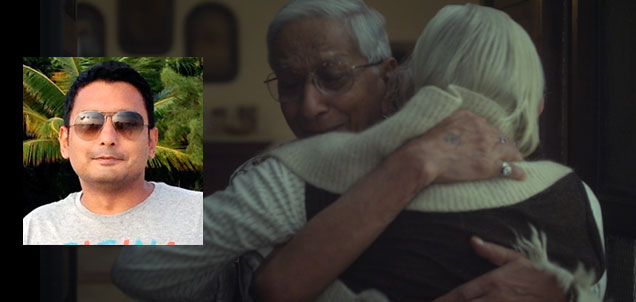
    A quick chat with Sukesh Nayak, Group Creative Director and the writer of the Google ad, that has been receiving rave reviews since it launched last month. Sukesh and team were awarded the ‘Most Envied’ Envie award held on Monday, Dec 16 in Mumbai.


    So would you rate winning the ‘Most Envied’ award as the ultimate accolade?

    Yes, I personally admire the work of various members of the jury. And the fact that they chose this for the award is a great recognition.


    And how has the ad done for your client?

    Oh fantastic. It is really unfortunate they couldn’t make it for the Envies. The head of marketing was supposed to come down. From the conversations we’ve had with them, it’s been amazing.


    We saw Piyush in tears…

    Oh, he has been crying since he has seen the offline version.  He is my mentor. I wanted to get into advertising  ever since I saw his Fevicol ad when I was in college. I gave up banking for this. I am so happy today, It has been one of the best decisions I have made in my life.


    Tell us about how the ad came about

    Well, I wrote the film. And of course along with the entire team which was on stage. We had around five scripts we were pitching for this project, and this was one of them. As an agency, Keenu (Abhijit Avasthi) and I felt that this is the film that we would recommend if the client asks us ‘Which one do you recommend’. Luckily for us, that question never come because even they as a team came back saying this is film we want to do.


    Once the basic script was there then everybody I think I would credit every single person in the team. You know there are small little nuances if you have seen the film. Things like search… .So the basic script is there now everybody has got into it, I have got help from the planning people, I’ve got help from the account management people.


    But the film I wrote was only 85 per cent of what you see. The rest was added by the director, Piyush himself, Keenu… a great team effort.


    We saw Amitabh Bachchan having a long chat with you on stage?

    Oh, he was asking whether I have any personal memories or any family history of Partition.. how could you write something like this.


    And so what did you say?

    I was telling him about how a friend’s friend from my school in Dehradun who was in Delhi and how his grandfather came to India overnight, with nothing in hand. Today, he is a big industrialist in Delhi.


    The ad is a rage in Pakistan too…

    Yes, I heard that. You know we knew we had a good film, but we honestly had no idea that this is what it would become. It is very overwhelming for me personally because as you know in our business it’s all about…what are you going to do next.


    So what are you going to do next?

    I am screwed. It’s a great feeling. It feels awesome. But to beat this is going to be tough.


    Any thoughts of getting into big bad world of Bollywood?

    Honestly, haven’t thought about it. I think the best part of my job is being able to tell a story… whatever be the medium. That is something I really enjoy. I haven’t really thought about anything beyond this, because I am loving it so much. I am at my desk at work at 9am. I am the first guy in office because I just love to go there and work. That way, I get two hours of a clear window to work…then I do admin work the whole day.


    Hmmm.

    Like I told you, I was not meant to do this, I was doing something else in my life. I got into this by complete fluke. And I am really thankful to people who gave me break. I It’s the best job I can ever have. Like Mr Bachchan said: you enjoy it, you just get better at it.


    More reports on Ogilvy’s Envies tomorrow


  • Life OK will be #1 Hindi GEC in 18 months: Ajit Thakur


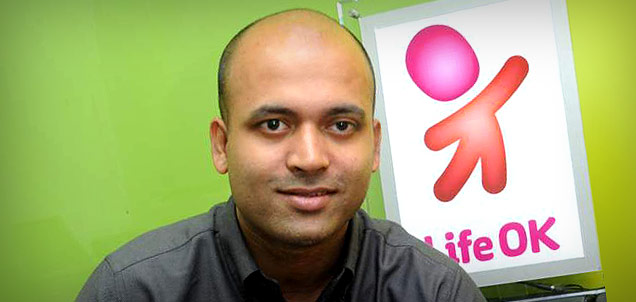
    When the media heard Ajit Thakur was returning to the country to join Star India and relaunch its second Hindi GEC, it didn’t require Star bosses to tell us that it wasn’t just a flanking strategy. As General Manager and Business Head of the channel, he was sure to make it formidable force. Although the start may have been slow for Life OK, there appears to have been a method to the growth, says Mr Thakur in this extended interview with MxMIndia. As it happens, today (December 18) is when Life OK completes two years of existence. And on the eve of this milestone, Mr Thakur told us he wants Life OK to be the No 1 Hindi general entertainment channels in a year-and-a-half. May sound ambitious, but look what’s happened at Multi Screen Media with Sab TV consistently ahead of Sony! There are of course many content plans up his sleeve, and a refresh and brand-push is also on the anvil. Excerpts from the interview:


    Two years on, how has the Life OK journey been?

    I think it’s been a rollercoaster in the truest sense of the word. Because we’ve had as many downs as ups. For me, that’s been the joy of it. We said we’ll aim to make a place for ourselves without following the code of conduct of GECs – target the woman, do soaps and pitch these women protagonists – as the only way to grow a GEC channel. We didn’t do any of the three. So the good thing is 14% market share, 2 years later without following the three GEC codes. I’m very satisfied. And the bonus has been we’ve broken even.


    At the time of Life OK’s launch, we spoke with Sanjay Gupta and some others on the one reason why your predecessor Star One didn’t work was the attention given to it, or rather the lack of it. It was always Star Plus that was getting primary attention. Obviously your personal existence here has, kind of, changed that. Would you say the primary channel’s got more prominence even now?

    I think the big difference that has happened from Star One to Life OK is that the flanker strategy has changed to a full-blown challenger strategy. And that’s important in many ways than one, but to answer your question directly, the way it works right now is that Life OK is seen as sometimes the best, sometimes a star, sometimes as the younger sibling who wants a lot more attention in all forms.


    So everything – from internally emotionally blackmailing to whatever it takes for us to get attention, we do that. And the great thing is that the attention has been coming both in terms of softer aspects as well in terms of harder ones. Which was in terms of investment that we needed. And we’ve got it. And to the extent that now, every time I’ve met Uday in the last six months, after we’ve kind of, managed to establish: there’s only one thing he says. So when are you beating Star Plus? And that is unheard in the corridors of the Star network in the last few years. That’s the only question he asks me. And I think for that we had to make sure we put our feet firmly on the ground… which we have done in the last six months.


    Did this change happen mid-course in these two years or was it there from the very beginning?

    I think in terms of the intention and investment, it was there right from when I joined in August of 2011. That’s the reason why they wanted pretty much a separate management to the extent that we were told to run out of an independent office.


    I’ll tell you what the last 12 months has seen. And it is linked to a couple of things that happened in the universe. As we were going into digitization and LC1, there was a lot of uncertainty of what’s going to happen. By then we already had 10% marketshare. We were doing fine and all that stuff. But what it gave us in that entire churn of both LC1 and digitization and metros first and the next tier towns was that suddenly the share of the Top 3 channels in terms of absolute numbers was declining and from the lower three, two channels, one of which was Life OK was clearly growing and then six months back, we broke away from the pack. And as that has happened, it’s given us the third reason which is a tangible proof of saying that yes, it can be a good long-running GEC to saying oh, we have a serious chance at becoming No 1.


    For a long period after launch, you were not among the Top 5

    Yes, we were No 6.


    So, it took it’s time?

    Yes.


    And in the past, we’ve had GECs which turned No 1 in a year!?

    Yes.


    As mediawatchers, one wasn’t very sure whether Star India was walking the talk on making Life OK strong enough to be the No. 1?

    I’ll give you very clear answers on this. I could substantiate the numbers but because of reasons of confidentiality, I won’t. But I’ll give you a very clear answer on this. Because nobody has asked me this question so directly. There are three things.


    First and foremost, among the many channels that have launched in broadly the GEC or Hindi category, there’s been only one before us that has sustained for a good run. And all credit to that launch.


    But when we started, we said we’ll fund ourselves. So we’re not going to lose a lot of the company’s money in the first 3 years to see where we land to get that marketshare. And I’m very, very proud of that fact that we broke even at the end of our first full year of operations. At the end of June last year, we were breaking even. This year, we will turn profitable. And that nobody can claim including the one channel we’re talking about.


    There are many who’ve come, not wanting to be called GEC. And some have come and said they’ll be GECs. One has succeeded long-term, yes, full credit to them and become No 1 overnight, like you said. But nobody’s broken even or turned profitable within the first two years of operations which is important because in today’s market, as we’re getting into digitization and more and more fragmentation, the quick win doesn’t equal to sustainable, profitable growth. Today somebody can create a No 1 GEC at three times programming investments and not make money and somebody can be a No 3 GEC at 1.5x programming investments and make money. Which one would you choose? I would go for the latter.


    Hmmm.

    These are two different channels among the current Top 5 where the 3x and 1.5x is very relevant and say we’re at 1x of investment. But the 1.5x may not be a No 1 but significantly more profitable than the 3x. So that is important. Right? And then comes the third factor, which is where I think may be we are wrong, but we won’t change it. Which is that the kind of genres and programming strategy we’ve taken on, there are two things that are happening. One, there’s a faster burn in our stories. So when you pick up a show which is a family drama but rooted in domestic violence and you want to treat it like a thriller. Today, what did we come and do?


    Our first hit which was ‘Saubhaagyavati Bhava’ was treated like a thriller, not a regular kitchen soap. We exhaust our stories much faster. Second is that there’s a certain kind of viewership that is happening in middle India where there’s familiarity with the ‘Saas-Bahu’ type of shows. I have nothing against dramas, I have a predominance of dramas set in the kitchen. Right? The familiarity of that means that anything new that you want to push, either you manage to get it right but you exhaust the story fast, you don’t get noticed at all. It has happened to every two of our three launches. Because the DNA of the show is so different that you just don’t land it there. This is not for me. And for whatever it’s worth, the dominant viewer in the household on weekdays is still the housewife. The dominant viewer, I’m not saying the exclusive viewer. And that changes on the weekend. Which is why our programming changes so much.


    So every time we leave a show which you know is a sure takeoff point because it’s set in the kitchen, we have a little moment of ‘we should’ve done it’. But we haven’t done it. And we’re happy for that because now when we go back and talk about it, they’re very clear that amongst the Top 3 there’s nobody who offers them variety. There are other people who offer them variety but not the Top 3. And Life OK is definitely one of those channels that offers them the variety where there’s something for everybody in the family to watch, including kids. We have a very conscious kids strategy. At 8 pm, our next launch, ‘Hatim’ is purely designed for kids. But enough of a narrative like any of the good animations from Hollywood. Adults can watch it.


    Was the intent of Life OK being a Star Plus killer in existence from the very beginning or did it change as you moved on?

    I won’t use the word killer but I would say a serious challenger to the No 1 position. It was there right from the beginning. Both in terms of investment and intent. What the last 12 months or 6 months in particular have done is that it has given a tangible proof of that we can achieve it.


    I was telling you the three things that make us stand out is One, turning profitable, having sustained a two-year run and looking to continue consolidate, which has been the case with one more channel, but, I think no one has turned profitable so quickly. Second is that, in two years now, it seems like the journey is only 25% done. So we know the plan ahead. So we know where we want to go. And, third, and most important is that we’ve still not given into the temptation of doing the same.


    Given that there’s a Star Plus already wouldn’t it have been better for Star India to offer a channel with a similar content strategy so that advertisers can be given a better packaged deal?

    If the corporate strategy was to bring in Life OK to fill in the gaps or get whatever is left after Star Plus, we would’ve continued to be a flanker channel and we wouldn’t have been where we are today. What we’ve been told is chart your own destiny, find a space for yourself that’s distinct from Star Plus but still big enough to challenge it and cross it. So we’ve never had a brief of saying what is the best way to monetize the two channels together? If that was the brief, we would’ve remained an 80 GRP channel and at 8% share and it would still have made a lot of sense for the corporate.


    Has LC1 helped you or been a shot in the arm for you?

    What has helped us a network is that we have been aware of the power of the smaller markets much before the others and without giving details we’ve gone and activated that for all three channels… for Star Plus, Star World and Life OK. And that we did before the measurement came in. I think too often in the industry we’ve been guilty of chasing the measurement matrix to market and plan content. And I think every time somebody does that you’re always behind the trend. So we’ve taken the leap of faith and I can tell you that we’ve just gone town by town, village by village and taken the message of the network with a very unique programme that we’ve created. So much so that now there are some clients who now want to come on board on that programme. Saying hey listen, we went there and we saw a poster of Nayi Soch and Life OK Mahotsav… what have you guys done?


    So, being aware to the smaller market did help. Did digitization help? I don’t think it helped Life OK. All it did was it made an even playing field for everybody for content to finally win.


    When you started out, you had this huge digital thing. Your name was Life Ok. The fonts used in your identity were cool. You had a Madhuri Dixit as the ‘sutradhaar’ So it had a fairly urban as against a middle India feel. Did you at that point of time feel there was a bit of a disconnect?

    When I say middle India, I mean middle class India. For me that exists as much in Mumbai as in Moradabad. So for me that was never a disconnect. Over time, as the content has been consumed differently, without any intentional push, some markets have become stronger than others. So our first market that became strong was completely intentional, which was UP and Delhi. But after that an MP nad Punjab came to us much faster than Mumbai and people started saying you’re more small town India than big town India! But digitization happened and now in Mumbai we’re growing as fast as any other market.


    What about the all-important Gujarat market.

    There are so many people are competing for it, I’d rather leave it for now. The only way to cater to Gujarat is to create content for them. Unfortunately in two years I haven’t found a single show which is set in Gujarat which I’ve liked.


    In a city like Mumbai you don’t find Gujarati content?

    I found a lot of Gujarati content which is set in the kitchen. But by definition we won’t do it. So, in April we’ll do our first content targeting them and which is a musical. I can’t tell you anymore.


    We’ve had a situation where you’ve had a flanking channel which is become the No 1 in the network. You’ve been yoyo-ing with that channel – Sab TV – for a while in terms of the ratings. When can we expect a Life OK displacing Star Plus to be the No 1?

    You know I wish I knew the answer. But jokes aside, I’d give ourselves 18 months to make it happen.


    To be the No 1 Hindi GEC in the country?

    Yes. I mean, you can’t have a longer timeline then that! So I’d give ourselves 18 months.


    You have a background of having achieved a fair bit of success at Sony

    Yes, but the glass was half full. I would’ve loved to finish that. Not a fair comment to say on a LifeOK interview but family came first and I wanted to move to Singapore so all that happened. But I must tell you, I’m a big fan of what Sab TV does and that I can say officially.


    It’s a channel which stands out for me. I’m very happy for them. My personal attachment is to Sony because I’ve worked there. But for us, our destiny is not there, because nobody is trying to target the whole family. And we’re trying to make this big statement that we must in the Indian context allow the family to come together and watch TV. And not divide them and make them watch their programs.


    And by doing that if we can come to 14% and No 4, we’ll have to work much harder, but we can become 24% and No 1. And that’s what we want to do. But we’ll do it by keeping the family together.


    In terms of programming hours, is it going to change? You’ve done your share of reality shows. Not a good share but some reality shows. You’ve not had too much success with them.

    Yes, I’ll tell you on reality shows and then I’ll come back and answer in terms of programming hours. That’s why I told you that every two of the three new ideas we do, fail. And I enjoy our failures because there’s so much to learn from each one of them. On reality shows my brief to the team is don’t bring me a singing-and-dancing idea. We’ve tried a show about making people find love, which is ‘Bachelorette’ or a show about finding talent beyond just adults which was ‘Kids: Hindustan ke Hunarbaaz’ or ‘Saavdhaan’ it’s fiction, non-fiction, it’s about crime or we did ‘Come Dine with Me’..


    Did you think ‘Mahadev’ would be such a success?

    No, not at all. No clue. We had no clue.


    But you kind of put many eggs in a basket.

    On three shows.


    You also had a whole concert around Mahadev?

    Because he was a unifying hero. I have this big thing that all content must unify. So we’d think who’s the one hero who unifies? But our highest investment was on ‘Saubhaagyavati Bhava’. The second was ‘Meri Maa’ which failed. Sach ka Saamna Bhrashtachar ke khilaf: failed! Because nobody wants to see a show on voyeurism around corruption.


    Are you looking at Sach ka Saamna again?

    Yes, we’re trying to find the right take on it. Then the last one was Mahadev. Mahadev was a No 4 at that time. And by the way Mahadev didn’t take off till four months of launch. It was kind of hovering. Saubhaagyavati Bhava became a big hit. A show we didn’t promote at all called ‘Main Lakshmi tere aangan ki’ became our second big hit. A simple thing about a girl’s choices between money and love.


    So tell me, now that you’ve mentioned about the 18-month window …

    I just made it up.. but, yes, that’s it.


    … which is just a year-and-a-half away. What are the specifics you’ve thought of for what you’ve to achieve over the next one year?

    Obviously I can’t talk about specific plans but I’ll tell you things that are a part of the DNA of the team. So the first specific and it’s an important one is that we’ll continue to be modest. The problem with some of our predecessors who’ve had a good start and failed is that at some stage you start thinking that you know it all. This audience is evolving fast. The market is fast-changing. With digitization we don’t know how many more dynamics will come into it.


    An integral part of that modesty is knowing that we’ll still continue to fail more often than we’l; succeed. If we don’t keep failing, we won’t do the next thing better. This thing that we’ll have zero failure rate doesn’t exist in my dictionary.


    The second thing is that I think we’ve to take our content play to the next level. For a number of reasons. So, with advertisers now, we’re full. Our inventory is full even in the leanest months now. Because they can see the efficiency with which Life OK delivers for them. We are going to do a big award show for which we’re going to make a formal announcement around Christmas.


    Is it the Screen Awards?

    I wouldn’t confirm it right now, but the reason I’m telling you this is so that you understand there’s a method to the madness. One is about humility and continue to learn from failures. Second is about creating impact. In fact on reach in some weeks, we’re No 2 if you’ve been tracking it in the last few months. That message to advertisers has completely gone through. That Life OK has some impact properties which are not regular ‘Saas-Bahu’ shows, they also know that. But now we want to give them the impact properties as big as any channel. The only difference is that for us impact doesn’t equal to the next big dance or singing show. After the award show, we’re going to open up from March to June with impact in fiction. And there you’ll see the method to madness.


    Hmmm….

    If you realize after launch, we’ve been lying low on the brand. There’s no point going and saying this is the brand that’s gonna change your life! Until enough people are watching it. So come Quarter 1 next year, by the end of it, on the impact of the changes and stuff we’re doing in ficiton and the award show, we’re going to refresh the brand and this time we’re going to say what we want to say. A brand that wants to go more with entertainment, a brand that wants to keep the foundation.


    Have you started working on that already?

    Yes, we’re ready with it but we won’t launch it yet. Because we want to launch it along with our content.


    With the award show or later?

    First quarter, we don’t know the timing yet, but between January and March.
     

  • He came, he met, he made no announcements


    By A Correspondent


    I have had no meetings with Sam Balsara,” said Maurice Levy, Chairman and Chief Executive Officer, Publicis Groupe, quashing all speculation of his media services conglomerate acquiring Madison World, Balsara’s homegrown and successful advertising behemoth. “I have a lot of regard for the work he has done,” Mr Levy said on Mr Balsara.


    Mr Levy is in India after a gap of two years, a period in which various entities of his group have made many acquisitions. While confirming that he is looking at more investments in the market by way of buying existing entities, he did not reveal any specifics. “India is a strategic market for us. We want to invest here and investing,” he said.


    In India, the Publicis group has varied interests in creative and media buying and planning agencies, public relations and a variety of marketing services interests.


    The France-based transnational group had announced its merger with the US-based conglomerate Omnicom. The merger has been cleared by the Competition Commission of India and is now awaiting similar clearances from the European Union, China and Columbia, Mr Levy said. He indicated that the merger should happen around the second quarter of 2014 and made light of the comments of arch rival and WPP CEO Sir Martin Sorrell on the merger as “part of his job”.


    When asked whether the Publicis group was on course of its target of doubling revenues by end-2014, Mr Levy said that post the merger with Omnicom, it will be more than a doubling.


    Mr Lévy joined Publicis in 1971 in charge of IT and In 1975 was appointed President of Publicis Conseil and took responsibility for the international development of the group from the early 1980s, piloting a series of important acquisitions as well as the Groupe’s pioneering strategic focus on digital. Mr Lévy has been Chairman and CEO of the Publicis Groupe since 1987.


    Amazed by the time Sir Sorrell is spending discussing the Publicis-Omnicom merger: Maurice Levy

    The Pubicis Groupe Chairman and CEO on how his group is doing in India, its investments in digital, the merger with Omnicom and WPP chief Sir Martin Sorrell


    By Amit Bapna & Pritha Mitra Dasgupta


    French advertising major Publicis Groupe plans to make some major investments in India, including acquisitions, right after its merger with Omnicom to create the world’s largest communication conglomerate is complete mid next year, its chief executive Maurice Levy said. Currently in India to review the operations of Publicis entities, Levy said that India is not growing fast enough due to a host of reasons, including political and infrastructural. Edited excerpts of an interview:


    Publicis Groups started investing heavily in digital much before many others. Yet in India it has had a relatively slow growth story.

    The Indian market is not a digital market. If we look at the Publicis Groupe as a whole, our journey so far has been excellent. I am not saying we cannot do better. Our position in this market is hampered by the fact that we have not yet offered the full range of services and we still need to make more investments. We need to strengthen some of our agencies. We have to develop some integrated services and we need to continue to invest in digital and mobility. And we are doing this irrespective of the merger. So I think the merger and the fusion will be complete by the second quarter (of 2014) and right after that we will make some investments in India – both organic and some acquisitions – to complete the frame.


    You have said in an interview that “the other emerging markets, with the exception of India, seem to be in very good health. India has a specific problem”. What is that problem?

    It has a specific problem due to the fact that it is not growing fast enough. This has to do with some political issues. It has also to do with the fact that India does not have the infrastructure that this market deserves. India also needs to open the market to some of the sectors like banking and insurance. And we expect that India will take some measures, which will be extremely positive for the growth of India.


    When can we see the benefits accruing out of POG (Publicis Omnicom Groupe)?

    We have got most of the authorisation and the ones that are still awaited are for Columbia, China and European Union, which should be coming soon. Then there are the stockmarket regulators in the Netherlands and France. We believe we will be done with all the authorisations on the merger by the second quarter. Then we will call the AGM, the stockholders vote and we will come to a final agreement and complete it by latest June 2014, that is my estimate. Only after the merger happens will we be able to sit down and decide what we are going to do in specific markets, how we can have better presence, how we can help clients better, etc. The merger is seen from two standpoints: one at the corporate level, for which we have almost clear idea of what we are going to do, and the second at what we call the work streams: we today have 70 work streams working on specific issues.


    Sir Martin Sorrell (WPP CEO) has gone on record saying the POG structure is “clunky” and that “strategically and structurally it does not make any sense at all” because both companies have been going in opposite directions. How do you react to these critiques?

    I am amazed by the time Sir Sorrell is spending discussing the Publicis-Omnicom merger. If it is so clunky and terrible and does not make sense, he should rejoice because we are going to make a big mistake, which will be good for him. I don’t understand his spending 2-3 hours a day just speaking about Publicis, and during that time we take care of his clients.


    There have been rumours that you are visiting the Law & Kenneth office while in Mumbai and that Saatchi India and Law & Kenneth might come together.

    I can neither confirm nor deny anything. I cannot say anything about acquisitions. Praveen Kenneth is somebody I know since many years; he is an ex-colleague at Publicis and I’m very pleased to see the success he has enjoyed. He had asked me to invest in Law & Kenneth even in the early days.


    What are your plans for the recently announced Project Blue? Do you plan to bring it to India as well?

    Yes, we have plans for it. But we expect to make it work first in Europe and in the US also, to make sure it’s working well, see the results in two years’ time and then decide (how we’ll take it to other markets). It just shows that besides the merger and acquisitions, we are also investing in start-ups. And besides the media business, Project Blue will also have other services.


    Can we specifically talk about the performance of Starcom MediaVest and ZenithOptimedia in India?

    There are some aspects that went extremely well and on some we had some issues. We lost some accounts and it is part of life. There is a bump and it is important to acknowledge that. What is interesting in our life and in advertising is that you can never rest. Simply because we are in people’s business, client relationship can be shaky, people can leave, which can disturb the course of action of an agency. In the media business, in a market where size matters, we don’t have the size that we should have. That’s clear and we have to build the size. We are building it and it will take time.


    Source:The Economic Times

    Copyright © 2013, Bennett, Coleman & Co. Ltd. All Rights Reserved

    Licensed to republish


  • History will remember ’24’ as a gamechanger in Indian television: Raj Nayak

    As the clock ticked to the closure of Season 1 of ’24’, the social media was buzzing with chatter on how the Colors mega-series saw Anil Kapoor giving one of his best ever performances. There were others who spoke about the international teleseries’ superior production qualities and how the entire cast put up an excellent act. For Colors and its CEO Raj Nayak, the acquisition and airing of 24 was a huge gamble. In a business where just hiring the best talent doesn’t guarantee success, 24 is sure to raise the bar much on fictions on Indian entertainment television. MxMIndia spoke to Mr Nayak on the how Season 1, which concluded on Saturday (December 21) did for his channel. Excerts from an interview:


    So how was the ’24’ experience?

    For me, it’s been the best experience in my career. And I would say that because my Board gave me the consent and support to go ahead and do a show of such a magnitude that too a fiction show and experiment with something when everybody was sceptical about it. I think people were sceptical because of two things – one, the cost and, two, the quality would be compared to the international format.


    Was it ‘Paisa Vasool’ for the channel?

    Yes, it was Paisa Vasool. I think it was Paisa Vasool because from a strategic point of view, we went with our eyes open. We knew we wouldn’t make money on Season 1, even though we have recovered most of the cost because of the way we monetized it.


    From a channel and brand perspective, 24 has done several things for us. First, the buzz it has created for me in two months time is possibly the entire PR, we got for our other shows not just in India but globally. Second, it has brought to a Hindi general entertainment channel viewers who probably never watch us – the South Mumbai crowd, for instance now discuss our ’24’. Third, it has also demonstrated how cleverly you can integrate a product within a show if you think it through and do it well. I think that’s what happened with Tata Motors which went on record that its sales has gone up by 30 percent because of 24. You may or agree or disagree with the ratings, but for me, this is the proof of the pudding. Clearly, what 24 has done is create an impact. And it’s not that it ends here. I will re-run 24 on a daily format. When and where I do it is a different issue…


    As a daily?

    Yes, I will strip it to make it a daily. There were many people who missed it on weekends. People would call me often to ask me when the repeat airing was on for a DVD. There is an audience that wants to watch a show like this again and again and again. So if I give it a break and I strip it to a daily format, we will see what it can do again.


    Hmmmm.

    Purely from the RoI point of view, I think 24 was a super success.


    What about Season 2? Is that on?

    We haven’t finalized anything yet but there is intent. Seeing the success of Season 1, I believe Season 2 will do better…


    No dates firmed up?

    No, we haven’t finalized anything yet


    Internationally, it’s an annual

    Yeah! That would be idea here as well. As you know, internationally Season 1 didn’t go well, Season 2 picked up big time and I think that’s a trend that will happen here as well.


    Are your sponsors going to continue with you for Season 2 as well?

    Well, first of all, I would want them to pay double the money because we didn’t know how successful 24 would be (laughs). But, honestly, we also didn’t realize the magnitude of how much value the content would generate and we were very keen on closing the deal because we were going to production then. We have an excellent relationship with Tata motors and from my engagement, they are very happy and I am sure they would want to come in be part of Season 2.


    Looking back, would you have done things different to get rated better?

    Yes, we would have done a few things differently. We have realized   and we have analysed what went wrong and what went right and that is something we will ensure that we will fix in next season.


    Any one thing that you could tell us?

    Well, while keeping it intellectual and slick and everything, there could be a five percent deviation in terms of dumbing it down without taking away the original content and the storytelling, but just making the television grammar a little more Indian.


    Do you think India is ready for slick or as they in Mumbai lingo a chikna show?

    I think India is ready, We know one can’t achieve things overnight. History is often written in retrospective, later in life. This will be one show that will definitely be written about as a gamechanger for Indian television content


    Any more international show that you are looking at?

    I am very and I have also heard that all broadcasters are equally keen and in discussions.


    We’ve heard Grey’s Anatomy is being done by another GEC…

    From what I learn, they are not doing the original version. They haven’t got the rights for it and are possibly recreating something similar. Shows like Grey’s Anatomy, Boston Legal etc are easily adaptable


    So does Comedy Nights come back to being twice a week?

    Yes, Comedy Nights with Kapil will go twice a week again from the first week of January.