Category: INTERVIEWS

  • IAA Webinar with Julie Roehm, Chief Storyteller, SAP


    The International Advertising Association (India Chapter) hosted its fourth webinar under the ‘World Goes Digital’ series. Julie Roehm, Chief Storyteller, SAP was the guest who joined in from New York.


    The IAA Webinar series is spearheaded by Abhishek Karnani and director, Free Press Journal group and Manish Advani, head – marketing and public relations, Mahindra Special Services Group as co-chairs. *


    The panellists included:  Ashish Mehra (Mahindra Holidays), Abhishek Karnani (Free Press Journal group), Manish Advani, (Mahindra Special Services Group), Gaurav Mendiratta (Sociosquare), Pradyuman Maheshwari, Editor-in-chief and CEO, MxMIndia moderated the discussion:


    We know that storytelling is all about emotions and while you are an organization that’s essentially into technology, one doesn’t really need emotions because there’s technology that does it for you, right? How do you get the two to work for you?

    I think it’s interesting you said that because you know where my background is concerned I have been with SAP for 20 months and before coming here I had my own consulting business and had worked with companies like Wal-Mart, Chrysler, Ford…and as you may have gathered none of that resume included big technology software companies. I came here because Bill McDermott – who is going to be our CEO starting May of next year – had found me by reading something about me at some point of time and we had a dialogue for multiple years and he had asked me to come to work for SAP doing what I really like doing. I think to your point he also is a man who obviously has an interest in the success of SAP and has also been a technology executive himself. So he saw the need to bridge the fact that we are a technology company but sometimes big technology companies are seen as cold and very process oriented and therefore to try and be more human in approach. So when we came one of the big terms that we track and we try to fulfill is to humanize the brand because we believe that with this world the technology, maybe unlike 20 years ago, wasn’t something like a cool and slick kind of thing and nice to have in the background. Technology is pervasive in all our lives whether you work in a technology company or whether you are housewife you use technology everyday; you count on it and it is a part of the fabric of our lives. So to not to be able to connect that human element even in the big business scale that’s what technology enables companies to do. For example, we think about procurement and how it helps them to source products better. Okay, there is not a lot of humanization in that but if you go deeper then maybe there is because if you care about where you source your product from and who is it on the other end that is making that product then there might be a human story there and may make you think more about how technology improves the lives of employees every day. I mean think about the technology in the cloud that we are deploying all over the world where for example, you think of an HR person who is using it to help with the talent recruitment… So we know all, particularly the fact that you are all sitting in India with brilliant minds and the fact that we are very short of having bright strategic technologists to work in these high-tech companies. So the war on talent is big. Certainly money is the big thing but it’s not the only thing and technology can help us do that. So there is a lot of emotion that is available to us to connect and I’ve always believed that people who are trained in technologies and they always like to talk about that but everybody has a greater kinship and a feeling of connection; when you can connect something to a story or something that touches them personally. Those are the kinds of stories I think that will help us use this humanizing idea and get us to that next level by opening the doors maybe to the other industries and even to other types of businesses. People who have used our technology in the past understand that we actually do have solutions that’s going to help them in their positions too.


    What we have been trying to do essentially is look at storytelling by way of soaking in experiences as shared by the users. From the surveys that we conduct, we found out that customers were calling our call centres to share their experiences about the holidays and similar such sentiments. It was an incredible feeling because I’ve never heard customers actually talk to a tele-marketing executive or customer service representative that our holiday was fantastic; all they spoke about was individual moments during their holiday that made them elated. My question to you is whether you can share experiences on similar lines from your end and reference it against what we have experienced till date.

    Yes most certainly, I am not surprised at all. We see this all the time. It’s probably more expected in the travel & lodging and the entertainment world where one expects to hear great stories because if you go on a holiday you hope there is a good story that comes out of it and the fact that there isn’t always a place to communicate that unless people are tweeting or putting pictures on social platforms. We see the same thing in our business and maybe our challenge is even greater than what you are speaking of and that’s why we try to talk less about the actual technology itself and more about the experience and the impact. There are a couple of things that we have done and also that we are about to do – ideas that would be useful to you to think about. We’ve created an app for iPad that is called Customer Journey. It opens up on a series of stories. The reason we call it a customer journey is because it is the voice of our customer and in your case the traveler, but maybe it’s an opportunity for you to put across various entities or hotels or whatever to be able to capture some of the stories that people tell them and put them on here so that people like a little bit of trip advice or any of that third-party apps that are out there. One of the things we are in progress of doing is we are trying to create a movement, which I know is a very lofty goal, but it’s a movement around the idea that I mentioned about our first app which is to make the world better and improve people’s lives. Well, to run better means a lot to a lot of different people so what we are trying to do now is looking at creating our own social space through “Run better”. For instance in New York the fashion week is coming soon and we are thinking of capturing people talking about how fashion impacts their lives. Now you would be thinking what does it have to do with SAP? Well for Levi’s, especially for women who walk away with low self esteem because a certain pair didn’t fit in right, we have created a technology that helps them to image a women and tell which Levi’s jeans is gonna be best for them. We are talking about filming two girls chatting outside the dressing room where you can tell that they are trying to un-jean themselves by looking under their feet, under the curtain and then they come out and their faces are glowing because they’ve found this great pair of jeans and they feel so good about themselves. So when people feel so good about themselves they have energy or an aura that is very contagious to the people who they run into. So if we can capture that in other people’s movement by saying what does “run better” world look like to you it may have nothing to do with us in the long run but we can be associated with making the world better.


    I think today the social aspect is probably our most powerful tool and I would say it’s the same for you in the entertainment and the travel industry as well where it is about creating places where you empower not only your customer to be able to put their stories up but also your employees in all those hotels, restaurants etc. And I think the more angles you can have at a story out of personal experiences the more impactful it will be.


    How do you develop a talent pool of people with a right skill for storytelling? And in the era of ROI, how do you convince management and owners to invest in storytelling?

    From a talent perspective and something which I find interesting is that the team which started on customer storytelling was new – it’s not that people weren’t telling stories but to have an organization focus on that was new. What was interesting in that was what comes out from the woodwork of people who have a passion for telling stories whether it’s through writing or verbally or creating video or you know whatever method they use…it’s actually easier to find talent than you think. That said, once people get the notion that this is an option for them and that there is a commitment to this you will find a lot of people who actually have more of a talent face for it than you might have thought existed especially in a technology-oriented company. Secondarily, we set up storytelling training last year in as simple a way as possible. I did a five-step approach to storytelling which we did through a presentation. It is always easy to do five steps because to train people has to be a story in itself so it was like who was the customer, tell me a little bit about what they do, what is the problem or opportunity that they have…then the third step is how can technology help them either tackle their problem or realize their vision. Four, what kind of an impact does it have or they are hoping it has on their company and five, what is the impact it has on their customers? So if you can give a very prescribed list that is very simple, very logical to anybody out there to be able to capture that. What I did then is when we started to actually roll out these stories and when I was teaching my own team, I would have them follow that and then they would come back and read it to me. So I would say okay, if I am reading it or you are reading it to me and when I read it it reads like a Harvard Business case to me. Nothing wrong with the Harvard Business school mention, but it’s not necessarily highly consumable for everybody. It feels like I am in class and I got to read for school versus it’s a piece that I am reading in my favorite magazine or website that I am enjoying. So there a way to write and I really teach my team how to be more casual in language in writing these kinds of stories because otherwise it would become very professional. So that training has been super successful and was started last year; this year we mandated for all of our Marketing team. So there are 1600 people in Marketing at SAP so all those people are going to be trained in it. It’s a simple training just 30 minutes but when we know our marketing force understands what it means to tell a story or capture a story we know that we definitely are making a difference.


    How do you ensure all customer-facing departments within SAP walk their talk presented through storytelling to all their stake-holders?

    Well, it’s like 365,000 people so I am not magic but I think the best way to be able to do it is through word of mouth. First of all, none of this would event successful if our CEO at the time wasn’t committed to this. I mean he wanted to do this and in fact now he is pushing me very hard to give him stories from customer’s perspective. So instead of filming the CEO, COO you have Suzy who uses this out on the street and you need to have commitment from the top for anything like this to work. Secondarily, the training that we have implemented is like one group at a time and what we has also done is we ork closely with our head of Sales, Rob Enslin who also believes in capturing these stories. It’s like being introduced to a whole new way of doing things. So being able to talk to my customers about a handful of other customers who are in a like industry or a like situation and wow that’s really impactful and I really need to get more of that. So when we talk to our head of sales we share what we are trying to do and they were able to input tons of things that were helpful     to them when they are meeting with customers. More importantly, they also give us feedback that allows us to constantly grow and optimize what we are delivering. I think they are finding that now that they have tried it out it’s a much easier way to be able to talk about what we do.


    How does the art of storytelling change with demographics and culture?

    When we get pushed back in terms of whether our customers are willing to share their stories or be video-taped, it’s usually less because of cultural issue and more because of the fear that if they talk about what they do it somehow gives away their intellectual property. But from a cultural standpoint, you certainly have to take that into consideration but with the social world, even though people don’t want to have a picture of themselves there are other pictures that they can put to express themselves…to express who they are without actually having a image of them. So I think, more the choice that you give people to be creative on their own the more you can overcome some of the cultural barriers. Sometimes it’s cultural – country culture and sometimes its personal culture. Some people just don’t feel comfortable in any walk of life; it doesn’t matter where they live. They are just more introvert but if you give them an outlet to express themselves in a way that’s more comfortable to them I think what you will find is they do it so. So for me the moniker is choice…you have to give them choice…you know film yourself, take images, words whatever it is. We need to create interesting platforms where people can engage. There are lots of ways to generate engagement and I think the engagement component is lot more important even if not everybody is willing to jump on and create something for themselves.


    Very broadly, are there any other industries where storytelling works very well and where it doesn’t?

    Well you are talking to a purist so I don’t think there isn’t a place where it doesn’t work. I think the only time it doesn’t work is when it hasn’t been tried or done well so that would be my answer to that. When I give a talk on storytelling there are two examples that are relatively modern that I use. One is Google. You think about Google and you say well, it’s search. You may probably think I use Google all the time but it’s interesting to storytell. There is a beautiful video on youtube that is basically shot from a perspective of a father whom you cannot see but what you see is him putting something on search and then finding images and you hear him talking where he is writing an email to his daughter who is young. It basically chronicles her key moments in life like her first house using Google maps…then the day when she lost a tooth and such things…It’s all kinds of things using different Google tools but it never feels like a Google commercial because you are so involved with this man writing this touching email to his daughter that he is preserving for her. I find that it is great and I am really impressed with their storytelling because they have done a really nice job of telling their story from their perspective.


    Do you think that the government in India can use this technique to talk about what they are doing and communicate with the masses? For instance, do you think President Obama could have adopted the storytelling approach in the election year in the US?

    Yes I think he did that. I think how Obama uses it is to some extent to tell their personal story. I just find that at least in the US the political actions are so scripted that it lacks true feeling and I think that’s why people run towards Michelle Obama or the kid because they come across to us as being more authentic because when they speak as long as you are not behind the podium they are not typically as scripted as Barack Obama is. He has got lot of things that people have to say but Michelle to some extent comes across as much more national figure. When she goes on TV shows and when she talks about the clothes and the like it creates a very human personal connection and she does it better than he does it not because he can’t but I think “the handlers” believe it’s too great a risk because they put themselves out to be attacked on whatever personal things that they would share. So yes, I do think it would be a much better opportunity but I have low expectations that they will do it.



  • Epic way to break clutter


    By Johnson Napier


    With the Indian broadcast sector facing its toughest phase yet, it would be a daunting task for anyone to be attempting to try something new. But that’s precisely what excites newcomers in the space as is evident from the excitement around the soon-to-be-launched history & mythology channel, Epic.

    Being launched under Epic Television Networks Private Limited banner with big name backers like Mukesh Ambani and Anand Mahindra, Epic is being touted as the first genre-specific channel that aims to introduce Indian television to a new chapter in genre-specific entertainment that can further create IPs, strong characters and new heroes that draw a strong resonance with audiences.

    According to Aparna Pandey, Business Head, Epic, the need of the hour is a clutter-breaking approach that has a distinct personality. Replying to questions from MxMIndia, Aparna Pandey asserted that the channel has such a distinctive personality that it will appeal to the viewers and that they will have a very strong sense of identification with it. Read on to know more of what the channel has in store for the audiences and the path it intends to follow in the future.


    What is it about Epic that you feel will make it a standout in the Indian broadcast space?

    With maturity of digitization in India, consumers will be looking for content that appeals to them. We want to offer more choices to viewers by presenting thematic entertainment. With Epic, our aim is to introduce Indian television to a new chapter in genre specific entertainment that can further create IPs, strong characters and new heroes that draw a strong resonance with audiences. Our content philosophy is aimed at presenting a unique, episodic television format with a modern take on history and a fresh look at mythology – both fiction and narrative non-fiction. Epic will have action, drama, comedy, supernatural and narrative non-fiction content, set against Indian historic and mythological eras. The stories will be innovative with high production quality and a distinct look & feel that will appeal to both men and women across the country.


    We are confident that the brand promise will be reflected in our unique and powerful content line up, as well as the marketing innovations. Our initial trials and checks have received great response from people all over. Audiences are looking for something new and more relatable. The need of the hour is a clutter-breaking approach that has a distinct personality. We are confident that the channel has such a distinctive personality that will appeal to the viewers and they will have a very strong sense of identification with it.


    While the idea around Epic may be unique, is there enough content to be produced and consumed in this niche space in India?

    Indian history and mythology has so much more to offer in terms of content. The current history and mythological content largely remains within the confines of stereotypical entertainment and follows a traditional path. Our aim is to present the rich elements of our vibrant past in an entertaining manner that would be unique for all. We want mass audiences to connect and relate with our rich history and past more closely and beyond the traditional way of showcasing the stories. During launch, the channel will cover subjects ranging from drama, comedy, romance to super natural and narrative non-fiction. To give you an example, we have acquired the exclusive rights for Indu Sundaresan’s acclaimed novel “The Twentieth Wife” which describes the captivating story of grand passion and adventure, of one of India’s most controversial empresses in the Mughal Empire – Mehrunnisa.


    What is the core TG that you seek to lap up through Epic?

    Epic is the only segmented channel in the Hindi entertainment category that is targeted at both men and women in urban digital households. We want Epic to be part of the basket of channels audiences in urban India watch. Our core audience set would comprise working professionals, housewives, young adults who consume varied content on television. We intend to provide an option for the entire family to watch when they want to watch different, meaningful content.


    How do you see advertisers responding to the new offering?

    Since our audience set demographics is relevant for mainstream urban television, we believe that a wide variety of products and services across segments could find a direct fit with our channel and content ideology.


    What would be your emphasis on delivering content through the digital platform?

    Epic is a subscription-driven channel that is planned to be available across all DTH service providers and also on digital cable across 50 Hindi speaking markets in India. All content on Epic is shot on HD and the channel too would be available on HD. However, the channel will also be available on SD for all non-HD households.


    Our aim is to eventually reach over 80 million digital households across 50 cities. We are planning to find a partner for distribution and be a part of a channel bouquet to enable us to reach our distribution goals.


    Would you be experimenting with feeds in different languages as well?

    We may explore this in the future but as of now we will be available in one language – Hindi.


    Without no direct competition out there to challenge you, what would be the barometer on which you would rate your performance?

    Currently, we are focusing all our energies in getting compelling content that will appeal to our audiences. Epic is not here to compete with any channels in the Hindi entertainment category. Moreover, to compare Epic with current Hindi GECs would be an ‘apples to oranges’ comparison. We are not playing by the game of TRPs or GRPs. While we haven’t set any benchmarks in terms of evaluation, we will take a stock on performance after the complete of phase 1 of the channel post launch.


  • ‘&pictures will compete with Zee Cinema’


    The promos are on air and the hoardings with the bold &pictures logo dot the city. Zee Entertainment’s sixth Hindi movie channel is set to unveil on Sunday, August 18. It’s been billed as India’s first interactive movie channel and the objective is to cater to the young, digitally inclined and active Indian. The plan is to launch an entire parallel bouquet under the ‘&’ banner, and the movie channel is the first in the big roll-out that’s set to happen.


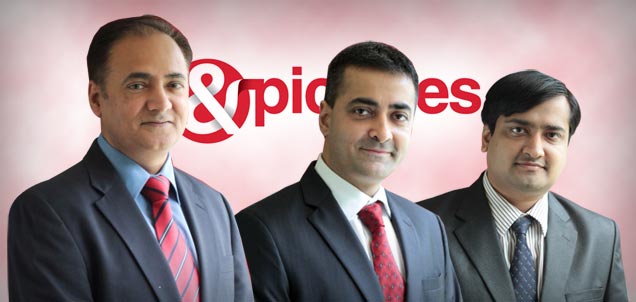
    MxMIndia caught up with ZEEL Chief Content and Creative Officer Bharat Kumar Ranga, Marketing Head – National Channels Akash Chawla and Cluster Programming Head – Hindi movie channels Ruchir Tiwari in an exclusive interaction to get a feel of what’s in store .


    Why &pictures when you already have a Zee Cinema which is doing very well? Barfi! got good ratings. And then you have four other channels – Zee Cinema HD, Zee Premiere, Zee Classic and Zee Action. So why &pictures?

    We think by 2015 there may be 25 movie channels in India and we have to make sure that we have sizeable share out of that. We are also attempting to capture a new way of thinking that people have. We have had different kind of movies… Khosla ka Ghosla, Kai Po Che, A Wednesday.


    Mind you, the youth is still devoted to Indian beliefs, integrity and values. But they want to branch out and take chances. They want to grow outside their existing structure and movies have captured this very well and we thought a movie channel is the best way to capture the new mindset that is emerging right now.


    You already have five movie channels from the Zee stable. Zee Cinema is doing very well, so why &pictures?

    Yes, the obvious objective is to be at the top. It will be a very different brand compared to Zee cinema. Its brand values are completely different. It will be highly interactive. It will have an exclusive library, with movies that are very different.


    But in the past we’ve seen – albeit in the GEC space – where second channel is never given the same attention and resources as the flagship channel

    Well, have you ever heard someone else saying that a new channel will compete with flagship channel. Here we are saying this. The two teams will in a sense compete. We are very clear about one thing: &pictures will compete with Zee Cinema.


    But, as per the numbers available, Zee Cinema is the No 1, Max is the No 1, Gold No 3 and Movies OK a distant No 3. The difference in TVTs between Zee Cinema and Max is over 20,000. Where do you think will &pictures be?

    Who is Number 2 here?


    Max…

    How about replacing it?


    Yes, but Max is at 215075. That’s a tall order!

    So how about something like 250000 or something like that? We will be aiming high, and aiming to get past Zee Cinema. That’s the ambition.


    But you also have three other cinema channels (other than Zee Cinema and Zee Cinema HD) which have not been promoted enough – specifically, Zee Classic, Zee Action and Zee Premiere. So why go in for a new channel when you have three in the stable?

    See Zee Action and Zee Classic were digital products and Zee Classic came out of that and went into the analogue market too. Zee Classic is a unique offering and doesn’t compete with any other channel. We have a huge library that it can take advantage of. The others being digital products are for different audiences.


    Your communiqué mentions the fact that you are targeting viewers who spend a fair bit of time on mobiles, social media etc. But these are people who also download films off the internet, are into Torrent and don’t care too much about piracy.

    Firstly, let us clarify. &pictures is not a youth a channel.  The communication is such that it is relevant to people who are young at. The second point is interesting and we are looking at the entire offering in a different way. Some people watch cinema on the computer, others on TV. Some people may want to interact with us on Twitter because. Today, our viewers are doing multiple activities and engaging in multiple manner so the whole philosophy behind &pictures from the particular perspective is that how are we meaningful to our consumers by every device of their choice, wherever that they are and in a more relevant manner. Hence it;s India’s first interactive Hindi movie channel. We will be relevant to them across platforms.


    Interactivity is a good word, but are you going to really be that?

    If you go on to andpictures.in, we are actually doing India’s first crowdsourced film. And there’s a lot more coming. In 45 days from now, you will see a digital product under the umbrella of &pictures which will help bridge the divide between internet and television in terms of talking to your stars. Wait for it!


    Are you doing interactive stuff with DTH platforms like Dish, since it’s part of the Zee group? Like pressing the red/green button for…

    Yes, yes, yes! DTH is a key part of our gameplans and we are already doing quite a bit with all DTH platforms including Dish which includes that red button you are talking about. There is a separate team in Zee which is just exploring all these possibilities and putting thigs in execution.


    Other than films, will there be any other programming on &pictures?

    No long formatted shows. We will have more of back-to-back movies basically.


    You are launching on August 18th. Any big bang premieres coming up?

    At first we are not doing any premieres. We will be airing films that &pictures stands. But soon after the second or thir week onwards the premieres will start happening.


    So what’s next after &pictures under the & umbrella?

    Well, we will first be working to get the & positioning right and getting the connect right. Once people start liking and loving it, we will come up with new products.


    Will it be beyond television? And Indian languages?

    We will appeato to people across the country and Indians across he world. This could be in multiple genre and languages.


  • On the Food trail with Sanjeev Kapoor


    The Sanjeev Kapoor is now more than that of a chef. He’s a one-person industry. Unarguably the biggest name in Indian food today, he started out rather humbly like any smart chef with a good hotel. A cookery show called ‘Khana Khazana’ on Zee TV changed all that, and Mr Kapoor became a household name in the country. The rise and rise of the Zee network also made the chef attain dizzying heights on the popularity graph. But what really cemented his status in the business of cooking was his attention to grow allied businesses.


    From cookery books (over 150 of them!) to restaurants (Khazana, The Yellow Chilli, Signature and Sura Vie), kitchen implements and gadgets (Wonderchef), blended spices, ready-to-cook mixes, pickles, chutneys, food impresario, guest/judge at various events and shows (including the popular MasterChef on Star Plus) and his very own food channel, Food Food. The list of his achievements, could go on, and we suggest a visit to his website at http://www.sanjeevkapoor.com/Chef-Sanjeev-Kapoor.aspx for a detailed account.


    As he embarks on a few brand new shows on the Food Food channel including the ‘Out of the World’ series which goes to Africa in Season 1, he takes time to speak with MxMIndia on how the channel is doing, his recipe for its success and plans for the future. Excerpts from the interview:


    It’s been a little over two years since FoodFood started its operations in India. How has been the journey so far?

    Very good, in fact we’ve done better than what most people expected out of us. I remember no one gave us a chance when I first talked about it. “Are you mad, no one will watch. It’s an afternoon half-hour kind of a concept and you are taking this to 24-hours? No way!” they said.


    There are times when I tell people that I have started a new food channel and they will say, oh, which channel is it on? I just tell them that it’s a new channel. So much so that initially when we started the tagline was ‘FoodFood – Khushi ki Recipe’ which was changed six months later to ‘India ka favourite TV channel’. That was done to send a strong message to people that we were a TV channel. But yet there were some who didn’t know that and we didn’t have so much money to burn and tell them in a big way. So from there to now, the journey has been fantastic; today people cannot ignore us.


    One is sure you have now started reaping the benefits from the digitization exercise but in hindsight, do you think you could have started earlier or later or for that matter even more recently as the economics would’ve worked out better?

    See, economics is always a call and having a partner like Astro, it becomes a joint call. In fact from the start they wanted this to be much bigger and there were many shows that we did and I said that I don’t want to do it and they said how can you come to know if people have not experienced something till you give that experience? Whether it will work or not, how can you say that? I said it’s a very expensive way of doing things where you first put up a show and if it does not work, then you replace it. So because we launched in an analogue regime we had to broadbase and so we took the mass route and spent a lot of money on that. Currently, we are clearly the number one lifestyle channel across channels today in terms of numbers.


    But TLC is bigger …

    We do about four times their viewership.


    And in revenues?

    A ten-year-old story is different from that of a two-year-old. Where competition is concerned, we know how they look at us. Also with NDTV Goodtimes, despite having such a lineage and good investor backing how come they can’t get viewership numbers as us? Though I can tell whether this show will work or not and whether you can get viewer response or not. So because we did it, we could counter the situation and now it is a big entry level barrier for everyone. everyone was thinking of getting into food after digitization But with the position of strength that we have and the loyalty that we have, it’s very difficult for anyone to replace or displace us. If we started with this, we may have saved some money but to get this kind of stickiness what we have today is just something else.


    The position of strength that you are referring to is obviously yourself because you have been the key driver of the channel. Btw, did the fact that you were also involved with Khana Khazana on Zee in any way take the thunder away?

    Never, we were monitoring the numbers from Day 1. We all know how discerning viewers are and the one thing that worked for us is that we always went with original programming. While people may think that the shelf-life of programming is very long but the relevance changes very quickly and viewers can feel that what is taaza and what is baasi in an instant. For instance, the butter chicken I made 10 years ago may have been very different from the way I do it today…. So words spread fast and it’s a no-brainer. Let’s say Food Food was not there, would they have benefited? Yes, they would have. But in a scenario when there is a better option and you don’t have to do much more to get that better option, then you go for that better option.


    You’ve had a mixed journey at FoodFood where you tasted success with a few big programmes that did very well while others may not have worked as well. What has been the key learning in all of this?

    When we first started I was very clear as to what would work but at the same time if we have to grow the category – and that’s a perspective which Astro brought in – we had to make it big. So we tested with big shows like the one with Madhuri Dixit and all of that. Though the idea was not to do a show it was the endorsement that it’s not just food it is lifestyle. So we tested everything. So right now we can predict this will work or this will not work but at that time also I knew what would be the outcome…


    To use food lingo, what according to you has been the recipe for success for Food Food?

    There are many aspects like figuring out what is the TG that you are going to target. One way is to target everyone or you can do it in a focused way. So currently the set which has affinity to a certain kind of content is a fixed set, can you change them easily? No it’s like changing a daily newspaper; it’s like changing the way they have their tea… some would change very slowly rest may or may not change ever or either you get a new set or you go as per what they want. Also, digital is completely different from the medium of television. The way TV viewing in India is that you know why it is being watched how it is being watched or consumed; it’s predictable. It’s not tough at all so if you focus and understand who it is for it all fits in well. When I was doing a show for Zee TV and I can tell you that this comes naturally to me. Likewise, if I am doing an article for Bombay Times I know what and who is it for and similarly for Dainik Bhaskar or for a New York daily. The same is the case for a radio show.


    With television, most Hindi-speaking markets are similar and are not very different from each other. It’s primarily a medium of entertainment that’s why we get the biggest numbers in GEC. If a channel like Food Food thinks that we can replace entertainment, it is not that easy. We can break the clutter at best which we are doing. We will do that job till it matures properly. So currently our focus is more learning, more input and information with part entertainment. The entertainment quotient will increase and that’s why you are seeing a Master Chef kind of thing but the basic platform is entertainment and that’s why entertainment to them is more important. As for us, we are more information-led not entertainment-led because the entertainment dynamics are very different for them.


    Have you been able to monetize Food Food well enough?

    Well, in reality, we have just about started real selling of the channel. In any new category, people take time before they can start giving you any premium. Our thing was very clear – we didn’t want to be sold as an aloo-pyaaz kind of thing. The last month was our highest in terms of sales.


    Is this advertiser-funded programming the future for a channel like yours or is it also more spot sales?

    Currently we do more maximum spot sales, but I think that integration and customization of needs of advertisers works well in our kind of category and even globally. So we will follow the global trend here.


    What about onground activations?

     That is something in which we are probably the best in the country. This is something I started with as a mandate almost 15 months ago. About 2.5 years back, we did an event in three months. So one day I said let’s do 20 events a month over the next six month. Last year, for one or two months, we did some 89 events in Delhi.


    And are these events for advertisers?

    At times it is advertiser-driven and at times we say that even though there is no advertiser but to constantly do things for the channel offline because that’s the connect we want to build with our audiences. We are not a Star Plus that we can spend so much money on mass advertising; you have to play it slowly. Let’s reach out to smaller number of people but they will be loyal and today we get invitations from where they do everything. We did some 40 events all over India for Tata dal, which no other TV channel can even think of.


    In terms of the way you are progressing, what are some of the new shows that one will see on your channel? Also, what about shows for other international markets? How does that work out with FoodFood?

    Essentially, what we have realized in the programming mix is that one of the things that clearly seems to work is straight learning – that works the best. Even Star India knows this. At MasterChef they would do a recipe section on weekends and till last year that got higher ratings than the main show on which they would have spent 40 times. That’s India for us, but you have to balance it out.


    So you do things which are large, expensive but for brands they are important. It’s like in a restaurant I will serve prawns and crabs and things like that and talk about that. Marginally, the sale is less but yet you do that because in your mix you need that and it gives a message to users that this is premium product. It’s like all these GECs burning their money in reality shows leading to huge losses. So we said that we don’t have money for losses and realized that at the same time perception is also important.


    I think from the advertiser’s point of view everyone wants people who could afford more. So we also decided this is where we want to go and move up and so this show can beam out of Africa. It’s like that when people are used to seeing Sanjeev Kapoor in the studio, so if I go out, would that work? That is a common reaction that we get from viewers. They want to see something like that but it’s too expensive because my time is expensive and the productivity is also much lower so our channel also can’t really afford that. So we have to do this for the channel but since learning works we have integrated learning in that. So there is on-location cooking that happens which also creates largeness around a product.


    Like?

    For instance in Chai time with Chef Ajay Chopra, we’ve spent a lot of money in the packaging. There are 20-30 models shot in a five-star. So people get that upmarket, upscale feeling.


    Are you looking at doing more international-based content or Indian-based?

    Currently, we are only looking at content which is only relevant to us – in India. International content unfortunately has not relevant; there is nothing that is available globally which would cut ice in a real sense with Indians. In food, the way we eat food is very different. We are a largely vegetarian country and there is no content of good quality that is available where there is no beef, no pork and is largely vegetarian. Would our viewers watch it? They would but they would not have the respect for it. So the easiest way is to produce content yourself.


    But some of the content on TLC etc gets a lot of advertising…

    They do get lot of advertising because it’s ten years old. In fact one problem that I have with that kind of programming is that it’s old in concept.


    So you are looking at Africa to start with and then move on to other countries…

    That’s correct. We are looking at other places too.


    How long is the series?

    It’s a 15-part weekly series to begin with. We will do about 13-15 parts every series.


    And are we going to see more new shows along with this?

    We are bringing in a couple of new shows. The good thing or the bad thing is that whether our shows work or not we have to bring in new series all the time. So for example, we have my show Sanjeev Kapoor’s Kitchen, Turban Tadka, Mummy ka Magic, Health Maange More etc.. but we are also launching High Tea with Ajay Chopra. The initial promos have come out very well. Then we are launching one more show which is Namaste Breakfast with Shipra Khanna, winner of last year’s MastercCef. Now you are beginning to get some talent who can hold themselves.


    What other shows are you looking at? Are you looking at doing more documentary or outdoor-hosted shows that are the trend today?

    Yes we had a show called ‘Khaata rahe mera dil’ but the problem is that the cost of producing these shows is much higher than what can be monetized from them.


    But there is Highway on my Plate on NDTV Goodtimes that is doing well.

    Yes there is only one such show that works. I would want to do something like that and I would love to do something like that but I have to find the right talent that can pull it off. Such shows are actually 100 percent driven by the talent.


    Are you looking at any international formats etc?

    See we have done all this… We have worked with the BBCs, Endemols of the world, Red Chillies…we have done all that. So we know what works today and with more ability to spend we are investing in polishing it more than just spending it on very large concepts.


    So you are not going to have a new season of Madhuri Dixit?

    Not in a rush as yet and why I say this is that if I want to do it I will do it in partnership with a GEC.


    So are you scouting for a partner for the Africa show?

    Actually we are in talks with a news channel. That should happen very soon…


    Going forward, what would be your emphasis on the digital media? Would you be creating different content for the medium?

    We are now present in all mediums so to say but we still don’t have a kickass app, which we need to do. We have partnered with some digital leaders in a sense and in the next six months we will be able to see the difference. Today, we are present on YouTube with our content and currently we have just about started our journey on that platform.


    So you are digital-ready?

    Yes, 100 percent. We were that from Day 1.


    For your channel to be a bigger success, you obviously need to create five more Sanjeev Kapoors, right?

    That’s what I have been doing.


    But with more great success?

    If it takes timem so be it. Let’s say Turban Tadka if it could stand on its feet… then we have Mummy ka Magic with Amrita Raichand, which does very well. She needs to get more focused doing this and she is someone who can do that. Now I am hoping the same with Rakesh Sethi and Ajay Chopra…and that’s the biggest challenge I have. I know that but that’s where I spend most of the time.


    Apart from food, you are obviously into various other things. How much time do you devote to Food Food vis-à-vis your other forays?

    Maximum. In fact if I were to give other businesses as much time as I give to TV, they would be doing five times better (laughs)


    Where new projects are concerned, are you looking at any new announcements in the future?

    Currently the other business that we have is largely our presence on digital as Sanjeev Kapoor. The Sanjeev Kapoor channel on YouTube is the largest; I think its Top 10 in the world in terms of number of subscribers. So I started all this at the same time. Of course our digital presence Sanjeevkapoor.com, social media etc is there, but I have started focusing little bit more on the restaurant business. Then there’s Wonderchef which is also doing exceedingly well.


    You possibly are the biggest name in food in India. How do you look at constantly re-inventing yourself? How do you go to the next level?

    Fortunately, I have the ability to think ahead which at certain times I convert it into business. With certain things I may not proceed as fast. Let’s say internet. I saw this coming many years ago so I launched the website in 1996 when Times of India had just about thought of a website. When TOI was just taking baby steps on the internet sanjeevkapoor.comwas up and running. I launched my CD-ROM when population of home computers with a CD-ROM drive was less than 50,000 in this country. Much before that I launched my first book. Also, where YouTube is concerned, I started it about three years ago.


    So you have been ahead of the curve.

    Yes, I had the ability to see. So a food channel at that time was ahead of the time. For instance  in digital before anyone was talking about Top level Domain (TLD) I have done full research and I was not willing to commit at that time a large amount of USD 400,000…that was too much money for me. If at that time I had done it I would be owning .food today in the world – first person in the world to think that.


    For me, business is incidental. My excitement is to do new things. So currently I am working on something that is path-breaking and I am doing it because I find it fun to do.


    You’ve endorsed a few products. Any more coming up?

    In the last 20 years I have endorsed about 10 products. Only 10 in 20 years and people do 20 in a year. So I am very particular with that. I currently endorse Tata, i-Shakti  dal, I do Nature Fresh oil. I do commodities, I don’t do value-added products because I don’t know whether I would get into commodities myself but value-added I may. So I keep those things with myself. And if tomorrow I have to create those businesses then why should I give my endorsements?


    Are you looking at any language feeds?

    I want to but I don’t want to talk about it at the moment.


    And how is the relationship with Astro and your partners coming along?

    Sandeep Goyal and I are one part and then there’s Astro….


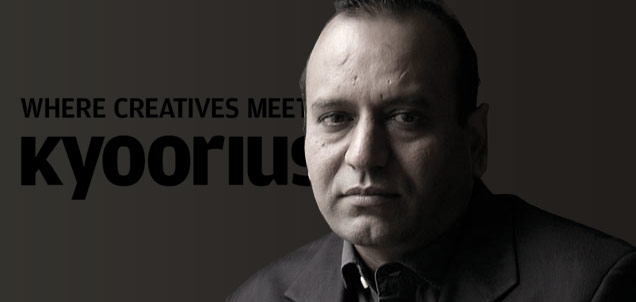
  • Upclose with Rajesh ‘Kyoorius’ Kejriwal


    First a disclaimer. MxMIndia is an active trade partner of the Kyoorius Designyatra and Digiyatra. But that’s not the reason why we are carrying this extra looooong interview. Even if we say it ourselves, the interview with Rajesh Kejriwal is a must-read as there’s nothing written between the lines. Mr Kejriwal talks about why his awards are not called the Yellow Pencil even though there is a tie-up with D&AD, on Goafest and how it’s different from his event and what according to him the Goafest organizers should do… and how he doesn’t allow his event sponors to have a say in the speaker line-up of the twin conference (to be held in Goa from August 29 to 31)

    Read on…


    How’s Design Yatra 2013 going to be different from the previous years?

    It’s not going to be very different from that of the previous years. As a format, we look at content and select an appropriate theme. Our theme defines who our speakers are going to be, what our content is going to be etc. So anything that is going to be different is the theme this year and that is: to create change. So everybody over there is going to be talking about how to create change… whether advertising can create change or can branding create a change or can digital create change…or if digital can create change then we will have some people who have created that changed by using the digital medium.


    Design or re-design is generally about change or is there more to it?

    Sometimes design in India is about change but mostly it is cosmetic. We are not talking about cosmetic changes here. One thing you’ll see is a lot of companies say that we have changed this logo to another one etc but in essence nothing much has changed. Change is more about what have you done internally; what have you done to connect or engage with your consumer or how transparent you have become with the digital age coming up etc. With the onset of digital, you could be saying you are the best but there are people out there who think you are not. What change can design help achieve or how can design help make a change in an organization should be the way forward.


    One of things people tell us about the Designyatra is that it more of branding and graphics and less of stuff like product design or architecture etc. Justified comment?

    When we started Design Yatra we were very clear that we are in the visual communication business where we look at branding, digital, packaging, graphic design etc. We were never what we call into product design or architecture or stuff like that. But over the years, it has been felt that one can’t be independent of the other. An architect can’t create a building and then call a designer and say hey, do the graphics. They have to work together because the times have changed today. Designyatra serves as a platform inspiration, innovation, ideas etc and for this we just can’t have visual communication designers. So we always have an installation designer. Most of the times we have an architect or one product designer. This year also we have a product designer but am I product heavy? No. I am still going to be visual heavy.


    And will that change at all or is it a conscious decision?

    It’s a conscious decision because the thing is that there is no infrastructure in India to give me space for more than 1300 people at a venue. I get that kind of crowd anywhere so am I going to add certain more things and get people from another segment and reduce the impact of the number of people coming from this segment? No. My thing has always been that we are essentially a platform. And I can’t say a platform and then deny an opportunity. We get a lot of enquiries from Italy, UK, Netherlands, Dubai, Sri Lanka, Singapore, Malaysia etc but we don’t entertain them so much because I only have capacity for 1300 people and 80 percent of them are repeat audiences who come for that one particular thing. So I don’t want to get too much into it but if I find something is interesting for this community I would bring that in.


    The other comment about Designyatra is that it is very rich in content. You’ve attended many other conferences. What is that you offer that others aren’t able to do?

    I think we were in the same space where others were in 2006. We look and say hey, we are a conference…we need to have 12 speakers for say two days so let’s get eight big names and six good names. Today, we have moved away from that and we have said let’s look at people who have made something different. So one, we never call a speaker out of the blue. We first set a theme for the conference then we do research on the basis of that theme like who the speaker should be and this research takes almost of three four months. That is I think what a lot of conference guys don’t do. They say, hey, let’s call her or him… send out invites, get confirmations etc. That’s not what we do.


    How much time in advance do you plan for this?

    As we speak we have already started planning for next year. We have six speakers confirmed for 2014.


    And are there any pulls and pressures? Are there any people who want to be there?

    We get about 20 requests every year.


    And how many do you accept?

    Two.


    Two out of twenty? Aren’t you being harsh?

    Doesn’t fit the theme sometimes, sometimes people want to come… lot of them want to come because they want a free ticket…


    Are there pressures from sponsors – people who are associated with them? Do you accept those?

    No, because where there is pressure we don’t take them on as sponsors.


    So you have that as a very clear part of your deal?

    Yes a very clear part, in black-and-white that we will not give any speaker slot to any sponsor. For example, we have had situations where we had to have a speaker because he is a good speaker so that year we do not take him as a sponsor. We tell them to come on as a sponsor next year, but not this year. So we are very clear that sponsors and speakers won’t happen simultaneously.


    While you have revived your awards this year, one of the worries is that awards take away from the conference. What’s your view on this?

    Two ways of looking at it. One is whether an award adds an element to the conference or whether it takes the thunder away from the conference. We are not like Cannes or other such events that have a lot of glamour attached to it. We are more about prestige and credentials. We are very serious about the awards and that is why we tied up with D&AD and the process that D&AD follows is very strict. For us it is just that if we have this community of 1300 people and if the right audience is present then why not have an evening of awards? And the awards are happening in the evening; it’s not disturbing the content of the conference in anyway. It’s just a single evening of the three days!


    The thing about awards is that while it makes a lot of people happy there are also many who are unhappy. Your views on awards being politicized or critiqued by an unhappy few?

    I think the politics of awards happens when there is a politics of judging and I feel that if you don’t have politics in judging then there won’t be politics of awards. People will be unhappy but I think it’s time India grows up and people should realize that if you have good work you get awarded and if you don’t have good work  then you don’t get awarded. And it’s not that they don’t have good work, it’s just that someone else has done better.


    You were also there at this year’s Goafest. How is Designyatra different from Goafest?

    I will start from the beginning. If you look at Goafest and us, we have D&AD as partners who I think are one of the most prestigious and the credible awards institution today. Also they have been the people who been doing the entire process control for the awards. Secondly, a lot of these award shows don’t have judges that come and sit down, debate, talk and judge on ground… most of them are done online where people are sitting in different parts of the world, giving some point system and then you also have the leeway for, as you said, the politics of judging.


    In our case we flew in international jury members and the D&AD people were there to monitor the entire judging session. Nobody else other than D&AD and jury were allowed…even I was kicked out of it from the first two days when the main thing happened. None of the Kyoorius team was allowed there and they sat, they nominated, they shortlisted first, they discussed the nominations… the D&AD people made sure that they discussed every entry in detail and that allows it to be very fair in its judging.


    What other difference do you see between the two events?

    I don’t think Goafest has a conference. It has 3000 people but only about 400 or 300 people attend the conference. I think that’s difference with us as we have more delegates at our conferences. I don’t think Goafest focuses so much on the tradition of conference as much as it does on the whole thing as a festival. And both have their own space. Goafest is about enjoying the festival and we are about serious content, innovation, inspiration, ideas… they are two different things. So should Goafest change completely and make its conference very serious, I am not sure because the fun element is also necessary. So it just depends on where you want to go.


    So then why do it in Goa? You could have done it in Mumbai or someplace else…

    In Mumbai you can’t have the fun element. I have tried it one year. But I think what was different was that when you tried it here, it didn’t work well on the networking front. I think the major part of the conference is about networking. People meet after a year, you meet so many of your friends, you meet new contacts, you have clients coming…we have 300 clients who are non-designers coming to the conference and this is a opportunity for networking. In Mumbai, the moment the conference ends everybody is like, ‘I have to go home’ or people go to meet up with friends. Once you come to Goa, you don’t have clients, you don’t have an office to badger you, you don’t have anywhere to go… so you are in the evening at the conference busy networking. In Goa, everybody is relaxed and stay concentrated on the conference and that I think is big. So that’s the reason we moved back to Goa.


    How would you assess your association with D&AD given that they have their own style of judging and running an awards show?

    I think they are great partners. There are two things to an award at a conference. First, I think over a period of time you either build yourself as very credible with good credentials…so if you win, for example, we have elephants as a trophy and if you win a blue elephant it means you have really done something worthwhile. We don’t have gold, bronze or silver. In some categories there has been no winner because the jury decided that none of the nominees qualified to reach the benchmark criteria that D&AD and Kyoorius together had set to be a winner. So in two categories there were no winners while in one category we have had four winners.


    One of the other things that a couple of the jury members told me some of the better design works from India haven’t entered the competition. How do you ensure this is taken care of going forward?

    I think this was the first year so there is always a learning curve when you do it the first time and lot of people especially design studios do not have faith in awards so they don’t necessarily participate. That is why I said D&AD and Kyoorius is about being credible is what will get these entries in…everybody wants to be recognized but everybody wants to be recognized as being credible and not being one among the many. And D&AD ensures that but I have met people who have said oh, I have won at Cannes and that’s it…they are happy that they have won in Cannes. And then they win a D&AD Pencil and they say wow, I won a Yellow Pencil and normally these people who take the Pencil home, leave the Cannes trophy in the agency. That’s the amount of pride one gets when winning a Yellow Pencil verses a Cannes…that’s where I think if you have something really credible along that good work will also come.


    Why didn’t you give the Yellow Pencil as the award for the Kyoorius Awards?

    We didn’t want to do that. You never know the partnership may not exist five years later, so we didn’t want to piggyback on them.


    Ufff, you are saying it on so many words.

    Why not be transparent?


    What if they read this and decided to drop you?

    They won’t because they know. They have come to us because we are transparent. I am not saying we are going to move away from the partnership but I also realized that they have a heritage, they have done so much good things…they have partnered with us and for us. That’s like an honour for me. This is the first partnership they have done globally. They have never partnered with anybody and that itself is good enough. Why would I want to piggyback on the Yellow Pencil and reduce it – I don’t want to do that; more for them than for us. I will be happy to have a Yellow Pencil; it automatically uplifts the whole experience…


    In a sense, you could have done the same thing without D&AD?

    We could have… we did it in 2007 where we had what we call Kyoorius Verdict. There is an experience then there is credibility and the whole process of jury selection etc which they have finetuned for 50 years. I would have to go through a 3-4 years learning curve to do it by myself…


    Have you been hit by slowdown in terms of delegate participation?

    Yes, we had about 430 entries whereas normally we would have expected about 800 entries. We were priced very reasonably even if we were compared to any other award. I think a single entry was Rs 4500 but if you had five entries the participation came down to Rs 3200 per entry. Again it comes back to the same thing: If I price it at Rs 7000 I still get entries but I get entries only from larger agencies but there is this small boutique design studios who do good work. The question is: can they afford Rs 7000? May be or may be not…may be for one entry then they would not be able to participate in two categories or three categories because they can’t afford it. So if I build a platform, I need to make sure that everybody has an opportunity to take part in it.


    One more observation is that there are lot of designers across agencies and a sizeable or a small section of it are not English-literate. But at the Kyoorius Designyatra, English is the medium. Is that something that you are conscious about?

    We are conscious but what can we do? India is a nation with so many different cultures and so many different languages and you are talking from perspective that there is a Marathi guy who could not converse well in English but there is a Bengali guy, a Tamilian, a Malayali…


    How do you transcend that because if you have to take Kyoorius Designyatra to the next level, you have to get people who are not known, who may not be good in English. How do you get them in?

    What we are planning to do at Kyoorius is that through this event, which happens once a year but we meet we talk to so many people during this one-and-half months of preparation and maybe three days at the conference but then nothing for the next one year. So we are launching what we call Kyoorius FI Day. FI stands for Foreign Information Day and it’s just an evening. We plan to do this across India on month-on-month basis. So we may do about 20-odd next year but this will happen maybe four in Mumbai, two in Chennai, one in Kolkata, one in Kochi, two in Pune, four in Delhi, three in Bengaluru, one in Hyderabad and across India. So this will be one particular subject and it could be editorial design, broadcast design, typography…it could be strategy within branding, it could be design within branding, it could be packaging just for the FMGC sector. So when we do it in Kochi we are expecting to have one international speaker and one speaker from that area in South India.


    Will you at any point of time look at a design discussion happening in an Indian language – a non-English Indian language?

    I don’t know because if you see the young generation, they don’t want it in a local language. So if you are talking about the difference between languages it is only in between generation of 35 and above .I have seen it as I travelled across private schools etc.


    But the Mumbai scene could possibly be different from that of Kolkata…

    No, I have been to Chitrakala Parisad in Bengaluru which is a very local school. DJMD in Coimbatore…they are all completely English-speaking institutes. Maybe some of them are a little bit here and there and all of them are on Facebook so it has changed…you know what I call the new India, if you ask me, I would be very happy to do a conference in Indian languages but content in multiple Indian languages are not available that much.


    Getting back to Designyatra, what are the numbers you are expecting, since the confererence is a few days from now?

    We expect to have about 1300 people. We had a good 1300 people earlier but as you know the capacity of the hall is a problem. We could even get 1600 people but there is no infrastructure in India that will allow me to host that big number. Also, we sponsor about 250 students – that does not change. We make sure we have participation from all the 18-20 design schools. We sponsor about 50 faculty members to the conference…so 300 would fall in that category, 100 would be special invitees, speakers, press etc. 900 are professionals. Out of it, this year I am very happy to say that there are 300 people who are coming that are non-designers and are from marketing and corporate teams – brand managers or product managers…for me that is like brilliant. We never had this before. Companies like  Himalaya, Godrej, Titan watches, TCS, Nestle, Unilever, Proctor & Gamble have been sending people…


    You have more people than in Goafest…

    Surprisingly!


    I think Goafest should have you in the organizing committee?

    (laughs) No, I think what Goafest needs to do and I am being a bit vocal about it, what it needs to do is over a period of three years curate the conference element much more. You cannot have a 2000 sq ft hall to fit in 2000 people; there is nothing that 2000 people could hear so it should be curated in such a way that every audience out there has something to look back to and take back from there. You have a lot of young crowd coming there, so maybe you can take 500 of those and do something in terms of a half-day session with three or four speakers. It should be so interesting that those 500 people will forget about going to the beach but attend the sessions. Also, I think the trick is that if you have beer on the beach with rain dance and conference happening side by side, you have to decide where the people will want to go.


    You do have beer at Designyatra, don’t you?

    Not during the conference time; between 10-6pm nothing but 6-10pm we are okay with. And that’s really because we want people to stay back and talk to each other, network with each other, get introduced, build a network etc.


    Do you making money from the Designyatra?

    Okay, I have a favourite line which I am going to quote here – a we are not-for-profit organization. Last year I said this and I saw there was a lot of glamour attached where I was going to people and saying not-for-profit and stuff but then I said, this has cost me a lot of money. So last year I made a mandate that we should be not-for-loss organization. Not-for-profit is nice but not-for-loss is better. We started working at every one of our initiatives and seeing if it is sustainable. We don’t care whether we make money or not but we do care whether we lose money or not. So we are making each of our initiatives sustainable and we are saying that not-for-profit does not mean you cannot make profit, you should make profit and then see if you can use that money for something else. This year we made some…last year we sustained ourselves. This year I think we will be having some profits and we will be using that profit to launch something called Kyoorius Grant, which we will be launching at Designyatra. I am not going to tell you any more about it now. But it is something which we are making as a Fund for the student community, which they are not able to get in India so far. We eventually expect more people to donate more money other than from what we generate from the event to build scholarships etc.


    So Kyoorius is not for profit…

    Not for loss now!


    I see you spending all your time in Kyoorius. How do you make money? I do know about your paper business, but do you spend time on it?

    Last three years I wasn’t and to be honest, the last three years we went through a huge turmoil in our paper business because we decided to launch our own paper brand rather than selling brands from overseas. Selling brands from overseas is always restricted by what they want to sell in India rather than what Indians wanted here and we were making foreign brands more famous in India than Indian brands in India. I think the time has changed where I think Indian brands need to do build themselves up and go global. So we misaligned from all the foreign brands which we were selling which took us two years of non-compete clause. So there wasn’t much of paper business happening. This year, we launched our own brand and we are spending more time on that now. And I hope that all this design-led activities that we do at Kyoorius, which is about building a platform for the design community, we will see an equal reciprocation on behalf of the design community.


    Do you think there could be some conflict sometimes between the design unit and the paper brand and also the media and events division that you have under your umbrella?

    No, both are two different companies actually. We are keeping Kyoorius neutral. If you see our magazine, I don’t know about this issue but one of the past issues we had the other paper merchants who are our competitors advertising in it. So we are neutral. Kyoorius is not-for-profit or not-for-loss and we are open to it. In fact this year at Kyoorius Design Yatra, we had two paper merchants asking for stall space and we gave them both.


    Hmmmm.

    I think we should see the larger picture and not be single-minded. One should look at growing the industry and then maybe look at how to get a larger part of the share. But if you are too narrow-minded and you don’t grow the industry then you yourself are the major loser. So you build a community then build the market expand the base and then see how your division can get a larger market share.


    Will you ever be doing something for the packaging community, printers and all the others you target?

    We are trying to do that; now the objective of Kyoorius has changed. We are going to be looking at building the platform. So it will be the print community, maybe packaging community… Also, the second step is to look at design as wholesome…we may do a separate activity for the design industry that we have not yet dealt with which is about architecture, interiors etc. This year we launched Digiyatra specifically for the digital community. Next year, we may add something else. At some point of time, I would be happy to go for a one-week-long festival at Goa where different streams come together and where some people could stay for one week or one day, four days, etc.


  • Future-ready Alliance


    By Johnson Napier


    It was a first for any distribution network in India when The One Alliance announced that it had bagged an ISO 9001:2008 certification a few days ago. What the new certification has done is enabled the network to bag the tag of being an ‘organized’ one especially at a time when there’s much that’s being written and said of the unorganized state of the industry.


    In fact the milestone also coincided with the completion of 11 years of operations of The One Alliance in India.


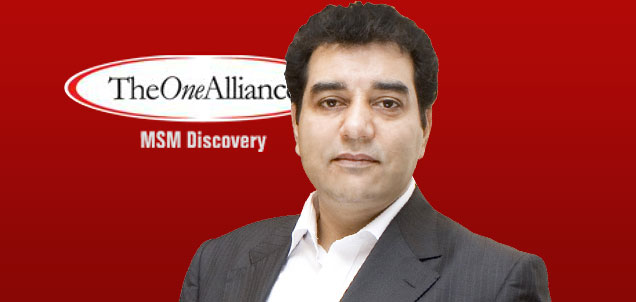
    For Mr Rajesh Kaul, President – The One Alliance, there is a lot that has been achieved in the past eleven years and also a lot more to be done what with the digitization exercise currently underway in India. He tells MxMIndia on what the distribution market seems like in India and what’s to be expected out of the DAS rollout for distribution networks in India. Excerpts…


    As a distribution network, what is the significance of getting an ISO 9001:2008 certification in India?

    We are an unorganized sector atleast that’s what people believe, so it’s important that we take this initiative of being organized than the rest. To that extent this is significant because we insure that we follow a particular pattern and process so that we don’t deviate.


    How does this achievement separate you from other distribution networks in the country? Do you think it is essential that the other players should try and get a similar certification?

    The certification is only a means to get a little more organized in life, to ensure that you have proper systems to follow, so it is good to have such kind of a certification.


    The occasion also marks completion of 11 years of your existence in India. How has the broadcast distribution ecosystem evolved since the 11 years you’ve been operating here?

    I can actually write a book on this. If I had to cut it really short, in the past 11 years a lot of new channels which have come in. Eleven years ago, we had just 150-200 channels and today there are 700 channels. A lot of consolidation has happened on the ground. Maybe at that point of time, you had 50,000 to 60,000 cable MSOs, today we have just five to seven thousand. A lot of consolidation has happened within the channels too. Aggregative businesses, aggregates have started coming in and now is the era of digitization. So, we have moved from a complete analog to complete digitized world in recent case. So a lot has changed.


    How would you summarize The One Alliance’s growth story post the digitization exercise in India?

    There is no big story as of now in the growth aspect. Post digitization, we have a goal in mind and now we have to go all out to achieve that goal, which we deserve in terms of distribution revenue. We are hopeful that we will have a story from that.


    What are the advantages that a distribution network can savour from the digitization rollout exercise that’s in its second phase as yet?

    We are hopeful that we’ll be able to get desired results, it has not happened but slowly it is showing the impact. We have supported the entire industry so far. In the best interest of the industry and for the smooth roll-out of DAS, we’ve toned down our expectations for the smooth future functioning. Initially, that is what was desired from TRAI as well as the MIB but we are hopeful that with digitization overall revenues will get multiplied and the carriage fee which has been a big part of the broadcaster becomes negligible. This is what we are anticipating.


    Do you think digitization has managed to deal with the numerous challenges facing distribution networks in India? Or is there still a long way to go?

    I think we have come a long way but still a long way to go. So I would say both. It was a mammoth task. Digitization of a country like India with so many households, so many towns and so many different socio-economic backgrounds is a huge deal. I think we really have come a long way, by converting so many households into digitized households. But we still have a long way to go in terms of getting the systems right, getting transparency, getting the revenue share allocation proper. But yes we are on the right track. So we are happy with the progress.


    It’s been 11 years since you launched. How do you see The One Alliance stacking up against the other players in the space? What is the roadmap you seek to chart in the immediate future?

    We are ready for the future, our channels are doing well. We have exceedingly premium channels in our bouquet, we are completely ready and the roadmap is also prepare, with digitization taking place we just have to correct the overall revenue share allocation on the ground. Broadcasters should get 35-40 % of the overall revenue; we are hopeful that should happen soon. The roadmap is ready we just have to implement it.


  • More than just communications

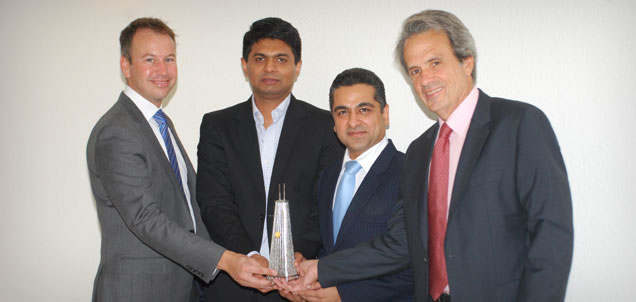
    (Left to Right) Jonathan Hughes, President, GolinHarris, Joseph George CEO, Lowe Lintas & Partners; Ameer Ismail Executive Director Lowe Lintas and Partners and Fred Cook, CEO, GolinHarris


    Where so much is being written and said about the not-too-exciting state of affairs in the M&E sector, it comes as a pleasant surprise when a few buck the trend and manage to prove otherwise. On Tuesday (Sept 3), PR agency LinOpinion announced its joint venture with global firm GolinHarris.


    With a 50-50 stake between the two, the new entity will now be known as LinOpinion-GolinHarris. While the two have been associated for the past 10 years given their affiliation under the IPG network umbrella, the new joint venture will enable GolinHarris to expand its reach and bring in some fresh new thinking and ways of working in India.


    In conversation with Johnson Napier of MxMIndia, Jonathon Hues – President, International, GolinHarris shared that while the timing of their entry is perfect, what was important was the fact that clients in India are looking for more from their communications agency. In fact that’s what the new integrated model, called G4, will seek to offer them. “At the same time, we are also developing our capabilities across the region and India is an extremely important market,” he affirmed.


    Agreeing with Mr Hues, Ameer Ismail – Executive Director, LinOpinion who will continue to head the jv agency said that the plan was to have sensible growth but not at the cost of quality. He affirmed that the focus will be to build on its current strengths and invest in others so that they emerge a bigger and better player, one that is committed to doing outstanding work with its clients. Excerpts from the conversation…


    Q&A with Jonathan Hues:


    What is your assessment of LinOpinion as a PR & Communications player in India that made you seal a venture with the group?

    We’ve been working with LinOpinion for nearly 10 years now so we have always known how good they were and how strong their reputation in India is. So this is very much a natural extension to our relationship and one that allows us to expand our reach into India and to bring some fresh new thinking and ways of working to India.


    Were you contemplating an entry in India at this juncture or was it work-in-progress for some time now?

    The timing is pretty much perfect now. We think clients in India are looking for more from their communications agency and that’s what our new integrated model, called G4, is designed to bring them. At the same time we are also developing our capabilities across the region and India is an extremely important market.


    What is the difference that GolinHarris would seek to offer its clients in India?

    The aim would be to integrate and offer the brightest insights, the boldest ideas and the broadest engagement for clients in India. We have a very successful team in India already but we believe the market is ready for more than just media relations. We believe we need to further strengthen our strategic and creative capabilities and over time hire new, diverse talent from different fields so that our campaigns really resonate and engage. The other difference is through the close relationship with Lowe Lintas and the wider services it is able to offer. Together we can offer clients a whole new range of integrated services.


    Among the many global markets that you are present in, what are the factors that make India a standout among the others?

    It’s a key market in Asia but it’s not just about dots on the map. It’s such a vibrant and creative market and whilst we are bringing new technology and ways of working I think we will benefit from having India fully integrated into our business as there are many areas around mobile and digital, in particular, that India is taking a lead in.


    There are already a couple of other PR agencies under the IPG umbrella operating in India. Would you be looking at leveraging resources across verticals or would you be competing head-on with them?

    It’s the same in almost all the markets we work in around the world. Where it makes sense for a client then we will happily work with our sister agencies, and not just PR, within IPG. However, we are also happy to compete head-on as we believe we have something very different and distinct to offer.


    What are the challenges you foresee for the PR & Communications space in a market like India?

    To really demonstrate the value they bring and to compete in areas of strategic insight, analytics and creativity that have long been the domain of others. Today so much measurement is focussed on clippings and coverage and not on the change they bring about. We have several specific tools and methodologies within our strategist community to help benchmark and measure this change.


    What according to you are the reasons that the PR & Communications medium in India has not managed to make a mark like the other mediums in terms of the ad pie?

    Possibly because we have not shown our clients the same levels of insight and creative thinking that the other disciplines have. We have done great largely around media relations but now I believe communications is coming of age in India. Brands want and need communications to play a central role in helping their brands remain relevant to their consumers. We have to step up to the plate and that is exactly what this JV is designed to help us do.


    What is your growth strategy as you begin your operations in India?

    There is huge potential here in India and our partners at LinOpinion see no reason why together we cannot double the size of our business in India within a couple of years.


    Q&A with Ameer Ismail:


    The JV with GolinHarris is big news in recent times surrounding the PR & Communications space in India. How do you see the JV changing the gameplan for your activities in India?

    This is a great milestone in our journey and the timing couldn’t be better. Clients in India are looking for sharper partners who can work with them and deliver outstanding, measurable results. We have been a successful agency in this market, with GolinHarris (GH), we will get the tools and the G4 model to deliver a completely unique and differentiated product to our clients.


    What do you anticipate GolinHarris to bring to the JV that could make you a differentiator in the Indian PR space

    Talent, Technology and Training are the 3 main inputs I see GH bringing to us. We will together upgrade our infrastructure and invest in areas to ensure we have a significant edge. We will also have ‘the Bridge’ in India very soon.


    With a rich clientele offering from GolinHarris, do you see yourself leveraging the client/brand footprint in India too?

    Without a doubt, we will now have an opportunity to work with their vast portfolio of global brands and likewise, our brands that are looking for global support can now access seamless service across the network.


    Will the JV lend you more muscle to bulk up investments in other avenues in India?

    This business will be significantly scaled in the next few years and we will be looking at any opportunity to achieve this objective and will be ready to make investments.


    You seem to have restructured your service model and made significant investments to strengthen the team with vertical heads. Could you elaborate a bit more on this development?

    We have been strengthening our talent pool at the senior level as a part of an earlier plan. We will now be reorganising our teams around the G4 model. Within this there will be vertical areas and experts.


    There’s a lot that’s been said of the volatile economic climate gripping the Indian media sector as of now. Will the JV provide you more muscle to fight the survival test facing the sector?

    It is my belief that agencies that focus on doing quality work will stand the test of time and economic uncertainty, there is opportunity for PR even in these times.


    What are your growth plans for LinOpinion-GolinHarris in the coming year? Where do you see yourself in the player sweepstakes going forward?

    We plan to significantly scale this business, however we want to have sensible growth and not at the cost of quality. We are already a leader in some areas; we will build on our current strengths and invest in others so that we are a bigger and better player, one that is committed to doing outstanding work with its clients.


  • MoCoupons will be boon for FMCG companies: Sandeep Goyal

    By Gulveen Aulakh


    Since selling his 26 per cent stake in Dentsu India in 2011, former chairman of the company and adman Sandeep Goyal wrote the CAT exam at the age of 50 for admission into FMS, Delhi, launched a food channel on television with Sanjeev Kapoor and then floated Mogae Media for venturing into the nascent mobile marketing and advertising sector.


    He has since raised Rs 100 crore from private equity players for the new venture.


    In a conversation with, Mr Goyal said that his company is inventing ways to monetise the ubiquitous mobile phone and has come up with mobile-couponing or MoCoupons – the most direct way for brands to reach out to consumers without spending a bomb on advertising. Excerpts:


    How does mobile couponing work?

    Companies spend large amounts on TV and print media marketing campaigns to prompt customers to buy a product. Today, it can be done far easier, more cost effectively and time efficiently, using mobile phones. This is how it works: A brand sends out coupons to consumers using a telecom operator’s database. The operator knows where the telecom subscriber lives, works, his monthly ARPU, a good surrogate of spending, the type of handset owned, a good indicator of affluence, and hundreds of pieces of information.The coupon can be sent to all consumers in a specific geography, say NCR or just Gurgaon, or while the consumer is entering a mall using a geofenced solution that serves the coupon in real time based on location of the customer. The consumer then takes coupon to the participating merchant, gets an instant discount or gratification . The MoCoupon system reimburses the merchant on the brandowner’s behalf through the mobile money account.


    How will it work in India where not everyone has a data connection?

    Consumers don’t need a smartphone or data connection. Mobile coupons can be sent as an SMS or USSD (text message based interactive system) with an alpha-numeric code that merchants can authenticate.


    What benefits do corporates see in associating with mobile couponing? Have you signed up any clients?

    MoCoupons is an end-to-end couponing ecosystem that allows brands to access consumer base of the mobile phone company and target consumers by geography, time-of-day, location, ARPU, handset and a host of other tags. No such system of such magnitude and reach exists in India. For FMCG companies, this is a boon. We have signed up 1,500 grocers in Delhi, which will swell to 2,500-3,000 by end September across NCR (national capital region). By end of the year we will have 5,000 grocers, general merchants and above-the-counter pharmacies in the system. Post Diwali, we will reach out to the other metros. In 2014, we’re aiming for a base of 30,000 grocers in 20 cities.


    How will customers benefit from mobile couponing? Please share some instances.

    Customers (those who are not on DND) will receive offers or discounts from their favourite brands above and beyond those offered to other customers. Recently, a pizza brand used us to send out MoCoupons in a select business district of Gurgaon between 11 am and 12 30 pm, pre-lunch. Customers got a dessert free with the pizza. We are currently working with a large multinational bank for a promotion at Palladium Mall, Mumbai, where the bank’s credit card users get an extra 10-20per cent off at 40 participating outlets. But the big impact will come once we have a large enough base of grocers so that FMCG companies can run promotions on every day products. For instance, offering Rs 10 off on a toothpaste or Rs 20 off on (a bottle of) ketchup.


    Does Mogae Media plan to reach out to a multi-operator base?

    We are today forging many alliances that will allow us to reach out to different type of customers across geographies, as well as income strata. We are integrating with the point of sale systems of modern retail to allow seamless and quick couponing.


    Source:The Economic Times

    Copyright © 2013, Bennett, Coleman & Co. Ltd. All Rights Reserved

    Licensed to republish


  • Sanjoy Narayan & Shantanu Bhanja on the ‘refreshed’ Hindustan Times: Taking ‘bad news’ head on

    Sanjoy Narayan & Shantanu Bhanja

    By A Correspondent


    Getting news media top brass to take questions on their product isn’t easy – either they don’t trust media websites or other news journalists or just don’t think it’s critical for them to speak to journalists even though expect their own staffers to chase news stories. MxMIndia though has been fortunate to get many of them to speak on their moves – especially those from the mainline dailies.


    Earlier this week, leading daily Hindustan Times introduced a refreshed look with some changes in the design, but most significantly an innovation in the form of a slim tearaway sheet on top of the Page 1 of the main paper called the ‘Page One Plus’.  To coincide with the refresh (created by the HT Design team led by Anup Gupta), a new multiple media brand campaign by Lowe Lintas, New Delhi was unveiled.


    In an extensive emailed interaction with Editor-in-Chief Sanjoy Narayan and Shantanu Bhanja, Business Head and Vice President – Marketing, the editor-marketer duo take questions on Page One Plus, the editorial direction and why paid content in the form of promotional features hasn’t gone away from the paper.


    01. We’ve been hearing about the changes that have been introduced, but one had expected it to happen after your new managing editor Nicholas Dawes had settled in?

    We have been working on the refresh for almost a year. No such big initiative is ever dependent on one individual; even here, it has been one big, multi-department project driven by the editorial, design and marketing teams. As for Nicholas, we are delighted to have him on board. His experience and expertise is going to further strengthen the product, as we seek to make continuous improvements day after day.


    02. The use of the tearaway, slim jacket as an editorial add-on is interesting. Since HT also carries full ad jackets and full page ads on Page 1, how will the ‘Page One Plus’ be configured in the pagination (given the various full-page ads)

    Page One Plus, which is an industry-first concept, is an integral part of the regular Page One, and research and preliminary findings point to very high likability because of the utility value. Ad jackets and full-page ads will continue the way they have been, giving advertisers the high impact they desire.


    Any size restrictions for ads on Page One Plus?

    We have put together a set of advertising norms for Page One Plus. The endeavour is to give readers sufficient news and information, while also giving the advertiser some additional premium advertising space which they have not had hitherto.


    03. Can you take us through (the investments in) production facilities that led you to introduce the ‘Page One Plus’?

    We have invested substantial amounts in our printing facility in Greater Noida, following on from our previous large investments in Mumbai printing facilities, to build significantly higher capacity both in terms of pagination and number of copies.


    04. We notice that the ‘Page One Plus’ has been introduced only in Mumbai and Delhi. What about the other editions which have also gone in for a new look? Will we see a Page One Plus-like innovation also in Hindustan or Mint?

    To begin with, Page One Plus has been launched in our Delhi-NCR and Mumbai editions. We are evaluating the option of taking it to other cities we are present in.  At the moment, there is no plan for incorporating it in Hindustan or Mint.


    05. Was the movement of business to the main paper in the Delhi edition caused by the addition of the ‘Page One Plus’?

    Not really. In Delhi, we moved HT Business to the main book following reader requests over the last few years. Research indicated that readers preferred business and industry news to be part of the main newspaper; incidentally, it also helps advertisers who have been keen addressing readers of the Business section within the Main-book environment.


    06. Could you give specifics on the new editorial features and columnists? Any new columns, any replaced/dropped?

    We’ve introduced a number of new features and columnists as part of this refresh and you’ll see them soon. We continuously evaluate our list of columnists and try to ensure we have an eclectic mix of writers. We’ve also introduced a community column. For instance, we had a Delhi-based Maharashtrian writer contribute to the Delhi edition on the occasion of Ganesh Chaturthi.


    07. Your last para notes: “…we want to change the depressing narrative of news around us. From corruption and inflation to crime against women, there’s so much negativity around us. Let’s come together to fight this”. What does the “change the depressing narrative of news around us” mean? On Day 1 of the new-look we’ve seen the Delhi edition leading with the UP story while Mumbai had Leander Paes taking pride of place on the top? So, will the new HT be a more, activisty paper in the civic sense rather than politics, corruption and government inefficiencies

    News today is full of negativity – from stories of strewn garbage to crime against women and deaths due to bad roads to the state of education that continues to plague a 21st century India. HT’s approach will be to take this ‘bad news’ head on. We will put the spotlight on these issues — both local and national — that affect our readers, cover them relentlessly, partner citizens and impact change. We will, together, make news better. The ‘Let’s Make News Better’ campaign is a statement of our vision, and is aimed at joining hands with our readers and impacting change around us.


    Therefore, HT will certainly focus on civic issues which impact readers, but also continue to report and follow up on all types of issues ranging from politics to corruption and government inefficiencies, which interest and affect the readers just as much.


    08. With the rising dollar rate, there’s been a pressure on newsprint and production costs. HT too has dropped some pages over the months (in Mumbai at least, unsure about Delhi). In the refreshed paper, do we see the return of any of the features done away?

    While the industry has been forced to cut columns, we have not dropped any special features, sections or columns. The refreshed paper will, in fact, see a few interesting additions.


    09. Will we see any revision of cover price in the near future?

    Price revisions will happen from time to time, depending on the economic situation, as indeed they have happened in the past when the cost increases necessitate that.


    10. While some editorial changes have been introduced, what stays unchanged is the ‘paid content’ or promotional features? Given that we don’t see too many paid-for features on the allocated pages in HT, why don’t you dispense with it altogether rather than bring disrepute to the entire newspaper? Although HT City and HT Café carry a disclaimer, the ‘sponsored’ features are not identified, making one wonder whether all the content is sponsored. Also, not including finer details on the events – the name of an outlet/venue/channel/programme – takes away from the reader experience. So why keep it?

    We have remained true to our editorial values, ensuring that we are carrying due disclaimers for our readers whenever there are promotional features in any section, and we will continue to do so.


  • Tracking the rise & rise of the Times: Q&A with author


    Delhi-based Sangita P Menon Malhan was trained to be a pilot, but started flying high once she turned a full-time journalist and later got into creative writing. She has worked with The Statesman, Delhi Mid-day and The Times of India and published a book for short stories for children – Rastapherian’s Tales and a collection of poems in Urdu – Nusrat-e-Gham. The TOI Story has been in the works for 13 years, in fact as she told us, she almost gave up writing the book and then picked up the threads yet again to finally see it happen.


    Before you read this interview of Ms Menon Malhan with Pradyuman Maheshwari of MxMIndia, we suggest you read the extract at http://www.mxmindia.com/2013/09/the-toi-story-inside-the-mind-of-samir-jain/


    Would you say the Pritish Nandy quote on the back cover – “Commercially, Samir Jain was the best thing that could have happened to The Times of India. But he destroyed an institution and made it a great big factory” – possibly sums up your book best?

    Absolutely, although the factory seems to be doing a great job as far as net net results are concerned. His was the most explosive of the hundred-odd interviews. He was candid and voluble, and said several things that have not made it to book. His views, in spite of this quote, were pragmatic and honest. He spoke about what worked at The Times, and what did not, which really forms the core of the Bennett, Coleman success story. Decisions are taken based on their projected returns; dispassionately, even ruthlessly; and anything or anyone that comes in the way, is ‘allowed to’ fade out.


    It’s good to see several leading lights going on record. Any one who refused to do so (other than Samir and Vineet Jain) or who spoke and then asked for anonymity?

    Well. If I reveal those names, won’t I have ‘revealed’ it all! J Yes. There are a few who requested/ suggested anonymity. They shall stay ‘Deep Throats’until someone digs up their identity.


    You’ve worked with The Times of India for some years. Do you find many other newspaper groups are now emulating the Times way of doing things? Or should one say the times are such?

    That is undeniably true. Rivals and competitors of the Times began emulating it way back as the early 1990s when they realized that these moves worked. The pricing game, the focus on the citizen rather than the State, the added elements – supplements, religious nooks and corners, the pizzaz and glamour, the focus on profitability… have all been almost directly taken down from The Times’ model for growth and expansion; and for domination. We do live in an age of economics, as we always have. Today, however, there is greater acceptability for the term wealth generation. It is a legitimate pursuit. Like a Salvador Dali painting….you may or may not like it but you will certainly not be able to ignore it. That said, there is yet scope for ethical business.


    Your book and many previous accounts of The Times of India are centered around Samir Jain. Interestingly, it was he who demolished the indispensability of any individual in the team. But his stature (and that of his brother) has indeed grown. So is Times in effect also what we disparagingly call (many Indian managements) a lala company? Or are business and editorial biggies suitably empowered?

    The interesting thing about success stories is that irrespective of how many people or ideas form a team, it is the vision that matters. And, Samir Jain did have a plan, a purpose. He ensured that he had some of the best minds in the country around him so that he could hear them, assimilate what they had to offer and prod on. But the targets were ‘his’. And that makes all the difference. The greatest of leaders have used their armies to get to their destinations. To that extent, they are not redundant. It is the input that is king.


    Samir Jain is a man of enormous contradictions. Despite the aura around him, I do believe it is his squad/ battalion that keeps churning up ideas. I don’t subscribe to the view that Bennett, Coleman is a lala outfit. ‘If you have an idea that will work to benefit the overall aims of the company, you will be empowered at The Times Group’ is what I heard during the research. But you do have to align yourself with the reigning philosophy of the organization. And, I was told that high quality debates and differences of opinion are welcomed.


    He was among the first media barons to hire professionals from FMCG majors to bring in a certain rigour?

    He did that with a vengeance. I remember Satish Mehta telling me how enthusiastic Samir Jain was about having people from the ‘dark side’ around him. These were men and women who brought in a perspective that may have been alien to the editorial cadre at the organization during those tumultuous years in the mid to late 1980s and during the early 1990s.


    Once you’ve decided who are going to be, the strategies do fall into place. Therefore, since you – the newspapers – are a product, how can the ‘old’ shoe… fit!


    The next generation of the family is steadily taking charge? Would you see The Times of India change 30-40 years from now, when the Jain brothers relinquish charge?

    Don’t we all want to know the answer to this question! I’m not too sure if the next generation is adequately excited about this business. I have no evidence to prove what I just said, either. These are things I’ve heard. One can be certain though that a lot of thought is currently being put in at the organization to take on the future. There is no other option.


    I believe change is upon The Times of India already. With the combined pressures and challenges of the medium, the threat from the digital tsunami, the fast-changing needs of the new generation, the power of technology and shrinking revenues from the current streams, the model will have to change. Everything is infotainment-led. Easy access matters. Newspapers may need to change their ‘delivery’ methods.


    Your book mostly interviews and speaks to a lot of people in Delhi and is based on the time when the brothers – Samir and Vineet – took charge. An equally interesting period of the group was before when the editors were gods and Mumbai was where the action was?

    Indeed that was a great period. One can only imagine how power and glory rested elsewhere during those years both in terms of location and with respect to the ‘gods’ who enjoyed them. As a person, I’m fascinated with stories of victory. And, the more troubled and tortured, the better. I was naturally attracted to this tale and kept my focus here. I had heard enough of the ‘golden’ age from my father, who was also a journalist. Besides, the challenge was to unravel this piece, more so because it was reportedly (pun intended) impossible.


    As someone who has studied the group and now chronicled it, what do you think is driving the success of the Times: the business or editorial department?

    Like in the Mahabharata/ the Bhagwad Gita, it is the clear combination of both. I fight to win. That is my value system. I shall stand by it. It is clichéd to accept that the reorientation of the business ‘approach’ worked for The Times. Yet, the focus on the ‘product’ was equally sharp. You can have a great product launch based on claims and hype but if you cannot sustain that… with a genuinely strong product, how far can you go! The editorial department may have had to ‘suffer’ the change more than its marketing/advertising counterpart. But it had to be ‘converted’.


    You took 13 years over the book. Do you find the group has changed in this period? If yes: Anything specific…

    I find that most people who matter in the organization have ‘come around’. I still get a lot of unprintable stories, off-the-record, but there is a general ‘acceptance’ of the norm. Even journalists speak the language of the organization now. They seem quite convinced. The fusion has taken place. The two sides are one, at least for the record. Sitting at a coffee shop, far away from the headquarters, however, some skeletons do tend to tumble out. But appearances are kept up. It is all very well.


    Any reactions from Times House to the book? Or from the Jains? Do you think you’ll still get invited to write for the Times?

    Nothing yet. I did send Mr Jain a copy of the book with a handwritten note. I remember writing to him toward the end of 2000, informing him that I was planning to work on such a book. ‘This is a leadership study. And, it must not be halted,’ I had mentioned. It is creditable that the study was never halted. I walked into Times House so very often and interviewed so many people there. The brand managers at Times House were extremely helpful and courteous with even the most disturbing questions. That, and much else, couldn’t have happened without an ‘all-clear’ from ‘above’. My target was to write the book. How The Times reacts to it is its outlook. It is sheer serendipity that this book has somehow decided to come alive in this the 175th year of the newspaper. It has been written for the consumer of news and information in this country. And, I hope it has a great journey.


    The TOI Story

    (How a newspaper changed the rules of the game)

    By Sangita P Menon Malhan

    HarperCollins Publishers India

    Cover price: Rs 350*

    Paperback, 261 pages

    (check amazon.in, flipkart.com for a lower price)


  • Nothing more rewarding than happy clients: Ajit Varghese


    An engineer from an agricultural university in Orissa followed by an MBA from Xavier Institute of Management in Bhubaneshwar, Ajit Varghese started out as a research executive at IMRB. He moved to Initiative Universal Media to work on the Hindustan Unilever account after which he had a seven-plus-year stint at Madison where he was COO.  He joined Maxus India in 2006 and was later elevated to being Managing Director for the South Asia region. Within hours of an embargoed announcement reaching the media, Mr Varghese took time out to respond to MxMIndia’s queries:


    This indeed is great news. And a sweet recognition of the work that you’ve put in. But would you rather have been anchored in Mumbai than Singapore?

    Thanks a lot. It’s a sweet recognition for the hard work that “Team Maxus India” has been been putting over the last so many years. Singapore as a location does give an advantage for traveling across many countries plus our most of our regional hub team sits out of there. Otherwise location has never been a consideration for the shift.


    Ajit Varghese to take charge from Neil Stewart as CEO, APAC at Maxus
     

    Media agency conglomerate GroupM has elevated Ajit Varghese, Managing Director, Maxus South Asia to the role of CEO, Maxus Asia Pacific. In his new role, which comes into effect on January 1, 2014, Mr Varghese will oversee Maxus operations in all Asia Pacific countries. He will take charge from Neil Stewart, who is being promoted to the new position of chief client officer, Maxus Global. He will work closely with Mr Stewart during a six-month transition period and report into Mark Patterson, CEO, GroupM Asia Pacific and Vikram Sakhuja, CEO, Maxus Global.


    Said Mr Varghese: “The last seven years has been an exciting journey; we have built a strong portfolio of clients, secured their trust, delivered them a world-class product and picked up many accolades along the way.” Although he will relocate to Singapore, India will continue to be part of his scope and will, as he says, remain close to his heart.


    CVL Srinivas

    CVL Srinivas, CEO, GroupM South Asia, said: “Ajit has been an outstanding leader for Maxus and has helped create a very unique culture at Maxus and truly embodies the Maxus spirit. All of us at GroupM are very proud of his achievements and wish him the very best in his new role”. Mr Varghese had incidentally taken charge of Maxus a few months after Mr Srinivas left the agency in 2006 as its CEO for India and Asia Pacific.


    Vikram Sakhuja

    With Mr Varghese helming Maxus on an APAC level, the media agency now has Indians at the helm at the global and regional levels. Last year, Vikram Sakhuja was appointed Global CEO of the agency. Said Mr Sakhuja on Mr Varghese’s elevation: “Ajit has displayed exceptional leadership to make Maxus one of India’s best and biggest agencies. I have no doubt that with his brand of entrepreneurial leadership, Maxus APAC will scale new heights.”


    Maxus Global clients include UPS, Barclays, Church & Dwight and Fiat where on Asia-Pacific, its clients include L’Oréal and JetStar


    As you look back at your seven years as head of Maxus India (and South Asia and Motivator), what do you see as moments that have been very satisfying?

    Yes, many many satisfying moments:


    A. the fastest growing agency, most dominant profile agency for more than three years in a row

    B. maximum number of awards year on year across all industry forums

    C. by far the most awarded in the new age digital and technology fields across all industry forums for last 2years.

    D. a team of 330+ people who demonstrate absolute quality of PACE  (passionate, agile, collaborative and entrepreneurial) and a stable leadership team who has been in the system for more than  five years!!

    E. Last but not the least, establishing the second agency Motivator  – a force to reckon with in the last 1.5yrs.


    So thanks to my team I am now able to take on more responsibilities.


    Any unfinished items on the agenda?

    May be winning at Emvies is an unfinished agenda 🙂 Otherwise, the aim has always been to keep improving our thinking, adapting to “change” and help lead clients’ brand thrive the pace of change around us.


    Having worked closely with Neil Stewart until now, you would be familiar with the work on hand. What will be your primary targets as Maxus APAC head after you have settled in?

    Luckily Neil is very much in Maxus taking up a global role and will be operating out of Singapore. Plus we have kept a six-month transition period for both the roles to take full shape. So, I will be working closely with him, understanding the job at hand and areas that we need to scale up into the future.


    You’ve been seen as a hands-on CEO of the India and South Asia operations. As APAC CEO, the role would be more supervisory since there will be country heads who will be reporting to you. Is this a change that works with your DNA? Or will you continue to be hands-on with clients?

    Every job comes with a change in role and our ability to adapt to the needs. Being ‘hands on’ and ‘lead by example’ is pretty much what leadership jobs demand these days, so will continue to work on getting the balance right as we go along. Luckily, Maxus has pretty much established and stable leadership teams across most of the countries that we operate out of.


    At an APAC level, how’s the business been given the overall spends environment?

    Maxus has been the fastest growing agency across the globe over the last three years. Am hoping we continue the run for a few years more.


    As you pass on the baton to a successor in a few months from now, are there any ‘Dos and Don’ts’ that you would like to offer him or her?

    Absolutely nothing.. Anybody who could continue to win clients trust and confidence, manage the best talent out there and build the culture of being different and innovative, Maxus will offer enough flexibility and agility to adapt to new processes, way of working and thinking.


    Maxus India has been called a ‘dominant’ player by RECMA, has been a recipient of many awards… which of these has been the most memorable accolade?

    Most memorable accolades come from our clients – by staying with us for the longest time. There is nothing more rewarding than when we see happy clients and their businesses growing.


    There are three months before you take on the new role and these three months also comprise the crucial festive third quarter. And then the handovers. Loads of action ahead?

    India continues occupy a very significant part of the Maxus APAC. So our eyes and ears will continue to be close to ground here to get 10 out of 10 from our clients! We have kept Jan to Jun 2014 as a period of transition between me and Neil, so that we have enough handholding time of our clients’ business even for 2014.


  • 75% corporates do not walk the talk on going Rural: R V Rajan


    He is decidedly one of the pioneers of Rural Marketing in India. The founder and former Chairman of Anugrah Madison Advertising and currently Chairman of Anugrah Rural Marketing Academy (ARMA), R V Rajan was one of the earliest to enter the field of Rural Marketing. His efforts in championing the cause of Rural Marketing over the years saw him co-found the Rural Marketing Association of India (RMAI) of which he was the Founder President for four years.


    His book “Don’t Flirt with Rural Marketing – The Handbook of Rural Marketing” has been published by Chennai’s Productivity & Quality Publishing Pvt Ltd. Priced at Rs 395, the 130-page book is accompanied by a DVD containing video clips of some successful case studies of Anugrah Madison. It contains a 14-step approach to Rural Marketing, packed with valuable insights of Mr Rajan, 72, who has spent 35 of his 45-year advertising career helping a variety of corporate in conceiving and executing their rural marketing strategies.


    In a foreword to the book, Kurush Grant, Executive Director of ITC, describes ‘Don’t Flirt with Rural Marketing…’ as “the first usable manual for marketers. Most serious marketing companies should make the book compulsory reading for all their marketing and rural sales teams”.


    Interestingly, the information on the book came to us via mail from Sam Balsara, Chairman and Managing Director of Madison World. Aware of the fact that R V Rajan is a treasure trove knowledge of rural management, we called him in Chennai for this interview with MxMIndia.


                              EXTRACT
     

    Step-I Commitment from the Top Management

    While there is a lot of talk about many marketers wanting to go rural, a closer examination reveals that most of them are not walking the talk. This is because in most companies, rural marketing efforts are relegated to the regional offices with their limited budgets. Marketers do not give rural marketing the total attention that it deserves to reap meaningful results. Without a comprehensive plan, and the total involvement of the top management, they end up merely ‘flirting’ with rural marketing.


    I have seen from personal experience that many companies spend enormous amounts of time, energy, and money, in building brands in urban India. However, when it comes to rural marketing, they become impatient. They desire quick results. They don’t want to spend money on research, or on developing a sound rural business strategy before taking on the rural markets.


    If over the years, HUL, ITC and a few companies have done well in the rural markets, it is solely due to the top management’s commitment to rural marketing as a long term policy. A recent example is that of LG Electronics. Because of the early focus of the top management on rural markets and the subsequent initiatives they took to make it a reality, LG Electronics has established itself as a leader in rural markets, within a matter of 10 years.


    Other examples include the mobile service providers and handset manufacturers, who are reaping huge rewards in rural markets. In the last decade, the automobile sector, both the four wheeler and two wheeler categories, have been reaping rich rewards in rural markets because of strategies focused on rural markets.


    The total commitment of the top management to any kind of rural initiative is the first step for any company to take, on the long journey to successful marketing. A commitment that should not be altered by middle level managers, to suit their short term sales objectives!


    It is also important to ensure the consistency of the team involved in any project, until the completion of a specific task. Recently, my agency was involved in dealing with two big clients. In both cases, the teams that briefed us in the initial stages and participated enthusiastically in the campaign were shifted out of the task midway, as per the policy of the company to shift and promote people. The result was that the new replacement teams showed scant interest in the project, and did not feel or take ownership of the campaign, since they were not involved in its conception. Even the top management, which was involved in the initial stages, did not respond, as they were busy fire fighting on other fronts. What had started as a great rural marketing initiative had been relegated to the dustbin. This is the fate of many rural marketing initiatives in the country.


    Rural marketing is not some kind of magic by which you can spend some money today and reap the rewards tomorrow. It is a long haul business and unless you are willing to invest in the future with a clear focus, it will not give results, let alone long term benefits.


    The top managements of some of the organisations who want to be long term players in the rural areas are now personally visiting the rural markets to feel the pulse of the market and develop strategies to drive the rural business. This is a good step which every company planning big investments in rural markets ought to follow.


    Published with the permission of the author from

    “Don’t Flirt with Rural Marketing - The Handbook of Rural Marketing”

    By R V Rajan

    Publisher: Productivity & Quality Publishing Pvt Ltd, Chennai

    130 pages + DVD

    Price: Rs 395


    You have tracked the evolution of rural marketing in India – from being a buzzword to becoming a necessity for a large number of companies eyeing the growing consumer base in rural India. Would you say that rural marketing has matured in India over the years?

    By and large, rural markets have matured over the years though economically backward States like Bihar, Orissa, U P (Eastern), Rajasthan etc have a lot of catching up to do


    There is often confusion on whether small-town India is also rural India. Would you define what would constitute rural marketing?

    Yes, small-town India is also considered part of rural marketing. For any corporate, rural markets start where their current distribution stops. For instance, if the company`s distribution network is reaching only up to towns with population of 3 lakh and above. For such a company, any effort to reach towns below 3 lakh becomes a rural effort.


    Rural India is often equated with poor, impoverished and uneducated people. How much of this is true or untrue?

    Totally untrue. The growing educated aspiring middle class in Rural India with much better purchasing power than their urban counterparts is now offering tremendous hope to corporates. Though, thanks to population explosion, there is a huge chunk still living below the poverty line. It is a fact that in rural india there is a constant income shift taking place because of developmental activities – people moving from the bottom of the pyramid to middle clas and middle class moving to upper class etc


    With increasing penetration of television, do you think BTL/experiential marketing will play the same role as it does today?

    For marketing any high-end lifestyle products, the rural folks need a lot of convincing to be done with opportunites to see a demonstration of the product or touch-and-feel of the product. While television can help create awareness, it is only BTL/experiential marketing which can help achieve the objective. However, as I have mentioned in the book for FMCG products, if a company is targeting a particular brand to be promoted both in Urban & Rural India and television being a primary medium which does not distinguish between urban and rural, such companies will do well to produce television commercials which appeal to both the markets,. Pre-testing of such commercials in both markets is vital. Companies like HUL and Colgate Palmolive have understood this fact as is reflected in their creative for selected brands in their portfolio.


    Of the various organizations marketing to rural India in a big way, which company would you say has most effectively marketed in rural areas?

    Undoubtedly Hindustan Unilever (HUL) is top of the chart as it has been targeting rural markets for over six decades. They have always had clear long-term vision and are willing to experiment with newer ways of achieving last mile connectivity eg. Project Shakti and now Project Shaktiman


    Your book comes with a selection of Anurgrah Madison DVDs. If you were asked to pick your favourite case study to indicate the most effective case of rural marketing, what would it be?

    The Philips rural campaign for their consumer electronics division in Tamil Nadu would be my choice. It was an integrated campaign using both mass media and below the line activities. Unfortunately most of the subsequent programmes that Anugrah and similar agencies have dealt with have been essentially Activation programmes


    And a product that’s been a huge success in urban and rural areas?

    Though it is a financial product, AM`s case study of Shriram Transport finance is an excellent example of how one could build a brand both in urban and rural areas using predominantly highly focussed Below the line activities.


    The book title suggests that there are people out there who do flirt with rural marketing. In percentage terms, how large a number is this?

    I would say 75% of the corporates who are talking about going rural are not willing to invest in the long-term. They are not willing to walk the talk. By conducting a few van campaigns in a few districts of a few states for a limited period, you may achieve temporary increase in sales but you are not building your brand in such markets. And that is what I mean by marketers flirting with rural markets.


    In real-life, flirting can often lead to true love and marriage… so what’s wrong with flirting with rural marketing?

    As any one with knowledge of rural marketing will tell you that Rural Marketing is expensive and unless you are willing to invest in the long-term you cannot successfully build a brand in rural India..Though a late entrant to the field, LG realised the importance of rural markets early and decided to invest in the future by creating separate rural vertical to promote their brand in rural India. In several product categories, LG is a leading brand in rural India