Category: INTERVIEWS

  • We want to bring stories alive: Adlabs Imagica’s Pooja Shetty Deora

    By Johnson Napier


    News of a new and state-of-the-art theme park along the Mumbai-Pune Expressway is making audiences take the long drive to sample the new offering. Much of the credit to the enthusiastic response being drawn could be owed to the mammoth marketing exercise being undertaken currently by Adlabs.


    Pooja Shetty Deora, Joint Managing Director at Adlabs Entertainment Limited discusses the marketing strategy and roadmap behind making Adlabs Imagica a ride to remember.


    The thrust around the marketing campaign seems to be very loud and extensive that one has seen in recent times. Are you content with the way the strategy is being implemented on ground?

    The entire campaign has been developed keeping in mind a couple of key objectives:

    – To announce the launch of India’s first and only international standard Theme Park

    – To educate customers about the concept of a ‘Theme Park’ which has otherwise been loosely used


    Different media vehicles have been used to achieve each of these objectives. While Digital and Social Media has been used to engage with customers and spread word of mouth, OOH has been purely used to drive impact and reach. Print has been a mix of impact and bringing alive the concept of a Theme Park. Radio has done the job of sustaining, engaging and ensuring enough recall amongst the consumers. A month-long campaign on key television channels will only add to the scale, reach and internationalness of the overall campaign and the product.


    Primarily all mediums that matter have been tapped for this initiative. Do you expect the returns to be as productive across all channels?

    Each media has been carefully used at different stages right from pre-launch to launch to sustenance. A clear role has been given to each media vehicle and various innovations have been implemented across media from time to time. We have already seen enough traction being generated on our e-commerce enabled portal www.adlabsimagica.com. Extremely encouraging returns have also been seen through our B2B channel with more and more travel organizations wanting to partner with Adlabs Imagica.


    What is novel about the communication strategy being currently implemented to popularize the theme park?

    We developed our first phase of communication to drive intrigue about the concept by giving away just enough information. The 2nd phase of launch will see various aspects about the Theme Park unfold one after another; living up to our promise of bringing stories alive.


    While the campaign would be running across multiple metros, is there a city-specific campaign that you’d be running or would it be national in approach?

    At this stage we want to send out a single message to all our consumers nation-wide; hence from a communication point of view the campaign remains consistent pan India. However we have phased out our reach plan with Maharashtra, Gujarat and Delhi NCR in the first chapter, followed by other key metro’s and rest of India a couple of months down the line.


    Would you elaborate a bit on the marketing spends being rendered across the multiple mediums that the campaign would be running over?

    We have allocated spends across different media at different phases of launch. While we kick-started with a heavy burst on Digital and Radio in the pre-launch phase; we made use of heavy Print and Outdoor communication at launch. This will be followed by a high impact burst on Television. We have spread our monies judiciously across all mediums at different phases to drive maximum impact, reach and scale.


    Is there a defined TG that you’d be focusing on through this initiative?

    In any communication that we do, the core TG for Adlabs Imagica will remain the family. We have been extremely prudent about all our communication being focussed to our core audience.


    Do you intend taking the campaign across other cities/states located closer to the theme park?

    We have already been extremely strong in our communication all over Maharashtra and Gujarat which are in closest proximity to the Park. Our campaign will soon talk to audience at a national level through our Television campaign. We see ourselves as a holiday destination for anyone across the country and the next phase will also see a pan India communication.


  • Keeping the Media Free & Fair


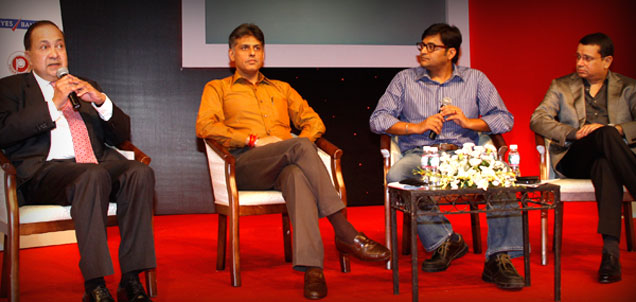
    Panel discussions can be quite boring but at the Press Club Mumbai’s RedInk awards last Saturday (May 25), the audience gathered was actually asking for more. This despite an awards presentation and of course drinks and dinner that were awaiting members of the fraternity.  The theme of the discussion was ‘Keeping the media free and fair’ and moderating it was Arnab Goswami, editor-in-chief, Times Now. Former editor-in-chief of the Hindu group, I&B Minister Manish Tewari and Star India CEO Uday Shankar were the panellists discussing the issue.


    Arnab Goswami: Keeping the media free and fair… I was just thinking if you ask Mr N Srinivasan today who has refused to speak to Times Now about 10 times in the last 10 hours, he will certainly say that media is too free and is completely unfair. That’s what it is all about. It is totally subjective assessment. I would restrain my own views, the problem is because on television, I tend to forget that I am an anchor. I have assumed the role of an analyst much too often. But I will try and hold myself back because I have three absolutely tremendous speakers here today, three people who represent different points of view voice of youth, men with great experience.


    I’d like to start this chat by first asking the most experienced gentleman as far as this profession is concerned, certainly on the panel, Mr Ram this question makes a few presumptions. Keeping the media free and fair, you assume that there is a threat that the media presently faces and it also makes the assumption that media might not be fair in the future. May I ask you to give your points of view on this?

    N Ram: Yes, I think that is a good entry point into this discussion. It is quite provocative assumption that you are not my friend, are we really free? I used to think that India, among the developing countries, was in an enviable position. And I have revised my view after that. Why do we say this so far as press is concerned, Article 19 (1) A, plus Article 19 (1) G equals freedom of press. That is not possible because qualified by the reasonable restrictions enabled by the constitution are the eight heads and no more. That be reasonable. And thanks to judicial interpretation, freedom of the press has come to stay. This is the great advantage in India, institutionally speaking.


    Unfortunately, the broadcast media and now news television in particular, haven’t been given the same status so far as freedom of speech or expression is concerned. Although in practice, they seem to be rather free as Arnab’s channels and many others bring out every day. So I am not quite sure of that but the problem today is that the so-called reasonable restrictions have turned down, some of them, to be mightily unreasonable. The law of criminal defamation is a daily threat to the press, to television. The contempt of court where judges decide their own cause – that is a problem although it’s not that frequently invoked. Legislative privileges poses problem here and there. Above all, the jurisdiction of criminal contempt, I think, is a major threat. Add to it the intolerance that we see around us. And not just from the govt, I must emphasise that, from many sources in our society including governments and state governments also.


    I think this has now changed the game so that the feeling of insecurity, what a famous American jurist called the chilling effect phenomenon. People censor themselves when they write or speak on television or so forth. Despite that we only admire our colleagues, including young men and women, who brave these hazards every day and take huge risk and end up in jail or have to appear in court on matters that wouldn’t get them in any trouble in a truly democratic system. So I have revised my view on this.


    The second part of question: are we fair? There also I have doubts because very often, the press as well as television – we fall short of the standards of fairness and justice that would be demanded of our institutions. Apart from the phenomenon of paid newsand  apart from problems like private treaties and so on which clearly militate against fair coverage, we have various other problems: hyper-commercialization in the news media, the control that proprietors exert over the content, poor material conditions of many of our colleagues. I recently read the longish report of the standing committee on Information Technology that your ministry has put out. It has got some interesting things to say on the condition of journalists in India including their remuneration. I think all this detracts from a healthy state in the media. I do not want to go on and deal with the central paradox of the digital age. I think on the whole, we fall short institutionally speaking, on the standards of fairness of justice which the public including politicians are entitled to expect from us.


    One of the issues which bothers me is editorializing in the guise of news. I speak of newspapers here, but it might apply to television. These days, the standard argument is that everyone knows what’s happening – breaking news on TV, you do not say it for the first time. The front page function of the newspaper has changed profoundly. So what do you do to engage the readers or audience? You editorialize, you give it colour. And in the process, I think the standards of journalism get affected. It’s not easy problem to resolve because merely dull recording, factual reporting, may not engage the audience and you may lose the plot but editorializing blatantly in the guise of news, I think, has become a vice in the Indian press but I also see it elsewhere. I see it in the UK, I see it in the US on sensitive international issues. We must do something about it. I am not talking about an anchor expressing strong views. I am talking about the reporter in the field compelled to editorialize in news reports.


    Arnab Goswami: On one side there are at this point of time, and I see them, moderate to strong disagreements of your views with those of Manish Tewari. You feel the medium is threat to profession and you also feel medium needs to live up to certain standards. You put these two very well. Manish, may I ask you to respond to that. I have three points which I would make. Mr Ra Mr Ram’s observations lead me to my first, which is to put it bluntly, this great concern of the falling standards of journalism that I hear from the political class of this country seem to coincide with the scams of the last three years. Ten years back, or pardon my saying so Manish, six years back there were challenges unique to news and Mr Uday Shankar – a purveyor of news television would know that there was lot of criticism of Hindi channels. Nobody complained about that as much as they started complaining about the falling standards of the profession, the lack of responsibility of journalist to coincide with the CWG scam and continues up to today. Why this concern, especially at the time of scams?

    Manish Tewari: When I think of what you have succeeded in doing, is narrowing the focus of something which should have been a far more esoteric and academic discussion. And I do not want to, because we have done it, night after night, for the simple reason that some of those gentlemen who were possibly responsible for putting out some of that stuff in the public space have now honourably retired. So I will allow them to rest. But to come back to a far more substantive point that Mr Ram made about the sum total of the freedom of the press that 19 (1) A and 19 (1) G adds up to the freedom of press. With all due respect to Mr Ram and I have great respect for him as a professional, I beg to disagree. And the reason I disagree is because 19 (1) A and the reasonable restriction of 19 (2) which apply to it, and 19 (1) G and 19 (1) 6 operate on two different fields altogether. While the former operates with the extrapolation of the freedom of the press from the freedom of speech and expression, the latter really applies to the entire business of the media per se. And there I think you need to make a distinction — a distinction between the freedom of the press and the freedom of the owner of the press. While I do not think anybody has an issue with the former, with regard to the latter, and at times we joke amongst ourselves that we give two sorts of licenses in the broadcasting space – a news licence and a non-news license, so I was thinking to myself that it is high time we start giving views license also because most of the times what you hear is views, and do not hear the news.


    So therefore, I think and that’s why when I outline those paradoxes, they are real situations which all of us collectively address as we go along. Because my apprehension is that increasingly you are seeing judicial intervention taking place in areas which should be preserved for self-regulation. And if we do not self-correct, and if we do not come to certain solutions, I am afraid that these interventions will just keep growing. You are concerned about falling standards of journalism. I have a very healthy respect for journalists. You would have never heard me talk about falling standards of journalism. In fact, I think in totality, journalists do a great job. And I am not talking about the national press. I represent a constituency which is one-third rural. We have journalists in the tehsils, and they run a far greater risk at reportage because of the tyranny of the state governments which Mr Ram referred to. Yes, there are people like the esteemed chairperson of Press Council of India, the former Judge of the Supreme Court who has concerns, I am not saying right or wrong, about “falling standards of journalism”. He is unfortunately not here, he is in the US . But next time he is here, I think we should have a discussion.


    Arnab Goswami: I have had the pleasure of having him in some discussions in the past. His interest lies more in Sanjay Dutt these days. I am glad to have problems in the profession and standards of journalism because many would say, Mr Tewari with great respect and this is what young journalists feel that the nature of journalism is changing. Yes, it is becoming more strident. Views are a right of expression of every journalist. And as far as self-regulation is concerned, I think Mr Tewari Mr Uday Shankar will elaborate further on this, in this Azad Maidan – here there was an almost riot-like situation, I have never seen journalist expressing his self-regulation so voluntarily as he did at that time. Now whether you talk about that or renewal of communal situation arising in Uttar Pradesh or during the coverage of Ayodhya verdict, one have never seen so much voluntary self-regulation so maturely from so many young journalists.

    Manish Tewari: Before you go to Uday, let me say: The difficulty with the whole self-regulation, for any regulatory mechanism to work, it has to be universal. It cannot apply to certain segment of media only. Therefore, you will have to find a way of making it universal and if the self-regulatory bodies do decide to take punitive action in a particular case, there should not be an option of opting out. ‘I am leaving the association, it’s my way or the highway’. So that is why I am saying that we are committed to the institution of self-regulation take route but I think we need to find a modus vivendi to make it universal so that it can be applicable across the board.


    Arnab Goswami: Mr Tewari, taking from what you said on ‘views’, I’d like to go across to Uday Shankar and get his side of the story as well. Uday, my question to you would be what really comes out of kind of observation that Mr Tewari makes out of views, I can interpret that differently. May be some people in the audience will feel that today because of the strength of views and directors of views, politicians are feeling more moral/public/ethical pressure to respond. So even though they would not like to respond to certain situations, they have to because of the pressure that the media puts on them. How would you like to respond to that in the light of the subject today of media being free?

    Uday Shankar: Whenever there is a debate on whether media is free and fair, I get a little suspicious depending on the nature of people who are talking on it. I am eminently comfortable when the gathering is of this kind because you have a point of view, you have practitioners who can throw light on this. As Ram said very clearly that fairness of the media is under question and should be questioned continuously. Not just in this country, but should be done everywhere. And it is not just about media, it is about any profession. What you are doing always has a scope for improvement and that should be done but usually people make the argument in this country, and recently more and more so, people make the argument primarily to suggest that since media is not fair, hence it must be curtailed because that is invariably the subject. As you said, there are eminent people who are concerned about falling standards in media and the practice of fairness in media. They have not once expressed concern about falling standards in their own profession. And I need to understand that everything is hunky-dory in legal profession? Everything is hunky-dory in judiciary? We have equal, if not bigger challenges, in this profession. But that does not mean that a journalist should be made incharge of regulating them. And similarly, if there are issues with journalism, we need to address them.


    I agree with the Minister that it cannot be an option, but it is optional primarily because it has got no institutional support from the State or the Government usually. Today, for first time in the last couple of years, regulation has been given a chance in television to an extent and I think it has made things a lot better than any official enforcement would have brought.


    Arnab Goswami: I think you have hit the nail on the head and I would like to go back to Mr Ram.

    N Ram: If I may pick three points. The first one is complaints come up when news media gets very active in investigating and exposing the wrong-doing corruption. I remember the struggle against the so-called anti-defamation bill of 1988 which came very close to the heels of our Bofors investigation. We had a spirited movement here in Mumbai. So it is true and an important point. Secondly, I am glad that the Minister brought out the distinction because put in another way, I’d say you must make a distinction between state of the news industry towards printed press and broadcast media and the state of journalism.


    The first may be reasonably buoyant although right now the economy seems to be hardened. The state of journalism is quite something else and very often in public discussions, these get conflated and I think, according to him as a lawyer comes straight from the constitutional self. Thirdly on regulation, the best discussion and debate I have come across on self-regulation was around the Leveson’s enquiry. Leveson eventually came to a very clever scheme in my opinion although for complex reasons, the British press has not yet signed onto it. What is the mode? independent self-regulation underpinned by legislation. That was the original idea. There was virtual revolt against legislation so, it is underpinned by Royal Charter, which itself is underpinned by legislation, by law. And yet, they have not signed onto it. I thought long and hard, why are they so scared of it and almost paranoid? Why are people refusing to come onto this? Because they are running scared of independent self-regulation.


    Self-regulation that is compelled in the sense, it’s a contradiction in terms but you are required to be self-regulated by system, readers, and viewers. Then I think it is a genuine check on the vices and malpractices of media. And that is the lesson I draw from Leveson. Fortunately, in India, you have a Press Council, which is largely toothless and I have read Mr Katju on it who has some valid points and suggestion he makes for licensing is totally unacceptable. But what is the problem here. The Press Council is not independent. It is packed, I would say it is infested, with our own kin and a few politicians. And Leveson wanted to avoid both. I think we have got the model completely wrong. And if you are really going to self-regulate, I do not think that self-regulation without statutory underpinning is going to get very far. It is a good worthy experiment but it does not go far enough. So how do you bring these two things on the same page? Press Council – not independent, toothless, but having a certain history, and a certain visibility. The other thing – self-regulation – which is not really independent enough although it is better than the Press Council. So how do you get them on the same page and how do you get the model right? That could be of great interest to us.


    Arnab Goswami: You know, 2- 3 years back, before Mr Tewari took over as the Minister, I had the opportunity of sitting in on a meeting where all channel heads were called. And the government, literally on a plate, offered statutory self-regulation. In other words, the govt told us that you self-regulate and we give you the power to do so. And the resistance from the channels at that point of time, which I think was worthy resistance, was that we will regulate ourselves not as a gift from you but as a right that we arrogate to ourselves. And I would just like to make that point following from what you said. But Mr Tewari, first of all I would like you to respond to the fairly straightforward observations of my friend Uday. Secondly, you talked about the foreboding possibility that in the near future you would not like to regulate the media but the judiciary might like to. Mr Tewari, of late, there has been more tension between politicians especially between your government and the judiciary than between the media and the judiciary. Tomorrow, if the judiciary were to regulate politicians, you would fight back. And in every point of time, there have been several discussions including editorial articles by your sitting ministers ( I do not know if you have written it yourself) where you basically told the judiciary not to encroach in the area of the executive. And today I want a concrete statement from you on whether you feel the media in this country represented by the several in this audience has the same right to defend its territory that you give yourself.

    Manish Tewari: I think, Arnab, the very straight answer to that is that I think that the media is very capable of fighting its own battle. I don’t think you need to fire the gun from our shoulders. If you feel that the judiciary is encroaching on to your turf, stand up and fight. Not withstanding the tension between political executive and the judiciary, which are inherent in the constitutional scheme of things and that’s the manner in which it has been designed. Judgment after judgement which is coming out of the courts is not coming out to regulate the politicians. The whole structure of democratic governance is designed in a manner whereby Parliament regulates itself. Judgment after judgment is telling us that please regulate the media. And that’s why I say, and to come back to your point of you’re sitting in a discussion’ and ‘you wanting it as a right and not as a gift from the government’, I think you have probably not studied the ASCI model. The ASCI model of self-regulation in the advertising space which is underpinned by a statutory rule in the advertising code, 7 (9) if I remember correctly, is a perfect model of self-regulation, which has a statutory basis. I think that’s something you should look at. BCCC should look at it. The NBA should look at it. And if you guys feel that advertising model has worked which according to ASCI and incidentally when it comes to surrogate branding and stuff like that we have, not withstanding the rules, deferred to what ASCI says.


    So it would be worth your while to really look at that model.


    Arnab Goswami: Mr Tewari, with respect, advertising is not journalism. Journalism is not advertising. Never the twain will meet.

    Manish Tewari: I think those lines are getting blurred. And they are getting blurred very quickly, my friend


    Arnab Goswami: Mr Tewari, I wouldn’t try to shoot from your shoulders. You said about what the judiciary thinks. Where do you stand?

    Manish Tewari: I do not have a mandate in this point in time to speak on behalf of judiciary but I do have mandate to speak on behalf of government. and repeatedly, we have demonstrated it through our track record that our relationship with media, not with standing the inherent tension, has been an essay in persuasion, has not been regulation. I think our track record for the past 9 years, speaks for itself.


    N Ram: I would agree with you on this. We have not faced any real problems from the central government in the recent period but why doesn’t the government take the initiative to get rid of the whole jurisdiction of the criminal contempt. And you can strengthen the civil law. But why do we still need this law of criminal contempt? Here I can say that it is an act of omission, it is becoming very costly for the freedom of the press and freedom of news television in India.


    Manish Tewari: Mr Ram, I think you made a fair point there. Because it is not only journalists, there are other lot of us who operate in the public space who are unwitting victims of the law of criminal defamation. But I think we need to tread very carefully because some of the judgements which have come out recently even with regard to civil defamation with due respect have been very excessive, therefore I think, the whole issue needs to be looked at holistically. And you make a fair point in regard to both the laws of sedition and the criminal defamation and possibly at some point in time when you do decide to revise a penal code which goes back to 1860, you need to look at lot of these issues afresh in contemporary sense of the word.


    Uday Shankar: I think we must understand that when we say we fear attempts to subjugate from political executive and bureaucracy, we are not saying that it is the only source of apprehension. I do not think judiciary left to itself, would accredit itself any better as far as regulating or gagging the media is concerned. When we say there are attacks on free and fair media, those attacks are not just from the political class. Left to itself, any group which is drunk on its power would attempt exactly the same thing because what the media seeks to do is question/ challenge the authority, which they do not like. If we dislike or push back against he attempts to control from the political class, we should be even more vigilant of such attempts coming from institutions and community like judiciary because at least here you can have a blunt debate and you can stand up. This whole shield of contempt is far more dangerous when it comes to pushing back attempts of gagging from institutions like the judiciary.


    The second point we should be conscious about is that media is just throwing a spotlight, it doesn’t decide anything. To that extent, it is a good idea to encourage a system where we are minimizing the scope for debate. It’s a good idea to encourage the space for good debate. And that good debate is not being restricted by these people. There is an internal attempt from the owners. Sometimes it is a very unconscious process of time and sometimes it is a conscious process of that space for debate being eroded by the ownership and the people who run media houses.


    Arnab Goswami: Do you believe, Uday – you have been into television journalism for long time now – this debate that you are talking about is making some people uncomfortable? If I were to report the BCCI story in a PTI wire copy-DD news (with all respect) form, then it would have no impact? Mr Srinivasan would be laughing. The fact is that people debate, people get involved in subjects and people want their own point of view. This same plurality of views that democracy gives us become a threat?

    Uday Shankar: I think it is indeed a threat whether it is the BCCI or the International Olympic Association or whether it is another field. Any authority or body is always unsettled by it. so that is definitely the case. The real issue is to come back the point that Ram made that there is a lot of opinion masquerading in news, I think that’s true and even bigger problem is that a lot of very poor opinion is masquerading in news. It is bad enought that it is opinion in garb of news and worse that it is really half-baked, ill-informed opinion. And in newspapers, I see, I see in name of analysis it is all opinion. While there must be analysis, I see no analysis but only opinion.


    And that brings me to another issue that we must address as journalists ourselves and that’s exposing ourselves to a lot of criticism is the issue of competence. I think the quality of journalists, and while in general we see a lot of good quality people and very good quality of journalism, but we need to conscious about quality of people who are coming into the business. I continue to get very concerned about quality of intake and the way this society has changed; the way employment universe has changed. Earlier, if you were a Liberal Arts graduate in the country, no matter how good you are, in the country you have two-three options only: you became a teacher or journalist. If you were slightly liberal radical in your approach, chances were you would end up either as a professor or become a journalist. Today, those people have many more options. As a result, the kind of people who are coming in media are clearly not equipped half the time to tackle the issues and do the stories they are supposed to be doing. And the effort that is going internally and somewhere it is also about the collapse of the entire institution of mentoring by the editor — that has collapsed. And that is particularly a big challenge in electronic media. And if we do not address that it becomes a very unvirtuous cycle where poor quality, poorly mentored people are doing poor quality stories: opinionating a great deal and hence exposing the whole institution to question and attacks.


    Compiled by Ananya Saha


  • Video’s the way to go: Ajit Balakrishan @ IAA Webinar


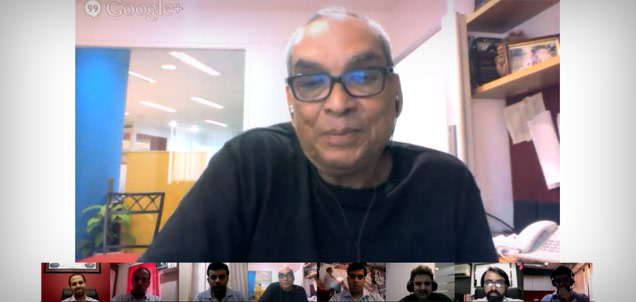
    The International Association of Advertisers (India Chapter) conducted its second webinar on Thursday, May 23 with Ajit Balakrishnan, Founder and CEO, Rediff.com. The IAA Webinar series with the theme ‘World Goes Digital’ is spearheaded by Abhishek Karnani, co-chair and director, Free Press Journal group and Manish Advani, head – marketing and public relations, Mahindra Special Services Group. *


    The panellists included: Abhishek Karnani, Co-chair, Director, Free Press Journal; Ajay Pandey, founder and CEO, Badhai; Gaurav Mendiratta, CEO, Sociosquare; Aditya Kuber, CEO, Media Sphere Communications and K Narssimhan, CEO, Commit. Pradyuman Maheshwari, Editor-in-chief and CEO, MxmIndia moderated the event. Other than the panellists, some questions that came in from the public in response to our announcements on social networks were also posed to Mr Balakrishnan.


    Excerpts from the Q&A:

    Opening Remarks by Ajit Balakrishnan, CEO, Rediff.com

    There is little doubt that the internet has come a long way since all of us started messing around with it around 18 years ago. The way I look at it is that it has often been a surprise to me that the web technology and internet happened first in the media world and my suspicion is that very soon we are going to see internet and web-based thinking in trade areas like education, healthcare etc what I call as the less-frivolous parts of human endeavours. I for one, am looking forward to that.


    Q. With a large number of players venturing into the digital space, how according to you can brands fight with the larger players and continue to make a mark in the digital media space?

    Ajit Balakrishnan: Let me say that every giant killer started off by being small. I remember Google when it started in 2000 was a tiny company with revenues to the tune of US $35-40 million. I think the successful ones that we have seen throughout the world tend to offer some consumer promise in a new technological way, which they manage to deliver. If you manage to do that at all times then you have a chance to upstage the big players. I have no doubt about that whatsoever; the field is wide open at all times.


    Q. You have been a pioneer in the industry and have seen the industry grow from nothing to what it is today. Have you seen any change in the customer behaviour and expectations on the medium as yet, and, what is the change you foresee in the next 3-5 years?

    Ajit Balakrishnan: My guess is that India is at a very early stage of revolution of the internet and the number of users in India who have unconstrained access to high-speed internet on mobile as well as PC is very small. So what has happened so far is that about 12-15 million users in India have so far access to high-speed internet which in relation to about 300 million middle class Indians is a very small number. So it’s a relatively English-speaking, mostly westernised group of people who tend to follow latest trends and what is going on latest in the US and whose brand values are built around the internet. I think that when this number rises from 12-15 million users to around 200 million users in the next 3-5 years by that time you will see more typical Indians landing up on the internet. The first likelihood is that people at that juncture may not necessarily be coming from an English background and secondly, what they do on the internet will also be different – doing more of social. Some of you will remember that in the mid-80s on television there were only a handful English channels that was ruled largely by Star. Then, a pioneer in Subhash Chandra stepped in and broke the rules of the game. Today, English-language television is a very small proportion of the total. So one will see such kind of initiatives taking place in the near future. But, it is still early days and things like email or social messaging will take precedence. In the early stage of all that is happening, technology is very important. I think technology-oriented pace will continue for another 3-5 years. Post that there will be a blending of mediums like content, applications that will be blended with technology…it will become more media applications oriented.


    When you started Rediff, what did you expect in terms of users or economic outcome…?

    Ajit Balakrishnan: I did not start hoping for any financial outcome from entrepreneurship. I saw an interesting idea at that time and was fascinated by the possibilities that the internet had to offer. I was fascinated by the possibilities of the internet by watching Compuserve and AOL experiment with the medium. So I told Arun that I am going to take a room somewhere in Fort, South Mumbai and figure out where this has to go. So I didn’t have the faintest idea where this would go to but yes, even today it is very unclear to me where the internet is headed next. I personally think that the technological tricks dominated the trade are going to pass in a year or two. In fact among the top 100 companies, everybody uses the same technology; there is nothing unique one can do. The problem in India is that early adopters of sophisticated technology are very small but all that will change soon.


    The same could be said of Rediff as well which has undergone a change in the way it now presents itself on the online space. Is that an indication of the changing times…

    Ajit Balakrishnan: We essentially took a ‘tight look’ as one would like to call it. Web is increasingly becoming a visual medium today. That is different from 10-15 years ago where it used to imitate the newspaper paradigm. But it is now moving to be a visual metaphor. There is a big swing being observed towards video as well but as yet nobody in the world knows how video on internet will play out. But one part of it is where pirated video is played out more and the second part of it is bloopers. Nobody knows what will be the grammar of the 2-3 minute video but I am sure it will arrive soon. In the early days of television there were not much popular sitcoms, people played movies. But then the sitcoms arrived with 2-3 slots for ads, so something like that will happen for 2-3 minute videos as well.


    What according to you will be the low hanging fruit that will make the fence-sitters start using this second screen to complement television, newspapers etc?

    Ajit Balakrishnan: I feel the reason why digital ad agencies are not as big as the others is because they tend to be conservative. I have been on that side so I know how it happens. Their best clients are typically the ones that are very large and that make products for mass media conservative audiences. Be it a Colgate or the others, the main market for such clients is outside the sophisticated audience. The internet doesn’t make as much sense to them because their growth comes from smaller towns and rural India. So, big ad agencies tend to be full of such clients. But there are clients in the financial services sector for example, who love to have a sophisticated audience. I’d say do not give up, wait for 2-3 more years and you will see big bucks coming to the sector.


    What problems do you face in online shopping for Rediff where you have many big players in the space?

    Ajit Balakrishnan: As a group, there are lot of things that are going good for Indian online e-commerce sites like us. First is that private equity has more or less withdrawn from organised retail. So if you are based in some Tier 2 town and you cannot find a good phone in a retail shop you can rush online and shop for your product from there. There has been a sudden explosion in 2011-12 in the range of $ 600mn that has been pumped in the Indian e-commerce sector across say 50 companies. That has woken up the e-commerce industry in India. This injection of capital and excitement has made a player like us grow by 100 per cent year-on-year. While that is good news, the bad news is that infrastructure around e-commerce has not yet developed. For example, if you have a credit card you can shop easily but the failure rates with debit cards on the internet tends to be in the range of 40-50 per cent. The reason for that is that for debit cards to work well through banks it has to be communicated well through an internet high speed line and that kind of telecom service will be tougher to achieve in smaller towns and cities. So while there are 100 million debit card users there are only about 8 million credit card users. But this problem is being looked into. Once this problem is sorted the debit card e-commerce will jump up.


    The other thing is that the cost for courier companies is high in relation to margins. So the courier companies need to be much more efficient and make money in no more than Rs 10 per delivery. This is the reason why some players have their own delivery people to capture the imagination of the public. But there are some who are doing a good job compared to Blue Dart and the others that follow a hub-and-spoke model. But like all things in India, these things take some time but when it happens it happens very well. E-commerce is about 2-3 years away from a gigantic boom in India.


    How big a role do you see for video playing on the internet in India?

    Ajit Balakrishnan: The thing about video is that it jumps over the language barrier. The fact is that Indian language-based internet has not taken off at all but with video, you leapfrog that barrier. So video is indeed terrific. In fact the sales people keep telling me that the ad agencies have woken up from their slumber on the internet and they love video because that is something they understand well. So video is destined to be successful.


    The problem that small companies face is talent who get lured away by MNCs after working for a year or two with us. How did you confront a challenge such as this?

    Ajit Balakrishnan: This is not a new problem that any new enterprise faces in Mumbai or elsewhere. There are plenty of jobs and lots of talented people mingling together. This problem will continue to happen at any stage in your professional career. When you grow a little older, things like stock options are technical ways of holding things back but I think that there is a pattern among people you recruit. Some who love the idea of doing innovative work, some who love security, some who like the thrill of changing jobs every year. There are guys my age who have changed some 20-odd jobs. So there are things that you cannot control but try and build an anchor group of 5-6 people whom you feel will be critical to the success of a business. The risk with that again is that those who are among your core group today may not be with you tomorrow. While we had the stock option scheme for us it does not work in every industry. But I can promise you that hiring and retaining talent will remain a 24-hour job and will be so at all stages of your life and not just the start-up.


    How do you mass-produce content that is creative and engaging enough?

    Ajit Balakrishnan: We don’t need to mass-produce content, we should see how we can cost-produce content especially for a 2-3 minute video. I think at most it costs just 5 lakhs but the idea is much more important there than the grand production. I think with television it has come to a point where the ads costs at least 1-2 crore behind an idea which is laughable. I think they have bought this upon themselves. But nobody knows what kind of an idea would work. We are in a situation which Charles Dickens was or the book publishing industry was in the 1830s. Charles came in and showed with ‘Great Expectations’ how we can write a book and we all know that there were more than hundreds of imitators after that. We need such kind of creative geniuses.


    In India, most ad revenues go to global top 5 websites that works up roughly to about 75 per cent. What is left for everyone else is a small pie. What do you foresee of this trend?

    Ajit Balakrishnan: Advertising has such a trend where the winner takes it all; it is not just a web phenomenon. Take the newspaper industry for example, whoever is No 1 takes about 60 per cent of the revenues while the No 2 takes in another 20 per cent. So from No 3 to 10 barely mange to hang in while all the others hang in for prestige reasons. A similar thing is observed with channels as well where the top 2-3 players take in 70 per cent of the ad pie. So media is akin to ‘winner takes it all’ situation partly because audiences tend to gravitate towards what is most popular. The internet space also such a practice but that will change as the industry evolves. People who mix technology and creativity platform will emerge winners. When things begin to change there is an opportunity to move in. I have seen many creative companies that have created successes especially from Korea. I think it is possible in India too. First we have to get the audience then the revenues will follow.


    As an industry, we still hover around the 4-5 per cent ad pie. At Rediff, have you taken any initiatives to increase the pie at a faster pace?

    Ajit Balakrishnan: Where ad spends is concerned, my sense is that big agencies should control about 90 per cent of spends in India. I think they are looking for ideas. If each one is able to produce one success story for brands, overnight the pie could increase significantly.


    With the youth taking to the web in a big way for content consumption, do you foresee the beginning of the end of live television in 5 years time from now? Do you think there will be convergence of internet with television for content consumption?

    Ajit Balakrishnan: I think it is a trend of time-shifting today. It started with the VCD/VCR device that enabled us to record and watch content at leisure. The youth of today are similarly doing time-shifting and watching it whenever they please. The television audience is so large that there are lots of audiences who have nothing to do most of the time. These families will prefer the social family programmes and watch it with friends and family. I think these trends will co-exist.


    Do you see independent publishers including bloggers becoming financially independent in India?

    Ajit Balakrishnan: I am a great proponent about blogging and I think the innocence about the internet was blogging. Individuals who had ideas could go and publish it without the consent of publishers and editors…that is the touching thing about the internet. Unfortunately, the business model has not yet developed but I am sure that it will develop soon. For example, if you see the NY Times paper, you will want to read the columnists first. I keep wondering what if somebody decides to have his own blog; what are they going to do? Many of us will go directly to the blogs. So in a way the magazines and newspapers ought to be threatened. So why is blogging not economically sustainable in India is because of the scale. If there are 300 million users and if even 4-5 million users come to your blog the ratio would be about $2 per user per year. You will end up being a blogger with about $ 3-400,000 a year. That is much more than what you would get if you work for somebody. So we are waiting for scale to come about but blogging will be about text and video in the future.


    If you were to invest $ 1 million in digital in the next two years what would be the three ideas that you would chase?

    Ajit Balakrishnan: It’s a tough one but let me give it a try. I think one will be where there is a language application which does not depend on English or anything; probably more voice-based in approach. The other would be something that will be big for professionals like lawyers and doctors because their business models are local in nature. The web will allow them to practice across more places. So an idea that will enable them to expand their business models further. The third would be doing something in education but I am not sure what. These three are likely to be models that will be successful. And all these will also be highly successful on the mobile platform.


    • MxMIndia was a partner to the IAA Webinar


  • More smalltown India folks are joining advtng: Prasoon Joshi


    This interview with Prasoon Joshi was done around a fortnight back, and the orginal transcript went into twice the length of what you read here. There are many industry leaders whom you can cut short in a conversation, but with the McCann Worldgroup President – South Asia, you are transported to another world and you can’t get him to stop.


    Perhaps it’s the other hat that he wears that does it to you. The poet in him takes over. As he goes about discussing every facet of the business of creative advertising. What was intended to be an interview on the problems plaguing creative awards in India ended up being a freewheeling interview…


    The industry sure has changed much in the recent past…

    The whole scenario is changing. It is very tough to survive in the advertising industry. No compensation model, there is no IP in this industry. For example, any other industry which is ideas industry has IP. I do music and I have IP; films have IP, technology has IP. Advertising industry has no IP of ideas. So, in the earlier days, the relationships with clients and agencies were longer, and the IP, in a sense, was taken care of because the client lived very long with an agency. One idea was used for a longer time. For example, an ad used to run for 4-5 years, sometimes 10 years. Today it is so perishable, so here and now that you might have cracked a big idea, but quickly you are changing the product and having versions and versions of it. And even relationships aren’t that long; a client may stay with an agency for a year and then move on. The hard work you put into the business, you reap the benefits of it through compensation over the years.


    Which is not too bad…

    The commission model is not there. There is a fee model, now, mostly. So, before you can actually get compensated, the client has moved on. And there are practices that client moves on with the creative idea and continues with it without you being any part of it. You probably got paid for eight months, six months or one year. These protections need to be there for the industry.


    But it’s an international malaise.

    I’m talking about internationally only. I’m saying that IP has become a big problem for the advertising industry. This model has not being able to take care of the changing landscape and as a result, it’s tough. Every client whether big or small wants similar attention, dedicated resources. Sometimes what they pay you can’t even take care of two people’s salaries, and they want six people on the team. How do you do it? So right now agencies are pitching every day, and you can’t take a stand that you only want to do a certain scale of business, that you want to be compensated in a certain way.


    The economic scenario isn’t much to talk off. The long-term compensation may be there over the years, but the amount of work required today on one brand is huge. The fatigue factor of the consumer is very high as the consumer is bombarded with so many creative things, so many channels, so much of entertainment. Earlier you had one channel, you made one good ad like jab mein chota bachcha tha badi shararat karta tha and everyone knew it. Done. Now, even on hit programmes, how much of assured appointment viewing do you get? It has declined.


    So business has gotten tougher.

    The challenges have increased. Yes, more complex media habits of consumers, more distractions, more challenges.


    And this is when one digital is not big enough in India.

    Digital is still at its nascent stage in this country. But in the western world, is has become very definitive. Given the co-existence of various kinds of consumers, media habits and the exposures people have and economically it is so diverse that affordability, reach, and penetration are a problem. I don’t think that internet penetration is such a big problem in the west.  There are problems of literacy and infrastructure. Mediums will co-exist and television will stay on. My driver bought his first TV two years ago. You can’t even imagine that somebody bought his first TV two years ago in America – it’s not possible!


    Do these complexities impact creativity?

    Creativity thrives from challenges. Eventually, it has only helped creativity. It is only going to challenge you and you are going to come up with better ideas. But right now it really makes it complex, especially for the brands. Certain brands are clearly very niche brands wherein you know your TG. But when you have to use the mix of media in this country then the problem is complex. You have to be little bit everywhere. You have to have an idea, which can travel across – you can’t be messaging differently on TV and online. And when something is at inception, a lot of jargons are at work. The fear of the alien, unknown is there, which is there in clients when clients talk about digital. There is a fear – ‘we will not be able to understand digital’. There is nothing like you can’t understand digital… it is also communication.


    How to do deal with getting the right talent? One of the problems agencies face for account planning and client servicing is that business models do not allow hiring of top talent. Is that impacting the creative side also?

    Advertising is still a destination for many creative people in India. That might not be the truth everywhere else in the world. But in India, it still attracts a fair amount of talent. In fact, it attracts more talent than it used to in my time. Then, someone like me who came from a small town did not have any knowledge about advertising. So we found it very difficult to tell our parents what we do. It was difficult for me to explain to my father who was a civil servant – he understood IAS, medical, engineering, he also started understanding management and MBA, but advertising wasn’t easy to explain. There is a science attached to advertising that is very difficult for a common person to understand.


    Would it be right to say that when you began the composition of an ad agency was mostly 90 percent people from urban areas? Has that changed dramatically? What is it at McCann?

    It has changed a lot. I think we have a lot of people from smaller towns now. There are still people who are brought up in metros. They know about the profession or have families in the profession unlike our families who didn’t know anything about it. There are people who are second-generation advertising people, whose fathers were probably in client servicing in some small agency and they feel like working at an MNC now. There are people like that. But lot of people, talent have heard about Piyush or me and know that we were from small towns. You require people to know about people before they can get attracted to a profession, especially a creative profession. See, the creative profession is not that music happens. It’s like Zubin Mehta does this kind of music or Mick Jagger does this or Kishore Kumar sings like this or Gulzaar sa’ab writes like this. There is always people’s association in creative field. Creative profession also has desire to get accolades because you want to be acknowledged. If you tell a journalist you will not have a byline, he might not feel good about it. Because he wants to own his thinking, there is some kind of proprietary thing that you feel for your ideas. That happens with the creative field.


    So what is the percentage of urban v/s smalltown India in agencies?

    It is a good question. I should have done this exercise. But I can tell you from my perception, from my understanding that there are many people now who come from smaller towns. I see people from Nagpur, Pune, parts of North India like Lucknow, Bareilly, Trichy, not where advertising agencies used to be.


    If you had two people to be selected – one say from Mumbai and other person from a smaller town, say Barielly. Assuming all else is equal, who would you prefer to take?

    I would go for talent. I have another observation to make. I would prefer to take someone who comes from the grassroots, who has seen more life than just metros. That’s where the market is going to expand. Though I won’t have a bias, anybody can have understanding, anyone could have travelled the world and understood things. I do not have that strong a bias. But I would want people to come from various parts to make my offering more robust and widespread.


    But sometimes my experience is very strange, I meet people whom I hire for their background at times, but I don’t know they want to shun that, they want to be someone else. What I expect them to do is to borrow from their lives and they are psychologically blocking that part. And say I want to be part of this big town, they start dressing up differently, they suddenly start pretending like they have not heard certain words in the language. So I may be talking to them in Hindi, and they reply in English, almost feeling that he is being thought of as a person from a small town. Some people want to shun that and rather than that becoming a strength, it becomes a liability because you are neither here or there.  They don’t want to be known to have an understanding of middle-class India. Hence, they are not borrowing from it. And it’s not they are doing it consciously, they do it unconsciously as they want to be part of this upwardly mobile life. So, that becomes almost like a deterrent.


    Do you think there’s a domination of the North Indian mindset in advertising… there’s Piyush and you. Of course there’s Balki and others…

    There are many South Indians. We have Balki, Pops, Chax who are from South India. Then you have Aggie who is also from South, he is from Kerala. Many more people. So it is a misconception.


    Moving on… we have had recession and a mixed year in the creative world. How do you think India will do at Cannes this year?

    For me Cannes is a by-product of what you did throughout the year. I wrote the script of Bhaag Milkha Bhaag. While I was looking at Milkha Singh’s life, his target was metal – Olympic, Commonwealth, Asian Games. I work with a target. For us, it can’t be. It is just an icing, it is some activity which happens in parallel, where you get acknowledged – that is how it should be seen.


    Today, awards are becoming targets. Of course, you should enter and win. And there are some rules which you need to follow. There are various other ways of measuring what you are doing is right or not. The biggest measure is your connect with the consumer. Not only here but even the other field I operate in – the films. There are few songs of mine which are very popular, which have done a great job but never been awarded. I consider the song Arziyan, Maula, Maula, which I wrote for Delhi 6 as very good pieces but I didn’t win for that. It doesn’t matter to me. Here also, a lot of campaigns like Thanda matlab Coca Cola, these films didn’t win at Cannes but outdoor won, print won. ‘Yaaran da Tashan’ did not win a Cannes Gold. I won later on for Happydent. I don’t think that the work was not correct. It didn’t meet the jury sensibility and when it comes to Cannes. I feel that we have entered our work and if I don’t win, we don’t get disappointed. For us the bigger worries are if the brands we work for are not doing well in the market or the consumer connect is not there or the sales are not in place. Cannes is something which I would love to win and feel happy if we do but if I don’t, we don’t re-strategize to perform better in Cannes.


    Is there pressure from the clients to win at Cannes?

    I would say an absolute no.


    Won’t marketing managers want that…?

    No. marketing managers never want it. In fact there are a few cases that someone might say, change your work. And it is there that they get derailed. And they are not doing their job.


    May be they are not telling this to someone like Prasoon Joshi. May be they are telling your juniors.

    None of the sensible clients would ever tell you to get an award but will want good work which will spark great conversations. Brands need to occupy a mindspace in this cluttered space. No one leaves the house saying I will buy ketchup or soap like a lifestyle product. But if I have been able to make someone even think for one second about buying a certain toothpaste, then I have done my job. Clients may ask you to create work which will create conversations. There is nothing wrong in this.


    How many entries have you sent to Cannes this year?

    I don’t remember. Maybe 25-30.


    No conversation will be complete without talking about what happened at Goafest. Now that it is past us, how do we make sure that things are not repeated next year?

    About proactive or one-off works that people create, I have said earlier as well that creative people keep looking for experimentation. And it starts off like you needed one room for experiment and they asked for client permission and they gave you permission. But what started as a one-off can become an epidemic. I believe that creative people should experiment but not at the cost of brands. Because brands are not made overnight. Credibility can be shaken in a second but it takes years and years to build brand equity. So it’s not correct to play with a brand equity which has not been created by you alone but a lot of people. I feel that we have to give a window for creative people to experiment. It can’t be at the brand’s expense, at all.


    So what do we do? We don’t allow or indulge in such work. I won’t approve of it. But being a creative animal, creative people have an urge – why can’t I do this or that? You can say why don’t you do it at home and why get out with it? But we need to get out with it because we need opinions from people like you. You want to know what people think of it – is it good or not? I have suggested that at award shows, we should have a showcase award or window where people are allowed to exhibit their work so that they can sharpen their tools. But you can dismiss this argument by saying, why don’t they do it on regular work? Because sometimes they don’t get an opportunity. We should be a little kind and generous for people to showcase their talent. However, it’s unfair to think that clients will face the damage at the expense of something you created.


    We need to keep in check the desire and importance we attach to awards. Because if you start attaching undue importance to it then we will derail from what we are there for – to help build brand equity and not win metals. It’s an art to sell products and that’s why brands come to us, because they think we have the art of selling. So you need to create forums where art can be practised. The role of award shows should be sharpening and sharing.


    And plagiarism? 

    About plagiarism, it is a very subjective thing. Before this year we had not heard of it. I think somewhere it went overboard. Similarities can always be found. I think I have judged at Cannes and other respectable shows, I have never ever received a request to judge anything again. What went wrong I think is that after the jury process is over it should be over. You can criticize it because then otherwise throughout the year we will be doing it. Highlight it but not get paranoid with it.


    But the Ad Club accepted the complaints and decided to act on it?

    That is the reason why the super jury happened. We collectively took a decision that there has to be a line drawn. We cannot keep it open. Every year, someone will say I’m not happy. And some might say that I don’t think our industry is into plagiarism, but in the last one year plagiarists have entered our industry while aliens have attacked. What are people talking about?!


    It’s not that we are not creating brands, selling brands or the advertising industry is collapsing. We know that lately, award shows have become a little unhealthy as there is too much importance given to them, people take them too seriously.


    Are clients okay with being exposed?

    Most clients don’t track of so many awards shows. It is for the advertising industry, they say.


  • Allegations hurt: L V Krishnan


    This isn’t the first time that a media measurement agency has been in the eye of a storm. We’ve seen many instances in the case of the print media in the past and ever since the stakes have raised, the same holds true for broadcast. In the business for around 15 years, Television Audience Measurement (TAM) Media Research was set up as jv by global research giants Nielsen and Kantar, the latter being a division of advertising conglomerate WPP. L V Krishnan has been at the helm of TAM and weathered many storms, including the one last year where NDTV took TAM and its principals to court. But this one appears to be more serious than ever before with three broadcast networks pulling the plug on the subscription. MxMIndia’s Pradyuman Maheshwari chatted with L V Krishnan on the broadcast measurement business, the various charges raised and what according to him is the way forward.


    With some networks opting out, another large one said to have put you on notice, the IBF issuing an advisory and a few others also mulling an exit, is it an end-game for TAM? How does TAM see the journey from here on?

    Globally, we know of many instances where the TV broadcast industry’s faith on its neutral and central audience measurement service has gone through fluctuations. Understandably so. As much as we want the clients to focus on audience insights and analytics, the story, starts and ends with the bi-product of report card/rankings. What comes to the rescue and resolve of such situations is when the central media audience measurement provider works very closely with the industry body.


    This current impasse has got created because of years of pending, constructive and participative dialogue between industry constituents and us. For years now, at almost every industry forum or during one on one client meetings, TAM has been appealing to the industry clients to create a central wish list or a common brief of aspects that it would like TAM to address. The idea was that, post their revert, we would submit a blue print of Television Audience Measurement. This would cover the required sampling, methodology, technology etc. Unfortunately, years have passed, not a single common brief has reached us. Having said that, this never discouraged or stopped us from re-attempting to get them together for this purpose.


    At the same time, we never stopped short of attempting to complete the dream of trying to measure the width and depth of this country. We are happy to say TAM today measures the whole of Urban in North and West and looking at the Rural frontier closely, a vision that TAM has and what has been indicated earlier by some of the industry constituents as well as the government committees.


    Also, as a market, we are yet to mature to a level where the audience measurement service provider will be revered and cherished. We will continue to be the bad messengers…for some more time to come. Here I must add that funnily enough, we have seen innumerable occasions in the past 15 years of our existence when broadcasters haven’t had an iota of an issue when their respective ratings and rankings looked good. The issue has always been when the same system showed low rating and ranking numbers.


    The current situation requires patience and we have plenty of it! Meanwhile, our parents – Nielsen and Kantar – have supported us all these years and they will continue to do so.


    There are allegations from the industry that TAM has been responsive to industry concerns Your comments.

    The case cannot be settled unless we are actually proven to be guilty! I would like to appeal and ask for documented evidence from the self-claimed aggrieved parties where TAM has not responded. Till then, allegations will continue to be baseless. We have a 50-member team set up only to address client queries and concerns. That is a part of any basic Customer Service one should expect, isn’t it? TAM has always responded to queries, and been transparent on its methodologies.


    In this specific case as well, yes, both Sony and Times Now did raise issues. As a normal practice, we did respond to them very clearly. So I don’t really see any reason for such a drastic and regressive move. In each of the meetings, we have explained issues and suggested means.


    Also, we have always maintained professional relationship with the clients. Which is why, we also made it a point that we communicate with them directly and not via media. Every query of theirs’ has been addressed professionally and promptly through one-on-one meetings. The question is that did they reciprocate in a similar fashion?


    With no money from broadcasters, will TAM be able to survive just from your promoters and monies from media agencies?

    As much as 80% of the revenue comes from broadcasters, but they also derive maximum value from the data… a lot more than what a media agency would. The data can be used for programming, distribution, sales, scheduling and migration of audience to competitive content, marketing or on-air promotions etc. (see box: 10 ways in which TAM has benefited broadcasters).


    Having said this, we’ll see how it goes, step by step. We aren’t averse to any subscriber wanting to use data, even for periods they have not subscribed to at a later stage.


    One of the oft-repeated charge is of sample size… how can a sample of 8000-odd be used to reflect viewing behaviour of a billion-plus population?


    The key question is that what is an ideal sample size? More than two years back, TAM worked closely with the FICCI Amit Mitra Committee report to arrive at the projected or required sample size of 30,000 and we are still waiting for the funding…


    While for the last 15 years, we have been the central and neutral TV audience measurement service, the key point here is that we were appointed by the stakeholders – advertisers, broadcasters and media agencies – with a promise of getting funded. While we specialize in research, conducting and operating it requires funds. My question is, why is TAM always blamed for small sample sizes? We have over these years, built the sample to 9500 Peoplemeters with whatever funding we could muster from our parent companies and subscribers. Today, we cover 225 towns in urban India, covering the entire urban landscape of north and west markets. Why is nobody speaking about what TAM has achieved for the industry even without any guaranteed funding? Good technology and large sample sizes require funds. Let industry open more funds, we will deliver their dreams.


    The other charge is transparency and methodology…


    What is their definition of transparency? If it means being transparent about methodology, well, we have always made sure that our methodologies are vetted by industry bodies and individual stakeholders before they are implemented. Take the latest case of DAS-1 roll out. TAM has been in constant touch and discussion with the Core Industry Committee (CIC) on methodology and its implementation. TAM took them through the detailed dynamics of data generation and reporting. It was only post that, the data was released for usage.


    In April, Phase 2 of DAS was put into effect. We know from Phase I experience, what kind of issues would crop up. We documented these issues and discussed the methodology. For Phase 2, we asked the industry for their views. We got no response. On March 19, we had a meeting with the IBF. The unfortunate thing is that no one is asking the broadcasters and IBF the question on why they didn’t respond to the methodology TAM had presented if they had any issues! The outcome, which is the result, is the scenario prevailing in the ground during the DAS Phase 2 period. Like in Phase I, it will take time for markets and consumers to settle down to the new devices to view TV, specifically among elderly women segments.


    So, if they really had a problem with us, why don’t they tell us where the problem in methodology is? No one person has come to us with a perspective on methodology in the last so many years. More so, during the last fifteen years, all documents pertaining to methodology have been shared with the industry constituents, attached to reports like Dr Mitra committee, TRAI reports and made available on the company website.


    There are also allegations that TAM has never met or has been in touch with the industry about their concerns and requirements. Your comments.

    Very surprising! The latest DAS exercise is a example of how TAM worked with the industry bodies and ensured the data roll out in time. Do I need to elaborate more? If there is a will, there is always a way!


    In sum, there appears to be crisis of faith in the ratings, it appears. In the methodology, in the number of boxes, in the leakages at the data collection stage.

    We first need to define what “faith” means! The set of industry captains – who created and re-created industry bodies – should ask a simple question as to why they requested the two global media research giants to set up a neutral TV Audience Measurement service for India fifteen years back?


    The data we deliver is sensitive to the environment it is gathering data from -changes in Content, Marketing, Distributional, Scheduling ….all affect viewing behaviour. We have over 1000+ case studies presented across the industry on how the data is reflecting the reality on the ground! Yet with so much knowledge, this lack of faith expression is too difficult to take…


    So whether it is sampling, methodology, attempts of illegal panel infiltration, all these and many more will get resolved only when Industry has an internal clarity on why it needs a audience measurement set up!


    The perils of our type of service - that of rankings and report cards - is that we cannot keep every one happy at the same time. Here is where, a cohesive industry and its vision is required to help and shield a service like TAM to withstand obstacles.


    Isn’t the setting up of the transparency panel and the security officer a case of too little too late, as one industryperson said?

    One needs to understand the ground dynamics well. Setting of Transparency Panel is a tall task. It requires years of planning, professional implementation and timing. We envisaged TTP a couple of years back. However, setting such heavyweight panels take time. It couldn’t have been done overnight.

    10 ways in which TAM has benefited broadcasters: LV Krishnan
     

    As a messenger and as a report card provider, TAM it has gone through a tough time with the broadcasters in its 15 year of service.


    While the industry remained fixated with “rankings”, in retrospect, very few realize, that the same Television Audience Measurement system, during this long journey, sprinkled us with some amazing understanding of the changing and evolving Indian TV audiences. For example, had it not been for TAM’s measurement, we wouldn’t have known the following:


    1. That news genre has grown and moved out of the 1% share mark…today it stands at around 6%.
    2. The grand success and growth of Big B from big to small screen.
    3. Without measurement, we would not have learnt that IPL has become such a success.
    4. 5 years ago, a Hindi General Entertainment Channel was launched. Without measurement, would we have known of it as one of the established and leading channels?
    5. It is only with measurement that the industry got to understand how digitization made an impact on consumer/audience behaviour.
    6. In the year 2000, the industry had less 100 TV channels getting reported. Today, the number touches is upwards of 600. Would the growth of these channels be possible without the presence of measurement?
    7. All these years, the industry has seen a healthy (sometimes even double digit) growth of TV advertising. Would this advertising investment have happened in the absence of measurement?
    8. Would the industry have known how the women audience lapped up the 2003 and 2011 Cricket World Cup? It is only through measurement.
    9. Without measurement, none of us would have realized the potential and growth of regional TV Channels
    10. Measurement helped the industry understand the dynamics and difference in viewership between small and big towns.


    Are you responding to the BARC RFP?

    Yes, we will. We also responded to the RFI.


    The TRAI has been very clear on the ownership structure of the measurement agency? How will you manage to clear that given that you are part-owned by WPP’s Kantar?

    There is absolutely no conflict. Kantar is not a broadcast company, it is a globally recognized research company. We have never hidden our ownership and we are proud to claim and stand by it.


    Is television viewership measurement a thankless exercise? Will it always be the case of broadcasters being unhappy and threatening a pull-out?

    I do understand that broadcasters have been facing a lot of pressure. Digitization, the 10+2 ad duration. Remember, it’s all eventually linked to revenues. So when broadcasters face pressure, they in turn exert pressure on TAM. TAM is the favourite punching bag.


    So if some channels want to unsubscribe until they get their act together, it’s fine. But to make allegations that our methodology is wrong and that we haven’t responded is wrong. It’s not right to say that TAM’s system is wrong or not transparent.


    As someone who has devoted his best years of his working career to TAM and identified with television measurement in India, how do you react to all these charges?

    For me, Life is TAM. And TAM is all about providing data truthfully and with integrity. As long as my team and myself have the honour of working at TAM, we will go about doing our work in the right and best manner we can. We will never, never compromise our integrity to all the pressures from the environment. That said, these allegations are definitely hurting. While industry talks of TAM’s transparency, my question is that, has the industry been transparent? Despite innumerable attempts and reminders, have they ever, shared with us a document on what their collective requirements are? Do we know what this industry’s vision and plan for the next five years is?


    Having said this, we are committed to continue with our best practices in a extremely complex market place. I leave the rest to the market forces!


    Is there a way forward?


    Till the time work of BARC kickstarts, why can’t the industry just constitute a small body to work with TAM and introspect the areas where they have a common concern. TAM has always been transparent and will always be so except for its town list and panel homes. It’s to facilitate something in this direction, TAM went on to attempt creating a separate panel of Transparency member team with global experts. The industry can very well take advantage of this committee to suggest ways in which TAM should improvise the exercises it conducts continuously.


    Meanwhile, we are happy to sit across the table and address all the queries and issues of broadcasters, including those who have opted out.


  • Poised for a content-led assault: M K Anand


    Though it has been the works for much longer, the Disney and UTV merger has happened in right earnest for just around a year. Since then, the Ronnie Screwvala-led conglomerate called Disney-UTV has been stitched together without causing any publicly visible signs of anguish that are part-and-parcel of any merger or division. M K Anand, managing director, Media Networks, Disney UTV, tells MxMIndia about life after integration, his focus on content, and whether the network is looking at going in for a GEC, as was rumoured last year.


    It’s been over a year now with Disney UTV. How the story been so far? Is it well integrated?

    Well, for the first 15 months now we have focused on getting the whole team together as one piece, that was first and foremost. Ultimately, the wellspring of all output is coming out of these people here. We started as two different companies from two different suburbs and brought them all together and make a one-team situation. We are in the last phase, we have not completely done that. I think basically I brought two boats together very close and then tied them and slowly was confident to take some planks together so that the water is not seeping, and it’s become one boat.


    The processes of Disney and UTV were dramatically different…

    Well, intense processes is what defines Disney… so very very deep, very very thought out and very very correctly done is Disney. And UTV’s most important benefit has been very high speed. In the market, whether it was films or whatever we have done in the TV space, there was a lot of premium on agility, the challenge that I faced was to ensure that I do not lose both, so we needed speed to diligence and we needed to bring diligence to speed. I don’t think it is an either or situation, you don’t need to sacrifice one for the other, you can achieve both, that’s something we are quite happy to note.


    So in specific terms, which part of the transition happened most easily, and what took some time?

    First of all, we are still in the middle of it all, the integration is not fully complete. Next year at this time you would say the thing is done because we have taken a building of three-and-a-half floors and that’s going to be the first integrated company office where everybody is going to sit at the same place and the whole environment is the same. Till that happens, I think you will still have, a bit of this and a bit of that. Second, the technology backbone is getting integrated as we speak. There are a lot of processes which are determined by technology. For the unified new system to be developed and proper testing done, the deadline is September 30 this year. That’s when we want to completely migrate into one backend one media centre, one uplink centre, satellites, everything.


    How have your three buckets of the broadcast business panned out – the kids, movies and youth channels?

    The buckets is more on internal division. At an external level, we would like to, as we move forward, become one Disney UTV network as against this system or that system. Yes, we are sort of focused on the niches so there are specialists who look after the kids’ business, kids’ GRP , viewership, there are specialists who look after movies GRP, specialists look after Bindass and UTV Stars, so those are product levels and I would really not want to call them buckets. The bucketization of the business i had done to ensure that these two boats that actually got together, so to allow the each boat to have an identity while the merging was happening. Two months back, we have totally removed it, I mean totally horizontalised. The entire sales is one team, there is a sales head, the entire programming is one team, the entire content is one team, the entire marketing is one team, so earlier we were these 3 buckets but now we are 5 departments and we are integrated at the top which is run by 3 – 4 of us who have visibility over everything. Vijay heads the programming, Nikhil heads the sales, Indro heads the content, Bikram heads marketing, Charles heads the tech backend. All these people have total oversight on all the channels. The entire company, 20, 30, 40 people from each of these departments are reporting into these guys, they are department heads. So now we are not divided business-wise.


    This is the second or third time in one-and-a-half years that you have had a change.

    Actually the first time. Yes, the first one was the integration itself but that was a financial or ownership change or an acquisition-based reality, but after that we basically brought both ships together. There was no change in the organization structure at all — Vijay was already business head of kids channels, Nikhil was already the business head of youth channel, Sameer was head of movie channels. That structure has been there right upto March 2013. What we have done is practical re -organization, people have been re-allocated. For the first time we are now putting teams which have different corporate origins. I thought it was better to do it now than earlier because we wanted to people to really understand, recognize each other. If i would do that restructuring at that time, there would have been lot more reservations. The buy-in is easier except that the fact I see that the new office has taken a little more than what we would have loved it to be.


    With the new org structure in place, how and what is the road ahead for each of the channels?

    The first thing we did was to ensure that now that we have 9 products including international etc what are those products we can launch quickly, what are the products we expand quickly and in what area. One of the first  was Disney Junior which got launched quickly. We were interested in expansion in the south with Disney channel but unfortunately because of distribution blockages we were not able to do that. The second thing we wanted to see is what is deficient in content and distribution; ultimately these two make a broadcast product. When we did that we realised that distribution was the thing we could have done faster. Distribution was about setting an agenda, budgeting it and giving ourselves a deadline. Then we realised that only UTV Action to a large extent and Disney channel were the two channels that were optimally distributed. All the other channels needed a little more and it was not done due to whatever reason – objective not set, finance not adequate.


    By May last year, we were done with the basic policy of equating the team all together, it gave us a target of December 31, by which time we wanted to completely revamp and overhaul the placement of the channels. Research and ground work started around June, we took a lot of consultancy help from people in the business like TAM and Chrome and What’s On India. In August, we started changing the placement, the neighbourhood on all the channels, so we started getting results from end of September and early October. Then the 10-week blockage or the blackout happened, so when the December 24 data came in, our change in GRPs and reach was not purely because of DAS, although people think it is DAS which helped us. We had already started correcting our distribution so UTV Movies for instance was a sub-30 channel, it is now poised to be an above-50 channel in terms of reach. Similarly with Bindass, Hungama, with Disney channel, so there was very clear correction of reach that we required and that required us to penetrate with the benchmark of the market leader and not the benchmark of what is possible for us to do. Pre-data, most of our channels were 70 to 75 percent penetrated and we said lets go to 90 percent so we have tried to benchmark 90 – 95 percent penetration for all our channels and I am quite happy. What that did for us is from about combined 4.5 percent Hindi speaking markets we moved to about 6 percent. To understand the impact from 170 GRPs in some weeks we have gone to 215, 218, on an average we have gone to 200 GRPs so about 12 to 15 percent improvement on overall gross impact of the network.


    Are you happy with the progress on distribution…

    I had looked at 2012 as the year of distribution so the last part got done by 2012. I wouldn’t say that everything got done but we more or less finished everything in the first quarter of this calendar year. The other thing we realised that when you get into DAS, you need more muscle to get the deals in the manner you want – whether it was placements or subscriber revenues. Anuj (Gandhi) had joined IndiaCast and we had a prior relationship with him, so it was a short time before we were able to seal that JV. We were quite happy to be part of IndiaCast.


    How is that doing for you?

    Very well.


    In terms of revenues coming from distribution, given LC1 and Phase 2 and soon the entire country get digitized. How ready are you for Phase 3 Absolutely. LC1 knowledge was there last year so we had benchmarked that by September 30 we would have started getting results. We would have loved to see how we were climbing, but that 10-week data was not there. But by September 30 we had ensured we were in all places in the country without having prejudice to whether it is metered or not metered, so all the channels are now fully LC1 distributed, and DAS has improved things for us.


    Did the team rationalization etc cause any upheaval?

    We nipped that upheaval in the bud by doing some very detailed talent mapping across. Any rationalization means when you will bring people of two organizations together and some of them may have worked with each other in the past and the situation in the new entity is different.


    Before we brought the whole thing together, what we did was what cartographers do to unknown territories. You don’t go all over the place to make the map; you take the terrain and do the altitude of say 20 different places and then you know here is the hill and here is the pond. So what we did was, Disney is the host so from that point of view we thought of bringing everybody to the Disney scale of structure of salaries, designation or managements cadres etc. Fundamentally what we did was we picked up 10 percent of UTV people as representative of the total, we mapped those people and we took their current designation and salary out from the knowledge point of view. We just took their functions and experience, and started mapping them with other people in the Disney system, so that was an on-paper exercise that HR did with me. Then we matched those 30 people with 30 mirror people on the other side, and we put the actual operating managers together and we discussed how two people on either side are similar for so-and-so reasons.


    This exercise was the most important. The moment we did that, there was a clear buy-in that this person may be called an assistant vice president but that person’s current role and job in that company is equal to director or senior manager. So once the designations of the 10 percent were established, then we did the full mapping of all the people, went back to salaries and said this level should get this salary; then we realised that because of designation this person is becoming senior manager but the senior manager is currently getting 8 lakh and the requirement of senior manager is 12 lakh – so should we make that person a manager or a senior manager? There was a lot of activity which we repeated, which I myself did with HR, and it went very well, very smoothly, because we had done such diligence and there was such great democratic consensus from the groups. No one complained.


    Are you happy with the way it has happened?

    Completely. Usually an integration of this level would have taken 20 percent people out. Look at it; have you heard of any resignations? People going out from here? We were able to tighten the whole thing without sacking a single person. My diktat, you could say, was that integration would not be used or quoted, now or even five years later, that I lost my job because Disney and UTV integrated. Last year and this year I would say people have gone out by natural attrition, there are people taken on for performance, but that’s a natural thing.


    Moving to the present, are you happy with way your channels are doing post the transition?

    I am happy with the development of reach, but once you get a team in place and get your technology, your distribution in place, now what do you do? Use the same channel to produce higher value products, better products and more products, so there is a natural extension into increasing Bindass, increasing Disney channel, increasing Hindi movies channel in terms of content capability. In our business it is easily measured by something called TSP. Now we will start improving TSP through higher investment into content. Last year was the year of distribution, I think the next two years will probably be the era of content and then we will have the year of new launches.


    From December onwards we have started earmarking the Top 10 people in all departments, and I have mandated that everybody should spend time with consumers, whatever focus groups that research does, once in a quarter people should go along with the research team and sit alongside to listen to what consumers are saying. It is our move to becoming larger. My point is when we were separate we were 110 GRP-80 GRP company. Then we came together and now we are 200 GRPs.The biggest guy is getting 600 GRPs and we are now one-third of that. The payback over 5 years to 10 years is, if you get higher GRPs, more viewers are using you, spending time with you, so fundamentally, the next step, can we go to 300 GRPs? From there can we go to 450 GRPs, 750 GRPs, can we become No. 1? These are all theoretical, conceptual questions; as of now, this 200 GRP system, can we push it to 250 GRPs by putting better, more, higher quality content on the existing platforms? We have already started that on the movie channels, you can see that on UTV Action and UTV Movies it has gone from 40-50 GRPs to 80 GRPs.


    So we are very naturally poised to go into a content-led assault on the market and really gain traction in terms of time spend and a little more reach. We are doing quite well because this whole traction that we caught in the last quarter of the calendar poised us to ask for those rates and we are happy that advertisers have rewarded us with the right ad rates.


    But you now have the 12-minutes ad restriction…

    The 12-minute restriction coming up in October is good for us as fortunately about two years ago we had already started getting strict about it. When I was running Bloomberg, I was running 22 -23 minutes. On movie channels we have run 20 minutes. In around October 2011, we put a curtain that even if we have problems in the numbers, we will not go beyond a certain number and that number is in the range of 14 to 17 minutes, 16 minutes is the highest on certain channels. Because of this our cutback is going to be only two minutes on the kids’ channels, for example.


    It goes up at peak hour?

    Yes, that is the difference. What’s happening in music-based channels is, they run break-free in the morning and try to push it into various places at other times. That is one good thing now, that all of us are on par. If you want to run break-free you are going to lose money. So I think we are not going to be that affected. I’m not saying it is not going to impact but it would affect us to the tune of around 3 percent at the end of the first year but by the end of the second year it would have given us so much more hygiene-led improvement in break TVRs that we believe it will be better for all of us.


    Will in-house promotions suffer?

    No, we will have to morph it into show programme products like promotions or contextual placements. I think it will go from 2 minutes to 1 minute across the universe.


    Do you think TRAI will also govern in-house, in-show placements?

    No, they saying that when you are putting something on your EPG, we want you to not put more than 12 minutes every hour of content other than what you have promised, so you have to show 48 minutes of content. If you are promising Telebrands there then you put Telebrands, but when you are saying I am putting a show there then you have to give 48 minutes content. In those 12 minutes if you do 6 minutes ads and 6 minutes promo we won’t get up to protest. Our first step is to ensure quality of service and that quality of service is 12 minutes maximum of non-content time.


    What about acquisition of movies; competition has been fairly aggressive on acquisition, and a player like Zee which was not really aggressive has now become very aggressive…

    An HMC has to have a GEC if it has to be able to look for new movies. A movie channel is a library, a good content library, of content like Tarzan the Wonder Car, Lakshya, Amar Akbar Anthony; that is the fundamental promise, that whenever you switch on the channel it’s going to have some entertaining content. I don’t promise you to give a new movie. So unless you have your own GEC it’s difficult to bid for new movies. Our business model will always be library-based but the library has to be replenished because something has to keep coming in, and to some extent new movies need to come.


    There were rumours last year that you were looking at going in for a GEC. True?

    No, we are not contemplating a GEC. Last year, we were not contemplating a GEC, we were out in the market looking for how to broadbase our existing offering. GEC as a model is hyper-competitive as well as giving way to other models, and when DAS fully gets rolled out, we don’t know… It’s like saying, do you want to invest in a PC company at time when we are seeing that the tablets are on the rise. It’s better we get into the tablet business or the handheld business at the time that the PC is going out of the fashion. I am not saying that the GEC is going out of fashion yet, but I would be quite hesitant about fully moving into that and saying that is the bet.


    But it’s a good driver.

    Yes, but as a model I’m already able to drive 200 GRPs with 4-plus. If you look at other players, No 4 is driving about 280 to 300 GRPs including a GEC. No 3 and 2 are driving 400 to 450 GRPs and N1 1 is driving 600 GRPs. In that situation, 200 GRPs is not bad, without a GEC. That too our distribution is optimized only over the last four quarters and we are seeing results, which means there was ceiling for growth and we don’t believe that currently we are fully optimized as far as these channels are concerned with reference to content. Over the next year, you will see what we are going to do with Bindass. The whole orientation shift of Bindass has gone from 25 GRPs to about 50 on average, I guess it’s 47 today. Purely by tweaking the format, and probably investing a little more into original production on these channels, we believe we can drive this network itself to 250 GRPs. Then what are we talking about? Ultimately what is the television business? How many people you are impacting, how many people you are influencing, how many people you are entertaining. That is measured by the numbers we are getting. And if those numbers are good with or without a GEC, then it raises the question, are there other ways?


    So you surely won’t be looking at a GEC?

    It depends on the horizon; I am talking about the strategic horizon. One and a half years or two years is the correct horizon to look at for any media company and management. But if you are talking about a Colors, Star Plus kind-of GEC, then no.


    Is there any new channel that you are looking at launching?

    No, to be specific, if you will ask me, GEC or non-GEC, I am not launching any new channel as I see it for another one-and-a-half years. Other than some language versions if that’s possible.


    On the regional front?

    No


    In terms of the future, the strategies you mentioned, what are the kinds of GRPs you are looking at, say a year from now, combined?

    Combined I would look at an average of about 230 GRPs from our current level of 200 GRPs, another 10 percent without launching any new product.


    10 percent in a year, is that fair?

    It’s a large network, everybody is stable. Unless one launches a new channel, to capture without launching channels by sheer competitive improvement of our content, if we are able to push that number, we are doing a good job, basically my movie network should be a 100 plus network by next year this time.


    UTV has always been game-changing in terms of new programming, breakthrough ideas etc. Post the merger has there been any flagging in this respect?

    Post merger, in fact, from both sides whether it was confidence and local management ability and backing, or it was financing or lack of it, the post-integration era for me, as an individual, I feel more empowered and more enabled to do what I want to with reference to a growth agenda than I would have been earlier. I am not saying we were not growing, we were absolutely aggressive, but for instance right now, nothing stops us from having a 10-year horizon to become No 1, ahead of the existing player. I am not saying it’s an objective, but you could if you want to, because you have the ability and pedigree to do that. UTV was a guerrilla; it was about how to make the maximum out of the best combination of, say, mass speciality channels. So that was a niche strategy. Right now we can be niche, we can be mass, if you want we can do a GEC. Nothing stops Disney, for instance, it has all the capability to roll out a GEC, if strategically it is required. So capability-wise I think we are a little better off combining the two, whether it was management ability from the local management side or the sheer scale of Disney being Disney. With reference to proof of that, we just silently launched a channel called Disney Junior just like we launched UTV Stars the year before that. We were able to do a JV with IndiaCast without much noise.


    The integration, plus the IndiaCast-UTV JV, plus growth of about 25 to 30 GRPs to come to 6 percent of the market, plus DAS 1, 2 and LC1 and the whole tax changes etc – it’s been a solid year. In this kind of situation we have only improved. All channel ERs are up, revenues are up, quite on target.


    Ok are there any breakthrough programmes you are looking at, such as we heard of Amitabh doing a fiction show for Sony, are there any such big things that are going to come up?

    I think yes, we have given ourselves some targets from the point of view of the top 10 indian franchises. I’m not talking just about GRPs but in terms of recall, in terms of sharing pack, in terms of buzz value, right now for instance we can probably look at Emotional Atyachar as one of the top shows in the last three years in the Indian industry. So we are giving ourselves the target that in the next 18 months we can come up with one more top show. It could be a Disney, Hungama, Bindass or a UTV stars show, that’s the task we have given ourselves. What have we contributed to the Indian consumer, not as channels but as programmes? Doraemon as a franchise, we have gifted to Indian children. We found it, we bought it, we packaged it and we put it out there. As a broadcaster we have done that kind of a service to the viewer. I think it is a breakthrough concept, and we want one more such by 2014 end.


    We are living in a DVR era, and you have people accessing television on the internet etc; does it impact your revenues, how are you getting set for that era?

    As of right now, it has not. Will it? Yes, it will, but when distribution becomes ubiquitous and that can happen any time because if 4G comes and devices are really good and cheap, it could be situation where YouTube can become suddenly larger than Tata Sky in India in terms of reach. How will we insulate ourselves? Only one blanket for that – better and better content. Fortunately we are a content company, and we are sure we will do better than average, 100 percent and nearing excellent most of the time.


    In terms of the bottomline how are you, pre-merger and now?

    I can’t really give numbers but we are, I would say, we are on a consistent cost base. I’m talking about the integrated operation of the two companies, without much of increase over last two years. We are able to find efficiency due to better integration, we have been able to squeeze manpower in this one whole year by reducing recruiting etc. Overall on a stable cost base, our revenue has been increasing at the rate of 25 – 30 percent over the last two years and we look forward to a similar number, about 30 – 32 percent increase is what we are expecting.

     

  • Committed to quality journalism: Sambit Bal


    By A Correspondent


    Sambit Bal may have started in the profession as a sports journalist but he spent a fair bit of time in mainstream media is an Indian journalist. First as a correspondent with the now-defunct The Daily and The Independent and later with Deccan Herald. He was editor with Gentlemen magazine for five-odd years before joining Mark Mascarenhas’s total-cricket.com as editor. Later, he joined Wisden Asia as editor and he has been editor of ESPNcricinfo.com since August 2003.


    As the premier cricket website completes 20 years, Mr Bal takes our questions on cricket, journalism and specifically how Cricinfo (or ESPNcricinfo as it’s called now) is beyond scores and statistics, as it is perceived to be. In cricketing terms, we tried to bowl him some short-pitched deliveries, but he hit them back with much ease.


    Read on…


    Despite playing host to some good cricket journalism and cricketing greats writing for you, Cricinfo is still essentially known and referred to for its scores, stats and ball-by-ball commentary. As you celebrate 20 years of the site, is this an image that you are happy with or do you consciously try and work towards being a well-rounded cricketing site?

    That’s an incorrect perception. Apart from being the ultimate resource in cricket in terms of live match coverage and cricket statistics, ESPNcricinfo is also recognized, by fans, players and administrators, as the most authoritative and credible global voice in the game. We employ some of the finest cricket journalists and writers around the world and we follow the highest journalistic practices. Our credibility is based on editorial independence and the fact that we are the only media organisation in the world that can provide a global perspective on the game.


    Our next question follows this: if scores and stats and commentary are what people look for, then is there any point paying for expensive journalists and content? In fact over a period of time one has seen that you don’t have too many ”celeb” writers?

    If scores and commentary were all that people wanted, ESPNcrinfo wouldn’t have the position it occupies in the cricket world. We do provide the most reliable scoring service and the best quality of running commentary narrative, but our competitive edge comes from the editorial package we provide, the voice we have, the influence we wield in the game. And it’s a voice we have acquired by investing in and staying committed to high-quality journalism. A scoring and data service can be easily provided, the editorial reputation we have built is not so easily replicable. That’s the reason no other website has managed to come anywhere near us.


    As for the second part of the question, I don’t like the word “celeb”. We choose our writers and contributors on the basis of the quality they offer, not how well known their names are. We don’t believe in ghosted columns; we want contributors to add genuine value, and form our cricketer-contributors we want intelligent analysis and true insight. We have plenty of well-known former cricketers on our roster. In India we use Rahul Dravid, Sanjay Manjrekar and Aakash Chopra. Globally, we have Geoff Boycott, Ian Chappell, Ian Bishop, Martin Crowe, Ed Smith, Mark Nicholas and Mahela Jayawerdene to name a few. And of course, we have the finest stable of professional cricket writers in the world.


    Would it be right to say that you have moved from being community-driven to commerce-driven? Did the change of ownership impact the editorial direction of the site?

    Completely wrong. We have moved from a community-driven site to an editorially-driven site. Our journalists enjoy the kind of editorial freedom that will be unthinkable in the majority of the Indian media. The best thing about ESPN is that it is a content-driven business that believes in building value, not in shortcuts to drive pageviews. Our editorial mission is to serve cricket and the needs of the cricket fan. If anything, the change of ownership has given us the stability, resources and access to world-class technology to enhance our editorial coverage.


    How does the ownership by Disney and ESPN impact you?

    I have answered that somewhat already. ESPN is among the world largest sports- media businesses, which believes in serving the sports fan. It’s a company that invests in quality content. Being part of ESPN gives us the perfect environment for growth.


    In the recent IPL spot-fixing controversy and the controversies that have followed them, you had blocked off the comments feature. The web is all about freedom to contribute and discuss and argue. While we appreciate the legal implications, do you think there needs to be a different approach that affords interactivity?

    Freedom must come with responsibility. We are fully committed to integrating the voice of the fans, but we are also a responsible media organisation. When passions are inflamed, it leads to irresponsible and intemperate comments that are not only libelous but contribute little to an intelligent debate. We moderate user comments and occasionally take the extreme step of disabling comments.


    Sports coverage is a rights-based business. As the digital media becomes more important than conventional media, do you think you’ll have problems in the years to come doing the coverage?

    We have built a website based on editorial values – that’s our real strength. That’s something that can’t be bought. Not having rights has never been an issue for us; we don’t infringe on any rights and we are open to acquiring some. What we have is far more important: we have the trust of our readers to tell the story as it is.


    As a senior journalist and cricket writer, how would you rate Cricinfo vis-a-vis scores of publications with well-known sports journalists writing for them?

    I wouldn’t want to compare, but our numbers tell the story. We are the world’s favourite, most-read cricket website. We are known for credibility and integrity, so we must be doing some things right. But we have a unique advantage over most newspapers, which are constrained by the demands of the local markets. We follow the game from a wider angle, our writers are trained to see the game from a global, not parochial, point of view.


    Aside: do your commentators and scorers cover matches from the stadium or off TV? Is there any time lag?

    We do it off TV.


    What do you expect Cricinfo to grow into 20 years from now? And the next 5-10 years?

    The internet is an ever-changing medium and websites need to evolve continuously. The biggest opportunity lies in handheld devices, and for a content-rich site like ours, the major challenge is to provide an in-depth experience on mobiles and tablets.


    Video will become a bigger part of our package, and this need not be only match clips. Video can be used for storytelling and analysis. We have grown our video content steadily over the years, and that process will be accelerated in the coming years.


    But one thing is unlikely to change: ESPNcricinfo will stay committed to quality journalism and to covering cricket in the best way possible.


  • Growth expected to be in video: Chaitanya Prabhu, Zapak

    By Johnson Napier


    Despite the challenges being presented, the year 2012-13 was a decent one for Zapak Digital as business grew by a significant amount. In fact the digital player is very bullish going forward as it readies itself for opportunities on the medium of mobile.


    Chaitanya Prabhu, Business Head – India, Zapak Digital Entertainment reveals to MxM India that its primary focus is to build up the mobile gaming business by offering high quality mobile games that can be enjoyed by casual gamers across platforms and across the world. Along with that, he reiterates, the agenda for this year is also to focus on Advergaming & SMM by reaching out to brands with refreshing ideas and pitches.


    How would you summarize 2012-13 for Zapak Digital in India? Were you able to achieve growth targets as per expectations?

    The year 2012-13 was challenging and exciting for us, as the business landscape was changing rapidly with the focus moving to mobile. We see great opportunities on mobile and that is why we altered our strategy to ensure that we maximize this big opportunity that will be the focus area going forward. We managed to grow our business in 2012-13 and we are going to be very bullish going forward as we prepare ourselves for the opportunities on mobile.


    How has the digital market evolved in India over the past few months given that new trends get thrown up almost every day?

    The online advertising market in FY12-13 has represented a growth of approximately 30 percent, and the share of advertising on mobile and social media is expected to grow dramatically this year too. Although search advertising still constitutes majority share (approximately 38 percent) of overall digital advertising spends, we expect this year, social media, video and mobile to increase share of marking spends which are still a smaller pie. As a trend for last year, definitely 2012-13 will be a year which will be remembered for companies in India officially taking the social media plunge, embracing Twitter, Facebook and advertising on social networking sites as an integral and crucial part of their marketing plans, and using demographic information to target their ads appropriately.


    How has the consumption pattern of the audiences changed with respect to accessing content on the digital platform?

    We have seen a massive burst of app downloads. The app economy in India is growing month on month. We are seeing 200 million app downloads every month in the country and we see this only grow considering that the Smartphone penetration in India is just 11 – 12 % and expected to grow to 15 % in 2013 and continue growing YOY. Rich media with video is gradually ramping up in mobile advertising industry and advertising in Gaming apps are also helping with greater reach and conversions.


    The next upcoming trend on mobile will be display to include rich use of rich media with banner ads which have capability to expand, offering advertiser larger space to communicate. We will also soon see relevant targeted Games that can also be placed within a banner to make user’s experience more interactive and engaging in smartphone devices.


    How have the various verticals under Zapak delivered on the growth front?

    We have the following verticals under Zapak including Advergaming, Zapak Portal on PC & Mobile, and SMM & Activations.


    Advergaming – This is a big focus as we are seeing that brands need engagement activities that continue to build the brand. We are working very closely with companies like HUL, Cadbury, Hyundai, Maruti etc so that they can keep interacting with the target user group through the concept of Advergaming.


    SMM and Activations We estimate total social spend in India to be approx 300 cr in FY 2012-13. Social media spends has nearly doubled in last 2 years. Growth area this year is expected to be on video. At Zapak, being aware of this we have made video as a key component of social media strategy and have worked on multiple client delivering them sharable videos which helps us develop an organic reach and better recall of digital campaigns. As brands keep asking for activations as part of their digital strategy, our activations team YOY keeps exciting brands with the way they are doing Phygital. With digital at its core, we have successfully executed couple of Phygital campaigns this year and were a runaway hit instantly with TG and were highly appreciated by clients we cater to in social media space.


    Zapak Portal on PC & mobile – While we see inventory sales in PC grow as we keep seeing an increase in the number of visitors on the portal, we are seeing a multi fold jump in users accessing the Zapak portal on mobile.


    What are the challenges you foresee for the growth of digital in India?

    The biggest challenge in digital media is understanding of key metrics which are relevant and should be set as an end goal; second major challenge is Diversity- East to West, North to South, planning for a nationwide campaign or at a regional level, the interest, culture and tastes vary and is very visible in any digital platform. This is a debatable issue, as people use internet in the universal language English and covers the educated middle and upper class. True, but local flavours rule the roost. Thirdly it’s about getting it Integrated: Any digital campaign with its well defined goals have many platforms- e-mailers, SMS, ad words, special promotions on Social media and SEO and ORM which area long-term affair and many more to come in future. Each of these platforms has its own perils and should be approached with its own expertise.


    Despite its prominence and ease of availability, digital has not found much favour with brands who fail to splash out sufficient budgets on the medium. What will it take for brands to take a proportionate liking to the medium?

    Marketers should aim to provide innovative concepts that are relevant to the brand and have the capabilities to sustain consumer interest for a longer period. In case of the digital medium, the return of investment for any brand is user’s engagement. Once that is achieved, brands will be more open to exploring the digital medium and leveraging the abundant opportunities available.


    What is the growth plan for Zapak Digital for 2013-14 in India?

    Our primary focus is to grow our mobile gaming business by offering high quality mobile games that can be enjoyed by casual gamers across platforms, across the world. Along with that, the agenda for this year is also to focus on advergaming and SMM by reaching out to brands with refreshing ideas and pitches.


  • Brian Lara’s mantra to success


    By Vinod Mahanta


    Anecdotes flowed freely, like his batting, as Brian Lara took guard at the podium. When Lara rolls, he usually owns the show. Throughout his talk, the audience stood in rapt attention as the legend gave them a first-hand peek into the West Indian dressing room of the 80s, his raging battles with the best bowlers and what raced through his mind when he scored those big hundreds. Lara dissected the impossible run chases, described in detail the art of making big scores, and most importantly, gave an insight into how differently the batting genius’ mind works.


    For the sixteen years that Lara played international cricket, fans were mesmerized by that crouched stance, high backlift, knees bent slightly forward, head still in anticipation of the ball, and then with effortless ease, the explosion of movement as the ball met its fate sailing to the boundary. And records, well, they came by the bagfuls: in 1994, Lara scored 375 and 501, both world records for the highest Test and first-class scores then. Later, Lara scored 400 against England in 2004, to better his own Test world record. By the time he finished in 2006, he had firmly established himself in cricket’s hall of fame as one of the game’s greats, gloving the epithet of ‘Michael Jordan of Cricket’ from none other than President Barack Obama. In Mumbai recently for a Dell-CIO Association of India event, Brian Charles Lara spoke exclusively about managing self, developing a winner’s mindset, and of course, how to tame competition. Edited Excerpts:


    Often, success depends on how talented people in business or sport manage themselves. How did Brian Lara manage himself ?

    From my teenage days, I have seen a lot of talented players fall by the wayside because they succumbed to distractions. So the background support from my family, Harvard coaching clinic, my school, were very important to me.


    When I started playing international cricket, I believe that having been part of a team with Sir Vivian Richards as captain, Gordon Greenidge, Desmond Haynes, was a sort of an apprenticeship period. I did not play much. I was on a bench carrying a towel, cleaning the guys’ boots, those days were very, very important for me to sort of solidify my way of thinking, get tougher in the game. And when I got the opportunity, I made sure that I grabbed it and left it to nobody else. A lot of players leave their selection option open with their mediocre performances, they do not know if they are going to get into the team or not. I ensured that every time I played a series, my name was the first to be penciled in.


    That is true for the dedication and commitment to what I wanted to achieve, my dream, my goal, to play for West Indies and not just play one or two Test matches, but to play for a length of time, I ended up playing and sort of dictating when I wanted to leave the game.


    You played at a time when West Indies cricket fortunes were on decline. But while West Indies was losing a lot of matches, you were scoring runs prolifically. In such a demotivating scenario, how did you keep yourself motivated?

    I understand that but I would not put myself on a pedestal all the time. I would put my career into three different phases. The beginning of my career to 1995, which was very prosperous; 1995 to 1998, which was a lull, very negative and low-scoring period; and then, from 1998-99 on to the rest of my career. But I believe that at the beginning of my career, I saw that I needed to establish myself. It was my will to be to one of the best players in the world, and I managed to achieve that during that period of time.


    What happened after 1995 was something that I was not prepared for, with the media attention, the hype, and the pressure on myself. My career took a nosedive for a period of time until I matured four years later.


    And I became more of a humble person, I understood the situation a bit more in terms of how the media reacted. I understood my teammates a lot more and I believed that the last part of my career, from 1999 to 2007, I prospered simply because I had a different outlook on things and I worked a lot harder. You can see the period in the stats, you can see myself average in 60-something in the first period and 60-something in the last period, but in the middle period, I was hovering around the 30s, which was definitely a dismal time for me.


    But during the slump period, what do you think went wrong. Was it the technique or mindset? Failure, be it business or sport, is often a mindset issue….

    It was the mindset, it had nothing to do with my technique. There were pressures all around. You are talking about a kid coming from Santa Cruz, getting into the West Indies team and breaking a 36-year-old record! I remember being in Birmingham playing for Warwickshire and coming home at midnight and there were people hiding in my plants and photographers. I was not accustomed to that and the pressures really waned in me for that period of time and I got a bit disenchanted. For me, it was trial and error really. I learnt from it and you realize that you have to take things in your stride, you are never going to win the war against the media. And in cricket, you fail more than you succeed. So I thought I would step back a bit and my mental side became a lot stronger in the latter part of my career. So it had nothing to do with the technique. Maybe because of my mental weakness at that time, technique suffered, my game suffered, my scoring suffered. But it is nothing that I would change because I got to live my life and those have been experiences-be it bad or good, it is something that I would always use in the future.


    The highlight of your career has been really big scores: a 501 against Warwickshire, quadruple centuries, triple centuries. How do you mentally pace yourself while playing such big innings?

    When I got my first 100 in Australia, I got about 120 and I think rain came down at the same time. And I went off the field with my debut 100 and everyone was congratulating me. My coach Rohan Kanhai at that time told me to set my scores out. I asked him what he meant by that and he said my next innings should start with a zero. It means that if you are batting out there and you have an opportunity and you are seeing the ball like a balloon, why get out? Why give anybody else an opportunity? So when next you go to bat, you start at zero and I always thought about that. When I get to 100, I mop my crease. That was not my milestone. My milestone was to just look at the match situation. If you are batting first knowing that a captain is going to declare somewhere in the evening of the second day, obviously if you are batting second, there would be a target in front of us and I never saw 100 as a time to stop going. I always analyzed it and wanted to be that person out there when that captain wanted to declare. Even as a 14-year-old, you were very talented.


    How did you make sure that the talent actually translated into success?

    I think what was key for me was setting small goals from a very early age and achieving those small goals. I know at age 14, I could not play for the West Indies senior team, but I could have been the best batsman in school, I could have been the best under-16 batsman. That was my main focus and I was steadfastly working towards those things and obviously achieving them always gave me the confidence to keep going the following year to achieve greater things.


    When you head out to bat every single time, what do you tell yourself?

    I am very nervous (laughs). I analyze the game and one of the traits that I have is that I never concentrate on milestones, it was never getting the 50 or the 100. I analyze the situation of the game, and fortunately or unfortunately, most of the times I was under pressure-it was either 25 for two, 25 for three, or something like that. I galvanized my efforts in terms of ensuring that I got the team out of the situation. I must say I enjoyed batting on occasions like that more than going into bat at a score of 200 for two. I enjoyed walking out to bat knowing pretty well that the opposition’s tail is up and I have to deliver. The best came out of me when back was in a corner.


    You were captain of West Indies three different times and you didn’t perform as well in the captaincy role but still scored a lot of runs. How did you balance the individual responsibility and the team responsibility?

    Some people are affected adversely by captaincy and try to marry their individual performances with it. It is something from a very young age that I relished-leading and also performing. I grew into that position and so I never felt burdened by it. As I said before, I love getting into a situation where the pressure is on and that brings out the best in me. So leading the West Indies was never a problem in terms of my batting performance. My leadership problems are more with man-management and trying to get the guys focused. Especially because the players come from different islands, have different backgrounds and different culture.


    How do you handle extreme pressure situations, like that memorable win against Australia when West Indies was chasing 309 runs and you batted through the innings. It’s said to be second best Test innings ever…

    I embrace these situations. These are not the ideal situation to be in; it’s not the way you want to win every single Test match, but you embrace situations like that. You are talking about the 309 we had to make against Australia in Bridgetown in the fourth innings. We also scored 418 in Antigua, which I think is the world record in a fourth innings. I believe that if you prepare yourself well and you believe in yourself, definitely you can achieve your goal. It was not a nice sight watching Courtney Walsh come down to bat, and if you know Courtney Walsh, he isn’t the best batsman. But I believe we were capable of winning and that’s the mindset I have going in every single time. And I do not mind shaking the opposition’s hands when we come up short and they win but in no point in time I believe that we are second best. And that would lead to miraculous performances on occasions like the 309, the 418, the victory in ICC Champions Trophy in 2004 against all odds. Everyone works towards one common goal.


    Brian, the way you dealt with competition, it was about dominating the field, even when you were facing a foxy bowler like Muttiah Muralitharan, who had a bagful of tricks. How did you plan the attack?

    I think it was more of a mental war with Murali. I meant to dominate Murali but he wanted the same thing. But in my first half-an-hour or 45 minutes in batting Murali, no other bowler has given me that much trouble, but I never let him know that. I fought with a spirit and I would wake up in the morning and if you would ask me to pick Murali or Shane Warne-I would pick Shane Warne any day.


    But it goes back to sports and the mental side of sports, talent is 10-20 per cent, mental side of the game is 80%. When you can win that mental side against any competition, you can dominate even though he has the weapon to destroy you. That was the battle between me and Murali. I would never say I was 100% comfortable against him, but as things worked out, I got on top of him very quickly.


    How did you prepare that mental side that led you to so much success?

    I developed my mental strength right from school days and it just continued. I just felt that it was a major part of the game I cracked this hard. One of the things I did well is that every time I was very successful, I would go back and check out all the videos to see if there were any mistakes that I made. I would go in and look at my performance because I know that McGrath or Shane Warne or Murali would be looking at the same video even more intensely to see where I showed a weakness. I would strengthen those things when I entered the next game knowing fully well that they would look at exploiting those weaknesses. I was very critical of myself, especially when I was doing very well-I would work even harder. And Michael Jordan, I can quote him, said that he practiced so hard that when he got into the game, he was on cruise control. I felt the same way every time I went up. The confidence that I had, I knew that I had put in that work.


    Sure, in terms of when you made your debut, there were so many greats. Were there any role models for you at that point of time?

    In my early years, there was player called Roy Fredericks, who was left-handed like myself and used to open the batting. That’s one player that I modeled myself on. As I got older, I think, I picked something from every other player. Looking at Desmond Haynes, I loved his persistence, Gordon Greenidge for technique, Sir Viv Richards for his demeanour and how he took control. So as I got older, I tried to take something from each and every single player and incorporated it into my game.


    Source:The Economic Times

    Copyright © 2013, Bennett, Coleman & Co. Ltd. All Rights Reserved

    Licensed to republish


  • Linking In with Nishant Rao @ IAA Webinar


    The International Association of Advertisers (India Chapter) conducted its third webinar on Thursday, June 27 with Nishant Rao, Country Manager, Linked In India.. The IAA Webinar series with the theme ‘World Goes Digital’ is spearheaded by Abhishek Karnani and director, Free Press Journal group and Manish Advani, head – marketing and public relations, Mahindra Special Services Group as co-chairs. *


    The panellists included:  Manish Advani, (Mahindra Special Services Group), Gaurav Mendiratta (Sociosquare), Deepali Naair (L&T General Insurance), Sheran Mehra (Mahindra Holidays), Vinay Krishna (JigServ), Ramakrishnan Laxman (MCCS, ABPNews group) and Suraj Lokare (Xanadu Consulting).  Pradyuman Maheshwari, Editor-in-chief and CEO, MxmIndia moderated the event. Other than the panellists, some questions that came in from the public in response to our announcements on social networks were also posed to Mr Rao.


    Excerpts from the Q&A:

    Opening Remarks by Nishant Rao:

    As consumers, we’re getting tonnes of information at our disposal and what avenues like Social are creating is a way to have a voice and participate in that and create our own information. So as this information floats what becomes super important is its relevance to us. What LinkedIn is trying to solve is help each professional to be more productive and successful. And we are trying to do that by ensuring those relevance because we know who you are based on your industry, your function and the sort of things you have mentioned on your profile we can try and make sure that there are insights that are relevant to you. So that’s a big part of our consumer-value proposition in addition to having a critical mass of professionals that we can collaborate and communicate with. With so much information being created we see an opportunity for companies and brands to play a part in making our members more productive and successful. The way we are doing that is by tapping into a lot of insights that are being shared by consumers on LinkedIn whether it is their opinion on news or opportunities etc we are using those signals to help understand what their unique needs are and allowing brands and companies to play a part in getting them their relevant information and content so that they help these professionals in whatever way they can. So fundamentally, what the internet has enables is because of this explosion of information it is changing not only how we collaborate and communicate but also how companies can play their part in making us more productive and successful in this hyper-competitive and super-charged environment.


    In the last few years, news seems to have become an important focus area especially for portals like LinkedIn. Could you share what’s the percentage that news as a domain contribute to the overall traffic on your website. Also, most content on your website in US-based, are we going to see content being updated from India as well?

    Nishant Rao: As we analysed as to what kind of information helps make the consumer more productive news is definitely one of those things that all of us professionals look to update ourselves with because it is so important. The broader vision is for LinkedIn to become a professional publishing platform for individuals and part of that is generating insights that are relevant to a news article or content piece…but overall this is a shift in direction to make sure that we move away from being just a static profile to being a more holistic representation of who you and I are as members. So the starting point is to have some content so that people can share their opinions. Where news is concerned, we are making it a point to have more integrated channels with it. For example, a leadership channel which could come from some influencer content or some news content or from some individual writing a post. So that’s an overall direction that LinkedIn is taking.


    As for the question on percentage share, we do not report site metrics at that level but what I can say is that LinkedIn is catapulted to becoming the largest source of a lot of news sites. So we respect the IPs of the news sites out there and so when we find a news article and click on that it’s actually a page view that gets generated and because of that we have become one of the largest routers of traffic of different sites and that gives you a sense of impact that LinkedIn is having in this space. As for content, we are trying to take the approach where be it a global influencer or somebody else they will offer views and insights from an overall perspective and gradually we will be having more local news and local influencers having local relevance. So we are in the process of making that happen.


    Personal networking platforms have really taken off in India and if one were to compare LinkedIn to these websites, it is slightly on the backfoot and the fact that Twitter stopped the feed to you didn’t help at all. From a consumer behaviour perspective, if one wants to attract the B2C customers, could you help us understand what LinkedIn does on that front apart from using your platform to update their profiles?

    Nishant Rao: We started our business about a decade ago and around that time we were more of a profile-update or looking-out-for-jobs offering. What we seen in the US about 3-4 years ago and which we are starting to see in India also is that people have stopped updating their profile just when they are looking for jobs and that is really when what’s enabled a lot of magic to happen. People are realising that their profiles are kind of their conduit to other factors. If you think about the three types of content that consumers are saying they want from the sites are information on connections and opportunities, looking for updates on brands that help make them more productive and successful and they are looking for information which is relevant to current affairs. What people are also realising is that the more you fill your profiles and keep it fresh the more the opportunities that are presented. In fact according to a research that we conducted, jobs was the No 5 out of top 5…so that’s the kind of shift that we have experienced especially in markets like US and are now seeing it in India as well. Eventually we believe that the more information you give us the more we can make it more relevant.


    As for the demographics, we think of our site as being for ‘prosumers’ – professional consumers. These TG are skewed towards being an educated, affluent audience in comparison to other larger sites that are there around. That just comes from the bias that LinkedIn has on the professional context. It’s a self-selection mechanism; we do not aspire to be a site where one comes for entertainment reasons or just to hang out. TNS did this survey for us which helped us codify the difference between a personal networking platform and a professional networking platform. The genesis of what they found is that people go to personal networks to spend time and they go to professional networks to invest time. So each consumer can have these different personas and as a result these different sites give you a manifestation of this. I use FB, Twitter, LinkedIn but I am a different person across each of these platforms. So the professional context has really helped us in terms of not playing the same game as the other networks; we want professionals to come and not have diluted conversation but aspirational and productive comments on the site. The numbers are a manifestation of that and I would say even in India where we have more than 20 million users the ratio of number of users on LinkedIn versus the personal networks is closing fast and that gives you a sense of the value that people see on our site.


    One has to come up with new ideas and strategies on a daily basis and when one talks of strategies on LinkedIn one feels very restricted because it has been a kind of a closed network when it comes to APIs in building applications. While it is kind of opening up now, is there a conscious decision behind what you decide to do?

    Nishant Rao: As a company, part of our hesitation to completely open up APIs is making sure that the member experience is not compromised as a result of that. We are constantly straddling the line between making sure that we are fostering innovation as well as making sure that our members have a good experience on our network. We have seen a tremendous increase in the number of members using our APIs and are realising the power of our APIs that are available. So we do have a large set of APIs for people to use and I think part of our philosophy of taking care of our members’ concern has helped us keep our context to a professional level. Also, we are helping marketers leverage some of these APIs in a more creative way. Sometimes there is a disconnect between the creative ideas that one has and which APIs do you use. So sometimes it becomes more of an educational exercise than anything else. It’s not like we are trying to make a monetisation play on building up those APIs as propriety to us… but we are helping give them that mindshare or the education needed to harness the full power of LinkedIn.


    Big Data seems to be the buzzword these days. How much of it is LinkedIn leveraging in India?

    Nishant Rao: I agree with you that Big Data has become one of those buzzwords that everyone wants to do something with it but I came across an observation where it was revealed that about 68 per cent of the companies have some sort of a data warehousing BI solutions but only 8 per cent used it. So that gives you a sense of disconnect that exists. This is something that LinkedIn had to take into consideration seriously because of the volume of data that is seen. The way we use it is that we are moving on to having unstructured information using technologies like Hive etc. We’ve also taken it further to use those insights and pull it back into our product processes. For example, when we launched our iPad application it was a single mirror image of our website but we observed a spike in the usage at coffee time in the morning between 7-9am and again in the evening called as the couch time where people were catching up on what they missed out. So that insight we used to get another reiteration out so we integrated a calendar for the morning time where people get sort out their agendas and meetings and for the evening we added the news element where people could catch up on what they missed the whole day. So that was an example where we used Big Data to funnel back into product.


    LinkedIn charges vendors to reach out to candidates, is there a way this accessibility that can made more user friendly?

    Nishant Rao: If you compare LinkedIn to some of the other talent firms they take a different approach by publishing phone numbers and email addresses and stuff like that. But it’s our philosophies to not such things as we do not like doing it because we value our members first. One can even message a person if he is not in connection and it is up to that person to realise that it is important to him and thus respond to the message or to the connection. So the power rests with the members to make those decisions rather than in some sense bastardize the concept of a connection.


    How can small and midsize businesses (SMBs) leverage best from a platform like LinkedIn both from a hiring and outreach perspective?

    Nishant Rao: For us at LinkedIn, we see enterprises playing a big role in enriching the lives of our members. So we are looking at transforming the way companies hire, market and sell by making it more relevant. If there is a relevant job for the member it is better for the member as well as the company because you are moving on from quantity-based to quality-based processes. So for SMBs in particular, we are seeing in particular that LinkedIn is a platform rather than a one-off point solution. LinkedIn provides SMBs to provide your TG in a manner that you want to target them. We even have an option for SMBs to display ads to the relevant TG that they wish to online.


    Hs LinkedIn thought about using Verified Accounts?

    Nishant Rao: We haven’t announced anything on those lines as yet and our belief is that verification may not be unique to any given person. We’d like to think about verification as the network verifying for you though we already have tools out there that are free and for public use. Also, we always encourage our customers when they are making a hiring decision to tap into the fact that a person is not a single person but there is a network around him and more likely than not there could be a lot of common factors between the two.


    As for the question of verification, we haven’t picked up any noise as yet about profiles being inaccurate or factually wrong. Maybe that’s the reason why it hasn’t bubbled up to the top list of priorities that we have. But we have seen a lot of traction in these other more dispirit verification sources.


    How can regional players look at integrating with what LinkedIn has to offer to its members?

    Nishant Rao: What we’ve realised is that consumers can wield a lot of power from our network. It goes back to what is the business problem that one is trying to solve. If it’s a business problem then we do have consumer-based solutions or enterprise-based products that can drive there. As we’re able to get local relevance from that content they can use it as their traffic source and use it to build awareness about his products. They can even use it to solve talent solutions. So it all depends on the problems that regional players are looking to solve.


    Would we see a comeback of LinkedIn Events online?

    Nishant Rao: We used to have LinkedIn Events and we are in the process of sun-setting a lot of things that were individual features into a larger amalgamation. I wouldn’t be able to tell on what’s the immediate future on that and fundamentally that’s because we have so many features running on our site. We are always looking to see where our members are seeing for traction.


    LinkedIn is trying to make a paradigm shift in Sales as well. We have a Sales Navigator as a premium subscription product that’s there where the premise is that of we can take cold calls and convert them into warm prospects it is a win-win for everybody. We are always looking at opportunities for making the lives of our members productive and successful.


    *Disclosure: MxMIndia has partnered the IAA (India chapter) Webinar series


  • High Five with the Colors ‘A’ Team

    The Colors A Team (Left to right): Simran Hoon- National Sales Head, Prashaant Bhatt-Weekday Programming Head, Vivek Srivastava- Digital & Business Operations Head, Manisha Sharma- Weekend Programming Head, Sonia Huria Gupta- Communications Head, Raj Nayak- CEO, Colors, Cheryl Mendonca- Operations Head, Monica Nair- On-Air Programming Head, Romil Ramgarhia- Commercial Head, Arnab Das- Head Strategy & Research, Rajesh Iyer- Head Marketing


    So what’s the big deal if a channel has completed five years of existence. Last year, Zee did four times that. Star Plus – in just its Hindi avatar – has been around for over a decade, Sony Entertainment Channel too has been there for long… even Sab TV has been on air for more. Only Life OK among the general entertainment channels is younger in age.


    But the five years of Colors have redefined Indian entertainment television. In not just programming terms, but the way the business ought to be done: marketing, sales, distribution, promotions… almost every department.


    Rather than do an interview with CEO Raj Nayak or the programming/marketing/sales heads (which we could do any time through the year), we thought of bringing you the entire core or A team at Colors. Simran Hoon- National Sales Head, Prashaant Bhatt-Weekday Programming Head, Vivek Srivastava- Digital & Business Operations Head, Manisha Sharma- Weekend Programming Head, Sonia Huria Gupta- Communications Head Cheryl Mendonca- Operations Head, Monica Nair- On-Air Programming Head, Romil Ramgarhia- Commercial Head, Arnab Das- Head Strategy & Research, Rajesh Iyer- Head Marketing and of course Raj Nayak, CEO of the channel.


    Many of them are seldom in the limelight, and so in this interaction with Pradyuman Maheshwari, we got the Colors ‘A’ Team to share their sentiments about the channel. We did it over kathi rolls, sandwiches and chocolate mousse last Thursday, three days before Anniversary Day. Simran Hoon was on a short vaction when the lunch happened so we got her views via mail and phone. The photograph you see was shot the previous day.


    Excerpts from the conversation:


    Also read:


    Raghav Bahl: The Colors of Trailblazing


    Sameer Nair: Had it not been for the global recession, Colors would’ve been a billion dollar channel!


    Anil Thakraney: Balika Vadhu on Colors was a game-changer


    Mediaah!/Pradyuman Maheshwari: How underdog Colors won the great GEC battle


    Colors ki Kahaani – Milestones


    5 Amul ads that tell the Colors story


    The highlights of the journey so far and what were your expectations when joined Colors?

    Raj Nayak, CEO: The answer is simple, they offered me a deal that I couldn’t refuse. But on a serious note, I have been here half the five-year innings of the channel and as I look back I think it was a very courageous and bold move at that particular moment of time for any company to come and launch the 10th or 11th GEC when it was assumed that the market was already overcrowded. I think coming in as the 11th player also had its own advantages, expectations were low because whatever you do, you can only go up. It is indeed a huge compliment to my predecessors and the team that has been there since then.


    From what I hear, they researched and studied the minds of consumers and identified the need gaps. Once done, Colors offered differentiated content and ensured that the channel doesn’t look like any other. They saw the opportunities in viewership from the Hindi hinterland and touched upon stories with social issues, set in rural india, which were never dealt with before. A complete contrast from the urban saas bahu serials…


    Meanwhile, all channels had seen the success of Colors and started copying what we were doing. Colors as a brand had been repositioned by the competition and we were slow in reinventing. We did not evolve the way we should have. This was also the period when I was offered the job as my predecessor had quit. Within a short span of my moving in there were people at the senior level who had moved out of the organization  and suddenly I was left with Team where there was lot of insecurity, compounded with the fact that the channel had also slid to No 4. So the first task was to build confidence and security within the team. There was this fear whether the new boss would bring in people with him, fix them in key positions. But in my mind, if this was the team that had made the channel the No 1, why couldn’t they do it again?


    So I didn’t bring in a single new person into the company. We have the same team that launched the channel and the only exception that happened was the programming head chose to move on. Had she continued, we would’ve had the same team!


    The next thing was the realization that success can also become your baggage. We got so identified with social issues,  social drama that producers would then say yeh Colors jaisa show hai. As a result, we never got new ideas. We then sat down and decided to do something completely different. We’ve had our successes and failures. Like Chhal, which was a social thriller, at 9 pm. People said we were mad, we went ahead and failed. Also Ring ka King didn’t as well as expected.


    What we didn’t do is stop reinventing. Jhalak Dikhla Jaa has been a huge success, so has Comedy Nights with Kapil. Sur Kshetra did well and Madhubala has possibly been the only fiction show from the last two or three years that’s worked so very well. I don’t think there is any other GEC that has kind of variety that we have. The secret to our success is this desire to continually evolve and take calculated risks. And we have a great team taking this forward.


    Manisha Sharma, Weekend Programming Head: I was working with another network when I came here and Colors has always been very dynamic and aggressive network with everything it has done. When I used to be on the other side one would keep thinking on how Colors would get away with it even as we would live within the realms of dos and don’ts of shows and that’s possibly one of the reasons why I joined Colors. And in these last 15 months I have never done so many shows and so many launches in any other place ever before. The good thing is we decide very quickly, if something is not working, we take corrective actions. We do not have layers hierarchy and bureaucracy. We have the youngest team working across any network… very dynamic. We are very world broadcasters.


    Raj Nayak: We have a single line brief which says only if there is a problem, come to me. Doing well is expected, each one here takes the ball and runs with it with no supervision. And that kind of passion and commitment I have never seen anywhere else.


    Arnab Das- Head Strategy & Research: I have been here with Colors for three years now. What got me into Colors was at that point it was already an iconic brand. It had created its own niche. All the shows that we have done – Balika Vadhu in the beginning, then Madhubala, now Jhalak Dikhla Jaa and 24 that’s coming up – have their own position and highlight.


    Simran Hoon – National Sales Head:  I have had the fortune of working with top successful brands like Sony, Star , Zee and the The Times of India over the past 19 years and truly enjoyed working with some of their successful start ups. When a Hindi GEC was being planned by an enviable company like Viacom 18, it was an opportunity I just couldn’t resist !!!


    The stint has been truly a dream ! Joining the channel six months before launch and being part of the core team and to see the channel now complete five superb years, has truly been a privilege!


    Romil Ramgarhia- Commercial Head: I joined Colors before it launched in the finance department so. I came from the telecom industry to media and entertainment and the fact that Viacom and Network 18 had tied hands got me here. The media also excited me specifically so I just jumped and Colors happened. There is lot of hard work. There was lot of planning which went into, but the journey has been exciting. It’s been a great learning experience. We have been through all peaks and troughs. We’ve been No 1, we been a challenger brand. We’ve seen all the ups and downs. The best part about this place is the vertical structure that gives us the decision-making authority.


    Cheryl Mendonca- Operations Head: I joined more than five years back. We had heard that MTV was coming up with a GEC. The launch was completely chaotic. I have never launched a channel with not more than five people handling entire non-creative. With no equipment, manpower was absolutely scarce. With all those constraints we managed to launch. The thrill of the ratings we got in the first two weeks can’t be described in words. It so motivated the young team we had. From those days – all the ups and down – it’s been a great journey.


    Monica Nair- On-Air Programming Head: I was very really reluctant to join as I had this cushy job at a big network so when the previous CEO called me up, I said NO. And then he called he said if you don’t come and  join us we will never ever offer again in your life and I promise you it would be an exciting journey. So I just trusted him and I joined it’s been a really great journey ever since. The first time India got a glimpse of our channel was thanks to work that my OAP team had done, and I was really proud of it. The shows weren’t shot then, the packiaging had to be create. And our promos got people talking. I think it is the best place that I have ever worked in because people are accessible and you get to do what you believe in!


    Prashaant Bhatt- Weekday Programming Head: If Colors is five-year-old year kid, I am just a 20-month-old baby. The journey has been very good. I been in the media for 15 years but as a freelancer. I knew if I ever wanted to do something as a broadcaster, it would be at Colors. Our mindsets are the same. Let’s take risks, let’s do something different. We bring a certain aggressiveness to our work. We are very passionate about our work and what really works is the conviction and dedication. A point came when we actually ran out of social messages to give to people out there. We done it all with Balika, Uttaran, Bhagyavidhaata and there were 20 other social messages in other networks. So we said let’s not copy ourselves and we did Madhubala when went so much against the Colors strategy then. We decide to shock our viewers and it worked. It’s this ability to take risks is what drives us and what brought me here. The day we play safe would be a boring day actually.


    Vivek Srivastava- Digital & Business Operations Head: I have been around since before the channel launched. I worked on strategy were would like to believe there was a method in the madness. I think our biggest strength is that we always challenge the rules. It’s thinking out of the box and raising the bar is not aonly appreciated but celebrated and cherished.


    Sonia Huria Gupta- Communications Head: The journey in one word has been exhilarating for me. There is so much action in my life every day. I have been privileged of working with the greatest minds right now. I mean then it was Rajesh Kamat and Ashvini and now it is Raj and everybody who is here. You rarely get an opportunity to work with legends like these. When we started, the promos said ‘ek naya Hindi general entertainment channel’. In two months, we had to drop the word ‘naya’!  Baalika Vadhu had been a talking point in every household. From my function point of view, the representation of the bouquet that we offered covered Bharat and India so which meant the messaging had to come out in a right manner where we did not alienated anybody… something for everyone and everything for someone.


    Rajesh Iyer- Head Marketing: A lot of what had to be said has been said already (laughs). I joined this place purely because it was a start-up. The idea of a place where you can start from beginning and you define your own rules lured me here. When we started the challenge we faced was that we were launching a mass brand without a mass platform. So we didn’t have a platform to promote ourselves and we no other mass channel would take us because we were competition. Within a month though we had a platform and the journey has been great ever since. There is complete transparency here… the people we work with, the bosses we work with, the colleagues we work with. There is a lot of camaraderie and no insecurity in the core team and that’s critical for any success story.


    What according to you been the most significant milestone of the last five years? Is there one thing that you think you could re-do in last five years? And first with you, Rajesh!

    Rajesh Iyer: Thanks (laughs). I think an important milestone for a young channel like us was to be No 1. That was the defining moment for the entire organization… whether it was the perception standpoint within the trade, internally, within peers. I dont think so I would like to re-do anything.


    Sonia Huria Gupta: I think one significant milestone would be No 1 for all of us but I think what we are doing right now is even more significant. Like Raj says it’s always easy for of all us to get there to the No 1 position, but sustaining that, being there, being still relevant for the audience I think that is even more significant today.


    Vivek Srivastava:  I think the significant milestone has to be No 1 and the fact that we achieved that in nine months was a very big thing. And I agree with Sonia reaching the top is easy, sustaining it is what is difficult. On re-doing, I think as a GEC brand we need to be dynamic, so we don’t have to redo but keep reinventing, so nothing really.


    Prashaant Bhatt: For newcomers like Mr Nayak, Manish and me, going back from No 4 to No 1 was the milestone. Having said that, a bigger milestone was me is the differentiated programming that we have. No longer does any producer come to me and say ‘Yeh Colors jaisa show hai’!


    Monica Nair: They have also said it. But I would like to see us No 1 again.


    Cheryl Mendonca: When we hit No 1 and when the other channels started looking at us like a threat and even started copying us.


    Romil Ramgarhia: Getting to the No 1 was the most significant milestone for me. In terms of redo, I think as a brand we missed the bus by not launching the Hindi movie channel when it was ready to go on air. It was a big mistake, and we’ve now missed the bus fo r the next five years as well.


    Simran Hoon: Beating the número uno Star Plus in 9 months of launch when they were the undisputed leader for so many years was creating not a milestone, but making history !


    Arnab Das: See, being No 1 is from a TAM rating perspective. The most significant milestone according to me for Brand Colors is being there as No 1 and most powerful brand in the minds of the consumer. I interact a lot consumers and it’s very clear that Colors is here to stay and our viewers have many expectations and they want us to meet them. In terms of redoing, I agree with Romil, the movie channel was an opportunity to expand our brand. Unfortunately we missed that, I guess we have to live with it.


    Manisha Sharma: I think everything has been covered. I joined when we were No 4 then managed to get it No 1 then we have been a very healthy No 2. That is really a milestone. I think it’s easier to be No 2 and aspire to be No 1. I can see a Star right now constantly freaking out for losing its position but for us it’s always been great. We are always in the No 2, No 1 game and that is the healthy part of it. And about re-doing, I am to new here to redo and all that we are doing right now is doing, doing and doing (laughs)


    Raj Nayak: I was very lucky I inherited a very good team. The biggest challenge for me was pursuing these two people to look after programming (points to Manisha and Prashaant). So getting the two people was important and hence a milestone. And then there was the signing of 24. The success of 24 for me is not going to be so much for Colors but for the entire industry. It has the potential for becoming the gamechanger for the industry. I meet colleagues from other networks who tell me that for the industry’s sake, we want you to be successful.


    Your favourite programme/show on the channel over the last five years?

    Raj Nayak: I need to be a little tactful because I need all the producers, but I don’t want to be seen to be playing favourites with any particular programme. But there’s one show which is actually a loss-maker for me and yet we do it year after year and that’s Bigg Boss. It’s got cult following in this country which is completely different from any other show. It gives the channel a differentiated identity. So at one level, we have Bigg Boss, and on another there’s Balika Vadhu.  It would possibly be right to say that Bigg Boss is not my most favourite show, but surely the most important one.


    Manisha Sharma: Balika Vadhu. It very effectively brings up a social message and is very beautiful fiction. Worldwide, you go after stories like these.


    Arnab Das: India’s Got Talent was my most favourite show of the channel. Purely because of the dynamics: one gets to see everything and anything on the show.


    Simran Hoon:  It’s always been Bigg Boss for me! Sheer entertainment and also a dream for advertisers when it comes to brand engagement embedded in a manner where it moulds itself well with content.


    Romil Ramgarhia: It’s Balika Vadhu and Jhalak. With Balika, the characters resonated very well. Anandi and the entire family really worked for viewers and Jhalak because it just took the scale of dance shows to a different level. It’s is the biggest dancing show that’s ever been done on Indian television


    Cheryl Mendonca: For me, KKK…Khatron ke Khiladi, Akshay Kumar was fabulous for the two seasons he did. And the other would be Balika for the way the story has progressed.


    Monica Nair: For me it’s Balika as it’s the first time I cried watching a fiction show. I howled when Gehna’s husband died, it was the most moving episode. I would also salute Kathron ke Khiladi because it was not a talked about format in the earlier channel. Without Khatron ke Khiladi, Balika wouldn’t have been so big. I feel people started sampled Khatron ke Khiladi first and then they came to know about Balika. So hats off to Khatron ke Khiladi!


    Prashaant Bhatt: Definitely one of them is Balika Vadhu and Madhubala too because it helped change the perception of the channel. The first show that didn’t have any hardcore social message, wasn’t regressive and was without a rural backdrop. Earlier producers would come up and say ‘Yeh Colors jaisa show hai’ which was a slap on our face…


    Vivek Srivastava: Comedy Nights with Kapil and Big Boss purely because it gives so much of conversation around the channel.


    Sonia Huria Gupta: Balika again for me and currently my hot favorite is Comedy Nights with Kapil.  There was this one particular episode where Dadisa whose character is very grey asked her granddaughter-in-law to divorce her grandson. To me that was the high point of the show.


    Rajesh Iyer: Comedy Nights with Kapil is my hot favourite. It was an underdog show when we launched it and has done extremely well, a clear testimony to all the creative work that has gone behind it. The second show which I like is Khatron ke Khiladi. It was the first show which we launched and it more or less defined us… we are also Kathron ke Khiladi!


    Any kind of programme/show  you would like to see on Colors (and why)?

    Raj Nayak: Grey’s Anatomy since you asked for just one. I think it is very easy to adapt in India because everybody thinks it’s a hospital show but it is not a hospital show. You have this operation theatre and various characters and a lot of cameo in it. That will be on show I woud like to put money on.


    Manisha Sharma: Homeland. In India, we see a division between fiction and non-fiction. But with shows like 24, there’s no such distinction. It’s edgy and is great content and television is going to move to that space.


    Arnab Das: Prison Break, one of the best shows I have seen in terms of taste, the plot. It’s woven so beautifully, from beginning to the end.


    Simran Hoon: Friends… Would love to see an Indian adaptation as it fun and a first of its kind on Indiantelevision


    Romil Ramgarhia: I think we need something like a Sherlock Holmes. It’s a show that would work well with Colors audiences


    Cheryl Mendonca: CSI indeed. It’s brilliant!


    Monica Nair: I was doing some research on non-fiction and discovered how a certain show had done which covered a couple’s divorce live. I would like to see something similar on Colors that will keep the audiences glued to their TV screens.


    Prashaant Bhatt: Instead of naming any particular show, I would say horror as a genre. It’s been missing on our platform, so anything with horror would be good to have.


    Vivek Srivastava:  I would go for Dexter and The Big Bang theory. If there’s one network which can do justice to this kind of programming, it’s Colors


    Sonia Huria Gupta: For me, It would be Scandal. It is really scandalous stuff with the way things work in the White House and it would be interesting to adapt something like that to India, to what happens in the Parliament. It would make for great content!


    Rajesh Iyer: Friends. If there’s a network that can execute it well, it’s us.


    Your vision for Colors. In 2018, five years from now, how would you see Colors score the Perfect 10?

    Rajesh Iyer: I think if we are still concentrating on giving varied content, different type of content, I see the Colors franchise growing and many more channels in the fold. I see Colors in the digital and various other formats. In 2018, Colors will have a very strong digital play.


    Sonia Huria Gupta: If we continue to stay nimble-footed, if we continue to stay agile and if we continue on the path of re-inventing and having an aggressive approach, we will score the Perfect 10


    Vivek Srivastava: If we are as relevant and contemporary and as we are today, we would’ve done the job!


    Prashaant Bhatt: While we will be 10 years’ old in 2018, we would still be younger than the other GECs. I think the same kind of energy, aggressiveness and risk-taking factor should take us to the Perfect 10.


    Monica Nair: I don’t think there is any formula or any such thing. I think: go with the flow, go with the gut and with good karmas supporting us, we will achieve the Perfect 10.


    Cheryl Mendonca: With a similar team and enthusiasm, we can take Colors to greater heights in the next five, 10, 12 years ahead.


    Romil Ramgarhia: For 2018, my vision is to be the most profitable media brand as far as Colors is concerned and have all things that possibly we can have across the television and non-television space. We need to re-invent and experiment continually to score a Perfect 10


    Simran Hoon: Can’t really make such a big prediction given how dynamic this industry is! I am waiting to meet someone who is a fortune teller and paradoxically most media companies happily carry such programmes across the board! Am also waiting to meet someone who has a Peoplemeter though am happy not knowing the latter!


    Arnab Das: I would say as a brand, Colors should be considered as an inclusive and respected brand for internal and external stakeholders… whether it is the consumer or the advertiser.


    Manisha Sharma: I am hoping that by 2018, all of us are stakeholders and none of us are only working here (laughs)


    Raj Nayak:  I see Colors as not being a single brand, but having several brand extensions. Is Colors being in the regional space and very active in digital. The future is that people are going to be multi-platform, multi-screens in every field. Our vision is to be India’s most respected, profitable and trendsetting media company.


    Pradyuman Maheshwari: Thank you, everyone. For me, the channel had arrived was when I was on this flight from Mumbai to Delhi in 2009 and a gentlemen in the row ahead had opened the newspaper which had a Colors ad. This prompted him to crib to his companion and mouth a few expletives on how his 7-year-old son had started spelling colour without the ‘u’ thanks to what he sees on telly. He said he wanted to complain, but didn’t know who to go to!


  • It’s key to be aware of your strengths & weaknesses: Robert S Kaplan


    By Dibeyendu Ganguly


    Robert Steven Kaplan

    As a vice-chairman of the Goldman Sachs group-turned-Harvard Business School professor, Robert Steven Kaplan often has graduating students dropping into his office for career advice.


    A typical case might go like this: the student applied for a high paying job in the financial services sector, but now that the offer has actually come though, he’s not sure it’s what he wants. He feels guilty about his ambivalence since it’s a job everyone else covets and rejecting it seems selfish and self-indulgent. Maybe he should put his misgivings aside and do what his family and friends expect?


    “Many of us motor through our young adult years trying to rack up one achievement after another – being ‘successful’,” says Prof Kaplan, who has recently authored a book titled What You’re Really Meant to Do: A Road Map for Reaching Your Unique Potential.


    “I advise students to beware of conventional wisdom and focus on the difficult task of understanding who they are and where their interests lie. You can’t be a bystander in your own life. Managing your career is 100% your responsibility.” The problem is not limited to b-school campuses. Prof Kaplan narrates numerous cases of accomplished individuals who find they no longer enjoy what they are doing. “They don’t feel successful, though everyone around them thinks they are,” says Prof Kaplan.


    “In mid-career executives it manifests itself in a feeling of confusion about where to turn and a concern that they have painted themselves into a corner. In older executives and professionals, it’s sometimes reflected in feelings of bitterness and regret.”


    Whatever stage in their careers they may be at, Prof Kaplan advises his readers to go through a process of heightening their self-awareness. The first step here is to assess one’s strengths and weakness, not in terms of vague character traits, but in terms of skills.


    These might include skills in written communication, presentation, quantitative analysis, negotiation, interpersonal skills and ability to confront others constructively. The importance of these skills varies according to the job and the level of responsibility, so this analysis is an ongoing process. A skills mismatch is one of the common reasons people find themselves unhappy in a job to which they have been promoted.


    In some cases, it is the reason they are not promoted. Prof Kaplan advises everyone to make a habit out of introspecting on their skills so they may pro-actively manage their capabilities. This doesn’t mean trying to develop a skill you are inherently weak at.


    On the contrary, it might be best managed by delegating that part of the job to someone who is truly good at it. Prof Kaplan presents an example from the financial sector, where a junior executive had excellent market knowledge and client skills, but lacked the quantitative skills required for financial modeling, an important part of stock picking.


    She was set to quit her job when her seniors suggested she might be able to offset her weakness by teaming up with others on her client teams. She stayed on and moved up to more senior positions where her job required less modeling and ultimately emerged as one of the top professionals in her firm. “This is a lesson I learned in my own career: the capabilities of my assembled team needed to fit with my own skills and deficiencies,” says Prof Kaplan.


    Another step to self-awareness is to identify your passions. What You’re Really Meant To Do suggests exercises like thinking back to a time when you were at your best or asking yourself questions like ‘If I had enough money to do whatever I wanted, what career would I pursue?’.


    Some people may not want to get into this territory, fearing it might lead them to do something drastic, but Prof Kaplan says getting in touch with your passions is critical to reaching your potential: “You don’t need to immediately decide what action to take or assess whether your dream is realistic. But when you’re aware of what you’re looking for, it becomes easier to recognise opportunities.”


    Before you start looking for opportunities to reach your potential, Prof Kaplan recommends you pause and go through one more step: understanding why you behave as you do. The best way to begin is to write down your life story, starting chronologically with where you were born, describing your family, your growing years, key events.


    Most people carry two different narratives of their lives with them – a success narrative they tell others, where they are the heroes overcoming the odds and a failure narrative which they never share, which is full of angst and self-doubt.


    The exercise of writing down both narratives will take time but it will help you recognize patterns in your behaviour. “The effort is hard work but it can pay big dividends,” says Prof Kaplan. “Sometimes we know what we should do but can’t bring ourselves to do it. We need to understand the internal impediments that are keeping us from taking certain actions.”


    A degree of abandon

    Here, Prof Kaplan narrates the case of a restaurant operator who he met at the ‘owner-president’ course at Harvard. The man had started with a mid-priced Italian restaurant and had later expanded these to multiple locations.


    Now he was sick of the business and was considering selling. A longish conversation revealed that he came from a family of successful corporate executives and his dominant father had never approved of him becoming a chef. His passion was creating new dishes and serving customers but he had built a chain with a large number of employees because this measured up to his father’s idea of success.


    Now he was spending most of his time scouting locations and tying up finance for new projects, which he hated. “As a result of this discussion, he realised he needed to drop the baggage he had been carrying to please others. He got back to what he enjoyed,” says Prof Kaplan. Understanding what you really want is important, but in order to get it, you need to engage with the world outside.


    For one thing, it is essential to communicate your dreams to those who might help get you there, which, in an organizational set-up, is your boss. Some people hesitate to communicate upward thinking it to be too political, but this mind-set can be self-defeating, says Prof Kaplan: “You may believe your boss or other senior people know you well enough to understand how your skills fit with your passions, but the truth is, they usually don’t. They expect you to take responsibility for communicating to them what you want.”


    For those whose dream job happens to be a leadership position, Prof Kaplan’s advice is: be willing to act like a leader. This means speaking up for your convictions, judging your actions through the prism of whether it is good for the organization, helping others without regard to what’s in it for you, giving credit to others and doing the job with the next-job-up in mind.


    All of these are risky and many would find it hard to sustain this type of attitude over a career, but Prof Kaplan believes those who demonstrate courage by questioning authority and speaking up stand a greater chance of advancing to greater roles in their organizations: “You have to play the game with some degree of abandon. When the stakes get high, people become unduly hesitant or fearful. As a leader, you have to be relaxed and authentic and able to assert yourself.”


    Lastly, and most importantly, you need to cultivate relationships – try as you may, you can’t do it alone. In the Facebook era, relationships may seem easy to develop, but being connected is not the same as having people you can draw on in times of need.


    “In my experience, one of the biggest impediments to reaching your full potential is isolation. It’s not lack of skills or bad luck that sets you back – it is that you become isolated and lose perspective. You stop seeing yourself objectively and make poor decisions,” says Prof Kaplan.


    Prof Kaplan is the person a lot of people go to for help in a time of crisis and he, ironically, ends up advising them to communicate with individuals who are closer to their situation – people they should have spoken to much before. Why didn’t they reach out sooner? “There are lots of reasons they give,” says Prof Kaplan. “They don’t want to bother anyone. They didn’t have a person they trusted or respected enough to confide in. They feared the person would no longer respect them. But the truth is, when you approach someone for help, most of them would try their best to be helpful.”


    Source:The Economic Times

    Copyright © 2013, Bennett, Coleman & Co. Ltd. All Rights Reserved

    Licensed to republish