Category: INTERVIEWS

  • Meera Sharath Chandra: Roaring for her own turf

    By Johnson Napier


    Meera Sharath chandra

    By now the industry may have already warmed up to news of a new agency being launched through Tigress Tigress. Founded by Meera Sharath Chandra, former ECD of Momentum Worldwide UK and former MD of WPP company Syzygy UK, Tigress Tigress will engage in higher order conversations and delivery on overall brand strategy and consumer engagement across all communication touchpoints – with digital at the heart of the experience. It’s a bold step, to say the least – floating a venture of her own in a domain that is a hot favourite.


    In fact one could very well start by questioning the thought-process that was adopted behind shortlisting a name that is pretty unusual in the Indian context. Admitting to receiving several inquiries behind the naming of the agency, Ms Chandra asserted that it is in fact a well-thought of strategy. “What I increasingly find is that brands need to mark their own territory in the competitive jungle and no one marks their turf in a better way than the tigress. Moreover once a tiger owns the space he doesn’t let go of it easily. Similarly when a brand comes to us I believe we should give them the chance of having a competitive advantage in the market,” affirmed Chandra.


    Presenting another stance Chandra added, “The other side to the name is that if you see my personality, I have been absolutely fiercely protective of my team – another trait of the tigress. When it comes to hunting for business I have been known to be fairly aggressive. So these are the two traits that are synonymous with that of the tigress and hence the name.”


    So while a strategy had been envisioned where naming of the agency was concerned, another factor that throws up a lot of questions is being tagged as just another agency in the business. But then there is something different about Tigress Tigress that makes it a player to reckon in the future. Asserted Ms Chandra, “The uniqueness of this concept is that there is no resident team which is creating overheads which I pass on to clients like what the other agencies do. The model is more of a just-in-time talent model where I draw the right resources for the brief. The thing is that whenever the client gives us a brief I would not farm it off to the same team as what most agencies do since they already have the overheads. I would look at the right talent that suits that particular challenge in the marketplace, pull together the right resources; and since creative leadership is my strength I would make sure that everybody works together in a seamless fashion – my entire talent pool is anyway people whom I know and have worked with very well.”


    This is business strategy which will draw attention from peers in the industry and also be appealing to clients in a big way. Asserted Ms Chandra, “The thing is that clients are getting a lot savvier in today’s world and if you take a look at their relationship with agencies and re-examine it you would find that the kind of lacuna that exists would be fulfilled by the model that we have to offer. If they want freshness of talent, if they want talent across all touch-points of a truly integrated campaign… nobody has everything in-house but in this model we can stretch ourselves beyond the comfort zone of the agency. I truly believe that a meaningful campaign will always put the consumer first, the brand second and the agency third. If you see today’s model the agencies are navel-gazing and are then worried about the brand and then of the consumer. Whereas it has to be the other way round.”


    Chandra said that where clients are concerned she is busy chalking out strategies for one big client – Vibrant Advertising, leaving her little time for the others. “I have just about started signing on a panel of clients and it has taken me quite some time. The first assignment that I am working on is for Vibrant Sports which is a massive High School Football exercise in the US and is completely taken care of on the digital and mobile space. This is being scheduled for August so my entire bandwidth is around that project. In fact the project is so massive that I have no time for pitching to other clients,” quipped Ms Chandra.


    Some of the other names on the roster include Digital Marmalade, C R Wolcott Ltd and Skidmore Music from UK, Liam Titcomb from Canada and Ocean Pictures from Germany.


    Assisting Ms Chandra in her venture in India will be Vijaykumar Arumugam handling animation and illustration, Deepa Kirodian on art resource and actor-director Purab Kohli, who will be working on cause-related webisodes and video content.


    Looking at how the digital landscape has evolved in India, Ms Chandra said, “I have been doing digital for the last 15 years and the last time I was in India, digital wasn’t as huge as it is now. Though it’s not at the level seen in the US or the UK it is on the verge of a breakthrough. What is happening is that TG is increasingly getting younger, becoming more net-savvy and social media active… so the centre point around any campaign has to be digital. If you stick to the old model it may work in certain instances but the new emerging audiences require a different approach with a little of the heart around doing integrated campaigns.”


    On the possibility of being open to acquisitions from big enterprises, Ms Chandra expressed caution as she said, “Where digital acquisitions are concerned, that is really not a solution because when you buy a digital company and create an integrated campaign with all the acquisitions that have been made, they are all still different profit centres and they are all pulling at the same share of revenues and they are all having the same friction. This means that the brand personality is not coming out seamlessly because different companies are working on it and therefore one is having a very schizophrenic brand experience and the consumer will get confused at the end of the day. So even if you have divisions inside an agency to create a seamless integrated campaign requires an absolute cohesive team.”


    More than that and at a personal level, the venture seems to be a perfect way for Ms Chandra to make her dream of achieving something big at an individual level come true. “As I see it, the entity is an early plan for a late retirement.” Those wanting to explore the possibility of buying out Tigress Tigress out can put that thought to rest.
     

  • Master marketer AK is Godrej’s new mascot


    By Johnson Napier


    If you thought actor Hrithik Roshan was the only superstar or that current favourite Virat Kohli was the sportsperson of choice to drive growth for the products that they endorse under the Godrej portfolio, you may be mistaken. While their immense contribution in driving sales and popularity cannot be doubted, Godrej has turned to master-marketer Aamir Khan to clinch the deal for them.


    ‘A perfect opportunity to get width and scale for brand Godrej’
     

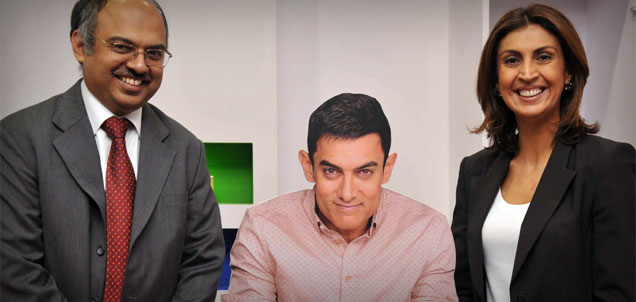
    The next few days will be aspirational for Shireesh Mukund Joshi, Head – Strategic Marketing, Godrej Group, as his organisation engages in an eight-part brand promotion exercise in the Indian marketplace. With Aamir Khan as its celeb-of-choice, the integrated campaign of ‘Ideas that makes life brighter‘ will focus on enhancing brand Godrej’s emotive appeal by showcasing the breadth of fresh ideas from within the group to its consumers.
     

    Excerpts from an interview with Mr Joshi on the occasion of the launch…


    In challenging times such as these, brands would usually go in for an all-out promotional exercise if they are engaging in repositioning or if they want to give falling numbers a fillip. What made you opt for an overall brand-Godrej promotional exercise at this juncture?

    It’s been some time since we last came out with a communication around all of our brands. If you observe, during this period we’ve achieved and done quite a lot in terms of new product launches, promotional campaigns etc. Also if you see each of the brands talk to a specific set of audiences but no one has managed to see all of them in a single piece of communication. This will be a perfect opportunity for us to get width and scale for brand Godrej. Since we have managed to accumulate a lot of products under our portfolio to showcase to the consumers, we felt the time was right to come up with a communication campaign of this scale.


    The emphasis for most brands in recent times has been around marketing and reaching out to the youth in a big way. How is the story same or different for brand Godrej?

    Where Godrej is concerned, it is a youth-also brand rather than just youth-only. We have products that are built for homes and diverse set of audiences. The products of today have to be designed keeping the various needs of the overall audiences in mind whether it is the youth or other audience categories. As the needs of consumers keep evolving so do our products that need to undergo a shift in terms of adjusting to the needs of the audiences.


    Why didn’t you stick with current favourite Virat Kohli or the dependable Hrithik Roshan to espouse the larger cause for brand Godrej? Why rope in a new celebrity?

    Both Virat Kohli and Hrithik Roshan have been used for pushing further the cause of Cinthol in the Indian marketplace. Where Aamir Khan is concerned, he will be seen endorsing brand Godrej in its entirety. So wherever there is a connect with brand Godrej we’ve set up a communication that will feature Aamir Khan as the ambassador. It is not about a particular product but is rather about endorsing common set of values across our entire product portfolio. Aamir, we thought, was the perfect fit to drive our objective in the current brand communication context.


    You’ve stuck with JWT to drive the creative thought process for this large exercise too…

    The entire communication has been handled effectively by JWT and we are happy with the way the range of commercials have been drafted for presentation in the coming few days.


    Were you looking at IPL as the platform to share the core brand objective exclusively with? Will you be pledging maximum revenues on IPL 6?

    I cannot reveal what the estimated spend is for the IPL this year but it will suffice to say that it is well balanced.


    What is the spike you’re expecting in volume sales or the bottomline revenue for the group from this activity?

    This is not a product or specific campaign launch. It’s a campaign that celebrates brand Godrej in India. Over a period of time as more people become aware of more products from Godrej then we will rise in consideration set. It’s a much more longer term infusion of values of the brand rather than concentrating in immediate spike in sales or revenue. We will be able to gauge the impact on sales and revenue only later.


    And it’s not just a division or two – the ace actor has been roped in by Godrej to endorse the overall group in India. The move follows the company’s strategy over the last five years, where the group has built on its promise towards a brighter living by creating a slew of innovative ideas. Continuing with its next phase of journey, the new integrated campaign - Ideas that make life brighter – will be focused on enhancing the brand’s emotive appeal by showcasing the breadth of fresh ideas from within the group to its consumers.


    While company spokespersons preferred to withhold information on the cost of getting Aamir to endorse for the group, the overall cost for the eight-part television promotional activity is being pegged in upwards of Rs 50 crore. Creative hotshop JWT has been the force behind the new commercials featuring Aamir Khan.


    The categories to be featured as part of the promotional activities include Appliances, Interiors, GCPL, GPL & Security Solutions.


    Tanya Dubash, Executive Director and Chief Brand Officer, Godrej Group, explained the AK rationale: “Over the last five years we have walked on the exciting journey of managing the Godrej brand as an invaluable strategic asset. This journey has been marked by the creation of a more contemporary entity that has created an even stronger connect with the 500 million Indians who use a Godrej product or service every day.”


    The new integrated campaign, ‘Ideas that make life brighter’, aims to communicate the ethos of brand Godrej to the consumers, she added. “It is our belief that this campaign will harness the strength of the masterbrand through leveraging the diverse innovations across the group and presenting them in a very engaging manner.”


    While such activities are a result of some repositioning exercise that brands use to boost falling sales numbers, for Godrej it is about showcasing all its products under the Godrej umbrella to enable it to attain width and scale. Shireesh Mukund Joshi, Head – Strategic Marketing, Godrej Group said, “It’s been some time since we last came out with a communication around all of our brands. If you observe, during the recent past we’ve achieved and done quite a lot in terms of new product launches, promotional campaigns etc. Also, each of the brands talk to a specific set of audiences but no one has managed to see all of them in a single piece of communication. This will be a perfect opportunity for us to get width and scale for brand Godrej.”


    Since the group has a lot of products under its portfolio to showcase to consumers, the time was right to come up with a communication campaign of this scale, Mr Joshi said. On the decision to get Aamir Khan over the other bunch of superstars including current ambassadors Hrithik Roshan or Virat Kohli, he said, “It is not about a particular product but is rather about endorsing a common set of values across our entire product portfolio. Aamir, we thought, was the perfect fit to drive our objective in the current brand communication context.”


    On the impact that such an activity will have on the overall revenue growth for the group, Mr Joshi said, “We have to realise that this is a campaign that celebrates brand Godrej in India. Over a period of time as more people become aware of more products from Godrej then we will rise in consideration set. It’s a longer-term infusion of values of the brand rather than focusing on immediate spike in sales or revenue. We will be able to gauge the impact on sales and revenue only later.”


    Given the timing of its launch, it is obvious that the group will look at the IPL as the platform to go big with their promotional activities. Without getting into specifics, Joshi said that it would suffice to state that the spend for the IPL has been “well-balanced”.


    For now, it is time for the action to move to the small screen as consumers will take a call on whether Aamir Khan does justice to the brand.


  • Heineken upbeat about social for UCL

    By Johnson Napier


    With the rollout of the Social Reporter contest, Heineken is looking to recruit a ‘Man of The World’ from India, to live the Heineken Experience and report on it. The attempt is to recruit a lucky football fan, who is digitally and socially savvy, creative, witty, passionate and eager, to report on the UEFA Champions League Final weekend for Heineken’s social media channels in India.


    Samar Singh Sheikhawat, Senior Vice President (Marketing), United Breweries Ltd. tells MxMIndia on what makes this contest a unique experience for football fans in India and also what are Heineken’s growth plans for India.


    This is Heineken’s first association with UEFA Champions League in India. Given the huge popularity that UCL enjoys around the world, what are your expectations from the association in India?
    Heineken globally has been a sponsor of the UEFA Champions League, the world’s most prestigious club football tournament, since 1994. This makes it a perfect match for Heineken, the world’s most international premium beer brand.


    The Heineken Social reporter initiative is an extension of the brand’s global campaign The Candidate, and one of the initiatives as part of Heineken’s activation of the UEFA Champions League sponsorship in India.


    We expect this initiative and our overall Champions League activation plans to give Heineken a salience boost, and connect with young urban consumers in the key consumption months of the upcoming warm Indian summer. The winner of our search will not only experience the time of his life, but will also play an extremely important role in his assignment as Heineken’s Social Reporter. We are looking for someone not just with advanced degrees or skills, but for someone who is smart, spontaneous, witty and creative; and someone who has the ability to think out of the bottle.


    Could you elaborate on the Social Reporter contest that you’ve announced in India? How is it unique?

    With the Heineken Social Reporter, the brand is looking to recruit a ‘Man of The World’ from India, to live the Heineken Experience and report on it. The attempt is to recruit a lucky football fan, who is digitally and socially savvy, creative, witty, passionate and eager, to report on the UEFA Champions League Final weekend for Heineken’s Social Media channels in India.


    The search will begin with the profiles that interested fans create on our Facebook app: https://apps.facebook.com/heinekencandidate/. From here we will create a shortlist and then engage with the candidates on a one-to-one basis over two or three more rounds, before we arrive at our Heineken Social Reporter.


    Will you be looking at extending the contract of the winner beyond the UCL tournament?

    The Heineken Social Reporter is ideally a onetime opportunity for one successful consumer to report Live from the upcoming UEFA Champions League Final from Wembley Stadium, London.


    What are Heineken’s plans around other sporting properties (including football) in India?

    Across the world, Heineken connects with consumers through marketing activation campaigns based on its global Sport, Music and Film platforms. These include the UEFA Champions League Football and the Rugby World Cup. In India, we will be continuing on the same lines. At this moment we are concentrating on Heineken’s activation of the UEFA Champions League sponsorship in India. We do not have any other sporting associations at the moment.


    Growth-wise, what are your expectations from India for the year 2012-13?

    Heineken is our fastest growing brand. It has grown at close to 100%. We have almost doubled volumes from what they were last year.


    For the upcoming year, we are looking at increasing distribution of the brand to reach out to our target consumers.


  • Young also want some gyaan @ Goafest: Ambi Parmeswaran

    By A Correspondent


    Goafest, the annual advertising festival held in April every year, is a two-day festival of ad professionals preceded by a Conclave of senior media professionals.


    This year, Dr M G Parmeswaran, executive director and CEO of ad agency Draftfcb+Ulka, is convenor of the knowledge seminars on the two days of Goafest (April 5 and 6).


    Ambi, as Dr Parmeswaran, is known in the fraternity, took a few questions on the eve of the eighth edition of Goafest.


    Being the convenor of the conference leg of an event like Goafest must be tough… how do you get folks to sit in for all the ‘gyaan’ when they’ve actually come to have a drink and make merry?

    Over the years, we have noticed that the young are finding the seminar hangar not just a place to cool down but also for a bit of gyaan. We dramatically changed the format last year into to eight keynote speeches followed by Q&A moderated by a senior industry professional. We have also introduced a special prize for the best audience question. So instead of a panel of five people rambling on, we have one person on stage trying to engage the audience. Instead of people hesitating to ask questions, we have introduced the ‘slip’ system to curate the questions. All this added to better turn out last year. This year we are trying to bring in a couple of speakers from non-advertising domain. I am sure that will help lift the audience turn out.


    So what’s been your magic formula for this year?

    No magic formula, just understanding what worked last year and trying to improve on that. This year’s line-up is, in my opinion the best we have had of late. It covers a diverse spectrum. Yes, there are some last-minute snafus, and this is bound to happen when we are running the Goafest seminars on a shoestring budget. Overall the line-up is great, hope the audience think that way too.


    What’s been your thinking behind inviting the various speakers – from across all spectrums – true-blue adpersons to a Swami to a tech guy to a film-maker. Expect the unexpected?

    We first did a listing of areas we want to be covered -  Creative, Strategy, Media, Digital. Once those boxes were ticked, we said let us look beyond this. We reached out to over 35 thought leaders from sociology, psychology etc. And finally decided to have it all by doing the unexpected. Swami Sukhbodananda was a speaker at the Delhi AdAsia two years ago. He was the only speaker to get a standing ovation in the entire conference. Our young professionals have not heard him, so we reached out to him and Swamiji graciously agreed. The other unexpected speaker is the Bollywood director making waves, Abhishek Kapoor of Kai Po Che fame. He has a very interesting personal story to share. Should be time well spent for the young and old in advertising.


    Given that scam ads have been a discussion point in the industry, and since the key stakeholders are out there in full strength, wouldn’t an open house on the issue have been a good idea? Or is that out of the purview of what’s essentially a knowledge-sharing conference?

    My agenda is to deliver a Seminar that covers a wide spectrum of topics for young and old. Your idea is a good one. May be the Abby stage should be used to have this debate, but then again that is the wrong forum.


    By Arrangement with MxMIndia.com


  • Metals proved that young team needs to be empowered: K V ‘Pops’ Shridhar

    In the past few weeks, the advertising industry saw a lot of ups and downs. But as the biggest award function – Goafest – of the industry ended, the best was applauded and appreciated. Leo Burnett triumphed at the event with 9 Gold, 34 Silver and 28 Bronze.

     

    MxMIndia’s MEGHNA SHARMA spoke to the agency’s chief creative office for the India subcontinent, KV Shridhar, who donned the angry young man look in a promo for the Goafest asking God to give him the metals, this year..


    So, the God has answered your prays?

    (Laughs) Yes. He has and how!


    Obviously it’s an amazing feeling, but do share with us a little more about the win?

    There are couple of things which I would like to mention. Firstly, all of our big campaigns like KBC, McDonald’s, Coke Studio etc won, which is very gratifying. Secondly, we won at every vertical which again showcases the vastness of our work. And lastly, there was a lot of criticism when we empowered our young talent. But this has been a testing ground where we have proved out that what can the young brigade do. Nitesh Tiwari and his team has made us very proud.


    Were you expecting so many metals?

    Never expecting anything. Ad when you win, the feeling is out of this world. However, it’s always good to be appreciated for your work.


    Of all the metals this year, which is the most special for you and why?

    The KBC girl child one. It is very dear to us as it was beyond advertising. I have been fighting for gender equality for years now and I hope this campaign and our win would make others sensitive towards women too.


    Last year, the tally was three and this year, it’s nine golds… who would would you attribute this jump to?

    The level of craft has improved and increased a lot. The technology, design and the new-age media has upped the game.


    Apart from the controversies and win, what has been the high point of the event, this year?

    If we take a look at the winner’s list, in the top 15 we’ll find a production house, design house which only means that now Goafest is not about Abby alone, but about ‘communication’. All the verticals have come together and are getting encouraged and recognized. This will help the industry in a long way and is a huge step as well as positive thing for the industry.


    What is your aim for next year?

    To keep up the good work.


    And lastly, how do you think these win will impact you and the agency?

    We are going to put this behind us and relax for a few days. And come back with new energy to bring out good work for our clients.


  • Rooted in the region worked for Big Magic: Sunil Kumaran

    It’s celebration time at the headquarters of Reliance Broadcast Network Limited (RBNL), also known as the Big TV network. Big Magic, the GEC which marked the entry of RBNL into the regional entertainment space, completed two years of existence last week. Positioned as a regional General Entertainment Channel (GEC) for the Hindi heartland of Uttar Pradesh, Madhya Pradesh, Bihar and Jharkhand, it features family dramas, crime shows, reality shows and weekend blockbuster movies. MxMIndia posed a few questions to Sunil Kumaran, Business Head, Regional Channels at RBNL to get a better idea of how Big Magic has done since its launch in 2011.

     

    Congratulations on Big Magic turning two. Two years for any media entity implies that it’s here to stay. Would you say that for Big Magic?

    The two-year journey has been stupendous and extremely encouraging. We started with the belief that there is an opportunity in the market for a regional player offering meaningful content which is relevant and has a deeper connect with consumers.


    This belief has been endorsed by our strong performance and consistent growth in the market. Over the last two years, we have launched some marquee shows like Big Bal Kalakaar, Police Files, Pyaar Ya Dehshat, Khul Ka Sim Sim, Big Memsaab and more, each of these resonating local sentiments and entertainment preferences.


    Encouraged by our success in this market, we have also ventured into launching Big Magic – Bihar and Jharkhand, with shows tailored to suit these markets.


    For those not in the know, could you tell us what have been the highs and lows for the channel?

    What worked for us was the localization of the shows and our radio network strength, which allowed us to amplify quickly and gave us speed to market.


    How is it managing in a world where the big GECs, big movie channels and big sporting events occupy mindspace. In that world how big Magic weave its magic?

    Big Magic’s unique proposition is the fact that it is rooted in the region. The programming team is based out of the region and has a much better understanding of the nuances of the local populace.


    GECs are challenged with their ability to provide relevant content for specific markets. For us, what works is that we are focused on a particular market and our ability to offer tailored content is significantly higher.


    How have advertisers taken to the channel?

    We have all the large national as well as regional/ local advertisers on the channel, ranging FMCG, consumer durables, auto, BFSI, SME’s and more…


    We’ve had channels like Dabbang already in existence before you came in… so do you think you’ve had a second mover advantage?

    There was no channel offering variety entertainment content in this space and most of the others operated in the infotainment space. We actually had the advantage to be the first to offer a holistic entertainment channel for the first time for the region.


    Khul Ja Sim Sim has been a huge success. There were hundreds of people who wrote to us at MxMIndia requesting for access to the show. You’ve said that it’s been the turning point for your channel… Talk us through how it has been the turning point? And life after that (for the channel?)

    KJSS was an adaptation of the popular international format Let’s Make a Deal. We bought the rights and adapted it for the region. The game show caters to the entire family and being the first of its kind for the region, the response received has been over-whelming. We brought in the original Indian host Aman Varma to host the show and we also invested in marketing the show aggressively across the state of Uttar Pradesh. This has managed to create a huge traction for the show and the channel.


    Have all the distribution hassles been eased? Would you say digitization in the Phase 2 will be of some help?

    We were very clear right from the beginning, that distribution, for a regional channel like ours is extremely critical and had ensured that we are available across all major platforms right from launch. With digitization, we are now available in all the regional digital platforms too.


    What plans for the year ahead?

    We will build on our franchises like Big Memsaab, KJSS, Big Fame Star and also venture strongly into the fiction space. You will hear of some exciting new announcements shortly.


  • Mitrajit Bhattacharya’s priceless tales of crazy things

    By A Correspondent


    His interest and expertise in the world of watches is now well-known. In fact he has used this to even co-own a consultancy firm called The Horologists. His full-time vocation though is that as Publisher and President of the Chitralekha Group. He also creates content for television and is an active vice-president of the Association of Indian Magazines. Meet Mitrajit Bhattacharya, now also a first-time author.
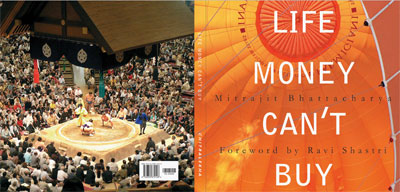
     

    Mr Bhattacharya has shared his experiences through various professional and personal engagements that transported him into worlds which would constitute, as the the title of his book tell us, Life Money Can’t Buy….


    The book is a compilation of voyages — from being enchanted by a mermaid frolicking around a yacht in the waters off the coast of Capri to flying a jet in Switzerland, from cheering on a game of polo with Maharajas for company to having his own ‘wonderland’ moment with the Great Wall of China as the backdrop.

     

    Obviously, this book is Mitrajit’s expression of the fascinating adventures he has encountered while pursuing his assignments.


    Cricket commentator and former India captain Ravi Shastri has written the foreword to the book, which will be released by actor Shabana Azmi at an event in Mumbai tomorrow (April 16).


    Excerpts from a short interview with Mr Bhattacharya:


    What prompted you to put your impressions in book form?

    Being closely associated with the luxe industry for over a decade now, I have led a life which has allowed me to do crazy things across the world.  One fine day last year it dawned on me that putting together these experiences will make a great read, hopefully. Hence the book.


    In many ways, the book’s title reminds one of the Mastercard ad. Which of these was, according to you, the most priceless?

    Most of these experiences are unique and very few in the world have access to. Hence all are priceless. Moreover, all journeys are different from each other and can’t be compared.


    If you were given an opportunity to relive one of these experiences, what would it be?

    I would like to undertake newer journeys, may be share those in my next book.


    The struggle and hesitation is max for the first book. Now that you have passed that, what next?

    We have just placed the book in key bookstores and the response so far has been positive. When I am ready with more to share, another book will follow.


  • Data reporting is complex as of now: Neeraj Vyas

    The start to the sixth edition of IPL couldn’t have been better. At 100 million, the week 1 numbers from the tournament has generally surpassed expectations. But the sentiment is not as cheerful for Neeraj Vyas, Business Head of SET Max. According to him, the viewership numbers could have been more than what was reported had the digitization exercise not been underway. Especially data being reported from LC1 towns, which is turning out to be problematic for broadcasters, according to Mr Vyas.

     

    Mr Vyas shares his viewership sentiments with Johnson Napier of MxMIndia, and what he expects from the tournament in the coming weeks.


    The opening week numbers for IPL 6 seem impressive. Has the outcome been along expected lines?

    We have reported 100 million viewers this year compared to 78 million in the first week last year. So in a way it is good. But given the fact that TAM’s reporting of numbers has undergone such a sea change since September 2012 when the DAS exercise kicked off…that is when a change was observed in the Universe size. That was also a time when the LC1 data started to be reported and the weightage again changing to 20-25 per cent of the total Universe…this suddenly resulted in ratings coming out of rural India out of nowhere. If you were to do an apple-to-apple comparison, all of this was not happening last year. Also when the IPL 6 started off was when the phase II of DAS was underway…so it’s a fairly complex data reporting environment right now where there could be a lot of abnormalities. I am not saying there are but there could be. So given all the flux in the market, the fact that we opened to these numbers goes to show that there is a massive appeal in the IPL and that through our efforts we have managed to get viewers to come and sample the property by large numbers again this year.


    But digitization in a sense has helped you to attain high viewership numbers, hasn’t it?

    Digitization has indeed helped; if you see the GRPs of SET Max it has jumped from 134 last week to 245 this week. We have virtually driven the growth with this property.


    Despite the rise in overall viewership, the average match ratings for the first week have remained steady compared to last year. Why haven’t the numbers seen a spike?

    As I said, the LC1 data from markets like MP, UP etc have an audience base of 0-50,000 which translates to very minute and small towns but these places will never give you high ratings because of the problems faced like power shortage for 7-8 hours etc…so television numbers for channels including GECs have only come down due to LC1. Also, the advertiser doesn’t buy a spot in the IPL to reach out to the LC1 audiences…so if you remove the LC1 audiences and compare it to what it was last year then there is a growth at an all-India level of 4.1 and in HSM markets at 4.5. So it’s a hugely successful story for us.


    Do you think you were able to achieve the 100-million mark primarily due to the marketing initiatives undertaken? Any other factors that helped propel you to get there?

    The marketing initiative has indeed worked well for us. The track is something that is being loved and imitated by audiences across age groups. It has helped lift the happiness factor among the masses and the marketing execution has only fuelled in it getting there.


    Does this feat prove wrong the notion that cricket is seeing a downfall in India in recent times?

    IPL is a brilliant mix of cricket and entertainment. The matches have been good so far and the intensity has been phenomenal. So the start has been excellent so far.


    With such a bumper start, what are your expectations from the rest of the tournament?

    It’s too early to predict. As I said, because of the DAS 2 issue there is always going to be a fluctuation in the numbers that get reported…some places digitization is happening in other places it is not..and we are talking about 38 cities here. Had it been any other year I could have given an estimate but that looks difficult right now with the DAS exercise underway.


  • Times aren’t good, but print media should not give up: Paresh Nath, Delhi Press


    By Ananya Saha


    Delhi Press has been on a growth path and much in the news lately: whether it was the acquisition of two-decade-old BS Motoring for an undisclosed amount or tie-up with US-based Highlights to launch two new children’s magazines. Delhi Press has been around since 1939, and has grown steadily from one magazine in 1940 to 35 titles in 2013. According to recent reports, Delhi Press is in talks to buy Man’s World and Rolling Stone magazine, though they prefer not to comment on this.

    MxMIndia interviewed Paresh Nath, Editor-in-Chief and Publisher of Delhi Press to know more.


    These are said to be tough times for the media, and magazines (in print) in particular. Why is Delhi Press then on an expansion spree (organic and inorganic)?

    Yes, times are not good for print media but one should not give up. We at Delhi Press think that the literacy rate is growing and with more money in pockets the will to purchase magazines is still there.

    If magazines seem to be in poorer state, it is because the cover prices of other print product, the daily newspapers, thanks to government advertising subsidy, are low. Magazines are, therefore, not able to distribute free and hence have lower readership. Otherwise interest in magazines will continue to be there and we hope it will grow with increase in literates.


    Delhi Press currently has 34 magazines under its fold. How are the magazines doing?

    Magazines are stable despite cover price increase. We think that the magazines are medium of choice and one has to make an effort to get one and that is why it is read and taken more seriously than other media. That is our strength. We have no plan to shut any magazine as of now.


    Delhi Press has had a rich past… right from the days it was set up pre-Independence, in 1939. How has it been since you’ve taken charge?

    Delhi Press had been steadily growing ever since inception. From one magazine in 1940 to 35 magazines now it had been a long and fulfilling journey and members of family and others have contributed to its growth.


    How has the magazine reader changed over the years?

    Like the society, the readers have also changed. Delhi Press has however been a step ahead. We had started opposing orthodox believes right from beginning and have even faced numerous cases because of our rational and modern approach. For us the change in readers has not been a shock as we had been urging him/her to change all the time. We welcome the change.


    Delhi Press already has two titles in its fold that are aimed at kids and young adolescents. Highlights Champ and Highlights Genies were also recently added. Would the magazines not compete with each other (more so, in terms of advertisers)?

    It is true that there will be some duplication and overlapping but Champak is in an Indian product and Highlights are foreign magazines. Those with more international outlook might prefer an International brand. In Champak, characters are Indian in Indian background but in Highlights these are more Western. We are sure that the two can survive simultaneously.


    For the titles that have regional as well as national language presence, which language is witnessing more growth?

    All languages are growing more or less uniformly. As far as our case is concerned we are doing better in Gujarati, Marathi, Kannada, Telugu and Bangla.


    The recent IRS does not show much promise when it comes to magazines. Grihshobha and Champak have shown degrowth as well. Are Indian magazines facing tough times?

    We do not have trust in the readership methodology. A Rs 3 publication is being equated with a Rs 30 or Rs 60 publication with no weight being given to the fact that the dailies are thrown around free all over while magazines cannot be as they do not get government money in the form of advertising. Not only that dailies that seem to have grown in recent years, actually grew because these entered into newer geographical territories. Methodology of readership survey is kept secret like nuclear technology. Yes as the magazines do not get government support, these find more difficult to fund money for promotion to retain and gain readers. There is pressure to improve paper and print quality in case of magazines while newspapers continue to be printed on the same newsprint. Indian magazines will continue to suffer as long as there is widespread discrimination.


    How is Delhi Press preparing itself for the online reader?

    Online readers have not started paying for content as yet and we do not know how to handle this. Content is king but kings do not come free and that seems to be the mantra of on line content. Now new technology is being developed where the content creator is making money and as soon as it is perfected we will jump into it.


    Tell us about the the strategy behind the BS Motoring acquisition?

    We did not have a lifestyle magazine in our group and this may be a good start.


    What are the changes that one would see in this magazine?

    Changes will happen but gradually and according to the need. The magazine as it is is well produced and Delhi Press will give it wider spread.


    Apart from acquiring, which categories is Delhi Press looking at to launch its own titles?

    We are likely to launch language editions of some of our magazines.


    When entering into new categories or new titles, what are the challenges that even an established player such as Delhi Press faces?

    Challenges are plenty. The advertising is now dispersed and pie has to be shared with dailies and electronic medium. It is not easy to convince the generation used to SMS and Facebook that the real reading is not from screen but from paper where you can pay more attention and do real serious thinking.


    How is Caravan doing? In terms of impact and mindspace it has picked up a fair bit… but we don’t see too many ads in it?

    We are very satisfied with the progress The Caravan has made. Its editorial team works very hard and has given a good challenge to established players. We miss some ads because of our editorial ethics that we will not promote alcohol, cigarette and pan masala at any cost. Ours is a highly independent group and has no industrial or political connections or financing. Commercial ads will take some time as the advertisers realise that this is no coffee-table magazine and that the reader returns to it again and again.


  • Aiming to be the most complete communications firm in the world: Yusuf Hatia, FleishmanHillard

    By Johnson Napier


    In what could be termed as a defining moment, communications shop FleishmanHillard unveiled a newly refreshed corporate brand and associated digital media property on May 2. The new branding reflects the evolution of the PR firm into a fully integrated communications company that provides clients with complete communications solutions.


    As part of the exercise, FleishmanHillard has unveiled a new brand platform, tagline and logo. The new logo reflects the trust and confidence that clients have placed with the firm and is said to have a more fresh, innovative and contemporary interpretation. While the logo has brought the names of both founders – Fleishman and Hillard – on one line to reflect the heritage of the firm, there is also an iconic mark that can be seen that complements the logo and symbolizes the transformation of the firm.


    Yusuf Hatia, MD, Client Service, FleishmanHillard India responds to queries by MxMIndia on the significance of engaging in such a game-changing exercise. While there is a lot that is being planned through this initiative, Mr Hatia asserts that the aim is to let everyone know that FreishmanHillard is the most complete communications firm in the market. Excerpts:
     

    Given that FleishmanHillard is in the midst of a rebranding exercise at the moment, how game-changing and extensive an initiative is it going to be?

    We think it is part of a very important and significant development in how we position the changing nature of our business in an industry that has been rapidly evolving over the last few years. Over these years, in most of the markets we operate in, we have been delivering fully integrated work – from identifying a critical insight, to taking responsibility of the strategy, to developing the story, and delivering content across paid, earned, shared and owned channels. Our brand refresh permeates our agency and we see it as game-changing. Our industry is evolving and we plan to be at the forefront. In most of the markets we operate in, we’re being asked for and we’re delivering integrated work from insight to strategy to the story and content across all channels, not just via traditional print or broadcast. For instance, many of our clients and industry peers are surprised to hear that, last year, FleishmanHillard placed $1.2 billion in paid media. Our new brand will communicate the new reality of our company.


    What are the reasons for undergoing a repositioning initiative at this juncture?

    The market has evolved beyond the previous silos of advertising, media, PR and other disciplines and we feel it is time that we reflect how our business has changed and is changing. While PR remains at the heart of FleishmanHillard, the very definition of PR is changing and broadening. Our brand refresh let’s everyone know that we’re in communications and that we want to be the most complete communications firm in the market. Our brand hasn’t changed since 1990 but the market has, so we took a hard look at what it represented, what we’re actually doing and have recreated ourselves for the present and positioned ourselves for the future. Where we landed was the concept of true and the need to be true.


    What are some of the new changes that one will get to see from this rebranding exercise?

    FleishmanHillard is treating the change through a brand refresh. This goes beyond a new logo and a strapline. We went back to our DNA to understand what our unique proposition is and listened to clients, partners and employees. All of our analysis focused on a need to be true and our refresh is built around that word. True is our reality as well as our aspiration. We see our role as helping clients be as they wish to be seen. In many respects, this is what PR has always been about and we’re remaining true to our virtues in helping our clients present a true picture of who they are but in a new age where the dynamics of communication are very different. Organizationally, we’ve invested in digital in India and globally. We’ve also brought in marketing integration experts and key insight specialists.


    How would you analyze the year 2012-13 for FleishmanHillard on the growth parameter in India?

    Our business in India is still growing and we had a solid year last year that is in line with our strategy for what we believe in will be one of the most important PR markets in the world. India is unique in its size, demographics and growth trajectory but also because it is a democracy with a free and independent media. We have a strategy to organically and inorganically grow and work for some of India’s leading brands as well as helping our global clients navigate the Indian market.


    In terms of new client wins, how would you rate your performance across verticals?

    We had a good year in 2012 and added some important clients to our existing list. They include L’Oreal, Sony and Convergys; we’ve also extended work with existing clients such as Godrej and Emerson (a company that FleishmanHillard has worked with for nearly 60 years). We’ve only just scratched the surface but that’s what makes this market so interesting – the potential for growth is immense!


    What were some of the new initiatives you undertook in 2012-13 to spur growth for your company?

    We invested in digital talent at a very senior level when we hired Riitu Chugh who came to us not from another PR agency but from other creative and digital specialist agencies. We’ve strengthened our senior management talent with new general managers in Mumbai and Delhi to lead our businesses in the two biggest Indian markets. Our talent strategy in India is consistent with our strategy elsewhere: find the best people, build the business around them and give our clients what they really need. It is in line with our holding company Omnicom’s motto: talent conquers all. In 2013, we’ll continue to add to our senior talent, invest in our teams through training and cross network account work and look for non-linear growth in areas including social, digital and across paid, earned, shared and owned channels. We’re also collaborating closely with others in the Omnicom network and have pitched and worked alongside TBWA, BBDO and DDB Mudra. In fact, earlier this year, we moved in with DDB Mudra not just because the company has a great working space but because there are immense advantages of sitting alongside hundreds of creatives from every single marketing discipline. PR cannot afford to sit in isolation and remain independent of other marketing strategies. The new reality is to work with everyone else to address what clients want – and more often than not, that’s a total solution to a business need and not PR. A project for Nissan last year did just that and we worked with TBWA, a UK digital agency and others to deliver a multi-discipline campaign that was shortlisted for a Spikes Asia Award.


    The past year was believed to be a tough one for many players in the PR & Communications space. How did the year pan out for FleishmanHillard?

    In India, our business is still growing and we didn’t see the kind of slowdown that others may have experienced. But our business is a little different from other players in this market and we have taken a contrarian view of the India opportunity. We have benefitted from international clients who still see India as a growth opportunity and we work with Indian enterprises that are looking to grow in India and beyond. There was a period over the last 6-8 months when there was a slowdown in activity which some of our clients put down to the changing political landscape and a policy paralysis, but that seems to have now passed and we’re seeing business as usual.


    A few big players from the fraternity have highlighted a degrowth that’s being observed and also skepticism from the client’s end to pump in more money. Is it a cautious phase for the industry to be in right now?

    The market is changing and we’re seeing clients ask for more evidence and measurement to prove the value delivered. But we are used to this approach in other markets and we have processes and mechanisms in place that can put across a convincing position to, for instance, a procurement team or a CFO. This is a market where there is an instinctive need to show a return on investment and asking for a hike in fees is not a given at all. But when you can show extra value or tap an unidentified need, for instance digital, then clients are open to investment.


    The recent past has also seen a few players venturing out to offer unique solutions of their own. Will it be a healthy exercise to engage in the long-term?

    Every agency needs to differentiate so it’s always a healthy approach to bring new solutions to India. You will see our brand refresh showing how we’re different and how we can bring something new to the conversation.


    Are you contemplating launching new verticals/arms in the imminent future?

    At this stage, we’re focused on delivering the core business of FleishmanHillard in India and since we’re still relatively new to this market, we have a lot of opportunities and potential to address. However, if a client needs a particular offering and we see a business justification for doing so, we’re always open to expanding our scope in India. We’ve done this in the past: a major banking client wanted a very specific offering and we created a dedicated team for that client and for a particular need.


    What is your vision for 2015 in India?

    Exactly what we aim to be in every other market: the most complete communications firm in the world.


  • Intel, doing something wonderful


    By Ananya Saha


    Intel, which has been getting quite aggressive in the Indian terrain, has been developing many consumer products in computing device and mobile segment. To name a few, Xolo X900 smartphone in association with Lava and Fonebook in association with Asus. Apart from the consumer products, Intel has also initiated its National Digital Literacy Mission that entailed the ‘Go Do Something Wonderful’, ‘My Discoveries’, Digital Literacy Week’ and ‘Follow the Fiber’ campaigns in urban, semi-urban and rural areas.


    The ‘Go do something Wonderful’ campaign that has been playing up on the ATL level claims to have had more than 65 crore impressions online and is spanned across seven languages to drive technology adaptation in rural, semi-urban and urban areas.


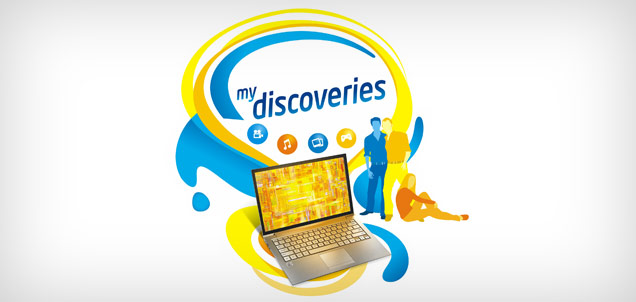
    On the BTL level, Intel launched ‘My Discoveries’ campaign targeting college youth, IT Hubs, Corporate parks to demonstrate the interaction between multiple technology experiences in a connected world. The My Discoveries campaign boasts of being ab experiential marketing at a BTL level, the touch and feel factor is showcased in a way where the students not only get the feel of the product and the technology but also enhance the skill-set using the product. More than 30 lakh youth have been engaged though this campaign


    While in conversation with MxMIndia, Sandeep Aurora, Director of Marketing and Market Development, Intel South Asia, prefers not to divulge financial details, but he does reveal the plans for Indian market.


    Sandeep Aurora

    How is the Indian market growing for Intel?

    InIndia, personal computing device penetration is a mere 10% which means there is huge growth potential that the country offers. Intel is committed to driving the growth forward by showcasing the magic of a personal computing device and driving greater relevance. In today’s multi-device connected world, Intel enables consumers to explore their creativity, enhance their productivity and indulge in a world of digitally powered entertainment. The aim is enhancing affinity and excitement for the personal computing device as an enabler of amazing possibilities in their everyday lives.


    Intel recently launched My Discoveries campaign. What was the thought behind it?

    Indiais a growing market; consumers are adapting to new products and fast moving towards brands which enable them to better their lifestyle, connectivity and productivity. It is important that our consumers experience the possibilities that the brand brings alive for them and how this impacts their future in a real time scenario focusing on making people realize what they are capable of doing.


    The My Discoveries program spanned across two quarters was hugely successful reaching over three million youth across India with the message of personal computing device relevancy and usage in a highly contextual, relevant, personal and engaging manner The approach of a personalized experience for the consumer has worked well, it’s amazing to be able to actually create an original sound track, a photo or video montage and carry it back with you.


    My Discoveries extended beyond BTL.

    On ground activations under the ‘Go do something wonderful’ campaign, which we call ‘My discoveries’, targets people in campuses, i-cafes, malls and other places. The campaign reached out to the audience at multiple touch points including campuses, corporates, BPO’s, Internet cafes, malls and retail with its unique experience. The engagement extended itself to digital and social enabling audiences to experience the My Discoveries on a virtual platform while sharing their wonderful experiences online. Pulp Strategy was the agency responsible for the execution of the campaign.


    Does the campaign mark Intel’s marketing shift?

    In the recent past, Intel made a critical & fundamental shift in communication. A leap from “what we make” to “what we make possible”. The objective of this campaign was to build a deeper, enduring emotional bond between Intel & the end-user while creating an increased preference for the Intel Powered PC in the minds of our target audiences. The premise of our campaign was that even though devices like cameras, smartphones, and MP3 players are handy and generate excitement, their potential is limited without a personal computing device. The personal computing device is the central hub to a connected device world.


    The campaign plays on the sentiment that “Tabs, phones, cameras are an expression of me, but my personal computing device is me and it’s where I do wonderful things”. Intel enables consumers to explore their creativity, enhance their productivity and indulge in a world of digitally powered entertainment. We wanted to showcase these possibilities by creating inspiring and compelling experiences which drew out the relevance of owning a PC in a connected world. The focus was also on offerings hands on experience of the power of a processor, while making the experience delightfully personal “what an Intel Powered PC can “do for me”.


    What was the brief that was given to Pulp Strategy for this campaign?

    We briefed several vendors during the RFP process about this concept but Pulp Strategy, the agency chosen for this campaign came back with the best response to our brief and through extensive mutual collaboration we fine-tuned the brief and the deliverables in a way that would deliver the best impact for consumers to explain the relevance of a personal computing device by offering a delightful, engaging and personal hands-on experience.


    Has Intel’s strategy in the Indian market changed over the years? Does this change reflect in your marketing and advertising in this market?

    In the process of brand evolution, marketing plays an important role. For a 40-year-old company, whose first marketing campaign was focused at projecting how things have changed and advanced; Intel has evolved in its marketing strategy with the various products that it has launched over time, learning at each step. We have moved on from what Intel is and what it can do to make people realize what they are capable of doing. Campaigns like My Discoveries, and Go Do something Wonderful is a step in the direction of making consumers realize the possibilities that owning and using a PC opens up for them.


    India remains a complex market. What will be your strategy for the Indian market, going forward?

    Our research has revealed that one of the main reasons for consumers to not buy a personal computing device immediately is the lack of relevance for it in their minds. But we believe that as the awareness about technology coupled with digital literacy increase in the country, more and more of the hitherto untapped individuals would realize the importance of owning a PC and the sales would pick up. Keeping this in mind, Intel will continue to focus on India’s personal computing device market which is growing at a rapid pace. Also growth of the personal computing market inIndiais inevitable given the low rate of domestic technology adoption in the country.


  • We’ve already chalked out 2015 vision & roadmap: Ashwani Singla, PSB

    It’s been a busy yet fruitful second year for communications shop Penn Schoen Berland, which completed two years in India recently. Having carved a niche for itself, the focus by PSB has been in establishing its corporate and political consulting practice where it is beginning to find its niche in these domains.


    Ashwani Singla, Managing Director & Chief Executive – South Asia, Penn Schoen Berland asserts that the firm has worked hard in building its capabilities and setting a good foundation. In fact the leadership team at PSB has already crafted a 2015 strategic vision and roadmap for growth leading to that year.


    In an interaction with Johnson Napier of MxMIndia, Mr Singla highlights the highpoints of the second year for his firm and outlines what the future will unfold for PSB in India. The market is vibrant and dynamic enough, he says, and ultimately those who deliver value to clients will thrive. Excerpts:


    It’s been two years since you launched operations in India. How would you describe the second year of your journey in India?

    The journey has been very satisfying for me and the team at PSB; we have grown as a team and served blue ship clients across corporate and political practice areas. We have not only attracted senior talent but also young and dynamic professionals from premier management institutes in India and the APAC region. We have also built our capabilities and have set a good foundation. My leadership team and I recently crafted our 2015 strategic vision and a roadmap for growth leading to that year.


    How have you grown in the past year across the specialities that you operate in, pan India?

    We have focused on our efforts in establishing our corporate and political consulting practice and I can confidently say that we are beginning to find our niche in these arenas.


    You began your Mumbai operations with the introduction of Capital Market Communications for the finance community. How has the vertical delivered for you since it launched last year?

    As you know, last year has been particularly challenging for as regard markets and we haven’t see the growth that we expected from our offering, however we remain committed to growing that practice. We have some very interesting irons in the fire…:)


    Have you launched any other speciality units after CMC in India? How have they performed since?

    Our focus has been to build our corporate and political consulting practices. Our corporate image and corporate affairs work has grown and Gaurav Bhagowati, a senior media and public advocacy professional has joined the firm this year as a Director to handle the growing portfolio of our work. Our corporate political polling and consulting work is seeing growing traction. Ashish Rastogi, a senior market research professional has joined recently as a Director to lead our Insights Services and Suvir Paul, Director now leads our Corporate Image and Corporate Affairs Services unit.


    How have clients responded to your multiple service offerings, particularly during a tough 2012?

    Yes, our clients have faced marketplace challenges but they have needed us more than ever during this time to help generate the insights and develop campaigns in order to get the edge they need. Spending is cautious but when we have demonstrated value of our offer, they have found the budget.


    One of PSB’s USP has been to recruit highly qualified professionals and have them run the show for you in India. How fruitful has this approach been for you in India?

    It has been fantastic. Our “Unagency” Approach has really been appreciated by our clients and they want more of it. Clients value the advice they get from senior professionals and the quality they see in our work with top class young talent. Senior leaders in the firms are hands-on and engage with clients on a day-to-day basis. Our young associates also get great exposure working with seasoned professionals and the empowered work place they get when they work with clients directly.


    Digital, led largely by social media, seems to be the go-to terrain for communication agencies in India. What is PSB’s emphasis on that front?

    What works for the client in a particular campaign works for us. As you know our campaigns run on 3i philosophy. Insights driven, Integrated across stakeholders and mediums and Impact business.


    The communications market in India is seeing the emergence of many new players who are out to carve a niche in the market. How do you view their entry into a market that’s already cluttered?

    The market is vibrant and dynamic enough to absorb new players and ultimately those who deliver value to clients will thrive.


    What were the challenges that you were faced with last year, particularly from the client and industry front?

    As we bring new thinking and a new approach to managing strategic communication we need to invest a lot of time to help people grasp the nuance. Once they get it they become believers.


    How, in your opinion, is the Communications (including PR) space evolving in India in the recent past?

    Communication is a dynamic sphere and it will continue to evolve as people evolve and how they consume information evolves.


    Where do you see PSB in India as you enter the third year of operations in India?

    We are building off our solid foundation…:)