Category: SHRUTI PUSHKARNA

  • Negotiating their way to compliance

    An image of a visually impaired girl with an adult sitting in front of computer


    By Shruti Pushkarna


    Shruti PushkarnaIn my last piece, Building a Case for Access in an Exceedingly Digital World, visually impaired professional, Rahul Bajaj explained the basics of accessibility, how technology enables disabled people to function independently and how inaccessible products and services exclude them from the mainstream of things.


    The disabled community is one of the largest minorities, as 15% of the global population lives with some form of disability. They have similar needs, aspirations and interests. Their limitations simply change the way they access facilities. In an increasingly digital post-Covid world, food delivery, travel bookings, banking, health appointments, entertainment, et cetera can all happen easily online. But what about persons with disability? Are mobile apps and websites just a click away for them as well?

    Unfortunately, not.
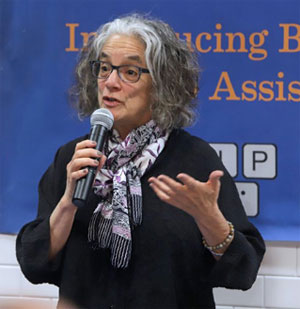
    Lainey Feingold
    Lainey Feingold

    Rahul Bajaj along with a couple of other legal experts who are also visually impaired, has started an initiative against inaccessible websites and mobile applications. Interestingly, in this battle for inclusion, the legal route is their last option. They are applying a method called ‘structured negotiation’, a concept popularised by an American Disability Rights lawyer, Lainey Feingold. An alternative to lawsuits, Lainey proposes a meaningful dialogue with the service provider, to get them to become accessible, explaining the issues and encouraging them to do something about it. The method assumes that inaccessibility is a fallout of ignorance rather than a deliberate attempt to exclude.

    In a candid conversation, Rahul shares certain issues with commonly used mobile and web platforms, accessibility guidelines and the need to advocate for equal rights.
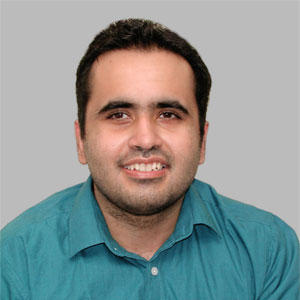
     

    Rahul BajajQuestion: What is this new initiative that you have taken up against inaccessible websites and apps?

    Answer: I realised there is massive inaccessibility for the disabled in the digital world we inhabit. From making payments, to ordering groceries, making medical appointments, everything is either out of reach or very difficult to do independently. And if these were in existence in the physical world, I might still understand that it requires a lot of retrofitting as old buildings were not designed with accessibility needs in mind. But it is very painful that in the digital world, where there is absolutely no reason for it to be inaccessible to anyone, there are so many barriers. Mission Accessibility seeks to constructively work with service providers of apps and websites to get them to become more accessible. And we try to do this through a variety of ways. One approach is to identify the users of a particular inaccessible platform, and share a template to get them to write to the service provider. That is a way of empowering individuals to advocate for themselves. Another approach is systemic in nature where the idea is to create a more conducive environment at the systemic level, to ensure that the service providers are made aware of their obligation. That can be done by involving the government or regulators like, SEBI, RBI, TRAI, under whose control the service providers fall in. Third approach is some sort of judicial intervention against service providers who aren’t complying. The basic idea is to change things.


    Question: You must have received several responses to your request, seeking details about people’s experiences of inaccessible apps and website?

    Answer: We sent out an email asking people for the names of such platforms that we should work on. The response was overwhelming, we got as many as 40 to 42 names. And we got a whole host of service providers, from food, to groceries to dating to academic writing and referencing, to medical appointments, everything. Some people said that this is something they’ve always wanted to do, to take on the issue of accessibility in a more systemic fashion.


    Question: Can you name some of the apps and websites that came up in the responses? I’m curious if there are any media websites in the list?

    Answer: There are, definitely. In terms of more generally what it includes, Dunzo for groceries, the common app people use for home delivery. Practo to meet doctors online. Hotstar, which is an OTT provider, and Rapido for booking cabs and bikes online. Dating apps like Bumble and Tinder. There are a lot of media apps that came up, including NDTV, Moneycontrol, Economic Times, Times of India, all of these have some or the other issue on their platform. For instance, the iOS NDTV app sends you a notification when there is breaking news or some major update. When you double tap that, or when you open that with VoiceOver on the iPhone, it doesn’t actually take you to the article. It takes me to a random advertisement on the app rather than to the actual article that I had opened up.

    Question: You mentioned that you access your daily dose of news on the YouTube programme put out by Faye D’souza. Are there any other examples of inaccessible news websites?

    Answer: One other that I really struggle with is New Indian Express. Whenever you open an article, it keeps telling you other things. And that must be because there is some sort of a visual, these are dynamic websites, where the content is constantly switching from one thing to the other. So, either it will be an ad or some flashing stories, which come in the way of smoothly reading the article from start to finish. Even with Moneycontrol, there is a similar problem. The screen reader jumps focus because people don’t design the website properly. Nobody’s saying that you do away with visually appealing elements. Because at the end of the day, that may be a strategic call. But at the same time, I’m sure there must be ways to retain those visual features and yet remain accessible to the disabled. People just don’t think about it because they don’t have accessibility experts in their midst. Also, they don’t anticipate disabled users visiting their platform.


    Question: Speaking of design, can you tell us about the W3C guidelines which are in place to ensure accessibility?

    Answer: The World Wide Web Consortium has what are called the Web Content Accessibility Guidelines or WCAG. And the latest version of that is called 2.1 AA. They actually prescribe in granular detail what norms you have to comply with in order for something to be accessible. So, if you want to know, what you must specifically do to make your platform disabled friendly, then that is really the tool that you need to use. Like having headings in place, making sure that buttons are clearly labeled, making sure that you don’t use CAPTCHA without either an audio or text substitute, or both ideally, for the deafblind also.


    Question: What are the legal remedies in terms of non-compliance? What does the law say on it?

    Answer: Under the 2016 Rights of Persons with Disabilities Act, there is an obligation to make your platform accessible, and all service providers were required to do this by June 2019. The deadline to do that has already expired. Now, the question arises, what do you do about it? Section 89 says that any breach of the Act shall be punished with a fine up to five lakh rupees. There is a possibility of financial penalty being imposed on those contravening the Act, so you would basically need to go to the Chief Commissioner for Persons with Disabilities in the first instance, or the State Commissioner. If that doesn’t work, then you go to a High court and to the Supreme Court.


    Question: OTT platforms are the trending thing now. We’ve seen with Covid and the lockdown, most of us were hooked to Netflix, Amazon Prime, Sony Liv, Voot or Hotstar. Are these OTT platforms accessible to a blind person? By the way, a lot of people think that blind people don’t watch films or TV. So why don’t you start by busting that myth…

    Answer: While it’s true that movies are primarily visually oriented, there are a couple of ways in which someone who’s blind can also have a really enjoyable experience while watching them. One is by listening to the audio components of it, the dialogue, the music, all the background noises. And the second, perhaps the more important aspect is audio description, which is where the OTT providers’ role comes into play. Audio description is basically where whatever is happening on the screen is being described by someone for the benefit of a blind person. Like Meg is a white woman who has brown hair and black eyes; we see her standing in her living room; or Meg drives in her car, and goes to the grocery store. And this is something Netflix has really pushed the frontiers on. A large majority of their content, and I hope it stays this way, is actually audio described, even in Hindi. Amazon Prime is also good, but it doesn’t have as much audio description. But the platform itself is definitely accessible. However, Hotstar is the most disappointing of the lot, the platform is inaccessible, what to speak of audio description. The app is designed in a very bad way, different controls are jumbled up. Buttons are unlabeled, you can’t really find things on your own. Many issues are there, but we are working with them. Actually, we sent them a legal notice and after that they began talking to us. They have in fact asked us to conduct a sensitization session for their engineers.


    Question: Let’s talk about the inaccessible content in terms of a sporting event on TV. Or national news coverage on Elections or Union Budget which is accompanied with a lot of graphics. How do these visual elements affect the visually impaired person’s TV watching experience?

    Answer: That is definitely a big issue. Sometimes the ad comes even before they have told you the score at the end of an over, and you can’t read the score on the screen. Same with other graphic content. The way to resolve that is to mainstream audio description. It benefits everyone because it will generate more employment. It will also generate more revenue because at the end of the day, you will tap into more users who are not seeing the platform/channel currently. I was interviewed on this Good News programme where the news team portrayed me in a very positive inspirational light. That doesn’t help me. This was part of the India Today network, if Aaj Tak gives me audio description or subtitles, that’s what will truly change something. To the folk in media I would say, bat for accessibility in whatever shape or form you can. Some people might say that this is a call to be taken up by people higher up in the organization. That’s not true. You can connect relevant people, your product design team, your engineers, your marketing people who run your website, and so on, with people with disabilities and open up that channel of communication. It’s not okay just to be outraged by this. See what you can actually do in your everyday life to make things a little better.


    Rahul Bajaj works as a Senior Resident Fellow with the Vidhi Centre for Legal Policy. A Rhodes scholar, he also worked with a Supreme Court judge before joining Vidhi.
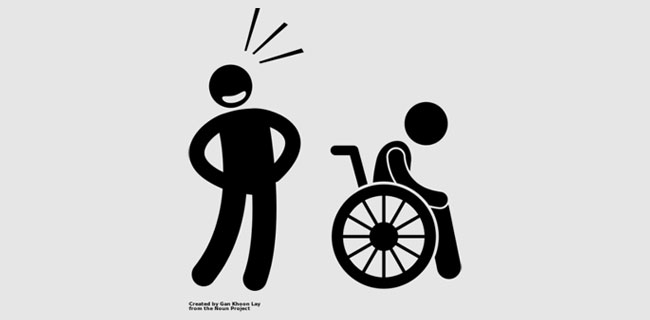
     

  • It’s not funny! Mocking one’s disability for another’s hilarity


    By Shruti Pushkarna


    Shruti PushkarnaLaughter, they say, is the best medicine. Humour is also an equaliser of sorts, the jester can ridicule the prince and the pauper alike. Often what can’t be uttered directly, is passed off easily, garbed in satire. We see that a lot these days, in the form of standup comedy, where political powers or specific groups are targeted in jokes. Gaining popularity in both online and offline avatars, standup comedy is increasingly becoming a respectable career choice for many.


    But what happens when the joke is directed at someone vulnerable or marginalised?

    The other day, I came across a video clip in which an Indian comic, Abhishek Upmanyu incites laughter by mentioning physical disability. The joke is not only in bad taste, it makes no sense. I’m sure there is a larger context to his gig, but nothing justifies the sheer insensitivity.


    What is funny to someone, can be extremely hurtful to another. Growing up, I used to wear thick spectacles to school. That’s when we didn’t have the luxury of ordering high index (thin) glasses to meet one’s cosmetic needs. I was mercilessly derided by peers who called me ‘chaukhi’ which loosely translates to ‘four-eyed girl’. Some kids even hid my glasses, and rejoiced seeing me bump into furniture, trying to find my way around.


    While their laughter filled up the classroom and the corridors, it wasn’t funny for me.


    Because of intrinsic stereotyping in literature, cinema, television, advertisements et cetera, the business of ‘othering’ is assumed to be acceptable. It comes naturally to people, young kids included.


    It has been normalised to such an extent, that we use phrases and words without worrying about the implications. Common utterances include, ‘That joke is so lame’, ‘Why are you acting bipolar’, ‘Are you retarded’, ‘Can you dumb it down’ and so on.


    Another comedian, Neville Shah was slammed online for ridiculing persons with disabilities. Incidentally, this artist features on a popular OTT platform. In this particular clip, Shah mocks disability and reservation for the underprivileged sections of society.


    https://twitter.com/riteshjyotii/status/1393945614946164746?ref_src=twsrc%5Etfw%7Ctwcamp%5Etweetembed%7Ctwterm%5E1393945614946164746%7Ctwgr%5E%7Ctwcon%5Es1_&ref_url=https%3A%2F%2Fwww.idiva.com%2Fnews-opinion%2Fnews%2Fcomedian-neville-shah-criticised-for-casteist-remarks%2F18020195


    How can apathy towards a sizeable section of the population result in comic relief?


    Bollywood also has a history of portraying disabled people as farcical, oafish or villainous. Their physical disability is accompanied with a character distinction that puts them apart from the rest of the cast. Premnath plays the powerful villain, Sir Judas in the film Karz who is speech impaired. Shah Rukh Khan plays young Rahul in the film Darr, chasing Juhi Chawla with an abnormal passion. His unhealthy obsession is attributed to mental instability. Vivek Oberoi plays the villain, Kaal in Krrish 3 who is paralysed neck down.


    Buffoonery and disability also go hand in hand in Indian cinema. Tushar Kapoor is characterised by speech disability in the famous Golmaal series. The weird noises made by his character have made him all the more endearing to the audience. Three lead actors, Akshay Kumar, Riteish Deshmukh and Abhishek Bachchan pretend to be disabled, in the slapstick comedy Housefull 3. One character plays a wheelchair-bound cripple, another pretends to be blind, and the third dons the garb of a mute man, only to generate some silly laughs.


    However, mocking disability is not limited to the Indian subcontinent. Several comedians across the world have indulged in thoughtless mirth at the expense of persons with disability.


    A Canadian comedian, Mike Ward mocked a disabled singer, Jeremy Gabriel who became a celebrity as a young boy. Known as ‘Petit Jeremy’, Gabriel has Treacher Collins Syndrome, a genetic disorder that affects facial bone structure. In his case it caused severe deafness. His family filed a human rights complaint, which was challenged and won by Ward on grounds of free speech.


    In 2018, advocacy groups, individuals and parents of children with Down Syndrome vociferously condemned comedian Tom Segura’s repeated usage of ‘retarded’ in the Netflix special ‘Disgraceful’.


    In the American sitcom ‘Big Bang Theory’, Stuart Bloom who is the owner of a comic bookstore, struggles with physical as well as mental health issues. He is made the butt of jokes, used for cheap comedy and easy one-liners.


    In the process of entertaining a majority, comedians and writers indulge in ‘otherising’ a minority and reinforcing prejudices in the societal mindset. Should the media be perpetuating such stereotypes?


    Shruti Pushkarna is a former journalist who now works as a programmes and media specialist for the inclusion of persons with disabilities. Shruti was part of the founding team of MxMIndia and now writes for MxMIndia every other Thursday. Her views here are personal. She can be reached via Twitter at @shrutipushkarna


  • Shruti Pushkarna: Turning 50: From Preachy to Pragmatic

    Shruti PushkarnaBy Shruti Pushkarna


    On December 3, 2019, International Day of Persons with Disability, I penned down my nascent thoughts on what the media must do in terms of disability representation and inclusion. Little did I know that it was the germination of a fortnightly series on ‘Media and Disability’.


    As I wrote the next couple of columns, issues and ideas surfaced. It seemed an obvious and an imperative move to carry on writing, challenging perceptions, questioning people (authorities), raising my voice for India’s largest invisible minority.


    The intent was clear. Urge the media to change the societal perception (read misconception), by creating awareness, broadening the scope of imagination, normalising the discourse on disability and recognising the potential of persons with disability.


    This is my 50th attempt at shifting the focus to a ‘person first’ narrative, consciously steering away from either a disparaging or a heroic portrayal. Hundred weeks. Fifty columns. Phew!


    Although an enriching journey, I must confess it wasn’t easy. I had my fair share of vindicating, glorifying and swimming upstream moments. But it’s been fulfilling nonetheless. As I revisit my past writings, I can chart the growth of the ‘disability advocate’ in me. Exploring different aspects of inclusion, gaining varied perspectives, treading unchartered territory, acknowledging influences, I have learnt to observe, absorb and respect, before I discern, judge or dismiss.


    Initially, the columns called out the media on misrepresentation, stereotyping and shallow coverage of a community that constitutes 15 per cent of the global population. As the series was building a case for inclusion of disability in the mainstream agenda, the Covid pandemic struck.


    Locked down in their spaces, every citizen experienced isolation first-hand. Being cut off from ‘normal’ modes of functioning was no longer exclusive to the disabled folk. This seemed like a great opportunity for cultivating empathy in an otherwise indifferent world.


    This also appeared to be a great context for introducing solutions. Moving from a preachy, finger pointing mode to a more constructive approach. In the post Covid era where virtual replaced the physical, it was time to appreciate the empowering ability of technology for persons with disabilities. Through the column, the need for accessibility in all spheres, especially digital, was explained and emphasized. And champions of change were celebrated.


    Personally, I gained more than what I set out to achieve. I was able to align my sensitivity towards disability with my journalistic experiences, churning out a realistic ask. Seeking accessible content, dignified reportage, outlying stereotypes and building a diverse workforce.


    As for the experience of curating content, identifying patterns and researching statistics, I enjoyed it all. Some pieces were obviously more memorable, for the responses and reactions they garnered.


    The cringeworthy display on television news channels, of Prime Minister Modi laying down the foundation stone of the Ayodhya Ram temple, riled me (and my TV production sensibility). The oversight of accessibility in a building that was yet to come up, led to a mince-no-words attack on the media and the powers that be. It led to some people, bhakts included, recognising the challenges a disabled, pregnant or a senior citizen could face visiting the site. (https://www.mxmindia.com/2020/08/ayodhya-ram-mandir-disabled-access/)


    American polity and media also contributed to my arguments against othering. The piece on Invisible Disabilities, inspired from the American legal drama series, Boston Legal was received well. Persons living with chronic illnesses and invisible disabilities face greater rejection by society as their conditions are not apparent. Unfortunately, even today our understanding of disability and access is limited to ramps and wheelchairs. Young Marissa’s self-portrait titled ‘Happy Girl’ challenging her inability to smile in the conventional sense, remains a personal favourite. (https://www.mxmindia.com/2020/09/shruti-pushkarna-invisible-disabilities-missing-from-any-discourse-on-disability/)


    US President Joe Biden’s swearing in ceremony was a trendsetter, presented with live captions, American Sign Language, audio description and other accessibility features on YouTube. The event featured speech and hearing impaired, 22-year-old poet laureate, Amanda Gorman flawlessly reciting her poem, ‘The Hill We Climb’. (https://www.mxmindia.com/2021/01/shruti-pushkarna-disabled-lives-matter-time-to-take-a-cue-from-america/)


    Then there was the piece applauding the fervent speech delivered by the first visually impaired Pakistan diplomat at the 76th UN General Assembly. A strong advocate of global peace, Saima Saleem made history by reading out her speech in braille at the international convention. (https://www.mxmindia.com/2021/10/shruti-pushkarna-a-fervent-spokesperson-first-disabled-after-has-the-media-finally-got-it-right/)


    Finally, there was the explosive performance by India’s Paralympians. The historical medal tally forced the average citizen and the media to nationally acknowledge Para sports.  (https://www.mxmindia.com/2021/09/shruti-pushkarna-can-the-historic-paralympic-medal-tally-alter-our-perception-of-disability/)


    The list goes on.


    Striding towards a utopia where diversity is no longer scorned at, in the past two years I have learnt to redefine my own idea of ‘normal’. Looking forward to bringing you a sharper, riper view on disability inclusion as the column turns a quinquagenarian!


    Shruti Pushkarna is a former journalist who now works as a programmes and media specialist for the inclusion of persons with disabilities. Shruti was part of the founding team of MxMIndia and now writes for MxMIndia every other Thursday. Her views here are personal. She can be reached via Twitter at @shrutipushkarna


  • Shruti Pushkarna: Does literature exclude or misrepresent children with disabilities?

    Shruti PushkarnaBy Shruti Pushkarna


    In the past, I have talked about disability representation in films, television and news media. If I look back to my childhood, I was most influenced by the books I read. Apart from entertaining, the fictional characters from comics and novels colored my thoughts and behaviour. At times I tried to emulate their traits, imagining myself as part of the plot.


    My first and perhaps only memory of a character with disability is Klara from the novel Heidi. She was a wealthy but lonely and frail girl who is assumed to be invalid because she cannot walk. In the end, she is miraculously cured, stands up and starts walking. Somewhere it may have reinforced a medical definition of disability in children’s minds, the idea that Klara wasn’t normal and she had o be made whole and healthy again.


    Often discourses on disability inclusion emphasize on the need to sensitize children from an early age. One of the understated advantages of inclusive education is peer acceptance and normalizing the differences in a commonly inhabited environment.


    According to a UNICEF report, there are around 240 million children with disabilities globally, which means, one in ten children live with disability. As per Census 2011, out of the 26.8 million persons with disabilities, 2.04 million are children with disabilities. And 75% of them don’t attend schools.


    They are physically absent. Children’s books with disabled characters as protagonists can generate empathy in young readers, who otherwise have little exposure and understanding of disability.


    I spoke with Aniruddha Sen Gupta, a writer and creator of the Fundoo #4 series, curious as to why he chose to make one of his characters hearing impaired. Aniruddha enjoyed writing from an early age but pursued the interest seriously once he moved from Delhi to Goa. He believes that creative content needs to be inclusive. The medium needs to be the message, and inclusivity needs to be built into the storyline itself.
     

    When and how did you start writing books for children?

    The first Fundoo #4 book, Mystery of MindNet came out in 2008 and the second one, Lake of Betrayal came out in 2012. But the books weren’t the first things that happened with these characters. We created these characters for an educational CD ROM with Eklavya Education Foundation on the subject of measurements. They wanted to create stuff which was cross discipline, like in Maths or Physics, and measurement seemed like something that crosses different subject areas. So, we created these characters then, at that time Mani wasn’t conceived to be hearing impaired. Later we started using them for different kinds of projects, the books also came out of that. There was some talk with Cartoon Network also, because we were conceiving Fundoo #4 as a multimedia franchise of sorts.


    What was your initial tryst with disability? How did you get sensitised towards it?

    Salil Chaturvedi (friend and colleague who is a paraplegic) is the main factor in my understanding of it. We are very close friends, almost like brothers. Most of my understanding comes from interacting with him, and also from working with disability organizations. My mother was almost deaf in one ear for most of her life, it’s been there in my life but I never thought along those lines.


    At what point did Mani become a character with disability?

    When I wrote the books. We thought let’s have one of the characters with some form of disability, and deafness worked well because we could use it in different ways. The character copes with it and uses the disability as a strength. For example, Mani has the ability to read conversations across a room, that’s the kind of secret ability which helps them in solving mysteries.


    How would you define Mani, who is he?

    Mani is a lot like me. He likes to have a good time, he uses humour in dealing with the world in many ways. The only difference is that I don’t have a hearing impairment. That is just one element of it. I am not able to deal with certain kinds of everyday issues. If something involves going to an office, I usually get my wife to do it. That characteristic of mine is sort of a limitation. I see Mani in the same light. He can’t hear, that’s it. His mind is not any different just because he can’t hear. He is a bright kid.


    And how did you come about choosing deafness as his disability?

    Sign language is almost like a code, you use certain things which no one else around you will know. That’s another aspect of Mani’s superpower, all four of them can talk to each other without people knowing what they are saying to each other. When the book was launched, we went to schools for events (promotions) and we had a few routine exercises as part of the book event. One of these activities was to introduce kids to the concept of sign language. We would show them some basic signs, Indian Sign Language alphabets et cetera. At the end of the event we would get them to applause like deaf people. The students and teachers both appreciated this exercise.


    In your book, the disabled character and his friends are referred to as ‘misfits’ and ‘fellow outcasts’. The terminology has an ableist ring to it, and that’s probably how the average reader perceives them. What are your views on the portrayal of disability in literature, in terms of stereotypes?

    There are two things to this, one is of course, however we may think about it, the fact is that society looks at them in a certain way. So just to reflect the reality of a situation, it’s good to bring that in. Through the course of the book, through the course of what happens to the kids, how they do things, you realise they are not misfits. They are not outcasts, in fact they are probably gifted. It develops a different sort of empathy in the readers for the kids, in the sense that you understand that these words don’t mean what you think they mean. They are words which are thrust upon people for no reason and people have their own abilities and ways of doing things. Various people are disabled in various ways, it doesn’t have to be necessarily a physical or a mental disability. There are things that you can do and things you can’t. And that’s the case here also. And that’s what we are saying through the books, disability doesn’t have to be looked at differently. A person with disability doesn’t have to be discriminated against, based on that.


    Usually disabled characters are used to generate fear, pathos, hatred et cetera. In trying to depict disability with a fresh perspective, you are up against all such (mis)representations. Was it challenging to beat that image? How has the response been?

    One of the problems I feel in terms of a book about the subject or with characters who are disabled, often they tend to become preachy. I feel to get the message across, the storyline and the characters have to be compelling. That’s what you notice about the Harry Potter books as well. The plot is gripping and all other social messaging becomes apparent later. Children’s books which preach too much won’t work. I tried to keep the setting such so that the kids will relate to it easily, like adventure and mystery. And then bring the issues as a secondary layer. The reactions in schools were positive, with kids talking about someone they know of being disabled at the end of the sessions. I felt that maybe a lightbulb had gone off in their heads.


    Literature is said to be an agent of change, capable of influencing attitudes and behaviour. What is the kind of impact you think books and other media can have?

    My view is that the first area of impact needs to be in the minds of people who are not disabled. That’s what the books or other forms of media that we are working on, can do. There are several other factors in terms of including people with disabilities in education or employment. It helps to create a picture that prevents people from discriminating. That’s where our main focus is. To make sure people who are not exposed to disability, get an understanding of what it is and how you bring people with disabilities into the mainstream. Just changing mindsets more than anything else.


  • Representation matters. Inclusion matters. Disabled lives matter.

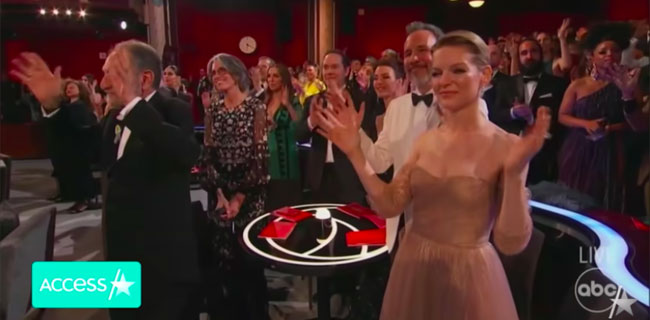
    The Oscar audience applauding Best Supporting Actor Troy Kotsur in sign language. Picture: Screengrab from the Oscar award ceremony – Access/ABC


    By Shruti Pushkarna


    Shruti PushkarnaCODA (Child of Deaf Adults) was named the ‘Best Picture’ at the 94th Academy Awards presented in Los Angeles on March 27, 2022. Equal rights and disability inclusion advocates across the world, reveled at this historic win.


    Personally, I felt vindicated. As someone who firmly believes in integrating persons with disabilities into the mainstream, I have consistently decried stereotyping, misconstrued portrayals and minimal visibility of the subject and the community in the media.


    We have seen several Hollywood and Bollywood productions in the past, focused on the subject of disability and social issues around it. What makes CODA worthy of such an esteemed accolade?


    Unlike its predecessors, the disabled characters in this gripping family drama are played by deaf actors. The central character of the movie is seventeen-year-old Ruby Rossi who is the sole hearing member of a deaf family. She is torn between her desire to pursue her passion of singing and helping her parents and brother with their fishing business. After years of playing the interpreter and the link to the ‘speaking’ world, she finds it hard to prioritise her dreams.


    The film has several scenes which bring out the unique identity of each family member, through the interactions between parents, children, siblings and the external environment. In an emotional exchange following her choir recital, Ruby’s father feels her vocal cords as she sings exclusively for him, so he can ‘experience’ what others can ‘hear’.


    Soon after the official announcement, social media platforms were full of admiration for the cast and their outstanding performances. Troy Kotsur became the first deaf male actor to win an Oscar (Best Supporting Actor) for his role of Frank Rossi (Ruby’s father) in the film. Sign language memes and GIFs populated timelines with ensuing threads on accepting differences, accommodating diverse groups and adopting new ways of communication to stop the ‘othering’.


    There was also a flurry of coverage in the Indian media, especially news items showcasing awe-inspiring stories of successful hearing and speech impaired people. Journalists and critics compared the American production to some of the Indian films that have tackled similar themes. One piece deemed CODA as the ‘spiritual successor’ of Sanjay Leela Bhansali’s film Khamoshi that released in 1996. It’s true that both the movies revolve around a young girl torn between responsibilities towards her deaf family and personal aspirations to pursue music. Yet, the depiction, characterisation and messaging vary in more ways than one.


    Following the coverage on cinematic representations of deafness and disability, I also recalled the 1972 Sanjeev Kumar and Jaya Bhaduri starrer, Koshish. It’s the story of a deaf-mute couple and their everyday struggles, including the challenges of raising a son. Unlike the Oscar winner, there is little use of sign language on screen and the hearing child ends up giving in to his parent’s desire.


    None of the Bollywood productions have been brave or open enough to cast disabled actors for an authentic performance. In a way, we have only witnessed an ableist act projected on the big screen. Films like Black, Margarita with a Straw, Paa, Guzaarish et cetera attempted to address the social stigma around different types of disabilities but somehow, ended up propagating a misconceived idea. Exaggerated fictional accounts and over-dramatisation reinforced stereotypes in the minds of audiences.


    The same is true for some Hollywood portrayals. Disability advocates have criticized the shallow understanding of issues and incorrect depictions in films like Rain Man, The Theory of Everything, My Left Foot and so on.


    Does the prerequisite to entertain supersede the need to educate and sensitize? Does dressing up the reality make it more palatable and less alienating?


    More than the credible rendition, what truly sets CODA apart for me, is a critical shift in the approach towards inclusion. Through the movie and ultimately through Ruby’s choice of going off to Berklee College of Music, the onus to include no longer lies only with the deaf. The surrounding able-bodied fishing community takes cues from the Rossi family and finds ways of interacting, socialising and transacting in mutually beneficial ways.


    Shruti Pushkarna is a former journalist who now works as a programmes and media specialist for the inclusion of persons with disabilities. Shruti was part of the founding team of MxMIndia and now writes for MxMIndia every other Thursday. Her views here are personal. She can be reached via Twitter at @shrutipushkarna


  • Time to empathise with the caregiver?


    By Shruti Pushkarna


    Shruti PushkarnaAll along I have been writing about the missing disabled perspective from the media narrative. How the society (and media) overlooks issues surrounding disability, challenges faced by the community, resulting in their absence from the mainstream scheme of things.


    But there is something that finds even less of a mention in discourses around disability and healthcare. Caregiving. Without which daily existence of many can turn into a nightmare.


    Persons with disabilities are portrayed in a stereotypical fashion, either glorified or demonised, commended for their success or pitied for the lack of it. If nothing, they have been labeled as a minority. But truly faceless and invisible are their caregivers.


    It’s the caregivers who make it possible for 15 per cent of the global disabled population to get by on a daily basis, helping with waking up, showering, eating, interpreting, commuting and more.


    For a family caregiver, it’s a 24-hour job that needs patience, attention to detail, a bit of humour, and most importantly, compassion. Not every caregiver may have all those traits, so they have no choice but to cultivate them.


    During the first two Covid waves, governments and citizens across countries put up a show of support in their own ways, for the caregivers. These were nurses and doctors who are paid for their service to humanity. While the gesture of gratitude was heartwarming and necessary encouragement, I wished we recognised the millions of anonymous supporters who work tirelessly, without pay. Their motivation is sheer love for a dear one who may be sick, old or disabled.


    In order to attain independent living with a sense of dignity, persons with disability must have a strong support system in the form of parents, teachers, siblings and friends. A child on the autism spectrum or born with a learning disability, a hearing or vision impairment, cannot make sense of the world without an empathetic parent. Similarly, a person with a chronic medical condition cannot go through life without a caring family.


    It’s great to celebrate the disabled folk who make it despite all the hurdles in education, employment and social environment. But what about the millions rooting for their triumph? Don’t they deserve an applause? Don’t they traverse the same path ridden with obstacles?


    As a caregiver, I have never really deliberated on how different my life is from someone who doesn’t have such responsibilities. Probably because there has never been a need for comparison.


    Since childhood I have known and accepted this to be my ‘normal’. It has shaped me into the person I am. A natural empath, caring for another’s physical and emotional needs, at times more than my own.


    Is it easy? Definitely not.


    Caregivers face the risk of shelving their personal needs and dreams. Often overwhelmed with the chores that drive their routine. I don’t have any regrets, nor do I feel compromised in any way. But I must confess, it feels a bit lonely at times.


    As much as we talk about mental health these days, why don’t we have peer help groups for caretakers? Why aren’t the struggles of empaths acknowledged and normalised? Why aren’t there any mechanisms in place to support the primary attendant?


    If disability and chronic illness hamper the standard of living of the person affected by the condition, it also significantly alters the lives of people around.


    In fact, some such issues have been highlighted in films and books showcasing disability themes. Some characterisations highlight the complexities and dilemmas that are inherent to the lives of caregivers. Their choices oscillating between personal aspirations and the overarching needs of another.


    In the post-Covid world, caretaking has taken on new definitions. With more and more people experiencing deteriorating health on a physical and mental front, we need compassionate warriors to stand the ground. It can only help to celebrate the unsung heroes, those who go about business without expecting or complaining.


    Can the media ensure that the caregiver’s everyday battles are not dismissed or forgotten?


    Shruti Pushkarna is a former journalist who now works as a programmes and media specialist for the inclusion of persons with disabilities. Shruti was part of the founding team of MxMIndia and now writes for MxMIndia every other Thursday. Her views here are personal. She can be reached via Twitter at @shrutipushkarna


  • Shruti Pushkarna: Are you really inclusive? Or is it just a lip service?

    Shruti PushkarnaBy Shruti Pushkarna


    As someone who feels strongly about disability inclusion, I always look out for accessibility incorporations in physical spaces or the lack of it. Narrow or steep ramps get me all riled up. Just like escalators in shopping malls in lieu of elevators! How can those be interchangeable?


    Often, I find myself voluntarily explaining the use of braille signages and tactile markings to random strangers. I take pictures of accessible and inaccessible services/ products to share on my social media handles. All in the name of vociferously seeking equal rights for all citizens.


    In the polarised world we inhabit today, people are unapologetic about their opinions and beliefs. If we were to go by social media trends, millions are up in arms against discrimination of any sort. They rake up a storm on any talk of exclusion of women, disabled, children, elderly, LGBTQ+.


    But do they really care or understand the issues of diverse communities?

    If yes, then why hasn’t the collective discontent of so many led to a change in mindset?

    Is it because most people don’t practise what they preach?


    One thing I have learnt over the years is the need to educate before you advocate. We need to understand the issues and perspectives of vulnerable minorities before we can voice their concerns. The challenges faced by persons with disability in their everyday lives are real. Places like schools, offices, temples, entertainment hubs et cetera pose barriers that keep them estranged from the mainstream society.


    How much do we know about this gap in order to be able to bridge it? Here’s a quick quiz to assess your basic knowledge of disability and inclusion. Answer these ten multiple choice questions and find out your individual disability quotient!


    1. What do you call someone who requires a wheelchair to move around?

    a. Handicapped

    b. Wheelchair bound

    c. Invalid

    d. Wheelchair user


    2. Which of the following is true?

    a. All persons with autism are intellectually disabled

    b. Intellectual disability is a type of developmental disorder

    c. Intellectual disabilities are hereditary

    d. Down syndrome is the only cause of intellectual disability


    3. An accessible building has…

    a. Ramp

    b. Elevator

    c. Braille signage

    d. All of the above


    4. How do you help a blind person cross the road?

    a. Drag them by their shirt or dress

    b. Offer them your elbow

    c. Yell audio instructions at them

    d. Push them from their shoulders


    5. Which of these is not a disability recognized by the Rights of Persons with Disabilities Act 2016?

    a. Hearing impairment

    b. Speech impediment

    c. Attention DeficitHyperactivity Disorder (ADHD)

    d. Thalassaemia


    6. If a school is inclusive, it allows admission to which community?

    a. Scheduled Caste and Scheduled Tribe

    b. Transgender

    c. Disabled

    d. All of the above


    7. How you shouldn’t communicate with a deaf person?

    a. Texting

    b. Calling

    c. Signing

    d. Writing


    8. Which of these spaces should have tactile markings?

    a. Bus stop

    b. Metro station

    c. Airports

    d. All of the above


    9. The Sugamya Bharat Abhiyan was launched in December 2015 to ensure…

    a. All physical and digital spaces are made accessible

    b. Reservation for persons with disabilities in private and government jobs

    c. All schools have accessible classrooms for disabled students

    d. Accessible toilets are built across the country


    10. Which of these make content accessible to persons with disability?

    a. Closed captioning

    b. Audio description

    c. Sign Language

    d. All of the above


    Answers: 1 d, 2 b, 3 d, 4 b, 5 c, 6 c, 7 b, 8 d, 9 a, 10 d


    So how did you score? If it’s 10 on 10, then go ahead and term yourself an inclusion champion. But anything less than that means your tall claims of DEI (Diversity Equity and Inclusion) are unsubstantiated.


    Shruti Pushkarna is a former journalist who now works as a programmes and media specialist for the inclusion of persons with disabilities. Shruti was part of the founding team of MxMIndia and now writes for MxMIndia every other Thursday. Her views here are personal. She can be reached via Twitter at @shrutipushkarna


  • Disability Inclusion: Should the media practise and propagate accessibility?


    By Shruti Pushkarna


    Shruti PushkarnaMay 19, 2022 marks the eleventh edition of Global Accessibility Awareness Day (GAAD). Founders, Joe Devon and Jennison Asuncion teamed up in 2012 to initiate the famous GAAD movement following a blogpost (by Joe) and a thread on Twitter (spotted by Jennison).


    The objective is to raise awareness and know-how on how to make the digital environment (products and services) accessible for one billion people across the world, who live with some form of disability.


    Through various events, talks and hackathons, everyone gets talking, thinking and learning about digital inclusion and access. India has been an active participant in the movement. But other than the usual suspects, including disability advocates, potential beneficiaries of accessible ecosystems, accessibility testers and consultants, most of us don’t really care about this annual observance.


    In fact, unless one is aligned to the disability sector in some way, the term GAAD is probably alien.


    Before we (society and media) can propagate the removal of barriers in access, it is imperative to understand the problem and its magnitude.


    Imagine not having access to online services like banking, food delivery, social media, maps, search engines. Feels strange, right?


    In the digitally connected world, we cannot fathom making physical trips to the bank, telecom provider, grocer, fruits and vegetable vendor, chemist et cetera for essentials.


    It’s almost paralysing to think of a life without our handy gadgets: smartphone and computers.


    Persons with disabilities live with physical, mental or sensory limitations. But technology can enable them to lead less crippled lives.


    Here are just a few scenarios citing how digital inclusion can alter the rules of engagement.

    1. Booking flight tickets online

    A person with hearing or speech impairment, vision impairment or locomotor disability can access travel booking apps or websites using computers and assistive technology (or devices). However, an inaccessible audio or image Captcha can prevent them from independently closing the transaction.


    2. Internet banking

    A disabled person confined to his or her home because of the barriers in the physical environment, can avoid the hassles of visiting a bank for financial transactions. Most of us are empowered by the ease of digital payments today. Persons with disabilities can also use payment gateways, online banking and mobile wallets to seamlessly transfer money. Again, the platforms need to be compatible with assistive tools and technology.


    3. Ordering food, medicines, other essentials

    Persons with disabilities don’t have to depend on another for everything. There are a lot of daily activities and needs that can be met independently. Like ordering groceries, medicines, vegetables, fruits or scrumptious food, using popular websites and apps that deliver stuff to the doorstep.


    4. Reading

    Whether it’s catching news updates or reading fictional accounts, e-publications and audio books make reading easily accessible for a larger population, including print disabled. Needless to say, this impacts inclusion in educational institutions as well as the workplace.


    5. Social engagements

    Access to social media platforms like Twitter, Facebook, WhatsApp and Instagram helps expand a disabled person’s social circle. They can interact with a wider and diverse group in a virtual setting, without being constrained by their disability.


    So why should we care about ensuring access to this section of the population?

    The numbers are huge.

    We are talking about 15 per cent of the world’s population that faces challenges in accessing websites, mobile applications, or other digital products, if developers and designers don’t adhere to accessibility guidelines. And these include people who are educated, employed and even taxpayers.


    Disabled folk are caught in a vicious cycle of marginalisation.

    Excluded from opportunities of education, employment and entertainment, persons with disabilities continue living on the margins. Access to digital services, especially in a world driven by technology, can help them attain personal and economic independence.


    Equal access implies increased participation that helps in refuting stereotypes.

    Picture an inclusive classroom where students with and without disabilities can access books and lessons through computers, smartphones or assistive devices. Quality education can reduce the burden on reservations and benefits, with more and more disabled folk pursuing jobs based on merit and aspirations. Gradually belying the stereotype of lifelong dependency.


    Seeing the disabled as active citizens.

    The ability to attend school, work a job, participate in an online forum, make financial investments, argue and opine on social media, transforms the disabled from an invisible majority to active citizenry. A natural progression towards ‘person first’ narrative follows, where disability becomes inconsequential.


    Untapped human resource can impact the economy.

    The International Labour Organisation suggests that including persons with disabilities into the workforce can positively impact the GDP by 3 to 5 per cent.

    Accessibility not only paves way for an inclusive society but also makes perfect business sense to make products and services available to a wider pool.


  • Shruti Pushkarna: Is barrier-free access to physical spaces not a newsworthy agenda?

    Shruti PushkarnaBy Shruti Pushkarna


    Last month, Delhi hit a record temperature of 49.2 degree Celsius, the hottest I have witnessed in nearly four decades of living in the capital. The sweltering heat from April to July leaves you dehydrated, drained and demotivated. The only respite from the incinerator is an air-conditioned environment.


    From your home to the car, to the office, and back. All controlled air-conditioning. And the fun activities are also limited to indoor spaces, like, restaurants, cinema theatre, shopping malls et cetera.


    One could argue why step out and suffer the heatwave, especially if it’s not for work. True. But forced internment due to the protracted spread of Covid-19 has driven most of us to our saturation point. Now we seek the tiniest excuse to mingle with the external world, happily battling dust storms, soaring temperatures or pouring rain. Nothing can stop us.


    Except something does stop some of us from going out to shop, eat, watch a film, see a doctor, or have a business meeting. Not everyone is fortunate to experience carefree excursions.


    I’m hinting at the largeish section of the population comprising persons with disabilities and the elderly. Often simple things in physical environments that we may overlook or dismiss, turn out to be serious barriers in movement for senior citizens and the disabled folk.


    Here’s a picture I took of the entry point of a shopping arcade in Greater Noida, Uttar Pradesh, which also happens to house a lot of doctors’ clinics as well as pathology labs.


    Interestingly, you can spot a ramp for wheelchair users but it has been permanently blocked with iron bars. The escalator is broken and functions more like a steep staircase. When I went to see my gastroenterologist for acute abdominal pain, the climb up to the first floor was an unnecessary excruciating exercise. I could have taken the elevator but it was small, stinky and crowded. On another visit, the assistant barged in to inform my doctor of a patient who couldn’t be transported upstairs. As he stepped down to examine her in the car, I stared at the (token) wheelchair parked in one corner of the clinic.


    Some time ago, I was accompanying my CEO for an official meeting to a coffee shop in a popular Delhi mall. Instead of going down to the basement parking, we chose to be dropped off at the mall entrance with steps leading up. Used to guiding him to the hand rail so he can climb the stairs on his own despite vision impairment, I was deterred by the huge flower pots placed on both sides of the staircase. He had to stick to my elbow for navigation.


    I wondered what if he were not accompanied by a sighted person? I also thought about children and their grandparents who need handrails for essential support. Why block a utility in the name of aesthetics? Needless to mention, that the flower pot phenomenon is commonly seen in many buildings, including schools, hospitals, government offices and so on.


    I reached out to the mall authorities by posting a tweet, citing the concern and hoping to raise the general awareness levels. Here’s a link to the Twitter thread that managed to initiate a conversation, engage some and incite some, if not resolve the problem.


    But I must confess I have also encountered a few positive initiatives ensuring ease of access in the city. And I find it equally important to highlight and laud such interventions. I have been visiting the famous Priya cinema complex in Vasant Vihar, Delhi since my school days. But on a more recent trip, I noticed the welcome addition of a well-lit rampway on the way to the parking lot.


    There are at least two shopping malls where a small wheelchair lift is installed adjacent to a short flight of stairs. One is shown in the picture below. The India Habitat Centre also has a stairlift, a mechanical device lifting people up and down from their basement halls.


    I was also pleased to see an aged woman using a specially designed wheelchair, enjoying a hearty meal with her entire family in an accessible (read roomy and barrier-free) restaurant. In fact, some tables in another restaurant were reserved for such guests.


    Very often all it takes to accommodate people with different needs is an open mind, right attitude and awareness. Informative engagements with various stakeholders can prove effective in countering hostility, apathy and prejudice.


    Many a times, I tweet hoping some friend or ex-colleague in the media will take note and campaign for equal rights for persons with disabilities as well as those limited by age or illness.


    We’ve seen consistent reporting on urban developmental problems of potholes, badly designed flyovers, dangerous curbs, which cause several deaths every year. Do the barriers of ingress and egress go unreported because they are not life threatening?


    Why can’t the media do something about the ignorance impeding access for millions in the country?


    Shruti Pushkarna is a former journalist who now works as Director, EnAble India where she heads North India operations as well as media and communications outreach. Shruti writes for MxMIndia every other Thursday. Her views here are personal. She can be reached via Twitter at @shrutipushkarna


  • Shruti Pushkarna: Busted: 10 Myths & Clichés about Disability

    Shruti PushkarnaBy Shruti Pushkarna


    Have you mindlessly indulged in stereotyping because that’s what you have seen or heard thus far? Let me tell you, this oversight is equivalent to promoting those clichés. You are just as guilty.


    Here are 10 myths that have grown into commonly accepted facts over the years.


    1. Disabled people have a sixth sense

    No, this is no M Night Shyamalan movie. God doesn’t compensate for the loss of one sense, by giving the disabled a superpower. There is no ‘divine ability’, really. There are abilities and talents which are cultivated by the person, nothing ‘divyaang’ about them. Sorry, Modi ji.


    2. Disability is a result of bad karma

    ‘Pichchle janam ke karam’! Honestly, why are we so dramatic about a condition that can be explained easily in clinical terms? Someone born with a locomotor disability is ridiculed and excluded because of a supposedly bad karmic connection. Only yesterday I heard the latest mandate on radio, by the Ministry of Road Transport and Highways, for carmakers to provide six air bags in eight-seater vehicles. If you haven’t already made the connection: there are around 1.5 lakh people killed in five lakh accidents across the country. A sizeable number gets injured, some even left disabled. Is this tragedy attributed to past life or this one, how does it work? Because if it’s past karma, then let’s not hold automobile manufacturers or the government responsible for anything.


    3. Visually impaired people are hard of hearing too

    Often, I have seen people talk loudly to a blind person, almost yelling at them. Even better, they address the person accompanying them, assuming the person is not only blind but deaf also. What’s worse is that sometimes people question the overall ability of blind people to decide for themselves. Huh. I was once on a flight with my ex-boss who is visually impaired, and the airhostess refused to give him coffee, stating that serving a hot beverage mid-air is dangerous for him. Not only was I appalled at the supposition, but irked because she won’t communicate it directly to him! Is it really so hard to accept the loss of one sense without doubting the remaining four?


    4. Disabled people are asexual

    The inability to have sex in the usual style as we understand it, does not make disabled folk bereft of human desire or biological needs. There are tools and aids available to help them enjoy coitus in their own adaptive way. Doesn’t sex help release stress, allowing you to let go et cetera? Who needs it more than somebody confined and underestimated because of the lack of access and imagination of the so-called normal society? There’s a market for accessible sex toys for persons with disabilities, clearly someone worked out the economics of demand and supply.


    5. Persons with hearing impairment can read lips

    If this were true, what was the need for sign language? Also, every time a hearing impaired person needs to be included in a conversation, they have to be in visible distance from the person ‘talking’. Do you really want me to spell out the numerous times that is not possible? And what about during the pandemic or in the post-Covid world, when masking is common practice? Yes, there are transparent or clear masks available, but there are also a lot of hearing disabled individuals who cannot read lips. And those who gain proficiency with practice, lose out on chunks of conversations due to the variations in the pace and manner of speaking.


    6. Persons with disability are anti-social

    I mean even it were true, it would seem logical. Years of isolation and stigmatisation is bound to make them feel unwanted. Socializing is again a function of access to people and environments. Whether a person is introvert or not, can be determined only after giving them a fair chance to engage. A lot of disabled people who manage to step out, go from special schools to vocational programmes. They follow set routines because of limited access to physical spaces and dependency on the caregiver. I know some gregarious folk who have the ability and choice to navigate the physical or digital space independently.


    7. God will help us if we help a person with disability

    Charity done with the supreme objective of self-gratification. Ugh. We all know of people who donate items on their birth anniversaries, don’t we? An annual ritual to help acquire some good karma so you are not born with a disability in the next life. I’ve seen people insist on feeding 13 blind children at 10.17 am on Monday just to placate the angry ‘nakshatras’. Interesting how we never think of the receiver of these offerings, however sacred they may be.


    8. Disabled people only feel pain or sorrow

    Emotions are not simplistic. Neither are human beings. And disabled folk are also people who experience varied emotions at different times. Some of them may be in pain a lot, so frustrated easily. But they are equally capable of laughing at a joke, experiencing joy and don’t always dwell on their disability. Life is as colourful or complicated for them as it might be for you and me.


    9. Disabled people don’t like venturing out

    If you have enough money, you can plan trips and adventures. I know foodies who eat up their entire salary, savouring sumptuous meals. Not that you always need money to indulge in excursions, but it helps. Persons with disability in addition need access to the physical environment they want to explore and help with communication in that setup. There are several solutions available for that, some at a price, some not so much. The only reason you don’t imagine them to take off on a holiday at the drop of a hat, is because they are limited by the surrounding ecosystem. Not by their disability, always.


    10. Persons with mental illness are violent

    Yes, we have all seen many Hollywood and Bollywood depictions. Characters with mental health disorders have tangled hair, beady eyes and shabby clothes. They are dressed up to frighten and shock the audience. My all-time favourite is the 1980 classic ‘The Shining’, one of the many psychological thrillers that exaggerate and misrepresent ‘madness’.


    Shruti Pushkarna is a former journalist who now works as Director, EnAble India where she heads North India operations as well as media and communications outreach. Shruti writes for MxMIndia every other Thursday. Her views here are personal. She can be reached via Twitter at @shrutipushkarna


  • ‘Outside India, people see disabled as humans first’


    By Shruti Pushkarna


    Shruti PushkarnaI was fifteen, when I first traveled outside the country, across the Pacific. The trip was an eye-opener, educative and liberating. It exposed me to different people, culture, food, places and more. Something that shaped me in different ways in the following years.


    To me travel means independence. I wonder what it means to a person with disability who is written off as ‘dependent’. Do disabled people like to travel? Do they have the freedom to travel given the inaccessible (physical) environment and limiting societal perceptions?


    To get a sense of their desires, challenges, and the scope of travel in and outside India, I spoke with Neha Arora, the Founder of Planet Abled. An organisation that makes travel accessible and inclusive for persons with all types of disabilities and the elderly. Neha worked with companies like HCL, Nokia and Adobe before launching Planet Abled.


    Neha Arora, Founder, Planet Abled
    Neha Arora, Founder, Planet Abled

    Question: Tell us a bit about yourself, Neha.

    Answer: I was born to parents with disability. My father is blind and my mother is a wheelchair user. I have lived all my life with disability and challenges. Growing up, we never went for a holiday. I assumed money was the problem, so when I started earning, I saved up to plan a holiday. That’s when I realised my naiveté, it wasn’t the money, it was about the lack of accessibility and the prevalent insensitivity in the society. Most disabled people, especially in a country like India, are conditioned that travel is not for them. I refused to accept it, picking fights everywhere. There came a tipping point after a mob fight, when I decided to look for solutions. Unable to find any comprehensive solution for all disabilities, I decided to do something about it myself.


    Q: So, you left your corporate job to start something of your own. How did things go from there?

    A: I had a few lessons in entrepreneurship because I was a hustler with my job as well. But this time I wanted to succeed, so I did proper homework for the next two to three years. I sat at airports, counting the number of people traveling from different cities, because there was no official data. I talked to staff at hotels and airports, asking about the number of disabled folks coming in. When I couldn’t find any data still, I thought there was something seriously wrong. I decided to take it up as an opportunity, which was hidden in plain sight. In the final year of my groundwork, I tried to understand the disabled community’s challenges and the solutions that could work.


    Q: How did you come up with the name, ‘Planet Abled’?

    A: Planet Abled because it’s not the disability that stops people from exploring the world. It’s the environment and establishments that are inaccessible. It’s the stigma that exists around disability. So, in a way we have to make the planet ‘abled’ for everyone to travel and have the freedom of choice to do so.


    Q: You mentioned that India doesn’t have any data on disabled travelers. In your experience, how do other countries fare on this?

    A: Other countries have specific numbers. US, Germany and Australia track not only the number of disabled people traveling but also the total spends. In 2019, US citizens spent $ 58 billion on disabled travel, that’s a huge market. In India, we don’t even have the exact count of persons with disabilities. But other countries have specific data based on which they create facilities.


    Q: So, you are saying there is a business case for disabled travel, but India is far behind?

    A: Yes. I also think that people with disabilities are at fault. In my experience, many of them don’t want to spend the money even if they have it. They expect to receive services for free on grounds of disability. As a result of this sense of entitlement, businesses won’t consider them a paying customer or market. Only a handful of Indians want to spend money on service and access. If you don’t want to pay for a value-driven service, you won’t have enough services that value you as a customer. It’s a two-way street.


    Q: I have had a lot of ‘able-bodied’ people react strangely to the idea of a blind or a deaf person wanting to travel. They simply don’t understand why would a disabled person want to travel.

    A: I think people who have no exposure to disability, should join one inclusive group trip because it makes them realise that this person with disability is just like me. And they are also looking for travel experiences where they can enjoy and have fun. The way they perceive or experience things, might be different. For example, a wheelchair user might need to follow a route which is step free, and they might need an accommodation which is suitable to their accessibility needs, which is rare and expensive in our country. Let’s say you visit a historical monument, you see it and probably have a guide sharing information about it. How would a blind person perceive it? To make it inclusive and accessible, we print 3D models of monuments to have them touch and feel. Similarly, for a deaf person you can make it engaging in sign language or easy language. Reading complicated text is difficult for deaf people. Unlike India, other countries have deaf guides commonly available.


    Q: Travel was severely hit during the pandemic years, and to some extent it still is. But now I hear people itching to travel, pull out of their confines, they are going for something called ‘revenge travel’. How do you see a disabled person in this context, who has been confined for so many years together?

    A: Like you said, it’s not new for a disabled person to not be out. They are conditioned in a way to stay indoors. But what I see a lot of desperation in them as well, to go out. I receive urgent requests from people wanting to travel day after! In the second wave also, I had people calling me to plan a trip. Because whatever little social life they had, also disappeared. So, there is revenge travel happening in the context of disability as well. I have a client in the US who retired from her government job, to travel. She wants to indulge herself, travel and experience the world for as she long as she lives. She and her husband both have a disability, they don’t have any kids.


    Q: What are the differentiating factors you have noticed in your travel within the country and abroad, in terms of ease of travel for a person with disability? Do empathy levels vary in societies and cultures?

    A: Specific to the type of disability, access needs vary. In terms of physical infrastructure, metro city hotels fare better, especially 4-star and above, because of compliance. They don’t do it from the goodness of their heart or as a business need, but only to get a star-rating. I have had some horrible experiences with some of the biggest chains in the country despite their tags of being compassionate and disabled-friendly. In fact, I find local/regional chains to be more sensitive and empathetic to the needs of disabled customers. Outside India, people are more sensitive. They see you as humans first. Of course, having a strong legislation helps, as in the case of US. Some countries have a culture of inclusion. In Australia, there are legal setups for disabled people being paid to travel with a caregiver because it is important for the well-being and health. They have organizations who look after the rights of caregivers.


    Q: Travel brings exposure to new places, people, environments et cetera. How important do you think travel is in the process of empowerment of persons with disabilities? Have you seen any transformation in your clients?

    A: Travel makes you realise what a tiny part of the world you are. And there are so many diverse people you come across that prejudices go away. Travel has the ability to resolve the radicalisation and intolerance that we see around us. People have told us that you gave us the best day of our life because we never even thought this was possible. Some even complain about turning into travel addicts! Some have gone back and taken up driving lessons, or joined a gym, or picked up a hobby, thinking no barrier is impossible to overcome. Some special friendships have emerged from our inclusive travel groups, bringing down the apprehensions around disability.


    Q: Do you think the Indian media can contribute in any way towards making travel a natural choice for a person with disability as much as it is for any other citizen?

    A: Of course. It’s all about correct representation. If the media talks about it, people can see the human side of things. It’s important to make a film, music video or an advertisement inclusive in representation. Media companies have to make their own content accessible, they have to walk the talk. It has to start with seeing disabled people as ‘people’ first. Inclusion has to be part of the leadership’s agenda, for any section of society that is underrepresented.


  • Shruti Pushkarna: Five ways to make media offerings accessible

    Shruti PushkarnaBy Shruti Pushkarna


    They say charity begins at home. Well, so does inclusion. We all love to judge others, call out their mistakes, conveniently forgetting our own follies. Aren’t we all guilty of excluding people who don’t talk, walk or look like us?


    Most of us don’t even realise how and when we omit vulnerable communities from everyday conversations, business, politics, entertainment et cetera.


    Persons with disabilities struggle to navigate not only in a physically inaccessible environment, but also among people unconsciously wired to discriminate and dismiss.


    My journey of disability inclusion started with observing gaps in things that mattered to me personally.


    As a shopaholic, I realised how measly are the options of accessible clothing or footwear. If at all available, the prices are exorbitant. As if living with a disability is not expensive enough. As a foodie, I noticed getting in and out of restaurants was an obvious challenge for wheelchair users but the deaf and blind customers had limited ways of communicating with the servers.


    The next logical step was to implement small changes in my behaviour in the personal and professional space. Something others could easily emulate. Obsessed with capturing moments on camera to share with my social media audience, I discovered how using ‘image description’ can help blind people enjoy and participate in the pictorial narrative.


    In a largely visual world, fueled by Instagram stories, including persons with disability on social media is a possibility, thanks to technology. A revelation to the television producer in me!


    It’s amazing how much we assume and take for granted as creatures of habit.


    Various stakeholders as well as individuals can break the cycle of ignorance by introducing little changes in their respective domains.


    What can mediapersons/ journalists do differently, to include persons with disabilities in their offerings?


    Here are five easy-to-do things to reach a wider audience irrespective of (dis)ability.

    1. Make video content accessible for everyone

    While adding subtitles can make the audio portions accessible to the deaf, overlaying a separate track of audio description can help the blind make sense of the silent parts in a video.

    2. Add sign language interpretation

    Recorded or live programming on television can be interlaced with sign language which can help persons with hearing impairment interpret the content easily. This is also true for conferences and award ceremonies.

    3. Read out graphic content

    Television news and sports coverage is a mix of audio, video and graphic content. A news bulletin has several sections of information displayed graphically, like statistics, forecasts, trends and so on. If the anchor reads out the graphic content on air, it immediately becomes accessible to persons with vision impairment. This is critical for disaster relief broadcasts, where contact and other info is flashing on TV screens continuously.

    4. Make websites and apps accessible

    Today, more than television, people consume news online. And that’s why it is important to make news websites and mobile applications disabled-friendly. The platforms should be built in compliance to the web accessibility guidelines and all software updates thereafter, should go through the same checks. Some usual suspects include pop-up advertisements, unlabelled images, colour contrast and drop-down menus.

    5. Use correct terminology

    Media teams should go through a thorough sensitisation and awareness programme to ensure they understand respectful, dignified and politically correct ways of addressing persons with disabilities. For instance, there is nothing wrong with calling someone blind given their loss of sight, but it’s not appropriate to call a speech-impaired person, dumb. Similarly, battling with disability might be challenging, but it doesn’t make the disabled ‘special’ or ‘gifted’. It is a physical/ mental condition and therefore, using the word ‘impairment’ or ‘disability’ is befitting.


    The key to inclusion is to accept there is an audience with diverse needs and ask what ways or solutions can reduce the existing gaps. Needless to say, that the media needs to ramp up its coverage on issues facing the large disabled population.


    Amidst the increased bellowing for Diversity Equity & Inclusion, does the media contribute anything apart from an incongruous rant for equality?


    Shruti Pushkarna is a former journalist who now works as Director, EnAble India where she heads North India operations as well as media and communications outreach. Shruti writes for MxMIndia every other Thursday. Her views here are personal. She can be reached via Twitter at @shrutipushkarna