Category: SHRUTI PUSHKARNA

  • Shruti Pushkarna: Can the media amplify voices of disabled and elderly to build an Inclusive India?

    Shruti PushkarnaLast week, I engaged with global leaders in the space of Accessibility and Inclusion. Neil Milliken, Debra Ruh and Antonio Vieria Santos started AXSChat 10 years ago, an online community of individuals dedicated to creating an inclusive world. They host weekly video interviews, podcasts, and Twitter chats.

    Given my experience in the media and more recently as a disability inclusion specialist, our video chat focused on breaking attitudinal societal barriers to inclusion through media advocacy and representation. The half-hour conversation spotlighted the essential role of media in shaping (or breaking) stereotypes.

    Interestingly, we also agreed on the need for the disabled community to speak in a language that the media can relate to. Essentially stepping away from headstrong activism to a more constructive solutions focused narrative. This to steer media reporting from awe inspiring accounts to a more pragmatic approach on ‘how to include’ persons with disabilities in the mainstream.

    True to the format, the thread of conversation extended to a Twitter chat, where several inclusion advocates engaged in a series of questions around Building an Inclusive India. Here’s a synopsis of the online discourse.

    Disability not an outcome of bad karma

    How can India ensure Persons with Disabilities (PwDs) are not excluded due to cultural biases?

     Is it fair to punish (read exclude) someone who is presumably cursed (read disabled) for bad karma in a previous life? Absolutely not! Neil Milliken emphasized that regardless of religious beliefs, everyone should be treated well in their current lives. Green Disability urged to focus on accessibility and customized trainings, while Puneet Singhal called for cultural sensitivity training and inclusive policymaking. India must dismantle physical and digital barriers to ensure PwDs are visible and heard.

    Better media representation

    How can Indian media, Bollywood included, appropriately represent PwDs? How essential is this for a societal change?

    Bollywood and Indian media must stop using PwDs as objects of ridicule or villainy. Instead, they should portray PwDs as integral parts of society. Puneet Singhal and Antonio Vieira Santos suggested including people with disabilities in leading roles and consulting with disability advocates on how to normalize disability on screen. Anna M proposed creating a dedicated media channel for disability, similar to Canada’s Accessible Media. Accurate representation can challenge stereotypes and foster acceptance.

     Changing the narrative from ‘they can’t’ to ‘they can

    Why is it important for Indian media to engage in discussions about accessibility and assistive technology?

    Media representation should evolve from exposure to disability solutions. The current quality of reporting is reflective of the media’s limited understanding of challenges and possible fixes. Awareness of assistive devices and innovative technology can transform the narrative. Neil, Puneet and Antonio collectively highlighted the need for media to disseminate the benefits of accessibility and inclusion efforts. Spotlighting these through mainstream media discussions can inspire better policies and innovations for PwDs.

    A6 the media can chose to feature disability issues as part of the mainstream because disability is part of everyone’s life journey at some point #AXSChat

    — Neil Milliken (@NeilMilliken) June 18, 2024

    Altering cultural perceptions

    What role does cultural perception play in the inclusion of persons with disabilities in India, and how can the media impact these positively?

    As mentioned earlier, cultural perceptions often see disability as a karmic fallout, leading to stigma and rejection. Positive media representation can change these views. Anna M recalled that older Indian immigrants show discomfort around disabled people, indicating the persistence of cultural attitudes. Are we imprisoned and colonised by our cultural contexts that follow us everywhere we go? Puneet Singhal suggested India’s pluralistic culture can promote empathy and respect, shifting perceptions through storytelling, inclusive policies, and community initiatives. Antonio also emphasized the need for awareness campaigns by the media to embrace diversity and cultivate equality.

    India’s role on the global stage

    How can India’s commitment to inclusion reshape the international landscape?

    India, a country with over 1.4 billion people, holds immense potential for creating a society that is inclusive and accessible for all, including Persons with Disabilities. As Anna M pointed out, India’s population is comparable to the global number of PwDs, offering immense potential for setting inclusion standards. Puneet Singhal believes our country’s commitment can inspire other nations to prioritise accessibility and equity. Neil Milliken noted the potential of a population as large and diverse as India, to both shape and create markets for innovative assistive technology. India is complex also because of disability’s intersection with caste, gender, economic and social ranking et cetera. Once we crack this problem, perhaps some solutions can be replicated across the world.

    A6 Indian media can lead on disability and aging inclusion by featuring diverse stories, hosting expert panels, and running awareness campaigns. They can influence public opinion by normalizing inclusion, challenging stereotypes, and promoting positive narratives. #AXSChat

    — Antonio Vieira Santos (@AkwyZ) June 18, 2024

    Media’s role in leading the conversation on inclusion

    What initiatives can the Indian media take to drive the conversations around disability and aging inclusion to influence public opinion?

    The Indian media should start with hiring persons with disabilities to understand barriers and solutions first hand and invite diverse disabled voices to speak on significant issues. Inclusive storytelling and social media campaigns can influence public stance. Neil Milliken suggested featuring disability issues as mainstream topics as everyone encounters disability at some point in life. Puneet Singhal recommended collaboration with NGOs and advocacy groups to champion disability and aging inclusion by amplifying voices of PwDs and the elderly. Green Disability recommended having dedicated programming on ageing and disability issues.

    India’s journey towards an inclusive society requires concerted efforts across cultural, media, and policy domains. Improved media representation to replace existing misconceptions and promote accessibility can ensure that no one is left behind.

    You can watch the AXSChat episode on Breaking Barriers: Media and Disability Advocacy here.


    Wondering why MxMIndia publishes a disability advocacy column? Well, we strongly feel that the media can dramatically transform the world for persons with disabilities. This series attempts to help bring forth issues that the media must champion to create a truly inclusive and accessible India. Writing  this column is Shruti Pushkarna, a former journalist and now a disability inclusion advocate based in New Delhi. Her views here are personal. To access the archives of her 95-odd columns, please visit: https://www.mxmindia.com/category/ columns/shruti-pushkarna/

    If you have a view on the issues raise or would like to align with MxMIndia on this cause, write to us at editor [at] mxmindia.com.

  • How accurate media representation can promote empathy and acceptance of diversity

    How accurate media representation can promote empathy and acceptance of diversity

    Shruti PushkarnaJuly is Disability Pride Month. It started initially in 1990 when the landmark legislation, Americans with Disabilities Act (ADA) was signed into a law. Since then, it’s celebrated every year to honour the achievements, experiences as well as struggles of those living with some form of disability. Typically, you’ll see Instagram, X (Twitter) and LinkedIn flooded with posts from disability advocates, rights activists and people with disabilities in general, sharing their stories and lived experiences through this month.

    Interestingly, disability has been in the news for the past couple of months. And this is not confined to conversations within the disability rights groups. Cinema and OTT are rife with it.

    On May 10, a film inspired by the real life of visually impaired industrialist Srikanth Bolla was released in theatres. Rajkumar Rao plays the lead role of Srikanth, showcasing on screen the various odds stacked up against a person with blindness in the mainstream world. It is one of the few exceptional portrayals without any inspiration porn or pitiful pathos around the character’s disabling condition.

    Srikanth is born blind into a farmer family in Andhra Pradesh. His uneducated parents were urged by relatives and surrounding community to bury the blind child as they would be burdened by his lifelong dependency. Of course they decided otherwise. The boy perseveres myriad challenges to end up becoming the first international visually impaired student at Massachusetts Institute of Technology (MIT). Today, he runs a Rs 150 crore company, Bollant Industries, also employing other persons with disabilities.

    My favourite part, there are several moments in the film where I feel Srikanth is annoyingly arrogant. He is just as human as anyone else. There is nothing ‘divyang’ about him. He is a relatable guy who made it big with his hard work and determination, also with immense support from his teacher. But he has his follies. And that’s good representation. Life as it is, with or without disability.

    Also, last I checked, the film had grossed Rs 59.58 crore in India and 3.34 crore internationally. Inclusion not only makes sense for sensitisation but also has the potential to make bucks!

    Another recent film with a disabled protagonist is Chandu Champion. Starring Karthik Aryan, the movie recounts the story of Muralikant Petkar who survived nine bullets in the 1965 Indo-Pak war and won India’s first Paralympic gold medal.

    Muralikant grew up in a small village in Maharashtra with an ambition to win a gold medal for India in the Olympics. He is mocked for his dream by fellow schoolmates, neighbouring community and even his own father. But life takes its own turns, and Petkar ends up in the Army, where he trains for boxing. Unfortunately, while on duty, he is injured in an air raid which leaves him with multiple gashes and a spinal cord injury. Olympics might be out of bounds but his coach introduces him to Paralympics and some world renowned para champions. After rigorous training, Petkar builds a world record and bags gold for 50m freestyle swimming in 1972 Germany Games.

    Yet another account of aspiration, grit and acceptance. Also, entertaining. The film amassed Rs 59.1 crore in India by the third week since its release.

    Srikanth was born with a disability. Muralikant acquired one on the job. The direction their lives took were a mere outcome of their defiance and commitment towards mastering everything they were initially denied.

    I’m currently watching an American detective TV series (Monk) on Netflix which first aired in 2002. It follows Adrian Monk, a private detective with multiple phobias and obsessive compulsive disorder which are heightened after his wife’s murder. A case he is unable to resolve. There are several episodes which have a complex interplay of disability, race and other diverse identities. There is often an exaggeration of the condition to generate humour but it’s undercut with Monk’s brilliant curiosity, attention to detail and ability to close cases.

    Two decades later, when neurodiversity is a household term and mental illness is no longer belittled, a series involving ADHD, OCD, anxiety disorder et cetera is being consumed with a different (refined) lens altogether.

    The evolving representation of disability in media is indicative of the progress society has made towards inclusivity and awareness. As nuanced stories like these reach wider audiences, they not only promote empathy and understanding but also underscore the potential for commercial success when inclusion is prioritised.


    Wondering why MxMIndia publishes a disability advocacy column? Well, we strongly feel that the media can dramatically transform the world for persons with disabilities. This series attempts to help bring forth issues that the media must champion to create a truly inclusive and accessible India. Writing  this column is Shruti Pushkarna, a former journalist and now a disability inclusion advocate based in New Delhi. Her views here are personal. To access the archives of her 95-plus columns, please visit: https://www.mxmindia.com/category/ columns/shruti-pushkarna/


    If you have a view on the issues raise or would like to align with MxMIndia on this cause, write to us at editor [at] mxmindia.com.
  • Disability in the Spotlight: Controversies, Triumphs & Passionate Debates

    Disability in the Spotlight: Controversies, Triumphs & Passionate Debates

    Shruti PushkarnaThe last few days or maybe weeks have been brimming with news around disability. These include several updates in the form of a historical court ruling, controversies, (presumably) offensive videos, distasteful representation on a reputed magazine cover, influential individuals’ responses to brewing disagreements and more.

    Believe you me, this makes me happy. Or even excited. At least we don’t have monotonal deliberation around disability. There is anger, frustration, vociferous expression, hearty articulation, a whole flurry of emotions in the public space.

    Disability is complex and so should be the conversations around it. That’s what makes it real. Let me begin by citing some of these sensational items.

    #1 Famed disability rights activist Nipun Malhotra filed a lawsuit against Sony Pictures for one of its productions, ‘Aankh Micholi’ which portrays persons with disabilities insensitively. In response, the Supreme Court ordered an immediate injunction of the film in its current form. It also mandated respectful and accurate depiction of disabilities in films, issuing a detailed set of guidelines to prevent disparaging future portrayals.

    Grateful to the Supreme Court of India for creating guidelines on portrayal of Persons with Disabilities in visual media, following my petition against @SonyPicsIndia for lampooning PwDs in ‘Aankh Micholi.’
    Happy about the distinction made in the judgement between “disability… pic.twitter.com/UC9YMD8EpN

    — Nipun Malhotra (@nipunmalhotra) July 8, 2024

    It’s important to note that the court distinguished between ‘disability humour’ and ‘disabling humour’, the latter demeaning individuals with disabilities. The seven-point guidelines designed to foster inclusion focus on avoiding derogatory terms like ‘cripple’ or ‘spastic’, steering clear of myths and stereotypes, consulting disability experts, sensitising creators and so on.

    Of course, there’s the other side which feels that this impinges on their right to freedom of expression. In fact, that debate simmers and amplifies further in the next incident.

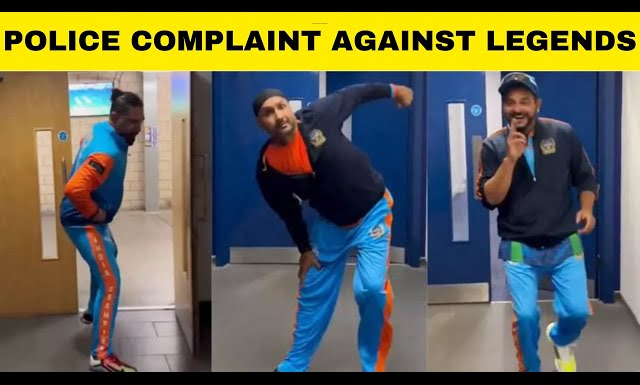
    #2 Former Indian cricket team players Harbhajan Singh, Yuvraj Singh and Suresh Raina posted a video on Instagram where they were seen grooving to Vicky Kaushal’s latest song, Tauba Tauba. Except their movements were awkward and para-badminton star Manasi Joshi was the first one to call them out for mocking the gait of polio-affected people. Then ensued a series of clamorous gripes online.

    While most disability advocates fumed at the inconsiderate act of celebrated sportsmen, some cautiously piped in their alternate views on tolerating a joke. However, an official police complaint was lodged by Arman Ali, Executive Director of the National Council for Promotion of Employment for Disabled People (NCPEDP).

    Here’s my take. We have become a society of increasingly easily offended people, thanks to the cultural shift propelled by polarising politics. So why should we expect any different reaction from Persons with Disabilities, who are equal citizens of the same country you and I inhabit. It’s a bad joke, one that reminds of me children in school, mimicking a certain teacher’s amble given her osteoporosis-ridden knees.

    Should they have done it? No. Is it insensitive? Yes. Have we blown it out of proportion? Certainly. I say this about all news political as well. There is no need to play up silly occurrences and utterances as primetime headlines. Ditto for this one. By the way, a public apology was issued by the players.

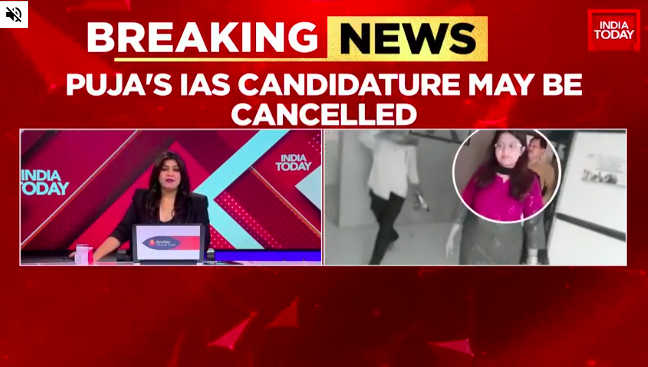
    #3 Trainee IAS Officer Puja Khedkar’s selection to civil service has come under the scanner. There is a criminal case accusing her of “misrepresenting and falsifying facts” to appear for the UPSC exam multiple times. She obtained three disability certificates in three years and a fake caste certificate. In 2007, while securing admission in a medical college, she was declared ‘medically fit’. In 2019, she secured a certificate of vision impairment from Ahmednagar district hospital. In 2021, she got a combined certificate of vision impairment and mental illness from the same hospital. In 2022, she filed an application for locomotor disability in a Pimpri hospital.

    She also sought relaxation under the OBC quota, which was questioned after her father, Dilip Khedkar, a former Maharashtra government officer, was suspended facing a corruption charge. Her mother, Manorama Khedkar, who is a sarpanch, was arrested in an Arms Act case when a video of her brandishing a gun threatening some farmers surfaced on social media.

    Disability rights groups have been united in their reaction to this egregious act. While opinions were circling around the misuse of disability and the usual ‘one dirty fish spoils the whole pond’, reactions from the non-disabled audience validated the analysis.

    Senior Telangana IAS Officer Smita Sabharwal stirred a fresh row questioning the need for disability quotas in All India Services (AIS). She tweeted, “Does an airline hire a pilot with disability? Or would you trust a surgeon with a disability? The nature of AIS is field work, long taxing hours, listening first-hand to people’s grievances, which requires physical fitness.”

    Unfortunately, this was seconded by Former CEO of Niti Aayog, Amitabh Kant (Former N) when he said, “I am in favour of SC/ST or OBC reservation. These reservations should continue, with the creamy layer regulations being enforced. However, the existing reservations for the physically and mentally handicapped and the proposed 1% reservation for the third gender for the top Civil Services need to be reviewed. They are being misused.”

    Now that’s taking it a bit too far, because reassessing appropriate implementation of provisions and policies, will be opening an abysmal Pandora’s Box! By the way, I can instantly name Pranjal Patil and Beno Zephine. two women with disabilities who are IAS/IFS officers and have been doing superlative work despite the odds.

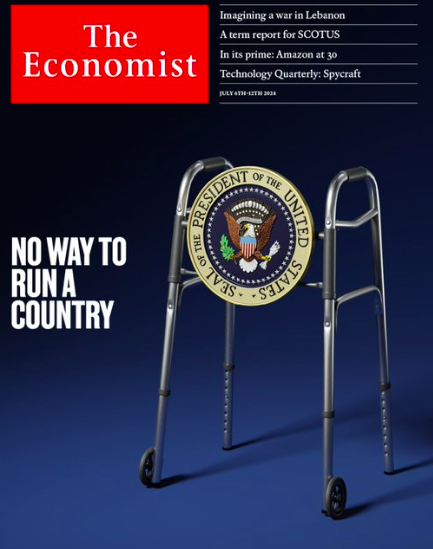
    #4 And there’s been some contentious news across the Pacific Ocean. So far, we’ve only had Former US President Donald Trump taking jibes at persons with disabilities, and specifically those in the media. Well, stupidity and ableism don’t come with any copyright, do they? After the disastrous show by President Joe Biden in the first presidential debate and consequential speeches, The Economist featured a walker adorned with a Presidential Seal on its cover. And the headline read, “No way to run a country.”

    Several slips there. Ableist representation in the use of a graphic that shouts, ‘crippling’ or ‘disabling’. The cover implies that if a person is physically disabled, or needs a crutch, he or she is incapable (read incompetent). Also, disrespecting several world leaders with disabilities. Like, Franklin D Roosevelt who was left paralysed waist down due to polio. Winston Churchill who had a speech impediment.

    A rather poor editorial call by a publication one least expects it from. The only thing that can possibly change media representation of disability is the act of hiring and working alongside persons with disabilities. Also, bold calls like the photo carried by The Indian Express in November 2022 following the appointment of 50th Chief Justice of India, DY Chandrachud. It’s a candid shot of him with his family which includes two foster daughters who have a disability.


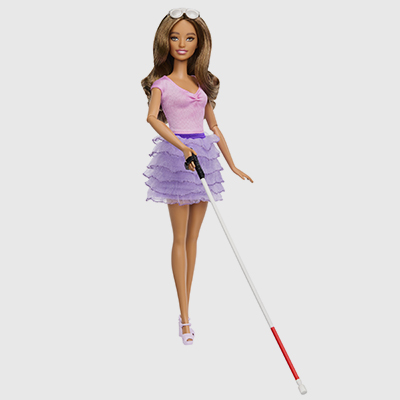
    #5 But let’s end this piece on a rosy note. Or should I say pinkish? As part of this year’s global Barbie Fashionistas lineup, Mattel Inc. introduced the first ever Blind Barbie reinforcing inclusion and representation for all. Throughout the design process, Barbie partnered with the American Foundation for the Blind (AFB) to develop accessories, elbow articulation, textured fabric, accessible packaging, distinct eye gaze et cetera.

    Last year, Barbie had introduced the first-ever doll with Down Syndrome (DS), partnering with the National Down Syndrome Society (NDSS). Again, fixing the right hair, sculpt, glasses, outfit and so on. They have introduced its next Black Barbie doll with Down Syndrome along with the Blind Barbie. These dolls will soon be available in Indian stories as well.

    Clearly the disability landscape is evolving across the world. One day, we cite progress and hullabaloo on another. As long as the discourse is relevant, consistent and moderate, I think we are headed in the right direction. It is these complexities surrounding disability that will open up the dialogue to challenge stereotypes of all kinds. 

     Wondering why MxMIndia publishes a disability advocacy column? Well, we strongly feel that the media can dramatically transform the world for persons with disabilities. This series attempts to help bring forth issues that the media must champion to create a truly inclusive and accessible India. Writing  this column is Shruti Pushkarna, a former journalist and now a disability inclusion advocate based in New Delhi. Her views here are personal. To access the archives of her 95-plus columns, please visit: https://www.mxmindia.com/category/ columns/shruti-pushkarna/

    If you have a view on the issues raise or would like to align with MxMIndia on this cause, write to us at editor [at] mxmindia.com.
  • Shruti Pushkarna: Paris Paralympics 2024: Scant coverage in Indian media

    Shruti PushkarnaThree years ago, the Indian Paralympian squad broke some records in Tokyo. Taking the country’s global ranking to 24, with five golds. This year in Paris, we have surpassed our 2021 tally of 19 medals. Our medal count as of today stands at 24 with the global ranking being 13. And there are still a few days to go.

    But the news coverage around para champions remains consistently scant. Insufficient in both quantity and quality. Writing this piece is almost like déjà vu. I called out the Indian media in my column three years ago and here I am scripting similar displeasure and disappointment in Column #99. That’s correct, it’s been a while. Four years of ranting against the Indian media’s neglect towards disability inclusion.

    However, it would be wrong to say nothing has changed. We have come a long way from 2016 when India didn’t even buy the broadcasting rights of the Rio Paralympic Games. Today, an average sports enthusiast who has access to streaming services is following and cheering the para champions. Several folks have posted their support and appreciation for the ace performers on social media.

    In the Tokyo edition, India recorded its best ever haul with a tally of 19, which included five gold, eight silver and six bronze. This year so far, we have won five gold, nine silver and ten bronze, which is a total of 24.

    Shuttlers Nitesh Kumar, Thulasimathi Murugesan and Nithya Sre Sivan clinched gold, silver and bronze medals respectively in para-badminton. Javelin thrower Sumit Antil won the gold for his record throw of 70.59 meters. Yogesh Kathuniya bagged a silver medal in the men’s discus throw. The youngest woman to compete in women’s para archery at 2024 Paralympics, Sheetal Devi won the bronze medal in the mixed team compound event along with partner Rakesh Kumar.

    Avani Lekhara became the first Indian woman to win two gold medals at Paralympics in women’s 10m air rifle shooting. Preeti Pal also made history as the first Indian woman to win two para-athletic (bronze) medals in the Women’s 100m and 200m T-35 event. Rubina Francis bagged a bronze in the P2 women’s 10m air pistol SH-1 final. Athlete Nishad Kumar won a silver medal in the men’s high jump T47 event. World champion Sachin Khilari won the silver in men’s shot put.

    And the list goes on. Imagine the number of stories behind these triumphs. The joyous caregivers behind some of the victories. The silent struggles from hopelessness to exuberance. Where are these missing accounts? The most I could spot was a headline ‘Ma hai toh mumkin hai’ in mainstream media, ensuing the social media post by Sheetal Devi expressing gratitude for her mother.

    In contrast, the dailies were full of narratives around Manu Bhaker when she won the bronze at the Paris Olympics. There’s coverage around her views on gender pay parity, Bhagvad Gita, her devout Hindusim and what not. There’s no taking away from her journey, struggle and triumphs. Likewise for Vinesh Phogat. But when it comes to Paralympians, journalists peddle only wide-eyed amazement for our inspiring divyangjan!

    No real news, no hard questions. No exposés on crippling infrastructure. No investigative pieces on funding contrariety.

    What sums it up aptly is a post by India Today journalist Shiv Aroor on X.

    The sad truth.#Paralympics pic.twitter.com/L8T5rSgaGO

    — Shiv Aroor (@ShivAroor) September 2, 2024

    It reads: ‘The sad truth. #Paralympics.’ Below the tweet, there is an image that highlights the disparity in media coverage between the Olympics and the Paralympics. The contrast in text size and placement implies that news about Olympic failures receives significantly more attention than news about Paralympic successes.

    That’s the reality of India, today. We have space for coverage of losses and no room to celebrate and acknowledge the grit and excellence of disabled champions. Barring a few exceptions like The Indian Express which gave decent accounts of the journeys of these champions. Their reportage went beyond medal tally and the day’s game.

    Another media channel, Much Much Spectrum has been consistent with their handling of news from Paralympics. They shared short and effective profiles of the para champions, alongside sporting updates, bringing out their tenacity without shying away from the disability. It isn’t your usual inspirational porn. They even published some candid posts highlighting the disparity meted out to Paralympics.


    View this post on Instagram


    A post shared by Much Much Spectrum – Stories of Social Good, Health & Disability (@muchmuchspectrum)


    View this post on Instagram


    A post shared by Much Much Spectrum – Stories of Social Good, Health & Disability (@muchmuchspectrum)


    Of course, one cannot forget to mention Prime Minister Modi’s (cheesy) telephone call to the medal winners which was relayed and replayed on various channels. The question that remains to be answered is what difference will this record-breaking performance at the Summer Paralympics make to the state of infrastructure, encouragement, budget, training, recognition and dignity offered to disabled sportspersons in the country. Or does it all end at a mere tweet by the Indian supremo saying he is proud and delighted?

  • 100 columns later: The evolving landscape of disability and media 

    100 columns later: The evolving landscape of disability and media 

    Shruti PushkarnaAs I pen my 100th column in this series on ‘Media and Disability’, I find myself at a crossroads of pensive reflection and curious anticipation. What began as a fortnightly series has blossomed into a transformative journey spanning four years, challenging perceptions, and advocating for India’s largest invisible minority. From those nascent thoughts on the International Day of Persons with Disability back in December 2019 to this centennial piece, I’ve traversed a landscape of change, confronting stereotypes, celebrating progress, and tirelessly pushing for a ‘person first’ narrative in mainstream media.

    I never imagined to have run a score of hundred. In fact, often I found myself wondering if I’ll be able to dish out fresh content on the same subject. And yet every time I sat down to write, I was faced with persistent issues and stories which required relentless campaigning for visibility, dignity and equal representation. Have my efforts been rewarded? Has disability found a better spot in the media? Do you hear or read more about this marginalised community now? Or does everything remain frustratingly the same?

    Not quite. Even if it’s at a snail’s pace, change is happening. The ability to influence even a single journalist accounts for success. That I can happily acknowledge. Stories of persons with disabilities mentioned in my column have also made entry into family dinner settings. Another reason to celebrate. Friends at my co-working space are inquisitive about the work I do for disability inclusion. But we have miles to go.

    Persons with disabilities are still seen through an ableist lens, portrayed as either heroic or helpless. Thankfully the recent coverage around Paris Paralympics wasn’t entirely inspiration porn. The reportage wasn’t confined to mere feel-good accounts. Some dailies and television channels tracked down back stories which shaped the winning champions.

    The pandemic has also played a part in altering perspectives. Universal experience of isolation and restricted mobility following the Covid-19 outbreak helped people get a glimpse of what’s life like for someone with a disability or a chronic illness. And of course, there’s been an increase in awareness around mental health issues, and newfound respect for caregivers.

    There are still some incessant challenges including stereotyping and bucketing disability into an exclusive group, disability first narrative, and the endless rant around limitations. Normalising disability and conversations around disabled folk is something that hasn’t captured the media’s imagination.

    Before I carve out a plan for all that remains to be accomplished, I want to revisit and relish some of my memorable pieces. Not only because I enjoyed writing them, but some for the stir they created, some for the unease they caused, some for how well they were received and some simply because no one else would have voiced them so.

    CODA winning the Best Picture at the 94th Academy Awards represented a significant step forward in disability inclusion with deaf actors casted to portray deaf characters, a rarity in Hollywood and Bollywood. The story follows Ruby Rossi, the only hearing member of a deaf family, as she struggles between pursuing her passion for singing and supporting her family’s fishing business. (https://www.mxmindia.com/news/representation-matters-inclusion-matters-disabled-lives-matter/)

    Closer home, cinema inspired many when the story of Srikanth Bolla, a visually impaired entrepreneur hit the big screen starring Rajkumar Rao. It also struck an inclusive chord when the Delhi High Court ordered movie producers to make accessible cinema, for all. (https://www.mxmindia.com/columns/shruti-pushkarna/are-we-set-to-redefine-access-and-inclusion-for-cinema-lovers/)

    The challenges and opportunities for Modi 3.0 in advancing inclusion and implementation of the Rights of Persons with Disabilities Act 2016. The government’s commitment stands to be tested in its ability to deliver promises of accessible infrastructure, inclusive healthcare, disaster management, digital accessibility, and social security for PwDs. (https://www.mxmindia.com/columns/shruti-pushkarna/does-modi-ki-guarantee-extend-to-persons-with-disabilities/)

    Not a very sporty person, yet I wrote a fair bit on sporting events. While I urged media for better coverage around Paralympics 2024, many readers (with disabilities) shared how they missed out on the sporting action especially around Cricket World Cup because of inaccessibility. Television commentary and news/sports websites overlook the needs of persons with vision impairment or hearing impairment, depriving them of all the fun. But earlier this year, Disney+ Hotstar made the Indian Premier League (IPL) more accessible for fans with disabilities through initiatives like audio descriptive commentary and sign language interpretation. (https://www.mxmindia.com/columns/will-persons-with-disabilities-enjoy-the-icc-world-cup-coverage/)

    I also got a chance to celebrate 25 years of First World Cup Cricket for the Blind along with the players and organizing committee. The stories were priceless, enthusiasm unmatched. (https://www.mxmindia.com/columns/shruti-pushkarna-changing-mindsets-rebuilding-lives-celebrating-25-years-of-first-world-cup-cricket-for-the-blind/)

    There were also some riveting conversations with Merry Barua, Peter Gibson, Neha Arora and more! Honestly, when I think of it, it’s difficult to handpick a few select specials.

    Looking back inspires me to move ahead with a determination to not only challenge but educate, so that fifteen percent of the global population feels included.

    To my readers – whether you’re a journalist, a media executive, a disability rights activist, or a concerned citizen, I implore you to question stereotypes, demand inclusive storytelling, and support platforms that give voice to the disabled community. For progress isn’t just about changing what we see in the media, but about changing how we see each other.

    The story of disability in the Indian media is far from over. In fact, we’re just beginning to write its most important chapters. Here’s to the next hundred columns, to the voices yet unheard, and to a future where inclusion is not an exception, but the norm.’’


    Wondering why MxMIndia publishes a disability advocacy column? Well, we strongly feel that the media can dramatically transform the world for persons with disabilities. This series attempts to help bring forth issues that the media must champion to create a truly inclusive and accessible India. Writing  this column is Shruti Pushkarna, a former journalist and now a disability inclusion advocate based in New Delhi. Her views here are personal. To access the archives of her 100 columns, please visit: https://www.mxmindia.com/category/ columns/shruti-pushkarna/

    If you have a view on the issues raise or would like to align with MxMIndia on this cause, write to us at editor [at] mxmindia.com.