The two rape cases from Hathras and Ballabgarh have occupied the news space this past month. And rightfully so. It’s shocking and truly disgusting. Not just the act itself, but also the fact that such incidents keep recurring despite the media glare, new laws, nationwide protests, et cetera. Sometimes it feels as if we’ve become immune to such acts of violence. Frankly, our nation is governed by a ‘chalta hai’ attitude for most things. What’s scary is that rape, murder, lynching, violence of all shape and form is gradually beginning to fall in that mindset as well.
I don’t intend to debate on the rape rate or the mindset behind it or how much our society has accepted it as part of everyday reality. I’m not even going to argue with the various stances concerning how women should dress, where they should go, do we need to re-educate our boys or their mothers perhaps. Instead I want to cite a few cases where the rape victims were disabled.
In a country where our political leaders and other influential groups propagate ‘men will be men’ attitude, women remain perennial victims to a skewed sense of patriarchy. To top that, a physical or mental impairment, is doubly disabling for women. Between the months of April and October, three rape incidents were reported from Uttar Pradesh, Assam and Madhya Pradesh.
The environment was never safe but the pandemic has added to the woes of women with disabilities, as they are unable to find easy access to any kind of support. Stranded away from family, friends and community, they face myriad challenges on a daily basis vis-à-vis acquiring food material, traveling for work, getting medical aid in case of emergency, or any other household help. Personal safety has become a growing concern.
However, the news media in these three cases raised no hue and cry for the victims who were visually impaired. One wonders why. Was their tragedy lesser than that of a sighted woman? Or is it because they didn’t have the appropriate tags of #Dalit or #Muslim to make for eyeballs especially in the TRP-driven television news market?
True that disability issues don’t find much coverage in the media because they are perceived to be not ‘mainstream’ enough. But rape is a crime that affects the majority. Then why must the media discriminate when it comes to raising a voice against the heinous act itself? Like I said, the offence doesn’t become any less atrocious if the casualty is not able-bodied. In fact, quite the contrary.
Women constitute 41 per cent of the total disabled population in India. According to a news report from September 2019, the United Nations committee of independent experts on the rights of persons with disabilities emphasised on the need for India to have a separate category of data on violence against disabled women and girls. Very often, ableist women rights’ movements overlook this group because they are labeled as asexual. Even disability advocacy groups rarely address the sexual needs or exploits of such women. In short, crimes against them are invisible to the political leadership and law enforcement agencies.
When it comes to yelling matches on the ‘idiot box’ every night, the disabled women are out of sight there too. They don’t get invited to debates on issues concerning women, their views disregarded by the ableist world. Do you recall any disabled perspectives during the recent outrage against Nikita Tomar’s rape or the (in)famous #MeToo movement? Probably not.
As I write this piece, Donald Trump and Joe Biden are neck to neck in the race for US President. God forbid if Trump wins again, we’ll have one of the most powerful countries in the world led by someone who thinks very little of women or persons with disabilities. Is this a reflection on what the society in general thinks of them as well? One can only hope and appeal to the goodness in humanity.
Shruti Pushkarna heads operations of the New Delhi-based Score Foundation where she works as Director-Programmes & Communications. She is a former journalist (part of the founding team of MxMIndia) who has moved full-time to the social sector. Shruti writes for MxMIndia every other Thursday. Her views here are personal. She can be reached via Twitter at @shrutipushkarna
I almost didn’t write this piece. In fact my mind was totally blank. No ideas. Zilch. Then I wondered to myself, this column is all about voicing issues, it’s not like there’s a dearth of those. The challenge is not the lack of ideas or issues, but my brain’s selfish need to focus on personal problems.
At this point I’m overwhelmed with taking care of my Covid-positive parents. I maybe convinced that there are no bigger problems in the world. But the truth is no one cares. No one outside of my tiny family bubble cares at all. Everyone is consumed with their own life hassles.
To be honest, these past months, I haven’t paid much attention to what a caretaker goes through when someone in the family tests positive for this highly contagious virus. This when I work in the disability space where there are enough advocacy campaigns about the society not giving two hoots about caretakers!
We are an inherently self-centered lot. We only stop to think and care when things hit us personally. At all other times, we sit and speculate from the outside. We pass judgement on matters related to disability, mental health, suicides, caste wars, love jihad, economic crisis, media stances et cetera. Worst is we don’t even bat an eyelid for most things that don’t jeopardize our comfort zones.
Braving through these hard times, locked up in home quarantine, I’ve had some time for self-analysis. Surprisingly I find myself guilty of not empathizing enough with other caretakers. I haven’t thought of their struggles, mental and physical stress in coping with the patients’ medical condition as well as frustrations. I thought growing up with a chronically ill parent had trained me to deal with situations. I believed that I could handle it all, until today.
I realise that most of us remain ignorant towards another’s vulnerability. We never know enough about the other side of the story until we have lived it ourselves. Does that mean we can express empathy only if we’ve faced a similar hardship?
Probably not. By definition ‘empathy’ means the ability to imagine another’s perspective or feeling. Having faced difficulty makes it a lot easier to relate to someone in distress. It’s like adding bonus points to your compassion quotient.
Going by the sheer size and diversity of our population, (especially variance in the socio-economic backgrounds), people face gazillion problems daily. That should sensitise the society into becoming more empathetic. Sounds wonderfully utopian.
Except in real life, the focus seems to be on ‘I, me, myself’. I have contracted coronavirus and I have to be isolated. Even though I have no symptoms, I have to stay home for fourteen days. I am so frustrated that I can’t go out. Do we consider the impact of our individual choices on others? What happens if I don’t wear a mask, if I don’t maintain personal hygiene or social distancing, if I don’t follow the advisory to avoid infecting someone else?
I thought it was important to educate people about disability and other causes, in order to alter people’s mindsets so they become more inclusive. But is that really enough? Is the lack of awareness the only reason for our apathy towards vulnerable sections of the population?
Problem is not just ignorance, but also about being inconsiderate. This also reflects in our leadership, as much as it does in our media. Both are constituted of self-absorbed people like you and me. How can we expect media persons to understand, uncover, debate or advocate for issues they don’t care about?
Few months ago, there was hope that the pandemic would bring us closer and create a more conducive environment for everyone. It feels as though that ship has sailed.
Shruti Pushkarna heads operations of the New Delhi-based Score Foundation where she works as Director-Programmes & Communications. She is a former journalist (part of the founding team of MxMIndia) who has moved full-time to the social sector. Shruti writes for MxMIndia every other Thursday. Her views here are personal. She can be reached via Twitter at @shrutipushkarna
As I write this piece, I’m experiencing a mixed set of emotions. I’m thrilled because I have managed to nearly complete a year of this column on ‘Media and Disability’. At the same time I’m sort of disillusioned, thinking if this fortnightly exercise has made any real difference for persons with disabilities. I’m saddened because the media or the society doesn’t much care about vulnerable groups and their respective challenges. But more than anything I’m angry.
Change is not easy to come. I’m aware. But I’m angry at how little has changed in the past several years in this age of information boom and 24X7 news. Also despite the new empowering laws and policies that gave us hope of better times to come.
As a society we haven’t even gone beyond thinking of disability as a karmic fallout. Seriously, what is wrong with us? Typecasting aside, we look at persons with disabilities as lesser mortals who deserve to be where they are. Religious leaders, spiritual gurus, even parents of disabled children and the masses believe and propagate so. The media only goes a tiny step further embellishing them with either a heroic or pitiful portrayal.
Across the globe, December 3 is observed as the International Day of Persons with Disabilities. This year, the focus is on spreading awareness about not only the obviously visible disabilities but also the less apparent ones, with the hope to build a more inclusive world. There is a special emphasis on creating a sustainable and accessible post-Covid environment for everyone.
Here in India, it feels like a distant dream. Last year this day, I wrote on ‘What Media Must Do’ vis-à-vis not leaving the disabled out of the mainstream discourse’. Maybe I should recycle the same commentary, as it seems to have fallen on deaf ears. Through the year, I have raised several pertinent issues pertaining to different types of disabilities, the difficulties faced by them in spaces of work, education, entertainment and the apathy that seeps through the cultural fabric of our country.
The frustration that all of us faced after being locked down for a few months due to the spread of Covid-19 comes nowhere close to what disabled people go through every single day, living on the periphery, discarded by the mainstream, excluded by their community, denied the opportunity to exercise their abilities.
Let’s face it. It’s a thoroughly unequal, unjust and imbalanced state of affairs. Strange parallel coexistence of those who binge-watch ‘Fabulous Lives of Bollywood Wives’ and people who are refused mere 35kg of ration despite the Delhi High Court orders for the disabled to be included under the National Food Security Act.
Not only are people unaware of each other’s alternate realities, our media coverage is even more lopsided. For a very long time, I believed that the media had the responsibility and obligation of operating in public interest. As a former journalist, I swore by it. But today everything is about ratings, demographics, market share and monies.
It’s all about the content that sells. And the content that sells hardly costs anything to produce. So why invest money in investigating and reporting real issues and accounts when the objective is to run a profit division? Instead of giving a voice to the weak and ignored sections of the population, the media is feeding our guilty pleasures and morbid fascinations.
Covid-19 has changed a great deal in terms of how we work, educate our children, or engage with friends and family. Apart from all the perils, we have discovered new ways of functioning. From a disability perspective, the gap that existed especially in education and employment has somewhat been bridged. Due to innovations in technology, disabled people are empowered to study and work alongside able-bodied peers in the comfort of their homes. The virtual mode of operation has removed the physical barriers, opening doors for inclusion.
Most Disability Advocates believe we have made more progress in the last 10 months than in the past decade. While this is a promising opportunity created by the pandemic, the ableist world has to take note and build accessible products and infrastructure.
It again comes down to awareness and the will to include. We are crippled by our individual attitudinal disability, which dissuades us from acknowledging the needs of another. The truth is we like to be ignorant. We prefer being so because it’s easy. As long as it doesn’t affect us, it’s not worth talking about. Our content consumption habits and social media patterns reflect the narcissistic bubbles we exist in.
The country needs to be pulled out of eternal slumber. We need to get angry at the status quo, at the injustice, at the skewed coverage of issues. I’m reminded of the famous speech from the1976 movie Network where Howard Beale (Peter Finch) says: “I’m mad as hell and I’m not going to take this any more. I want you to get up right now. Sit up. Go to your windows. Open them and stick your head out and yell.”
The question is whether the country will join in. Can the media lead the citizens in a rallying cry for change?
Shruti Pushkarna heads operations of the New Delhi-based Score Foundation where she works as Director-Programmes & Communications. She is a former journalist (part of the founding team of MxMIndia) who has moved full-time to the social sector. Shruti writes for MxMIndia every other Thursday. Her views here are personal. She can be reached via Twitter at @shrutipushkarna
2020 is finally coming to an end. We all agree on what a waste this year was, considering how our plans were reversed, lives disrupted and holidays canceled. As for work, we found new ways of functioning and remaining productive amidst a global pandemic. Truth is we survived this terrible year and the next one is just round the corner.
Typically, in December, people think of resolutions, goals, budgets, but our lives are still shrouded in uncertainty. When will the vaccine be rolled out? Will it be effective? How long before we build herd immunity so that we can go back to normalcy just like in the pre-Covid days?
No easy answers there. How about ending 2020 by acknowledging things that SARS COV-2 helped us discover, as individuals and as a society?
The most important thing I have learnt especially while working with persons with disabilities is, the key to surviving (and thriving) is ‘acceptance’. When Covid struck, people were frustrated. The government called for a nationwide lockdown leaving us with no choice but to accept our situation. When we accept, we stop fighting with the problem and start channelizing our energy into finding possible solutions.
Operating from home is a case in point. In the absence of physical spaces to work, study, exercise, hang out or play, we found alternatives within our residential confines. We modified our living situations to make room for daily routines that were conducted outside earlier.
Acceptance leads to possibilities. Yet another learning.
There are always alternatives, a different line of thinking and a new way of processing limitations. The disabled world knows it well. For persons with disabilities, the only real barrier is a negative attitude. Responses like ‘no, can’t do’, ‘not possible’, ‘not equipped’, ‘can’t happen’, exclude them from majority of mainstream activities.
The past year may have helped the ableist society realise some such truths. Thanks to Covid, now we know that possibilities are only limited by our (collective) imagination. When able bodied people like you and me were denied access to our regular environment, we created a close replica in the form of a virtual universe.
Barrier-free access is something persons with disabilities across the world have been fighting for, over decades. Attending school or college, getting a job in an office, watching a movie, reading a book, traveling, dining, sightseeing, even accessing social media or other digital services, poses serious challenges to the disabled. But we have never thought of mainstream solutions to these problems because their impairment has been grounds for an almost legit exclusion.
We are all intrinsically selfish, is also a lesson learnt, though this one’s hardly exclusive to 2020.
If the society accepts differences in abilities rather than typecasting people as ‘incapable’ or labeling them as ‘invalid’, we can start building an inclusive environment for all. Innovation in technology and increased internet penetration makes it easier to allow access to a larger, heterogeneous group.
Let me state some obvious examples from the current scenario. Disabled students are attending online classes with the help of smartphones and computers along with able-bodied peers. Similarly, jobs are being carried out remotely, irrespective of physical impairments. OTT platforms have a wider share of the content viewing pie and their audience includes persons with different types of disabilities. Banking and other financial transactions are taking place online, albeit certain access issues. And the list goes on.
When Covid-19 rendered us helpless despite all our defence mechanisms, we didn’t give up. We simply started safeguarding afresh. Among those who have survived the virus, some have experienced temporary disabilities, and there are others who have developed chronic illnesses due to partial respiratory or renal failure. But we are not blaming their karma for the medical outcome, are we?
Why can’t we see the disabled people without the stigmatised lens too? If there is hope for a better tomorrow, then why shouldn’t similar optimism be extended to someone with a hearing, speech, visual or locomotor impairment?
It’s time we acknowledged that the differences we see in people and situations, first emanate in our minds. What we actually choose to see outside is a mere reflection of that mindset.
Here is an idea to carry forward to 2021. Let’s never forget what a person is capable of, given appropriate environment and aids. Let’s stop walling off people with problems presumably different from our own.
Shruti Pushkarna heads operations of the New Delhi-based Score Foundation where she works as Director-Programmes & Communications. She is a former journalist (part of the founding team of MxMIndia) who has moved full-time to the social sector. Shruti writes for MxMIndia every other Thursday. Her views here are personal. She can be reached via Twitter at @shrutipushkarna
New Year is all about hope. We go to bed on December 31, hoping that there will be something miraculously different about January 1. There is almost a Cinderella feel to it. For a short period, most of us believe that we will wake up to a changed, better scenario. I’ve decided to indulge myself too, and make this last piece of the year, all about what I want to see in 2021.
But a little disclaimer before I pull out my euphoric list that promises to make inclusion somewhat of a reality starting New Year’s day. This piece is written in a lighter vein, any noticeable sarcasm is incidental.
Accessible news telecast for all
All Indian language news channels launch a special broadcast service accessible to persons with different types of disabilities. People with hearing, speech or vision impairment as well as those with learning or intellectual disability won’t need to seek help from the able-bodied to catch the latest news.
New hiring policy to include Persons with Disabilities (PwDs)
All private media companies introduce a mandatory human resource policy to include PwDs in their workforce. A detailed list of jobs taking into account 21 types of disabilities mentioned in the RPWD Act 2016, has been created in consultation with domain experts. The move has been initiated to generate empathy and raise awareness about the daily challenges faced by the disabled.
A disability-sensitive stylesheet issued by the Broadcast Associations
Acknowledging the often inappropriate and politically incorrect language used by the media, the broadcasting bodies have decided to enforce a new stylesheet with accurate terminology and expression with regards to reporting on disability issues. This will ensure the omission of crude terms like lame, mentally retarded, wheelchair bound, dumb et cetera.
Disabled representation a must on news debates
Just like the panellists from varied political leanings, caste or gender groups or specific domain expertise, primetime debates on issues of national relevance will include representatives from the disabled community. Discussions on rape law, healthcare, Covid vaccination programmes, politics and business of the day, will voice opinions of persons with disabilities, regarding them as equal citizens of the country.
Special programming on life despite disability
A dedicated series of shows to be produced regularly, helping society understand what it means to live a life with an impairment. The coverage will include challenges, accomplishments, available resources or the lack of it, private and governmental initiatives for better opportunities and so on. The programming will go beyond mere tokenism or unnecessarily heroic portrayal of pathetic situations.
All news websites to become accessible
Ensure all content and the digital medium of publishing is in line with the Web Content Accessibility Guidelines. The W3C Accessibility recommendations are put together after consultation with people from the industry, disability organisations, government and research labs to make digital content accessible to people with auditory, cognitive, neurological, physical, speech and visual disabilities. Most web content developers are unaware of these guidelines and therefore mainstream websites remain out of bounds. For instance, a lot of news websites have pop up ads which interfere with screen reading software used by visually impaired people. The less ignorant techies manage to circumvent such issues, making the content available to a wider audience.
Post Covid-19 scenario
Journalists will periodically track the Covid-19 aftermath vis-à-vis disabled population. Whether it’s about organising special vaccination camps, tracking the side-effects of possible treatments, inclusive healthcare facilities, challenges of commuting in the absence of a caretaker, food and medicine supply chains for the most vulnerable, newscasts will include all such issues in their daily editorial agenda.
Disability: new kid on the block
A new beat specifically dedicated to disability will ensure that coverage of issues pertaining to this domain make it to the telecast beyond the good news segment or the striking image of the day. This will eventually encourage journalism schools to include disability studies in the curriculum, promoting sensitivity towards the 2.68 crore population (severely underquoted official figures).
I know what you are thinking. Is all of this even attainable? Are we being led to a delusive perception of a world that treats everyone equally? Or if you are the practical sorts, then maybe you are wondering, what kind of resources will it take to shape this fantastical plan into reality?
It’s possible and it doesn’t take too much. The first step to inclusion is a simple acknowledgment of the ‘other’. Covid-19 has taught us ways of adjusting to a new normal. In the case of disability too, the notion of normal is a bit different, that’s all.
Technology, creativity and some initial financial investments can help us source solutions that can remove barriers. The only real blockade is our ‘exclusionary’ mindset, the tendency to box people out of our lives assuming it doesn’t impact our existence.
But the truth is we are just as vulnerable as the person next door. Thanks to the pandemic and other environmental disasters in the past year, we’ve lived through some horrors we had never imagined. So why not focus on the upside and the stuff we hadn’t put our minds to earlier. Can we start by making the disabled population an intrinsic part of the target group?
Borrowing Alfred Tennyson’s famous lines “Ring out the old, ring in the new…”, let’s ring in the new year with the promise of building a conducive environment for all.
Shruti Pushkarna heads operations of the New Delhi-based Score Foundation where she works as Director-Programmes & Communications. She is a former journalist (part of the founding team of MxMIndia) who has moved full-time to the social sector. Shruti writes for MxMIndia every other Thursday. Her views here are personal. She can be reached via Twitter at @shrutipushkarna
The only change we witnessed on January 1 was calendrical. 2020 was a washout, with bad news hitting us consistently from every part of the globe. The ghastly spread of coronavirus wasn’t the only peril we dealt with. Don’t forget the floods, cyclones, frequent earthquakes, economic slowdown following the lockdown, rising unemployment and brutal pay cuts. The only hope in sight was the promise of a vaccine roll-out in 2021. Just as we were getting ready to usher in a world capable with fighting the virus, the World Health Organisation announced that we were unlikely to develop herd immunity in this new year.
On the political front too, countries are busy competing for attention. Apart from the usual blows and soap opera antics, the Narendra Modi government has been unable to placate or negotiate with the protesting farmers. And across the Atlantic, United States made history as the outgoing President Donald Trump incited supporters to storm into the Capitol and ransack offices, leading to the death of a police officer.
I don’t think it gets any crazier. News coverage has never been so potent. The airwaves are dominated by issues that seemingly affect ‘everyone’. With the fundamental existence of every human being at stake, newsmakers have been busy chasing issues of national importance like never before. This also means that anything labeled as ‘special interest’ or ‘social responsibility’ takes a backseat.
Unfortunately, disability-related coverage falls in the above category. The media perceives issues facing the disabled to be significant only to a handful of the country’s citizenry. Even though data indicates that fifteen percent of the global population lives with some form of disability. Add to that friends and families of the disabled. Also, the elderly who often acquire age-induced-impairment. Another common belief is that the larger political, social and economic problems have no impact on persons with disabilities.
News is largely driven by what a select few minds deem ‘relevant’ to the majority. Needless to say, profit generation defines their decisions. Unless one of these decision-makers has any personal experience with disability, we are unlikely to see a change in what’s dished out for national consumption.
Let’s shift focus to general entertainment. Here too, channel owners decide what sells or what type of content is worthy of mass appreciation. That’s why for years together, our choices were limited to saas-bahu drama, cheap dance and music shows and ludicrous comedy.
Before subscription-based platforms launched in India, many of us believed the business model would fail in a market driven by cable television and piracy. But clearly we misjudged. Audiences jumped up at the idea of choosing desirable content from different genres. The market finally catered to individual interests as opposed to mass production based on banal assumptions about the target group. Restricted outdoor activity due to Covid-19 has of course taken OTT to a new level of popularity.
Today, we live in an era where ‘content is king’. There is a market for everything and businesses targeted to a niche are likelier to succeed. The consumers are not only armed with choices but multiple (tech) devices. With squirrel-like attention spans, they are in constant search for what’s relevant at an individual level.
Streaming services like Netflix, Amazon and Hotstar, have numerous categories such as science fiction, thriller, reality TV, adventure, crime, mythology, biopic and so on. I feel there’s a tremendous possibility of producing content on subjects like disability, or other forms of exclusion that plague the societal mindset.
The able-bodied are unable to comprehend the challenges faced by those living on the peripheries because they don’t see or hear about it. The media can endow visibility to those who are absent from our normal course of existence. When people start seeing stories of disabled from places of education, work or entertainment, ableism will slowly begin to recede.
Content producers have a massive influence on the general public vis-à-vis understanding of issues, people and situations. They are responsible for shaping opinions and generating curiosity.
Are they willing to make their offerings more inclusive in light of the new content consumption patterns? Can we expect to read, see and hear all that impacts every single one of us? Can the specialized content also represent the minorities that remain faceless even in the 21st century?
If media is a reflection of our society, then the blatant narcissism and apathy should shock us into advocating for change.
Shruti Pushkarna heads operations of the New Delhi-based Score Foundation where she works as Director-Programmes & Communications. She is a former journalist (part of the founding team of MxMIndia) who has moved full-time to the social sector. Shruti writes for MxMIndia every other Thursday. Her views here are personal. She can be reached via Twitter at @shrutipushkarna
Millions of people had their eyes set on January 20, 2021. The inauguration ceremony of the 46th President of United States of America being seen as a beacon of hope, to restore faith in democracy. Something the outgoing President had ridiculed in myriad ways, throughout his four years of governance (read disruption).
The feeling of optimism suffused across the world, not just experienced by US residents but all those who witnessed a self-obsessed supremacist make moves (read blunders) that annihilated the very principles of equality, justice, harmony, even humanity.
I, too, was following the election results closely. As someone who strongly advocates for the rights of persons with disabilities, I was elated at the mention of disability in Joe Biden’s victory speech on November 7. Biden is only the second US President apart from Barack Obama to acknowledge disability in his address. He said: “We must make the promise of the country real for everybody, no matter their race, their ethnicity, their faith, their identity, or their disability.”
That was a simple yet strong message countering the apathetic ableism portrayed by Donald Trump. The outgoing President consistently discriminated and made derogatory remarks towards the disabled population. After ordering to remove braille labels from Trump Tower, he was quoted saying: “Get rid of the f*****g braille. No blind people are going to live in Trump Tower.” And then there was the famous incident where he mocked a disabled reporter on national television.
Through the 2020 Presidential race, it was clear that Senator Biden stood for everything that Trump wasn’t. The different groups segregated by colour, race, ethnicity, economic status, caste or disabilities were hoping to vote in a leader who could work towards reconciling and bridging the gaps.
Biden included the disabled community in his campaign, promising them accessible healthcare and support for students with disabilities. The inauguration ceremony was presented with live captions, American Sign Language, audio description and other accessibility features on YouTube.
Statistics indicate that nearly one in 12 US children struggle with a disability related to speech, voice, language or swallowing. President Biden had a long battle with stuttering, a neurological condition, impacting the fluent flow of words and speeches. But his open admission and how he overcame this impediment in public speaking turned him into a role model for American kids. How someone with speech impairment could end up in the White House!
Andrea Hall at President Joe Biden’s Inauguration led the Pledge of Allegiance in Sign Language. Screengrab from https://www.cbsnews.com
The inaugural ceremony featured two other special events that amplified the new administration’s commitment towards inclusion and accessibility. Andrea Hall, a firefighter and Union Leader from Fulton County, Georgia led the Pledge of Allegiance in American Sign Language.
The other inspirational figure was Amanda Gorman, 22-year-old poet laureate. Born prematurely, Amanda was diagnosed with speech and auditory processing disorder. As she flawlessly recited her moving poem “The Hill We Climb”, her name started trending on Twitter. But Amanda confessed in an interview how hard she had practised because until a couple of years ago, she struggled to pronounce the letter ‘R’. Her disorder makes it difficult for her to accurately pronounce and hear certain sounds. Both Biden and Gorman worked hard on improving their spoken fluency, giving voice to their dreams of a new America.
This celebration of equality reminded me of December 2015, when Prime Minister Narendra Modi made two significant announcements with regards to the disabled community in India. The famous ‘Accessible India’ campaign was launched on the International Day of Persons with Disabilities, with a promise to make transport, public spaces, tourist spots, airports, railway stations and all information and communication disabled friendly. Later that month, PM Modi also proposed a change in nomenclature from the word ‘viklang’ (handicapped) to ‘divyang’ (divine body).
While I personally disagreed with the terminology, many believed it would reduce the negative and alienating undertones associated with physically or mentally challenged. The idea was to encourage members of the civil society to see persons with disabilities for their abilities rather than shortcomings.
As for the ‘Accessible India’ campaign, the target was to retrofit buildings, frame guidelines for new buildings and transport, make government websites accessible and also audit private companies on accessibility index. The original deadline of conducting an accessibility audit was July 2016, with a view to make the most important government buildings fully accessible by March 2018. The Ministry of Social Justice and Empowerment further extended this to March 2020 citing “slow progress”.
Even with all the policies in place, inclusion and access remain a distant dream for the disabled in India. Yes, things have improved and innovation in technology makes for easier integration in the digital era. But eventually the actual progress on ground depends on the political will.
I hope President Biden prioritises the needs of the disabled and his actions reflect his real attitude, beyond words. As Amanda Gorman said:
“We are striving to forge a union with purpose, to compose a country committed to all cultures, colors, characters and conditions of man.
And so we lift our gazes not to what stands between us, but what stands before us.
We close the divide because we know, to put our future first, we must first put our differences aside.”
Shruti Pushkarna heads operations of the New Delhi-based Score Foundation where she works as Director-Programmes & Communications. She is a former journalist (part of the founding team of MxMIndia) who has moved full-time to the social sector. Shruti writes for MxMIndia every other Thursday. Her views here are personal. She can be reached via Twitter at @shrutipushkarna
Growing up in Delhi, I never really encountered a child with a disability in my locality or school. The only exposure I had to someone with an impairment was via fictional characters in films and television series. One of them was Dhritrashtra from the Mahabharat. In him I saw a mix of helplessness, greed, envy and frustration. I didn’t see him capable of altering the storyline or making big decisions despite being the ruler of Hastinapur, the disputed kingdom. As I grew older, I encountered disabled people begging on the streets, blind singers in buses and trains accepting small change in return. I assumed all disabled people were poor. My view slowly evolved as I saw and read about achievers who overcame their disability through good education and hard work. But the overall picture was dominated by the prevalent stereotype of dependency, barring a few heroic accounts.
After working in the disability sector, I realised how ill-conceived and limited those notions were. There are several factors responsible for the near invisibility of persons with disabilities from the mainstream. While their absence is a reason for our inability to conceive their reality, the portrayal of disability in the media hasn’t helped much. By media, I mean radio, print, TV, advertising and films.
I spoke to a few people employed in different capacities, living with a certain type of disability, to share their views on the subject. Here’s what they thought of the representation of disability in the media and the changes they would like to see.
George Abraham- CEO, Score Foundation; Founding Chairman of World Blind Cricket Council (Visually Impaired)
George Abraham
I think it’s time that the media grew out of treating disability as a mere human interest story. They need to see it primarily as a ‘citizen’ story. The coverage needs to move beyond the idea of a vulnerable group, showcasing the disabled as positive stakeholders.
Recently, there was a news report on 150 girls from Miranda College coming together to record books in different languages for visually impaired students. The girls who volunteered must have felt good and would be granted certificates for their effort. But as I see it, when you are educating blind girls, having a library for them should be a given, a basic requirement. It shouldn’t be anything special that needs to be done or written about. In a way, how journalists respond is an extension of how the society behaves.
In the Amitabh Bachchan-starrer Namak Halal, the heroine’s brother was blind. At first, the hero is jealous of him but when he finds out about the blindness, his reaction drastically changes to that of sympathy. This has happened to me personally too, how people behave. On discovering my vision impairment, their dealing drops to another dimension. One could argue that films are a depiction of social realities, and should a filmmaker depart from those realities when portraying people with disabilities.
My personal view is that while you portray reality, you must also make films with disabled characters playing mainstream roles. The other issue is that the moment you portray a blind character, people with vision impairment take it as being a documentary. The community is so starved for exposure that they want to see positive portrayals only. They forget that the blind person is only human. He/she could be evil-minded, like one of the early gurus of Osama bin Laden who was a blind cleric. He was convicted of conspiracy in the 1993 World Trade Center bombing.
There are also villains with one eye or one leg but I feel that’s more to do with the physical grotesqueness of their appearance. But for the viewing public, it has created associations between disability and villainy over the years. Disability is also linked with spirituality, with characters who are shown singing bhajans, spending most of their time engaged in religious activities.
Films have a huge influence on behaviour patterns and that’s why the need for the media to be more aware and responsible.
Dr Anjlee Agarwal- Accessibility, Mobility and WASH Specialist; Founder & Executive Director, Samarthyam(Assisted wheelchair user due to Muscular Dystrophy)
Dr Anjlee Agarwal
Media tends to look at disability from only one angle. The two earmarked days for them are the Union Budget and the International Day of Persons with Disabilities, focusing on the cuts/ additions in funds or featuring role models. That’s the only time they seek a response from the disabled. Otherwise there is no connect with the different things happening in the country. Although there was some attention given to the disabled during the Covid-19 outbreak, that was perhaps only because disability advocates like me pushed for such coverage.
We hardly see disabled people in films barring a few exceptions like Black, Taare Zameer Par or Margarita with a Straw. The portrayal of people with disabilities in films and television is more like a ‘bechara’ sitting in a wheel chair, preferably an old person. There are 21 disabilities listed in the RPWD Act but it’s only the wheelchair user that might get some attention.
As compared to other vulnerable groups like senior citizens, transgender or homosexuals, people with disabilities are the most invisible. The print media covers some sensational or hyped news items related to disability but there is no consistent reporting. It’s like a flash mob, it’s there and then it’s gone.
There is so much happening in the country. Let’s take the example of Swachh Bharat Abhiyan, no one still realises the need for accessible toilets for 21 crore disabled citizens. These are required for living with safety, dignity and independence. Sanitation and hygiene drives don’t include people with disabilities as potential beneficiaries even after Covid.
A huge campaign like Accessible India launched by the Prime Minister didn’t attract consistent news coverage despite the fact that access audits were conducted rigorously in 2016. On the contrary, the accessibility campaign in the US was driven by the media and that’s one of the reasons for the successful implementation of the American Disability Act. If Accessible India got its due coverage, probably it would have attracted more funding like in the case of Swachch Bharat.
Globally, with the changing times, countries have made progress but in India, people are still struggling for basic needs. In the 21st century, there are so many disabled children who haven’t seen the insides of a school. Instead of fixing the environment and making it conducive, we started fixing the disabled people, limiting their options in education, employment and so on. And this is where the media needs to step in. They need to speak for us and insist on funds and the political will to make services accessible.
Salil Chaturvedi, Writer (Paraplegic)
Salil Chaturvedi
Rather than seeing a change in a mediaperson’s attitude towards someone with a disability, what I would really like to see is the representation of persons with disability within the media. It would be powerful to see a disabled news anchor or reporter or hear from a radio jockey with a disability. The medium then also becomes part of the message.
An example from my own life is that I worked as an editor of a feature agency more than two decades ago. Since I am a disabled person (using a wheelchair because of a spinal injury sustained in an accident), I made sure that we covered disability issues with fair regularity, and supplied stories on disability to newspapers.
In parallel, it would also help, I feel, to bring in a component of disability in the curriculum of media courses. This could initially be done through guest lectures that involve disabled persons as faculty, while also developing a curriculum in consultation with disability organisations.
I remember that when I played the role of Jugadoo in Galli Galli Sim Sim (the Indian version of Sesame Street), a number of children would come up to me on the Delhi Metro or in a marketplace asking for an autograph. The decision to cast a person on a wheelchair in the show was a strong message that broke stereotypes without too much explaining needed. So, we definitely need more portrayal of persons with disability in a normalised way. Currently, there is always some sort of sensationalising of disability, though things have improved a little (only a little) over the years.
Dr Anubha Mahajan- Founder, Chronic Pain India (Suffers from an invisible disability called Complex Regional Pain Syndrome)
Dr Anubha Mahajan
There is a lack of awareness about disability types and issues and an absence of empathy in how the media interacts with the disabled. I have noticed that often stories on disabled heroes are done without an in-depth understanding or an involvement in the cause. It seems like journalists are casually filling an empty slot on their news agenda. Disability accounts are considered sob stories to garner eyeballs. It’s obvious how the impairment is mentioned even before the person’s name or qualification. The community doesn’t need sympathy, we need a fair picture to be put out before the society. Our issues have to be normalised just like any other section of the population.
Talking of films, the 90s cinema portrayed the disabled as an object of ridicule. I had a neighbour with an intellectual impairment and most residents refused to interact with the whole family. Some kids even made fun of that child, forcing the family to keep him confined and hidden from society. There are some serious movies on disability too, but the message is one of despair, rather than optimism.
But recently I have noticed a change. In a new series on Netflix called ‘Mismatched’, there is a character who is a wheelchair user. In an episode, he expresses anger on the absence of an accessible washroom on campus. But just like silly humour, this character is shown to explode with too much aggression. Such depictions can lead to wrong stereotyping, because every disabled person isn’t funny or belligerent. Still, the series is a step forward because there are enough disabled people who can relate to his issues.
Disability activists work with small groups but mass media can bring about a change in mindset at a wider level.
Zamir Dhale, Founder-Director, Society for the Empowerment of the Deafblind (Deaf, blind and speech-impaired)
Zamir Dhale
I had the wonderful opportunity to work on the Bollywood film, Black. I worked as an assistant to Rani Mukerji who played the role of a deafblind child, like Helen Keller. Once the film was released, the general public became aware of challenges that people like us go through on a daily basis. While awareness was a good thing, but because of the portrayal of Rani’s character, some people thought that all deafblind children are wild and need to be tamed with training. Some even seemed afraid and hesitated to communicate with me. They thought I was dangerous and needed to be controlled.
The word deafblind became famous after the film but certain misconceived stereotypes were also created. And those are hard to change. Now, slowly as people get to know me, they understand that I’m different from that Bollywood image and that all deafblind are not the same.
Speaking of general coverage, when I was young, media portrayed us like people from another planet or a unique species. Gradually, things improved and now when mediapersons speak with us, they understand more about the condition. This is a good change. This is how the world starts to listen to our voice, our experience, our opinions. Also, online media today, gives us the freedom to share our views directly with the public. This is also a process of slowly countering the stereotypes.
Shruti Pushkarna heads operations of the New Delhi-based Score Foundation where she works as Director-Programmes & Communications. She is a former journalist (part of the founding team of MxMIndia) who has moved full-time to the social sector. Shruti writes for MxMIndia every other Thursday. Her views here are personal. She can be reached via Twitter at @shrutipushkarna
As a little girl, I enjoyed going to book fairs and fetes with my father. Apart from the daddy-daughter time, I looked forward to buying new toys, books and other items of interest. Here’s a picture of a painted rock I picked out on one such outing. The text on the rock reads: “Daggers and spears are not as sharp as tongues.”
I think my father was a bit intrigued at the choice of a four-year-old, wondering if I really understood what the quote meant. Words can either hurt or heal, was a lesson I grew up with. I was repeatedly told that once uttered, you can never take back your words. So I need to be cautious of what and how I communicate.
Language is a big part of our cultural identity, in how it shapes us. Terminology, over a period of time, seeps so deep into the fabric of society that certain words become synonymous with ideas, people, situations and communities. We often don’t even realise how the choice of words stems from an almost subconscious state of mind.
Let’s be honest. How many of us while driving, have rolled down the window and yelled at a pedestrian who suddenly jumped in front of the car, “Are you blind?” Or incessantly honked at someone ahead of us who refused to move, screaming, “Are you deaf?”
When I was in school, some teachers would often address the weaker students as dumb or retarded. And since school bears such a great influence on a child’s mind, most of us grew up thinking these terms were ‘okay’ to use.
Persons with disabilities have been raging an eternal battle against stereotypes, misconceptions and inappropriate language. Unfortunately, common usage has made some phrases, an intrinsic part of urban parlance. These are no longer restricted to addressing a person with a specific physical or mental condition. The negative connotation of such terms, initially associated with disability, has extended to a wide spectrum of people. Regular utterances include lame, deaf, mental, dumb, freak and so on. Come to think of it, I find it hard to keep track of the times I’m going wrong.
But gradually things are improving. Today, people are able to recognise certain terms as outrightly offensive. In October 2020, actress-turned-politician, Khushbu Sundar called the Congress a “mentally retarded” party. Following a hue and cry by rights group and twitterati, the newly inducted BJP MP had to apologise for her insensitive remarks. It helped that the media was up in arms too. But very often, the media overlooks (and even uses) wrong phraseology, due to its own lack of understanding.
In his first term, Prime Minister Narendra Modi replaced the term ‘viklang’ with ‘divyang’, moving towards a more positive, divine perception. The new Disabilities Act also laid greater emphasis on rights and dignity, with a promise to ‘empower’. In fact, Section 92 (a) of the Rights of Persons with Disabilities Act, 2016 carries a minimum prison term of six months that may go up to five years for publicly insulting a person with disability. And yet, politicians including cabinet ministers continue using terms like handicapped, physically challenged or mentally retarded, mindless of the damage they cause.
There was a recent Twitter post which pointed out the obnoxious language used by the Karnataka Sports Association for Physically Handicapped. The official poster (image below) called for participants who are blind, dwarf, mentally retarded and physically challenged. There was no mention of politically correct terms like persons with blindness or dwarfism, or intellectual disability.
@ParalympicIndia utter shame to see one of the events sanctioned by you using this disgraceful word ‘Mental Retards’ to refer to persons with intellectual disability. Can I know why in 2021 your leadership still fails to avoid such blunders? @DeepaAthlete care to comment? pic.twitter.com/yIMh7E1VXp
Maybe it’s time that establishments, including government bodies, corporates, media, education institutions and disability organisations put together a Code of Conduct and guidelines clarifying the Do’s and Don’ts. I’m still a novice in the domain, but for starters, I have curated my own list.
Words to Avoid
Abnormal: There is nothing abnormal about a person with disability, their condition simply doesn’t fit our general understanding of ‘normal’. The ‘norm’ is relative to people from varied backgrounds and levels of exposure.
Crippled: Unless referred to inanimate objects, crippled is deemed offensive. It’s commonly used for someone with a physical disability, but the word focuses on the deficit rather than the person.
Disadvantaged: It’s true that a person with disability lacks a certain functionality but they might not see themselves as disadvantaged. The ableist usage of this term, automatically puts anyone without a disability in an advantageous position, which need not be true.
Invalid: Just limited by a condition, doesn’t make the person invalid. It sounds hostile. In fact, recently researching for a government rule, I came across the term ‘invalid carriage’ for vehicles that are modified to be used by disabled drivers.
Lame: Used like crippled, for someone who has trouble walking. In urban usage, lame has become synonymous with weak, loser, uncool.
Mentally challenged: If the mental condition is not specified, the acceptable terms are mental illness/disability, intellectual disability or developmental disability.
Patient: If the person is not receiving any active treatment, he or she is not a patient. Their condition, visible or invisible maybe lifelong, but that doesn’t make them a patient at all times.
Retard: A derogatory term which is increasingly used in modern day slang, not restricted to disability.
Specially-abled: There is nothing special about a person with disability. Yes, as a person, he or she may have abilities that are special but that’s true for anyone. Unnecessary heroic references should be omitted.
Victim: There is a tendency to view disabled people as victims to bad karma in past life or suffering punishment from God, and hence the impairment. They are people, born with a medical condition that is part of their being as much as other traits of their personality.
Wheelchair-bound: The word ‘bound’ indicates confinement. On the contrary, wheelchair is an enabler, a mobility aid. So the person is technically a wheelchair user.
While using correct terminology is important, respect and equality emanate from empathy. If we can show compassion and be gracious in our interactions with persons with disabilities, we can organically arrive at our own understanding of what’s right or wrong, patronising or unassuming.
Shruti Pushkarna heads operations of the New Delhi-based Score Foundation where she works as Director-Programmes & Communications. She is a former journalist (part of the founding team of MxMIndia) who has moved full-time to the social sector. Shruti writes for MxMIndia every other Thursday. Her views here are personal. She can be reached via Twitter at @shrutipushkarna
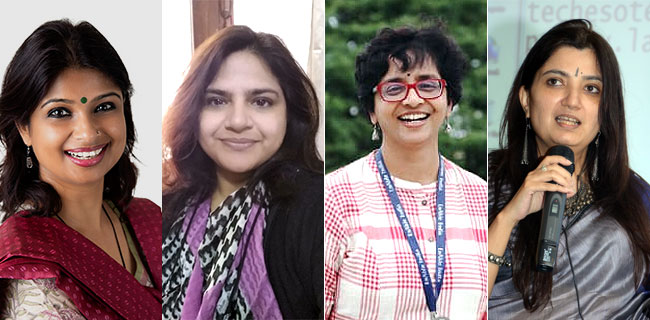
L to R: Richa Bansal, Shalini Khanna, Shanti Raghavan and Shilpi Kapoor
By Shruti Pushkarna
Whether it’s Valentine’s Day, International Yoga Day, World Braille Day or International Women’s Day, I don’t believe in tokenism. A cause or community needs attention, acceptance and accolades round the year. One day can never be enough. But maybe an annual observance has a sense of association and awareness that can permeate through the societal mindset.
Earlier this week, when the world was celebrating International Women’s Day on March 8, I decided to speak to four powerful agents of change. Each of these women, armed with their passion, commitment and instinctive leadership, are transforming the way we look at disability and inclusion.
Richa Bansal, Founder and Managing Director of Saarathee CRM Private Limited, is a social evangelist on a path to influencing an inclusive corporate culture, by being the driver of an equal opportunity workplace.
Shalini Khanna is Country Head at discovering hands gUG (haftungsbeschänkt), Director of NAB India Centre for Blind Women and Disabilities Studies, and a rehabilitation specialist with a corporate background in market research.
An Electronics Engineer by degree, Shanti Raghavan is the Co-Founder of Enable India, an Ashoka Fellow and Schwab Social Innovator of the Year 2020.
A serial entrepreneur with a passion for technology and disability, Shilpi Kapoor is the founder of BarrierBreak and 247 Accessible Documents that focus on digital accessibility. Shilpi was recognised as one of the Top 15 Women Transforming India by Niti Aayog in 2019.
I posed five questions to these Visionistas, do read their responses below.
1. Why did you choose to work in the space of disability/ accessibility/ inclusion?
Richa Bansal: My first brush with disability happened in 2009 when I drove a pilot project to include persons with vision impairment in tele-calling teams of our external channel partners at Vodafone. We mobilised 20 women at National Association for the Blind (NAB), Hauz Khas. The pilot was extremely successful, however the initiative could not sustain due to lack of consistent rigour and persistent focus. Coming from a Sales and Marketing background, I realised how important brand image was for companies, and the frontline sales and customer service people played a critical role in either enhancing or destroying it. I realised that disabled people bring some innate qualities which are difficult to find in the job market- Empathy, Commitment, Simplicity, Eagerness to learn and Prove the world wrong. This was a ready package for a corporate job, all it needed was an upskilling, grooming, conducive environment and nurturing. I wanted to do something of my own which was impactful and sustainable. I started Saarathee, to address the problems faced by brands and a solution to the employment issues plaguing the disabled.
Shalini Khanna: Disability or inclusion is a creative field which gives you opportunity to apply your ideas to make vocations accessible and opens doors for those who need it the most. And opening new arenas for the visually impaired women was even more challenging compared to many other disabilities. The field needs more professionals and every bit of your work creates a step ahead into an untrodden path.
Shanti Raghavan: I chose to work in the space of disability because of personal experiences with my brother, who started losing eyesight at the age of 15, and through working on his rehabilitation. I felt that there are so many others who are like my brothers and sisters, and that’s how the work on disability inclusion started.
Shilpi Kapoor: My first encounter with disability was with my boss when I was working as a Security Analyst for US based website. One day, I discovered he was a paraplegic, paralysed below the neck. He used a sip-and-puff device to operate his computer. This changed my life dramatically and I realised the role assistive technology can play in the life of people with disabilities. I started the first ever computer-training centre for the blind/ visually impaired in Mumbai but soon realised that even after ample training, there were no job opportunities for the disabled in India. In an age where technology has become a way of life, disabled people have been ignored to a large extent. There are approximately there are 1 billion disabled people in the world and about 70 million in India alone. So, I founded BarrierBreak with a strong belief that technology can empower them to live independently.
2. As a woman, has it been harder to challenge stereotypes?
Richa: I don’t think so, may be because I have never been stereotyped in my life either by my family, my partner or colleagues. I also believe if you don’t consider yourself equal, the world won’t consider you so.
Shalini: Not so much in the urban regions, but in the rural sector it was a little challenging as the travel and reach was not so easy. One had to negotiate with the lack of appropriate accommodation and sanitation. In my 15-year career in market research, I travelled far and wide to rural, sub urban areas but with adequate facilities paid for. With limited resources in the non-profit sector, travelling and working deep into the rural parts is not easy and safe as a woman.
Shanti: Not really, because of the strong foundation set by my very ‘include-able’ parents. ‘Include-ability’ is a competency which normalises differences, pushes a person’s boundaries of strengths, not focusing on a person’s differences. The way I was raised, I didn’t even know I was a female or a woman, there was no differentiation. I could go anywhere, I could do whatever I want, so I never even noticed when others behaved differently towards me. There may be one or two times when somebody looked at me and said, “Oh she is a woman”, but that didn’t affect me.
Shilpi: Most women do not identify themselves as entrepreneurs and many hesitate to get into this leadership role due to self-doubt, lack of mentoring, limited understanding of customers/market, difficult access to finance and/or lack of family support. Luckily for me, I’ve had my family supporting me and mentors guiding at every stage. I can surely say that being a woman has been an asset for me. I have worked closely with the government in India, building policies around disability and accessibility and have always been invited to the table. I always wanted to be an entrepreneur because I wanted to make a difference. It was tough, not because of gender stereotypes, but due to the stigma around disability.
3. Do you think women bring a multi-faceted approach and they can be more innovative in solving the problem at hand? (in the context of issues related to disability)
Richa: Oh yes! You will notice that most initiatives to drive change in the society are taken up by women. It’s not a coincidence, it’s who we are. We bring in the perfect blend of empathy, courage and grit. Persons with disabilities come with a lot of insecurities as well as a sense of entitlement. To deal with both at the same time is a difficult task, but being a woman, I have always felt that I come armed with the ability to work with such challenges.
Shalini: Totally. As a woman, I have an added advantage in the empathy and comfort I offer to the disabled women I work with. Again in the rural sector, when you have to convince parents of disabled girls to get them trained, being a woman helps as they are likelier to believe me. Women definitely bring more sensitivity to the issues at hand and a realistic approach, when it comes to education and training in the disability field.
Shanti: I feel that a woman, especially the mother, has more responsibility in general. And because of that, she is constantly thinking of solutions or trying to find ways out. We’ve seen a lot of mothers who have done a tremendous amount of work to get their children to the next level. Also, in the NGO world, I see so many women leaders and they are a force to reckon with. I don’t want to say that women are better than men or anything, but I would simply say that the women leaders I’ve met are a class apart.
Shilpi: I personally feel women with disabilities bring along a unique insight into problems. They are passionate to prove themselves to the society, and this makes them more productive and innovative in solving the problem at hand. The desire to achieve beyond the normal fuels them. 57% of BarrierBreak’s team comprises women. We see them bring ownership and integrity to the table.
4. In your personal experience of working/ interacting with persons with disabilities, how are disabled women different? Do you think they can contribute a lot more than the society imagines or realises?
Richa: 36% of the total disabled population is in active workforce. Given the disparity that exists amongst women and men in the workforce, you can imagine how poor the numbers are for disabled women. This pushes disabled women who find employment to stretch their boundaries further and deliver their best. If given a chance and a conducive environment, they can do wonders. They simply have to come out of their shells.
Shalini: Disabled women are a lot more courageous, resilient and determined as their support system is almost non-existent. Women with disabilities face exploitation within their homes too. But their sense of commitment and discipline is evident in training or employment. In my experience, they push themselves harder towards self-reliance as that’s their only security since their deprivation is much larger. I’ve been fighting for opportunities and independence of blind women as they face discrimination by parents, educational institutions and employers. Fear of parents and caregivers for their safety keeps them confined and untrained, leading to lifelong dependency in many cases. When given a chance, even at a later age, they strive with their full might to carve a life for themselves.
Shanti: I just look at women with disabilities and feel so proud. Each one has broken barrier after barrier, done what it takes. I think when it’s so difficult to get something, to have access to things or how people perceive you, the interest level and the capacity to absorb is so high; the want, the need is so palpable. It’s like saying, ‘I’m going to make the best of what I have’. There is an extraordinary focus and mental strength coupled with the willingness to take action.
Shilpi: 57% of BarrierBreak employees are women, of which 35-37% are disabled. I see them prove themselves as equals and that might be why so many of them are a part of my senior management and leadership team. Frankly, I think it’s time to take away some of these conversations about women or men, disabled or not. In fact, I can say I do not see any difference working with any of my employees. I think it is time for organisations to give opportunities and provide workplace accommodation and embrace women with disabilities in the workforce.
5. This year’s Women’s Day theme was #ChooseToChallenge. As a woman working towards creating an inclusive world, what do you choose to challenge in 2021?
Richa: I #ChooseToChallenge the HR leads in corporate India to take a leap of faith and include more women with disabilities, you will be surprised how beautiful your organisation will turn!
Shalini: I choose to challenge the concept of diversity in India and discrimination by employers and educators between different disabilities and genders.
Shanti: I choose to challenge things at the level of the population. The issues of disability cut across every facet of life, be it education, health or employment. In 2021, I’m looking to work at a societal platform level, (societalplatform.org) addressing the size of the problem with respect to disability.
Shilpi: Women entrepreneurs need recognition. I chose to start a for profit business model for disability. I choose to give women a chance, I choose to give them a seat at the table, I choose to let them be themselves.
Like these women, I too grew up with no differentiation. I made my own choices, vociferously shared my opinions and contributed financially. But in the workspace, whether it was in my journalistic avatar or in the non-profit sector, I realised not all women were as fortunate. Yes, things have evolved over time, mindsets are beginning to alter, but a mere celebration of Women’s Day will do little to include women with disabilities into the mainstream. They need opportunities to step out and overcome the barriers of gender, education and economics.
Shruti Pushkarna heads operations of the New Delhi-based Score Foundation where she works as Director-Programmes & Communications. She is a former journalist (part of the founding team of MxMIndia) who has moved full-time to the social sector. Shruti writes for MxMIndia every other Thursday. Her views here are personal. She can be reached via Twitter at @shrutipushkarna
A little over a year ago, the novel coronavirus unleased a global pandemic. In March 2020, the country entered a lockdown. The term seemed alien to most people who’d never been forced to stay indoors, barring those who had witnessed temporary impositions during the Emergency or the wars with the neighbouring countries. Of course not counting persons with disabilities, chronic illnesses or the elderly who remain confined for varied reasons (irrespective of the state-enforced measures).
Not only lockdown, many new phrases were introduced into our daily lingo. Remote work, virtual meetings, new normal, social distancing (even though it was physical distancing, I wonder why we called it that), Zoom classes, online hangouts. And let’s not forget the trending obsessions of the lockdown period. Social media posts exhibiting culinary art, workout regimes, TikTok memes, YouTube tutorials on everything under the sun, nature photography (probably the first time people had time to pause and process the beauty around them), bird spotting et cetera.
The Greek philosopher Heraclitus said, “The only thing that is constant is change.” In the past year, the world underwent change constantly and rapidly. Whether it was the rising number of Covid cases, mortality rate, shortage of supplies, hoarding of medicines, bare minimum facilities for the medical fraternity or job losses, every day some bleak dimension was added to our reality.
But not all change was bad. The altering dynamics also brought in different coping mechanisms. We discovered ‘new means and centers of operation’. Schools, colleges, offices or any other forms of professional/social engagement moved online, easily accessible from the comfort of our homes. In the disability space, people termed it as a great opening, a window of opportunity which had the potential of blurring (if not entirely eradicating) the barriers that kept persons with disabilities tucked away from the mainstream.
Disabled people who had access to technology and internet suddenly found themselves included in the virtual scheme of things. Online classes facilitated the integrated mode of education, bringing teachers and study material to students who were otherwise forced to drop out of school, given the inaccessibility of physical spaces and teaching modes. Similarly, employment options opened up for those who had the skills and the qualification but remained jobless because accommodating them in an office environment seemed unfathomable to potential employers.
Universal vulnerability and fear of an unknown virus helped some of us realise how our environment can be disabling, sometimes more than an actual physical or mental impairment. Yes, people were overwhelmed, but they also learnt ways to battle a ‘never-faced-before’ adversity. The world didn’t cease to function. Education, employment, public services, travel, leisure, all resumed, albeit in innovative ways.
What’s obvious here is our ability to deal with a challenge when it impacts the majority population. Same solutions weren’t explored when it was a subsection of disabled, women, transgender, poor or any other labeled (read marginalised) group. Technology emerged as an answer to most limitations caused by Covid-19.
For some years now, and especially after the outbreak, various discussions indicate that we’ve entered the world of data and bio-warfare. But technology isn’t the devil here. Just like morphine can ease someone’s pain and kill another, the handler decides the scope of its usage.
Technology has created a level playing field, bringing people closer and making possibilities real for persons with disabilities. But more than tech innovations, it’s about the choices we make as individuals or businesses or governments, which can either enable or disable citizens.
One year down the line, are we aware that our choices impact other people’s lives?
Just like we can choose to wear a mask to prevent another person from catching the virus, we can choose to create an environment that is inclusive. Leaders can choose to implement policy that will reinforce accessibility in every sphere, be it physical or digital. Tech giants can choose to create solutions that will cater to the needs of the disabled as much as the able-bodied. Logically, a larger customer base makes for affordable and cost-effective products/services. Influencers like the media can choose to amplify challenges faced by persons with disabilities, in the post-Covid era where humans are likelier to understand each other’s difficulties.
Ignorance and indifference can no longer be an excuse for the ableist society to look away from the problems that became evident in the past year. We all got a taste of captivity which was exclusively associated with the disabled, earlier.
Having lived through a near disaster in 2020 and heading into an uncertain future, we have the choice to remain selfish or empathetically co-create a conducive milieu.
Shruti Pushkarna heads operations of the New Delhi-based Score Foundation where she works as Director-Programmes & Communications. She is a former journalist (part of the founding team of MxMIndia) who has moved full-time to the social sector. Shruti writes for MxMIndia every other Thursday. Her views here are personal. While you mull over your life choices, Shruti will be back in a few weeks with more questions, experiences, accounts and inspiration. You can tweet your comments and suggestions to @shrutipushkarna
I must confess it’s great to write this column after a totally unplanned/ unexpected break of three-and-a-half months. When I wrote my last piece, mulling over the choices about the world we want to co-create, little did I know that my own life would leave me with no choice but to battle with an illness that consumed me physically as well as mentally. Yes, you guessed that right. Hit by the deadly Delta variant of SARS CoV-2, my family and I had a narrow escape. But more on that in the upcoming columns.
Vineet Saraiwala
Putting the focus back on disability, I had the opportunity to speak with Vineet Saraiwala who is the founder of an innovative platform called Atypical Advantage. An IIM Bangalore graduate, with a successful run at Future Group as their Inclusion Lead, Vineet’s ambitions have been unimpeded by his vision impairment. He suffers from Retinitis Pigmentosa, an eye condition that results in gradual sight loss. Unlike a majority of disabled people, Vineet grew up in a supportive environment that gave him access to equal opportunities of education and employment. In his previous avatar, he transformed how people with disabilities shop across India through pioneering concepts like ‘Sabke Liye’ which is a blend of assistive services and accessible spaces and a quiet hour, which is a sensory-friendly experience for individuals with autism. Vineet strongly believes that generation of compassion is the only way to make the world a better place and he is on a mission to transform the lives of persons with disabilities.
In this interview, he talks about his latest venture, the gaps that exist in employability, how to effectively create an inclusive society, and more.
Atypical Advantage completed six months in June 2021. Tell us a bit about this journey but before you do that, please also tell our audience what the platform is all about.
Atypical Advantage (AA) is planet’s first platform for People with Disabilities (PwDs) where you can hire talent, find jobs, and buy products or paintings or commission artwork. We would like to map skills of PwDs across the country and match it with potential employers. We aim to empower them by highlighting their ‘abilities’. At AA, you can hire models for your product shoot, sign language interpreters for making your events inclusive, singers/ dancers for your shows, masseurs to relax your body and much more from a wide array of 450+ Talent with Disabilities across 20 categories. We host some of the finest paintings made by persons with disabilities and aim to democratise jobs/ freelancing in this era of Work from Home opportunities where disabled people have lagged behind. The platform can create employment opportunities and open new avenues for the sector at scale. It can be an instrument of change for the entire spectrum of people with disabilities in the country and give them livelihood with dignity. Since its inception, we have 55,000 unique visitors on the platform, close to 600 talents have signed up, and there are 450 artworks by 85 artists with disabilities. It’s been the platform of choices for people with disabilities as well as corporates to go ahead and hire. Already, there are 50-plus jobs on our job portal. Amazon hired its first model with learning disability from our platform, few masseurs and physiotherapists got opportunities, sign language interpreters too. We are close to clocking 100 artwork sales including across the US. A lot of people in the lockdown struggled to get basic performance opportunities. A magician got a booking from a corporate, a motivational speaker was also booked, so a lot of positive stories and a lot to be grateful towards. We need to do a lot more going forward.
How did you decide to leave your corporate job and go full time on this venture? What drove you?
A very philosophical question but probably the lockdown, Covid crisis, job crisis, and inspiration from a sector stalwart. I had gone to meet Venkat Krishnan (Former CEO of GiveIndia and the man behind Daan Utsav) and he said that this idea is fantastic and it can serve PwDs at scale. He said it’s not about you or me, but I’ll be sad that India will lose an opportunity to help persons with disabilities. So how could I miss this chance? It’s true that this is a great opportunity to help PwDs. Someone really needed to do something about it. I was feeling very bad on not being able to help persons with disabilities with long-term solutions. This platform aims to give dignity to PwDs and give them a source of livelihood. I am privileged and have a safety net so if individuals like me won’t step up, how could we create an Inclusive society? I am a person with disability and understand the challenges at a deeper level. I am lucky in every sense and grateful that I got the opportunity to serve a marginalised section.
What was the gap that you identified which led to the genesis of AA?
The platform is all about gaps. There is no platform globally also where you can look at abilities of people with disabilities in a transparent manner. Let’s say you want to hire a singer or a dancer, where is the platform for this? Similarly, let’s say you want to book a massage or give livelihood to PwDs, there’s nothing globally or in India. So the gap is pretty evident but no one’s tried to capitalise on that gap.
As a person with vision impairment, you have studied in the mainstream in premier institutions and also worked with the best corporates, why do you think most persons with disabilities lose out on such opportunities of education and employment?
The problem is in the schooling system. We are not able to have inclusive schools where people with disabilities get in. We don’t have accessible soft copies for people with visual disabilities, sign language interpreters are not there, and schools are not accessible. So if the entry point for a person with disability has so many barriers, naturally as you go forward, this goes on reducing. And as you know I have Retinitis Pigmentosa. Till Class 10, I had regular schooling, after that my problem worsened. So in that sense I’m privileged in a lot of ways but the problem starts with schools.
How does Atypical Advantage aim to bridge the gap in employment?
Atypical Advantage is actually trying to revolutionise the entire concept of livelihood generation. Freelancing and gig work is coming up in a big way. By 2030, it is estimated that 45% of the global workforce would be freelancing. Are PwDs ready for freelancing assignments at this point? The answer is no. So if you look at the platform, it essentially focuses on freelancing, services like massage and physiotherapy, full time employment like mutual fund executives or insurance executives, on performing artists, and it also focuses on specialized work where PwD excel. Especially people with learning disabilities, Autism or Down Syndrome, in which case they are comfortable working from home. And this gives them empowerment. There is also another interesting category on the platform called Entrepreneurs. We also keep products and painting made by PwDs. So it’s a 360-degree view on giving employment and livelihood opportunities of any kind to PwDs across the country.
With Valuable 500, there is a lot of talk about there being decent demand for employment but a shortage of supply. We also know for a fact, a lot of persons with disabilities lack good education and the professionalism to work in a competitive environment in the private sector. What’s your view on this?
This is a huge gap. I think the problem is clearly on the supply side of things. We need to train and skill PwDs into the jobs of the future. At this point people with disabilities are not ready for those jobs. And I feel scared and sad that we are not doing enough to prepare for jobs. This pandemic has just further amplified the problem. And this problem will go on further. I don’t have any solutions for this but I think someone needs to step up and skill these people for future jobs.
In your previous avatar at Future Group, you were leading accessibility initiatives, what in your experience prevents businesses from being inclusive?
I feel a lot of brands are scared of disabled people and they don’t even want to try. For example, we are doing a campaign with an organization, and they told us that a lot of people with Cerebral Palsy are not hired just because of their voice. Imagine they might have the skills but just their voice discourages companies from hiring them. I think the lack of exposure creates the greatest divide in the society and corporates have never even tried to interact with people with disabilities. And without that exposure, inhibition and biases continue to exist. But once we have more exposure, a lot of problems within the corporate sector would go down. Secondly, of course the willingness to try is also lacking.
Coming back to AA, what is the business model for the sustenance of this platform?
Our business model is continuously evolving and we earn commissions from selling of artwork and products to make the venture opex sustainable.
Is there something you would like to say to media houses or media owners, as far as inclusion of persons with disabilities goes?
I would urge the media to get out of this syndrome of ‘…despite being a person with disability.’ I think there are two ways of looking at things. Look at any media house, it would either look at PwDs as people with sixth sense, divinity, spirituality, gifts of God. Or less human, sympathetic, handicapped, crippled. Look at any media story, they’ll portray it as ‘…despite being a person with visual or hearing disability, he/ she achieved so much…’ We need to stop doing that. We need to promote accessible technology, tell people about assistive aids. That would be useful. When you capture a story of a person with disability, talk about the aids (s)he uses to work, so that others are informed. At present the media doesn’t speak about it at all.
In your opinion, can individuals working in the media industry advocate for access and inclusion? If yes, how?
I think the media needs to talk more about inclusion. Even talk to organization while discussing strategy, highlight the organisations which are not inclusive, question them on their practices, what kind of people with disabilities have they hired etc. I think the discourse of disability in the mainstream is very limited. So the media needs to talk to India Inc. on these things.
You can learn more about Atypical Advantage, here.
Shruti Pushkarna heads operations of the New Delhi-based Score Foundation where she works as Director-Programmes & Communications. She is a former journalist (part of the founding team of MxMIndia) who has moved full-time to the social sector. Shruti writes for MxMIndia every other Thursday. Her views here are personal. You can tweet your comments and suggestions to @shrutipushkarna
 By Shruti Pushkarna

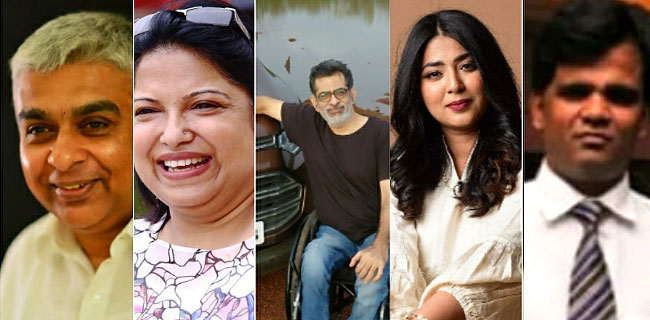


 By Shruti Pushkarna