Category: COLUMNS

  • Aniruddh Naik: The Not-So-Sweet Masking: A Marketer’s Wake-Up Call


    Aniruddh Naik
    Aniruddh Naik

    In 2014, our marketing professor in my first year MBA showed us a Dary Milk case study. And I was blown away. Brilliant idea.

    Probably every marketing person has heard of this transformation idea brought along by Ogilvy in those times that changed the fortunes of the brand in India.

    What’s that? Dairy Milk’s Kuch Meetha Ho Jaaye.

    Cadbury Dairy Milk had gone through a similar change a few years ago when a lady ran across a cricket match savouring the chocolate in her hand. That shifted the brand’s target out from children to all adults who have a childlike side to them (which is everyone, I believe).

    So now the brand was falling short of its business- Children- done, adults- done. But the frequency of having chocolates was apparently low.

    Cometh ‘Kuch Meetha Ho Jaye’ from Pappu Pass Ho Gaya with Amitabh Bachchan to an assorted box for Rakshabandhan to Diwali.

    The idea: position Diary Milk as a replacement for your Mithai.

    And once TVs were flooded with ads, streets stamped with hard-to-miss hoardings, the idea caught on. I remember buying a Dairy Milk gift box for Raksha Bandhan. It became a lazy gift choice. Don’t break your head trying to find something useful, just thump a box as gift. Much like an earlier version of Sonpapdi.

    And the marketing bards composed songs elevating the heroism of the idea.


    Cut to June 2024.

    A CNBC-TV 18 anchor, Shibani Gharat. posted this video on Twitter

    I was running peacefully in rain this morning till I saw this hoarding!! Why??? Why? It is my petition to save 🙏🏽 #puranpoli pic.twitter.com/7bHE7WAjNs— Shibani Gharat (@ShibaniGharat) July 7, 2024

    First, puranpoli is not the breakfast of Maharashtra. Second, it is not to be had with Nutella as supporting dish.

    They wish to position it as a cheese spread or tomato ketchup. Put it on everything. It’s the same trick. To position Nutella as a regular sweet spread or as an ally. And how can you do it?

    Cadbury Dairy Milk showed the way. In this case, the suggestion is to have a traditional Marathi special sweet dish that’s eaten with ghee or milk or both with chocolatey Nutella.

    I am not being a disappointed food culture activist.

    But before another professor shows this up as a case study and bards compose new songs on how Nutella penetrated India as a LinkedIn post, here’s something about Nutella all of us should know.

    Nutella has 56gm of sugar in per 100gm of its serving.

    Net weight of a Nutella is 825 gm. Do the math. Sugar is 462gm.

    Which is 110 teaspoons of sugar

    20-30% of Palm Oil to add fat

    And it is positioned as a breakfast item. A sugar-heavy dish for breakfast item!

    A chocolate spread that’s only positioned as a spread because some great category manager in India said: “Let’s continue to the spread global idea of pushing Nutella for breakfast with non-breakfast items.”

    In October 2023, the read-label educator and influencer Food Pharmer educated what Nutella always stood for. By reading the label.

    The read-label idea is now being spread by not only influencers but brands like The Whole Truth and Yogabar. Influencers care more about being true and honest to their followers. They are perfectly fine to reject the paid collab and promote anything they see as misguiding. Or marketing tactic.

    Brands are being built and legacy brands are running in the wrong direction. In times like these, there will be roar and not cheers for being dishonest with positioning and marketing. You cannot distract the customer with distraction positioning. Social media is not controlled unlike TV where just because you advertised, nothing negative can be published. Per Statista, India has 350+ Million (close to United States population) monthly active users. Any such attempt by cool sounding concepts or agencies will be called out and will gain traction.

    And we as marketers need to wake up. Do we stop selling then? No, but find another way to position or sell. There are many food guilty-pleasures. Or get your agency to be creative.


    Aniruddh Naik usually attempts to follow First Principles in digital and brand marketing with experience in creating visibility and consideration for brands. Currently works with a global engine oil and lubricants company. His views here are personal.

  • Disability in the Spotlight: Controversies, Triumphs & Passionate Debates

    Disability in the Spotlight: Controversies, Triumphs & Passionate Debates

    Shruti PushkarnaThe last few days or maybe weeks have been brimming with news around disability. These include several updates in the form of a historical court ruling, controversies, (presumably) offensive videos, distasteful representation on a reputed magazine cover, influential individuals’ responses to brewing disagreements and more.

    Believe you me, this makes me happy. Or even excited. At least we don’t have monotonal deliberation around disability. There is anger, frustration, vociferous expression, hearty articulation, a whole flurry of emotions in the public space.

    Disability is complex and so should be the conversations around it. That’s what makes it real. Let me begin by citing some of these sensational items.

    #1 Famed disability rights activist Nipun Malhotra filed a lawsuit against Sony Pictures for one of its productions, ‘Aankh Micholi’ which portrays persons with disabilities insensitively. In response, the Supreme Court ordered an immediate injunction of the film in its current form. It also mandated respectful and accurate depiction of disabilities in films, issuing a detailed set of guidelines to prevent disparaging future portrayals.

    Grateful to the Supreme Court of India for creating guidelines on portrayal of Persons with Disabilities in visual media, following my petition against @SonyPicsIndia for lampooning PwDs in ‘Aankh Micholi.’
    Happy about the distinction made in the judgement between “disability… pic.twitter.com/UC9YMD8EpN

    — Nipun Malhotra (@nipunmalhotra) July 8, 2024

    It’s important to note that the court distinguished between ‘disability humour’ and ‘disabling humour’, the latter demeaning individuals with disabilities. The seven-point guidelines designed to foster inclusion focus on avoiding derogatory terms like ‘cripple’ or ‘spastic’, steering clear of myths and stereotypes, consulting disability experts, sensitising creators and so on.

    Of course, there’s the other side which feels that this impinges on their right to freedom of expression. In fact, that debate simmers and amplifies further in the next incident.

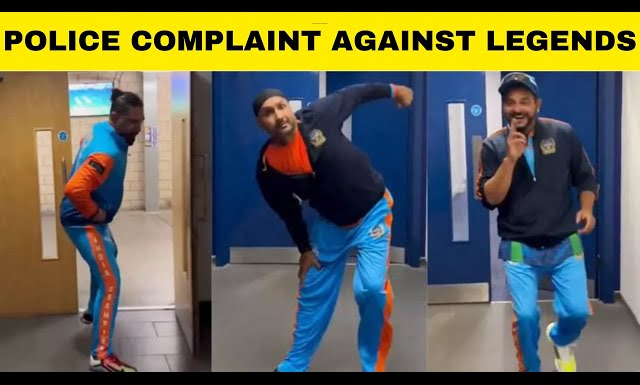
    #2 Former Indian cricket team players Harbhajan Singh, Yuvraj Singh and Suresh Raina posted a video on Instagram where they were seen grooving to Vicky Kaushal’s latest song, Tauba Tauba. Except their movements were awkward and para-badminton star Manasi Joshi was the first one to call them out for mocking the gait of polio-affected people. Then ensued a series of clamorous gripes online.

    While most disability advocates fumed at the inconsiderate act of celebrated sportsmen, some cautiously piped in their alternate views on tolerating a joke. However, an official police complaint was lodged by Arman Ali, Executive Director of the National Council for Promotion of Employment for Disabled People (NCPEDP).

    Here’s my take. We have become a society of increasingly easily offended people, thanks to the cultural shift propelled by polarising politics. So why should we expect any different reaction from Persons with Disabilities, who are equal citizens of the same country you and I inhabit. It’s a bad joke, one that reminds of me children in school, mimicking a certain teacher’s amble given her osteoporosis-ridden knees.

    Should they have done it? No. Is it insensitive? Yes. Have we blown it out of proportion? Certainly. I say this about all news political as well. There is no need to play up silly occurrences and utterances as primetime headlines. Ditto for this one. By the way, a public apology was issued by the players.

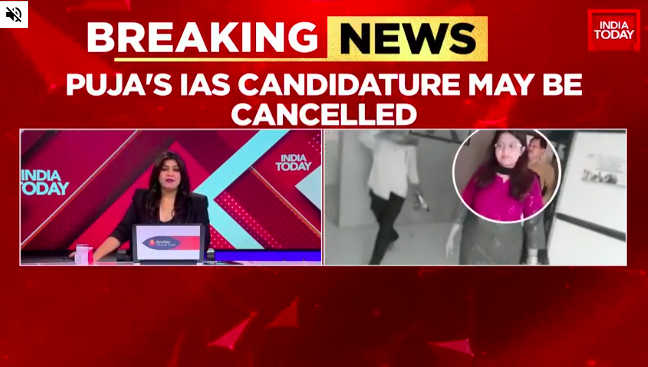
    #3 Trainee IAS Officer Puja Khedkar’s selection to civil service has come under the scanner. There is a criminal case accusing her of “misrepresenting and falsifying facts” to appear for the UPSC exam multiple times. She obtained three disability certificates in three years and a fake caste certificate. In 2007, while securing admission in a medical college, she was declared ‘medically fit’. In 2019, she secured a certificate of vision impairment from Ahmednagar district hospital. In 2021, she got a combined certificate of vision impairment and mental illness from the same hospital. In 2022, she filed an application for locomotor disability in a Pimpri hospital.

    She also sought relaxation under the OBC quota, which was questioned after her father, Dilip Khedkar, a former Maharashtra government officer, was suspended facing a corruption charge. Her mother, Manorama Khedkar, who is a sarpanch, was arrested in an Arms Act case when a video of her brandishing a gun threatening some farmers surfaced on social media.

    Disability rights groups have been united in their reaction to this egregious act. While opinions were circling around the misuse of disability and the usual ‘one dirty fish spoils the whole pond’, reactions from the non-disabled audience validated the analysis.

    Senior Telangana IAS Officer Smita Sabharwal stirred a fresh row questioning the need for disability quotas in All India Services (AIS). She tweeted, “Does an airline hire a pilot with disability? Or would you trust a surgeon with a disability? The nature of AIS is field work, long taxing hours, listening first-hand to people’s grievances, which requires physical fitness.”

    Unfortunately, this was seconded by Former CEO of Niti Aayog, Amitabh Kant (Former N) when he said, “I am in favour of SC/ST or OBC reservation. These reservations should continue, with the creamy layer regulations being enforced. However, the existing reservations for the physically and mentally handicapped and the proposed 1% reservation for the third gender for the top Civil Services need to be reviewed. They are being misused.”

    Now that’s taking it a bit too far, because reassessing appropriate implementation of provisions and policies, will be opening an abysmal Pandora’s Box! By the way, I can instantly name Pranjal Patil and Beno Zephine. two women with disabilities who are IAS/IFS officers and have been doing superlative work despite the odds.

    #4 And there’s been some contentious news across the Pacific Ocean. So far, we’ve only had Former US President Donald Trump taking jibes at persons with disabilities, and specifically those in the media. Well, stupidity and ableism don’t come with any copyright, do they? After the disastrous show by President Joe Biden in the first presidential debate and consequential speeches, The Economist featured a walker adorned with a Presidential Seal on its cover. And the headline read, “No way to run a country.”

    Several slips there. Ableist representation in the use of a graphic that shouts, ‘crippling’ or ‘disabling’. The cover implies that if a person is physically disabled, or needs a crutch, he or she is incapable (read incompetent). Also, disrespecting several world leaders with disabilities. Like, Franklin D Roosevelt who was left paralysed waist down due to polio. Winston Churchill who had a speech impediment.

    A rather poor editorial call by a publication one least expects it from. The only thing that can possibly change media representation of disability is the act of hiring and working alongside persons with disabilities. Also, bold calls like the photo carried by The Indian Express in November 2022 following the appointment of 50th Chief Justice of India, DY Chandrachud. It’s a candid shot of him with his family which includes two foster daughters who have a disability.


    #5 But let’s end this piece on a rosy note. Or should I say pinkish? As part of this year’s global Barbie Fashionistas lineup, Mattel Inc. introduced the first ever Blind Barbie reinforcing inclusion and representation for all. Throughout the design process, Barbie partnered with the American Foundation for the Blind (AFB) to develop accessories, elbow articulation, textured fabric, accessible packaging, distinct eye gaze et cetera.

    Last year, Barbie had introduced the first-ever doll with Down Syndrome (DS), partnering with the National Down Syndrome Society (NDSS). Again, fixing the right hair, sculpt, glasses, outfit and so on. They have introduced its next Black Barbie doll with Down Syndrome along with the Blind Barbie. These dolls will soon be available in Indian stories as well.

    Clearly the disability landscape is evolving across the world. One day, we cite progress and hullabaloo on another. As long as the discourse is relevant, consistent and moderate, I think we are headed in the right direction. It is these complexities surrounding disability that will open up the dialogue to challenge stereotypes of all kinds. 

     Wondering why MxMIndia publishes a disability advocacy column? Well, we strongly feel that the media can dramatically transform the world for persons with disabilities. This series attempts to help bring forth issues that the media must champion to create a truly inclusive and accessible India. Writing  this column is Shruti Pushkarna, a former journalist and now a disability inclusion advocate based in New Delhi. Her views here are personal. To access the archives of her 95-plus columns, please visit: https://www.mxmindia.com/category/ columns/shruti-pushkarna/

    If you have a view on the issues raise or would like to align with MxMIndia on this cause, write to us at editor [at] mxmindia.com.

  • Ranjona Banerji: Rumbles from Budget announcements…

    Ranjona Banerji PhotographYou can still hear rumbles from Budget announcements through the media, with the most emphasis on the removal of indexation for long-term capital gains. The markets have responded by crashing, recovering and staying flat. The media has tried to hype the government’s job creation scheme – a budget of Rs 2 lakh crore to create jobs over a five-year period. This sounds good to the innocent, but given the unemployment crisis and our well-known bureaucratic and general efficiency, a five-year window can also be seen as a neat excuse of future inaction. Most of the national media is hard-pressed to report on the reality of budget reactions.


    This edit from The Telegraph in Kolkata, gives you another idea of how the BJP itself responded to Narendra Modi on his government’s Budget in Parliament:


    https://www.telegraphindia.com/opinion/no-enthusiasm-from-bjp-members-during-pm-speech-modi-magic-seems-to-be-on-the-wane/cid/2032076


    While Bihar and Andhra Pradesh are understandably happy that their unspoken smiling threats of withdrawal of support have given them huge packages, there are murmurs of other states making their displeasure felt. You will see sprinkles of these murmurs in the national media; far more in the local and regional media. You will see more of the fiery speeches given in Parliament on YouTube and on social media than you will in the national media.


    Partly this is because the national TV media is sticking to its guns about being BJP propagandists. The latest BJP IT cell lie is about the lawyers’ fees which jailed Delhi Chief Minister has supposedly paid. These TV people put out these lies, then delete them but by then they have already been picked up by trolls and spread across the internet.


    What you will not hear enough of, unless you follow regional news, are the other rumblings, especially in BJP-ruled states. UP, Rajasthan and Madhya Pradesh are seeing power tussles within the ruling party. The Maharashtra BJP coalition is in turmoil. Especially now after NCP (Sharad Pawar) politician, and former Maharashtra home minister, Anil Deshmukh has made some damning allegations against Devendra Fadnavis of the BJP, now deputy chief minister. Deshmukh chose to give his interview to an independent YouTube news channel rather than to the legacy media. The reports in the main English newspapers are scant, minus the detailed allegations.


    https://timesofindia.indiatimes.com/city/nagpur/devendra-fadnavis-coerced-me-to-frame-mva-netas-anil-deshmukh/articleshow/111997289.cms


    I would have thought there would be more excitement about the Olympics in the Indian media, but somehow my feed is more excitement about an asteroid. You would imagine from the headlines across most top media sites that we were about to get obliterated, but these were all perfect clickbait: NASA warns! NASA has actually warned nothing because the asteroid is very far away and will do nothing to us on Earth. In fact the warning is so insignificant that NASA forgot to put it front and centre on its own website.


    But I guess if it gets more people to read about science, it’s all worth-it clickbait. One of the major websites invited me to read their next clickbait hit: Is Sonakshi Sinha pregnant. I am not sure which of these two stories are more insignificant.


    Ranjona Banerji is a senior journalist and commentator. She writes on MxMIndia on Tuesdays and Fridays. Her views here are personal.

  • City news, anyone?

    Ranjona Banerji PhotographEvery year, the monsoon affects us in damaging ways. Both too much and too little are catastrophic. The news from the months of June to October is full of disaster, outrage and despair. For city people, potholes, waterlogging, commuting mishaps and general discomfort. For the rest of India, devastation of crops and fields from water and/or no water, rivers in spate or too dry, major road links broken, collapsed bridges and destructive landslides.


    But because the news cycle has changed so much and drama and sensationalism has taken total hold, the nitty-gritty of local reporting has taken a backseat. Old necessary beats like civic issues in cities, which is what would cover monsoon damage, or rural coverage, no longer gets consistent space. Environmental reporting makes up for some of these lapses, especially outside urban centres.


    The tragedy for consumers of news and for the news media is that boring as civic issues maybe, they affect people the most. Often voters will talk about drains or roads when they are interviewed about their voting choices, even if it’s for the Lok Sabha elections and these municipal issues cannot be fixed by Members of Parliament. It makes for a huge dichotomy between hope and reality. And in the middle falls the shadow of an errant media.


    Because if these issues are constantly covered and highlighted, if pre-monsoon measures are diligently tracked, if government’s ill-advised forays into destruction of forests and mountains get consistent mainstream coverage, if one falling bridge is enough to bring people to the streets, then yes, we have some little hope of less disaster in the coming year.


    This morning, one train accident in Jharkhand, another in Mumbai and a massive landslide in Wayanad dominate the news. Train accidents have become distressingly common, but you do not see the legacy media demanding accountability in one voice. You mainly see a parroting of the BJP line about past errors by the Railways under other governments – and this is a Central government in its third term – and PR photos of a railway minister scooting about on someone else’s two-wheeler. No responsibility and therefore no future action.


    As for landslides, apart from natural calamities outside the domain of human interference, well, we all ought to know that we are responsible. The Wayanad incident has got massive space – as it should – but two similar happenings in the Himalayas have not managed to capture the imagination of a caged TV media quite in the same way. I leave you to work out the political benefits of attacking Kerala’s governance over Uttarakhand’s dismal record and wilful destruction of the environment. Religious tourism has led to a constant assault on the Joshimath area, thanks to the construction of unwanted dangerous roads. Rivers have changed course leading to more turmoil and pain. Local people have suffered but they do not matter as much as tourists. To give the local news media its due, these problems have been covered locally. But for the national legacy media, it is sensationalism and protectionism that counts. And the protectionism is of such depth that even when a vital road used by the Indian Armed Forces near the China border collapses, it is less important than Union Defence Minister Rajnath Singh getting upset with the Congress’s Rahul Gandhi over the Agnipath/Agniveer scheme. Therefore, all news that is negative to those in power gets scant treatment.


    Remember, this is a media which can barely stand up for itself, even when access to Parliament is blocked, when journalists who do actual work are attacked. This is a media which obediently spreads BJP propaganda without any fact-checking. This is a media which cannot bear for the public, including its own customers, to question the Union finance minister on problems which her Budget have caused for them. It cannot of course ever question the finance minister directly either.


    I understand that civic news is boring and time-consuming. It requires diligence, vigilance and consistency. A change of hats by a waving Prime Minister, a dog-whistling speech and attacks on Opposition members is so much more exciting. Add some Islamophobia and caste hatred into the mix, and you have a show. Wow!


    O, look, that mountain has just collapsed. Now who should we blame???


    Some dead Prime Minister, obviously.


    You choose.


    Ranjona Banerji is a senior journalist and commentator. She writes on MxMIndia on Tuesdays and Fridays. Her views here are personal.

  • Kunal Sinha: How Forgetful Are We?

    Kunal SinhaQuite so, and there is data to prove it.


    Every year, Uber publishes its Lost and Found Index. It is a snapshot of the most commonly forgotten items in its rides.


    Over the last year, objects including mobile phones, bags, wallets and clothing topped the list of items left behind in Ubers across India. These were followed by utility items such water bottles, keys, and accessories such as spectacles and jewellery. Passengers also forgot unique things such as a ukulele instrument, a coin collection, prasad from temples and a hair trimmer. They also left behind important documents such as passports, bank and business papers.


    Powered by insights and data, Uber’s Lost and Found Index aims to educate riders in a fun yet informative manner about in-app options available to them at the tap of a button, in case they lose or forget something in their Uber ride during a trip.

    So which cities were the most forgetful?


    Delhi took the title of the most forgetful city in the country for the second consecutive year, and Mumbai retained its second spot. Bengaluru reclaimed its third place from Hyderabad, which slipped to fourth as residents became more watchful about their belongings. Rounding off the top five most forgetful cities in the country is Pune.


    Analysing the data, Uber was able to connect the trends. We are most likely to forget our belongings in an Uber on Saturdays.

    Most riders tend to forget blue-coloured items the most in Ubers, followed by red and pink. So the next time you hop on to an Uber, try carrying items that are green or purple or yellow. You are less likely to leave it behind. In the US, red-coloured items are most commonly left behind. What gives?

    Evenings make us most forgetful, with most items left behind around 7pm. Aren’t we all frazzled towards the end of our working days to remember what all we were carrying?


    Apple device users were most forgetful during the year gone by. Android users rejoice! The most common item to be lost, anywhere, is a smartphone. A typical user may touch it 2,617  times every single day so it is highly surprisingly so many of these go missing.


    The feeling of panic and stress associated with losing a mobile phone has become so common that is has been given its own name, nomophobia.

    The festive days around Diwali were when people were most forgetful last year. Goddess Lakshmi grants us such bounty that we don’t mind leaving some behind for others. Like, in a cab.


    So it all adds up. Across Ubers and Olas and trains and flights. At restaurants, in the gym.


    The average person loses more than 3,000 items in their lifetime.


    Forgetfulness is something that we’ve had to accept as a way of life. Just because you are forever losing things, doesn’t mean that you are losing your mind.


    We keep saying that we live in the age of information overload. Forgetting serves us well. It tunes out useless information so we can focus on the relevant. Without it, neither anger at a slight nor the pain of grief would fade; feelings of love and attraction would not either, making it impossible to move on from relationships. Remembering build us, and forgetting chisels away the excess, shaping the way we see ourselves and our world. Maybe we really didn’t need what we left behind in the Uber.


    Broadly speaking, there are two explanations for why we keep lose all this stuff – one scientific, the other psychoanalytic.


    According to the scientific account, losing things represents a failure of recollection or a failure of attention: either we can’t retrieve a memory (of where we set down our wallet, say) or we didn’t encode one in the first place.


    According to the psychoanalytic account, conversely, losing things represents a success. It is a deliberate sabotage of our rational mind by our subliminal desires. In ‘The Psychopathology of Everyday Life’, Freud describes “the unconscious dexterity with which an object is mislaid on account of hidden but powerful motives,” including “the low estimation in which the lost object is held, or a secret antipathy towards it or towards the person that it came from.”


    No wonder losing things, even trivial things, can be so upsetting.


    Regardless of what goes missing, loss puts us in our place; it confronts us with lack of order and loss of control and the fleeting nature of existence.


    One of the characteristics of modern age is how much we need to remember. Passwords, birthdays, anniversaries, due dates for insurance payments and bills …

    Andrew Budson, neurologist and author of ‘Why We Forget and How to Remember Better: The Science Behind Memory’, has a few tips on improving our memory.

    “There’s nothing wrong with outsourcing your memory or using memory aids,” he says. “Anybody who wants to remember a shopping list or an appointment that’s coming up, write it down, put it in your phone or a planner; use reminders and calendars. I offload my memory as much as possible. I have all my passwords written down in a secure digital place. I use calendars, planners, and lists. In terms of trying to remember things better, day to day, I work at trying to be present and pay attention to what I’m doing and trying to multitask less”.

    Aah, that last one is sage advice. As busy executives, many of us take pride in ‘multi-tasking’. Alas, it also sets us up for forgetting, simple because we are not paying attention to the many things we claim to be doing. It can be humbling to admit that we haven’t been attentive. It is also one of the keys to experiencing improvement.

    Good luck on your next ride!


    Kunal Sinha is a senior strategy and foresights executive based in Kuala Lumpur, Malaysia. He is the author of several books including The Future of India’s Rural Markets and Raw – Pervasive Creativity in Asia. He writes for MxMIndia every other Monday. His views here are personal.

  • Marketing Luxury to Indian Millennials

    Marketing Luxury to Indian Millennials

    Ashoke AgarrwalIndia’s early millennials, those between the ages of 44 and 34, are roughly 220 million strong. Given this group’s educational profile, rising incomes in the tech and knowledge work sectors, the booming start-up sector, and the increasing prevalence of double-income households, the estimate is that at least 5% of the early millennial age cohort live in households with annual incomes above INR 6 million, which in purchasing power parity (PPP) terms–INR 25 to a USD–is equivalent to a USD 2,40,000 yearly income.

    Indian millennials, like their global counterparts, exhibit a lower inclination towards saving than earlier generations. This trait and increasing affluence position the 11 million affluent Indian millennials as a growth market for luxury and bridge-to-luxury products and services.

    Millennials place experiential richness above material wealth. This shift has significant implications for the luxury market. While luxury brands have traditionally marketed themselves based on exclusivity and prestige, these factors hold less sway with millennials.

    Studies worldwide have revealed four factors enabling brands to market luxury and bridge-to-luxury products to millennials successfully.

    The first of these factors is that millennials value experience over possession.

    Further, millennials prefer customization and personalization.

    Millennials prefer brands with authenticity and brand purpose.

    And finally, they gravitate towards digitally integrated brands that engage them seamlessly from online to offline.

    Many global luxury brands have tailored their marketing to millennials in the rich world. Burberry’s is a digital innovator pioneering interactive campaigns integrated across their showrooms and online spaces. Gucci builds on the authenticity dimension by leveraging social issues and cultural narratives in its campaign and content marketing. Rolex delivers customization, offering personalized engravings on its watches. Louis Vuitton has added an experiential dimension to the brand with pop-up experiences and collaborations with artists.

    There is a massive gap between the nominal and PPP values of USD (the dollar is overvalued vis-av-vis the Indian rupee by nearly 3.5 times), which leads to global luxury brands losing out on the domestic Indian market.

    Further, the space for “luxury” as defined by millennials—products and services that offer rich, customized, and personalized experiences seamlessly across online and offline spaces—is expanding the remit of luxury offerings beyond the traditional areas of fashion and accessories, decor, cars, hotels and high-end liquor- to a whole host of categories.

    In today’s India, brands from financial services to bespoke travel to fitness can aspire to tap into the market defined by affluent millennials with luxury and bridge-to-luxury offerings.

    The fact that global biggies find it challenging to match price expectations in India is an opportunity for Indian brands to leverage domestic demand to, in time, build global markets.

    Across all potential categories, the most essential way to build a luxury or bridge-to-luxury brand is to create a relationship with the client. In other words, as I wrote in my MxM India column dated March 17th 2022, titled ‘Like Saas is BaaS the Future’, creating a new brand paradigm with the Brand-as-a-Service (BaaS) model. In the case of marketing luxury products to millennials, a BaaS model will be crucial to the success because BaaS will deliver on three of the four factors listed above directly:

    • It delivers a subscription-like experiential relationship with the brand – think of a subscription service to a luxury car brand where one can change models as frequently as one wants
    • BaaS implies a continuing relationship that makes delivering customization and personalisation easier.
    • And integrating communication and interaction across online and offline channels

    The fourth factor of authenticity and brand purpose will determine the more successful BaaS brand in the luxury market.

    In conclusion, Indian marketers should see a luxury product and service market emerging among affluent Indian millennials as an excellent opportunity to build businesses and brands that can eventually go global.

  • Sanjeev Kotnala: How to enhance training learning impact and retention

    Sanjeev KotnalaLast week, I shared a 90-minutes-a-day disciplined plan to become an expert in a non-experiential field. Few readers pointed out that being an expert in a subject and being able to recommend or use the acquired knowledge are two different things. I completely agree with their comments. And I realise that in today’s constantly evolving professional landscape, one needs continuous learning and development to remain future-proof. Training workshops, seminars and self-study, like my suggested way, are integral to personal and organisational growth. They help provide valuable insights and upgrade skills necessary for success.

    In my workshops, I stress that the true value of learning and experiences is only realised when the enhanced knowledge is actively practised and implemented. In my recent workshop with PSPL Advertising, Indore, I reiterated this critical step. In the absence of it, training is just a waste of time and resources, and it is an opportunity loss for potential growth.


    The Imperative of Active Implementation

    Most training sessions and workshops aim to impart new skills and knowledge to help participants improve performance and achieve goals. However, research indicates that much of what is learned is quickly forgotten without immediate and consistent application.

    According to the Ebbinghaus Forgetting Curve (dating back to the 1880s and revalidated in 2015), individuals tend to forget approximately 50% of new information within an hour, 70% within 24 hours, and 90% within a week unless efforts are made to retain it.

    A Harvard Business Review study found that only 10-20% of the content from training programmes is retained by participants after six months, primarily due to a lack of reinforcement and practice. The study emphasised the need for environments that support the continuous application of new skills to ensure lasting impact.

    Memory weakens over time, and the biggest drop in retention happens soon after learning. It is easier to remember things that have meaning or where training is experiential. How the learning is presented, communicated and experienced impacts the learning and its retention. Moreover, how the participants feel during the session also affects learning and retention and l

    To combat this expected drop in retention, one must review learning or put it into practice as soon as possible. Implementing new skills and knowledge helps to reinforce and retain them. Additionally, if practised consistently and frequently and integrated into daily routines- they can become automated default modes.

    Setting specific goals, creating action plans, engaging in regular practice, sharing with colleagues, and applying the knowledge gained in real-world scenarios can further solidify the knowledge gained.


    SHIFT. Specific High-Intensity Frequent Training.

    Taking a cue from the above understanding, studying school teaching processes, and using spaced learning to combat the forgetting curve, Intradia World has developed a SHIFT—Specific High-Intensity Frequent Training Module.

    SHIFT involves imparting pocket modules of learning. It is primarily a 3-hour session delivered every fortnight. The session is usually conducted in the organisation’s premises and starts 2 hours before the office’s opening time. This takes care of the usual cost associated with off-site training. The employee schedule is also not disturbed.

    The session has three modules. 33% of the time is spent discussing the earlier session and the participants’ experiences implementing the past learning. A set of participants are picked at random to share their experiences.  33% of the session is designed to deliver a new training thought. The remaining time is used to discuss the new thought, including the participants’ reactions and how they will implement and experiment with it in real life.  The process is repeated every fortnight.


    Diverse Takeaways: Individual Filters and Perspectives and Trainers Impact.

    Trainers must recognise that participants in a training workshop or seminar bring their unique filters, experiences, and expectations, influencing how they receive and interpret the information presented. These factors play a significant role in determining the specific takeaways for each individual. Hence, if there is a vast gap between the participants’ experience levels, the session is bound to fail, as the seasoned professional may need to focus on advanced concepts and strategies. At the same time, a newcomer may prioritise foundational knowledge and skills.

    Similarly, participants’ openness to learning and readiness to embrace change can significantly impact what they retain and how they apply it. Those who approach the training with a positive attitude and a willingness to learn are more likely to benefit from the experience than those who are resistant or indifferent.


    Strategies for Effective Implementation

    To maximise the benefits of training workshops, seminars and self-study, both organisations and individuals can adopt several strategies:

    1. Set Clear Objectives: Define specific, measurable goals for what participants should achieve post-training. Share with the trainer-facilitator.
    2. Share with the trainer-facilitator. Composition of the participants in terms of age, gender, designation, roles and experience with the trainer-facilitator.
    3. Create Action Plans: Develop detailed plans outlining how the new knowledge and skills will be applied in the workplace.
    4. Encourage Practice: Provide opportunities for participants to practice and refine their skills through real-world projects and assignments.
    5. Foster a Supportive Environment: Establish a culture that values continuous learning and encourages knowledge sharing among employees.
    6. Monitor Progress: Regularly assess the application and impact of the learnings to ensure they are being effectively integrated.


    Net-net

    Training workshops and seminars offer immense potential for personal and professional growth. However, the true value of these experiences lies in the active implementation of the knowledge and skills acquired. By recognising participants’ diverse takeaways and creating supportive environments for continuous application, individuals and organisations can ensure that the benefits of training are retained and translated into lasting success.

  • Different rules for Different Governments

    Different rules for Different Governments

    Ranjona Banerji PhotographMonsoon related disasters continue across India. The landslide in Wayanad is undoubtedly the worst with at least 300 people dead, homes and livelihoods destroyed. Torrential rain, a river changing course and the human lack of respect for nature are all possible reasons for the landslide and subsequent damage.


    The media, or sections of it, would rather concentrate on the political dynamics – since Kerala is ruled by the CPI (M) and like all non-BJP states, the government must be severely castigated – than on aspects of the disaster itself. Or, discussions on why opposition politician Rahul Gandhi who is still the MP from Wayanad has not visited yet, with implications that he is somehow to blame.


    And yet, as we have one more train accident – three on passenger trains in the last six weeks – in Jharkhand, the legacy media is unable to find any politician to blame for the sad state of the Railways. The excellent article from The Economic Times linked below provides all the details, has a stentorian tone about safety and protocol failures and yet, if you were new to India, you would be excused for believing that India has no railways minister. Is Ashwini Vaishnaw’s name there? Is he blamed or asked to take responsibility? O no. The rules are different for Kerala and the BJP-ruled Central government. Of course. What’s new here, eh?


    https://economictimes.indiatimes.com/industry/transportation/railways/howrah-mumbai-mail-accident-india-rail-joy-ride-or-fatal-ride-15-lives-lost-in-6-weeks/articleshow/112123228.cms?from=mdr


    August 1 and India saw the unedifying spectacle of the new Parliament building leaking like a sieve. Not metaphorically, as in politicians sharing juicy details of government gossip with journalists. But actually physically leaking rainwater into the fancy new entrance hall. Journalists who cover Parliament are kept in a cage and possibly some are quite used to be being treated like lapdogs, so they don’t mind. And ruling party politicians mainly share gossip about opposition parties.


    If not, there would be have massive fisticuffs about the BJP’s Nitin Gadkari writing to the BJP’s Nirmala Sitharaman requesting her to cut GST on health insurance. O no, we are so circumspect about turmoil within Narendra Modi’s ship, even when there is turmoil, so you would be forgiven for thinking that this media is stuck in the 1970s. Polite news articles are matter of fact: “Gadkari writes to Sitharaman”.


    But obviously not with other political parties: “Cracks in India Alliance!!! Is this the end! One party member did not smile at a member of another party! Who is to blame??? Is it Nehru???” and so on is the media response.


    But that Parliament building. Now this is a real shame in terms of India’s glory and Modi’s ambitions. But we must be circumspect with blame here. Rahul Gandhi may have caused the Wayanad landslide, or done nothing about it, Nehru has caused the rest of the problems. But our friends in the Central government? No way. So let’s cover the embarrassment of this prime ministerial project being shoddy – not the first time – by shooting from the shoulders of the Opposition:


    https://www.business-standard.com/india-news/rs-971-crore-parliament-building-faces-leaks-due-to-heavy-rains-in-delhi-124080100457_1.html

    (heavy rain to blame, Congress mentioned in intro, Akhilesh Yadav mentioned early in the article, Prime Minister Modi mentioned lower down as someone who merely inaugurated a building which perhaps mysteriously manifested.)


    https://www.ndtv.com/india-news/new-parliament-roof-leaking-delhi-rains-akhilesh-yadav-built-with-billions-opposition-jabs-bjp-over-parliament-roof-leak-video-6238329

    (Opposition)


    https://timesofindia.indiatimes.com/india/opposition-highlights-new-parliament-buildings-leaking-roof-government-says-small-issue-addressed/articleshow/112209481.cms

    (Opposition)


    Luckily, they do tell us that this badly made structure cost Rs 971 crore to make.


    Don’t worry yourselves. It’s just our money getting washed away.


    Ranjona Banerji is a senior journalist and commentator. She writes on MxMIndia on Tuesdays and Fridays. Her views here are personal.

  • Vikas Mehta: Kanwar Yatra: Beyond just a ritual?

    Vikas MehtaWith apologies to none at all


    It’s uncanny how for the last two-three years our yearly family holidays have coincided with the Kanwar Yatra. For the uninitiated, Kanwar Yatra is an annual ritual during the month of Sawan (rains), when pilgrims walk barefoot from their villages to collect gangajal, mostly from Haridwar, but also from Gomukh and Rishikesh to take it back to the village Shiv temples to do jalabhishek of the deity.


    Till a decade ago, this was an unheralded, unnoticed and a quiet ritual that was not even a blip on anyone’s radar. But given the intertwining of politics and religion, the Yatra has earned its place under the sun. In the north, this is an event which today, unfortunately, is also associated with rowdiness and unruliness.


    In this column, I am attempting to make some unbiased observations and also delve into its economic consequences.


    As this is a strenuous Yatra, mostly it is associated with youngsters. Given India’s demographic profile, the Yatra attracts huge numbers of pilgrims. That, coupled with the current dispensation’s agenda of highlighting any Hindu festival or ritual the Yatra, attracts numbers in millions. On the occasion of Guru Purnima, that’s when the month of sawan commences, it is estimated that more than a million people had gathered at Haridwar.


    As the Yatra gains pace, most of the national and state highways between Delhi and Haridwar are overrun with the devotees. As a result, for about two weeks, the main highways are closed to all transport except for the Kanwariyas. But wait, wasn’t this supposed to be a barefoot walking Yatra. Technically, yes. But with the popularity, political patronage and money flowing into the Yatra, the Yatra has spread further and evolved with new rules and rituals.


    Enter Dak Kanwars. Traditionally, the Kanwars (that’s what the devotees who do the pilgrimage are called), would carry the gangajal in specially decorated palanquins a la, Shravan Kumar. I have attached some photos at the end of the article for reference. But now with distances increased and there being a premium on time, the Yatra is done in groups using bikes, trucks or tempos.


    These vehicles run along with the Kanwars who do a sort of relay amongst themselves carrying the gangajal as the baton in a relay race. One rule being that the gangajal will not be rested along the ground. Most Kanwars consult a priest to decide how much time they should take to get back from Haridwar and try to reach back in that time.


    Now these modes of transport become their home for a few days. The trucks are decorated with banners, religious flags and equipped with food, gas cylinders, gensets, water barrels, fuel for the genset, sleeping mattresses etc. In fact they have two levels. The upper deck is where they sleep and lower is where all the stuff is kept. And at the back a ladder is secured firmly. Please do look at the photographs attached. It’s Indian jugaad exemplified.


    But the jugaad is scary. Imagine gas cylinder, genset, diesel all in one closed area. All it needs is a spark. Actually it should not be called a jugaad at all.


    Some of you may be wondering why the genset. Well, now these Dak Kanwars also need music. So, music systems with huge speakers, disco lights and DJs also are part of the converted vehicles. I witnessed impromptu DJ contests right in the middle of the road. Vehicle pollution, genset pollution plus noise pollution was a potent cocktail that contributed to the increased levels of adrenaline and testosterone.


    And the increased level of adrenalin coupled with the increasing political patronage behind the Yatra, the Kanwars have a free hand. They become belligerent, they boss the whole route and mostly become a law by themselves. The governments of Uttarakhand and UP go out of the way to honour the Kanwars; showering of rose petals from helicopter, the CM and various dignitaries washing the feet of the Kanwars, all traffic being banned on roads. Given the lax handling, the Yatra is denigrating into a lawless affair. This year, police officers have been manhandled twice. FIRs have been registered but hardly any arrests or strict action has been taken.


    Last week, I witnessed some of the high-handedness myself. The bikers were shooing away cars. Once when our driver honked for the Kanwars to be careful, as they were driving recklessly, they glared at him, mouthing abuses and I feared the worst. But our cabbie was experienced at this. He immediately folded his hand in apology and mouthed a religious chant. We got away, but the danger was omnipresent.


    Personally, I think, all this is deliberate. Not only does this distract the youth from his miseries of unemployment and inflation but it also gives him a chance to flex his muscles and for once show to the world that he is the boss. And of course, I dare say that this also gives an aggressive outlook to Hindutva, which is what the current dispensation wants. Just as an example, all the flags which had the image of Lord Hanuman, had the new serious, angry, brooding look. Not his gentle and devotee look, which is how I remember Lord Hanuman. Again, see the visuals below.


    And the aggressiveness is exemplified by the songs that have become a rage during the Yatra. These are local songs, mostly based on the Bollywood tunes, but they are aggressive in nature. One song which I heard many a times had lyrics which said something to the effect “main highway hoga jaam, ke Kanwar aye hain.” (The main highway will be jammed because the Kanwars have arrived). The assertiveness and aggressiveness was in your face.


    Now let’s look at the economics of this event. There are first some negatives. Most of the hotels dhabas and eating joints on the Yatra route shut down. We found it very difficult to find even a single decent place, not overrun by the Kanwars to stop at. Of course the food courts and brands like McDonalds or Burger King which serve non-vegetarian foods stand no chance. But food with onion and garlic is also not allowed. Only Satvik food. One small dhaba was vandalised because it was alleged that it was serving non Satvik vegetarian food. Most of dhaba owners shut down voluntarily because they fear non-payment and vandalism. This results not just in loss of business but also loss of employment for many.


    On the positive side is the amount of money flowing into the economy. If you look at the economics of each Dak Kanwar truck and associated mobikes, depending upon the distance, nothing less than a lakh a day is required. Someone or many are sponsoring this. And the total amount is mind-boggling. Imagine the extra money that a DJ or the truck companies or the drivers, or the genset companies, or the petrol pumps are making. And the associate labour cost plus temporary employment opportunity. Not to forget that businesses, small businessmen and even families pitch in to help the Kanwars by opening free langars and bhandaras on the roadside. Again the temporary employment this all generates.


    What caught my eye was also group of people standing in the roadside with water bottles, food packets, snacks etc doling it out to the Kanwars.


    Environmentally, there are huge downsides. There is no waste management systems. There is no awareness of waste management. People dole out water bottles which are dumped on the road. Food left overs, waste as in plastic, packaging material, paper etc was littered right through the route. Gangajal is now transported in plastic bottles and plastic jerrycans. And the pollution issues I have already highlighted.


    Kanwar Yatra is not a new phenomenon. Indeed a friend tells me that it happens in the South too. But typically it was associated with the hardships of a pilgrimage. Youngsters walking for days, barefoot with palanquins slung over their shoulders carrying gangajal. Local villagers helping and feting them. Quiet, unassuming and serene.


    That has changed. Is it for the worse? That’s what many do not think.


    Religious overtones have become a sacred cow. Not to be debated or questioned. Even politically, opposing it may mean a kiss of death for a political party. So, no one questions it. In the meantime, the Yatra gets more boisterous, more aggressive and more in your face. Some say, it is good as it lets the youth vent out their anger and hopelessness.


    I don’t agree. For me it’s a reflection of how divided and polarised we have become.


    It also tells me how we have been intimidated into silence.


    We have a problem of a polarised youth. But we refuse to address it.


    I was advised by all not to travel by road. Avoid the Kanwars. Don’t take a chance with them. They are dangerous. Everyone was happy living in a cocooned sheltered safe life. No one wanted to address the issue but just criticise the Yatra. In private.


    All the above is also the reason why big brands or marketers keep away from the occasion. They don’t want to be associated with what goes in the name of the Yatra.


    The shame is truly on us.


    Vikas Mehta is a senior marketing strategist and educator based in Dehradun. He writes on MxMIndia every other Monday. His views here are personal.

  • Entertainment in Limbo

    Entertainment in Limbo

    Shailesh KapoorIn more than 25 years of observing the Indian media and entertainment industry closely, there has never been a period like the one we are in currently. Every mainline sector of the industry is going through a phase of stagnancy or descendancy. It is difficult to say if any of this will change anytime in a hurry.
    The television industry has been struggling to hold on to pay subscribers. The drops are not sizeable in percentage terms. But in a country where more than 30% of the population still doesn’t have access to TV, growth should be a given. Instead, we are looking at stagnant numbers. Because BARC India hasn’t conducted a baseline study in a while, this data point is open to debate. On the revenue front, the EY-FICCI report projects positive revenue growth, but that’s a little hard to believe in the current scenario.

    On the content front, big-ticket cricket is the only marquee property type that television has to show. Nothing on mainline Hindi GECs is in that league anymore.

    Over the last couple of years, the popular narrative suggested streaming is the future, and television will slowly make way for it. But the streaming numbers paint a picture of their own. In our recently published OTT report, India’s digital video audience size went up by 14%, from 481 Mn to 547 Mn. But this entire growth comes from the AVOD segment, largely on the back of new audiences who have entered the category via YouTube and social media videos.

    As new audiences enter, one would expect those already there to move to the next level. In case of OTT, this would mean from AVOD to SVOD. That hasn’t happened at all, and the total paid subscriptions seem to have frozen in time. Audiences outside the Top 15 cities are not keen to pay for OTT subscriptions, and the Top 15 cities have reached their saturation point post the pandemic.

    The evident slowdown in content production makes the picture look gloomier. The number of originals on OTT this year may be a good 30-40% less than 2023. Next year could be even lower. Creators (producers, writers, directors) who were navigating multiple projects last year are now in sustenance mode.

    The theatrical category is doing decent numbers, but matching last year’s box-office will be a tough ask. In any case, a handful of big films are driving the box-office, and the long tail has weakened considerably, leading to a lot of scepticism, and a general drop in the number of Hindi releases. We are currently in one such period, where there are no major releases for several weeks after Stree 2’s release on Independence Day.

    The silver lining comes via positive signs on the larger consumer sentiment and demand in the country. Evidently, media advertising will ride on this sentiment. But that could be the only tangible positive for the Indian media industry currently.

    Hopefully, there are positive developments round the corner, which will pleasantly surprise us. For now, the next few months may be those of wait and watch.

  • Ranjona Banerji: ‘Pappu’ no more!

    Ranjona Banerji PhotographAs the USA is enthralled by its electoral processes, there is some conversation over how the normally rightwing media – like Fox News – appears to be tiring of former president and repeat Republican candidate Donald Trump. Apparently, Fox has a few times cut Trump off and switched to the Kamala Harris campaign. The implication is that Harris’s presidential bid has so enthused the Democrats and the nation, that no media house, no matter how committed to one ideology (Trumpism), can ignore the wider world.

    However, knowing how the rightwing media operates, the more normal sections of society should not hope for any substantial return to balance. When push comes to shove, the right will switch back to its core competency. In most cases, this means pushing some form of bigotry and hatred over common sense.

    Of course, when it comes to western democracies, the media totally aligns when it comes to approval of genocide committed by Israel on Palestinians. You don’t even need any investigation. The approval of deaths of Palestinians and the inability to even name Israel as the killer stares the observer in the face.

    You can see in the three examples that I have provided below, even when there is disapproval of Israel, headlines are carefully calibrated to avoid any blame. Let us put this in context. In other instances, the media loves to sensationalise even trivial bits of pointless news and aim for “clickbait” headlines to draw you in. “Cure for cancer found!”: the article if you read it will tell you that no cure has been found but someone is working on something.

    “Asteroid about to hit Earth!”: no asteroid is going to hit Earth is what the story will say. And so on.

    But somehow outrage or even simple human compassion for the deaths of Palestinians is hard to find, whether you look right or left.

    https://www.aljazeera.com/news/2024/8/29/eus-top-diplomat-seeks-sanctions-against-israeli-ministers

    https://apnews.com/article/israel-palestinians-eu-sanctions-relations-trade-7bdc4df36661081a2e408f3c7ff24863

    https://www.thehindu.com/news/international/media-groups-call-on-european-union-to-suspend-treaty-impose-sanctions-on-israel/article68567762.ece

    Palestinians are undeserving, it appears, across the board.

    There are several obvious conclusions to be drawn from this. Do I have to spell them out?

    No, I didn’t think so.

    Meanwhile, back in India, it appears that some sections of the Indian media are doing some similar sidesteps with Rahul Gandhi. Unlike earlier, TV has not blanked out his latest Bharat Jodo Yatra. Videos of Gandhi giving martial arts demos are viral on social media and being discussed on TV. His name also appears to have changed from Pappu. I saw Aaj Tak had some sort of clip on “Rahul Bhaiyya” and “Modi Kaka”. So now, Rahul Gandhi is a relative. A sort of national brother while Narendra Modi has been relegated to an “uncle”. In internet terms, “aunty” and “uncle” are not compliments. Just saying.

    However, when it comes to women’s issues, rape, safety of women in the workplace and everything else we get periodically worried about after a national incident, the legacy media is very clear. The ghastly rape in Bengal is more important than ghastly rapes elsewhere. Since the rape and murder of the junior doctor at RG Kar hospital in Kolkata on August 9, there are have been innumerable news stories about more awful rapes and murders of women and girls across India. But the legacy media will only pick them up and provide indepth coverage if they happen in non-BJP ruled states. Uttar Pradesh? No. Madhya Pradesh? No? Uttarakhand? No. Bengal? Well, obviously.

    We like to be consistent it seems. And generally vile.

    Ranjona Banerji is a senior journalist and commentator. She writes on MxMIndia on Tuesdays and Fridays. Her views here are personal.

  • A Tryst with Books and Gen Z

    A Tryst with Books and Gen Z

    With apologies to none at all

    By Vikas Mehta

    Vikas MehtaMy daughter is an avid book reader. She actually reads books. That’s offline reading. Not Kindle or from any online site, but physical books. And that is a rarity. Since childhood, she would never get any pocket money but a monthly allowance to buy books. I would try to gently nudge her into buying some books but her independence in choosing her own genres came through at a very young age. Even now, books are her indulgence. Maybe that’s the reason she is doing graduation in journalism with creative writing as her elective. Three months summer break and she has already bought around 25-30 books and is now stocking to take some to the university.

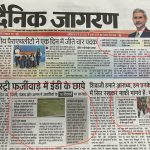
    Dainik Jagran clipping showing highlights of newsNeedless to say, she is an exception. Reading as a habit is declining in Gen Z. Attention spans are also reducing. It’s not even videos but reels. Newsletters send summary with their articles. Even regional newspapers like Dainik Jagran summarise big stories into highlighted points; something which I noticed that some mainline English newspapers have also started to follow. (See image).

    Podcasts are catching on. You can be driving and listening to a podcast or even watching cricket and listening to a podcast on the perils of investing in cryptocurrency. All major news sites also have audio version of the news.

    So, what’s happening? Too much information, too little time? Multitasking and wanting to keep up with the Jones? Multifocus (does that even make sense?) and multifaceted? All valid reasons. But is there a cost to it?

    My thinking is that the explosion of technology, in every field, have made people insecure. So, everyone is trying to know everything. And with Gen Z being born with a technology spoon, technology is not a medium or conduit but way of life. So, if I can do a masters in finance, I can also do a certification in AI, follow someone who gives tips about immigrating to Australia or Canada, learn how to retire at 40, follow stock market to get rich quick… you get the drift. Insecurity about the future, ironically caused by technology itself, forces them to try and know as much as possible

    The width of knowledge of Gen Z is amazing. But the depth is a question mark? Jack of all trades but master of none is very applicable here. There is a view on everything but there is no confidence in that view. And proper lack of reading books is one reason why the depth of knowledge is missing. Reading books gives one a context. Historical perspective. Various viewpoints. Nuanced knowledge. A rich vocabulary. Ability to communicate, I can go on and on.

    I was therefore eager to visit a book fair in Doon which my daughter discovered.

    It was promoted online (the irony of it!) with 3000 books available as a hook and it promised books by the kilo.

    And to my pleasant surprise I found that the venue was full of Gen Z, mostly students. Not to buy curriculum books, they hardly buy curriculum books nowadays its either some online repository or maybe in some cases library, but to buy books of various genres. I noticed that except me and my wife, there was just one more oldie parent. Heartening, to say the least.

    At first, I was bewildered.

    All I could see was books by unknown authors.

    Self-help books.

    Books advising on stockmarkets.

    Books on romcom.

    Books on psychology fiction, literary fiction.

    And books on dark mystery.

    I had hardly heard of these genres. But my daughter patiently took me through them.


    Good girl guide to murder- it was a series of three or four books.

    Before the coffee gets cold – sort of science fiction psychology

    People we meet on vacation – Romcom

    Cleopatra and Frankenstein – Literary fiction

    I want to die but I want to eat but I want to eat tteokpokki – Psychological fiction

    Normal people – Romance thriller


    And most of these books claimed to be bestsellers. Published by leading publishing houses like Penguin or Bloomsbury publications amongst others.

    But the most eyecatching thing was that most of the books had very young authors. Late twenties or early thirties. And mostly females. Holly Jackson (31 years), Anna Hueng (33 years), Emily Henry (33 years), Baek Sehee (33 years).

    And most books were between 200-350 pages. No voluminous read that went for months.

    In contrast, I hardly found the old voluminous classics like War and Peace or some of the Charles Dickens ones. The only old classics I could see were Crime and Punishment and Exodus.

    There was a smattering of Dan Browne, Fredrick Forsyth and Jeffery Archer.

    And then there were tonnes of self-help books, many by Indian authors, all men, on how to game the stockmarket, get rich quick, retire at 30 or 40 etc.

    Most books had Hindi translations available. Alchemist by Paul Coelho was available only in Hindi. So were almost all help books and get rich books. And the Romcoms too.

    Autobiographies and biographies were also available but mostly in Hindi or of Indian sports stars. Virendra Sehwag, Suresh Raina, Shane Warne and Nelson Mandela were the favourites, all in Hindi.

    There were many detective and mystery books too and many by Indian authors. I guess the genre needs better situational and local nuances understanding.

    By now my mind was buzzing with questions and I took the help of my ever-obliging daughter and wife to ask three-four youngsters some questions.

    I am listing some interesting observations into Gen Z reading habits.

    They usually do not have book reading as a habit but do come to such fairs as many self-help books and modern books are available cheap. By kilo. Strike one.

    Mystery, politics, true events etc are more fun to watch on OTT rather than read about it. As one smartalec wisecracked, the daily newspapers are full of it anyways. Strike two.

    They are comfortable in reading English as long as it is not Tharooresque. Not comfortable in communicating in English. But reading is a different ball game. Strike three.

    Books do give them some sort of privacy. As its their personal area. But phones give them more privacy because no one knows what they are reading on it. Strike four.

    They don’t read authors (my daughter disagreed), they read recommended books. Influencers and friends play a very strong role in their reading decisions. Strike five.

    There is no budget for books. It’s a rare occurrence. Only at such book fairs where they buy in bulk in kilos. And they never keep the books. Exchange with friends or sell them off and that’s how they get recycled into such book fairs. Strike six.

    But finally it was one guy who when asked about reading books for indepth knowledge, gave me a quizzical look and muttered: “Jab padai mein hum zyada depth mein nahin jaate tohi uski aadat kaise padegi” Loosely translated “When our education does not encourage us to dig deep then how will we get that habit.”

    I will leave you with that deep thought as the master of all strikes.