
Category: COLUMNS

  • Expand and celebrate the spirit of learning this Teacher’s Day

    Expand and celebrate the spirit of learning this Teacher’s Day

    Sanjeev KotnalaMost of us remember celebrating Teacher’s Day in honour of Dr Sarvepalli Radhakrishnan, a scholar, philosopher, and former President of India, at school on September 5. On this day, we express gratitude to schoolteachers and acknowledge their pivotal role in shaping young minds.


    The Perfect Bond

    The relationship between a teacher and a student is one of the most profound connections one can experience. It is built on trust, respect, and a shared journey of discovery. Good teachers do more than impart knowledge; they inspire, challenge, and nurture their students. They encourage curiosity, critical thinking, and a love for learning that lasts a lifetime. This bond is not just about academic success but also about personal growth, resilience, and the pursuit of wisdom. Teachers come in many different formats, with different attitudes and approaches to life and teaching.


    The Spirit of Learning

    However, learning is not restricted to the classroom, nor is teaching limited to those holding chalk. The spirit of Teacher’s Day should extend beyond the confines of classroom and school. It is a day to recognise and celebrate everyone who has helped us learn in a formal setting or through life. Like our parents, friends, colleagues and even strangers-  everyone can be a teacher in the classroom called life. These informal teachers play an essential role in personal development, often leaving a lasting impact that shapes character and decisions. By expanding the scope of Teacher’s Day to include all these influences, we acknowledge the diverse sources of knowledge that enrich our lives.


    Expanding the Teacher-Student Association

    Celebrate Teacher’s Day, and broaden your appreciation to include everyone who taught you anything, formally or informally. Recognise the value in every lesson learned and honour the unique bond between a teacher and student that transcends the traditional classroom. By doing so, we celebrate the act of teaching and the spirit of learning that connects us all.

    Here are some memorable advertisements celebrating and leveraging the Teacher-student bond. Pick the one that reflects your bond with the teacher and share it with them. Cadbury could have used the existing platform with a twist to help personalise these teacher dedication messages.


    PARLE G 

    When we succeed, it is not us but our teachers who are the happiest. That’s why they say, “Genius wahi jo auron ki khushi mein paaye apni khushi.


    RAYMOND – COMPLETE MAN- TEACHER. 

    This is one of the few teacher-student ads I remember clearly, and its sequel was equally touching. It shows a teacher at the wedding.


    BOURNVITA- LEARNING MORE IMPORTANT THAN MARKS.

    It is a very educative commercial that questions overreliance on exams as a barometer of learning.


    DS GROUP. Hame Kise ne Sikaya Tha.

    Typically, I would have avoided the DS group ad, but this one had a learning in it.


    TITAN: JOY OF GIFTING.
    Teachers can blame this ad for getting a watch as a farewell gift.


    VISA TEACHER.
    This completes the thought. As a child gives birth to a mother, a teacher is there whenever and wherever a student wants to learn. Teachers also learn from their students.


    Post Script

    I was surprised not to see (until now) a Teacher’s Day ad celebrating WhatsApp and Facebook- the largest educators of the Indian masses. I am equally surprised that the Teacher’s Day celebration is still confined to physical school. It has not moved to a virtual, hybrid setup or included AI as a teacher or maybe even as the biggest student today.

  • Ranjona Banerji: Hatred of Muslims and Women

    Ranjona Banerji PhotographOf the many things which the mainstream media in India is unable to discuss – and we have touched on most of them here, if not all – two stand out in the current scenario. Women’s issues and attacks on Muslims.

    For both, can we conjecture that it is because forces within the media are unwilling to face the truth? No matter how much sound and fury were generated by the MeToo movement a few years ago, the media has not been able to clean up its own house. Over and over again, the story of exploitation, harassment and assault on women journalists continues. The perpetrators are usually powerful media men and therefore progress is slower than sludge climbing uphill.

    And then there are the attacks on Muslims, which have increased alarmingly since Narendra Modi first became prime minister 10 years ago. Here we find the media’s role very disturbing. Several top channels run constant campaigns about how Hindus are in danger, which only serves to increase hatred against Muslims. Which is of course what they want, and what they do to stay in tune with the general RSS agenda.

    This anti-Muslim slant has been relentless over the past 10 years and nothing has stopped them. The vicious rhetoric in TV studios and the sly dog-whistling by BJP politicians, including Modi, are perfectly in sync. The result is catastrophic. The lynching of Muslims which began in June 2014 with Mohsin Sheikh in Pune has been consistent. The reasons are also tied in with the Hindutva narrative – mainly to do with cow slaughter and the notion of travelling with beef right down to storing beef at home as with Mohammed Akhlak in 2015, the case which got the most publicity.

    Nothing however has stopped the lynchers. Worse, in the past few weeks, the number of cases of attacks on Muslims and cases of rape have increased. Mainstream media and television coverage is calibrated to serve the rulers and men.

    The courts have been slow to pick up on these murders. And soon the lynching dovetailed with the illegal destruction of Muslim homes on equally flimsy charges. The Supreme Court has initiated legal action now, years after the UP government began this inhuman and illegal form of “justice”.

    Regardless of election results and BJP losses, some of these channels continue. What makes them do it? Why are News18 and Times Now, to name two of the worst, so hellbent on destroying India’s social fabric? It is hard to conjecture why two responsible companies should allow their TV anchors to behave in this manner. Nothing that you read in the Times of India correlates with the vicious Islamophobia and pro-BJP stance of Times Now. Why would an Ambani-owned channel like News18, which has business associations with Arab states, constantly attack Indian Muslims?

    Is the degradation of the media complete, if it cannot wake up from its dangerous strategies even post-Modi’s limited 2024 victory? The fall of the Sheikh Hasina government in Bangladesh was only presented as anti-Hindu, even though there are several other implications for India and even though many of what TV showed later turned out to be fake and misinformation. The same sort of misinformation is happening with Bengal, after the rape and murder of the doctor at RG Kar hospital. Here, the agenda is being set so that the BJP can benefit politically from the doctor’s death. The issue of women’s safety, which has riled the nation, has been sacrificed by our TV channels, in order to bring down Mamata Banerjee and prop up the local BJP.

    The Assam chief minister who has been gunning for Muslims ever since he switched from the Congress to the BJP is not called out by the legacy media for his Islamophobia, just as the UP chief minister was practically lauded by the same media for his bulldozer injustice. Several TV anchors, if you remember, gleefully jumped into earthmovers to get firsthand experience of how it feels to destroy someone’s home.

    With women’s issues, celebrated actor Mohanlal’s unchallenged “plea” that the Kerala film industry not be “destroyed” by women asking for justice and an end to sexual exploitation, demonstrates how low women fall in the list of priorities.

    In such circumstances, perhaps it is impossible to even imagine that women within the media will get any justice at all. Either from harsh bigotry or suave predators.

    Ranjona Banerji is a senior journalist and commentator. She writes on MxMIndia on Tuesdays and Fridays. Her views here are personal.

  • Why Clutter isn’t the Enemy against Advertising in IPL or Elections?

    Why Clutter isn’t the Enemy against Advertising in IPL or Elections?

    Aniruddh Naik
    Aniruddh Naik

    You usually do not go and tell the supply chain team which model they should use for forecasting. Or the CFO what type of accounting she or he should do.

    Or question a tech guy on why python and not, say, C++.

    Or a management consultant why this framework?

    Because intuitively we tend to take whatever they say as the truth, cast in stone.

    Cometh marketing meetings on brand and media, everybody including the one whose job is to only ship couriers in office seem to have a view.

    They tend to tell you what should happen in your ad, where you should play the ad and why you should use the giant-sized billboard on some highway because you pass through it daily.

    In my experience on promoting a commercial on IPL, the common question in the office is, “is it worth promoting in the IPL.”

    “There’s so much of clutter.”

    “Will people notice us?”

    And so on. Yet, when you go ahead and promote, the questions changes, “I saw the ad, but not sure if it will register.”

    Why? Because there’s clutter. And how much can we remember?

    This persists within the marketing and advertising teams as well.

    Many are non-believers in going for big-ticket items to promote your advertising. If it is a question of lack of funds, then fine. But if you can stretch the budget, then clutter SHOULD NOT be the reason to AVOID.


    Lack of Research Usage

    The whole point of my grouse was this- we do not use enough research in advertising and media from let us say psychologists or neuroscientists.

    Why? Because we tend to dismiss it as ‘subjective.’ FYI, when Bill Bernbach says it took a million years for man’s instincts to develop. It is fashionable to talk about the changing man, but we must be concerned with unchanging man.

    Let us explore that.


    The Traditional Advertising View

    That an ad must make the person take notice, command attention and then, land the message about the most brilliant features of your product.

    Assumption: Lack of attention = No Impact. So, the one who watches the ad, should be conscious.


    Does the human brain work like that?

    Yes. Only if you believe our brains, all the time, make conscious decisions.

    That is not true. Only 5-10% of decisions the brain makes are conscious. The rest without our conscious brains realising that.


    Come to IPL. Please.

    #1 Yes, a moment. Dr Robert Heath study and research says advertisement, unlike the popular opinion, is a LOW INVOLVEMENT PROCESSING.

    Watching an advertisement, with our attention elsewhere, can still lead to us absorbing the advertisement. So, an ad playing in the background can bypass our conscious mind and be sub-consciously taken inside without you knowing.

    How? By associations. A neuroscientist’s definition of branding would be something like advertisement is an exercise in designing associations.

    If you are a Coke–Happiness

    If you are a Nike–Athletic Motivation

    If you are Rebill–Thrill & Adventure


    #2 Research by Ipsos in the Brand Immortality Study assessed 97K subjects with 512 commercials from 47 companies, the results were interesting.

    7.3 % brand uplift in people who were attentive to ads.

    2.7% brand uplift in people who could only recall the ad when described.

    1.2% brand uplift who could not recall the ad.

    So even with low recall, there is a brand uplift of 1.2%.


    #3 What if people Skip or Fast Forward the ad?

    Research by Innerscope assessed people who watched the advertisement live, who fast forwarded and people who didn’t.

    Result? The fast-forwarded group recalled and recognized twice as many as the group who had not seen. Obvious, is not it. The point is despite fast-forwarding, they saw the ad.

    Why? Because our brain captures, connects and stores visual information in eighty milli-seconds!

    Showing the advertisement, even in a cluttered environment, can make your brand recognize (during the buying process or buying situation. You will end up feeling familiar).


    Finally, why does that happen?

    A famous experiment uncovered a phenomenon called Blindsight. A blind person with pupils unharmed was put in a room full of obstacles and asked to go to the other end of the room. He did so without touching the obstacles. And the experiment was repeated.

    When asked how, he said he had no idea. That is because the eyes picked up the stimuli and navigated without making his rational side of the brain recognise.

    These visual cues are linked to amygdala that processes fear and emotions. Now can you connect RedBull with thrill and adventure, Coke with happiness?

    The connection will happen even if we do not see the entire ad of Coke. Our brain subconsciously picks up a family sitting around, laughing faces, food on the table, and bottle of coke in hand. That is all.

    The onus is on us. How good can we associate the things that will make the brand quickly noticeable and store information in the brain?

    It is not the media clutter in IPL. It is how good are you at hacking the subconscious part of the brain!

  • Shruti Pushkarna: Paris Paralympics 2024: Scant coverage in Indian media

    Shruti PushkarnaThree years ago, the Indian Paralympian squad broke some records in Tokyo. Taking the country’s global ranking to 24, with five golds. This year in Paris, we have surpassed our 2021 tally of 19 medals. Our medal count as of today stands at 24 with the global ranking being 13. And there are still a few days to go.

    But the news coverage around para champions remains consistently scant. Insufficient in both quantity and quality. Writing this piece is almost like déjà vu. I called out the Indian media in my column three years ago and here I am scripting similar displeasure and disappointment in Column #99. That’s correct, it’s been a while. Four years of ranting against the Indian media’s neglect towards disability inclusion.

    However, it would be wrong to say nothing has changed. We have come a long way from 2016 when India didn’t even buy the broadcasting rights of the Rio Paralympic Games. Today, an average sports enthusiast who has access to streaming services is following and cheering the para champions. Several folks have posted their support and appreciation for the ace performers on social media.

    In the Tokyo edition, India recorded its best ever haul with a tally of 19, which included five gold, eight silver and six bronze. This year so far, we have won five gold, nine silver and ten bronze, which is a total of 24.

    Shuttlers Nitesh Kumar, Thulasimathi Murugesan and Nithya Sre Sivan clinched gold, silver and bronze medals respectively in para-badminton. Javelin thrower Sumit Antil won the gold for his record throw of 70.59 meters. Yogesh Kathuniya bagged a silver medal in the men’s discus throw. The youngest woman to compete in women’s para archery at 2024 Paralympics, Sheetal Devi won the bronze medal in the mixed team compound event along with partner Rakesh Kumar.

    Avani Lekhara became the first Indian woman to win two gold medals at Paralympics in women’s 10m air rifle shooting. Preeti Pal also made history as the first Indian woman to win two para-athletic (bronze) medals in the Women’s 100m and 200m T-35 event. Rubina Francis bagged a bronze in the P2 women’s 10m air pistol SH-1 final. Athlete Nishad Kumar won a silver medal in the men’s high jump T47 event. World champion Sachin Khilari won the silver in men’s shot put.

    And the list goes on. Imagine the number of stories behind these triumphs. The joyous caregivers behind some of the victories. The silent struggles from hopelessness to exuberance. Where are these missing accounts? The most I could spot was a headline ‘Ma hai toh mumkin hai’ in mainstream media, ensuing the social media post by Sheetal Devi expressing gratitude for her mother.

    In contrast, the dailies were full of narratives around Manu Bhaker when she won the bronze at the Paris Olympics. There’s coverage around her views on gender pay parity, Bhagvad Gita, her devout Hindusim and what not. There’s no taking away from her journey, struggle and triumphs. Likewise for Vinesh Phogat. But when it comes to Paralympians, journalists peddle only wide-eyed amazement for our inspiring divyangjan!

    No real news, no hard questions. No exposés on crippling infrastructure. No investigative pieces on funding contrariety.

    What sums it up aptly is a post by India Today journalist Shiv Aroor on X.

    The sad truth.#Paralympics pic.twitter.com/L8T5rSgaGO

    — Shiv Aroor (@ShivAroor) September 2, 2024

    It reads: ‘The sad truth. #Paralympics.’ Below the tweet, there is an image that highlights the disparity in media coverage between the Olympics and the Paralympics. The contrast in text size and placement implies that news about Olympic failures receives significantly more attention than news about Paralympic successes.

    That’s the reality of India, today. We have space for coverage of losses and no room to celebrate and acknowledge the grit and excellence of disabled champions. Barring a few exceptions like The Indian Express which gave decent accounts of the journeys of these champions. Their reportage went beyond medal tally and the day’s game.

    Another media channel, Much Much Spectrum has been consistent with their handling of news from Paralympics. They shared short and effective profiles of the para champions, alongside sporting updates, bringing out their tenacity without shying away from the disability. It isn’t your usual inspirational porn. They even published some candid posts highlighting the disparity meted out to Paralympics.


    View this post on Instagram


    A post shared by Much Much Spectrum – Stories of Social Good, Health & Disability (@muchmuchspectrum)


    View this post on Instagram


    A post shared by Much Much Spectrum – Stories of Social Good, Health & Disability (@muchmuchspectrum)


    Of course, one cannot forget to mention Prime Minister Modi’s (cheesy) telephone call to the medal winners which was relayed and replayed on various channels. The question that remains to be answered is what difference will this record-breaking performance at the Summer Paralympics make to the state of infrastructure, encouragement, budget, training, recognition and dignity offered to disabled sportspersons in the country. Or does it all end at a mere tweet by the Indian supremo saying he is proud and delighted?

  • Free over Pay: Reset Time for Streaming?

    Free over Pay: Reset Time for Streaming?

    Shailesh Kapoor2023 saw the release of 383 streaming originals in India, across languages and formats (fiction series, direct-to-OTT films, unscripted, etc), across all major OTT platforms (excluding YouTube and social media) put together. That’s more than one launch a day. The equivalent number in 2024 so far is a lot more modest. On a pro rata basis, the year can be expected to just about touch the 300 originals mark, a good 20% below last year.

    Clearly, streaming platforms are commissioning less content than before. The number of originals were significantly higher than 300 in both 2021 and 2022 (337 and 368 respectively). Effectively, we are back to the pre-pandemic levels in terms of supply of Indian OTT originals. Like the US, our peak TV phase (which we never really celebrated last year) is also over.

    One can call it a slowdown or a correction, depending on how one looks at things in general. But semantics apart, the signs are there for us to see. Streaming originals may not be the next big story anymore. The OTT category is still growing, with immense headroom for growth, given that only 38% of Indians watch digital videos at least once a month. But this growth will come via sports, YouTube, social media videos, news, comedy, catch-up television, etc., all of which are ‘free’ content forms on OTT in India today. On the paid side, new theatrical films were already a strong force, and are going to be get increasingly stronger compared to originals in the coming times.

    A huge creators economy has flourished in India on the back of the demand for OTT originals, and one can already sense the impact the supply slowdown is having on this economy. It doesn’t help that the film (theatrical) industry is not producing a lot of content either, especially in Hindi.

    In all this, traditional linear television, the punching bag of many, could emerge as an unlikely saviour. The TV industry has been on perception and business decline, but it’s nowhere close to losing relevance, and a bounce back is not entirely ruled out. But even there, free-to-air platforms, more than the pay ones, seem to be better positioned to drive some growth in the future.

    Has the pay-for-content endeavour in India died a premature death? The top platforms like Netflix and Prime Video would choose to differ. And indeed, “death” may not be the accurate term. But pay TV or pay OTT are going to go through their toughest challenge yet, in the coming year or two. And all eyes will be on the big players in the category to shape the trajectory ahead.

  • Ranjona Banerji: Where is the journalistic instinct for scandal and shenanigans?

    Ranjona Banerji PhotographWhat makes headline news and why? Sometimes, you have no option: Government declares war, terrorist attack kills several, cyclone destroys, Someone important assassinated and so on.

    Sometimes you choose, you as in the editors in charge. The New York Times famously decided not to lead with the death of Princess Diana unlike just about every newspaper and news channel in the world. The editor felt it was not important enough to be the main story because something local was going on.

    In a similar way, just about every legacy newspaper and channel has decided that the intriguing story of Madhabi Puri Buch, SEBI, Hindenburg, Adani and Zee is not just unworthy of constant lead status, but in fact unworthy of coverage. I won’t be unfair. But I will stress that what is a remarkable story of alleged chicanery and cheating, which should actually thrill every newsroom and every viewer and reader, is relegated to the shadows.

    Small side note on the use of the word “alleged”. This is a massive trigger for informed readers and viewers who feel that journalists succumb to government or other pressures when they use this word about crimes committed. In fact, this is a simple safety mechanism for newsrooms. First, in Indian law, innocent until proven guilty. Secondly, this is protection against legal action against the media house. It is not a word that requires conniptions from concerned citizens. Just ignore it and carry on. Side note over.

    On August 10, the US-based Hindenburg Research LLC accused Buch Puri, the head of the Securities and Exchanges Board of India, a quasi-government body, of various counts of conflict of interest. Including that she and her husband owned parts of Adani entities. Hindenburg had already accused Adani of irregularities in its offshore funding activities. Buch Puri is the first non-government employee to be made head of SEBI. She was handpicked by those at the top of the Government of India. In other words, You Know Who.

    Buch Puri denied the allegations and then that was it. Radio silence from her. Vague huffing and puffing from GOI. The usual accusations that this was a conspiracy against India (Adani means India, obviously) by a conglomeration of that amorphous entity: The West, the Congress Party, George Soros (who is a sort of Commie West), Klingons and who knows what else.

    Since then, though, the story has not died down. SEBI employees have protested against a toxic work culture under Buch Puri, Subhash Chandra of Zee has accused her of “bribery and corruption”, and the Congress Party has released data that she received from a higher pension from her former employer ICICI Bank, than she ever earned at the bank.

    (Interestingly, the Supreme Court picked MV Kamath, formerly of ICICI Bank, as member of a committee to examine how SEBI had investigated the allegations against Adani.)

    An article linked below from veteran journalist Paranjoy Guha Thakurta, who has been relentless in his coverage of corporate fraud and Adani, and paid the price from it, explains much of the conflict of interest. As well as why this case is important and why Buch Puri should resign as SEBI chairperson.

    https://www.freepressjournal.in/business/why-sebi-chairperson-madhabi-buch-should-resign

    These other links point to the tip of the iceberg when it comes to crimes and misdeamenours and cover ups.

    https://frontline.thehindu.com/news/hindenburg-report-sebi-chief-madhabi-puri-buch-conflict-of-interest-adani-group-controversy/article68515614.ece

    https://economictimes.indiatimes.com/news/politics-and-nation/icici-banks-clarification-on-sebi-chiefs-salary-raises-more-questions-congress/articleshow/113039154.cms?from=mdr

    Now you may well ask, how come I state that the media is not covering this story, while I provide media links. Good question. What I am saying though is that given the importance of the story, of the links from Narendra Modi and Amit Shah downwards, of the allegations of various kinds which raise many red flags, why is the story not getting its due? Why are TV anchors not blaring irregularities nonstop the way they do about imaginary crimes against Hindus?

    Where is the journalistic instinct for scandal and shenanigans?

    Hah! Where indeed.

    Ranjona Banerji is a senior journalist and commentator. She writes on MxMIndia on Tuesdays and Fridays. Her views here are personal.

  • Kunal Sinha: Rekindling interest in Books

    Kunal SinhaMalaysia boasts one of the world’s highest literacy rates. However, a 2016 report found that among Malaysians who read regularly, just 3 percent picked up a book.

    Those that are reading are not reading enough – with less than three hours a week spent on, a far cry from reading habits among citizens in India who allocate over 10 hours a week, reading while Thais and Chinese nationals spend between eight to nine hours a week.

    That is beginning to change.

    There is a newfound enthusiasm, thanks to a community of booklovers making relatable content on BookTok, the huge book club that has sprung up on social media and content platform TikTok.

    By making entertaining videos centred on the books they read, BookTokers have created an inventive way of discussing, reviewing, and recommending books that have revolutionised the literary and publishing communities.

    In Malaysia, #BookTok Malaysia has raked in 173.4 million followers as of May this year, showing that the reading culture in Malaysia is still alive. #BookTok Malaysia is not merely focussed on bookselling alone, as it also leverages the social platform to review books in the market with a casual and enjoyable approach.

    Now Kuala Lumpur and other towns are experiencing a resurgence of bricks-and-mortar bookshops. Independent sellers are betting that the pandemic-era pickup in reading will sustain and translate into in-store sales. They are finding ways to boost physical retail, from befriending customers and stocking niche paperbacks to opening cafes and curating the shelves of boutique hotels.

    Revenue in the books market, estimated at USD122.20m in 2024, is expected to grow to USD 128 mn by 2029.

    “There has been a substantial increase in the number of people attending the Kuala Lumpur International Book Fair (KLIBF), which attracted 1.3 million visitors in 2022 and grew to 1.6 million last year,” says Malaysian Booksellers Association president Thong Yuet Sheng.

    The stores are designed to lure customers in. Each has a different, eclectic design: one is housed in an old cinema complex; another has an ice-cream bar; and many are in malls, a popular weekend destination guaranteed to bring foot traffic.

    A couple of weeks ago, Sandeep Joseph, founder and CEO of the agency I work with, took me along to the sprawling Tsutaya Books in Bukit Jalil.

    With soft lighting, cozy reading areas, and a distinctly Japanese ambience, Tsutaya has all the ingredients to become the hotspot in Kuala Lumpur, with 31,000sq feet (2,880sq m) of space comprising the bookstore, with more than 264,000 books, a wide range of stationery, art and gifts (local and Japanese brand selection) on display, and a café. The books are well organised by topic, with each boasting a pretty exhaustive collection.

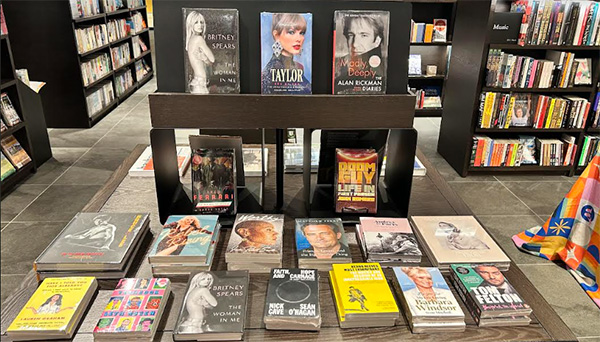
     

    The store is futuristic and modern. Mirrors make the visitor feel as if they are surrounded on all sides by books. The colours used for the interior decoration is wooden with warm accents which makes it look refreshing and aesthetic. With its large space, there are many interest zones where customers can feel comfortable browsing around. The photography section features lomo cameras and vintage B&W prints. Collections of whimsical posters and stationery by local artist collectives populate display islands – every month, the bookstore hosts a new artist, whose creations you can touch, feel and savour, not just scroll through.

    There are also areas for relaxing such as the lounge area or reading area which give off a therapeutic ambiance (with a fantastic view in front of the fountain and solo space). Jazz background music allows you to escape from reality for a while.

    Tsutaya Books’ service quality determines the impression made on customers. It goes one step beyond simple customer service by helping customers find the book that is on their mind, or has been recommended by an influencer they follow. Each concierge has extensive knowledge about his or her subject area, and he or she holds in-depth conversations with customers to recommend products based on their interest.

    BookXcess has gone from eight shops before the pandemic to 19 in July 2022. Their store in Ipoh is housed in an old building, spread over two floors and overlooks a garden. I saw little girls in pink getting excited with fluffy bags and picture books, while older shoppers posed in the anime section. I picked up a new copy of William Bernstein’s ‘Masters of the Word’ for less than Rs. 400.

    It’s not just chains that are bouncing back.

    Independent seller Monsoon Books opened in 2021 in Petaling Jaya and caters to Malaysia’s Chinese-speaking population. Around two-thirds of its books are in Chinese. The selection is diverse and tends toward the highbrow. Readers can purchase a treatise on Beethoven’s piano sonatas or the latest issue of Malaysian indie magazine Process.

    “People come to our shop and say, ‘Wow, I never expected to see these kinds of books in a Malaysian bookshop,’” says store manager Gan Han Lin.

    The former schoolteacher left his job to run Monsoon. He hired a local designer to build shelves and a clean, cozy interior. Visitors can relax and read inside or buy a drink at the cafe downstairs to enjoy on the plant-filled balcony and have their “me time”.

    Ng Kok Heong, a retired timber salesman who invested in Monsoon as a passion project says, “We want to establish a little bit of a niche market. If you go into the big chain bookshops you’ll see that most of the shelf is all books about wealth management and how to make money. We don’t want to sell those books. It’s not about simply making money; it’s about enriching your own thinking, your life and your mind through knowledge.”

    As an engineering student in Melbourne, Nazir Harith Fadzilah amassed a huge collection of books and wanted to bring his favourites back to Malaysia. In 2006, he opened independent bookshop Tintabudi in Kuala Lumpur and began selling from his personal library, alongside publishers he discovered at book festivals.

    Nazir has expanded Tintabudi’s business model, publishing a local author’s poetry collection and collaborating with the Kloe Hotel to curate their “room to read,” one of five culture-themed suites on offer at the venue. Some Kloe guests have become Tintabudi patrons.

    Started by accountant Rachel Ang as Malaysia’s largest online second-hand bookstore, Books n Bobs now has a lovely brick-and-mortar bookstore at GMBB, a shopping centre in Bukit Bintang, Kuala Lumpur. The mission of the shop, according to Ang, is to help avid readers find old books that they can’t find elsewhere, such as those that are out of print or certain special editions.

    She began purchasing titles that were in demand, no longer only focussing on only those she had a preference for.

    Readers are not only able to purchase books from them, but can also sell or donate pre-loved books right at the store in GMBB. Books n Bobs carries about 27,000 titles online and 2,000 titles in the GMBB shop, covering the genres of mystery, romance and science fiction.

    Part of their profits go to RUMAH K.I.D.S, a children’s shelter for abandoned and abused kids.

    What was the last time you spent a weekend hanging out at a bookstore?

    Kunal Sinha is Chief Knowledge Officer at Ampersand Advisory, based in Kuala Lumpur, Malaysia. He is the author of several books including The Future of India’s Rural Markets and Raw – Pervasive Creativity in Asia. He writes for MxMIndia every other Monday. His views here are personal.


  • 13 years of MxM, 13 years of the slow demise of Indian media…

    13 years of MxM, 13 years of the slow demise of Indian media…

    Ranjona Banerji PhotographIt’s been 13 years since Pradyuman Maheshwari started MxMIndia.com. Congratulations to him, his courage, for putting up with me, and congratulations to his amazing team and contributors.

    It seems unbelievable that I’ve spent 13 years watching and commenting on the Indian media. I remember kicking and screaming when Pradyuman said I had to watch television news. Unlike most people, I never got addicted to 24 hours of vapid material. I prefer reading to listening, which is why I find podcasts intolerable beyond about five minutes. It takes me three days to finish a half an hour podcast. The written media works fine, whether on paper or online. Anyone who has read my columns knows this.

    When we started, though, I did watch a bit of TV news. NDTV was of course the best of the lot, but they all had their moments – India Today, CNN News 18, Times Now and the rest. Arnab Goswami was extremely entertaining, although his spiral into Howard Beale was disturbingly evident. (You haven’t watched Network (1976) yet? Despite all my imploring? Please do!)

    No sooner did the first Narendra Modi government come to power in 2014 than the signs of collapse we had already seen in the Indian media were now no longer hidden in newsrooms. Owners and editors decided that bowing down was the best sign of survival. Actually, I am being kind. Some of them obviously believed in the sectarian policies of the RSS and rejoiced that their time had come.

    I saw the signs when I quit my last full-time job in 2010. The paper changed hands and the new owner openly told us that all this “secularism” would no longer do. Soon after the India Against Corruption movement began, with the support of the RSS, and political strategists used financial fraud as a means to create the myth of Modi.

    The capitulation of the media to political ideology did not in fact quite work out the way its masters and owners thought it would. A gradually flailing economy further ruined by incompetent governance meant that ad revenue was low. The pandemic took a heavy toll on everyone, including the media. Instead of tackling the issue head on, the media carried on with its adulation tactics. It is only when death tolls and general mismanagement became intolerable that some – not all – media outlets realized they owed something to their consumers, not just to the ruling regime. These forays into journalism ended as the pandemic ended.

    But by then, something else had changed. Consecutive lockdowns meant that people got used to an offline life. Digital media, and I don’t mean the traditional media here, took over. YouTube, Instagram and so on, were easier to access for those who had smartphones and the time. Nothing in the traditional media has gone back to what it was, and what it was had been struggling for years with a broken model that everyone knew was broken.

    A lot of this assessment is easier in hindsight. But many of us who watch the media knew that some of it was coming and that the legacy media thought it could continue to run on past glory. Even if that past was about 30 years old. Whether centuries or decades, though, the end result has been the same: if you do not deliver the news as is it is not how your masters want it to be, people will go elsewhere.

    In India, as political fortunes have changed, some in the legacy media have made allowances in their usual sectarian love fests. Those further from Delhi have usually been more courageous. But when you look at how the media has ignored Manipur because it is a BJP-ruled state and how Bengal is being blown up because the BJP wants to make inroads there, you see how old habits die hard.

    This has been the tragedy of the past 13 years. The chronicling of the slow demise of traditional media where I spent most of my life.

    You want me to end on a hopeful note? All right. Stop paying attention to its last throes and move on to credible and intelligent independent digital sources. Or just get doped out on the dopamine hits from Instagram. You’ll learn more than you will from TV debates and have more fun!

    Ranjona Banerji is a senior journalist and commentator. She writes on MxMIndia on Tuesdays and Fridays. Her views here are personal.

  • Challenging the Disparity in Our Reverence for the Paralympics

    Sanjeev KotnalaThe recent 2024 Paris Summer Olympic Games were a grand spectacle that captivated the world, where athletes from every corner of the globe pushed the boundaries of human capability. Nations celebrated their victories with exuberance, their stories of dedication and sacrifice lauded by everyone, and their achievements etched into the nation’s sports history annals. With their extraordinary performance, many of these names fulfilled the nation’s desires and dreams and became household names. Shreyesh and Manu Bhaker, Neeraj Chopra and Sindhu are examples of this.

    But there’s a darker side to this celebration of the human spirit–a glaring inequality that is almost racist in its subtlety and pervasive in its impact. There is a disparity in how we address and react to the Paralympics, as if the challenges are somehow less, the medals are of a different hue, or the gold is of a lesser carat. Pat yourself if you know Bhagyashri Mahavrao Jadhav and Sumit Antil and their sports: the flagbearer for India at the Para Olympics 2024. Or if the names of sportspersons like Nitesh Kumar (Badminton), Avani Lekhara (Shooting), Bhabina Patel ( Table Tennis), Yogesh Kathuniya Mariyappan Thangavelu and Preethi Pal (Athletics), and sound familiar to you. I did not know many of these names before I started writing this article.

    Like the Olympics, the Paralympics are a stage where athletes represent their countries, strive for excellence, overcome incredible odds, and inspire millions. Yet, the enthusiasm, pride, and recognition accompanying Olympic victories are noticeably dimmed when it comes to the Paralympics. This disparity in perception is not just unfair–it’s unjust.


    Double Standards in Recognition

    Consider the emotional wave that swept across the country when Manu Bhakar won the bronze or the emotional tsunami that cut across the nation when Vinesh Phogat lost her chance because she was a few grams overweight. These were moments of collective pride and charged emotions of national unity, where the athlete was hailed as a hero.

    Compare this to the reaction when a Paralympian achieves the same feat. Fortunately, nowadays, they make it to the sports page and the front page like Avani  Lekhera and Mona Agarwal did for their win in shooting. However, the applause is fainter and lasts that much shorter. The media coverage is sparse, and the recognition is fleeting. It’s as if their gold is not as golden, and their victory is not as victorious.

    This disparity reveals a troubling double standard. Paralympic athletes train just as hard, if not harder, than their Olympic counterparts. They face the same pressures, gruelling schedules, more demanding physical challenges and most often, a challenging sponsor and monetary gap. Yet, the world seems to view their achievements as lesser, as if the effort required to overcome physical disabilities diminishes the value of their triumphs. This is not just a failure to recognise individual merit; it’s a failure to acknowledge the full spectrum of human potential.


    The Need for a Paradigm Shift

    This almost dismissive attitude towards Paralympic achievements reflects a more profound societal bias that equates physical ability with worth. This bias sees disability not as a different ability but as a deficiency, something less than a whole. This mindset is changing but at a pace that is too slow for comfort. It must change now.

    The Paralympics should be celebrated with the same enthusiasm, pride, and respect as the Olympics. Paralympians, too, represent the countries. Their dreams are just as big, their efforts just as intense, and their victories just as hard-earned. They deserve not only equal recognition but also equal respect.


    Steps Toward Change

    A concerted effort on multiple fronts is needed to address this issue. Fortunately, media coverage of the Paralympics has improved—though still far less than that of the Olympics. Educational campaigns should be launched to raise awareness about the Paralympics, highlighting the athletes’ stories, the challenges they overcome, and the significance of their achievements.  Touch your heart, and you will know how much you have celebrated your para Olympians. How have the brands, corporate sectors, and government short-changed them? We talk of equality in sports. Can we start with equality of support, funding, sponsorship, and recognition for Paralympians?

    Most importantly, we as individuals need to change our perceptions. We need to challenge our biases and recognise that the value of a medal is not in the physical act of winning it but in the courage, determination, and spirit it represents. The colour of the medal, the carat of its gold, is the same whether it is won at the Olympics or the Paralympics. We must feel the same pride and maybe more when our athletes win in Para Olympics. We must celebrate- but more importantly, we must watch them perform the way we watched and chased our summer Olympians. That may pull the money into the sports, trigger a new wave of recognition and push para-sports.


    A Call to Action

    It’s time for us to change the narrative. It’s time to celebrate Paralympians not as athletes with disabilities but as athletes. It’s time to give them the recognition they deserve and to be as proud of their achievements as we are of any Olympic victory.

    The Paralympics are not a sideshow but a testament to the indomitable human spirit. Let’s honour that spirit with the respect it deserves.

    In doing so, we uplift Paralympians and ourselves as we move towards a more inclusive, equal, and just society. Let the pride in our hearts be as strong, the cheers as loud, and the recognition as enduring for every champion—Olympic and Paralympic alike.

  • Point of View: Only the Ambanis could pull off an event of this scale!

    Point of View: Only the Ambanis could pull off an event of this scale!

    Courtesy: Reliance Industries Limited Facebook id


    We first read this as a post by the writer on Facebook, and later saw an interesting exchange with some of his connections. We sought his permission to compile his posts and some of his response to comments in this article. Read on. – Ed


    By Sanjay Mehta


    The more that one reads and sees of the Anant Ambani pre-wedding event in Jamnagar, what stands out is the extreme logistical exercise that it has been. And to even have the audacity to consider pulling something like this off!
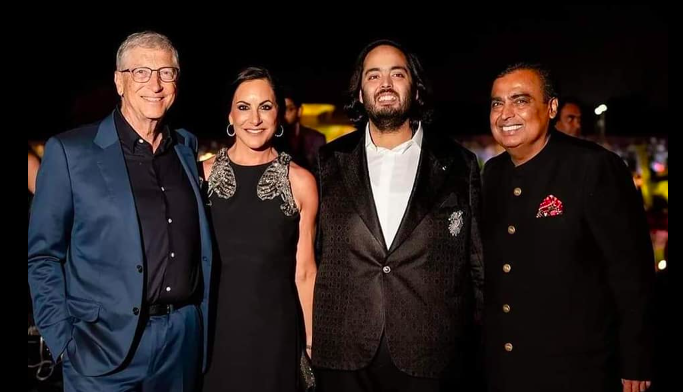
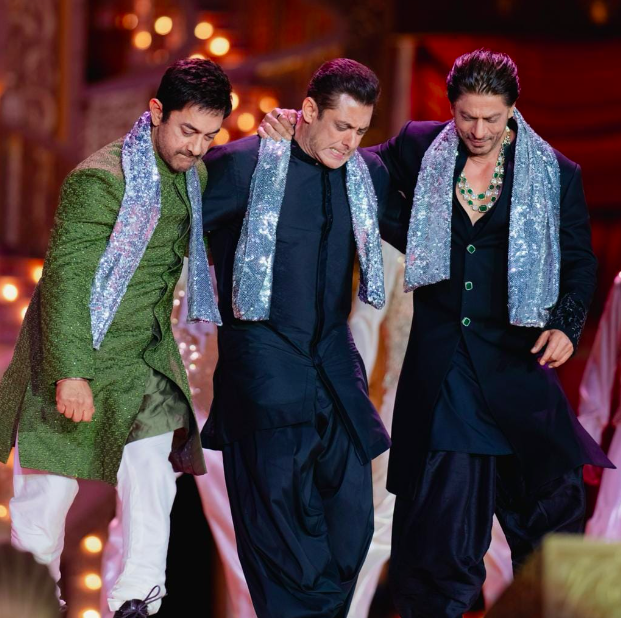
     

    Anyone who has ever managed an event of any reasonable size knows what it takes. Say, a conference or a marketing event, with a certain number of variables. Put in some challenges with celebs involved, and what it needs to take care of them and their entourages!

    Or say, you’ve hosted a wedding. With the multiple events. The relatives and friends to be taken care of. The invites, the RSVPs. The diet preferences, the transportation arrangements. Now make it a destination wedding. And see the variables multiply! Call a politician to your event. And worry about the number of hangers-on who need to be accommodated with the individual. Think of the security that he may bring along, but which you also need be taking care of, at your venue! Add a few foreign guests to the twist! Phew!


    If you’ve ever been through anything even close to this, you know what I am talking about, don’t you?!


    Now think of what the Ambanis dared to do, and did, and pretty flawlessly, from the looks of it. Celebrities of the highest order. By the hundreds! Their entire logistics! Invites, confirmations, travel and transportation, stay arrangements keeping the stature of all, the show itself, doing all this not at a large 5-star resort reasonably equipped for this, but in fact, creating the entire event infrastructure of their own, in their home town.


    Yes, money is a big factor. But the point is that this is not just about putting money on the table. It is so much more! It’s the ability of visualise scale projects and the ability to execute them well. In a time-bound manner. This has been their strength in business forever and now seen at an event like this as well!


    One other thing: I see this is that this is part of a new India. I have seen times in our country when the wealthy were living subdued lives so as to not come into anyone’s eyes – be it the local goondas, the income tax folks, jealous neighbours, the Labour unions in your factory etc. All that has changed now. There is a far larger acceptance of the wealthy to do their thing and not be concerned about others. They in fact, create aspiration and inspiration! This was one extreme event, but I speak in general.


    As for why:

    a) because they can,

    b) they’re still only spending a tiny bit of their wealth,

    and c) indeed, the money rotates and feeds so many on the supply chain. Not to speak of the reality show experience that the country enjoyed for free, on Reels and elsewhere!


    A lot of people have said that it’s a splurge, a waste of monies. We have to momentarily pause and relook at the splurge word. A typical wedding in our kind of families, or our homes or our dinner outings etc will seem like a splurge to lakhs of people. But we don’t see it that way for ourselves. Where Ambanis are, this would be thought of as par for course. It’s a splurge only from the distance that we are at!


    Jamnagar is a place hardly known for hosting anything remotely close to this. Just imagine the security arrangements itself! Nearly all of the guests being serious security risks! Think about the various food preferences! Think about young and old folks! The mind boggles!


    Yes, there are event organisers available to do all this, plus there’s the money and connections. It’s the X factor beyond that, which makes Ambanis what they are.


    And the Ambanis could visualise this, take it on, and pull it off! Even with the money, few would have been able to do so! From oil and gas to mobile to data to retail and that shows up now in a family wedding event as well!! Hat’s off to them!


    Sanjay Mehta is one of the pioneers in the digital world in India, having founded and spearheaded several companies: HomeIndia, Mirum (earlier SocialWavelength before WPP took it over) to name a few. He is also an author and commentator on all things digital, and beyond.

  • Money for nothing!

    Money for nothing!

    Avik ChattopadhyayTwo news items caught my fancy last fortnight.
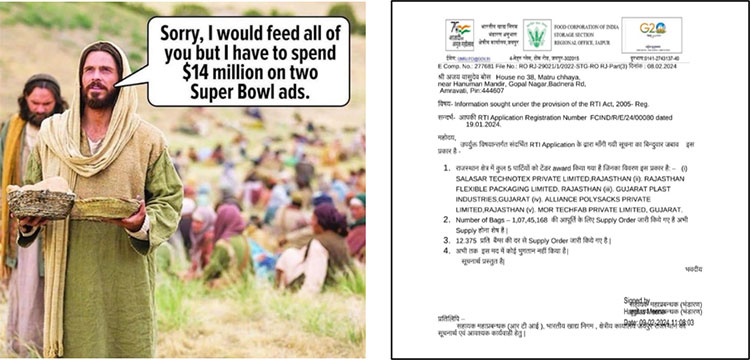
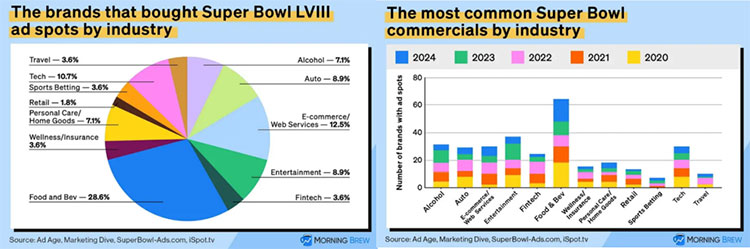
    One was a meme on some brand spending $14 million for two, yes just two ads during Super Bowl 58 in the US. That’s Rs117 odd crore at today’s exchange rates.

    The other was an RTI reply by Food Corporation of India that around Rs 13 crore were spent on printing the Prime Minister’s photo on bags meant for food rations in the state of Rajasthan alone. Multiply that same amount by the number of states under the current ruling political party and you get the math.

    The first one is an entirely private affair and probably the best demonstration of hyper-decadent capitalism at play. Every year, brands across categories vie for the right spot to buy for the sheer eyeballs one gets on the one single occasion which can also pass off as the official ‘couch potato day’.

    Madhvi Mavadiya of Finextra wrote a wonderful piece dissecting the madness that takes over all brand managers with every Super Bowl. You can read it at Super Bowl 2024: The fintech firms that spent $7 million on a 30 second ad (finextra.com).

    We too have our marketing media madness every year but it does not last for just one day. It goes on for 50 odd days. The IPL. Another example of gross display of marketing muscle. And it just keeps growing, year after year, as the broadcaster and organiser justify the stratospherical ad rates by the rise in viewership. In 2023 it increased by 30% over the previous year on television alone with another 15-odd % on pay-TV. In an interview, the head of ad-sales of the broadcaster mentioned that the CPM on IPL was the lowest at just Rs 50-60 per CPM. In 2023, the total ad revenues were a whopping Rs 10,000 crore while the fantasy sports platforms earned Rs 2800 crore. In plain speak, we gambled away Rs 2800 crore in two months under the garb of “team building skills” and nobody really raises an eyebrow!

    The broadcaster and the organiser will always justify to the potential advertiser that the RoI is the highest. They will justify the Rs 20 lakh per 10 seconds of advertising saying that the teams earn and the players earn and all the money goes into developing the sport and getting the best of the world to converge for this festival of sport.

    Cross your heart and ask yourself whether all this can really be justified. If the ESG regulators get down to their audits in all sincerity, will they not question such spends? All advertisers, in unison, sing out loud that their business gets positively impacted by advertising on IPL but has someone really audited and measured? If it were true, why would some of the key advertisers flounder in their business?

    Brands need to do some serious soul-searching on the way money is spent on advertising as all of it is passed on to the consumer in some way or other. A hedonistic institution cannot be propped up actually fleecing millions of gullible content junkies under the justification of freedom of choice and expression.

    The day some hard-nosed auditing is done of the spends against returns and the famous “50% that is wasted” is identified, many brand managers and marketing heads will roll. This is a cohort of people scratching each other’s backs to keep living the high life of a money-spinning capitalist enterprise under the garb of sporting excellence accessing 500+ million viewers in a country where 800 million are poor enough to get free rations from the government every year.

    Which brings me to the money wasted on printing photos of political leaders and sticking them up in any vacant space available. I once had the opportunity to ask a minister as to why did he want his face on posters of a government scheme. He was candid enough in saying that he wanted as much visibility and recall as possible… at government expense! Hence every minister uses the resources of one’s own ministry to propagate oneself, in complete contravention to the norms of governance.

    While one can still excuse a little known politician for using tax-payer resources to build awareness and recall, what really justifies the top leadership that everybody in the country recognises by a mile or a mere spoken word? To me, it is the incessant habit of loving to see one’s own face everywhere. Across all politicians, unless the party diktat forbids you as in case of the Left Front. Every measure of governance, from an airport for the rich to free rations for the poor is seen as yet another opportunity not to be missed, at the tax-payer’s expense.

    As students of economics, we had learnt that “money is a matter of functions four – a measure, a medium, a standard and a store. Somewhere, the function of “morality” has to come in. Academicians and activists together have to bring about this change in the definition of money. The moral compass has to be integral to evaluating how the money is being spent and how it is performing against parameters of ethical and sustainable use. The recent Supreme Court judgment on Electoral Bonds is one strong step in that direction. If all the money from that source of funding is blocked from usage in the elections to happen, it will be a litmus test of “moral money”.

    Talking of which, there is a “Moral Money Summit” being planned in Europe in the month of May with the primary objective of giving naked capitalism some decent clothes. We need a similar initiative in our country at the earliest.

  • Do brands have a mid-life crisis?

    Do brands have a mid-life crisis?

    Ashoke AgarrwalNike is 60 years old, and is it showing signs of middle age?

    The brand still signs the world’s most high-profile athletes and has a legacy of proprietary technology.

    The mojo was displayed at the Paris Olympics with a three-day ‘Nike on Air’ gala.

    It debuted new shoes for runners, basketball, and soccer and optimized performance apparel for skateboarding and breakdancing. It also showcased Project A.I.R., a platform that leverages generative AI to design and print personalised prototypes for athletes in minutes.

    It was as if the brand was pushing to remind everyone of its mojo. Forty years ago, at its pomp, the brand had debuted Air, a tiny, pressurised airbag in the shoe’s sole that gives athletes an energy return as their foot hits the ground. A legendary functionalisation of the brand’s ‘Just Do It’ promise with a literal swoosh of compressed Air. Today, the legend lives on moviedom with a movie called “Air” starring no less than Matt Damon and Ben Affleck, but does the brand’s mojo?

    Or, like a lifetime achievement award, is the movie a tribute to a has-been cultural phenomenon?

    The brave show at the Paris Olympics did not hide Nike’s struggles with low sales numbers and its longest losing streak since 1980. The company’s move from wholesalers to direct-to-consumer wasn’t as successful as hoped.

    The reasons for Nike’s bad period are myriad, and it will probably cause them to go on for another 60 years.

    The point I want to make is that many storied brands—Nike, Coco Cola, Levis, VW, Marks & Spenser, Bajaj, Titan—the list is long—are undergoing a crisis. And the commonality between them is that they are all “middle-aged” or “old.”

    The most straightforward explanation for the crisis is that times change, consumers change, technologies change, and challenges come with change.

    However, shouldn’t then the uber-successful leader brands should be the first to meet such challenges? They have the resources, expertise and experience.

    But nine out of 10 ‘middle-aged’ leader brands flounder with a new generation of consumers.

    Could the explanation lie in the realms of psychology – the mid-life crisis that affects most successful men in Western cultures as they slide into middle age?

    While a mid-life crisis is, at its core, a disruption in self-confidence and self-image, its manifestation is a rejection of this disruption and an over-assertion of the past.

    Is Nike’s Paris Olympics show an assertion of this sort?

    The wise counsellors suggest that the proper response to a mid-life crisis is to evaluate the self, identify your core values, discard peripheral notions that no longer fit the circumstances, and orient your core values to the new paradigm.

    Is Nike confronting a new generation for whom fitness is a holistic concept that deals with social attitudes, diet, and exercise? To them, is seeking the extra edge of proprietary technology in their daily exercise regime an aspect that robs it of a value they cherish -authenticity? So, while they admire Nike and the premier athletes whom it helps perform better, the admiration does not translate to them wanting the brand for themselves. They are happy with brands like On Running and Lululemon.

    So, how does Nike be relevant to the new generation? For starters, it should be admitted that the mother brand is now a niche brand for performance athletes and the small part of the market that are aspiring athletes or have a self-image of being athletes. There is money to be made in that niche to support their other plans. It should then get down to using its inventiveness and brand-creation skills to launch a new brand that hooks onto the concept that fitness is a 360-degree concept with authenticity at its core. It could then build a whole range of products and services, including digital platforms and AI application layers to enable an individual to ‘Be the Fittest Yourself’.

    The above is just an illustration. An innovative set-up like Nike would have scores of better ideas provided it got out of its middle-aged funk and stopped doubling down on the past.

    The point is that a brand in a mid-life crisis needs to recognize the crisis, reevaluate and use the opportunity to reinvent.

    There are so many well-resourced brands in mid-life crisis worldwide that I expect all the big consultancies to make a beeline for this rather lucrative pie.

    But then, aren’t the McKinsey’s of this world also in mid-life crisis?

    It may take a bold, young start-up consultancy to convince old, foggy brands to see their mid-life crisis as an opportunity to reinvent.