Category: SANJEEV KOTNALA

  • Movies are no longer memory milestones


    By Sanjeev Kotnala


    Sanjeev KotnalaThe movie theatre experience has changed from a multi-week successful run on single screens to weekend success across multiplexes.  From a time people would smoke inside the theatre and even step out to their favourite tea shop during intervals to a highly closed, no concession experience.  Have not seen a song-and-dance or throwing of coins during item numbers or aarti done of the stars because they played god and goddesses in a movie.

    The small single screen slowly kept getting out of the system and the multiplexes multiplying. The movies released in multiple screens survived two weeks with decent runs became the new hit. The print, sound quality, projection, and VFX technology enhanced the experience. However, there has been a shift in audiences preferring to watch movies on TV and over OTT platforms.

    Movies for me have been more than entertainment. Some movie experiences are memorable life milestones. There were set timings, unlike today when you have a show starting every 30 minutes. The whole movie-going task needed planning. It was an event, the main event of that day. ‘First Day, First Show’ was a concept that many collegegoers religiously followed- at least when the movie featured their favourite stars. And the hero-heroines were Hero Heroines, part of one’s fantasies. There were no behind-the-scenes that killed the fun and awe of watching action.

    My life is packed with such milestone movie experiences  in the late seventies and early eighties, when I was in high school or moved to college. What about you?  I wonder why when I have seen so many movies in the last two decades, there is hardly a memorable experience.


    FAMILY OUTING: Hare Rama Hare Krishna, 1971

    I saw Dev Anand’s ‘Hare Rama Hare Krishna’ on the only screen in Lansdowne, Garhwal. Movie outing was a family affair but a rare occurrence. Dev Anand’s movie was considered a safe bet for family viewing. The highlight was Zeenat Aman in the song Dum Maro Dum.


    THE BUBBLY LOVE: BOBBY, 1974

    I was in Class 4 or 5 when it was released. I saw it from the second row of Imperial Talkies, Paharganj, right next to an uncle’s house. I don’t think it was rated ‘A’ and clearly there were no checks on who saw the  movie. One became a fan of Dimple Kapadia for a few years.

    I remember, When we reached home, we were royally scolded and punished because we were missing without informing anyone. But my cousin, elder brother, and I kept the secret.


    THE DIALOGUE LP: SHOLAY, 1975

    You could hear Sholay dialogues played in every community function event. In fact, we could recite the dialogue in sequence.  Kitne Aadmi The, Sardar Maine Aapka Namak Khaya Hai, Toh Tumarah Naam Kya Hai Basanti all iconic dialogues that became part of life. 


    THE RELIGIOUS FEVER: JAI SANTOSHI MAA, 1975 

    Jai Santoshi Maa took smaller towns by storm. It ran for weeks; Women watched it multiple times and did aarti of the screen. I remember going for it with my mother and her friends, sitting in the women’s section of Sharada Talkies in Gorakhpur market, Jabalpur.


    STAR TREK: THE MOVIE FROM SCHOOL, 1979

    At Kendriya Vidyalaya- GCF Jabalpur, the students were taken to the sci-fi movie of its time- STAR TREK. We were packed in to buses and then entered in a three-column to Sheela Talkies premises. The school did take students to a few more movies, but I don’t remember the titles.


    FIRST BOND: THE SPY WHO LOVED ME, 1980

    The Spy who loved me was my first ever James Bond movie. It hit Indian screens in the second half of 1980. I was unprepared for the start. In the beginning, Roger More jumps off the snow cliff and keeps falling for two minutes. I, the smalltown Jabalpur teenager, gaped at the screen, wondering if the hero who had jumped with no apparent precaution and support would die. I was getting ready for a flashback story when suddenly the parachute opened, and I relaxed.


    BROOKE SHIELDS ATTRACTION: BLUE LAGOON, 1981

    Who can forget Brooke Shields, the heartthrob of many? Blue Lagoon, when first released, was rated ‘A’. I had just entered college, and as per the ID card, still a few months from qualifying to watch it. One knew it was a bit easier to watch it at the Empire Talkies, not particular about who was buying a ticket or watching the movie. For Brooke Shields, we watched the movie more than a few times, and that too when we could hardly understand the dialogues, which were in English.


    THE RISKY MOVIE: TEXAS DETOUR 1981

    One bunked college to see it in the afternoon show, which was a safer show with fewer chances of meeting someone. It was rated ‘A’ and had a few shots that were the talk of the young crowd. It was an easy-to-follow movie; anyway, language was not a barrier, as sex needed no language. And trust me, there was equal fun in watching a movie that you were not supposed to watch and planning in such a way that you were not caught watching the movie.


    LOVE IN AIR: LOVE STORY & EK DUJE KE LIYE, 1981

    The two movies were released within six months of each other. After watching ‘Love Story, I became a big fan of Vijyeta Pandit. Her poster and pictures were on the walls, and I must have seen the movie Love Story eight-nine times. Looking back, it does seem silly.

    Ek Duje ki leye’ meanwhile became the trivia question at the ragging in engineering college. The question was simple, who plays the role of Madhavi’s brother. And the person who knew the answer had no option but to slap his batchmates hard, or the senior would hit him, demonstrating how hard slaps are delivered.


    COMEDY CROSSFIRE: BLAME IT ON RIO, 1984

    I saw this movie twice. Once in 1984, when it was released in India and after many years on a VHS. From the first time, I had a sketchy memory of the story. I was in the theatre not to see the movie but to have a private time with someone in my life. We were in the couple’s balcony at Empire Talkies, the opera-styled twin-seat balconies with independent access. There was no better private space for young adults in Jabalpur.

    This was also the day my elder brother decided to bunk college and watch the movie. In that single screen theatre with a semi-circular structure with posters of coming shows, my brother and I came face to face. He caught me. But after the movie, I reached home earlier than him and told my mother that bhai bunked college to see a movie. There was no reference to me being at the movie. So, when he came home, he was scolded for bunking college, and I stood innocently denying I was at the movie. The argument: if I also bunked and watched the movie: would I be telling- won’t I plan with Bhai that no one knew. The argument held its ground, and I was saved while bhai got a earful.


    THE LAST MOVIE WITH FATHER: LAMHE, 1992

    I do not remember seeing many movies theatre with my father other than a few like Jai Santoshi Maa and Har Har Mahadev. So, Lamhe we saw in 1991 in Odeon in Connaught Place, Delhi, was a new experience. My wife, my father and I watched this uncomfortable storyline that I believe was much before its time. Today, it would have been a blockbuster, and it was the 10th biggest success of 1991 and did decent business abroad.


    THE HAIRLINE FRACTURE: KAMOSHI, 1996

    My wife, my four-year-old son and I went for the late-night show at PVR, Vasant Kunj, New Delhi. We reached a bit late when the hall was already darkened. While searching for the seat, my wife twisted her ankle. I spent most of the time outside pacifying my son who had decided to cry. The next day as her ankle was swollen, we met the doctor to realise there was a hairline fracture.


    NET-NET

    I have seen many movies at the theatre. Some months as a family we saw four-five movies, but they were just movies, pure entertainment- if I can use that term. As luck would have, nothing happened outside the movie that would make it a milestone, an episode remembered for something more than the movie.

    How many of your movie outings have side memories to make them milestones and a memory which is more than the film.

     

  • The Six Types of Employees


    By Sanjeev Kotnala


    Sanjeev KotnalaThe uncertainties associated with jobs are at an all-time high. The controlled unlocking, unpredictable economy, Hybrid and WFH priorities have cast further doubts on stability and continuity in employment. Currently, even the best of the performing employees feel threatened, knowing that past performance is no assurance of continued employment.

    Usually, one expects the decision to issue a pink slip to rational. That the managers would naturally retain employees best placed to help achieve their KRA. However, many examples have demonstrated that these decisions are quick and not fully logical or rational.

    Many times, the decision is based on the perceived employees brand image and its value for the manager and the organisation. The employee’s internal branding and alignment to the organisation’s and immediate senior’s dreams and aspirations critically influences the final decision. Ultimately, what matters is perception. The employee’s personal branding; Brand-I. Because perception is always stronger than reality.

    Irrespective of the industry and its ecosystem, there are six types of employees.


    THE INVISIBLE EMPLOYEE. 

    The unknown face. The stakeholders neither know nor do they care if the employee exists. The employee is a count and number on the register and does what the employee is told to do. The employee never exceeds the brief; think of alternative solutions. The employee suffers from low self-esteem due to the inability to hold the position. Hence, the employee shies away from additional responsibilities hiding in the crowd under the pretext of teamwork. As a result, organisations avoid giving higher responsibility or tasks to the employee who is anyway an unknown entity.


    REPLACEABLE KNOWN UNKNOWN. 

    The employee is known to the stakeholders and maybe the line manager. Perhaps they recognise the face and sometimes the name too. There is a degree of investment of the organisation into the employee. However, the employee is reasonably replaceable.

    The stakeholders do not have a clear perception of employee capabilities. The employee surprises the organisation with thinking, implementation and delivery even in sinking causes. The sporadic performance and frequent lie-low attitude work against the employee. There is not much the organisation expects from the employee.


    WISH THE EMPLOYEE WORKED FOR THE COMPETITION. 

    It is a surprise that the employee is still in the organisation. There are no hidden agendas or motivators to keep the employee. However, when the time comes, this employee will be one of the first to be given the pink slip. They are considered the reason for the team’s inefficiencies and deliveries.


    GOOD FOR THE ORGANISATION.

    The top-of-the-order employee. The reason behind the excellent performance. They are motivated and consistently deliver results. The employee is hungry for more and wants to expand their horizons. A career employee who chases position and power.

    The employee engine demands constant up-gradation of responsibility, talent, expertise, salary, and perks. One of the last to be sacrificed. Typically, there exists a level gap between them and the senior, to safeguard the insecurities of not-so-competent seniors.


    EMPLOYEES SHOULD WORK FOR US.

    This employee is a reasonably good performer and delivers most of the time. The employee Is disciplined and values organisation culture, and the only things that restrict him are expectations and SOPs. They are loyal to the organisation and good team workers. They survive by keeping a low profile and hate questioning. They take time to grow and, with time, specialise in routine tasks. Usually, in the changing scenario where headcount is to be decreased, they are retained as a performing known devil. And there is a higher version where this employee upgrades to ‘MUST WORK FOR US’.


    MUST NEVER WORK FOR THE COMPETITION.

    This is an upgraded version of ‘Must work for us’. The best employee. There are two-level. On the first level, the employer will hate if the employee was to work for the competition. On the second level, the employer will not want the employee to work for the competition; AT ANY COST.

    If there is no suitable role within the organisation, the organisation will create a position just to deny the competition an opportunity to hire. Many times, they are carefully contracted and outpriced from the market.


    WHICH TYPE OF EMPLOYEE ARE YOU?  

    If you are an employed with  an organisation, it is time to evaluate your position. Where do you stand? Which type of employee are you? What is your internal personal branding? How aligned you are with the Boss’s ambition. Dreams and KRAs? If you want to upgrade, what must you do? What will help strengthen the desired perception?

    The natural logical aim is to be at least ‘Good for the organisation’ category and if possible upgrade to ‘Must work for us’ and ‘Must not work for the competition’. It is where the strength and power begins and ends.  These build resistance against changing socio-economic scenarios and pink slips and command the premium.

    Be honest and answer to yourself: what type of employee are you?


  • Sanjeev Kotnala: Relevant VXP or MXP Employee with X-Factor

    Sanjeev KotnalaBy Sanjeev Kotnala


    Last week I wrote about the six types of employees in an organisation. Where I asked the ones employed by an organisation to evaluate which type of employee they were and which type they wanted to be. This question was also open to self-employed people. Naturally, I had a few polarised reactions and feedback. A few readers suggested completing the thought with actionable inputs. So, here I share what I teach about ‘Employee X-Factor’ in my Personal Branding workshops and interactions.


    The Employee X-Factor.

    It is a simple thought. Being employed is a constant race to the top of the pyramid. And if you are in that race, you know only a few will climb the pyramid. I believe you want to be one of the employees climbing that ladder of success faster than anyone else. Unfortunately, the people you are fighting for the spot up the ladder have similar education, experience, and success.

    In such a scenario, fundamental qualities like honesty, hard work, dedication, passion, being an extrovert, and being a team player are essential. However, they do not give you any advantage during appraisals. You and those in real contention for the next position, promotion, responsibility, or bonus demonstrate these traits almost equally.

    You need a relevant, impactful differentiator, and that is the Employee X-factor.

    In this era of expertise, you need to be the VXP- Very ‘X’ Person and, better still, the MXP – Most ‘X’ Person.

    Where ‘X’ is the relevant and desirable trait not for your current position of responsibility but needed for the next position or the responsibility you want.


    How To Find The Relevant Employee X-Factor.

    This is much simpler than it sounds. In the organisation, look out for people who have moved up the ladder and are branded successful. Observe them and analyse their work style, their qualities and interaction.

    Find the three critical factors that are relevant to the organisational success and which differentiate them. Analyse how they are internally branded? What are they known for? On what kind of work do the seniors seek their input? Someone will be the most proactive, innovator, and go-to person, and someone may be expert in scaling up, executing and detailing.

    Do this analysis for five-six seniors who are most successful in the organisation. You will have a list of attributes, and hopefully, you will find a few common attributes. Note down these common attributes and qualities.


    Actionable Employee X-Factor

    Now evaluate where you stand against the top two most common attributes among successful people. Find the gap and draw a plan that will help you work towards internally being recognised as the MXP for the first attribute and VXP for the second attribute.

    Just work on the top two attributes, and you will find that they will take care of other attributes too. There is no point in complicating things.


    Amplify The VXP And MXP Association

    Find ways to demonstrate these X factors for internal branding and recognition. Remember, it is not sufficient for you to have the X factor. You must be known and recognised to have this X factor- by the people who matter, people who will decide what step of the ladder you should climb.


    Net-Net

    Yes, you need all the skills and talent for the position you work and the position you want. You still need to demonstrate the performance and deliver the goods. However, the path to the pyramid top could be smoother and faster if your personal branding is right and is built around the most relevant X factor. It will be better if you are the VXP and MXP on the appropriate and relevant attribute ‘X’.

    Also, you will be branded by default if you don’t work on your personal branding. So, it is recommended that you avoid this branding by default and work on it. Because all things being equal, your personal branding will determine if you climbs the pyramid.


  • Decluttering Personal Branding


    By Sanjeev Kotnala


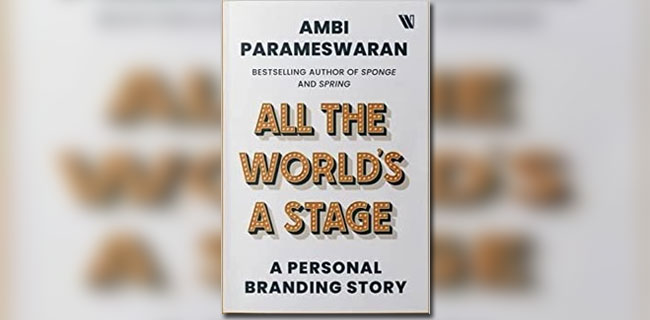
    Sanjeev KotnalaYou can read ‘All The World’s A Stage’, by Ambi Parameswaran, for a brief view of the ‘why’ and ‘how’ of personal branding. It is like the foundation course in an MBA institute – Personal Branding 1.0. So, after reading the course material- the book ‘All The World’s An Stage’, you know enough to hold attention and conversation on Personal Branding. However, there is not enough for you to push on a journey.


    Having read almost all the books by Ambi Parameswaran, I did expect something more. Something much solid. Something that could help a novice to start working on Personal Branding and not just think about it.


    As with all his books, in ‘All The World’s A Stage’, Ambi Parameswaran declutters and simplifies the subject matter. In this case, he oversimplifies the damn thing. It is an easy read with hardly any jargon. And wherever new terms are introduced, they are to create the opportunity to explain the subject – No complaints there.


    I do like the way the subject is approached. A conversation between friends Ambi, Shankar, Rita, Kunal and Joe during the Silver reunion at IIM Calcutta. Ambi plays the field expert role, amply supported by Rita, the HR expert, and Kunal, the almost convert. Shankar is the sceptic who gets converted by the end of 2 hours late-night walk late on the last night of the reunion.


    Now, in terms of personal branding, by naming the character of branding expert AMBI and suggesting he is much younger.


    Not that Ambi Parameswaran needs it, but demonstrating the nuances of personal, he uses the opportunity well. Ambi’s expertise, success with brands, networked connections, teaching assignments, books like Sponge and Spring, talks and references to keynote addresses are sprinkled throughout the book. Well, that is some real suggestion and hints towards Personal Branding.


    ‘All the World’s A Stage’ does an excellent job showing that each individual is a unique brand. Your responsibility is to care for and create your Personal Brand, as it is an influencing factor in your professional life.


    In the book, Parameswaran touches on various steps and questions that one needs to address in creating and nurturing a personal brand. However, it lacks a concrete roadmap and exercises that would allow the reader to gain much from the book. Maybe that is a flaw of the conversational storytelling adapted by Ambi Parameswaran in his books for the first time. But some exercises could have helped make the book more relevant and impactful.


    Discussing the process or the steps of Personal Branding will spoil the impact of enjoying reading ‘All The World’s A Stage’, which is not right.


    However, here is something that I can share without taking much away from the book. Brick by brick, the book brilliantly demolishes seven personal branding myths.

    1. Personal branding will conflict with corporate branding.

    2. Personal branding happens on its own.

    3. Personal branding is very different from product branding.

    4. Personal branding gets set in stone and is unchangeable.

    5. Personal branding can exist independent of your executive presence.

    6. Personal branding is very different from executive communication or executive voice.

    7. Social Media is a unidimensional one-way street for personal branding.


    Ambi’s book almost kills the book that I have been writing, which is still WIP. The idea of the book ‘You The Brand’ was seeded in our 30th Reunion at IIM Ahmedabad. There I took my batchmates through a small part of my ‘Brand-i’ workshop and empathised with my belief in being responsible for our Personal Brand. That night I ended up discussing the subject with a few of my friends at Louis Khan Plaza and a walk through the old campus. So, the book was almost a déjà vu and a reminder that the projects should be completed on time.


    I go further in my ‘Brand-i’ workshop on Personal Branding or individual coaching. I warn the participants that they better care and work towards the desired Personal Brand identity – impression and perception or be willing to be branded by default. Because branding anyone is as simple and naturally involuntary as breathing. Well, one does need to perform and have the desired skill sets. Still, a right Personal Brand – actual or perceived can definitely smoothen the process of climbing the organisational pyramid and exploiting business or personal opportunities. And here, as a true advertising person, I am more interested in how it is perceived than it actually is. Because perception is more potent than reality. I know I should have placed more importance on Executive Dressing, Voice and Presence than I did during my corporate life.


    To know more, read the book ‘All The World’s A Stage’ by Ambi Parameswaran. He does a pretty good job of explaining their importance.


  • On my Bucket List: Wish to work with Zulu Alpha Kilo


    By Sanjeev Kotnala


    Sanjeev KotnalaIf there is one creative agency I want to work with and spend some time with, it would be ZAK- Zulu Alpha Kilo. I have been hugely impressed by their culture, work and approach. No, I don’t know anyone in Zulu Alpha kilo, and I don’t think there will be an opportunity for me, but there is no harm in adding to your wish list- bucket list. Anyway, you don’t get to tick off everything on your bucket list like – my travel bucket list is still looking for sponsors.

    I share some old dated self-focussed work by Zulu Alpha kilo- and not their work for clients. Things make me want to be in Canada and work with them. At least hear them talk and work. Maybe we could get them at Goa Fest next year!

    To see some of Zulu Alpha kilo work, click here.

    And as the site says, REAL WORK- featured work– click here. The agency says to have created a Parody website that pointed out the sameness in agency websites. Featured on the site are fictional co-founders Frank Zulu – ‘chief executive, executive officer’; Marcus Alpha – ‘ultra-chief creative director officer’; and Katherine Kilo – ‘VP strategic strategy officer in charge of everything. Services at the ‘World’s fullest full-service agency’ include ‘cattle branding’, ‘calculus tutoring’, and ‘unofficial Cannes Lion trophy manufacturing’. How cool it is.


    The Wall at Zulu Alpha Kilo.

    I remember doing such an exercise at the Mudra management training programme sometime in 1987 in Ahmedabad. The programme had Naganand Kumar asking us to write about what the earthen horse in the training room would say, silently watching the sessions if it was to come to life. That was to transpose your perspective and speak from a different space. It is an excellent exercise to do.

    So: What if the agency could talk? What would it say? ‘The Wall’ is a short video created by Zulu Alpha Kilo when it was honoured to be nominated for both ‘Agency of the Year’ and ‘Digital Agency of the Year’, and were asked to create a video to represent the agency. Here is the response of Zulu Alpha Kilo some 9-10 years back. The Wall at Zulu Alpha kilo is for mature audiences only.


    Mery Jingles From The Bottom Of Out Bottoms

    Watch this –  Zulu Alpha Kilo clip Mery Jingles featuring Spanish percussionist Jorge Perez performing the song with vocals by Alana Sinkey. And when as per reports, some complained the clip being misogynistic, the company denied it and said, “As ‘equal bum opportunists,’ both male and female bums were used,” and added that they have also made a generous donation to Colon Cancer Canada.”


    Scared Straight: Out Of Advertising 

    Scared Straight: Out of Advertising comes with a warning of EXPLICIT CONTENT and a rider that reads, ‘The following contains subject matter that may be disturbing to those hoping to enter the ad industry.

    It is humour laced and should terrify any new joiner to think again about their career in advertising. Here senior creative resources give the potential recruits reasons why choosing advertising, more so, Zulu Alpha Kilo, would be a wrong choice.

    Come to think of it, this video was the shirt-self-promotion video produced by Zulu Alpha Kilo when shortlisted for Strategy Magazine’s Canadian Agency of the Year Competition.


    Zulu ALPHA KILO Blank Canvas

    Simple project. Zulu opened its doors in 2008, and a blank white canvas was displayed in the office lobby. The agency encouraged employees and visitors to express their inner artist and colour canvas. A stop-motion camera captured every stroke creating a mini-documentary.


    Saying NO to Spec Work – Zulu Alpha Kilo

    Okay, it sounds unreal, but Zulu Alpha Kilo, a leading Canadian independent ad agency, does not do spec creative. In India, I know of few who hold a no-spec approach as an agency or consultant. But it is still rare to see some agency holding on to this for too long.

    Zulu believes in being a platform for change in the marketing and advertising industry. They not only say ‘no’ to spec work but are also known to pay candidates for their job interview time. Watch this talk where Mike Sutton – of Zulu Alpha Kilo talks about Say No to specs.


    Here watch the famous World’s Worst RFP.


    Zulu Alpha kilo’s recent take on AWARDS- the case of left-handed Mango Chutney. Yes, there are polarised views on this communication too- but it does make a point.


    And here is ZAK’s pitch for the Campaign of Clinton and Trump. Watch to know how not to take yourself seriously and make a point.


    ADDON

    While we are at the ‘Say No to pitches’ and ‘awards’ here is a video on appeal to the Cannes jury and spoof on social cause-based advertising. Does it ring a bell?


    While at it, you can watch one about the Award Case Video.


    I remember many other videos made for Abby in the nineties, but I have no access to them. Out of them, there were two I would love to see again. One was Durga Khote Production by Mudra- ‘Advertising Works it Works’ and the second was a tale on Sholay- ‘Pitch mai Kitni Agencies’- that ends with – ‘This year forget the Abby awards. However, here is a clip taking a shot at the ACCOUNT PLANNERS  show. I like it.


    NET-NET

    I may not get a chance to interact at Zulu Alpha Kilo, but if you people at Zulu Alpha Kilo get to read this- you know how much I respect your approach. Maybe you will think it over.

    The debate about whether advertising agencies should do speculative Pitches or not is not a new one. Someone has to bite the bullet. At least Charge for the time and effort that goes into it. At least ensure that the client does not go back to the same agency that was the reason for the pitch.

    Similarly, the Scam ads- Patli Gully ads- surrogate communication for awards ( not surrogate advertising) and Plagiarism  is a reality that needs close monitoring. Recently, we have seen some 2-3 works that have screamed ‘For Awards’ and will most likely win many awards. But who will bell the cat? Till then, keep debating.


  • Dealing with Disability: It’s a question of mindset…


    By Sanjeev Kotnala


    Sanjeev KotnalaSeeing the videos of a differently challenged or differently-abled people or person with a disability (no longer called disabled) performing tasks forces one to question the term disability and look at the possibilities. It not only puts one in awe of the potential and demonstrated capabilities but also makes one wonder how much one has been able to achieve in life. At times, it makes one wonder who is the one who is differently challenged.

    Seeing the videos of persons with disability (no longer called disabled) performing tasks forces one to question the term disability and look at the possibilities. It not only puts one in awe of the potential and demonstrated capabilities but also makes one wonder how much one has been able to achieve in life. At times, it makes one wonder who is the one who is disabled.


    YOUR JUDGEMENT MY DISABILITY 

    So, it strikes a chord when one sees the Future Generali campaign #DisabledByYourJudgement sensitising people to the disabled community. There is no reason for one not to appreciate the skills and talents of persons with disabilities and realise how we tend to discourage them with our judgements and reactions.

    The film questions seeing every simple task, achievement, or action by persons with disabilities as magical and inspirational. Why can’t others see them as regular with the usual demands of life, emotions, relationships and things to do? Watch and then decide if it is not time to free disabled people from such perception.


    HIRING A PERSON WITH A DISABILITY

    My first direct interaction with a disabled person in the service industry happened at Lemon Tree Noida. He was a deaf-mute person from the housekeeping department. It took a moment for me to realise first the difficulty and then the ease with which he functioned. And then there was no difference. Still, a few corporates take that extra step in employing persons with disabilities. They hesitate and see it as charity or social obligation, which is wrong. The truth is that someone has to take the first step, and others can follow. This Hiring Chain film makes the point simple. May the tribe of corporates and businesses hiring disabled grow.


    It is a question of mindset. A question of opening your mind and seeing persons with disability as an integral part of life and society. With the enhanced new technology, some of the challenges are being addressed. Brands are working towards more inclusiveness. Here is a film: Accessibility by Apple. The film shows how technology embedded in a simple standard device like the mobile phone can help persons with disability by enhancing accessibility.

    Apple claims it takes on accessibility as a Human right. Hence, features like Door Detection, Sound Recognition, Voice Control, and more are designed to let the devices work in ways that work best for disabled people. 

    Apple accessibility is all about multiple solutions that help users with limited physical or motor abilities use your apps. Voice Control and Switch Control use the accessibility hierarchy to interact with elements within the app. The brand adds, Make Apple yours, make it big, make it clear, make it speak, make it listen, listen and make it simple. Here is more about Apple Accessibility and accessibility support, extending to even app development. Here are some of the innovative accessibility features.


    NET-NET.

    Disabled people are special, just like we are. Everyone needs one or the other in life to feel supported, respected, valued, and capable of better things. Needing support only makes us human beings. And that’s true, differently abled or people with disability.

    We have branded these people earlier as handicapped and then as differently challenged, differently-abled, Divyang and Persons with disability. Every time making a minor adjustment based on the new term and implied empathy. The time has come when we are inclusive in the best possible way and no longer see them differently. However, they are willing to accept the cards life has dealt them and eager to work around it to the best of their abilities.

    We can at least normalise our behaviour and reaction when we meet a person with a disability, interact with and see doing things we assume will be tough.

    So, it will be nice and polite if one asks before offering help. It is wrong to assume that disabled people always require assistance leading their lives, and the first step is treating them as equals. It will be good to see the Corporates and the Government working on accessibility across Information & Communications, Employment, Transportation Standards, Public Spaces Design and Services.


    MFPA

    I regularly contribute to MFPA– Mouth and foot painting artists and get beautifully painted cards and envelopes. MFPA works with over 800 artists across more than 78 countries with the simple motto “Self-help, not Charity’. And I have found that most people with disability demonstrate- reflect this attitude in life. Do visit their https://imfpa.org/paywebsite and if interested buy some product.


    ADD-ON

    Maybe you would do good and watch this video. You Are More Disabled Than Me by Nick Vujicic and another one for Amrita institute for the differently abled.


    An earlier version of this article had a few usages which are not considered kosher when one writes or talks about persons with disabilities. Like differently abled and differently challenged. We’ve made the corrections. As a publication which has been highlighting the need for using the right descriptors, our apologies.  – Ed

  • How about not making a Resolution this New Year?


    By Sanjeev Kotnala


    Sanjeev KotnalaThe new year is around the corner. Every media will soon start covering the year gone by. You will again read top headlines across different genres: Politics, Celebrities, Bollywood, Sports, Natural Disasters, Scams, etc. While this outward view is a good exercise for general knowledge, there is another perspective that most of you will indulge in. The inward looks will help you evaluate how the year has been for you.


    What was that you wanted to achieve? What have you achieved? Where did you not succeed? What have been the learnings? And that you will get when you try analysing the reasons for the success and the failure. This is the simple PaRAM ( pause, reflect, absorb and move-on) mode of working, which should be practised throughout the year. But it’s okay; at least you do that.


    The outcome of this exercise is the new set of New Year resolutions you will make. Knowing that, like every other year, most of them will not survive more than two weeks into the new year. But it is the new year, and the tradition and rituals demand you make a resolution.


    MAKE A RESOLUTION, NOT TO MAKE A RESOLUTION THIS YEAR.

    I know the above is a silly statement, but it is to catch your attention. Read on.

    The moment you make a resolution based on your past experience with yourself, you give yourself a chance to break the resolution without any guilt. As everyone breaks a resolution, what’s the big deal? So, this year I want you to make a small change. Maybe it works. Don’t make resolutions; decide with clear timelines and milestones. Rewards and penalties in case you fail to live up to your decisions. Because every day and specially maybe the new year is an opportunity for you to reflect and decide how the story of your life will now unfold, what the new chapters will be, past is anyway unchangeable. And you only decide what you become.


    DECIDE- PLAN MILESTONES.

    So first, stops using words like ‘TRY’ and ‘ATTEMPT’. These give you a small width to cheat to fail. Because you said you would try, two possibilities immodestly become possible. Resolutions are maybe, and if, decisions are final. And make them SMART decisions; Simple, Measurable, Achievable, Realistic and Time-bound.

    For example, I will read 26 non-fiction books this year. Then break it down into quarters. So, you say, by the first quarter, I will read eight books, by Quarter 2: 16 books, by Quarter 3: 20 books (as Quarter 3 will be sales work – pressure and many festivals) and by Quarter 4- 26 books. I can tell you it works as at peak I was reading more than 70 books a year and uncaging them.

    Another example could be, I will finish writing the book by September 15. Now finishing and writing are still vague. You could say I will finish my final self-edited draft of the manuscript by September 15. Better still, by September 15, I will hand over my final manuscript to a professional editor. This too works- as have been able to get five books published by now.


    It could be as simple as, this year, I will

    (1) not miss the birthdays of my family members.

    (2) Take off on my spouse’s and my birthdays and anniversary.

    (3) Attend all PTA

    (4) Take the family on at least two one-week holidays.


    MAKE YOUR DECISIONS PUBLIC.

    Then take the biggest plunge: make the decisions public to the people who matter to you in life. The stakeholders of your lively ecosystem. Find a confidant who will help monitor your progress on the decisions taken. Make it relevant for the confidant to monitor. The confidant must also gain or lose something if there is success or failure.


    NET-NET: EXECUTION IS THE KEY.

    No one has been appreciated for the intent; it is always the visible results that matter. This is true for professional and personal life. And most of my readers would know this truth; in fact, they would have most likely read many books like ‘Execution: The Discipline of Getting Things Done’ by Charles Burck, Larry Bossidy, suggesting the power of execution but have failed to take it into practice.

    This is the time to flip, change yourself from a resolution –  intent – thought – plan person to the decisive action-oriented person- full of demonstrated intent. Maybe this is the slight nudge you need in your life, or this is the atomic habit change that may change your life perspective.

    At worst, nothing will happen. Despite the plan, rewards, penalties and the confidant, your decisions will go the resolution way. So what? It is only a case of status quo, with no change. Then you can always read this next year and be better prepared for the decision-making and implementation.


  • Sanjeev Kotnala: Knowing & Acknowledging A Mid-Term Crisis

    By Sanjeev Kotnala


    Sanjeev KotnalaA Mid-Life Crisis is not new. However, it is now better understood and more easily identified than in the past. In the current changing economic and employment scenario, the long Covid scare and the spate of layoffs, we are bound to see more cases of mid-life crisis in Marketing, Advertising and technology. Unfortunately, like in the case of mental illness and disorder, we don’t seem to acknowledge and address mid-life crises.


    MID-LIFE CRISIS

    The moment someone says mid-life crisis, an image of a person some 40-60 years of age crops up in mind. Issues with self-confidence and transitional identity are part of the assumed problem. Job, career, or family issues dominates the perception.

    It is a gender and age-neutral phenomenon, where people fight aimlessness in life, nostalgia, and references to the past. Some regret their past actions and feel pressured to take impulsive decisions. Mid-life crisis is alarmingly rising amid emotional turbulence fuelled by dissatisfaction, ambiguity, and a deep desire for change.

    People tell the person going through a mid-life crisis that it will get better with time. It is just a question of them making some effort. However, it may not be the case.

    One should listen to them and not give unsolicited advice based on one’s experiences because no two people face the same issue; their framework is different. Their expectations and experience have taught them to expect different things from life.

    Most people fighting mid-life crises have some idea of the reason behind it. A therapist or a counsellor can better unearth the feelings and emotions leading to the situation. Medical intervention is thus highly recommended. This note is just for understanding the signs so that early action is possible.


    A DIFFERENT TAKE ON MID-LIFE CRISIS

    Mid-life crisis gets its name as it was earlier understood to be a problem of mid-aged people. It is when one realises (need not accept) mortality and the advancing age’s constraints on the person. The efforts to stay youthful increases with age and then comes the realisation that one can only delay, not stop, the process. Body structural changes, including decreasing attractiveness and sexual desire and kids growing up, are some of the changes that one may not want to acknowledge.

    Living a hard life with unfulfilled desires, ambitions and life projects puts a person under undue pressure of ageing. At the same time, realised milestones in life can create a vacuum and a question of what now. Such unanswered questions can also lead to a Mid-life crisis.

    Mid-life crisis deals with identity, vagueness or feeling of purposelessness or a lack of control and diminishing self-respect. It can occur at any phase of life and has a different meaning and trigger point for everyone.

    A change in responsibilities, roles, and liabilities in professional, personal, or social life typically triggers a mid-life crisis. These sudden change in status is enough to trigger behavioural changes unless one is ready for it.

    There is a Mid-life crisis when one gains adulthood and the expectation of people changes. The same is true at other phases of life when one enters college, professional studies, starts working, gets married or into a serious relationship, becomes a parent and so on. Every stage of life that brings new demands is a potential mid-life crisis. However, most of us are somewhat prepared to tackle them collectively. Hence, the Mid-life crisis is averted. However, for a few, these changes trigger a mid-life crisis when they cannot manage the new environment and expectations.


    OTHER TRIGGERS OF MID-LIFE CRISIS

    There are emotional issues that can trigger a Mid-life crisis. Some of them are like an expected and potential decline in happiness in life, a sudden aimlessness in life, and questions surrounding purpose in life, raising self-doubts on capabilities and potential. Fear of failure in the new environment, frustration with the changes in roles and responsibilities in personal and professional life, and a plateau-hitting relationship. Stagnancy in career, lack of ambition or underachieved ambitions, peer pressure, over concern about other reactions and perceptions. Loss of dear ones at times can also trigger a mid-life crisis.

    These can lead to symptoms like changes in energy levels, irritation, lack of motivation, pursuing ambition, mood changes, mood swings, and even fluctuating sexual desires. It can even lead to a state of indecisiveness as well as financial irrationality of over or under-spending. Some demonstrate sudden deep diving into religious and spiritual activities or withdrawal. The symptoms vary from person to person.

    Typically, a trigger leads to a mid-life crisis which, if rightly identified, can lead to a possible resolution. However, an unidentified and unresolved mid-life crisis can very well have the potential to develop into a depression. Don’t take any of the symptoms lightly, more so if they persist for more than two weeks.


    NAVIGATING MID-LIFE CRISIS

    Mid-life crisis is not a recognised medical problem; however, a trained medical counsellor can help. So, what I share is suggestive and not a replacement for medical advice and intervention. However, these can help mitigate or overcome a mild mid-life crisis.

    Mid-life is not a crisis; it needs an acceptance of changes and to come to terms with the dynamic ecosystem of one’s life.

    First and foremost, accept a crisis and recognise that you are not the only one facing it. Pushing such things under the carpet is not going to help. Moreover, one must not see oneself as a cause or being punished for some past actions. Don’t pity yourself or start asking god-‘Why me?’

    Finally, be willing to make efforts to face the situation. This is the first realisation and acceptance that is desired.


    SELF DISCOVERY

    One can take the help of inward-looking open-ended questions; they can help one understand oneself better. What makes one feel most satisfied? Who are the people one enjoys spending time? What are the unfulfilled desires and ambitions? What are the milestones I look forward to? Maybe these can help one realise the things triggering the mid-life crisis. Maybe such questions will help one find answers to probable actions.

    It helps if one is positive towards life and looks forward to new opportunities. If one realises and starts doing things that make one happy, including reorientating and realigning the people in the ecosystem. This can involve re-evaluating short and long-term personal relationships. One may need to end a toxic relationship that pressures the emotional front.


    NET-NET

    There are no fool-proof suggestions. However, accepting the changes happening in one’s ecosystem is an excellent start to tackling the situation. Furthermore, seeking a close confidant’s point-of-view on the situation too helps.

    Another way is to make oneself futureproof in personal and professional life by proactively planning for future changes. Like a person learning new skills to remain employed when the current position is threatened. Like a father who takes parenting sessions before the child’s birth to better cope with the changes that are bound to happen.


  • Trends impacting Consumer Life in Tier II & III India


    By Sanjeev Kotnala


    Sanjeev KotnalaThe changes in the market and ecosystem are led primarily by brands and companies providing new or better products or services to the changing consumer needs, desires and wants. Or when the brands try to satisfy an unsaid, unfelt need that they believe exists. External factors like a pandemic, economic situation, inflation etc., dully impress and affect these changes as they affect the consumer reaction and expectations. We typically see such changes from the company/ brands/ category and technology point of view. However, there is another way to see it. Here are some of the ways consumers in Tier II and II see life changing.


    The Case of Shrinking Packs

    The quantity of products in packs has been shrinking to keep the per-unit cost under control. It has shrunk to a level where the consumer experience is affected. For example, you need three packs of new Maggi to serve two. Soon brands will have no margin to shrink the pack further. The consumer, on the other side, wants single serve/use packs to be more than sufficient for a single serve or use.


    Comfortable with E-commerce

    The average consumer may still not be comfortable ordering shoes online; there is high overall comfort with e-commerce. Ease and speed of delivery and the option to exchange or return have enhanced consumer confidence in e-commerce. The range of products bought through e-commerce is ever-expanding. However, the neighbourhood kirana or medicine shop is still the answer for day-to-day needs and purchases.


    UPI-simplified E-payments

    Consumers have taken to e-payments with UPI and wallets like fish to water, surprising many naysayers. It has opened the way for e-currency, transparency and ease in transactions and has impacted the use and abuse of credit cards.


    Consumers are more Phishing and Fraud Aware

    The collective efforts of banks and regulators have worked. Typical Tier-II and III consumers are better aware of scams and phishing. The number and incidence may seem to be on the rise as more consumers are confident and comfortable reporting their folly and stupidity while successfully retrieving scammed money. However, fraudsters are keeping ahead with new versions and innovative scamming.


    Comfort with Changes

    The consumer is open to new ways of living. They are comfortable working from home, online education, and even buying insurance. They are open to a broader set of career choices. There is reduced pressure on ‘what neighbours and relatives will say’. There is a far greater sense of confidence and individuality in decision-making.


    Life Uncertainties are Better Accepted.

    Consumers accept the uncertainty of life. Their comfort levels have shaken with the earlier benchmark. The financial implications of lack of job security, deaths, and medical costs have shaken their comfort levels. They are extra cautious and willing to invest more for future emergencies.


    They are No Longer Buying.

    Consumer understands the range of choices before them. They understand the sale trap and the no-cost EMI effect. They understand brands are chasing limited demand. They are no longer buying things but selling their money, time and engagement.

    Democratic digital information access has transformed their attitude. They are no longer willing to live with below-average service and product quality, and they are cautious and sure about How much they will pay for a service. Also, the costlier equals quality equation is no longer considered sacrosanct.


    Women have Focus and Rights!

    There is still a long way to go. However, women in families and daughters, in particular, have it a lot better now. Families collectively look for and encourage their education, life, dreams and aspirations. The need for financial independence for a better future is fully understood and endorsed. Domestic violence is no longer taken for granted. Divorce is still a bad word but losing is slowly losing the stigma attached to it.


    Food Ordering is on the Rise.

    Eating out may not be that prevalent, but ordering in is becoming a regular practice. Families, where the kitchen is closed at least one day of the week ( and mostly fixed day) are on the rise. The consumer continues to complain about packaging and delivery charges but willingly orders more than what is needed.


    Search has the answer to everything

    The consumer is searching on the internet for everything possible. Be it medical conditions, electronics, insurance, investments, doctors, vacation, education and more. There is additional pressure on brands and companies to find a differential – a reason for preference in the era of pre-searched information. Additionally, consumers have their algorithm for what and when to believe the reviews that are an integral part of the search process.


    Facebook is Dead

    Engagement across social media platforms is rapidly changing. The ever-flirty consumer is comfortable shifting loyalties to a new platform that works for them. Metaverse is a good possibility, and the brands are trying to explore and capitalise on it- however, the traction may take a bit longer to build up in Tier II and III.


    Data Privacy

    The consumer continues to sign permission for the apps blindly. They hope the regulatory system and active users’ collective scrutiny will ensure everything is correct. However, they are rightly cagey about their financial and banking data. Frequent data breaches are making the lack of data privacy more acceptable. The consumer reacts to data breach just like they react to wearing a helmet, with a denial, ‘It will not happen to me’ attitude. The data protection rules and norms are not sufficient but are evolving with time.


    Short Format is King

    The shorter attention span issue is a reality. Communication is becoming shorter and shorter across videos, reels, blogs and articles, stories, and films are on the rise. The consumer is interested in consuming a wider variety of content than devoting time to one content. Having said that, if the content is right, differentiated, suitable, relevant and exciting, the consumer will give it the time and required engagement.


    Celebrities and Influencers Still Work!

    Consumers have started reading between the lines and questioning celebrity endorsement and influencers. Though the section of the gullible consumer is decreasing, a large section still gets taken by the use of celebrities in advertisements. So, at least in the near future, the practice of celebrities and influencers will continue, leading to lesser impact and return. We will see a rise in Micro-influencer influence. Don’t be surprised if regionalisation and religionism start influencing the choice of influencers.


    Traditional Media is Not Yet Dead

    Yes, digital interaction for the average consumer is on the rise. Fast-forwarding and skipping advertisements is a habit. And most users engage in other activities during pre-rolls or unskippable promotions. Business communication over Print- Radio, and Television is still influential in tier-II and III towns. It may work better if the brand or the company is willing to make extra efforts to work with the media. In tier-II and II towns, ignore traditional media at your own risk.


    Overload of Affordable Entertainment

    With the availability of the internet at very affordable prices coupled with low cost of channels and OTT platforms and free content across platforms, the Indian consumer is spoiled for choices. Movies need to look at the cost of experience and content to continue attracting viewers,


    Boycott is losing its Sting

    The average consumer is not much affected by the call for boycotting brands, products, and services, including movies. Even the people on social media who have overused this tool of protest themselves reach out to experience things to see and evaluate if the call for boycotting was valid. Life still has far more important priorities than following the boycott.


    Religionalism and Regionalism is on the Rise

    It is an old problem that never dies. The polarity is far starker and divided. No longer are consumers warry about showing and defending their religion and region. Everyone is insecure and believes it is their duty and responsibility to protect their beliefs and not tolerate a different POV.


    Net-Net

    The average consumer in Tier-II and III towns is far more aware and inquisitive than what is credited to them. The brands and services must understand the needs to address them differently. One can today experience the statement – ‘Change is the only constant’, which places more pressure and the need for the business to be agile, insightful and proactive.


  • A wishlist for Advertising, Marketing, Media & More


    By Sanjeev Kotnala


    Sanjeev KotnalaIt is that time of the year, the first week of the new year, when your resolve not to break a resolution will be tested. Most will fail unless they have no resolutions. I pick my unfulfilled wishlist from the last so many years and lovingly look at it. I have repeatedly failed to find ways to nudge people into helping me. I need the help, as the intent and wishes don’t count, and they mostly need collective initiative.

    My dear friend and mentor, Vermajee, is still recovering from the hectic new year celebrations. He is back from his vipassana experience and promises to share something in the coming weeks. The wait is going to be worth it.


    WISHLIST

    So here is the wishlist. It is advertising, marketing and more, and you are free to discard it or try acting and helping out on at least one front. Trust me, it will make a difference.


    NO FREE PITCHING

    Pitching for business is an integral part of agency life. It is costly and sucks on agencies’ time, efforts and resource deployment. Focussing on it defocusses the agency from existing businesses.

    The brands laugh all the way with new ideas and solid research. Many brands continue to work with the incumbent agency making a mockery of the process.

    I wish agencies start charging a fee for pitching. And the pitch must result in a change of agency.


    INVEST IN CREATIVE DEVELOPMENT

    I have worked with clients who understand the importance and significance of investing in the creative development process in terms of time, effort and funds. They don’t undernourish the creative process to further invest in media and reach.

    Simply put, a better creative needs fewer exposures, thus saving funds and time. It is a different question of why any brand should be willing to expose mediocre creatives that work against the brand in the long term.


    AGENCIES MUST PARTNER WITH THE CLIENT

    The days of agencies being genuine brand custodians and strategic partners are over. The business is tricky, and consultants, advisors and strategic firms have made inroads. The lowest fee syndrome is a reality, and margins are wafer-thin, resulting in exodus and the absence of new talent.

    It is tough to expect the agencies to stop second-guessing the client or delivering what the client wants.

    The respect is lost, and I wish there were ways to win it back.

    At least tell the client what you really think and recommend.

    If the client wants to waste their resources, your drain is as good as any other. However, you still need to decide if you are willing to be a party to this wasteful non-strategic investment from the brand.

    I am hopeful. I know a few agencies that are very clear about what they want to do.


    ASCI IS DISBANDED

    My biggest wish is that the industry has no need for ASCI. And for that to happen, the brand owners and agencies must unite to voluntarily self-regulate. However, I know that prominent brands and repeat offenders will continue to test ASCI guidelines and reactions. We will have new and fresher guidelines before we have foolproof ways to implement the earlier guidelines.


    DIGITAL SPACE LEADS WITH RESPONSIBILITY

    Hopefully, digital and social media will act responsibly. They will do moment marketing with due permission and checks. They will keep the social, cultural, regional and religious sentiments in check. The disclaimer for paid (in cash or kind) associations will be prominently displayed. The warnings and statutory requirements are adhered to and not just executed for the legal framework.


    TRADITIONAL MEDIA FINDS A NEW LEASE OF LIFE

    Traditional media – print, radio, outdoor and television have much more to offer. Someone must work to ensure effectiveness and not just adapt the digital initiatives. Brands can benefit if the agency, client and traditional media work with rationalised rates.

    However, I believe the steady skew towards digital media will continue without many knowing how best to exploit it. Just like the investment in traditional media will decrease, with no one really trying to develop the right creative to enhance efficiency and effectiveness.


    CELEBRITY ENDORSEMENT IS NOT THE IDEA

    Celebrity endorsement seems to be the easy way out for the brands. And for some, the only way out. For many regional brands, it means credibility and a demonstration of success. Unfortunately, the audience consumes it accordingly, and brands keep using celebrities as the idea.

    I have nothing against the rightful use of celebrities or using celebrities as a character. But can we look beyond celebrities or at least use them in the right context and way.


    SOCIAL MEDIA FOR APPRECIATION AND HARMONY

    Social media is full of hate and fake stories. One does not know what to believe or disbelieve. Digital algorithmics keeps serving things one loves to read and react to, thus continuously narrowing thinking. Help make social media a good place to be. Appreciate and share things of community harmony and goodness whenever possible and don’t just react and forward things that you have reason to doubt.


    ONE NATION, ONE LAW

    The most challenging thing to expect. The nation really needs it. Every citizen must be governed, controlled and motivated by the same rules and regulations. Then true secularism will emerge; otherwise, we will continue to see growing communal distrust and hatred.


    RETURN OF PRIVACY. 

    We have sold our souls. We have given all the permissions, and the digital media is busy listening and watching us. The concept of privacy is dead. We are addicted to what we get by selling our information, reactions, location, dreams and desires.

    As individuals, we cannot do anything, and we cannot get out of the system.

    The government and consumer activist groups need to come in. We need stronger privacy laws.


    STOP WASTEFUL GOVERNMENT ADVERTISING

    There is no justification for the multiple full-page advertisements and the poorly produced AV by state governments in print and TV. There may be logic for intra-state advertisements, but hardly any for ads in other states. Even in the state, achievements, plans and projects are covered in the same media. There is no need for money-guzzling advertisements.


    PET-FRIENDLY SOCIETY

    I know how badly we behave and treat pets and animals. Yes, some people are afraid of them, and there are issues. But, instead of using them as an excuse, we must address them. We are responsible for them all, be it the dog, cat, cattle or any animal.

    If you have experienced a pet, you can appreciate changes in the family. How loving and caring becomes a natural behaviour. How pets help closely knit the family.

    Go experience it, and your thinking will change. Think again before raising issues and discussing how we treat pets and animals.


    KNOW YOUR CULTURE, RELIGION, RITUALS AND PRACTICES.

    If the generation next does not know about religion, region, language, culture, rituals and practices. In that case, we are responsible for it. I wish every religion would educate the next generation.

    I have been running #IgnorantHindu blogs to share knowledge and information on Hindu festivals, mythology, rituals and practices. Every practice does not need scientific explanations or logic, and you don’t have to be defensive about your religion. But you must allow everyone to follow their religion without discomforting anyone and following the land of the law.


    NET-NET

    I have too many wishes and know most of them will go unanswered. Nothing would change, even if all of the above were answered. However, I will make efforts from my side. At least open the discussion and perhaps influence and nudge someone towards my idealistic society. It will make a minor difference, but a difference.


  • Effectiveness ladder of purpose-led branding in life and business


    By Sanjeev Kotnala


    Sanjeev KotnalaFinally, last Sunday, I visited my dear friend and mentor Vermajee at his Mumbai residence. Last week, he returned from one of the ashrams in Uttarakhand after completing a meditation course that started on December 25, 2022 and ended on January 4, 2023. He was feeling fresh but was not opposed to some drinks in the evening, and the mood was sombre and purpose-led.

    Lintas sent me to a short four-day yoga meditation at Lion’s den Lonavala in the mid-1990s. By Day 3, I was talking to rocks and flowers and ready to leave. I poked Vermajee by telling him that maybe he was now enlightened with a purpose in life and that he had a direction.


    Simplifying Purpose.

    Vermajee spoke. You watch cricket, and you would have watched a purposeful Australian cricket team trying to win against a South African who suddenly realised they had a purpose too. Maybe they were inspired by the suddenly purpose-led Pakistan cricket team on the last day of the test match with New Zealand. The goal of every team is the same. To win and not to lose- to engage their fans. The intent may be stronger if the test series championship is at stake. The strategies and the format may differ, but the purpose remains the same.


    THE PICTURE WAS GENERATED BY DALLE.E


    Purpose In Life.

    Similarly, we all have the same purpose in life. To live by Dharma and keep improving with time by natural evolution or individualistic drive. To repay our debts. The ultimate purpose is Salvation- Mokasha– Nirvana. It is as simple as that. It’s what every enlightened person and preacher has been saying. Do good. Do live and let live. To not only be seen as a good Smartian, a person with Dharma, honesty, love and care, and to behave like one. And being a better person than you were yesterday is the simplest way. Don’t you always send wishes to friends, ‘May your today be better than your tomorrow’. You just need to tweak it a bit. Say, ‘May you be better than what you were yesterday’, and the wishes will not only have a better meaning but a great direction- however, many may not understand and appreciate this change.


    Probing Purpose-Led Business.

    I knew Vermajee was oversimplifying the whole discussion, and it was time to throw a bait and get the maximum out of it.

    I poked further. That would mean that every purpose-led business, brand, and service must have the same purpose. Then what is there with all these purpose-led design and communication purpose-led brands?

    Vermajee smiled, and that smile said that he had been thinking about the subject. He countered, why should it be different for the business.?


    Purpose And Business.

    Vermajee continued, and I started soaking in the Gyan.

    The business purpose is growth. Brand purpose is to create better services and products at a lower and lower cost. What they change for you is the individual company’s outlook. And the purpose of it is to create preference. To evolve with time and adapt to the changing needs, demands, desires, aspirations, and expectations- thus giving the experience that is better than expected. Simple, that is the business purpose.

    There is nothing much to it. Consultants, agencies and researchers are trying to find a purpose for their brand, company, product or service. It is a business purpose, their business purpose. People who don’t understand, explore and realise their life’s purpose are telling the company what its purpose should and could be.


    You Don’t Force A Purpose.

    You start with a purpose, and there is nothing wrong with it. There is even nothing wrong if the purpose gets tweaked with time as it reflects the flexibility and agility of the company. But you don’t create a purpose. However, you may discover a purpose. It is simple: you may have a purpose or don’t. And it is fine if you understand the overall macro purpose of business.

    I have told you the business purpose from a consumer point of view. There is another purpose, which is creating wealth for the stakeholders. Remember, most will replace stakeholders with shareholders, but that is a myopic view. Stakeholders are a broader ecosystem, including Government, business associates, the category, and the consumers. The wealth could be intrinsically monetary and could be emotional.


    Purpose-Led, Purpose Less, Without Purpose And Faking A Purpose.

    Well, it’s the best situation if you have a purpose that defines and directs your decision. And that you are always true to it. It is more demanding than discovering the purpose. But not having a unique purpose for your company, brand and service is not wrong. Purpose does not make a company better or superior unless the company understands the growth, wealth and preference creation purpose of business. Like in life, many of us may not have a defined purpose, but we don’t lead a purposeless life. They are two different things. Such people may be more healthy, emotionally wealthy, and happy.

    The problem is when one fakes the purpose. When one forces a purpose or tries to define everything around a purpose. Where purpose is a mask and not a reality. Or when a purpose is a tool for perception creation. There may not be much wrong, but a fake purpose does not last. All fake purposes are campaign able and time-bound. They are a drag on the company after some time. One gets constrained and controlled by them, and getting out of it becomes tougher and more challenging with time. Because such a purpose does not align with the purpose of business, I shared it with you.

    Many brand or company purposes sold by consultants and agencies, like gender neutrality, wokeism, inner beauty, equality, and saving the world, based and sustenance-led green purposes, are just a mask. They are bound to fail as they are fake and not aligned with the real business purpose of growth, constant improvement and being future-ready.


    Without Purpose A Safer Bet For Brand And Companies

    With a twinkle in his eyes and a self-satisfying smile playing on his lipsVermajee could read the dilemma I was facing. He clarified for my benefit.

    It is better to be without a purpose than to fake a purpose. Faking a purpose is adharma in business. Doing anything for your benefit, manufacturing a purpose, and doing anything not aligned with the business’s long-term purpose is adharma.


    Archetype Masking

    Vermajee continued. I am not saying that the company should not try to explore or discover the purpose. But before adopting it, they must adapt to it across their internal landscape. Understand how the same person wears different masks while interacting with various stakeholders and how that is confusing and detrimental to a uniquely defined image.


    Net-Net

    Vermajee looked at me and continued to sum up the discussion.

    You should understand it is like the archetype-based purpose discovery workshop you do. Or the multiple archetype masking discovery you do for the organisations to align everything towards the same objective, knowing fully well that the objective is a mid-milestone and sometimes masquerades as a purpose.

    Everyone is happy as they discover something collectively which seems to work. But, I will iterate and say it is better to be without a defined purpose than to fake or force a purpose. And defining the purpose is a responsibility of Senior management- How to do that, you understand.


  • Should dominant archetype and persona gap across stakeholders worry you?


    By Sanjeev Kotnala


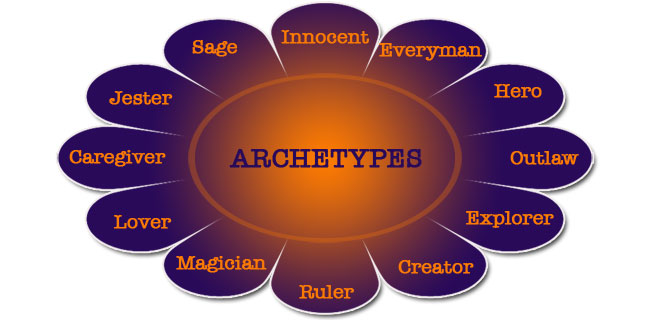
    Sanjeev KotnalaArchetype, Brand Persona, Brand Association and masks are not new concepts. In 1919, more than a century back, Carl Jung suggested that “There are forms or images of a collective nature which occur practically all over the earth as constituents of myths and at the same time, as individual products of unconscious and that these [archetypes] are imprinted and hardwired into our psyches.” He took this understanding further to create brand archetypes aligning with predominant Customer profiles. Carl Jung identified 12 archetypes: Innocent, Everyman, Hero, Outlaw, Explorer, Creator, Ruler, Magician, Lover, Caregiver, Jester, and Sage.

    Now consider the possibility that the consumers and people at different positions hardwired with a particular archetype may be putting up a mask that may or may not be in sync with their dominant archetype, as it may help them with better relationships, image perception, enhanced efficiency and effectiveness.

    The truth is that people do wear a mask all the time and life’s varied roles and responsibilities require them to act differently and wear different masks. Sometimes, people use multiple masks to interact with various stakeholders and audiences, and such a situation creates confusion because of the difference between expectation and experience.

    Moreover, masks are not true to the identity and may slip, compromising all the efforts.

    Masking is tricky but is a done thing.


    THE IDEAL SOLUTION

    The solution is to unmask and synchronise the archetype and brand persona for the desired consistency in reaction and impression. After all, what counts more than reality is perception.

    Exploratory work suggests that it is natural for the demonstrated archetype (Persona), real archetype and perceptual archetype to differ. The person may retain dominant traits of the real archetype, as they are hardwired. However, variations and tweaks, subclasses and subgroups of archetype and persona get reflected in their behaviour, actions and reactions, thus altering and influencing the resultant image and perception.


    BUSINESS ENVIRONMENT

    In a business environment, various stakeholders and audiences may perceive the archetype differently based on their experiences. To simplify the situation, we look at the dominant archetype and the perception created across five prime audiences; senior management, peer group, juniors, self-perception and perception outside the organisation.

    The person is more at ease with self and surrounding when there is an alignment across all the above perceived personal brand persona (archetype). And there is chaos, turmoil, and frustration if they conflict. There could be a problem of mismatch between self-perception and stakeholders’ perceptions.

    Many brand marketing consultants have focussed on streamlining the brand archetype and the company desired Vs demonstrated archetype through culture intervention and programmes. However, they have understandably missed looking at the archetype (persona) alignment of the prime assets of an organisation – the workforce.


    EXPLORING THE AREA

    I have worked with a few organisations open to exploring and addressing this subject.

    We used various net-based questionnaires to identify the personal archetype and persona. We used animal and celebrity association for perceptual archetype identification and cross-checked using net-based tools.

    For stakeholders outside the company, like retailers, business associates, and the workforce at the plant, we again used associations to understand the persona perception as it seemed more focused and easy to administer with a lower margin of error.

    We used a series of animal and celebrity pictures with important pre-identified characteristics to ensure everyone was on the same page. This characteristics list grew with time as audiences helped expand it with more generic interpretations.

    In some places, in-depth discussions were done for a better perception and understanding. We observed people were more open and better placed when the references were in their native language. Moreover, language allowed for highlighting finer nuances. The respondent would differentiate between a Shahukar and a banker, an adventurous sportsperson Vs a hobbyist, a Lieutenant vs King Vs subedar Vs Wazir, A government servant Vs a Government department head and a bureaucrat and, off-course, between a python and a cobra. We dropped political figures from the list as they had a highly individualistic and confusing interpretation.


    FINDINGS

    The findings fell in line and expectations.

    In one such case, the CFO was seen as a Sherlock Holmes by the franchise, a Sahukar by the retailers and a dictator by the sales force. And the CFO saw himself as a Sage and a comedian in sync with the company brand archetype. Even the MD and the directors saw him differently.

    In fact, in senior management, there was a considerable difference between self-perception and archetype discovery in how they saw each other.  And we tested these during the recruitment process to hire the right fit through net based tools. However the perceptual images reflected by the interview panel normally had wide variations.

    In another case the Sales head was seen as a true leader by the juniors, an opportunist by the peer and a wasted resource by the management.


    ACTION

    Multiple levels of counselling was done. The challenging phase was sharing the findings with the individual and explaining to them valid perceptions, and more difficult was determining the possible tweaks and corrections and monitoring them.


    NET-NET

    The final impact of such an exercise and counselling is yet to be seen. The management believes we are moving in the right direction to streamline archetype perceptions with the company/brand desired archetype. However, it has been interesting, exciting and somewhat of an eye-opener. One looks forward to working with another open organisation to understand and explore it further.