Category: AVIK CHATTOPADHYAY

  • What ails auto sales in India


    By Avik Chattopadhyay

     

    The Indian automobile industry, like elsewhere in the world, is an important barometer for the country’s economic health. And within the industry, passenger cars [including SUVs, UVs, MPVs and vans] stand on a pedestal as they are still aspirational [given a still very low penetration per household], most written about and, symbolic of status and success.


    When sales of passenger cars go up, everybody is happy…the automakers, the dealers, the finance companies, the service providers, the economists, the revenue collectors, the policymakers and…the consumer. Analysts say it is an outcome of “sentiment”…when the prospective new car buyer/ upgrader feels secure and optimistic about the economy therefore justifying the car purchase.


    So, after some 24 months of stunted car sales, when the overall industry numbers are looking more optimistic in terms of actual growth, everybody seems to be feeling good again. Analysts have predicted a 3-5% growth in numbers over 2013. Just that, on a closer look, the growth is being experienced by only a handful of brands and not the industry across the board. The sentiment of the customer has turned positive towards only those brands that have got their fundamentals in place. Maruti Suzuki, Hyundai and Honda have been the real beneficiaries. Mahindra seems to be getting back into action now. I am keeping the “luxury” brands out of this as that stratospheric segment is on its own roll anyway. But the others…almost 15-odd brands…made up of some truly global juggernauts and a couple local powerbases are still feeling the heat. A few have been at it for close to two decades now. And they have no dearth of “products”, the most popular punching bag cited for non-performance!


    What really ails these brands? Why do they not sell? Why do they not connect? Why are they not aspirational enough for more customers to embrace them?


    Five factors, given my experience of being part of the automotive industry.


    The 10% marketshare malady

    This is where the problem starts. Big brands have big egos. They enter the market on a high horse. Hence we hear of the “we will garner 10% of the Indian market by so-and-so year” statements from time to time by these big global brands.Nobody has really said that they aim for the most satisfied customers! Quite simply, putting the cart before the horse. Without creating relevance, articulating the promise and creating mechanisms of actually delivering it, brands think that setting up a plant and opening showrooms will ensure long term sales. After the initial euphoria dies down, the marketshare malady lies exposed.


    After-sales comes…after sales

    The service network should be the first piece in the business puzzle to be put in place, but sadly it is not. A just-released study by American Express reiterates that brand loyalty increases in India by a multiplier through better after-sales service. And this is common sense for a highly-involved product category like automobiles. However, lack of servicing capacity, incapable skills, non-availability of spares and shoddy customer relationship programmes have let down the early brand adopters, leading to negative word-of-mouth and eventual brand disconnect. One cannot give the erring brands any special ‘gyaan’ on the remedy except for requesting them to get the basics right and learn from the ones who are successful.


    Marketing = advertising + FB page + Twitter handle

    This aspect of the business could make a real difference, in terms of sustainable customer engagement in the brand’s nurturing. While the marketing function should be all-encompassing covering right from the right product portfolio to segmented promotional tactics, the reality is that the function is still seen as only an advertising arm churning our TVCs and print ads, having an FB page and running a Twitter handle. Marketing has to be both more strategic as well as on-ground, being the veritable bridge for the brand.


    Lack of internal engagement

    Companies plan and spend a lot of resources on training the salespersons at the dealerships [and rightly so] to ensure they sell better. But what about the employees? How are they inducted? What is the brand immersion programme for them? How are pride and conviction built? Are they seen as employees or stakeholders? Are they treated as headcount or potential brand ambassadors? Internal engagement is a much neglected practice. Organisations somewhere feel that working for them is something of a privilege for the employee…a feeling totally misplaced as quality manpower is precious and loyalty a sustainable asset.


    A leadership disconnect?

    The fifth and last factor may be the touchy for some, but I am of the opinion that there are too many career ‘sales’ people heading organisations. They bring a uni-dimensional approach to the business, of moving from one monthly promotional / discount scheme to another, without much focus on building brand relevance and sustainable customer management. They are not typically innovative or willing to experiment. If one analyses the brands that are successful in this market, one will notice that the leadership is well-rounded and with varying backgrounds like production, procurement, HR or for that matter, even marketing.


    Avik Chattopadhyay is a leading marketing and brand consultant. He has spent over two decades in the automotive industry and was also CEO of Saffron Brands India. This article first appeared in ‘dna of brands’ dated November 3.


     

  • The Wally We Knew


    By Rajesh Kejriwal


    Rajesh Kejriwal

    I rarely classify people, even those that i admire and like, as “fine human beings”. Wally, undoubtedly, was one of those fine human beings.


    I first met Wally when I Invited him to speak at Kyoorius Designyatra in 2007 and my first impression of him was that he does not suffer fools easily and has a zero tolerance for bull-shitters. So, in the beginning, i decided to handle him with kid gloves – something I have to do with many a speaker who have fragile egos or need attention. But within the first two hours of his presence at Designyatra, – I realised my mistake. Wally had a very warm side to him and really really cared about people. He said that I would do better looking after other speakers and that he would do better meeting young people and in his usual witty style said: let me be with people who admire me. This is one of the many many photos of Wally with youngsters at Designyatra in 2007 - It was amazing to see admiration in the young ones’ faces, and how he treated them with the greatest honour and love. He absolutely loved the currency with his image and took back an entire bundle of them.


    Avik Chattopadhyay on Wally: Brutally frank, eternally optimistic


    Avik Chattopadhyay, Marketing Head, Volkswagen India, was CEO – Indian Operations at Saffron Brand Consultants in 2010-11 and interacted with Wally as a client, employee and a friend


    By Avik Chattopadhyay


    I met Wally Olins in 1990, not in person, but through his book Corporate Identity.

    Since then I have been an admirer, client, colleague and well-wisher.

    What struck me most about “Sir” are his brutal frankness, brevity in expression and eternal optimism.


    Being around and with him, I have seen many who copy Wally Olins… his words, his opinion, his thoughts and even parts of his work. For, many amongst us want to ‘be’ Wally Olins. But Wally Olins was and remained himself.


    And that is what I have learnt from him… to stop living others’ lives and be myself. My identity, my truth and my being.


    That is what Wally Olins wanted in each of us.


    As individuals. As experiences. As brands.


    Avik Chattopadhyay is Marketing Head, Volkswagen India. He was CEO – Indian Operations at Saffron Brand Consultants from February 2010 to April 2011 and before he joined Saffron, he interacted with Wally when he worked with Apollo, one of Saffron’s first clients in India


    A few months later I got a mail from Wally. He was coming back as a delegate member of the London Mayor’s visit to India. He was in Mumbai over the weekend and asked if I would like to catch up. I met him on a Friday evening and learnt that he was totally free over the weekend.  He commented on how he drove from Mumbai to Kashmir back in the days he used to head what is now O&M India and that he loved the roadside dhaba food. I asked him out to lunch the next day and decided to take him out to Sunny Da Dhaba in Lonavala - That seven-hour journey for lunch, kind of, sealed a friendship that I have very fond memories of and will always cherish. At the end, he thanked me in his classic style – you know this is why I love Indians – who else could take you out for a total of seven-hour lunch –  a four-hour journey time for lunch and three hours over lunch.


    It was also that visit when he sealed the deal for Apollo and subsequently came back quite often to India and we met always. In the beginning of 2008, I connected Wally to Bajaj Auto and then he decided to open an office in India and made me a independent director of Saffron India and my journey with Wally began – a journey that has shaped me in many, many ways.


    The one very distinct quality about Wally was that he would say what he thought, would not tolerate second-rate thinking, writing or communicating and everyone who was around him would get balled, some of us who were close to him would get balled more frequently.


    One of the many things that I took from Wally was about being on time. Though i must admit Wally was always very anal about it – he would want to arrive at the airport a minimum of three hours earlier and if someone dropped him four hours earlier, he would love that person. We went to every meeting with a minimum of 15 minutes to spare and God forbid if the client delayed the meeting for more than 15 minutes. Once a Chairman kept us waiting for almost 70 minutes and I was bearing the brunt of his frustration during that period and trying to explain how this happens in India. At the end, when the Chairman walked in without an iota of feeling sorry for the delay and walked in and just started talking about his company. Wally stood and said – “So far its been a absolute displeasure meeting you and you have five minutes to change my perception about you. If you do, then and if you want, we can meet tomorrow at The Leela at four. The Chairman was dumbfounded but was immensely contrite, apologised profusely and said that he would meet Wally at The Leela.


    But that was Wally but he did it with a flair that was as brutal as it was charming and at the end, everyone still liked him. He is the only person i have met who would literally shame you with his words but win your heart at the same time with his twinkling eyes and witty humour. But when you knew him closely, you also realised that he had great patience in talking to his colleagues, spending immense amount of time explaining to them, guiding them repeatedly and was very caring to ensure that all the people under him grew with learning.


    Once we had some free time in Kolkata and he took me to the Victoria Cemetery and spent an hour guiding me, i was very impressed. It was only later that i realised that this was only his second visit and that the first one was almost fifty years back. But that was classic Wally – he had an insatiable curiosity and would absorb anything and everything.


    I have known Wally for the last seven years but those who really spent time with him also know that Wally was one person who made you so comfortable personally, became family and made you feel a part of his family. It’s been an honour and i feel blessed that i had the opportunity of being a part of Wally’s journey, of our families being close to each other.


    I know we have lost him but we have not lost him as a role model in my lifetime. My wife and children were equally devastated yesterday. He would sit down for hours with my daughter and advise her on her career. In his last visit, he invited her to London and work with him for four months. My daughter was planning to go in July this year. Sadly, Wally won’t be around, but am sure he will continue to advise her, painstaking as he always would, from up there.


    Rajesh Kejriwal is Founder and CEO, Kyoorius, a not-for-profit initiative that organises the Designyatra and various Design-related events. He is also Chief Editor and Publisher of Kyoorius magazine. After a successful D&AD-backed Design Awards last year, this year Kyoorius is also hosting the Advertising and Digital awards, backed by D&AD.


  • 7 Social Groups. 7 Social Brands


    By Avik Chattopadhyay


    “Social brands” are a very interesting phenomenon.
     

    What starts off merely as a means to identify or classify a group of people finally ends up as a means to differentiate, distinguish, label and finally act upon. Stereotypes are cast over a period of time eventually ending up in the “brands” being subjected to a certain preconceived notion.


    It might work in certain rare cases in the positive, but in most cases the exercise of creating social brands is with a deep-down devious motive, to divide, deprive and eventually destroy.


    Contexts also work hugely in granting a certain social brand its legitimacy or sheer lack of it. Hence, a “commie” is a good thing to be called in the erstwhile Soviet Union but terrible to be branded as in the US. In the former you might have got a star, but in the latter, you would have Hoover’s goons tapping your phone even if you were Arthur Miller!


    We have also had our share of social brands for as a collective people we thrive on races, castes, creeds, colours and any type of differentiation that has been thought up on this planet. We create social brands out of caste, profession, region, colour, political leaning, religion and even disabilities! So, “Brahmanical intelligence” was always lauded while “Babus” are typically looked at with scorn and satire. In primary school I was introduced to “Bangalis” and “Madrasis”. In high school my world expanded to “Harrys” and “Chinkys”. And my world was never the same, adding a group here and a group there to my lexicon. The corporate world took me across borders and cultures and colours. Never been a dull moment.


    Just when things were getting a bit boring, the 2014 general elections happened in our lives. And the proceedings of creating new social groups and classifying people under them gathered furious momentum. So, here are 7 new social brands that have been created in India over the last five years.


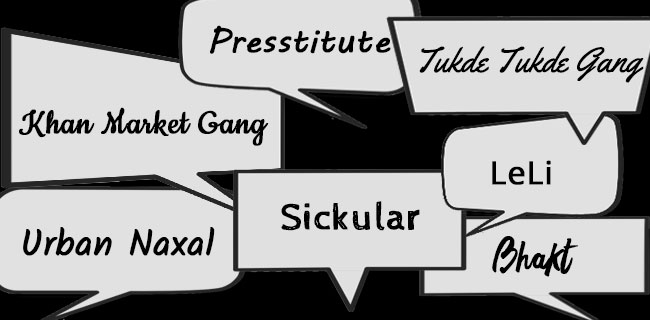
    1. Sickular– interesting name…initially I thought it was about the communists…sickle and all, but then got hammered that it was all about those amongst us who propound this concept called “secularism”. This was the shroud around appeasement of minorities and fringe groups by those who have sacrificed the entitlements of the majority.


    2. Bhakt– this is quite an old one but has got a fresh lease of life now, and how! This brand could make you a patriot, a nationalist, a preserver of moral values and one who serves the true interest of an entity called Bharat. On the contrary, all that could backfire on you when seen through another pair of glasses where you are this mentally delinquent flag-waving sword-swinging lout on the street. Pretty compelling on both sides. A janus brand!


    3. Urban Naxal– this brand was created around 10 years back but keeps getting pulled out of the hat as the situation demands. Here, you are basically a gone case as you espouse a lost cause! You are a threat to national security, even if you actually work with tribals in the back-of-beyond trying to save their land from being gobbled up into a bauxite mine. This brand is the real serious stuff as you are always on the radar of the central government and all intelligence agencies. If one is branded so, that person has truly evolved and arrived.


    4. Presstitute– I was actually impressed with the Indian who had coined this word to brand the media that is up for sale. Then I realised that the brand has been imported from the US. Some futurist had created this term in total disgust at the quality of reporting there. Here, all camps use this term liberally to brand all members of the media, as media will always have a point of view that may not pander to each camp.


    5. LeLi– this is another interesting one, aimed at the “left liberals”. Let me tell you that most leftists are not liberal and the true liberal shuns the typical leftism practised in our country. It’s a bit of a paradoxical brand with fundamentally conflicting brand purposes. Therefore, can understand why those who are branded so seem peeved no end! Total identity crisis.


    6. Tukde Tukde Gang– this brand has synonyms in the form of “JNU Gang”, “AMU Gang” and “Deshdrohi Gang”. Pretty powerful and damning stuff actually. This is the primary enemy of the Bhakt brand. They cannot tolerate each other. This brand is intent on breaking up all the good that the Bhakt does. This brand typically feeds in to the Urban Naxal brand. They are alleged to have a symbiotic relationship.


    7. Khan Market Gang– this brand is a result of collateral damage, caught between the Urban Naxals, the Bhakts, the Presstitutes and the LeLis. The members of this brand were otherwise party-loving, mall-hopping, gin-sipping innocents who just happen to be found in a tony shopping area of Delhi. Just because they smiled at the LeLis and Sickulars as it seemed fashionable, they have now got branded and are subjected to television debates and lectures on ancient moral values.


    Life in India could never be more exciting.


    Never mind the farmer suicides, unemployed youth and duped depositors, it is such fun to sit at a restaurant and slot people around you in one of these social brands. Terrific timepass. Ah, that guy with a tilak on his head… he is a Bhakt! That lady reading Milan Kundera must be a LeLi. Those ‘jholawalas’ have to be Urban Naxals. Happy days are here again…


  • Mufflerman & the Mango People


    By Avik Chattopadhyay


    In February 2015, I had done a piece for MxMIndia titled on Brand AAP on the occasion of Delhi waking up to the 67-03 mandate. Last night, my friend Pradyuman helped me refresh my memories of the same as I sat down to pen my thoughts on Delhi waking up to the 62-08 reality!


    After five years, I look at the AAP brand again.
    To see whether it remains the same. Or has it changed. Or evolved.
    There is nothing political in my analysis and assessment here…purely from a brand manager’s perspective.

    So, what have been the FIVE key learnings of the AAP brand?


    That the core purpose remains the same.

    The core brand idea cannot be tinkered with based on different occasions and opportunities.
    The AAP purpose remains the very same as it was in 2014 and 2015.
    It is all about fundamental deep-rooted development… about education, health, water, electricity, mobility and safety.
    It is an organisation of middle-class people who earn their bread the hard way.
    Therefore its purpose has to do with improving the lives of the middle class.
    You do not play around with your purpose just because you are in the driver’s seat… the destination remains the same as long as the vehicle remains the same.


    That the personality has to mature with time.
    This is crucial in the life-cycle of any brand, for it determines the ‘route’ you may take to help your vehicle reach its destination.
    It was “clean development” in 2015, it is “clear development” in 2019.
    The demonstrations on the street have given way to demonstration of actual work done.
    So, is the leader no longer the ‘rebel’? He sure is, but the cause is more clearly defined.
    And the energies of the rebel are channelised now.
    There was definitely some bluster in 2015. Its only candour now.
    The candour earlier was sometimes uncomfortable. Now, it is comforting.


    That the promise has to be clearly demonstrated.
    The comfort in the candour comes through the demonstration of the promise.
    At the end of the day, human life cannot improve by consuming tweets, memes and social media posts.
    It is by schools, clinics, uninterrupted electricity, free water, improved mobility and greater safety.
    It is about the here and now.
    Digital and social media are only supports and not the core food.
    Spinning stories are good for a satiated and secure person, not for someone who is still getting his / her life into order.
    As Lenin had said, “How can a man think with his mind when his throat is parched?”


    That the key stakeholders are to be respected.
    Most brands forget this in their ‘power trip’.
    As a ‘ruler’ one has the greed to look down upon the electorate and grant it a “mind” far lesser than it actually has.
    The context has to be set up right at the start, the key stakeholders identified and their engagement plans chalked out.
    Each stakeholder has to be given his / her due place, and space.
    The context is about every-day life and livelihood of the two crore people of Delhi, and quite frankly nothing more.
    The key stakeholders are [a] the voter, [b] the non-voter, [c] the candidate and [d] the reporter.


    The voter – central to your brand’s existence and is looking at you making his/ her life better, bit by bit, but surely, with every passing day. The Delhiite is immensely proud of a unique culture that the city-state has conjured up for itself. That has to be catered to and not rudely challenged. This is the “Mango People” and they come in various textures and flavours. Appreciate them and preserve them instead of putting them into a large mixer and churning them into one gooey mass.


    The non-voter – a very important influence on the voter – the children and the people in the NCR who will not vote but will surely have a clear opinion on who deserves to won.


    The candidate – is an individual in his / her own right, with a mind and a heart of one’s own; can chart out own strategies within the larger framework, express own opinion and share own plans rather than be a mute by-stander at the mercy of the bosses. Very similar to what happens in large organisations, is it not, with the regional managers / department managers / project heads?


    The reporter – do grant him / her the power to observe, analyse, digest and then opine; the sheer urge to browbeat and force feed ‘stories’ does not work especially in a battle-zone that is highly aware and expressive.


    That uncluttered messaging is crucial to any campaign.
    Keep it simple, uncluttered, frank and forthright.
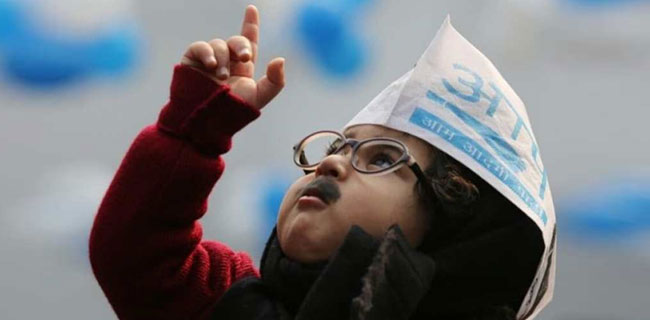
    I just loved the little interactive film shared on social media about Mufflerman looking into your door saying “Can I come in?”
    In 2015 it was the Mufflerman game, this time it was this truly disarming video interaction.
    That is what the target stakeholder likes…clarity and candour, without mixing up issues that are not relevant to the occasion at all.
    I would surely want the entire nation to be united and stronger but right now I have to decide on who can improve my daily life better.
    The relevance of messaging is always critical to any campaign’s success, and this was a great demonstration of the same.


    The AAP 2019-2020 election campaign is a lesson for every brand manager.
    On how to carefully nurture and deliver a brand that rides on huge expectations and external challenges.
    And how to stay true and committed to the core purpose and not get waylaid into distracting and diversionary narratives.
    As my brand guru Wally Olins used to keep reminding me, “Live your own life, Avik. You only have one bloody chance!”


    Avik Chattopadhyay is a brand strategist living in New Delhi NCR. He writes on MxMIndia on most alternate Thursdays, but this time we requested him to write on a Wednesday. His views here are personal.


  • A Tale of our Two Cities


    By Avik Chattopadhyay


    Years back, I came across a report by the Economist Intelligence Unit on the future competitiveness of cities in the year 2025. I remember I was quite pleased at seeing seven Indian cities feature in the list of 120 but mighty upset at seeing none in the Top 50. Mumbai and Delhi ranked #51 and #56 respectively while Bengaluru, Pune, Hyderabad, Chennai and Kolkata were hovering around the 100 mark. What nerve, I had thought then, to have found no Indian city good enough for being in the Top 50.


    If the EIU were to undertake the same exercise today, what would the rankings be, given how each city in the world has tackled the pandemic and handled the concurrent economic meltdown? Would New York still be #1? Would Mumbai and Delhi drop further? Would Bengaluru and Pune move up? Would Kolkata be off the list altogether?


    Places, just like people and products are brands. For, they have a history or legacy, a unique culture, a set of values, a promise to their inhabitants and a certain personality that makes each unique. Unique enough to elicit a certain kind of response when mentioned. Conjure up distinct images of that place, whether good or bad, driven from the inhabitants and their behaviour, culture, food, architecture, ethnicity, industry, opportunity and consistency.


    In the tackling of the current pandemic in India, the two cities of Mumbai and Delhi stand out as symptomatic of the current state of affairs. Their own brand images have taken a battering that will take some of the most expert of minds and hands to repair.


    Mumbai is money and entertainment. Delhi is power and size.

    The ‘Bhais’ are in Mumbai and the ‘Baaps’ are in Delhi.

    The Mumbaikars and Dilliwalas take pride in “Mumbai Meri Jaan” and “Dilwaalon ki Dilli”.

    Mumbai always ‘bounces back’ and Delhi ‘never gives up’.

    The former is the City of Dreams and the latter is the Capital City.

    Both have the lenses of national and global media aimed at them.

    Both cities embody “India” as a brand, both internally and before the world.

    Therefore, how both cities have been ‘behaving’ during this crisis leaves an indelible imprint in the minds of millions – the citizens, the diaspora and the others.


    Both cities displayed behaviour that is truly disturbing and have failed in the specific areas their personalities have been built upon.


    Both have failed in the fundamental tangible areas of planning, resource building, implementation and enforcement. Both have equally failed in the intangible aspects of empathy, inclusiveness and social security.


    The Bhais of Mumbai could not rally resources to roll out sanitisation, sterilisation and distancing at every ‘shakha’ level. They did not offer their famed ‘protection’ to the millions of migrant workers who believed in the city of dreams.


    Apart from making a few cursory videos the famed Bollywood did not come together united and dive into the action for their fans that make them. The billionaires in their tony homes could have pooled in resources to create living facilities in the stadia, in hotels, on the beaches and in closed educational institutions which could have housed thousands that make up the backbone of the city, her migrant workers.


    The underworld that so famously protects could have adopted specific slum clusters and given their all for the inhabitants. Suddenly, everyone seemed to maintain social distancing to the hilt…right to the wallet and clout too. Political factions used this as yet another opportunity to hoist the ‘son of the soil’ flag.


    The “jaan” went out of Mumbai’s life when these hapless and overanxious people came out onto the streets wanting to go ‘home’, not to spread the virus but to save themselves from it. This city was not their home anymore. It had let them down when it mattered. In fact, abandoned them when they were most vulnerable. Just like the new-born child crying in the trash bin that we have seen in so many Bollywood films. Imagine if he grows up with a grudge against this “sapnon ka shehr” [city of dreams]. It is not even “apnon ka shehr” [our city]!


    Delhi, to the Mumbaikar, has always been a brash, selfish and uncultured lot of people. While I beg to differ on the last count, I do tend to agree on the first two. Thankfully, being the capital, the state and central government machinery takes care of the physical manifestation of the city. While the Dilliwala can be brand and selfish, s/he cares a damn for this ‘son of the soil’ thingy as most of them have anyway migrated from some part of the country [and Pakistan] and settled here.


    Delhi is full of “Baaps” and one typically cites one of them at all junctures of life, from a traffic fine to an ED raid. However, all the Baaps let Delhi down, of all colours, castes and hues. The famed machinery was initially sputtering along on first gear and now attempts a reverse. The city is all about tangibles but each parameter has been found wanting due to lack of cohesion, state-centre politics and refusing to get the domain experts drive the vehicle of control and cure.


    The glaring lack of infrastructure coupled with inept planners have been exposed. And then in a moment of utter panic, the “dil” of Delhi also went bust when the daily wage and marginal workers were asked to go ‘home’. The Baaps could have come out united for the cause, demonstrating a rare moment of maturity in a state of emergency. Their cadres could have worked together, their resources could have been pooled for greater impact. None of that has happened. The machinery just raised its hands in despair, driving more fear by painting pictures of impending disaster hoping manna would fall from somewhere. And the Centre must be pleased for the State had to finally request for immenent help. One “Baap” more powerful than the other.


    Today, Delhi is not just a ‘hotbed’ of the pandemic, it is a ‘powder keg’ waiting to explode with no clear projections of where the capital city is headed.


    Both cities are so symbolic of where the nation stands today.

    One city tells you we are getting yet more parochial and insular as regions, states and cities. The unique fabric that is India, is being taken apart, yarn by yarn.

    The other city is a demonstration of abject infrastructure and implementation, with corruption reaching the deepest levels of functioning and work ethos and political one-upmanship taking priority over national calamity.

    Neither is a city where any self-respecting Indian, across the economic strata, would like to live in.

    For it can disown, discard and divide you at a moment when you are most vulnerable.

    Not the best flag-bearers of the India brand anyway.


    Avik Chattopadhyay is a senior marketing and business strategist. He writes most other Thursdays on MxMIndia. His views here are personal


  • Copycat, copycat, what have you seen?


    By Avik Chattopadhyay


    Four incidents over the last 15 days have ‘inspired’ me to write this piece.


    First, a much-circulated article written by a former Indian corporate head honcho about a bridge over the Choluteca river in Honduras.


    Second, the launch of the new Mahindra Thar.


    Third, an advertising agency called Hakuhodo being taken to court by an event agency called Gravity Entertainment.


    Fourth, a court ruling in Mannheim going against Mercedes-Benz on use of mobile technology from Nokia in its new cars.


    In each of the above instances, people and organisations were divinely “inspired” to create from ideas that came from elsewhere. They were either copied from somewhere else or simply refused to acknowledge and compensate the creator / ideator.


    Plagiarism is one socio-creative evil that most of us accept but refuse to act upon. Therefore, the bold act of taking an agency to court for creative cut-copy-paste is surely a welcome one, especially as the Hakuhodo-Gravity relationship would be like a Goliath-David one.


    As a society, we seem to be pretty immune to rampant plagiarism. It’s built into our psyche, starting with the education system wherein we wrote projects happily lifting paragraphs from here and there, as long as the key points were covered for that was all our teachers looked for. As research students, we evolved into hunting out obscure journals and papers to lift from. There are rumours of a venerable ex-President of India who was charged with claiming a junior’s thesis as his own, with the Vice Chancellor of the university adequately hushing up matters! The typical reaction to plagiarism is to either hush up matters or simply look away.


    Nobody denies the musical genius of R D Burman, but when he does not even acknowledge his source of “inspiration” for a composition, it is disrespectful of the world of creativity and your own craft. As an example, most viewers would have never heard of Emerson Lake & Palmer but there was no harm giving them the credit for the background musical track for the Hindi film ‘Parinda’. The attitude is, “nobody knows, so nobody cares”. And as nobody objects, the malaise grows bigger and more brazen. Just as Steven Spielberg should have credited Satyajit Ray for the inspiration for ‘ET’!


    Mahindra is a hugely respected brand, yet I fail to understand why it has to copy the Jeep time and time again. It already got a rap on its knuckles with the Roxor in the US market, yet again the new Thar looks so similar to the Jeep Wrangler!


    In my own professional life, I have come across innumerable instances where either the client wanted to own and lift ideas from advertising ‘pitch’ presentations, or an agency brazenly lifted concepts off the famous ‘Black Book’ and presented them as its own.


    There are three key reasons behind this absolute apathy towards plagiarism.


    1. Ideas are supposed to come free– while our cultural heritage takes pride in “gyan”, yet as a corporate client we expect domain knowledge, expertise and ideas to come free in a project. How many times have we asked external agencies for “good ideas” without paying them? Or how many times have we asked them to submit ‘detailed project proposals’? We almost imply that giving ideas for free is critical to getting a project. It is as if the brain is an appendix. Yet in the US or Europe we readily cough up fees by the hour as the law of the land demands so!


    2. Whoever executes, owns– the end is more important than the means in most instances. We gloss over the critical aspect of where and how the idea germinated. The final output knows no source and thus no need to give credit. It is just a recent phenomenon that some film makers have given credit to the original story, especially if it is sourced from overseas. Seeing William Shakespeare wink during the credits of Gulzar’s “Angoor” is still a gold standard to me in a fitting tribute in mainstream communication.


    3. The legal system is lax– this is the loophole most make merry of. The laws are there in place, but judicial slackness combined by diffidence of the affected to file cases have created no deterrence to plagiarism. And the affected might even be a brand as large as Zoom which does not wish to take Jio to the court for drawing ample inspiration for their meeting app, for fear of meddling with a local biggie. It will take a couple of landmark judgments against both blatant and veiled plagiarism to open the can of worms.


    The perpetrator and perpetrated are both at fault for allowing such a culture for so long and not breaking this chain. In today’s digital age and with social media, it is easy to both trace instances or plagiarism as well as amplify them, as happened in the case of the article on the bridge in Honduras. The original writer himself said, “Excuse me…”.


    It does not cost to acknowledge and announce the creative source candidly. The announcer’s creative prowess does not diminish but in fact get strengthened as you will then build a unique fraternity of creative partners who would want to work with you and create bigger and better.


    As the philosopher John Stuart Mill had said, “Originality is the one thing which unoriginal minds cannot feel the use of.”


    Avik Chattopadhyay is a senior brand and marketing strategist. He writes for MxMIndia every other Thursday. His views here are personal. He can be reached via Twitter at @Byapok


  • Froth, flavour and Feluda!


    By Avik Chattopadhyay


    Over the last one week three specific developments in the world of brands have encouraged me to ponder over them, share my viewpoint and throw up some questions to all brand practitioners amongst you.


    Each development is unique in its business space, timing and impact. Yet, each is a situation that many of us do face in the world of managing and nurturing brands.


    #01 – Froth

    After a pretty high decibel launch of Vodafone Idea’s new brand identity “Vi” campaign a fortnight back, the company announced an advertising and promotion blitz of Rs.800 crores till March 2021 to establish the new brand and more importantly, arrest an eroding user-base. Half the amount would be on advertising and sponsorships like on IPL. The rest on signage, outdoor visibility, and promotions.


    For a brand that has to raise Rs.25,000 crores to pay off the AGR dues and more, why go into a rebranding at all? I find no logic working here. This is not a new brand, nor is India a new market and neither are there any new solution offers. Damn, it is not even a new owner. Merely changing one’s name to raise money to pay dues cannot be convincing enough even as a business school case study. It is merely new wrapping paper and ribbons, not even deserving a wine bottle. So why spend all this money? And it all going to be borne by the subscribers through a price increase being contemplated right now. By the way, Jio announced a post-paid package through IPL that is undercutting competition and giving them sleepless nights.


     For a brand practitioner, why would one ever recommend this window dressing? When one is challenged with protecting higher ARPU vis-à-vis a depleting subscriber base, is an expensive rebranding exercise the best option? Has the ‘brand’ ceased to be the promise of an experience delivered consistently over time? Has it been downgraded to mere theatrics, at the cost of almost disrespecting your existing user who is quite aware of the situation you are currently in?  


    #02 – Flavour

    Nikola was till last week a poster boy in the world of electric mobility. Nikola proposes to make electric light trucks for the US market. Not really new, as it was founded in 2015 by one Trevor Milton after his previous venture dHybrid lost a lawsuit and was gobbled up. From then till now, all that Nikola has done is present lot of prototypes at various fancy events and raised money on fancy projections.


    Milton is a terrific social media manager, always remaining in the limelight through his quirky, maverick image, building millions of followers who salivate on every word he says. As the valuation of Nikola went through the roof [based only on announcements and no demonstration over 5 years, mind you] General Motors stepped in with a huge investment, not wanting to miss out on this amazing bubble being blown.


    Early September, just two days after the GM investment, one of the investors [could be a competitor plant, for all you know] blew the ‘whistle’ claiming that Nikola actually had no technology to back up all the claims and had actually staged product performance. The stock price fell by 10%.


    The Securities and Exchange Commission stepped in to investigate. And the Department of Justice joined in. Milton resigned. The stock fell another 35%. The poster just folded up on the September 21.


    What really does it take to “build” a brand? What are the fundamentals that ensure sustainability and stakeholder return in the long term? Can social media management and event coordination build valuations? Is the science behind creating reality show celebrities and valuable organisations the same? Is valuation the true parameter of brand success or actual demonstration? Will the Indian “unicorns” of today stand steady and deliver on their promises tomorrow and the day after, or will they one day fold up like the Nikola poster?   


    #03 – Feluda

    As a piece of positive news in the Covid-19 gloom, the Drugs Controller General of India approved an accurate low-cost test to detect the virus using a paper strip in 30 minutes for commercial production. Jointly developed by CSIR and Tata Group, the test has been called “Feluda”! The two CSIR scientists Debojyoti Chakraborty and Souvik Maiti named it after the popular fictional detective created by Satyajit Ray.


    Feluda is the nickname of Prodosh Chandra Mitter, who was first introduced to the Bengali in 1965. Like his “guru” Sherlock Holmes, he too has an equivalent of a Watson in the form of his younger cousin brother Topesh, lovingly called ‘Topshe’. Over the next two decades a total of 39 ‘adventures’ were written by Ray, some being made into movies for theatre and television, serials and also radio stories. Feluda evolved from being meant for children into becoming a Bengali icon for all ages, with some of the best actors playing roles in the movies and television serials. Doordarshan ran a serial on Feluda in Hindi, the character played by Rajit Kapoor.


    Ray portrayed Feluda as the Bengali he wanted all Bengalis to be like. Sharp, witty, intuitive, rational, respectful, challenging, inquisitive, adventurous, helpful and always detecting the truth from the mess around us.


    Like Feluda, there are another half a dozen detectives in Bengali literature that deserve to be globally amplified and followed. Similarly, there would be a handful each in every language in this country. Yet they remain largely regional. Why can a Feluda novel not be part of the mainstream school curriculum? It will definitely teach the younger generation to be what Ray envisaged them to be like.


    India has been very poor with her non-corporate brands. She has millions of them, like little jewels in a treasure hunt that one needs to dig out and savour. As Indians, it is our duty to bring them out into the open to be experienced, by all within the country and also across the world. What will it take to do so, in a sustainable manner? Who should be the custodians of this unending repository? Do we not need a central body that takes this on as the core responsibility in making each valuable Indian non-corporate brand come alive? Definite food for seriously long thought…

  • The Obsession To Be Premium


    By Avik Chattopadhyay


    The other day I was chatting up with a Maruti Suzuki Nexa dealer. Post the expected lament on lack of footfalls and the still elusive operating profit, we got into discussing the basic Nexa model – the purpose, the promise and the delivery. After a lot of soul-searching and head scratching, he finally brought it down to the wooden flooring, fancy furniture and focused lighting as the “premium” experience being offered to a customer vis-à-vis one who walked into a Maruti Suzuki Arena!


    Sounds preposterous? Totally believable!

    Let’s just spend a few more words on this Nexa vis-à-vis Arena case. The two channels of the same Maruti Suzuki brand offer separate products to customers, hence ensuring a minimum level of footfalls in both. I cannot buy an Ignis from an Arena outlet, hence go to a Nexa. Similarly, I cannot pick up a WagonR at a Nexa, hence go to an Arena. It is not that I have a similar product portfolio in both, yet I choose a Nexa over an Arena as the entire customer promise and experience is what I associate with and aspire for.


    There are various ways I can be premium in being a Nexa channel partner.

    In my product pricing. But the Nexa offers the Baleno that is in the same price band as the Swift.

    In my product positioning by addressing a different customer psychographic. But, then, the Ciaz was moved from Arena to Nexa to allow more revenues to the latter.

    In my overall experience. But the service and ownership experience, as per customer feedback and dealer inputs, are the same in Nexa and Arena.


    So, I am fundamentally undifferentiated from my less privileged channel cousin and totally confused in what I am supposed to be in the first place. Yet, I boast that I am “premium”. Not a very sustainable business model, is it?


    Maruti Suzuki’s urge to go premium is not an oddity. It is another demonstration of the common malaise many Indian brands have – the obsession to be premium!


    From aviation to automobiles, food to furniture, healthcare to homes, brands and businesses make proud statements in press releases and communication that they are a premium brand or aim to go premium.


    It is as if being entry-level or mass-market is a protozoan life rid of all respect and pride. It is as if being affordable is an affront to business logic and purpose.


    In the three decades I have spent working for a living, I have come across a handful of seniors and bosses who have also expressed this desire to ‘elevate’ the brand into a premium one. Basically, making the customer pay more money for the same product or solution. And how will that happen? Magical marketing! Spend on symbols of an elevated status like brand ambassadors, sponsorships and imagery to package the same product in a new avatar!


    Does this not work? It does, for some time and for some people. But it is never sustainable as the brand is desperately trying to live on borrowed clothes and makeup.


    Have I been successful in any such attempt? Not once. Have tried a few times but failed miserably. But in the process, have learnt five important lessons which I wish to share.


    Premium vis-à-vis Expensive

    These are two separate concepts. A Harley-Davidson is expensive. It is not premium. It is expensive because the Americans can just not get efficient enough. But in its home market no one buys it for its premium-ness but for its distinct imagery and culture code.


    Mass vis-à-vis Premium

    A Bic ballpen is mass. And people love it because it is so. But a special edition Bic commemorating the Black Lives Matter movement will certainly sell at a premium. Similarly, a Maruti Suzuki Swift is mass. But a 15th anniversary limited edition Swift Sport will be premium. Hence, mass and premium are not mutually exclusive concepts… in reality.


    Premium vis-à-vis VFM

    These are not conflicting at all. In fact, the better a brand is able to demonstrate value-for-money [VFM] to its target customer, the better the premium it will attract. And not extract. I once met Mr R M Dhariwal, the owner of the Manikchand Group, who told me that he bought a Maybach for his daughter on her birthday as believed for the amount of money he wanted to spend, the Maybach offered him best value for money!


    The intangible value of a product or experience, over and above the physical value is what allows a brand to command a premium. And not just demand it.


    Premium vis-à-vis Profit

    These two are not necessary and sufficient conditions to co-exist. There are mass-market brands that make profits that many luxury brands would give both arms for. A premium offering need not make higher profits than an entry-level one. The focussed definition and delivery of its promise is what makes a brand charge a premium.


    Response vis-à-vis Objective

    This is the biggest lesson for me. Being “premium” is a desired consumer response and not a business goal or objective. It is an outcome and not the process. It is the end and not the means. This clarity of brand management happens only when the brand stays true to its intended purpose and promise.


    We experience brands like Bata, Amul, McDonald’s and Chevrolet not because they are positioned as “premium” but because they are true to their brand DNA and carry no pretensions. As customers, we give them their due premiums when we wait for the pack of Amul Taaza milk to arrive at the store, love to see the sparkle in the eyes of our children on getting them a Happy Meal, squeal the hell out of the tyres of a gleaming Corvette or splash about in muddy puddles in the Naughty Boy shoes. Each of these experiences is what truly makes a brand “premium”!


  • Brand lessons from the Biden campaign


    By Avik Chattopadhyay


    The Biden election campaign was one that I followed closely more from the perspective of brand building, nurturing and management right from June 2020 when he became the unanimous Democratic candidate. As a case study it is surely worth analysing if it has any lessons or pointers for brand managers and strategists.


    Maybe the campaign unfolded and grew in an unplanned manner, evolving with every passing day, but in hindsight, it sure has some key takeaways. If it was all planned as I see it then it is surely one of the most incisive and insightful campaigns to have been rolled out to such effectiveness.


    So, here are my 5 brand lessons from the 2020 Biden Harris campaign.


    Lesson #1 – Slogans or taglines not always needed

    The campaign did not have a slogan at all. It was simply “Biden for President” and then “Biden-Harris”. Simple and straightforward. No fuss. No frills. Nothing to outdo or counter Trump’s “make America Great Again”. Each state and town went ahead and built their own slogans that were most relevant to their desires and aspirations. So, every campaign need not have a slogan or tagline. As the occasion demands, being simple is simply super.


    Lesson #2 – Assert, don’t aggravate

    He knew his opponent too well and allowed him the rope to play himself to the hilt. In the process, Trump ended up alienating more than those he embraced. Guess the average American voter, irrespective of allegiances, somewhere wished less rhetoric and more substance to allow him / her to finally decide. This was crucial for it went down to the wire. So, the focus needs to be on two things for a brand manager – quality content over the mere ability to amplify, and the tone of voice to be chosen for the campaign.


    Lesson #3 – Include and involve

    Biden ensured he took along every Democratic presidential candidate with him after he became the front-runner and final choice. This was crucial to ensure maximum internal buy-in and support from all corners of the party. Trump was all about himself and a certain part of the Republican Party actually wished he lost and closed his own case. Also, the Biden campaign was hugely inclusive in actively involving people of all ethnicities and economic backgrounds. The Trump campaign was run by specific sections of American society who were either of a certain colour or a certain economic class. So, the lesson for the brand manager is that for any campaign to be successful, one needs active buy-in of all key internal stakeholders.


    Lesson #4 – Always pays to say “Sorry”

    Humility and candour never go out of fashion, in any culture and in any situation. Biden displayed both in his journey as a senator, apologising if he made a mistake. That is a quality that creates instant affinity that sustains lifelong. One just cannot imagine Trump ever acknowledging a misstep, forget a mistake. The Biden campaign obviously encashed heavily on this value system of their candidate versus an incumbent who was given to inconsistent raving and ranting. The same applies to any brand in our everyday lives. It sure is tough to say “I am sorry” before your customer or prospect but the ability to say so will reap priceless equity for the brand.


    Lesson #5 – Build in flexibility

    Planning a campaign well is good but making it water-tight is not a virtue in today’s dynamic times. The Biden team built in enough flexibility to allow modifications and changes, big and small as the campaign rolled along, without losing the core narrative. This allowed customisation of the narrative in each state and also rapid improvements based on feedback. Studying pictures of his campaign across various cities I did not see the same messages being used or carried on placards and banners. While Biden and Harris remained central, the stories around them were ably tailored to appeal to specific vote pockets. This is crucial in today’s brand campaigns too which depend more on social media platforms that are intrinsically dynamic and fluid in nature. This also requires new skills for the brand manager to be engaged in the campaign till its entire timeline and not rest easy once it rolls out.


    I am sure there are lessons from the Trump campaign too.


    It was obviously the most beautiful campaign, the most loved and the most followed.


    It was a campaign befitting that of a winner.


    It was simply humongous and awesome.


    Just that the required numbers did not take the bait.


    Thankfully!


  • And the award goes to…


    By Avik Chattopadhyay


    Seems that the vaccine is playing spoilsport taking so much time to be readied and launched in India. Otherwise our world would have been so much safer by now. Damn pharma!!


    Over the last nine months, we have seen both product transformations and new product introductions that profess to either “boost immunity” or “kill 99% of the virus” or do both!


    Old brands have got resurrected in the process. Existing brands have gone into product extensions and new ‘verticals’. Thank the virus for all this feverish surge of innovation and quick-thinking. Advertising has also seen an upswing to promote all these wonderful solutions to beating the virus. Some brands have also taken the role of “public service” promoting hygiene rather than merely their own products.


    As this [calendar] year draws to a close, award functions have also started. I was waiting for one that would recognise these heroes. Why not? As long as they happen virtually, they are most welcome. Even the Nobels are going to be offsite and online this year.


    As no one has come forward, I have created my own ‘Indian Covid-19 Fighter of the Year’ Awards.


    Who qualifies for this? Not the doctor, the nurse, the healthcare worker, the vaccine volunteer or the ventilator, for they are merely ‘saving lives’ and nothing more. Boring jobs. No drama. Routine stuff. The ones who qualify are these amazing new products and solutions that boost immunity or kill 99% of the virus or do both. Highly exciting stuff, out-of-the-box thinking and disruptive. There were many that vied for a place on my list of “top 15 finalists”, across categories and segments.


    How did I arrive at the results? By studying their claims and clamour for attention through their communication across all media. Also, a quick dipstick with a few friends, and I was done with the ranking. While a few rankings had divided opinion, there were a few that drew unanimous agreement.


    So here are the 15 finalists in ascending order. They have been assigned to four clusters based on their ranking up the order. Ladies and gentlemen, boys and girls, the “Indian Covid 19 Fighter of the Year Awards”…


    Cluster #1 – The also-ran – the ones who gave a good fight but lost out in the eliminators


    15. Social distancing – started off quite well but lost steam as many took to distancing from other faiths, castes, and beliefs; clans got together stronger than before counterproductive to reasons of hygiene.


    14. Sanitiser – now as ubiquitous as salt and sugar in a household, this comes in all colours, fragrances, and concoctions; squeezees, spouts, atomisers, splash-ons; it is now India’s second most favourite cottage industry.


    13. Mask – this is the first one and who would have ever imagined that an item restricted to the hospital or a Japanese tourist would now become a fashion statement; this is haute couture now in various forms from the Madhubani cotton to one in gold encrusted with diamonds; only the Dilliwalas have been early adopters given their bi-annual tryst with air pollution.


    12. Face shield – usually comes in combination with the mask and had hoped for larger adoption but that did not happen; a nation that does not even wear helmets cannot be expected to wear a silly visor looking straight out of Star Wars; also does not have the potential of being a fashion accessory like the mask, so loses out.


    11. Soap – every soap worth its bubble now kills not only germs but also the virus…only that we do not know which exact one; pedestrian beauty soaps that only gave you supple and glowing skin are now your knight in shining armour too; but they kill only 99% of viruses leaving that one little black squiggle on the television screen staring at you, hence does not make the last six.


    10. Spray – take an aerosol can, fill it with ethanol, add some perfume and voila, you have a magic spray that kills the virus not only on surfaces but also in the air; if one were to believe some pieces of advertising, the virus behaves like those mosquitoes who hide behind curtains and sofas when confronted by the home maker and her aerosol can; definitely good business to be in as a paint brand has also thrown its own spray into the fray.


    9. Ordered Food – fright, anxiety, work-from-home and spending too much time with your spouse…all conditions for bingeing on food ordered online; a good counter to people learning culinary skills online, the service providers have had a field day, happy with the fact that crores have ordered so why should you be left out!


    8. UV Steriliser – that was not a microwave?! Case closed.


    7. Paint – if you are going to work from home, cook at home, fight at home, rear children at home and binge on OTT webseries from home, you home better be the safest ever, so, move aside sprays and sterilizers, here comes the paint that is the scourge of viruses. And it also smells good, so no more stepping onto your balcony for the morning ‘pranayama’. Just breathe in more of this wonder paint and you are taken care of.


    Cluster #2 – The winners – they nailed it and typically should have been gold, silver, and bronze but when you read further you realise why these ranks…


    6. Masala – 10,000 years ago when we were building our first city underwater, the first virus clashed with the first cumin seed leading to the ‘masala wars’; the home remedies came to the fore and our grandmothers nodded their heads in approval or smiled from garlanded frames; brands started rolling out “immunity boosting kits” containing a collection of various condiments that would put western pharma to shame – turmeric, garlic, cumin, coriander and ginger became the Panch Pandavas in our fight against the Corona Kauravas; definitely good for a bit of chest thumping but it’s just that we are going through the third wave of the pandemic!


    5. Ceiling fan – I could not believe this when I first saw this piece of advertising but one company has actually built a fan with a special coating that repels the virus; now all our problems are more or less solved with the fan and paint combination; why could this incredible piece of innovation not have happened before the virus hit the ceiling is anybody’s wonder!


    4. Namaste – if nothing else works then this definitely will; no more handshakes or hugs…just the age old “namaste” will be the answer; historical references to this posture go back to the Indus Valley Civilisation and while its purpose is surely noble, whether it keeps the virus away is worth a deep thought.


    Cluster #3 – Respondents’ choice – the final three ranks were additions were made during the dipstick; obviously beyond my ability to have even thought them up but then we are a democracy and people’s voice is what finally counts…


    3. Gamchcha – the rural towel has become a status symbol now as people in the corridors of power swear by its powers to keep the virus away; in various patterns, though always in cotton, it has symbolically built a bridge between the migrant worker and the minister for the ‘gamchcha’ is the latter’s way of demonstrating solidarity with the former. Surely a touching moment for the nation.


    2. Go-mutra – this was a special one; two drops of this magical potion can do wonders to your health, be it as a drink or as a floor cleaner!


    Cluster #4 – Legend – this requires no explanation


    1. Beard – it is THE beard, not just any beard; THE beard will ward off all evil just like it drove away the virus within 21 days of its landing on our shores; the ignorant spread useless canard about lack of hospital beds, loss of jobs and shuttered businesses for they do not realise that the more THE beard grows the weaker the virus becomes. This is what legends are made of.


    And that brings me to the end of the award function.

    Hope you enjoyed it. If you did, obviously you are having more fun in life than allocated to you. If you did not, it is expected as this year has taken its toll on our sense of humour. Hope it finally gets over and we crawl into a new one…


  • Ubiquitous. Universal. Unanimous

    File Picture. Creative Commons


    On Maruti’s 37th birthday last week, our columnist and senior brand and auto industry specialist Avik Chattopadhyay goes first person


    Ladies and gentlemen,


    Terribly sorry for the delay in writing to all of you. Was caught up in my 37th birthday celebrations last week. It was quite something!


    So many messages. So many wishes. So many memories. So many little milestones to remember. Brought a tear to my eye actually. Never realised there is so much love for me still in the hearts and minds of people around me.


    A newspaper report announcing the big launch

    Life has been quite a roller coaster for me. it took quite some time to conceive me. Guess my mother took her time to choose her suitor and settle down. She finally did, with my Japanese father. The early days were not the best for me. you see, I was born a bit underweight in 1983. My mother was worried about my health. People kept telling her that this sickly kid would not make it. But I gave it my best, ably shielded in my mother’s lap. A few relatives came to our support in my initial years.


    By the time I was three, the tide had turned. I was a rockstar in kindergarten. The two bullies of my class were outclassed by me. The fat English one beat a hasty retreat. The slick Italian did put up a brief fight, given his extended family, but finally accepted to operate under my protection. I became a social magnet. Exams were cracked and the playground was conquered. Music and art classes were literally child’s play. I even took to the racetrack and licked it every time I stepped on to one. Teachers pampered me, the girls swooned over me and the boys wanted to be like me. school was a breeze.


    I brought about a revolution of sorts. People by the thousands came out on to the streets, from all walks of life. I gave them the freedom to move, the freedom to explore, the freedom to express themselves. Being seen with me was a matter of status.


    I entered college when I was only 14, having topped the higher secondary exams with record marks.  Stepped out of my town for the first time. There were newer people around me, from other towns, of different shapes and sizes. But my reputation had preceded me. After all, the state had never seen such a young topper in academics and all-rounder. I held my ground. Donned a new style and new ambitions to conquer a larger world now. Gave myself flashy new colours, new clothes and learnt new tricks. I might not have been the biggest guy but was still a favourite with the crowd. Was at every happening place…concerts, parties, shopping malls, marriages…you name it, and I was there. Ubiquitous. Universal. Unanimous.


    By the time I graduated, I realised that life would be getting more competitive and stressful. But my parents had never taught me to give up so easily. So, I stepped right into the professional world. Did not want to waste time on further academic qualifications. As a young lad of 18, you do not expect to get the best of jobs. You might be light on your feet, quick thinking and efficient at whatever you do but your size becomes a bit of a constraint. So, I had to plan my moves carefully. No point getting squeezed amongst the big guys without finishing my task. The early 2000s were also a turning point for India. The consumer had come of age. Life was rapidly getting global, connected and ambitious. The millions I had brought on to the roads now wanted a better experience. Quite natural of them. Life does not stand still for ever. I had to bring more millions on the roads… the ones who had never imagined so. I had to continue to be accessible and friendly. I was now this rockstar who was called in for nostalgia concerts. I knew that I could not continue this for much longer. Being on the road for twenty years non-stop does take its toll on health and constitution.


    So, I had to plan my exit…slow, smooth and steady. I had to prepare the next line of command and hand over the mantle of leadership. I had identified my worthy successor. He was now four years old. A strapping young lad in whose eyes I saw myself way back in 1988. He sure was modern, with a fresh outlook but not altogether different from my DNA. The task of drawing out more millions on to the roads had to be carried on.


    Some legends are born. They appear like the supernova. And then they go away in a burst of fireworks. And some legends are crafted. They take time to take shape and leave a lasting impact and a worthy successor. I happen to be of the latter type. And I have enjoyed every moment of this journey…the straights, the bends, the chicanes and the blind alleys.


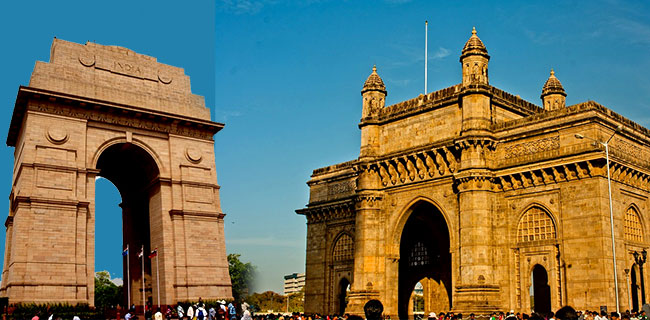
    The last 10 years of my life were quite uneventful. Boring, to be quite honest. Just like leaders who have crossed their prime but are forced to stay put, I was made to endure the same vegetative state. But I tried to make the most of it by a thorough handover to my successor. And enjoying some special moments like when I saw a couple of 70-year-olds ambling along India Gate in New Delhi with the words “Narain Karthikeyan ka baap!” on the rear screen. Occasions such as these make a life worthwhile. Finally, after 31 whirlwind years of bringing 2.6 million Indians on the roads, I bid adieu in 2014.


    It has been six years since then. I have not had an obituary written about me. Nor an epitaph. No resting place for me. For I do not rest. I am still alive in the hearts and minds of millions. 2020 for all of you has been quite like the last 10 years were for me…waiting for it to end. For tomorrow will be better and brighter. So, here is wishing you all a terrific 2021!


    Your favourite “Mrooti


  • Thank you for everything, 2020!


    By Avik Chattopadhyay


    German philosopher Friedrich Nietzsche had said: “That which does not kill us, makes us stronger.”


    The last 12 months have been fast, unexpected, furious, and merciless.


    They have also been full of introspection, unlearning, recalibration, and learning.


    I am not entirely crestfallen that 2020 happened despite the disruption and disaster it brought upon us. I am not one of those who wishes the year away and wants to erase it from memory. One cannot just erase the destruction of the atomic bomb on Hiroshima in 1945 or the trauma of our Partition in 1947. But if we, as humanity, come out of such events with a clearer mind and a stronger resolve, then they are helpful in the timeline of our evolution.


    On the last day of 2020 I have certain positive takeaways as a brand practitioner.


    The coming of age of “greater purpose”


    For years, this term has been doing whispers in the world of brand management and marketing. It stayed in the background as times were generally good for business and introspection into the “why” of the brand and its business space was missing for most.


    Those who did, definitely benefited from this disruption in behaviour and consumption. Those who had not, realised there was never a better time to ask oneself some fundamental questions on the ‘reason to exist’.


    As Nietzsche had said: “He who has a why to live for can bear almost any how.”


    Aligning with larger causes and movements


    The pandemic saw many significant social movements across the world. Incidents of strife, racism and authoritarianism also gave birth to causes. It was sure good to see a few brands clearly aligning themselves with such causes and movements. They consciously chose to stand for a certain belief and value system.


    In India too, we have seen a couple of brands take up certain causes or beliefs beyond business and stand tall. But they found little support. Also, most brands chose to stay away from issues of national importance like inclusion, harmony, and diversity. I shall not take specific names. The purpose is to hold a mirror before us to get more to take a stand. There is no point living in a cocoon, turning away from harsh realities around us or simply wishing them away.


    To again quote from Nietzsche: “There are no beautiful surfaces without a terrible depth.”


    The power of storytelling


    This is another crucial realisation to most brand managers and marketers that communication cannot be merely about product features and promotions but more about the life and times of the brand. It is an insult to the maturity of the Indian consumer that many categories still obsess with “best in class” and “first in class” rather than building affinity and aspiration by talking about the brand’s values and promise.


    The movement of content consumption from the newspaper to the mobile phone has allowed brands to communicate more and better, beyond transactional elements. Video and audio have become critical media for telling one’s stories. And compelling stories are not bound by space and duration. Just a count of how many videos and tracks we loved and forwarded on social media platforms is a good indicator.


    Process vis-à-vis Promise


    The deep introspection that most of us have gone through has allowed us to understand that what we typically thought of as a value or promise is actually a process or medium.


    Disruption is not a promise. Neither is innovation. Or digital for that matter. They are merely the means to an end. It is the end that needs to be clearly defined for that makes a brand distinct. The promise is the benefit or impact that the brand delivers to its consumer consistently over time.


    The brands that had this clarity realigned their promise to the current relevance of lockdowns, reduced salaries, higher anxieties, and the need for security, convenience, and empathy. They modified their business processes accordingly. For those that believed that their process itself was the differentiator and promise, failed in the process.


    To quote once again from Nietzsche: “There are two types of people in world, those who want to know and those who want to believe.”


    Conversational Augmented Intelligence it will be


    Call centres are dead. Chatbots are passe. Tomorrow’s engagement will depend on deep conversations with consumers using machines as intelligent interfaces. A 2020 joint study by IBM and O’Reilly Media predicts that the entire ‘backroom service’ industry will have to go through a massive overhaul in skills, empowerment, and enablers to deliver a more compelling brand experience.


    The consumer tomorrow will not always be a purchaser of a product or service. He /she may be one who has consumer through experience rather than ownership. This evolution in consumer behaviour was evident but has been speeded up over the last 12 months. This will need recalibration of roles, measuring scales, skilling and development of new ‘tools’ of the trade.


    For me the last 12 months have been mostly fulfilling. I have learnt to be more patient with life and impatient with the way I have peddled my trade of brand strategy and management. I have consciously unlearnt many rituals and processes in preparation of learning new ones. I have questioned the relevance and value I provide through my craft and challenged my own methods. If this pandemic had not happened and life would not have come to a standstill, I would never have done all this.


    So, I thank 2020 for all it has brought before me, from the growing economic disparities, increased social strife, greater divisions on lines of faith to the shining examples of collaboration, co-creation, and co-existence.


    As I step into 2021, I quote Nietzsche once again: “I still live, I still think: I still have to live, for I still have to think.”