Category: AVIK CHATTOPADHYAY

  • Is Brand Bose Too Hot To Handle?!


    By Avik Chattopadhyay [updated]


    His surname is a popular first name in all the states in South India.

    People say that there are more statues of him across India than those of Gandhi.

    Politicians of all hues and shapes have attempted to appropriate him for their own benefits.

    People are more bothered about how he died than how he lived.

    And today is his 125th birth anniversary.


    Today will set off a year of “celebrations” both by the central government and that of West Bengal. The Prime Minister has decided to rechristen the day as “Parakram Divas”, the day of courage or power. The state government, never to be outdone, has declared the day as “Desh-nayak Divas” or day of the national hero.

    It is actually his 124th birth anniversary, being born in 1897. But the country is celebrating it as the 125th! Why? Because the elections in West Bengal are due this year. So, it makes perfect sense for both the central and state governments to make the most of the situation and be seen as ‘closer’ to the man. So, what’s in a date!

    Bose is one of the most powerful yet enigmatic brands that India has seen. The enigma about his ‘death’ magnifies his appeal. Also, the fact that he became a ‘rebel’ in the freedom struggle and charted his own path increases the adulation and magnetism. He has left us a legacy filled with intense patriotism, adventure, intrigue, controversy, and action. He has given us coinages like “Jai Hind”, “Inquilab Zindabad” and “Chalo Dilli” that are in use every day.


    Yet he is a brand too hot to handle. No political party really wants to ‘own’ him. Sadly, Forward Bloc, the party he had founded is just too small to be of any consequence. The Congress has kept him at arm’s length for obvious reasons as he had a voice that did not match that of the supreme leader’s forcing him to leave the party even after winning the election as president. The Left Front, though absorbing Forward Bloc, did not openly espouse his persona as he had controversially aligned with the Axis powers. The BJP did play the ‘Netaji Files’ card merely for political gains but that did not seem to work, and they let him be. The Trinamool Congress really does not know how exactly to appropriate Bose.


    If one were to read the writings and speeches of Bose over the years, one would see his clear disrespect for certain political parties, the religious fundamentalists, and armchair thinkers. His open love for Urdu as well as the Bhagwad Gita is a delightful co-existence that many find difficult to fathom today. Giving the INA the motto of ‘Ittehad Itmad Qurbani’ while naming two of the battalions after Gandhi and Nehru is a paradox not witnessed in India’s history. Bose is an extremely ‘uncomfortable’ concept to grapple with. Thus, all have played him as a card and nothing more as they do not wish to align with his thoughts and beliefs. So, thankfully, he is still the “rebel” with no political masters.


    The world loves rebels, be they persons or products. As human beings we have this deep-down urge to challenge convention and have no ‘holy cows’. Rebellion is a subliminal trait, mostly suppressed due to overt constraints and pressures. Therefore, the average person has a certain level of respect for anyone who challenges authority, establishment, ritual or convention.


    Bose is the eternal rebel. The classic challenger brand.


    Clear in purpose. With a strong point of view. With the ability to question the higher powers. And have the capability to walk the talk. Challenger brands, with increasing popularity and following, are vulnerable to becoming mainstream and leader brands. The moment they become so, they lose the charm of the rebel. And are targets for the new challengers.


    Rebel politicians lose their appeal and charm when they join the mainstream. Challenger products and solutions lose their ‘clan’ or ‘tribe’ the moment they try increasing their base across customer segments.


    So, a challenger has to be conscious not to become mainstream in both appeal and acceptance. Its following should be intense but not necessarily large. Its purpose, promise, personality and philosophy should be adopted by a few committed followers who have the same action orientation.


    Does that mean that a rebel can never become an icon?


    Surely does as people love the act of challenging or rebellion more than the cause. And evolve into ‘pop’ icons. People across the world wear Che t-shirts and berets more because he looks ‘cool’ than ever supporting his cause of “perpetual revolution”. It is similar to wearing a Jim Morrison or an Undertaker t-shirt. The philosophy or profession does not really matter as long as the person is known to challenge the establishment.


    Bose has not become a pop icon as Che as yet, even in India. I do not know whether that is good or bad. Some ‘purists’ might object to putting Bose on a t-shirt and demeaning his image. The contrarian might argue that having more Bose t-shirts being worn might lead to more people wanting to know about this man and his life. I choose to be with the latter as I strongly believe that the cause of the rebel needs to be amplified as much as possible, across age groups, regions and countries. That will actually protect the rebel from misappropriation.


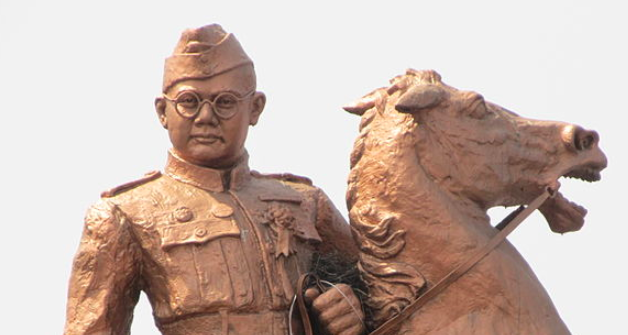
    Thankfully, the sudden collective euphoria around Bose that starts today will last till the West Bengal elections are done and dusted. Whoever wins will silently consign the man to pages of history and a statue at the Shyambazar crossing in Kolkata. Rebels are too hot to handle, be they persons or products. They take risks that the average will not even think of. They live lives of tumultuous adventure and uncertainty, not in line with the comfort and peace most of us crave for. They remain in the hearts and spirits of only a committed few. For the larger population they are but a holiday, milestone, or case study in a management institute.


    His unfinished journey on August 18, 1945 has ensured he remains the eternal rebel. One can never say what would have happened if he would have returned to India, disclosed his identity, and joined mainstream politics. Guess the man knew the pitfalls very well.


    As Bose himself once said, “Life loses half its interest if there is no struggle…if there are no risks to be taken.”


    Jai Hind!
  • Awaiting the Amygdala Hijack!


    By Avik Chattopadhyay


    Two just-released reports are the genesis of this piece. The India Today – Karvy Insights Mood of the Nation [MOTN] Jan 2021 report and the EIU Democracy Index 2020.

     

    How do these two reports have any impact on the world of brands? I shall make an attempt at connecting the dots soon.


    The MOTN report is a half-yearly exercise, this one interviewing 12,232 people across 19 states [the North East is not covered]. 67% of the respondents are rural and the rest urban. Each respondent was asked a set of questions ranging from governance to jobs, the economy, Covid, Article 370, quality of opposition etc. between January 3 and 13.


    I will stay away from personalities and parties and spend some time on the issues of national interest and individual importance for building my hypothesis. I will also not get into regional variances here to keep it simple for now. Those of you who wish to get into all that can go through the Feb 01 issue of India Today.


    The Top 3 single biggest achievements of the government are the Ram Temple at 27%, Article 370 at 20% and Covid-management at 15%. The top 3 single biggest failures are Unemployment at 29%, Inflation at 13% and Domonetisation [even now!] at 10%.


    The 5 biggest problems the nation is facing are Unemployment at 23%, Inflation at 9%, Farm distress at 7%, Corruption at 7% and Economic downturn at 6%. Interestingly, Terrorism and Fake news lie at the bottom at 3% each.


    76% believe that corruption has increased, with the politicians and police being the most corrupt. 66% have seen incomes dropping and 19% lost their jobs / businesses due to Covid. 43% believe their financial situation has remained the same in spite of the ‘stimulus’ and has become worse for 20%.


    While 46% believe Atmanirbhar Bharat is a very good initiative, 39% believe that only big business will be benefitted from the government’s economic policies! 53% believe the economy will remain the same or get worse over the next 6 months.


    Issues like Universal Civil Code, ‘Love Jihad’ and Article 370 are important enough for the general population to be bothered about.


    Going by the above, an independent observer would feel that the government and the leadership would be on weak footing and vulnerable to be shaken and stirred.


    Yet, 66% believe the government has handled the economy well.

    55% believe the government had done enough to control inflation.

    67% believe the government has managed the Covid economic fallout well.

    38% believe the current Prime Minister is the best ever the country had.

    And 38% believe he would be the best for another term.


    Now to the EIU Democracy Index 2020 report.


    This is an annual feature and evaluates 167 countries on 5 parameters of Electoral Process & Pluralism, Functioning of Government, Political Participation, Political Culture and Civil Liberties. India, a “flawed democracy” ranks 53rd. South Africa and Brazil are at 45th and 49th respectively. We are hemmed in by Bulgaria and Tunisia. On the 5 parameters, we score lowest on Political Culture and Civil Liberties! The movement of the overall score is interesting, dropping from 7.92 in 2014 to 6.61 now. It has been gradual drop every year. Guess in 2014, with the overthrow of the Congress, people believed it was a bit of a democratic revolution. Over the years, the collective euphoria has died down and harsh realities are staring us in the face.


    This is a paradoxical situation. Where the citizen is aware of the hardships, pitfalls and failures yet wishes to look beyond them and be more enamoured with issues that have no direct correlation with his / her present state of being. Where the rational benefits are outstripped by the emotional ones. Where the human reactions are extreme and out of proportion to the actual stimulus as if triggered from a greater emotional threat!


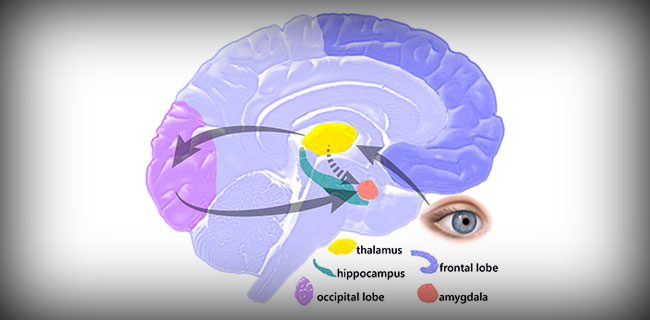
    This is called the “Amygdala Hijack”!


    The amygdala, according to Wikipedia, “is one of two almond-shaped clusters of nuclei located deep and medially within the temporal lobes of the brain. Shown to perform a primary role in the processing of memory, decision-making and emotional responses (including fear, anxiety, and aggression), the amygdalae are considered part of the limbic system. The term amygdala was first introduced by Karl Friedrich Burdach in 1822.”


    The neuropsychological study of amygdala activity shows patterns of anxiety, fear, social interaction, sexual behaviour, aggression, bipolar disorder and political orientation.


    The amygdala can be “hijacked” by aspects of fear and threat, leading to strong emotional reaction and a sudden onset of intense activity borne by overt aggression and orientation. The stimuli may also be irrationally positive bordering on aspects like sacrifice and protection. If the post-episode realisation of inappropriate behaviour happens late enough, the damage in a relationship or interaction may tend to be irreversible!


    So, if doses of threat of being marginalised can be balanced with those of sacrifice needed to restore majoritarianism and given to a population that has been living in a socio-economic vacuum, the results can be dramatic. Today’s deprivation can be justified by a missionary zeal for tomorrow’s hope. Remember the signs put up by the PWD when roads were dug up saying, “Today’s pain, tomorrow’s gain.”! This allows the emotional you to accept mediocrity and sub-par performance today in hope of prosperity and recognition later.


    This typically explains the contradictions in the responses in the MOTN report. They are a reflection of “Brand India” today.


    And this hijack has been used by many brands to good immediate effect, across the sands of time. “Nationalisation” and “Swadeshi” have been used right from banking to consumer perishables as a positive stimulus. Similarly, “Privatisation” has been used a negative one. We had Campa Cola being a “Swadeshi” aerated beverage when the rational mind would have asked the very logic of needing one in a poor country like ours in 1977 just because Coca-Cola was asked to exit. We have insurance companies and banks proudly boasting being “Indian” and therefore more credible than private players in ensuring your policies and money were protected. Logic of the number of public sector banks folding up and being gobbled up by larger ones would not work.


    Then there are brands that have always played the card of “protecting your interest”. This stimulus plays very well in the banking industry explaining brands like ‘North Kannara Goud Saraswat Bank’. This bank, run by a specific group of people, will be able to best protect the interests of that community. And we have more examples like ‘Catholic Syrian Bank’.


    Driving fear in areas like health and hygiene has worked in hijacking consumer response. The fear of contamination can be positively used like NDDB did with ‘Dhara’ in 1988. Or it can be a negative stimulus that Patanjali used to draw people away from direct competition like Dabur, Godrej and Unilever.


    And then, there is the TINA factor [There Is No Alternative]. Brands in near monopoly situations have used this to the hilt where the hapless customer actually justifies purchase. For years we praised the quality and service levels of a Hindustan Motors and Premier Auto dishing out the Ambassador and Premier. We were saddled with BSNL and MTNL for years, putting up with inefficiency. The nation was ‘happy’ with the Mahindra Bolero and Tata Sumo till the Toyota Qualis and Innova came along. The moment a viable alternative raises its head, the tides are turned, and the alternative becomes the near norm. The TINA factor is a mere illusion. Society and the marketplace always throw up alternatives. And they reinvent the game, set new benchmarks, and improve lives. Till the time they become totalitarian in nature.


    That is the time the amygdala waits for another hijack!


    Avik Chattopadhyay is a senior brand and business strategy consultant based in Gurugram. He writes on MxMIndia mostly every other Thursday. His views here are personal


  • Is ‘Stellantis’ a good name for PSA-Fiat Chrysler merged entity?


    By Avik Chattopadhyay


    Earlier this week, it was announced that the merged entity of PSA Group and Fiat Chrysler Automobiles will be called ‘Stellantis’.


    Quite an interesting move, given that the merged mega corporation owns some power brands like Peugeot, Fiat, Alfa Romeo, Citroen, Lancia, DS, Dodge, Jeep and Chrysler.


    The official press release says that the name is rooted in the Latin word ‘stello’ meaning ‘to brighten with stars’. “The name’s Latin origins pay tribute to the rich history of its founding companies while the evocation of astronomy captures the true spirit of optimism, energy and renewal driving this industry-changing merger,” says the joint statement.


    Why would the merged entity not imaginatively call itself ‘PCFC Automobiles’ or ‘Tri-Nation Mobility’? Why would it not take advantage of its unique French, Italian and American roots and call itself accordingly? We have had Daimler Chrysler, Arcelor Mittal, LVMH and Exxon Mobil, to name just four from many mega-corporations formed out of mergers/ acquisitions.


    Creating a new brandname and identity while forming a mega corporation is a strategic call to be taken by the merging entities. I can think of six clear reasons in favour of this action. The specific action could be due to any of the following or a combination of them:


    Protect strong individual brands – when the merging entities have very powerful brands that need to maintain their individual positions in the market, it is prudent to go for an umbrella branding that transcends strong product / solution brands. Inditex is a great example owning brands like Zara, Pull & Bear and Massimo Dutti.


    Partnership of equals – when each merging entity is on the same footing, then it is best to go for a new name as that does not give out any subliminal messages, internally and to the world on who exactly has the upper hand. It was Exxon Mobil and not the other way round. And “we are following the alphabetical order” is not a good excuse as we also had Daimler Chrysler clearly showing who was the boss. Arcelor Mittal was a clever strategic call as Arcelor was the more ‘credible’ name to ride on for Mittal to establish his empire.


    Merge provenance and cultures – Stellantis will see three cultures coming together to create a unique ecosystem requiring a fresh name to the new organisation. Entities which till yesterday overtly flaunted their provenance will now have to consciously move above and beyond this, without damaging the provenance of each product brand. Citroen will be quirky French while Dodge will be American muscle. Stellantis may be a combination of existing cultures or build a completely new one, born out of the new business purpose.


    Need to expand and acquire – mega organisation brands are created when conglomerates are planned through acquisitions and expansions. General Motors is the classic example, being formed in 1908 as a holding company for William Durant’s latest acquisitions of Buick and Oldsmobile, to be rapidly followed by Cadillac, Elmore, Pontiac and Reliance. The group name sounded grand and officious enough to take on Ford. Another example is United Spirits which was founded in 2006 announcing the merger of McDowell, Herbertsons, Shaw Wallace and few other companies. While these two examples are of mega corporations in the same industry space, a multi-industry example is United Technologies [now Raytheon Technologies] that once spread across various industries through brands like Otis, Sikorsky, Carrier and Chubb Security amongst others.


    Deliver a greater purpose – mega-corporations go into rebranding or creating a fresh brand when there is a significant shift or a new definition of the greater purpose. A good example to me is the creation of Alphabet in 2015 when Google realised its greater purpose lay in improving lives through empowerment, maintaining transparency and autonomy of various businesses in the conglomerate. Google’s recent announcement of investing $10 billion in India in the specific areas of health, education and agriculture is a manifestation of this greater purpose.


    Give a positive spin – or the inverse of it which is to remove any negative opinion and associations with one entity when the merger is in process. A good example here is when Philip Morris rebranded themselves as Altria when acquiring Kraft Foods, now no longer part of the mega-corporation. The conscious attempt to move into foods and non-tobacco businesses led to the creation of a new name with no association with the core business.


    Personally, I love the decision of the PSA Group and Fiat Chrysler Automobiles to call the merged new mega corporation Stellantis. It is a bold decision in the right direction. There is no obvious association with the automobile and neither any deliberate resting on the countries and cultures they come from. It sure sounds from the ‘western’ world with some Latin / Greek connection. Other than that, it is fresh and intriguing enough for people to ask them what it really means. That gives the brand the opportunity to narrate their story and share the new greater purpose. Cheers to that!


  • Congress and Barca: The Reluctance to accept Redundance


    By Avik Chattopadhyay


    Two events over the last fortnight reinforce a primeval malady of the human race – the inability to recognise becoming redundant in one’s own lifetime. The first was the implosion within the Indian National Congress, exemplified by the letter written by the 23 ‘rebels’. The second was the implosion within Football Club Barcelona, exemplified by their 2-8 thrashing in the hands of Bayern Munich in the UEFA Champions League.


    In both cases, the letter and the defeat were results of the malaise and not the reason. The reason lay deep down within the operation of the organisations, both of which are big brands in their own right. They have rich legacies built on solid contribution over a century for both the Congress and Barca. They boast of big names, big following, global recognition and their own places in the respective histories of politics and sport. Yet both have refused to acknowledge and manage the redundancy staring them in the eyes for quite some time.


    In both cases, individuals somewhere became much bigger than the organisation. In fact, they defined the DNA and operating style, the brand being a natural extension of the personality and values of the individual. This is equally true of the corporate world where certain “stars” lead their businesses into the stratosphere by their own vision, drive, opinion and energy. This works very well as long as the core competence of the individual remains head and shoulders above competition and he / she also undergoes periodic refreshment and reinvention to maintain that edge.


    When does the malady shows its first signs?

    [1] When the organisation’s goals and purpose are completely fused with that of the individual.

    [2] When the individual believes there is no further room for improvement.

    [3] When the individual is surrounded by people and processes that build the narrative that there is no alternative.


    All the three happened in case of both the Congress and Barca.


    The Gandhi family and the Congress became fused into one entity. Just like Messi with Barca.


    The fused Congress entity believed their thinking and strategizing needed no fresh thought just like Barca thought there was no better way to play the game.


    And when the sycophants and ‘dependants’ around the Gandhi family kept reinforcing a false narrative of no alternative leader for fear of their own purging. The same happened with the 30+ club of Pique, Busquets, Vidal and Suarez taking refuge behind Messi for fear of being dropped.


    The Congress thought that winning state elections was a sign they were doing things right. Barca thought that reaching the Champions League semis with relative ease meant they were playing with flair. In both cases, the results of today were the outcome of what they did right yesterday. That is no guarantee that the opposition will not decode your strategies and style and break the weakest links tomorrow. In the case of the Congress it was the “younger” leadership that was getting frustrated with the plexiglass ceiling. With Barca, it was their defence led by ageing stars of yesterday who could be outflanked and outrun.


    The ability to accept that one’s ‘time is up’ is a rare quality that evades even some of the biggest achievers in history. The refusal to let go of position or power is what leads to disruptions and upheavals. And that finally leads to people being pushed out, overthrown or simply purged. It is one of the fundamental truths of human history.


    The same holds true for any brand, in whichever stage of its existence.


    You will either be a challenger or a leader. Followers typically do not last for long for their futures are tied with those of others and they have decided not to live their own lives. You may either challenge the leader or convention or behaviour. Or you may lead due to a differentiated proposition, consistent delivery of your promise or constant reinvention. In either case there will be occasions when the organisation as well as the individual needs to gracefully accept an oncoming phase of redundancy and act accordingly. As an individual one may work towards becoming redundant, handing over the reins to the next generation of leadership and performers. As an organisation, whether business, sporting club or political party, one has to gracefully ease the redundant people / processes / practices / products out of sight and give them an honourable send-off.


    Each of us carry a “best before” and an “expiry” date. The problem lies in not accepting this fact!

    I shall close with the words from a Pink Floyd song called ‘Time’:

    “You run and you run to catch up with the sun, but its sinking,

    And racing around to come up behind you again.

    The sun is the same, in a relative way, but you’re older,

    Shorter of breath, one day closer to death…”


  • Can Marketers encourage Responsible Consumption?


    By Avik Chattopadhyay


    A friend of mine shared an incident in the midst of this lockdown. As the person who irons the clothes of people her locality is out of work right now, each house has decided to continue paying her what they typically did every week. On her second week’s round, my friend asked her, “Do you need some more money? Rice?” “No didi, we have enough!”


    “Have enough!”

    Now, how many times have we heard these words in the positive sense? How many times have we just passed by a store telling ourselves that we have enough shirts, tops, suits, jeans, shoes and belts? How many times have we made our kids realise that the weekly trip to a fast food joint is not really lifesaving? How many times have we just told ourselves that we have enough?


    A meme doing the rounds these days carries a statement – “It’s funny how the world economy is about to collapse just because people are buying only what they really need.” Hope all of us sharing and forwarding this meme realise its implications once the lockdown is gradually lifted. Quite a few of my friends have been busy making “lists” of things to buy the moment ‘freedom’ is announced. They range from stocking up on medicines to single malts! They are all foreseeing another lockdown soon and therefore do not want to be caught napping, literally. Its quite a scary thought, is it not? The buying tsunami that would happen! Consumables, brown goods, white goods, winter wear, beer, cigarettes, frozen food and what not. We will surely have forgotten that meme!


    Hoarding is primarily a human trait.

    The rest of the animal kingdom does not believe in it unless it is for hibernation or winter.

    Us social animals always want to have more than what we immediately need. For we have ‘wants’ and ‘desires’. Stuff that the marketers salivate about. And survive on.


    So, as the world wakes up to a new “normal” as everyone keeps talking about, will the marketers wake up too? Or will it be business as usual? Will the new normal be a fresh fundamental of consuming responsibly?


    Responsible Consumption.”

    It’s when the one who can afford to consume more consciously decides to curb purchasing beyond what is ‘needed’. It is to gradually control the wants and the desires of physical ownership and consumption.


    How about waking up to a new India where marketers are actually encouraging responsible consumption? They are driving the much-needed consciousness through their communication, promotions and incentives. They have redefined their business not merely on numbers but on usage, lifecycle management and a slightly higher price point too, in some cases. Imagine…


    Maruti Suzuki gives a loyalty bonus only if you retain your vehicle for at least 4 years. And waives off servicing charges on any True Value purchase for 24 months, to encourage reuse of vehicles.


    Raymond’s gives you a cashback once you have used the same blazer or suit or jacket for five years. They also have a tie-up with Cult.fit to help you stay in shape.


    Apple decides not to launch any new device for the next 12 months asking their customers to maximise the use of what they already have. And they will sell a new device to an Apple customer only if the current one has been used for at least 3 years.


    MakeMyTrip gives additional bonus points for not actually taking a holiday trip this financial year. Also, huge MMT Black rewards for holiday trips made every second year outside of the usual tourist spots.


    Coca-Cola decides to reduce production of aerated beverages by 30% and promote more water and fruit pulp-based drinks. Also, it decides not to advertise any aerated beverage on mass media or social media.


    SBI chips in with their own token contributions to the ones you make to a list of social causes. Also, your loyalty points add up more if you make lesser trips to the ATM.


    Samsung waives off 3 EMIs of all loan takers on their white goods if they promise to use them for 12 months more than planned, subject to a minimum of 48 months.


    Bajaj starts a rental programme across their entire network where the Dominar and Chetak are available on a “pay per-use” basis. One need not own or borrow a Bajaj to enjoy it. Just needs to officially rent one from a dealership.


    McDonald’s does away with their ‘combo’ meals and encourages people to eat right and light, exactly as they want. They will have no incentives for bundling items. The Happy Meal however will stay for the kids.


    Tata finally decides what exactly to do with the Nano – relaunch it as a new-India smart mobility choice, in an electric avatar, with an AI-based algorithm that keeps crediting points into the customer’s account based on the times at least three people travel at a time.


    Finally, the Government of India decides that on the next emergency, it shall not ask for any contribution to the PM National Relief Fund or create something like PM-CARES as it will redeploy existing resources from unnecessary and low-priority expenditure rather than emotionally burden the citizen’s wallet.


    The challenge of instilling responsible consumption has to be taken up by the market leaders rather than the challengers. Leadership has to be seen to consciously shed its ‘greed’ for greater good.


    Am I day-dreaming? Between the dystopia of today and the utopia I paint, society shall definitely move to a situation better than yesterday. And there will surely be a few marketers with their hearts in the right place who will take the first steps. As Lennon had remarked, I may not be the only dreamer…


  • Anyone for Tagore’s Legacy?


    By Avik Chattopadhyay


    We celebrated Rabindranath Tagore’s birthday on the 25th of Baisakh [May 8] with the usual reverence and fervour. We prefer to address him as either “Gurudev” or “Robi Thakur”. In this lockdown our fervour was more feverish with social media being the primary channel of showing our homage to the old man and demonstrating how well we follow him.


    Okay, who are this “we”? We are Bengalis. On both sides of the border. And across the world. We are a 260 million strong tribe speaking the seventh largest language on earth. We take pride in our language and culture and fiercely protect it with a sense of self-bequeathed racial superiority. Rabindranath, along with Rosogolla and Ray, are Bengal’s best export items. Sadly, Revolution does not make that list.


    I have read a bit of Tagore through the years…in English. I cannot read Bengali very well and cannot write it, things I admit with a sense of loss but not guilt. I have been told a million times that to understand Tagore one must read him in Bengali. Otherwise the essence is lost. That means I need to read Tolstoy in Russian, Ibsen in Swedish and Camus in French. That means I need to know close to 50 odd languages to appreciate 50% of world literature!


    One of my favourite works of Tagore is a novel called “Home and the World” [Ghare Baire, in Bengali]. There he questions the core concepts of home and world. He questions whether one can clearly differentiate and distinguish between the two in the context of human evolution. He asks us whether staying closeted within one’s home and protecting it by tall walls is the crucible of civilization, or we need to open all our doors and windows and allow the wafts and winds from across the world embrace us and help us evolve. He questions, through his protagonist Nikhilesh, whether imposing Swadeshi at the cost of the livelihoods of the poor is true nationalism. The home, open and welcoming, is part of a larger world. And the world is made up of countless such homes.


    Yet, why do we Bengalis bind Tagore into shackles of tradition, ritual and the ‘right way’ in order to keep him and his works “pure”? Why could Tagore not have been the truly global philosopher given the span of his works and the spread of his thought? One must remember that Tagore was not just a poet. He built a university, an institution of agri-sciences, an entire township and worked on socio-religious harmony apart from painting, designing, writing novels, plays, dance-dramas and treatises on philosophy. I strongly believe that his book “Nationalism” should be an integral part of our high school curriculum.


    For years we have been tutored that there is only the ‘right’ way of singing his songs accompanied by only the pre-determined set of musical instruments! We have been told that there is only one way of presenting his dance dramas and plays. For there is only one interpretation “officially” approved by a handful of people who have taken upon themselves the task of ‘preserving’ the legacy of Tagore. After his demise in 1941, Viswa Bharati, the very institution he created, set about rules and regulations on anything and everything about him and his works. Those that did not comply were literally treated as outsiders and ‘impure’! the old man had carefully built a home with lots of doors and windows to allow everyone in. The self-appointed purists went about closing them and building high walls all around.


    And that, unfortunately, was the start of the decline of Tagore’s legacy and took away his rightful place as a global philosopher. They bound him and gagged him in their own ways, obviously to ensure their own livelihoods and impose their status. They had a licence on all of his works. Fair enough, but that should have stayed up to credits and acknowledgements. They extended it also to the applications, depictions and renditions. In their mindless obsession with ‘purity’ they sacrificed the very traits and values of the old man, of going out and exploring new cultures, thoughts, genres and lifestyles.


    We never encouraged the world to sing his songs in their different languages and genres.

    We never allowed the world to adapt his plays and dramas to their cultures and share with millions.

    We did not envision that Gitanjali, in various languages, could be the typical gift that an Indian carries to the rest of the world.


    Most of India knows “Ravinder Nath” Tagore as the person who wrote our national anthem. We do not even know that it is the first of a five-stanza poem called “Bharat Bhagya Vidhaata” set to music by a young pianist called Margaret Chambers! About the rest of his contribution, the less said the better.


    We have made Tagore a symbol of Bengali elitist culture. Only the aficionados will ever understand him. He is not for the commonplace. One needs to read him in Bengali to grasp the nuances of his brilliant mind. How utter tragic! We, his own people, have reduced him to a black-and-white photograph on the wall that we possibly garland once a year.


    Under us, Tagore himself would have felt most breathless and might as well have been banned from the household!


  • To China, With Hate


    By Avik Chattopadhyay


    China is a baaaaaaaad word nowadays.


    Dare anyone say even a neutral word about the country on the streets and that person shall be neutered. Those “chinkies” are evil. And all that needs to happen to them is be banned. A couple of days back I attended an international webinar on “dealing with the dragon” with powerful people from the EU and US deliberating on how to create a Trans-Atlantic team to counter and control China…over Zoom!


    Geopolitics and socio-economics are strange bedfellows. They end up quarrelling much more than making love to each other. Throw in the aspect of a country being a “brand” and the entire relationship gets further muddled. And, if you add individual brands from that country into this pot-boiler in the form of people and products, then it is as complex as a Manmohan Desai movie plot.


    A country as a brand is like a public transport map of a metropolis. There are arterial routes, stops, diversions, multiple modes, peripheral connectors and lots of lights and signages. A country as a brand is made up of its history, its culture, its celebrities, its political system, its political leadership, its thought leadership, its products, its view of the world, its view of your country and of course, its football team! In the timeline of the country, certain aspects come to the fore, either by design or by chance. And the world, at different stages of her larger timeline, looks at that country through different lenses.


    My father’s lasting memory of China points to the silk traders in the 1940s in the streets of Calcutta [then] saying “Tek tek o notek notek…ek baar to chi” which actually meant “Take, take, or no take, no take… once at least see”. He remembers the Chinese as industrious and practical people. But China is not to be relied upon as a country as “Chou stabbed Nehru in the back after Panchsheel”! For my mother, China is all about 1962 when she donated her gold earrings to the cause as a student. But the Chinese are all about exquisite handcrafted shoes, terrific cuisine, China Town and an extremely proud people when she interacted with them in business delegations.


    My first exposure to China was my grandfather’s Hero fountain pen… dark maroon, gold cap, with a golden arrow at the writing tip. It was far superior in design and finish to the Indian options of a Wilson or Ratnam, and far more affordable than a Parker. As a student, I was elated when my parents got me a Wing Sung with that incredible wraparound golden nib. We never wanted a Chelpark or Chairman or Bittoo as they were much inferior. As a professional, in a meeting with a Chinese delegation, I noticed most of them having a Gold Leaf, Hero or White Feather in their pockets while we proudly displayed our Parkers, Sheaffers and Pilots. On asking one slightly friendly counterpart as to why they did counterfeits of Mont Blancs and Parker Duofolds, he said: “Those are for you people. We have our own.”


    China for me is a myriad of images, concepts and contradictions.

    It is an oppressive authoritarian expansionist state. Yet it is also Hiuen Tsang and Fa Hien.

    It is an open aggressor conspiring with Pakistan, Nepal and Sri Lanka to destabilise India. Yet it is also amazing advancements in technology and open consumerism.

    It is the terrible Cultural Revolution and Tiananmen Square. Yet it is also Yao Ming, Li Ning and Lin Dan.

    It is a subversive surveillance system that plans to digitally control not only its own citizens but all users of its software and digital products. Yet, it is also the enterprising little mom-and-pop food outlet in every corner of the world, shouting aloud with a smile as you enter, “Wayyycom…wha you have today ah!”


    When Germany finally capitulated in 1945, did the world throw out Bach, Beethoven, Kant and Marx along with Hitler, Himmler and Goering? Did the world ban Mercedes-Benz cars and Grundig radios? If the football teams were banned, West Germany would have never won the 1954 World Cup under Fritz Walter!


    When you talk of Italy, do you remember Mussolini, the Mafia or Maserati?

    When you talk of Japan, do you remember Tojo, tofu or Toyota?


    Similarly, when we shall talk of China, shall we talk of the Communist Party, Chairman Mao or Chinese Cuisine? It depends very much on what China wants us to remember them by. It is a result of what aspect of the country is more enduring… its negatives or its positives. It is an outcome of what legacy the Chinese people want to leave their future generations and the world at large.


    We could very well be sipping some amazing jasmine tea in an open café on Tiananmen Square listening to an openly political poetry recital. Or we could be blindfolded and put in a car to be taken to a hospital for an unscheduled and unplanned emergency. I leave it to the Chinese to decide.


    Avik Chattopadhyay is a senior marketing and strategy consultant. He writes a fortnightly column for MxMIndia. His views here are personal

  • Social Embracing & the Socially Embarrassing


    By Avik Chattopadhyay


    ‘Social distancing’ is not a new phenomenon. We humans have been practising it for centuries. As religions. As castes. As ethnicities. As colours. As genders. Just that in all previous occasions, there were only some of us who were inflicted with this while a larger population continued life unfettered and unabated.


    The current phase of social distancing affects us all and it is seemingly for our collective good. Positives are being drawn from ‘living in one’s own cocoon’ by the sections of society that have the means and the diversions to afford one. For the larger population it is a huge disruption in life, not just physically but also emotionally. And it is the latter type of disruption that does things to the mind. Fear. Anxiety. Vacuum. Solitude. Recognition.


    If I were to study the current pandemic socially, those regions of the world that thrive on “social embracing” are most affected. This embracing manifests in the form of tourism. Italy. Spain. France. Singapore. Hong Kong. East and West coasts of the US. The pattern is very clear. Thousands of Chinese, not knowing they are affected, went for their annual vacations on the occasion of their new year. Hundreds of Chinese firms arrange these vacations as part of their annual incentives. Every year they are welcomed with open arms as they bring in livelihood and GDP. I have heard that in Paris, the numbers are so huge that the Chinese embassy is allowed to bring in their own security personnel to ward off muggings and snatchings! Such is the power of the Chinese tourist! It was the same for the Japanese and Koreans a few decades ago.


    The equation has changed, and how, in the matter of a couple of months. Today, the rest of the world looks at a Chinese with huge levels of suspicion. Conspiracy theories go around about how their government has actually orchestrated this for world economic domination. And the social media is awash with how we should isolate the country and ban its people and products.


    Going by that logic, Britain, France, Spain, Portugal, Belgium, Germany, US and Japan should have been banned already! For each of them, in the due course of their economic progress has wantonly and repeatedly killed millions of people, either at war or in colonies or, just like that [applies most to the US]!


    Social distancing is a medical practice. It is temporary, imposed by a government and is not at all to be stretched beyond its medical health benefits on to any other socio-economic aspect of life.


    This disruption actually needs Social Embracing. And it need not be physical at all, but emotional and sociological.


    It needs the government to think of all consequences before passing an executive order. Even a single death of a migrant on a highway deprived of food and water is due to the Prime Minister’s obsession with grandstanding and hyperbolic announcements. The responsibility of lakhs of people getting displaced due to chaos and confusion created by his executive order lies squarely on his shoulder. We have meekly lived through Demonetisation, GST and CAA. Expecting us to endure one more example of shoddy planning and execution is sheer social elitism!


    It needs all the privileged segments of society to come together and support the others. We are a 200 million middle class boasting of a smartphone, loyalty programmes and online shopping. Each of us need to take up the cause of just 5-6 underprivileged around us in these trying times for them through food, basic medicines, some money and the mental comfort of societal support.


    It needs industry bodies and corporates to forget their differences and plunging revenue charts to collaborate for large-scale interventions. Lakhs of truck drivers were stranded on the borders, soon to be joined by lakhs of migrant workers the next day, on the highways. It has taken the relevant industry and trade bodies more than 6 days to come up with a plan to reach out food and water to them! Just because the bodies have long-standing internal differences, an insider told me.


    It needs each of us not to consider suffering from Covid-19 as a stigma and go about socially ostracising people who have been inflicted or have family members suffering so. Patients need support and lots of encouragement. They have been part of the social ecosystem for so long and suddenly how can they be wished away? Authorities have been putting up notices in front of the houses having Covid-19 patients / quarantined. It is easy for us to identify the homes and decide what to do…either we leave “Get well soon!” cards and flowers at the gates every morning or we point fingers at the gates and avoid them like the plague. The former is what I mean by Social Embracing” and the latter is what I call “Socially Embarrassing”.


    Living in tiny apartments, playing the same music on some app and uploading that video is socially embarrassing.


    Sharing and forwarding insensitive posts on one particular country, region and people is socially embarrassing.


    Beating up fellow citizens labelling them as so-and-so is socially embarrassing.


    Sharing pics on social groups of which triple-cask single malt would you be enjoying this evening is socially embarrassing.


    Holding religious sermons and gatherings wilfully endangering thousands of lives in the name of a “god” is socially embarrassing.


    And, apologising on a national radio address for the trauma that millions of migrant working citizens have to go through is most definitely socially embarrassing!


  • Brand Lessons from Clay & Grass!


    By Avik Chattopadhyay


    Avik ChattopadhyayThe French Open 2021 tennis championships just got over and the Euro 2020 football championships are currently on. Over the last three weeks, events have happened that bear implications for the world of brands and brand management.


    To me, the French Open winners were Novak S. Djokovic [quite obviously] and Naomi Z Osaka. While both are huge brands by themselves, this piece is about the way brands associated with them have performed over the two weeks at Roland Garros, for the world to see.


    “Novak ‘S.’ Djokovic?”, you would ask. Yes. The ‘S’ stands for ‘silent’. The man silently went about winning his 19th Gland Slam title, silencing a lot of his critics. If one followed him through this year’s tournament it was easy to observe his evolved behaviour on court and off it. Gone were the ebullient celebrations after each match, especially in the semis and the finals. There was an occasional roar, but that was it. He was smiling at his own mistakes. He was calm as a monk at the breaks. One expected that all the pent-up internal pressure would see an exit valve sometime, but no. And then he gave his racquet to a little supporter on the sidelines after winning, saying that was the best way to express gratitude to his “cute little coach”.


    Djokovic sports two brands apart from apparel sponsor Lacoste. One is a technology firm called UKG. The other is Peugeot. His association with the French car brand has been for more than six years now but this year, the brand, in a new avatar, took a really bold step to create a piece of communication with their brand ambassador released for Roland Garros. Announcing the launch of the Peugeot 508 SW plug-in-hybrid, it is a terrific demonstration of when the sponsor’s and ambassador’s DNAs totally are in sync.


    And the words at the end, captured here in the screengrab say it all. The commercial can be viewed at https://youtu.be/ugNSGoISTmg


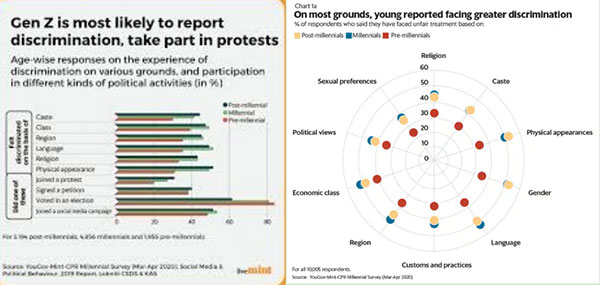
    Coming to Naomi Z. Osaka. Yes, the ‘Z’ stands for Gen-Z. It does take immense guts and candour to withdraw from a tournament of this stature because she could not agree with the rule of appearing at post-match press meets which made her uncomfortable. [Djokovic was one of the few who openly supported her stand.] Why not appear at a press meet when one gets more exposure, one would ask? But Osaka belongs to a generation that most of us managing brands are still coming to terms with. I went across and asked two of my friends for some insights to understand Gen-Z better. One, Subhash Chandra, a market research analyst shared lots of short clippings about the ‘post-millennials’ as they are also called. The other, Nirmal Dayani, shared the same sentiments of his Gen-Z son on this issue.


    [Source – YouGov-Mint-CPR Millennial Survey, March-April 2020]


    In the older times, the sponsors would have taken serious offence to such a sudden move by their brand ambassador, and one might have even decided to pull out of the contract due to an obvious breach of the same. Not in the case of Osaka. Nike, ANA, and Nissin all stayed steadfast behind her as if endorsing her decision. Also, that way they continue to connect with the Gen-Z whom Osaka represents, for their own business interests.


    Cut to the Euro 2020 being played across the continent right now.


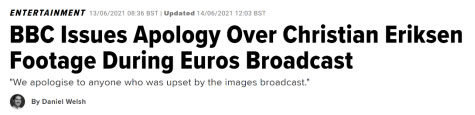
    On June 12, during a game against Finland, Christian Eriksen of Denmark had a serious medical emergency. While his teammates shielded him while CPR was being given and the stadium was in stunned silence, the television cameras were showing close-ups of the attempts to revive him and of his shocked wife being comforted by teammates Schmeichel and Klaer. After some time the cameras pulled back and stayed there. There was huge backlash on the broadcasters for getting too close to the medical activity and sharing personal moments. The BBC formally apologised the very next day.


    This is a clear indicator on the maturity with which brands need to handle totally unexpected situations. It is easy to get carried away and behave in a manner that may bring in immediate social media chatter but eventually lead to social media outrage. A clear pointer to the media brands across the world, more so in India, who tend to sensationalise events for personal gains, at the cost of social propriety!


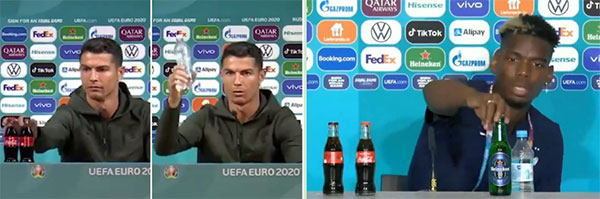
    A few days later, at their respective post-match press meets, Cristiano Ronaldo removed a couple of Coca-Cola bottles from the table while Paul Pogba removed a Heineken bottle. There were news items of how Coke lost $4.00 billion in the stock market due to that action. We are yet to know how much Heineken lost, but then Pogba is not as big a star as CR7 is!


    This is again a strong message going out to brands to be empathetic to people’s sensitivities. While one may question the very logic of having a fizzy drink sponsoring an event about fitness, the onus lies on the brand[s] to show respect. CR7 is known to espouse the cause of health food so it would be downright silly to position those Coke bottles in front of him. Pogba is a Muslim so would never like to have an alcohol brand with him. The logos of the sponsors are anyway on the backdrops, so why this urge to do the overkill with product placement? In todays times, these do not have the desired positive impact. In fact, if they boomerang, then they garner more social media space!


    Anyway, the Russians are leading the Finns by a goal while Turkey and Wales are warming up for their game which is a must-win for both. So, I better rush back to my place in front of the screen. Cheers!


  • Between a rock and a hard place!


    By Avik Chattopadhyay


    Avik ChattopadhyaySunday, July 11, was quite a tumultuous day in London. While in Wimbledon, Novak Djokovic fought his way to his sixth title on grass, just 8.8 miles away, Wembley was preparing for the Euro 2020 finals between England and Italy.


    Wimbledon was prim and proper, with people enjoying the game seated comfortably at centre court or relaxing on the lawns outside watching on large screens. Everything was very ‘English’ in its casual elegance and sportsmanship was displayed by one and all.


    Wembley was the epicentre of a gathering storm, with people drunk on the streets damaging public property, smashing car and shop windows, uprooting potted plants and dancing on police barriers. Everything was very ‘English’ in its feared hooliganism and total lack of social propriety towards one and all.


    What happened outside the stadium after the English lost in the penalty shootout has been shared across the world, with most English media embarrassed to cover and capture it in its brutal entirety.


    A popular social media message doing the rounds is, “Wimbledon is what England wants the world to see it. Wembley is what England actually is.”


    Screen captured from bbc.com


    So, what really is “England” as a brand?
    Is it actually Wimbledon with Wembley as an aberration?
    Or is it actually Wembley with Wimbledon as an elitist diversion?
    Or is it both in equal measure?
    Or is it a larger macrocosm with these sporting events as little parts?


    A more fundamental question that emerges is – is it England or London as a brand? Do Londoners believe they are distinct from the rest of England just like New Yorkers or Parisians do? Do they consider themselves just different or ‘better’?


    “Places as brands are some of the most complex to both understand and work on”, Wally Olins, one of the world’s last brand gurus, had told me in 2010 when he was working on the London brand as part of the oncoming 2012 Olympic Games.


    “Most place branding exercises end up being tourism campaigns,” he continued, “projecting an incomplete picture to the world at large and, more importantly, its citizens.”


    So, while the world was debating the racist hooliganism of London, there were these electric buses traversing the city carrying pithy messages in typical English humour. If one were to judge London by just a single event of either a Wimbledon, a Wembley or a London Bus, one would be very far from the total picture that depicts the city in her entire form and mind.


    Place brands are the closest to individual human brands in their complexity, mood swings, and multitude of manifestations. Their constituents make them so. Corporate and product brands are far simpler in contrast as there is greater ‘control’ on how the constituents behave.


    It is nearly impossible for place brands to be opaque to the world outside, be it a tourist, an investor, or an immigrant. Each stakeholder is well aware of all aspects of the place before experiencing it, investing in it or even wanting to be a part of it. It is not that the place willingly shares all its manifestations, but the actions of its constituents ensure this level of transparency. London would love to have wished away what happened before and after the football game, but a place does not have control over each of its constituents. And one can end up being a total embarrassment even if miniscule as today’s open world captures, amplifies and critiques it even before you can finish singing your national anthem!


    Just see what one virus from a bat did to brand China! All the hard work over the last three decades in building its ‘power and prosperity’ image came tumbling down because some constituents handled the situation so badly that it will take another three decades to restore any semblance of credibility and bonhomie with the larger world. In retrospect, it could not have been worse timed ahead of the 100th anniversary celebrations of the CPC!


    At the same time, place brands are also subject to stereotyping by the rest of the world. There are riots currently happening in South Africa but then discussion and outrage in social media circles is far lesser even though more than seventy people have already died. That is because a larger part of the world actually expects such happenings in that place. This is the other aspect of place branding that it cannot turn away from.


    Places and their citizens are stereotyped on historical records and their interpretations. A large part of this stereotyping is a post-colonial outcome with most ex-colonies taking considerable time to come out of the images cast upon them by their occupiers. The general narrative created is the deterioration of an ex-colony in quality of life, law and order and culture once it gains independence. Close to 70% of the world has spent the last half century in destroying these narratives primarily through action and credible demonstration rather than mere advertising.


    Hence whether Kerala is truly “god’s own country” will not be determined by only the tourist boats on the backwaters but also on people enjoying “beef fry and parotta” irrespective of faith and ensuring every child gets high-quality education.


    That makes place branding a slightly easier task!


  • Democracy as a Brand…


    By Avik Chattopadhyay


    Avik ChattopadhyayAs we enter into ‘Azadi ka Amrit Mahotsav’ to celebrate 75 years of our independence, we also enter the 75th year of our tryst with ‘democracy’. When the British got tired of looting their jewel in their crown and got shafted in the Second World War, we graciously took over an impoverished conglomerate of 550+ princely states and their 300 million people. While we talk a lot about the flag, emblem, and national anthem that we adopted, we also adopted democracy as the medium of governance of the fledgling union. The Constitution came a good 15-odd months later.


    Democracy was a new concept to an agglomeration of peoples of different cultures, languages and faiths who had experienced monarchies or aristocracies for more than 2300 years. Since the 16 Mahajanapadas during 600-400 BC that boasted of thriving republics like the Sakyas of Kapilavastu and the Lichchavis of Vaishali, this entire geographical subcontinent had never experienced any inch of land where the commoner could decide who would govern.


    Suddenly the traditionally servile ‘Indian’ was given the power to choose someone into power once we were finally on our own. Though elections were held under British rule to elect local/ regional governments, the subjugated Indian saw it as a strategic tool in the freedom struggle more against the British than a means of self-determination.


    After 2347 years, we suddenly became the ‘world’s largest democracy’! It has been just 75 years since our experimentation with this method. We continue to be the largest as the population has multiplied by more than four times since then. Has it been long enough to ensure we have a mature democracy that has its fundamentals deeply entrenched in our psyche? Or is it too early to pass any judgment on how well we have accepted and adopted it for a nation as diverse as ours?


    Democracy is a brand. A brand of governance. It has its core purpose, its promise, its values, and its personality. Wikipedia defines it as “a form of government in which the people have the authority to deliberate and decide legislation (“direct democracy”), or to choose governing officials to do so (“representative democracy”). Who is considered part of “the people” and how authority is shared among or delegated by the people has changed over time and at different rates in different countries, but over time more and more of a democratic country’s inhabitants have generally been included. Cornerstones of democracy include freedom of assembly and speech, inclusiveness and equality, membership, consent, voting, right to life and minority rights.”


    Typically, the constitution or people’s charter of a country describes the type of democracy it has chosen to live by. We decided to be a democracy and then the Constituent Assembly went about describing it in all its myriad aspects. The core purpose, promise and values of democracy does not change from nation to nation, or even through the ages. The manifestation in the form of its personality does surely change across cultures and time.


    The biggest aspect of democracy that can go through drastic changes is the way it delivers its promise to its primary stakeholder, the citizens. The delivery of democracy, like in any other brand, determines its health and sustainability. In this context I raise five issues on the delivery of Indian democracy that need healthy introspection and discussion to decide whether we are cut out for this system at all or was it a utopian imposition that must be overturned.


    Not just quantity, but quality.

    Just numbers cannot define the health of a governing system. It cannot be confined to the number of eligible voters, number of constituencies and number of legislators across state assemblies and the parliament. The legislature wants to keep it that way as that does not question the qualitative aspect.


    A report released in August 2021 by Association for Democratic Reforms shows that a total of 67 MPs and 296 MLAs have declared criminal cases against them! Voices have been raised on ‘cleaning’ the corridors of power but just like the jamming of the Women’s Representation Bill, such issues are stymied by both the current legislators and aspiring ones as then they are out of a job!


    We need electoral reforms in the way we define a “majority” too. Right now, it is not an absolute majority and need not be representative of the larger part of the country. A party strong in the North can come into power garnering 75% of the seats without cutting any ice in the south. There is a move to increase the number of constituencies based on population which openly goes against the national objective of population control. Any party forming the central government must get a minimum percentage of votes in every part of the country along with having an absolute majority that qualifies it as truly representative of all the nation.


    Not just voting but participating.

    Every five years, we celebrate the ‘dance of democracy’, as a nation or a state. And then we go back to the feudal system of operation that we are more comfortable with. The culture of “mai baap” persists for centuries. So, the ritual of casting a vote and chest-thumping as to how thriving a democracy we are is a convenient concoction of the legislature. Even Russia and China have elections, don’t they?


    Of the cornerstones of democracy, voting is just one. Freedom of assembly and speech, inclusiveness and equality, membership, consent, right to life and minority rights are the others that must be practised in every corner of the nation to qualify as a healthy democracy. The citizen stakeholders need to participate actively in each cornerstone to qualify as a healthy participative democracy.


    Not just studying but knowing.

    For the common man and woman to participate one needs to study the concept of democracy, our constitution, and the cornerstones. Learning “Civics” till secondary school is not enough.


    Every Indian has to know the ethos of our Constitution by studying it right through school and college, whatever be the individual stream. Unless each citizen is aware of the purpose, promise, values and operating principles of democracy, one will never realise the value of continuously protecting and periodically cleansing the governing system. There needs to be a level of constructive activism that does not turn away from the farmers’ protest while objecting to malls being closed.


    Not just rights but duties too.

    It is not only our right to protest but also our duty to protest.

    It is not only our right to be included but also out duty to include.

    It is not only our right to equality but also our duty to be equitable.

    It is not only our right to belong but also our duty to invite.

    It is not only our right to life but also our duty to preserve lives.


    Our years of servility have made us an accepting and docile race. Decades of keeping ourselves poor has made us numb to what rightfully belongs to us. Netaji had said, “Freedom is not given, it is taken.” Better knowledge of what we are entitled to by constitution will allow us to take them as they are never willingly given. There need to be citizen councils in every constituency that hold representatives accountable to their promises. It is a bit like a direct democratic system applying checks and balances on the representative democratic superstructure.


    Not just institutions but credible ones.

    There is a saying that democracy is an animal on four feet – the legislature, the judiciary, the executive, and the media. There have been times in independent India when all institutions have been controlled and compromised leading to a democratic system become autocratic. On occasions the transition has been drastic and in your face. On others, it has been subtle, protracted, and veiled.


    I remember L K Advani’s chastising the Indian media in 1975 saying: “You are asked only to bend but you crawled.” Today the voices of dissent are instantly drowned out by institutionalised trolls on all forms of media, but the fundamental remark holds true!


    When the chief of judiciary of a secular nation instructs the government to build a specific place of worship on disputed land instead of suggesting a hospital or place of education, you know it is time to demand better. When key media people deliberately dish out fake and divisive news knowing that thousands following them might get instigated into action, you know it is time to question better. When your chosen representatives fall back on their promise of a better life for you time and again and indulge in dismantling the cornerstones, you know it is time to choose better.


    That is when the near death of democracy is avoided by one more dance.

    But is that enough?


    Avik Chattopadhyay is a senior brand and strategy consultant based in Gurugram. He writes on MxMIndia mostly on alternate Thursdays, but sometimes on other days as well. His views here are personal


  • The End of the ‘Managing Agency’


    By Avik Chattopadhyay


    Avik ChattopadhyayThis is my second in a series of thoughts on ‘India@75’. The first was to do with the very concept of ‘democracy’ in India as we enter our 75th year. This one is to do with the last stages of one of the oldest brands of this country that has important lessons for all of us in the world of brand strategy and management.


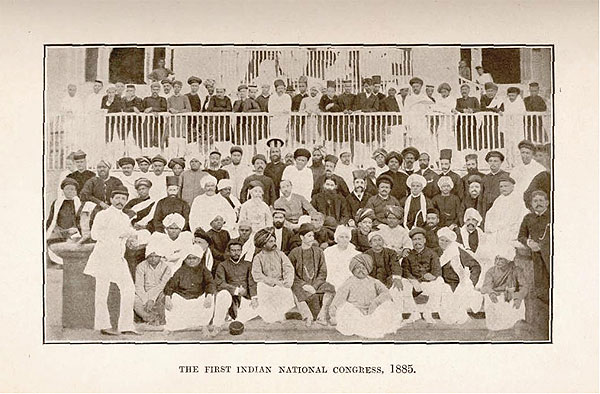
    The Indian National Congress was established on December 28, 1885 at the Gokuldas Tejpal Sanskrit College in Mumbai with 72 delegates responding to a call by retired Indian Civil Service officer Allan Octavian Hume of creating a platform for educated Indians to discuss and debate civil and political issues. In a letter to select alumni of Calcutta Presidency in 1883, Hume implored, “Every nation secures precisely as good a government as it merits. If you, the picked men, the most highly educated of the nation, cannot, scorning personal ease and selfish objects, make a resolute struggle to secure greater freedom for yourselves and your country, a more impartial administration, a larger share in the management of your own affairs, then we, your friends, are wrong and our adversaries right…and India truly neither desires nor deserves any better government than she enjoys.”


    The Congress was the ‘bridge’ between the ruler and the ruled. Its task was perfectly cut out in relaying the ruler’s orders and diktats in the required tone and language to the ruled while also carrying the requests and entreaties of the ruled up to the ruler. The elite members of society who made up the Congress were expected to coerce the ruler into becoming a bit more empathetic towards the subjects and have a softer approach to administration while looting the land.


    The plot took a twist with a man returning home from South Africa in 1915. The initial years were as per the norm with the points of inflection being the agitations in Champaran and Kheda. In 1920, Mohandas Gandhi took over the leadership of the Congress at it become more agitational in nature leading to the declaration of independence on 26th January 1930. The bridge had been drawn. It took numerous failed negotiations and betrayed assurances over the next twelve years to reach break point with ‘Quit India’. The Congress had firmly established itself as the only alternative to the Queen as ruler of India. A jilted and jealous Muslim League took away portions from the west and east but once the tricolour was raised atop Red Fort on 15th August 1947 the die was cast.


    The nature and structure of the rule remained more or less the same. The colour and language of the “my baap” had changed. And the fact that all that was now being done was for an independent India and ourselves. The nation had finally secured precisely as good a government as it merited, true to Hume’s words.


    The British ruled basically through agents and representatives who were given licences by the Queen / King to conduct business or trade in India on behalf of large British organisations. Independent individuals, mostly erstwhile officers of the East India Company, got multiple operating licences through bribery and nepotism and were called “managing agents”. Important names were Andrew Yule, Balmer & Lawrie, Burn & Currie and Martin & Co. who evolved over the years into not just managing various businesses through commissions but also into limited liability companies in areas like tea, real estate, engineering, paper, timber and manufacturing. At the core, the managing agents were as they were called…agents who protected the interests of the crown at any cost through managing all stakeholders using whatever means necessary.


    Though India got independent in 1947, their operating licences continued well into the 1960s. records show that in 1954-55 there were close to 3.944 managing agents who handled 5,055 joint stock companies. Once the licences expired, most of the agencies were either nationalised or conveniently handed over to ‘friends’ of the Congress. This was the beginning of the long chain of nepotism and ‘licence raj’ in the country.


    The new ruler became the de facto “managing agency” of an independent India. It operated just as one, with no enemies, no burning bridges and no ‘outcastes’ in the system. Everyone was welcome to the party, pun intended. This was a political movement that rallied a subjugated people around itself to demand freedom. In 1947 it was expected to govern a heterogenous conglomerate of 500+ kingdoms and 300 million people!


    The 1950s and 1960s were spent in a mix of utopia and resolve to build the nation. Some of the country’s most enduring institutions and ideas were born, built, and established. The largely impoverished but dreamy-eyed 300 million looked at the ‘Temples of Modern India’ with pride and aspiration. Some of the best brains in the world came to the world’s largest democracy to both teach and learn. Here was a nation crafted out of non-violence, a flagbearer of an ideal new world that every colony could take inspiration from.


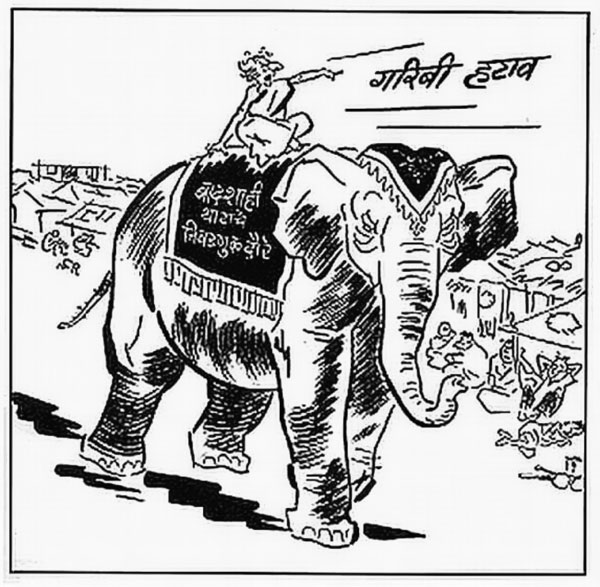
    Cartoon on Indira Gandhi’s “Garibi Hatao” campaign, 1971
     

    The 1970s was the decade of rude realisation that the promises of 1947 were not being met. Nepotism, in-fighting and corruption had become the norm. Disillusionment had set in. And the “angry young man” was born…brooding, bruised and brash, out to challenge the establishment and question the status quo.


    The political organisation was not cut out for governance after all. Regional parties were anyway in power in a few places, but the continental plate shifted when the Congress was dethroned. The feet of clay were finally exposed, and the first cracks had appeared in its imposing superstructure.


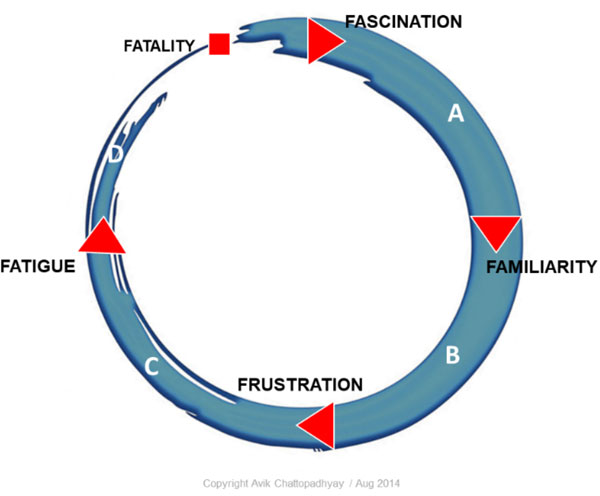
    It has taken another 50 years for the Congress as an organisation to stare at the possibility of folding up even before it celebrates its 150th anniversary in 2035. Over this period the “brand” Congress has slowly but surely lost relevance in the India of today and tomorrow. Its current situation is not an outcome of the last seven years. The decline surely has accelerated since 2014 but the cracks just kept widening since 1975. Intermittent electoral victories in the centre and various states could not repair the cracks. The end is inevitable. The brand is in a lifecycle stage of “Fatigue” hurtling towards fatality.


    The 1950s were about Fascination.

    The 1960s were about Familiarity.

    The 1970s saw the onset of Frustration.

    The 2000s evolved into Fatigue.


    This is the lifecycle of a brand, as defined by me. Every brand has to go through this inevitable cycle. The successful ones stretch stage “B” as much as they can to ensure longevity by keeping their purpose and promise relevant and constantly refreshed. Stage “C” is the one where disruptive transformation is required to ensure the brand holds itself back from reaching Fatigue. This stage is where a Netflix switches from renting DVDs to creating OTT content. This is where Ford decides to go electric. This is where the brand purpose, promise and personality need to be recast, addressing a new consumer / recipient.


    The Congress did not change any of its brand parameters since the 1950s. At the stroke of the midnight hour, it had promised the new nation peace, progress, and prosperity. It had promised the 300 million to take them out of poverty. It had promised safety, security, and stability. It had promised opportunity based on merit and performance. While its demonstration of the promises has left a lot to be desired, there are some aspects of its purpose that has not evolved, as if we are still a just-independent nation, all at sea with the world around us. The aspects of its brand promise that it continues to talk about have lost relevance in the current context.


    Many aspects of the Congress’s promise have been usurped by other political entities. The BJP has taken aspects of national identity, progress, and world-recognition. The Trinamool has taken secularism and inclusiveness. The DMK is about regional identity and stability. The CPI-M is about socialism and collective development. The AAP and BJD are about transparent governance. What is equally important is that each of them has ably demonstrated bits of their promise in the states / regions they govern.


    The Congress continues to believe that its core voter is still the dreamy-eyed poverty-stricken villager. The villager continues to be poverty-stricken but does not believe in old-world dreams anymore. The aspirations have changed over the decades and there are new elements of religious identity, revival and divisions thrown in to divert focus from rising unemployment, rising cost of living and diminishing civic facilities. The Congress did not wake up to this changing narrative, born out of years of apathetic and corrupt governance.


    The average Indian is willing to support an inept government against a corrupt one, patient enough to put up with stumbles, blunders, and greater hardships than unending favouritism, nepotism and siphoning of public funds. Promises like safety, security and unity are not relevant anymore to this Indian for this India is not united but carved out into castes and regions out to secure their own livelihoods at the cost of others.


    To top it all, the insistence not to change the leadership is very Orwellian. The current leadership is obviously happy to see the sand totally slip out of its hand but not hand over power to others and call it a day. Possibly the ugly fact that an entire army of termites depend on one family for their existence push this oddity to eternity. the biggest internal disruption and upheaval would have come about with that one single move of abdication by the family. The Fatigue would have been arrested and yet another attempt at stretching Stage “D” in the lifecycle would have been elongated. Or maybe the leadership does actually want the end to come…fast and final.


    The Congress of 2021 can be equated to Nokia in 2011, completely irrelevant and outfoxed by competition only because it refused to recognise the change around it and evolve accordingly, instead resting on its laurels and misplaced confidence in its own capabilities and on the loyalty of its supporters.


    The British left in 1947.

    The last managing agency is preparing to leave now!


    Avik Chattopadhyay is a senior brand strategist and commentator. His column will now appear every other Tuesday. The next part in this series will appear on Tuesday, October 26 with a focus on Democracy as a Brand