Category: BLOGS

  • Ranjona Banerji: Debates on primetime news have failed

    By Ranjona Banerji


    The ‘Modification’ of Indian TV news took a little break this week as Indian news watchers were no longer treated to sound bytes of the Gujarat chief minister ordering breakfast from his cook or singing in the shower. The news cycle did a little hop, skip and jump. TV critic Shailaja Bajpai’s Indian Express column expressed TV’s obsession with Narendra Modi perfectly: http://www.indianexpress.com/news/much-ado-about-narendra-modi/1100493/ India has 28 states but of course it is highly unlikely that even if the chief ministers of the 27 other states think they also deserve to become prime minister that the TV media will pay too much attention to them. On Twitter it seems that the pet names “Feku” for Modi and “Pappu” for Rahul Gandhi are on their way to being entrenched.


    **


    The hop, skip and jump in the news took us back to 1984 and the anti-Sikh riots unleashed in Delhi after Indira Gandhi was assassinated. Now if people like me complain that media houses have no institutional memory about the Babri Masjid demolition and its aftermath, can you imagine how far back 1984 is?


    Anyway, the Congress’s Jagdish Tytler, whose name was associated with rioters from day one, was back in the dock. The courts will relook at the witnesses but Tytler had to face the wrath of TV anchors. Twitter told me that Arnab Goswami of Times Now managed to corner Tytler better than Rajdeep Sardesai of CNN-IBN or Rahul Kanwal of Headlines Today. Later, Twitter felt that Barkha Dutt of NDTV also did a good job.


    However I saw Times Now, CNN-IBN and Headlines Today and felt that Tytler was not remotely ashamed or remorseful or abashed. He brazenly made counter-allegations against the witnesses and claimed that in fact he had been helping Sikhs during those terrible days. It is true that Tytler and Goswami got into several spats where Goswami told him sternly: “You will not patronise me”. Tytler played a game where he alternated between being aggressive and wheedling.


    The story of the riots of 1984 is of failure on almost every count – political, social, investigative and judicial. This sort of television drama does not add any dignity or indeed anything worthwhile to the proceedings. Tytler has managed to withstand all kinds of storms since then and probably relishes the chance to be on TV having his say. Our news channels took a tragedy and typically tried to turn it into a melodramatic farce.


    **


    The other news of the day was West Bengal and the attack by Trinamool Congress workers on the prestigious Presidency University (my alma mater, Asia’s first western-oriented educational institution and once India’s premier college). Times Now ran with it all day as it urged us to take our country back from goons. Newshour however turned into a most ridiculous battleground. No one from Trinamool Congress appeared on the show – Derek O’Brien had apparently already been the day before. Goswami wanted the show to be about the attack on an educational institution and political violence. Instead it turned into a slanging match between the Left and Trinamool with Swapan Dasgupta and Jayanto Ghosal of the Ananda Bazaar Patrika batting for Mamata Banerjee and her party. (If anyone wanted more proof that the BJP was trying to cosy up to Banerjee, here it was.)


    The only voice of the citizen was a young film-maker – the only female on the show – who finally had enough of Dasgupta and got into a fight with him. Goswami could not seem to control what was going on. Finally, they were all screaming so much that you had to laugh and I reminded myself once again why I’ve stopped watching primetime news.


    The debate format has failed and Indian news channels must now reinvent the evening format. It’s not even that amusing any more.

    **


    The best joke that I heard on TV yesterday came from the Left’s Sitaram Yechury who told a bemused news anchor – I forget which – “what you call violence, we call a class struggle.” Indeed.

     

  • One Big Idea by Sujit Kote: Waking up to Social Media

    By Sujit Kote, GM, Hansa Events and Activation

     

    The one big idea that could be a game changer for the Events industry is ‘Intellectual Property’. IP offers unique entertainment to the audiences and gets like-minded brands together. Consumers were always exposed to international entertainment through the Internet, but through Youtube and Social Media the awareness is much more now. Regular Bollywood song and dance alone does not excite consumers any more. International formats and new format IPs are slowly but surely making their way into India. These IPs will be driven by a single, large brand or multiple brands with similar ideologies coming together. The success of the marathon for the last few years is a testament to the fact that IPs are here to stay. New age music festivals have already begun to spring up across the country. Event-management companies and production houses are making rounds of festivals to buy India property rights for various international IPs. In the next few years, India will see a huge rise in the number of IPs across the country.


    Also, the one big idea that could be a game changer for the events and activation industry is the integration of social media. Very few players have actually realised and used the potential of social media. Today, the success of a campaign is being judged based on the active response for the event or activation. But by use of social media, the event/activation campaign reaches out to a larger audience or attracts a larger audience to the event. An event or activation is no longer restricted to the venue where the activity is taking place. The event is now being broadcasted live on Facebook, tweeted across social media, uploaded on various social media sites for consumers to experience at will. Very soon, the success of an activation campaign would be measured based on the responses on social media alone.  The integration of social media with events and activation would see a difference in the way pre-promotions would be done while maintaining sustainability of activity and measurement of final results.


  • Anil Thakraney: Full On Modi Mania!

    By Anil Thakraney


    So, mota bhai has decided to emerge from his Gujarat hideout for a Bharat Darshan. Modi has sniffed a golden opportunity of becoming the nation’s PM in 2014, and is therefore on a media feeding frenzy. No medium is being spared. Conferences, seminars, TV interviews, Twitter, 3D holograms, it’s all happening. And I think he’s doing the right thing at the right time. The janata is maha fed up of UPA’s assorted corruption scandals, and the BJP does have a chance to get back into power, provided, of course, they can hitch up support from regional satraps, and that’s not going to be easy.


    The 360-degree media blitz will not just get Modi quick national attention, it will help him crash Advaniji’s perpetual dream of becoming PM (as also the hopes of other BJP contenders). Once Modi positions himself as the Next Big Thing (which he’s very busy doing), it will be impossible for the BJP to nominate someone else.


    Even better news for the controversial neta is that the media fully reciprocates the love and affection. This is because Modi is a colourful character, a cool orator, and you can be assured of wicked soundbites. In complete contrast with his arch rival, Rahul baba, who’s a huge bore. This attracts journalists to the man like bees to a beehive (Oops! Politically incorrect metaphor, hehe). There’s another reason for the media’s lust for Modi, and I can say this as a journalist: I think each reporter/anchor is secretly hoping that the much demanded and much awaited apology to the Muslims will happen on his/her channel/portal/newspaper. Well, that apology isn’t coming anytime soon, but it keeps the journos on their toes. And I am pretty certain the clever Gujarati leader is aware of this, and is using it to his full advantage.


    Also, luck seems to be running on Modi’s side; Shri Jagdish Tytler, the face of the 1984 anti Sikh riots, is here to help mota bhai’s cause. With the case reopening now, the Congress’s 2002 anti-Modi strategy gets instantly negated. So, expect a Modi media blast right till the next general elections. Of course, whether it will convert into votes, and the PM’s job, is another story.


    ***


    PS: This is not for the attention of Narendra Modi, he already knows how to handle the press. But every stuck-up, self-obsessed Indian movie star and celeb should watch this video. This is Jennifer Lawrence at a press con, soon after winning the Oscar. Witty, charming, disarming, natural. That’s the way to go, people.


  • Anil Thakraney: The Feku/Pappu tamasha

    By Anil Thakraney


    Two stories from last week caught my attention. One, as the battle of Feku (NaMo) and Pappu (RaGa) got raging on the social media, with both their followers (many of them fake) getting into a mudslinging match, the television media got busy discussing the social media’s impact on politics. On whether all the fan following (or hatred) on Twitter will affect the fortunes of the netas in the next elections. Well, all they had to do was ask me, and save themselves a lot of precious airtime. The answer is a big NO. And I don’t say that because a vast majority (over 95%) of Indians aren’t connected on social media, that would be the obvious explanation.


    I say that because a vast majority of those who are, are likely to be from the Great Indian Middle Class. The class that cribs heavily but never goes out to vote (me included!). The kind of people who have opinions on politics but don’t wish to engage with the process. These people are having fun on the internet, and all they want to do is outsmart each other on the ‘retweet’ value, have a good laugh, and then forget all about it. The people who will actually queue up to cast their votes will, as usual, come from the lower or very lower classes. They have no interest in the social media chatter, they give a damn about who tweeted what. They will vote for the same reasons they always vote: Regularization of their bastis, a new bore well, electricity connection, etc. And they will vote keeping caste, religion, language, etc, in mind.


    In short, enjoy all the outpouring on the internet. It’s fultoo time pass, and nothing more.


    The other story was that ‘super exclusive’ on Times Now. Which involved bowler Sreesanth giving the channel a soundbite, which had him ranting about the ‘Slapgate’, an incident that happened five long years ago! What was funnier was Arnab babu excitedly announcing that ‘this is the biggest cricket controversy’. Wow, Mr Goswami, you call a slapping incident post an IPL match a bigger controversy than the assorted match fixing scandals? Anyway, Sreesanth is upset it’s still being called ‘Slapgate’, he claims he was never actually slapped. Apparently, our man was struck by Bhajji, with the latter using the back of his palm, and not the front. Therefore, according to Sreesanth, that can’t be called a slap. Haha. Two things: One, Arnab babu needs to dig harder for real stories if trash like this is getting him fired up these days. Two, mental Sreesanth needs urgent help.


    ***


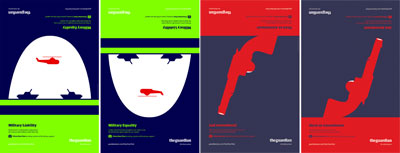
    PS: Interesting campaign by The Guardian for its US launch. Using graphic design, each ad puts out two sides of a heated political debate. The flip side of the ad reveals the flip side of the argument, so to speak. Fantastic work by the art director.


  • One Big Idea by Jaisurya Das: Genuine need for quality counselling and mentoring

    By Jaisurya Das


    When we started Dear MxM on Day 1 of MxMIndia, the concept was unique. What was a counselling service doing on a trade news and views site, people asked?


    We were almost certain we would be writing our own questions and it would take ages before our readers sought our advice…. Well, we were wrong and the very next week the response started coming in and soon we were battling on what to answer each week since most of our readers had multiple queries and each of them significant.


    While the response to the column is welcome – and we will start a new season soon, it also shows that there is a genuine need for a quality counselling and mentoring in the media. Industry associations may perhaps take a lead in the issue and start it. Large media companies must have it. It’s vital for organizations and seniors in the business to be available to mentor young talent. Until some decades, media companies had established training or internship programme. Not any longer, as entry-level employees are thrown in the deep end instantly. Even though this may be good exposure, not everyone is able to tackle the pressure and demands of the job.


    It is important that senior employees or HR departments take the lead for internal mentoring but employees are hesitant to speak to someone from their own workplace, they should be able to approach the ‘neutral’ mentors appointed by industry associations.


    The media is a people’s business, and we need to take good care of all our talent. It’s our responsibility to do so.


    — The writer is COO, Sakal Media Group and Contributing Editor, MxMIndia


  • One Big Idea by Paritosh Joshi: We ignore the Leveson Inquiry at our own peril

    By Paritosh Joshi


    David Cameron, under enormous pressure to show decisive action in the face of what was widely seen as egregious behaviour at News International, announced a wide-ranging inquiry into “the culture, practices and ethics of the Press” on July 13, 2011. Headed by Lord Justice Leveson, the inquiry commenced on July 28, 2011 and submitted its final report on November 29, 2012.


    We are in India, I hear you say, and this topic is irrelevant and irksome. Right then, I will let you go. Here still? Thanks. This merits your attention and patience. The Leveson Inquiry’s Terms of Reference appear as an Annexure but here are a few key points:


    Part 1
    1. To inquire into the culture, practices, and ethics of the press

    2. To make recommendations:
    a. for a new more effective policy and regulatory
    regime (truncated)


    Part 2
    3. To inquire into the extent of unlawful or improper conduct within (truncated) newspaper organisations and, as appropriate, other organisations within the media (truncated)


    We are no strangers to improper associations between the media and the political establishment. The Radia Tapes and countless other misdemeanours suggest that the issues that Lord Justice Leveson dealt with are pertinent to us.


    Our news businesses have never been more short-term-orientated and generally myopic to enduring vision, than they appear today. While this should only be expected of the arrivistes who have entered driven by promises of lucre and/or power, it is not restricted to them. Alarmingly, the great and the good of the Ancien Régime too are willing victims of the contagion.


    Here, finally, is the big idea: A Media Agnostic, Fully Empowered Self-Regulatory Body For News.


    An interesting dialectic is playing out in these times. On one hand: Access to news and information about people and events anywhere in the world is no further than a click on Google or Tw itt er.


    On the other : At no time have states, or other sufficiently powerful groups, been more hostile to adverse reportage. Or more prepared to attempt to muzzle it. Within the last fortnight we have seen everything from girls arrested for a Facebook posting and editors being accused of extortion to a whole country, Syria, disconnected from the internet.


    We can’t do much about despots in distant lands but we have a solemn obligation to the citizenry. Free speech is the best long-term safeguard of our democracy. It is
    imperative, therefore that the press does not open itself up to accusations of mendacity. In effect, a self-regulator would have to protect the press against its own worst
    instincts.


    Over the last year or so, television news broadcasters have instituted a self-regulatory body the News Broadcasting Standards Authority, NBSA, presided over by ex- CJI, Justice Verma. NBSA has begun to make some progress but there is still disquiet on both substance and form in which news is delivered. The situation on the print side of the business is less sanguine. The Press Council of India is constituted under the provisions of the Press Council Act, 1978. Its stated objective is “preserving the freedom of the Press and of maintaining and improving the standards of newspapers and news agencies in India”.


    Justice Katju, who took over Chairmanship on October 5, 2011, has managed to keep the Council, and himself, in the news over this last year and a bit. Bluster has its uses but eventually it becomes vexatious. So what is the problem?


    We don’t have a real self-regulator in place. And more importantly, a medium-agnostic regulator. A regulatory system, however well intentioned, is simply not up to scratch if it operates inside historical silos.


    There are four generally accepted pillars on which a Self-Regulatory Regime for News Media must stand:

    Journalists’ Code of Ethics Defined Standards of Editorial Independence Media Organisations’ internal S&P (Standards & Practices) Guidelines

    Formal Complaints Management and Redressal Process with a formally constituted body comprised of:

    Industry professionals, both working journalists and editors Representatives of allied professions (advertisers and agencies) Representatives of Civil Society Templates for the first three are available locally or internationally and can be adapted. If templates are needed for establishing the Complaints Redressal Body, that model too is available in the form of the Consumer Complaints Council of Advertising Standards Council India.


    It isn’t as simple as that. There are huge vested interests to contend with and many apparently irreconcilable positions. An idea like this will take much time to find acceptability but it is an idea whose time has come.


    And think about it the way Stan Lee, creator of Spiderman put it. “With great power, there must also come great responsibility”.


  • Ranjona Banerji: Disturbing account, but a pleasure to watch

    By Ranjona Banerji


    Kudos to Headlines Today for its investigative report into the Gujarat riots of 2002, based on police wireless reports which the Gujarat government had claimed had been destroyed. Ashish Khetan, editor, investigations trawled through pages of police reports to put together a picture of what happened in those days after compartment S6 of the Sabarmati Express was attacked at Godhra station. The Gujarat government has maintained that the riots which broke out were a “spontaneous” reaction to the 59 deaths of passengers, mainly kar sevaks returned from Ayodhya, where the Vishwa Hindu Parishad was building a temple to replace the Babri Masjid demolished by various factions of the Sangh Parivar.


    The Headlines Today investigation showed message after message from the state Intelligence Bureau as well as local police stations reporting of Muslims being attacked, incendiary speeches by VHP and Bajrang Dal activists and mobs on the streets, from the afternoon of February 27, only a few hours after the train was attacked. The Ahmedabad police commissioner PC Pande – in whose possession these papers were found – on the other hand maintained to the Special Investigative Team and others that he found no reason to believe that anything untoward was about to happen.


    Headlines Today took us back to those days with careful detail and minus any overblown hype or hysteria. Rahul Kanwal as anchor was sober and serious, an attitude he carried over to the now mandatory television panel discussion whenever anything at all happens in India. He was firm and sober with his guests as well and did not allow anyone to dominate proceedings or run away with the discussion in order to push forward their own agendas.


    At periodic intervals in the discussion, Kanwal went back to Khetan to analyse and explain the findings and to the details of the investigation itself. It bears mentioning that these police wireless reports were released to Zakia Jaffrey, a riot victim who has been tireless fighting the Gujarat government, by the Special Investigative Team only after a court intervention. As Khetan pointed out, an SIT interim report in 2010 complained that the Gujarat government was being uncooperative but in its final report appeared to give the government a “clean chit”.


    In spite of the disturbing nature of the investigation, this was one TV news programme that was a pleasure to watch. http://headlinestoday.intoday.in/programme/gujarat-riots-took-place-due-to-cops-ignorance-india-today/1/262417.html


    **


    Other news channels concentrated on the supposed rift within the NDA as the BJP and ally JD (U) wrangled over the possible ascension of Narendra Modi to the prime minister’s chair. These discussions amounted as usual to nothing, with the usual suspects fighting it out. Frankly, after the work put in by Headlines Today, all other orchestrated debates became irrelevant. The IPL was a better bet if you wanted relief.


    However CNN-IBN did take a detour to the horrifying story of a woman bleeding to death on the road in Jaipur after she was involved in an accident – no one stopped to help


    Tuesday morning’s newspapers stuck to the same theme, with the BJP-JD (U) spat dominating headlines. The Headlines Today investigation was not picked up, although most papers reported that Zakia Jaffrey had filed a protest petition.


    **


    Economic Times continued with the stories coming out of Goafest and on Monday had this rather disconcerting story about allegations of plagiarism against McCann’s creatives which won it the Grand Prix. http://articles.economictimes.indiatimes.com/2013-04-15/news/38556065_1_agc-awards-governing-council-ddb-mudra


    Clearly, the advertising industry needs to do more than introspection. It needs a thorough spring cleaning.


    Ranjona Banerji is a senior journalist and commentator. She is also Contributing Editor, MxMIndia. The views expressed here are her own. Follow her via Twitter at @ranjona


  • One Big Idea by Peter Mukerjea: 3 ways to make money from a TV channel

    By Peter Mukerjea


    9XM is a good example – don’t you think? Profitable in under a year. Take it apart and you’ll see how. But that was in the past.


    The other way to make a profitable channel is to be owned by a sugar daddy like Rupert Murdoch who has deep pockets and can live with a loss making channel business till suddenly one day one show works (KBC) and turns the fortunes of the channel on its head and then keep investing more money than anyone else in content, buy into cable to ensure carriage, invest in DTH to ensure you get digital distribution, invest more than anyone else in sport – read cricket- and then tighten the screws on the cable operators to pay you for showing the national sport on TV. But, aaaah, not everyone’s so lucky to be an RM-owned channel and that was in the past too.


    But if you’re starting afresh now in 2013, and you had Rs 20 cr to spare per year for a couple of years, you could start a high end intelligent news channel with no more than 20 seriously good people and make it a talk news channel with intelligent people to come and give their views on a variety of subjects that make up the day’s news. No multi city bureaus, no satellite vans chasing ambulances, news anchors that double up as editors and editors that double up as news anchors and virtually no layers of people in the channel hierarchy. Keep your cost low, and make it advertising-free. Yes, advertising-free!


    With the onset of a world that will rely on digital distribution, subscriptions for this service will make the channel profitable in less than two years. Then sell it to Rupert so he can take the model and spread it around the country and multiplex the service for each state in the country! Then multiply the profits.


    – The writer is former CEO of Star India. His column, Media Mullings, appears often on MxMIndia


  • Debrief: Vodafone: Zoozoos don’t make you LOL

    By Anil Thakraney


    The IPL is here and so are the zoozoos. I think Vodafone is doing absolutely the right thing. By not overdoing these creatures, they’ve ensured the idea remains fresh. And unleashing them during the IPL makes a lot of sense, given the ‘full family’ audience this chaddi cricket attracts.


    The new season arrives with a slew of new ads. And this time they’ve come up with a new addition: Midget zoozoos, so to speak. In one TVC, the midgets transport an opera singer right to a fan’s doorstep. This sells music on the phone. Another ad features them indulging in celebrity gossip. Yes, it’s the same strategy; Zoozoo antics tied to a specific Vodafone offering. This route has worked for the advertiser in the past, no reason why it won’t work again.


    However, there’s a problem this time: In the ads I have watched so far, I found the humour quotient to be low. Of course, the zoozoos are still cute, but the situations can do with more laughs. The new crop of TVCs bring a little smile to your face, but they aren’t hilarious. I’ll give you an example: I still recall one of the earlier ads, where a family of zoozoos is seen howling and shrieking as they rush out of a room. We later discover one zoozoo has applied a face mask, and this drives them crazy. This ad promoted beauty alerts. It was just too good, I still laugh when I think of that situation. That’s the kind of fun Vodafone needs to revive if they want the zoozoos to pack in the same impact.


    A tip for the creatives: Write these ads from inside a pub, and not from your office.


    Rating: (On a scale of 1-5): 3. Still cute, but humour needs to be upped


  • Anil Thakraney: CCTV footage should be used to kill apathy

    By Anil Thakraney


    I can understand why the Indian media got into a tizzy over the Boston bombings. It’s not because lives in America are more precious than, say, those in Pakistan and Afghanistan (bombings in these nations are now a routine event), but because the latest attack has demolished the perception many have harboured for a decade: That the US, post 9/11, has been able to lick terrorism on its soil. Now that we know even that nation is unsafe, it means there is no safe place left in this world, and that’s an unsettling thought.


    However, what got my anger on the boil, more than the US bombings, is something that happened in our own backyard: Cruel apathy shown by many motorists during the horrible Jaipur road accident, and the resultant tragedy. Here’s a link, in case you missed the story:


    Clearly, it isn’t an isolated case, this happens all over the nation, we seem to have turned into a nation of billions who don’t give a shit about the lives of fellow citizens. This is completely shameful, and it has to be dealt with, we simply cannot ignore it with a shrug. My thinking is that the television media should closely examine the CCTV footage, and with the help of the concerned RTOs, expose every single motorist who coolly drove past the accident spot. Perhaps the best way to tackle such unforgivable selfishness is by naming and shaming. Let’s put out the faces of the people who refused to help. Of course, one can’t legally punish them, but the threat of shaming will help in energizing others, the next time such a deathly road accident happens.


    With the possibility of terror attacks on the rise, various state governments are installing CCTV cameras on many roads/streets/junctions. The media must use this opportunity to help in exposing callous, insensitive people. And simultaneously, honour those good men and women who stop to help. This is the only way to shake up this apathetic nation.


    We’ve got the technology, now let’s use it to kick the indifferent dolts. And help save lives in the future.


    ***


    PS: Hmm. This is a national icon who arrives each evening in our living rooms to sells us gold, insurance policies, noodles, cold creams, cars… it’s a very long list. If this report is accurate, then DD would surely have got the footage erased a long time ago, leaving no trace of any evidence. The bigger tragedy of the 1984 riots was that there was no private TV channel at the time. Many powerful people would have been nailed had that been the case.


    Link: http://timesofindia.indiatimes.com/india/1984-riots-Why-nobody-noticed-Amitabh-Bachchan -spewing-venom-in-India/articleshow/10429011.cms?intenttarget=no


  • One Big Idea by Deepa Gahlot: Creating Connoisseurs

    By Deepa Gahlot


    The question comes up sporadically, why don’t the newspapers and general interest publications carry reviews or in-depth pieces on culture? The answer is invariably a) who’s interested in reading about it?  b) where are the experts to write on art and culture?


    These two issues are linked- if nobody writes, how can interest be created? And if no interest is created, who will read?


    In the Indian media, Bollywood has almost wiped out everything else that has value, beauty, intelligence. If crass films that make 100 crore are cited as the ultimate goal to be achieved, slowly all difference of opinion (already mainstream critics are becoming apologists for bad commercial cinema) will be smothered and anything that cannot be measured with money will lose its worth.


    Already, large parts of the country exist in a cultural vacuum and in cities, for the middle and upper classes, malls and pubs are the new temples of ‘timepass.’


    The print medium seems to have abdicated its role as thought leader and influencer. It happened when most publications abruptly dropped their culture and books pages, and, to ostensibly rope in young readers, filled pages and pages with Bollywood trivia. Now India has a young generation of Philistines, who think Bollywood and TV talent contests is all the culture they need, because who will teach them any better? Not schools burdened with percentage-oriented education; not parents, unless they are exceptionally enlightened.


    If the next generation’s taste has to be developed and the onslaught of idiocy halted, then the mainstream media-mainly print- has to bring back the culture and books pages and also encourage a climate of informed criticism and connoisseurship.


    –The writer is a senior journalist and an award-winning film reviewer. Her column, Reviewing the Reviews, appears on most Mondays


  • One Big Idea by Shailesh Kapoor: Consumer-inclusive content generation is the future

    By Shailesh Kapoor


    Content testing is now an established norm in the television industry. Channels test new programme concepts or pilots among consumers with the purpose of content development, or to take green-lighting decisions. We have tested more than 150 programmes across genres in the last four years. This industry-wide need also encouraged us to create a proprietary tool for this purpose, called True Value. There is conclusive data to prove that pre-testing content can reduce failure rate by almost 30-40%.


    I believe that as we step into the next stage of television content, we can’t be satisfied with involving consumers only with content testing and post-launch feedback. The consumer’s mind is a fascinating melting pot of heterogeneous ideas, and tapping into them can throw up stories and formats that trained creative minds may not necessarily be able to conjure up.


    Of course, the process of content generation using the consumers can’t be “random” in nature. Often, when I speak about this topic, the first broadcaster reaction is: “But consumers are not creative people.” But that’s the whole point. Because they are not “creative” people, they think like “normal” people. What we need to bring into the process are tools and devices that stimulate their thinking; some kind of a structure using which their rich minds can be channelized into concrete ideas.


    We have been focusing on building such tools over the last year, and are happy to announce that 2013 should see definitive progress in this direction. I’m looking forward to working with like-minded channels and production houses to change the way content is generated, not only in India but also across the world.


    Of the consumer, by the consumer, for the consumer!


    – The writer is Founder-CEO, Ormax Media Research. His column, TV Trail, appears on MxMIndia every Thursday