Category: BLOGS

  • Ranjona Banerji: So what does a young, idealistic person do as a journalist?

    By Ranjona Banerji


    A chat with journalism students earlier this week (online of course) was full of the kind of questions that you would want to hear about the state of journalism today. Where are the real stories? Why does the media ignore the ground realities? Why is the news sensationalised and so on.

    But the saddest question I got was along these lines: what does an idealistic young person do, when in their first job as a journalist, their bosses ask them to do something which goes against the tenets of journalism?

    And I was stumped for an answer.

    I can only imagine how tough it must be in these times. Where lines are so clear, where divisions are so sharp. It’s not the same as being sent off to cover some boring Rotary event the owner wants featured or trudge the streets in summer getting contact details for every shop in your given area for a “city directory”, or to attend an early morning “laughter club” or any of the terrible things rookies and freshers are forced to do.

    In today’s world, this means enforced government-dictated cover ups and fudging.

    This means giving up all those ideals to reveal the truth to the world, to get into investigations, to challenge those in power. And instead, to push whatever agenda the editors and owners have concocted. Make no mistake, follow the owner and you’re fast-tracked to rise high and fast. Get that selfie with the PM and publicise it widely and you jump a few steps from senior correspondent to editor. Like any profession, journalism can also be as full as corporate shenanigans as any other.

    (Some of the jokes we made in that discussion with journalism students were about sacking CEOs and the HR department. Sorry people. But we know what you’re like.)

    But how does one answer that question? Of all the work that has been done during this awful pandemic, it has been from those journalists who have broken out of their constraints and presented the horrible reality to their readers and viewers. From June to November 2020, some newsrooms were inventing stories to keep the sad death of actor Sushant Singh Rajput alive for political reasons. Whether it was the Bihar assembly elections or deflection from the pandemic, it worked. The media churned up hatred, divisions, targeted people as culprits with scant evidence and against all journalistic principles. The worst caricatures of the TV reporter were played out in front of our eyes, as postmen and delivery people were harangued and chased in order to vilify a young actress.

    And then poof! Forgotten and gone. Poor Rajput was no longer needed.

    If that was one of our lowest points, then 2021’s pandemic has forced some newsrooms to get out there. All those heart-wrenching photographs and reports of death and mourning families and funerals have come from journalists on the ground. Maybe in spite of their bosses and in spite of the political puppet-masters controlling their bosses.

    Every day, journalist Deepak Patel posts on Twitter how official figures of Covid-19 deaths in Gujarat do not match evidence at crematoriums and burial grounds. He provides links to Gujarat’s newspapers which have been relentless in covering the reality of Gujarat’s horrific Covid situation. These include newspapers which have praised and supported Narendra Modi as chief minister during the 2002 riots and beyond.

    https://www.bbc.com/news/world-asia-india-56969086

    So all I can offer as hope to young idealism is: hold on, try and be true to yourselves. Sometimes, the worm turns.

    **

    Condolences to the Bennett Coleman group on the death of their Chairman Indu Jain from Covid-related complications.

    https://timesofindia.indiatimes.com/india/indu-jain-times-group-chairman-attains-nirvana/articleshow/82611933.cms


    Ranjona Banerji is a senior journalist and commentator. She writes on MxMIndia on Tuesdays and Fridays. Her views here are personal.

  • MxM Offer: 50% discount on ad hoc ads if marketing team is fully vaccinated


    By Your Team @ MxM


    Vaccination is key to curb the spread of Covid-19 as also reduce the risks that a virus attack could have on one. However, there are also many who are hesitant about taking a jab, and, sadly, there also exist several anti-vaxxers.


    In an effort to encourage and incentivise vaccination in the A&M and M&E sectors, MxMIndia will offer a special rate for advertising (on MxM) in the form of ad hoc mailers and site captures from June 11 to July 10, 2021.


    Here’s how: Just make a self-declaration of how many members of your marketing team have taken at least one jab. We don’t need proof… we trust you.


    If the team size is 8, and all 8 have taken at least one jab, we will offer a 50% discount on all ad hoc activity – mailers, site captures and banner ads. By ad hoc we mean advertising that is outside of annual deals or longish campaigns. If 90% of the staff have taken at least one jab, we’ll offer a 45% discount. And so on. If the team size is two, and only one colleague has taken a shot, we will offer a 25% cut.


    Is this a gimmick? It may seem like one, but it isn’t. We have been thinking about it for a while, and firmly believe that the solution to the current problem of the Covid-19 spread is masking, distancing, hygiene and vaccination. This is just a move to incentivise the vaccination process in organisations in a sector we are associated with.


    Over the years, MxMIndia has partnered the industry in various social causes. Whether it’s the flash floods in Kerala or free advertising to a television show that’s helped in the cause of cancer care. That’s how we are. That’s what we believe in. Business and revenues are important, but they aren’t our end-all.


    The impact of the Covid-19 pandemic has been huge. Let’s all work together to ensure the world we live in is safer and better.


    If you or your organisation wish to use this opportunity, please feel free to write directly to Pradyuman Maheshwari at pradyumanm [at] mxmindia.com, Whatsapp him or call (98338 76278). Or please get someone in your team to do so. Also, please forward this message to all. Also, get other media platforms – including our rivals to do the same. We aren’t doing this to earn brownie points. We sincerely believe that every eligible Indian must be vaccinated.

  • The Anchor: Piyush Pandey picks his 6 all-time favourite Dev Anand numbers

    By Piyush Pandey 


    When asked to list my favourites, I actually wrote down these songs on a piece of envelope recalling his work. I don’t use the internet so I didn’t rely on Google to help me with these songs. These are songs that have left an impression on me and are stored somewhere within me. [First published: December 5, 2011, updated September 25, 2023]


    #1 Main zindagi ka saath nibhata chala gaya, har fikr ko dhuen main udata chala gaya from the movie Hum Dono. The philosophy of life that the lyrics of this song embody makes it my favourite. It’s about being happy, and not looking back but moving ahead in life.


    #2 Yeh dil na hota bechara, kadam na hote aawara from the movie Jewel Thief. All the songs I am listing express emotions in a beautiful manner. These do not rely on any kind of musical gimmick but are genuine pearls on life and its ways.


    #3 Hum bekhudi mein tumko pukare chale gaye, sagar mein zindagi ko utare chale gaye from Kala Pani. The song is a perfect example of stringing emotions with powerful lyrics.


    #4 Apni to har aah ik toofan hai, upar wala jaan kar anjaan hai from Kala Bazaar. The song plays a pun on the word uparwala. It’s picturised in a train and Dev Anand in the song actually means the girl on the upper berth but puns the word to signify uparwala as God.


    #5 Dil aaj shayar hai, gham aaj nagma hai from Gambler. Dev Anand’s songs, like the man himself, reflect his passion for life. He had been romancing life through all of his songs and somewhere this passion kind of drips from the work he did.


    #6 Phoolon ke rang se, dil ki kalam se tujhko likhi roz paati from Prem Pujari. I am a big fan of Dev Anand’s, and have seen some of his movies like Johnny Mera Naam repeatedly.


  • Ranjona Banerji: You’ve got to listen to what your audience thinks and wants!


    Ranjona BanerjiBy Ranjona Banerji


    I suppose it’s only fair. If journalists tell other people how to do their jobs; people are going to tell journalists how to do theirs. And it’s important. You have to listen to what your audience – readers, viewers, well-wishers, critics – thinks and wants.

    But sadly, most of the advice or the outrage misses the mighty deodar and whizzes into the underbrush.

    These are some of my favourites:

    1. All journalists are reporters. This is an understandable error, because a name goes with the article you read and those names provide you with information. But that article – in a proper newsroom that is – has gone through a long process before you read it. Here’s a sample of what could happen: A group of editors has decided on what the article should contain. A senior person has briefed and then debriefed the reporter/correspondent on what the article should contain and assessed what was missed, what else is needed, how the angle may have changed with more information, especially in an ongoing event.

    The article is written, vetted and then goes to the desk. Here the language and flow are corrected and confirmation is sought on information provided or unsubstantiated claims made. If the information or source are potentially controversial, legal opinion could be sought.

    The finished product then goes to the page. Here, because of space considerations, any amount of chipping and chopping may be done. Sometimes to the benefit of the story and sadly sometimes to the detriment. The headline, intro and tagline are finetuned here. The reporter lost control once it when to the desk.

    So what you as the reader see has gone through any number of changes. Therefore, emphatically, no, all journalists are not reporters. All editors may or may not have been reporters. According to the legendary Harold Evans (Editing by Design), to be a desk person is paramount. You start as a lowly sub-editor and you learn the craft of how to bring a journal together. You are or should be the lynchpin of a newsroom.

    2 They do it for the money, they are all “paid media”.

    This is an interesting allegation. Are journalists supposed to work for free? How many of our readers and viewers survive solely on fresh or polluted air, the virtue of voluntary work and the hot criticism of others? I know: none. Yes, employees of a newsroom get salaries, contributors get paid and so on.

    The question is who they get paid by. If it’s not the employer, then that is unacceptable.

    The other question is who is the employer paid by. Advertisers are integral parts of a newspaper and always have been. They put pressure on journals and always have and always will. How far does the employer give in or at all? These are the questions to ask.

    And when the government is the sole advertiser and therefore has the power to exert maximum pressure? Then you reach the sort of situation you are in today.

    This balance is not new, it is ongoing. The issue is how much pressure a newsroom can and will withstand.

    3 People should be arrested for opinions. Take the recent rage over veteran journalist and current columnist Tavleen Singh for instance. Those calling for her arrest for an opinion are no different from those who arrested Umar Khalid for his views. I disagree with almost everything that Singh has written since she became a columnist. I do not agree with those who feel her support for rightwing supremacism reduced after her son’s OCI status was withdrawn. Her rare criticism of the Modi regime is meaningless in the context of the body of her work.

    But arrest? That is dangerous and silly.

    4 Opinions must be policed. How dare X journalist have an opinion? They should report and do their work.

    Let’s go back to Point 1. Some journalists are reporters. Many are not. Some journalists have the opportunity to have their opinions showcased, as columns. Newspapers have edits. Those are the newspaper’s opinions. Viewpoints and perspectives are integral parts of the media. And as we know from social media, opinions have become democratized. Everyone has a voice and the right to feel their opinion is important.

    The feeling of wanting to punish opinions is dependent solely on whether you agree with the opinion or not.

    5 At no point am I saying that criticism is not valid. For more than a decade, I’ve made a living criticicing the media. For years, no one criticised or critiqued the media and that was to our own detriment. Now, there are informed and uninformed critics everywhere. That is how it should be. Keeps you on your toes.

    The purpose of this column is to help you critique better!

    Postscript: I know little of how television functions, so have not included it here. Do what you want with them!

    Ranjona Banerji is a senior journalist and commentator. She writes on MxMIndia on Tuesdays and Fridays. Her views here are personal.

  • Prabhakar Mundkur: While the world is rising for unity, are we digressing?

    By Prabhakar Mundkur


    2020 is a year of huge upheavals not only because of Covid, but because of the huge social uprisings for unity.


    The killing of George Floyd, a 46-year-old black man in Minneapolis, by the police sent a sweeping shock wave of social change the world over.


    Racism of any kind just went out of the window this year. And the impact on brands was tremendous. Almost every brand worth its salt pledged to be fair and non- discriminatory. Brands asked people to stand against racism. Even the stoic Hindustan Unilever joined the tirade against discrimination of any kind when it decided to change the name of one its most profitable brands in country Fair & Lovely to Glow and Lovely. Such were the sweeping forces of an unprejudiced world. I sometimes wonder if Covid might have helped because it didn’t discriminate either between rich and poor, black and white or rich and poor.


    So, when Tanishq one of India’s favourite brands put out a commercial about the unity between two religions the uprising on Twitter felt unfair and the height of discrimination. After all India has been a pot pourri of various races and religions for centuries.


    https://twitter.com/beastoftraal/status/1315848777123598337?s=20

    Tanishq has pulled the creative off YouTube. The ad can be viewed here on a tweet by @bestoftraal – Ed


    Another common practice has always been to celebrate each other’s festivals and cultural practices. After all who can but help to eat biryani at Id, order a Sadya menu for Onam, or offer tilgul for Makar Sakranti. Somehow India has grown up celebrating every festival irrespective of which state, language or community it belonged to. Following this pattern, the commercial shows the mutual respect for each other’s customs.


    So, the outrage on Twitter seemed a little misplaced. Unless it was not representative of the feelings of the population at large.


    Should brands give in?


    I think when brands have done no wrong they should stick to their guns. And not get cowed down the mass hysteria on Twitter? Why do Twitter mobs behave in such extreme ways? Mob anger can be strange, pathological and monstrous. Behaviour of a larger group is known to have a big influence on individual behaviours and have been an area of interest in social psychology for years. Psychologists have found that group behaviour tends to be more extreme and amplifies the typical behaviour of its individual members. Mobs are known for losing their self-awareness. Sociologists refer to the process as de-individuation where individual personalities become dominated by the collective mindset of the crowd. Gustave Le Bon an early explorer of this phenomenon viewed crowd behaviour as “unanimous, emotional, and intellectually weak”.  The other reason is that twitter anger dies down as quickly as it is ignited. The half-life of a tweet ( average lifespan ) is 24 minutes or thereabouts.


    So, a kneejerk reaction to take your commercial off the air might well be unfounded.


    What else can brands do?


    Companies need to figure out strategies for dealing with social media manipulation with respect to their ads. After all a pattern seems to have been established of cyber bullying to pull out movies and ads.


    It can’t be difficult to gauge the reaction to your ads. Research should warn you about cultural inflections, and if there is an ad that has even a small probability of inciting twitter mob anger it might be better to go in well prepared. If social media and twitter can be manipulated by politicians and religious groups can’t they be manipulated equally by the biggest and best marketers in the country?


    Maybe we are seeing the dawn of a new era. Where brands can use their marketing power to do what politics and the law can’t do. Right the wrong. Tell television channels to stop doling out trash to the public. Tell Twitter mobs to shut up. Hail brand power! We might well be at the edge of a new era in marketing!


    Prabhakar Mundkur is a veteran advertising professional and has led agencies in various geographies, including India. He is a prolific writer and also a prolific musician. He comments frequently on MxMIndia, as on LinkedIn and other platforms. His views here are personal

  • The Unfairness of It All


    By Prabhakar Mundkur


    When Hindustan Unilever announced its decision to rename its moneyspinner $500 million brand Fair & Lovely to Glow & Lovely, it was a classic case of doing too little too late.


    To imagine that the decision was perhaps based on the greatest upheaval of racist stereotyping of our time with the excruciating George Floyd pinned to the ground doesn’t say much for Hindustan Unilever’s decision. There is nothing to congratulate them about.  There can be no appeasement of public emotion. There can only be guilt and shame.


    Activists through the decades have objected to Unilever’s fairness cream but it needed a revolt as ugly as George Floyd’s death, for the great marketer to make this small move.  Not since Rosa Parks was denied a seat on a bus in Montgomery has the world been so affected by the colour bias of the human race.


    But how good is the new name Glow & Lovely? Decades of skin care research has shown that ‘Glow’ is a major benefit in for the skin care regimen. Just like ‘Shine’ is. a major benefit for hair. So, taking a benefit from research and planting it in a brand name is perhaps not the most creative way of configuring brand names. But then Unilever has not been particularly known for its creativity. That lesser brands like Emami had already pre-empted this thinking by naming their brands Glow & Handsome is a bit of a shame. After all, one expects leaders to show the way. Not follow in the footsteps of their smaller competitor in the FMCG business.


    But is Glow and Lovely a good name?


     There is a reason why Glow and Lovely doesn’t sound right given the vagaries of the English Language. The reason why it doesn’t roll of the tongue as easily as Fair and Lovely has to do with the English language. Both Fair and Lovely are adjectives. Glow on the other hand is either a verb or a noun depending on how you use it. Glowing & Beautiful would have sounded better in English. Because Glowing is an adjective. But it then lengthens the brand name. And Unilever might have decided they would stay close to the current syntax. Anyway to the large majority of Indians it would hardly matter. It’s just another name for Fair & Lovely. Fair and Glow are both four-letter words. But how the name changes the advertising need to be seen. Will the new ads have dark and glowing faces to make amends with the brand’s past? That is anybody’s guess.


    How Darkie changed its name


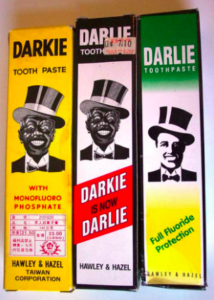
    It may interest people to know that the exact opposite of Fair & Lovely existed as a toothpaste in Asia many decades ago. A toothpaste called Darkie. Produced by Hawley and Hazel, the brand was very popular in Asia. The pack showed a smiling black performer. The brand was then acquired by Colgate Palmolive which faced a lot of racist flak on the brand. In 1989, Colgate Palmolive decided to change the brand name to Darlie.


    “It’s just plain wrong,” Reuben Mark, chairman and chief executive of Colgate-Palmolive, said about the toothpaste’s name and logotype. “It’s just offensive. The morally right thing dictated that we must change. What we have to do is find a way to change that is least damaging to the economic interests of our partners.”


    Seems like a shame that another global company had thought about this so deeply more than 30 years ago. So Unilever in many way is 30 years too late.


     What will posterity say about Fair & Lovely?


     But what this would mean for the generations to come is anybody’s guess.  Will Generation Alpha which may use the brand a few years from now warm up to the brand given its history? (Generation Alpha is the demographic cohort succeeding Generation Z. Researchers and popular media use the early 2010s as the starting birth years and the mid-2020s as the ending birth years.)


    How will these young people see our racist past? One piece of research showed that Generation Z are as racist as their millennial parents. But will this continue on to Generation Alpha? Technology is likely to change a lot of mindsets in the future. And that may change the fortune of the brand called Glow & Lovely.


    Prabhakar Mundkur is an advertising veteran, a lateral thinker, storyteller and musician. He has spent several years in advertising – in India and elsewhere in the world – including at JWT China where he headed the Unilever business, amongst other functions. In fact he worked on Unilever brands for a good 17 years… though never on F&S ;-). A prolific writer now, he was LinkedIn’s #1 Top Voice for 2016 and YourStory’s 100 Emerging Voices 2018. He writes frequently on MxMIndia.

  • Ranjona Banerji: Sandeshkhali wins, Manipur, wrestlers lose

    Ranjona BanerjiThe news coming out of the village of Sandeshkhali in West Bengal is shocking to say the least. The women of the village have accused a local Trinamool Congress politician, Sheikh Shahjahan, a Zila Parishad member, and his affiliates, of sexual assault and land-grabbing.

    https://indianexpress.com/article/cities/kolkata/in-sandeshkhali-ncw-chief-claims-she-received-2-rape-complaints-tv-journalist-arrested-9170007/

    This case is a textbook example of how the mainstream Indian media covers sexual assault cases depending on which party is in power.

    Before you start thinking, “O classic whataboutery”, let us just look at a couple of other cases.

    It was in January last year – 2023 – that India’s wrestlers began their protest against the then head of the Wrestlers Federation of India, Brij Bhushan Sharan Singh, a BJP MP. Several medal-winning wrestlers, men and women, who supported the BJP, approached Prime Minister Narendra Modi to intervene and help the women who accused Singh of sexual assault and inappropriate behaviour. They were told that a committee would look into the matter.

    Since nothing happened, in April last year India’s top athletes sat in protests until June in Delhi’s Jantar Mantar area. Despite the severity of the complaints of inappropriate touching, manhandling and threats, nothing was done. The police added to the assault by also manhandling and beating India’s athletes. Singh remained defiant and the BJP and government did nothing.

    The mainstream media thus followed the pattern set by the ruling party. These wrestlers were portrayed as making a fuss, lying, being ungrateful. We were entertained with serious analyses of how important to Singh was to the BJP and therefore could not be touched and so on. Those athletes once feted were now dismissed or further harassed by the media.

    It is interesting to see how the news is framed even when it is covered. In the following clip, the headline says “clash erupts between wrestlers and police” and not as an attack by the police on the women, as it otherwise would likely have been. This sort of wording is carefully chosen to mould public opinion and stay on the BJP’s better side. So even if you are forced to cover something, you carefully steer the sheep in the direction you favour.

    https://timesofindia.indiatimes.com/videos/news/clash-erupts-between-wrestlers-and-delhi-police-sakshi-malik-detained/videoshow/100565356.cms

    To this day, the bulk of the mainstream media has not felt it necessary to insist on justice for these women nor hold the BJP to account.

    And then there’s Manipur. This state in the Northeast of India has been in turmoil, close to civil war and definitely anarchy, since May last year. Not only has the mainstream media consistently ignored Manipur – almost a news blackout as people were shot dead in the streets and armouries were raided – it has obviously ignored reports of gross sexual crimes against women.

    In July 2023, a video emerged of two naked women, from the Kuki tribe, being paraded naked, fondled and assaulted by a large group of men from the dominant Meitei population of Manipur. At least one of the two women were possibly gangraped. The video was very disturbing to watch and thus got plenty of traction on social media and eventually, the news. The video was from May, soon after the violence broke out.

    https://thewire.in/communalism/manipur-video-two-kuki-women-paraded-naked-gang-raped

    This is only one of several such incidents which must have happened. If we know about them, it is not thanks to the mainstream media, especially television. Sexual violence and murder continue in Manipur to this day – clashes between people, the police, the Armed Forces.

    Did I add that Manipur is a BJP-ruled state? And that the Prime Minister – who barely mentioned Manipur once last year – and the Union Home Minister, who made one perfunctory visit, have repeatedly told us that the Chief Minister N Biren Singh is doing a great job? Manipur is one example of the BJP’s efficient “double engine” states.

    This is Manipur now:

    https://indianexpress.com/article/india/manipur-armouries-targeted-by-mobs-1-shot-dead-9161578/

    Given the BJP’s double standards on violence against women on their turf and in those ruled by other parties, it is hardly surprising that this PIL reached the Supreme Court of India, asking for a Special Investigative Team to look into Sandeshkhali, as has been done for Manipur:

    https://www.indiatoday.in/law/story/supreme-court-rejects-plea-in-sandeshkhali-women-sexual-violence-dont-compare-with-manipur-2504181-2024-02-19

    The reasons for the media’s skewed priorities are sadly obvious. West Bengal is TMC-ruled – that is one issue. The other is that the main accused in Sandeshkhali is Muslim. A large part of the mainstream Indian media is now seemingly part of the Sangh Parivar’s Hindu majoritarian movement. Thus it will concentrate more on demonising Muslims rather than investigating or highlighting similar cases against non-Muslims, especially Hindus, as in Brij Bhushan Singh and the wrestlers.

    The fact that two of the accused in Sandeshkhali have been arrested is not important to the media. That Shahjahan is absconding puts extra pressure on the TMC. Which the BJP did not get, even when Brij Bhushan Singh was in full public view brazening out the allegations at all times.

    The message to India’s women from the Indian media is clear: you will get support if you belong to the right religion, if the accuser belongs to the wrong religion and whether the BJP may be possibly shown in a bad light or not.

    And I haven’t even gone into the Bilkis Bano case.

    Ranjona Banerji is a senior journalist and commentator. She writes on MxMIndia on Tuesdays and Fridays. Her views here are personal.

  • MxM Code of Ethics


    Every six-odd months, we publish our Code of Ethics. For more than ever before, the Indian media needs to adopt one and practise it.

    We are now part of the Digital Publishers Association of India and will follow the self-regulatory procedures set by it. Our editor is also a member of the Editors Guild of India and the Press Club, Mumbai. More than ever before, it’s important the media acts responsibly as must people around it.

    MxMIndia adopted a Code of Ethics even before it was launched. Although it’s on the site, since it could have become a blindspot, we publish it as our Big Story once or twice a year. This is the link to the Code: http://www.mxmindia.com/code-of-ethics/

    Read on…


    The MxMIndia Code of Ethics

    This code of ethics is not meant to be a treatise in ethics. We believe all MxMers are mature professionals, of sound character and have values we agree with.

    However, since a Code of Ethics is not really followed in organisations that some of our employees may have worked with in the past, we have a formulated an easy-to-follow set of Do’s and Don’ts that each and every employee has agreed to follow.

    Also, since there’s a general belief that many media companies (business-to-business and mainstream) follow unethical practices, it’s hence critical to put the record straight on why MxMIndia isn’t like the ‘many’ others.


    1. While the objective of MxMIndia is to be a profitable enterprise, our revenues will not come from compromising editorial standards. Excellence is what we are setting out to achieve, Ethically and with Integrity.


    2. We will not be influenced in any way by advertisers – past, present or future, and will write or comment on an individual, service or organisation regardless of whether or not it advertises with MxMIndia.


    3. We will not sell our editorial content. Content includes text, photographs, videos or any visuals.


    4. Accuracy in presenting facts is of utmost importance and facts must be correctly presented.


    5. We will not present any bias in our news sections. If, however, MxM India does undertake a campaign, it will clearly state its editorial policy


    6. If there’s any advertisement that could be confused with editorial content in appearance, it will be clearly tagged as an Advertisement and be displayed in a style that is different from normal editorial content.


    7. Our reports and features will always attribute sources to people. In case, the source does not want to be named for fear of loss of employment or due to some sensitivity, every attempt must be made to look for an alternate source who could be named. If that fails, every attempt should be made to make the reader rest assured that our source is authentic and this may be done by describing who the source is.


    8. We have a no tolerance policy towards plagiarism. Employees may be given a warning if found plagiarising, but in most cases, the services of any employee found plagiarising – regardless of her/his seniority or utility to the organisation – would be terminated within 24 hours of the Editor-in-Chief conducting his/her investigation on the act of plagiarism.


    9. If any attempt is made to influence us by way of a threat to withdraw advertisements, we reserve the right to expose such individuals and/or their organisations.


    10. We will not publish photographs off the internet. If a picture is be taken from the internet, it will be done only after written permission of the source. Else, we will own the rights for the picture which may be procured by buying rights for appropriate usage. Ditto for text. If we do carry syndicated content, the source needs to be clearly be stated at the end of the article.


    11. Our journalists will take the permission of the interviewee to record her/his comments, especially when the meeting is not face-to-face.


    12. Unless approved by the Editor, we do not part with the transcript of any interview. A journalist may however play back a few quotes attributed to an individual.


    13. We will allow individuals or organisations adequate time to revert with their response to a question. In most case the adequate time would mean four to six hours. If it’s a non-critical story, then we would recommend holding the story for at least (and at most) a day.


    14. We will not accept any gifts that attempt to influence us. These should be returned immediately. Gifts in the form of chocolates, mithai, flowers or basic promotional material that is of reasonable value (of up to Rs 750-1000) is fine. Mementos or promotional material of nominal value may be accepted. No gifts must be solicited. If there’s a doubt, please consult the Editor-in-Chief/CEO. If an organisation is found to influence an MxMIndia journalist, under extreme cases, MxMIndia may even blacklist the organisation and/or its products and services.


    15. We will not solicit any outstation trips. If however there is an invitation for a junket, we will accept it only if the Editor believes there is a news value in the event. In such a case, MxMIndia will mention that the journalist concerned has visited an outstation venue at the invitation of the company which must be named. For local travel, all our employees are defrayed expenses towards local travel, and hence we discourage taxi pick-ups or drops, as is the norm in some sections of the media.


    16. We will not solicit any invitations for a meal or a drink. We discourage MxMIndia employees to drink beyond their limits at events, dinners, press conferences etc where they represent the Company. We will also not solicit free books, software, movie tickets etc.


    17. MxMIndia employees are discouraged from moonlighting. If, however, employees do receive requests to write an occasion article for a non-competing publication, the employee could do it after seeking permission via email.


    18 .Unlike some media houses, we are happy to see our employees – regardless of their seniority levels – to be interviewed and featured in other media. However, prior permission is desired for every appearance on television. Employees must ensure that their work at MxMIndia doesn’t suffer due to their appearances on TV, radio etc. While tweeting, participation in social networks like Facebook and Linked In are encouraged, every attempt must be taken to ensure that the values and interests of the organisation are not compromised.


    19. We will ensure that our ethical standards are followed in all that we do – events, conferences and awards. We will ensure our integrity is not compromised.


    20. We discourage the use of pirated products and services for official use. We advise our employees to only use legally procured software. Employees using their personal computer equipment for work are encouraged to switch to legal software.


    21. MxMIndia has a no tolerance policy on sexual harassment.


    22. Our employees are not allowed to deal in stocks related to the media and entertainment sector. If they hold shares before joining the organisation, they must disclose their holdings in writing to their immediate boss. They could, however, invest in mutual funds related to the M&E sector.


    23. While this Code is only applicable towards conduct as an employee, we advise all MxMers to ensure that they are ambassadors of MxMIndia and all that it stands for even outside of work hours.


    24. Over the last few years, there have been question marks raised about the ethical standards adopted by journalists and media organisations. While a lot of it may be untrue, we believe that journalists and others working in various media organisations are also responsible for this perception. At MxMIndia, our attempt will be to reverse this.


    25. This Code is applicable for all employees of MxMIndia. Associates, retainers, columnists, regular contributors are also required to adhere to the above Code.


    We encourage all our constituents and advertisers to read the above document and cooperate with us and enable us to abide by it. If you wish to report a dishonest act, write directly to pradyumanm [at] mxmindia.com.



  • Delhi Weather: Thunderstorms Expected Amidst Partly Cloudy Skies

    Delhi Weather: Thunderstorms Expected Amidst Partly Cloudy Skies

    Delhi is experiencing partly cloudy weather with temperatures hovering around 33.26 degrees Celsius. The forecast indicates thunderstorms for the next few days with temperatures ranging between 26.75 and 33.44 degrees Celsius. The air quality is moderate with an AQI of 87 as of 2025-06-23 07:00:00 IST.

    AQI : The current AQI in Delhi is Moderate.

    • Sunrise : 2025-06-23 15:48:20 IST
    • Sunset : 2025-06-23 15:46:12 IST
    • Daily Forecast

      Date Max Temp (°C) Min Temp (°C) Weather Condition
      2025-06-23 33.44 28.41 Thunderstorms
      2025-06-24 33.25 27.11 Thunderstorms
      2025-06-25 32.34 26.92 Rain
      2025-06-26 33.08 27.22 Thunderstorms
      2025-06-27 33.14 27.45 Thunderstorms

      FAQs:

      1. When does winter typically start in Delhi?
        Winter typically starts in Delhi around late November or early December, with temperatures dropping significantly.
      2. When does the monsoon season start in Delhi?
        The monsoon season in Delhi usually begins in late June or early July, bringing with it a significant increase in humidity and rainfall.
      3. What is the weather like during the summer in Delhi?
        Delhi experiences a hot and dry summer, with temperatures often exceeding 40 degrees Celsius (104 degrees Fahrenheit) from April to June.
      4. What is the best time to visit Delhi?
        The best time to visit Delhi is during the winter months, from October to March, when the weather is pleasant and ideal for sightseeing.
      5. How is the air quality in Delhi?
        The air quality in Delhi can vary. It is advisable to check the Air Quality Index (AQI) regularly, especially during winter, and take necessary precautions when the AQI is high.
      • IMD: Indian Meteorological Department
      • AQI: Air Quality Index
      • PM2.5: Particulate Matter (2.5 micrometers)

      Other Cities

      City Temperature (°C) Min Temp (°C) Max Temp (°C)
      delhi 33.26 27.35 33.44
      mumbai 29.10 26.15 29.73
      kolkata 29.66 26.36 30.76
      chennai 33.38 25.71 33.38
      bengaluru 25.29 20.15 26.44
      gurugram 33.14 27.58 33.76

      Disclaimer:This article was generated using automated tools to provide up-to-date weather information based on data from reliable sources, including the Indian Meteorological Department (IMD). While the content is updated regularly to reflect current conditions, weather forecasts are inherently subject to change. We recommend consulting official IMD updates or other trusted sources for critical decisions. The publisher assumes no responsibility for discrepancies, inaccuracies, or actions taken based on the information presented in this article.

  • New GST Slab: केंद्र सरकार ने दी टैक्स में बंपर छूट, 22 सितंबर से यह सामान होगा सस्ता, देखें पूरी लिस्ट

    New GST Slab: केंद्र सरकार ने दी टैक्स में बंपर छूट, 22 सितंबर से यह सामान होगा सस्ता, देखें पूरी लिस्ट

    Both Lok Sabha and Rajya Sabha were adjourned till 11 am on July 23 after major ruckus ensued in the Parliament over the Bihar voter list revision issue. Opposition MPs raised slogans against the Centre, and demanded a discussion regarding the issue.

    The opposition RJD in Bihar on Tuesday claimed that the resignation of Vice President Jagdeep Dhankhar was a conspiracy hatched by the BJP, aimed at “shunting” Chief Minister Nitish Kumar ahead of the assembly polls.

    However, the claim was summarily dismissed by state minister Shravan Kumar, a close aide of the state’s longest-serving CM who has been declared as the “face of the NDA” for the upcoming elections.

    “For long, the BJP has been wanting to get rid of Nitish Kumar and have its own chief minister. They have grown desperate ahead of the assembly polls, in which the NDA’s loss is certain,” claimed RJD’s chief whip in the assembly, Akhtarul Islam Shahin.

    Talking to PTI video, he claimed, “For long, senior BJP leaders have been speaking in favour of shunting Nitish Kumar. Former Union minister Ashwini Kumar Choubey once went to the extent of advocating that Nitish Kumar be made the deputy prime minister. So, it would not be wrong to conclude that Dhankhar’s resignation is a conspiracy by the BJP, aimed at shunting Nitish Kumar by giving him a politically insignificant post like that of the vice president.” (PTI)Both Rajya Sabha and Lok Sabha proceedings were adjourned till 2 pm amid continued uproar by Opposition parties.

    This comes after Rajya Sabha informed about Home Ministry’s notification (dated Jul 22) regarding resignation of VP Jagdeep Dhankhar with immediate effect.Both Lok Sabha and Rajya Sabha resumed proceedings at 12 pm amid ruckus. Opposition MPs raised slogans in both houses as Question Hour and Zero Hour started, respectively.A meeting was held on Tuesday morning of INDIA bloc floor leaders, where it was decided that the Opposition will press for President Murmu”>Prime Minister Narendra Modi’s “presence in the House to answer questions on pressing issues”. The meeting, held in Parliament complex, was attended by Leaders of Opposition in both Houses – Mallikarjun Kharge and Rahul Gandhi – Samajwadi Party MP Ram Gopal Yadav, Shiv Sena (UBT)’s Sanjay Raut, and other Opposition leaders.

    Congress general secretary in charge (organization) KC Venugopal informed that the opposition has decided to press for the PM’s presence in the House to answer questions on pressing issues.

    The issues included the Pahalgam terrorist attacks, Operation Sindoor and US President Donald Trump’s statement on the ceasefire between India and Pakistan, the Bihar SIR exercise, delimitation, atrocities against Dalits, Adivasis, Backward classes and women.

    The other issues included the Ahmedabad Air India plane crash and volatile situation in Manipur.Opposition MPs protest outside the Parliament over Bihar voter list revisions.

    Opposition MPs protest outside the Parliament over Bihar voter list revisions.Both Rajya Sabha and Lok Sabha were adjourned till 12 pm amid ruckus during the first few minutes of proceedings.

    Before adjournment, the Rajya Sabha chair announced, “The occurrence of vacancy in the office of Honourable Vice President is envisaged in the Constitution as and when communication in respect of further constitutional process is received, the same shall be shared.”
    INDIA bloc MPs from both Rajya Sabha and Lok Sabha conducted a meeting ahead of the House proceedings. Both Rahul Gandhi and Mallikarjun Kharge were seen attending the meeting. This meeting comes just a day after Jagdeep Dhankhar stepped down as the Vice President of India.
    The government has been taking a multi-pronged approach to sustain economic growth amid global uncertainties, Minister of State for Finance Pankaj Chaudhary said on Monday.

    “The estimate of fiscal deficit for the year 2025-26, as presented in the Union Budget 2025-26, is at 4.4 per cent. There is no requirement felt for revision of fiscal deficit target at this stage, and neither is it considered appropriate,” he said in a written reply in the Lok Sabha. (PTI)The Ministry of Education is in the process of drafting a bill for establishing a higher education commission of India (HECI), proposed as a unified higher education regulatory body, the Lok Sabha was informed on Monday.

    Union Minister of State for Education Sukanta Majumdar shared the information in a written reply to a question. (PTI)