Category: BLOGS

  • Debrief: Fastrack: Irreverence works

    By Anil Thakraney


    Highly provocative ads from Fastrack. What I like about this brand is that it’s been consistently irreverent in its advertising, they haven’t shied away from controversy, rather, they very clearly court it. The new TV campaign has pushed things further by attacking social taboos.


    There are a few commercials on air, I have watched two. One features a lesbian couple coming out of the closet (quite literally). Another one deals with a chap flirting with his girlfriend’s mom. Both situations highly unacceptable in a conservative (at least on the surface!) nation like India. And therein lies the power of the campaign. Because their parents would reject such stuff, the urban youngsters (whom Fastrack targets), will love these ads. Kids today want to ‘move on’ (the brand’s tagline), they want to experiment, to be who they are. In fact, I would say ‘Move on’ is now an intrinsic part of regular vocabulary in Young India. I also like the funky soundtrack, goes well with the taboo situations.


    In short, here’s a watch and accessories brand that sells only attitude, they don’t talk technology or aesthetics. Correct approach, and with its consistency, Fastrack has managed to carve out a nice little niche for itself. I am already waiting for next year’s instalment. The creative team should keep an eye on National Geographic’s hot hot  programme called ‘Taboo’. Interesting stories get featured in it. Like a middle class couple who scavenge garbage for dinner, a woman who’s turned her mate into a dog… lots of exciting material to choose from. 🙂


    Rating: (On a scale of 1-5): 3.5 Great attitude. Cool execution.


  • Anil Thakraney | Superjury: Keep the CDs out!

    By Anil Thakraney


    Ah, GoaFest has decided to constitute a ‘Superjury’ to tackle the issue of plagiarism in advertising. This is a good idea, there has to be a group of people tasked with nabbing ad thieves because copied ads bring a bad name to the entire Indian ad world. So that’s a good development.


    However, I have a problem with the people chosen to man the ‘Superjury’. These are chairpersons of the various creative juries, in other words, mainly the senior creative directors. This is crazy I say, because this means the same set of people will now police their own work. Incidentally, I have always had problems with agency creative people judging agency creative work, but one let that pass because of the creative directors’ famous line of argument: That only creative people appreciate creative work, that the nuances and the detailing will go over the heads of the ‘uncreative’ suits. I don’t necessarily agree with this, but most creative directors do, and so the same judging caravan has been chugging along, despite all the ugly controversies.


    Now, even if we assume they are right, what I don’t understand is why would the same creative directors also sit on a jury whose job is to catch ad chors? This is a policing job, it needs no creative bent of mind. You put two pieces of work in front of you and objectively judge if the twins are a result of an amazing co-incidence or a result of daylight robbery. You don’t need any creative skills for this. What you need instead is objectivity and neutrality. In fact, having creative directors function as policemen will immediately bring agendas into the picture. For example, many creative directors are buddies in the ad world, many have worked with each other in the past. This can and will invite personal bias, it’s inevitable. On the other hand, if I happen to detest my rival, here’s my chance to settle scores.


    My recommendation therefore is this: Form the ‘Superjury’ by all means, but it must consist of neutral umpires. Such as, retired ad agency leaders, trade press editors and clients. That would be fair and correct. The Supreme Court bench deciding on Sanjay Dutt’s act of crime can’t consist of Bollywood stars, right?


    PS: Oops! One senior Aussie journalist has been sacked because he dared to write against the policies of his own publisher, and specifically because he dissed the ‘advertorials’. Be careful, people! Turn a blind eye to paid news in your group publications, or risk being kicked out.


    Link: http://www.abc.net.au/news/2013-04-09/fairfax-journalist-sacked-over-critical-crikey-article/4617316


  • Announcing the MxM Viewsletter

    Since it went live on September 9, 2011, MxMIndia has established itself as India’s only online destination in M, A&M domain which goes beyond news: we carry regular and one-off columns and blogs by some of the country’s best minds.


    While inviting our columnists, the attempt has been to ask those whose views will add much value to our reader’s understanding of the business. We may not necessarily agree with the views, but what we can assure you is that there is little or zero interference from our end on what our columnists write.


    While MxMIndia.com is a for-profit enterprise, our primary allegiance is to our readers. That our readers are essentially members of the media ecosystem makes the exercise a lot more challenging. But, we have done it reasonably responsibly. And, we must add that the industry – especially our advertisers – have also handled our content very responsibly.


    We are now increasing our ‘views’ element and will bring you ‘The MxM Viewsletter’ every afternoon. There will be some new columns and blogs which you’ll discover over the next month, a new daily views column – our version of the editorial comment and a reader’s blog, where all of you are welcome to post your views. Initially the Viewsletter will be sent out to all current recipients of the ‘Digest’, but soon we’ll offer it as an optional service.


    The MxMIndia Twitter handle (@mxmindia) will also get active and will do more than just tweeting links from our site.

    All of this and more coming up on your favourite daily destination.

    Keep the faith.

    Pradyuman Maheshwari

    Editor-in-Chief and CEO


    PS: Our offices are closed on Friday, April 19 on account of Ram Navami. So, while there will be no ‘newsletter’ tomorrow, our viewsletter will take off in right earnest.


  • Ranjona Banerji: Move over FBI, NIA: Indian TV news can solve both Boston and Bengaluru bombings!

    By Ranjona Banerji


    The way journalism can be practised is always up for scrutiny and rightly so. Because there’s a lot that the media does to mould or at least suggest to public opinion. Well, enough of all that. Let’s get down to it. Two bomb blasts in two cities and two completely different reactions. A bomb goes off towards the end of the famous Boston Marathon, killing three and injuring many others. A bomb goes off outside the BJP office in Bengaluru, injuring many. The US authorities and media have been careful and circumspect not to jump to conclusions and apportion blame before due investigation. One media outlet which did leap to a finding was made to quickly leap back.


    Quite another story in India of course. Within minutes of the Bengaluru blasts, our politicians, investigating agencies and our television channels knew who had done it and why they had done it. In fact, since the Boston bombings were suspected to have involved pressure cookers, the Indian media was quite willing to speculate and advise Barack Obama, the CIA, FBI, Boston Police department on who was responsible for those as well.


    A lesson for the media here ought to come from the embarrassment (actually there is no evidence that anyone was embarrassed except me, on behalf of all media!) of jumping to the wrong conclusion after the Norway bomb blasts and shootings. The BBC World Service even had experts on air within a short time telling us which Islamic group was responsible, even while the Norwegian authorities were clear it was too early to tell. A few hours later of course, Anders Breivik was seen shooting teenagers.


    **


    Thursday on Twitter was a very amusing day. It started with noted feminist and social commentator Madhu Kishwar who a while ago made a little segue from left to right. She tweeted that someone senior in the Gujarat government had told her that there was a death threat to Gujarat chief minister Narendra Modi from the Congress and social activist Teesta Setalvad. When this created an uproar, she deleted the tweet. However, nothing on the internet is lost forever so of course someone had taken a picture of the tweet which then did the rounds. Then Kishwar re-issued the same tweet with some modifications.


    It’s a difficult world out there in 140 Character Land and sometimes, discretion seems a bit more sensible than extravagant expression. This episode was still bubbling away when former Pakistan president Pervez Musharraf ran away from the court which ordered his arrest. This act of extreme bravery from the former dictator caused great hilarity on the social networking site.


    Then the Supreme Court decided to show the same “mercy” to seven other 1993 bomb blasts convicts after it showed such heart for film star Sanjay Dutt the day before. Afternoon TV anchors were very pleased with the phrase “course correction” by the Supreme Court, which they used again and again.


    **


    Increasing incidences of public apathy caught on camera caused much hand-wringing on TV debates. There have been a couple of horrific instances of a woman bleeding to death on the road and another woman being beaten up while bystanders did nothing. Police harassment was seen as the main reason for people not wanting to get involved. But there are also enough examples of people going out of their way to help so sociological assumptions made on two stories seems to be more bubblegum pop than hard rock.


    **


    Kolkata’s Presidency University made it to Sagorika Ghosh’s Face the Nation on CNN-IBN to discuss the way the recent vandalism allegedly by Trinamool Congress workers had affected the institution. As a former student of Presidency College (as it was then) I was very proud and all but I am not sure that the programme served much purpose. Why Presidency was and is so important was not properly explained and since there was no government representative on the panel of students, staff and alumnus Aparna Sen, it became something of a self-congratulatory trip. Still, it was nice to see the old college again.


    Ranjona Banerji is a senior journalist and commentator. She is also Contributing Editor, MxMIndia. The views here are her own. You can reach her via Twitter at @ranjona


  • Reviewing the Reviews: Ek Thi Daayan

    Ek Thi Daayan

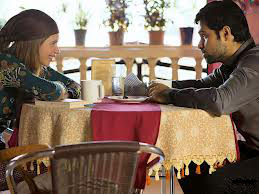
    Key Cast: Emraan Hashmi, Konkona Sen Sharma, Kalki Koechlin, Huma Qureishi

    Directed By: Kannan Iyer

    Written By: Mukul Sharma, Vishal Bharadwaj

    Produced By: Ekta Kapoor, Shobha Kapoor, Vishal Bharadwaj, Rekha Bharadwaj


    After the retrospectively cult-ish Ramsey Brothers, Ram Gopal Varma and Vikram Bhatt have appropriated the horror genre in Hindi films, made up of shlock effects and mumbo jumbo.


    That’s why, when the combined intelligence of Vishal Bhardwaj and Mukul Sharma, plus Ektaa Kapoor as co-producer, worked together on Ek Thi Daayan, something totally different was expected.  Directed by Kannan Iyer, the film is marginally different from the usual bhoot-pret fare Bollywood churns out, but most critics were disappointed because it did not break the mould.  The film got mostly 2.5 stars, and some 3s. And a rap on the knuckles for the awful climax.


    Anupama Chopra of Hindustan Times was riveted by the first half… “And then, the curse of the second half struck like a gale-force. Kalki Koechlin, playing Lisa Dutt, makes an entry. She’s an interesting actor but the film doesn’t know what to do with her. The pace slackens, the plot unravels and Kannan’s assured grip on the material loosens. By the climax, Ek Thi Daayan descends into Vikram Bhatt territory – the plot doesn’t stay true even to its own logic. It’s cheesy and simply too silly to scare. Which is a real bummer because until then, I was having a lot of fun. Ek Thi Daayan had the potential to be an A-grade horror film but it’s an opportunity lost. However, I would love to see Diana get her own film and I’m very curious about what Kannan will do next.”


    Rajeev Masand of IBNLive commented, “But alas, the film reveals its chinks in the final act when it arrives at an underwhelming climax involving such clichés as child sacrifice and particularly a human-versus-evil forces face-off that seems straight out of a bad Vikram Bhatt movie, complete with laughable special effects. The “big twist” is easy to predict, and the film’s message so pat, you can’t help rolling your eyes the moment it’s delivered.”


    Shubhra Gupta of the Indian Express analysed, “The best supernatural movies are rooted in the real. Because that’s where the dark things live. Because that’s where the fears are. A benevolent glance switching to sudden, startling malevolence. An empty room with murderous corners. An eyeball turning dense black. Ek Thi Daayan starts so well that you are riveted. Just about everything in the first half, with its well-calibrated chills, is just as it should be. The second half is unravel time, and you are then left grasping at thin air. Quite appropriate, in a film about magic and apparitions, and witches, and, yes, daayans. The sharp slide wants to make you ask, what just happened here, did a black cat cross the path of the film?”


    Raja Sen of rediff.com wrote, “This is the sort of creep-fest which is better creating an uneasy buildup than at actually scaring the pants off you, and perhaps it should have stayed goosepimply instead of going for the jugular.  Ek Thi Daayan isn’t a truly scary film – though it will provoke nightmares in the young, and I strongly recommend all parents keep their children away from this one.  As if losing confidence in the narrative, the film tries to do too much in the second half – with suddenly oscillating variations in tone and mood – but thanks to performances and craft, it chugs along well enough. An ominous character called Lisa is introduced quite inventively into the story, and the film appears to hit the next level when that wonderful Yaaram song takes on a different meaning.  Alas, it is here that things start to go aground. Clues point so determinedly in one particular direction that they convince us the film must take the other route, merely for twist’s sake, and the climax unforgivably descends into B-movie territory. Suddenly there is too much malarkey and, worse yet, too much talking about malarkey.  A lot of which makes absolutely no sense. A film that started off smartly restrained sadly ends up cacophonic and, frankly, more than a little silly. By the time the actual end comes around, it’s hard to care.”


    Sanjukta Sharma of The Mint rightly commented, “The problem is not the other-worldliness of the witches, but the fact that their world is so boring. In storytelling and plot, Ek Thi Daayan has no inventiveness. The background sound is over-punctuative, comprising a familiar amalgamation of bangs, creaks and jangles. Iyer is almost desperate in his attempt to ensure his audience does not miss the exact moment of horror. Most of the time, these build-ups don’t end in a big surprise and jolting out of chairs.”


    Saibal Chatterjee of NDTV was not too hostile: “Ek This Daayan is passable fare as a scary movie – the dark, spooky mood is sustained with the aid of dark, shadowy interiors and an effective and unobtrusive background score.  It might have helped had the film not been given to quite as much thematic obfuscation.  Is it intriguing enough to sustain audience interest over two hours and a bit? Most certainly. Is it a true spine-chiller? Only occasionally.  The riveting parts of Ek Thi Daayan are far outnumbered by the limp moments. Yet it is worth a watch owing to the idiosyncratic treatment of a done-to-death genre.”


    Meena Iyer of the Times of India was one of the few 3.5 stars, but that’s standard. “Kannan Iyer makes an impressive debut… and kudos to Ekta Kapoor and Vishal Bharadwaj for allowing him to bring his daayan to life without compromises. This film doesn’t play to the galleries nor is it one of those brain-dead movies that Bollywood churns out as assembly line. Note: You may not like the film if transcendental stuff doesn’t move you.”

     

  • Anil Thakraney: Why plagiarism is unstoppable

    By Anil Thakraney


    The root cause of scam ads and idea thievery in advertising is the mad lust for awards. As long as national creative directors continue to reward/hire people based on their ability to bag these (meaningless) trophies, creative people will continue to fraud and cheat. So that’s a given.


    But the moot question is this: How come the frequency of creating scam ads and looting ideas is higher in India than in the western world? Surely agency heads in those nations too value personnel who win awards. I think part of the answer to that question lies in the great Indian culture. We are a nation of a million scamsters and cheaters (look around you, it’s happening everywhere), so there’s no reason why the desi ad guys won’t join in the party. This nation scores very poorly on ethics, and it’s a reality we have to quietly accept and live with.


    The other answer is creative sloth, and to an extent, lack of talent. Not getting hit by a bright idea? Why not quickly scan the Black Book to see if an ‘inspiration’ strikes. Or trawl the internet to suss out what the firangi creatives are up to. Easy, no? Who will notice the lift? Award juries can’t keep an eye on millions of ads being created around the world. Also, if I do get caught, I can always claim it’s ‘divine coincidence’. In any case, by the time the chori is discovered, I would have got that massive pay hike.


    I’ll give you another insight: Notice that most plagiarism and scams ads happen for the static media. Press ads, posters, hoardings, stickers, etc. It’s not often that we catch people lifting TV commercials. And that’s because of two reasons: Senior creative directors in India are entirely focused on the TVC, and pay very little attention to the other stuff, which is delegated down the line. With no one to keep an eye on them, some junior/middle level creatives resort to cheating. There’s another thing: Art directors/Visualisers in India (this is not the case in the west) usually get left out of TVC script writing and production. This is because many are considered to be ‘the down market, vernie, JJ school types’. Which means their only chance of recognition is an award for a press ad/poster. And this leads to the frantic Black Book/D&AD annual scan.


    So now you know why scams and copying of ads won’t stop anytime soon.


    ***


    PS: Excellent press ad by Colgate. Am getting to see a truly brilliant print effort after a long time. Are you experiencing that ‘Why didn’t I think of it’ moment? Tempted to copy? Go ahead, lift this idea for your brand. I won’t tell anyone. Promise!

    Click to large


  • One Big Idea by Anil Thakraney: Outsource creative work

    By Anil Thakraney


    I think time has come to do away with the traditional creative department in the ad agency. There should be just one creative director in each office, and he/she must assign work to experts from different fields on various campaigns. This will bring in fresh, relevant energies to the brands, and it will lead to sparkling work. Need a long copy press ad with a serious tone? Invite a journalist to write it. Need a totally filmy treatment for a wood polish TVC? Invite a Bollywood script writer to work on it. Need a 360 degree campaign for a shampoo brand? Invite a funky hair stylist to do the honours. Need a campaign for a real estate project? Invite a Hafeez Contractor to your office. And so on.


    This will not only help agencies cut the cost of huge salaries in a big way, their brands will benefit from new ideas and new ways of approaching communication. From professionals who would naturally know a great deal about their field of activity. The main problem with the current format is that creative personnel in ad agencies work on multiple brands at one go, and therefore their knowledge level and interest in many product categories is very limited. Many don’t even possess the desire to dig deeper for insights, and this leads to predictable, uninspired work. Even the hotshot names are able to deliver only one or two good ads in a year. This rotting system needs to be demolished.


    The ad world needs to look outside for solutions. It’s time to quit being insular.


    – The writer is a senior journalist and commentator based in Mumbai. He is also Editor-at-Large, MxMIndia


  • Ranjona Banerji: Medianet mars trendsetting paper

    By Ranjona Banerji


    I was quite pleasantly surprised to see an old masthead font staring at me as I picked up The Times of India this morning. I thought it was a jacket ad actually but when I looked down the page, it was of course the beginning of a year-long celebration of the newspaper’s 175th birthday.


    This common mistake is sort of mentioned if you manage to read through the full page article by TOI editor Jaideep Bose – all of what, 4000 words? In the second fourth column (no, that is not a pun), Bose says: “We have also been accused of being “too commercial”, but how many of our readers know that several companies and governments have stopped advertising with us because we wrote something they didn’t want us to. Our refusal to bend to their will has cost us hundreds of crores.” These two sentences are in parenthesis, by the way.


    He goes on to say, “Truth is, we have no masters and no hidden agendas. Our dharma is to serve our readers.”


    Of course this is something for readers to judge and certainly, The Times of India has grown tremendously in number and geographical terms since it started as the Bombay Times in 1838. What Bose does not mention however is the one thing which his newspaper is most criticised for – the invention of Medianet where the prospect of appearing as an editorial endorsement rather than a declared paid advertisement has led many wills to bend and much credibility to be lost.


    Having said that, it is also true that under the editorship of Bose, the paper’s coverage of news has improved quite remarkably – especially the Mumbai edition. There were times when the paper would carry news items a week late since “something is not news unless it appears in The Times of India”. Editors would second guess what the owners might want and censor news unnecessarily. Rumour said that malnutrition stories were not carried until senior editorial staff threatened a pens’ down strike. And the 2002 Gujarat riots were covered cursorily (did not directly relate to Mumbai apparently) until senior editorial staff complained. That these were journalistic decisions I must make clear: I worked in the Ahmedabad edition of the Times of India during the riots and we had the full support of the management in spite of immense pressure from the state government to stop us.


    All those days are long gone. The Times of India can be a one-stop shop for the reader as it carpet bombs you with news. It employs a large number of journalists and tries not to miss out on whatever’s happening: reporting and reportage are both to be found. If it is short on anything, it would be analysis and investigative journalism.


    It is also true that within the media, it has become a trendsetter. Good or bad, if the group does it, the rest of the media houses follow suit. Medianet and its cousins therefore are now almost everywhere and paid news was not a TOI invention anyway.


    Incidentally, I covered the paper’s 150th year celebrations for Bombay magazine and it was all art and culture. Now I find it is about Ranbir Kapoor. Well. And what really describes what TOI has made of itself for me is on its centrespread walk through 175 years of the Times: what pops out is the picture of Aamir Khan as Mangal Pandey with poor Mahatma Gandhi coming a poor second on the page.


    The dumbing down of India starts here, one might say. But clearly, speaking to the lowest common denominator has made TOI a massive success. So Happy Birthday and thanks for much entertainment.


    **


    It’s not often one can say this but kudos to the television media for focusing on the rape of a five-year-old girl in Delhi. The gender discussions begin again and though they may be much of a muchness, until there is some change perhaps we have to continue. And thanks also to TV for showing us a senior Delhi police officer slapping a young female protestor. This is TV’s strength and it would be doing us a favour if it gave us more of that and less of those silly debates.


  • One Big Idea by Ritu Midha: Being contextual matters

    By Ritu Midha


    Context is the new key to ‘right’ communication. Content and consumer – what you want to say, and to whom, no doubt, continue to be the most important elements of communication strategy.


    However, the context needs to be given far more importance than it is usually done – more so on television. More often than not advertisements stick like sore thumbs in ad breaks – what if a little more attention is paid to the content of the programmes, in which the ad is appearing? Would it benefit or harm an ad, if it is shown in a more apt programme at the loss of a few ad ratings?


    The content also determines the audiences, and also their mood. Agreed that an ad does not appear only once in a day, and hence it is difficult to find correct matches – but is finding the correct context also that difficult? Most certainly not.


    No doubt an ad has to be good enough, has to have the pull power to capture the consumers’ attention. Having said that, it being presented in the right context would make all the difference. At the risk of stretching my neck out I would say, a slightly weaker (which definitely does not mean dull and boring) ad might work better for a brand, than a ‘cool’ ad presented out of context.


  • One Big Idea by Vidya Heble: Getting it right, making it clear

    By Vidya Heble


    The big idea in media and advertising cannot be anything other than Clarity. Clarity in communication, thinking and action. Whether it is a news item or an advertisement, the aim is to communicate, and effective communication begins with clear thinking.


    The outcome could be an easy-to-understand Tanishq Solitaire TVC, or a slightly more involved Vodafone Birthday commercial with an old man and a small boy. As I write, the air rings with “Hello honey bunny, honey bunny, toko toko.” It doesn’t matter what it is; like Kolaveri Di, it has stuck. For me, this is effective and if the purpose of the commercial is to make a tune and a brand sticky, then it has worked. I like ads that don’t pretend to be something they are not.


    This goes for news, too. When a leading daily sang the praises of an industrial baron without touching on the negative aspects of his business practices which were even then in the news, a puzzled member of my family said, “This reads like an advertisement.” That, I explained, was probably because it was just that – a “news item” that had been paid for. Such obfuscation is the downfall of media. And the enemy of clarity.


    This concept of clarity is in sync with MxMIndia’s credo of integrity, because clear thinking stems from straightforwardness of purpose. It’s not a new thing – Bill the Bard said it, back when: “This above all, to thine own self be true.” If you make compromises at the thinking stage itself, this reflects in the communication chain, be it advertising, PR or media.


    And when effective communication is the goal, accuracy goes hand in hand with clarity. It is no use sending out a message if you have spelt the client’s name wrong, or misrepresented a fact. Which is why getting it right is important. Also.


  • Anil Thakraney: Ambani needs solid PR

    By Anil Thakraney


    Mukeshbhai is the first Indian private citizen to be gifted with Z+ security cover. Naturally, this has got the entire media (including the social media) up in arms. Very quickly, in order to dilute the backlash, it was announced that the multi-billionaire will pick up the tab. Smart move that, it has temporarily silenced the cribbers. And the bill, which is likely to be about Rs 15 lakhs a month, is less than loose change for our tagda industrialist. This is the amount Nitaben might tip the Antilla staffers each month. So that’s the end of that, one would imagine.


    The unanswered question is this: Is it incorrect for an industrialist to demand security cover if his life has been threatened by hard-core terrorists? In Ambani’s case, a threat letter was delivered at his office, this has been confirmed by the police. Incidentally, I must say it appears odd that the Indian Mujahidin guys would send out an advance warning, that’s not been their modus operandi so far. Be that as it may, the deadly letter did arrive, and therefore the security cover. But why is everyone so upset? Is Ambani’s life less important than all those undeserving politicians who enjoy Z+ cover, and make us, the tax payers, pay for it? Obviously that’s not the case. The man’s a global business leader, his life is as important as any other powerful person. So then what gives?


    The problem, according to me, is two-fold. First, the bad, bad timing. The security cover has been granted just when women are on the streets in Delhi, crying out for protection from rapists and molesters. Now this sounds bloody unfair. Does the government value the life of a businessman more than that of the aam aurat? Had Ambani been given protection before December 16, 2012, there may have been less outrage.


    The other, bigger problem is Ambani’s shoddy public image. He’s not perceived to be a socially conscious industrialist… in fact, his popular image is that of a selfish, self serving, hard-edged dhandhewala. Although his wife hangs out with deprived kids at the IPL matches, that hasn’t changed the image. And that monstrosity called Antilla isn’t helping matters at all. A billion people from a third world nation can’t understand why a family of four needs 27 floors to live in. So it’s actually an image issue, and it’s strange that with all his astounding wealth Mukeshbhai hasn’t been able to hire kickass PR agents (not Ms Niira Radia, she’s an image breaker!), who can swing a little public goodwill into his assets column. I think more than Z+ commandos, our man needs A+ spin doctors.


    ***


    PS: Another superb ad by Stella Artois, fantastic lateral thinking. Goes swimmingly with the punch line: Reassuringly Expensive.


    Link: http://www.youtube.com/watch?v=iDkJVIsDRaE


  • One Big Idea by Alok Kapuria: Consume only what offers maximum bang for the buck

    By Alok Kapuria


    It was interesting to have launched MxMIndia around the time when the slowdown was just beginning to set in. But having experienced troubled times in 2008-09, this one appeared to be smooth sailing. Thankfully, marketing spends haven’t come to a stop as media companies have been advertising, albeit with care.


    The first item of consumption that is normally axed is marketing. Compromises over content comes next. And payroll third. When adspends reduce, it’s natural that media companies will be impacted first. However, cutting marketing expenses can be self-defeating as competitive pressures require at least some salience of a brand. It’s hence vital that when funds are available, media brands do not exhaust all their resources in one burst. That’s possibly the easiest way to survive the slowdown. It’s vital that the right buying decisions are taken… consume only what offers maximum bang for the buck.


    As a sales person with relationships with clients built over the years, it’s my endeavour to ensure the good health of a brand and hence the longevity of the communication. There have been times where I have even advised clients to spread their spends. For, it is in the success of a client that my (and our) success lies.


    Digitization, more advanced telecom and computing technology and manifold use of digital devices are sure to effect tectonic changes in the media over the next few years.


    Adspends in India will be the 10th highest globally by 2017, as per the forecast from Magna Global. This could even happen earlier. But only those who are fit and have sound leadership will survive and thrive.