
Category: BLOGS

  • Mediaah! Should Ford sack JWT India for ad mishandling? + Cut the Katju!

    By Pradyuman Maheshwari


    Harsh headline? Should JWT indeed be crucified or should we let the agency off by allowing it to nail a few bachchas and then let the whole thing be forgotten?


    Yes, before we have someone saying that MxMIndia is shying away from taking on the high and mighty of advertising and marketing, here’s our two-bit, laced with comments from the Twitterati across the world.


    If the work of posting unapproved ad creatives is the handiwork of some upstart blokes – creative, client servicing whosever – then they ought to be asked to play Holi for the rest of their lives.


    For those not in the know, BusinessInsider broke the story of ad creatives posted on adsoftheworld.com one of which saw former Italian PM Silvio Berlusconi with a set of gagged, wailing women in the trunk of a car. The creatives have since been withdrawn from the creative showcase.


    The apologies handed out are mere words of regret. It smacks of a cover-up. Ask anyone working in an agency of moderate size and you’ll be told that work such as this can’t not be seen and approved by the client and must have the blessings of the seniors.


    Okay, so it’s not that people don’t make mistakes. They do, and it would be nicer if the biggies involved were to own up to the act rather than blame kids at the agency.


    What they haven’t bargained for is that if there is indeed some funny stuff happening, it won’t take too long for it out to be on the social media.


    One industry captain texted us last evening to ask if there was a Chapter 2 to the Ford story? And added an extra-large smiley. We don’t know, but what we do know is that it could well be the beginning of an all-new story.


    Meanwhile, check this:

    1. The BusinessInsider.com story with the offensive creatives and the apologies from Ford and WPP: http://www.businessinsider.com /awful-ford-figo-ad-silvio-berlunsconi-gagged-women-2013-3 and http://www.businessinsider.com/ford-wpp-apologizes-for-offensive-car-ad-2013-3


    2. Since it’s not just about Silvio Belrunsconi but also about Paris Hilton and the Kardashian sisters, it also features in Hollywood chroniclers: http://hollywoodlife.com/2013/03/24/ford-kardashians-ad-leaked-poster-paris-hilton/


    3.  The much respected Slate.com had this damning comment titled ‘Ford India needs to fire its advertising execs’: http://www.slate.com/blogs/xx_factor/2013/03/22/ford_india_should_probably_fire _its_ad_execs_for_depicting_bound_and_gagged.html


    4. On Twitter, reactions bordered from the extreme to the moderate. Sample this:

    Tom Becktold ‏@becktold: With the Ford/JWT India debacle, check your partner contracts to make sure spec creative cannot be shared. Shouldn’t need to, but..

    Louise Ridley ‏@LouiseRidley: JWT India taking serious action after ads featuring Silvio Berlusconi with gagged women in a car boot appeared online http://bit.ly/14jwKYP

    Seth Cargiuolo ‏@carge77: RT @rachebrun: Dear @Ford, you have no excuse. your ad is inexcusable: http://mashable.com/2013/03/25/ford-apologizes -for-ad-in-india-kardashians/…

    << Ford should sack JWT India, no question.


    5. There was also some debate. Like this one:

    Piyush Pankaj ‏@piyushpankaj: @sshibad u can’t hold agency responsible for this as ad would have passed through various brand managers at Ford India as well

    Sunil Shibad ‏@sshibad: @piyushpankaj I think some juniors did it for ad awards. I doubt Ford India even saw it.


    So did someone say Goafest 2013 is going to be a li’l dry this year given the absence of Ogilvy at the creative Abby? Well, now, there’s going to be a fair deal of action. And we’ll be waiting for that someone to get plastered and talk. Wicked us.


    Cut the Katju!

    Over the last two years, Markandey Katju has become a household name given his various outbursts, all of which have provided much fodder to us in the news media. Often, we’ve even been happy with what he’s said. For, Katju can be expected to shoot his mouth off on anything… and until now he appears to be getting away with it.


    But, remember, he’s also the Press Council of India chairman. And although the organization has got no teeth and the only print journalists who care much about it are those on its committees, it’s an important position and the Press Council’s role is quasi-regulatory.


    His appeal to the Governor to let Sanjay Dutt off is bizarre, his arguments are outlandish. Apart from serving the needs of the government to needle journalists and media organizations and providing some comic relief, Katju has done precious little as Press Council chief.  I think his time is up. He ought to go. Doesn’t any little country in South America or wherever need an Ambassador?


    Pradyuman Maheshwari can be reached at @pmahesh on Twitter and 29fea79c via BBM. The views expressed here are his own.
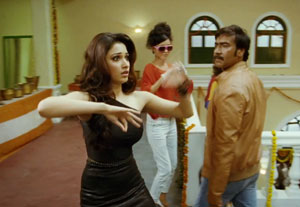
     

  • Reviewing the Reviews: Himmatwala

    Himmatwala

    Key Cast: Ajay Devgn, Tamannaah, Paresh Rawal, Mahesh Manjrekar

    Directed By: Sajid Khan

    Produced By: Vashu Bhagnani, Siddharth Roy Kapur


    Sajid Khan shouts from the rooftops that he doesn’t care about critics; the feeling is mutual. This time the arrogant director with an enviable and entirely undeserving row of hits, took a bit of a fall this time. His remake of the eighties hit has got uniformly bad reviews, mostly one or 1.5 stars.


    Everybody has wondered why anyone should even want to remake THAT film. And then, do nothing to it – neither tribute, nor spoof.


    Shubhra Gupta of the Indian Express asked the right questions. “At the end of two excruciating hours, the questions I had carried into the theatre remained unanswered. Why remake Himmatwala, which wasn’t exactly scintillating cinema in the first place? What were the studios, producers, directors and stars thinking? And last, but not, as they say, the least, when, oh when will Bollywood’s blind love affair with the 80s masala movies get over?”


    Rajeev Masand of IBNLive wrote, “It must take a special kind of skill to remake a mediocre film like 1983’s Himmatwala without even marginally improving on it. Director Sajid Khan’s pot pourri of excessive melodrama, puerile humor, cartoonish action, and garish songs plods on for two-and-a-half hours with little concern for your bladder or your mental health.”


    Sukanya Verma of rediff.com saw some tiny measure of merit in it. She commented, “Expectedly, it’s all very over-the-top but here’s the thing. The 1983 one established Jeetendra as a professional, an engineer, a man of purpose striving to bring change within a terribly feudal set-up while engaging a personal vendetta. It didn’t always work but the script fuelled his heroism. Devgn, on the other hand, loiters about doing nothing and relies purely on physical might to make an impact. For a man who brags about having so much faith in oneself, he sure wears a lot of stones on his fingers.”


    Madhureeta Mukherjee of the Times of India, usually kind, ranted, “Hark back to taaki taaki and tap dance to tathaiyya as the (r)awful 80s are re-awakened from their garish grave and served re-heated; as old wine in an old bottle. Vintage? Not truly. Just as we thought Jeetendra’s white shoes and coloured wigs were laid to rest in filmi museums, Sajid Khan dips into his cookie jar of movies, masti and ‘naus-talgia’ for yet another peek into the petty-past.”


    Saibal Chatterjee of NDTV quipped, “Director Sajid Khan may lack the courage to take risks but he is a very optimistic man indeed. He believes what worked in 1983 will click in 2013 too. Come to think of it, he might actually be right. Sad! Having been at the receiving end of the mindless excesses of the loud and laboured comedies that he specializes in, we know exactly what to expect from his latest foray into the terrain of tastelessness – zilch. And that is such a huge advantage for a filmmaker. If you, in the manner of the director, accept that unalloyed bunkum can be legitimately passed off, and gleefully lapped up, as cinematic entertainment, you might even come away pleased as punch with Himmatwala. The film lacks punch, but it loses no opportunity to pun on the word and the act.”


    Karan Anshuman of Mumbai Mirror questioned Sajid Khan’s motives. “Even though somewhere on the poster it might say “the 80s are back”, the real tagline of Himmatwala is “A Sajid Khan Entertainer”. It seems even Khan has relented that his piece of work does not deserve to be called a film. Here is his secret, coded message of what to expect in Himmatwala and what he means by when he says he will “entertain”.


  • One Big Idea by Ashwin Padmanabhan: Meeting the diversity of its audience is crucial for radio

    By Ashwin Padmanabhan, Business Head, North and South, 92.7 BIG FM

     

    India is a diverse country, much like the varying lengths of the fingers on your palm. There is unity in diversity – of culture, habitats, food and more importantly language families. Officially, the Indian Constitution states 22 languages – these further have grown with dialects changing every 100 kms or so, like its bio-diversity. With a 1.2 billion population, the uniting aspect for all these characteristics is language, though myriad, it is that one big idea that ties the country, and to go regional in terms of language content is the factor that will converge and amalgamate especially in the media and entertainment industry


    Regional markets have developed to an extent that everything that is available in the metropolitan cities is sold here. The education and information spread makes it relevant for marketers and advertisers to be present in this populace. Advertisers, local and national, have seen the benefits in ROI. Product marketers have seen their products reach new peaks in sales output. When luxury cars arrived in the country, it was thought that the metro cities would show high sales, but unprecedented sales in regional areas led them to pump in more promotion in regional markets and thereby opened these markets for higher and more luxury brands.


    Hence going regional is the one value-add in every product segment. In media and entertainment, radio covers almost 95% of the country; cinemas in every town ensured weekend entertainment; malls are the latest trend for evening shopping; but the one big promoter has to be television. TV infiltrates the audiences like never before. In-home entertainment is here to stay. And advertisers acknowledge this immense buying power.


    For us, we believed in the regional story all along and hence our first business with 92.7 BIG FM and 45 stations across the country, each distinctly different from the other, each regional in its true sense. We have recently also made our television foray in the regional space, with television brands – BIG MAGIC and BIG RTL THRILL, both of which have been developed keeping in mind the regional audiences.


    There are many India’s within one India, and it is for brands and marketers to cater specifically for their audiences. Meeting the diversity of its audience, and providing them what they want, and not just merely what they need, is the big idea. With the consumer spoilt for choice and far more aware, the one shoe fits all theory clearly doesn’t work anymore. Regionalization is most definitely here to stay!


  • #Scamadgate | Anil Thakraney: Let’s face the facts

    By Anil Thakraney


    For many creative people, it’s not been a long weekend to celebrate. I noticed there was high action on social media, as folks got busy venting over Bobby Pawar’s unfortunate sacking. While on one level I am delighted to witness this ‘standing up for a colleague’ campaign, must say that in all the furious excitement, people seem to have overlooked some key considerations. Also, I could not help but notice a similarity between the outcry and another campaign that’s underway simultaneously: And that’s ‘Pardon for Sanjay Dutt’. In one case, Bollywood has launched a massive PR drive to save their ‘hero’. And in the other one, ad land is seeking justice for their own fallen star. Both campaigns have one thing in common: Lost in emotion, we aren’t able to view the situations objectively.


    So allow me to deal with the main arguments put out by the creative people:

    It’s not a scam, the posters were approved by the client: This is technically correct. If a Ford executive endorsed the ads, they become official work. And the news is that Ford has sacked the concerned employee. This seems fair. However, that still doesn’t change the fact that these ads were created purely for winning awards, that they were never intended for media usage, and therefore they still fall in the ‘scams’ category. In my previous post, I have already discussed the issue of scam ads, and on what needs to be done thereof. Scam ads are rampant in the ad world, several guys and gals do it. But the JWT gang got caught with their hands in a very messy scam, and therefore there had to be retribution.


    Bobby Pawar is the convenient ‘fall guy’: Ermm, not really. When work produced by an ad agency brings global disrepute to a client (as has happened in this case), the buck must stop at the desk of the creative chief. The captain has to take full responsibility of his ship, that’s the right way to go about professional life. Sacking only the crazed, award-hungry youngsters is a cop-out, that would send the wrong signals. Also, now that it’s clear that Ford had indeed endorsed this work, it’s no longer a case of some stupid kids jerking off in the back office. JWT’s responsibility becomes total and absolute. And the leader of the pack becomes directly accountable.


    But shouldn’t Colvyn Harris have been punished too?: Supporters of this line of argument believe thus: Why must only creative people suffer when advertising is supposed to be team work. And that surely there were servicing people involved in this campaign. Also, as the big JWT India boss, Harris should have been the one to pay. Indeed there is merit in this argument, and am hoping that the client services director who approved this work has been sacked too. However, I am against the idea of penalizing the agency CEO. For the simple reason that Harris would (assumedly) leave the charge of all creative work to his NCD, that’s the professional thing to do. That’s why you hire a national creative director at a very high cost, so that he/she controls the agency’s output. Therefore, logically, that’s where the buck must stop. Let me give you a parallel: If a newspaper runs a false, misleading, illegal story, it’s the editor who will get axed, and not the publisher. Even though bringing out a newspaper is teamwork.


    The agency should have stood up for its creative people: I entirely agree with this point of view. If you are expecting your creatives to raise the bar, be prepared to back their edgy work. If you are reluctant to do so, stick to hiring only the safe players. So far, so good. However, in Ford Figo’s case, the creatives didn’t raise the bar, they lowered it to a new low (refer to the para below). And this resulted in a very angry large multinational client, a client that the agency had to assuage, or risk losing forever. Some senior blood had to spill, and Sir Martin Sorrell himself would have been left not very amused if it hadn’t. So before you trash Colvyn Harris (and I carry no candle for him), you must also view this issue from his angle; perhaps the CEO had no choice. I am quite certain if this work had happened for a local, small-time mosquito coils maker, Bobby Pawar would still be inside his cabin. These are harsh realities of the global world, and we have to accept them.


    These ads are tongue-in-cheek, we’ve lost the ability to laugh: I must tell you I am always first in queue to back work that challenges the acceptable boundaries. All along in my career, both in media and advertising, I have landed in trouble for believing and indulging in this principle. I am also always ready for a good laugh; safe and boring work pisses me off, my ad reviews will tell you that. But to create a campaign where women are projected as ‘mobile commodity’ is being totally insensitive to the gruesome rapes that keep happening every other day in India, often inside moving vehicles, AND THAT IS NOT FUNNY. If you find these ads hilarious, you need to get your head examined and your values sorted. This nation is deeply misogynistic, and women have been paying a heavy price on account of this sick mindset for a very long time. So please get this right: If you can’t be a part of the solution, for god’s sake don’t be a part of the problem.


    Anil Thakraney is a senior journalist and commentator. He is also Editor-at-Large, MxMIndia. The views expressed here are personal. Follow him at @anilthakraney.


  • Debrief: MP Tourism: Stunning Holi ad

    By Anil Thakraney


    Excellent commercial from MP Tourism. This is perhaps the best Holi ad of all time. It’s a very simple idea: As visitors get hit by Holi gulal and coloured water, the material takes the form of important state tourism destinations. Such as the Kanha wildlife, the Sanchi Stupa, the Khajuraho artworks, etc.


    And therefore the fate of the ad lies totally in the magic that one can create with the execution. Must say it’s quite beautifully done. The special effects look very cool, and the treatment is arresting. This is a full on art director’s commercial, very refreshing to see this come from India. And the folk song track provides the perfect canvas. Basically, it all comes together wonderfully, and all the colour splash would add to the allure for a traveller, especially the firangis.


    I am not a fan of Holi, haven’t played it in many years. But this ad makes me want to take part. And yes, all the interesting tourist destinations are brought out naturally, without ramming them down our throats, and this makes you want to pay MP a visit. Plus it all ties in naturally with the Big Brand promise: ‘Incredible India’. What more can one possibly ask from a tourism ad?


    Good work.


    [youtube width=”400″ height=”220″]http://www.youtube.com/watch?v=LttnTnz8TXI[/youtube]


    Rating: (On a scale of 1-5): 4. Another super MP Tourism ad.


  • One Big Idea by Rajan Narayan: As icons crumble, the Big Idea is increasingly a fallacy

    By Rajan Narayan, President, Quadrant Communications

     

    In this hurried world, brands have lost their authority and aura. They are reduced to transactions, service providers, labels and vendors.


    Much like Po, the Kung Fu Panda who realizes that there was no secret ingredient in his dad’s soup, today we are waking up to the harsh reality that the elusive holy grail of advertising – the Big Idea – may be dead.


    Or rather it has become irrelevant. Why is this so? Because the very definition of the Big Idea – that it held the brand idea together for years if not decades – has now changed permanently.


    Ah the luxury of time! Today brands don’t live for a decade, so what chance do the brand idea and the Big Idea have? And what does this do to the concept of the Big Idea? It is reduced to the need for many small ‘Big Ideas’ (excuse the oxymoron!).


    Today brands need continuous engagement with their consumers to stay relevant. This puts tremendous pressure on the brand to refresh itself continuously and present itself in new and different ways to stay on top of the consumers mind. This calls for more continuous ideas that steadily flow to the consumer rather than the one Big Idea that is followed by silence.


    Tearing away at the Big Idea is also the proliferation of media that a consumer today engages with. The availability of the plethora reduces his involvement with each to a bare minimum.


    Gone are the days when a consumer read a newspaper end-to-end. Or subscribed to a magazine. The television comes to life at fixed hours called ‘family time’ or does the odd job of being a ‘filler’ at gyms, pubs, restaurants and hair salons!


    The internet is everything in a snippet – emails that reduce communication to a line, social networking reduces it further to a ‘like’, YouTube reduces every video to under a minute and Twitter says it all in 140 characters.


    And you can cram it all into your lunch break or coffee break or travel time, thanks to phones, pads and pings.


    In this hurried world brands have lost their authority and aura. They are reduced to transactions, service providers, labels and vendors. Call it the great ‘Dumbing Down’ of brands, if you may.


    Few if any have maintained their vision and led a collective belief. And it is impossible now to do it under constant media glare. One slip and everything is recorded and dissected to the brand’s end.


    Iconic brands like Cadbury’s, Coca Cola, McDonalds, Nike and Apple have all faced this heat of consistent scrutiny.


    The crumbling of icons and the need for constant relevance steals the depth in every interaction. Today relationships are shallow and weak. Companies sell off brands in a matter of a few years. Entire marketing teams change in less than two years and in that time half a dozen agencies work in and out of the brand.


    So who’s thinking long-term? The tremendous pressure to perform leads to marketing and advertising folks dubbing ‘little engines’ as Big Ideas. Because the target is often the next awards show or the next performance appraisal. Often the target of the idea is not the consumer – it is an awards jury or the CEO of the company.


    Lastly, the judgement of what constitutes a big idea has moved away from the consumer to the amount of newsprint grabbed by the idea.


    How well can a minor idea get written about? How many people in my network can I get to write and talk about my idea. Can I convince the marketing head that this can become a star point in his CV, making him more marketable?


    So here we are at the end of it all, content to create many tiny little ideas and spend time trying to convince the world that they are big. While the concept of the Big Idea passes us by – along with our consumers.


  • Ranjona Banerji: Can DNA get back into your dna?

    By Ranjona Banerji


    The most welcome aspect of today’s news is the return of the edit page to DNA. The page was done away with a couple of years ago but returns – together with a re-design – in the April 2, 2013 edition of the newspaper.


    Rumours suggest that it was the arrival of new CEO Bhaskar Das which brought the edit page back but there is no way of confirming that and it could well be a decision taken by the new editorial dispensation – one of the many which DNA has had in its lifespan of almost eight years. Either way, the prognosis is positive.


    The edit page is called ‘dna of thought’ – a clear tip of the hat to the domination of the internet and its language, as is evident in ‘dna of mumbai’ and so on. There are two leaders – as is the trend these days – and two columns. Or, that is, it is too early to tell whether the lead article will be an analysis on current affairs rather than a comment as it is now. Cartoonist Manjul is the lead on the edit page with his ‘Politickle’ comment. A section called ‘net pickings’ presents snapshots of columns and opinions from around the world and there’s the mandatory nod to ‘positive thinking’, usually beloved of newspaper owners who feel or are told by their friends and family that their “products” are too negative.


    On the whole, the return to the edit page is an excellent decision. It anchors the newspaper and makes its own viewpoint clear to the reader. In fact, the second edit the welcoming the IPL is a refreshing change from all the usual fake breast-beating that this cricket tournament brings. (Also ironic, as IPL was verboten in DNA for first season because the then part-owner of DNA had started the Indian Cricket League!) As to why DNA stopped the edit page, those interested in history can look back at a discussion at the Mumbai Press Club which was organised by exchange4media when mxmindia.com founder-editor Pradyuman Maheshwari was editor there:

    http://www.exchange4media.com/40971_edit-page-gone-with-the-winds-of-change.html


    As far as the whole paper is concerned, the design will take some getting used to. Every DNA page always had too many elements in my opinion – a complaint I made even when I worked there – and now that has been compounded by a plethora of fonts. However, I also find Hindustan Times to be a bit cluttered as far as design goes and I have got used to that. DNA is clearly looking to blend with the digital media as well as with up the branding quotient – the DNA name is repeated in various forms through the newspaper. The concept of a large front page photograph is great – if they stick to it.


    I rather like the gimmick of having the old style on the front page which then reveals the new look as you turn the page and get a letter from the editor. It says, among other things, “…we have made the new paper more navigable, readable and classier”. The website is also going to be more “responsive” which means all that phone-tablet stuff.
    There are few questions for the newspaper. DNA was once the second-read paper in the city of Mumbai by a pretty good margin, until it lost that advantage to Hindustan Times. Will this design help to regain its status or is it just window dressing? The content has not so far changed and unless that improves no design can save you. And how do you re-engage with readers who have moved on from you?


    DNA has many challenges ahead. One can only hope for the sake of the industry that it will find a way to fight an effective battle.

    I have to confess here at the end that I worked for DNA for some years, soon after it was launched. Most of that, as it happens, on the edit page!


  • Anil Thakraney: I concede defeat to IPL

    By Anil Thakraney


    I have been secretly wishing for the last five years that by some miracle, the IPL vanishes from the scene. Instead, it’s been going from strength to strength. My big allergy to this pyjama form of cricket is that it’s everything but cricket. As a so-called purist, I detest what this tamasha has done to the game itself, and these issues have been debated before.


    That aside, I have two other grouses with the IPL. One, the laundry list of controversies. The list is so large, one could write a book titled ‘IPL & Scandals’, and it will be an international bestseller. I recall interviewing the IPL CEO Sundar Raman (for GQ) a couple of years ago, and the question listing the controversies was ten times larger than his response, I had to edit the question to maintain some sort of balance! Since then, the suitcase of scandals has grown even larger. Makes you wonder if such a tournament is worth staging.


    My other complaint with the organizers has to do with the manner in which the IPL was born: Sans grace. Lalit Modi (now persona non grata) directly lifted the idea from the Zee group (ICL), without even leaving behind a little Post-it note saying ‘Thank you for the idea, guys’. Rather, the BCCI used tremendous money power to demolish their show, even going to the extent of penalizing young players who had signed up with the ICL. Here’s another interview memory: I met Kapil Dev (then in charge of putting the ICL together) in 2007 (for Mumbai Mirror). The national hero looked utterly crestfallen and defeated… he knew he was captaining a fast sinking ship. I can’t bring myself to respect a project that’s created out of malice and vendetta.


    However, all this doesn’t change the fact that the IPL is huge, it’s very successful, and it’s here to stay. Everyone loves it. Uncles, aunties, bhabhies, nephews, nieces, saases, bahus, and the family dog. As ticket sales plummet for traditional cricket, there’s always a mad rush for this nonsense club cricket, people beg and plead for passes. And the TV audiences remain faithful over the long two month period. Plus, it makes marketers very happy. Advertisers queue up to open their purse strings, even if they otherwise complain of ‘recessionary times’. In short, the nation has taken to the IPL gleefully, and old world relics like myself have no option but to eat humble pie and watch the madness from the sidelines.


    So let the games begin. Yes, I will gate crash this party. Look out for my review of the opening ceremony on Friday. I am already going ‘Dhumping Dhapaka’, or whatever else Farah Khan calls it.


    ***


    PS: Now this I like. We need more such cool and spirited souls in India. We are a nation of stuck up people, and it is maha refreshing to watch singer Anvita Dutt personally arrive to accept her ‘insult’. Jai ho!


    Link: http://www.youtube.com/watch?v=y5yXEB6meCo&feature=youtu.be


  • One Big Idea by Suranjana Ghosh: Digitization opens doors to a whole new world of TV

    By Suranjana Ghosh, Marketing Head, CNBC-TV18


    The Indian broadcasting industry is poised at the brink of the next big game-changer. With digitization, we are at the threshold of the new wave, which will reset the existing rules and patterns.


    Digitization and the mandatory rollout of digital signal for cable operators in the four metros is a long overdue, and a welcome move for the Indian broadcasting industry and for all stakeholders involved: Broadcasters, distributors and viewers. It is a step towards bringing the industry on par with the global broadcasting standards.


    Digitization will presumably allow and make way for greater addressability for both broadcasters as well as distributors.


    Viewers will get a superior, enhanced viewing experience now. Digitization will make the medium more democratic, empowering the viewer with greater access to the channel of his or her choice. This makes it incumbent on broadcasters to focus more sharply on their content offering, to make it attractive and compelling to its viewers. This enhanced value will ensure audience retention and loyalty.


    The revenue model for broadcasters may also see a shift from being governed largely by advertising. Subscription revenues are now likely to start contributing more to the revenue line.


    Lastly, digitization will enable advertisers to make more targeted television spends, given that the audience will now be more clearly segmented by the choice of content that they subscribe to.


  • One Big Idea by Sanjeev Kapoor: Brand integrations – redefining monetization of food in broadcasting

    By Sanjeev Kapoor, Celebrity chef & founder, FoodFood


    Food today is not a mere consumable – it is rapidly acquiring a lifestyle halo. As prosperity invades Indian households, food is coming out from the kitchens and extending well into our lives. Food today has become experimental, has gone cosmopolitan and has discovered fusion. Broadcasters are thus tuning in to whet the appetite of their consumers, the viewing audience who are as much fed by the content as they feed the content. Advertisers have started sharing a substantial part of their budget on food and lifestyle shows.


    Food in media has created a whole new avenue of advertising – innovative brand integration. There is not only opportunity for product placements, but the ingredients themselves can be branded, new concepts can be introduced and new methodologies demonstrated while simultaneously ‘pushing’ the brand itself. The chef, often seen as a guru, and emulated in the hope of achieving similar culinary success, becomes a natural spokesperson and endorser for products.


    Food also naturally allows for a high degree of interactivity and entertainment. Both of which the consumer today seeks from the media. The food gamut is endless and covers a vast sphere from travel to entertainment to culture and even kids. Almost every aspect of media lends itself to food, be it game shows, travelogues, lifestyle features, talk shows, or even soaps… space for every brand to be naturally incorporated into the content!


  • Debrief | 7UP: Not feeling up!

    By Anil Thakraney


    7UP is back this summer with the same positioning: ‘I feel up’. But the commercial I watched did anything but. Because there’s a clear problem with the ad, and we’ll come to that shortly.


    So this young girl is accosted on a street by a Kathakali performer. He offers her a 7UP, switches on his portable deck, and starts grooving. Not to classical music, but to a mix of desi pop, dandiya, salsa and god knows what else. This scene naturally gathers a crowd around them, and for some strange reason, our girl feels ‘up’.


    Didn’t work for me, though. For one, the commercial tries very hard to be different in order to attract your attention. And that often puts you off as a viewer. The effort must never show, this should be a natural process. Two, 7UP’s earlier TVC with actor Sharman Joshi and a penguin was at least a little lively and peppy. This one leaves you cold (and that’s no thanks to the cold drink). Where the new commercial fails, is that while trying to be ‘different’, the creators overlooked one very important aspect of light-hearted, quirky, cold drink advertising: The ad should leave a little smile on your face. If that doesn’t happen, there’s no question of feeling ‘up’.


    A side-note: I would be shocked if, on a street corner, a strange looking character tapped me on my shoulder and offered me a free drink. And if I was a girl, I would flee. And then quickly Tweet/FB my experience. Now THAT would make me feel ‘up’. 🙂


    [youtube width=”400″ height=”220″]http://www.youtube.com/watch?v=ZfGlPwyN1_4[/youtube]

    Rating: (On a scale of 1-5): 1.5 Tries too hard to entertain. Fails.


  • Ranjona Banerji: And this is how journalism works, thanks to The Indian Express!

    By Ranjona Banerji


    The Indian Express’s lead story on Thursday was the winner of the day: “Global media investigation finds 612 Indians among thousands with firms in tax havens”. The Express was one of 38 international media organisations which collaborated with the International Consortium of Investigative Journalists to work on a 15 month investigation into offshore tax havens. The Guardian and the BBC, the Washington Post, Le Monde and the Canadian Broadcasting Corporation were some of the other organisations in the collaboration.


    This is one of those times when journalists can legitimately take a little time to pat each other on the back. The investigation involved 250 GB of data in 2.5 million secret files with details of over 1.2 lakh offshore firms/trusts, 12,000 agents spread over 170 countries and territories. This effort involved 86 journalists from 38 media organisations in 46 countries.


    It is a mind-boggling effort and shows how much can be achieved through cooperation and common goals. It also reiterates that all journalism need not be about negotiating the minefield of owners and advertisers.


    For those who do not read Indian Express (shame on you!), here are links to the story. Will be interesting to see if the rest of the Indian media pick up on the business people mentioned in the exposure or just allow them to get away with it and keep on pretending as if politicians are the only scourge in our society…


    http://www.indianexpress.com/news/global-media-investigation-finds-612-indian-firms-in-tax-havens/1097501/0

    http://www.indianexpress.com/news/an-indian-expressicij-investigation-vijay-mallya-ravikant-ruia-others-in-tax-havens/1097494/


    And this is how the story unfolded:

    http://www.indianexpress.com/news/an-indian-expressicij-investigation-vijay-mallya-ravikant-ruia-others-in-tax-havens/1097494/


    **


    The possible maybe I don’t know boss Congress candidate as the next prime minister of India spoke to a bunch of Confederation of Indian Industry members. This is the latest trend for the media to follow mainly because most of them were not alive when we had to sit through interminable Films Division of India documentaries about politicians inaugurating coal-based power plants. So every time a politician makes a speech at a school, college, chamber of commerce, park or shower we have to be there.


    And so it was with Rahul Gandhi, who was also referred to as Rajiv Gandhi but we’ll forgive that. As he spoke about an inclusive India which has poor people and compassion was required, twitter exploded with laughter at the irony of saying all this to industrialists and business people.


    Intriguingly, as just about every news channels was focused on Rahul Gandhi, Times Now was busy patrolling the Mumbai coastline where it found a suspicious ship and took it into custody thus most effectively saving the nation. Also, Headlines Today showed a speech by Narendra Modi but it did not specify where this speech was taking place or whether it was old or new footage.


    **


    West Bengal chief minister Mamata Banerjee and her now expected callous remarks about the death of a student protestor got the usual amount of flak from the media. She and her close associates however continue to brazen it out as they take West Bengal down some specially chosen perilous path. Even Shri Goswami seems at a loss to ask what Bengal wants to know.


    **


    For those who want a break from our respected news anchors might take a remote trip to Comedy Central where they will meet Rajbeep Mardesai and Ornob Goswimming who discuss pressing issues of the moment: Is Comedy Central this funny or is Comedy Central that funny. Worth a few giggles.