Category: BLOGS

  • One Big Idea by Vivek Lakhwara: Ascertaining visibility and reach to OOH is critical

    By Vivek Lakhwara, Sr. Vice President, Laqshya Media Pvt. Ltd


    My take on the one big idea in OOH is its Measurability.


    In spite of being the oldest media, it lacks in offering measurability, as yet, in our country.


    So, what does it mean? Media is planned based upon the reach and impact of a certain media amongst its target group. Before money is allocated to various media the percentage of target group it would reach is known. Therefore, a calculated call is taken with regards to the inclusion of a media and the extent to which it is taken. It is also known how quickly the build-up to that reach would happen. This helps in better allocation of budget. It also helps in determining the right price of a media vehicle. Even if the price is not up to a decimal, it does offer base figures. Then of course, depending upon the demand and supply of inventory pricing happens.


    In case of OOH, while it is quite established that it creates great impact and buzz, it doesn’t quantify its audience. This leaves a huge question mark in professional planning. Also, stretches most frequented by stakeholders tend to generate more demand and lead to overpricing. At the same time other equally good units could generate less enthusiasm and therefore less price.


    As a starting point we ought to know who are the people passing by on the streets of our towns and cities. We need to understand the traffic flow. This is readily available in many countries through the traffic department. But, it is not yet available to the OOH industry in our country. So, we need to make an attempt to understand the people and traffic passing by through the various stretches of our towns and cities.


    This then needs to be categorized according to the quality of traffic passing by. So, we could categorize people depending upon their demography. This would give us a fair idea about the kind of people passing by and therefore probability of them viewing a OOH unit.


    Once, we know the demography of people passing by, we could engage ourselves in another exercise of ascertaining the likelihood of a OOH unit being seen by the people passing by. This can be done by indexing the units based on certain parameters which impact the probability of a unit being seen.


    The number of people of a certain demography, passing by, multiplied by the probability of viewing a unit, would give us the viewership of a unit for a certain demography.


    Such an exercise would put OOH on the same pedestal as other media in terms of ascertaining its visibility and therefore reach. It would also mean evenly distributed media could emerge resulting in pricing according to the audience delivery.

     

  • Anil Thakraney | IPL Opener: Dekhne ka nahin tha!

    By Anil Thakraney


    The great marketer Shah Rukh Khan forgot one very important marketing lesson: He promised a ‘never seen before’, ‘spectacular’ IPL opening ceremony. And it turned out to be a damp squib. The megastar should learn that one must only make a huge promise when one is 100% sure of delivering. Because when you don’t, you leave your customers very disappointed.


    A few random observations on this flop show:

    I saw Kapil Dev doing a maha stupid dance step. How the mighty have fallen! Guess the ex-ICL boss had no option but to bite the bullet, forget about his miscarriage, and embrace big bucks. All very well, I suppose, we all have to make a living. But Paaji shouldn’t have agreed to shake a leg, our ‘national treasure’ cuts a very sorry figure doing that.


    CM Mamata Didi was all smiles (even as a student leader had got bludgeoned to death in her backyard). I am beginning to feel whenever the lady spots SRK, unke andar kuchh kuchh hota hai. 🙂 But sadly she was dressed in her usual low-cost cotton sari. Didi should have turned out in jeans and tees, that goes nicely with the IPL. And had she done so, everyone would have forgotten about Deepika and Katrina.


    Meanwhile, the two Bollywood sirens went through the motions, dancing to the usual item songs. You could see they wanted to get their gigs done with quickly, the disinterest showed. Perhaps the steamy Kolkata summer bogged down our pretty ladies. SRK tried his best to look energetic, but what I recall most is him gasping endlessly into the microphone. Old age is catching up, boss!


    For some strange reason, the long, boring opening sequence resembled a Russian circus. With what appeared like Ukrainian performers doing acrobatics. Er, what was the point of this nonsense? Even the cricketers looked very bored. Or, was the IPL boss Rajeev Shukla admitting, in his own sweet way, that the IPL is a circus?


    Missed RCB boss, Dr Vijay Mallya. Usually the high life loving liquor baron occupies the prime spot at such glittering parties. Guess the man’s got lots to worry about these days. And if Kingfisher’s unpaid employees saw him air kiss Deepika and Katrina, they won’t be very amused. Wise of Dr Mallya to keep away.


    Finally, the Cal junta appeared to be enjoying the Pitbull blast. And it’s good the rapper kept his foul mouth in check, usually Pitbull likes to write lyrics that are offensive to women. Had they crossed the line, our dudes would have found themselves at the receiving end of Didi’s neeli patti Bata chappals.


    PS: Excellent ad against domestic violence. Creeps you out, as it should. What makes the ad very effective is that it feels very real.


  • One Big Idea by Alpana Parida: Building brands without advertising

    By Alpana Parida, President, DY Works


    There are three major compelling reasons why advertising (ATL, as it is called) should become history, and become not more than 15-20% of the marketing budget:


    Markets have seen a proliferation of categories, brands, variants and formats. Newer and newer products/ brands or variants fill the shelves – and the consumers know they have a choice. In this scenario, they come with a consideration set in their heads and then are fence-sitters till they see the product. The packaging is what sells at the retail shelf. And the Back of Pack is what causes conversions.


    Brands have an opportunity to enter the ‘consideration’ set at the point of sale. Communication at the point of sale can drive trials and market shares. It is critical to understand what consumers want to know for conversion to occur. Depending on the category, of course, the consumer typically seeks more specific and rational reasons to justify the purchase. It is important to tell the consumer how this product will fit into his/ her life.


    Media clutter is unprecedented and advertising is so busy trying to be memorable and TOM that its connection with the brand (sometimes even the category) is becoming tenuous. Advertising does not work any more – unless brands have budgets upwards of Rs 100 crore.


  • Anil Thakraney: Indians are poor home workers

    By Anil Thakraney


    Yahoo!’s CEO Marissa Mayer doesn’t like her employees working out of their homes. So she’s turned the ‘tech connectivity’ clock into reverse mode, and it’s back to the good old ‘water cooler’ for thousands of rather displeased Yahoo! staffers. The HR memo explains Mayer’s rationale: ‘Speed and quality are often sacrificed when we work from home. We need to be one Yahoo!, and that starts with physically being together.’


    I agree with Mayer in principle. It’s not just about speed, the best ideas happen when you collaborate face to face, and that simply cannot happen over e-mails, phone calls and Skype. I have been working out of home for some years now, and the one thing I miss the most (from my last full time job with Mumbai Mirror) is the fertile smoking zone (don’t know if it still exists in these hyper politically correct times). Not just because we used to bond there, but that bonding often resulted in leads and new angles for stories and opinion pieces. Now that I work on my own, there’s no one to bounce off ideas with, I have to rely on my own instincts. And admittedly, that’s not the ideal scenario.


    Having said that, must say this arrangement works nicely for me. The peace (no loud phone conversations in the background) is a huge bonus. And there’s no chance of being distracted by pretty staffers traipsing around my cubicle. Not to mention the obvious benefit: Being able to duck the mind-effing Mumbai traffic jams. And of course, that biggest plus of all (for us men): Not having to shave every day. The productivity therefore shoots up, and am able to achieve more in a work day. And still have time left to do my own thing. Ms Mayer may have overlooked these advantages in her controversial memo.


    And yet, I can say with some degree of confidence that in the Indian context, the ‘work from home’ policy will seldom work out. This is because we desis are natural shirkers, and when left unattended, most of us will go off track. Also, many Indians live within joint family households, and this can lead to many disturbances. In addition, India isn’t a nation known for its strong work ethic. Even while being on the employee payroll, I am certain some staffers would be using time to make a quick extra buck from elsewhere. Therefore, when viewed from our prism, Mayer does have a point. Perhaps she should have restricted the memo to Yahoo!’s Bangalore office. 🙂


    PS: Congrats to Leo Burnett for scoring big at the Goafest. Was refreshing to see folks dressed in colourful clothes (rather than the usual all-black) in the Big Winner picture. However, with O&M backing out this year, and Lowe as usual not participating, does this victory really amount to much? Is it a big high winning a cricket World Cup when Australia and England don’t take part? I suspect not.


  • 5 things we’ll want to forget about Goafest

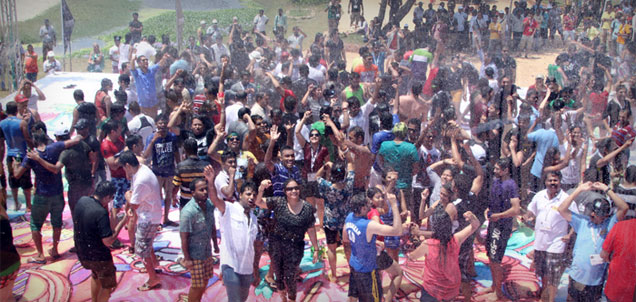
    The controversies didn't seem to dampen spirits at the raindance at Goafest 2013. Photograph by Shailesh Mule/Fotocorp


    By Pradyuman Maheshwari


    Every Goafest has its share of controversies, and this year’s was no better. Or worser, pardon the use of the word. Now that the event has concluded, here’s a list of the five controversies about the Creative Abby that we’ll want to forget soonest. However, it may make sense for the Awards Governing Council to take measures to avoid an encore.


    #1 Big O Missing

    At first it was Ogilvy not participating. The folks have been maxing all these years, and have been producing outstanding work. A Creative Abby without Ogilvy is, as Anil Thakraney writes in Hard Knocks, like the World Cup Cricket without Australia and England.


    Well, we didn’t see Ogilvy get back and all the pleading from the Goafest folks couldn’t get them to reverse their decision.


    The result: a Creative Abby minus Ogilvy. That didn’t see Lowe get back as it stuck to its stand of boycotting the adfest.


    Leo Burnett has been winning a fair bit over the years, and it wasn’t much of a surprise that it won the maximum metals, even though none of them were a Grand Prix.


    #2 Scams – JWT withdraws Ford Figo

    Ford’s controversial, gender-inappropriate advertising cost CCO and Managing Partner Bobby Pawar his job a few weeks back. At first it appeared that the ad was just uploaded on ad showcase site adsoftheworld.com.


    But, as it emerged, that the creatives were also entered at Goafest and as is the requirement of the Abby, the ads should have been carried in media and must be entered with the clearance of the client. The Ford Motor Company took this very seriously and an as-yet-unnamed marketing department employee who cleared the ad lost his/her job.


    #3 Inner Circle member quits

    Much celebrated independent ad agency honcho Sajan Raj Kurup publicy quit the Goafest Awards Governing Council (AGC) and had CreativeLand Asia opt out of the awards. His rationale: “Personally, to me it just doesn’t feel right deep inside my heart to be associated with awards in any way in our country.” His letter to the AGC is reported to have said: “I have decided, with the support of my organisation, not to return to awards in this country till we take up the issues on scams seriously and take stringent steps against these.”


    Ahem. Kurup’s resignation was accepted, but his agency’s pullout wasn’t. CreativeLand Asia had 3 silvers and 4 bronzes to its credit.


    #4 Radio ga-ga

    Should similar entries of a campaign in a certain category be clubbed together for a metal or should these be put in separately. At the Creative Abby, many juries decide to club them together – esp if there are different renderings of a certain creative idea or theme. But in the collective wisdom of the radio jury, the various entries were retained as separate ones… ensuring the numbers of entries received by certain agencies leapfrogged. Not everyone was amused by this on awards night, but we’ve been told that we shouldn’t read too much into it.


    #5 When the client said it didn’t pay for the award

    Although the Creative Abby is a celebration of creativity, the awards are meant only for ads that have been published/aired/put up somewhere. After the shortlists are done, the auditor contacts each and every client to ascertain whether the ad shortlisted was indeed entered by it. Pretty sound procedure this.


    Now in the process this year, a certain company from one of the most trusted business conglomerates in the country told the auditor that it hadn’t paid for the entries and the agency did it for the sake of awards. This was enough reason for the authorities to say ta ta to the entries, but soon enough a communication was received from the client saying that it had indeed released the award.


    Evidently someone from amongst the ‘authorities’ went to the client asking him/her to send in the clarification. Since we don’t have anyone on record, we wouldn’t name names, but suffice to say that there was some sound-and-fury and lobbying over these developments.


    The episode doubtless left some aftertaste, making a wag remark: Namak mein kuch kaala hai! Or should it be dal mein…

  • One Big Idea by Mrinmoy Mukherjee: The future will be a complex mix of digital and real

    By Mrinmoy Mukherjee, Director, Marketing & Business Development, Retail, Raymond Limited

     

    The fashion and apparel sectors are among the fastest growing industries in the world today. The Indian fashion industry is seen in global circles as dynamic and with great potential. Over the past few decades, the fashion industry in India has evolved considerably on account of the increasing fashion consciousness among Indians. Indian youth have developed a distinct fashion sense – thanks to the democratization of information because of the digital age. By 2020 India will become the youngest nation in the world with an average age of 29. It is believed that it is the massive Indian fashion consuming class that will set trends in the global fashion industry in the future. With such fast-evolving consumers in the apparel sector, brands need to be abreast of the needs of their audiences, while being agile enough to adopt to their changing tastes.


    In this context, it will be of primary importance to comprehend consumer tastes. Digital media, especially social media is a key tool that will help feel the pulse of fashion trends. Even as retail sales are still primarily being dominated by large format multi brand stores and exclusive brand stores, the influence of social media and Internet on offline purchasing is becoming increasingly important, acting as a complete ‘game changer’. Though this is just the beginning, retailers in India have started taking to social media. However, there is still considerable untapped opportunity. In the backdrop of changing lifestyles, increased incomes, demographic variability, and a vibrant democracy a sharp rise in social media usage in India can be expected. Brands can get meaningful insights and use them for decision-making in launching new campaigns, CRM programmes etc. It is interesting to see how marketers can take advantage of that. This is the platform where consumers talk free. Social media can get brands the exact sentiment of customers and what they want, as they are a direct and interactive communication tool.


    Brand owners and media planners who can comprehend the complexity of the consuming consumer not only from a product and brand perspective but from her/his proximity to digital media platforms and can predict going forward how the two will complement each other will be the winners of the future marketplace. The future marketplace will be a complex mix of digital and real…the new reality!


  • Ranjona Banerji: Modi and the battle of hashtags

    By Ranjona Banerji


    The television news cycle through Monday was consumed partly by the speeches of Narendra Modi and then by death of former British prime minister Margaret Thatcher. Both have some similarities – Thatcher was a strong, dictatorial leader and so is Modi. However it remains to be seen whether Modi’s legacy will be quite as lasting as Thatcher’s.


    The Modi speeches were amusing for the battle of the hashtags (#) that was played out on Twitter and by the capitulation of the news channels. The internet and social media in India are usually dominated by the rightwing and the controversial chief minister has a massive online fan club. For perhaps the first time – though one is loath to make pat statements like that – the anti-Modi brigade managed to pull one over his supporters. The hashtag #Feku – signifying someone who’s talk is all fake – was top of the Twitter “trending” worldwide list while the #ModistormsFICCI hashtag was at a lowly five, although it later climbed up. Kudos to firstpost.com for picking up the trend and putting out this story: http://www.firstpost.com/politics/on-twitter-anti-modi-feku-beats-modistormsficci-690166.html


    **


    The news channels were straight on the messiah has arrived route after Modi’s speeches to the women’s wing of the business/commerce/industry organisation FICCI and later at a conclave organised by TV18 (which owns CNN-IBN, firstpost.com and other media outlets). Wit, charm, wonder and so on were the adjectives used.


    The waffling and the long-drawn-out examples were glossed over. Although The Times of India in all its genuflecting did carry a piece dissecting the FICCI speech from a feminist point of view and found it lacking. The Indian Express was quick to point out that while lauding women entrepreneurship in cottage industries, Modi did not mention Ela Bhatt and Sewa, surely the most remarkable success from Gujarat and also that he laid claim to the success of the Lijjat Papad cooperative which as everyone should know started in Mumbai. If Markandey Katju, chairman of the Press Council of India is listening, he might work on a way to ensure cynicism and scepticism as the first hiring requirements for a journalist…


    Some newspapers did mention the fact that these speeches – Modi’s and Rahul Gandhi’s to CII earlier – amount to little in our democratic system. But so enamoured is the Indian media of what they see of the presidential form of government as practised in the US (is civics taught in school any more in India?) that they imagine little Barack Obamas everywhere.


    **


    The Goafest is over and has been much talked and written about – including on mxmindia.com. I caught an episode of Brand Equity on ET Now which discussed scam ads made for awards in light of the Ford Figo JWT scandal. I discovered that not only are scam ads now called “proactive work” but was slightly dismayed to find that the advertising industry was dissembling on the issue. Everyone seemed to acknowledge there was a problem but banning the practice of making ads only to win awards seemed out of the question.


    The fact that the essence of advertising is to sell a product or service successfully has been sidestepped in this rush to get awards. But ads that are never seen by the public winning awards for successful selling – that’s bogus in the extreme!


    The sexism inherent in the Ford Figo ads is another worrying factor – and what caused the controversy — but that seems to have taken a back seat to “proactive work”!


  • Scamadgate-2 | Anil Thakraney: Penalize the scamsters

    By Anil Thakraney


    There has been a rather muted reaction to Leo Burnett’s Tata Salt scam radio adverts. In contrast with all the sound and fury over the JWT Ford Figo ads. Surely Burnett’s ‘crime’ isn’t any lesser. I can only think of one reason: The ad junta is tiring of news on scams, a few senior industry folks I spoke with only shrugged with helplessness and resignation: ‘So what’s new, man?’


    Enough has been discussed on the subject of scam ads (including by myself), so there’s nothing more to add. However, I am now convinced all this talk has been pointless, that scams will always rule in the desi ad world. Not just because these ads land people new jobs and increments (and are therefore created), but because India is a country of scamsters. There’s a ghotala happening in all walks of life, so why must the ad frat be any different, they haven’t arrived from Pluto. I guess the time has come to accept that they will happen again and again. And therefore, the debate must shift from ‘How to cure this disease’ to ‘How to control it’.


    The social media buzz suggests creating a separate category for scam ads, thus legalizing them. This idea is as old as the hills, I recall proposing it fifteen years ago in the ad mag I was editing at the time. This will never work because once they are called ‘Unreleased Work’, such ads will not land people any real recognition, and therefore no new jobs. Agency heads will treat it as ‘jerk-off’ stuff, and dismiss it. So then what to do?


    I think the solution lies in financial punishment. For the next year, the GoaFest organizers should announce that scam ads entered slyly as official work will invite a hefty fine for the ad agency. Let’s say, a penalty of Rs 25 lakhs per scam ad. The world’s second oldest profession isn’t generally respected by the masses. And that can be corrected a bit by passing on the amount collected as fines to charity organizations. The ad world gets a positive name, and the threat of monetary loss will deter many potential scamsters.


    The GoaFest team must give this suggestion a serious thought if they want their trophies to get some respectability. They need to play the role of cops, and not just festival organizers. Because frankly, I can’t think of any other way out of this rotten mess. Time for debates and angry tweets/FB updates is over. It’s time for hard action.


    ***


    PS: On a recent visit to Delhi, I noticed that this product finds pride of place in the medical store shop windows. Not surprising, given the rising rate of crimes against women in India’s capital city. At this rate, ‘Pepper Spray’ will replace India Gate as Delhi’s glowing symbol.


  • One Big Idea by Sanjay Hemady: Let’s play the game now

    By Sanjay Hemady, Chief Operating Officer, HIT 95 FM

     

    Thinking big for the business will mean many aspects never ever done before; some things that make the game to be different will have to be played. There will be various aspects that will need to be covered as a plan to turn around and turn to profitability.


    A lot has been tried and written, as a revolutionary measure all stations coming together with a “Minimum Common Agenda” might be the first step in a collaborative way. Let’s bring in a smile, let’s enjoy the game of radio.


    With a goal to reach a revenue figure and an objective to achieve a set deadline will make all the difference. Some hard audited facts have to be showcased, hard stands need to be taken, assistance from external consultants should highlight the last 10 years that were toiled completely… Some hard thinking needs to be done with authority and responsibility that should be exercised to achieve goals and objectives in a constructive and meaningful way.


    Accept it, that the going has been tough, accept that we don’t see a sunrise with the same ongoing humdrum, accept that we have to pull up and run faster… but the radio teams are always geared to give their best.


    The question is, do we have the authority to be responsible enough to steer progress? Do we know that some collective introspection is required? If yes, let’s take these measures immediately.


    Appoint an eGoB of Empowered Group of Radio Broadcasters with a clear agenda based on a result oriented plan and timelines. Invite a respected personality who can be an acceptable figure by all to guide the radio business to prosperity. This personality should spearhead radio agenda aggressively. This was effectively done in the olden times. Take the example of the first Maurya emperor Chandragupta and the scholar, teacher, philosopher Chanakya regarded as the master strategist who was heard by one and all. A quote which might be relevant for us today: “Learn from the mistakes of others… you can’t live long enough to make them all yourselves!!”


    A fresh new thinking, a fresh new approach is the need of the hour.


    Are we in a state to name the gentleman who will be radio’s game changer? Or who will be the father of Indian radio or a Chanakya…?


    Radio’s time will come and we know the game, so let’s play it now!


  • One Big Idea by Anwesh Bose: Technology, the fittest survivor?

    By Anwesh Bose, Senior VP, DDB MudraMax Media, Delhi


    “The big idea will not be the preserve of either television, print, radio, digital, out-of-home, cinema, BTL/events or PR. Therefore, technology will be the all pervasive big daddy of ideas.”


    Remember what happened when free TVs & cable connections were distributed en-masse by politicians? The politicos are at it again. Political populism and one-upmanship is again driving technology empowerment of the populace at the bottom of the pyramid (free laptops with internet, free tablets with internet and now free mobile phones with subsidized usage costs). The race for technology adoption is moving at a break neck speed, top-down as well as bottom-up. Therefore, technology will not remain to be the preserve of a few anymore.


    Technology will bridge the gap between the physical and digital. The manner in which content is created, distributed & consumed will change the media dynamics on its head. In the very near future, the consumption of content will become device independent and the choice and control of content will be in the control of the consumer. Therefore, technology would demolish the media hierarchy that currently exists.


    The challenge the media industry is facing is to keep up to speed with the tech-empowered consumer. The control of media, because of technology-shift, is steadily moving into the hands of the consumer, but the media industry today is sharply divided between being Tech-Enabled or Tech-Unabled. Presently, the skew is very high towards the ‘Unabled’ & the dice is heavily loaded against them. The very reason for this is apathy and/or ignorance of the unabled. Therefore, in the roller-coaster of technology the enabled will survive and the unabled, goes without saying, will perish.


    Darwin said it: “survival of the fittest”.


  • Debrief: Goibibo: Good use of metaphor

    By Anil Thakraney


    Sharp work from the Goibibo guys, and quite literally too! The strategic thrust is to diss the rivals and gain brownie points in the process.


    The setting is an operation theatre. A ‘patient’ is on the bed with multiple knives stuck into his back. When the surgeon arrives, our patient complains about being stabbed in the back by his regular travel agent/portal, that too on several occasions. On account of cancelled airline bookings, being offered horrible hotel rooms, etc. The cool surgeon, instead of operating on the poor fellow, digs the knives back into him, and recommends Goibibo.


    This wild approach will help the brand get a good recall when people plan their travel. One, because most people will have had all sorts of bad experiences on their journeys. And will report stories of the ‘missing in action’ travel agent when things went wrong. Therefore viewers will immediately empathise with this creative. As a new brand, Goibibo needed a platform like this to take off. I also like the use of ‘being stabbed in the back’ metaphor as the central idea. It gives the ads visual drama and helps build a long-term memory hook. And it makes the ads entertaining to watch.


    Good work. In terms of both, the strategy and the creative. Well, the ad agency has delivered. Now it’s up to the Goibibo team to meet their deadly promise. They let the travellers down, and Goibibo will have to be ready to face frontal knife attacks. J


    Rating: (On a scale of 1-5): 3.5 Edgy creative backed by sound strategy


  • Debrief: Blue Star: Cool approach

    By Anil Thakraney


    Haha. A cute ad from the Blue Star air conditioners guys… in fact, the crazy treatment tells me that advertising for this product category is getting precariously close to that of candy adverts.


    The idea is this: Keeps the boss cool. At home and at office. The message is delivered through jazz music. So the male boss acts like he’s maha agitated, and so does the lady at home. Their anger resonates to the beat of the tense music. Once the Blue Star a/c is switched on, both immediately cool down, and their body language matches with the now pleasant musical strains.


    A pat on the back to Blue Star for taking this dangerous route. Quite clearly, they have chosen clutter-breaking as the primary communication task, and the ad delivers on that score. The madcap work will get the brand noticed. It’s also treated well, there’s entertainment in-built within the idea, without the need for any spoken words. So that’s fine. But that still doesn’t change the fact that an a/c will set you back by thousands of rupees, and a consumer will surely want to know a lot more about the brand. Guess the Blue Star team is leaving that task to the showroom salesman.


    Net net: It’s a dicey strategy and can easily backfire. However, one must give the advertiser credit for taking that chance. Especially if they have nothing unique to boast about the product itself, and I suspect they don’t.


    Rating: (On a scale of 1-5): 3. Risky ad but it does smash the clutter.