Category: BLOGS

  • Anil Thakraney: Aren’t journos human beings?

    By Anil Thakraney


    Friday’s non-stop TV coverage of the Assam molestation incident reminded me of the horrific rape of a minor girl by a drunken man on a Mumbai local train. As seven people (including a journalist, who later filed the story) stood watching and did nothing. I recall having a drink that weekend with a friend, and after a few pegs we both declared we would have chucked the rapist from the moving train. Tabartop justice! Maybe it was the booze talking, but that’s not the point.


    The point is that it has always been a matter of doubt as to what a journalist must do when confronted with a live, unfolding tragedy. Should he or she intervene? Or should he or she stick to recording the incident, which is actually the job of a journalist. There are no easy answers to this one and even when there are, opinions are highly polarized. I put this question to acclaimed photographer Raghu Rai, who has shot many live tragedies in his lifetime.


    This was a part of the interview I did with him for GQ magazine. He is very clear on the issue: “If a person is dying, even if it’s a very close relative, I would first film it, and then see if I can save the person. If the issue concerns the nation, then I would like the nation to see it. And discover what kind of a nation we have become. We are not doctors or social workers, we are photographers. And our first duty is to take the picture and then do the rest.”


    Of course, there’s merit in what he says, and I suspect this must be the opinion of many journos. You have to tell the world about the horrific things going on, else there’s little possibility of change. But after having pondered over this matter for some time, I have reached the conclusion that we journalists have to be human beings first. In the place of the cameraman who filmed the girl being molested by so many perverts (and that is if the dude didn’t provoke the crime, as some people allege!), I would first call the cops, and then jump in to try and save the girl. And this is no hindsight herogiri, this is most certainly the right thing to do for any sensible human being.


    Later, I would tell the story and put out the images of the culprits. Isn’t that what really matters? Broadcasting footage of an unfortunate girl being traumatized serves no purpose beyond offering voyeuristic pleasure to some depraved souls. And if you have credibility on your side as a journalist, your readers and viewers will believe your version of things. Indeed that is what journalists must first try and accomplish: Credibility. Scoops and news breaks can wait.


    What happened with the young lass in Guwahati is appalling. But given our lax laws and weak law enforcement machinery, and given the general lack of ethics in this nation, such stuff will happen on our streets again and again. But this incident must serve as a reminder to journalists that being human must come above all else.


    * * *


    PS: Some of the most repugnant ads created across the world. What amazes me is not that they were created… creative minds can often be wicked… but that there are clients who agreed to run these. Wow
    http://inspirationmind.com/45-controversial-extreme-print-media-commercials/
    
    
  • Reviewing the Reviews: Reluctant praise for ‘Cocktail’

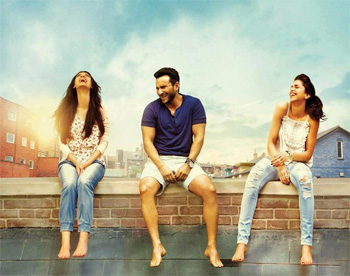
    Cocktail

    Directed by Homi Adajania

    Produced by Saif Ali Khan, Dinesh Vijan

    Written by Imtiaz Ali, Sajid Ali

    Starring: Saif Ali Khan, Deepika Padukone, Diana Penty


    Saif Ali Khan playing his umpteeth cool, flirty dude role, can’t carry it off now, at 40 plus. Which is one of the things Homi Adajania’s Cocktail got panned for, the other being its regressive stance towards women, while posing as a youth flick. The cheerful first half is absolutely at odds with the embarrassingly melodramatic and cliched second half.  What’s really sad is that in an urban story, set in London, the subservient girl gets the lechy guy, the wild girl was not thought worthy of even a jerk.


    The film got 2 to 3.5 stars, and a good opening, but reluctant praise, mainly for it’s breezy first half.


    Shubhra Gupta of the Indian Express wrote: “There’s this guy, he’s too cool, ya. Lives and works in London, chases girls, gets em, beds em, moves on. There’s this girl, she’s wild. Has this nice pad in a tony part of London, which she uses as a stop-over to change clothes in between all the partying. And, of course, there’s this other girl, who’s the ‘seedhi-saadhi’ type, you know, covered from top to toe, sweet, shy. Place these characters in a shiny glass jar, shake with a swizzle stick, and you get ‘Cocktail’. Which is just another name to call a one guy-two girls shtick, which is, as you and I know, one of the oldest in the book. ‘Cocktail’ starts off headily enough, and bubbles along till half time; post that, the sips get diluted, and the swallows take much longer.”


    Rajeev Masand of IBN Live cribbed: “Alas, Cocktail, directed by Homi Adajania, is no saucy menage a trois, although it does involve three friends living together in London, a little too close for comfort. No, Cocktail falls firmly in the rom-com space. But even as the tone shifts uncomfortably from breezy, light-hearted fun, to heavy drama in the second half, you’re never in danger of actually caring for the cardboard characters in this empty souffle of a film.”


    Raja Sen of rediff.com commented how spectacularly the film crashed and burned. “Adajania starts off breezily enough, all effortless-flirting and shotglasses and dramatically teary mascara, but the threadbare and increasingly inane plot unspools halfway through, leaving us with a shoddy, frustratingly random sequence of events. The last one-third of the film features the kind of emotional melee that can only be rightfully resolved by handing one of the girls a samurai sword. Alas, no such bloody respite is offered.”


    Karan Anshuman of Mumbai Mirror was disappointed by the writer Imtiaz Ali’s cop  out: “(He) goes on to self-censor, Indianize, romanticize, emotionalize, ergo commercialize the experience and give us a 1 part alcohol and 10 part water cocktail, an exercise in pointlessness. We now have abla nari, the Indian mother pushing marriage, and a… you get the point. All of this is well disguised of course with cutting edge club eveningwear on Deepika Padukone and luscious London.”


    Saibal Chatterjee was generous: “The heart has its reasons, the mind its methods. When the two are sought to be yoked together on Bollywood’s big romcom canvas, the result can be touch-and-go. One misstep either way could mean a hopeless nosedive either into mushy drivel or pretentious claptrap.  But no such worries here. For the most part, Cocktail, directed by Homi Adajania and scripted by Imtiaz Ali (a sort of high priest of the genre), steers clear of the pitfalls and delivers an eminently watchable love story that breaks the mould.”


    Taran Adarsh wrote: “On the whole, Cocktail has a fascinating first half, charismatic performances, harmonious music and the trendy look and styling as its aces, but the second half is not as tempting or intoxicating as the first hour. It pales when compared to the attention-grabbing first hour. Yet, all said and done, this one’s primarily targeted at the Gen Next, especially those in metros, who might identify with the on-screen characters.”


  • The Anchor: 5 reasons language music channels are the way to go

    By Sandeep Bansal


    1. Regional music channels are registering increased viewership. The regional music channels have provided a good television platform for local music which was earlier not there.


    2. There is a steady revenue growth @15 per cent for the regional television channels.


    3. More focused targeting for advertisers and hence less wastage. Many big marketers are looking at a more focused communication for their consumers across markets and this can very well be addressed by the regional music television channels.


    4. Capitalization costs are lower compared to national music channels as one does not invest in national deals for distribution, content, and so on. The lower capitalization costs bring down the turnaround period for the regional music channel.


    5. Since regional music is not mainstream, the music content is available at a much reasonable rate compared to Bollywood music content. Also the regional content is created with smaller budgets making it cheaper for the broadcaster to source the same.


    Sandeep Bansal is Managing Director 9X Tashan


  • Debrief:Toyota: Yeh Waku Doki kya hai, bhaiyya?

    By Anil Thakraney


    It took me a lot of time to figure what in hell Waku Doki means. It sounded like Japanese to me, so I called a Jap pal for help. And he said it roughly means: ‘Excitedly waiting for something cool to happen’. Toyota has unleashed this Japanese colloquial phrase as the umbrella positioning for two of its brands: Fortuner and Etios. And the other common factor is cricketer Virat Kohli.


    In the ad for Fortuner, Kohli says Waku Doki to a kid who’s bored of playing video games. In the ad for Etios, the young cricket sensation plays the same trick on a heart-broken gal. And no prizes for guessing that in these ads Waku Doki means hitting the road in a Toyota. And once the car comes into the picture, it’s back to the usual shots of interiors and exteriors. And speed and dirt tracks, etc, etc.


    This is dicey stuff. Indians aren’t going to run around looking for a Jap-English dictionary to figure what Waku Doki means. And without that knowledge, the phrase means nothing, it’s pure nonsense. Which means Waku Doki adds no value whatsoever to the communication, and to think it’s the central idea! Worse, they are using it for multiple brands, so each individual brand story gets lost as we are left scratching our heads over Waku Doki.


    [youtube width=”400″ height=”225″]http://www.youtube.com/watch?v=jWSrRYJHwl0[/youtube]

    I suspect Toyota opted for a Jap phrase to highlight the Japanese association of the mother brand. Where was the need for that? Bachcha bachcha in India already knows Toyota is a Jap car maker. They would have been better served by coining a desi expression, something like ‘Jhingalala’. So that at the very least the communication doesn’t go over the head. Though frankly, these gimmicky phrases are suitable for low-involvement products like wafers and candies. And not for vehicles which will set you back by lakhs of rupees.


    Rating: (On a scale of 1 to 5): 1. Incomprehensible and irrelevant.


  • Ranjona Banerji: Foreign media is only credible observer of Indian politics

    By Ranjona Banerji


    There is now only one credible observer of Indian politics – the foreign media in India. We cannot fully assess if a politician is good or bad until a foreign journalist pops by, talks to a few taxi drivers and Indian journalists and then writes a complimentary (good) or scathing (bad) comment piece.


    Now, you’re thinking, aha, sour grapes but far from it. It is all a question of perspective. Indian journalists, especially in Delhi, are too close to the centres of power. They are so familiar with what’s going on and party to so many secrets that they now spend more time discussing whether the blue in Manmohan Singh’s turban has changed in the last eight years. (Some say yes, some say no and the rest are fence-sitters.)


    The foreign media however comes in from far away and has no clue about all this inner stuff. They attend a few parties (these are vital sources of information and political analysis, as those who read through the diplomatic cables made public by Wikileaks will know), meet a few Indian print journalists (bluer, paler, maybe both), they may meet a few TV journalists but that’s for entertainment since they have no political perspective, although I hear they throw really good dinner parties. And, obviously, the few taxi drivers. This is imperative as every traveller knows – one taxi driver can be equal to at least five other potential interviewees.


    Yesterday, I met a cabbie in Mumbai who told me that Indian politics turns on Uttar Pradesh. Now I know. If these foreign political commentators are really smart however, they will never even leave whichever country they come from (usually the USA or the UK). How else have I become a world renowned expert on Barack Obama and David Cameron? (Actually, by watching Comedy Central and Graham Norton.)


    Therefore we now know that Prime Minister Manmohan Singh is a poodle, useless, confused and steeped in doom and gloom. Everyone has said it from Time to the Economist to The New York Times to the Independent.


    The poodle reference can be translated in Indian terms to a puppet. Yes I know, Indian commentators have been saying that for years. But what do they know, eh? (On the other hand, their view has now been authenticated!) Meanwhile I must be off to watch a few more skits on Comedy Central so I can hone my analytical skills.


  • The Anchor: 5 ways you can never get into a jam in the digital world

    By Saurabh Parmar


    1. Be a good listener:

    Digital is a two way communication medium, so before you start talking, start listening to what your customers are talking.


    2. Now understand:

    Get market research experts and your brand custodians to work on all this data and channel the insights to both your online and offline marketing.


    3. Get together:

    Don’t treat digital in a silo, integrate your touch points both in offline to digital banner campaigns, website, mobile, social media with each other. Integration is not just about giving links but really ‘getting together’ mediums to create a cohesive campaign.


    4. Be useful, fun or informative:

    It’s a crowded world out there with millions of brands and products talking. To connect with your customer make sure your message is either useful (What he is looking for), fun (what he will enjoy reading or sharing) or informative (makes him aware and interested)…just a higher media spend does not guarantee you more customers.


    5. Be real, say sorry:

    We all fu ** up, it’s better to admit it and rectify it rather than your customers creating a petition about you or criticizing you on blogs. Even in the virtual world genuineness is appreciated, especially if the response is prompt and correction faster.


    And the sureshot way…hire a better agency: Well the shortest and the easiest way of course is to hire a better agency


    Saurabh Parmar is Founder & CEO, Brandlogist


  • Anil Thakraney: NewsX needs the X. Very badly

    By Anil Thakraney


    No, I don’t watch NewsX. There are two reasons for this. For one, as far as the English news channels go, I have my plate full. With NDTV, Times Now and CNN-IBN. And that’s already more than I can handle. There is simply no appetite left for another ‘helping’. In addition, when I am in a particularly foul or salacious mood, I log into the Hindi news channels. Like India TV and Aaj Tak. And there’s no question of being able to deal with anything beyond this, as far as television news goes.


    Second, and more importantly, when I have accidentally dropped by at NewsX on the odd day when I am mindlessly surfing, I have noticed they have absolutely nothing new to offer. It’s just a bad copy of the leading English news channels, a poor me-too. So there’s been no motivation to go back.


    Within the above two reasons lie the key problems for this fledgling news channel. The English news channel market is saturated and very busy. Regular TV viewers have formed their individual loyalties, and it’s really tough for a late-comer to grab attention. No wonder NewsX has been languishing on the sidelines for four long years. And worse, because they have nothing fresh to offer, the channel will continue to languish.


    Now, to be fair to NewsX, the channel has seen enormous tumult since it was born. Friction within the senior management partners, ugly controversies and frequent change of ownership. Already placed in an extremely competitive market, this is not the kind of stuff they needed. The channel staffers should consider themselves fortunate the brand has survived thus far. And now, yet again, NewsX has a new owner: the ITV Group.


    I really can’t understand why ITV acquired the channel; it neither has the ratings nor the distribution. But their best bet now is to do one thing very quickly. Which is to get the X-factor injected into NewsX, the one and only ingredient that will help it survive. That critical factor is the only thing that will help the channel develop a distinctive identity. And if that doesn’t happen fast, it’s good bye to NewsX. And the saddest part is that no one will even notice when the channel’s gone.


    * * *


    [youtube width=”400″ height=”225″]http://www.youtube.com/watch?v=0eisbkQgY2Q[/youtube]

    PS: ‘Take the stage.’ A good campaign released by Adidas, especially for the UK market. This is not just to motivate the Brit athletes but also to create a buzz around the Olympic Games. Would have been nice if there was such an encouraging film produced for the Indian athletes. So that they don’t lose their passion even if Kalmadi lands up at the games to say a warm hello. 🙂


  • The Anchor: 5 ways an agency can retain talent

    By Ajit Menon


    Retaining talent is tough, but important, be it any industry. It’s acutely important for an agency because the only asset that agencies have are its ‘people’ and if good talent cannot be retained, especially in an agency, then the agency is at risk of loosing clients as well.


    So if you are a creative agency, the first step to retain talent is to:-


    1. Go pitch and win

    No NBD (new business development) No Stay. It’s but obvious that if you are not a winning agency, there is no life in the agency and employees will leave.


    2. Get the Gods home

    If you win great accounts, you get to do great work and get noticed. Great work attracts great talent and keeps them alive because agency employees get the adrenalin rush only when they get a chance to do brilliant creative work.


    3. Solution Givers

    If employees are trained to be solution givers rather than just be delivery boys, employees feel that their professional life is getting enriched and they want to stay. The entire training and development calendar should reflect only one thing, “Groom the employee for the future”. This gives the employee the feeling that this agency is developing his/her career.


    4. Einstein route

    Embrace experimentation in the agency. If you have a culture where you encourage people to experiment with new ideas, newer forms of communication and expression, out of the box thinking, the young minds find themselves comfortable in the environment and stay back, even if the lure of money is there.


    5. Money where your mouth is

    Pay peanuts and you surely will get monkeys which is yet another sure short way of loosing people and clients. Pay the people what they deserve. This is an industry where you don’t concentrate on cost control to meet margins (unless there is a global economy melt down and it’s affecting the country) but pitch to win creative accounts to meet margins. The more you win, the more you get to do good work which then leads to better revenues, so better infrastructure, great culture and of course better pay and handsome career progression. All this leads to employees being happy, and trust me no one wants to leave ‘happy’.


    Ajit Menon is executive director at DDB Mudra


  • Ranjona Banerji: Why TV anchors must not write on edit pages

    By Ranjona Banerji


    I now understand the pain of being a TV journalist. There is no avenue within the medium to become a pontificator. For print journalists, it’s easy. You work a few years as a reporter-correspondent-sub-editor and then some boss type person decides you have some writing skills that can be further explored or some pages fall short of stories and some boss type person makes you write a quick news analysis or you are a boss type person and decide (or someone tells you) that the world wants to know what you think. And you know how angry print journalists can get if their “columns” are stopped, if you read the excerpts of Kuldip Nayar’s memoirs. The reader then believes that these columnists and analysts are experts.


    But what can a TV journalist do? Having spend years running from pillar to post saying “I am standing at the gate waiting for something to happen” interspersed with many in facts and of courses – “I am of course standing at the gate in fact” – does someone say to him or her, here’s half an hour of TV time as a reward for so much standing, now say what you want?


    No, instead you become a prime time anchor and you have to ask other people what they think. And some of those people, in fact, of course, have to be print journalists who have now become analysts and columnists. Talk about rubbing salt in it.


    The result is that you yourself don’t know what to think. If you have ever read any columns by famous Indian TV anchors (I think Rajdeep Sardesai and Sagorika Ghose of CNN-IBN and Barkha Dutt of NDTV, all have columns in Hindustan Times, which has reduced the effectiveness of its edit page by half) you will know what I mean. Half the time they plug their own channels and shows and the rest of the time they sort of sum up what’s happening. There’s very little original thought there except some anodyne comment. No provocation, no incisive comment, no contrarian viewpoints. This comes from years of TV panel discussions where you have to listen to other people. Print journalists are terribly egoistical and after a few years stop listening to other people and only like other people to listen to them. This gives them a great advantage as pontificators.


    (I must here advise newspaper editors to end this new trend of giving columns to journalists with little or no experience because they are even less readable than TV anchors. Youth may be attractive but it has its limitations.)


    What is the solution for famous TV anchors? Instead of bothering to write which they can’t, they should get their back on usual suspect panellists. Call them to their studios and make them question the anchor. The anchor will then hold forth while the panellists listen. However, the anchor is not allowed to ask questions…


    This way, we might find out if they can actually think. India wants to know.


    Ranjona Banerji is a senior journalist, commentator and Contributing Editor, MxMIndia. The views expressed here are her own. Twitter: @ranjona


  • The Anchor: Subhash Kamath on his favourite Rajesh Khanna songs

    By Subhash Kamath


    I do have a list of my favourite Rajesh Khanna songs. I love them as these songs are incredibly well written along with absolutely brilliant lyrics and compositions. These songs also bring out the emotion of the situation in the film so evocatively.


    Here goes my list:


    Chingari Koi bhadke from Amar Prem
    [youtube width=”500″ height=”250″]http://www.youtube.com/watch?v=kpM0jPd6-7w[/youtube]
    Kuch to log kahenge again from Amar Prem
    [youtube width=”500″ height=”250″]http://www.youtube.com/watch?v=95UdAo4JdJI[/youtube]
    Nadia se daria from the movie Namak Haraam
    [youtube width=”500″ height=”250″]http://www.youtube.com/watch?v=w7Vl6pNCE8U[/youtube]
    Zindagi kaisi hai paheli from the movie Anand
    [youtube width=”500″ height=”250″]http://www.youtube.com/watch?v=3vgDb4TQneA[/youtube]
    Mainetere liye hi saat rang ke sapne again from the movie Anand
    [youtube width=”500″ height=”250″]http://www.youtube.com/watch?v=SC8DuvNCjbY[/youtube]
    Yeh Shaam mastani from the movie Kati Patang
    [youtube width=”500″ height=”250″]http://www.youtube.com/watch?v=_sZg4EUB3IM[/youtube]


    As for the dialogue, the favourite will always remain the one from Anand… Babumoshai, Zindagi ek rang manch hai aur hum sab is rang manch ki kathputliyan hain…. The role played by Rajesh Khanna was really powerful, one of a dying man who had the ability to still laugh and make others laugh. I remember a scene in the movie where he makes light of his illness and Amitabh Bachchan in total frustration says, “Agar main kahoon ki tumhein lymphosarcoma of the intestine hua hai toh?” and Rajesh Khanna just smiled and says, “waah waah, baabumoshai, bimaari ho to aisi.” I think it was incredible how he delivered his dialogues and performed his role in the movie Anand.

     

    Subhash Kamath is the Managing Partner at BBH India. He is also passionate about music and is part of a music band called Wanted Yesterday.


  • Debrief: Maggi: Weak stories

    By Anil Thakraney


    ‘Spreading happiness’ is an interesting platform for Maggi. Going beyond just the fast food narrative, the new ad tries to bring out people’s happy association with Maggi noodles. So as to build an emotional connect with the brand. The theme is: ‘Meri Maggi – 2 minute mein khushiyan’.


    The commercial features Amitabh Bachchan as the host, as we watch vignettes of junta’s happy Maggi moments. A hungry biker is fed Maggi by a stranger woman. Some kids use candles to cook Maggi. A bahu wins over her in-laws’ affection by serving them Maggi (really?). These are supposed to be authentic consumer stories. And Big B dutifully invites viewers to send in their own Maggi tales, which will be shared with everyone.


    While the intent is right… Maggi is an old brand and it needs to build bonds with consumers to stay relevant in their lives… the execution left me totally unmoved. The Maggi tales/moments/whatever need to have some adrenalin, some energy and most importantly, a surprise element. If they remain at the basic level, which currently is the case, the communication isn’t able to do its job. Because the emotional quotient is very weak. And yes, Bachchan plays an over-paid prop in the commercial.


    [youtube width=”400″ height=”225″]http://www.youtube.com/watch?v=FmE4xnWoTQ4[/youtube]

    We need touching, heart-felt stories, dear Maggi. Cook them up if you can’t find real ones. And take your time, you don’t need to do it in two minutes. Just like good food, good things take time to happen. 🙂


    Rating: (On a scale of 1 to 5): 2. Right idea. Let down by very average execution.


  • The Anchor: 5 reasons why online demand services are the next big thing

    By Shreyash Sigtia


    1. Paradox of Choice

    Earlier audiences had very limited choice with only Doordarshan and DD Metro as channels for entertainment. Cut to a couple of decades back where audiences were spoilt for choice with nearly 500 channels to select from. But all this time viewers did not have much choice in terms of content/data selection; they never really had complete control on the viewership. So now, with the advent of online demand services, this situation has improved considerably. Customers now have the freedom of paying for the content of their choice and watch it at their own preferred time slot


    2. Choice of Devices

    As a country, we have moved from joint families to nuclear families to finally being cellular families, our lives revolve around smart gadgets from morning to evening. Along with internet on PC, people today also have a choice to stream these videos on their smart phones and tablets. With the current boom in the smart phones and tablets market due to competitive price offering supported by 3G and 4G high speed internet browsing, the consumer can easily view the videos on multiple connected devices.


    3. Convenience of time and place

    With the kind of hectic lifestyle one has today, taking out time to visit a theatre for every movie has become a little cumbersome and difficult. With everyone being on-the-go 24/7, 365 days a year, on demand services give people the luxury to watch their favourite movies/new release at their preferred time and place.


    4. Beyond the metros

    Indiais diverse and wide-spread. There are several small budget and/orHollywoodmovies that get released only in the top metros. Consumers residing in tier 2 and 3 cities earlier had no access to such films But with the availability of on demand services, even a consumer  living in tier 2 or 3 towns and cities can enjoy such releases, be it Hindi, English or any other language at the click of the mouse.


    5. Easy Payment Options

    There has been an increase in the online payment options for consumers. It is no more limited to cash or credit cards. Services like ITZ Cash and Suvidha Pin allow the user to do payment online. An individual doesn’t have to move from places to places for paying the bills.


    Shreyash Sigtia is the Business Head at BIG Flicks Pvt. Ltd.