Category: BLOGS

  • The Anchor: 6 things to watch out for in the 2012 London Games

    By Ranjona Banerji


    I hope everyone interested in having a good laugh has been watching Twenty Twelve on BBC Entertainment, a comedy series which follows “the deliverance committee” involved in making sure the 2012 London Games run smoothly. Everything from bureaucracy to PR to political correctness to politics to jargon to celebrity are satirised brilliantly and it all seems so real.


    However, it is also possible that you interested in the Games themselves. In which case, here’s what to watch out for.


    1. The Opening ceremony on Friday, that is 1am (Saturday morning technically) for India on ESPN, Star Sports. Directed by Danny Boyle, (yes, he of the Jai Ho and slums are fun fame) it is expected to be a massive extravaganza. He has to compete with the glorious, breathtaking performance put up by the Chinese in Beijing in 2008. I don’t actually quite remember it actually, but it was spectacular. Lots of firework dragons. Or was that the first Lord of the Rings movie? Whatever.


    2. The Indian medal chase. This is supposed to be our best chance “ever” (please substitute your own version of an American teenager’s twang here) of winning lots of medals. Boxing, tennis (oh, wait, in India sometimes there’re both the same thing), hockey, badminton, wrestling, shooting… In fact, anything except running and jumping which, of course, are what the Olympics started with in ancient Greece. No one expects us to run and jump, least of all, us.


    3. Badminton starts on Saturday (go Saina Nehwal!), which is why badminton players may not be at the Danny Boyle show. Actually, so does boxing, athletics, handball, judo, tennis, volleyball, weightlifting and just about everything else. Football has already started. So maybe no one will be at that opening ceremony, so it’ll be all sparse and minimalist and New Age.


    4. London, the best city in the world. Apart of course from New York, Paris, Shanghai, Hong Kong, Dubai, Delhi, well of course, of course, that’s a joke! If you can’t be there, you can watch it, especially that giant red squirly whirly steel thingie made by that famous Indian artist chappie Anish Kapoor (Indian! We are the greatest!). So wish you were at the West End, Covent Garden, Piccadilly,Oxford Street,Kensington Gardens, Buckingham Palace, Tate Modern, instead of wherever you are.


    5. Wimbledon! This one is for me. The Championships are over, but tennis is going back to the green (or re-greened) grass. Twice in one year is remarkable and unique. (I wrote Wimbledon! But I meant Roger Federer! Of course.)


    6. There’s a special Olympic sport that has been included just for India. It’s called: Where’s That Kalmadi? You can seek him here, seek him there as the former head honcho of sporty stuff and hmm, other stuff, Suresh Kalmadi, weaves and dodges his way around the Games, avoiding the media, the athletes, the police…


  • Ranjona Banerji: Why I love Arnab Goswami. Really!

    By Ranjona Banerji


    Kudos must be given to Times Now for its drive to expose the little acts of callousness in India. These are problems which are so commonplace that they are overlooked, not just by the media but by the general public as well, perhaps even by NGOs. The death of a five-day-old baby girl in a Jalandhar hospital because her parents could not pay Rs 200 for a life-support system made it to Arnab Goswami’s News Hour. Just as a reference point, the story is on page 11 of the Mumbai edition of The Times of India – and made it there only because of television.


    Goswami dignified the death of the girl by cross-examining the doctors – and rejecting all their excuses. He and his guests discussed the callousness of the system, a Supreme Court ruling that bans taking money for life-support from poor people and asked whether the baby would have been treated differently if it was a boy.


    Goswami is right when he says that it is these little problems which have to be solved if our society is to be sensitised.


    TV continued with its campaign against crimes against women as all channels highlighted the plight of a woman in Kolkata who struggled to file a rape complaint even though she was bleeding profusely and a girl in Bangalore thrown off a train by molesters.


    **


    Even TV has realised that the Anna Hazare movement has run out of steam and merrily had discussions on it. I would venture to offer “Team Anna” some advice: if it took up the issues of the “little people” it might find greater resonance than its current policy of going after big sharks. In our everyday lives, it is the callous hospital staff, the indifferent police constable who hurt as the most. Let Team Anna follow the path that Goswami has forged for them.


    Sudden thought: Can you imagine what would happen if Arnab Goswami and Aamir Khan joined forces? Wow!


    **


    Of course, one’s love for television cannot go too far. The discussions on the Assam problem have been largely unsatisfying except perhaps for Karan Thapar’s Last Word on CNNIBN, if only because his guests did not have hysterics and screaming fits. It makes a life a little easier if you can understand what everyone is saying. The Jerry Springer version of TV gets tedious after some time.


    **


    The completely pointless discussions on Narendra Modi’s “hang me if I’m guilty” interview to Urdu weekly Nai Duniya were the other ear-sore. Modi, who likes to be in the news, manages to provoke some TV air time and create the same amount of sound and fury. The same guests every time on every channel on opposite ends of the political drama saying the same things as last time have become a yawn. The highlight on Thursday was apparently Teesta Setalwad walking out of the discussion on Times Now and walking back. This is hearsay evidence because I never saw it but was informed by people who did and by Twitter.


    **


    Chaos in the social media universe on Thursday incidentally as GTalk and then Twitter collapsed. How on earth did we manage before Twitter everyone asked when it came back. Indeed.


    **


    The “Greatest Show on Earth” begins. More on that next week. Happy viewing.


  • Anil Thakraney: TV media is out of sync

    By Anil Thakraney


    TV media is out of sync

    So then why did Rahul baba get egg on the face in Uttar Pradesh? There are many reasons being flung around, and they’ve been discussed to death on the various news channels. Do allow me to add my two-bits: the single biggest reason is that Rahul baba’s suave appeal works only in the urban areas of India, particularly in New Delhi. For the small townies, he means NOTHING. They don’t connect with his jet-setting lifestyle, the voters know he’s a fly-by-night dude. That, even if they voted for his party, Rahul baba will not be seen again till the time of the next elections.


    If this is the case, and at least I think it is, then we have to question the excessive coverage our chap got in the TV news media all through the UP elections. If I recall correctly, on one show, BJP’s Ram Shankar Prasad accused a television anchor of being unfairly biased towards Rahul baba. He was right, of course. Compare the footage winner Akhilesh Yadav got with the Gandhi scion’s coverage right before the elections, and you will be stunned by the skew.


    And this totally lopsided coverage happens because the news channel editors and their crew happen to be from India’s urban areas. And their mindset is therefore very urbane. They don’t get India’s small towns and villages, and just because they find Rahul baba to be a charismatic figure, it gets wrongly assumed that the rest of India does too. Well, that’s obviously not the case, as we just witnessed in UP (and in Bihar in the recent past). Media’s darling was shown the door.


    The Rahul baba saga is actually a pointer to a large problem with our television news media. There is just too much attention given to the urban Indian middle class and their issues. To the cost of the rest of India. A girl who gets molested at Bandra station will become a sensational story. But a girl gang raped in Latur will get an apologetic mention. A small fire in a building in Bangalore will send TV anchors into a tizzy. But an entire colony burning down in Ranibennur will be covered reluctantly.


    [youtube width=”400″ height=”200″]http://www.youtube.com/watch?v=qkaZdjfyht8[/youtube]

    And this is why television studio views and discussions have little relevance to ‘non-shining’ India. No amount of frothing and fuming in the news rooms will make any difference to vote swings. By the way, even as I write this, all the news channels are very worried about Rahul baba’s future. Lagey raho!


    ***


    PS: Wow! Pakistan TV sounds like great fun. “Gadhe! Bewakoof! Stupid! Sharaabi!” All this on live television. Makes our Arnab’s chat show appear heavenly in comparison. Hello, we have a thing or two to learn from our esteemed neighbour.


  • Reviewing the Reviews: Super un-cool sex gags in KSKHH

    Kya Super Kool Hain Hum

    Directed by Sachin Yardi

    Produced by Ekta Kapoor, Shobha Kapoor

    Story by Sachin Yardi

    Starring: Tusshar Kapoor, Ritesh Deshmukh, Neha Sharma, Sarah Jane Dias, Anupam Kher


    This is not the kind of film that critics would recommend anyway, but most of them have said that Sachin Yardi’s smutfest’s content is not what they mind so much as the bad quality of the sex gags.


    Kya Super Kool Hain Hum is a sequel to the Kya Kool Hain Hum, which had reportedly done well enough for producer Ektaa Kaoor to attempt a sequel.


    Most critics went for 1 or 2 stars if they were feeling generous, except, of course, TOI’s standard 3 and Taran Adarsh’s 3.5.


    Wrote Raja Sen of rediff.com: “There’s nothing wrong with bawdy sex comedies. The burlesque entertainer has been a part of storytelling from its very origins, from sultans being soothed by tellers of tall tales to cavemen sniggering at sideward-8s on their stick figures. It’s a grand, colourful, enjoyable tradition, and making something you can nudge, nudge, wink, wink at is as fine an ambition as any. Except – and herein lies the lack of rub – there’s really no point to a sexless sex comedy.”


    Aniruddha Guha of DNA commented: “Director Sachin Yardi’s KSKHH revels in its ability to present one stereotype after another in a long orgy of sex jokes, private parts’ references and general stupidity. It’s funny initially, and you feel like you may be in for a laugh riot. But KSKHH is like a party that starts to get boring in the first hour, one you keep looking for ways to get out of. And if you do stay till the end, a headache-inducing hangover is a certainty.”


    Saibal Chatterjee of NDTV grit his teeth and wrote: “Some films are aimed at the eye, some at the head, and still others at the heart. It takes an outrageous degree of audacity to fix the focus of an entire two-hour-plus movie a few inches above the solar plexus, or thereabouts. But for all its unabashed flirtation with tawdry humour, Kyaa Super Kool Hain Hum is about as scintillating as the drone of a dying bumble-bee. A bunch of bawdy blokes who have clearly taken leave of their brains and turned into sex-obsessed ‘loin’ kings run amok with a license to spill in this defiantly tasteless caper movie. Even the dogs aren’t spared.”


    Rajeev Masand rightly called it a cringe worthy: “If I had a penny for every time I laughed during ‘Kyaa Super Kool Hain Hum’, I’d be able to afford an Asprin, I so badly needed at the end of this roughly two-and-a-half-hour cringe-fest. The problem with this film isn’t that it’s so unapologetically vulgar, but that it’s just not very funny. And that’s a shame, because leading men Tusshar Kapoor and Ritesh Deshmukh have a winning chemistry and sharp comic timing…now if only they were required to do a little more than stripping down to their boxers and repeatedly making crude gay jokes.”


    Anupama Chopra slammed the lack of a plot: “I enjoy vulgarity, cheap lines and jokes with double meanings as much as the next person, but really, is this the best we can do? Writer-director Sachin Yardi is too lazy to create a plot, so the film is just a series of gags that allow him to bung in as many puerile sexual innuendos as possible. Kyaa Super Kool Hain Hum becomes a drag within the first twenty minutes and then continues for another two hours or so. Before you are done, you will have to suffer Chunky Pandey in a hideous wig, playing a fake godman named Baba 3G, and Tusshar Kapoor in drag wearing eyeliner, lipstick and a gown with a plunging neckline. Yes, that’s seriously scary. Only the brave need venture in.”


    Madhureeta Mukherjee of the TOI quipped: “Director, Sachin Yardi’s film will appeal to an audience who trips over ‘hard-core’ sex comedies. There are scenes that ‘vibrate’ with humour, and squeeze ample laughs (some forced), but it’s mostly a bleak story-line with random scenes which are padded with pun-fulls of adult humour, sexual innuendo, and expletive one-liners. For a sex-comedy, the film is a tad long (size really matters, can’t help it!) and songs like ‘Dil Garden Garden Ho Gaya’ slow the pace. If you were sex (comedy) starved after Kyaa Kool Hai Hum, this sequel force-feeds you a double dose. This one’s for teens who get a ‘boner’ out of bad jokes, but it may get a rise out of some adults too. Watch at your own ‘risque’.”


    Taran Adarsh raved: “On the whole, Kyaa Super Kool Hain Hum is sure to get the affirmation nod by its target audience – the youth. Despite the sexual tone, adult jokes, impish humor, the movie, at no juncture, gets offensive, distasteful or objectionable. In fact, it’s one big joyride from commencement to conclusion. This one is for the masses, for youngsters, for those who loved part one and enjoyed its crazy hilarity. Kyaa Super Kool Hain Hum offers entertainment, entertainment and only entertainment in large doses!”


    Sudhish Kamath of The Hindu nailed it, “The problem is of excess and repetition.  What’s the point of making a sequel if the idea is just to put the same jokes back in? Poppat is back with his tooths (suits). If the first one was let down by its length and lack of plot, here it’s just the lack of plot. The only movement or the ups and downs here are in the innuendo and physical comedy involving a pug who lives a Vicky Donor life. The pug performs every time its owner (Riteish) turns on the music. If you find that funny, go for it.”


  • The Anchor: 8 reasons why professional networking sites are important

    By Yogesh Bansal


    In today’s competitive scenario “Who you know” is as important as “What you know”. Meeting people and making positive connections can benefit you in different phases of your professional life, as you climb up the ladder. Networking and meeting people in different areas of expertise can help you when you need information on something or may even land you into job in the future.


    Professional networking sites enable you to:

    1) Control your online identity


    2) Educate yourself about the current market scenario which is of utmost importance, besides your qualification


    3) Gather a good understanding about the market as it is important to inculcate or polish the skills required


    4)  It lets you collect information about your prospective employers and build the right industry contacts


    5) It helps you understand the practical aspects of a profession and prepare your behaviour and mind for the forthcoming challenges


    6) Let’s you have an opportunity to interact with the professionals in the market


    7) Encourages you to broaden your horizons, think beyond your limits and explore more career opportunities to understand where your skills could be best utilized


    8)  Increases your online visibility and makes you easily searchable.


    Yogesh Bansal is Founder and CEO, ApnaCircle.com


  • Anil Thakraney: Cool Britannia!

    By Anil Thakraney


    To be honest, I couldn’t bring myself to keep awake all night to watch the London Olympics opener. One, because I really am not a huge fan of the games. Stuff like long jump, high jump, pole vault, rowing, archery, and so on bores me enormously. Second, I was simply being my lazy old self. But the opening ceremony I did want to view, especially after all the orgasming on Twitter. And the internet videos came to my rescue as usual.


    Yes, the opening ceremony was spectacular. I don’t know what Beijing had done, and knowing the way the Chinese operate, it must have been all about tech prowess. The Brit event was more about drama and emotion. Which is why asking Danny Boyle to put the opening ceremony together was a smart idea. He used the opportunity to do what he does best: tell stories. The show took us through the passage of time. The industrial revolution, James Bond, Paul McCartney, Rowan Atkinson, and a whole lot of other symbols that have defined Britain over the centuries. Plus the stunning fireworks and the dazzling lights.


    Thehigh point, of course, was the Queen being parachuted into the park. I thought this was a master stroke, and only Boyle could have pulled it off. The stunt wasn’t just totally unexpected, it told you two things: One, that Britain is changing, that while they value their history and culture, they also understand the word ‘cool’. And in that one single act, they brought the old and the new Britain together. Clever thinking. Only a movie director or an advertising creative director could have come up with this audacious idea.


    All in all, a super show.Britain should be proud of itself. This is going to be a tough act to follow. I have just one regret: Millions and millions of pounds were blown away in one single evening. And to think it’s the Games that really matter at the Olympics. Imagine the things that could have been done with all that dosh. An entire underground train network in Mumbai. Thousands and thousands of flyovers. Anyway, let’s not go down that road, there’s no end to my carping.


    Let’s just hope, after all this mega shor sharaba, our folks return with at least one medal.


    * * *


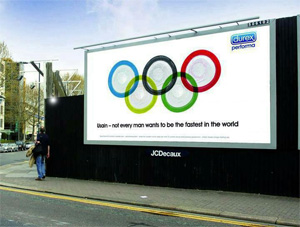
    PS: Surely the best London Olympics ad. From Durex. Perfect. This is what is called seamlessly attaching your brand to a global event. With no chance of needless ‘spill over’. 🙂


  • The Anchor: Viral Pandya on 5 ways how a small ad agency can beat the biggies

    By Viral Pandya


    1. Shut up and work!

    Believe me, it really helps. While in bigger agencies, people spend more time in excruciatingly painful meetings, churning out bigger strategies and smallest of ideas, you can sneak your way through by working on insights and simplicity.


    2. More is less!

    Remember it is never about how many pieces of work you bring to the table. And how many bucks you spend. Rather it is about coming up with a single piece of work that can do wonders for a brand, and of course for you too.


    3. All it takes is an idea!

    People will only remember you for your last work. So it does not matter whether you are small or big. Come up with ideas that excite the hell out of people. A great work will never get unnoticed. The same way, a bad piece of work will never get unnoticed, especially when coming from the bigger agencies. Isn’t it a win-win situation for tiny little us!


    4. Love your clients!

    As if they are the most important people in your life. Never forget that they have taken a great risk in you. They have given you an opportunity to prove your mettle. Don’t break their trust. Thrill them with great work. Take our instance; we share a great camaraderie with our client. We have enough and more freedom to work ingeniously. And together we believe in creating work that works. It is absolutely no surprise seeing our clients grow multifold. And that’s the reason we are winning international awards on our regular brand work, year after year. We always take our clients to each and every award show, and let them receive the awards. For us, looking at their faces glowing with pride is actually far bigger than the award itself.


    5. Let’s win!

    For us, it is nothing but Guerrilla warfare. When you are small you work as a tribe. A strong combative unit. You are not afraid to lose. You are like Spartans taking on the might of big. Lead from the front. Take your team forward, and the glory shall be yours. People love to support the underdogs. Nobody expects anything from you. When bigger agencies win, their folks celebrate. And when we win, the world celebrates. Enjoy being small yet lethal, and let your work score BIG.


    Viral Pandya is Chief Creative Officer at Out of the Box.


  • The Anchor: Mitrajit Bhattacharya on 5 areas where print (& mags in particular) need to upgrade their knowledge

    By Mitrajit Bhattacharya


    1. Use of econometric modelling to measure advertising impact on sales

    Econometrics can be used to reveal the effects of diminishing returns, ad memory decay and optimisation of media strategies.


    2. Measurement of magazines’ social media engagement and building overall engagement indices

    How can social media provide competitive advantage in an undifferentiated market? How tone and themes of conversation can help guide social media strategy? How does social media engagement compare with more traditional measures of engagement?


    3. Research into branded content and do’s and don’ts about how to create great advertorials

    Advertorials, whether in print or web, are valued, appealing, well-read if strategised well.


    4. Usage and attitude towards iPads and how users experience advertising and content on the device

    How is the consumer engagement with digital devices? How does an iPad user use the device? How many apps do they download? Free apps vs paid apps and usage and attitude towards them.


    5. How tablet in-app advertising works

    Learnings to increase the marketing efficiency of in-app ads on tablets.


    Mitrajit Bhattacharya is President and Publisher, Chitralekha and Vice-President, Association of Indian Magazines


  • D Ramakrishna on 6 (of many) things that’ll never change in advertising

    By D Ramakrishna


    1. Creatives will come late to work, (except for those who slept the night in office)


    2. Clients will say, ‘ we need it yesterday’


    3. The client will want to meet at 10 in the morning. The agency ‘sometime in the second half’


    4. Everybody will be jealous of how much money the photographers, directors, and voice over artists are making.


    5. The audio mix will never be right.


    6. And of course, the client will say, ‘make the logo bigger’.


    D Ramakrishna (Ramki) is the CEO at Cartwheel Creative Consultancy


  • Debrief: Surf Excel: The power of idea

    By Anil Thakraney


    Surf Excel is back with another commercial in the long-running ‘Daag achche hain’ campaign. Before I get to the new TVC, must say the idea has worked marvelously for the brand over all these years. It has allowed Surf Excel’s advertising to be different, and it’s quite extendable. A very good example of the importance of idea in advertising.


    The commercial features a group of kids playing on a cricket field. A turf war breaks out between two teams (and this is quite usual!). The team consisting of older kids bullies the younger ones. One of the lads is pushed into a dirt puddle. But instead of crying, he smartly uses his dirty clothes to drive the older boys out of the field. Elated, his team mates join in for a dirt fest.


    [youtube width=”400″ height=”225″]http://www.youtube.com/watch?v=l7VyizsCss0[/youtube]

    Good, fun stuff. Kids will enjoy it, but more importantly, so will the moms, who are the target audience for Surf Excel. Also, I like the idea of directly using the stains to win the day; this makes the communication quite powerful. Clearly, ‘Daag achche hain’ is on a roll, and the way it’s panned out since inception, I believe this property will live for a very long time.


    My own favourite ad though is still the original brother/sister commercial, but the continuing ads have been cool too.


    Rating: (On a scale of 1 to 5): 4. Smart and humorous


  • Anil Thakraney: Crime instigating journos need to be punished

    By Anil Thakraney


    We first heard about it during the Assam molestation incident. Now the same allegations are being made about the Mangalore party bust, where some youngsters were beaten up and molested by a bunch of goons. That, if not directly provoked, both incidents were encouraged by the media persons present out there. Find that surprising? I don’t.


    Here’s the problem: There are TOO many news channels in India. National and regional. No other country in the world has such a large number; it’s going insane out there. And to think more stations are waiting in the pipeline! Quite naturally, most of these channels are bleeding very badly; the market simply cannot support such a huge crowd. In such a crazy scenario, pressure on content heads to deliver viewership numbers is intense. And this pressure percolates down to the reporters and the camera crew on the ground. A couple of young TV reporters have told me, in private, that they have been warned to either ‘somehow’ get juicy stories or face the axe.


    And I believe this is the key reason behind the nonsense we are witnessing on the idiot box. It’s a very tempting idea. Not being able to get a story? Let’s create one. And we’ll worry about the consequences later. It’s the question of jobs and livelihood, food has to be put on the table, boss. So what we are witnessing these days is the inevitable result of the news channel madness in India.


    So what’s the way out, given that we are a free economy and entrepreneurs have every right to set up their own news shops? It’s simple, and the answer has already been given in the UK. When Murdoch’s editors crossed the Lakshman Rekha of ethics in journalism, they not only had to accept the closure of a newspaper, some senior staff members are staring at a prison sentence.


    Ditto needs to be done with editors/reporters who are found to have abetted or encouraged incidents like the ones in Assamand Mangalore: Loss of broadcast license for the channel. Jail term for the staff members found guilty. There is no other option. Inaction in these matters endangers the safety many young girls in this nation. And I am very sorry to have to state this.


    * * *


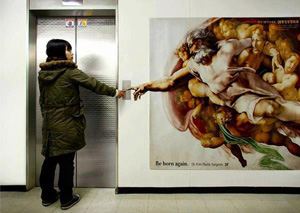
    PS: Art has often inspired advertising across the world, and particularly so when it comes to legendary paintings. This cult Michelangelo artwork has been used many times over, but must say it works perfectly for this particular client. Innovative thinking!


  • The Anchor: 5 reasons why mobile advtg has a gr8 future

    By Sunny Nagpal, Co-Founder & MD, Httpool India


    We’ve come a long way since Martin Cooper invented mobile phone in 1973 as a portable handset, to early 1990s when they were actually available in the markets, or in 1994 when the first SMS was sent in Finland to 2000 when mobile advertising made its debut and still grows strong in the marketing scenario of the world.


    We have seen an exponential growth in mobile web and app usership, through the release and distribution of smart phones and open platforms like Android.Mobileis shaping up as an exciting medium for advertising and we have seen that the smart brands have already taken these first green shoots of growth as a sign to start investing in the medium.


    Mobile advertising, undoubtedly, has a great future as it begins to prove itself as the most effective digital advertising channel.


    Here is why the advertising on cellph”one” will be the most preferred one:


    1. One on One: (Personalized, location sensitive)

    One of the major reasons why mobile ads are so effective is largely due to mobile phones allowing advertisers to target their audience with messages that are intended just for the user. Users generally pay more careful attention to mobile ads (example: banner on a notification page). You see people adding utility and productivity tools to their phones in a very personalized manner. Advertisers have already started focusing here, creating such tools, applications which work as enhanced sponsorship and works well with mobile because it is such an intimate environment – people are looking to add more content to their phones and personalize them.


    Moreover, a mobile phone can provide information about the user’s movement and changing location that can be used for timely offers, such as a discount at a store or at a cafe in the food court as a user enters a mall.


    So, the next big thing is location-based marketing. This means the example that is often cited of someone walking past a coffee shop and getting a text telling him to come in and have a cup of coffee is not far off. Advertising for small local businesses can have a much stronger business case.


    2. Many to One: (Manifold Messaging)

    There are multiple points to deliver your brand messages, unlike other media, mobile advertising has a much richer menu of options to offer advertisers: voice (visual voicemail, ringback tones, missed call notifications), text (SMS), multimedia messaging (MMS), mobile Internet, billing touchpoints, handset clients and more.


    This allows an advertiser to create a trail with multiple messages delivered to same user through above means. However, here the attempt should be to deliver them as seamlessly and non-intrusively as possible.


    There are ads that can come across as real-time situations such as billing and location triggers, and can be highly effective in meeting immediate real-life needs and maximizing response rates.


    3. Two sided one: (Interactive)

    The interactive nature of the mobile phone removes barriers to responding and purchasing through direct user response capabilities.


    As mentioned, mobile’s targeting technologies make ads more relevant to users, while also delivering successful campaigns for advertisers. With mobile, the ads can become more effective and relevant to the user when they can engage in a conversation with the person with regards to the advertised product or service. Mobile advertising allows for users to click/touch the banner ad and then is prompted to their dial screens with the number already configured into their dialers. This functionality is called Click to call.


    There are also possibilities to do campaigns with a click to SMS/Purchase/Download/View Video/Email functions as well, all depending upon the campaign objective. Instant interaction will make the lead more valuable and in result lead to an increase in sales.


    4. “That” one: (Targeted)

    A mobile phone provides extremely granular details about the user. This allows advertisers to know exactly who the users are in order to target ads effectively. They can thus target by Geography (Country, City), Carrier (Airtel, Vodafone and so on), Channel (category of content – Entertainment, Business Finance, Travel and so on), Device (Nokia, Samsung, Micromax, iPhone and so on) and Operating System (IOS, Android, RIM, Symbian).


    Because targeted ads are inherently more relevant, they are more interesting. Users pay more attention to them, and advertisers get a higher response rate. This makes the medium really cost effective and ROI driven.


    5. Everyone has one

    Well, we all know that by now! Very often, we see people having more than one mobile phone. While volumes are great and will give you that reach, it is the way people use their phones that is of more interest to the advertisers. Mobile phones today are central to many aspects of people’s lives, and are a key access point for most media consumption – information, entertainment, communication, transaction, self expression and socializing.Mobileis a huge part of people’s live already and it continues to evolve its purposes.


    Think most developing countries. Think India, where most cities are still fighting to meet their power needs. In such times, mobile phones come up as a vital source of information, utility and entertainment. Broadband is still to cover whole of India, but mobile providers with 3G have changed the scenario of Internet browsing. This will only get better with time.


    Historically, it is clear that people don’t like to pay for content. So then, we shall see advertising fund the mobile content as it funds TV, Print and Online.


    Mobile advertising in current scenario remains a part of overall digital mix, rather than a standalone platform and therefore advertising spend is largely contingent on, and limited by, overall media budget mix. However, this is slated to change soon, with most advertisers and agencies realizing the effectiveness of the medium both as a standalone and an integrated channel. We see major agencies appointing media planners dedicated to mobile, and it would be an understatement to say mobile advertising has a very bright future globally and in India.


    And for the advocates against the perception, here is what Thomas Watson, chairman of IBM in 1943 said: “There is a world market for maybe five computers”.


    Sunny Nagpal is co-Founder & MD, Httpool India