Author: mxm_india

  • Divya Radhakrishnan launches Helios to serve non-content needs of broadcasters, ropes in Bala Iyengar

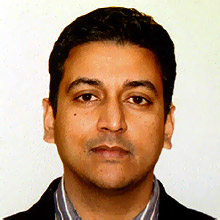
    Divya Radhakrishnan

    By A Correspondent


    It’s now public. Divya Radhakrishnan, former TME president, has formed Helios Media Private Limited, an integrated ancillary service company for broadcasters. Helios, which was launched by Ms Radhakrishnan on November 1, has roped in Bala Iyengar as Business Director.


    The vision of this company has been crafted on the premise that the growing number of TV channels, and a large list waiting to come into the country, are facing a key business challenge. While content is the primary scope of these channels, a lot of effort has to be invested in creating a robust ecosystem to run the business. This puts a lot of stress on the channel business head, resulting in dilution of focus from the key delivery, which is content. Also, proliferation will lead to further slicing of the revenue pie making the all-encompassing business model non-viable.


    Helios Media has set up sales, marketing, research and traffic management verticals, offering services as a composite piece or as a stand-alone, based on the requirements of the broadcasters. It has offices covering the geographies of Mumbai, Delhi, Bangalore and Chennai.


    Bala Iyengar

    The need for such a platform is amplified with the fact that Helios has already signed up three channels/ groups at the outset. M Tunes is India’s First Bollywood Music Channel in HD. Music Express, the second music channel from the same stable, will have a combination of music, trailors, short filmy programming on current affairs and retro music.


    Meanwhile, Helios Media is also the Asian arm of World Media Connect which markets Indian channels to the ethnic population based in US and UK. The channels under this portfolio are 6 channels of the Sun Network (Sun TV, KTV, Gemini TV, Udaya TV, Gemini Movies, Surya TV) and Punjjabi TV. Helios will be aligning with some more channels shortly.


    With the above contracts already in place, Helios is in advanced stages of negotiations with four speciality channels coming into India.


    Ms Radhakrishnan, who has been in the business of media management for the last 24 years, is the Managing Director of Helios Media. She has worked with leading advertising agencies like Publicis and Rediffusion Young & Rubicam. In her last assignment, Divya headed the Contact Practice at Rediffusion Y&R.


    Mr Iyengar, who has 14 years of experience, leads the Sales and Content syndication function at Helios Media. He has held senior positions at The Times of India, Sony Entertainment Television, Star Network and MTV. In his last assignment, Bala was the Business Head of Zoom.

  • Anchor: 5 reasons why Digital is the next big thing in OOH

    By Anirban Ghosh


    #1 Reach (The Last Mile Syndrome):

    There is no doubt that digital media is growing fast in India and also getting accepted among the clients. According to me, the only challenge right now is to position it aptly in the minds of the consumer through proper placement of the media. The last mile positioning of these media at the point of sale would be one of the key factors to get response and hence would be easy to measure also. This would definitely excite the clients to experiment with this medium to get a quick response within a short span of time.


    #2 Interactivity:

    This is probably one of the media which can interact with the consumer directly and effectively, and one of the major influential factors in buying any particular product. There are various ways to interact with the consumer, which can be controlled and impactful at different touch points to create the brand recall, perception and even to clear doubts at the points of sale.


    #3 Customization:

    Another uniqueness of this medium is that it can be used either in static or dynamic mode. It’s got the flexibility to customize the content exactly as per the need of the target group of any particular product, which would make the medium more interesting, exciting and engage the consumer to get better results.


    #4 Experimental:

    Out of the box innovative ideas experimented through this medium can be a lifetime experience for any consumer and the brand will be remembered for a long time. Touch screen technology can be used very effectively, so that consumers can converse with the brand and hence make the consumer compulsive about using this medium every time.


    #5 Measurability:

    If this medium is used effectively with strategy and at specific locations, then of course it can be measurable. I am sure it makes all the difference as to how do we perceive and position and compel the consumption of this medium at various situations. Although there is no industry currency in place, surely it can be done through some bold steps taken in future for the betterment of Digital OOH, which according to me will be one of the strongest media to reach out to consumers.


    Anirban Ghosh is the Senior Vice President, Adz Edge.

  • Dish TV makes it to Fortune India 500, 4 biggies exit list

    By A Correspondent


    Dish TV, the direct-to-home arm of Zee Entertainment features at #5 in the list of media companies in the Fortune India 500 roster of India’s largest corporations.


    Dish is at #437 in the overall ranking. Other media companies in the ‘500’ are:


    Zee Entertainment (#1 media, #256 overall), Sun Network (#2, #347), HT Media (#3, #383) and Network 18 (#4, #413).


    Those who don’t feature in this year’s list are Bennett, Coleman & Co, DB Corp, New Delhi Television and Deccan Chronicle Holdings.


    Last year, there were eight media companies in the list and their rankings were as follows:


    Bennett, Coleman (#1 in media, #162 overall), Zee Ent (#2, #263), Sun (#3, #367), HT Media (#4, $375), Network 18 (#5, #379), DB Corp (#6, #487), New Delhi Television (#7, #490) and Deccan Chronicle (#8, #493).

    Companies are ranked by their latest annual audited total income for the financial ending on or before June 30, 2011. Audited results declared before October 31, 2011 have been used.


    Clearly, Bennett, Coleman (or The Times of India group) would still be the numero uno media group, but since it is not a listed company and it reportedly had not declared its financial results by Fortune India’s cut-off date, it couldn’t be included in the rankings.


    The Fortune India 500 listing is part of the magazine’s December 2011 edition which is due to hit the market on Wednesday.

  • [PR Channel | By Invitation] CSR: More than PR, pursuing competitive advantage in the long run

    By Kavita Lakhani


    Governments can’t do enough – they need business to step in. Business can’t step in unless stakeholders see value. As tolerance for corporate malfeasance has dropped, expectations of good corporate behaviour have risen. There has been an increasingly louder voice from the public urging corporations and businesses to fulfill social responsibilities while making legitimate profit.


    As a result, authenticity and transparency have become vital for all companies. Adding a social dimension to the value proposition offers a new frontier in competitive positioning. If, corporations were to analyze their prospects for social responsibility using the same frameworks that guide their core business choices, they would discover that Corporate Social Responsibility (CSR) can be much more than a cost, a constraint, or a charitable deed – it can be a source of opportunity, innovation, and competitive advantage.


    Do the Right Thing

    One of the best ways to win hearts and minds is to do good. However CSR is about more than philanthropy – albeit that’s an important element. CSR is about being a responsible business. It’s about issues like good corporate governance, marketplace transparency, respect for staff, community involvement and reducing environmental impact. Corporates the world over have begun to take their corporate social responsibilities seriously. 64% of the Fortune 500 companies publish CSR reports as part of their annual reports, and 52% publish separate CSR reports. Many companies now include social and environmental commitments in their core mission statements. A growing number are also adopting ‘triple bottom line reporting’ in which social and environmental results are measured and reported next to financial results.
     

    In India, the Tatas and the Birlas have had a long and distinguished tradition in the area of CSR. As across the world, in India too, the culture of CSR is spreading for various reasons but probably not at the desired rapidity.


    Not just acceptable but desirable?

    In a survey conducted by Lowe Lintas (in association with MSN India and Cross Tab) earlier this year, an overwhelming 93% of respondents say businesses should bear responsibility towards society when making legitimate profit and 69% of respondents are ready to exert their influence through consumption habits and to pick products that are made by companies with agreeable CSR initiatives. Interestingly 56% respondents say that supporting brands that undertake socially responsible activities is as good as doing socially responsible activities themselves!


    Choosing which social issues to address

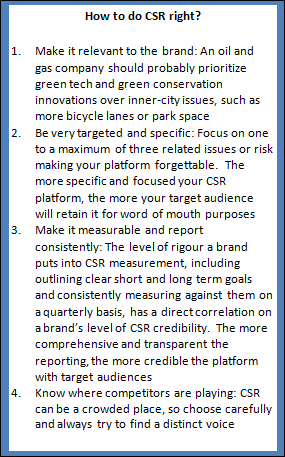
    Gandhiji said, “We must become the change we want to see in the world.” No business can solve all of society’s problems or bear the cost of doing so. Instead, each company must select issues that intersect with its particular business. Other social agendas are best left to those companies in other industries, NGOs, or government institutions that are better positioned to address them.

    There is nothing authentic about merely writing a cheque. The essential test that should guide CSR is not whether a cause is worthy but whether it presents an opportunity to create shared value – that is, a meaningful benefit for society that is also valuable to the business. Supporting a dance company may be a generic social issue for a utility like Tata Power but an important part of the competitive context f or a corporation like American Express, which depends on the high end entertainment, hospitality, and tourism cluster.

    While some may baulk at the idea of deriving commercial benefit out of a social responsibility exercise, the advantage is that when there is a business benefit to be gained through the exercise, the chances of the program continuing and getting larger increase. It’s understandable that the greater the business/image benefit to the brand, the greater the brand’s willingness to continue and even upscale the exercise.


    Don’t be shy. Share It!

    Our economy is increasingly characterized by easier access to information and speedier communication. And like never before, the general public is better informed and able to shape the success of multinational companies. Every day the world’s political and business leaders perform in front of voters, employees, shareholders and the general public. Every word is weighed, every deed dissected – in print, on air, online and in person. Public relations firms create campaigns that go beyond mere product and brand promotion to emphasize transparency, authenticity, good work, and ethical behaviour.

    We advise clients that the speed with which information is disseminated via the Internet can quickly influence a company’s reputation. And a company’s reputation is largely determined by its communication. It has been shown that it is in a company’s best interest to provide substantive information about its responsible initiatives while demonstrating efforts to address vulnerabilities and challenges. We help companies craft the message and carefully consider its tone, because this can considerably impact how the firm is perceived by its stakeholders.


    Indeed companies, in my view, should be up front about their commitment to CSR, about how they are measuring their efforts and how they are tracking against their commitments. Of course, there are risks. We live in a far more transparent world where companies need to be wary of sacrificing goodwill for short term publicity. But doing well by doing good, is not only accepted as good business practice, it’s becoming an imperative. That’s nothing to be embarrassed about.


    In summation, when looked at strategically, corporate social responsibility can become a source of tremendous social progress, as the business applies its considerable resources, expertise, and insights to activities that benefit society. Peter Drucker said it best. All successful businesses serve social goals. Profit is just an internal metric of how successfully you serve those social goals.


    Kavita Lakhani is President, LinOpinion Public Relations & Co-Chair, India, IPG Women’s Leadership Network

  • Mudra Max does OOH campaign for HT summit

    By A Correspondent


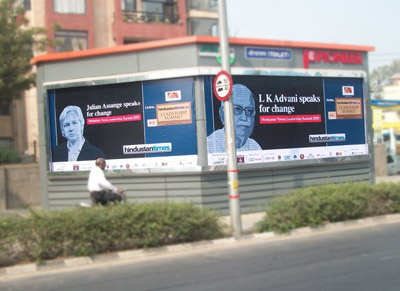
    Beginning November 18, 2011, Mudra Max – OOH executed an out-of-home campaign for the ninth edition of the Hindustan Times Leadership Summit held early in December in New Delhi. The campaign ‘When Leaders speak for change, change happens’ was carried out at all key junctions and arterial roads across Delhi/NCR. The Out-of-Home campaign was a mix of billboards, utility, gantry, drapes, bus shelters, office media and metro trains which were put to use with an aim to create the desired impact and communicate the message effectively.

     

    Hindustan Times is said to have wanted to bring a fresh perspective on critical issues facing the society today – impacting the future of governance, economic growth, education, cinema, and more. The challenge for Mudra Max-OOH was therefore to showcase Hindustan Times as a brand that creates awareness among its readers, that it is a newspaper that listens and avidly takes up public issues, and undertakes global-scaled initiatives such as the Leadership Summit encouraging debate and bringing about change by capturing issues and solutions that we face every day.


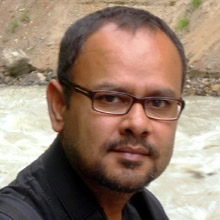
    Subhashish Sarkar
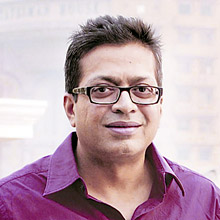
    Sanjoy Narayan

    Mandeep Malhotra, President, Mudra Max-OOH said, “We are proud to be associated with Hindustan Times for leading a powerful forum which is a unique congregation of leaders and opinion makers of global stature, raising the bar of discussion on critical world issues. By this mega act, HT has indeed shown its intent to make a difference in a changing world.”


    Subhashish Sarkar, Senior Vice President,Mudra Max-OOH, said, “The objective of the OOH campaign for the ninth Hindustan Times Leadership Summit, was to highlight and remind readers and informed citizens alike of this year’s event and high-profile participants. At the same time, the challenge was to maintain the exclusivity of the forum and not have the brand-image ‘diluted’ through casually selected media. The executed campaign bears this out in plenty.”


    Sanjoy Narayan, Editor in Chief of Hindustan Times said, “In modern India, change is constant. In the last two decades, it is said, India has changed a lot. So has the world around us. The changes that India faces are, thus, on several fronts – some domestic, others global. And all of these changes throw up for India, the challenge of keeping pace with them.”

  • Proximity India wins digital duties for 7UP

    By A Correspondent


    Proximity India, the youngest agency of Proximity Worldwide, will handle all digital initiatives including social media for 7UP Brand. Proximity is globally aligned to BBDO Worldwide.


    Commenting on assigning Proximity the account Ruchira Jaitley, EVP- Marketing, PepsiCo India said: “Proximity India is a part of the PepsiCo agency team. Proximity has done work award winning work with PepsiCo in the past and we were delighted with the strong creative work and strategic thinking demonstrated by Proximity India.


    Proximity is amongst most awarded digital agencies globally, and we look forward to being able to draw upon their international networks for learnings from across the world.”


    Proximity India offers talented communications experts with skills across the full range of relationship, digital and direct marketing services. The agency is focused on providing solutions and initiatives that are designed to change individual consumer behaviour by creating “acts not ads”.


    Commenting on the win, Ajai Jhala, CEO, BBDO / Proximity said: “7UP is BBDO’s founding brand and winning the digital account in Proximity’s first year of operations makes it that much more special. We are really excited about this win and are looking forward to delivering truly interactive digital ideas.”


    Ranjeev Vij, VP & Head, Proximity India added: “We can’t be more thrilled than working on this iconic brand and look forward to collaborate on big ideas and amplify them in everything that is digital today.”


    Proximity India has offices in Mumbai and Delhi and has worked on campaigns like Aviva Life Insurance for its “Great Wall of Education” initiative. This initiative has helped collect over two million books for the underprivileged children and the brand managed to get over 1.5 lakh fans for on facebook. BBDO/Proximity has won many accolade and awards for this campaign including recent one at Asia Digital Media Awards 2011.


    Proximity also manage digital work for Nicorette for which they launched a social application to support smokers quit on Facebook and have managed to get over 1.25 lakh fans on Nicorette India fan page within a span of 4 months.


    In the past Proximity network worked closely with other BBDO clients in India. Their idea for Quaker’s ‘mission to make India heart healthy’ won several awards in India and internationally, including the PepsiCo ‘Performance with Purpose’ Award.


    Apart from 7UP, over last couple of months Proximity digital team has added clients like Nissan, Visa and Doublemint to its portfolio.


    Early next year, Proximity will launch their proprietary Digital Lab Initiative in India, which is a multi-faceted program, designed to drive digital thought leadership and to provide a significant added value service to its clients.

  • Debrief: Cute, cool and sweet

    By Anil Thakraney


    Good, clean commercial from the makers of Nutrine Mahalacto. The candy is now 20 percent bigger in size, and this needed to be communicated in the new TVC. Frankly speaking, it’s a rather boring offer, but to their credit they have managed to make it sound like fun.


    Animation has been used to make the Nutrine Mahalacto candy bar come alive as a spunky little character. The candy spots a goblet of milk on the dining table, and using a straw as a pole vault, it dives in. It then gobbles down the milk and becomes bigger in size.


    Not an award-winner by any stretch of imagination. It’s a simple story, but it’s been cutely told, the animation is cool too and most importantly: the kids will enjoy it. They are the target audience for the brand, and so that’s all that matters. To me, the main appeal lies in the fact that they have made a very routine announcement appear interesting.


    Rating: (On a scale of 1 to 5): 3. Good animation.

  • Hazare rules. Absolutely!

    By Ranjona Banerji


    Such tremendous excitement there was in TV land on Sunday morning. Anna Hazare and his band of merry anti-corruptionists were going to have a public debate on the Lokpal Bill, the perfidy of the Congress and the lies of the government and Hazare was going on a token hunger strike as well.


    From 8.30 am, all other news in India and the world came to a standstill. Not even the tragedy in Kolkata could compete with this momentous event. First, we all went with Hazare to Rajghat, so he could meditate. In the irony-free world that is TV news, it occurred to no one that calling Hazare a ‘Gandhian” is a bit of a misfit. Gandhi, for all that he approved of abstention from alcohol, had never recommended public flogging for drinkers. That is just one example of course.


    As Hazare sat at Rajghat, crowds gathered at various venues in India, to show their solidarity with this anti-corruption movement. Breathless reporters could not contain their exuberance at being part of such a movement. “If my cameraperson can pan the crowd, at least 200 people have shown up”, said the reporter. Elsewhere it was as many as 1200 people (compared to 200 that’s a lot!).


    It took Monday morning’s papers to tell us that the biggest crowd was in Delhi (18,000) and Mumbai managed 4000.One newspaper even had the temerity to report on critics of India Against Corruption, something which TV finds very difficult to do.


    Meanwhile, the rest of the world kept turning but you never would have known it.


    **

    The Times of India in Mumbai has decided to make an impact on Mumbai readers by taking up various issues with a massive first page edit marking its commitment to the city. Hindustan Times meanwhile continues with its own special reports focusing on various aspects of city life. This means that other city newspapers will have to step up their games.


    The AMRI hospital fire may have vanished from TV on Sunday but the newspapers carried on with the stories and examined the shortcomings in hospitals across the country. Hardly surprisingly, the situation is almost universally dismal.


    **


    It was interesting to read about Delhi’s 100th birthday as the capital of India. (Although technically I think that’s 100 years as the capital as decided by the British. Delhi has had capital status in earlier times as well, if my memory serves me right.) Anyway, there has been some interesting writing about the old city, the new growths and migrations, the history, the quirks and the people. Delhi often gets short shrift compared to other Indian cities so this was a welcome change.


    **


    Absolutely: an adverb which means totally, completely, without exception, from absolute which means free from restriction, unadulterated, complete, outright. In which case, what does one make of the following conversation:


    Anchor to reporter: “Give us a sense of what is going on at the assembly/fire/stadium.”


    Reporter: ‘Well, MLAs have thrown chairs/ many people are dead/ India has won the series.”


    Anchor: Absolutely.


    I have nothing further to say on the matter. Absolutely nothing. Absolutely.

  • Salt Brand Solutions wins creative mandate for BSE

    By Shubhangi Mehta


    Small agencies are here to talk big, Salt Brand Solutions, the agency founded by adland stalwarts Mahesh Chauhan and Minakshi Achan earlier this, is proving the same. After winning the Kaya Skin Clinic biz earlier this year and the reality channel from RBNL and RTL more recently, it has now won the creative mandates for Bombay Stock Exchange (BSE).


    BSE Limited, the oldest stock exchange in Asia now popularly known as the BSE, was established as “The Native Share & Stock Brokers’ Association” in 1875. Over the past 135 years, BSE has facilitated the growth of the Indian corporate sector by providing it with an efficient capital raising platform.


  • Star gets set for Life OK…


    By Rishi Vora


    The channel was rumoured to be called Star Desh. A predictable name to ward off those on the hunt for info on the channel that was set to replace the beleaguered Star One.
     

    But the identity has now been revealed on billboards and social networks. It’s called Life Ok. The descriptor on the channel’s YouTube page says: “Life OK, a new television channel from 18th Dec, through its unforgettable and powerful stories brings to life its unique philosophy of ‘cherishing what you have’. Life OK reminds and invites everyone to value the things that well and truly matter in life like family ties, relationships, valuing traditions and peace of mind, while in the eternal quest for more.”


    Since Star India and its public relations agency are tightlipped on the details, we don’t know whether Star One will shut on December 17 or be phased out gradually.


    Life OK, it is learnt, will cater to a wide audience targeting Tier 1 and Tier II cities of the country. Special attention is being paid on packaging and presentation. The leadership team has former MSM Sony business head Mr Ajit Thakur at the helm. That, indeed, is testimony of Star India’s plans to launch a serious challenger brand.


    A high decibel marketing push is planned for the launch.

    But, is there a scope for yeta another general entertainment channel? Top of mind, of course is Colors’ success in the not too distant past. Madison Media CEO Punitha Arumugam explains, “Yes there is room for more channels in the GEC space. A case in point being the launch of Colors when one thought that the GEC market was saturated, Colors launched and expanded the GEC channel share. Also, given the high demand situation for GEC inventory today, there does seem to be room for another channel.”


    Colors was backed by differentiated content and big-ticket shows; aggressive marketing and distribution, which helped the channel to grab the No 3 position weeks after its launch. That, however, was introduced as Viacom 18’s flagship GEC channel. Will Life OK be a successful second GEC channel?


    There are instances where the second channel hasn’t delivered results as per expectations. Zee Next and Star One are a few examples. Historically, second channels have received motherly treatment from networks, as the strategy has always been towards prioritising investments towards flagship channels. There have been cases where successful shows on the second channel shifted to flagship channels… but, from what is seen of the new channel from Star, special efforts are being made to ensure differentiated programming.


    Dentsu Media CEO Divya Gupta believes that a new channel needs to create and carve a niche for itself. “Is there a need? Perhaps not from the consumer perspective, but definitely from the marketers’ perspective! Star would do well to have a successful flanker brand.To be successful, however, it needs a distinct and independent raison de etre, which is a big challenge. The plan to feature ‘Sach Ka Saamna’ may draw initial eyeballs, but longevity and distinctiveness remain a challenge.”


    Janardhan Pandey, AVP, Mudra Max had a different view. “It is hard to predict if the new channel from Star will succeed or not. The market keeps changing, so one has to constantly evolve as a channel. In the GEC space, success is rare for a new channel, but not obsolete.”


    On the programming front, several shows are set to go on air on the new channel. Sach Ka Saamna… Bhrashtachaar Ke Khilaaf, which was to initially feature on Star Plus, has been shifted to Life OK as a strategy to give that extra push to the channel. Others include Tum Dena Saath Mera, Meri Maa, Dil se di dua…Saubhagyavati Bhava and Devon ke Dev…Mahadev.


    The channel will launch at 12 noon on Sunday, December 18 with an eight-hour live ‘online concert’ featuring leading leading rock bands and artists like Shankar Ehsaan Loy, Euphoria, Agni, Shaa’ir and Funk, Indus Creed, Salim Sulaiman and Kailash Kher amongst others. Interestingly, the live event will happen only for audiences on the internet, signifying an attempt to woo young, digitally-inclined viewers.
     

    Ms Arumugam remarked, “The success of the GEC channel depends totally on the content and engagement they provide the viewer – so it does not matter whether it is the second channel or the umpteenth channel from the same network”


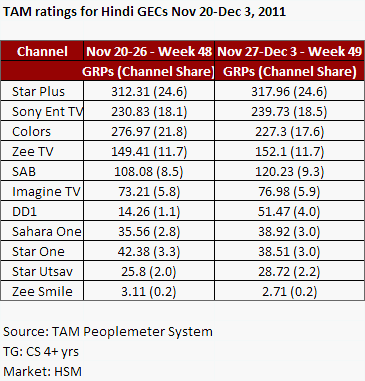
    While all eyes will be on the new channel from Star, there is no doubt these are interesting times in the GEC space, where there is healthy competition between No 2 and No 3 (see table alongside for GRPs and channel shares from November 20-December 3, 2011). If Life OK does have a successful launch, battles will intensify and healthy competition will help increase the genre further.


    With bureau reports

  • NCT Data Wk 49 ’11


    Channels: Aaj Tak, CNN IBN, Headlines Today, IBN 7, India TV, NDTV 24/7, NDTV India, Star News, Times Now, News 24 & Zee News
    Period: Wk 49 – Nov 27 to Dec 3, 2011
    Note : Analysis is based on the Telecast duration


    About TAM Media Research


    TAM is a joint venture between Nielsen Company & Kantar Media Research. Besides measuring TV Viewership, TAM also monitors Advertising Expenditure of Television, Print & Radio through its division AdEx India. Since 2004, it extended its presence in the PR Measurement & Analysis space for Corporate/Marketing Clients by setting up a separate division Eikona PR Measurement.


    In 2007, the joint venture introduced RAM (Radio Audio Measurement) service to track Radio Listenership for the Indian Radio Broadcast Industry. In year 2009, TAM launched a division, called TAM Sports that specializes in monitoring Sports Sponsorship ROI.


    TAM Media Research’s objective is to fuel media insights that will drive the growth of the Indian Media Industry.

  • Anil Thakraney: The TV gas chamber

    By Anil Thakraney


    It’s been a long time since I watched a TV debate. Because I found, much after a lot of torturous viewing, that it’s a huge waste of time. Might as well watch Bigg Boss 5. It’s far more interesting, at least the participants are fresh faces and they look glam too.


    Here are some reasons why TV debates suck big time on our news channels.


    1. The same dull and sleepy faces. The same spokespersons of various political parties hop from studio to studio each night. Each a big bore, and each clueless about his/her leader’s real agenda. And compelled to support any idiotic dictate from their bosses. If you are glued to your idiot box when people like Abhishek Singhvi, Chandan Mitra and that lady from BJP pontificate each evening, you badly need a life.


    2. Because news channel editors and their assistants are too lazy to make an effort to discover new voices, we are stuck with the same ‘experts’ each evening. Suhel Seth, Shobhaa De, Prahlad Kakkar, etc, are now telling us how to decode every news item. From terrorism to FDI in retail to the Kingfisher mess to harassment of women. In such a vast nation, is it so difficult to find new voices? And more importantly, voices of people we can trust and respect?


    3. The entire concept is fraudulent. Because the anchors deliberately pick people with extremely polarised views, the debate becomes an exchange of gas. Like a school boys’ discussion. No one ever concedes that the other guy may be making a valid point, even if he/she feels so. That admission will appear to be a sign of ‘surrender’ on a TV debate. So the participants keep yelping at one another rather than talking to one other. I particularly avoid watching debates on theBhopalgas tragedy. Because gassing levels shoot through the chimney on those days.


    4. The anchors, who are supposed to be neutral, almost always throw in their two bits, thus adulterating the show by injecting their own agendas and biases into the discussion. This murders the concept of a debate, reducing it to a charade. I have often noticed that the much celebrated, award winning anchors lose their patience with guest speakers whose views they don’t approve of. You call this a debate? I call it nautanki.


    Like I said, better spend the time watching a reality show. A porn star any day for me over a narcissistic, gassy TV anchor.


    ***


    PS: Everyone is appreciating Mr and Mrs Aamir Khan for going public with their surrogate baby. There is even talk of making the couple spokespersons for surrogate parenthood. Well, methinks we are giving the couple too much importance out here.

    Aamirbhai had NO option but to reveal the truth in the media. How else could he have explained the presence of a bachcha in the house, with missus having shown no signs of pregnancy? Trust some people to jump at making virtue out of necessity.


    Anil Thakraney is a Mumbai-based columnist and commentator and is a former adman and editor. He is Editor-at-Large, MxMIndia. The views expressed here are his own.