Author: mxm_india

  • It’s the Effies tonight

    By Tuhina Anand


    The stage is set for Effie Awards 2011 which will be held at Race Course, Mahalaxmi in Mumbai, tonight. The awards are much respected and coveted as they recognize effective advertising – ie, an award for advertising that has worked in the market. The client of the year and agency of the year are the Effies most watched for.


    The Effies 2011 were different even in judging as there were four sessions altogether, three in round one including one in Delhi which was for the first time and then round two. It is learnt that there were 60 judges in round one and 20 in round two and out of this number 75 per cent comprised the clients’ side who were involved in judging. The plan is now to take Effies case studies, a popular segment, toDelhinext year.


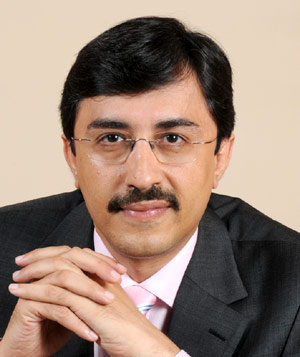
    Ajay Kakar, Chairman Effie 2011 Committee and CMO – Financial Services, Aditya Birla Group, on what the fraternity should expect from the Effies tonight, said, “The judges have cast their votes. When 60 luminaries from the advertising and marketing fraternities put their collective minds together to evaluate the work that has worked in the market place, you can expect nothing short of the ‘best among the best’ to gain its rightful recognition.”


    Work that has rightfully left its mark in the sands of 2010-11 will be unveiled at the gala awards night.


    “Effie 2011 has a host of records/firsts, to its credit be it the number of entries received (300), the number of judges (60), the number of clients in the jury, the judging in Delhi and the number of agencies (20) that contributed to the short listed entries. I am sure we can expect a few more pleasant surprises at the awards night,” concluded Mr Kakar.


    Also read:

    All set for Effies on Dec 14

    http://www.mxmindia.com/2011/11/edging-towards-effies/

  • Hindu on expansion (and consolidation) mode

    By Tuhina Anand


    The Hindu Group seems to be in the midst of activity with plans of new launches, expanding footprint and getting new people on board. There has also been talks of  The Hindu shutting its printing press in Delhi to rationalise its operational costs. K Balaji, Managing Director, Kasturi and Sons Limited talks to MxMIndia exclusively and shares details on company’s growth plan.


    Talking about The Hindu beyond the Tamil Nadu market, Mr Balaji said, “We have traditionally been strong in Kerala and Andhra Pradesh with the possible exception of Hyderabad. We are the No.1 English Daily in these markets. In Kerala we have editions out of Trivandrum and Kochi. We are strengthening our presence by adding Kozhikode early next year. Although Kerala is dominated by Malayalam dailies, we are seeing a trend in English language aspiration. People want to learn the language for personal and professional reasons. This we feel will grow the English readership in that state. We are well poised to nurture that market.”


    He added, “Andhra Pradesh in general is turning out to be an English readership aspirational market, and we feel with our core strengths we are growing at a good rate. We do have plans to supplement these markets with growth in Bangalore and Hyderabad, which will further consolidate our position as the largest read English newspaper inSouth India.”


    It is learnt that The Hindu in all probability is looking at its Kozhikode launch on January 14, 2012. It is also learnt that Smart Buy (The Hindu BusinessLine supplement) with focus on metro is expanding its footprint. Talking about Smart Buy, Mr Balaji said, “This product was launched three years back and the response for it has been encouraging and we plan to take it to the next set of cities in the south such as Coimbatore.” It is learnt that the Coimbatore entry for Smart Buy is slated for December 14, 2011.


    It is also leant that The Hindu is roping in a Vice President for its circulation, a post which has been vacant for a while. Though details on the new appointment could not be obtained, Mr Balaji, responded, “This is part of the strategy to strengthen the senior management team to take the organization to the next level of growth.”


    On the rumours to shut the production facility in Delhi, he said, “We are not shutting down our Delhi Edition. Our production facility at Delhi has been catering to the entire Northern India. A growing circulation and capacity constraint meant that the paper was reaching late in several markets. Earlier this year, we entered into a strategic alliance with Hindustan Times and as part of the tie up we are utilizing their printing facilities in the north to the service to our readers. We have already started our printing from Mohali, Allahabad and Noida, and expect to add Lucknow to the list.”


    “Yes, we have charted a growth plan to consolidate existing markets as well as tap into new markets for both The Hindu and Businessline. It is too early to comment on our plans for growth,” concluded Mr Balaji.

  • Gouri Dange: Surprise! The non-Simipering talk show

    By Gouri Dange


    I quite like Love to Hate You (Star World 7pm). There, I’ve said it – I actually like something on Indian television. And no, it’s not only about the eye-candy host chap. His cuteness helps, but there’s more to it than just that. I find him a relaxed non-badgery host, almost old-world if I can use that expression, in the way he totally avoids the two syndromes that afflict most Indian TV hosts – which are: a) insufferable peacock preening, b) equally insufferable toadying-to-the- guest.


    In Love to Hate You (what’s with the ugly title lettering, though?), the host brings on a celebrity guest and an ordinary guest who dislikes the celebrity. The ordinary one gets a chance to speak his/her mind about why they don’t like the person’s work; and what really works about this is that they come up with pretty incisive, convincing and articulate stuff about the celeb that they don’t like. The other nice thing is that the celeb takes all this on board, and defends him/herself pretty ably. And yet, the makers of this show avoid the temptation of letting it all descend into a slanging match (a la TV debates) where the two participants circle each other with low growls, fangs exposed and hackles rising.


    The two people, and their host (the dishy one) actually talk, no one shouts, and the camera doesn’t subtly go into those ‘kill, kill, kill’ kind of angles used to cover wrestling matches. For the first time, I see people not interrupting each other, and actually looking interested in the other’s viewpoint, absorbing it, and then replying instead of rubbishing the point.


    The host plays mediator at times, completely at ease with himself and his guests, and never harangues. Mercifully, there is no Simipering, I mean simpering, and no Daah-ling-ing of anyone. If he knows the celeb guest well, the host makes that clear in a fairly matter-of-fact way, rather than using that as a chance to create an instant club of ‘us’ness. I like it!


    The format allows the ‘hater’ to first mouth-off at the ‘hatee’, without actually facing the hatee. And with very specific reasons (not just ‘your books suck’ or ‘your singing is awful’, but with examples of the suckiness or tunelessness.) The two are then put together, and the hatee manfully (personfully) sits through some of the criticism. Obviously the hatee too is either chosen for his/her maturity, and does not pout and say provocative or defensive stuff back. The hater is sometimes drawn into trying his/her hand at what the hatee does, and sportingly admits that it is hard work! And yet the whole thing doesn’t seem overly rigged in any direction.


    There should be a new genre-label coined for shows in which the celeb is put in the dock… it’s not just a talk show, it’s a ‘talk your way out of this’ kind of show, right?


    What is astounding about Love to Hate You, so far, is that one actually sees both guests backing down and shifting positions gracefully at times. The host is not invested in making anyone feel horrible, and has not developed cutting-off and putting-down or cosying-up into a fine art.


    (Contrast this with the ‘debates’ in which it’s usually Delhi Harpies versus Mumbai Sharpies, all conducted by Ms Hector or Mr Harangue, and you’ll know why I am so taken with this new show.)


    And Tears In The Kitchen

    On another note, did I say earlier that I find the combo of food and tears and runny noses on MasterChef (Indian and Oz) unpleasant? Well, that was tame stuff, apparently, now that MasterChef USA is here, with bleeped out words from judges, clanging of garbage pails in which not-good preparations are hurled, and many of the contestants probably back to bedwetting at nights. So now tears, snot and bladder malfunction too, in the kitchen… Please, spare me the drama and let me go next door and have a masala dosa.


    There is a new amusing sign that MasterChef is creating a whole new downstream market of buy-buy-buying Indian consumers: People who can’t cook or usually have someone cooking their meals, are suddenly re-doing their kitchens into replicas of the MasterChef sets. There’s wall-to-wall buff steel everywhere, six- and eight-burner stove tops, industrial-sized ovens, knives and choppers with which you can fell a buffalo. Words like claypot, tureen, coulis, hop, are being bandied about with eager-sophistication.


    I recently visited one such home, and sat watching a hapless chicken going round and round on a giant rotisserie, stubbornly refusing to get cooked. The host-cook, a man who can’t fry an egg, watched grimly on, while his wife wistfully fingered the take-away menu of the kabab-korner down the road. On my way home, I stopped at the bhurji cartwallah and had the best, made in minutes on a dented tava atop an old biscuit tin.


    Naming no Names is the mid-week column where novelist, columnist and counsellor Gouri Dange presents her tongue-in-cheek view of our world. The views expressed here are her own.

  • The Anchor: 6 things to remember when hiring mid-levels in an agency

    By Anil Nair


    I believe that these qualities are required at any level in our profession. While at senior level one would look at few more qualities and at junior there would be some less expectation, but largely these qualities are what I look for in an advertising professional.


    #1 Imagination: There has to be an ability to look beyond the obvious. Imagination is not just required for creatives but it’s a requirement for the industry. Our job poses challenges every day and if one is content to follow the prescribed method then there can be no growth. One has to have a rich and interesting imagination to build compelling communication.


    #2 Hunger: It is not just hunger to scale to the next level in the hierarchy. There has to be hunger for knowledge, insight and for better work. When a person believes that his appetite is satiated, that’s practically the end of his career. There has to be hunger to take things to the next level in all aspects of life.


    #3 Perspective: This is a rare quality among many people today. There is a tendency to follow things as they are given. Being perceptive helps in thinking beyond the obvious which is a requirement for everyone, be it creative, servicing or planning. This will be an important tool to help in growing the business.


    #4 Clarity: Whatever the point of view, if one has coherence in thought it will take a mid-level person to greater strengths. They are involved in building a communication platform for the client and there is a need to have logic and clarity in thinking to help the clients do better.


    #5 Emotional stability: By this I mean there has to be strength of character and ability to handle situation under duress. There is pressure from the person you report to, people whom you look up to and people who report in to you. I have seen many people crack under pressure and many times good talent become an emotional wreck. Again this is a rare quality and difficult to find in today’s times.


    #6 Anticipation skill: In this profession, if you do things now it will only lead to crushing you. You need to keep an eye on the ‘next’ and this can be developed by way of knowledge and interactivity with the industry. This is a complex world with cut-throat competition and the need is for the ability to anticipate and be prepared to face it.


    Anil Nair is the Chief Executive Officer and Managing Partner of Law & Kenneth.

  • [PR Channel] Life after Niira Radia: PR needs good PR (and smart ideas)

    By Ullekh NP, Kausik Datta and Malini Goyal


    In the end, Niira Radia’s exit from the public relations (PR) business came in a flurry of press releases. It was just the way she would have liked it – no ungainly media scoop to quell, no unruly mob of television crews to wriggle her way of out of (and she has faced a lot of these in the last year or so), and finally, no probing questions to handle.


    Her laconic public statement was followed by far more effusive press releases from the Tata Group and Reliance – the country’s largest corporate houses and the anchor clients of the agency Radia founded exactly 10 years ago, Vaishnavi.


    Radia often subordinated “her personal and family interests in favour of her clients’ priorities,”,said Tata Group chairman Mr Ratan Tata in a release. RIL has agreed to place some 30 Vaishnavi executives in its internal communications team. And soon, in what a senior executive of a Mumbai-based company describes as a “somewhat late face-saving bid”, Tatas announced Vaishnavi’s PR replacement: Rediffusion and Edelman.


    Ms Radia’s decision to shut down Vaishnavi and its other subsidiaries like Neucom brings to close a chapter which marked Radia’s rise from your average behind-the-scenes publicist to national recognition and most would agree, infamy.


    But it is also a chapter that the fast-growing Indian PR industry would like to forget in a hurry. After all, it is not often that a publicist gets so much publicity and that too for the wrong reasons.


    Earning a Bad Name

    So was Radiagate, as it became known, a loss of face for corporates or for the PR industry? Opinions vary but many PR executives, perhaps not surprisingly, claim that the scandal was a worse reflection on PR. The scandal unfortunately made Ms Radia the de facto public face of PR, at least for a while. A senior executive at a Mumbai-based conglomerate rues that in the case of ms Radia, corporates let PR folks “dominate” them.


    Industry insiders claim Ms Radia distorted the way PR is practiced. “Unethical lobbying got disguised as PR. And the industry as a whole suffered. There is suddenly an overhanging cloud of suspicion,” says one.


    Another longtime practitioner says the alleged involvement Ms of Radia in the scandals did not surprise the Indian PR industry. “Rather, the industry is saddened by the way corporate big guns showered praise on the lobbyist when she shut down her outfit, Vaishnavi.” A Delhi PR executive says his company decided not to pick up accounts of people with tainted reputations, one of them being former McKinsey chief and former Goldman Sachs board member Mr Rajat Gupta. ET on Sunday couldn’t independently verify the claim. Not everyone is so pessimistic though. Mr Robin Banerjee, chief finance officer of Suzlon Energy, doesn’t think the “Radiagate” was a negative for PR.


    Long Road Ahead

    But in spite of Radiagate and its resulting “loss of face”, the 20-year-old industry is growing rapidly. Assocham expects the PR industry to grow around 30% annually – four times faster than the growth in developed markets. “PR as a business can only go up, simply because conflicts in society grow,” says Mr Madan Bahal, managing director at Adfactors Public Relations, India’s largest PR agency according to The Holmes Group, a global tracker.


    PR veteran Mr Dilip Cherian, founder, Perfect Relations, says PR is destined for huge growth because there are “extraordinary levels of interest in matters corporate, and so the flow of information and its management are crucial”. Mr Arun Sudhaman, partner and managing editor of The Holmes Report values the industry at $200 million. Others peg it at Rs 500 crore.


    Edelman chief Mr Robert Holdheim calls the Indian scenario a “perfect storm” that will result in a fast-track growth for the PR industry which, according to industry figures, employs 30,000-40,000 people across nearly 2,000 big, medium and small firms. He adds, “We see episodes like Radia’s everywhere.” A PR professional who has worked across continents and cultures, Mr Holdheim should know.


    Corporate Fights Drive PR Expansion

    Indian PR has come a long way since the early ’90s when liberalisation led to the birth of Indian PR. The PR industry’s growth was also fuelled by the growing ambitions of Indian corporates and increasing competition between Indian companies to capture public mind space. A long-time industry watcher recalls that PR professionals shed their tags as mere ‘couriers’ of press releases and began planting stories in the media when a Mumbai-based corporate house shared information of financial difficulties of its rival with the media in the ’90s.


    PR firms also played their part during the corporate wars of the ’90s. In fact, when British American Tobacco (BAT) tried to take over ITC, a newspaper ran a story with a headline “Good vs Perfect”, referring to the two public relations firms that represented the tobacco companies: Good Relations and Perfect Relations. In 2004, when the Ambani brothers fell out, much of the battle over the Reliance empire was fought through the media. But there’s a twist here. Much of the ammo came directly from the two rival groups. It was after the battle was over that outsiders doing big PR jobs matured as an idea, at least with one of the two rival groups.


    But the real fillip for the PR industry came when the global PR firms started looking at India. Ms Prema Sagar, founder, Genesis Burson-Marsteller, recalls that a decade ago, foreign PR firms weren’t interested in India. But as India’s growth story gained global favour, international PR firms made a beeline for India. “They realised they needed to be represented in this country and understand how media operates here and got into affiliations.”


    Mr NS Rajan, MD at Ketchum Sampark, which was formed after Ketchum picked up majority stake in Sampark PR last year, says in his experience, a global partnership maximises opportunities for an Indian firm and together the partners can service their clients better.


    WPP unit Burson-Marsteller bought out Genesis PR in 2005. Other foreign PR firms that made their Indian foray include Publicis, Weber Shandwick, Ketchum, Ogilvy & Mather, Fleishman Hillard, and Edelman. According to The Holmes Report, expansion of digital and social media in the Asia-Pacific belt has led to PR thriving in the region. Ms Sagar cites a plethora of reasons for such alliances: “Some entrepreneurs feel that they have grown the company up to a point they wanted and they would like to cash out and do something else or retire from working life; others felt threatened by international PR firms because of the international experience, strategic value and depth of domain knowledge they bring to the client.”


    A Cultural Change?

    Mr Sudhaman, however, argues that the talk of a consolidation in the industry thanks to the influx of companies from elsewhere is premature. “Small firms stand a great chance of survival if they are good and focused, and there are many,” he says.


    Besides, he adds, it is not just the local firms, but MNCs, too, that have many lessons in business and practice to learn. “Entry of foreign firms may lift overall standards, but handling India’s complexities isn’t easy,” he says emphasising that there is a lot that MNCs can pick up from Indian firms that follow best international practices.


    Adfactors’ Mr Bahal expects local players to have an edge over foreign companies. Adfactors is one of two big PR houses still wholly owned by local entrepreneurs. The other one is Mr Cherian’s Perfect Relations. In fact, not all foreign forays into the country were tales of success. For instance, College Hill of London has shut operations and the joint venture between Vaishnavi and Financial Dynamics did not last.


    One question that most industry executives were unwilling to talk on record was: will the entry of MNCs reduce unethical lobbying? Unlikely, says an executive. After all, these are part of big groups that are successful in countries with a high rate of corruption such as Italy and Russia.


    Plus, they are all highly focused on results, rather than the process of achieving them, argues a Mumbai-based PR professional, asking not to be named. Radias will continue to thrive in the industry, but in different names, contends the communication head of a large metal company who also asked not to be identified.


    Cheque Please

    One constant gripe that practitioners of this spit-and-polish art has is that they don’t get paid enough by the clients they service. In India, most clients work with PR agencies on a retainer fee basis. In the West, PR companies get paid like lawyers and software code houses – on a billed hour basis.


    In India, agencies get retainer fees-there’s no standard fee-per-head ratio, which makes over-servicing a very real scenario, say industry seniors, who also talk about proliferation of agencies and under-cutting.


    Industry insiders say employees also need to be paid much more to ensure that agencies are able to attract and retain talent. “Remuneration for mid-level and entry-level staff, concedes a top official of a Delhi-based PR firm, requesting anonymity, has to go up much more.


    It’s a growing area of concern for the industry. “The most important issue which the industry should address is that of talent shortage. The industry should invest in creating talent with a view to meeting the ever-increasing market,” says Mr Sunil Gautam, founder chairman of Hanmer & Partners who sold out his company to MSL group three years ago. Cherian puts the percentage shortfall in talent at top-level management in India’s PR firms at 70%.


    Beyond Traditional Media

    With the growth of social media, the very business of PR is undergoing a sea change. Ms Surekha Pillai, an independent communications consultant, talks of an old school versus new school of PR. The old school is obsessed with the media and focuses on the number of newspaper clippings or video clips. That’s media relations, not PR, say many young PR executives, who seem to chaff at the limitations of the old model.


    What is the new school? “I call it integrated communication,” says Ms Pillai, adding that PR must work hand in hand with companies to build brand equity across media platforms from traditional media to the virtual worlds of Twitter and Facebook.


    Genesis’ Ms Sagar agrees that multiple stakeholders are involved here. “With integrated communications becoming a reality, corporations don’t care where the Big Idea comes from – advertising, public relations, digital or any other area of the marketing communication mix,” says Ms Sagar.


    What about the age-old charge that PR is all about spin? Mr Cherian says that there is no getting away from the fact that there an element of spin in PR, which is ultimately about management of an organisation or a person’s image. Pillai notes that none of the big brands or names became big brands overnight. “There is great public relations behind all of them, and there is nothing wrong with it.”


    Bringing in more transparency to lobbying could be part of a solution, contends Mr Cherian. One of the early movers in Indian PR, Mr Cherian expects globalisation to be a major catalyst for PR in the years to come, for both local and foreign companies. “After all every company wants its appropriate share of shout,” he says. But, for the moment, what PR needs is good PR, and a really loud holler at that.


    Source:The Economic Times

    Copyright © 2011, Bennett, Coleman & Co. Ltd. All Rights Reserved

  • Leo Burnett bag two Young Guns bronzes

    By Shubhangi Mehta


    The winners for Young Gun Awards 2011 have been announced. Leo Burnett was awarded 2 Bronze Bullets and 2 Finalists, Happy Creative awarded one Bronze Bullet and Ogilvy&Mather managed 1 finalist, from India.


    Leo Burnett India has been awarded Bronze for Tide “Fold a Stain” Campaign in Art Direction categorty, team Ganesh Nayak, Amod Dani and a Bronze for Bajaj Irons “Fold Aide Box” Packaging in Design category,team Nadine Pereira, Zainab Karachiwala, Payal Juthani, Anirban Sanyal. Heinz “Sketchup” managed to be in the finalist category, team, Ganesh Nayak, Amod Dani.


    KV Sridhar aka Pops said, “it’s always good when young people are recognised since it is an assurance not just for the present but for a great future as well. We are happy that Leo Burnett worldwide has also won YoungGuns 2011 Network of the Year which proves that it is the agency encouraging the youth”.


    Ogilvy & Mather’s Anupama Sirsalewal, finalist for Unbearably Sour, Gun, Snake, Gullotine in the Illustration Campaigns category.


    Happy creative has been awarded Bronze Bullet.


    Agency Tally for India is as follows:

    Leo Burnett:                2 Bronzes + 2 Finalists

    Happy Creative:           1 Bronze

    Ogilvy:                             1 Finalist

  • INMA 2011: Readership, Rate Cards & a small newspaper’s success

    By Tuhina Anand


    On Day 1 of INMA-5th South Asia Annual Conference, there was a CEO Roundtable which saw discussion on the topic: ‘Have we reached an end to readership growth?’ The session was moderated by Bhaskar Das, President, The Times of India Group and on the panel were Sanjay Gupta, Director, CEO and Editor, Jagran Prakashan Ltd, KN Tilak Kumar, Joint Managing Directorand Editor, Deccan Herald, Shahrukh Hasan, Group Managing Director, Jang Group Pakistan and Tariq Ansari, MD, Mid-Day Multimedia Ltd.


    Mr Das started the session by saying that it’s a known fact that the newspaper business is undergoing challenging times and one of them is about finding a balance between a content that caters to a diverse age group at many Indian homes and remaining relevant. He also remarked that if one is bothered about physical readership when a consumer is accessing media through various touch points, shouldn’t virtual readership also be considered? He also questioned the merit of measurement vis -a-vis frequency and periodicity.


    Mr Ansari said, “The truth is that the readership of urban English newspaper has reached a plateau and the growth in terms of numbers in SEC C and D but the question is if that category is also the one which advertisers would be interested in and then the answer becomes doubtful.”


    The session also looked at growing readership in a new market with an old product as well as raised question on the need to show yoy growth of readership where in actuality it should be yoy growth of advertiser?


    In all this grim scenario, Titak Kumar of DH brought the example of Karnataka language daily which has been seeing growth since both income and literacy levels have gone up.


    Another staggering point that gives players to think about is the pricing of a newspaper. While in India, the you can get a newspaper even at Rs 1.50, Shahrukh Hasan from Jang Group pointed that in Pakistan the paper would cost anywhere between Rs 15-23 and yet not cover its production cost.


    The idea that emerged was to innovate and seize the opportunity in the industry today. Also if multiple touch points is the new reality how does one update, upgrade and monetize from these various platforms.


    In another session, the panel discussed, ‘The Advertising Challenge: Space Selling in the Age of Multiple Platforms and Vanishing Rate Card’. On the panel were, Ambika Srivastava, Chairperson, ZenithOptimedia and Vivaki Exchange, Bijou Kurien, President and Chief Executive, Lifestyle, Reliance Retail, Jayen Mehta, GM, Marketing, Gujarat, Co-Operative Milk Marketing Federation, Rohit Gupta, President, Sony Entertainment Television, Bhaskar Das, President, The Times of India Group and Aritra Sarkar, VP, Strategy, ABP Pvt Ltd.


    The panel discussed if the rates cards have a value and Ms Srivastava endorsed this view along with Bhaskar Das though he differed that the rate card can be in different format and packaged differently to create a value proposition. Mr Gupta however giving the TV industry side of the story was of the opinion that in his industry rate cards doesn’t apply as the window of opportunity is less in television and rates vary from deal to deal and client to client.


    There was another session on ‘Good Editorial Content and Credibility are Good Business Also’  where Harisvansh, Chief Editor, Prabhat Khabar took the audience on the journey of success of the newspaper which is through doing hard hitting, pro people stories that have brought transformation in the lives of a common man. For them its trust and credibility that has paid off and just like Indian Captain MSD who is also from Ranchi like Prabhat Khabar both have emerged victorious by being dependable.

  • MxMIndia Print is coming to town… soon

    Happy to announce the completion of 3 months of MxMIndia. We launched on Onam. September 9, 2011.


    Happy to announce that we are now a 20-member team. Full-timers, near full-timers and active associates.


    Happy to announce that while our focus is on Marketing and the Business of Media, we are strong on content issues ignored by most others: creativity, journalism. Soon: more


    Happy to announce that above all things, our primary allegiance is to our readers. We are governed by a Code of Ethics and each MxMer is a signatory of that


    Happy to announce that we write about those who do not advertise and not necessarily write about those who do


    Happy to announce that we don’t have just text. Our You Tube channel has 75 videos


    Happy to announce that the refreshing feel of MxMIndia.com will soon be seen in print

    2012.Q1


    Want to be part of the great new journey?

    Editorial: Johnson Napier (johnsonn@mxmindia.com); Sales: Alok Kapuria (alokk@mxmindia.com)

    Subscription: Insiyah Rangwala (subscribe@mxmindia.com)

  • Sony as GEC #1? I don’t speculate, says biz head Sneha Rajani

    The phase three to four weeks from now could be an interesting period for the GEC industry. Mainly because Sony, having tasted success with KBC and a couple of fiction shows (Bade Achhe Lagte Hain and Kuch Toh Log Kahenge), is all geared to topple Star from its No 1 position.  Colors is not too far behind; in fact both Sony and Colors have locked horns at the second position, on 236 GRPs. Colors’ Bigg Boss opened with 4.3 TVR and the general sense is that the show hasn’t delivered as per expectations, especially after a high-octane marketing activity.
     

    For Sony, it’s an opportunity to get to the top. The channel is launching two new shows – Dekha Ek Khwaab and Parvarish – in prime time, replacing KBC. It is clear that the channel is betting big on fiction again. Several attempts have been made in the past but none has worked out well until the channel’s recent hit – Bade Achhe Lagte Hain.


    If the two new fiction shows (Dekha Ek Khwaab starting November 21) succeed in its plan to become household names, we might see a new genre leader. The channel has tasted success in the ’90s, but that was some time ago. The focus for now is on the present and the leadership team is hoping to make the most of this opportunity.

    MxM India’s Rishi Vora speaks to Senior VP and Business Head Sneha Rajani on expectations from the new movements.


    Q: What are your expectations from the new show ‘Dekha Ek Khwaab’ on the ratings front?

    I never speculate.


    Q: At least tell us what you’re expecting from it on the launch day, or the first few weeks so to say…

    Obviously, since we’re launching the show, we expect the numbers to be good.


    Q: Do you expect it to match the kind of viewership KBC has produced, to keep that momentum going?

    Absolutely not! That is not our expectation. And it would be foolish to think that immediately at launch, it’ll deliver the kind of numbers KBC has. That would be a very false expectation to set.


    Q: Why would you say so?

    KBC is a popular show, it has been around for a while and it has created a special interest among the viewers across India. For our new fiction show, to expect it’ll deliver or match up to the popularity of KBC, would be asking for too much, honestly.


    Typically fiction takes time to settle down as against reality formats which have the ability to spike up the ratings of the channel at launch at the start.


    Q: Which means the GRPs is likely to see a dip in the coming few weeks?

    Yes, there will be a drop in GRPs post KBC. At least for some time till the fiction shows settle down.  But, that’s as per plan.


    Q: When do you see Sony becoming the No 1 channel in the GEC line-up?

    Like I said, I don’t like speculating. I don’t think we are going ahead with the strategy fixated with the idea of being No 1. We are going ahead with the plan to focus on fiction. Bade Achhe Lagte Hain and Kuch Toh Log Kahenge have delivered the goods, and I’m sure Dekha Ek Khwaab and Parvarish – our two upcoming shows will also do well in primetime.


    Q: What is the split ratio you like to maintain between reality and fiction?

    Fiction 80. Reality 20.


    Q: You’re No 1 in the prime-time band. And all it takes to be No 1 overall is just one good show, because as far as your current standing goes, you’re just 30-35 GRPs behind Star.

    Yes, the gap is not very big. And it is our endeavour to get there.


    Q: Three months is a decent time to get there.

    I will not speculate on three months or six months. As long as we get there, I will be happy.

  • Case Study: Being Human, Being Digital

    Aim/Measurable Objectives

    Being Human wants to position itself as a lifestyle brand that aids the twin causes of healthcare and education for the underprivileged. The need of the hour was to create customer engagement through a large synergistic online and offline community. To be able to do this, it was imperative to build a communication strategy making this relevant to the youth of India.


    Strategic Insights

    Being Human Foundation is a charity trust started by popular Bollywood actor Salman Khan.


    The star has maintained a very low profile about the foundation. In order to increase the reach and corpus of the Foundation, Khan has undertaken initiatives such as Being Human art and Being Human merchandise. According to Google trends, Khan was the most searched Indian male celebrity in 2010. Moreover, the brand ‘Salman Khan’ connects well with the Indian Youth, kids and masses as a whole. To connect with its digitally enabled audience, Being Human required a strong social media presence. Energising communities was the need of the day.


    The key deliverables in order to achieve this scale were: To be able to touch the lives of more people, that can make a difference, to take an iconic brand and make it into a cause, a movement. To be able to mobilise the youth, give them something to believe in, and energise them to contribute their time, money, attitude to touch another less privileged lives. To ensure that ‘original being human products’ are available on the digital space to be able to reach a much wider audience across the globe


    Strategy and Execution

    The key marketing objective was to create a digital footprint for Being Human, which would allow Being Human supporters from across the globe to engage with the brand.


    The first order of business was to create the official social media presence.  There were a plethora of ‘unofficial’ Being Human pages across the social media networks, and it was important to first establish credibility and transparency, and secondly clearly differentiate this from a Bollywood gossip and fan page. Customer Centria created Being Human Facebook and Twitter pages. While Facebook, remains the key engagement channel used to launch new initiatives, campaigns, Twitter drives conversations, builds awareness and engages influencers.


    The next milestone was to create the website, beinghumanonline.com. The site tells stories of the lives that it touches, and encourages all its supporters to live and spread the message.  The very essence of the content is user generated and thus by its very nature viral.


    In order to make the brand accessible to more and more people, Being Human tied up with BookMyShow.com to enable national and international delivery of Being Human merchandise like t-shirts, bracelets, watches etc., to carter to huge the demand


    Successful Campaigns that were run:

    During a special screening of Khan’s recent movie ‘Ready’ for underprivileged children of Being Human, high level of engagement and buzz was generated through a live tweet via #beinghumanlive. This hash tag was trending on twitter for the entire day in both Mumbai and Delhi.


    To create awareness about the pirated Being Human merchandise available across the country, Being Human literally took to the streets and showcased on its social media channels – the sellers it interrogated and put the wearers of the pirated merchandise on the spot.


    An interactive Facebook application called the ‘Anti Piracy Squad’  was conceptualised where 10 different levels of squads represent how many users of the app, have ‘recruited to the cause’


    A YouTube video channel named Being Human Live was created where video bytes of Khan and his fans against tee piracy were populated. Being Human Fans also voiced their anger against tee piracy through video testimonials. Educational content (updates and videos) were created to build awareness about the FB application.


    Results

    Current size of community on Facebook: a whopping 7,59,896 likes. On Facebook page with a weekly network reach over 57 lakhs.  About 80% of these Facebook fans are in the age group of 18 to 34 years, which clearly defines the kind of connect that it had with the TG. On an average over 50,000 people participate daily on the page and Being Human’s reach has been made global with people from 20 countries across the globe participating on the Facebook page. There are more than 8,000 followers on Twitter.


    On an average 21,500 users are active monthly on Being Human’s engaging ‘Anti Tshirt Piracy Campaign’ app on its Facebook page. About 80 per cent of these app users are in the age group of 18 to 34 years.

  • The Anchor: 8 indications when you know it’s time to bid goodbye to your agency

    By Ajay Kakar

    These are the views of a person who has invested 15 years at the agency end. And for the last six years he has been at the client side.


    These are the views of a marketer who strongly believes that the role of an agency partner is invaluable to his success and the success of his brand.


    #1 When you have the frequent need to say all the best to exiting key members of the agency: A brand is built over years. Passion and consistency are two critical pillars in this journey. And if an agency loses/shifts your key team members frequently, that’s bad news.


    #2 When you have many people servicing your account but you do not remember the name of any: You do need mere hands and legs. To quote David Ogilvy, you need people who know more about the brand than even the client. People who leave an impression on you and make an impact on the brand. People you can’t afford to forget. Nothing less will do.


    # 3 When you have meetings only at times of a brief initiated by you: You need Brand Custodians and Brand Stewards. People who are thinking of your brand all the time. And not only when you have a felt need. Else you will always feel compromised.


    # 4 When your agency only discusses advertising or 30-seconders with you: In today’s world you need to surround and engage your fickle and distracted consumer at all times. And if your agency doesn’t help you with that they may be contributing to your losing your customer.


    # 5 When your agency does not meet you after a campaign to enquire about the results: A marketer does not need advertising. He needs advertising that sells. He is evaluated on results. If your agency is not helping you get there faster, cheaper or better, why will you value them?


    # 6 When your agency doesn’t ask for an annual hike with confidence and more so if your agency does not propose a performance-linked incentive plan: A true partnership must be a win-win for both parties. And if your agency is contributing to your success, why would they think twice before asking for your just rewards. Is it because they are not performing?


    # 7 When an agency doesn’t meet you at regular intervals to seek a structured

    feedback/evaluation: If your partner doesn’t have a road map with clearly defined milestones, there is a good chance that you are not headed in the right direction.


    # 8 When an agency does not aspire to win industry recognition/awards on your brand: In our business passion is everything. And if your partner is not excited to do pathbreaking work for your client work that gets noticed and talked about the brand is possibly not in safe hands.


    Ajay Kakar is CMO – Financial Services, Aditya Birla Group


  • Big FM appoints Vivek Malhotra as head of marketing

    By A Correspondent


    Reliance Broadcast Network Limited (RBNL), on Tuesday, announced the appointment of Mr Vivek Malhotra as Head, Marketing for its radio brand, BIG FM. Mr Malhotra will be responsible for developing the overall brand and communication strategy for the business and implementation rollout across the stations. He will be closely associated with the product, operations and revenue teams.


    Speaking about his new role, the immediate challenges and the shift to a new medium altogether in an email interaction with MxMIndia, Mr Vivek Malhotra stated: “Radio, as a medium, appeals very differently and does indeed have a connect with the audience at a very personal and emotional level and it is amongst the most inclusive media formats in the country.”


    “Accordingly, the challenge to truly differentiate and connect more closely with the audience is distinctly different. The leadership position enjoyed by the network added to the fact that radio is welcoming the most interesting times ahead, made this an opportunity very few would miss” he added.


    In a prepared statement, Reliance Broadcast Network stated: “We are delighted to have Mr Vivek Malhotra on board. He brings with him vast experience across marketing, media research, trade management, sales support, AFP solutions, distribution and corporate strategy. With a strong understanding of business and tremendous creativity, we are confident Vivek Malhotra will play a key role in leading the team to continue the development and growth of the radio business.”


    Prior to joining Reliance Broadcast Network, Mr Malhotra was the senior Vice President – Marketing, PR and Research at Bloomberg UTV. He played an integral role in setting up the entire marketing system and repositioning the product to new brand values, along with the additional responsibilities of distribution planning and coordination. Vivek Malhotra also worked with STAR News Network, wherein he is said to have not only led their trade engagement and research unit but also acquired valuable experience around regional products like STAR Majha.