test
Author: mxm_india
-
Shailesh Dobhal to be Resident Editor for BS, Delhi
By A Correspondent
 In a move unrelated to the resignation of Mr Sanjaya Baru as editor, Financial Express executive editor Mr Shailesh Dobhal is set to join Business Standard as Resident Editor for New Delhi on September 26.
Mr Dobhal is currently looking after features and special sections in the newspaper and was part of an all-new team that joined the paper with editor M K Venu in 2009.
Mr Dobhal has worked with The Economic Times for four years from December 2005 to November 2009 and as Associate Editor with Business Today from June 2001 to December 2005.
Mr Dobhal fills up a vacancy left due to the exit of Mr Suveen Sinha from BS to Business Today recently. Although there was no official word from either Business Standard or Financial Express, the forthcoming move has been confirmed by senior members in both organizations.
Picture courtesy: The Financial Express -
Reliance takes it to the heartland with career counselling
By A Correspondent
BIG Live, the rural Intellectual Property division of Reliance Broadcast Network, has launched its new rural IP, BIG Disha, across key markets in the Hindi heartland. Travelling across cities, the property will have each city witness two-day career guidance programmes which aim to provide an opportunity for youth to make informed decisions about their career choices. This programme reaches out to students across small towns located around Bhopal and Kanpur and will continue till Sept 30.
The property has already partnered with Gillette for this activity.
With limited opportunity, poor infrastructure and students often having to walk miles to get to school, the Indian education system comes padded in tough conditions. The bigger challenge lies after they finish their education, where limited options and lack of awareness with zero guidance leaves them with the career decision that is most often not the best. BIG Disha is an initiative with the endeavour to bridge the gap and ensure the youth are making appropriate career choices through appropriate career counselling, said a statement from the company.
The programme has four key elements:
- A self assessment session for youth through a specially designed personality assessment questionnaire so that they can understand their interest areas and career options which suits them
- A motivational session which provides them the necessary impetus to help them believe in themselves
- A career counselling session by career launcher experts to expose and guide them towards potential career options and
- Personality development tips to help them improve on grooming and overall presentation
Mr Vineet Mittal, Business Head  BIG LIVE, Rural, said, Through this initiative we want to offer students an opportunity to be able to take well informed career decisions which is their right. Working alongside were marketers who are increasingly reaching out to the rural audiences and BIG LIVE’s rural initiative comes as an answer to suit requirements of reach and depth. BIG Disha is further viralled through our radio network 92.7 BIG FM, which ensures excellent amplification and better reach and participation. Our strategy is to leverage our media network to establish meaningful dialogues with our consumers and while providing exclusive engagement opportunities for brands riding on it.
-
Survey finds: Coverage, not tariff, wins over mobile customers
By A Correspondent
Good coverage above all other attractive schemes has been established as the unequivocal reason for subscriberspreference for a service provider of mobile telephony, according to a survey conducted by Opsbuds, the Bangalore-based provider of customer experience management and market research solutions for service providers.
From its recent survey, which adopted a three layered assessment of the minds of the mobile phone service users, Opsbuds found that bundle offers such as packaging handsets with free connection and widespread retail outlets are not a deciding factor for selecting a service provider by mobile phone users. On the contrary, good coverage has been established as the single top consideration across the circles.
Opsbuds  survey, coincidentally coming soon after the introduction of the Mobile Number Portability(MNP) system, however, revealed several other factors that worked to bond service providers with the subscribers.
The top of mind reason for preferring a service provider is good network coverage for 80% of the respondents which is the basic expectation of the service. The unaided reason for as many as 37 percent is brand image. Interestingly only on being aided a reason as little as 23 percent indicated innovative tariff plans to choose a service provider. Even in the case of prepaid customers on being aided low denomination recharge (~15%) and full recharge (~13%) option featured as a reason. Therefore, there seems to be a consensus among subscribers that pricing is not a decision maker, wonder why the Telcos are at a price war hitting their ARPUs.
Opsbuds detailed telecom report provides reasons for customers selecting a specific service provider. The quantitative research used the simple random sampling method over a statistically representative sample size of 2,408 mobile users.
The survey was conducted across the major telecom circles and metros in India  Bombay, Chennai, Delhi, Kolkata; Circle A (Gujarat, Karnataka, Andhra Pradesh , rest of Tamil Nadu, rest of Maharashtra, Goa), Circle B (Punjab, Rajasthan, Madhya Pradesh, Chattisgarh, Kerala, Lakshadweep, Haryana, rest of West Bengal, Uttar Pradesh  West (UPW) Uttar Pradesh  East (UPE), Arunachal Pradesh, Sikkim) and Circle C (Bihar, Jharkhand, Orissa, Assam, North East, Jammu & Kashmir, Himachal Pradesh).
The objective of the study was to enable the service providers to develop and implement market strategies in the current market scenario.
Another phenomenon that is contrary to popular perception is the delta in usage between Airtel and Vodafone seems to be significantly higher than otherwise perceived with Airtel (67 percent) and Vodafone (18 percent). Given that Opsbuds adopted the simple random method without introducing any quota bias; this could well be the case. Opsbuds will investigate this phenomenon in their next report.
The fact that good coverage is the major reason across age, gender and circles will be a wakeup call for most of the service providers, who tend to be under the impression that brand and good tariff plans alone will make them sail through the customers mindshare. Also, an interesting finding was that IDEA/RCOM was among the top three performers in terms of brand image ahead of Tata, MTS and Uninor.
Speaking at the launch of the report, Mr K K Cariapa, Chief Buddy, Opsbuds said, We felt the need for bringing out a comprehensive report on what Indian consumers expect from telecom service providers, and some of the findings are very encouraging for the service providers. With the Indian customer evolving and becoming more tech savvy, telecom providers need to address the market very differently.
HIGHLIGHTS OF THE TELECOM REPORT Nearly 82% of the respondent are in 21-40 year age group Market share of service providers in the study area 64% of the respondents are utilizing pre paid connections Respondents using AIRTEL are 67% followed by VODAFONE 18% Service provider wise location of the users share Users from Circle-A prefer AIRTEL, BSNL, UNINOR and users from Circle-B prefer AIRTEL, VODAFONE, RELIANCE , IDEA & TATA and the users from the Circle-C prefers AIRTEL connections. The preference in choosing service providers depends on the location of the users Service provider wise prepaid/postpaid users share The preference in choosing service providers depends on the type of connection required (postpaid/prepaid) by the users. Post paid connection users prefer AIRTEL, VODAFONE & TATA; whereas prepaid connection users prefer other service providers. The overall share of post paid users is 64% and 36% pre paid. Service providers wise users age group The preference in choosing service providers depends on the age group. More than 50 % of the users across all service providers were in the age group of 21-30 years Users in the age group of <15 years prefer Idea, users in the age group of 16-20years prefer BSNL, TATA DOCOMO& UNINOR and the users in 20-30 years age group prefer Idea, UNINOR and AIRCEL connections. Users in the age group of 30-40 years prefer AIRTEL, VODAFONE, users in the age group of 40-50years prefers AIRTEL and the users in 50+ years age group prefer AIRTEL, BSNL and Reliance connections. Reasons for preferring a service provider Good Coverage is the major reason followed by Brand Image, & Innovative service plans. (Customized Packages, Closed User Groups, tailored service packages etc.) Bundling handset with free connection and wider spared stores have little impact. Circle wise reasons for preferring a service provider Good coverage is the top reason for preferring a service provider in all the circles Brand image is the second top reason for preferring service provider in all the circles except in Circle-A , in Circle A the second top reason is customized services Range of services and customized services are the 3rd & 4th top reasons in overall, Circle-B and Metro Circles. But in Circle-C the 3rd top reason is Low denomination recharge, Full recharge is the 5th reason and range of service is the 10th reason. Type of connection wise reasons for preferring a service provider Irrespective of type of connection required, Good Coverage is the top reason for preferring a service provider. Brand Image is the second top reason for preferring service provider when prepaid connection is required but if postpaid is required Innovative tariff plans is the 2nd top reason. Innovative Tariff Plans is the third top reason for preferring service when prepaid connection is required and Brand Image is the third top reason for preferring service provider for postpaid connection. Range of services is the 4th top reasons in post paid connections and for the prepaid connections low denomination recharge is the 4th top reason. Gender wise reasons for preferring a service provider Good coverage is the top reason for preferring a service provider for all the genders Brand image is the second top reason for preferring service provider for females but the second top reason for males is customized services. Range of service and low recharge are the 4th & 5th top reasons respectively for males as well as females. Age group wise reasons for preferring a service provider Good coverage is the top reason for preferring a service provider for all the age groups Brand image is the second top reason for preferring service provider for >30 years of age group users and customized services is 2nd top reason for users in the age group of <30 years. Range of service is the 4th top reason for all the age groups except <15 years of age group users. For <15 years of age group users the 4th top reason is value added services. For this age group users Brand image is the 5th top reason for preferring service provider. Service provider wise Rating of reasons for preferring a service provider Good coverage is the top reason for preferring a service provider for all the users except those who use the Uninor. Brand image is the second top reason for preferring service provider in AIRTEL and VODAFONE users , Customized services is the 2nd top reason in BSNL, RELIANCE, TATADOCOMO and AIRCEL users Range of service is the 4th top reasons in VODAFONE users and LOW RECHARGE is the 4th top reason in AIRTEL, IDEA and TATADOCOMO users Influence of dimensions in preferring the service Airtel, Vodafone and BSNL were the top 3 Performers in terms of coverage (49%), breadth of services (26%), and cost effectiveness (16%). The bottom three were Tata, MTS and Uninor Airtel, Vodafone and Idea/RCOM were the top 3 Performers in terms of Brand image (16%). The bottom three were Tata, MTS and Uninor -
A look at how Maruti Suzuki's tall boy was established as the market leader WagonR The Journey of a Leader
Company: Maruti Suzuki India Ltd (MSIL)
Execution period: 1999-2010
Aim and Objectives: To establish WagonR as the market leader in the Indian passenger car
In the year 1999, the first tall boy design was launched from MUL (MSIL Udyog Ltd, currently MSIL Suzuki India Ltd. – MSIL). The product offered the Indian car buyer great utilitarian benefits and practicality along with best-in-class space and good mileage. Hence, keeping in line with the product promise, the brand was positioned as a car full of ideas highlighting the brand’s practicality and versatility. MSIL invested in a series of TVCs (television commercials) that were built on the same proposition.
From its inception, WagonR was ahead in many aspects. It was the first tall boy design and also the first to offer safety features in its class. It also was a first in offering consumers the flexibility in the choice of fuel; it gave the Indian car buyer the dual fuel option.
And while the brand has faced tough challenges over the years, it has successfully overcome them in its journey to becoming one of the leaders in the segment. A case in point was the uniqueness of the design which posed a challenge for WagonR when it was launched. The Tall Boy Design was the first in the Indian compact car segment which at that time was considered to be ahead of its times. Initially the shape took time to get accepted by car buyers. However, brand WagonR looked to create relatability with the audience in order to communicate the benefits of this uniqueness in shape and the overall value the car offered to the consumers. WagonR was positioned as India’s first Multi Activity Vehicle (MAV). This followed the roll out of two brand campaigns Challenge Boredom and Feel at Home in the years 2000 and 2001 respectively.
The Multi-Activity Vehicle positioning gave the brand some traction in terms of highlighting the product’s versatility but it was still some distance away from being relatable to the consumers. The brand slowly started getting accepted by the very rational Indian consumer. However, the brand’s potential in terms of sales was yet to be realized fully.
Being a pioneer, MSIL looked towards a product makeover and a change in stance in the way the brand was talking to its audience in order to keep pace with their needs and expectations. A new campaign was launched in 2002 Interesting People  Inspired Engineering; marking the first time any car brand tried to tap into the buyer psychographics.
A minor model change hit the roads in 2003 and successfully managed to meet the expectations of the changing consumer and addressed his needs in terms of style and sophistication. This became the inflection point in WagonRs history and the brand never looked back. Not only did the brand gain great traction in sales it also garnered high positive disposition in the consumer minds. Further research into the Brand buyers indicated that those who bought the brand were buying it after a careful research basis their needs and other market offerings. Essentially, the buyers were smart when picking the car of their choice  WagonR. This prompted the change in the positioning plank from being a Multi-Activity Vehicle which was functionally led, to a car brand For the Smarter Race, which was emotionally led.
This positioning was sustained from 2004 to 2006 till a facelift of the product was introduced. Also WagonR portfolio got a new variant in the form of the LPG Duo, during this time, marking the birth of the first dual fuel option in India. WagonR had a great ride since 2003 with sales increasing at an above industry average of 40% CAGR till 2007. (Please refer to the chart II below). WagonR became one of the industry leaders clocking highest sales in the passenger A2 segment and could assume leadership position with its pioneering stance in several aspects.
The key idea that emerged after discussion: In the rapidly changing Indian car market, there was an influx of brands coming in. By the year 2008 there was increasing competition in the A2 segment which offered more choices to the Indian consumers. The new age consumer wanted to experience superior products. WagonR, on the other hand, continued to take forward MSILs legacy of being a trusted brand. Trust and reliability were not associated with the newer players in the market. This fact won WagonR many loyalists.
However, it also became imperative for a leading brand such as WagonR to stay ahead of the competition and continue to be a pioneer brand. Also, despite the increasing competition, the brand never lost ground, in terms of sales, the brand continued to be consistent (refer to Chart II) only reinforcing the voice of the customer. Nevertheless, for a brand that achieved good numbers, and steadily rose, it was important to create a distinct appeal and imagery.
Solution:Â To counter the rising competition, the brand positioning was strengthened further by leveraging the leadership aspect, highlighted by sales. Therefore, the new communication plank for the brand became Smart Leader.
The brand continued to retain its core value of being Smart while confronting the challenges on the consumer front
a) To make the brand more aspirational
b) Consumer needs evolving beyond rational benefits to appeal value;
and the brand/product front
a) Contemporary offerings
b) New product launches.
It was now essential for WagonR to maintain its leadership position and the brand standing in the market by reinforcing the core brand values and sharpening its positioning. Clearly, WagonR was the largest selling car in the segment. Hence Leadership was added as a new dimension to the core promise of the brand -Smartness. The Leadership stance was extended beyond just numbers. This was also, true to its pioneering spirit. A shift was seen from a fact based leadership to thought based leadership with the intent to move to a more sustainable brand platform Thought Leadership. To reinforce this platform, MSIL did interesting outdoor activities across major cities and at airports and followed it up with similar messaging in magazines and placards.
Innovations: To further the brand assets the 3 new initiatives were deployed
1) Brand Ambassador – Shashank Srivastava, chief general manager, Marketing, MSIL, said that the target group was the middle or upper middle class families, who look for space and sound engineering, as well as buyers looking for a rational and performance-oriented vehicle. As the brand ambassador, Madhavan was seen as a geographically neutral face, and WagonR’s contemporary, pragmatic and balanced brand values were seen to resonate well with his personality.
2) Brand Mascot  Mr Wizer becomes the first mascot in the Indian Passenger Car Industry
3) Think Big Challenge  A national property created on the lines of Thought Leadership, furthering the stance of the brand as a smart leader.
Challenges and impediments:Â The Tall Boy Design of WagonR was the first in the Indian compact car segment which at that time was considered to be ahead of its time. Initially the challenge was to get the shape accepted by car buyers.
By May 2010, WagonR had sold 8.5 lakh cars to the Indian consumers and stamped its authority in the A2 segment. At the same time the Brand and Engineering (product) teams were aware of the fact that consumers are fast evolving with rising aspiration levels, esteem and status needs, growing demand for experience and indulgence, coupled with the fact that they were becoming more self-expressive day by day.
An all new WagonR with a complete facelift on a technologically advanced platform was conceived. Following were the findings of an exercise conducted to gauge the perception of the product in the market
1) The new car seen as a more contemporary offering.
2) The pleasure points of the old WagonR were carried forward in the new model  (Comfort, Safety, Space and Reliability) – Smart Understated Performance.
3) The key difference is in the level of detailing and finishing.
4) The additional dimension of a luxury feel was there, but, at the core it was still the Smartest Choice.
Expected key deliverables: For the launch of the ‘All new WagonR’, the challenge was to infuse newness into something one has always known. With a Full Model Change (FMC) and an all New WagonR, the marketers had the following broad objectives.
- Retain leadership position and consolidate market share
- Make the brand contemporary – Highlight the dimension of SMARTNESS which is contemporary and create an aspiration for the brand
- Reinforce the brand values by building an imagery to suit the evolving consumer while making the sustainable and distinctive brand positioning to thwart competitive launches
The All New WagonR was launched with a new campaign, keeping the inherent brand associations of Leadership, Smart and Popular intact. The new campaign, the Blue-eyed boy, leveraged the popularity of the car (favourite car) and the need to build aspiration which was now being supported by the added dimension of luxury in the product.
The Blue Eyed Boy campaign highlighted the All New WagonR and announced the arrival of the new avatar of India’s favourite compact car. It also described the feeling of being the centre of attraction and adulation that the consumer experiences because of the smart choice that he has made. The Blue Eyed Boy was also a salute to consumers who contributed to making the WagonR a celebrated and the favourite car brand in the country.
Learnings: Today, India is home to more than 40 million passenger vehicles (Source: SIAM & Industry Excerpts). The Indian Passenger Car and Commercial Vehicle manufacturing industry is the seventh largest in the world, with an annual production of more than 2.6 million units in 2009 (Source: SIAM & Industry Excerpts). Naturally, global manufacturers are increasing their investments across the various automobile category to tap into the growing demand. Very evident from the fact that India has witnessed more number of passenger car brands and models in the last decade than over the previous 5 decades. The table below gives the basic segmentation of the passenger car industry.
The passenger car market in India is one of the fastest growing markets of the world, and from the car buyers perspective it’s a market which offers plenty of choices across all segments (especially A2) and a wide range of brands. Please refer to the chart I below for the sales in the overall passenger car market as well as individual segment sales.
Analysis: WagonR is the pioneer in terms of its tall boy design in its category, and getting accepted by consumers was not an easy task but it managed to do so by constantly understanding what people wanted thus refreshing its communication strategy from time to time. It began positioning WagonR as India’s first Multi Activity Vehicle (MAV) and then moved on to the positioning of For the Smarter Race to the Blue-eyed boy when it underwent a full model change thus conveying its newness yet maintaining its leadership stance.
*This case study is sourced from MSIL
-
GQ India unveils its Style Manual 2011 for men GQ solves dress codes in 2011 manual
By A Correspondent
Men’s fashion and lifestyle magazine, GQ India unveils Style Manual 2011, a guide to dressing for Indian men. The issue attempts to be a complete head-to-toe style guide with advice to enable the modern Indian male to discover his own expression of style. The issue will hit the stands at a price of Rs 200.
Mr Che Kurrien, Editor, GQ India said, The GQ Style Manual is a collection of our best and most indispensable fashion advice under one roof  specifically directed at the Indian male. The idea behind bringing out a Style Manual is to help men figure out their own paths to stylishness, and as a means to that end, to demystify the sometimes esoteric world and confusing rules of men’s fashion. Mr Arjun Rampal is someone who exemplifies a distinct sense of personal style, which made the choice of our cover star very easy.
The issue will definitely appeal to the young urbanites who care about their dressing. GQ India’s Fashion Editor, Mr Vijendra Bhardwaj said, How one dresses is an integral part of how a man is perceived in today’s image-driven world, and having a sharp sense of style is a powerful weapon. Sharing his views on working with Mr Rampal, he added, Arjun has an imposing personality. He enjoys his clothes and his clothes flatter him. His wardrobe for the GQ India Style Manual shoot showcases different elements of men’s fashion and style, with a notable focus on ethnic wear and demystifying what’s informal and formal.
-
Desperate to know the news? Video News Alert can bring it to mobile phones Breaking news now fresh on mobiles with Tata Docomo
Phone addicts not content with all that their gadgets give them can now also get breaking news alerts with Video News Alert, a new VAS service launched by Tata Docomo, the GSM brand of Tata Teleservices Limited, in partnership with Network 18, India’s largest network of business news channels.
The first-of-its-kind service will provide breaking new s alerts in the form of video clips which can be streamed, viewed and downloaded by 2G and 3G subscribers. Subscribers can stream and download video clips, as well as search and view news stories. The service also lets subscribers express their liking for a story, share opinions on it, participate in polls and interact with the story to voice their feelings and concerns.
The exciting new Video News Alert service is a push service via SMS. What’s enticing is the ability to get news in video format. Tata Docomo has always been at the forefront of offering services that are relevant and affordable. We are pleased to partner with Network 18, our content aggregators for this initiative, said Mr GurinderSingh Sandhu, Head of Corporate Marketing at Tata Teleservices Limited.
Customers can avail of this service by SMSing  VIDEO NEWS to 53333, following which a subscription confirmation SMS along with a link to access video news will be sent. Subscribers will then receive three video alerts every day. The charges for data access are 10 paise for 10 Kb and there are no subscription charges to use this service. To de-activate the Video News Service, customers can dial 155223 or SMS STOP videonews to 155223.
-
In India, where education is valued and is sought after, and as a sector is fairly liberalised, scholarly publications are set to do well Educational publication sector will see more ads
By Akash Raha
With the growth of the evergrowing middle class, and spread of education to the grassroot levels, educational print publications seem to be doing fairly well in India. According to AdEx figures, education sector print advertising in H1 2011 saw a jump of 4 percent vis-vis the same period in 2010. However, the top two categories advertising in this segment were Educational Institutions and Coaching / Competitive Examination Centres which contributed to 90 percent of this sector’s advertising. MxM India explored the reasons for the growth in advertising in this segment even as advertising in several other sectors continues to shrink, and the reason advertisers from other categories stay away from education sector print advertising.
It is indeed true that India is a country where education is valued and is sought after. The population of the aspiring middle class to is constantly increasing. India as a country has always been serious with education, says Mr Anindya Ray, Vice President, Lodestar UM, Academics and good job are a sign of ultimate success. Alternative careers like sports, singing, adventure related sports etcetera, are not the staple for the vast Indian middle class. Even though of late such alternative areas are coming up, but a basic level education of graduation is a must. Hence education will always be on the growth path. In fact, during the worldwide recession of 2008/2009 when India was having a soft market situation, when all other advertisers were holding on to their media spends, education sector still showed a growth and was the leading spender.
Mr Premjeet Sodhi, President, The Collaborative, Lintas Media Group too touched a similar note and said,Education as a sector is fairly liberalised and there is a lot of private/corporate interest in the sector. A large and growing youth population provides an opportunity for private enterprise in India and hence this sector is on the anvil of significant growth. From the advertising perspective, its prominence in advertising shares is mainly because of the huge number of companies that contribute to the advertising of the sector. In the future, more companies are expected to start advertising. Besides, even the existing ones are expected to increase their advertising spends. However, it remains to be seen if these spends will be retained within the print sector or will television and digital take more and more of it. The recent trends do suggest that it will be a challenge for print to continue to grow in this domain. If one were to estimate the growth not in terms of volume but in value then the trend may already be unfavourable for the print category.
As the number suggests, 90 percent of the advertising in this segment come from Educational Institutions and Coaching / Competitive Examination Centres. The rest 10 percent comprises Computer Education, Vocational Training Institutesand other categories. When asked why advertisers from other categories don’t see this segment as an opportunity to advertise and get to the young and educated Indians, Mr Dinesh Vyas, Business Head, MEC India said, Advertisements gain a lot from the editorial content of a magazine. It might be true that educational publications are doing well and is a medium to reach young-educated Indians but several categories might be a misfit in the publication. A consumer buys educational magazines to know more about education and an advertisement about diamond sets or deodorants would be a total mismatch. While advertising, it is important to match the environment of the magazine
When asked the same question, Mr Ray said, Yes it does make sense for advertisers from other segments to advertise in this sector  theoretically though. However in our country, education is a serious subject and entertainment, technology, consumer durable industries do not want to be in that atmosphere. More so, because there is not a single minded education platform in India and the best that you have are the various education supplements with mainline dailies.
In a burgeoning population of educated Indians, the scope of growth in this sector is likely to soar in the years to come. With it, the advertising revenue will rise too and the sector will grow further. However, in the world of digitisation, the current players will have to throw caution to the wind and plan well ahead of time.
According to Mr Sodhi, as the AdEx data suggests, The education sector is highly dis-organised and fragmented. There have been attempts by various education brands to monetise either their education materials/periodicals, events and their chain of training centers, websites, etcetera by associating with other advertising brands. However, I am not aware of many formal education sector print that can be consistently be used as an advertising media by others.
How much the sector grows in future, and whether or not it will put up good show at IRS and other measurement researches, only time will tell. But currently, going by the media planners verdict, this sector seems to be giving good value for money for its advertisers even though, some semblance of organization will only help the medium on their bullish ride forward.
-
Salman Khan is guaranteed to give results, says a pilot celeb track study by Brandscapes Salman, Sachin star in celeb track
 By Ritu Midha
However cynical one might get, celebrities do help a brand get noticed. Brands realise it and the proof is in the number of celebrities endorsing cold drinks, detergents, mutual funds, hair colour, personal care products and even a brand of battery. The scenario gets even more interesting in case of mens innerwear, where one can see almost every brand in the category promoting itself on the back of a celebrity. The belief perhaps is that consumer will wear the brand his favourite hero wears, or maybe it is the only way to create a differentiation in a category.
Brands obviously do not spend crores on getting celebrity brand ambassadors and endorsers just to be noticed, the ambition is for the celebrities brand image to rub off on their brand. Current practice to select the celebrity are largely guided by judgment based on certain markers such as popularity with press, number of success stories (films/ matches/ achievements), net worth, fees they command, etc.
Interestingly, a recent celeb track pilot study conducted by Brandscapes Worldwide throws up refreshing findings. The celeb track model measures celebrities on four parameters, namely popularity, image attributes, media presence, and affiliation with category/brand.
Parvati Mahadev, Insights Consulting Partner, Brandscapes Worldwide explains, Celeb Track decodes the standing of different celebs on critical dimensions that underpin a brand – trust, appeal and relevance. By doing all this Celeb Track takes cognizance of the fact that there is more to selecting a Celeb than just his or her current popularity rating.
She adds, Celeb Track works in two ways first, it allows the marketer to decode consumer opinion about celebs in a scientific and hence reliable manner. Secondly, it recognizes the fact that there are multiple facets to a marketing communication strategy, and celeb endorsements should help to highlight the desired facet.
A few key insights from the pilot study:
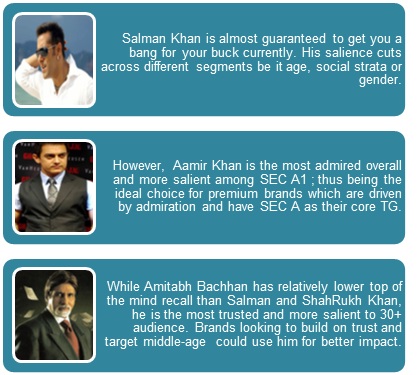
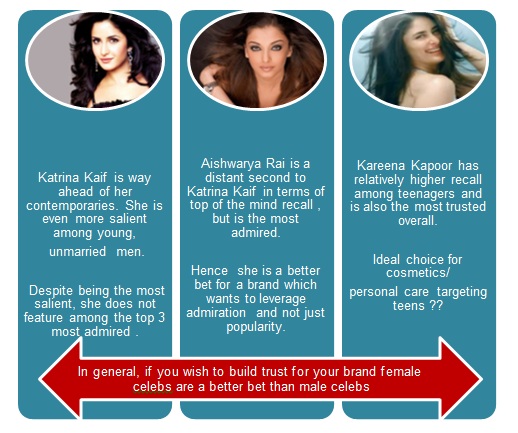
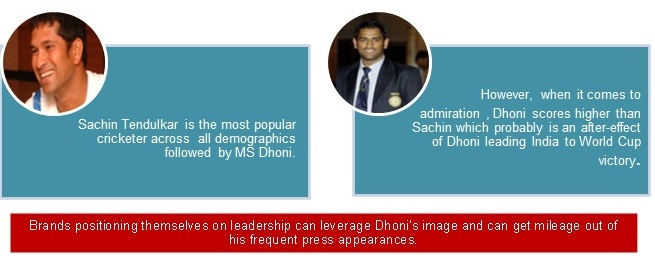
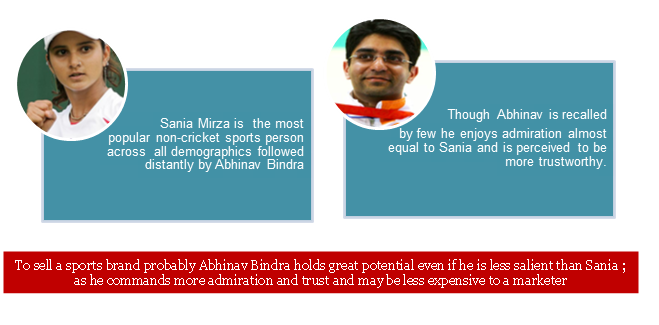
The study was conducted among 1,418 people, and the methodology was telephonic communication. It covers celebrities under four categories: actors, actresses, Cricketers and other sports person. Sixty-seven percent of the respondents were male and 33 percent female, and respondents were in the age groups and demographics both married (46 percent) and unmarried.
Photographs: Fotocorp, Tables and images in them: Brandscapes Worldwide
-
Zee News launches My Earth My Duty Campaign, Let’s Plant Hope Planting a tree to make a difference, Zee News style
By A Correspondent
After the successful revamp of the Zee News’ brand positioning from Zara Sochiye to Jazba Soch Ka, driving the thought leadership stance to action, Zee News has rolled out its award winning CSR campaign “My Earth My Dutyâ€, with the objective of evoking people’s thoughts while motivating them to take concrete action towards mitigating the effects of climate change, by planting close to 1 crore saplings on September 12. The objective underlined the channel’s new brand philosophy of “Jazba Soch Ka†or The Power of Thought, resting their belief in the fact that when a thought awakens, it awakens the nation.
On Monday, September 12, the Zee News tree plantation drive was flagged off from Leh in the presence of Mr Ajay Maken, Minister for Youth Affairs and Sports, who also planted saplings symbolizing “Hope†for a better and a greener future, in the area left ravaged by a cloudburst last year. From Leh to Kanyakumari, the campaign involved more than 50 million young volunteers planting and nurturing saplings across the length and breadth of the country.
A series of ground events such as rallies, seminars, camps, painting competition, street plays, etc have also been organized across the nation to spread the message and draw people’s attention to the subject. The message was extensively spread by utilizing various media vehicles comprising electronic media; promos, special news bulletins, discussions, and print, radio, mobile and new media including Facebook and Twitter.
The campaign was launched in association with Ministry of Youth (NYKS & NSS) and was presented by Suzlon and their corporate initiative “Pure Air Lovers’ Societyâ€. Zee News also joined hands with organizations such as UNDP, UNV, ETF, ITBP, NCC, CRPF, NSS and WWF to take the message forward.
Mr Rohit Kumar, Head – Marketing, Zee News, said, “Our concern and objectives regarding the environment remain the same. Global warming and other environment hazards continue to pose serious threats. For the second year, we shall endeavour to spread awareness about these threats and not only awaken people’s thoughts but generate public response by inspiring them to act against climate change and plant the maximum number of trees on September 12. At Zee News, we always believe in the Power of Thought.â€
The campaign’s phenomenal success last year has already been registered with the Limca Book of Records for the planting of more than 73 lakh trees in a single day across 2.5 lakh villages and all the district headquarters.
-
A contest revolving around its Ganpati immersion coverage by Saam TV generated tremendous response from viewers Saam TV’s Ganpati Visarjan coverage gets wide response
By A Correspondent
Saam TV, the Marathi GEC from the Sakal Media Group, generated tremendous response for a contest revolving its Ganapati Visarjan (immersion) coverage. The SMS-based contest received close to 2 lakh messages within an 18-hour duration. The response was received from as many as 21 states and also from every district of Maharashtra. Though all the other Marathi channels, both GEC and news, tried to cash in the Visarjan, none of them were able to get such response. This can be attributed to Saam’s coverage of not only Mumbai but across Maharashtra including cities like Pune, Nashik, Nagpur, Aurangabad, Kolhapur and other smaller towns.
The contest involved nine questions related to the favourite deity of Maharashtra – Ganapati Bappa, asked in a period of 18 hours starting from 8am on September 11, to 2am on September 12. The questions were asked at a regular interval of 2 hours. The prizes for the contest included gold-plated jewellery, wrist watches and travel vouchers. Apart from huge responses from across the districts in Maharashtra, Saam TV also received responses from all over the country, notably from Karnataka, Gujarat, Delhi and MP. Such a wide response is almost an unprecedented occurrence in the Marathi television industry and shows that the Ganapati coverage on Saam TV was received well by not only its own viewers but also viewers across Maharashtra.