Author: mxm_india

  • Very challenging times for radio: Rana Barua


    By Robin Thomas


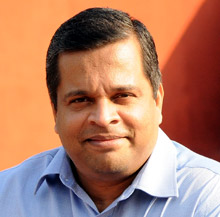
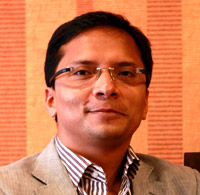
    Rana Barua is a veteran media professional. He is Chief Operating Officer (COO) at Red FM. Prior to joining Red FM, he was the EVP – Programming & Marketing at Radio City. Before he moved over to radio, he was VP and Head – Mumbai at Bates. And earlier:

    Client Services Director at Rediffusion DY&R, Account Director at McCann, Senior Account Exec at Ogilvy & Mather and Account Exec at JWT. He’s been through it all.

    In conversation with MxMIndia.com, Mr Barua speaks about FM phase III, and how radio can emerge stronger from the ongoing slowdown.


    Q: How did your transition from advertising to radio happen?

    Advertising was getting a bit stagnant, the market in media was opening up, television had opened up in a big way at that time, newer media were on the anvil, movie marketing was also opening up, radio was also growing at that point in time (ie about six years ago). I have always been very keen to move into a domain which is more or less a specialized medium. Since radio was also into huge expansion mode with phase II at that time, it made more sense to move into radio rather than any other medium.


    Q: And the advertising experience came in handy…

    Oh yes! I think it comes in extremely handy if you come in from classical advertising or communication which is more specialized. Since I moved as Head, Marketing, it made a lot of sense because I worked with a lot of brands, and had the entire expertise of knowing clients, advertising, communication skills, media and creative agencies. Thus the entire gamut came in handy which helped me settle in easily. So, the transition was good, it was just that the scope was very different.


    Q: Can you throw some light on the overall importance of phase III for FM radio?

    Phase III is extremely, extremely important for radio growth. This is probably going to be very exciting, at the same time a really challenging time for the industry because radio is multidimensional. There is huge expansion, multi frequency will be allowed and news will be available but not in its best form as it will be sourced from All India Radio (AIR). FDI gets raised from 20 percent to 26 percent. I’ve always said it should have been higher because that would have allowed more international players or private investors/ equity holders to look at it in a more serious way. Fourthly, networking will be allowed, which means one will be allowed to run the FM station sitting out of a main hub; as a result the cost may come down. Therefore if you look at it on the whole, these are definitely exciting times and we will probably know how all of us shape up in the next two years. There are going to be many challenges and a great number of opportunities for everybody in the radio medium.


    Q: And this will help increase the ad pie…

    It should! The only contrary point is that you may have new FM players entering, but the ad pie will grow because of different genres coming in, as a result new clients may also come in who would have not necessarily advertised on radio. And since costs will also come down, you will find a lot of innovative programming happening in radio. Nevertheless, these are still early days; the overall scenario looks very positive, but the challenge is, what will be the benchmark for research? There are also other challenges like the music royalty issue, the entire migration process from phase II to phase III, the e-auction as bidding process etc.


    Q: Do you view e-auctions favourably?

    We are pretty okay with e-auction, and from what I have understood from a lot of people, it is a much cleaner exercise.


    Q: Are there any setbacks…?

    Everyone will have some issues which are different from each other. The common factor however is the music royalty issue which is still unresolved. We are still a little unclear about the multiple licensing because if the e-auction bid goes into some preposterous amount it will naturally lead to some kind of setback for the overall industry, so we are hoping that this does not happen. News could have been better if it had been a bit more independent and I am sure we would have invested in the entire medium/department. Nevertheless if you see the overall picture, especially the way radio has been growing over the last three or four years, this gives you an impetus. Today if you look at the global economic scenario you just can’t predict any more but, yes it is a movement forward, with exciting times, greater challenges. Yes, certain things could have been better or more favourable for us, but we will go step by step.


    Q: How is Red FM gearing up for FM phase III?

    We are still weighing the pros and cons. Yes, we will be seriously involved in Phase III. We are clear about being present in most of the markets which will have some kind of ROI but we will weigh the pros and cons, we will see the costs, we will be extremely cautious about the approach because breaking even in radio is not the easiest of forms as it will all depend on the return on investment (ROI), the advertising revenues etc. If you ask me whether we are serious about phase III, then yes we are definitely looking at it in a very serious way.


    Q: Any specific cities that you are looking at?

    No, we are not looking at certain cities, but we are looking at towns… say where we are not available, which are important for advertisers. We are looking at these as one of our strategies, but we are weighing all the pros and cons and only then are we going forward.


    Q: Is there any lesson or takeaway that the radio industry should learn in Phase III from Phase I and II?

    One of the critical learnings for a lot of us in phase I and II is probably going to be that we must not overestimate the potential of the market. We also know that we look at certain benchmark figures and we tend to overestimate and because of that one tends to overbid. This is one of the key learnings one is hoping that everybody puts on the table before one gets into the e-auction process because at the end of the day it’s a fixed pie and from that fixed pie you would probably get a certain amount of revenue for radio. More than phase I, and phase II, one of the learnings for all of us is the uncertainty of the markets as we don’t know what’s coming up in the next three months. Therefore, I think the biggest challenge that lies ahead for all of us is the uncertainty, which has become such a huge thing that everybody is talking about the uncertain future. Hence I think a cautious approach is going to be extremely critical.


    Q: So, is the uncertain future – the global economic slowdown that seems to have come back – is that something to worry about?

    Yes, absolutely. However, more than worry I believe we should be taking complete cognizance of the fact that there is definitely a slowdown. The clients, advertisers, everybody are extremely, extremely careful about the money they are investing in any form of media. Taking things for granted and creating business plans for the next two or three years seems passé now. It’s more like making a business model and reviewing it every month because the numbers keep changing every month, not because of wrong projections of estimation, but because the moment costs go up, inflation goes up, prices go up. The environment has become so dynamic – which it wasn’t even a year ago; every day there is a new story. So, it’s great to plan for the future, but I think one needs to be very cautious about any kind of numbers or projections or predictions made by various studies and research etc, which will however be reviewed very soon.


    Q: How would you sum up 2011 for Red FM?

    We have definitely grown; even this year we have made overall growth in our entire network, at a certain target we had set for ourselves. But as I said, with the environment being so dynamic naturally those numbers are nowhere close to what one would have guesstimated maybe earlier, say last year when things were so much on the rise and one had hoped that coming out of a slump the next two or three years would be on the way up. What we have managed to do very well is that as a network we have grown extremely strong – into a formidable player post the RAM numbers which were released I think a month or two ago, wherein for the first time RAM went into the nine markets which they are hoping to do more frequently. So we are pretty confident that all the efforts of building the brand and all the efforts in programming have really helped. We are confident because we have got people and our talent in place.


    Yes, we are aware that with phase III coming in there would be a lot of movement again, but that’s part of the business. We have got a great team going, who are extremely motivated and work passionately for their brand and numbers therefore are showing very well. As I said the larger markets are not showing growth that it should have ideally shown, but it’s the mini metros and towns which have grown much more dynamically for us.


    Q: And how would you sum up 2011 for the radio industry?

    Overall if you look at the numbers one had predicted for radio, the growth has not been as dramatic as one would have expected because it is understood that there has been an overall slowdown. One of the things we need to look out for is some kind of consolidation which is how we would want the medium to grow.
  • Radio Mango in 4th anniv mode, to consolidate in Kerala for Phase III

    By A Correspondent


    Radio Mango, an FM radio venture by Malayala Manorama, a Malayalam daily, aims to consolidate its position in Kerala once FM Phase III is officially rolled out. It is however not known which cities the FM station would bid for as they are currently awaiting clarity on the phase III. “We would definitely look to consolidate our position in Kerala. We are still unclear about the reserve price calculations and await clarity before finalising our phase III plans,” said Ravindran Nair, Director Programmes, Radio Mango.
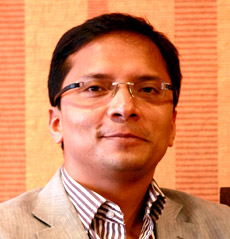
     

    He further said, “We are confident of growth in 2012 since we have been steady since the last 4 years. The key factor in the quantum of growth, of course, would be phase III.”

    In Kerala Radio Mango is aired in Kochi, Trissur, Kozhikode and Kannur. Red FM and Club FM are its main competitors in these cities besides the All India Radio (AIR) FM stations. On November 29, 2011 Radio Mango will celebrate its fourth anniversary however the FM station seems to be in no mood for big celebrations.

    Radio Mango claims that its national and local advertising ratio is almost 50:50. Some of its national advertisers are Maruti, Hero Motors, Nokia, Blackberry, Max Bupa, Kenwood, Airtel, Docomo, Belkin, Ford, Hyundai, Sharp, and Philips etc. Nearly 80 per cent of songs aired on Radio Mango is Malayalam film songs and the rest 20 per cent from non-Malayalam music ie Hindi and Tamil songs. Besides its on-air activities, Radio Mango is quite active online too. It has over 5,700 likes on its Facebook page and nearly 300 followers on Twitter.


    In conversation with Ravindran Nair, Director Programmes, Radio Mango.


    Q: Since November 29, 2007 when Radio Mango first went on air, until the year 2011 how has the journey been for Radio Mango? 
    Radio Mango has had a great period of sustained growth since launch. We have been consistently No.1 in the state and have been figuring in the top 20 nationally in terms of reach. In IRS Q2, Radio Mango is 16th nationally, in terms of reach (11th if AIR stations are excluded). In terms of reach within a state, Radio Mango ranks 5th nationally! Radio Mango has grown by 45 percent in Yesterday’s listenership over the last one year. Within Kerala, Radio Mango leads the no 2 station by 81 percent in terms of reach. (All figures are from IRS Q2 2011).


    We have won several national and international awards including New York Festival silver and bronzes, Wow Experiential Marketing Award golds, ERA golds etc. In fact, we are the only radio station in India to have won Mirchi Kaan Award golds for two years running.  We also figure in the Limca Book of Records for our musical reality show ground event.
    Q: How do you plan to celebrate Radio Mango’s fourth anniversary?
    We don’t look at months and years as landmarks. We would rather have our achievements be the milestones. Hence, all our anniversaries are private internal affairs and we don’t tom-tom in public.
    Q: Can you throw some light on your phase III plans? Will the FM station expand in cities/ towns of Kerala or will the expansion be beyond Kerala i.e. other parts of India?
    We would definitely look to consolidate our position in Kerala. We are still unclear about the reserve price calculations and await clarity before finalizing our phase III plans.


    Q: How has the response from advertisers been? What is the national-local advertising ratio?

    The response from the advertisers has been good so far. The national and local advertising ratio is almost 50:50. Some of the national advertisers are Maruti, Hero Motors, Nokia, Blackberry, Max Bupa, Kenwood, telecom majors like Airtel, Docomo, Belkin, Ford, Hyundai, Sharp, and Philips etc.


    Q: For 2012 what are your growth targets? How will you sum up 2011 for Radio Mango? 
    We are confident of growth in 2012 since we have been steady since the last four years. The key factor in the quantum of growth, of course, would be phase III. 2011 has been a great year and we are very pleased with our overall performance. The Radio Mango brand has never been more robust and recognised.


    Q: Who is your creative and media agency?
    Our creative and media agency is Stark Communications.

  • Amritendu Roy catches Fever

    By Robin Thomas


    Amritendu Roy is now Regional Head – East, Fever FM. Prior to Fever FM, he was Head, Radio Business, Friends FM. Mr Roy who joined Fever FM in August 2011, is based out of Kolkata and will be reporting to Mr Harshad Jain, Business Head, Fever FM.

    One of his main responsibilities as Regional Head- East will be to drive the sales for the region.

    Confirming the news to MxMIndia, Mr Jain stated, “With substantial industry experience, he will be able to add a lot of value into the existing system and will prove to be an asset for Fever FM.”

    Mr Roy was instrumental in setting up Friends FM from scratch. Mr Roy started his career in advertising with Mudra Communication in 1990 and went on to become the Group Business Director at the time he left in 2004. In the 14 years with Mudra he worked in various cities like Kolkata, Delhi and Mumbai. He handled various clients with Mudra, the prominent ones being McDonalds, Indian Oil, Orient Fans, National Insurance, Reliance Telecom and Kitply. Mr Roy then moved to the FM radio industry in 2004 when he took over as Vice President and Station Head of Radio City in Delhi.

  • Be cautious in slow market: Rana Barua

    By Robin Thomas


    The government has enhanced the foreign investment limit in FM radio to 26 percent from the earlier 20 percent. E-auction for FM phase III is reported to have received a nod from the Union Cabinet. Multiple frequencies if allowed will bring different genres of FM station in the same city, the overall media spends and advertising revenue in radio will see humongous growth. FM stations will soon be allowed to air news although not independent of the government owned AIR (All India Radio), nonetheless it seems good times are ahead for the Indian radio industry.


    While the FM phase III rollout has moved a little closer to reality, there is always something to learn from past experiences, even for the Indian radio industry. MxMIndia tries to find out one of the critical learning for the radio industry in FM phase III from the earlier phase I and II. In conversation with MxMIndia, Mr Rana Barua, COO Red FM observed, “One of the critical learning that a lot of us had in phase I and II is not to overestimate the potential of the market. The biggest challenge that lies for all of us is knowing that uncertainty has become such a huge thing today, therefore I think a cautious approach is going to be extremely critical.”


    “We should be completely taking cognizance of the fact that there is definitely a slowdown, the clients, advertisers and everybody else is extremely careful about the money they are investing in any form of medium. Taking things for granted and creating business plans for the next two three years seems like a passé now. It is more like making a business model and reviewing it every month” he added.


    Mr Barua also shed some light on how Red FM is gearing up for FM phase III. He spoke about Red FMs cautious approach and its keen interest in participating in FM phase III. “We are still weighing the pros and cons but, yes we will be seriously involved in phase III. We are very clear that we would like to be in most of the markets which will have some kind of ROI but, we will weigh the pros and cons, we will see the costs and we will be extremely cautious about the approach. We are looking at towns where we are not available and which are important for the advertiser. So we are definitely looking at this as one of our strategies” explained Mr Barua.

  • RAM releases the first 9 cities sweeps

    RAM has released its first set of findings basis sweeps in nine cities. The findings have been arrived at, based on Universe Establishment Study and Panel based Respondent data collected during May-August 2011. These nine additional cities are Ahmedabad, Chennai, Hyderabad, Indore, Jaipur, Kanpur, Lucknow, Nagpur and Pune.


    For the last 4 years, RAM operated out of the four Indian metros – Bangalore, Delhi, Kolkata and Mumbai.


    As per RAM, This initiative will help the Radio industry – Broadcasters & Media Planning Agencies, to assess the impact that Radio medium is having on Audiences in towns other than the major Metros.


    RAM communiqué states that given the favorable response from across the industry, RAM will continue to undertake the next sweeps during February-March 2012.


    To quote LV Krishnan, CEO, TAM Media Research, “Our commitment to take RAM beyond the  four metros has fructified. This time, the RAM roll out is much wider and deeper. These 9 cities will throw light to Advertisers the interaction Radio is bringing to their Consumers and also help Broadcasters fine tune their basket of programming to these Audiences. This will help propel higher commercial viability for the Industry at large. As always, we will work very closely with the Industry to help them understand the dynamics of this very high potential communication and brand building medium from these markets as well. Like in 4 RAM metros earlier, we believe that in these 9 metros too, RAM’s entry will boost the Radio advertising investments.”


    The study offers trends about Radio listenership or consumption behaviour between the different cities. Some highlights are:


    • The universe size of the newly added 9 markets is an impressive 50% of the existing 4 RAM markets (Bangalore, Delhi, Kolkata and Mumbai).
    • Southern markets observe higher FM penetration as compared to northern markets.
    • On an average, there is 95% FM universe has been reached in a week across all the markets.
      • Chennai and Jaipur observe 100% weekly reach.
    • Time spent listening among the 9 new markets is comparatively more than the existing 4 metro markets. Markets like Nagpur and Jaipur observe 28.29 (hh:mm) and 24.05 (hh:mm) time spent on a weekly basis.
    • Indore and Lucknow observe least OOH listening among the new RAM markets.
    • Majority of the new markets have heavy composition from male audiences whereas existing Mumbai and Kolkata market witness substantial composition from female audiences.
    • Listenership in Northern cities like Delhi and Jaipur are skewed towards higher SECs. Market like Nagpur and Kanpur are skewed towards lower SECs.
    • Morning time band observes highest listenership contribution across the day. Indore market observes highest listenership contribution from Mid Morning time band

    Listenership contribution on Saturday and Sunday are higher for the new markets whereas in the existing markets Saturday observes least contribution

  • Red FM’s Malishka is RJ No 1 in in Mumbai!

    By A Correspondent


    Radio Jockey Malishka is found to be Mumbai’s most popular RJ for the second year in a row, according to an Ormax Media study. The Red FM 93.5 RJ Network the most preferred radio station in India has an immense listener base in Mumbai. This is evident by a recent study conducted by media research firm Ormax Media that pronounced RJ Malishka as the most popular Radio Jockey in Mumbai for the second time in a row. Undoubtedly RED FM’s RJ Malishka is an unmatched talent in the radio industry!

    The study by Ormax Media was conducted in the month of September amongst 600 radio listeners in Mumbai and Delhi in the age group of 15-44 yrs, SEC ABC. From across the radio stations in Mumbai, Red FM RJs Malishka, Mantra and Rishi Kapoor emerged as instant favorites amongst listeners!

    Commenting on this much celebrated achievement, Nisha Narayanan, Senior VP Projects & Programming, RED FM 93.5 Network said, “Red FM’s leading Morning Show RJ – Malishka has been rated number one in Mumbai by Ormax Media for the second year in a row. This just proves that despite various researches that happen across mediums and the claims by respective radio stations of being number one, we still continue to win the best recognition and awards across categories and hence undoubtedly make us the most awarded radio station in the country.”

    ‘Morning No1’ with Malishka is designed to be exciting, energizing, stimulating, light-hearted and at the same time thought provoking, notes a Red FM communiqué.


  • The Anchor: 10 media evils we’d like to see banished this Dassera

    By Pradyuman Maheshwari


    It’s Dassera tomorrow, a festival that symbolises good winning over evil. Here’s my list of 10 media evils that I would like to see the end of. You can say that some of these are predictable since I have written about the issues in the past, but they are genuine evils. Banish them!

    #1 Corruption

    The 10-letter word is not just a preserve of government and politicians. It exists in plenty in corporates and the private sector. Our business included. Bribes to get sales deals through, generating revenues by way of money payouts and favours. Sending media buyers and clients to see the FIFA World Cup or Wimbledon tennis is nothing extraordinary these days. Nor is selling of magazine covers, or newspaper or website stories, in lieu of monies very surprising. Ditto with awards: money or just for old times’ sake. Har ek friend zaroori hota hai!

    #2 Paid news

    This has been institutionalised by certain publications even if it’s for just for lifestyle, glamour and brand launch news. It needs to stop, and a dubious disclaimer won’t do. Paid News is prostitution of editorial space and I don’t have to spell out what its practitioners should be called.

    #3 Industry fiefdoms

    Trade associations are supposed to help the lowest common denominator, but in the media we have a situation that some of the aasociations have become fiefdoms and people hardly mentor or help the weaker players. In fact they often attempt to crush them.

    #4 The ratings race

    Revenues happen only if there is proof that your product is read or seen or heard. Nothing wrong with it. But some newspapers are rumoured to go to any extent to fix things. And channels see nothing wrong tweaking storylines for better numbers. Ratings ke liye kuch bhi karega!

    #5 Dearth of talent and disparity in salaries

    There is need for dramatic change here. Some wings of media and marketing are paid fantastically, others pathetically. Journalists, for instance, are very poorly paid in many establishments. Ditto with staffers in Tier 2 cities. The media needs to attract quality talent and offer great content. Both are critical for good content. Alas, I don’t see this changing in a hurry.

    #6 Abuse of Intellectual property

    In Indian media, copyright is mostly defined as the right to copy. Our media companies are fortunate that legal action takes its time or never happens. Else a few of them could be giving the more high profile criminals company in Tihar or Arthur Road. The discipline has to start from the ground-up. Googled pictures must be a no-no and only licensed content must be used.


    #7 Fake ads

    It’s not as severe as other issues here, but the fake ads that advertising agencies craft to win awards are not on. Yes, they are a given these days and some leading agencies patronise the practice. But there has to be a way to end it. Perhaps some introspection?


    #8 Content sucks

    The self-regulation mechanism has been set up, but I think some of our channels, especially a few newswallahs, could do with a drive to improve content. And a news channel must air news and possibly some kutta-billi stuff. Not the other way round.


    #9 FDI blues

    Foreign direct investment in radio was hiked to 26 percent last week and in news channels it’s restricted to 26 percent till date. However, GECs can be 100 percent owned by foreigners. And creative and media advertising agencies too can be fully owned by non-Indians. Given that ad agencies influence media buying decisions and hence can in turn influence the media, why not allow full FDI in news and radio?


    #10 No Ethics!

    It’s a dirty word in most media organizations. Look at how many have a Code of Ethics, and insist on employees (and the promoters) agreeing to practise it.


    The views expressed here are my own and are not endorsed by MxMIndia.com

  • TOI launches TWeek at INMA

    By Tuhina Anand


    The Times of India Group launched TWeek, first of its kind digital magazine at the INMA platform. The weekly will be released every Friday and can be accessed from iPhone, iPad or any Android tablet device.


    Elaborating on the product, Rishi Khiani, CEO, Times Internet Ltd, said, “The idea to launch this came seven days ago and digital provides the platform where content can be put together at such a short time. TWeek is largely sourced from content that is available on our blog verticals that we put together. Its content that has long shelf life and brings out the flavor of a week.”


    He added, “Its content that is repackaged in a format that works on iphone, ipad and whatever other android tablet devices available. It allows interactivity associated with the medium but at the same time is low on cost of production.”


    Mr Khiani calls TWeek the first digital magazine that doesn’t have print counterpart in India. However, he did add that the print version of the magazine could be planned in future. The magazine will cater to the youth. Apart from content that is available in form of blogs, it will also have original content like its cover story to attract more consumers to access it.


  • Digital is the future, not competition to radio

    By Robin Thomas


    While digital was and probably is still seen as a threat to the growth of print and television, for radio, on the other hand, the digital medium is said to be a complement and not competition.


    Some examples of digital successfully complementing radio to provide good content are Radio Mirchi’s VAS application – ‘Mirchi Mobile’, which allows mobile users to listen to any Radio Mirchi station from any city by just dialling a particular number across any telecom operator. Radio City’s music portal, PlanetRadiocity, in addition to its extensive music content, offers web radio, said to be India’s first and only multi-genre, live and interactive ‘Web Radio’ station that plays a variety of content 24×7. Radio Netherlands Worldwide (RNW), the Dutch international public broadcaster recently launched a website on sex education. Radio Maska is another internet radio portal available inIndia.


    Rachna Kanwar

    The one common factor among FM radio stations is that they want to stay connected with their listeners even when they are not tuned in. Hence most of them are finding new and innovative ways to engage their listeners online.


    Radio jockeys are going online by putting up blogs, videos and audio clips of their programmes on their FM station websites. Almost all FM stations today have made their presence felt on social networking sites like Facebook and Twitter.


    MxMIndia spoke to couple of FM stations to find out the significance of digital media to FM radio today.


    Rachna Kanwar, Vice President and Business Head, Digital Media and New Business, Radio City feels that digital medium has helped them connect with their audiences not only in India but even those settled abroad. “With the astounding rate at which the medium is growing, it is obvious that nobody can ignore digital media today.RadioCityhas used the medium effectively to reach out to our listeners. Digital media has also enhanced our engagement with listeners and has helped us in promoting our offerings to a larger audience base,” she said.


    Rahul Balyan
    Amitabh Srivastava

    In order to engage the listeners and ensure that they tune in to the radio station, the traditional FM stations will have to continue re-inventing themselves a lot more around what the listeners want and how they want, especially since the choice for a listener will be infinite on digital platforms.


    Rahul Balyan, Senior Vice President and Head of Digital Initiatives, Radio Mirchi said, “We have realised that at least 20 per cent of Radio Mirchi listeners are online, and have a lot to say; the digital platforms allow us to connect them on a one-on-one basis. We have got a tremendous response on Facebook, Youtube, Mobile VAS and our website. All of it is driven by the equity that Radio Mirchi has created with the listeners.”


    Convergence of traditional broadcasting platforms with digital platforms is perhaps inevitable as digital media has become significant, not only for radio but for all media.


    Amitabh Srivastava, Country Manager – South Asia, Radio Netherlands Worldwide pointed out: “Digital is the future and not competition to radio and I see a lot of potential for internet or digital radio inIndia.Mobilehas also become very important today as most people listen to radio on their mobile phones and as technology will progress and internet usage grows inIndia, internet radio will also see growth.”

  • The Economist publishes its annual Books of the Year list

    By Akash Raha


    The Economist’s annual Books of the Year list has been published in this week’s issue and highlights this year’s 50 most fêted authors and their works. The categories span politics and current affairs, economics and business, history, science and technology, culture, society and travel, fiction and poetry, all selected by The Economist editorial team.


    The best books of 2011, according to The Economist, were aboutChina,Congo,Afghanistan, Charles Dickens, Vincent van Gogh, the “Flora Delanica”,Jerusalem, Mumbai’s dance bars, quantum physics, sugar, orgasms, blue nights, two moons and other people’s money.


    Fiammetta Rocco, books and arts editor at The Economist said of the Books of the Year, “Whether it is politics, finance, history, science, culture or fiction, we look for big ideas, deep imagination and wonderful writing. The 50 books that we have chosen as our Books of the Year, all break new ground and stretch the mind.”


    To coincide with the Books of the Year announcement, The Economist and Southbank Centre have launched their first ever Christmas literary weekend from 9-11 December at Southbank Centre where six authors will read from, and discuss, their work and take part in a book signing session.


    In addition, The Economist is hosting a range of debates on its Facebook page to discuss a selection of books and allow readers to put questions to the authors. The Economist Books of the Year can be found online at: http://www.economist.com/node/21541386.

  • Tim Roemer joins APCO Worldwide as senior VP

    By A Correspondent


    Tim Roemer, formerUSambassador toIndiahas joined APCO Worldwide as senior vice president. Announcing the progression, Founder and CEO Margery Kraus said that Roemer will also serve as a member of APCO’s Global Political Strategies (GPS) and International Advisory Council (IAC) groups, providing strategic counsel to international companies and governments entering global markets and expanding overseas.


    “Tim brings a strong background in international trade and investment, education policy and national security,” said Kraus. “We are very pleased that he’s joined our team, and we know he’ll be an integral resource to clients who are looking to create partnerships and business opportunities across growing markets throughout the world.”


    “I am pleased that Ambassador Roemer and I will have continued opportunities to collaborate through our work with APCO,” said Lalit Mansingh, IAC and GPS member, who served earlier as Indian ambassador to theUSand as high commissioner to theUnited Kingdom. “I have dedicated my career to promotingIndiaand its role in the global marketplace, and I look forward to partnering with Tim and other senior counsellors to help clients better develop corporate strategies, achieve successful market entry, and identify specific policy and communication challenges.”


    In broadening and deepening the US-India partnership, Ambassador Roemer led one ofAmerica’s largest diplomatic missions. Under the leadership of President Obama and Secretary of State Hillary Clinton, he oversaw the implementation of several key policies and initiatives, including increasing cooperation, technology transfer and commercial sales in the defence and space industries; signing the Counterterrorism Cooperation Initiative to further expand cooperation in areas such as intelligence and homeland security, money laundering and terrorist financing; and assisting India on its Global Center for Nuclear Energy Partnership. He also emphasized commerce and exports, helping moveIndiafromAmerica’s 25th-largest trading partner to 12th.


    “Tim is well-known in Washington as a problem-solver who encourages collaboration and cooperation – valuable traits given the current political environment and the importance of the challenges we face,” said Don Riegle, formerUSsenator and chairman of APCO’s government relations team. “It will be a privilege to work with Tim in his new role.”


    “Tim’s experience in effectively identifying and enhancing shared values between India and the US will be crucial as APCO’s operations in India continue to expand,” said Sukanti Ghosh, managing director of APCO in India.


    Prior to his diplomatic appointment, Ambassador Roemer served for 12 years in the US House of Representatives. He was a member of the 9/11 Commission and one of the first members of Congress to advocate for a more dynamic and entrepreneurial Department of Homeland Security.

  • Colors acquires rights to telecast Screen Awards

    By A Correspondent


    Colors, the general entertainment channel from Viacom 18 has announced its collaboration with Screen to telecast the 18th Edition of Screen Awards, a property that has been associated with Star Plus for the past 11 years. Initiated in 1994, the Screen Awards were instilled to recognise upcoming talent and professional excellence in Indian Cinema.


    The awards will be telecast on Colors and promise to be a grand celebration of the glory, success and grandeur of Indian cinema. The Awards celebrate achievement and excellence in over 30 categories that cover the entire sweep of film-making in Hindi and Marathi.


    Commenting on the acquisition of the Screen Awards, Colors CEO Mr Raj Nayak said: “Screen Awards is one of the most popular and recognised award functions in the Indian film industry’s calendar and we are extremely proud to be associated with it. It has been our constant endeavour to make Colors the one-stop entertainment hub for our audiences by bringing to them excellence in terms of shows, events and movies and through the acquisition of this property we hope to achieve just that.”


    Mr Shekhar Gupta, Editor-in-Chief, The Express Group said: “The Screen awards set the bar for excellence in Indian cinema because it embodies the fundamental principles of the Express Group: credibility and independence. Cinema is bristling with talent, and these awards applaud and celebrate this creative upsurge.”


    The awards follow a rigorous two-step screening process that includes a Screen


    SelectionAcademy. Its members, among the finest professionals in the industry, send their recommendations to a select Screen Jury which is not bound by these. Previous jury chairpersons include Ramesh Sippy, Amol Palekar, Jeetendra, Asha Parekh, Shatrughan Sinha, Waheeda Rehman among others.