Author: mxm_india

  • ESPN acquires Cricket Australia rights

    By A Correspondent


    ESPN Star Sports has announced a five-year contract for the exclusive rights to broadcast Cricket Australia’s (CA) domestic and home international matches across various platforms including television, internet, mobile and radio, covering the entire Asian region.


    As a part of this deal, the current Future Tours Program (FTP) sees ESPN Star Sports broadcasting more than 191 days of live International cricket action from Australia, which includes 27 test matches, 44 one day internationals and 12 twenty-twenty games.


    This is the first time ever that a broadcast deal with Cricket Australia will give ESPN Star Sports rights to showcase two India series. India is slated to play four Test matches and a tri-series with England as the third team in the 2014-2015 season. This tri-series, featuring India, Australia and England and scheduled right before the ICC World Cup in 2015, is positioned as the ‘Clash of the Titans’. India will visit Australia again for seven one-day internationals and two twenty-twenty matches in the year 2015-2016.


    Over the next five years, all of the leading teams will be visiting Australia. In addition to the Ashes between arch rivals England and Australia in the year 2013-2014 which, based on the current FTP, will see 5 test matches, five ODIs and three twenty-twenty matches; other top cricket nations including South Africa, Pakistan, Sri Lanka, West Indies and New Zealand will tour Australia to test their mettle in the fiercely competitive environment of cricket down under.


    James Sutherland, Chief Executive Officer of Cricket Australia, said, “We are delighted that a telecaster of ESPN Star Sports’ standing and class will be putting Australian cricket in front of many cricket fans.”


    Manu Sawhney, Managing Director, ESPN Star Sports, said, “We are very pleased to announce this partnership with Cricket Australia with whom we share a very strong relationship. Australian Cricket has always been exciting and is played with utmost competitiveness in a super charged atmosphere which makes for every fan’s delight. It is therefore not surprising that it is called the ultimate test for any cricket player”. “This partnership with Cricket Australia is a testament to our commitment to serve our fans with more action packed cricket for years to come, he added.


    In addition to the cricket action, ESS also plans to broadcast Cricket Australia’s domestic cricket over 280 days. This includes popular tournaments such as the KFC Big Bash T20, the four-day Bupa Sheffield Shield tournament and the Ryobi One Day Cup.

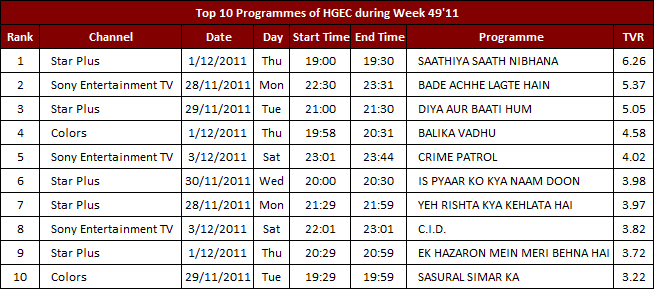
  • TAM data Top 10 programmes on HGEC – Wk 49’11

    Source: TAM Peoplemeter System

    TG: CS 4+ yrs

    Market: Hindi Speaking Market

    Period: Wk 49: Nov 27 to Dec 3, 2011


    About TAM Media Research


    TAM is a joint venture between Nielsen Company & Kantar Media Research. Besides measuring TV Viewership, TAM also monitors Advertising Expenditure of Television, Print & Radio through its division AdEx India. Since 2004, it extended its presence in the PR Measurement & Analysis space for Corporate/Marketing Clients by setting up a separate division Eikona PR Measurement.


    In 2007, the joint venture introduced RAM (Radio Audio Measurement) service to track Radio Listenership for the Indian Radio Broadcast Industry. In year 2009, TAM launched a division, called TAM Sports that specializes in monitoring Sports Sponsorship ROI.


    TAM Media Research’s objective is to fuel media insights that will drive the growth of the Indian Media Industry.

  • Rocky road for Digital OOH?

    By Robin Thomas


    The ‘Global Digital Out-of-Home Media Forecast 2011-2015’ revealed Digital Out-Of-Home media as the fastest growing media in the world with the US as the largest global market and China, the fastest growing.


    However, in India, the medium is yet to make a huge impact. Advertisers are said to be sceptical about investing in the medium due to the lack of an effective measurement system, which is seen as the single biggest challenge. In fact, the effectiveness of digital out-of-home, as per experts, is not evangelized to advertisers and media planners, and as a result, India has not been able to catch up with some other markets.


    Ishan Raina, MD and CEO, OOH Media observed, “The OOH TV medium in India is still in its growth phase. India provides tremendous opportunities to advertisers to reach out to their target group. This has also resulted in the development of various new media formats, and digital OOH being one of them. In general, digital OOH space is expected to see a tremendous growth in the future, given the expected infrastructural growth, increased amount of time spent outside home, and the general economy boom in the coming years.”


    According to industry estimates, the OOH industry, estimated to be around Rs 1,500 crore, commands around 15 to 20 percent of the total advertising share, of which digital Out-of-Home commands 1 to 2 percent and is expected to further grow to 4 to 5 percent in the next two years. It has telecom, banking and finance as its top spenders, among other categories such as retail, FMCG, consumer durables, education and media.


    OOH media players are very optimistic about its future in India, and feel that as infrastructure develops, the economy grows and consumers spend more time out of home, there is high possibility for the medium to grow tremendously.


    Gourav Tandon, Managing Partner, Apex Integrated Marketing said, “India is still at a very nascent stage; however I strongly believe that digital OOH has immense potential in the Indian OOH scenario. The transition has already begun and we do have very large format digital media in places like Gurgaon. Clients today are immensely demanding and the onus is on the agencies to provide high quality mediums.”


    For Digital OOH to grow, there has to be significant number of innovations in the medium, the effectiveness of the medium also has to be evangelised to the advertisers and the media planners, and most of all the industry must come together for an effective measurement tool for digital out-of-home.


    R Venkata Subramanian, Senior Director-Investments, MPG India said, “Advertisers are still sceptical about Digital OOH as there is no effective measurement in place. It is a very good medium and its future is bright, the only draw is the lack of effective measurement to showcase the effectiveness of the medium. However Digital OOH is growing and one of the reasons is because consumers are increasingly spending most of their time out of home.”


    But not all are so positive about the potential of the Digital OOH industry. Ashish Pherwani, Associate Director, Advisory Services Ernst & Young said, “I currently don’xt see Digital OOH crossing 4 to 6 percent of the total OOH segment in the next two years. It requires a different mindset to create ads for Digital OOH, as well as a separate sales technique.”


    Harish Bijoor, CEO, Harish Bijoor Consults Inc, underlined the need for a scientific exploration of the Digital OOH space. “Digital OOH is a medium with potential, but I do not believe the potential has been exploited. What is needed is a scientific exploration of this space. It is time for digital OOH companies to do pressure tests in limited number of cities to prove the efficacy and true value of the medium. As of today, there is a gap in terms of acceptance and faith in this medium, and in the bargain, the medium writes a self-fulfilling prophesy of stagnation in terms of value and use,” he said.

  • The Anchor: 5 reasons mobile advertising hasn’t gained momentum

    By Damandeep Soni


    #1 Digital is seen as an afterthought in the overall media plan. Ditto in the case of Mobile. While everyone talks about it, thinks about it and wants to do Digital, traditional media momentum starves marketers of time to think about utilizing the mobile medium. Many agencies often fail to recognize the importance of Mobile and miss out on opportunities to engage their audience.


    #2 You need a different mindset to think about engagement models using Mobile. It’s much more personal than other media consumption devices. A video, for example, created for a mobile ad should be very different from a TVC as there can be a huge amount of engagement hooks built for Mobile. While Mobile offers advertisers new opportunities for interacting with consumers, many agencies just use their web creatives for mobile ads. A lot more needs to be thought out on in-app experiences, mobile-optimized sites or landing pages rather than just repurposing creatives.


    #3 Apps have only started to take off in India very recently. In-app inventory is yet to be fully utilised. Smartphones have started making significant inroads into the country, which means apps (specifically Android apps) are set to proliferate. With a sizeable population of smartphones, an in-app ad revolution is around the corner.


    #4 Brands that are using Mobile are still thinking about the engagement model with the user – the push v/s pull debate. Do you show the user a location-specific advertisement when he is in a locality (and will that become an annoyance to the user and will he start ignoring the ad?) or do you want the user to pull the ad after checking in, using a service like Foursquare, and will there be enough users who would want to do this?


    #5 Lack of mobile sites is another issue. Most brands do not offer a tablet/mobile optimized experience to the user. Hence, even if they embark on a mobile campaign it does not give them the expected results.


    But it’s not all doom and gloom. Mobile advertising will pick up in the next two to five years. In India we are still in the early adopter stage of mobile advertising. However, once brands get to know of the engagement stats and get innovative with campaigns, there is no turning back. After all, even today, a person is six times more likely to click on mobile banners.

     
    Damandeep Soni is Vice President, Global Sales and GTM, Percept Knorigin. 
  • FM radio: Waiting in the wings for how long?


    By Ritu Midha


    Television and print continue to be the mainstay of any media plan. The buzz around launch of new channels and publications (largely newspapers) is difficult to ignore. Digital media, too, has become a medium of ‘now’. Meanwhile, radio continues to struggle, with cost to operate being quite high while profitability is still an issue. Is it time, then, to ring the alarm bells? Is radio getting lost even before it has acquired a national footprint?
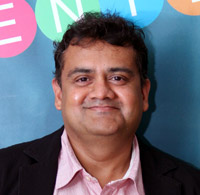
     

    Prashant Panday

    Radio: Today

    Prashant Panday, CEO, ENIL, emphasises: “There is no evidence of that yet, though if Phase III expansion gets delayed, this is bound to happen. The Indian media scenario has new brand launches happening all the time. Newspaper reports say that since August this year, the Ministry of I&B has given permission for 745 new TV channels – about half of which are news channels. Likewise, if you look at newspapers, there are editions opening across the country almost every month. It’s the same with outdoor sites and internet portals. In a scenario like this, if there is no addition in the number of radio channels, then the sector will get affected. That is one reason we are waiting for the 800 odd new radio licenses to be issued under Phase III. At present though, radio continues to grow, and its share continues to be just under 5 percent of total advertising spends.”


    Media planning and buying fraternity, in turn believes that radio as a medium is gaining popularity, and that is largely because of its content which touches a cord with the local consumers. Mohit Joshi, Managing Partner, MPG India, explains, “While there is not as much buzz about radio, I don’t think it is losing out. It has developed a unique role in the communication mix, which straddles ATL and BTL. Advertising support on the medium has been growing at 11 percent over the years.”
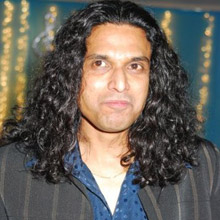
     

    Ashit Kukian

    Increase in FDI Limits: Low impact

    Media owners are of the view that increase in FDI in radio would not really impact the sector, unlike retail where the proposal for FDI in multi-brand retail has raised a storm. The common belief is that not many foreign players would be interested in the medium because of low profitability.


    Mr Panday says, “Remember, FDI only enters sectors where there is profitability and where the regulatory regime is favourable and stable. Today, most radio broadcasters are barely hitting EBITDA break-evens. This, after half the license period of ten years, is already over. I personally feel that the higher FDI/FII limit will help increase trading in listed radio stocks like ENIL and RBN, but apart from that, the impact might not be that high.


    Ashit Kukian, COO and President, Radio City, agrees, “The increase in FDI in radio sector from 20 to 26 percent is not really going to make any dramatic impact on the industry.”
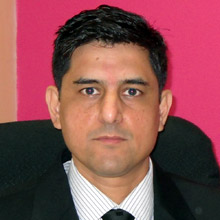
     

    Vinish Joshi

    Slowdown: Whither goes Radio?

    While FM in India continues to struggle, impact of the slowdown, interestingly, on radio, as per the expert opinions might be the least, courtesy its local content. As per Mr Panday, with a slowdown in ad spends, the overall ad industry is unlikely to grow at more than 5-8 percent. His belief is that radio may grow slightly higher at 10-12 percent. “Almost all sectors are seeing a slowdown. We attributed the slowdown in the 1st quarter to the higher spends in the preceding 4th quarter on account of the cricket. However, the 2nd quarter also has been weak,” he says.


    Vinish Joshi, GM, Mediacom, too believes that radio might see a higher percentage growth than other media – largely due to its reach and content. He says, “Increasingly FM-enabled mobile phones are driving radio growth in India and phase III is expected to extend radio’s reach to 294 towns and 839 stations. If any medium stands to gain from this slowdown, it is radio, as during the periods of slowdown, marketing activities get more focused. The concern remains on accountability, as marketing will also be more accountable during this period and comprehensive measurement tool for Radio industry will be critical.”
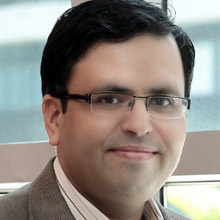
     

     Mohit Joshi

    Measurement currency: A catch-22

    Indeed, the tighter times lead to a lot more stress on RoI, and measurement currency becomes very important. The radio players feel that there is need for a more robust radio measurement system. Mr Panday says: “The present system is a diary system which has many flaws. What we need is an electronic measurement system which accurately captures listenership. We also need more sample sizes to better capture the heterogeneous habits of our cities.”


    This sentiment of the media players is shared by media planning and buying fraternity. While, they agree that attempts being made to capture a larger listener base are commendable, they believe that it needs to broaden further.


    Mohit Joshi says, “Effort is already on for increasing the coverage of the network of the current Radio Measurement systems. Today, when we have radio stations across most of the key cities, the coverage also needs to mirror that growth. The better the data, the easier it would be to establish the role of Radio.”


    It would be interesting to find out how much is the fraternity ready to invest in improving the measurement system and currency. It is a known fact that research and measurement is cost-intensive. With RoI being an issue, most of them might find it difficult to make a major investment in anything.


    FM stations: Same, same – no different

    Radio, at the moment is suffering from me-too syndrome – which to a large extent can be attributed to investment constraints. There is definitely a need for differentiation – enter localised communication.


    Mr Kukian says, “Radio as a medium has the ability to create customized communication for pocketed audiences and impact millions of Indians due to its wide coverage and personal connect. This coupled with the medium’s innovation quotient gives it one up over other media in terms of fulfilling advertisers’ requirements.”


    Vinish Joshi shares a similar opinion, but he qualifies, “Inserting rapid-fire weather forecasts and traffic reports is just providing minimum local content. Local radio, by my definition, is the real interaction of radio personalities, announcers, the people on the air, with listeners both on and off the air. As long as radio maintains its local presence, something that other syndicated forms cannot provide, there will always be a need for its services.”


    Unfortunately local content on radio, largely restricted to traffic reports and contests, seems to be similar on all the stations. The reason for this, yet again, is operating costs and limited number of stations. The game might change once there are more radio stations post Phase III.


    Mr Panday states, “Very little content differentiation will happen unless more frequencies are released. Let’s take an example. Suppose only 10 TV channels were allowed by law. Which channels would exist then? My guess is that the 4-5 GECs would still exist, there would be 1-2 news channels and 2-3 other channels. The reason for so much content differentiation in TV is that there are so many channels. The second reason is that broadcasters are allowed to own and broadcast several channels, so that the cost of operating smaller format channels is reduced.”


    He continues, “In radio however, we suffer from restrictions on both the above mentioned requirements. There are only 7-8 channels in the major markets and broadcasters are allowed to operate only one channel per market. The Phase-III regulations are going to relax the second condition, but till the number of channels increases significantly, we cannot expect much content differentiation. And if the auctions happen the way they are planned – e-auctions for one frequency in Delhi and two in Mumbai – then the license fees will shoot up and niche formats will become unviable. The government needs to release more spectrum BEFORE auctions are conducted. We have even given them a formula to do this – just reduce the “separation” between two adjoining radio channels from the 800 kHz at present to 400 kHz.”


    If the separation between two adjoining channels is helved, the number of channels would double – broadcasters will be able to compete better with TV and print, the government will get more license fees through auctions. And it just might help in increasing FDI investments in the sector by raising the bar and the competition.

     

  • Channels need to develop editing skills

    By Ranjona Banerji


    The fire at the AMRI hospital in Kolkata was one of those tragedies which challenge our skills as journalists. And how did we come out of it? Perhaps some of the visuals on television of mourning relatives were too much to handle as was the fear of having to look at victims of the fire but on the whole, not a bad job.


    TV channels went from covering the news to opinions but perhaps reporters still have to learn that editorialising should be left to those in the studio. Many commended Monideepa Banerjee of NDTV for her clear, concise reporting – experience probably helps (all right, it definitely does).


    Also, TV channels might do well to develop some editing skills. A clearly awe-struck reporter on Times Now was full of admiration for west Bengal chief minister’s efforts to help the situation from the ground when common sense would have told him that she would only have been hindering efforts. It took Saturday’s newspapers to point that out.


    The stories of how the fire spread and the deaths of helpless patients are horrifying in themselves. TV was quick to pick up on culpability and newspapers have gone further by looking at the lacunae in fire safety protocols across the country. (Needless to say they are more honoured in the breach.)


    The Kolkata (or in the case of The Telegraph, Calcutta) newspapers obviously have more details about the incident and were somewhat more scathing. It would be interesting to know just why the patients were locked in by the guards. Also, how much further we will follow this story – how soon, for instance, will all the board members currently arrested be out on bail and get away scot-free?


    **


    The Lokpal draft was released by the Parliamentary committee on Friday but the Kolkata fire seemed to have topped all other news stories – perhaps appropriately. Team Anna as usual started spitting fire and venom and Prashant Bhushan, called for some kind of a revolution against our democratic system – or so it seemed to me.


    No one else appears to have picked it up.


    Personally, I would be interested to know if the India Against Corruption movement also targets non-government corruption. The AMRI fire was evidently a case of private sector fraud. Any takers?


    **


    The Calcutta Club debate aired on Times Now was interesting – the subject was whether the means justify the ends, with reference to the Jan Lokpal movement and Team Anna. Of the six speakers – Salman Kurshid, Sitaram Yechury, Ravi Shankar Prasad, Sudhir K Singh, Arvind Kejriwal and Kiran Bedi – only Kejriwal and Bedi had severe problems understanding the protocol of a formal debate. They seemed to believe this was a normal TV haranguing match. Moderator Arnab Goswami had to work hard to ensure discipline and was tougher than he is on his TV extravaganzas. The politicians were civilised and Sudhir K Singh made the most sense.

  • Remembering Mario Miranda/Dev Nadkarni

    By Dev Nadkarni


    Mario Miranda never really liked to talk about himself or his work. But once during an assignment, when I pressed him on how he went about his meticulously detailed illustrations, he told me in his usual shy manner that he began at one corner of the blank sheet and put his scratchy ink pen nib down only when he had fully filled up the whole sheet.


    The maestro put his nib down one final time yesterday, having finished with the extraordinary canvas of his life. And what an incredibly rich and unforgettable picture he has drawn for all of us in his seven decade long career. His drawings, with their filigree-like detail, are an endless source of joy: you find something new in every illustration no matter how many times you’ve seen it before. That indeed was his genius.


    I knew Mario as a fan, friend, colleague and client – as fan for a lifetime, the rest for more than two decades. My first ever introduction to Goa was through one of his illustrated books, “Goa With Love – by Mario”, a copy of which we still have in our collection nearly half a century later.


    “Goa With Love” is Mario’s finest tribute to his most beloved Goa – it is completely illustrated, no copy except for an odd caption or two. It captures every aspect of Goa – the scenery, the people, the social mores, the cultural diversity, the oddly spelt Hindu names in Portuguese-influenced English, everything except perhaps the smell of feni.


    I have lost count of how many times I must have pored over that book throughout my life. I remember spending hours on each page when I was a child growing up in Panaji – which back then was Panjim. I can still find things to laugh about in the drawings.


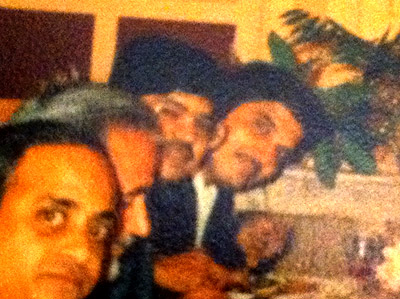
    Dev Nadkarni (third from left) with Mario Miranda

    I first shook hands with Mario when I was perhaps all of five in my father’s office in Panaji’s iconic Secretariat Building – my father, Mohan Nadkarni, was the newly formed union territory’s first information officer and was in charge of publicity, publications and PR. “This uncle here drew Goa With Love – his name is Mario,” I remember my father saying. I was excited because I had shaken hands with the man whose book I was so very fond of.


    In later years, I often ran into him in the Times of India building in Mumbai on my errands delivering my father’s music reviews and columns to the newsroom on the third floor (no emails and faxes then). I’d reintroduced myself as his fan from Goa and chatted on some occasions about some of his illustrations from “Goa With Love” and his other work, which appeared regularly in the Khushwant Singh-edited Illustrated Weekly and the Evening News of India.


    Our next significant encounter was at my first real job – as an assistant editor of the popular children’s fortnightly Tinkle at the India Book House. He was illustrating a children’s book, which my colleague Nira Benegal (noted film director Shyam Benegal’s wife) was editing. We settled down for a long chat and at the end of it, he handed two rather tired looking diaries to Nira.


    I noticed Nira put away the diaries carefully in her bottom drawer. After a few days, knowing my respect for Mario and his work and my own ambitions to launch my cartoon strip, she let me have a peek at those diaries. I was amazed as I leafed through them.


    They were diaries from Mario’s childhood. Most of us who kept diaries did so in long hand. Mario simply drew. On one of the pages the only words were something like: “walking back from the market I saw” and there was this amazingly stylised picture of a cow. He must have been 10 or 11 when he drew it – perhaps even younger.


    The picture was greatly detailed. There were the blades of grass, the pebbles, the vegetable vendor, other trappings of the marketplace, a carrera (those small rickety buses – now extinct – with about eight seats that packed in 24 people), the fisherwoman, everything on that A8 sized diary page. It left me dumbfounded. Nira let me borrow the diaries for the weekend and boy, what a weekend that was.


    The Benegals and Mirandas were close friends. Shyam’s Trikaal – based on Goa’s liberation – was shot for the most part in Mario’s splendid colonial Loutolim residence, which is where he breathed his last.


    Mario’s recognition as an illustrator par excellence grew and he was invited for assignments and exhibitions across the globe. The world’s major cities invited him to draw their monuments and main squares. The volume of his published work grew and he was soon awarded both the Padma Shri and the Padma Bhushan, besides many other awards.


    Then Karnataka chief minister Devraj Urs commissioned Dom Moraes and Mario to do a book on the state – and that’s another book in our collection signed by both Dom and Mario.


    By 1987, I had a couple of weekly cartoon strips going. One appeared in the Sunday edition of the Indian Express and the other in the Sunday editions of the Economic Times between 1984 and 1990. The latter, called Doldrumms Ltd, based around office and business situations, was definitely inspired by Mario’s Miss Nimbupani and her cartoon colleagues.


    In the middle of that year, Mario and I were part of a delegation of Indian cartoonists who visited Europe as part of the Festival of India. Our works were exhibited for a week in Sierre in Switzerland. It was there that despite our great differences in age and stature, he took me on as a friend.


    During those long wine filled nights, I got to see his melancholic side, which I had not seen before. On one such evening, I remember, as we were sitting on the deserted platform of the Sierre railway station after a couple of bottles of fine French Beaujolais, he told me the real reason why he left the Times of India – but not before extracting a promise that I’ll keep it only to myself.


    Weeks later we reconnected in downtown London and spent a busy morning drinking some more – this time beer. Celebrated modern dancer Astad Deboo joined us for a while.


    As editor of a publication for India’s first major amusement park Esselworld, I had the pleasure of commissioning some work from Mario. But what I’ll remember most is a one of a kind interview I did with him: we did a four-page cartoon strip interview. He drew the replies to my questions – how cool is that. He later told me how much he had enjoyed doing that.


    Though I visited his home in Colaba, Mumbai, several times, I never really got to know his wife Habiba or his sons. At one time, I remember he had pet turtles clambering up and down the living room. Mario’s close friend and one of India’s finest humorists, Busybee (Behram Contractor), modeled two of the characters of his “Round and About” column – Darryl and Derrick, the two sons of the fabulously rich ‘my friend who lives on the 21st floor’ – on Mario’s two boys.


    There will not be another cartoonist, illustrator or human being like Mario de Brito Miranda. His celebrity came in spite of his self-effacing and humble personality. He will be greatly missed by millions of his fans.


    One of the final pages of “Goa With Love” has an illustration of a Goan funeral. As well as a few weeping relatives around an elderly man’s bier there is also a lot of beer and feni flowing around. The young people are eyeing one another through their tears. There is one young lady by the man’s feet, a tear flying away from her thick eyelashes, as her gaze meets a young man’s standing by the head of the departed gent. Her expression is an inexplicable mix of grief and expectation – there is a definite air of getting on with life once the grieving is over.


    That’s perhaps the best way to lay the great soul to rest – celebrate his life more than grieve his passing.


    RIP Mario Miranda.


    Dev Nadkarni, cartoonist, teacher and editor, drew India’s first cartoon strip – Fekuchand Garibdas – for the Indian Express’s Sunday edition. Around a decade back, Dev shifted base to New Zealand where he edits a newspaper for the Indian diaspora, works closely with the government and international development agencies on a range of initiatives. He is also a columnist with several publications. Email: dev.nadkarni@gmail.com


    Photographs courtesy Dev Nadkarni

  • [PR CHANNEL] PR’s Media Fixation

    By Sudarshan.S


    Welcome to the world of “PR” or public relations, for being in the industry, we do not know what we are into, till you have a client, for the client defines what you will do.


    Public Relations (PR) is something that the clients are clear about, but not the agencies themselves. Clients want Media Publicity – what is perceived as last mile connectivity, or the job of generating coverage/leads with media, and organize Press Meets.


    PR Agencies do this diligently and all claim “we do it differently” (including us), and approach the same media that comprises about a dozen English dailies, half a dozen English Business Dailies, ditto for the channels, websites, the leading vernaculars, and then all and sundry who are a part of the mass mailing list.


    The approach may differ slightly on the basis of the clientele that one handles, depending on Music & Entertainment, Investor Relations, Finance, Lifestyle, Technology, Luxury, Marketing, Commodities, and so on.


    There are full-service PR Agencies that have offices across the metro cities and maybe some other key cities depending on client profile. There is a set of second rung agencies who are region / city specific, and operate through associates, and there are boutiques.


    The key measurement factor becomes the number of cities that one can operate out of, and the amount of coverage (clippings/mentions) that can be generated, and hence the weight of the “Media Coverage Docket” is the ultimate measure of success. Quantity tends to take preference over quality, though the awareness of the former is surely increasing by leaps and bounds.


    For the sake of an intellectual debate, I would like to negate everything that is stated above and say that PR is much broader than this, for a PR practitioner is not just a communications man, but a ‘societal technician’, who knows that effective PR is based on reality-not on images, whether true or false. Deeds and action that serve the public interest are the basis of sound PR, thus establishing a meeting point, to the highest degree of adjustment, between an organisation and the publics upon which it depends.


    Professional PR practice depends on the application of the social sciences (psychology, sociology, social psychology, public opinion, communications study and semantics) to the problem at hand. The PR professional plays an important role in preparing the various segments of the society for coming developments-in order to prevent ‘future shock’.


    What one generates as the last mile coverage is the resultant of some PR advice that covers adjustment to the public, information to the public, and persuasion to the public to accept a service or product in the form of editorial coverage or other innovative methodologies.


    So PR as a profession is an occupation for which the necessary preliminary training is purely intellectual in character, involving knowledge in general and learning in particular, as distinguished from mere skill. Secondly, it is an occupation where one has to learn to wear others shoes and think for them, be it a client, media, or any constituent public.


    Public Relations has expanded to include Events, Experiential Marketing, Integrated Marketing Communications, Brand Programmes, Social Media and so on. Thanks to the Internet and technology, the ambit has surely gone wider than just the Media coverage, for the term Media itself has exploded beyond defined boundaries.


    Sudarshan S teaches public relations at various business and media schools. He also head the Mumbai-based Prognosys Marcom Services

  • Hindustan launches 9th edition in Aligarh

    By Akash Raha


    Hindustan Media Ventures Limited (HMVL) launched its 9th edition in the state of UP from Aligarh on December 10, 2011. With the addition of Aligarh, Hindustan is now printed from 17 centres across the states of UP, Uttarakhand, Bihar, Jharkhand and Delhi.


    Commenting on the launch, Amit Chopra, CEO, HMVL said, “Aligarh is a unique region, culturally rich and prosperous. Its traditional segments like manufacturing and agriculture trade have made the region prosperous. And, education adds to its cultural heritage. It is the perfect setting for a progressive newspaper like Hindustan to enter. The team at Aligarh is setting the stage to making this a success right from the start.”


    Hindustan has launched in Aligarh with a strong 75,000 circulation that is unsurpassed in that zone. Aligarh edition launch comes a year after the launch of Gorakhpur edition which has continued to progress strongly.


    Shashi Shekhar, Editor-in-Chief, Hindustan said, “This is the city of Sir Syed and Maulana. We are honoured to have Aligarh as a key part of our network. For long, readers have had limited choice. Hindustan will offer a refreshing change for Aligarh and its surrounding region. High standards of integrity and journalistic reporting have made Hindustan a much loved and read newspaper in other areas. I am confident that Aligarh will respond to us in the same manner. We will understand and partner with the residents of this belt in their march towards progress.”


    Speaking on the launch Rajan Bhalla, Head-Marketing, Strategic Businesses – HT Media said, “The core proposition of Hindustan is ‘Tarakki ko chahiye naya nazariya’. We have approached Aligarh with the respect that the ‘Mecca of Education’ commands. Recognizing this we sought participation from college and school students in a unique initiative. We asked them to express themselves on the topic of ‘Aisa ho mera naya Aligarh’. Needless to say the response was overwhelming.”

  • 10 years of ‘Naye India Ka Bazaar’

    Since heralding the birth of modern retail in India in 2001, Big Bazaar has adapted to varying consumption needs over the past decade. It has not only catered to the Indian consumer’s inherent search for value, but also attuned itself to his emerging aspirations. Big Bazaar’s offerings were amongst the first to address these dual needs.


    On the occasion of Big Bazaar’s 10th anniversary, the challenge was twofold. They had to narrate the brand journey and also recast Big Bazaar’s promise – “Iss se sasta or accha kahin nahin” with a new and relevant meaning. They  needed to craft a promise which would mark Big Bazaar’s commitment to continual evolution.


    India of today was different from that of 10 years ago, and so was Big Bazaar. There was an existing symbiotic relationship between the two, which became the inspiration for the new tagline and logo.The promise of continuously evolving and keeping pace with the consumers was captured through the new logo and tagline – “Naye India Ka Bazaar”. The word “Naya” connoted an embrace of modernity while “Bazaar” re-instated the brands belief in rootedness and Indian values


    The journey of Big Bazaar would then be captured in the same way.


    The reason is simple; they are changing with their consumers. And in this journey of 10 years they accept the mistakes of the past, because Big Bazaar believes, ‘only when we accept and acknowledge our mistakes’ can real improvement occur.


    They have expressed their willingness to evolve through one simple word – “sorry”. A bold stance for any advertiser. And they express our gratitude towards our consumers by saying – “Shukriya” – Thank You.


    Credits:

    Mudra India (West)

    Office Head: Arijit Ray

    CCO: Bobby Pawar

    Creative Copy: Anil Bhardwaj

    Creative Art: Vinayak Nayak, Ninad Gharat

    Films: Vishal Sane, Mahen Solanki

    Production House: Red Carpet Entertainment

    Director: Rajkumar Gupta

  • HT celebrates Capital’s 100th bday with conclave & campaigns

    By Akash Raha

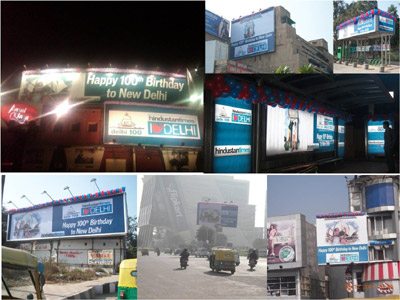
    Hindustan Times, the top English daily in New Delhi, has been celebrating the 100th Birthday of New Delhi under the banner of ‘I Love Delhi’ throughout 2011 and is getting ready for a high point on December 15 – which is the day the foundation stone of New Delhi was laid and which paved the way for the metropolis to develop.

    Shantanu Bhanja, Vice President – Marketing, Hindustan Times, has said, “I Love Delhi is a continuing initiative for Hindustan Times since it encapsulates our feelings for this beautiful city perfectly. Every year, we have a theme for the initiative and this year, what else could it be except the Centenary of the Capital. We have done a series of events already and hope to bring it to a grand closure now.”

    Hindustan Times is organizing the New Delhi 100 Conclave (on December 15,), inviting Delhi’s most prominent citizens to share their vision of Delhi over the next 100 years. On the occasion, Delhi Chief Minister Sheila Dikshit will release a coffee-table book that puts together Hindustan Times’ entire coverage of New Delhi 100 over the last year.

    Hindustan Times has a large outdoor campaign around Delhi-NCR on currently. In the campaign’s innovation, most sites have been decorated with red and blue balloons, wishing Delhi on its 100th birthday. The balloons give the city a festive and colourful look.

    Hindustan Times kicked off the celebrations for New Delhi’s 100th birthday on January 1, 2011 with an editorial series around various aspects of the evolution of the city. Chronicling how the political, cultural, social and architectural landscapes of the city have changed through the decades, this series was done at regular intervals throughout the year. One of the highlights of this series was the 100 Icons of Delhi – a listing of 100 buildings and institutions that define New Delhi as we know it today.

    In addition to the editorial features, Hindustan Times carried out several initiatives to increase reader engagement throughout the year under the Delhi 100 platform.

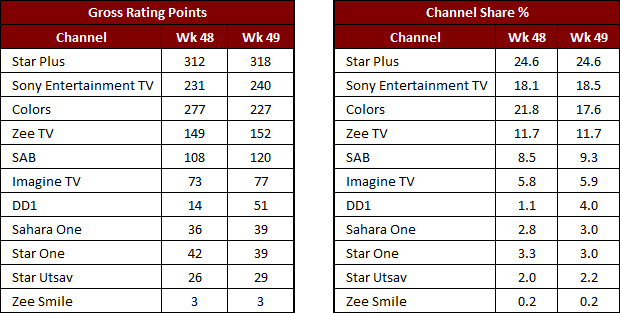
  • GRP Channel shares of HGECs- Wk 49 2011

    Source: TAM Peoplemeter System

    TG: CS 4+ yrs

    Market: HSM

    Period: Wk 48: Nov 20 to Nov 26, 2011

    Period: Wk 49: Nov 27 to Dec 3, 2011


    About TAM Media Research


    TAM is a joint venture between Nielsen Company & Kantar Media Research. Besides measuring TV Viewership, TAM also monitors Advertising Expenditure of Television, Print & Radio through its division AdEx India. Since 2004, it extended its presence in the PR Measurement & Analysis space for Corporate/Marketing Clients by setting up a separate division Eikona PR Measurement.


    In 2007, the joint venture introduced RAM (Radio Audio Measurement) service to track Radio Listenership for the Indian Radio Broadcast Industry. In year 2009, TAM launched a division, called TAM Sports that specializes in monitoring Sports Sponsorship ROI.


    TAM Media Research’s objective is to fuel media insights that will drive the growth of the Indian Media Industry.