Tag: YouTube

  • Helios Media forays on to digital with SanjeevKapoorKhazana

    By A Correspondent


    Helios Media, the speciality services company for the broadcast sector, expanded its services to now also include digital media monetisation and the venture begins with bagging the mandate of representing Sanjeevkapoorkhazana


    Helios will work in embedding brand’s messaging within the content of the channel which claims to be the largest non-Bollywood YouTube channel in India, generating over 85 million views per month.


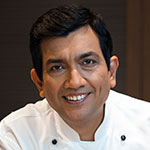
    Sanjeev Kapoor

    Speaking on the assignment, Chef Sanjeev Kapoor said, “Sanjeevkapoor.com was one of the first websites to make its presence in the country. Being a pioneer in the space, it is quite evident that our YouTube channel has garnered a huge subscriber base of 2.7 lakh. Our popular videos generate as much as 1mn+ plus views. This therefore becomes a great destination for brands to not only reach a large consumer base but also to capture the most appropriate mind-space. Helios Media has been partnering us on monetising FoodFood for a year now and I believe in their understanding of the space and the skill to position brands in the right environment which will help SanjeevKapoorKhazana realise its full potential in terms of revenue maximization”.


    Divya Radhakrishnan

    Commenting on the win, Divya Radhakrishnan, MD of Helios Media, said: “Helios Media’s focus is on selling brands and not just commodities by appropriate positioning and working with brand custodians to provide seamless solutions that go beyond regular commercial advertising. We strongly believe that TV has grown beyond just providing reach and its content has the Power to Influence. Therefore it is important for commercial messaging to chase the content irrespective of the screen it comes on. It’s because of this approach that the SanjeevKapoorKhazana mandate came our way and we are delighted to be entrusted with this responsibility by Chef Sanjeev Kapoor”.


    Helios Media has augmented its existing team with a central digital team in Mumbai under Kirtan Mankad who has earlier worked with UTV, Zoom and Hungama.


  • 10 cultural trends that will define entertainment in future: Mindshare report

    By A Correspondent


    The future of entertainment will follow 10 cultural trends, according to a report by media agency network Mindshare. The report, “Culture Vulture, Entertainment – inspiring original thinking through a deeper understanding of cultural trends”, was released this week to coincide with the 90th anniversary of the Walt Disney Company.


    The report, which details the ten cultural drivers of change within the entertainment industry, includes a scout report from Mumbai, detailing its addiction to Electronic Dance Music (EDM). From the numerous dance events popping up all over the city, such as the Sunburn Festival in nearby Goa and Submerge; toTenzi FM, the EDM-dedicated internet radio station, featuring over 200 international DJs and broadcasting all genres to listeners world-wide, Mumbai is cementing India’s place as a premier destination for EDM.


    Predictions from the paper include continued demand for real-life experience despite availability of virtual and artificial entertainment and an increase in snacking – consuming small pieces of entertainment, often delivered on the move.


    Ten Cultural trends:


    1. Collective Curation, Helping consumers navigate entertainment. (Me Nation)

    2. Press Play, The spread of gaming to new audiences and to new activities. (Power Play)

    3. Immersive Layered Entertainment, Entertainment in multiple environments. (Maximising Moments)
    4. Feast for the Eyes, Visual images that simplify stories and immerse our senses. (Visualization)
    5. Real Deal, Craving credible talent & live experiences in the face of the artificial and the virtual (Seeking Authenticity)
    6. Unplugged/Plugged In, Uncluttering the entertainment world, both by turning off technology and by turning it on. (Simplification)
    7. Social Entertainment, From group fun to group decision making. (New Networking)
    8. Snacking & Bingeing, Snacking or indulging in moments to be entertained. (Snacking)
    9. Local Talent, Celebrating and consuming locally grown talent. (National Celebration)
    10. There’s New Business Like Show Business, Traditional models broken, new rules abound (New World Order)


    Experts from global entertainment brands including YouTube, VEVO, Parlophone/Warner, Microsoft and Spotify were also interviewed on the trends they are seeing in the market, which included the move from a passive viewing audience to a creating audience enabled by global content platforms.


    The report includes a breakdown of each cultural trend and what it means to brands, plus “Scout Reports” from twenty cities in the Mindshare network, providing insight into local trends in entertainment and how they map against the research. City reports include “Big vs Small” in London, “Dance in Trance” in Mumbai and “Youth Power” in Toronto.


    Said Catherine Williams, Partner – Strategy at Mindshare Asia Pacific said, “Entertainment in Asia is now an always-on customised experience. People have power to adapt their entertainment instantly by choosing to curate, binge, turn off or collect. Content now has competition and it’s consumer control. If brands want to continue to play in this space they need to be on their A game because the consumer is spoilt for choice.”


    Ravi Rao, Leader – South Asia,added: “We already know from our studies – like Mindreader – that music is one of the most loved entertainment indulgences. EDM in fact is second only to Bollywood film music in terms of popularity with GenNext in India. The city specific ‘Dance in Trance’ culture vulture report takes a deep dive into this phenomenon of EMD with an eye on being able to craft culturally adaptive entertainment experiences for consumers. This is just one of the many initiatives that Mindshare is driving in pursuit of providing our clients’ customers, experiences in media which will have a remarkable resonance.”


    The report, “Culture Vulture, Entertainment – inspiring original thinking through a deeper understanding of cultural trends” can be downloaded from: http://www.mindshareworld.com/s/CultureVulture


  • YouTube launches Comedy Week in India

    By A Correspondent


    We aren’t armed with research to endorse this view, but comedy (other than porn and moviews) is possibly the most watched on the internet.


    So we weren’t really surprised when YouTube, in collaboration with leading Indian content producers and production houses, announced the launch of Comedy Week in India. Running from September 5 till 12, YouTube will play over 400 hours of comedy content at www.youtube.com/comedyweek.


    The week will feature a range of content including comedy scenes from Bollywood, TV comedy shows (Comedy nights with Kapil),Great Indian laughter challenge, MTV Bakra, Kahani Comedy Circus ki), mimicry, and regional language comedy content in Telgu, Tamil, Marathi, Punjabi, Malayalam, Gujarati and Kannada.


    As part of Comedy Week, YouTube, in partnership with production houses, has also launched over 35 new YouTube exclusive shows featuring stand-up comedy acts from the biggest names in comedy in India.


    Speaking at the launch of Comedy Week, Gautam Anand, Director Content partnerships for YouTube APAC said, “Here in India, comedy shows contribute to over 30% of total watch hours within the TV shows category, and in the past year, their viewership has shown one of fastest growth in viewership. Bringing Comedy Week to India allows us to give India’s audiences more of the content they love and discover new content that they can only enjoy on YouTube.”


    Sandeep Menon, Director Marketing for Google India, also launched YouTube’s first television commercial in India for comedy week. The two TVC on YouTube for Comedy week will be 45 seconds each featuring Cyrus Broacha (http://www.youtube.com/watch?v=ofwiT0pSbqs) and Sudesh (http://www.youtube.com/watch?v=1kCiZJ5M65s)


    Comedy week will also feature content from premium broadcasters and film production houses like Rajshri, Eros, T-series, Shemaroo, Disney, Star, Colors, SabTV, Sri Adhikari Brothers, Telguone, MTV, Yash Raj films who will showcase content from this existing catalogues and specially produced content for Comedy Week.


  • Max goes 360-degree for Aashiqui 2

    By A Correspondent


    It appears to be the time when movie channels are going big on promoting the films they are airing.


    Max from the MSM/Sony stable has deployed a 360-degree marketing campaign for Aashiqui 2 that’s set to be aired on July 28. The campaign entails the use of various tools like Television, Print, Outdoor, Digital, DTH and Cinema.


    Said Vaishali Sharma, Marketing Head, Max on the campaign: “We have strategically and creatively used different media effectively to create experiential and interactive opportunities for our audiences. Building on the theme of romance and the music of the film that has captured hearts of millions, we have recreated the magic of Aashiqui 2 across outdoor, digital and on air. We have got the stars of Aashiqui 2 to enhance this experience further, inviting and enticing audiences to be part of the experience on Sony Max.”


    On the social media platform, the Sony Max Facebook page has a daily love tip for all its followers where fans get advise on their love life. It has created a special ‘Aashiqui 2 Lovemeter’ which calculates the love quotient between you and your partner. A contest called ‘Aashiqui 2 Moments Contest’ where Facebook fans can upload their best romantic pictures. Shortlisted pictures will be showcased in the end credits of the premiere.


    On July 26, Aashiqui 2 roadblock videos is set to greet all Youtube viewers. A contest will also happen where audiences would be asked questions related to the movie. Lucky winners will meet Aditya Roy Kapoor and Shraddha Kapoor.


    With outdoor, a movie poster will be installed on a rotator at various major drive-heavy roads of Mumbai. A hoarding outside National College in Bandra will be covered with real roses which has to plucked by spectators revealing the Aashiqui 2 poster.


    Then there’s the musical bus stand which will play live music from the movie for the benefit of commuters.


  • The YouTube way to fame in filmland


    By Sangeetha Kandavel


    Not long ago, wannabe Tamil movie directors had to undertake a long and arduous journey toward the silver screen. It would start with desperate attempts to become one of the many assistants to a leading film director, in the process having to prove their love for books, literature and scripts.


    Then there would be a period of apprenticeship, in between running errands and doing odd jobs. The process would encounter a happy end only if the rookie, after knocking at the doors of numerous producers, found someone with the money to back his script. Many are still initiated this way.


    But eight directors, who have made their debut in the Tamil film industry over the past year, have hit upon a liberating alternative: making short films for the YouTube audience.


    For as little as 5,000, rookie directors have been able to make short films for release on YouTube, Google’s video streaming site. The shortest of these films is just five minutes long and the longest, 45 minutes. Some have gone on to spend a further 50,000 to market their films on social media.


    The YouTube initiation has helped these rookies learn, make and market their work at a very low cost. They also save time – the many years of exasperated hanging around to get noticed by directors and producers. And it may take only three or four days to make such films. But most importantly for the industry, these directors have been able to make a new kind of cinema, largely unknown to the industry because producers didn’t have the conviction to back such ideas.


    Take the case of 26-year-old Balaji Mohan, who broke fresh ground with his movie Kadhalil Sodhappuvadhu Yeppadi (How to mess up in love). The short movie, posted on YouTube, went viral and caught the attention of actor Siddharth and cinematographer Nirav Shah.


    The duo asked Mohan to make a full-length movie, which like the YouTube short film was a fresh take on love. It ended up a hit in 2012.


    Not Following Regular Formula

    “People across the industry watch films on YouTube. So, with the likes and dislikes, you get to know your scorecard,” says Mr Mohan. His film was the first of many whose storylines haven’t followed the time-tested formula of Tamil movies – action (including the sickle-wielding variety), romance or sentiment. Thirty-three-year-old Nalan Kumarasamy made as many as eight short films for YouTube. These have clocked nearly 1 lakh views online.


    “Though I don’t monitor it regularly, I do check the site once in a while and the comments help do a better job next time.” When the opportunity for the big screen came, he was more than prepared. His debut film, ‘Soodhu Kavvum’ (Evil engulfs), was a big success, raking in over eight times the Rs 2-3 crore invested in it.


    “Though I didn’t make any monetary gains through YouTube, it did help me with popularity. The advertisements are small and revenues low on YouTube,” Mr Kumarasamy says. “I was basically a scriptwriter. I became a competent director because of my short films,” he adds. His producer, 34-year-old CV Kumar, is fast becoming a pro in turning YouTube short film directors into big screen successes. Kumar’s last three films – ‘Attakathi’ (Cardboard knife), ‘Pizza’ and ‘Soodhu Kavvum’ – have been well-received. “Most of the movies I have produced are (made by) debutant directors, who make their first move on YouTube. Since you’ve have already seen their work, it is easier to evaluate them,” says Mr Kumar.


    His next three movies – ‘Pizza 2’, ‘The Villa, Thegidi,’ and ‘Mundasupatti’ – also have their origins in YouTube short films. The Tamil film industry, which churned out 150-odd films in 2012, is constantly in need of ideas and new talent. What’s helping these young directors is that equipment (digital camera) is getting cheaper by the day. Reaching out via a platform such as YouTube costs virtually nothing, and a big cast isn’t mandatory. ‘Soodhu Kavvum’ director Kumarasamy, for instance, was helped by the fact that he was part of a TV programme for upcoming directors (‘Naalaya Iyakunar’, or Tomorrow’s Director, on Kalaignar TV). Vijay Sethupathi, the lead actor in ‘Soodhu Kavvum’ and the most reliable bet in Tamil cinema with a string of offbeat roles, is working with many of these debutant directors.


    “If YouTube weren’t there, the world would have not known that Vijay Sethupathi even existed. It was the platform that brought me into limelight.” G Dhananjayan, who heads business in south India for Disney UTV, says producers are willing to look at short-film makers using YouTube as an entry point, and these directors have proven they can make good and interesting films. Ashok Holla, director of Berserk Media, says there might not be too many other examples in India. He cites as an example Uruguayan film-maker Fede Alvarez, who got noticed after his five-minute film ‘Panic Attack’ went viral. Alvarez now has a deal with Ghost House Pictures, promoted by director Sam Raimi, whose films include ‘Evil Dead’ and ‘Spiderman’. “Earlier, new directors got noticed when they directed music videos or TV commercials,” says Mr Holla.


    A similar wave of change is sweeping over the Malayalam film industry, though the old formula – mass movies with established actors and players – is still overwhelmingly present. But taking to YouTube isn’t a sure-shot way to the big screen. A filmmaker who has made seven short films points out that he still hasn’t got noticed by people who matter.


    “There are other avenues for people like me. Websites buy short films from us and a lot of people watch them and we get paid accordingly.” Sasikanth Sivaji, who produced ‘Kadhalil Sodhappuvadhu Yeppadi’, says short films posted on You-Tube are like a visiting card for a foray into the industry. “Today, lots of producers are not qualified to read scripts. In these cases, You-Tube comes as a saviour.” Further, he says, those gaining prominence this way know how to manage budgets well because they are aware of the value of the money invested.


    Source:The Economic Times

    Copyright © 2013, Bennett, Coleman & Co. Ltd. All Rights Reserved

    Licensed to republish


  • Desi travel portals not amused as Google is set with flight search in India

    By Indu Nandakumar


    A fledgling effort by Google portending the launch of its flight travel search service in India is creating jitters among online flight aggregators, who fear their business model is under threat.


    Google, whose services include Gmail and YouTube, is “very close” to introducing Flight Search in India, according to people with direct knowledge of the plan. Flight Search – first launched in the US and then in parts of Europe – lets users compare fares offered by airlines and book tickets directly from airline websites. This could, in effect, make flight aggregators such as Makemytrip, Yatra and Cleartrip redundant, industry observers said. Another website, kayak.co.in lets users compare flight options from hundreds of travel sites at once.


    In response, the aggregators are considering steps to protect their interests, including a possible complaint to the Competition Commission. They claim discrimination by Google when it comes to search results for queries relating to online travel.


    Separately, Google is the subject of investigations by the Competition Commission based on complaints that it is abusing its dominance in the country’s search-engine market. In February last year, matrimonial site Bharatmatrimony.com had filed a complaint against it.


    Company already faces probes in US, Europe

    Last month, Google launched a ‘Start Searching India’ campaign aimed at providing users with instant responses on weather and flight status, among other things. This move was read as precursor to the eventual launch of Flight Search in India. Google India said in May that it does not comment on future plans or speculation when asked about its plans to launch Flight Search in the country.


    Hrush Bhatt, founder and director of travel portal Cleartrip, refused to count Google’s Flight Search as a direct threat but conceded that it could alter the way aggregators allocate their online marketing budget. “We are not sure what value Flight Search would add to consumers, especially if it can only let you compare prices,” he offered.


    Online travel firms such as Yatra.com, Makemytrip and Goibibo declined to comment. Google denied any knowledge of market participants planning to approach the Competition Commission but said that in the event of that happening, the company will extend “full assistance and cooperation on the matter.”


    “We’re always happy to answer questions about our business,” the company said. KPMG’s Tuteja said that Flight Search is likely to be popular among India’s fast-growing internet user base-150 million at the end of 2012-that has been increasingly been booking travel tickets and hotels through online portals.


    In Europe, Google’s Flight Search is under pressure from travel portals such as Expedia and Trip Advisor, which have filed antitrust complaints against Google with the European Commission for promoting rival services and disrupting fair competition in the online travel space. Flight Search makes use of the vast amount of flight-related real-time information from US based travel information company ITA Software.


    Source:The Economic Times

    Copyright © 2013, Bennett, Coleman & Co. Ltd. All Rights Reserved

    Licensed to republish


  • MxM Mondays: Why do marketers not spend enough on digital media?


    By Ananya Saha and Robin Thomas


    According to the latest IAMAI-IMRB report on Digital Advertising, as of March 2012, the total advertising spends, including classifieds, was valued at Rs2,850 crore. It is expected that by FY2013 the digital advertisement spends will be Rs4,391 crore.


    Search advertising constitutes about 20 per cent of the total online advertising spend or about Rs570 crore. Display advertisement, which has many components, forms a sizeable portion of advertising spends. Advertisements on portals and vortals form 13 per cent of the overall pie (Rs369 Crores). Advertisements on Social Media, Email and Videos over the Internet form 3 per cent (Rs94 Crores), 5 per cent (Rs144 Crores) and 2 per cent (Rs59 Crores) respectively. Mobile ads form nearly 4 per cent (Rs90 Crores). A major proportion – around 53 per cent of the overall digital advertising spends – are classifieds listings (Rs1,496 Crores).


    These numbers seem impressive, but there has been some concern that marketers are not spending enough on Digital Media. The theme for this week’s MxM Mondays is ‘Why do marketers still not spend enough on digital?’ While marketing spends may be shifting to the digital media globally, in India, television and print still rule. Is it because digital still doesn’t reach the masses, and homemakers, in particular? Or is that the bucks (hence commissions) are still big in TVCs? MxM spoke to some players in the industry to find out:

     

    Ambika Sharma

    Ambika Sharma, MD and CEO, Pulp Strategy

    The shift to digital media is not happening as fast as the industry would like it to be. However, we are witnessing an increase in aptitude and attitude with regards to usage of digital media. Marketers are not using the media aggressively as they prefer to wait-and-watch. Even then, they are aggressive on ‘search marketing’, but not other aspects of digital media.


    There is hardly any youth brand which is currently not on digital platform. Education is one prominent category that has been using digital media. The cents for digital, however, remain restricted. But as the impact of digital media grows, the impact of mobile advertising has seen a decrease as most people now do not prefer to click on banner ads on mobile screens. Some studies show that in the past one-and-a-half-year, the user has been ignoring banner ads.


    The digital spends depend on ROI, search and impressions, which needs robust backend engine. E-commerce websites have been the heavy users of digital advertising to create impressions. But there is little or no response mechanism on impressions and the visibility is highly fragmented. The numbers, like there is TAM for television, are not available for digital media. If a marketer advertisers on three digital platforms, every platform gives their own numbers. So, there is no comprehensive measurable strategy.


    Going forward, digital media will grow, but it will be a long while before it catches up with other media vehicles. Lotof factors such as measurability, reach, people not preferring to buy online are affecting the growth.

     

    Gyan Gupta

    Gyan Gupta, CEO, I Media Corp Limited (IMCL), Dainik Bhaskar

    In the US, the online spend is 29 per cent of the total advertising pie; in UK, it is 26 per cent. Now if you see the figures in India, it is not even 5 per cent. The trend shows that there will be 50 per cent increase.


    But I will not say that marketers in India are spending enough yet. The typical spender (who spends on television) is yet not on-board. Till the main spenders come on-board, the growth will be limited. FMCG’s have a deep share of the pocket, and it is necessary that they spend on digital media. Auto companies, e-commerce companies, financial companies have been heavy spenders on this medium.


    What are the marketers spending on, and how they spend also becomes important. What needs to be analysed is if the cost of acquisition is happening, if the leads are getting generated, how much a brand is spending on digital activation vis-a-vis on brand promotion. Trending is happening. This year will actually showcase the brands spending on digital media.
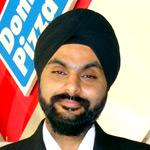
     

    Harneet Singh Rajpal

    Harneet Singh Rajpal, Vice President-Marketing, Domino’s Pizza India

    The use of digital media is picking up in India. For any marketer present in India, the digital media is beginning to become a part of their media plan. It is on radar for everyone, especially in the categories where youth is the target.


    For Domino’s, digital media has been important ever since we began our online ordering platform. Currently, it helps us drive traction. Hence, our media spends for digital medium have increased over the last two years. For us the return-on-investment is visible for every buck we spend on this media, since it results from direct conversion from inventory to revenue generation.


    We now spend close to 4-5 per cent of our total advertising budget on digital marketing, from almost nothing in the last two years. We work with leading publishers in the domain to create applications for Google search, Facebook and social media. I must say that on Facebook, we have the largest number of fans in the food category, and also followers on Twitter.


    Social Media management needs time and investment. It is important that the brand keeps the target in mind when planning the digital activations. Going forward, marketers will have to evaluate the prospects digital media brings. Of course, that depends on category to category. Digital media is still limited because of its reach, whereas traditional media garners higher reach. Also, the confidence about using the media is not too high among the marketers since there are no hard numbers to prove its success. The penetration of internet and the efficacy of the media will be tested over time.


    Jonathan Bill, Senior Vice President and Business Development, Vodafone India

    Digital Advertising is a growing medium in India. It will be everything we are hoping it to be and that too quicker than we think, so I think the business is starting to get in a healthy shape. The advertisers are starting to embrace digital more openly and they should do so, because India has the third largest internet population on the planet.


    On TV and Print bagging bigger ad share, I think that is a legacy issue among advertisers, but I do get a sense that it is fast changing. In the West, however, TV and Print advertising have declined in favour of online advertising. Print, therefore, has very less revenue share from advertisers as compared to online advertising and now online is beginning to even threaten television as a medium.


    I think we just need to continue on the path we are going. The quality of sales and, to a certain extent, the market needs to be made. The West took nearly two or three years to be made as far as the start of digital advertising market is concerned and in India we are only about a year ready. So, I am very bullish on digital advertising in India, particularly on mobile on three to five years timeline.


    Narayanan SP

    Narayanan SP, Senior Vice President, and Head VAS Mobile Commerce and Long Distance, Idea Cellular

    Compared to the global benchmark, certainly advertisers in India are not spending as much money on digital or mobile, but this is something which will change over a period of time. Marketers are experimenting to see if it makes sense for them to connect digitally for certain set of products/features and whether digital is the right medium to communicate or engage their brands. Thus, lot of experiments are happening.


    On the internet front, we are already seeing a significant traction which may not be as big as the international market because of the low internet penetration in India. So if you are looking at a certain type of product wherein the target audience are already digitally connected, then it makes immense sense to go digital. Digital, I believe, will evolve as more and more customer profiling is done and advertisers are able to target their customers precisely. When advertisers are able to measure the ROI (Return on Investment), then we definitely believe that a lot more investment will come into digital.


    The fact that TV and Print still bag more advertising share will definitely change over a period of time in terms of mobile being one of the vibrant channels. This does not mean print and television advertising disappear but, you will see an increase in spends on digital advertising and mobile advertising in particular over a period of time. This is because mobile is able to give the advertiser not only a more precise profile of the customer which makes it a lot easier for the advertiser to reach out to its consumers effectively, but it also allows the advertiser to interact with customers and measure the results of their campaigns effectively.


    Mobile industry, for instance, has a wealth of data in terms of customer usage, but there has not been much mining of the data which can be heavily leveraged by the advertisers. However over a period of time, you will see a lot more advertisers leveraging this data.

     

    Rakesh Rao

    Rakesh Rao, National Sales Head, Zapak Digital Entertainment

    The digital media has been growing exponentially. The year-on-year growth of this media vehicle is close to Rs2,800 crore, and is supposed to reach close to Rs4,000 crore in a year. So to say that it is not a preferred media would not be the right statement. Of course, it is not a dramatic growth, but given the growth of internet and smart phones, digital media is becoming a part of our daily life. The marketers are also following the trend.


    The ROI, when compared to TV and radio, is much more measurable. Cost per lead and cost per click measure actual conversions. This is the only interactive platform too, while rest of the media only give reach.


    Education, travel, finance are becoming the biggest spenders on digital because of conversion aspect. E-commerce, and categories like travel that look at selling inventory believe in digital media.


    The challenges that this media is encountering is getting TV-centric brands such as FMCG onboard because of reach. It is a given that while TV is cost-effective when it comes to reach, digital media will catch up in some years. About 60 per cent of these brands are on digital, but 40 per cent need coaxing. There is no hindrance apart from the fact that broadband numbers need to grow. Digital media is here to stay and grow.
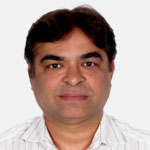
     

    Sandip Tarkas

    Sandip Tarkas, President (Customer Strategy) and CEO, Future Media and T24

    As far as Future Media is concerned, our advertising spends on digital have been increasing year-on-year. Despite a lot of digital activities done by marketers specifically on social media, it does not reflect in spends. The problem with digital is not a lack of a credible or universal measurement system, but the fact that it is too measurable as people try to measure every little thing. Although there are so many metrics which evaluate the digital medium, I don’t think it is a lack of measurability at all, as in digital we are clearly able to measure our CPM’s (Cost per Thousands) and so on. Digital is something we use for more engagement rather than reach because it does not offer reach.


    We look at advertising based on two things – reach and cost efficiency. And then you look at everything else – whether the medium is interactive and so on. So, it is primarily about reach and cost efficiency. Digital media spend in India is a reflective of India’s internet penetration, whereas in a lot of markets digital penetration is very high. In those markets both print and television advertising have declined and digital advertising has been growing.


    In India too, digital is growing much faster than the traditional media, and the growth of the media certainly shows the growing importance of digital. The current size of the digital advertising pie is reflective of the kind of inroads it has made in the country.


    On digital being a 360-degree medium in itself and the role of online video and social media advertising, the biggest gain happening in digital at present is the fact that it is changing quite rapidly. Since the late 90s when we first started using digital advertising until now, the role of the medium has changed quite drastically.


    Digital today not only offers more opportunities for engaging the consumers, but the vehicles used in digital have also been changing with time. For instance, in the early days television ads would continue for quite a lot of time, but today with more options, even the television channels have begun to announce that the programme will be back in say a minute or two. So as consumers have more choices, the way the medium gets utilized also changes. Digital, I believe, be it in any form – video, social, mobile – if it is not going to be interactive, it will not be very successful.


    For anybody targeting the youth, digital is an inescapable medium. I believe the biggest change in digital advertising will take place through mobile, particularly mobile VAS and the data cost. Growth spurt in digital advertising will also come through the increase in smart phone usage and the lowering of data cost will revolutionize digital advertising.


    This is because India has a very high tele-density and today mobile phones have reached the lower-most strata. I believe digital advertising in India will explode once mobile advertising comes of age but, right now it is still in its infancy.


    Eventually digital advertising will impact television and print ads as marketers will have to allocate their budgets for digital advertising, once it comes of age. It may probably hit print advertising first and then television but for that to happen there is still some time.

     

    Sanjay Tripathi

    Sanjay Tripathy, Executive Vice President – Head Marketing and Direct Channels at HDFC Life

    There is still limited spend on digital due to lack of knowledge about the medium and utilizing it effectively as a part of marketing plan; reach/penetration of the medium; and its ability to create impact in the short term. Digital still reaches about 10 per cent of the Indian population and there hasn’t been much of a development in building infrastructure to support the growth of internet. TV continues to be the mass medium which gets the maximum eyeballs and reach.


    While the ROI variables will drive spends to digital, marketing needs a serious mind shift to look at the additional advantages which digital brings along –  a medium which allows two-way dialogue  and measurability to the last mile.


    Thirty per cent of our budgets are dedicated to digital this year – a big move from the fact that we spent a negligible amount last year. As BFSI marketing and advertising becomes more ROI focused, digital media will play an important role. Digital budgets will have a healthy growth each year and will also account for a significant part of the marketing budget.


    While marketing spends may be shifting to the digital media globally, in India, television and print still rule. This is because reach plays an important role. Penetration of Internet in India is still low compared to international markets. The consumption of non-traditional online media is still low and 360 degree integrated communication planning in India has not evolved to have online as an integral part of marketing plans. Also, online medium do not works in sync with other media.


    While there has been a tremendous amount of growth in the usage of internet among SEC A, SEC B audience, internet is yet to gain as big an audience in tier 2 or tier 3 cities. TV continues to be the mass medium due to lack of digital infrastructure. It is the reach and channel affinity which mainly drives the spending and this is where a traditional channel like TV gets one up over digital. There is also a problem of lack of content on digital. Either the content has not been customized to cater to the audience or often the language becomes a hindrance in consuming the content.


    But digital media will make a huge impact. Level of engagement, interactivity and ROI afforded by the medium means it has big role to play. For brands which don’t engage their users online will tend to lose their relevance. As reach increases, the importance and level of competition will also increase –  YouTube already affords a higher reach compared to most of the TV channels and is increasingly becoming an important part of the traditional media mix.


    Digital offers tremendous potential for business – whether it’s about spreading awareness or generating business even in the face of a slowdown. In fact, as people tighten up their purse strings, they will want to do more research before they arrive at a purchase making decision and internet remains the primary medium of product research.


    I see the spends going up because the whole media pie has been asymmetric- if you look at the reach-frequency formula and compare it to TV, print, radio and then digital. There are more people spending time on digital in comparison to other traditional media touchpoints. I see the digital percentage increasing in the overall pie.


    Youtube and pre-roll videos have become a mainstay when it comes to hosting TVCs on digital and these unique ad formats are as effective in reaching out to audience as a TVC. For print QR codes help bridge the gap between offline and online world.

     

    Saugata Bagchi

    Saugata Bagchi, Senior VP, Tribal DDB India

    The primary challenge is the need of cracking an ROI metric, which is acceptable by advertisers across the board.  The media spends are happening, but is it delivering enough clickthrough rate goes unanswered. Digital media cannot ensure high reach like television, but with 12 per cent penetration among various categories it can definitely give high frequency. Currently, only 25-30 per cent of population is online; hence, the spending on this medium will remain lower than other mediums.


    The point of advantage is that there is a big influx of youth, and they are ready to spend. While the marketers would want to catch the youth online, they (marketers) get no justification in form of numbers to spend much on media. Hence, they prefer doing mall activation to spending on digital platform. The agency and publishing community need to be more forthcoming to speak to the marketers, and in their language.


    Digital media is currently registering 15-18 per cent year-on-year growth, but it is important to note the gap between digital and television media.


    Since the offices of MxMIndia are closed on Monday, August 20, there will be no MxM Mondays next week. We will announce the theme for the next edition on Tuesday, August 21.



  • Now, a YouTube ‘Content Creators Network’ for India

    By A Correspondent


    Nirvana Digital, a leading creator and distributor of audio and video content across Internet and mobile platforms, has launched a “YouTube Content Creators Network” that will start the creation of original content as well as the distribution of produced video content from the Indian market across YouTube channels.


    Through this network, Nirvana Digital aims to capitalise on the exploding power of YouTube, which at current estimations is around 800 million monthly unique user visits across the globe, and a staggering 30 million inIndiaitself.


    Nirvana Digital’s new YouTube Content Creators Network provides an opportunity ranging from individuals to large organisations. The network will enable them to upload content for immediate distribution, monetization and direction of traffic.


    The potential for “talent” to tap into YouTube inIndiais immense as YouTube is emerging as the first global TV station. It has committed $100 million to 96 new video channels and has recruited topHollywoodtalent to produce content.


    Nirvana Digital specialises in the distribution of movies, music videos, documentaries, web shows, news, gossip, and has already established itself as the distributor of top quality Bollywood and mainstream content.


    In the words of Pinakin Thakkar, Founder, Nirvana Digital: “The digital platform is large enough globally for video creators to still have their fame and recognition, and we are here to help creators and content owners push content to a global audience while earning immediate revenue from their videos.”


    He added: “YouTube, which delivers one out of every three online videos viewed (according to ComScore), has become an increasingly important distribution channel for content creators, established media companies and advertisers. As the demand for quality digital content grows across the world, Nirvana Digital is keen to create brands out of video creators inIndia, monetize them anddrive traffic to them from its existing networkof millions of views.”


    Nirvana Digital will also help independent video producers capitalise on the YouTube revolution to create content which receives direct feedback from audiences across the world. The model brings together different individuals, gives them support and infrastructure to collaborate and build audiences around their content across various distribution channels. Towards this end, Nirvana Digital provides their own specialized web video studio at Peddar road in South Mumbai with green screens, high end cameras (Canon 5D MKII) and lighting facilities. They also have a dedicated team who to help with the technical aspect of encoding, uploading and promoting videos, as well as animators for videos that may benefit with CGI.


  • MTunes HD launches ‘MTunes Trending20’

    By A Correspondent


    MTunes HD – the HD Bollywood music channel has announced the launch of a countdown show called ‘MTunes Trending20’, presented by Bharti Airtel. This is in keeping with the channel’s premise of delivering “music like never seen before”.


    Historically, countdown charts have been based on record sales. However, given the fact that music consumption is spread across multiple platforms these days, MTunes Trending20 brings to its viewers a comprehensive analysis of audience preferences across 5 platforms. The final chart will be compiled by leading media research firm Ormax Media.


    The five platforms will be Radio popularity compiled by Radio City, Digital downloads provided by Hungama, YouTube views & Heartbeats (weekly music research) by Ormax Media and audience preferences as recorded by MTunes HD. A normalized measurement formula based on TV Ratings Data, Radio Aircheck, SMS requests, downloads/usage tracking across mobile service providers and views count on popular internet video sites will be collated to generate the weekly chart.


    Presented by Bharti Airtel, the weekly show – scheduled to launch from August 04 every Saturday – will play the top 20 songs of the week. Through the week the top songs on MTunes Trending20 will also be highlighted on the daily play list.


    Speaking on the occasion, Saravanan P, CEO of MTunes HD said: “MTunes Trending20 is a reaffirmation of our promise to deliver ‘Music Like Never Seen Before’ and strengthens a long line-up of path-breaking formats like Kal Ka Superhits, Handmade and MBox already on the channel. We have pioneered the industry by launching the World’s first HD Bollywood Music Channel and are committed to consistently drive growth for our stakeholders. This show will deliver the gold standard of Bollywood music rankings to the industry and is among several initiatives in the pipeline that will make the MTunes HD viewers feel the music!” The channel is reportedly pricing the property at a premium and is confident of changing the game for the genre with its unique concept and distinct proposition.


    Shailesh Kapoor, CEO-Ormax Media added: “Today, music is consumed across media – television, radio, internet, mobile phones and other digital devices. MTunes Trending20 is a unique property that captures the combined effect of all these media.”


  • Alpenliebe re-creates irresistibility in Ice Age 4

    By A Correspondent


    Perfetti van Melle India, the market leader in confectionery, has partnered with Fox Studios for the latest marketing campaign for Alpenliebe. The creative for the campaign is set in Ice Age, the internationally successful franchise from Fox, with the release of its latest installment – Ice Age 4: Continental Drift.


    The campaign aims to bring alive the “irresistibility” positioning of Alpenliebe. In this TV commercial, Scrat, who is one of most loved characters from the franchise, has turned this attention towards his favourite Alpenliebe. But his greed for Alpenliebe cascades into a hilarious chain of events.


    The campaign will surely surprise and entertain consumers and create an excitement around the brand. This campaign can be seen on all leading kids’ channels and on Youtube and Facebook.


    Commenting on the initiative, Nikhil Sharma, Director Marketing Perfetti van Melle India, said: “The objective of this campaign was both to bring alive the brand proposition and to entertain our consumers. Thanks to the support we received from Fox Studios, we have been able to produce a TVC that delivers very well on both counts.”


    [youtube width=”400″ height=”225″]http://www.youtube.com/watch?v=-Wcl2zVWQ14[/youtube]He added: “Scrat’s tireless chase of an acorn is a well established and entertaining part of the Ice Age story and the whole piece fit very beautifully to highlight the ‘irresistibility’ of Alpenliebe – something which is very rarely the case in such associations.”


    Vijay Singh, CEO, Fox Star Studios India said: “Ice Age is the most successful animated franchise in India, and highly beloved amongst children and families; we are really pleased on the association between Ice Age 4: Continental Drift and Perfetti van Melle. The Indian team is very passionate and creative. The idea has been seamlessly depicted in the TVC, from the perspective of both Alpenliebe and Ice Age franchise.”


  • Cadbury’s ‘nayi dosti ka Subh aarambh’

    By A Correspondent


    Cadbury Dairy Milk celebrates the beginning of new friendships with its latest TVC – ‘Nayi Dosti Ka Shubh Aarambh’. The TVC showcases the first magical moments of a blossoming friendship between a young girl and boy on the sidelines of a wedding, an occasion that in itself connotes new relationships. The traditional setting, combined with the contemporary twist results in an easily relatable and youthful TVC which hit TV screens nationwide on July 21 and is expected to have a presence in over 70 television channels.


    To further strengthen the brand’s digital presence, the TVC was released online on YouTube and Facebook on July 13. The response in the first 6 days has seen close to 573,000 hits on YouTube and 10,600 likes on Facebook.


    Speaking on the campaign Chandramouli Venkatesan, Director, Snacking & Strategy, Cadbury India said: “Cadbury Dairy Milk encapsulates an enormous breadth of emotions, from shared values such as family togetherness, to the personal values of individual enjoyment. The latest TVC celebrates and honours another very important aspect of relationships- the start of a new friendship.”


    Abijit Avasthi, National Creative Director, Ogilvy India added: “The campaign is perfectly timed to coincide with Friendship Day on August 5. This is an exciting, action-packed time for youngsters since colleges re-open around this time and they get to meet new people and start new meaningful friendships that last a lifetime.”


    The TVC will be supported by a robust integrated marketing campaign, including on-ground activations in 80 colleges, creative print placements, interesting radio capsules in leading radio stations across many cities and outdoor, to urge people to make new friends and celebrate special “friendship moments”.


    The new commercial plays out at a traditional wedding ceremony. A teenage girl and boy exchange notes on how every family has a “dancing uncle/aunty” and an “allergy aunty/uncle”. They quickly realize that the two families have much more in common than they thought. When the girl excitedly asks, “Tumhaari family mein mere jaisa kaun hai?”, the boy smiles and replies “Main”. A piece of Cadbury Dairy Milk is exchanged to celebrate their new found friendship and the closing VO states “Nayi Dosti Ka Shubh Aarambh. Kuch Meetha Ho Jaaye.”


  • Why CEOs find social media a double-edged sword

    By Nikhil Menon


    Recently, the CEO of Southwest Airlines in theUShit on a novel idea to get customer feedback directly from the source. He put up a question on LinkedIn asking: ‘How can an airline make you, the flier, more productive?’ He got 137 answers from people; many of them detailed essays on what his airline could do to improve its customer experience.


    “That kind of real, authentic feedback is very hard to get when you’re the CEO,” said Hari Krishnan, CEO of LinkedInIndia, as he recounts this story. And there, in a nutshell, you have perhaps the single most important thing about social networks – they are a great leveller. They also blur the line between what was considered one’s professional and personal space.


    From Donald Trump’s tirades against Barack Obama to Michael Dell’s constant praise for Dell’s employees worldwide and Vijay Mallya’s defensive tweets hitting back at critics of his ailing airline, CEOs are stepping up to make themselves heard. And while these are early days inIndia, promoter-CEOs and heads of business families like Anand Mahindra, Mallya and Naveen Jindal are early movers. The list of appointed CEOs on social media like HCL boss Vineet Nayar and RBS India head Meera Sanyal, however, is still rather small.


    Prakash Iyer, CEO of Kimberly-Clark Lever, admits that Indian executives are one step behind foreign CEOs in cashing in on the social media phenomenon: “Whenever something new comes along, we tend to see the negatives more than the good things. But CEOs, no matter what generation or industry they’re from, have to realise that social media is here to stay. And if they’re not using it, they are missing something.”


    If that’s true for heads of private companies, it’s truer for senior bureaucrats inIndia, who are known more for shunning the spotlight than soliciting it. Considering that, Amitabh Kant is a maverick. The 55-year old CEO of the DMIC (Delhi Mumbai Infrastructure Corridor) has an active Facebook account with 1,500-odd friends, a Twitter account he occasionally updates and even a personal blog, amitabhkant.in. Mr Kant reads and writes extensively on his pet interests – travel, urbanisation, photography, technology and cuisine – and also likes connecting with people who share those interests: “Social media has been a powerful and enlightening influence on my work. I read and discuss articles on infrastructure and urbanisation around the world.”


    What’s more, he thinks that others of his ilk should follow suit. “What’s the point of resisting social media? It’s a highly transparent world,” he said, relaxing at hisDelhihome after his mandatory Sunday morning golf session. “And civil servants need to understand that, especially in the RTI (right to information) age. In fact, I feel that the government should ask every bureaucrat above the rank of joint secretary to compulsorily be on social mediums to become more accessible to the people.”


    As long as we’re in the realm of wishful thinking, Jessie Paul has a gem of her own. As the battle to decideIndia’s next president rages on, the managing director of Paul Writer jokingly urges people to consider her for the position. When asked about her ambition to occupy Rashtrapati Bhavan, she chuckled: “I am a woman, so I am in a political minority. Besides, I am a Tamilian, married to a Bengali, so I should be acceptable to both Jayalalithaa and Mamta di. Why not?”


    Her irrefutable logic is met with much hilarity and even endorsement by the people who follow her. But looking beyond her easy candour, what’s interesting is how the managing director of Paul Writer effortlessly wields social media across half-a-dozen platforms.


    For Ms Paul, who is a regular on content sharing and networking sites like Slideshare, Youtube, Facebook and Flickr, online networking sites are food and drink.


    The author of a book on frugal marketing and former Chief Marketing Officer (CMO) of Wipro was one of LinkedIn’s first users inIndiain the early 2000s. In fact, Mr Krishnan of LinkedInIndiasaid that Jessie Paul is a case study, in the way she created a network of CMOs in her earlier avatar to trade best practices. Ms Paul eventually quit Wipro and started Paul Writer, through which she gives companies the benefit of her experience on tackling the social media beast. “Social media is more than about making friends or killing time; there’s some serious knowledge sharing going on, and more importantly, there are huge business opportunities waiting to be explored there,” she said.


    Some may argue that given her marketing background, it should be no surprise that Paul is so comfortable with social media. And it’s also worth mentioning that Amitabh Kant hasn’t been a ‘typical’ insular bureaucrat either. It’s been easier for Paul and Kant to brand themselves because social media has always been core to their interests and professions.


    Mr Kant, a 1980 Kerala cadre IAS officer, was earlier Joint Tourism Secretary with the Ministry of Tourism. He was also part of the teams that came up with the ‘Incredible India’ and ‘God’s Own Country’ (Kerala) branding campaigns in his former avatar. Mr Kant has written a book, Branding India, and is now co-launching an online initiative to promote ‘ancient Indian cuisine’. “It’s important to have interests outside of work. And using social media doesn’t take really much time – not when you’ve got the whole world on your smartphone,” he said.


    Using social media for casual networking may be a stretch, given that many CEOs don’t even use it for work. Tanvi Bhatt, founder of Panache Studios, advises many senior managers on personal brand management, of which online reputation management is a part. She said that less than 5 per cent of the senior executives she meets have a social media account.


    “They’re not even on LinkedIn, which I find amazing. These days, clients and partners Google senior executives before meeting them face to face. And if they don’t find them online, they start having doubts about the person’s or organisation’s credibility,” she said.


    The reasons for not having an account vary. Some CEOs are conservative by nature. Others don’t understand social media – and prefer to be safe rather than sorry. And then there are those who feel ‘I don’t need to do this, I’m the CEO’. Ms Bhatt said: “A lot of them think in terms of ‘what’s in it for me?’, whereas they should be thinking ‘what can I share from my knowledge and experience with the world?”


    Rajiv Dingra’s company WATConsult was one of the early movers in the social media consulting space back in 2007. And while he’s done a lot of work with companies, getting CEOs to apply themselves to the socialscape has been frustrating. “Frankly, Anand Mahindra is the only top CEO doing a good job – he connects with interesting people on a personal level, addresses complaints and leverages customer testimonials. The rest are rather boring,” he says. But there are those, like 30-year old venture capitalist Kris Nair, who are the very opposite of boring.


    Mr Nair, who heads Opdrage Ventures and has invested $20 million in about 33 companies so far, is unapologetically himself. He speaks his mind on everything from entrepreneurship to poetry to physics, rails at ‘idiots’ with the odd four- or five-letter word thrown in for emphasis. Sitting at a posh coffee shop in Bandra, Mumbai, he pushes his iPhone across the table so I can get a look at all the social apps on it. After the first dozen or so, I lose count.


    “A lot of my deal sourcing happens through social media. So I have to speak to my target audience of entrepreneurs and members of startup communities in a language they understand. I can never be a ‘suit’ and keep saying the right things,” he said, adding the last line with obvious contempt. It hasn’t always been smooth sailing, however. Once Mr Nair wrote against the Anna Hazare-led agitation and that got him in trouble, with threats pouring in online and offline. Then there was the time one of the investors in his fund asked him to curb his freewheeling style on social media.


    “They were afraid I might leak confidential information. That didn’t make me stop, of course, but I have mellowed down for sure,” Mr Dingra conceded that at some level, he understands the concerns senior executives have. “Being on social network is like being in a press conference 24/7. People can be particularly myopic and unforgiving on the Internet. The media can take your words and twist them around. You need to have a thick skin and take the bad with the good.”


    Ms Paul added: “Unlike western consumers, some buyers inIndiaare still immature. People will target you online if the washing machine made by your company doesn’t work. You have to be pretty confident of your service, especially if you’re in a B2C model.”


    While the possibility of being targeted always looms large, Meera Sanyal, chairperson and country executive of Royal Bank of Scotland Group feels social media provides a quick and very interactive channel for customer feedback.


    “While some of this may not be complimentary- if one uses the opportunity to remedy problems swiftly, then the organisation can build really good relationships with clients,” she said, “Therefore, I do act swiftly upon complaints directed to me in my official capacity, but in general on social media, I interact as an individual, sharing personal thoughts and views.”


    Ms Sanyal stood as an independent candidate for elections fromSouth Mumbaiin

    2009. She may not have made it to Parliament as the people’s representative, but is tremendously popular among tweeple, or people on Twitter. She says she began using Twitter ‘on an experimental basis’ some years ago. While she was a little hesitant at first, with some coaching by youngsters at home and work, she’s now a total convert.


    “The 140-character ceiling forces crispness of thought and posts from across the world keep me updated on the latest news and candid views of some very interesting people,” she says. How To Draw The Line – The first and perhaps most important thing to know before creating an account is which medium works best for you. Do you want to make friends, build business contacts, be a thought leader, recruit people or just read the latest news from your industry?


    Jessie Paul offers an easy-to-remember guide. “Facebook and LinkedIn are about who you know, while Twitter, Pinterest, Slideshare and Google Plus are about what you know,” she said. If getting on to social media is the first step, the second and perhaps more important thing is to avoid making a fool of oneself. Mallikarjunadas CR, CEO of Starcom MediaVest Group, said he doesn’t know what to think when he sees his peers playing games or watching dodgy videos in the middle of the day.


    “You have to be aware that people will form opinions based on all this,” he said, quoting the example of a person from his network, a senior TV channel executive, who bad-mouths brands left and right. “As a professional, one has to be careful when criticising people, organisations or brands. You may need their business tomorrow.”


    Mr Kant doesn’t write on anything that may get him into trouble; preferring to remain with topics like his travels, macro-economic issues and the occasional book or malt that captures his imagination. And like any proud parent, he cannot resist the occasional FB pic of his daughter’s graduation fromOxford. But apart from his busy Facebook page, he is quite selective about the people he chooses to add to his networks. Mr Iyer of Kimberly Clark Lever says that it’s important to come out of the shadow of the company you represent and present your human voice.


    “Anand Mahindra isn’t out there to sell one more car. It’s about listening to others and learning from them.” Being offensive or shallow is a lesser crime compared to being boring, feels Ms Paul, who advises people to stay away from social media unless they have a content pipeline. While you may have a lot to share, it all depends on how you weave it in your conversations. The good news is top executives seem to be getting it. As social media catches on, few can resist its lure. As Paul said: “Every time I log in, it’s a party out there.”


    Source: The Economic Times

    Copyright © 2012, Bennett, Coleman & Co. Ltd. All Rights Reserved